
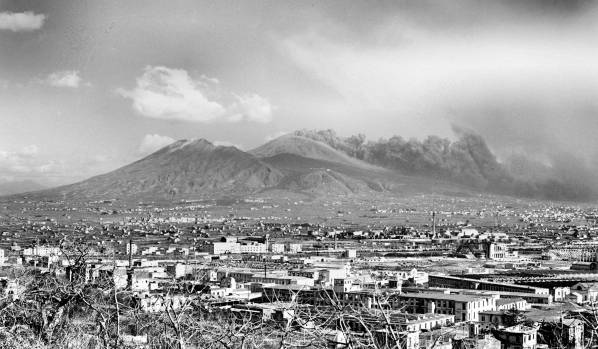
Vesuvius is overdue. The quiet stretches between major eruptions have averaged about ninety-nine years across the last few centuries. The current quiet stretch is at eighty-two years and counting. The mountain has been still since March 1944, when American GIs camped at the foot of it watched lava roll through San Sebastiano al Vesuvio.
That’s the number worth carrying with you up the path to the crater. Not the 79 AD eruption that buried Pompeii (though that’s the cinematic one). Not the 1631 eruption that killed an estimated four thousand people overnight. The number that puts the visit in proportion is eighty-two: the gap since the last bang, on a mountain that historically goes off every century or so, where seven hundred thousand people now live in the official red zone at the base.
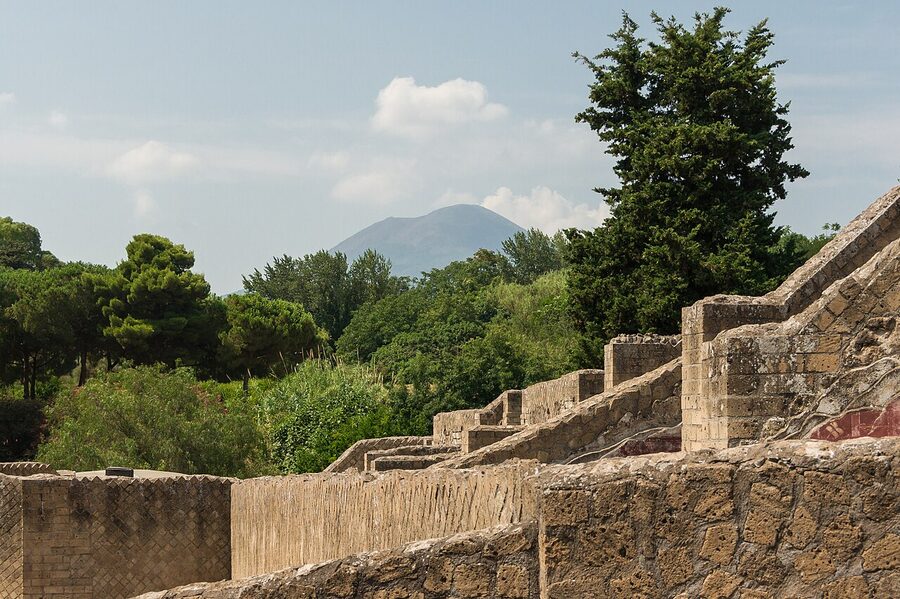
What follows is the practical guide for combining Pompeii and Vesuvius in a single day from Naples or Sorrento, plus the three tours worth booking depending on how independent you want to be.
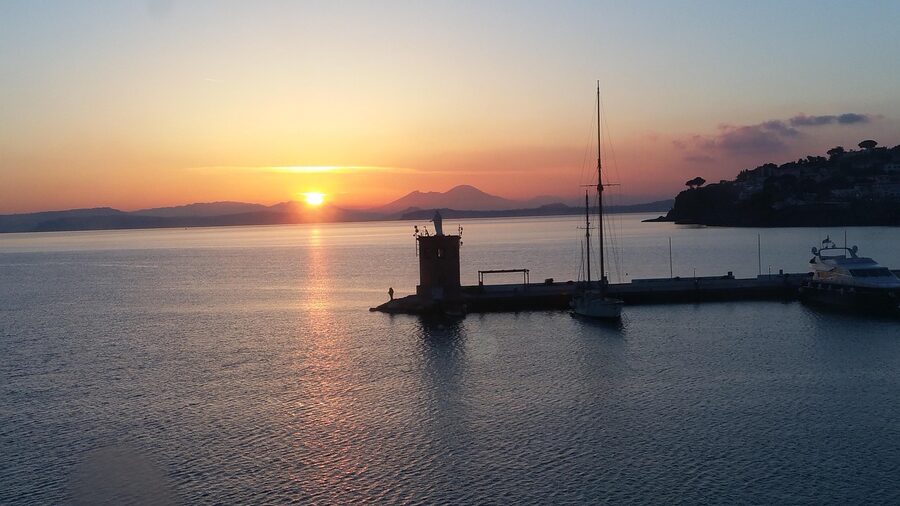
The quick picks
Three ways up Vesuvius:
- Pompeii + Vesuvius full day from Naples ($120.84): the all-in-one with transport, guide, lunch, and entry tickets. Check availability
- Vesuvius skip-the-line entry with audio guide ($18): the cheapest way in, for travellers handling their own transport. Check availability
- Naples shuttle plus Vesuvius entry ($51.24): the middle option. Bus from Naples, ticket included, you do Pompeii separately. Check availability
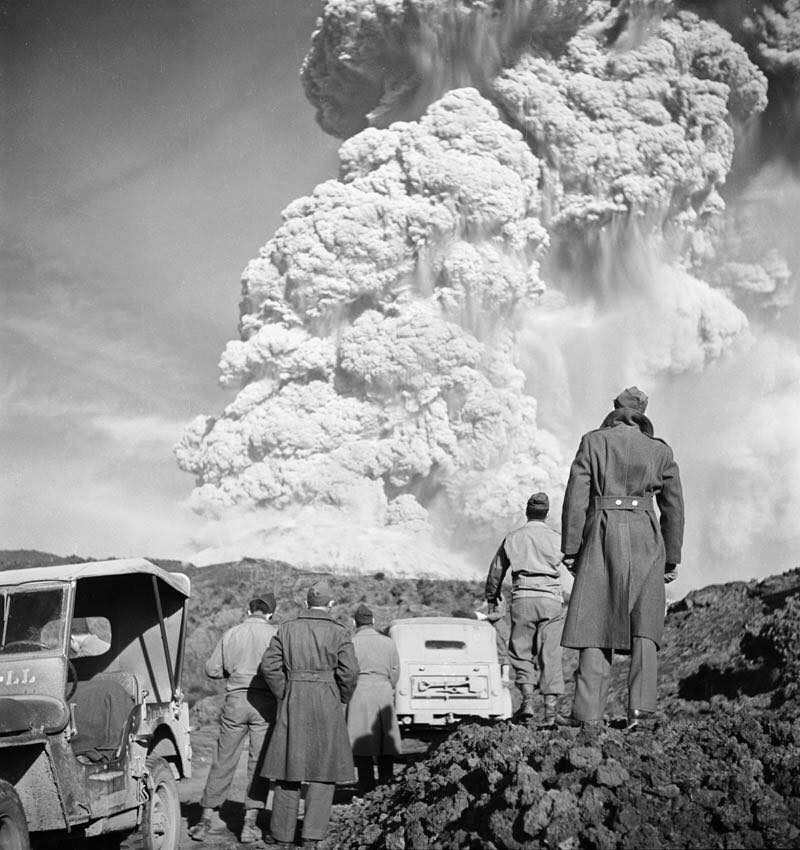
Why the eighty-two-year gap matters
Vesuvius is monitored more closely than almost any volcano on earth. The Osservatorio Vesuviano, founded in 1841 on the mountain’s northern slope, is the oldest volcano observatory in the world. It runs a real-time seismic and gas-emission network, and the readings get displayed publicly. The system would, in theory, give days of warning before an eruption.
That’s the reassurance. The qualifier is that “days of warning” only helps if the evacuation plan works at scale, and the red zone now contains around seven hundred thousand people across eighteen towns. The Italian Civil Protection plan calls for them to be moved out within seventy-two hours of an alert. Whether that actually works has not been tested in the modern era. Naples itself is in the yellow zone, not the red.
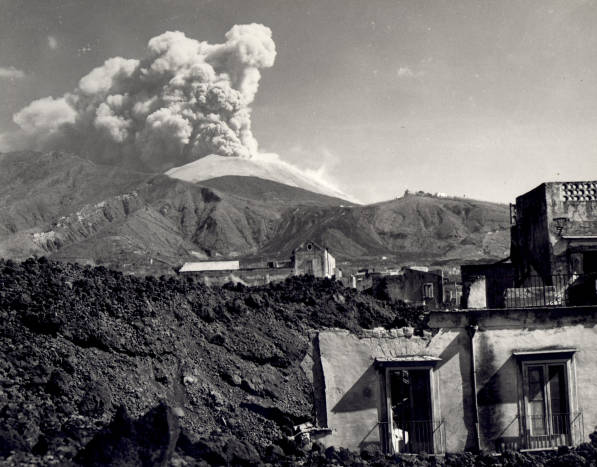
The observatory’s official line in 2026 is that there are no signs of imminent eruption. The seismic baseline is low. The fumaroles at the crater rim are a few degrees warmer than normal, but nothing that suggests pressurised magma is moving up. The mountain is, by every available reading, just sitting there.
The point isn’t to scare you off. The visit itself is safe. The crater rim is open every day, supervised by guides, and tens of thousands of people walk it without incident every season. The point is that you’re not visiting a dead landmark. You’re visiting an active volcano that scientists describe as “quiescent” (sleeping, not extinct), and that’s a different kind of place to stand. The same charge, in a smaller key, runs through the Anne Frank walking tour in Amsterdam: not a memorial frozen in past tense, but a place where the conditions that produced the event are still in the city’s structure.
Doing Pompeii first, Vesuvius second: the case
If you’re doing both in one day (and most people do), do them in this order. Pompeii in the morning, Vesuvius in the afternoon. There are practical reasons and a narrative reason.
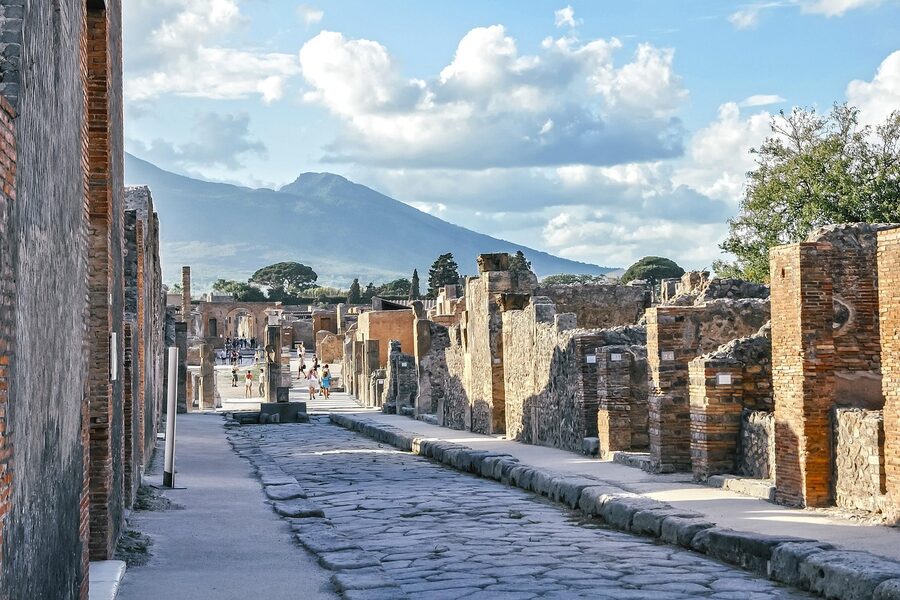
The practical reasons: Pompeii needs three to four hours minimum to do properly, and the site gets brutal in the afternoon heat between June and September. The shade options on a Roman street are basically zero. Vesuvius is cooler at altitude (the summit is around 1,281 metres) and the path is mostly open, so it’s better walked when the sun is lower and the haze over the bay starts to clear.
Last admission to the crater varies seasonally:
- November to February: gates close at 3pm
- March and October: 4pm
- April, May, June, September: 5pm
- July and August: 6pm
If you’ve spent the morning at Pompeii, you’ll comfortably make any of those windows.
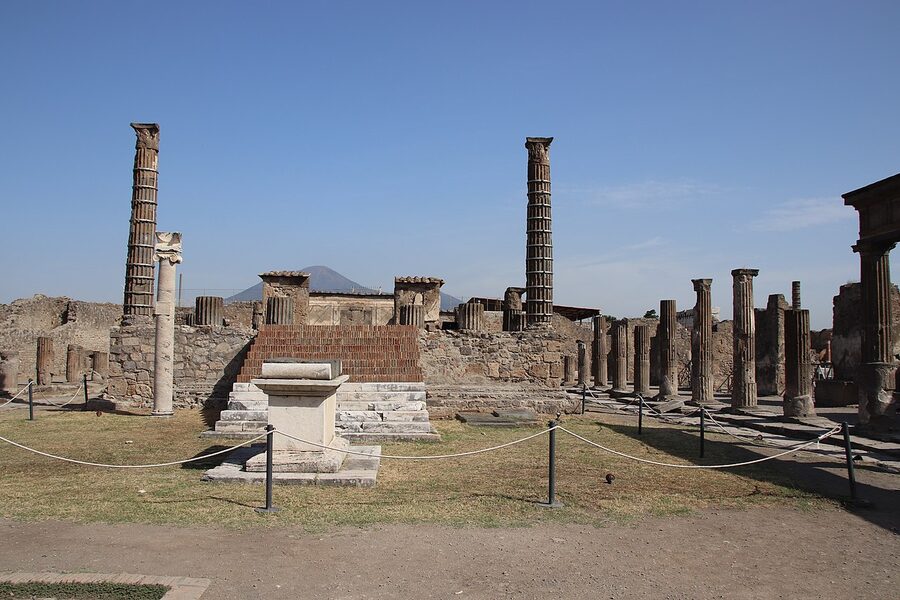
The narrative reason: Pompeii is the consequence. Vesuvius is the cause. Walking the streets of the buried city first, then ascending the mountain that buried it, gives the day a shape that the reverse order doesn’t. From the crater rim you can look down and pick out the Pompeii archaeological site five miles south. That moment lands differently if you spent the morning standing in those streets than if you haven’t seen them yet. Save it for the afternoon.
This is also why a lot of the better tours bundle the two. The Naples-departure full-day combined tour is built around exactly this sequence (three hours at Pompeii, lunch in between, then the mountain), and the volume of bookings it does (it’s the most-reviewed Pompeii-Vesuvius product on the market) is partly because that order is what works.
Getting from Pompeii to Vesuvius: the EAV bus
The link between the two sites is the EAV bus from the Pompei Scavi archaeological entrance up to Quota 1000, the car park at 1,000 metres where the Vesuvius walking path begins. The bus runs roughly every forty minutes from around 8am to mid-afternoon, takes about thirty minutes one way, and costs around €15 round-trip with the entry ticket bundled in some seasons. The schedule sits at the visitpompeiivesuvius.com timetable; check it the night before because the operator changes start and end times by month.
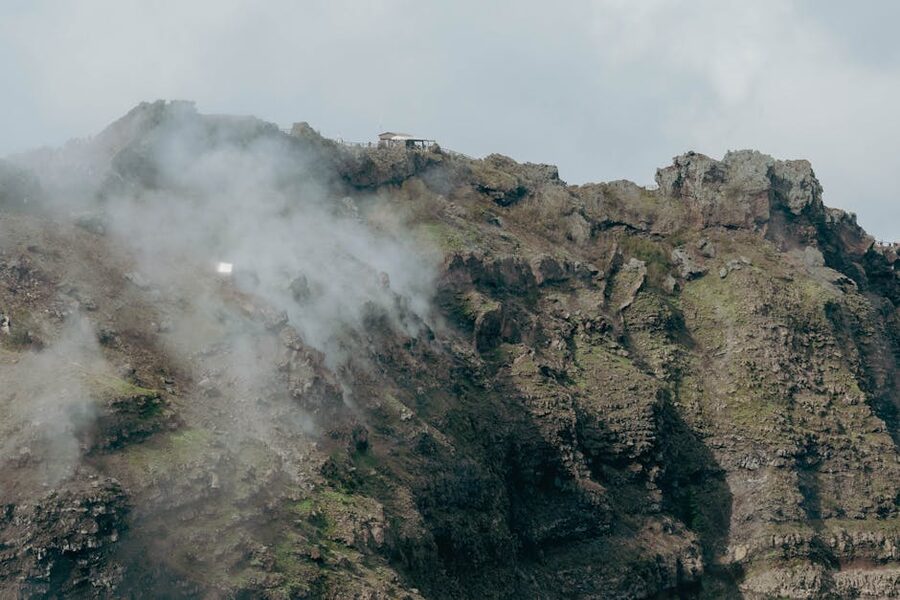
From Quota 1000 to the crater rim it’s about a 1.5 kilometre uphill walk on volcanic gravel. The path zig-zags up the cone, gaining roughly 170 metres of elevation. Twenty to twenty-five minutes if you’re moving steadily. Forty if you stop. It is not a hard hike, but the surface is loose and slippery and trainers with grip beat anything sandal-like. There is no shade. There is one drinks kiosk near the rim, marked-up tourist prices.
The alternative to the EAV bus is the shuttle option that comes pre-bundled in the Naples-departure transfer tour: door-to-door minibus from central Naples up to Quota 1000 and back, entry ticket included, about 90 minutes at the top. That’s the move if you’d rather not navigate Italian regional buses with a tight last-admission window.
Booking Vesuvius entry: the official site, the third parties, and last-minute slots
Vesuvius National Park sells timed entry through Vivaticket, the official national park system. Slots open every ten minutes from 9am, with the last admission depending on month (see the seasonal closing times above). Standard entry is €11.68, concession €9.55. The odd cents are because the park rolls a small national contribution into the ticket; nobody knows why it’s not rounded.
Two practical points the park doesn’t advertise loudly. First, summer slots sell out, sometimes days in advance, and travellers who turn up without a booked time slot in July or August can find themselves walking back down. Book ahead if you have firm dates. Second, the park releases ten unsold tickets thirty minutes before each slot, available only over the WiFi network at the entrance. So if you’re stuck without a booking, head up early, hover near the entrance from about ten in the morning, and you may catch a release for an 11am or 11.30am slot.
Third-party platforms (GetYourGuide, Viator) sell the same ticket with a small markup (usually €15-20 vs €11.68 direct) for the convenience of mobile-first booking, instant cancellation, and customer support if something goes sideways. Worth it if your dates are firm and you’re worried about Vivaticket’s clunky interface (which is in Italian and English and sometimes both at once). Not worth it if you live near the bay and can pop the official site open in low season.
What’s actually at the top
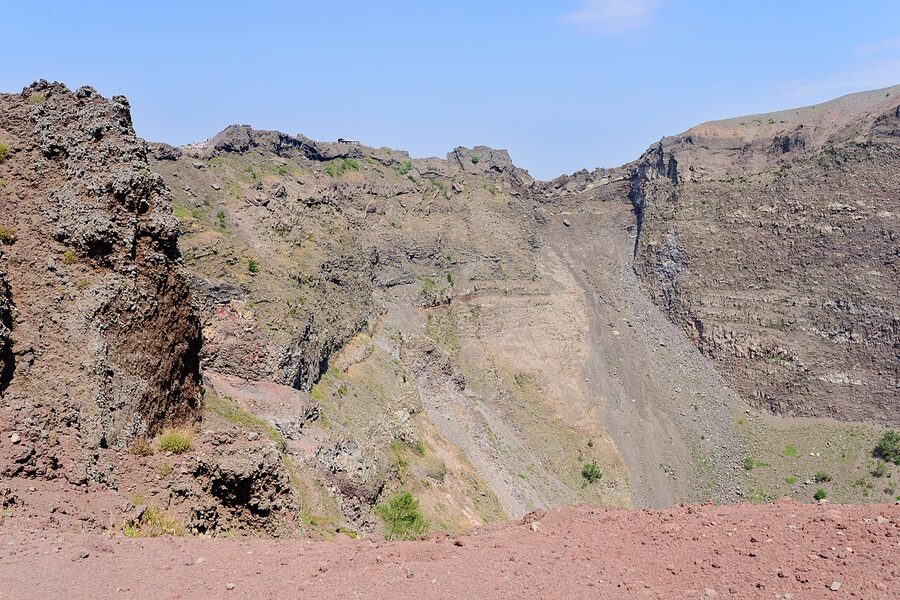
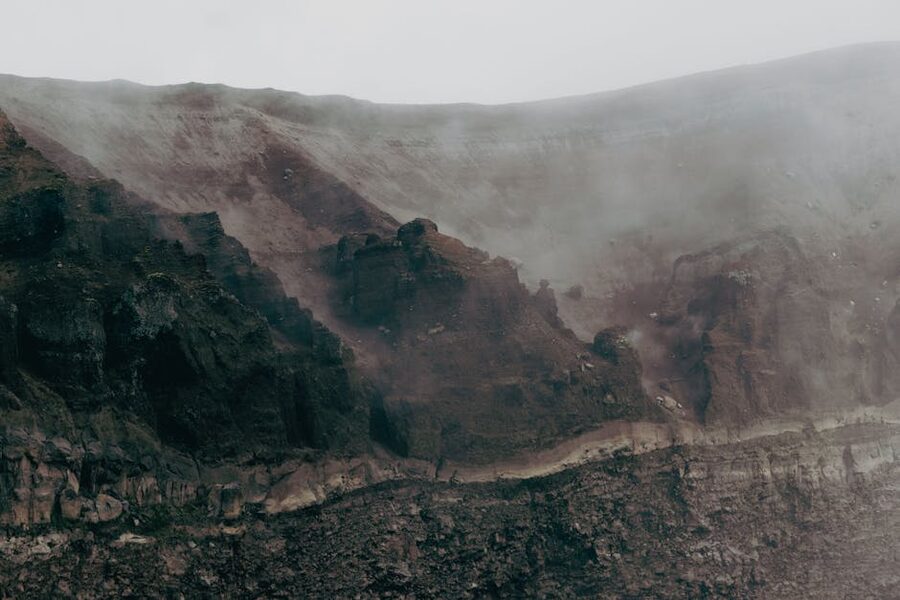
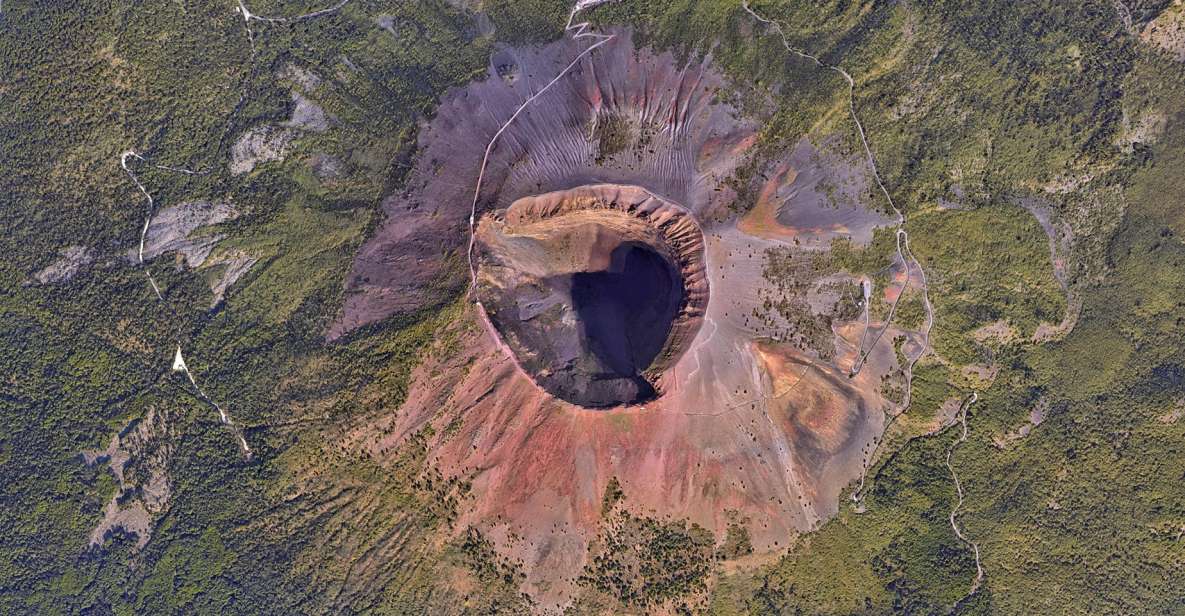
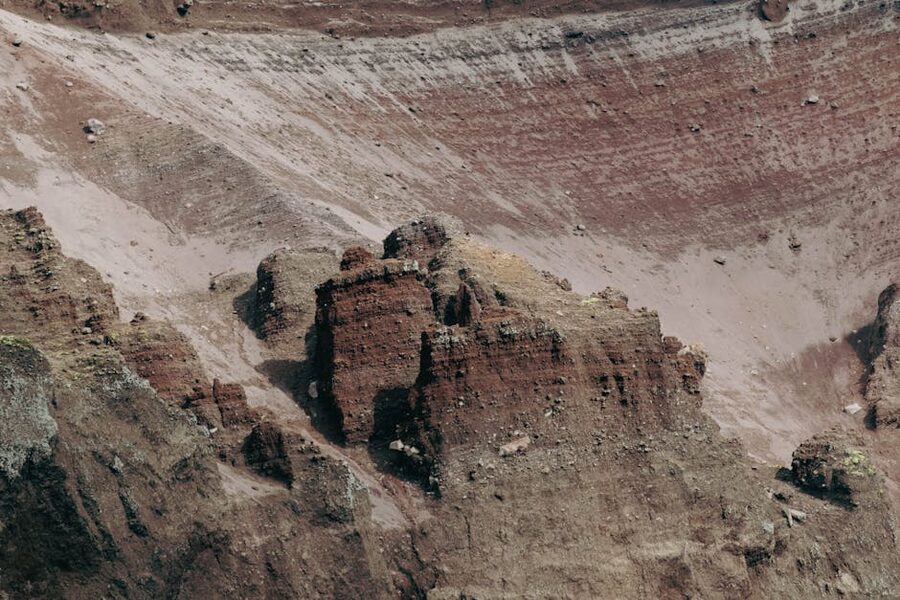
The crater itself is roughly 600 metres across and about 200 metres deep. The lower walls show the layered geology of the past two thousand years: black basalt at the base from the older flows, paler scoria above from more recent activity, all of it collapsed in tilted slabs that are easier to read once a guide points them out.
You walk a fenced path that loops about two-thirds of the way around the rim. The remaining third is closed for safety. From the path you can see fumaroles steaming on the crater walls. These are gas vents leaking sulphur dioxide and water vapour at temperatures between about 80 and 100 degrees Celsius. They smell faintly of eggs at close range, which is how you know they’re real.
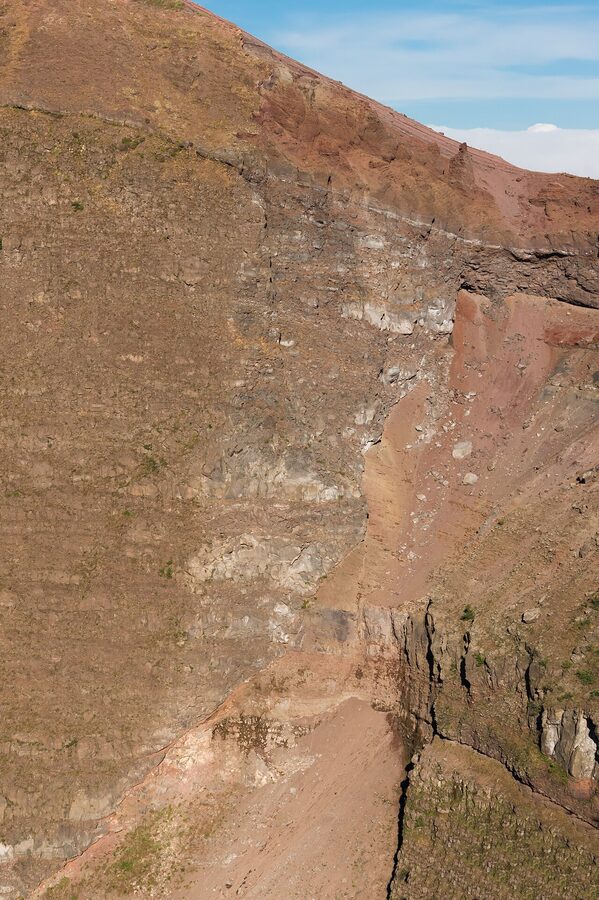
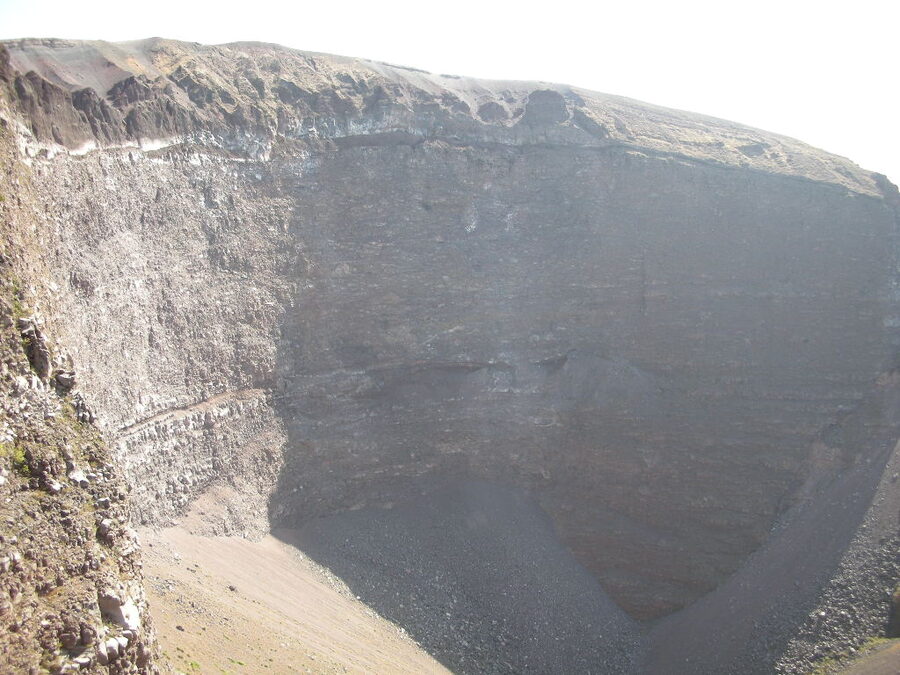
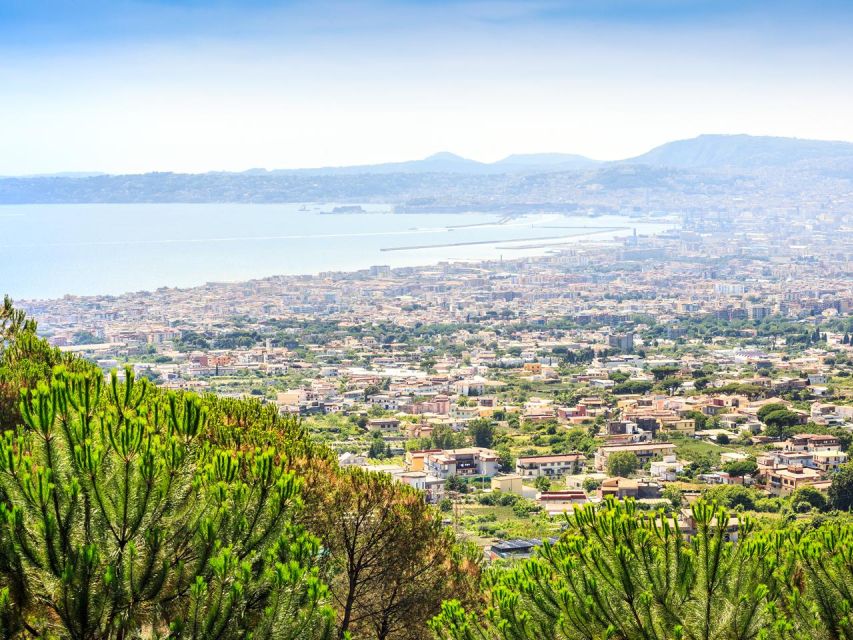
The view, when the cloud cooperates, is the real reason to come. North across the Bay of Naples toward the city itself, with the kind of long bay-and-mountain perspective you also get from the upper terraces of the Verdon Gorge above Nice. East over the Sarno plain. South toward Pompeii (clearly visible from the rim; pick out the Forum and the Amphitheatre with binoculars), the Sorrento peninsula, and Capri on the horizon. A clear day is rare in summer because the haze builds by mid-afternoon; spring and autumn give you better odds. The cloud routinely rolls in and obscures everything within ten minutes, then clears just as fast. Patience helps.
Allow forty-five minutes to an hour at the rim. That’s the realistic window: long enough to walk the loop, take photos at three or four spots, listen to the guide if you have one, and stop for a Coke at the kiosk before walking back down.
Getting to Pompeii Scavi from Naples or Sorrento
The Circumvesuviana commuter train is the standard option, run by EAV on the Napoli-Sorrento line. From Napoli Porta Garibaldi (under the main Napoli Centrale station) or Porta Nolana, ride about 35 minutes to Pompei Scavi – Villa dei Misteri. Trains run every half hour or so. The fare is around €3.30 one way. Two minutes’ walk from the station drops you at the Porta Marina entrance to the Pompeii archaeological site.
From Sorrento, the same line runs the other direction: also about 30 minutes to Pompei Scavi, similar fare. Sorrento is the nicer base for a Pompeii-Vesuvius day if you’re staying overnight; Naples is the cheaper base.
Watch your bag on the Circumvesuviana. The line runs through working-class suburbs and is known to attract pickpocket teams who target distracted tourists, especially around Napoli Garibaldi at peak hours. Front pocket, hand on it, no daypack on your back. This isn’t paranoia, it’s the local advice. Once you’re past Ercolano on the way out, the carriages thin out and it stops being an issue.
Three tours worth booking
1. Pompeii Ruins and Mount Vesuvius Day Tour from Naples: $120.84
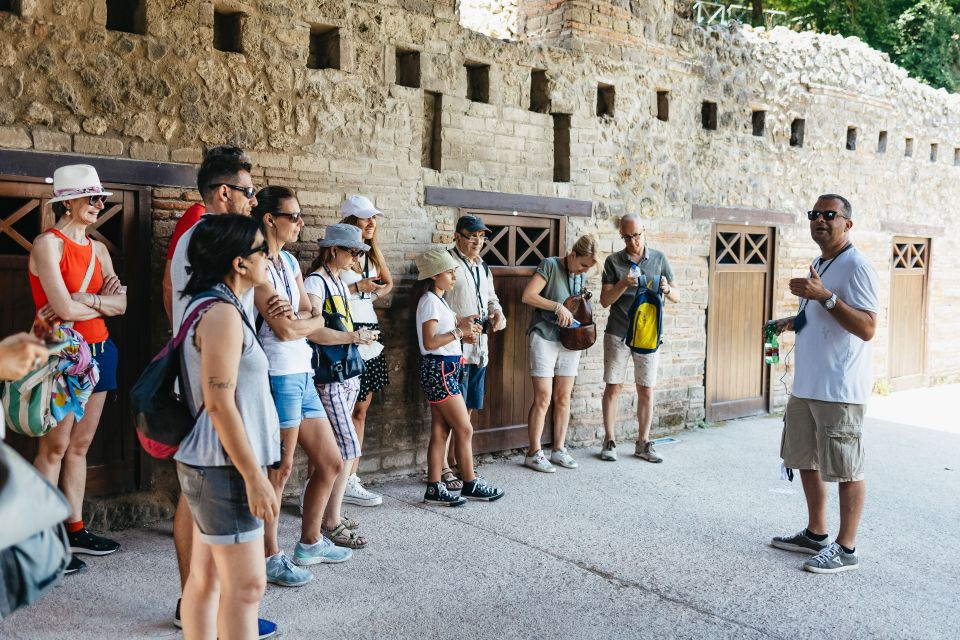
This is the right pick if you want both sites done in one day with zero logistical work, and you’re willing to pay roughly twice what doing it independently costs. Our full review covers the operator’s group sizes (16-25, on the larger side) and the pace at Pompeii (three hours, fine for first-timers but you’ll be moved along). The lunch is decent for a tour, not memorable.
2. Mount Vesuvius Skip-the-Line Ticket and Audio Guide: $18
This is the right pick if you’ve already sorted Pompeii independently and want the cheapest legitimate way onto the mountain. Our full review notes the audio guide is reasonably well-produced (about 45 minutes of commentary covering the geology, the 79 AD eruption, and the 1944 event) and works offline once downloaded. Skips you past the Vivaticket queue, which on a busy summer afternoon can save you an hour.
3. From Naples: Vesuvius Transfer with Entry Tickets: $51.24
This is the middle pick: you’ve decided to do Pompeii on your own day or you’re skipping it entirely, and you want the volcano with zero transport faff. Our full review flags the main caveat: ninety minutes at the rim is tight if you walk slowly, since the up-and-down alone takes about fifty. Comfortable hiking shoes are not optional with this one if you want to make the bus back.
What to wear and bring
Trainers or hiking shoes with proper grip. The path is loose volcanic gravel and pumice; flat-soled sandals slide. A water bottle (the kiosk at the rim charges €4 for a small bottle). A windbreaker or fleece (even in July, the summit can be ten degrees cooler than the bay below and a stiff breeze comes through the saddle). A hat. Sunglasses. Cash for the kiosk and the toilet at the entrance (€1, exact change preferred).
What you don’t need: trekking poles (the path is clearly graded, not technical). A torch (you won’t be up there past sunset). A backpack bigger than a daypack (no storage at the entrance and you’ll be stuck carrying it).
The 79 AD eruption: what actually happened
Worth knowing as you stand on the rim: the 79 AD eruption that buried Pompeii and Herculaneum was probably not the cataclysmic surprise the popular telling makes it out to be. Modern volcanology suggests there were warning signs in the days and possibly weeks leading up to it: minor earthquakes, springs running dry, animal behaviour changes. Some Romans clearly left. The ones who didn’t were caught by what’s now called a Plinian eruption (named for Pliny the Younger, who watched it from across the bay and wrote about it in two famous letters to Tacitus).
The first phase, on the morning of August 24th (the date is now disputed; some scholars argue October), threw a column of ash and pumice eighteen miles into the air. That column rained pumice on Pompeii for about eighteen hours. Roofs collapsed under the weight. Most of the deaths in Pompeii itself happened during this phase, not the later one. People who left during the pumice fall mostly survived. Those who sheltered indoors mostly didn’t.
The second phase, around midnight, was the pyroclastic flow: a superheated avalanche of gas, ash, and rock travelling at over a hundred miles an hour at temperatures around 250 degrees Celsius. Six surges came down the mountain over about twelve hours. The fourth one reached Pompeii. Anyone still alive there died instantly from heat shock. The plaster casts at the Garden of the Fugitives are people who got that far.
The point of telling you this on the way up the mountain is that the eruption you’re standing on the remnant of was not the one in 79 AD. That one blew the top off and rebuilt it. The cone you walk today is mostly post-1631 with major contributions from 1906 and 1944. The 79 AD volcano was probably twice as tall, and what’s left of its outer flanks is the curving ridge of Monte Somma to the north. You’re inside what used to be a much bigger mountain.
Pairing the day with Naples
If you’re basing yourself in Naples for two or three nights, the Pompeii and Vesuvius day pairs naturally with two more themed days in the bay. Day two could be the Amalfi Coast (Positano, Ravello, the road), which sits geologically on the same Bay-of-Naples volcanic shelf as Vesuvius and is shaped by the same tectonic history. Day three could be Capri by boat, the limestone island that pre-dates Vesuvius and stares at it from across the gulf.
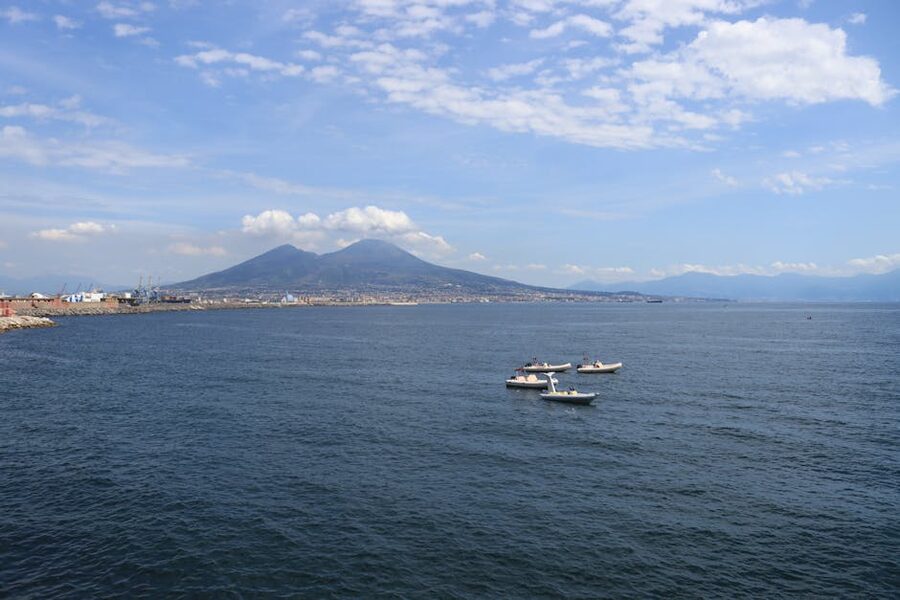
For a different angle on the layered city the volcano made possible, the Naples Underground tour takes you forty metres below the modern street into the lava-stone tuff quarries that became cisterns, then air-raid shelters, then a tourist attraction. The stone Naples is built into and on top of is the same yellow-grey volcanic tuff that Vesuvius (and the older Phlegraean Fields complex to the west) deposited over the past 35,000 years. Standing in those quarries with the Pompeii-Vesuvius day still in your legs is a good way to feel how thoroughly the volcano made the place.
And if you’re hungry on your way back through Naples that night, the city’s pizza scene is a small religion. Where to actually eat pizza in Naples covers Da Michele, Sorbillo, Di Matteo, and the local-favourites three blocks off the tourist trail.
The other Italian volcano question
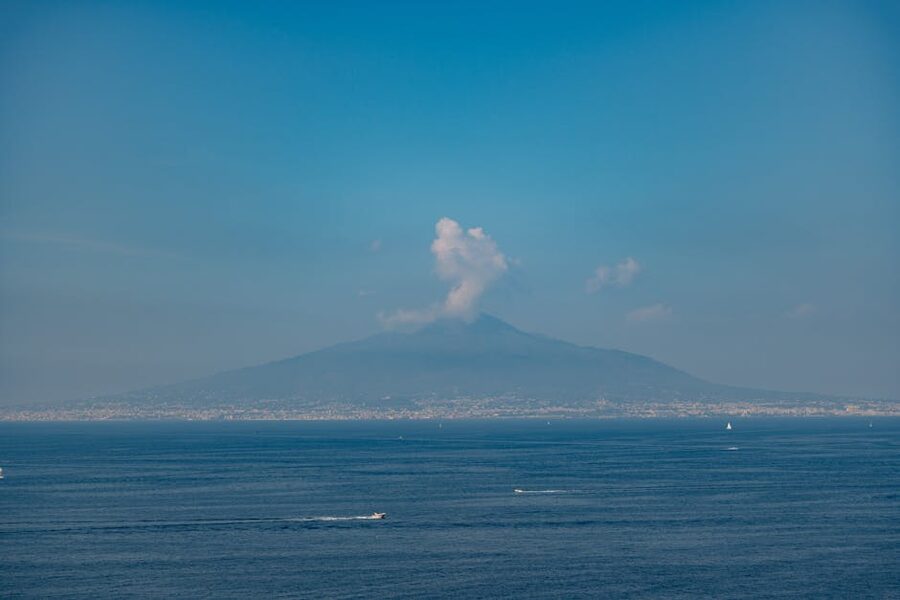
Travellers who do Vesuvius often ask whether Mount Etna in Sicily is also worth a day. Short answer: yes, but they’re very different. Etna is much bigger (around three thousand three hundred metres versus Vesuvius’s twelve hundred and eighty), much more frequently active (Etna has erupted on average once a year in the past decade), and the visit involves a cable car or 4×4 to a base above two thousand metres before walking on lava fields that are still warm in places. If you’ve done Vesuvius and want a step up in scale and current activity, Etna is the next move. If you’ve done Vesuvius and want the smaller, more historical version, you’ve already done it. Pick something else for your second Italy week.
The honest verdict
Vesuvius is not a hike that needs the Vesuvius name to justify itself. As a piece of walking, it’s a forty-minute uphill on volcanic gravel with a scenic crater at the top. A loop on Mount Teide in Tenerife gets you higher and weirder geology, a day on the cable cars at Chamonix-Mont-Blanc gets you actual altitude, and the cliff-edge walkway at El Caminito del Rey gets you a more dramatic three hours on foot. What you’re paying for here is the context. You’ve spent the morning walking the streets of a city this mountain killed. You’re now standing on the thing that killed it, looking down at the archaeological site five miles away. That sequence is hard to reproduce anywhere else on earth, and it’s why this one-day combination has been the canonical Bay of Naples itinerary for two hundred years and counting.
Bring water, bring grippy shoes, book the slot ahead of time in summer, and put the eighty-two-year number somewhere in the back of your head as you walk the rim. It’s the right frame for the visit.