
The first thing they tell you at the top of the Aiguille du Midi is to walk slowly. You just rode a cable car from the Chamonix valley floor at 1,035m to a steel needle stuck into a rock at 3,842m, and the air up here has about 60% of the oxygen you’re used to. Most people don’t believe it until they take ten stairs and feel their chest go odd. Then you turn the corner of the upper terrace, and Mont Blanc is sitting right there, four kilometres of bone-white snow piled into the sky, and you forget about the stairs entirely.
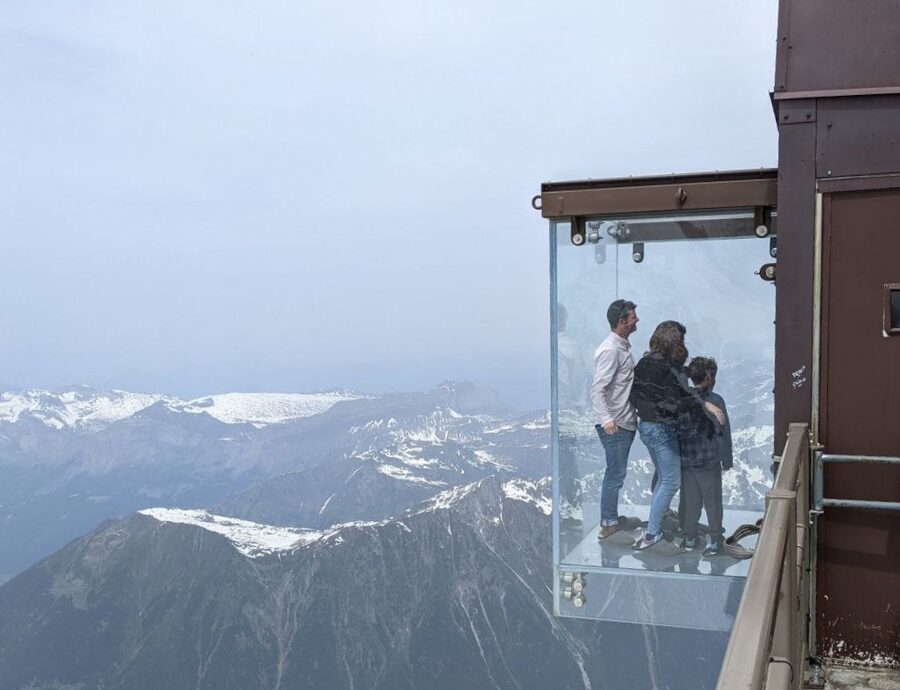
The signature move at the top is the Step into the Void: an eight-metre glass cube that hangs off the side of the summit station, with 1,035m of straight nothing under your feet. They opened it in December 2013, and you queue for it the same way you queue for a roller coaster. Most of the people in line look fine. About one in ten gets to the door of the cube, looks down, and just walks away.
Here’s the thing most people booking Chamonix from Geneva don’t realise: most of the standard day-trip tours don’t take you up there. The cable car ticket is its own thing, around $100 round-trip on top of whatever you paid for the bus, and the basic Geneva-Chamonix tour just drops you in the village with a few hours to wander, walks you past the Mont Blanc tunnel viewpoint, and stops at a glacier museum on the way back. You see Mont Blanc from below. You don’t go up.
If you actually want the Aiguille du Midi summit, you book a tour that includes the cable car, or you book the bus and buy the cable car ticket yourself once you arrive. I’ll spell out which is which below. The short version is: the basic $126 day-trip is fine for a first taste, the $253 premium tour with cable car and Montenvers train is the one that earns the money, and Chamonix really wants two days minimum from anyone who’s serious. The day trip is a teaser, not a visit.
In a hurry? Three picks
- Best all-around day trip from Geneva: Geneva to Chamonix Guided Day Trip ($126). The flagship. Pickup, scenic drive, free time in Chamonix village.
- The premium with cable car + glacier train: Chamonix Day Trip with Cable Car and Train ($253). Aiguille du Midi summit and Mer de Glace included.
- Same flagship, alternative operator: Geneva-Chamonix Mont-Blanc Guided Day Tour ($126). Identical itinerary if your first pick is sold out.
Why Geneva is the right base for Chamonix, not Paris
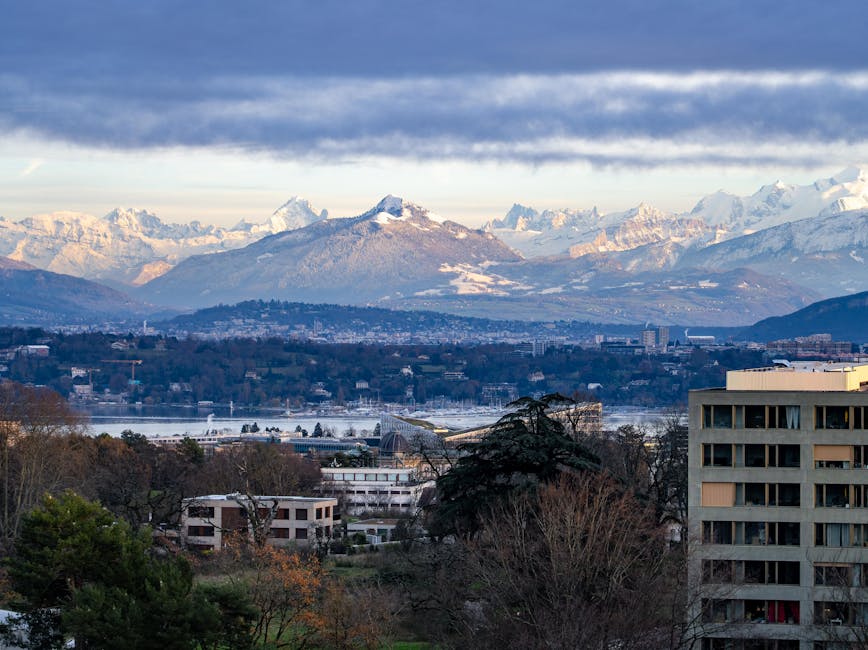
The geography is the whole story. Chamonix sits in the French Alps, in Haute-Savoie, but it’s tucked up against the Swiss border, and Geneva airport is the closest major airport by a wide margin. The drive is 90km and takes about 90 minutes. From Lyon you’re looking at two hours, more like two and a half with traffic. From Paris, eight hours each way by car, which is why nobody serious tries Chamonix as a Paris day trip. The TGV from Paris to Saint-Gervais-Le Fayet is around 6h20, and you still have to change to the local Mont Blanc Express to reach Chamonix proper.
This matters for one specific reason: Chamonix is one of the few places in the French Alps you can do as a day trip if your base is right. You can’t do Verdon Gorge as a day trip from anywhere except Nice. You can’t do most of the Loire valley as a day trip from anywhere except Tours or Orléans. Chamonix from Geneva works because of those 90 minutes. Chamonix from anywhere else is an overnight trip even if you didn’t plan one. The same right-base rule governs the Zaanse Schans day trip from Amsterdam, which is reachable in 25 minutes from Centraal Station and essentially impossible as a same-day from anywhere else in the Netherlands without a car.
If you happen to be based in Lyon for a city break, you can do Chamonix as a long day trip from there too, but Geneva is still the cleaner option. The road from Geneva runs straight through the Arve valley, drops you into Chamonix from the north, and the bus services for tourists run several times a day. From Lyon the road is mountain switchbacks at the end and the last hour eats your time.
The structure of a one-day Chamonix trip
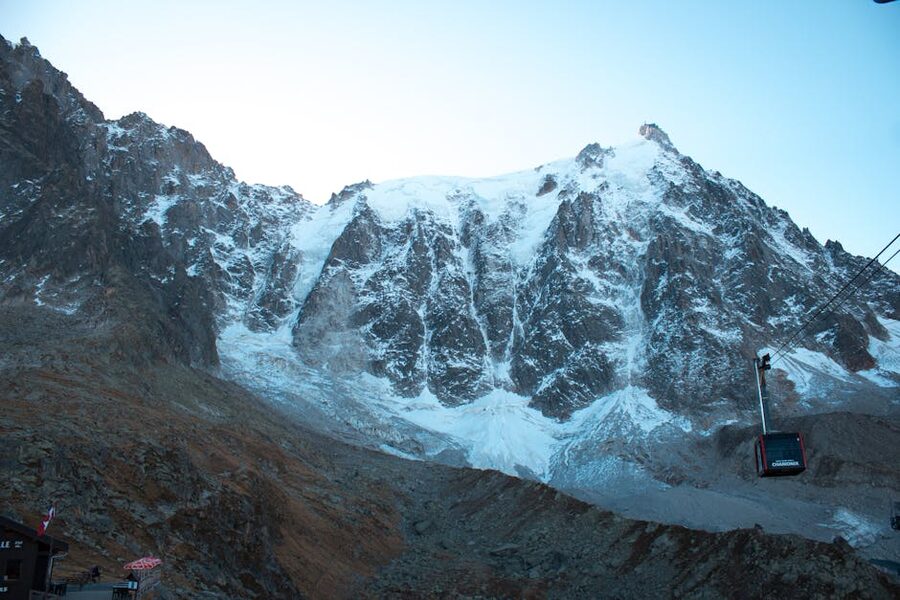
A one-day Chamonix trip from Geneva, done right, looks like this. Pickup in Geneva at around 8am. Coach to Chamonix, arriving around 10am. Two and a half hours in town for the cable car up Aiguille du Midi (or wandering the village if you don’t want to spend $100 on the ticket). Lunch in Chamonix or a packed lunch eaten at altitude. Optional add-on: the Montenvers train to Mer de Glace in the afternoon. Coach back to Geneva, arriving around 7-8pm.
That’s nine to ten hours of trip for one good day. The $126 standard tour gives you the coach, the village time, and the panoramic views from the road. It does not include the cable car. If you want the cable car at the summit, either pre-book the upgraded tour or budget $100 separately and queue at the ticket booth in Chamonix when you arrive.
Two warnings before you book a one-day trip:
- Storms close the cable car. The weather in Chamonix changes fast, and the upper section of the cable car (Plan de l’Aiguille to Aiguille du Midi) closes when the wind hits about 80 km/h. If you’ve paid for a tour with the cable car included and it’s closed on the day, the operator usually refunds the cable car portion only. Check the forecast the night before, or book a flexible cancellation tour.
- August is brutal. The cable car has a hard capacity limit, and in August the queue can run two to three hours just to ride up. June and September are the months. Avoid the second and third weeks of August unless you book the first cable car of the day.
If you have two days, the structure changes completely. Day one is Aiguille du Midi in the morning, lunch in the village, Mer de Glace in the afternoon. Overnight in Chamonix. Day two is one of the smaller cable cars (Brévent or La Flégère for the view back at Mont Blanc), or a Tour du Mont Blanc segment hike, or just a long lunch at one of the mountain restaurants.
The Aiguille du Midi cable car: what you’re actually paying for
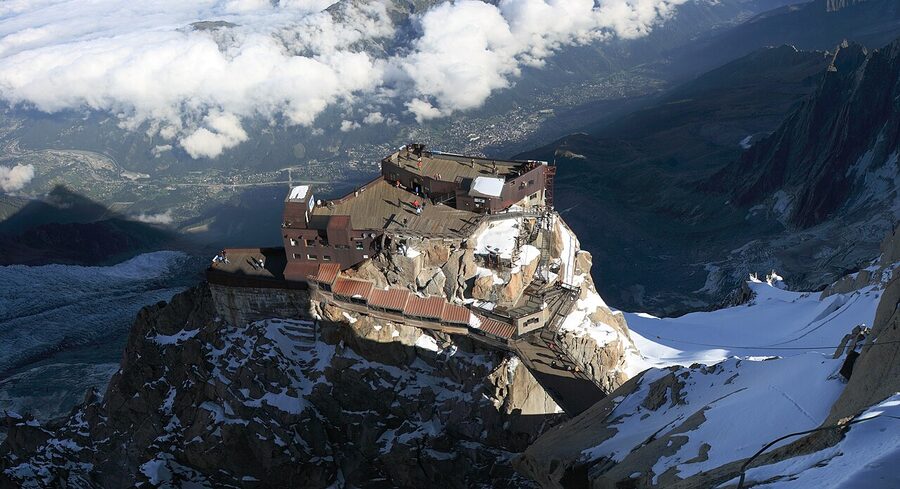
The Aiguille du Midi cable car opened in 1955. At the time it was a record-breaking piece of engineering, the highest vertical-rise cable car in the world. Seventy years later it’s still the second-highest cable car station on the planet, beaten only by Switzerland’s Klein Matterhorn. The ride is in two stages. The first stage from Chamonix town to Plan de l’Aiguille at 2,317m is the warm-up. The second stage from Plan de l’Aiguille to the summit at 3,842m is the one you remember. It rises 1,500 vertical metres in about ten minutes, with no support tower in the middle. It’s a single span of cable across an entire glacial valley. Look down once and you understand why people were impressed in 1955.
The summit station is a complex of platforms, terraces, and corridors carved into the rock of the actual peak. You can move between three or four levels via a central elevator. Each level has a different view: north toward Chamonix town and the valley, south toward the Mont Blanc summit itself, east toward the Italian Aosta valley, west toward the chain of Aiguilles Rouges. On a clear day you can see Geneva, the Jura mountains, and even the Matterhorn poking up to the east.
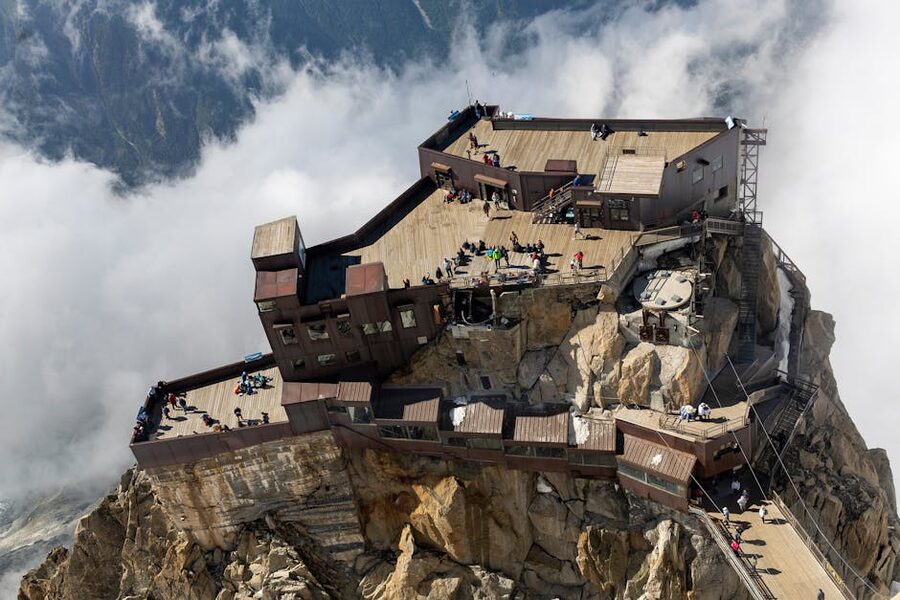
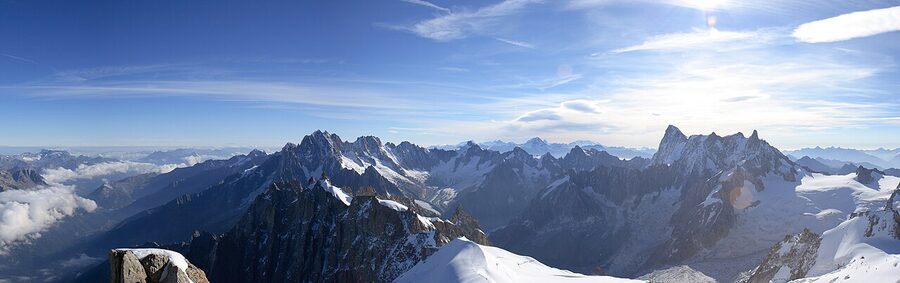
The Step into the Void is on the upper terrace, signposted as Pas dans le Vide. It’s a glass cube, eight metres on each side, that extends out over the void. The glass is structural, with a five-metre safety net underneath that you can’t see when you’re standing on it. Capacity is one or two people at a time. They give you fabric overshoes so your boots don’t scratch the glass. The whole thing takes about thirty seconds. You step in. You look out at Mont Blanc. You look down. You take the photo. You step out. The line is twenty minutes to an hour depending on the day. Worth it once. Not worth it twice.
From Aiguille du Midi you can also catch the Panoramic Mont-Blanc gondola across the glacier to Pointe Helbronner on the Italian side, a 35-minute ride in tiny three-person bubble cabins suspended over the glacier. Most day trippers from Geneva don’t have time for this. If you do, do it. It’s the most surreal cable-car ride in the Alps. The view down is into the Vallée Blanche, where the off-piste skiers come down in spring.
The cable car parallels the same kind of “see the summit from below” engineering as Barcelona’s Montjuïc cable car, but at a completely different scale. Montjuïc rises 173m. The Aiguille du Midi rises 2,807m from the village. They’re not the same activity. They’re two different sentences using the same noun. The Dutch version of the rooftop-as-viewing-platform conversation lives at NEMO Science Museum in Amsterdam, where the publicly-accessible roof terrace is the highest open vantage point in the city centre and frames the whole 17th-century skyline at once.
Cable car practicalities
- Cost: €77 (about $84) for the round-trip from Chamonix to the summit. Often listed as €100 round-trip with seasonal flex pricing.
- Booking: Pre-book online for a specific time slot. Walk-up tickets exist but you queue twice (ticket booth, then cable car).
- Duration: 20 minutes each way. Plan two to three hours at the summit.
- Best slot: First or second cable car of the day (8am-9am). Clouds tend to build by midday and your view degrades.
- Closures: Wind above 80 km/h closes the upper section. Check the live status at the Compagnie du Mont-Blanc website before you commit to a ticket.
Mer de Glace: France’s largest glacier, getting smaller every year
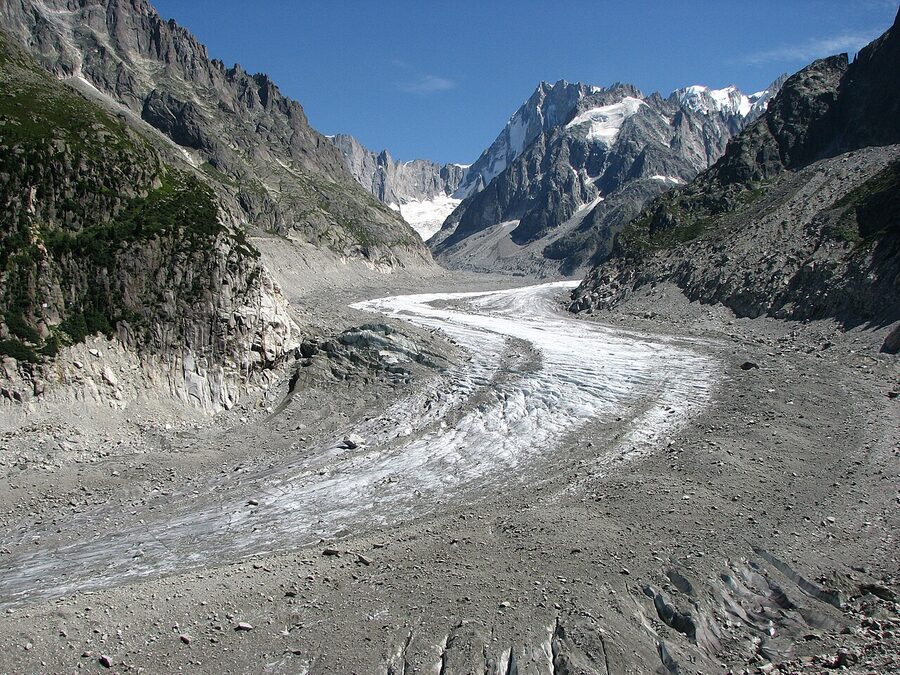
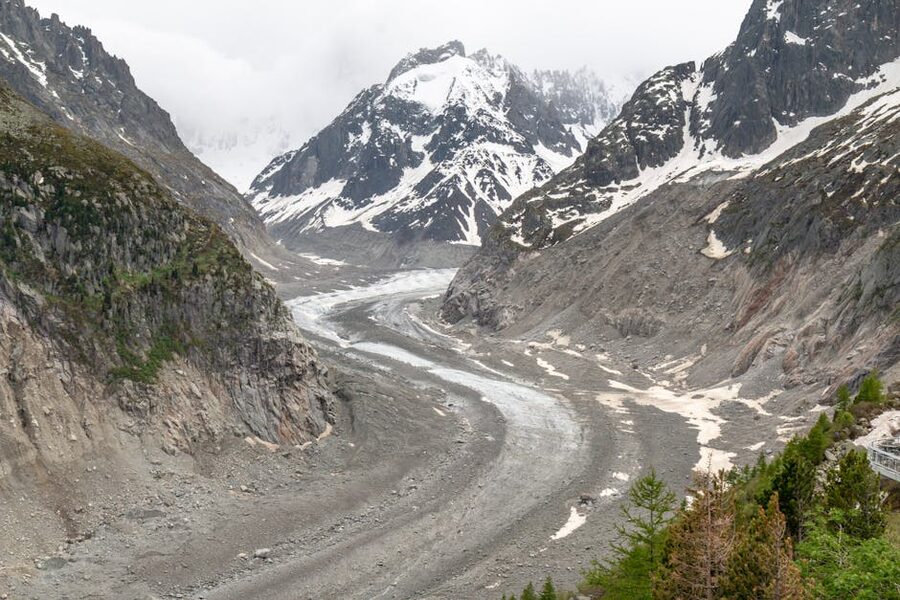
If Aiguille du Midi is the morning, Mer de Glace is the afternoon. The Mer de Glace is the largest glacier in France: seven kilometres long, 200m thick, and visibly retreating. You reach it from Chamonix town on the Montenvers cog railway, a vintage train from 1908 that climbs 5km from the station next to the SNCF rail line in Chamonix up to the Montenvers viewpoint at 1,913m.
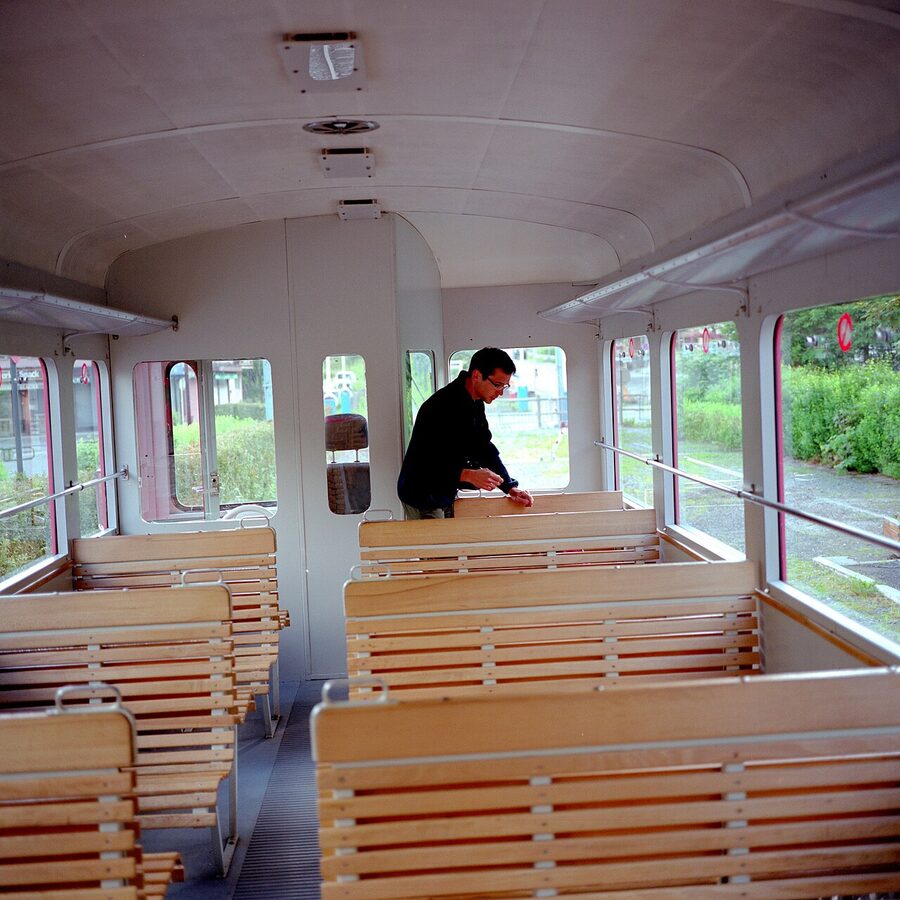
The train ride takes 20 minutes. It’s red, it has wooden benches, and it grinds up the mountain on a rack-and-pinion system at about 25 km/h. At the top is a small museum, a hotel, and a viewing terrace looking down onto the glacier. You can stop there. Most people do. The view is broad and impressive.
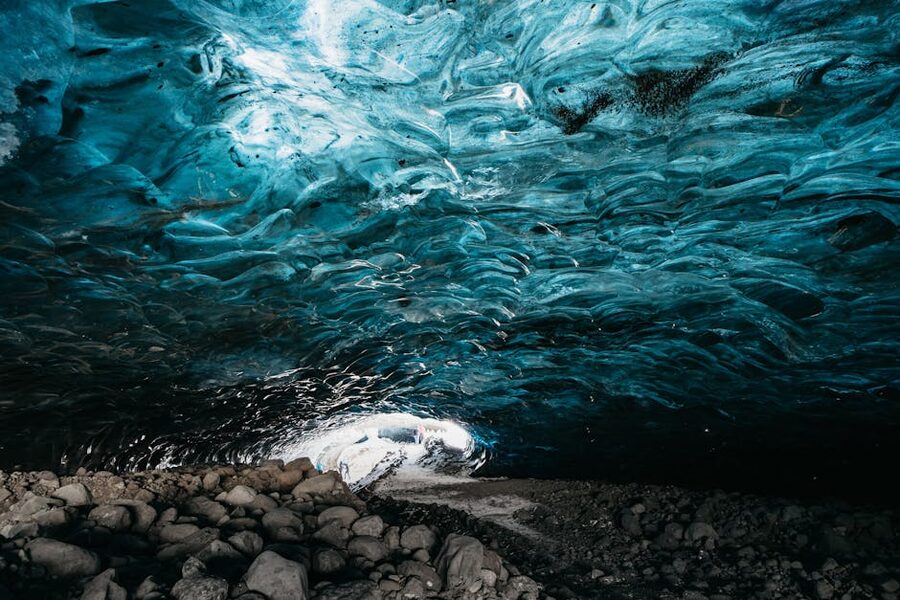
If you want to actually walk on the glacier, or rather walk down to the ice cave carved into it, there’s a second cable car (a small one, free with your Montenvers ticket) that drops you closer to the glacier surface. From the cable car bottom you walk a long staircase down to the ice cave entrance. The cave is re-carved every year because the glacier is shifting, and every year the staircase gets longer. In the 1980s it was about 100 steps. Today it’s around 580. That’s the retreat made physical: the glacier is dropping, and the staircase chases it down.
The ice cave itself is a corridor of carved blue ice, lit from inside, with sculptures of furniture and rooms cut into the walls. It’s a thing you go through, not a thing you spend an hour in. Twenty minutes is enough.
Mer de Glace practicalities
- Train cost: €38 round-trip Chamonix to Montenvers, includes the small cable car down to the glacier and the ice cave entry.
- Combined ticket: Aiguille du Midi + Mer de Glace package around €90-95, sold at the same booths.
- Duration: Train + cave + return trip to Chamonix is about 2.5-3 hours total.
- Best time: Afternoon. Morning queues are worse.
- Closed: Cave and small cable car close annually around late October to mid-December for re-carving and engineering work.
The retreat is the part nobody mentions in the brochure. The Mer de Glace has lost roughly 30 metres of length per year on average over the last decade, and 150m of thickness since the 1830s. There are rocks visible on the surface today that were buried under 100m of ice in your grandparents’ photos. Whether that bothers you depends on what you came to see, but it’s worth knowing that the trip is a bit elegiac. You’re walking down stairs that didn’t exist in the 1980s because the ice has moved out from under them.
The day-trip tours: which one is which
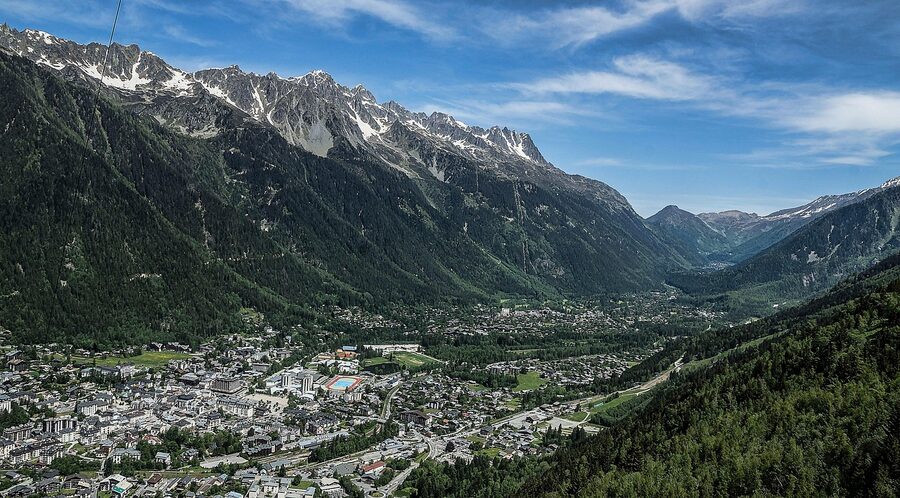
I’ve sorted through the three feeders below. There’s a meaningful difference between the basic ($126) and premium ($253) versions, and a smaller difference between the two operators running the basic version. None of them include the Aiguille du Midi cable car unless you specifically book the premium one. Read the inclusions carefully.
1. Geneva to Chamonix Guided Day Trip: $126
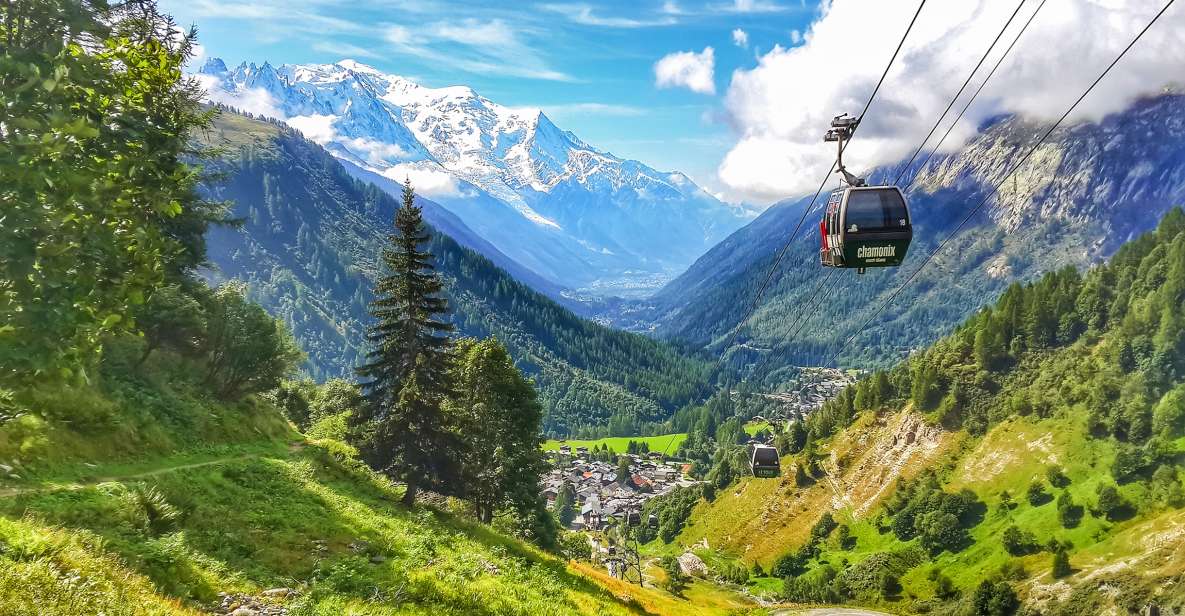
This is the right pick if you want to see Chamonix and the Mont Blanc valley once without spending big. The trip is the whole-day coach experience with about three hours of free time in town, and our full review of the standard Chamonix day trip covers what’s included and what’s not. Cable car tickets are extra; the guide tells you where to queue when you arrive.
2. Chamonix Day Trip with Cable Car and Train: $253
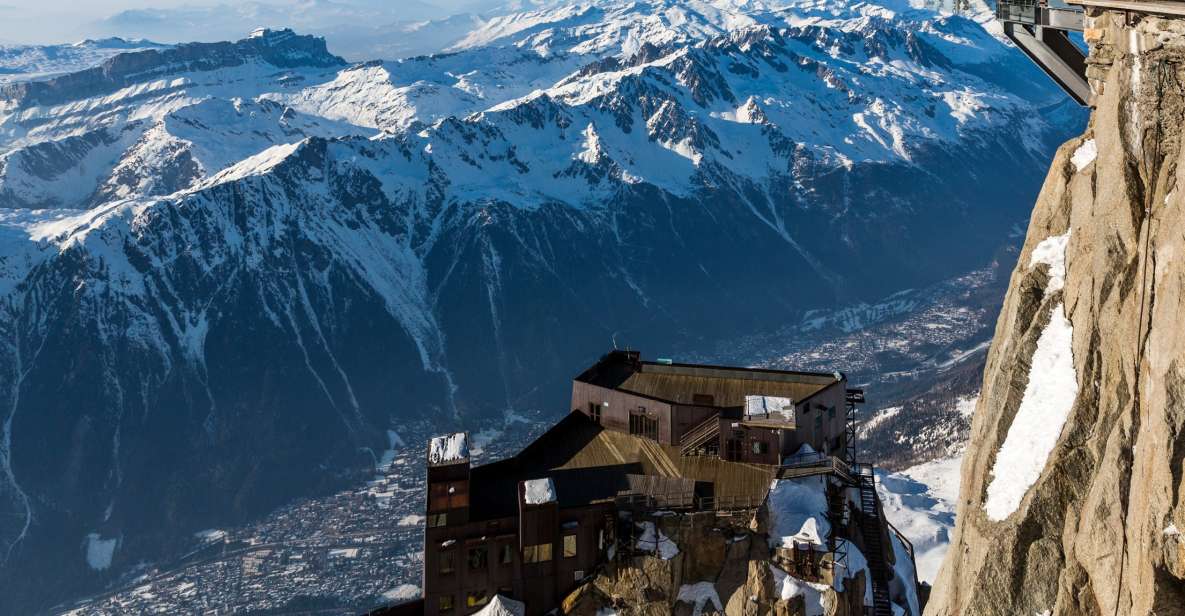
This is the one to book if you only have one day and you want both signature experiences. The price doubles the basic tour, and the math works out almost exactly to the cable car ($100) plus train ($45) you’d otherwise pay separately, with the booking and queue management handled for you. Our review of the cable-car-and-train tour walks through the timing and where the day pinches.
3. Chamonix Mont-Blanc Guided Tour (Alt Operator): $126
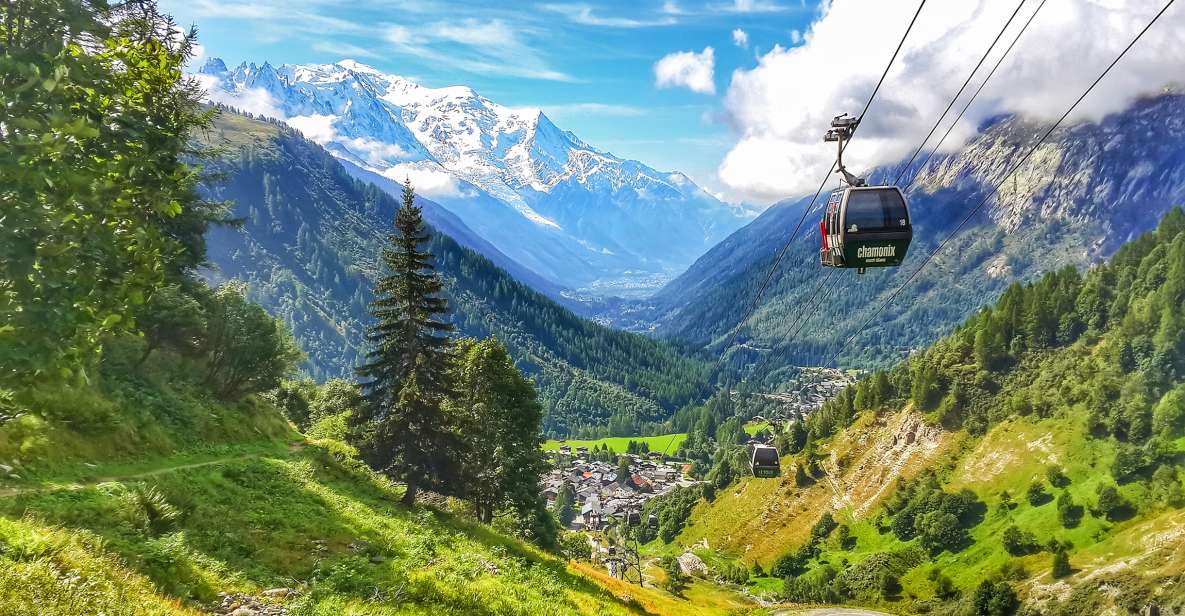
Same itinerary, same price, different operator. Worth knowing about because the flagship tour fills up in summer, and our notes on the alternative operator confirm it’s the same Geneva-Chamonix day with comparable pickup times. Pick whichever has availability.
Doing it independently: the Geneva-Chamonix bus or train
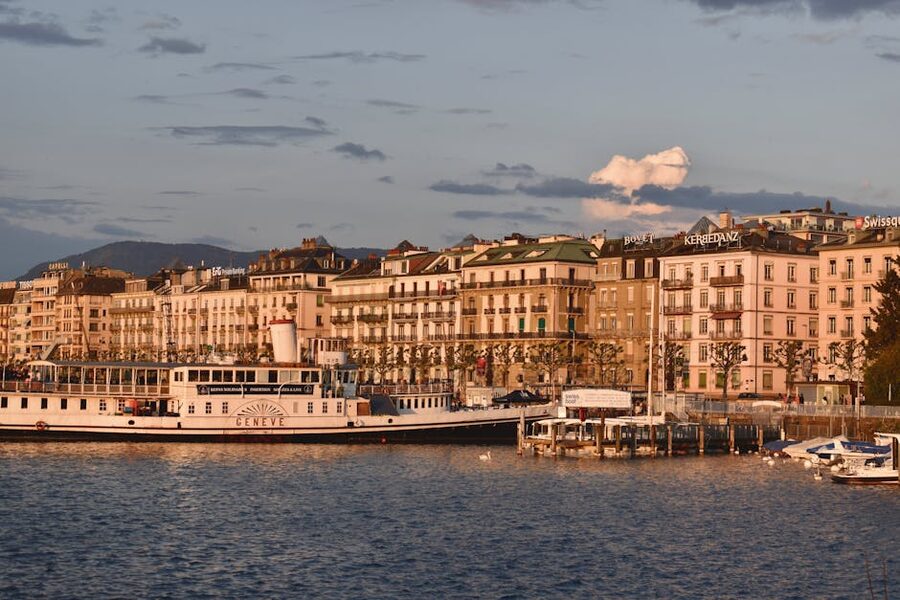
If you don’t want a guided tour, the independent route from Geneva to Chamonix is straightforward. There are two real options: the SAT shuttle bus (sometimes branded Mountain Drop-offs or AlpyBus depending on the operator), and the train via Saint-Gervais.
The shuttle bus picks up at Geneva airport (and some hotels) and drops at Chamonix town centre or your hotel. Around CHF 28-35 (about $30-40) one-way, CHF 55-70 round-trip. Travel time is about 90 minutes. Bookable online; runs several times daily, more frequent in winter for the ski season. This is what most independent day-trippers use.
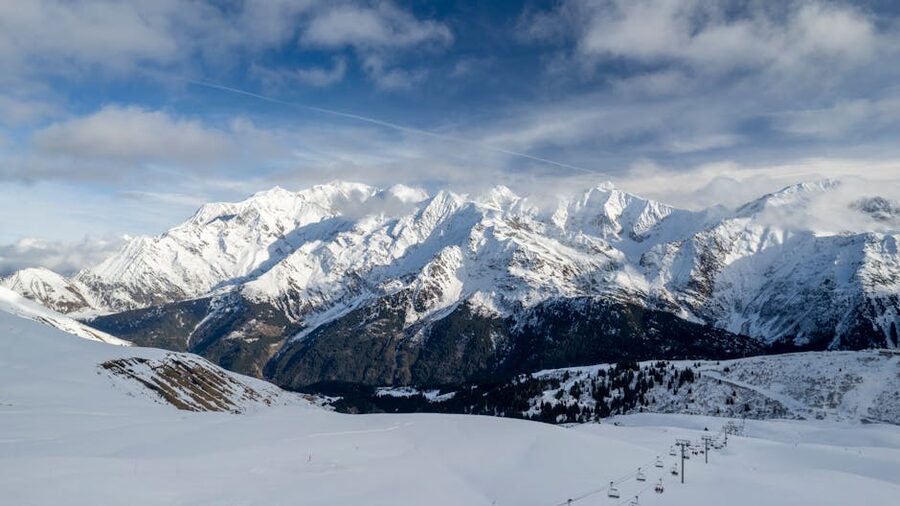
The train is more scenic but slower. From Geneva you take SBB to Saint-Gervais-Le Fayet, then change to the Mont Blanc Express (a small mountain train) for the last leg into Chamonix. Total time around 2h30 to 3h with the change, more if connections don’t line up. Cost varies wildly depending on tier; expect around CHF 50-70 each way. Worth doing one direction if you have time. Not worth doing both directions on a day trip.
You can also drive. It’s the same 90 minutes via the A40 and the Arve valley road, with parking in Chamonix at around €15-20 a day in the public lots near the train station. The drive itself is pleasant: lake, then valley, then sudden mountains.
If you’re already planning multiple French highlights, the Chamonix detour pairs interestingly with Paris-based trips like the Eiffel Tower or a Seine river cruise via a TGV south, but the practical move is to fly Paris-Geneva for €40-80 with EasyJet rather than spend a day on the train. Same logic applies if you’re doing Versailles as a Paris day trip earlier in the week. Geneva is the basecamp, not Paris.
Chamonix town: what to do with the free hours
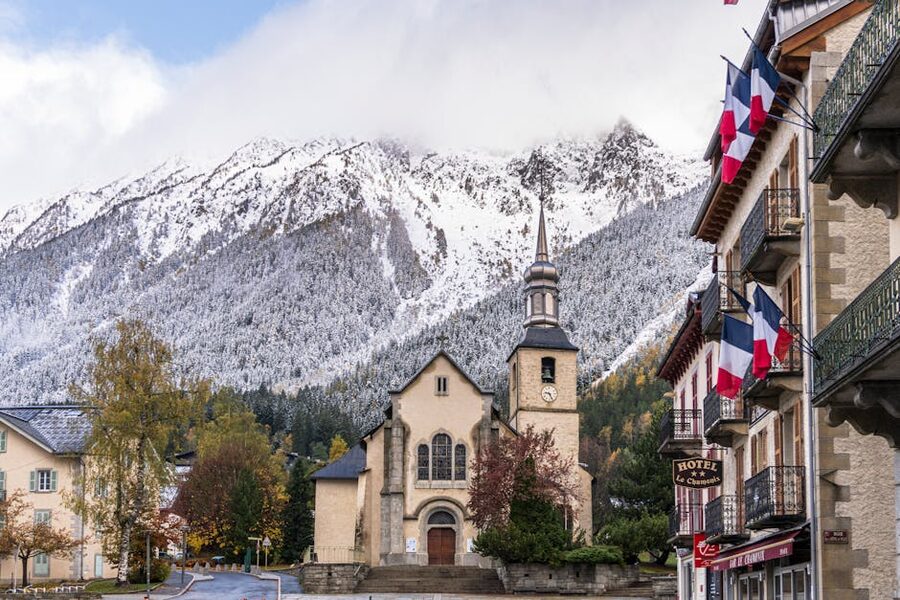
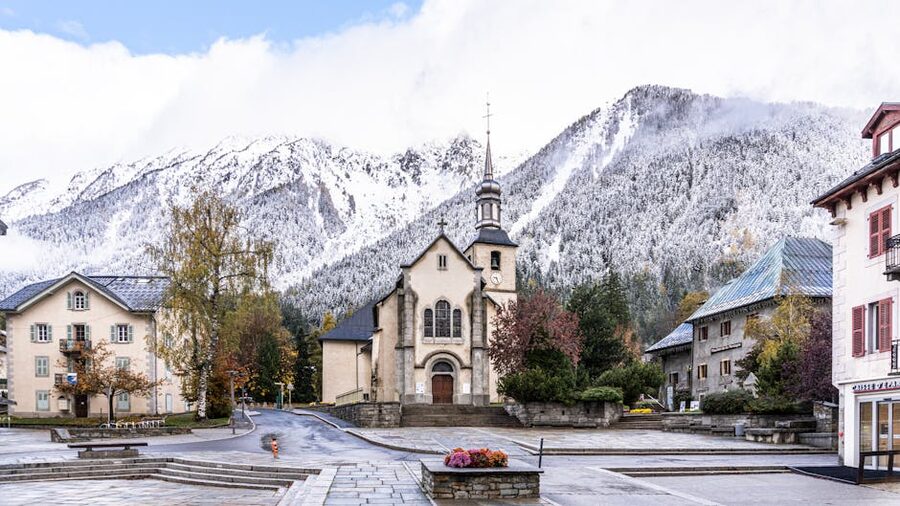
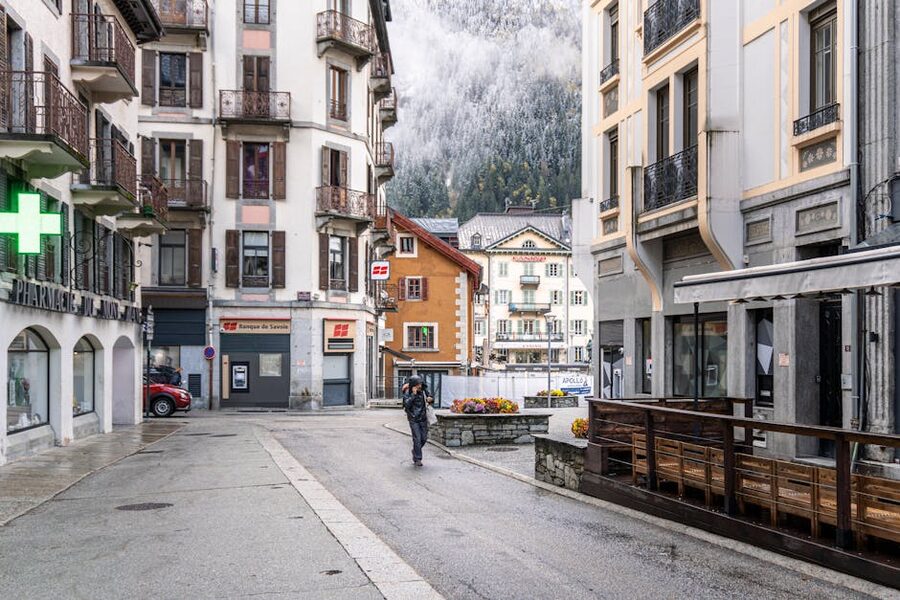
Chamonix-Mont-Blanc is a commune of about 9,000 permanent residents that swells to several times that size in season. The town centre is small. It’s pedestrian, walkable, and built around a fast-running river (the Arve) with mountain views from every corner. The architecture is Savoyard alpine with steep roofs and timber balconies, mostly rebuilt in the late 19th and early 20th centuries when Chamonix became a mountaineering destination.
If you have an hour or two between cable car and bus departure, the worth-it stops are:
- Place du Triangle de l’Amitié: the central square, with statues of Saussure and Balmat (the two men who made the first ascent of Mont Blanc in 1786). Most coach tours pose for a photo here.
- The Saint-Michel church: small Baroque village church, painted ceiling, free to enter. Worth ten minutes if you like that kind of thing.
- Maison de la Montagne: the climbing and guides bureau, which doubles as a small museum of Chamonix mountaineering history.
- Lunch at a brasserie on Rue Joseph Vallot: the main pedestrian street. Local Savoyard food (tartiflette, raclette, fondue) at €18-25 for a main, or a panini and a beer at one of the casual bars for under €15.
Skip the souvenir shops (Mont Blanc snow globes, alpine cuckoo clocks made in China). Skip the random “alpine museum” that one of the day-trip operators stops at on the way back to Geneva: it’s a sales pitch for cheese and Génépi liqueur dressed up as a museum. The actual mountaineering history is in the Maison de la Montagne or the Musée Alpin, which neither of the standard tours include.
The signature off-trip: a Tour du Mont Blanc segment
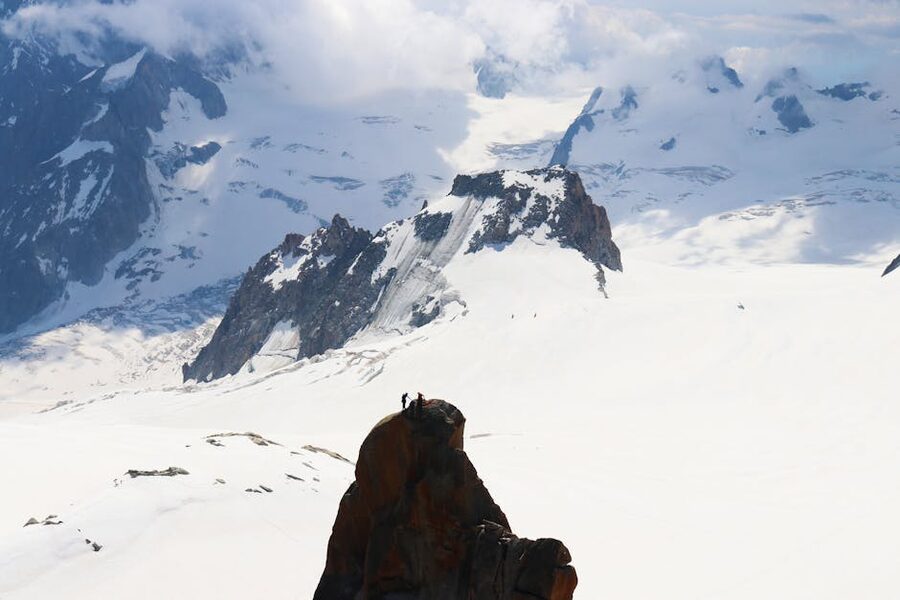
If you only do Chamonix as a day trip, you do not have time for this. If you give Chamonix two days or three, the move is to book a single segment of the Tour du Mont Blanc, the famous 170km circular hike around the entire massif. Most people do the whole thing in 10-11 days. You can do one beautiful segment in a long morning.
The most accessible Chamonix-side segment is the Brévent to Plan Praz traverse: a high balcony trail with the entire Mont Blanc range across the valley. Take the Brévent cable car up from town (about €35 round-trip), walk the balcony for two to three hours with the view directly opposite, and ride the Flégère cable car back down. It’s signposted, paved in places, and busy enough that you don’t need a guide.
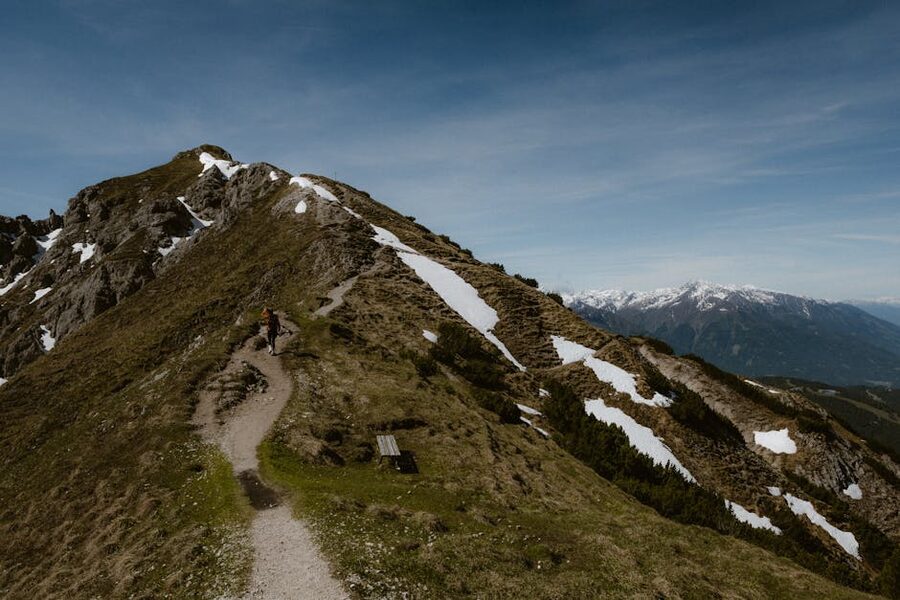
This is what Chamonix actually is, the rest of the year, when it’s not packed with day-trippers from Geneva: a serious mountain town with thousands of kilometres of marked trail. The day trip shows you the icing. The two-day trip shows you the cake.
Comparing Chamonix with the other Alpine cable cars
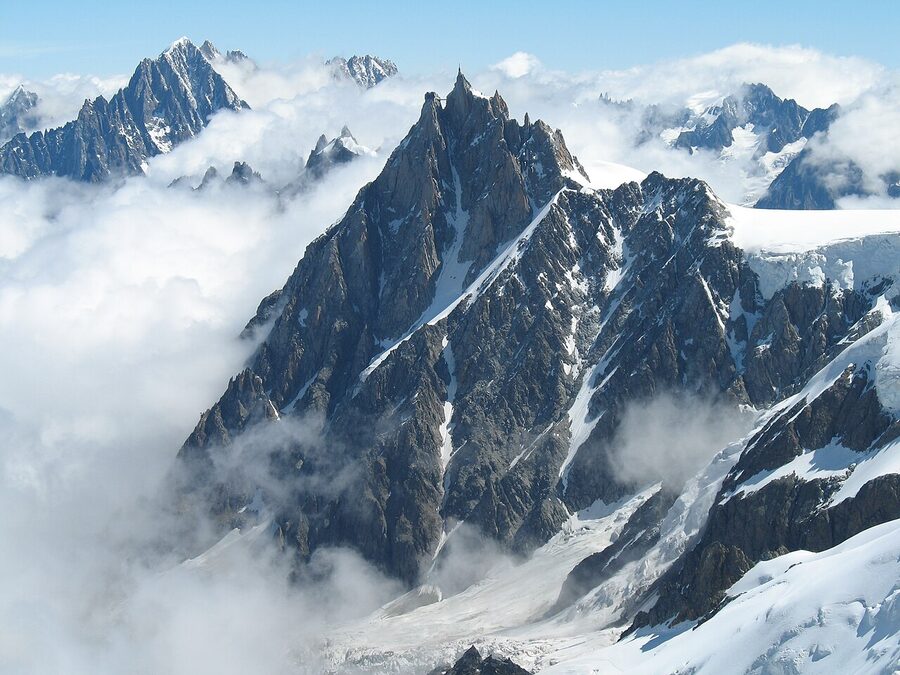
If you’ve done other big cable car experiences, here’s how Chamonix slots in. The closest experience in feel is Switzerland’s Klein Matterhorn (3,883m), which beats Aiguille du Midi by 41 vertical metres for the title of highest cable car station. The next nearest peer experience in the Alps is the Bernina Express train through the Italian Alps, which is more about the journey through high passes than the summit itself. The Bernina is a four-hour scenic train; Aiguille du Midi is a 20-minute vertical assault. Different products, both good.
Compared to Italy’s volcanic peaks, the experience is completely different. Mount Vesuvius from Pompeii is a hike up an active volcano with a crater at the top; you walk it. Mount Etna from Catania is a longer cable car plus 4×4 plus walk to the higher craters; you can smell sulphur. Aiguille du Midi is straight panoramic alpinism: ice, granite, exposure, no volcanic theatre. If you can only choose one of the three, Aiguille du Midi has the cleanest pure-mountain hit; Etna has the geology spectacle; Vesuvius has the historical context with the ruins below.
From the Spanish side, the closest cable-car-to-summit experience is Mount Teide on Tenerife: 3,555m, again a cable car, but the landscape is volcanic desert with the Atlantic visible below. Mount Teide and Aiguille du Midi are the two summits in southern Europe you can reach by cable car in under 30 minutes. Both are worth doing. Both demand altitude respect.
For something gentler, the cable car to Montserrat above Barcelona is a different category entirely: shorter, lower, monastery-themed. The Caminito del Rey gorge walk in Spain (Caminito del Rey from Málaga) is the closest match in terms of vertical exposure: a 100m boardwalk pinned to a cliff face. If the Step into the Void looks fun in photos, you’d probably enjoy the Caminito too.
Skiing in Chamonix: a brief winter note
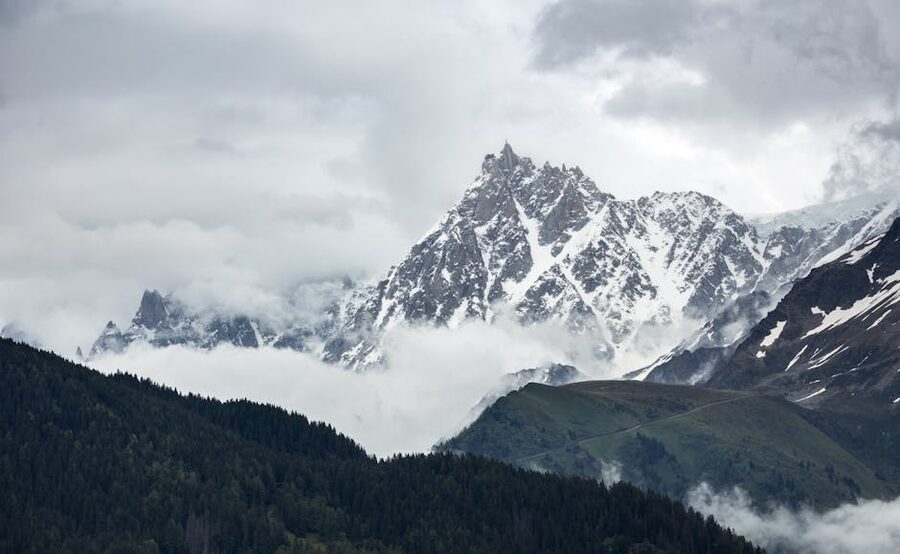
If you’re reading this in winter and wondering whether to book a Geneva-Chamonix day trip in ski season: probably not. Chamonix is one of the most serious off-piste ski destinations in Europe, but as a day trip it doesn’t make sense. You’d burn three hours on transit, two hours on lift queues, and maybe four hours of actual skiing. For day skiing from Geneva, Verbier or Les Houches are easier. Chamonix as a ski destination needs at least three days, ideally a week, and a decent technical level for the famous off-piste runs.
The cable car to Aiguille du Midi runs in winter, but stops more often for wind. The Mer de Glace train runs to Montenvers but the ice cave is closed from late October to mid-December for re-carving. Winter is for the village (which is genuinely lovely under snow) and for the slopes, not for the panoramic-view trip we’re describing here.
The history nobody tells you on the bus
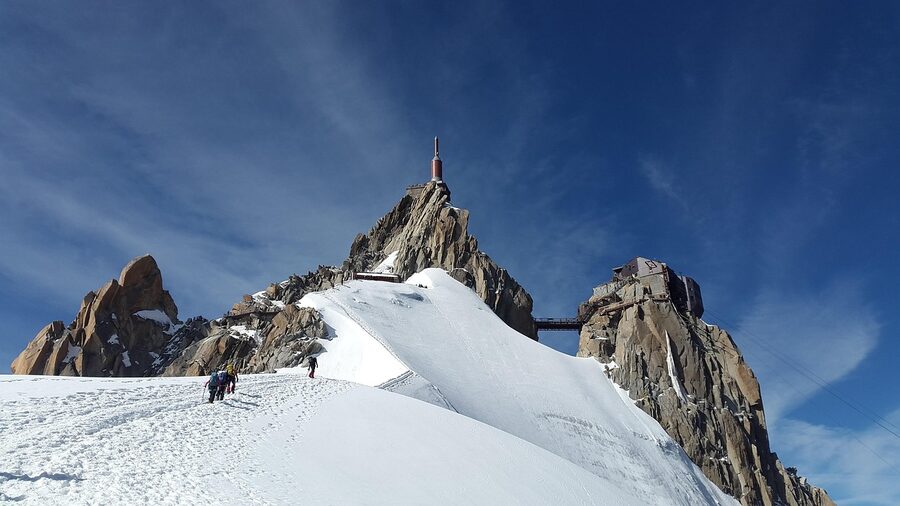
Chamonix is the place modern mountaineering was invented. In 1786, two locals named Jacques Balmat and Michel-Gabriel Paccard climbed Mont Blanc for the first time, in response to a long-standing offer of a reward put up by the geographer Horace-Bénédict de Saussure. Saussure himself climbed the mountain the following year. The act of climbing a peak just because it was high, rather than to chase chamois or move sheep, was a new idea, and Chamonix is where it started.
By the 1850s the village had become a fashionable destination for British and German mountaineers and the wealthy travellers who watched them. The first Chamonix guides’ company, the Compagnie des Guides de Chamonix, was founded in 1821 and is still operating; it’s the oldest mountain guides’ company in the world. The Maison de la Montagne in town is its base.
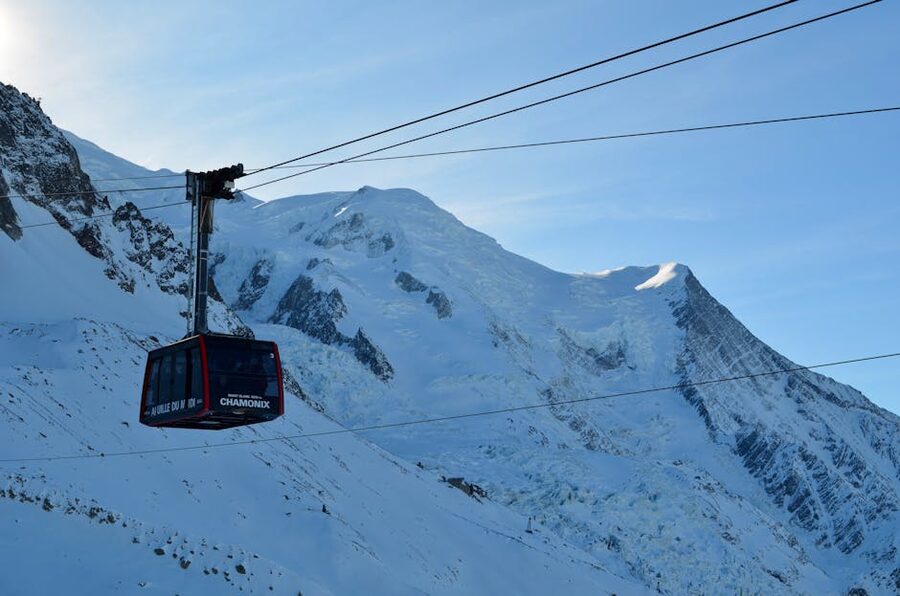
The Aiguille du Midi cable car was finished in 1955 after twelve years of construction interrupted by the war. The lower section had existed since 1924 in a different form (the Téléphérique des Glaciers, decommissioned), but the second stage from Plan de l’Aiguille up to the summit was the engineering marvel: a single 2,867m span of cable from the middle station to the summit, with no support pylon. At the time it was the highest cable car in the world. It still runs the same route today.
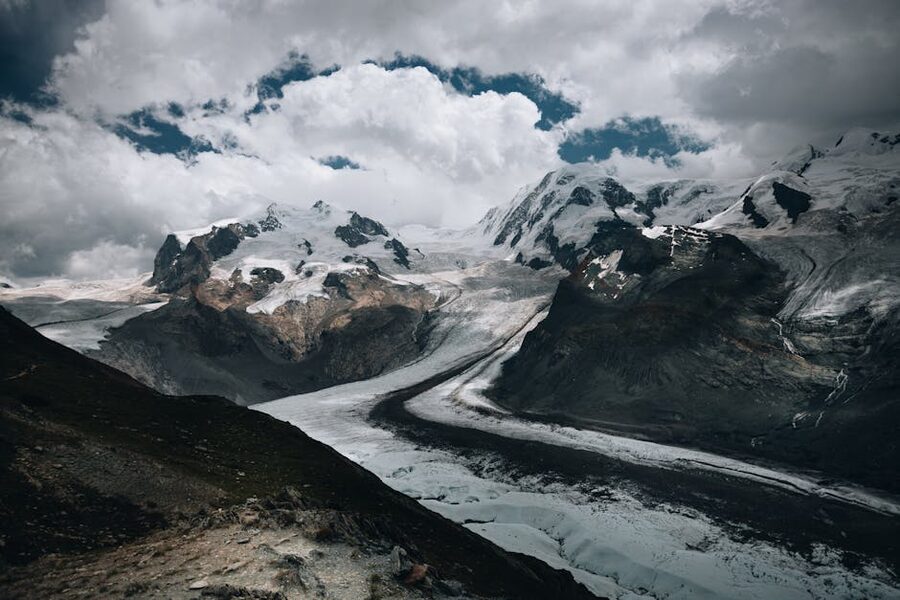
The Mer de Glace was named (“Sea of Ice”) by William Windham, an English traveller who came up to Montenvers in 1741 with a Geneva-based party and described it in the trip report he published the following year. That trip report is one of the documents that turned Chamonix from an obscure Savoyard valley into a destination. Half of British alpine tourism in the 19th century is descended from William Windham’s June 1741 weekend.
The first Winter Olympics were held in Chamonix in 1924. There’s a small monument to them next to the modern ice rink. The town has hosted no Olympics since, and the alpine skiing world cup circuit only stops here occasionally, but the 1924 designation matters: Chamonix was already the global capital of alpine winter sport before the Olympics existed as such.
What about Mont Blanc itself? Can you climb it?
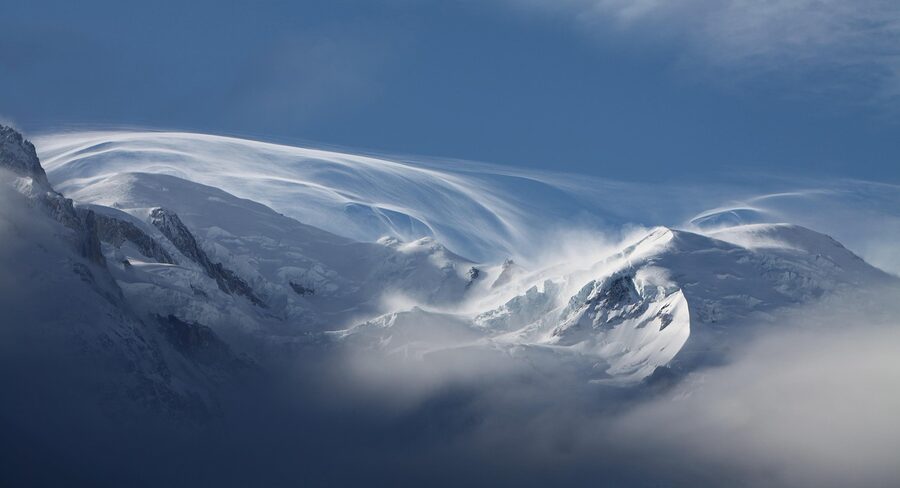
This question comes up on every coach tour. The answer is yes, but not as a day trip from Geneva. The summit of Mont Blanc is 4,809m, the highest peak in Western Europe (Mount Elbrus in Russia is technically Europe’s highest, depending on how you draw the continent). The standard ascent from Chamonix is a two-day climb via the Goûter refuge: glacier travel, rock scrambling, an alpine start at 2am for the summit push, real altitude. About 20,000 people attempt it each year, about half make the summit, and around 100 people die on the mountain annually across all routes.
You don’t climb Mont Blanc casually. The local guides require a fitness assessment, you need crampons, an ice axe, technical clothing, a guide booked months ahead, weather windows, and ideally previous high-altitude experience. The Compagnie des Guides will turn you away if your CV is wrong. If you want to set foot on the mountain itself without summitting, the easiest taste is the Vallée Blanche off-piste ski descent (April-May only, with a guide), or the Cosmiques refuge walk from Aiguille du Midi (about an hour from the cable car summit, glacier crossing required).
For 95% of visitors, “see Mont Blanc” means look at it from Aiguille du Midi or from the valley below. That is the right answer.
Costs and add-ons: what a typical Chamonix day actually runs
To set expectations on the spend, here’s a typical breakdown for a one-day independent trip from Geneva:
- Round-trip shuttle bus Geneva to Chamonix: $30-40
- Aiguille du Midi cable car round-trip: $84 (around €77)
- Montenvers train to Mer de Glace round-trip with ice cave: $42 (around €38)
- Lunch in town (Savoyard menu): $25-35
- Coffee, snack, water at altitude: $15
- Total: roughly $200-220 per person, for a day with both cable car and glacier train, eating modestly.
That’s the comparison point for the $253 cable-car-and-train guided tour from Geneva. The premium tour is barely more expensive than DIY, with the upside that the timing is engineered, the queues are managed, and the bus drops you at your hotel. If you’re new to the area, the premium tour is the easier first visit.
The basic $126 tour saves you the cable car cost but you also don’t go up. That’s fine if you’ve been before, or if you’ve decided the village and the lower viewpoints are enough. For a first visit, it’s the budget option that misses the point.
When to go: month by month
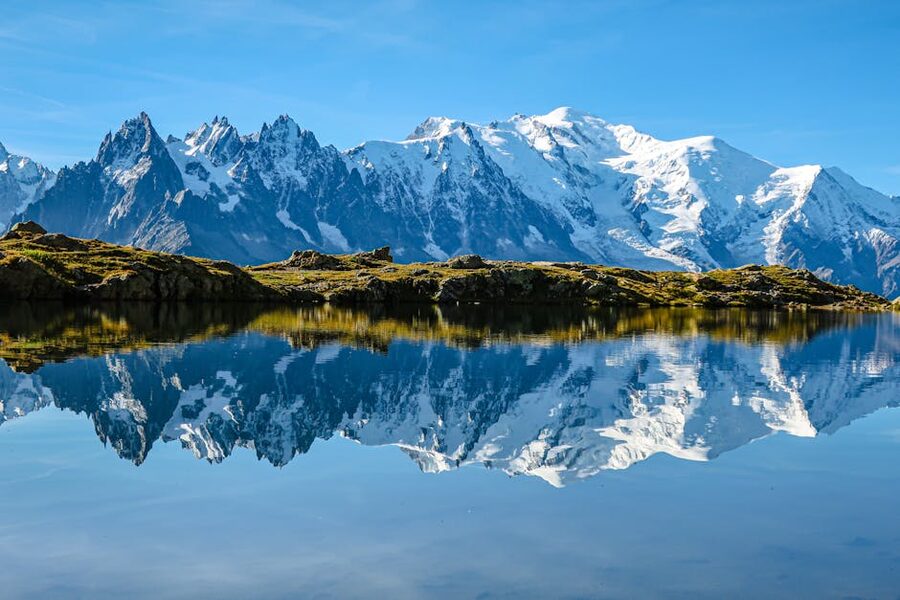
June: the best month. Snowmelt is fresh, valley flowers, long days (sun until 9:30pm), cable car running with minimal weather closures, and crowds are thin until the last week. This is when locals tell visitors to come.
July: still excellent. First week of July is comparable to June. Crowds build through the month. Weather can be warm in the valley (high 20s) but cool at altitude.
August: the worst month for the day trip. French summer holiday peak. Cable car queues 2-3 hours, the bus from Geneva sells out a week ahead, accommodation in the village is gone or triple price. Avoid.
September: the second best month. Crowds thin out fast after the first week, weather is still stable, valley colours start to shift in late September. If you can be flexible with travel dates, this is the move.
October: the cable car runs through about 20 October then closes for annual maintenance until late December. Mer de Glace train and ice cave close around the same time. The valley is still pretty in early October but the signature attractions are winding down.
November: dead period. Most lifts and trains closed. Skip.
December to April: ski season. Cable car runs intermittently. Day trip from Geneva is technically possible but the value is poor. Stay multiple days, ski.
May: shoulder. Cable car reopens mid-May. Snow still high in the valley. Quiet, sometimes excellent weather, but ice cave not open yet.
What I’d skip if I were doing this again
A few notes from doing this trip more than once:
- The “alpine museum” sales-pitch stop on the way back to Geneva. You know the one. Cheese tasting, Génépi pours, “scientific information about the glaciers” projected on a wall. It’s a retail stop, not a museum. If your tour includes it, spend the time outside in the parking lot.
- The Mont Blanc tunnel viewpoint on a five-minute photo stop. The tunnel is just a tunnel entrance. The mountain is more impressive from anywhere in the village. This stop pads the bus tour itinerary.
- Buying the Step into the Void photo from the kiosk at the summit. €15-20 for a photo your friend can take with their phone. The cube is small and well-lit; phone photos work fine.
- Lunch at the Aiguille du Midi summit restaurant. €30 for a sandwich and a coffee. The view is amazing but the food is airport-grade. Eat in the village before or after, where Savoyard tartiflette costs the same and is actually food.
- Combining Chamonix with the Geneva city tour on the same day. The bus tour day is already 10 hours. Adding a Geneva walk on top is too much. Save Geneva for a separate evening or morning.
What pairs well after Chamonix
If Chamonix gives you the alpine bug, the next moves depend on which direction you head from Geneva. Most travellers loop back to Paris, in which case the rhythm is to do Chamonix as your alpine day, then return to the city for the museums and rivers. The classic Paris stack pairs Eiffel Tower tickets, a Seine river cruise, and Monet’s house at Giverny as soft urban antidotes to a hard mountain day. The contrast works well.
If you’re going further south, the natural follow-on is the Loire Valley castles route, which is the opposite kind of French day: chateaux, gardens, river bends. Or you carry on to Lyon for a city break with food at the centre. Lyon to Nice opens up the French Riviera and Verdon Gorge as a sister French mountain landscape day-trip from the southern coast: a similar 90-minute drive each way, but to a turquoise canyon instead of a snow summit.
If you’re crossing into Italy, the practical move is via the Mont Blanc tunnel south to Aosta and then on to Milan, which puts you a short train from the Bernina Express through the Italian Alps. Doing both Chamonix and the Bernina in the same trip gives you the French and Italian Alps back to back, which is the right comparison if you’re trying to figure out which side of the range suits you. (Personal vote: the French side is more dramatic in the immediate vicinity of one big peak; the Italian side is more spread out and gentler in tempo.)