
The Japanese footbridge over Monet’s lily pond at Giverny is wider than it photographs. Stand at the centre and the wisteria-laden rails come up to your hip. Look down. The water under your feet is the same flat green Monet painted in 1899 for Water Lily Pond, Symphony in Green, and the pads are descended from the same plants he ordered from a Latour-Marliac nursery catalogue that year. This isn’t a recreation. The plants are cuttings, replanted as needed, but the line of descent is unbroken. You’re standing in the painting.
Most people do Giverny as a half-day trip from Paris and rush through. They get on the 09:00 bus from Vernon, walk into the gardens at 10:30 with a thousand other people, race through the house, eat a stale sandwich at the gift shop, and ride the 13:30 train back. The right Giverny visit is a full day. Walk the Clos Normand at 09:30 just after the gates open, while the morning light still slants flat across the long view. Tour the house at 11:00 when the rooms thin out. Have a proper Normandy lunch in the village. And come back to the lily pond at 16:00 when the afternoon light hits the water at the angle Monet kept painting from his covered boat.
In a hurry? The three Giverny tours worth booking
- Audio guide day trip from Paris ($93), the flagship round-trip with the most flexible time on site. Check availability and times.
- Half-day with live guide ($74), cheaper, faster, leaves you back in Paris by lunch. Check availability and times.
- Giverny plus Versailles full day ($163), the splurge combo if you’ve only got one free day for both. Check availability and times.
Why Giverny is worth a full day, not half
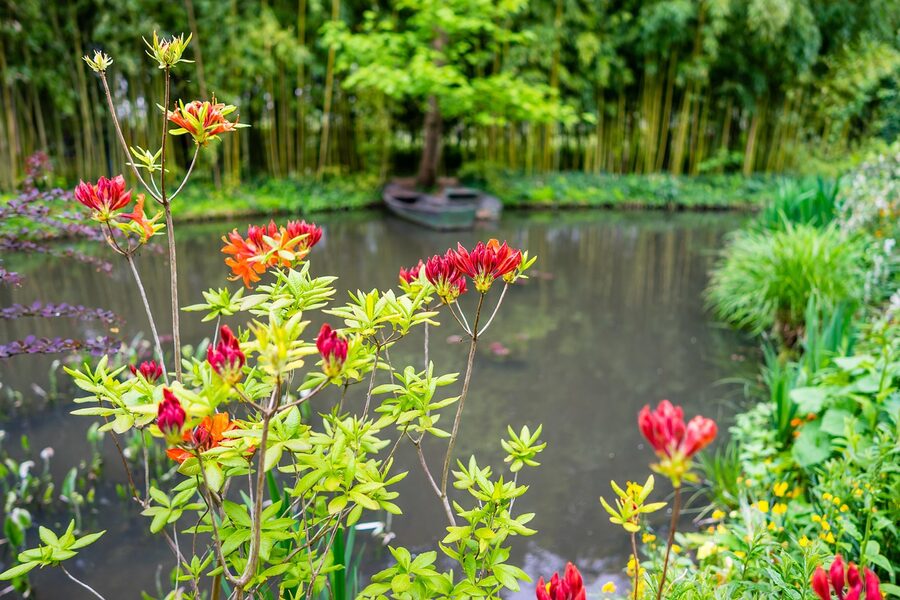
The pilgrimage logic matters here. The eight massive Water Lilies panels that wrap the two oval rooms at the Orangerie in Paris were painted at Giverny. Most of them. Monet worked on them for the last twelve years of his life, in a custom-built studio he commissioned in 1916 specifically because the existing studios weren’t tall enough for canvases two metres high. He painted from memory, from sketches, and from the pond itself. He’d row out in a flat-bottomed boat moored at the bank, anchor among the pads, and paint with the canvas resting on a frame across the gunwales.
So Giverny isn’t a museum. It’s the source. If you’ve already done the Orangerie and stood in those two oval rooms with the water and the light wrapping around you, Giverny is where that came from. If you haven’t done the Orangerie yet, do Giverny first and then go see the result back in Paris. Either order works. Both rooms make sense once you’ve stood on the bridge.

The other reason a full day works: the gardens themselves. There are two of them, and they want different times of day. The Clos Normand is the structured flower garden directly in front of the pink house, geometric beds running in straight lines down to the road. Morning light flatters it. The Jardin d’Eau is across the road, the lily pond and the Japanese bridge, and it’s the late-afternoon garden. Rushing both into one ninety-minute slot is the mistake the half-day tours make. Split the visit and you’ll see what Monet actually built.
Getting to Giverny from Paris
Giverny isn’t in Paris. It’s about 80km west, in the Eure department, technically in Normandy though right on the Île-de-France border. The village has roughly 500 residents. There’s no train station. You go via Vernon, which has a station on the line out of Paris-Saint-Lazare, and then bridge the last 7km by bus, taxi, bike, or shuttle.
The DIY route is straightforward. Buy a TER ticket from Paris-Saint-Lazare to Vernon (about €8 to €15 each way depending on time of day, 45 to 50 minutes). The shuttle bus from Vernon train station to Giverny meets the trains and runs about €10 round-trip. Total round-trip cost from central Paris: roughly €30 to €40 depending on which trains you catch. The queue at Vernon for the shuttle can run twenty to thirty minutes in summer. Bring something to read.
Driving works too. About an hour and twenty minutes from central Paris on the A13 motorway, plus tolls. There’s a paid car park behind the Maison de Monet that fills early in summer, so aim to arrive before 10:00 if you want a spot near the entrance. The drive is fine but the traffic getting out of Paris on a Saturday morning is not. Park-and-train via Mantes-la-Jolie is also an option if you don’t want to drive into the village.
The third route is a guided tour from Paris, and that’s what most first-time visitors actually book. The price difference is real but so is the convenience. A round-trip Paris-Vernon-Giverny day on your own runs roughly €50 once you add lunch and the small expenses. The cheapest organised half-day tour is around $74 with the bus, the entrance, and the audio guide bundled. The price gap closes once you factor in the queue time at Vernon. If you’ve never been before and don’t want to puzzle out the Vernon shuttle schedule, the bus tour pays for itself in saved fiddling.
The three tours from Paris worth booking
I’ve ranked these by who they’re best for. All three include round-trip transport from Paris, all three skip the entrance queue. The differences are time on site, what else you see that day, and whether you get a live guide or an audio guide.
1. From Paris: Giverny Day Trip With Audio Guide or Live Guide: $93
This is the right pick if you want the most actual time at Giverny on a structured day. The bus leaves Paris around 08:15 and gets you back by mid-afternoon, with three hours on site, which is enough to do both gardens properly and the house. Our full review covers the audio-guide-versus-live-guide choice and which option suits which kind of visitor.
2. From Paris: Giverny, Monet’s House, & Gardens Half-Day Trip: $74
Pick this one if your Paris itinerary is tight and you only have a morning, because you’re back in central Paris by lunch with an afternoon free. The trade-off is just under two hours on site, which is enough for either both gardens at a clip or one garden plus the house but not both well. Our review goes into who this format suits and who should pay the extra to extend.
3. From Paris: Giverny and Versailles Palace Guided Day Trip: $163
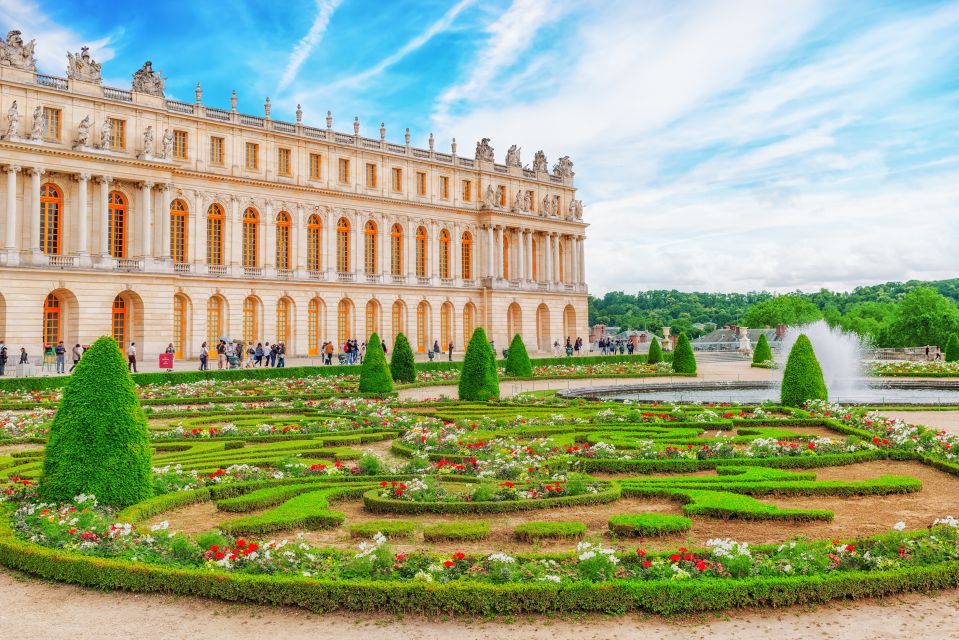
This is the right pick if you’ve genuinely only got one day outside Paris and you’re going to feel cheated if you miss either Monet or Marie Antoinette. It’s a long day, eleven hours door to door, but the bus does the driving and the order is set up so you’re at Giverny before the worst of the crowds and at Versailles after them. Our review says outright which half feels rushed.
Tickets, hours, and the queue
The official ticket from the Fondation Claude Monet is €13 for adults, €7 for children aged 7 to 17, free under 7. Disabled visitors pay €6. The site is included in the Paris Museum Pass for free entry, which is unusual for a privately-run foundation but the pass partnership has held for years. Bring the pass and you skip the cashier queue at the gate, though you still need a timed entry slot in summer.
Opening dates are seasonal. The site is open daily from late March (usually 21 March, sometimes a few days earlier or later depending on the year) to about 1 November. It closes for the winter. Don’t fly to Paris in February for Monet’s garden. You’ll find the gates locked.
Daily hours are 09:30 to 18:00, last entry at 17:30. The official guidance is to allow ninety minutes for the visit. That’s the bare minimum. Plan on three hours if you’re including the house and walking both gardens at a normal pace. Plan on five hours if you want time on a bench by the pond and lunch in the village.
Buy your timed-entry ticket online before you arrive. The on-site queue at the cashier on a busy summer Saturday can run forty-five minutes. The advance e-ticket queue runs about ten. The price is the same. The queue is not.
Walking the Clos Normand
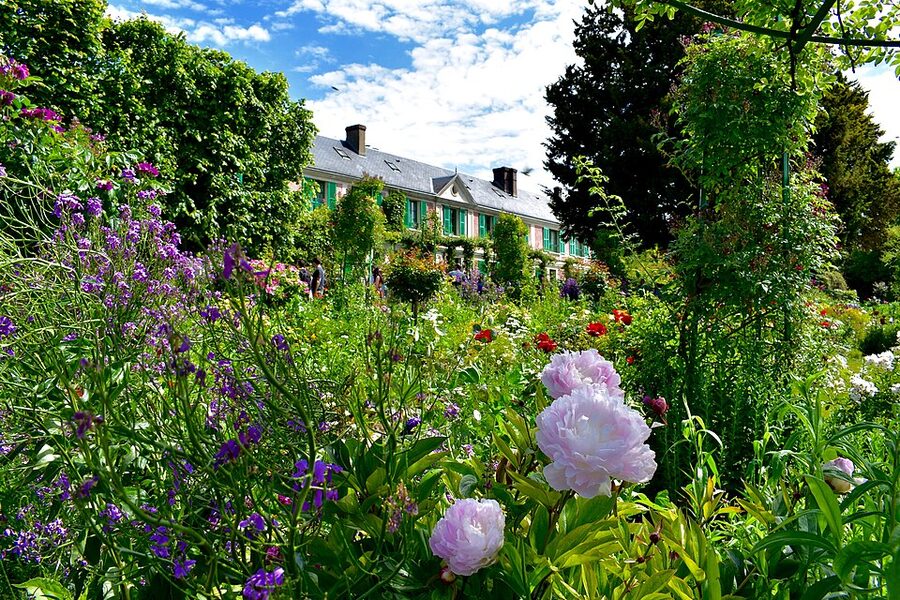
The Clos Normand is the structured flower garden directly in front of the house. Roughly a hectare of beds running down toward the road and a long central allée running away from the front door. It looks rectangular from the air. From inside the garden it doesn’t, because the beds are planted in deep colour bands that pull you down the cross paths and away from the geometry.
Monet planted this garden himself starting in 1883 when he first rented the property. Tulips and forget-me-nots in spring. Irises in May. Roses, peonies, foxgloves, and oriental poppies in June. A second wave of dahlias, asters, sunflowers, and nasturtiums in late summer and early autumn. The colour scheme deliberately shifts month to month. There is no lazy month here. If you visit in early April you see one garden. If you visit in late September you see a different one. Both look like Monet paintings because the planting was Monet’s design.
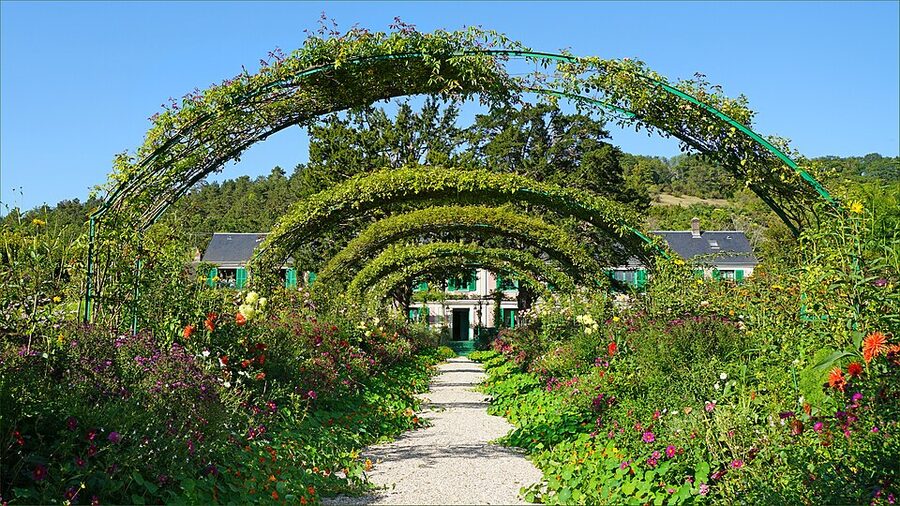
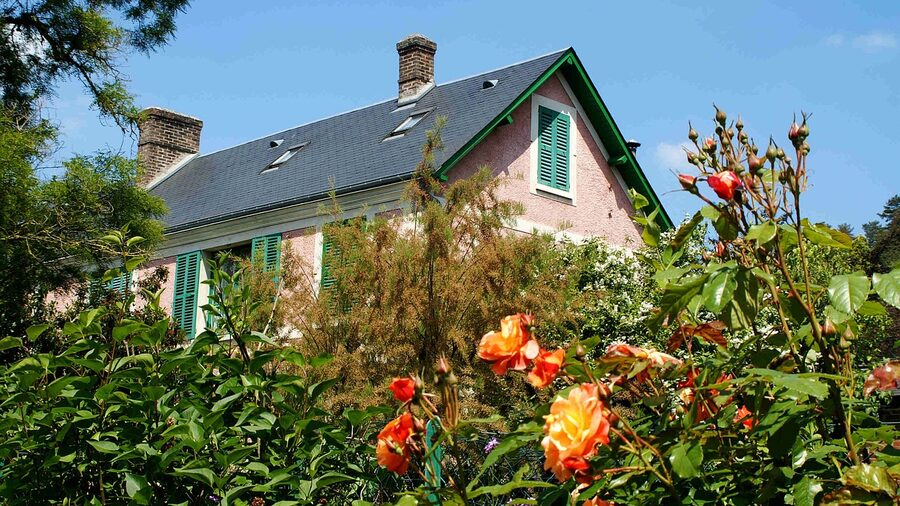
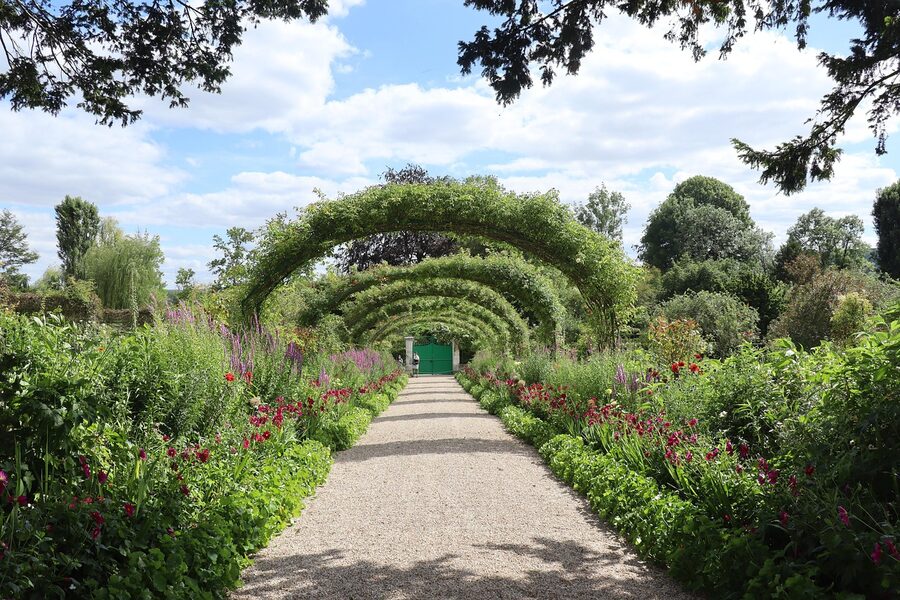
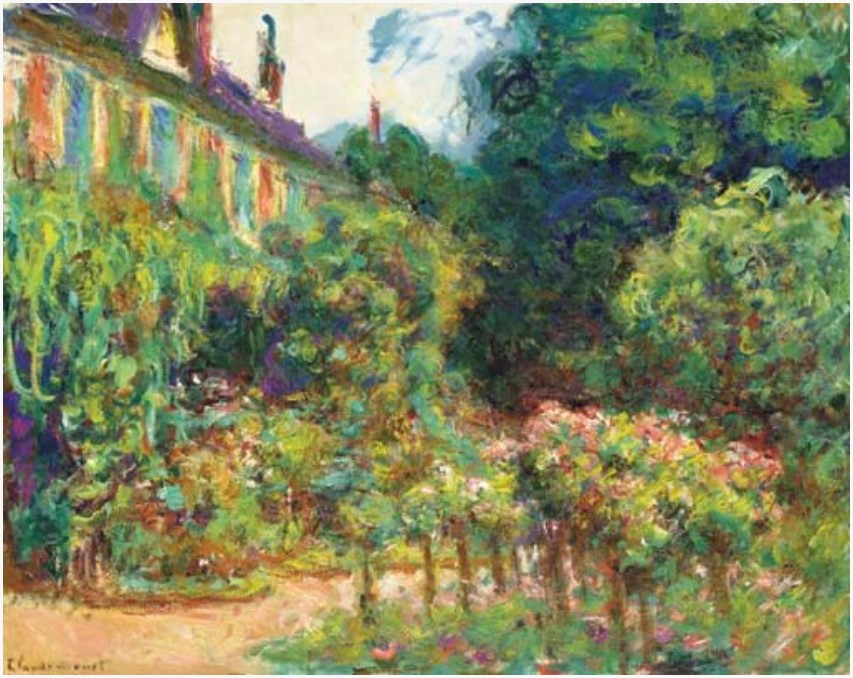
The central allée is the photograph everyone wants. Iron arches over the central path, climbing roses on the arches, the pink house with green shutters at the far end. It looks exactly like the photographs because it’s been carefully maintained to look exactly like the photographs. Get there before 10:30 if you want it without other visitors in the frame. By 11:30 in summer it’s body to body.
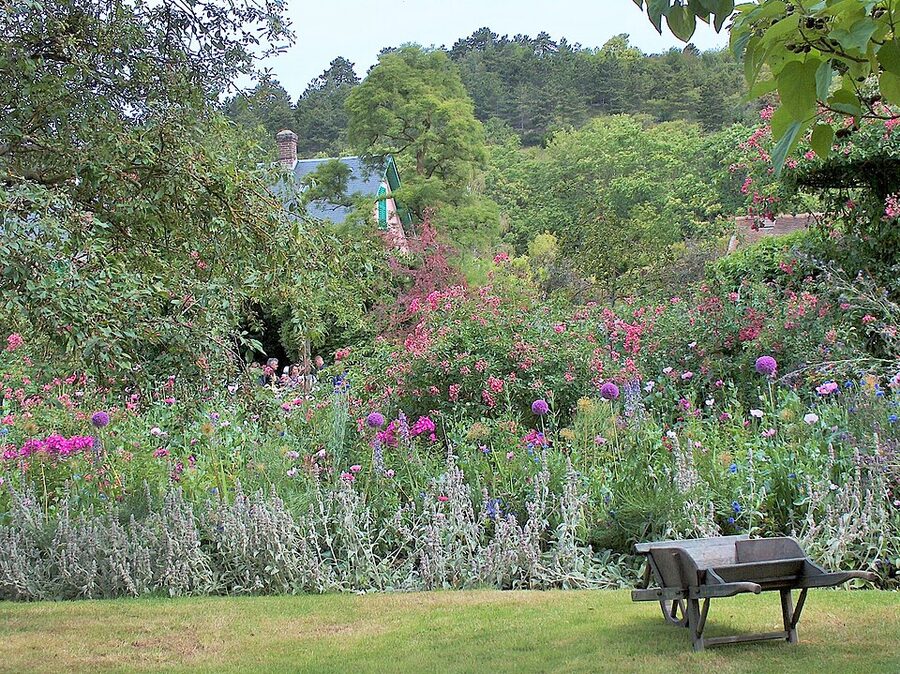
The bed structure is worth a slow look. Monet wanted dense, painterly masses of colour, not the precise rows of a botanical garden. So the beds are 1m by 1m, planted with a height curve, taller flowers in the middle, shorter at the edges. The colours blend at the edges of each bed into the next. It’s a garden composed like a canvas. If you spend twenty minutes here paying attention to which colours sit next to which, you’ll start seeing the same logic in the paintings he made of the same garden.
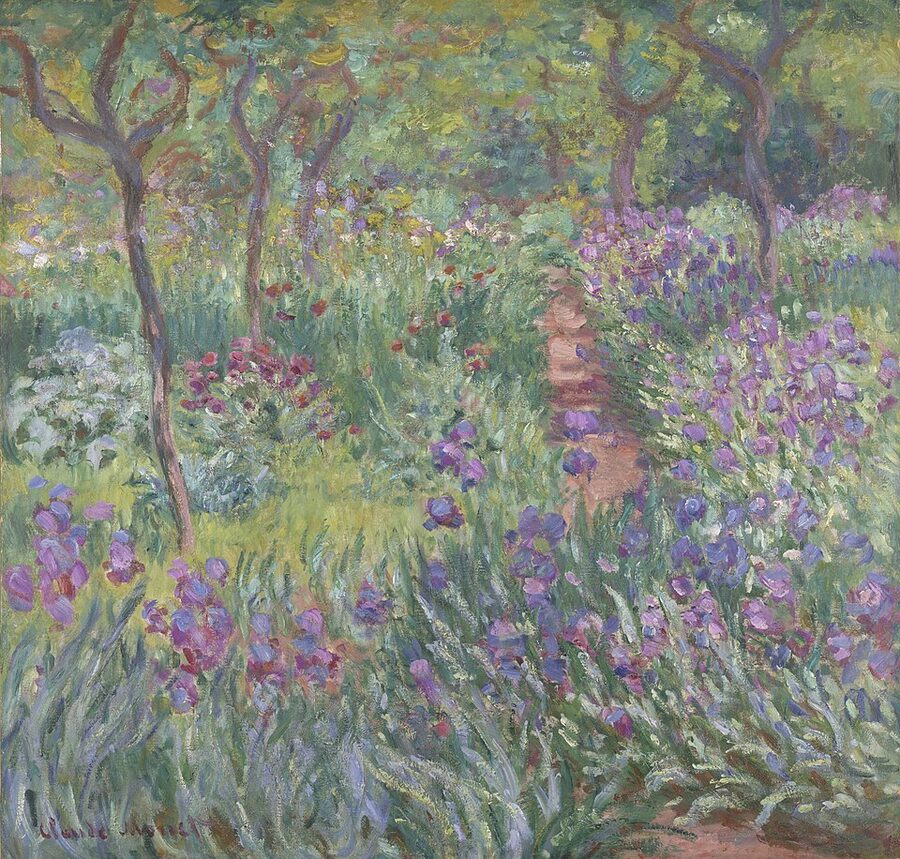
Inside the pink house with the green shutters
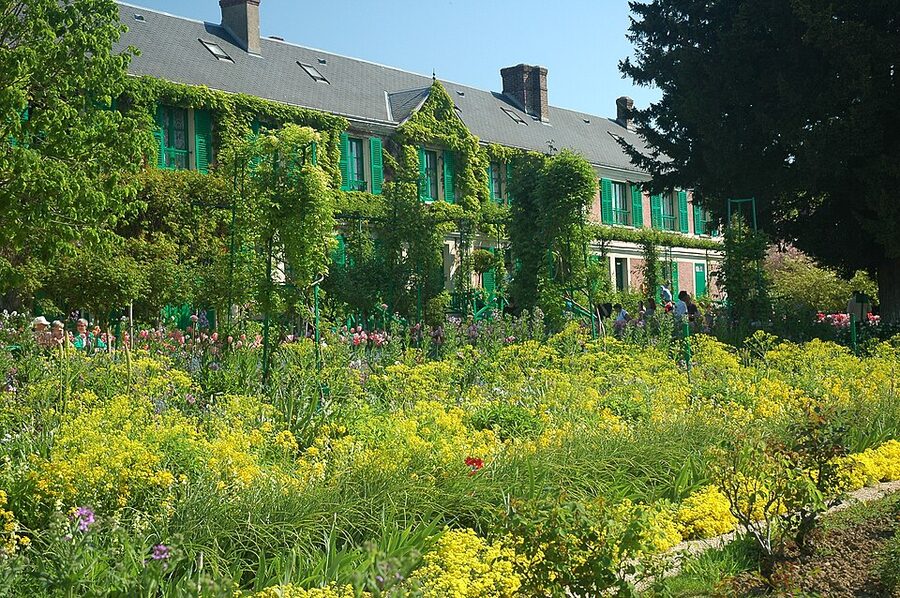
The house is the part most visitors underestimate. Pink stucco walls. Green shutters. Pink roses climbing the entry porch. It’s longer than it looks from the front because Monet kept extending it to the west as the family grew. He bought the property outright in 1890 after renting it for seven years. The interior was preserved, lost to disrepair after his death in 1926, then restored painstakingly in the 1970s and opened to the public in 1980 by the Fondation Claude Monet.
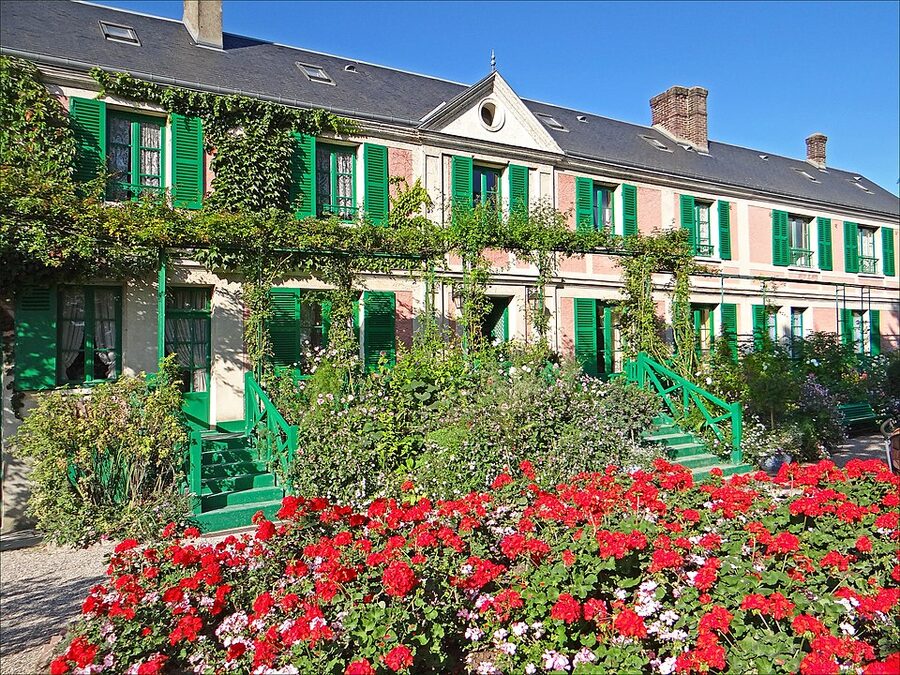
You enter through the original studio. This was Monet’s first painting space at Giverny, a converted barn on the western end of the house. It’s now used as a gift shop and orientation space, which is annoying if you’re hoping for a hushed Vermeer-style preserved studio. It is what it is. The reproductions on the walls give you a sense of how Monet hung his own work. He kept his finished paintings around him constantly.
The dining room is the room that surprises everyone. Bright yellow walls. Yellow furniture. A pale wood floor. And the entire wall hung with Japanese woodblock prints from Monet’s collection. He owned 231 of them, mostly Hiroshige and Hokusai, and the dining room and the corridors of the house are now hung with the originals. This was how he ate dinner every day. Yellow walls and the Tōkaidō.
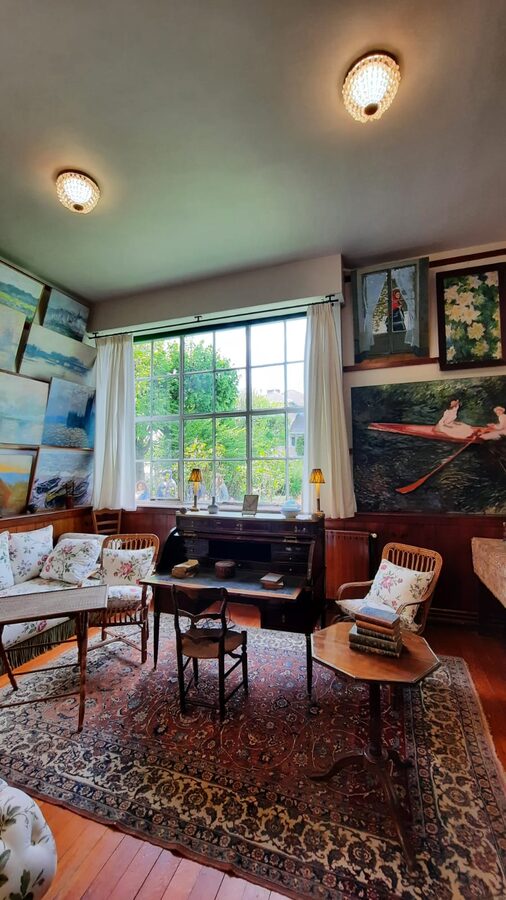
The kitchen is blue. Cobalt and pale tile and copper pans hung along the wall. Monet was famously a serious cook and entertainer; Cézanne, Renoir, Pissarro, Rodin, and Clemenceau all ate at this table. There’s a giant cast-iron stove that still looks usable. Don’t miss the bread oven set into the wall.
Upstairs are the bedrooms. Monet’s room is the one that gets the morning light. Large windows facing east toward the garden. Pale walls. A simple bed. From the windows you look directly down across the Clos Normand toward the road. He’d have been awake at first light most days for the better part of forty-three years, looking at exactly that view. There’s a copy of the early sketch he made out of this window the first month he rented the house.
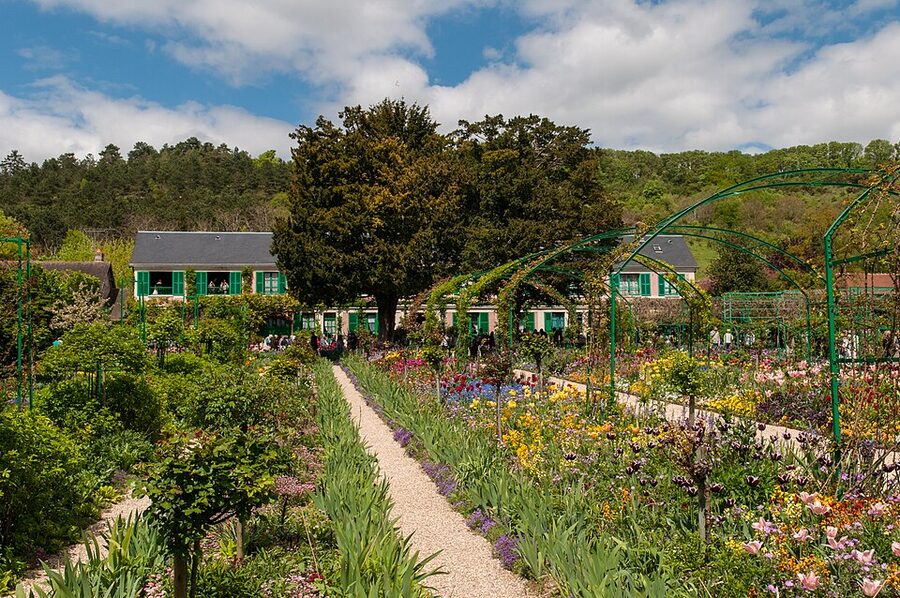
One quiet thing the house does well: it doesn’t try to be a museum. Almost no labels. Almost no didactic panels. You walk through the rooms the way a guest in 1910 would have walked through them, looking at the prints and the furniture and the cookware as a coherent home rather than as exhibits. The audio guide fills in the dates if you want them. If you don’t, the rooms speak for themselves.
The Jardin d’Eau and the Japanese bridge
The water garden is across the road from the Clos Normand. There’s an underground tunnel now that connects the two so you don’t have to cross the D5 highway, but the road was always there and Monet had to cross it on foot every time he wanted to paint the lily pond. The land for the water garden was a separate purchase. Monet bought the parcel in 1893 specifically to dig the pond. He had to get permission from the local council to divert water from the Ru, a small tributary of the Epte. The neighbours initially objected. They thought the pond would breed mosquitoes and poison their cows. Monet pulled rank with the prefect and dug it anyway.
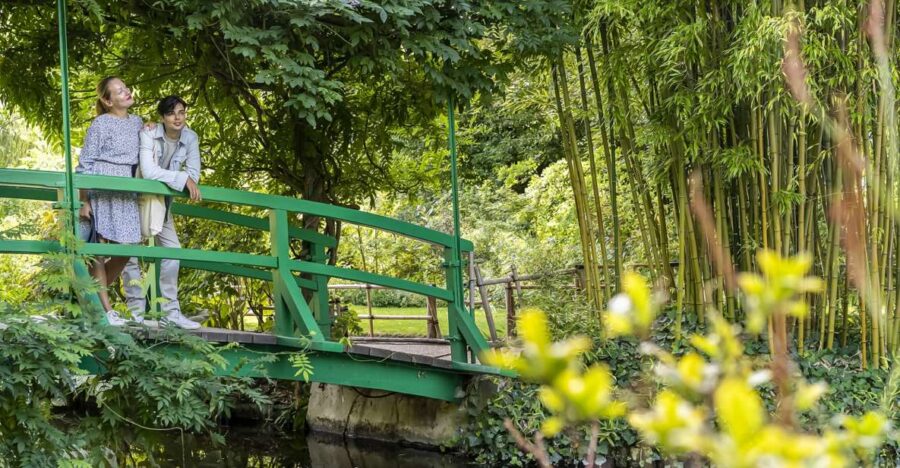
The Japanese bridge was built two years later, in 1895, copied from the woodblock prints in the dining room. The original was painted green. Monet later added the wisteria-laden upper trellis, which gave the bridge its second canopy. The structure has been rebuilt a few times since Monet’s death; the most recent reconstruction was completed in 2015 after a previous version had degraded. The line of the bridge, the curve, the green paint, the wisteria over the rails: all preserved exactly to Monet’s design.
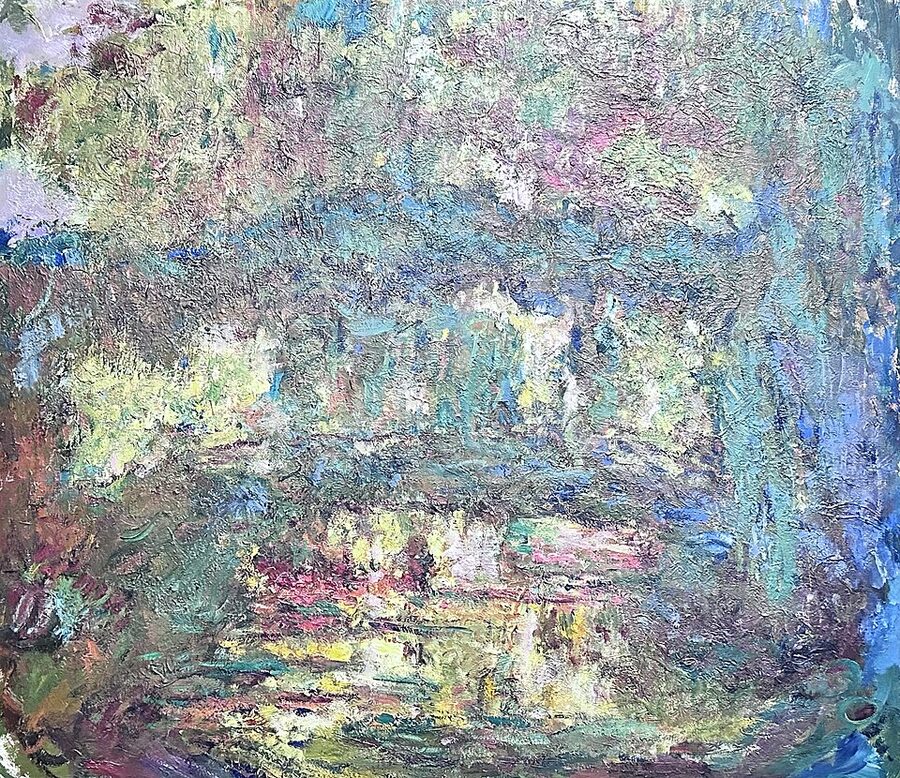
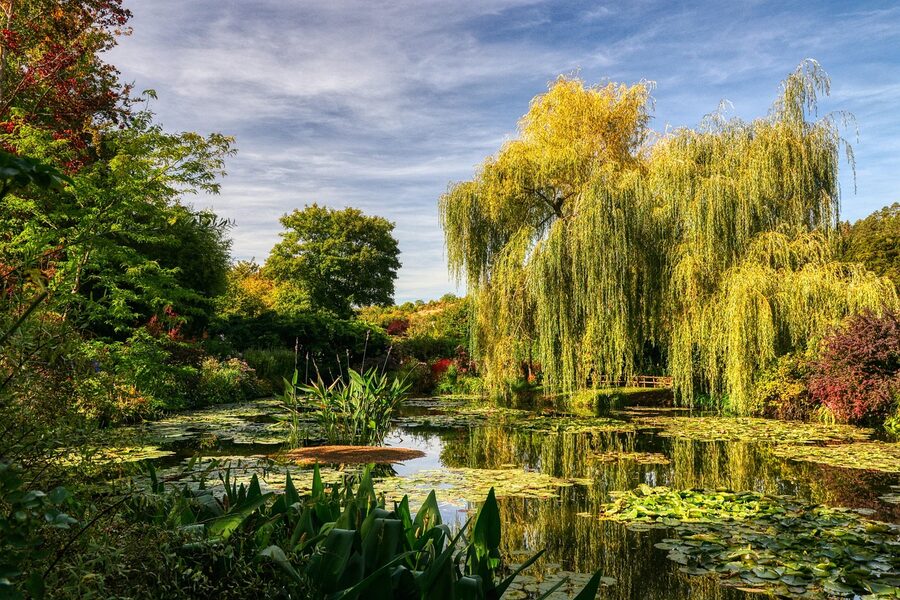
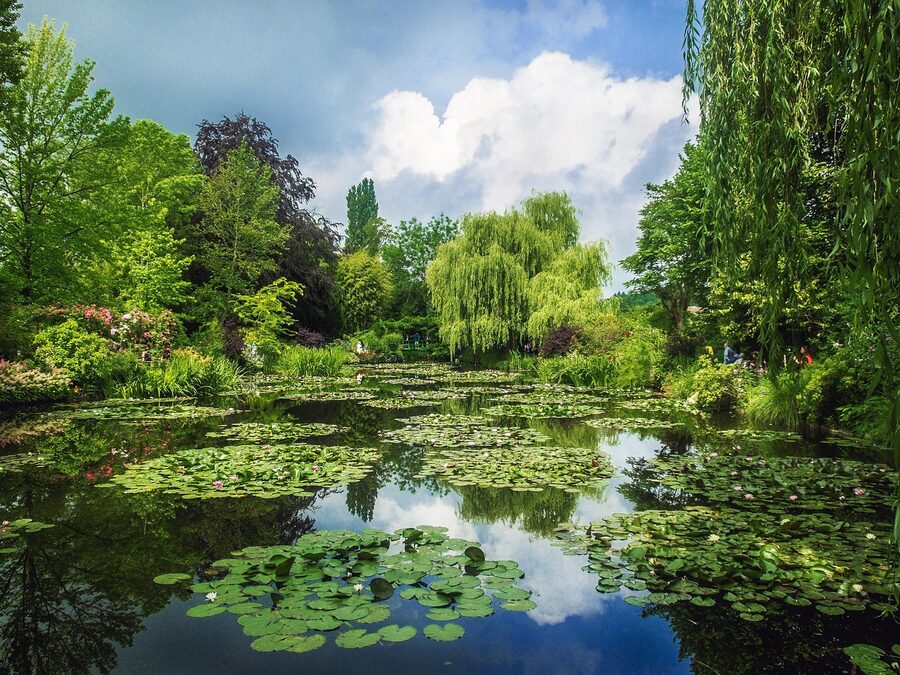
The bridge is a working footbridge. You walk across it. There’s a sign that asks you not to lean too hard on the rails. People do anyway. The view from the centre of the bridge, looking down the length of the pond toward the willow at the far end, is the view from the painting Water Lily Pond, Symphony in Green, 1899. Monet painted it again from the same spot for the next twenty-five years, the angle of the light shifting, the willows growing, the lilies multiplying.
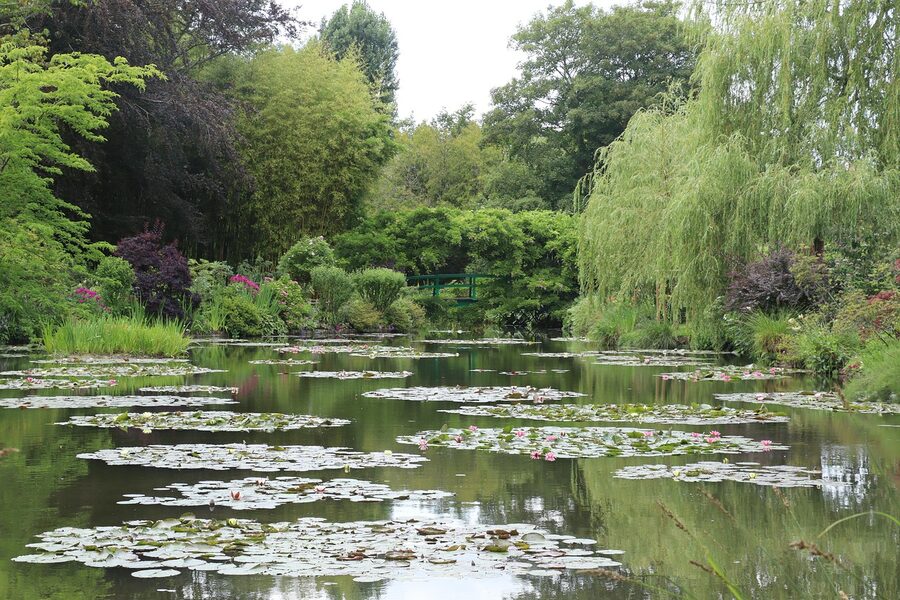
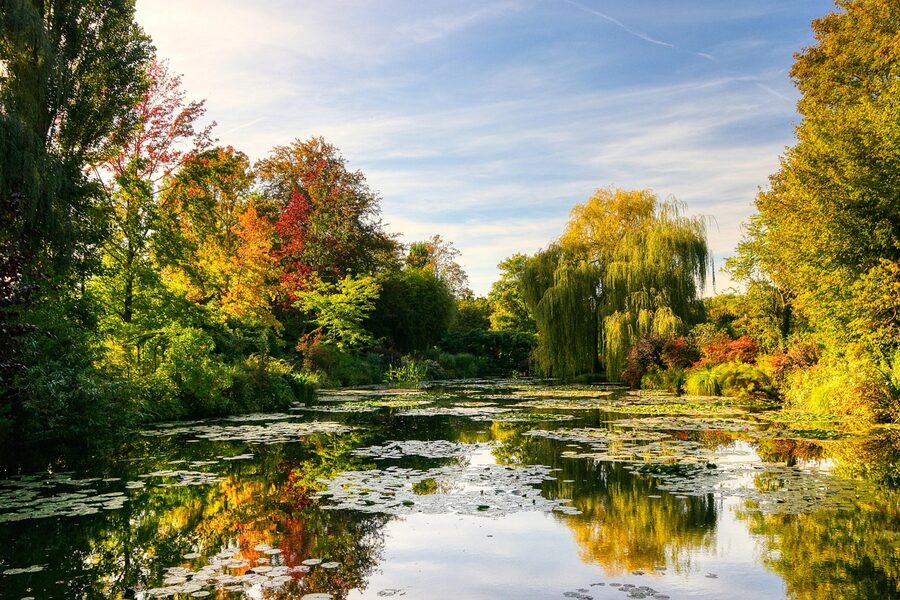
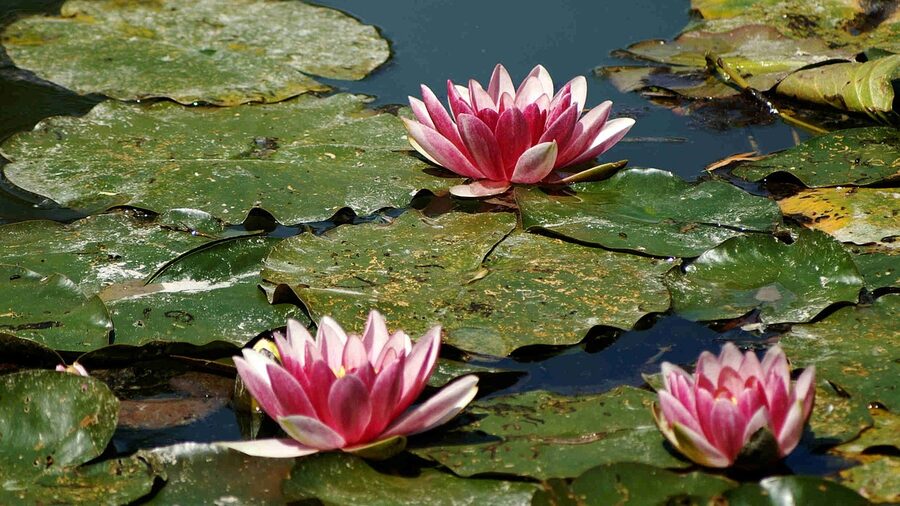
The pond is small. Smaller than it photographs. You can walk the entire perimeter in about ten minutes. There are willows on the south bank, bamboo on the east, azaleas around the bridge, and the water itself is the dense flat green that comes from an algal bloom Monet learned to love. He had two workers on staff full time to clean the pond. They’d row out every morning before dawn and skim the surface, brush the lily pads to remove dust, and rearrange any pads that had drifted out of the composition Monet wanted to paint that day. He treated the pond like a canvas with weather.
The big covered Water Lilies studio, the one Monet built in 1916 specifically to paint the eight massive panels now at the Orangerie, was demolished in 1959. There’s a memorial space at its former site near the pond. Worth a minute to stand there. This is where the canvases for those rooms in Paris were physically painted, on easels two metres high, in a north-lit shed with a glass ceiling.
Light, season, time of day
Aim for early morning or late afternoon. Both ends of the day work, the middle does not. The site opens at 09:30 and the gates from the car park to the gardens open promptly. Walk in straight to the Clos Normand if you’ve timed it right and you’ll have ten or fifteen minutes of relatively empty paths before the first bus from Paris arrives around 10:30. From 11:00 to 15:00 the gardens are at their fullest. After 15:00 the buses start leaving and the crowds thin again.
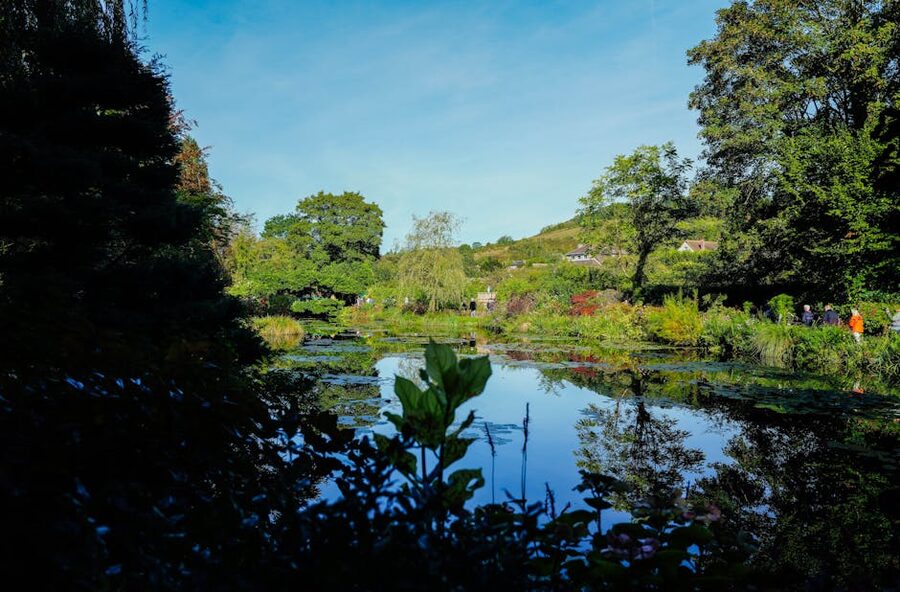
For the lily pond specifically, the second light is better. From 16:00 onward the sun comes around to the west and slants across the pond at a low angle. The reflections deepen. The pads are still open. The colour saturation jumps. This is the light Monet was painting from his boat for the late Water Lilies series. If you can only spend twenty minutes at the pond, spend them then.
For seasons, the calendar matters more than at most gardens. April brings the tulips and the early irises. May is wisteria peak on the bridge, with the trailing purple flowers cascading down both sides of the trellis. June is the first water lily flowering, with the heaviest concentration of blooms still on the south end of the pond. July and August are peak lily, but also peak crowd. September is the second wave, dahlias and asters in the Clos Normand and the lilies starting to thin. October is auburn and gold and surprisingly empty.
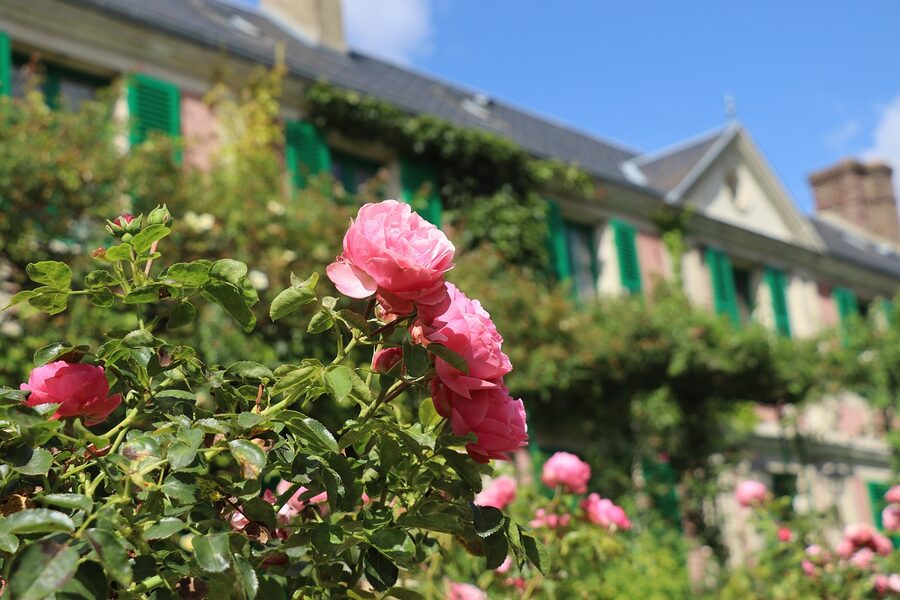
If I had to pick one window and could only go once, I’d go in late May or early June, mid-week, arriving on the 09:30 first entry. Wisteria still on the bridge, water lilies just opening on the pond, peonies in the Clos Normand. The crowds for late spring have not yet hit. After the first week of June, every coach in Paris is bringing tour groups.
Lunch in the village
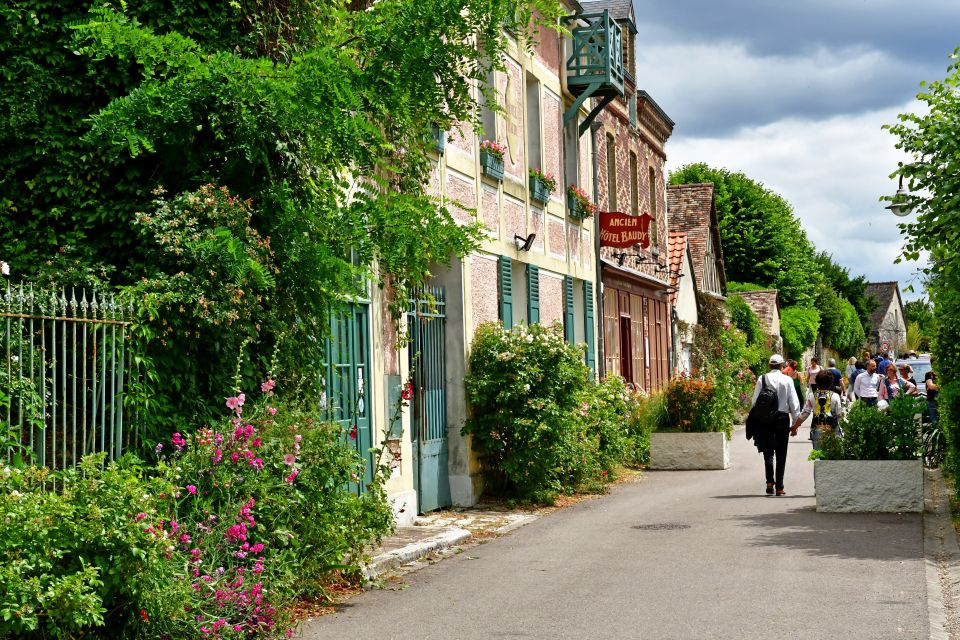
Most people eat at the café inside the gardens or at the gift-shop sandwich bar. Don’t. Walk the four hundred metres up the rue Claude Monet into the actual village. There are about half a dozen cafés and restaurants here, mostly open lunch hours during the season, and the food is meaningfully better than the on-site food.
The Hôtel Baudy is the obvious one and the historically significant one. This was the inn where the American Impressionists who came to Giverny in the 1880s and 1890s actually lived and ate. Monet, Cézanne, Renoir, Pissarro, and Rodin all ate at this table. It’s still operating as a restaurant. The food is straightforward Norman cooking, lunch around €25 to €35 a head, the dining room has the original murals on the walls. Book ahead in summer. The walk-in queue is not pleasant.
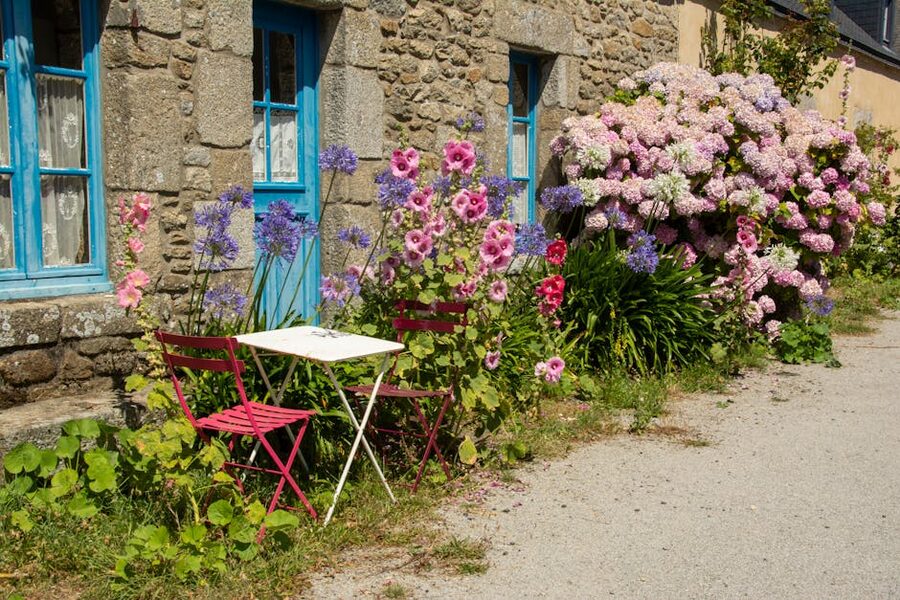
Le Jardin des Plumes is the splurge option, a Michelin-starred restaurant about ten minutes’ walk from the gardens. Set lunch around €60 to €80, dinner significantly more. Worth it if you’re treating Giverny like a destination day rather than a side trip. Booking essential.
The cheap option is the Galerie des Impressionnistes café, simple plates, sandwiches, salads, and a decent rosé by the glass. About €15 to €20 a head, no booking needed. Sit on the terrace and watch the bus tours getting back on their coaches.
Beyond the gardens: the Musée des Impressionnismes Giverny
Most visitors don’t realise there’s a second museum in the village. The Musée des Impressionnismes Giverny is about a hundred metres from the gates of the Maison de Monet, and it runs three rotating exhibitions a year on Impressionist and post-Impressionist topics. Past shows have covered Monet’s American Impressionist friends who lived in the village, the Impressionist response to Japan, and Berthe Morisot’s career. Tickets are €9. It is genuinely worth the extra ninety minutes if you’ve got them, and it pads out a full-day visit nicely.
The museum is actually built on the foundations of the Musée Américain, which opened in 1992 specifically because so many American Impressionists, Sargent, Robinson, Metcalf, Hassam, Frieseke, lived in Giverny in the 1880s and 1890s and the village had a substantial American expat population. The museum was rebranded in 2009 to cover Impressionism more broadly, but the American thread is still strong in the permanent collection.
If you do both museums, the order matters. Maison de Monet first (it gets more crowded), then walk up to the Musée des Impressionnismes after lunch when it’s quietest. Combined, that’s a six-hour day in the village. Add the lunch and the train and you’ve got a real Paris day trip rather than a rushed half-day.
Practical things that aren’t obvious
A few small items that come up.
The bathrooms inside the Maison de Monet are limited and queue at peak times. There’s a much bigger and quieter bathroom block at the entrance to the gardens. Use that one before you start the tour.
Photography is fine throughout the gardens and outside the house. Inside the house, photography is technically prohibited, though enforcement is loose. Be respectful. The Japanese prints are originals and flash damages them.
The paths through the Clos Normand are gravel and slope gently. Wheelchair access is decent though the gravel is loose in places. The Jardin d’Eau is partly accessible; the Japanese bridge has shallow steps that aren’t wheelchair-friendly.
There’s a small gift shop in the original studio at the entrance and a larger one at the exit. The gardening books and the seed packets are the worthwhile buys. Skip the fridge magnets.
If you’re combining Giverny with another day trip, Versailles is the obvious one and the bundled tour above handles it. The other natural pairing is Rouen, which has the Cathedral that Monet painted thirty times in different lights and now hosts most of those canvases at the Musée des Beaux-Arts. Rouen is forty minutes north of Vernon by train. Worth a half-day if you’ve got the time.
Where Giverny sits in a Paris itinerary
If you’ve got four or five days in Paris, Giverny is one of three day trips worth genuinely considering. The other two are Versailles and Disneyland. Versailles is closer (45 minutes by RER versus 90 by train and shuttle), more famous, and a different proposition. Disneyland is the family trip. Giverny is the art pilgrimage. Different audiences. They don’t compete.
Giverny pairs naturally with the Impressionist museums in Paris. Do the Musée d’Orsay first and you’ll see Monet’s earlier Impressionist work, the Argenteuil years and the Rouen Cathedrals, before you visit the place where he painted the late Water Lilies. Then go to the Orangerie after Giverny to stand in the two oval rooms and see the result. That order makes the strongest narrative. You watch Monet’s eye get wider through the Orsay, walk where he watched it open up at Giverny, and see the final ten years inside the Orangerie panels.
If you haven’t done the Louvre yet, that’s a different conversation, and one I’d save for a different day. Giverny is best as a half-day breath, slow morning at the gardens, lunch in the village, slow afternoon at the pond. Stacking it with anything else in Paris dilutes both.
The Loire and other château day trips
If Giverny works for you and you want more day trips out of Paris, the Loire Valley is the obvious next move. Different from Giverny in every way: bigger distances, royal architecture rather than artist’s home, full-day tours rather than half-day. The single-château options at Chambord and Chenonceau can be done as long day trips from Paris, though most travellers spend at least one night in the Loire region to do them well. The Loire is to royal France what Giverny is to art history. Different pilgrimages. The Dutch garden-pilgrimage equivalent is Keukenhof outside Amsterdam, an eight-week tulip festival on a 32-hectare estate where the gardens are the artwork the way Giverny’s pond is. Same logic, larger scale, March-to-May only.
The other comparable single-painter pilgrimage in Europe is Milan, where you queue for fifteen minutes in front of Leonardo’s Last Supper. Same logic, different scale: one work versus two gardens, fifteen minutes versus a full day. Both are pilgrimages where the painting and the place are the same place. If you’ve done the Last Supper and felt that quiet moment where you’re standing exactly where the painter stood, you’ll feel it again at the lily pond.
Comparable artist-house pilgrimages
Giverny isn’t the only artist house in Europe that opens to the public, but it’s the one that most successfully preserves the relationship between the artist’s domestic space and the artist’s work. The closest parallel I’ve stood in is Casa Vicens in Barcelona, Antoni Gaudí’s first commissioned house, which preserves a similar density of the painter or architect’s own decorative choices. Both houses give you the rooms the artist actually slept and ate in, with the wall colours and furniture and prints they actually chose. Both reveal something the finished work can’t.
The other parallel is the Picasso Museum in Málaga, which is in the building where Picasso was born and includes the apartment his family rented when he was a child. Different in tone, smaller in scope, but the same logic: stand where the artist stood. The Florence and Milan equivalents are the studio reconstructions at Leonardo museums and the rooms at the Uffizi built around specific works, but those are museums in the conventional sense, not houses preserved as houses.
For the Impressionist movement specifically, Giverny is the only major site that survives intact. Manet’s Paris studio is gone. Renoir’s farmhouse at Cagnes-sur-Mer is preserved but smaller and less visited. Cézanne’s studio in Aix-en-Provence is preserved and worth a visit if you’re in Provence. Pissarro’s house at Pontoise is gone. Berthe Morisot’s Paris apartment is gone. So Giverny is the one Impressionist domestic space that exists as the artist used it. That’s a meaningful reason to make the day trip. The Dutch counterpart is the Van Gogh Museum in Amsterdam: not a house but a single-painter shrine in a Rietveld pavilion, holding 200 canvases, 500 drawings and 700 letters from one artist. The Van Gogh-Monet pairing across the two cities reads as the two halves of the late-19th-century outdoor-light argument, in the two places that took it most seriously.
If the day goes wrong
Two failure modes worth flagging.
One: the trains from Paris-Saint-Lazare to Vernon are not always frequent on weekends and they do fill up in summer. If you’re going on a Saturday in July or August, buy your train ticket at least a day ahead. Booking on the day for the 09:08 train can leave you stuck waiting until 10:30 for the next.
Two: the gardens close on rainy days for safety reasons (paths get slippery), and the closure is announced same-day rather than in advance. Check the Fondation Claude Monet’s website on the morning of your visit if the forecast looks bad. If you’ve prepaid your tickets and the site closes, you get a refund or a date change. Don’t risk an unrefundable train ticket without checking the weather.
The site does not refund online tickets if you simply don’t show up. So pick your weather carefully. May, June, and September are statistically the safest months for a sunny day. April and October are the riskiest.
What to take away from the day
The reason Giverny matters more than other artist’s houses is that the gardens are the canvas. The pond is the painting. Monet didn’t just paint here; he built the subject. He bought the land specifically to dig a pond he intended to paint. He imported lilies he intended to paint. He planted flowers he intended to paint. He commissioned a bridge he intended to paint. The whole composition was made by the same hand that painted it.
That’s why a half-day trip rushing through the bus stop, the gardens, and the gift shop misses what Giverny actually is. You’re not visiting a museum. You’re visiting a painting that’s still alive. The plants still grow. The pond still reflects. The bridge still creaks under your feet. Bring time. Eat lunch. Sit on a bench. Come back to the bridge at 16:00.
If you’ve got more day trips planned out of Paris, the Seine cruise at sunset back in the city is a quiet way to round out the day, especially if you’ve come back on the 17:00 train and have an hour before dinner. The other natural Giverny add-ons are the Orangerie the next morning to close the loop on the Water Lilies, or Sainte-Chapelle and the Conciergerie if you want a different kind of stained-glass colour day. The Eiffel Tower, Montparnasse Tower, Père Lachaise, and the Paris Museum Pass are the obvious city-side companions.
Get there early. Stay late. Walk both gardens. Go inside the house. And come back to the bridge for the second light.