
The door clicks shut behind you and a small green light flips on above the inner threshold. A staff member glances at her watch. You have fifteen minutes. Most of the world has waited weeks or months for this. You’re going to spend it staring at a wall that’s slowly disintegrating.
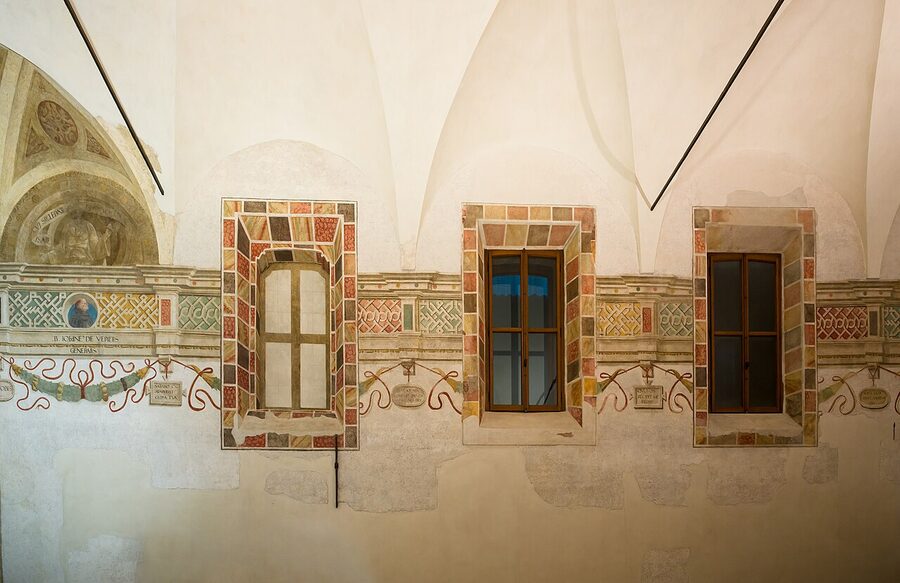
This is the deal you make to see Leonardo da Vinci’s Last Supper. The booking is brutal, the room is climate-controlled, the visit is timed, and the painting itself is in such fragile condition that the air you breathe is part of the conservation problem. The other one-Leonardo-room pilgrimage is the Mona Lisa hall at the Louvre in Paris, where the queue management is just as ruthless and the actual viewing window is just as short. None of that lands until you’re standing in the refectory of Santa Maria delle Grazie, four metres from the surface, watching the timer tick.
This guide walks you through the booking system that catches most people out, the on-the-day mechanics nobody warns you about, and the three tour options actually worth paying for. I’ll also flag what to look at in the fifteen minutes you get, because the time goes faster than you’d believe.
In a hurry? Three picks for seeing the Last Supper
- Best guided viewing for most visitors ($75): the Da Vinci’s Last Supper Guided Tour. One hour, ticket included, expert briefing before you go in.
- Best half-day combo ($102): the Walking Tour and Last Supper Visit With Ticket covers the centre as well.
- Best one-and-done with Duomo plus La Scala ($131): the Milan Half-Day Tour. Three big sights in one block.
What you’re actually booking
The official site is cenacolovinciano.org. The painting is run by the Italian Ministry of Culture and shares the visit-management quirks of every other state museum in the country. Single-artist sites tend to share these quirks: the Picasso Museum in Malaga uses the same quarterly-batch ticket release pattern. Tickets release in batches by quarter (May to August on sale from late March, September to December on sale in late June, and so on), and the popular slots are gone within hours.
The standard adult ticket is €15. Under-18s and EU residents 18 to 25 pay a discounted rate, but every visitor of any age, including a sleeping baby, must hold a reservation. The same EU-resident-discount tier shows up at the Prado in Madrid, where the free-entry late slot is the closest equivalent to a discount window here. The €2 booking fee on free and reduced tickets is non-negotiable. There is no walk-up window.
Once your slot is booked, you’ll be assigned to a viewing window of exactly fifteen minutes with a group of about thirty other people. The closest sit-with-the-painting parallel is the Water Lilies oval rooms at the Orangerie in Paris, where the room itself is built around a single artwork. The painting is sealed behind two sets of climate-controlled doors, and you pass through one set before the other opens. This is what the staff calls the air-lock; it’s there to keep the room’s humidity stable, and the wait between the two doors is part of the visit, not a holdup.
How to actually get tickets
Three ways in, in descending order of difficulty:
- Direct booking via cenacolovinciano.org or vivaticket.it the moment the new quarter opens. Set a calendar alert. Once tickets release, popular morning and weekend slots are gone before lunch. This route is cheapest at €15 but the most ruthless.
- A guided tour that bundles the ticket. Operators like GetYourGuide and Viator hold blocks of tickets in advance and resell them with a guide. You’ll pay €60 to €100 above the face-value ticket, but you don’t gamble on the release window, and you get someone explaining the iconography instead of standing there feeling slightly underqualified.
- The waiting-list and last-minute option. Cancellations show up on the official site in the days before a date. They go fast. You can also try in person at the ticket office around 8am. It’s a long shot.
If you’re flying into Milan with fixed dates and the official site is sold out, go straight to a guided tour. Don’t waste a day refreshing the booking page.
Where it is and how to get there
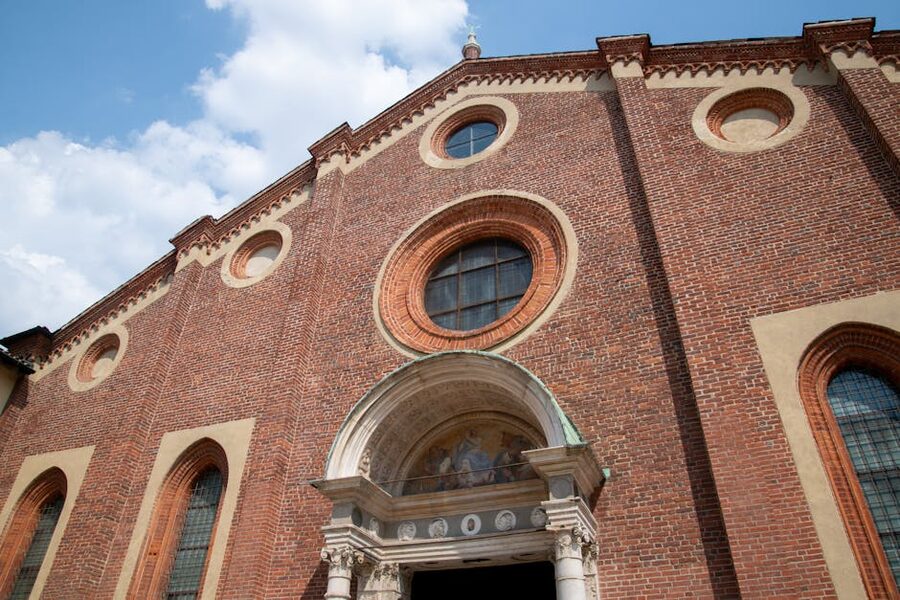
Santa Maria delle Grazie sits at Piazza di Santa Maria delle Grazie 2, about a fifteen-minute walk west of the Duomo. You don’t need a taxi.
- Metro: M1 (red line) to Conciliazione, then a three-minute walk. This is the path most visitors take.
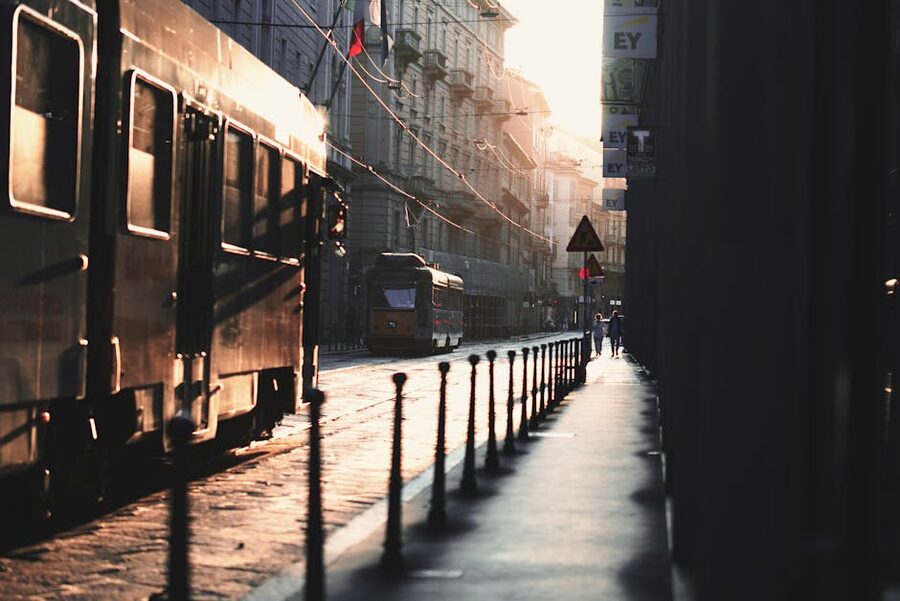
- Tram: line 16 stops directly outside the church and connects to the Duomo. Slow but scenic.
- On foot from the Duomo: twenty minutes through some of the prettiest streets in central Milan. Worth it on a clear day.
- Driving: don’t. The whole area is restricted (ZTL), parking is brutal, and the metro takes ten minutes from anywhere central.
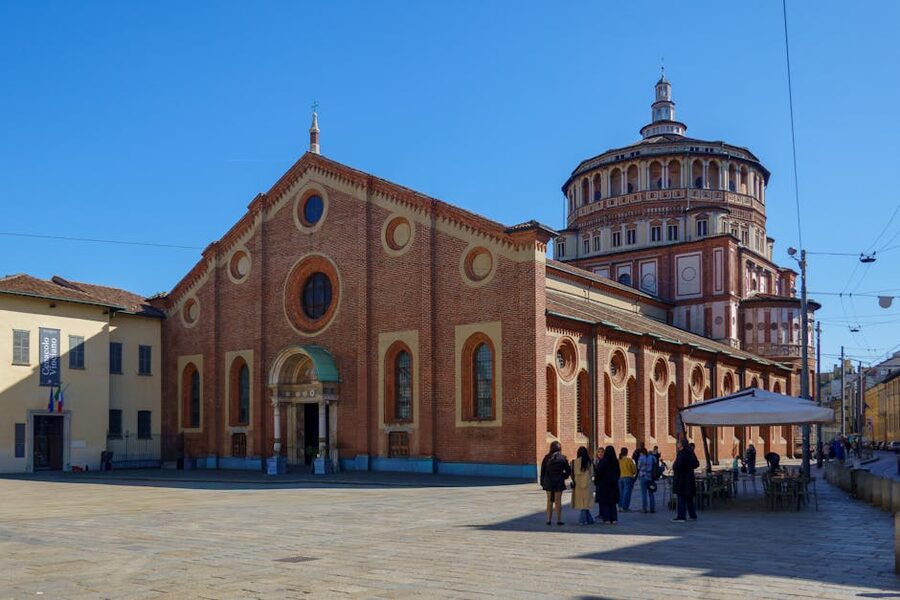
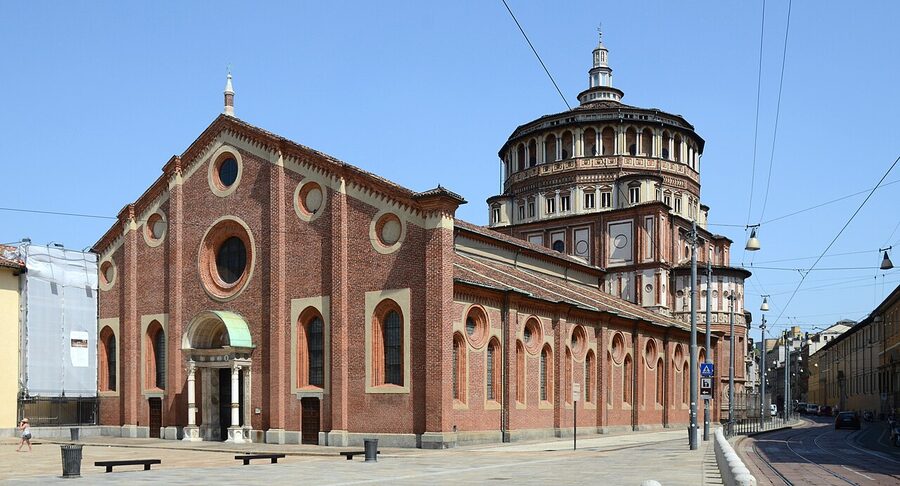
The painting entrance is not the main church door. Look for the smaller side entrance signed Cenacolo Vinciano, on the left of the church as you face the facade. There’s usually a small group milling about outside, waiting for their slot to open.
Show up early, but not too early
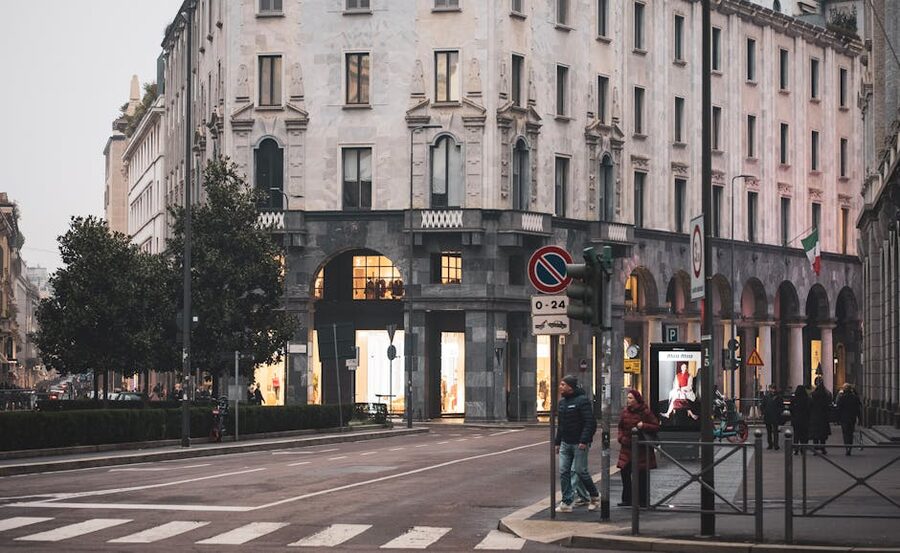
Be at the entrance fifteen minutes before your booking time. Earlier than that and you’ll be told to wait outside, because the lobby holds one group at a time. Later than that and you may forfeit the slot. The staff are not running on Italian time on this one. They have to keep the rotation tight.
Bring photo ID. They check it against the name on the booking. Backpacks and large bags go in lockers at the entrance, free, and you’ll need to leave water bottles too. There’s a small bathroom; use it before you’re called through, because once you’re in the air-lock the answer is no.
Phones are allowed inside. Photography is officially permitted without flash, though guards have been known to stop people composing for too long. Don’t film the whole fifteen minutes. The reason you’re here is to actually look at the thing.
Three tours actually worth booking
I’ve sorted these by what kind of trip you’re on. Skip the “skip the line” language: every booking is timed, so nobody is jumping any queue. What you’re paying for with a tour is a guaranteed ticket plus an expert briefing.
1. Da Vinci’s Last Supper Guided Tour: $75
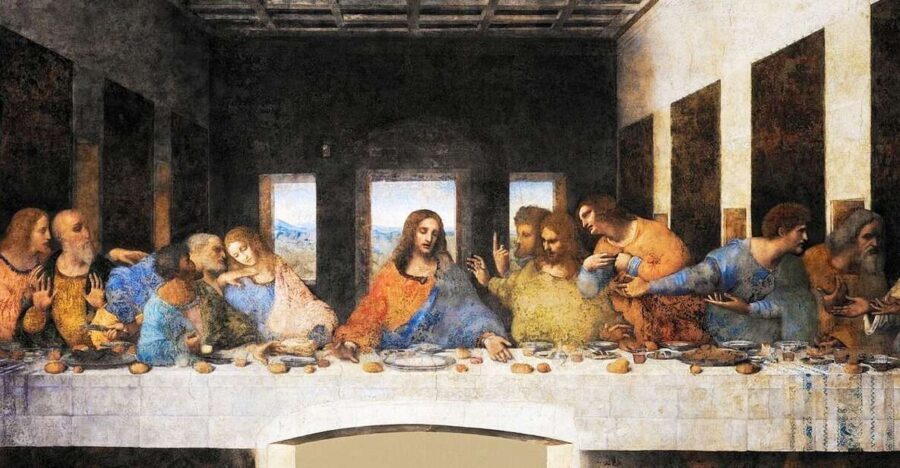
This is the default pick for most visitors and the most-booked Last Supper tour on the market. The guide walks you through what to look for in the painting before you go in (Leonardo’s geometry trick, who’s reaching for what bread, why Judas is holding a salt shaker), so the fifteen minutes inside aren’t wasted on figuring out who’s who; our review covers the meeting-point details and what the briefing actually includes.
2. Milan Walking Tour and Last Supper Visit With Ticket: $102
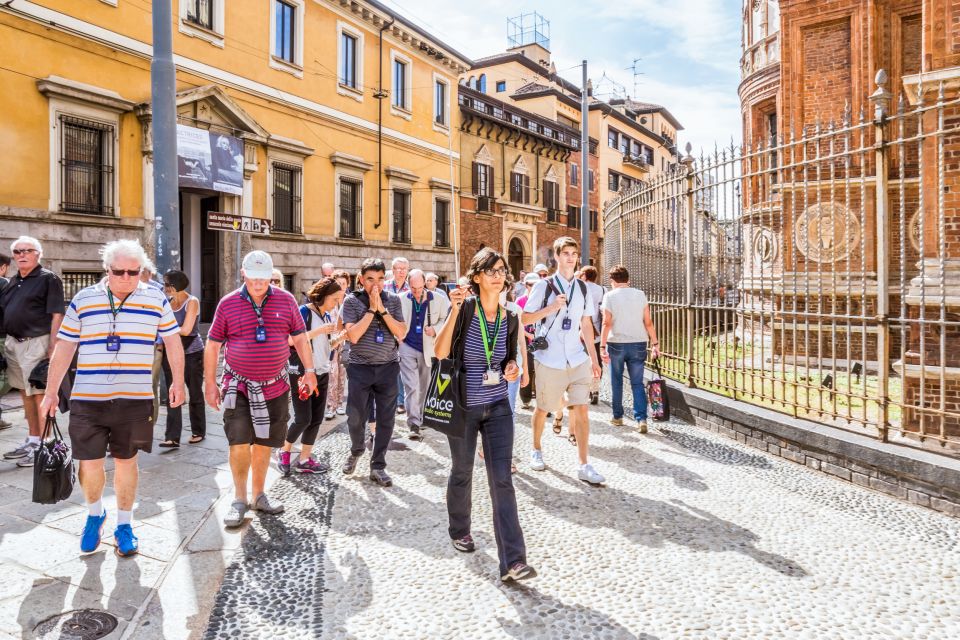
This is the right pick if you’ve only got one day in Milan and want a single guide for the whole city. The walking section runs about ninety minutes through the historic centre before the Last Supper slot, so you arrive at the refectory already warmed up on Sforza-era history; our full take compares it to doing each piece separately.
3. Milan Half-Day Tour with Last Supper, Duomo and La Scala: $131
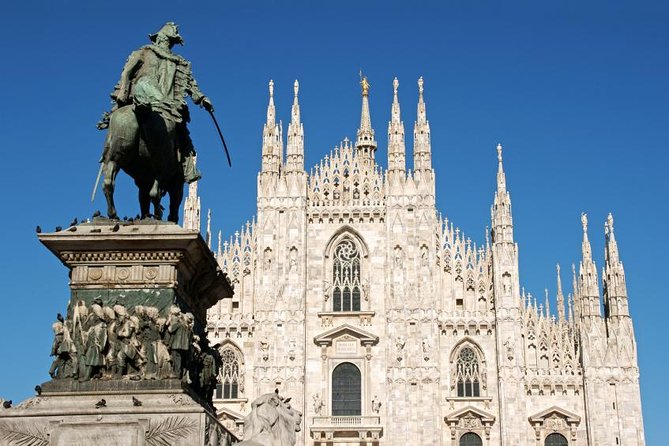
This pulls more weight than the others if you’re in Milan for less than 24 hours and want the three headline sights handled in one block. It’s the priciest of the three and the longest day, so don’t book it on top of an early flight; our review goes into the pacing and what’s actually included inside each sight.
What to actually look at in fifteen minutes
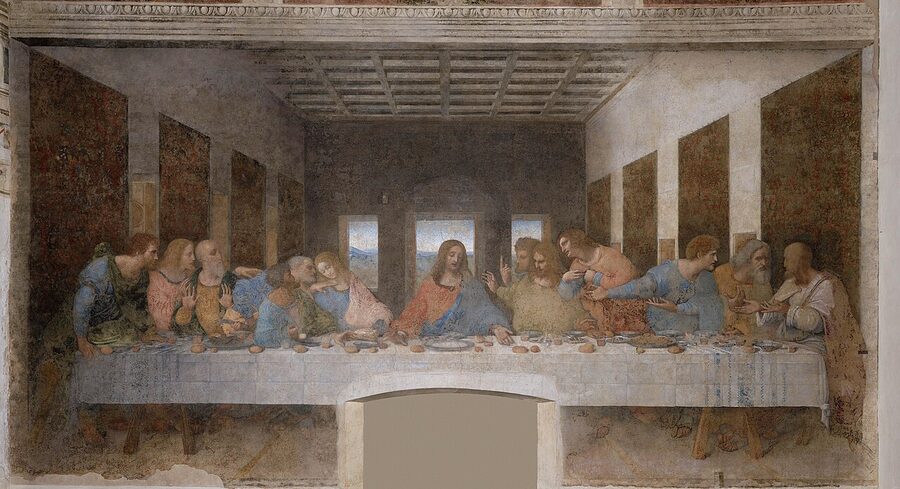
I’m going to be honest. Most people walk in, take five photos, stand awkwardly for a minute, and then run out of things to do. Here’s a five-stage way to actually use the fifteen minutes. The same can-you-actually-use-the-time problem hits travellers at the Van Gogh Museum in Amsterdam, where the headline canvas pulls a crowd that often does not know what to do once it gets there.
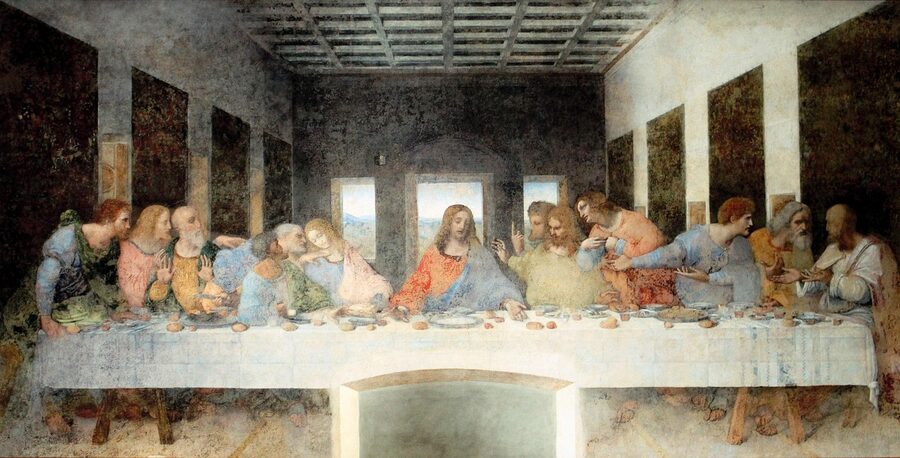
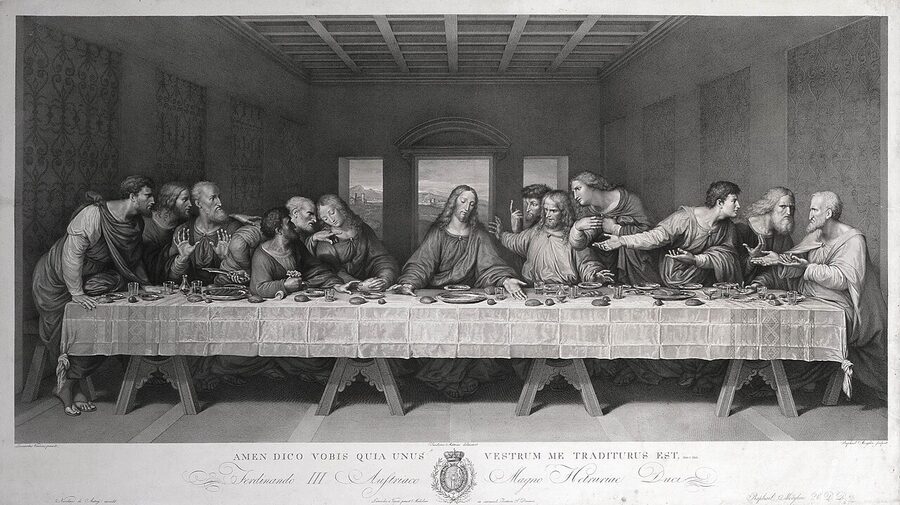
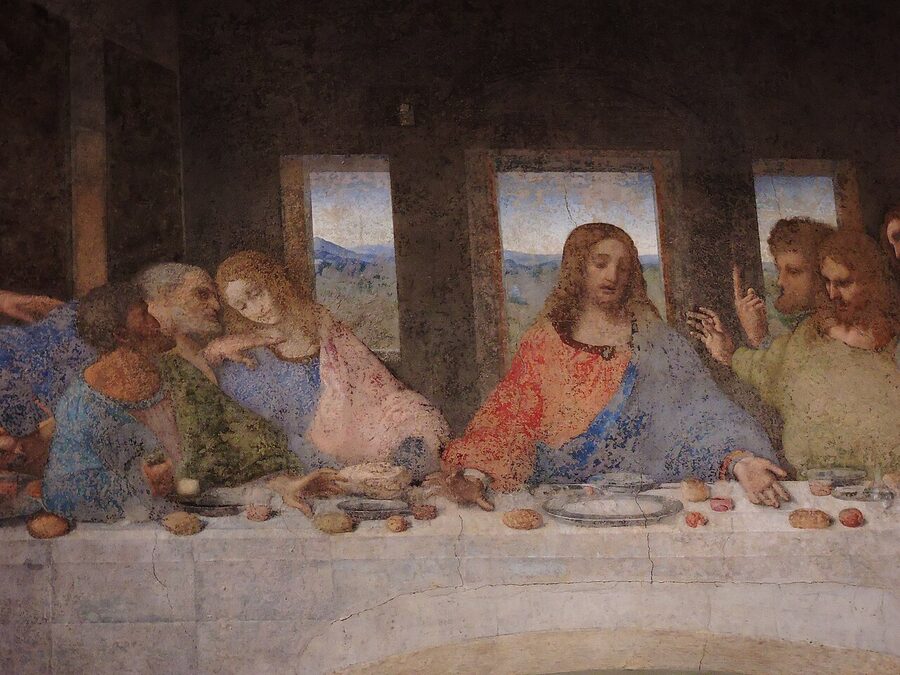
Minutes 1 to 3, from the doorway: Look at the geometry. Christ’s head is the vanishing point of the entire perspective. Every line in the room (the painted coffered ceiling, the side walls, the tablecloth folds) converges on his right temple. The apostles split into four groups of three, two on each side. That symmetry is intentional, and it’s why the painting reads as calm and chaotic at the same time.
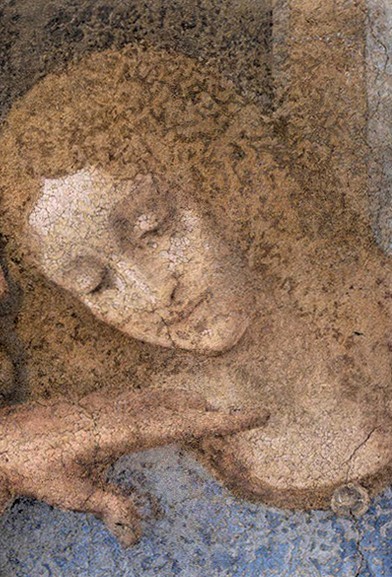
Minutes 4 to 8, walk closer: Move to the rope and study the hands. Every apostle’s hands are doing something specific. Peter is gripping a knife (foreshadowing the garden of Gethsemane). Judas, third from Christ on the left, is clutching a small bag (the thirty pieces of silver) and his other hand is reaching for the same bread Christ is reaching for. That gesture is the moment Leonardo painted: not the meal itself, but the second after Christ said one of you will betray me.
Minutes 9 to 11, look at the wall around the painting: The lower third is essentially gone. There’s a doorway cut through the bottom centre, added in the 17th century by monks who wanted easier access to the kitchen. They cut straight through Christ’s feet. This is the kind of decision that haunts Italian conservation history.
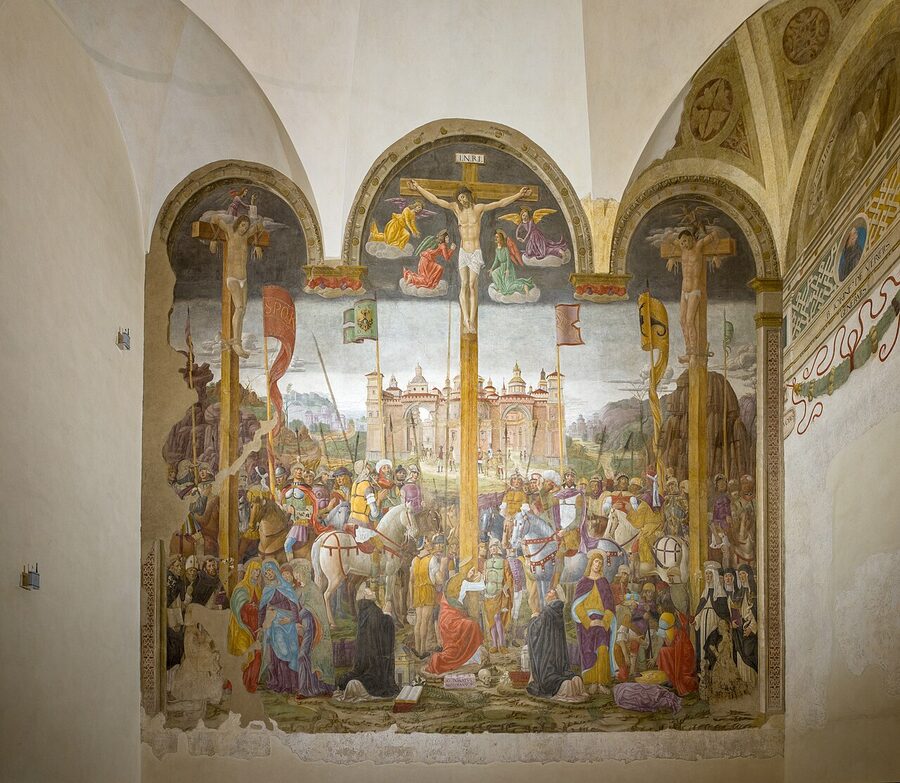
Minutes 12 to 13, turn 180 degrees. Most people forget there’s a second painting in the room. Donato Montorfano’s Crucifixion covers the opposite wall. It’s beautifully done and absolutely overshadowed by the rival masterpiece on the other end of the room. Look for the kneeling figures of Ludovico Sforza and Beatrice d’Este (the duke and duchess who paid for the refectory) added by Leonardo in dry pigment. They’ve all but vanished.
Minutes 14 to 15: Step back to the doorway one more time. The light is set very low to protect the pigment, so as your eyes adjust to the dim, the painting actually gets richer. The last minute is often the best.
Why the painting is in this state
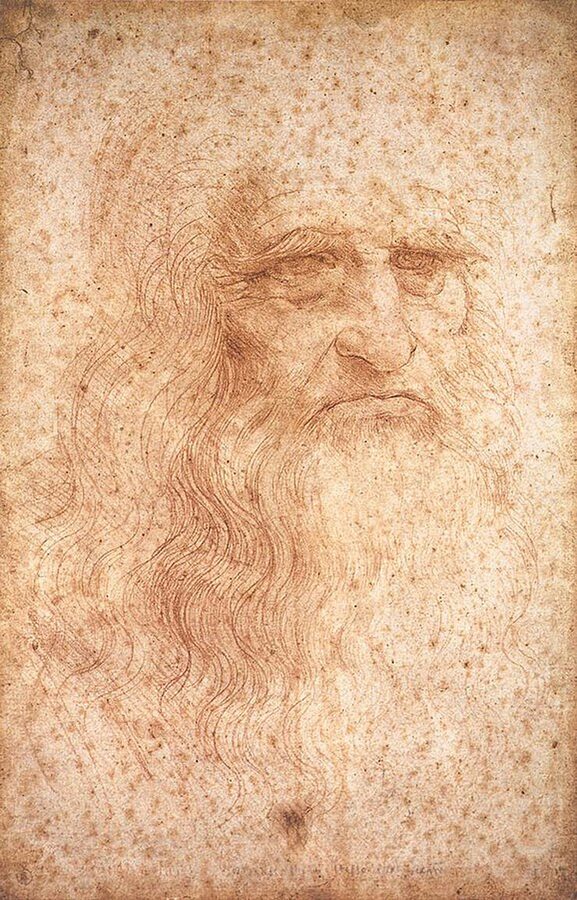
This part of the visit is harder to access from inside the room because there’s no signage and your guide may or may not get into it. So here’s the short version.
Leonardo painted the Last Supper between 1495 and 1498 for Ludovico Sforza, then Duke of Milan. The room was a working refectory; the monks ate in front of it. Leonardo, being Leonardo, refused the standard fresco technique. Fresco requires speed: you paint into wet plaster, the colour bonds chemically as it dries, and you can’t go back. Leonardo wanted to layer, blend, glaze, rework. So he invented his own method on the fly: tempera and oil applied to dry plaster, sealed with a primer of his own devising.
It started flaking within twenty years.
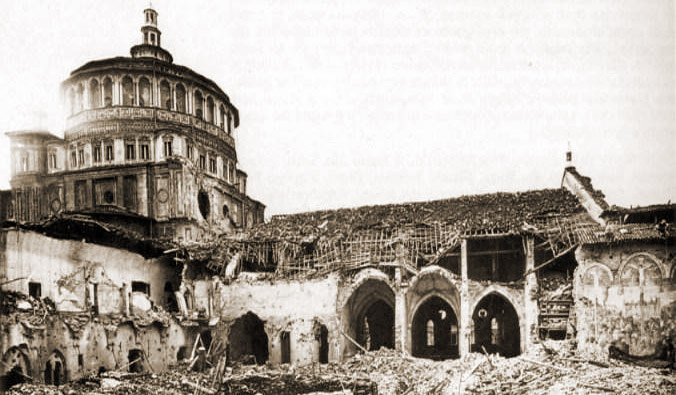
The list of indignities is long. Napoleonic troops used the room as a stable in 1796. Floodwater seeped up through the wall in 1800. A door was punched through Christ’s feet to ease kitchen traffic. And then in August 1943, an Allied bomb destroyed three walls of the refectory, leaving only the Last Supper wall standing under sandbags. The painting survived because the monks had built a protective scaffold around it, but the room was open to the elements for years.
The big modern restoration ran from 1978 to 1999, led by Pinin Brambilla Barcilon. She removed centuries of overpainting, glue, varnish, and clumsy 19th-century touch-ups, working with a microscope and a scalpel. The most public-facing parallel is the years-long Rembrandt Night Watch restoration at the Rijksmuseum in Amsterdam, which the public can actually watch through the glass conservation cube. What you see today is somewhere between fifteen and twenty per cent original Leonardo, with the rest being either Brambilla’s careful watercolour fills or the cleaned remains of paint underneath.
Some art historians argue the cleaning went too far. Others say it was the only way to stop the painting disappearing entirely. Both are probably right. Either way, this is the version we have, and the climate-controlled airlock and the fifteen-minute slot exist because the surface cannot survive much else. Your breath is, in a literal sense, eroding it.
Don’t skip the rest of the convent
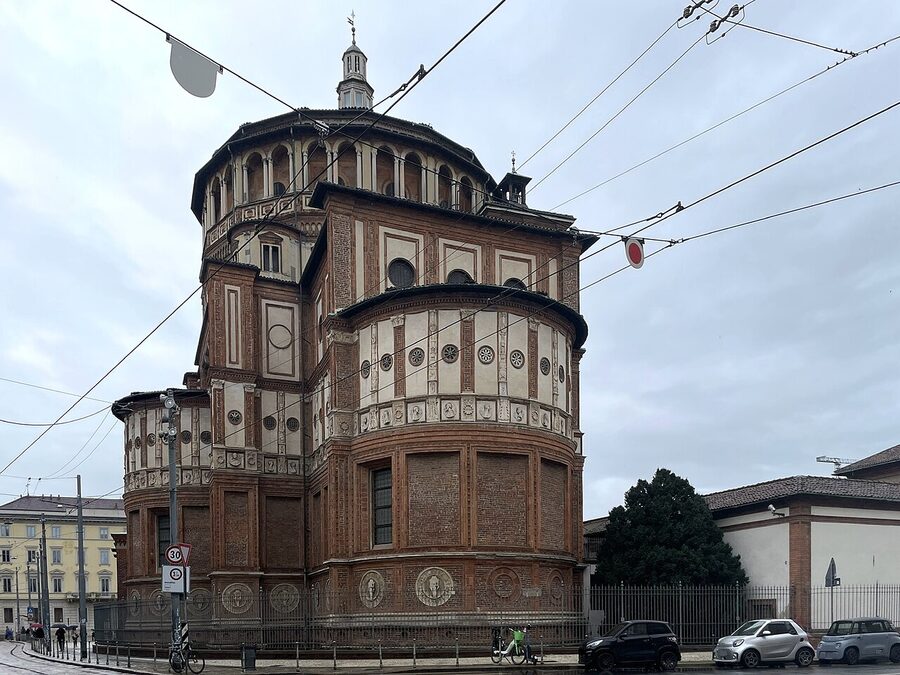
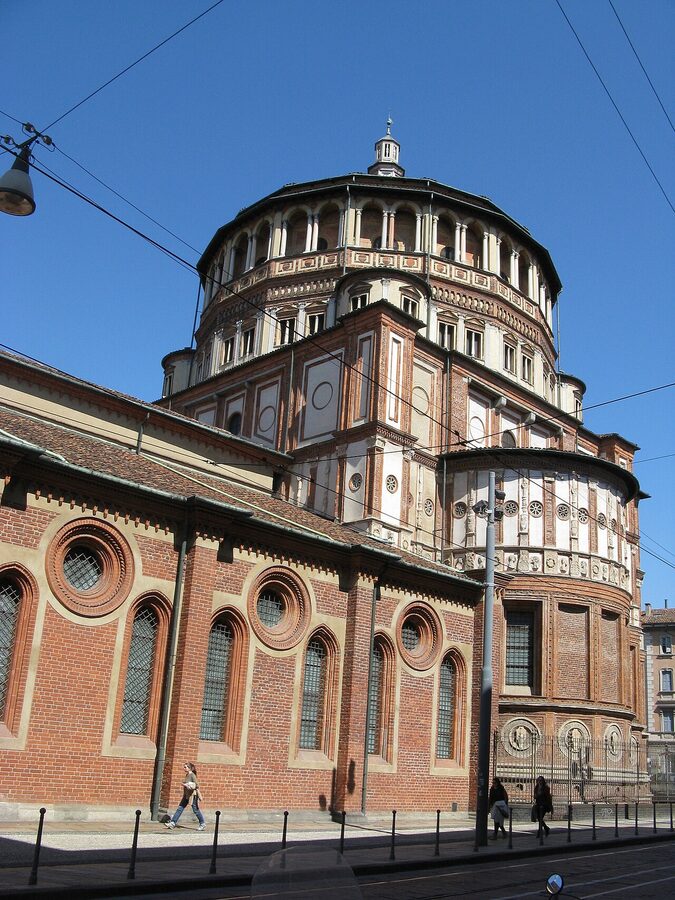
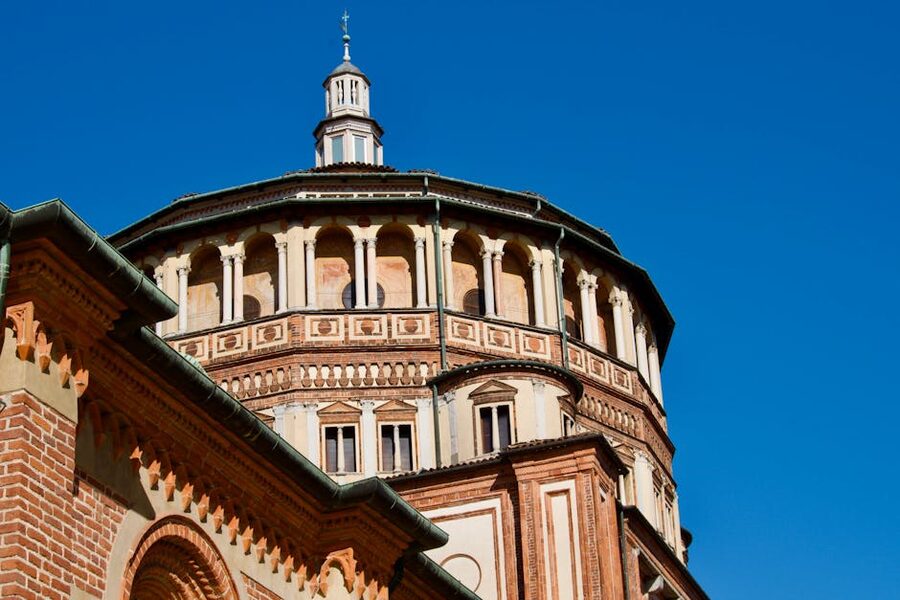
The church itself, separately accessible and free, is by Donato Bramante (the same architect who later designed the original plan for St Peter’s in Rome). His apse, added to a Solari-built nave in 1492, is one of the cleanest examples of Lombard Renaissance architecture you’ll find. Walk in, look up at the dome, look at the proportional logic of the chapel ring. You’re seeing what Bramante was doing in the same years Leonardo was working through the wall behind it.
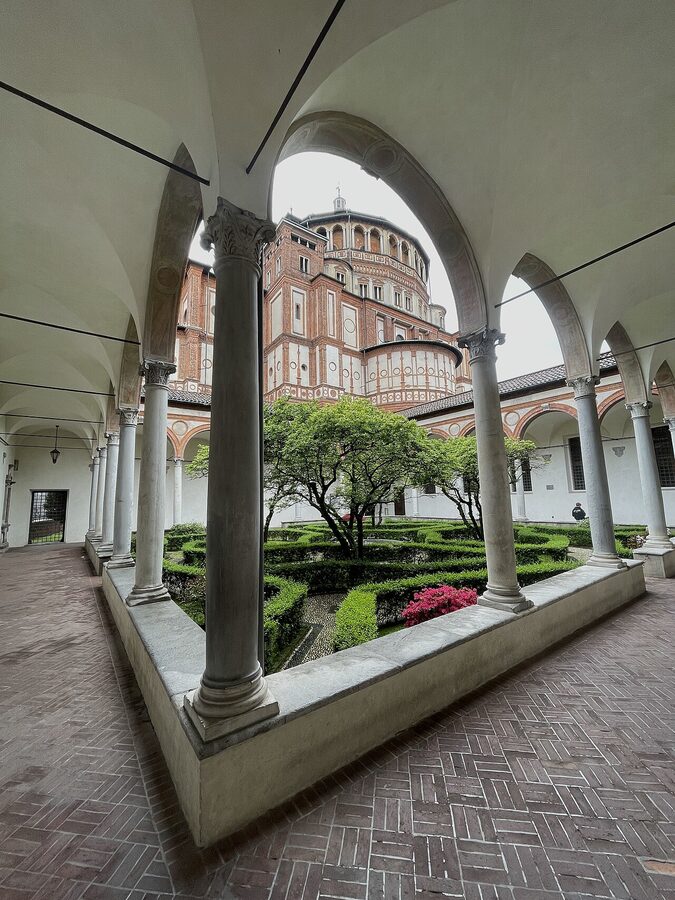
If the Chiostro delle Rane (Frog Cloister) is open, take ten minutes there too. It’s a small Bramante cloister with a circular fountain in the middle. Most Last Supper visitors blow past it without realising it exists.
Best time of day, best time of year
The painting is open Tuesday to Sunday, closed Mondays. The opening pattern matters because it shapes the booking pressure:
- Tuesday to Saturday: 8:15am to 7pm, last entry 6:45pm.
- Sunday: 2pm to 7pm, last entry 6:45pm. Half-day Sunday opening means Sunday slots are some of the hardest to score.
- Closed: all Mondays, 1 January, 1 May, 25 December.
For seasonality, summer slots (June to August) sell out about ninety days ahead. Winter slots (November to February) usually go thirty days out. Spring shoulder weeks (late March, late April excluding Easter) are the easiest to score and the most pleasant to walk to. Avoid Easter week and the Italian August holiday around Ferragosto: Milan empties out, but the Last Supper does not.
The opening 8:15am slot is the best of the day for atmospheric reasons. The light is low, the staff are fresh, and you’ll often have one or two extra minutes of grace if the previous group came in late. The 6pm slot at the end of the day is the second-best for a similar reason: nobody is rushing you into the next group.
What else to do that day
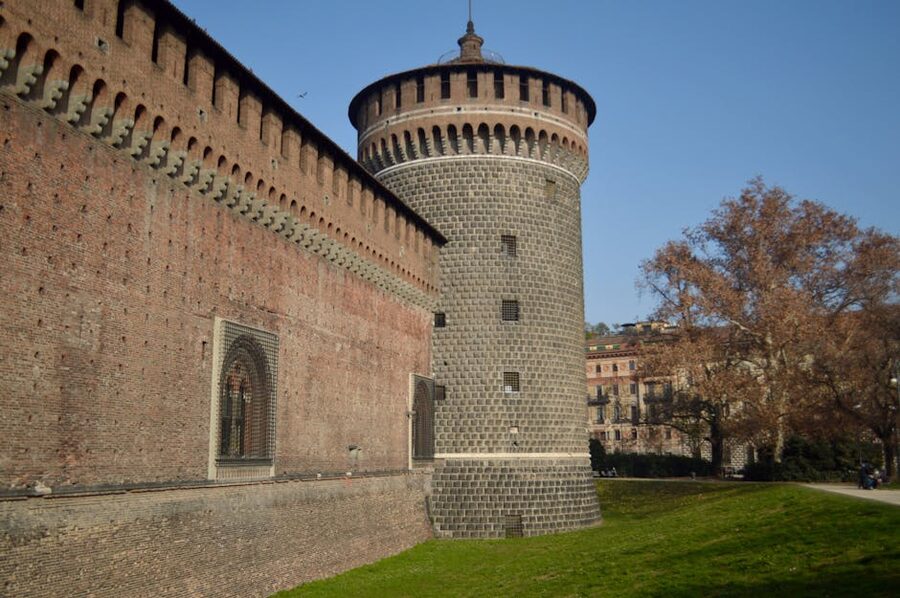
Your Last Supper slot is so short that the day around it usually feels lopsided. Plan something on either side. The Sforza Castle is the obvious move: it’s a fifteen-minute walk east, the courtyard is free, and the museum complex includes Michelangelo’s last unfinished work, the Pietà Rondanini. Two hours easily.
If you’ve got the energy, San Maurizio al Monastero Maggiore is twelve minutes south, with frescoed walls so dense people call it the Sistine Chapel of Milan. It’s free and almost always quiet.
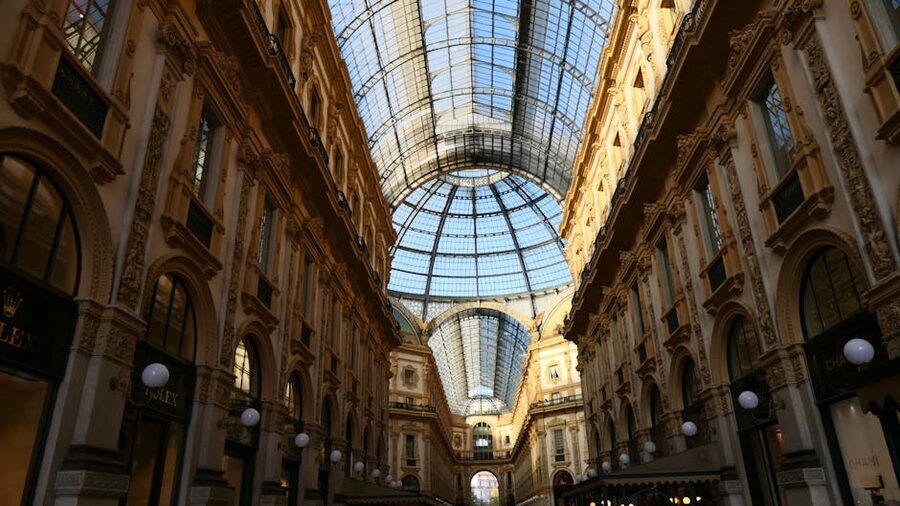
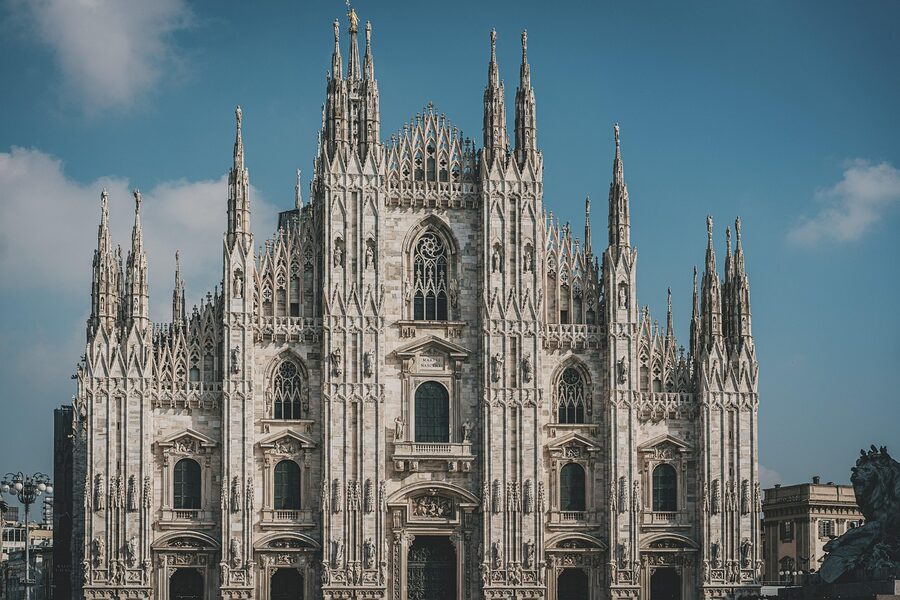
From here you can also chain the Duomo and the Galleria: the cathedral is twenty minutes east on foot or two metro stops, the rooftop terraces are spectacular if you’ve got the time and the right ticket, and our Milan Duomo guide covers the terrace booking specifically. The Milan hop-on bus is occasionally useful for getting between the Last Supper and the cemetery or San Siro stadium, but for the central core of attractions you’re better off on the metro or on foot.
For a longer day-trip framing, consider Lake Como from Milan on a separate day rather than trying to combine: the Last Supper visit eats half a morning and you don’t want to feel rushed leaving Conciliazione for a train.
Eating and drinking near the church
Bar Il Cenacolo, directly opposite the church, is the obvious caffeine stop before or after. It’s fine, not extraordinary; a quick espresso for two euros, panini for six. Move two blocks east on Corso Magenta for better options. La Caffettiera makes a properly thick espresso and Boccondivino is the upscale lunch choice if you want to make a proper sit-down meal of it.
If you want a real Milanese lunch and you’re already going to walk over to the Sforza Castle, head to Latteria di San Marco or Trippa (in the Porta Romana area) instead. They’re worth the metro ride.
How this compares to other timed Italian tickets
If you’ve booked or struggled with timed tickets elsewhere in Italy, the Last Supper system feels familiar in some ways and brutal in others. The Vatican Museums in Rome run a similar timed-entry mechanic, but with vastly more daily capacity, so booking three or four days ahead usually works. The Borghese Gallery in Rome is the closest comparable in difficulty: two-hour slots, hard caps on numbers, sells out weeks ahead. The Last Supper is harder than both, and the visit itself is the shortest of the three.
The opposite extreme is the Uffizi or the Accademia in Florence. Both are timed, both are popular, but you’re inside for at least an hour and the entry pace is much easier. If your trip includes both Florence and Milan, do the Last Supper booking first; you can fit Florentine museums around any free week. The Last Supper picks the week.
For broader Leonardo context, the Leonardo Interactive Museum in Florence is the polar opposite: hands-on, bookable on the day, his machine designs not his paintings. Doing one of each on a longer Italy trip is a complete Leonardo arc.
Common mistakes I’ve watched people make
A short list, in no particular order:
- Showing up the day before to “have a look”. There is nothing to look at from outside. The painting is invisible. Save the trip.
- Buying tickets through a Google ad reseller. Some of these are legit, some are double the official price for the same slot, some are fakes. Either book on cenacolovinciano.org or via a known operator (GetYourGuide, Viator).
- Booking the latest slot of the day. If something goes wrong, there’s no buffer. Earlier slots can sometimes be rebooked into a later one if you’re delayed; the 6:30pm slot is your last chance and that’s it.
- Treating it as the only thing you’ll do that day. A fifteen-minute visit doesn’t fill a day. Pair it.
- Skipping the Crucifixion in the same room. It’s by Donato Montorfano and most people forget to turn around. It’s also the painting that didn’t fall apart.
The honest answer to “is it worth it?”
Yes, with caveats. Fifteen minutes in front of an artwork is a strange dose: long enough to actually see something, short enough to feel rationed. If you’re an art history person, it’s a thrill regardless. If you’re a casual visitor, what you’ll remember most is the controlled-access ritual: the airlock doors, the silence inside the room, the way the light is set so low it feels almost private.
What it’s not: a casual museum visit. You can’t drift in. You can’t decide on the day. You can’t stay until the painting clicks for you. If those things bother you, you’ll find the visit frustrating and the booking process worse.
What it is: one of those rare experiences where the inconvenience is the experience. You spend weeks thinking about it, an hour getting to it, fifteen minutes inside. The compression is the point.
Other Milan and Leonardo angles to plan around
If you’re spending more than a day in Milan, the Last Supper visit anchors a Leonardo-and-Renaissance day nicely. Pair it with the Sforza Castle’s Pietà Rondanini and a look at the Duomo terraces for a full day of marble, Michelangelo, and Bramante geometry. If you’re doing the rest of Italy too, the booking-difficulty parallel with the Borghese in Rome is the most useful mental model: book it first, then build the trip. And the timed-entry rhythm is similar to the Vatican Museums, but with about a thousand times less air per visitor in the room. Lake Como, by contrast, is the easy, no-booking-required day from Milan, and our Lake Como guide has the train timings if you want a low-stress counterpoint to the high-stress Last Supper morning.