
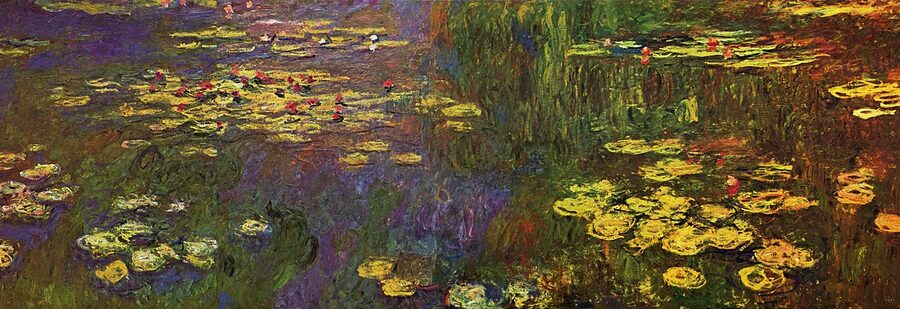
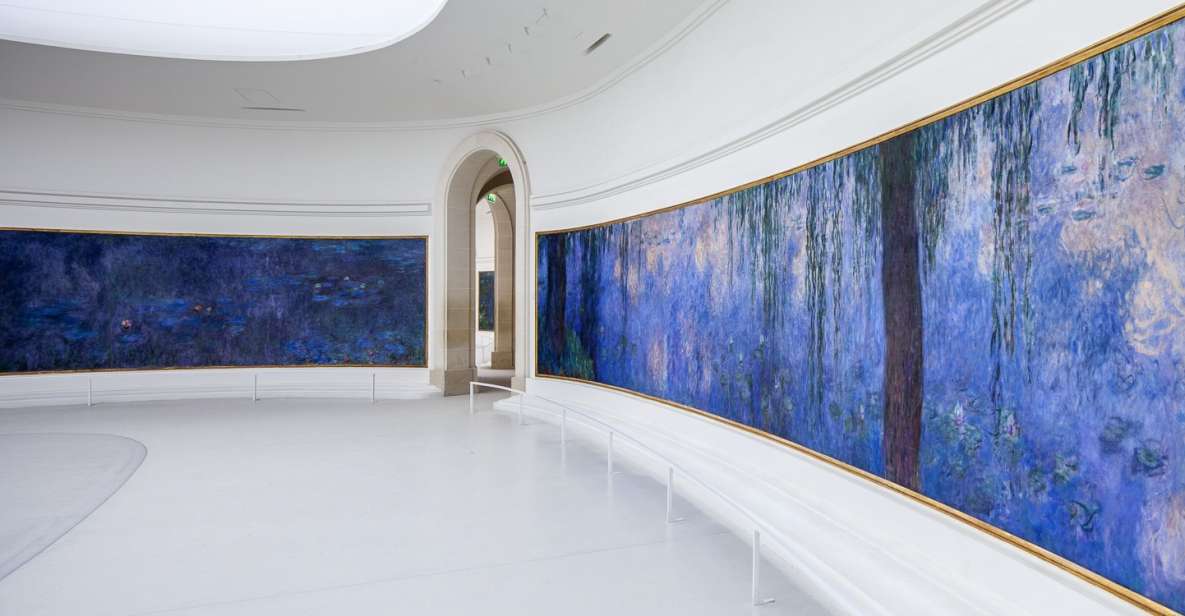
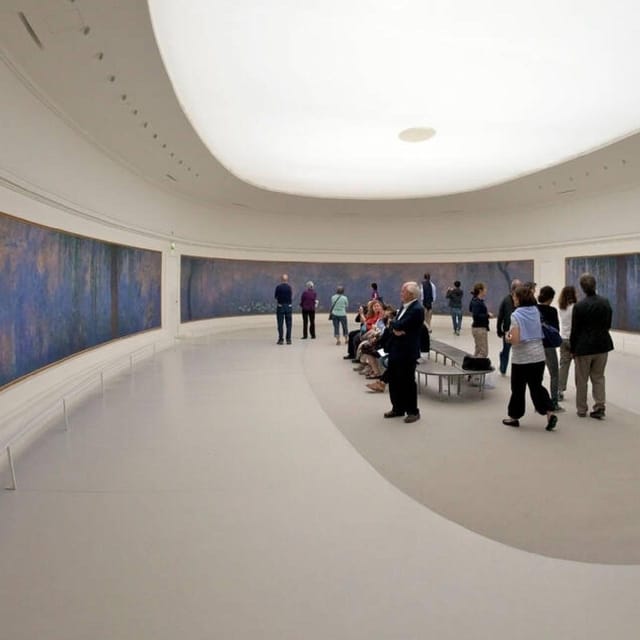
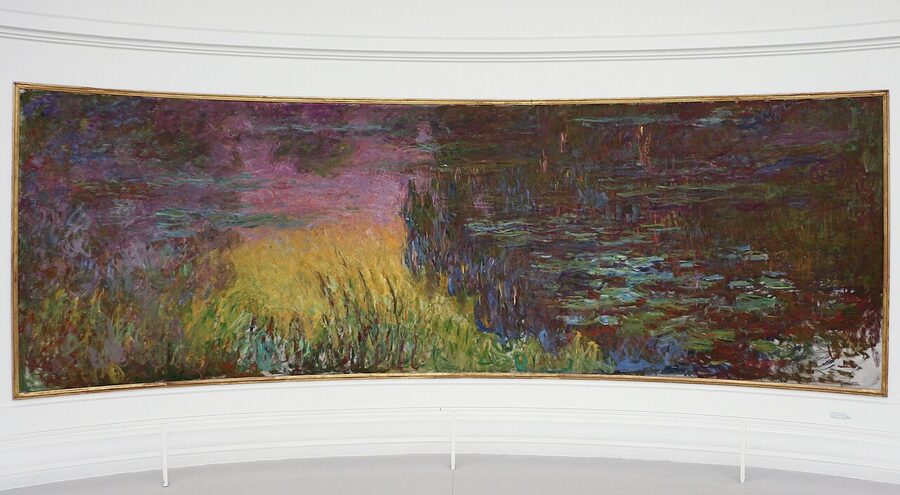
You walk into the first oval room and the world stops. A single 17-metre canvas curves around the wall in front of you, dawn light on a pond, no horizon line, no shore. The bench in the centre is already half-full. Sit down anyway.
This is what the Musée de l’Orangerie was built for. Not adapted, not refurbished. Purpose-built, in 1927, around eight enormous water-lily panels that Claude Monet painted at Giverny between 1914 and 1926 and donated to France with very specific architectural conditions attached. Two oval rooms. North-south axis. Natural light through the ceiling. No other paintings inside.
Most travellers do this museum in 30 minutes. It’s a 90-minute museum done properly. The rest of this guide is about how to actually do it properly, what tickets to buy, and why the basement collection is the second-best reason to come.
In a hurry? The three picks
- Reserved entry, $12: the basic flagship, skip-the-line slot booking. Best value in central Paris museums. Book on GetYourGuide.
- Audio-guided entry, $27: entry plus an app-based audio guide that walks you panel by panel. Worth the upgrade if you don’t read French wall texts. Book on Viator.
- Orangerie + Seine cruise, $45: a combo with a one-hour Bateaux Parisiens cruise. Pads the day if you’re not already doing the river. Book on GetYourGuide.
Where the Orangerie sits, and why it’s there at all
The Orangerie sits at the western end of the Tuileries Garden, on the Place de la Concorde corner. It’s a small classical box of a building, low-slung, easy to walk past. Tourists do walk past it constantly, on their way to the Concorde obelisk or the Champs-Élysées up the slope.
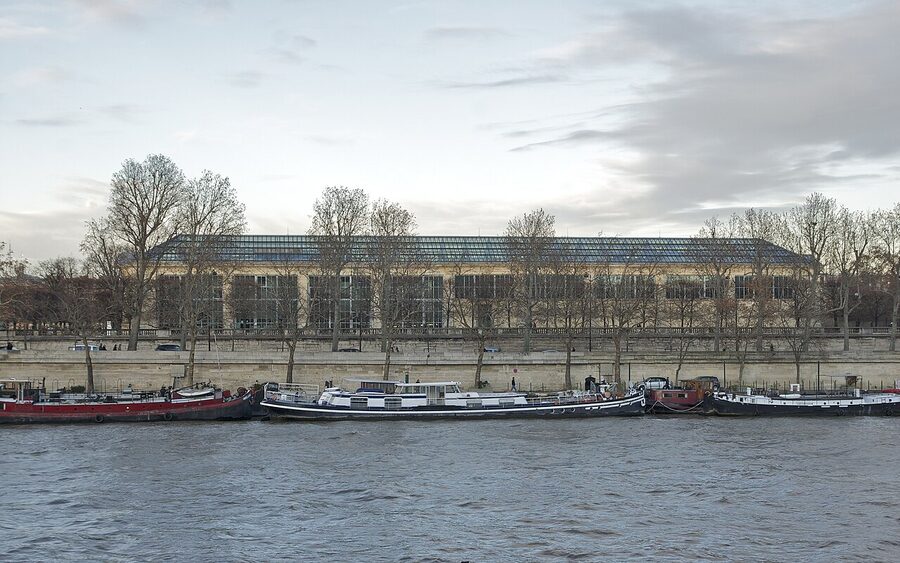
The building dates from 1852. Architect Firmin Bourgeois designed it as a winter shelter for the orange trees of the Tuileries: literally an orangerie, a heated greenhouse for the citrus collection. It functioned as that for the second half of the 19th century, then drifted into use as a sports hall, an exam hall, an exhibition space, a venue for occasional government ceremonies. By the 1920s it was an oddity: a state-owned building in the Tuileries with no clear purpose.
Then Monet’s gift came in.
The deal Monet made with France
On 12 April 1922, a year after the World War I armistice, Monet signed a donation contract handing eight Nymphéas panels to the French state. He was 81. He’d been painting them at Giverny since 1914, in a custom studio he’d had built specifically because the canvases (1.96 metres tall, up to 17 metres wide) wouldn’t fit in his existing one. Total surface across all eight: roughly 200 square metres of paint.
The donation came with conditions. Monet didn’t want the panels hung in some Louvre side gallery. He wanted them installed as a unified environment, an enveloppement in his word, with the viewer inside the painting. So he stipulated:
- Two oval rooms, with the panels mounted flush to the curved walls.
- The rooms aligned on a north-south axis, so the natural overhead light shifted across the day in the same direction it shifts across the pond at Giverny.
- Light from above, through a glass ceiling, with no other windows.
- No other paintings in either room.
- Free public access at all times.
The state agreed. They picked the Orangerie because it was empty, central, and had the right footprint to take the oval-room conversion. Architect Camille Lefèvre handled the rebuild, working with Monet on the dimensions. Construction started 1922, finished early 1927.

Monet died on 5 December 1926, six months before the rooms opened. He never saw the panels installed in the building he’d designed them for. The Orangerie opened to the public on 17 May 1927, with a small ceremony and the announcement that the entry would be free, in keeping with the donor’s wishes. It stayed free for decades.
Booking the cheapest ticket
The standard reserved-entry ticket is $12 (€11.50). That’s the price you pay if you book through the museum’s own site or through any reputable reseller. It includes the Water Lilies, the basement Walter-Guillaume collection, and any temporary exhibition that’s running. Children under 18 are free; EU residents under 26 are free.
You book a 30-minute time slot. You can show up any time inside that window. They check your QR code at the door, you walk straight in. There’s no bag check beyond the standard security scan, and that scan moves fast. Most days you’re inside within five minutes of arriving.
The skip-the-line wording on some reseller pages is misleading. There isn’t really a queue at the Orangerie the way there is at the Louvre or Versailles. The reserved-entry ticket is a slot booking, not a queue jump. If you turn up without a ticket on a Saturday afternoon you’ll wait 20 to 40 minutes and they sometimes sell out. Tuesday closing day is the only thing to worry about.
Two warnings on resellers, having seen the recent traveller complaints: a few aggregator sites resell the same $12 ticket at $20 to $25 with no extra service. And one common product is sold as “audio guide included” but the audio guide is actually the museum’s free app you can download yourself. Read the fine print before paying a premium.
What the oval rooms actually feel like
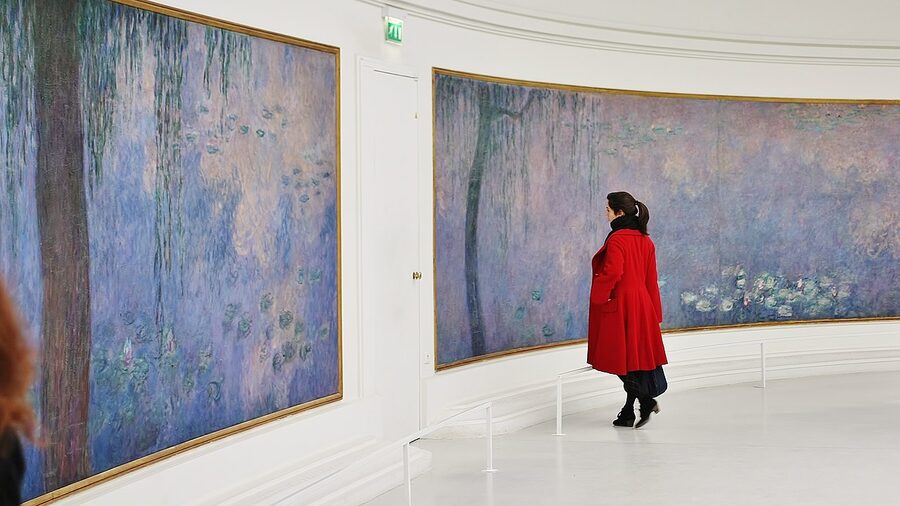
You enter Room 1 from a small octagonal vestibule with a quote from Monet on the wall: “They will provide the illusion of a whole flowering on the water, of an endless whole, of a wave with no horizon and no shore.” That quote is the entire interpretive key to the rooms. Read it once before you go in.
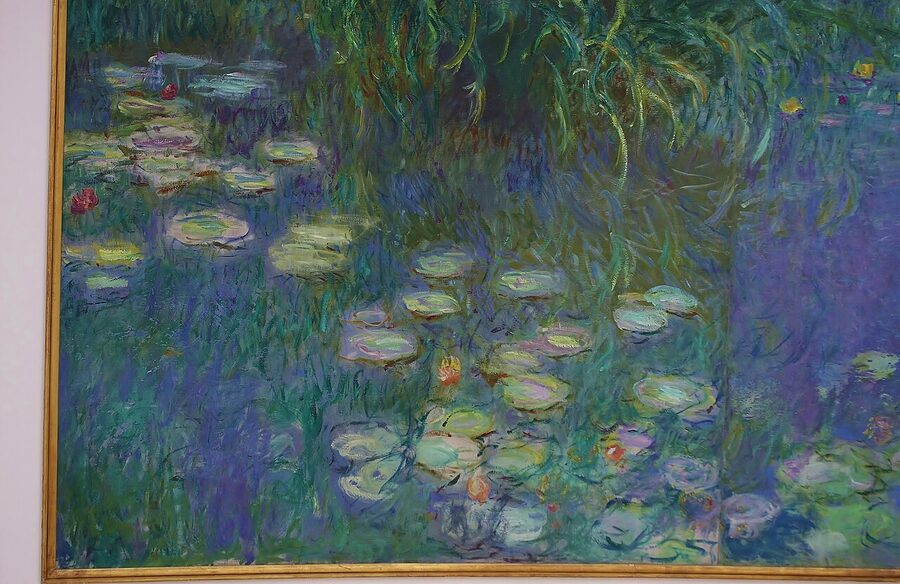
Room 1 holds four panels: Setting Sun (the warm orange one on entry), Clouds, Green Reflections, and Morning. They’re arranged so you read the room as a single day, dawn to dusk, moving counter-clockwise. The panels meet flush at the curves. There are no frames. The canvas just runs continuously around the wall.
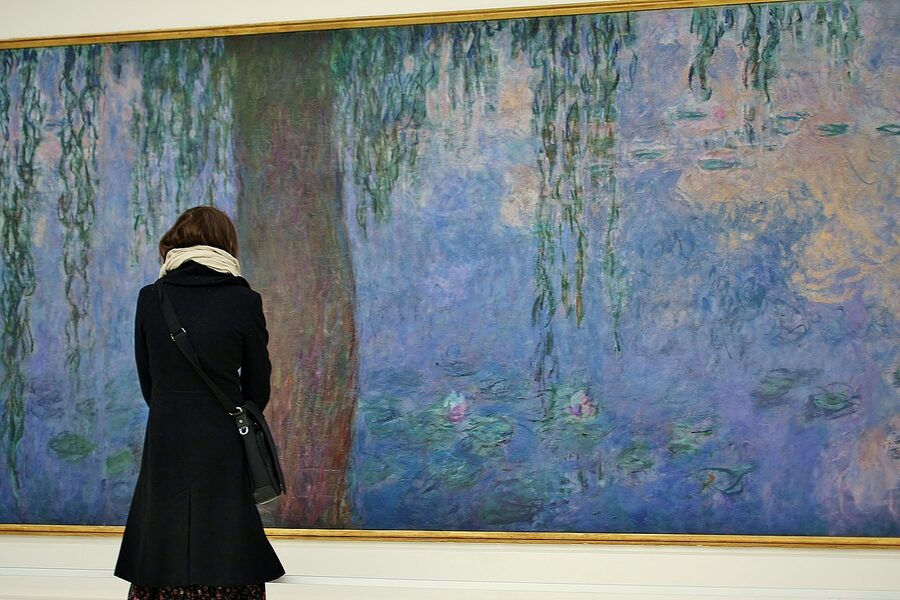
Room 2 holds the other four: Morning with Willows, The Two Willows, Clear Morning with Willows, and Tree Reflections. These are darker, more vertical, more about the willows on the far bank than the water itself. If Room 1 is about colour, Room 2 is about brushwork. Monet was in his eighties when he painted these. He had cataracts in both eyes for most of the work and the surfaces show it.
How long to spend, by the bench
The straight answer is 25 to 30 minutes per room, sitting on the central bench, watching the light shift through the ceiling glass. That’s not romantic advice. The light in there genuinely does shift, the panels look different at 11am than they do at 3pm, and the only way to feel the enveloppement Monet wrote about is to sit still long enough for your eyes to stop scanning.
This is the bit travellers skip. They walk in, photograph each panel, walk out, write “amazing!” in a review and head to the Musée d’Orsay across the river. If that’s all you have time for, fine, but you’ve technically been in the Orangerie without seeing it. The Orangerie isn’t a building containing paintings. It’s a single installation that takes time to register.
The basement nobody comes for, but should
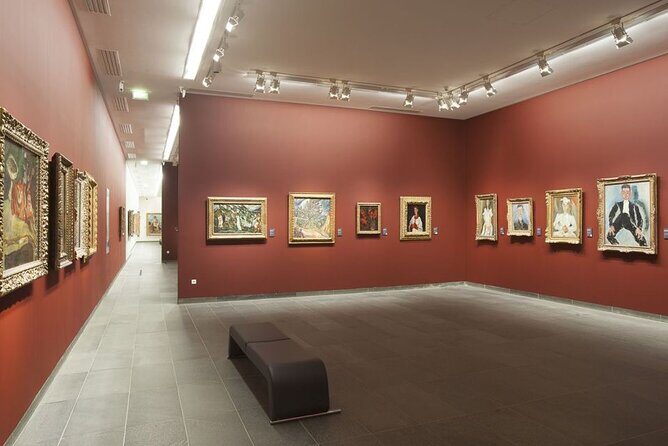
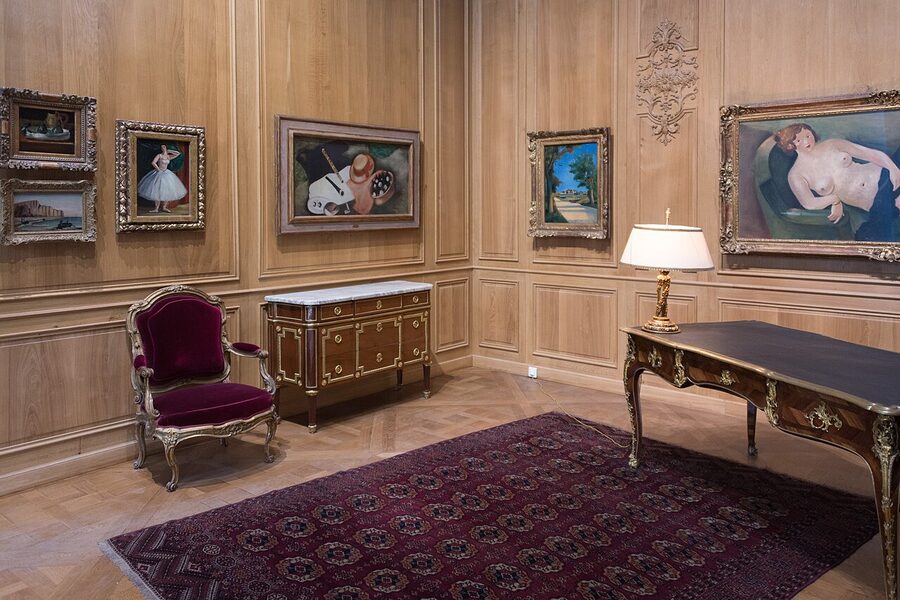
Take the staircase down from the lobby. You arrive in the Walter-Guillaume collection: 144 works donated to France in 1959 by Domenica Walter, widow of the Paris dealer Paul Guillaume, and finally opened to the public in 2006 after a major basement renovation. This is the part of the museum most travellers miss entirely.
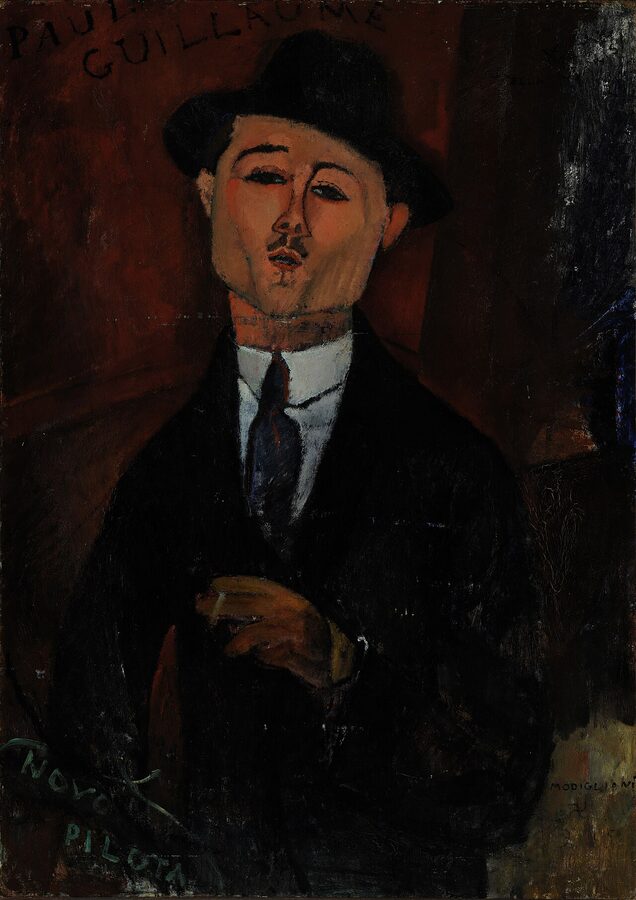
Paul Guillaume was a Parisian art dealer who opened his first gallery in 1914. He was 23. He made the kind of risk-on bets dealers occasionally make and rarely live to enjoy: he bought Modiglianis when nobody wanted them, Soutines when nobody had heard of Soutine, late Cézannes, early Matisses, Derains, Le Douanier Rousseau. Guillaume died young in 1934. His widow Juliette later married Jean Walter, a Belgian-French industrialist, and the two of them kept building the collection until her death in 1977.
The numbers, because the numbers matter here:
- 25 Renoirs (mostly the late, fleshy bathers)
- 14 Cézannes (still lifes, portraits, two of his late landscapes)
- 10 Matisses
- 12 Picassos (Blue Period, Rose Period, plus a 1920s neoclassical pair)
- 22 Soutines, the largest holding outside Russia
- 9 Le Douanier Rousseau, more than anywhere except Prague
- 5 Modiglianis, including the Paul Guillaume portrait
The Soutines are why I’d come down here even if the rest of the basement closed for renovations. Chaim Soutine painted with a kind of carnal violence: slaughtered carcasses, pastry cooks with bent spines, twisted village houses leaning into hills. The Orangerie holds more of these in one place than anywhere else. They are not gentle paintings. They sit one floor below Monet’s pond, which is a juxtaposition you don’t get anywhere else in art history.
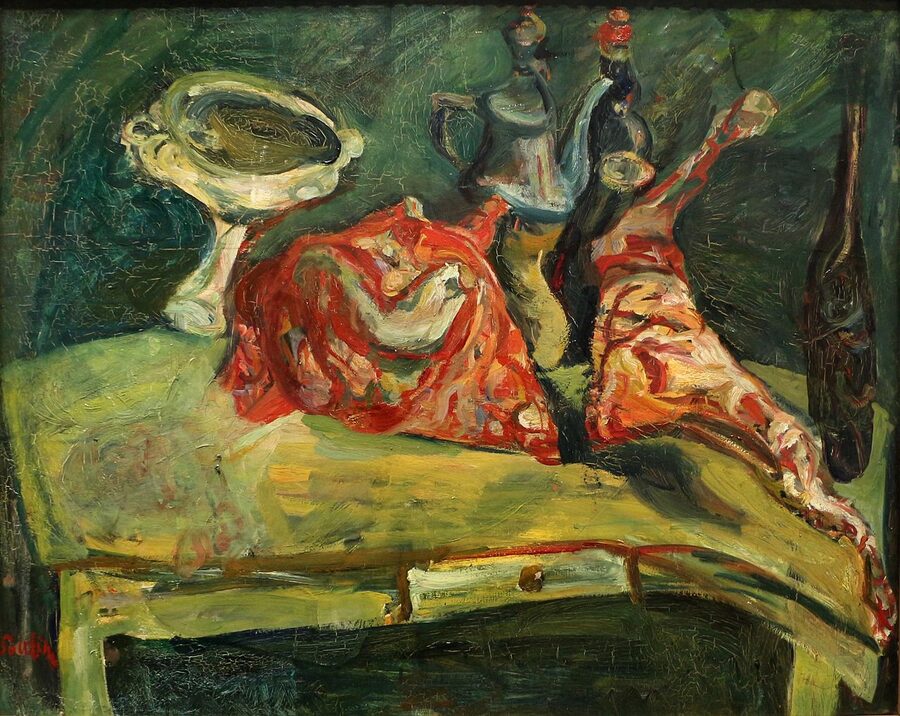
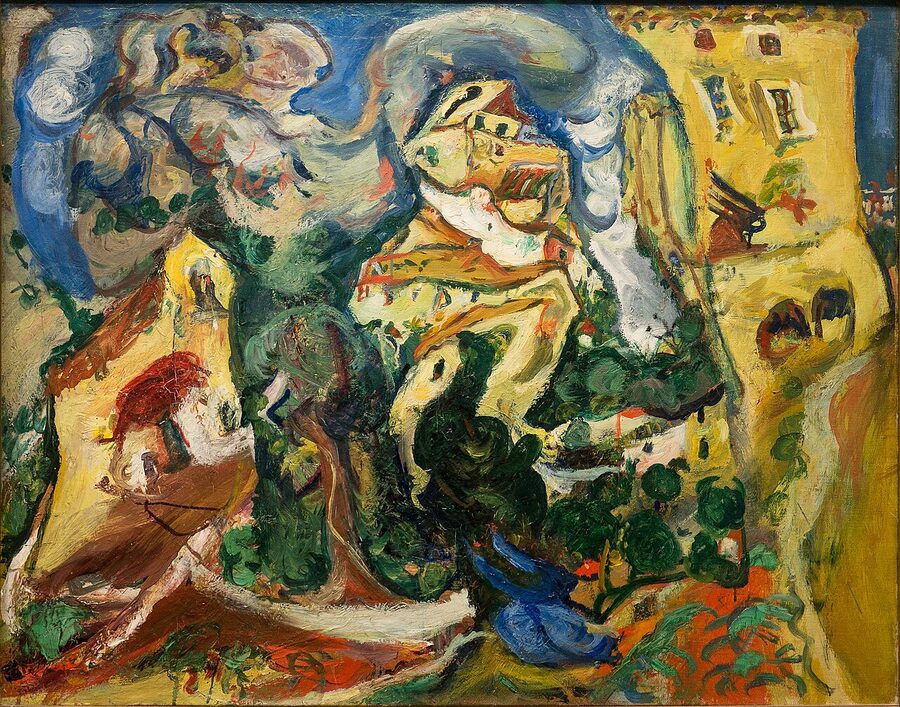
For Cézanne lovers, the basement holds Madame Cézanne, two early still lifes, and a late Mont Sainte-Victoire that’s worth ten minutes alone. For Matisse, it holds The Three Sisters triptych and a 1907 nude. For Picasso, the highlights are the Blue Period Embrace and a single small Rose Period Family of Saltimbanques sketch.
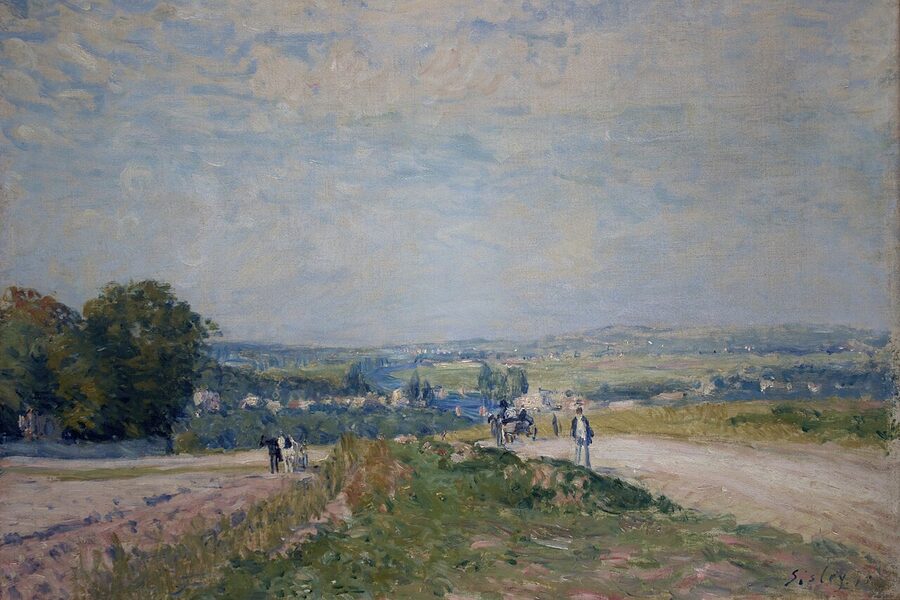
If you’ve already done the Orsay, the basement reads as the next chapter of the same story. The Orsay covers Impressionism through 1914, the Orangerie basement picks up at the Cézannes and runs the modernists through to about 1930. Combined, the two museums are the spine of French painting from the railway age to the eve of WWII. Add the Louvre’s pre-1850 collection underneath and the Fondation Louis Vuitton as the contemporary endpoint, and you have a four-museum chronological progression you can do in two days.
The three tickets I’d actually book
There aren’t many distinct products for the Orangerie. It’s a one-room building, basically; most “tours” of it are just slot bookings with a guide attached. I narrowed the field to three that actually make sense at three different price points.
1. Reserved Entrance Ticket: $12
This is the right pick for the vast majority of visitors. It’s the same museum-direct price you’d pay at the door, but with a guaranteed slot, saving you the standby queue on weekends. Our review of this ticket covers the cancellation terms and the Tuesday closure that catches people out.
2. Flexible Entry with Audio Guide: $27
Pick this one if the wall texts feel sparse and you’d like a panel-by-panel walkthrough on your phone. The flexible window is genuinely helpful when you’ve under-budgeted Tuileries time and want to roll your slot. Read our take on the audio variant for the catch around the “audio included” phrasing.
3. Orangerie + Seine River Cruise: $45
Worth it only if you weren’t already booking a Seine cruise separately, since the saving over two individual tickets is small. The cruise is a standard hour from Pont de l’Alma. Our read on the combo flags the audio-guide caveat in the listing.
The architectural conditions, in plain English
Monet’s letter of donation specified the architectural framing in unusual detail because he understood, correctly, that the panels would be ruined in any normal museum hanging. They’re too long. They’re too low. They have no foreground. If you stuck them on a flat wall in a square gallery they’d read as decorative wallpaper.
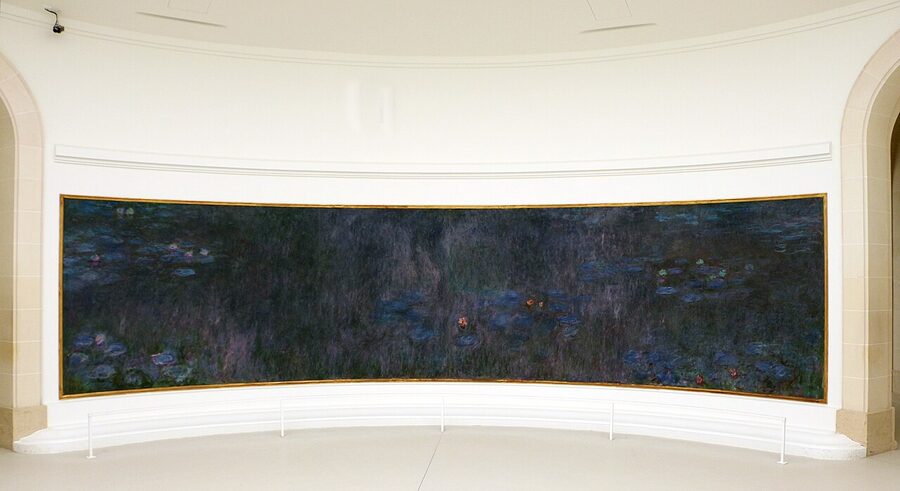
The oval shape gives the curve a continuous reading. The north-south axis means the natural light enters from the same direction it would have crossed the Giverny pond at noon. The skylight is high enough that you don’t see the glass directly, only the diffused white above. The walls are off-white, never bright white, so the panels’ darker passages can read as dark.
The 1965 renovation didn’t touch the rooms. The 2000–2006 renovation almost did. The original plan was to add a mezzanine over Room 1, which would have flooded the panels with reflected light from the wrong angle and gutted the enveloppement entirely. There was a public outcry, a culture-ministry intervention, and the architect Olivier Brochet redesigned the project to leave both rooms untouched. The basement Walter-Guillaume galleries are the new build; the rooms upstairs are essentially as Monet specified them in 1922.
How to read the panels, for non-experts
I’m not an art historian. But after a few visits the same things kept jumping out, and I’d rather pass them on than pretend you need three years of art-school training to enjoy this museum.
First, there’s no horizon. Monet cropped the world. There is no shore, no sky-meeting-water line, just pond surface filling the canvas. This is unusual. Most landscape painting before Monet relied on the horizon as the structuring line. Removing it disorients you, which is the point.
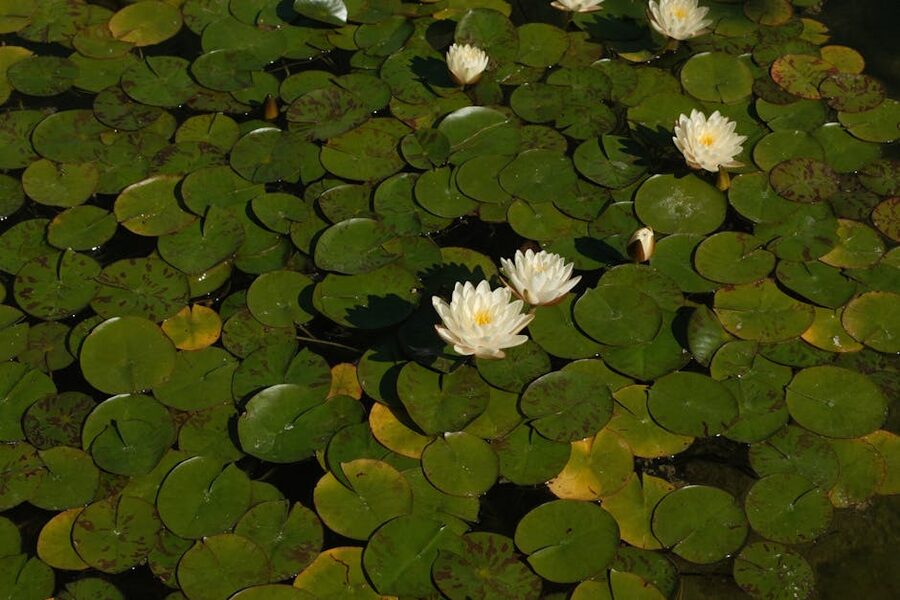
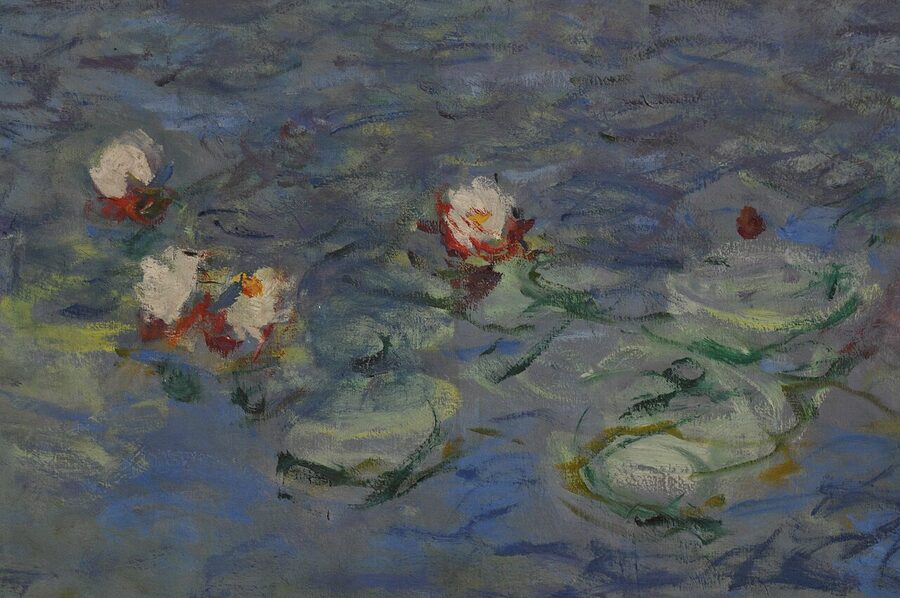
Second, the lily pads aren’t only painted. On most panels Monet built them up in physical relief, layer on layer of paint, until they sit a centimetre or more proud of the canvas. You can see the shadows they throw if you stand at an angle. This isn’t visible in any reproduction. It’s one of the reasons photographs of the panels never look right. The texture is half the painting and a flat reproduction loses it.
Third, the underwater. Painters before Monet had painted ponds by stopping at the surface. Monet painted through it. About a third of the canvas surface in each panel is underwater rather than above-water: pond plants, mud, the dark vegetation under the lily pads. The colours shift accordingly, ochres and blacks instead of blues and greens. Once you start watching for the underwater passages they reorganise the painting.
Fourth, the willows in Room 2. The willows are the only vertical elements in the entire eight-panel cycle. They function like the columns of a building. They break up the horizontal flow of water and give the eye something to register against. In Room 2, they’re the structure. In Room 1, there are no willows at all. It is fully a horizontal room.
Best time, worst time, and the day to skip
Hours are 09:00 to 18:00 daily, except Tuesdays when the museum is closed. Last admission is 17:15. If you’re booking the cheapest slot it’s the 09:00 to 09:30 window. You’ll have the rooms to yourself for the first 20 minutes before the late-morning crowd lands.
Wednesday afternoon is the quietest slot of the week. Saturday all day is the busiest, with school groups blocking the central benches in both rooms. Avoid the school groups by sitting on the side benches against the curved walls, or by waiting them out. Most groups cycle through in 12 to 15 minutes.
If you’re in Paris for less than three days and have to choose, the Orangerie sits in a tier with the Sainte-Chapelle and the Panthéon: small, focused, single-experience museums you can do in 90 minutes. The bigger institutions (Louvre, Versailles, Orsay) need half a day each. Pair the Orangerie with one of the other small museums on the same day.
The Tuileries angle: don’t underestimate the walk in
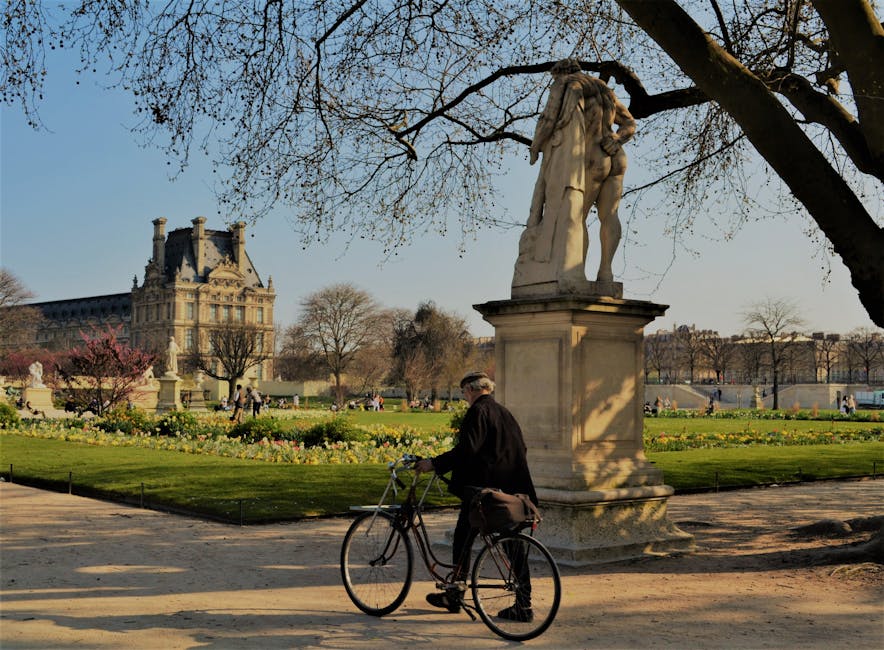
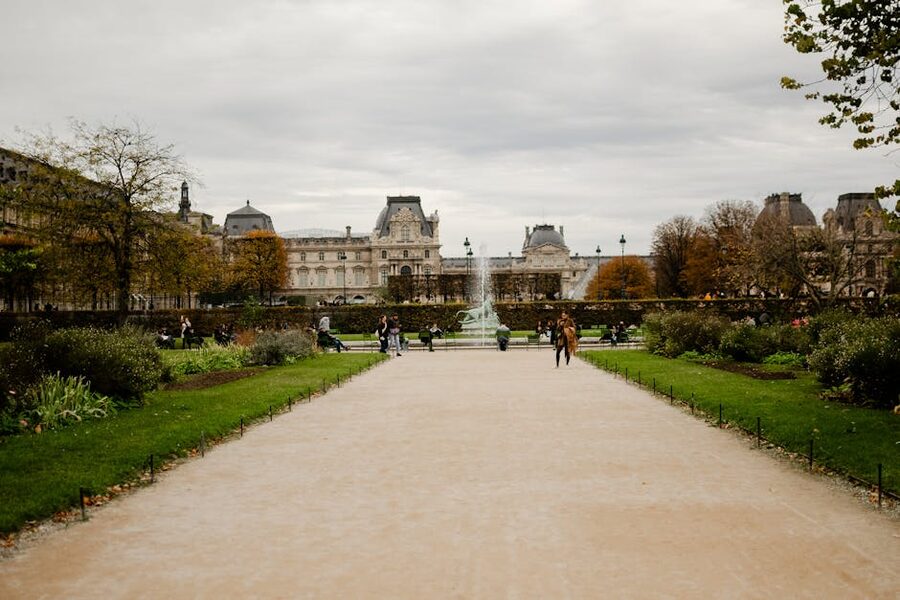
The Tuileries Garden itself is part of the experience. André Le Nôtre laid it out in 1664 (the same Le Nôtre who did Versailles) and it’s still the original axis. The Orangerie and its mirror twin the Jeu de Paume sit at the western end, flanking the upper terrace above the Place de la Concorde. Maillol’s bronzes, Rodin’s The Kiss, two Giacomettis, two Henry Moores. The lawn is essentially an outdoor sculpture park as you walk through.
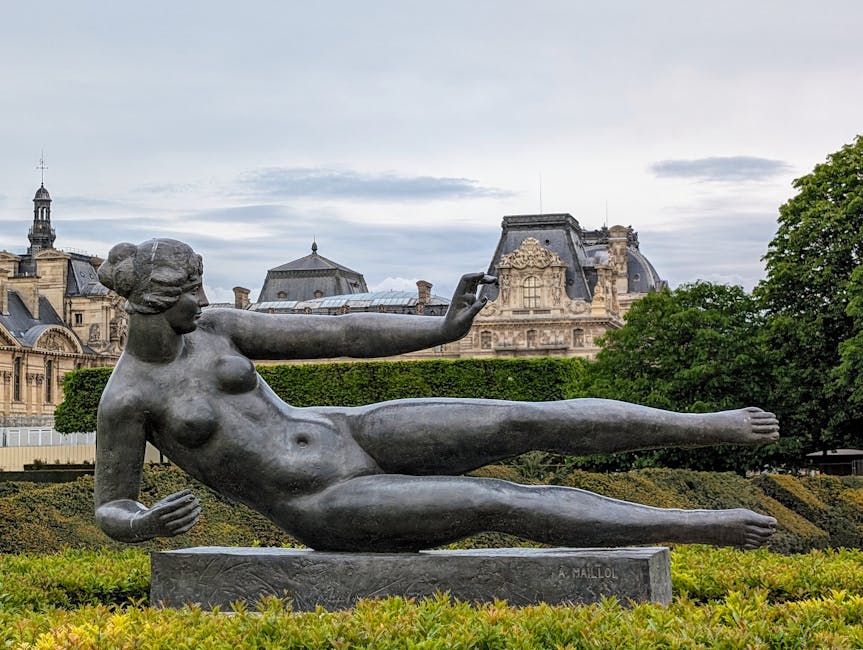
If you’re coming from the river, the approach is along the embankment past the Pont Royal. The Seine cruises from the Pont Solférino dock pass directly under the Orangerie’s south-facing wall, so if you’re combining the two it’s a 200-metre walk between dock and entrance.
Where the Orangerie fits in a Paris itinerary
This is a small museum. It is not Louvre-scale, it is not Orsay-scale. It’s a one-experience museum and it stands or falls on those eight panels. So slot it accordingly.
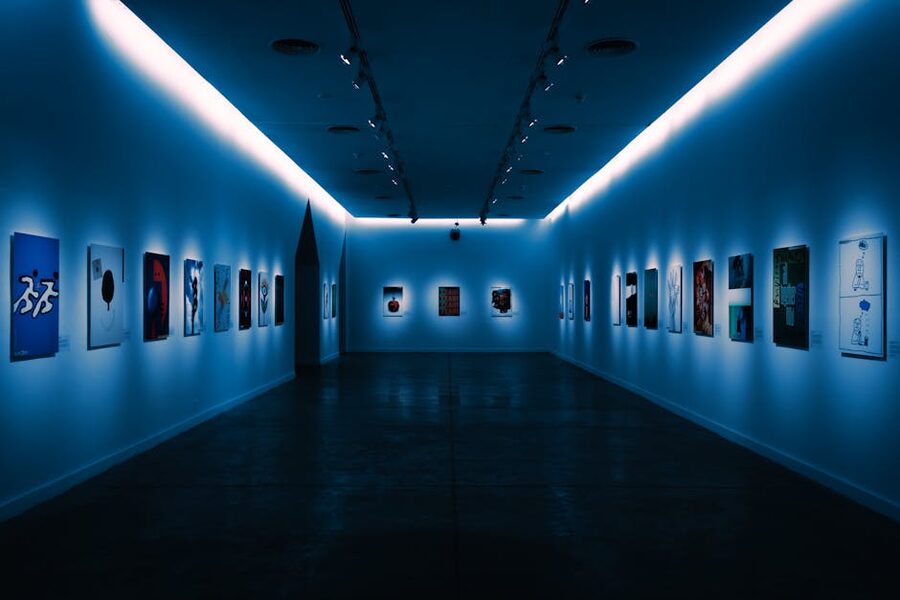
The natural pairing is with the Orsay. They are 800 metres apart on opposite banks of the Seine, and the chronological flow is forwards: Orsay (Impressionism through 1914), then Orangerie (Monet’s late style and the inter-war Walter-Guillaume modernists). Do them in that order on the same day (Orsay morning, lunch in the Tuileries, Orangerie afternoon) and the second museum reads as a continuation of the first.
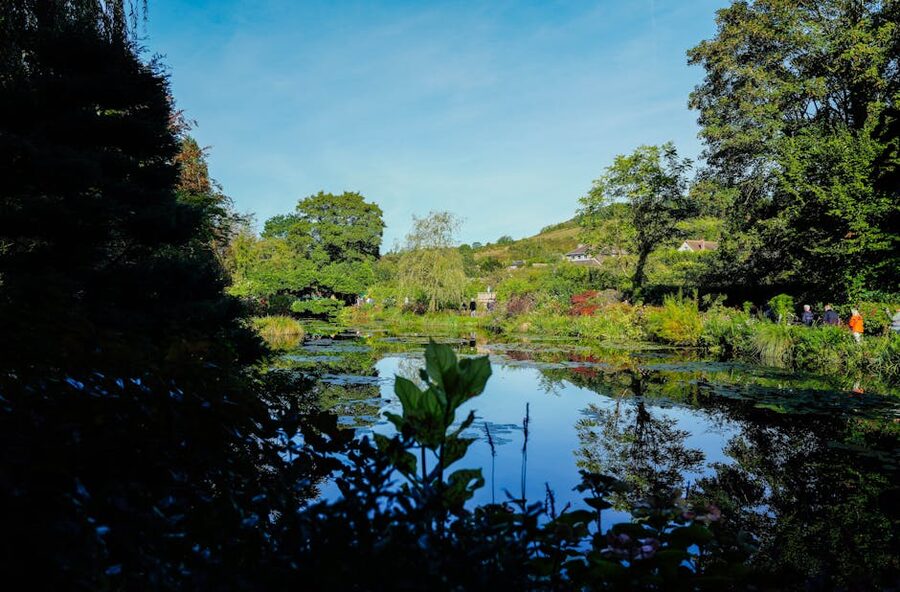
If you’re a Monet completist, the trio is Orsay (his Impressionist canvases from the 1870s and 1880s), Orangerie (the late panels), then a day trip to his house at Giverny. Three sites, one painter, three completely different registers of his work. The Orangerie is the bridge between the gallery work and the garden.
Other useful adjacencies: the Louvre is a 15-minute walk east through the Tuileries, the Eiffel Tower is two metro stops west via Concorde, the Arc de Triomphe is one straight walk up the Champs-Élysées. Sainte-Chapelle and the Conciergerie sit on Île de la Cité, a 25-minute walk along the river. Les Invalides is on the Left Bank, ten minutes south across Pont Alexandre III.
Two practical asides nobody warns you about
First: the cloakroom is small and chronically overwhelmed. There are about 60 lockers and 200 visitors at any given moment. They’ll let you carry a small daypack into the rooms but anything larger than 30cm × 40cm has to go in the cloakroom and the queue can be 15 minutes on a Saturday. Travel light, or come with no bag at all. Coats can be carried.
Second: there is no café inside. There used to be a small one near the entrance; it’s been closed since the 2006 renovation and not reopened. The nearest decent coffee is on the rue de Rivoli (Café Verlet at no. 256, two minutes east) or any of the kiosks in the Tuileries Garden itself. Don’t plan a museum-then-lunch sequence inside the building. There’s nothing inside.
Why this museum is not the Louvre, and why that’s the point
Most travellers compare museums by collection size. The Louvre wins that way. The Orangerie has eight major paintings upstairs and 144 in the basement, so by the size metric it’s a tiny museum that should be on nobody’s must-do list.
What it has that no other Paris museum has is a unified single-room installation that the artist designed himself, in the building he chose, with the architectural conditions he wrote into the donation contract. There is nowhere else in Paris where you can stand inside a single artwork at this scale. The Last Supper in Milan has something of the same feel: a single masterpiece in its purpose-built setting that a city builds an entire visit around. But the Last Supper is a wall fresco and the Orangerie panels were specifically conceived as an environment.
The other comparison that lands is with the chronological progression of Paris art museums. The Louvre takes you from antiquity to roughly 1850. The Orsay covers 1848 to 1914. The Orangerie picks up at the late Monets and runs through the Walter-Guillaume modernists into the 1930s. The Fondation Louis Vuitton closes the chain at the contemporary end. Four museums, one continuous timeline, walkable in two days if you book ahead.
How the Orangerie compares to other single-painting pilgrimages
If you’ve travelled for art before, the Orangerie sits in a category with maybe four other places worldwide: the Sistine Chapel, the Last Supper in Milan, the Mauritshuis for Vermeer’s Girl with a Pearl Earring, and the Reina Sofía for Picasso’s Guernica. These are museums or sites that one or two paintings make worth a flight for.
The Orangerie’s particular niche in that group is environment. The Sistine Chapel is a ceiling. The Last Supper is a wall fresco in a refectory. The Mauritshuis Vermeer is a small panel in a frame. Guernica is a single huge canvas. The Orangerie’s eight panels are an environment, designed to surround the viewer, in a building that exists for them. Closest cousin globally is probably the Rothko Chapel in Houston, but that’s contemporary, and Monet’s panels predate it by 40 years. The closest contemporary Dutch cousin is Fabrique des Lumières in Amsterdam, a 360-degree projection-art building in a former gas factory; it’s not paintings on canvas but it answers the same Monet question (how do you put the viewer inside the work?) with twenty-first-century projection mapping instead of 1922 oval rooms.
If you’re a single-painting pilgrim, you’ll already know the rhythm: book ahead, give yourself enough time, expect to be alone with the work for at least part of the visit. The Orangerie rewards that approach more than most. Don’t queue for it on a busy Saturday, don’t speed-walk through, don’t photograph and leave. Sit on the bench. The painting moves around you, slowly, in 30 minutes.
If the Orangerie speaks to you, here’s where to go next
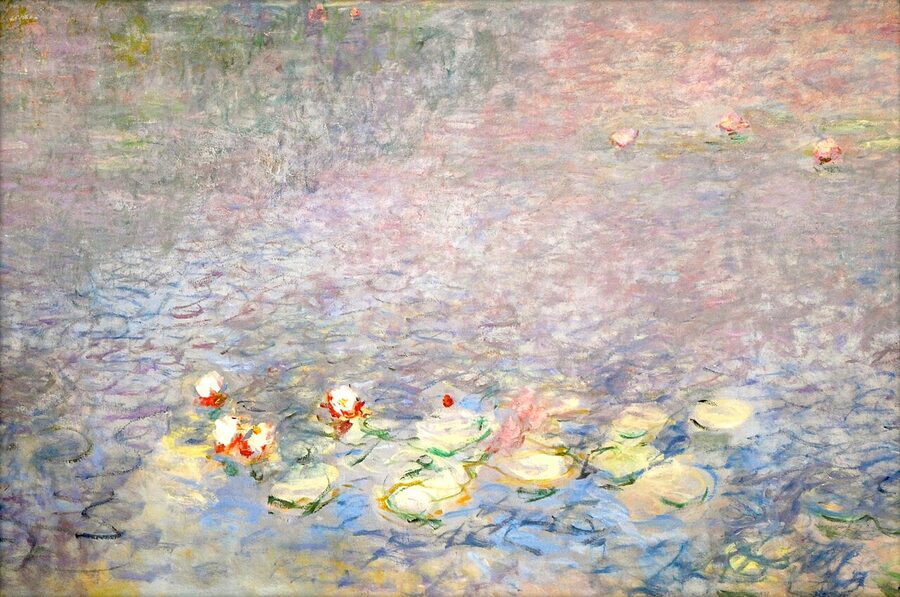
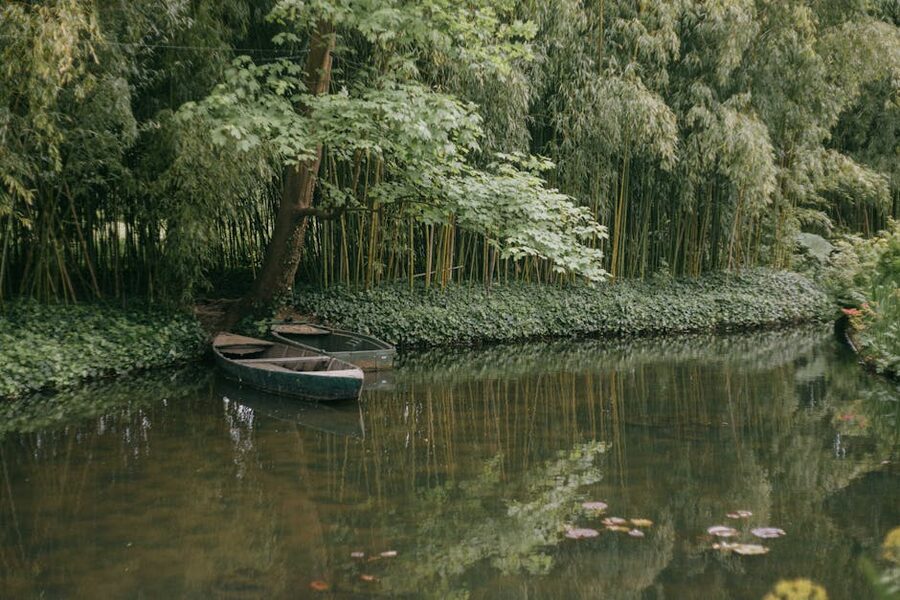
The natural follow-on for Monet specifically is the day trip to his house and gardens at Giverny. It’s a 50-minute train from Saint-Lazare to Vernon plus a shuttle, easy to do in a half-day. The pond you see in the panels is the pond you walk around at Giverny, with the Japanese bridge, the willows, and the flat-bottomed rowboat all still there.
If the basement Walter-Guillaume sucked you in more than the upstairs, the next museum is the Orsay for the late-19th-century roots of those painters, then maybe a side trip to the Picasso Museum in Málaga if you’re heading to Spain; Málaga holds the early-life context that the Orangerie’s mid-period Picassos build on. The Prado in Madrid is the broader Spanish state-collection counterpart to the Louvre, useful if you’re treating European museum-going as a single sweep. Amsterdam’s Van Gogh Museum is the obvious next stop on a single-painter shrine itinerary: 200 canvases, 500 drawings, 700 letters, all in a Rietveld pavilion three minutes from the Rijksmuseum, and the Van Gogh-Monet conversation about colour and outdoor light reads as one continuous argument across two cities.
For more single-painting pilgrimages: the Last Supper in Milan is the closest cousin in terms of one-painting-the-world-makes-the-trip-for energy. The Uffizi in Florence isn’t single-painting but it’s the museum where you stand in front of the Birth of Venus and Primavera for 20 minutes each and call it the day. The Reina Sofía is built around Guernica in much the same way the Orangerie is built around the Nymphéas.
And if you’re working a Paris-only itinerary across three or four days, the obvious other small-but-focused stops are Sainte-Chapelle, the Panthéon, and Les Invalides, each of them, like the Orangerie, doable in 90 minutes and built around a single dominant idea. The Tuileries-and-Concorde end of central Paris can swallow a whole afternoon if you’re patient enough; the Orangerie is the reason to be patient.
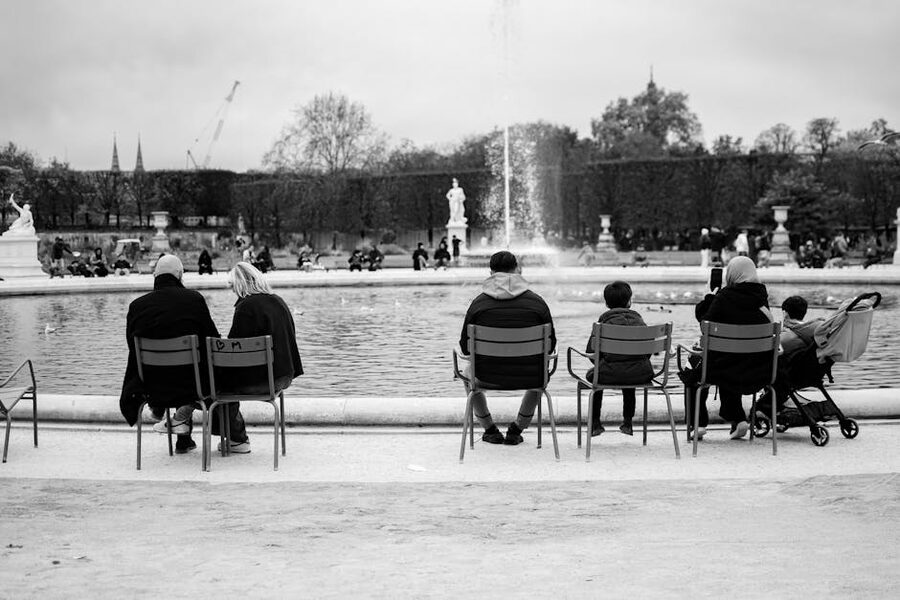
One final thing. The Orangerie isn’t a building you visit. It’s a room you sit in. Book the cheapest ticket, find the central bench in Room 1, and don’t get up for 25 minutes. Whatever else you do in Paris, that bench is what you came for.