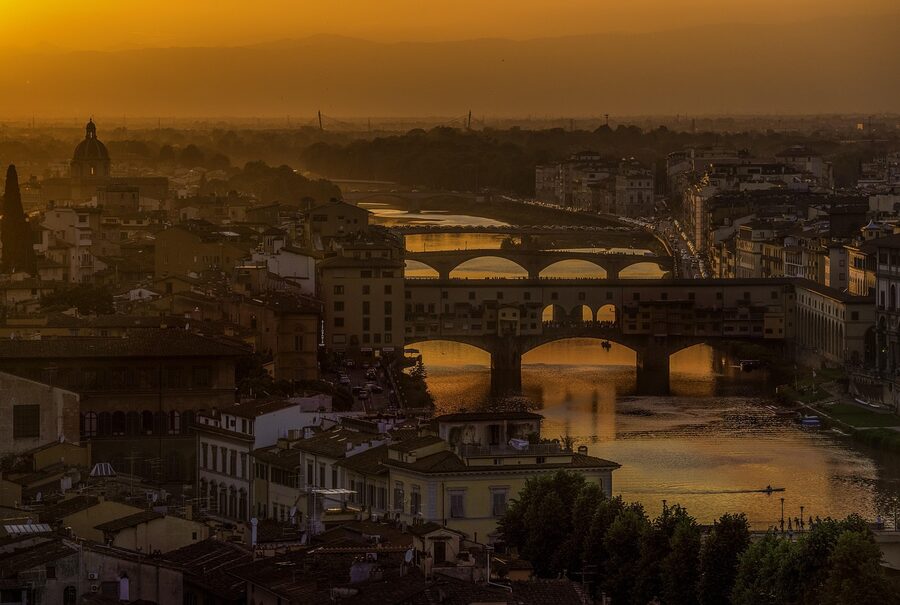
Florence has 1,400 churches and not enough room to fit them all. The Uffizi was originally built in 1560 as administrative offices for Cosimo I de’ Medici, the word “uffizi” literally means “offices.” Within a generation, the Medici started filling the upper floors with their personal art collection. By 1769 it was open to the public, making it one of the world’s first museums. Today it holds the largest collection of Italian Renaissance art on earth, and the lines outside reflect it. Only Madrid’s Prado and Paris’s Louvre match this scale and density of European old masters in a single building.
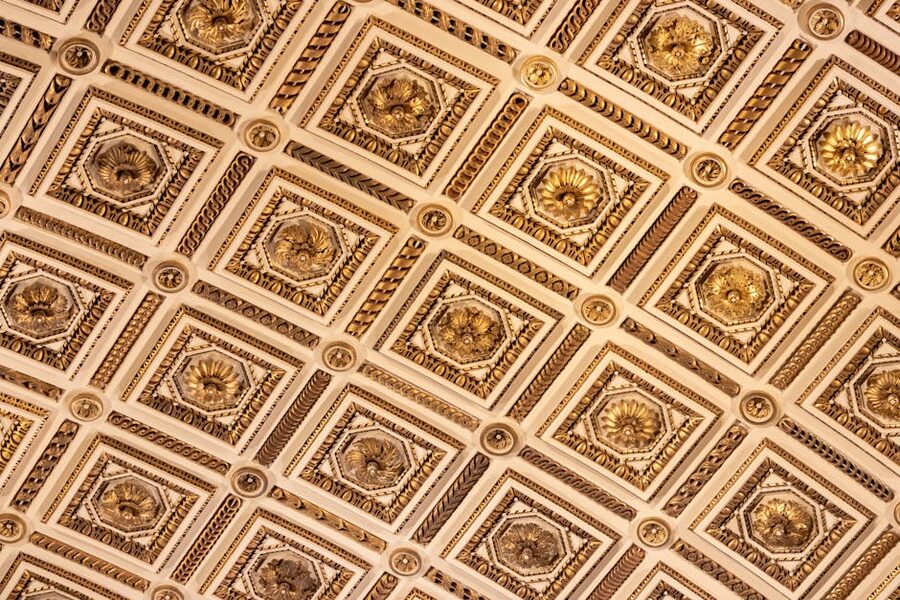
I made the mistake of showing up at the Uffizi on a Saturday morning in May without a ticket. The walk-up queue stretched the length of Piazzale degli Uffizi and around the corner. I gave up after 90 minutes and spent the afternoon walking along the Arno instead. Lesson learned: never visit the Uffizi without a pre-booked timed entry. Same advice applies to the Accademia Gallery for Michelangelo’s David, which has the same crowd problem.
Here’s everything you need to know about Uffizi tickets, what to see inside, and the 250 years of history that explain why this collection exists at all.
Short on Time? My Top Picks
Skip-the-Line Timed Entry Ticket — $30. The most popular Uffizi ticket. Reserved entry, no audio guide, no tour. Best for visitors who’ve done their homework and want flexibility.
Skip-the-Line Small Group Tour — $71.60. Live guide in a small group through the GetYourGuide platform. The best way to understand the art if this is your first major Renaissance collection.
Uffizi Small Group Tour With Guide — $76.19. The Viator alternative — same small-group format with a focused 90-minute pace through the highlights.
How Uffizi Tickets Work
The Uffizi uses timed entry like every other major Italian museum. You book a specific date and a 15-minute entry window. Show up too early and they make you wait. Show up too late and you may lose your slot — and unlike the Borghese Gallery, you can’t easily transfer to a later session.
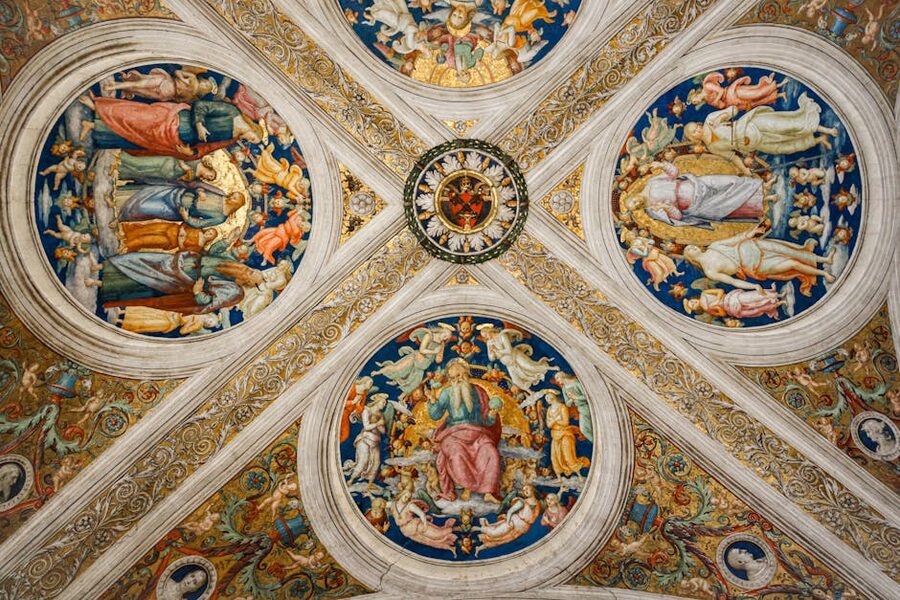
Standard ticket (€16-25): The official price. From January 2026, the after-4pm ticket dropped to €16, while the regular daytime ticket is €25 if booked online in advance. Walk-up tickets cost the same but require waiting in a queue.
Combined ticket (€40): A 5-day pass covering the Uffizi, Pitti Palace, and Boboli Gardens. Worth it only if you’re committed to all three — and you should be, because Pitti Palace is genuinely underrated.
5-day combined + Vasari Corridor (€58): Includes access to the elevated covered passage that Cosimo I built between Palazzo Vecchio and Pitti Palace. The corridor reopened in 2024 after a major restoration and only allows small group access.
Free entry days: The first Sunday of each month is free for everyone. The lines are extraordinary. I’d avoid it unless you have very limited budget and very abundant patience — similar to the free Sunday at the Vatican Museums.
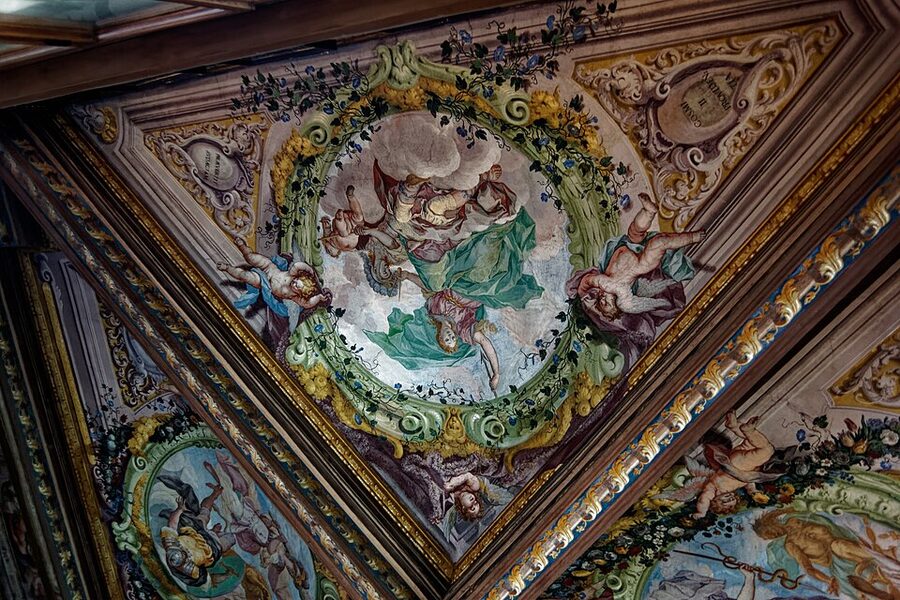
When to Visit
The Uffizi is open Tuesday-Sunday, 8:15 AM to 6:30 PM (last entry 5:45 PM). Closed Mondays — the same as most Italian state museums.
The first slot at 8:15 AM is the quietest. By 10 AM, the galleries are crowded. The new evening hours from 4 PM onward (with the discounted €16 ticket) are excellent — fewer crowds, softer light through the windows, and you’re often one of the last people in front of major paintings as the museum prepares to close.
Avoid Tuesday afternoons. Tuesday is when most Florence visitors realize the Uffizi is closed Mondays and rush to book Tuesday slots. It’s the busiest weekday afternoon by a wide margin.
The Best Uffizi Gallery Tours
1. Skip-the-Line Timed Entry Ticket — $30
The most-booked Uffizi ticket and the one I’d choose for a return visit or anyone confident exploring on their own. You get reserved timed entry and skip the long queue at the door. Bring a guidebook, download a free art app, or just wander — the Uffizi rewards both approaches. We break down the most efficient route through the gallery if you want to hit the highlights without backtracking through 101 rooms.
2. Skip-the-Line Small Group Tour — $71.60
The premium GetYourGuide option for first-time Uffizi visitors. A live guide walks a small group through the highlights — Botticelli, Leonardo, Caravaggio, Michelangelo — explaining the iconography, the techniques, and the family politics behind every commission. Two-plus centuries of Renaissance art make a lot more sense when someone is connecting the dots. We dig into what the small-group format adds compared to audio and which painters get the most attention.
3. Uffizi Gallery Small Group Tour With Guide — $76.19
The Viator alternative to the GetYourGuide tour above. Same small-group format, same skip-the-line access, but a tighter 90-minute schedule focused on the highlights. Worth comparing if your dates don’t work for the GetYourGuide option, or if you prefer Viator’s booking platform. Our review of how the 90-minute pacing compares to longer tours covers what gets covered and what gets skipped.
What You’ll See Inside
The Uffizi has 101 rooms. You won’t see all of them in one visit, and trying will leave you exhausted by Room 25. The strategy: focus on Botticelli, Leonardo, the Tribuna, and Caravaggio. Everything else is a bonus.
Botticelli Room (Rooms 10-14)
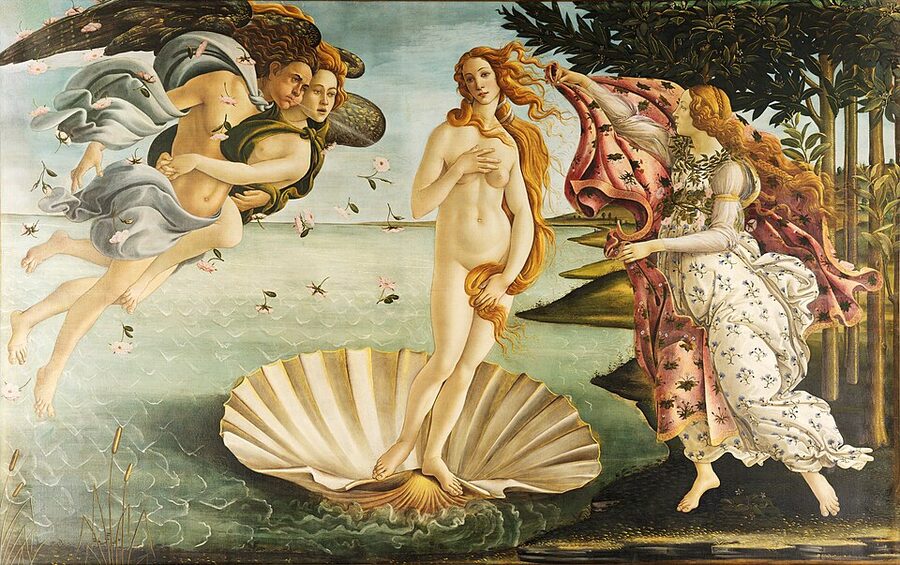
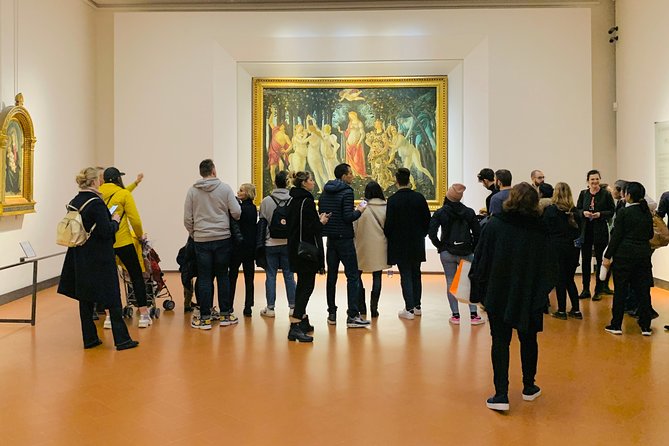
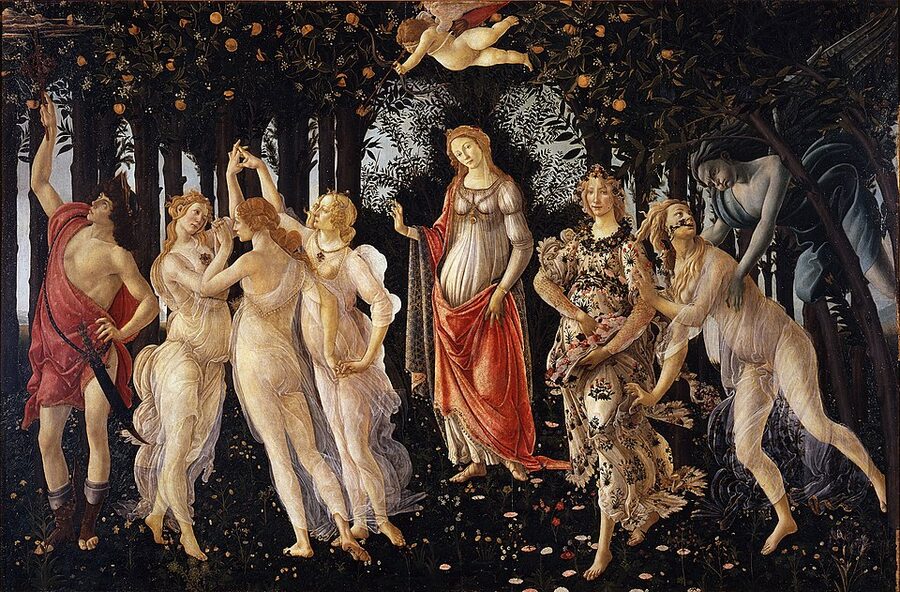
This is what most people come for. Botticelli’s “The Birth of Venus” and “Primavera” hang in the same room, both about three meters wide, both painted in the 1480s for the Medici family. Standing between them is one of the great moments in any museum visit. The room gets crowded — try to time your arrival for early morning or late afternoon when the tour groups thin out.
The Birth of Venus broke artistic conventions when it was painted. It was one of the first large-scale nude paintings of a non-religious subject in the Italian Renaissance — extraordinary for an era when nude figures were almost exclusively reserved for religious scenes like Adam and Eve or Mary Magdalene. Lorenzo de’ Medici (Cosimo’s grandson) commissioned it for his cousin’s villa, where it hung in a private room for almost 100 years before entering the Uffizi collection.
Leonardo Room (Room 15)
Three early Leonardo paintings hang here, including “The Annunciation” and “The Adoration of the Magi” (unfinished). These aren’t his most famous works, but they show his technical genius developing in his early twenties — the impossible softness of skin tones, the geometric precision of the architectural settings, the experimental use of oil paint in a city that still mostly used tempera.
The Annunciation is particularly important: it’s one of the earliest paintings where Leonardo experimented with atmospheric perspective — making distant landscapes recede into hazy blue. This technique, which we now take for granted, was essentially invented in this painting. Stand back about 5 meters and the depth effect becomes obvious.
The Tribuna (Room 18)
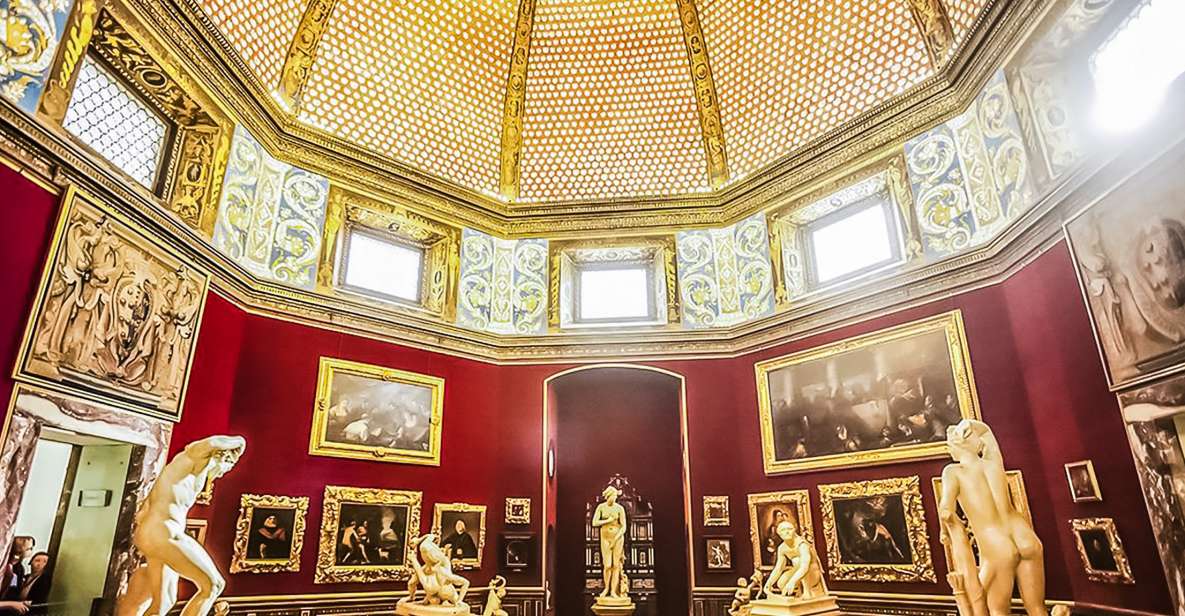
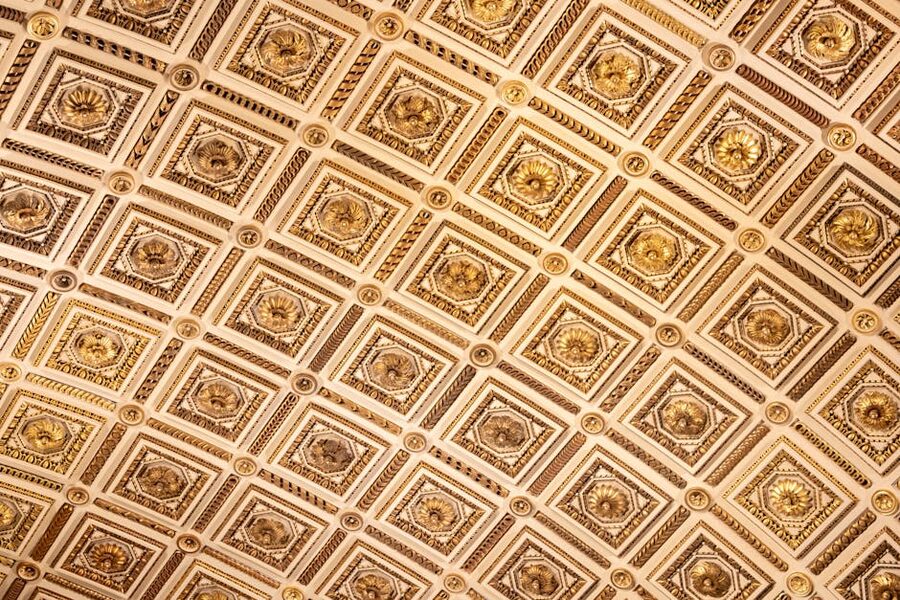
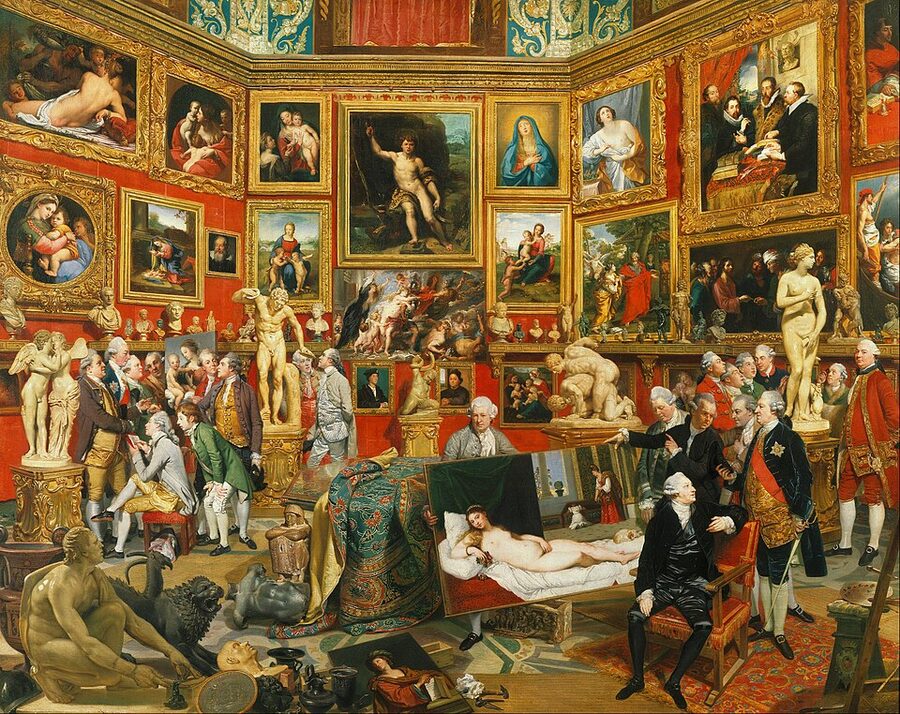
This octagonal room with a mother-of-pearl-encrusted dome was the original showcase of the Medici collection — built specifically to display their finest pieces. Today it holds ancient Roman sculptures and 16th-century portraits. The room itself is the masterpiece. You can only view it from doorways now (it’s roped off to protect the floor), but even from outside, it’s spectacular. (See the History section below for Zoffany’s famous 1772 painting that captures exactly how this room looked to Grand Tour visitors 250 years ago.)
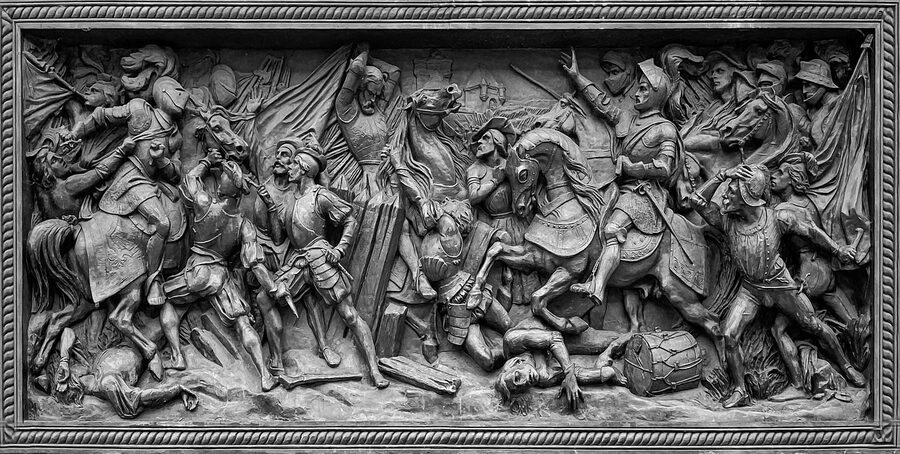
Caravaggio Room (Rooms 96-98)
Three Caravaggio paintings, including “Bacchus” and “Medusa.” The Medusa is painted on a circular ceremonial shield — Caravaggio used his own face for the snakes-haired head, frozen in the moment of decapitation. Up close, you can see the brushwork that shocked his contemporaries and revolutionized European painting.
Caravaggio’s “Bacchus” was painted around 1596, when the artist was barely 25. The model was probably one of his lovers, a young man holding a glass of wine, with rotting fruit at his feet that art historians read as a meditation on mortality. The Romans had paintings of gods. Caravaggio gave them gods who looked like ordinary people, often with the bruised hands and dirty fingernails of working-class Roman models, the same democratic eye that drives the contemporary collection at the Musée d’Orsay in Paris and the figurative portraits at Amsterdam’s Rijksmuseum.
The Corridor Views
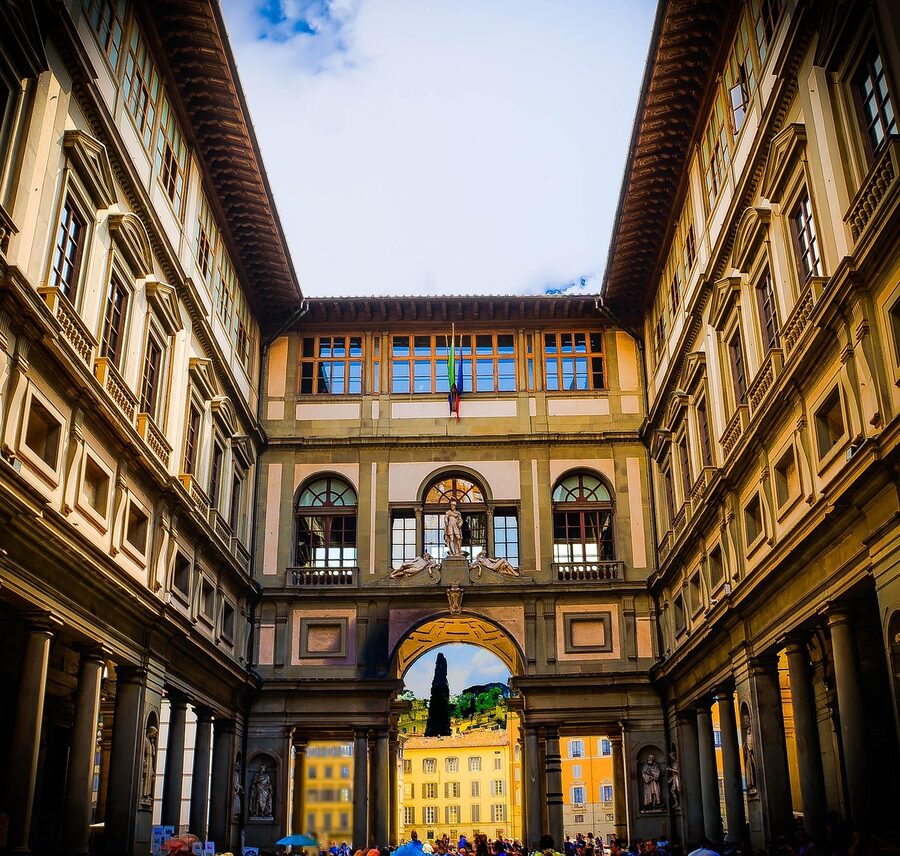
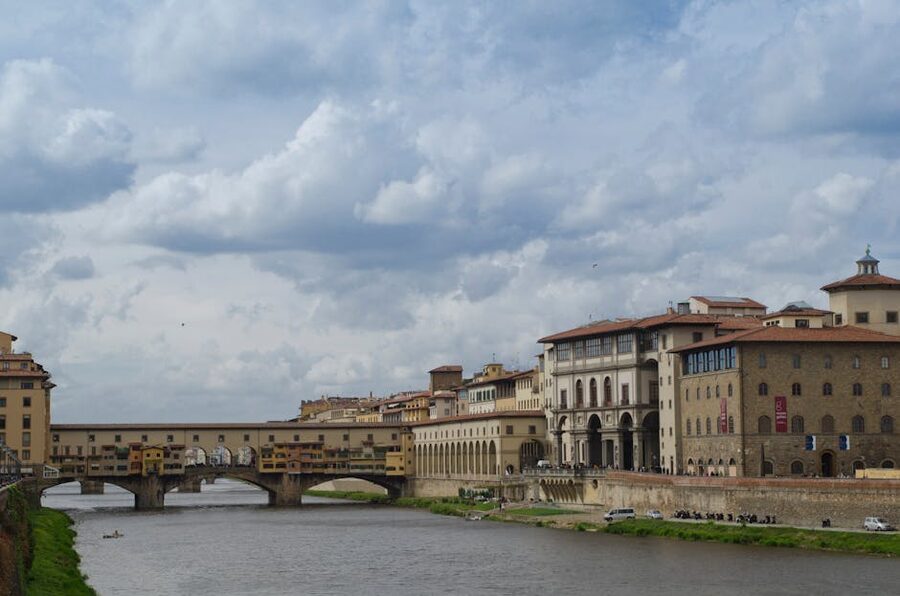
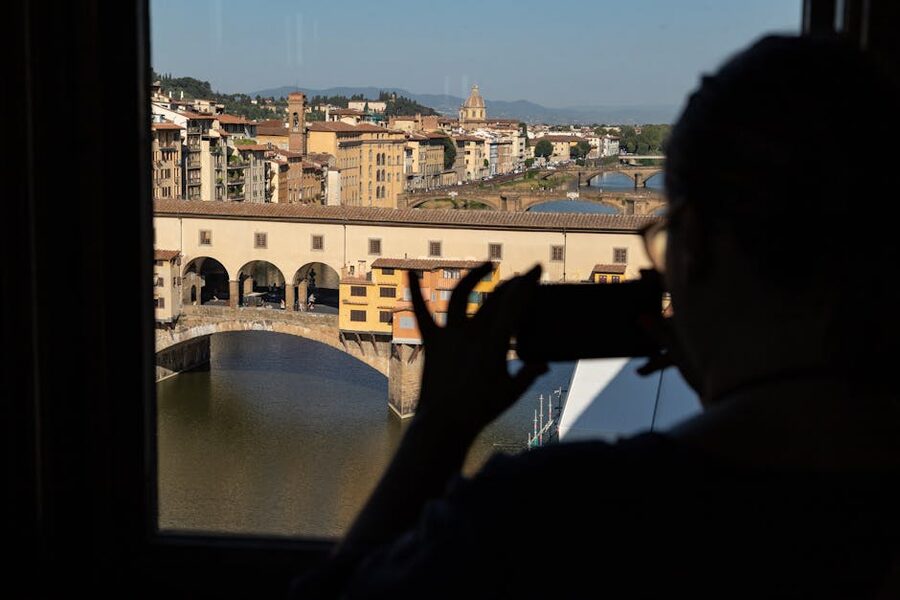
The Uffizi is built around two parallel corridors that open onto a third corridor at the end, forming a U-shape. From the windows along the corridors, you get spectacular views of the Arno River, the Ponte Vecchio, and Palazzo Vecchio. These views were intentional — the gallery was designed so that even visitors looking out the windows would see Medici power displayed in the architecture beyond.
The Vasari Corridor
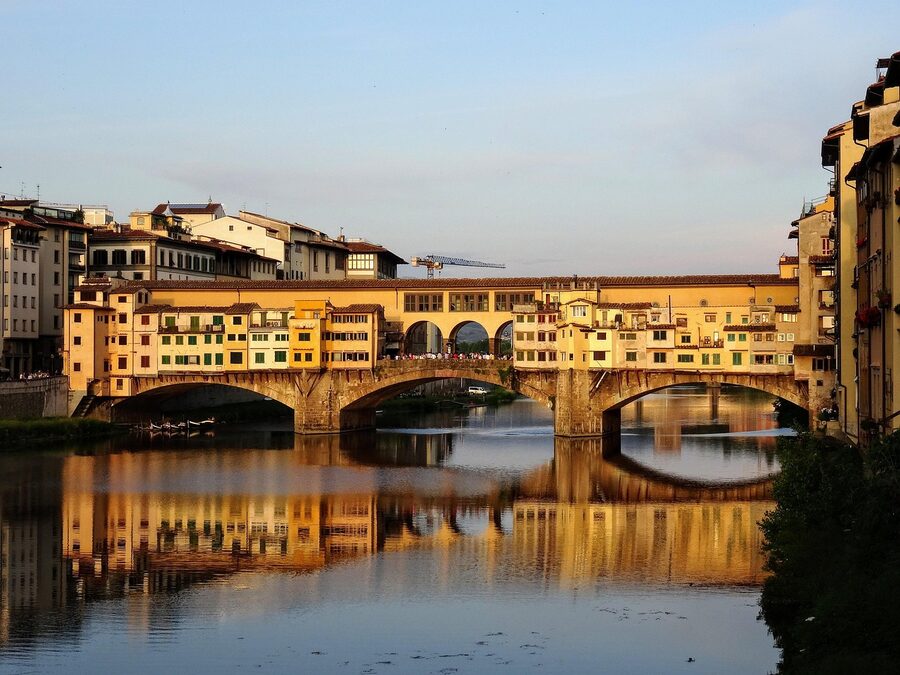
The Vasari Corridor reopened to the public in late 2024 after years of restoration. It’s a kilometer-long elevated covered walkway that connects Palazzo Vecchio (where the Medici worked) to Pitti Palace (where they lived), crossing the Arno along the top of Ponte Vecchio. Cosimo I commissioned Giorgio Vasari to build it in 1565 so the Medici could move between palaces without mixing with the public — or being assassinated.
The corridor is now accessed via small guided tours only, with limited capacity. The included artworks have changed since the original Medici collection (much of which moved to other museums), but the architecture itself — the elevated views, the vaulted ceilings, the way it threads through the city — is what makes it worth the visit.
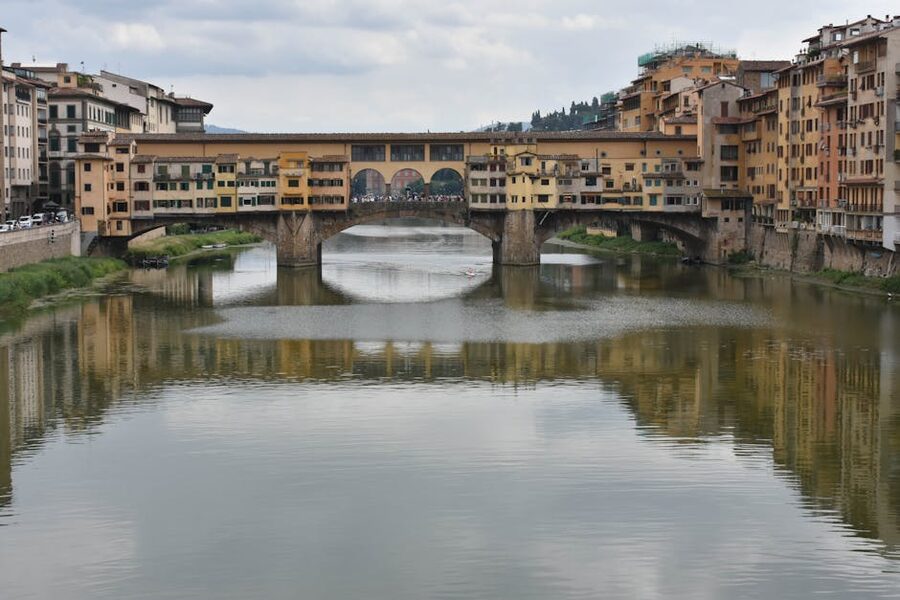
If you’re visiting the Uffizi anyway, adding the Vasari Corridor turns a museum visit into something more like a pilgrimage through 500 years of Florentine power.
A History of the Uffizi
The Uffizi is the oldest art gallery in the modern sense — older than the Louvre (opened 1793), older than the British Museum (opened 1759 but didn’t display art systematically until later), older than the Vatican Pinacoteca. Understanding how it came to exist requires understanding the family that built it.
Cosimo I and the Original Building
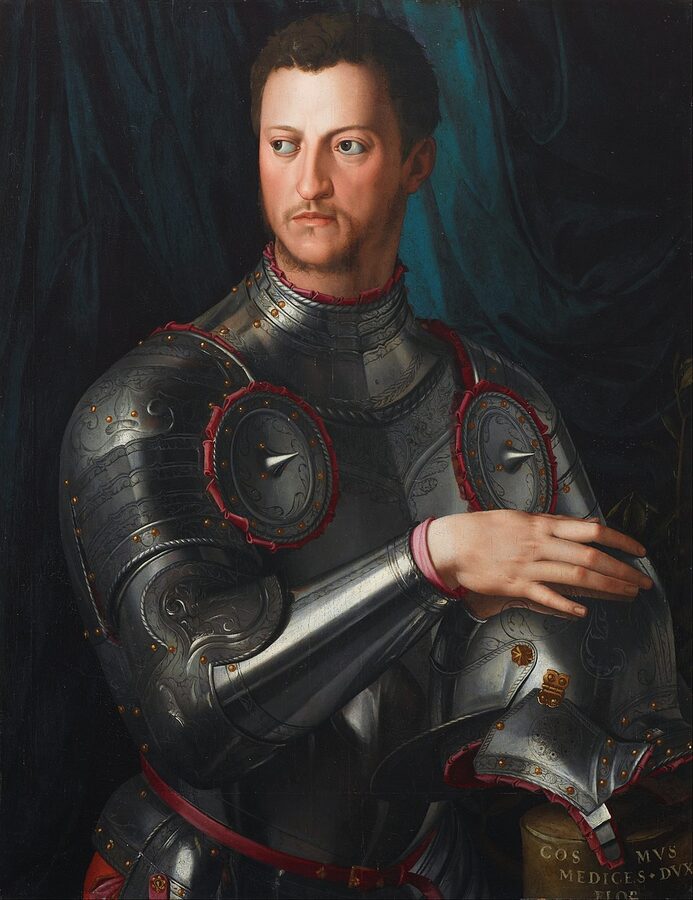
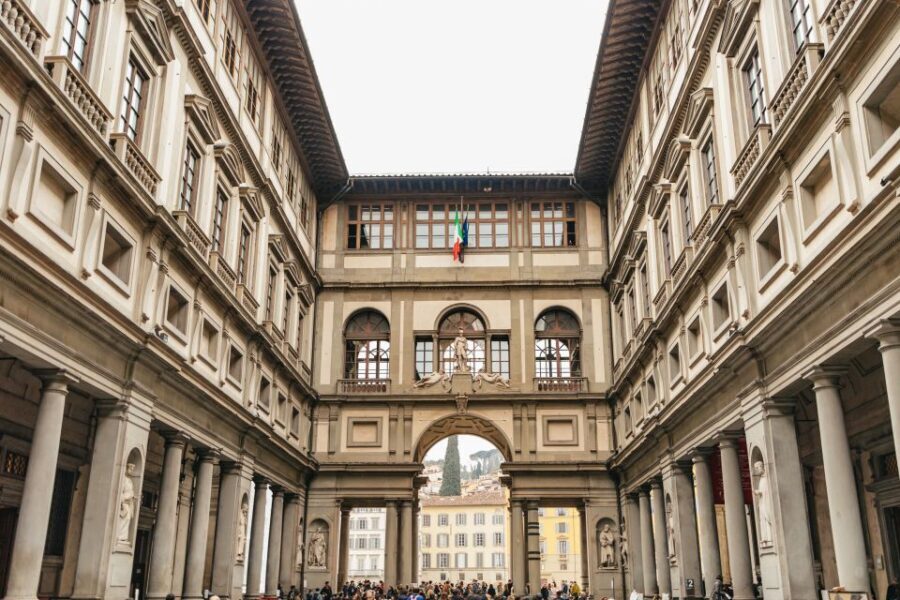
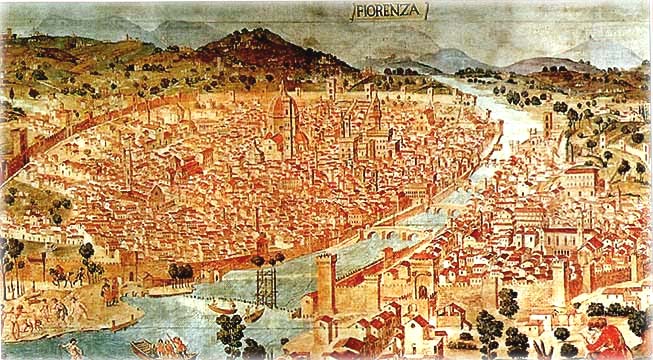
In 1560, Cosimo I de’ Medici — the first Grand Duke of Tuscany — commissioned his favorite architect Giorgio Vasari to design a single building that would house the administrative offices of all 13 Florentine guilds. The building was deliberately positioned next to Palazzo Vecchio (the seat of government) and the Arno River, with a U-shape that opened onto a public piazza. It was completed in 1581.
Cosimo wasn’t planning a museum. He wanted efficient government offices for a city-state that he’d just consolidated under Medici rule. But the building’s location and grandeur meant that as the Medici art collection grew, the Uffizi was the natural place to display it. Within a decade of Cosimo’s death, his son Francesco I had begun converting the upper floors into private galleries.
The Tribuna and the Grand Tour
In 1584, Francesco I commissioned the Tribuna — the octagonal room that became the heart of the gallery for the next 300 years. It was designed to display the family’s most precious objects: ancient Roman sculptures, gemstones, scientific instruments, and the finest paintings. The room’s mother-of-pearl ceiling, marble inlays, and theatrical lighting made it Europe’s most influential museum space — every later museum architect who designed a “treasure room” was, consciously or not, copying the Tribuna.
By the 18th century, the Uffizi had become a mandatory stop on the Grand Tour — the educational journey through Italy that wealthy young European men were expected to undertake. British aristocrats spent weeks here, having their portraits painted in the gallery and writing home about the experience. Johan Zoffany spent six years painting his “Tribuna of the Uffizi” for Queen Charlotte of England, capturing the room and its visitors with the photographic precision the era demanded.
Anna Maria Luisa and the Family Pact
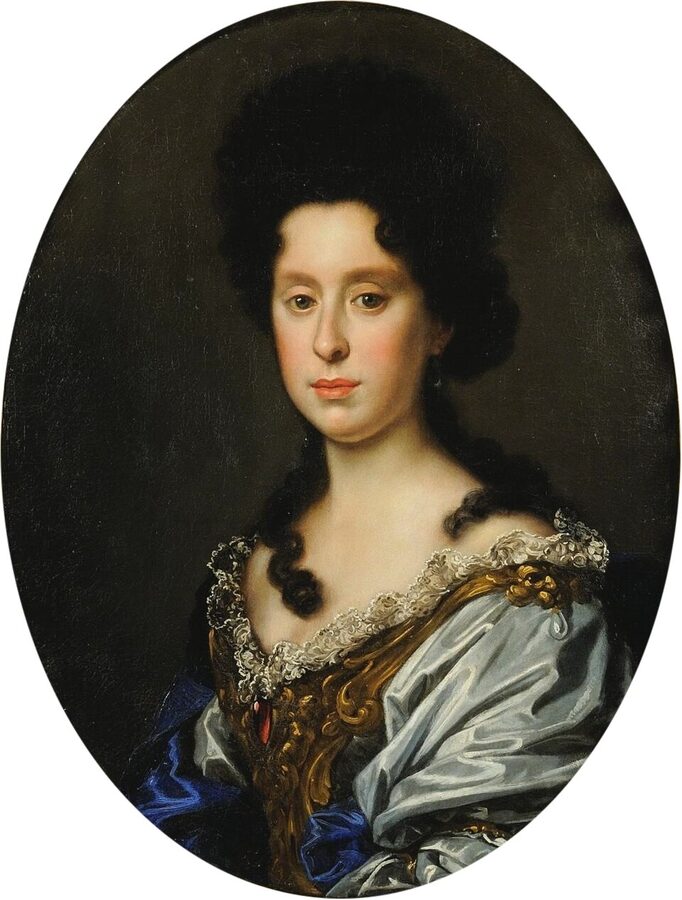
The Medici line ended in 1737 when Anna Maria Luisa de’ Medici, sister of the last Grand Duke, found herself the final heir to the family’s vast collection. The new ruling family — the Habsburg-Lorraines — had agreed to take over Tuscany, and conventional history would have seen the Medici art collection broken up and shipped to Vienna, Paris, or London like every other European royal collection of the era.
Anna Maria Luisa refused to let that happen. In 1737, she signed the “Patto di Famiglia” (Family Pact) — a legally binding agreement donating the entire Medici art collection to the city of Florence on the explicit condition that nothing could ever be removed from the city, sold abroad, or transferred to another collection. The pact was so legally airtight that 290 years later, it still prevents any work in the original Medici collection from leaving Florence — even on temporary loan to other museums, in many cases.
This single decision is why the Uffizi exists today. Without Anna Maria Luisa, the collection would have been scattered across Europe and you’d be visiting Botticelli’s Birth of Venus in Vienna, Leonardo’s Annunciation in Paris, and Caravaggio’s Medusa in London. Her statue stands in the Medici Chapels nearby, pay your respects when you visit. Other Spanish royal collections weren’t as lucky: the Reina Sofía and Málaga’s Picasso Museum both had to claw back works that had drifted across borders for centuries before they found permanent homes.
The Modern Era
The Uffizi opened officially to the public in 1769, making it one of the world’s first true public museums — predating the Louvre by 24 years. Major reorganizations happened in the 19th century (when many ancient sculptures moved to the Bargello and the National Archaeological Museum) and again in the 1990s (when the New Uffizi project doubled the gallery space and added the controversial Issozaki “Loggia” canopy on Piazzale degli Uffizi).
The most recent major event was a 1993 Mafia bombing that killed five people and damaged several rooms in the western corridor. The damage was repaired within years, but the bombing accelerated the museum’s modernization — leading to better security, environmental controls, and the eventual reopening of the Vasari Corridor in 2024.
Practical Tips
Allow 3-4 hours. The Uffizi is large enough that even a focused visit takes 3 hours. If you want to see everything (you don’t), budget 6 hours. Most visitors make the mistake of trying to see too much and burning out by Room 25. Better to focus on Botticelli, Leonardo, Tribuna, and Caravaggio than to skim everything.
Bring water. The cafes inside are mediocre and overpriced. Drinking fountains exist but are sparse.
No large bags. Free coat check is mandatory for backpacks larger than a small daypack. Photography without flash is allowed, but you’ll be reminded constantly to put away phones in front of certain paintings.
Wear comfortable shoes. 101 rooms means a lot of walking on hard floors. Heels are a bad idea.
Combine with the Accademia. The Accademia Gallery (where Michelangelo’s David lives) is a 10-minute walk away. Many visitors do both in one day — Uffizi in the morning, Accademia in the afternoon. The two experiences are completely different and complement each other.
Buy tickets at least a week ahead. The Uffizi sells out morning slots routinely during peak season (April-October). For mid-summer weekends, two weeks ahead is safer.
Check the special exhibitions. The Uffizi runs major temporary exhibitions throughout the year. These are usually included in the standard ticket but require a separate timed reservation. Check the website before booking.
Getting There
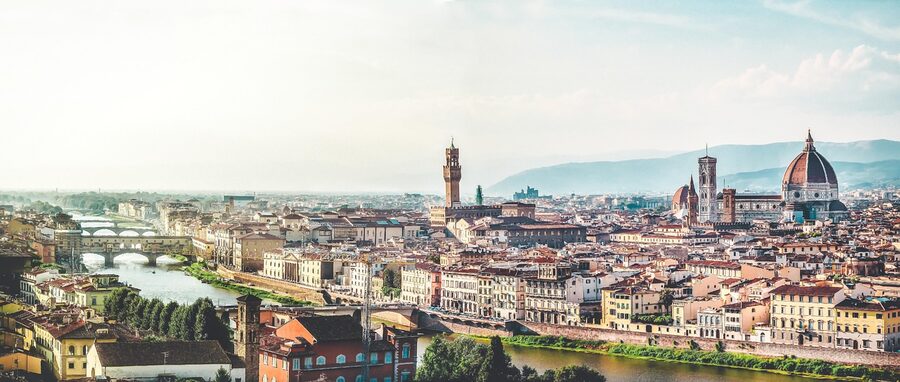
The Uffizi is on Piazzale degli Uffizi, a small piazza right next to Palazzo Vecchio in central Florence. It’s a 5-minute walk from Piazza della Signoria, 10 minutes from the Duomo, and about 15 minutes from Santa Maria Novella train station.
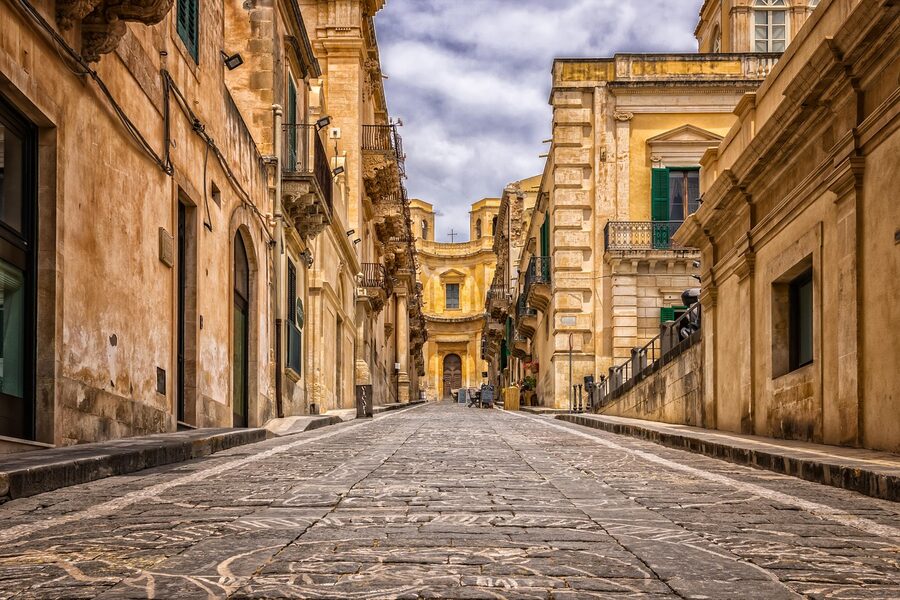
There’s no metro stop nearby — Florence’s compact historic center is best navigated on foot. Most visitors arriving from outside Florence come via Santa Maria Novella station and walk south through the historic center to reach the gallery.
More Booking Guides for Florence
The Uffizi is one piece of Florence’s Renaissance puzzle. The Accademia Gallery houses Michelangelo’s David and pairs naturally with an Uffizi morning. The Duomo and Brunelleschi’s Dome climb need their own half-day with separate tickets. And if you want to slow down after a museum-heavy itinerary, a cooking class in Tuscany or a Chianti wine tour from Florence turns the second half of your trip into something completely different from the first.