
You walk through the doorway of Room 206 on the second floor of the Sabatini Building, and Picasso’s Guernica is in front of you. 3.49 metres tall. 7.77 metres wide. Black, grey, and white. The screaming horse, the bull, the woman with the dead child, the lightbulb sun. There’s no glass. No protective barrier other than a low rope and a couple of guards near the corners. You stand there with maybe forty other people and nobody is talking.
It’s the closest thing to a religious moment most secular travellers have in Madrid.
The painting was made in May and June of 1937, in a studio on Rue des Grands-Augustins in Paris, in response to the German bombing of the Basque town of Guernica on April 26 of that year. Picasso refused to let it return to Spain until democracy did. It came home in 1981, six years after Franco died, and it lives here now, in a former 18th-century hospital that became Spain’s national modern art museum in 1992. That’s the version most travellers know.
What most travellers miss is the reason this museum is the best in Madrid even on the day Guernica is closed for cleaning. Lead with Guernica, of course. Then take the rest of the museum seriously.
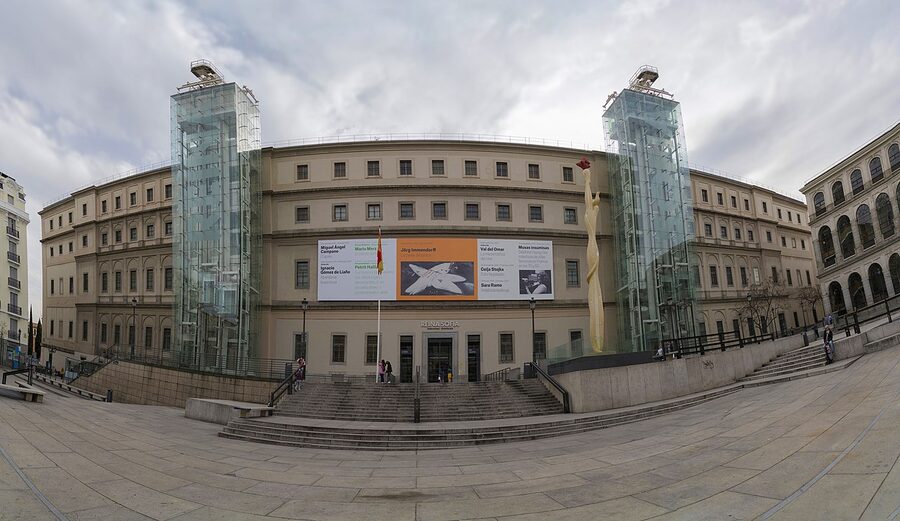
In a Hurry? Here Are the Three Best Reina Sofía Tickets to Book
Cheapest skip-the-line entry ($14): the standard Reina Sofía entrance ticket on GetYourGuide. Same line skip as the official site, easier to refund.
Best for first-timers ($38): the 75-minute guided tour takes you straight to Guernica and the Picasso preparatory studies in one efficient sweep.
Best value across two museums ($68): the Prado + Reina Sofía combined tour if you only have one full day in Madrid for art.
Why Lead With Guernica
Most museum articles tell you to walk slowly through every room and not skip ahead. I’m telling you the opposite. Walk straight to Room 206. Don’t stop at the temporary exhibitions on the ground floor. Don’t get sidetracked by the Cubist room, even though it’s good. The painting you came for is on the second floor of the Sabatini Building, and seeing it before the museum is full is worth the small ticket-line gymnastics.
The painting was finished in five weeks. Picasso started preparatory sketches on May 1, 1937, and the canvas was rolled and shipped to Paris’s International Exposition by June 4. The Reina Sofía has 45 of the preparatory studies in the rooms either side of Guernica itself: graphite sketches of the horse’s head, the bull, individual figures, full compositional studies done in oil and ink. You can watch the painting decide what it wants to be in real time. That’s the room-by-room context that makes the museum a museum and not just a building with a famous painting in it.
Compare it to the experience of seeing the Last Supper in Milan. There you get fifteen minutes with one painting, ushered in and out on a fixed timer, with no context room either side. Here, you get the painting plus its DNA. Most travellers walk through the studies on the way back out and assume they’re consolation prizes. They’re not.
The Five Rooms That Make This Museum Worth a Whole Morning
Past the Picasso galleries, the museum gets quieter and most visitors thin out. That’s where the best of it lives.
Rooms 205 and 206: Picasso, Guernica, and the studies
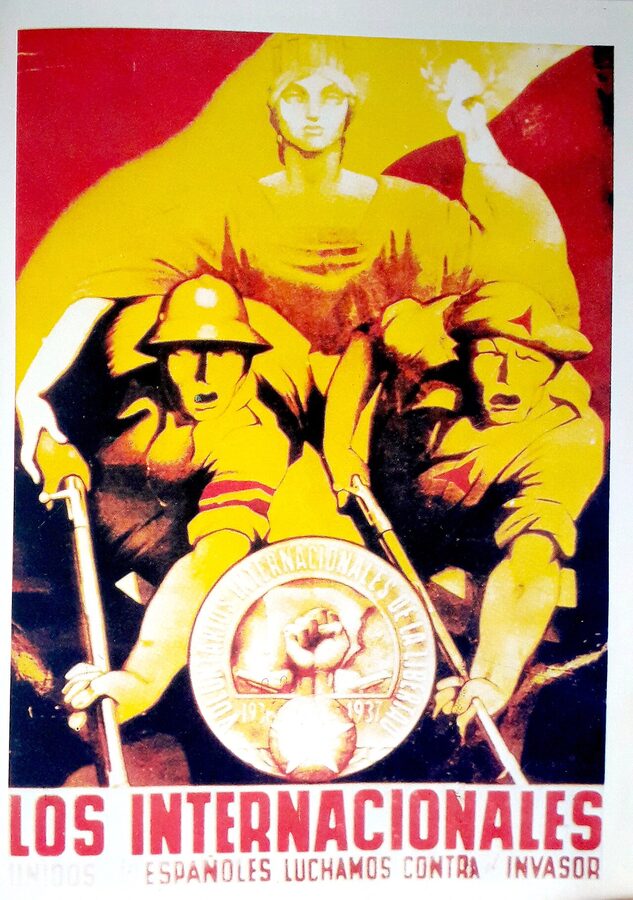
Two adjacent rooms hold Guernica and its preparatory work, plus the Civil War posters that were the visual culture of the moment. Stay in this section for at least 40 minutes. The first viewing of Guernica is the headline. The second viewing, after you’ve gone through the sketches and come back, is when the painting actually starts working on you.
Rooms 205-208: Salvador Dalí and Spanish Surrealism
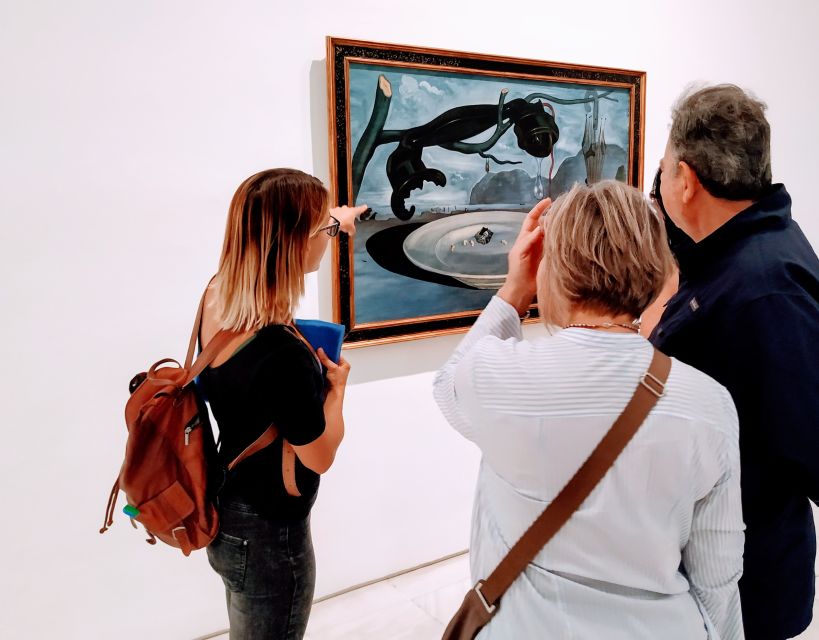
Dalí’s The Great Masturbator (1929) and Girl at the Window (1925) are both here. The Window painting is the one that surprised me. It’s quiet and almost realist, painted when Dalí was 21, before the watches melted and the giraffes started burning. The Reina Sofía’s Dalí collection skews toward the Spanish-period work rather than the Hollywood-era theatrics, which is the right call.
The Joan Miró rooms: more than the squiggles
If you only know Miró from the gift-shop tote bags, the Reina Sofía will recalibrate you. The painting Man with Pipe (1925) and the late Burnt Canvases series are the two that stopped me. The Burnt Canvases are exactly what they sound like. Miró set fire to his own paintings in 1973, controlled the burn, and then signed them. The Reina Sofía has three of them. They make the rest of his work look more dangerous in retrospect.
The Antoni Tàpies and post-war abstraction rooms
Tàpies is the Catalan painter most travellers haven’t heard of and most contemporary curators consider essential. He worked with sand, dirt, marble dust, and torn fabric, and the Reina Sofía has rooms of his work from the 1950s onward. If you’ve already done Casa Batlló and Sagrada Familia in Barcelona and want to see what Catalan visual culture did after Gaudí, this is it. The shift from organic curves to scarred surfaces tracks the country’s twentieth century.
The Civil War posters and photography section
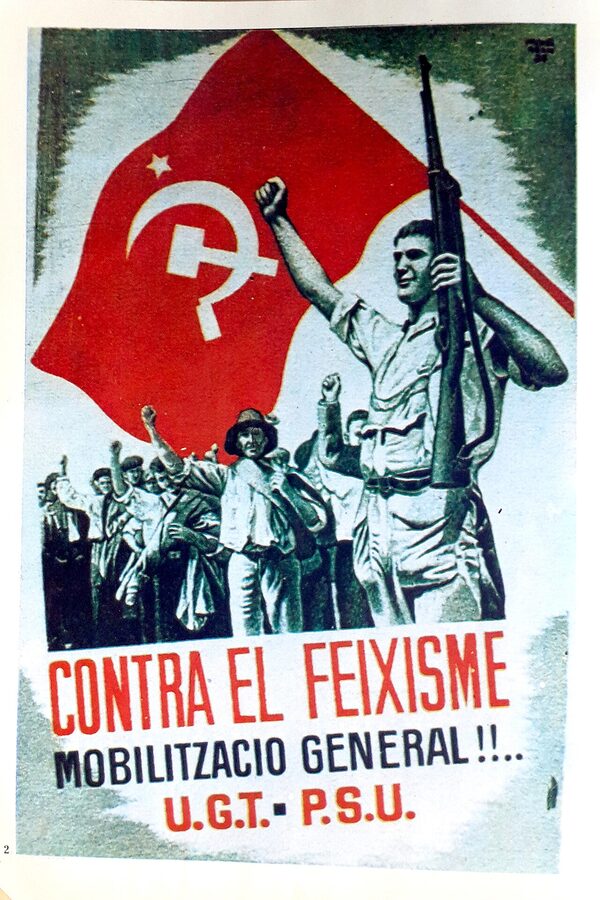
This is the section the average tourist underestimates the most. The propaganda design from both sides of the Spanish Civil War is some of the most influential graphic work of the 20th century, and the Reina Sofía has more of it than anywhere else on earth. Don’t skim. The Republican posters in particular have the visual DNA you’ll later spot in 1960s Cuban propaganda, in Atelier Populaire’s Paris ’68 prints, and in the Solidarność designs from 1980s Poland. Spend ten minutes here.
How to Buy Tickets Without the Stupid Line
The standard ticket is around €12 if you buy at the door. Online it’s the same €12. The line at the door, on a Saturday morning in May, was 35 minutes the day I went. The line for online ticket holders was 4. That’s the entire decision.
Booking online via the official site (entradas.museoreinasofia.es) gives you the cheapest ticket. Booking via GetYourGuide costs the same plus a small platform fee, but the cancellation terms are friendlier and the confirmation email is in better English. Both let you skip the cashier line. Both still funnel you through the same security check.
The free hours are real, but read the fine print. Entry is free Monday through Saturday (except Tuesdays, when the museum is closed) from 7pm to 9pm. Sundays it’s free from 12:30pm to 2:30pm. The line for free hours starts forming about 40 minutes early and the queue management can get chaotic. If you’ve come from far away to see Guernica, just pay the €12. If you live in Madrid or you’re staying ten days, the free Sunday afternoon is genuinely worth it.
Free entry categories: under-18s, over-65s, students up to 25 with ID, the unemployed with documentation, and people with disabilities. Spain takes the documentation seriously. Bring a passport or national ID. A driver’s licence won’t always work.
The audio guide is €4.50 and it’s the one museum audio guide I’d actually recommend. Not because the script is brilliant, but because the Guernica commentary walks you through the painting figure by figure in a way that helps if you don’t have the cultural context. If you’ve already read the Wikipedia article carefully, skip it.
The Three Tickets Worth Booking
1. Reina Sofía Skip-the-Line Entry: $14
This is the right pick if you want to do the museum at your own pace and you’ve already read up on what to see. Our full review of the entrance ticket covers the security check, the cloakroom rules, and the Sabatini-vs-Nouvel split. If you don’t need a guide, this is the only ticket you need.
2. Reina Sofía Guided Tour: $38
Take this one if you want the historical scaffolding for what you’re looking at. The guide does Guernica, the Picasso studies, and the Dalí room in 75 minutes, and after the tour your ticket still works for the rest of the day, so you can linger if you want. Our full review walks through what gets cut for time.
3. Prado + Reina Sofía Combined Tour: $68
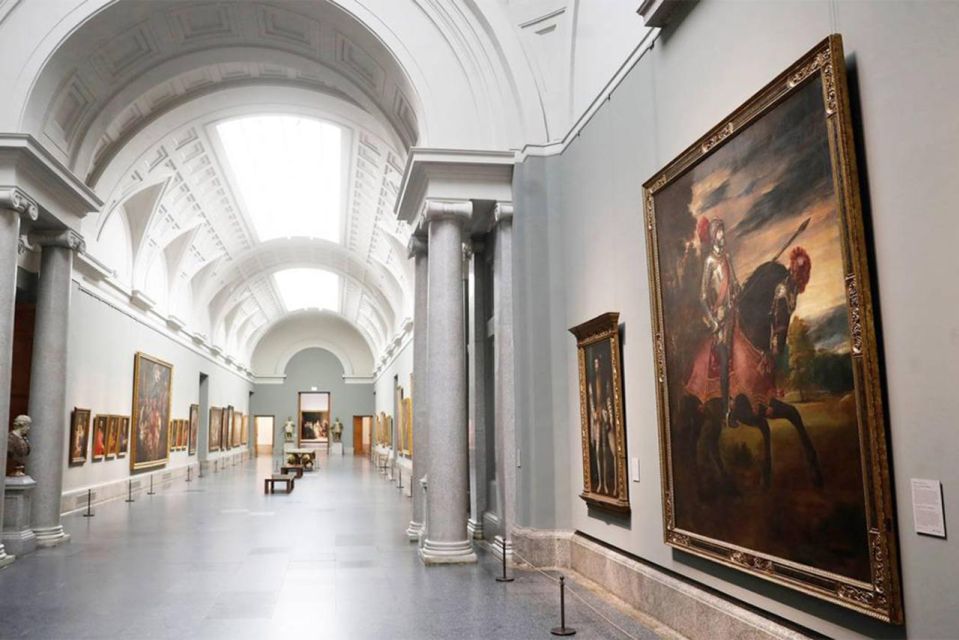
Pick this one if Madrid is one day in a longer Spain trip and you’re trying to compress the Prado and Reina Sofía into a single morning. The same guide takes you between buildings on foot, with about a fifteen-minute walk in the middle. Our full review is straight about the pace, which is fast.
The Articket Madrid Question
You’ll see the Articket Madrid promoted in every guidebook. It bundles the Reina Sofía with the Prado and the Thyssen-Bornemisza for around €32. On paper that’s good value. In practice it’s only worth it if you’re committed to all three museums in the same trip and you want to do them at your own pace, separately, on separate days.
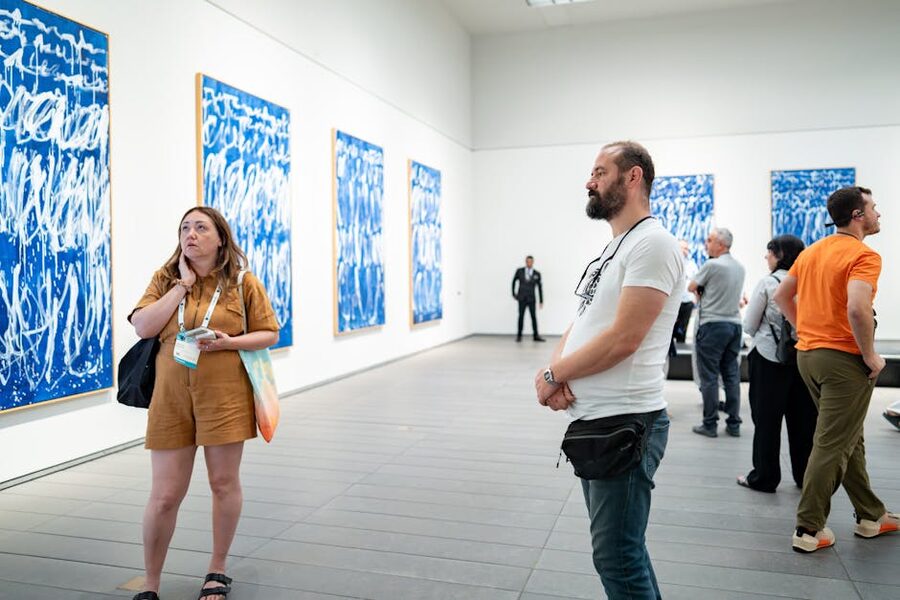
Three museums in one day is the mistake. The combined Reina Sofía and Prado tour above is two museums in five hours and that’s already a stretch. Adding the Thyssen makes it brutal. If you’re a Madrid-for-a-week visitor, the Articket pays off. If you’re in town for a weekend, just pick two and do them properly.
For comparison, in Italy the equivalent multi-museum logic works the same way. The Uffizi pass gets bundled with Pitti Palace and Boboli, and the Vatican and Borghese passes never bundle with each other. The pattern is consistent: state museums big enough to deserve a half-day each are usually the wrong things to combine.
The Building: Why It Looks the Way It Looks
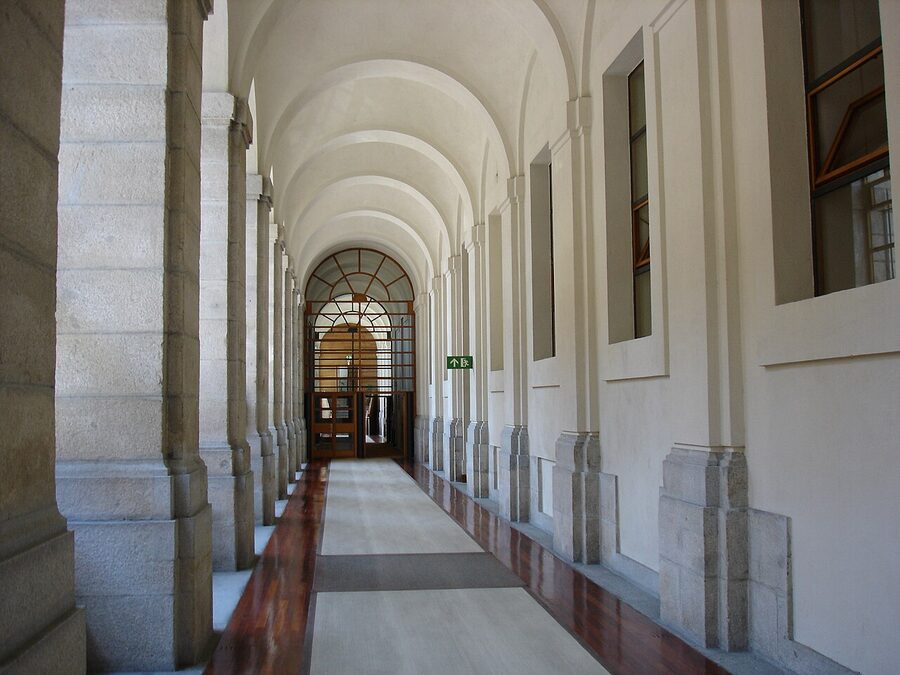
The older half of the museum, the Sabatini Building, was an 18th-century General Hospital. Francesco Sabatini designed it for King Carlos III, and construction wrapped up in 1788. The building functioned as a hospital for nearly 180 years. It closed as a medical facility in 1965 and sat half-derelict for two decades before becoming a museum.
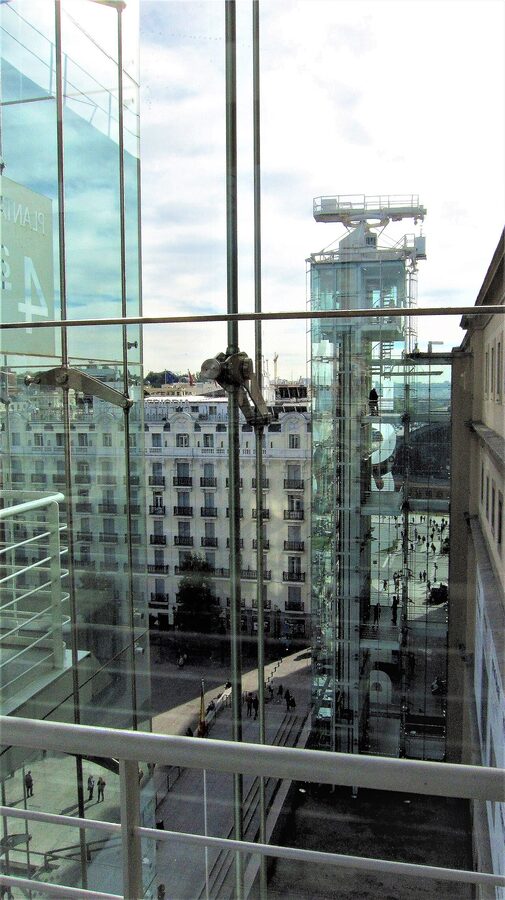
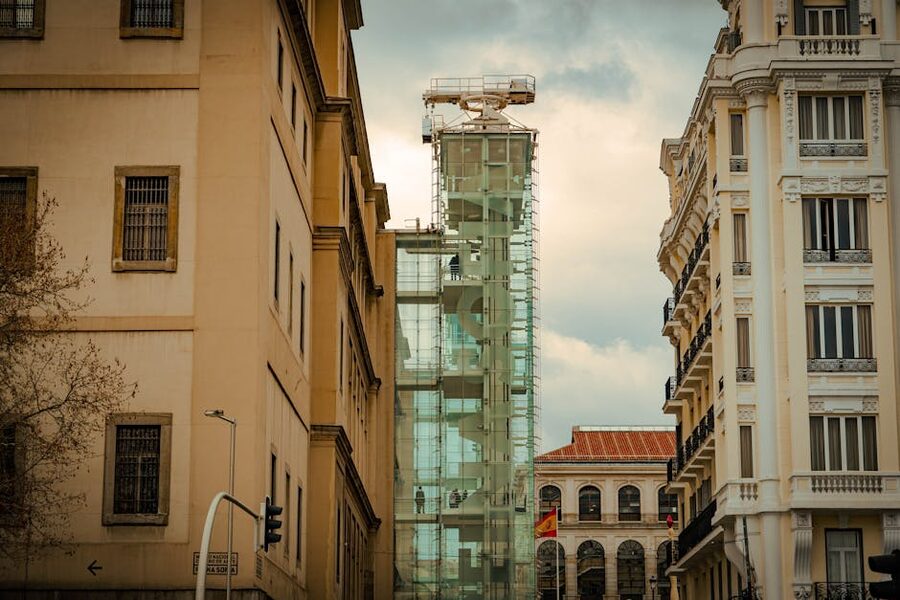
The thing you notice walking around the Sabatini galleries is how thick the walls are. Hospitals from that era were built to keep contagion isolated, which means stone walls, small windows set high, and corridors that loop back on themselves. None of that is great for displaying art. The fix was to add three exterior glass-and-steel lifts on the south facade in 1990, designed by the British architect Ian Ritchie. They’re the most-photographed part of the museum and the reason the building doesn’t feel claustrophobic on a busy day.
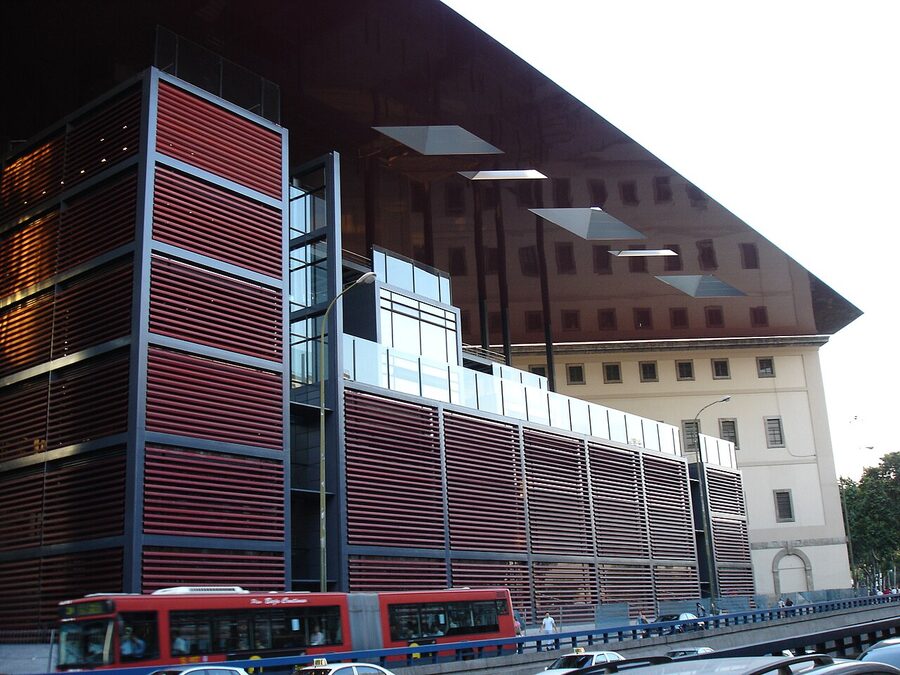
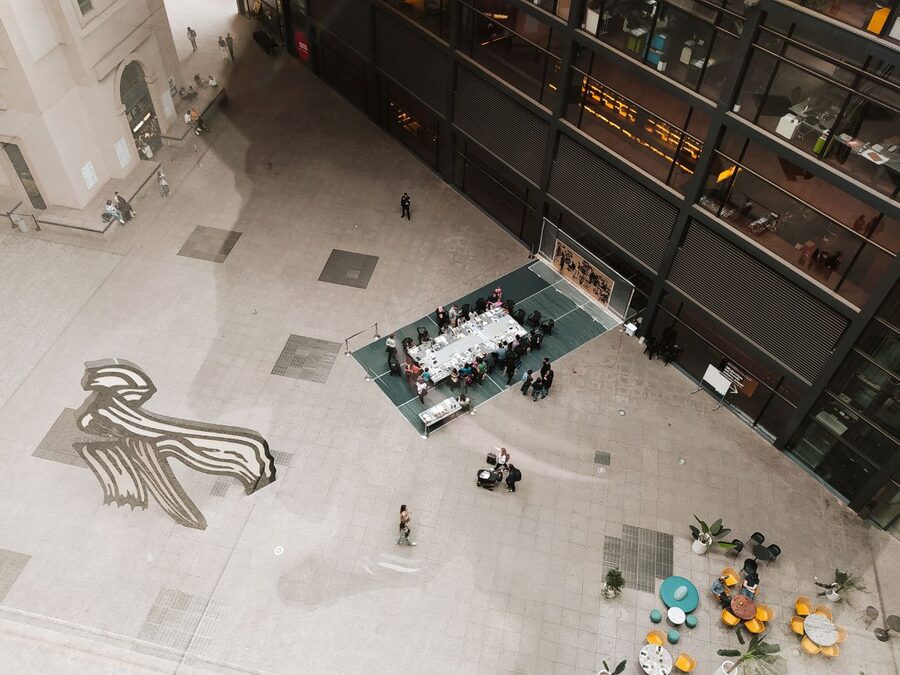
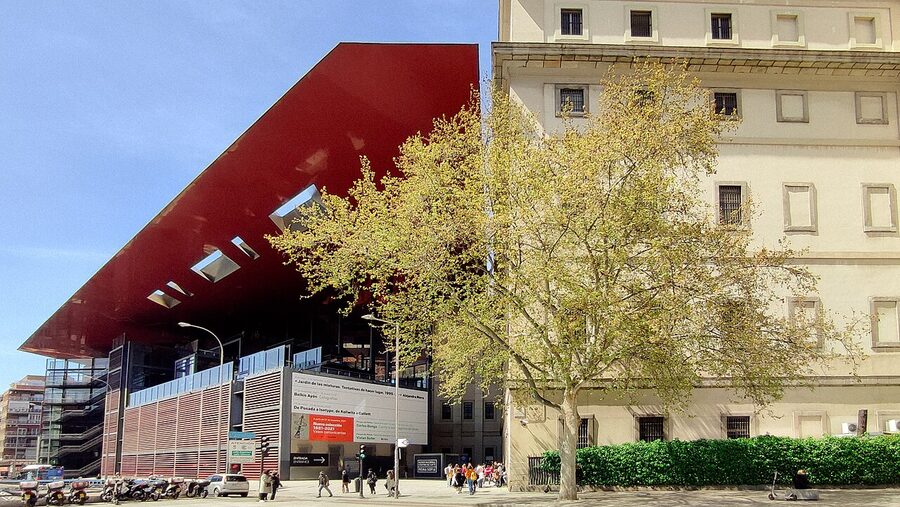
The newer half is the Jean Nouvel building, completed in 2005. It nearly tripled the museum’s exhibition space and added a library, an auditorium, two cafes, and the courtyard with the bright red metal canopy. The temporary exhibitions live here. Almost every traveller skips the Nouvel entirely. That’s a mistake. The temporary shows the museum runs are usually the most curatorially interesting thing on display, and the building is worth at least a slow loop on the way out.
How Long to Plan For
The official guidance is 2 hours. The realistic minimum, if you want Guernica, the studies, and at least one Dalí or Miró room, is 90 minutes. The realistic full visit, if you want everything I described above with a coffee break in the Nouvel cafe, is 3 hours.
For comparison, the Prado needs 3-4 hours minimum. The Vatican Museums need a full day. The Reina Sofía is the most efficient state museum in Spain in terms of time-to-payoff. You can get the headline experience and a real sense of the collection in under two hours and walk out feeling like you actually saw something.
Best Time to Go
The museum is open Mondays and Wednesdays through Saturdays from 10am to 9pm, and Sundays 10am to 2:30pm. Closed Tuesdays. Closed January 1 and 6, May 1 and 15, November 9, December 24, 25, and 31.
The least crowded slot is the first hour after opening. The 10am crowd is mostly older Madrileños and the kind of traveller who books museum tickets the night before. By 11am the school groups arrive. By noon the cruise day-trippers from Barcelona arrive. By 3pm the museum thins out again as people leave for late lunch. The 5pm-to-7pm window is genuinely good if you’ve napped through the afternoon, which is the right Spanish thing to do anyway.
Avoid Sundays unless you want the free entry slot and you don’t mind queueing. The free Sunday window is the busiest the museum gets all week.
Getting There
The address is C. de Sta. Isabel, 52, in Madrid Centro. The closest metro is Estación del Arte on Line 1, which used to be called Atocha until the city renamed it in 2018 to make it less confusing. Atocha the train station is the next stop down. Both are within seven minutes’ walk of the museum’s main entrance.
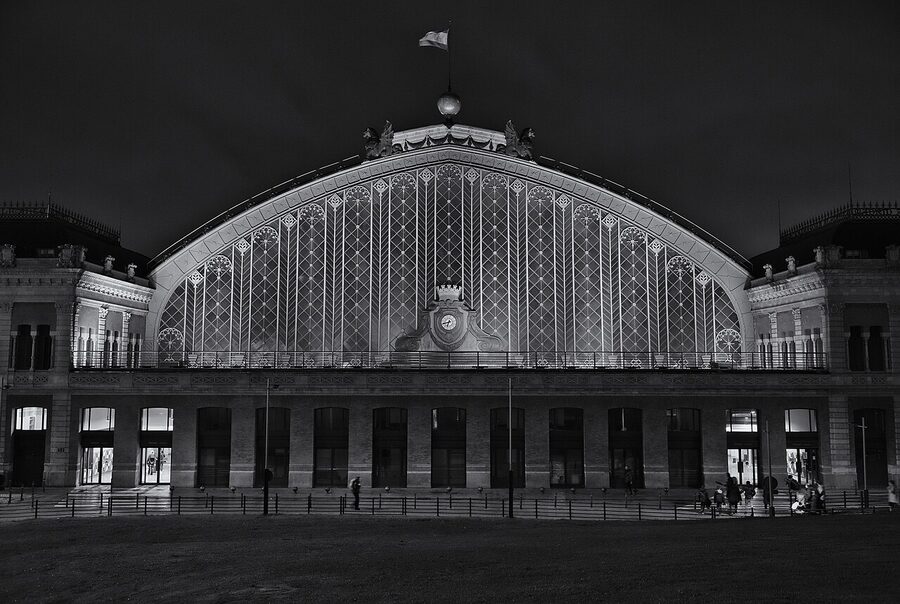
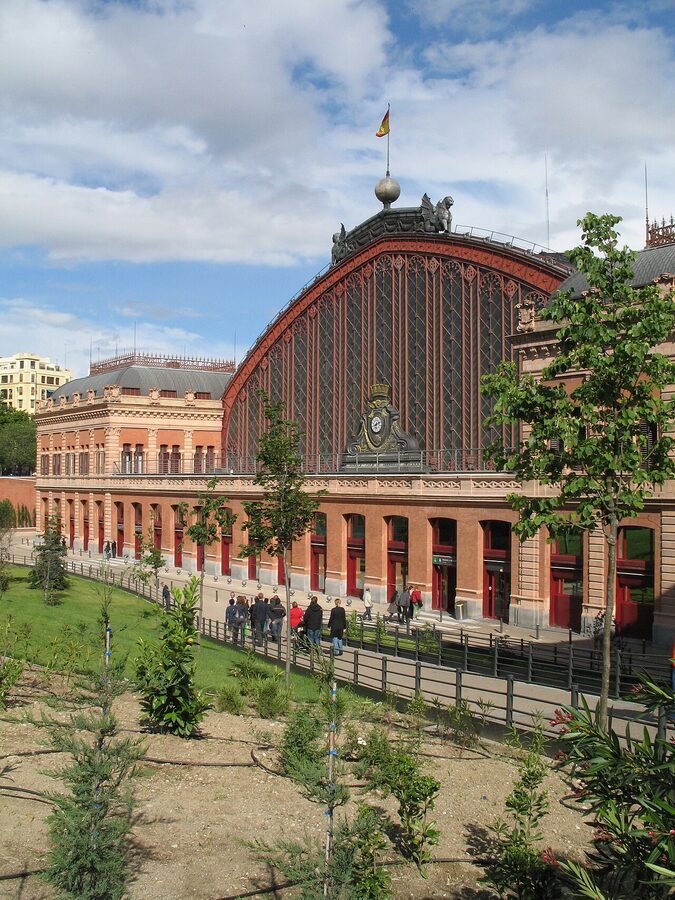
If you’re arriving from a Toledo or Segovia/Ávila day trip, you’ll come back into the actual Atocha train station, which is the building with the tropical garden inside. From there it’s a five-minute walk uphill on Calle de Atocha to the museum’s main entrance, which is on the Nouvel side now, not the original Sabatini facade.
From the Royal Palace area, walk down through Plaza Mayor and Calle de Atocha. It’s about 25 minutes on foot through the most photogenic part of central Madrid. From the Royal Palace directly, the metro takes 10 minutes (line 5 to Sevilla, switch to line 1, three stops to Estación del Arte). The walk is more interesting if it’s not raining.
What to Bring and What to Leave
Backpacks larger than a small day pack get checked at the cloakroom. The cloakroom is free, well-staffed, and runs efficiently most of the time. Drinks and food are not allowed in the galleries. The cafe in the Nouvel building is decent and reasonably priced for a museum cafe; the Sabatini cafe is smaller and busier.
Photography without flash is allowed in the permanent collection, including Guernica, but tripods and selfie sticks are not. The guards in Room 206 are firm about this. Don’t try to argue.
The museum is fully accessible by lift. Wheelchairs are loaned out free at the cloakroom. The Sabatini Building has older corridors that are narrower than the Nouvel, so wheelchairs and strollers can occasionally get jammed in the more popular rooms during peak hours.
Where to Eat Near the Museum
Skip the museum cafe for lunch unless you’re tight on time. The Lavapiés neighbourhood starts a block south of the museum and has the cheapest, best tapas in central Madrid. Bodegas Lo Máximo on Calle de la Esperanza does a tortilla that’s worth the walk. Taberna Santa Ana in the same area is the kind of place where the regulars order without looking at the menu and the tortilla comes out runny on purpose.
If you’ve spent the morning at the museum and you want a sit-down lunch with table service, walk fifteen minutes north into the Huertas neighbourhood. Casa Alberto, which has been open since 1827, does a passable rabo de toro and the kind of small dining room that hasn’t been Instagrammed to death.
Your Madrid Art Day in One Sequence
Open the Reina Sofía at 10am. Spend 90 minutes to 2 hours. Walk fifteen minutes north to the Prado for the afternoon. Lunch in between somewhere in Lavapiés. Skip the Thyssen unless you have a third day. The two state museums are an hour’s walking apart end to end and the same neighbourhood absorbs both. Flamenco in the evening is a separate decision; the Bernabéu tour is a different morning. Day trips need a whole day and the Reina Sofía will still be there when you get back.
The same compression logic that gets you through Florence’s Uffizi and the Accademia in one day works here. Two state museums, walking distance apart, lunch in the middle. It’s the right shape for a day with limited time, and Madrid actually rewards it more than Florence does because the streets between the museums are themselves part of the visit.
If You’re Coming From Barcelona
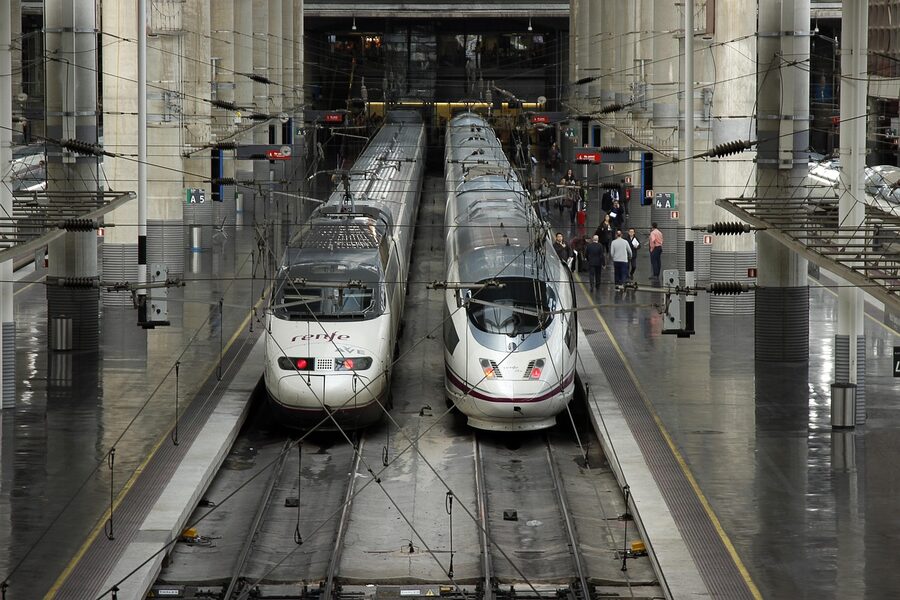
Madrid and Barcelona connect by AVE high-speed train in about two and a half hours. Atocha is the Madrid end of the line, which means the Reina Sofía is genuinely the closest of Madrid’s major attractions to the moment you step off the train. If your trip is Barcelona first then Madrid, drop your bags at the hotel and walk to the museum. You’ll be in Room 206 within ninety minutes of arriving.
The cultural arc also tracks. If you’ve done Sagrada Família, Casa Batlló, and Park Güell in Barcelona, you’ve done late-19th and early-20th-century Catalan modernism. The Reina Sofía picks up the next chapter: what happened to Spanish visual culture after Gaudí died, and especially what the Civil War did to it. Picasso, Miró, Dalí, and Tàpies are the next generation. The two cities work as a continuous narrative if you do them in that order. The Amsterdam parallel for the same single-icon-anchors-the-collection logic is the Night Watch at the Rijksmuseum and Sunflowers at the Van Gogh Museum: both built around one painting visitors actually plan a day around.
If You’re Coming From Italy
Travellers coming over from Italy often expect Spanish state museums to feel like Italian state museums. They don’t. The Uffizi and the Vatican Museums are about the High Renaissance and earlier, with a little Baroque tail. The Reina Sofía starts at 1900 and goes forward. The Prado handles everything pre-1900 in Spain, and the two are deliberately split.
The Italian equivalent of the Reina Sofía in scale and ambition would be Milan’s Last Supper as a one-painting destination, multiplied by twenty. Guernica is the headline single artwork the way Leonardo’s Last Supper is, and the room around it does for the Civil War what Santa Maria delle Grazie does for late-medieval Milan: makes the city’s most visceral historical moment legible to a stranger. The closest French parallels are the wraparound Monet rooms at the Musée de l’Orangerie and the Mona Lisa at the Louvre: each museum’s entire footprint negotiated around a single canvas.
The Bit Most Travellers Don’t Know About
The museum runs a free public library on the upper floor of the Nouvel Building. It’s open to anyone with a museum ticket and it has more than 100,000 volumes on 20th-century art, plus first editions of artist’s books, exhibition catalogues going back decades, and quiet desks with good lighting. It’s one of those small civic generosities you don’t expect in the heart of a tourist city. If it’s raining and you have an extra hour, go up there.
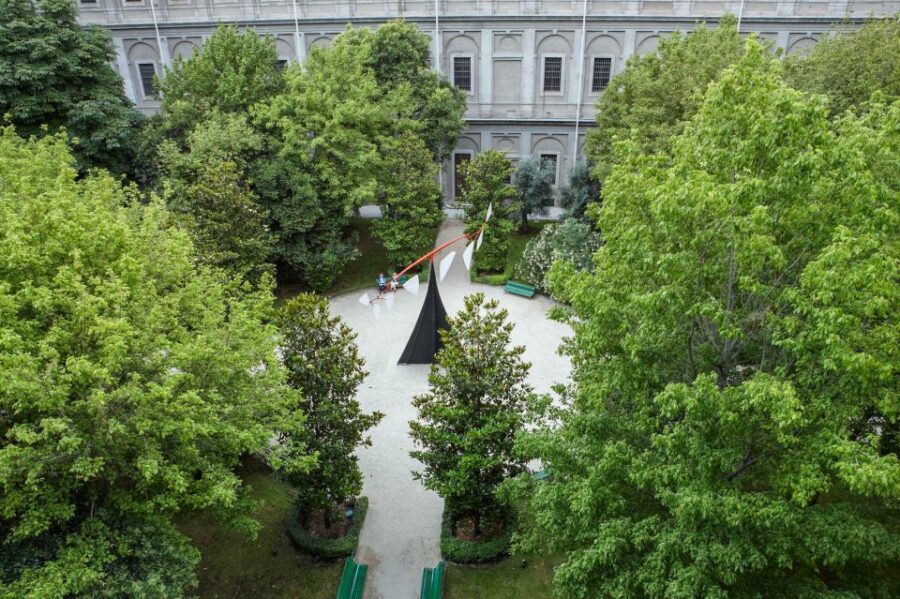
The other thing most travellers miss is the building’s quiet courtyard between the Sabatini and the Nouvel. There’s a Calder mobile in there, plus seating, and you can sit between the old hospital and the new wing for free without a ticket. It’s the best spot in central Madrid for a coffee from your own thermos and ten minutes off your feet.
Worth It or Skip It?
Worth it. Not even close. Guernica alone justifies the €12 and the hour walking around it. The Picasso studies, the Dalí rooms, the Civil War posters, and the Miró Burnt Canvases are the bonus the rest of the museum throws in. The Reina Sofía is the second-most-important museum in Madrid after the Prado, and on the question of “which one if you only have time for one”, the answer is genuinely up for debate. The Prado is the deeper collection. The Reina Sofía is the more shocking one.
The mistake most travellers make is treating the museum as a one-painting visit and leaving in 45 minutes. Guernica is the door. Walk through it.
One More Thing Before You Go
If you’re in Madrid for at least three days, the Articket and the combined museum tour both make sense. If you’re here for two, do the Reina Sofía and the Prado on the same day with a long lunch in between. If you’re stopping in Madrid for one day on a longer Spain trip, the Reina Sofía alone, done well in two hours, is the right call. Toledo can wait. Segovia can wait. Guernica has been waiting in Room 206 since 1992 and most of the world doesn’t know what they’re missing until they’re standing in front of it.
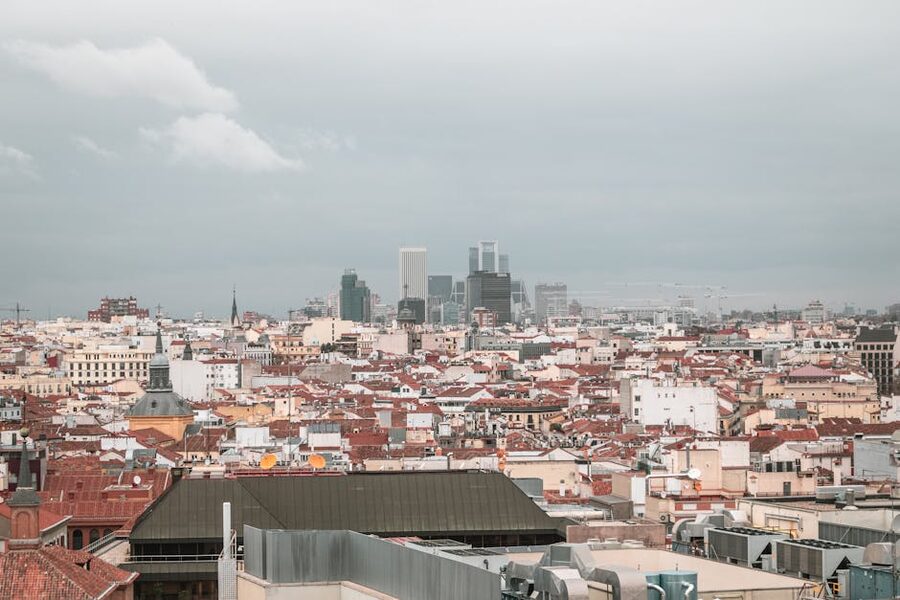
Pair this with the Prado for the historical art half of the city. Pair it with flamenco in the evening for the night half. The Málaga Picasso Museum is the natural follow-up if Andalusia is on your route, because it picks up the Picasso story from the artist’s birthplace. Picasso lived in Málaga for ten years before Barcelona, then Paris, then the rest of his life. The Reina Sofía has the painting that made him a political figure. Málaga has the formative work that made him an artist. Both are necessary.