
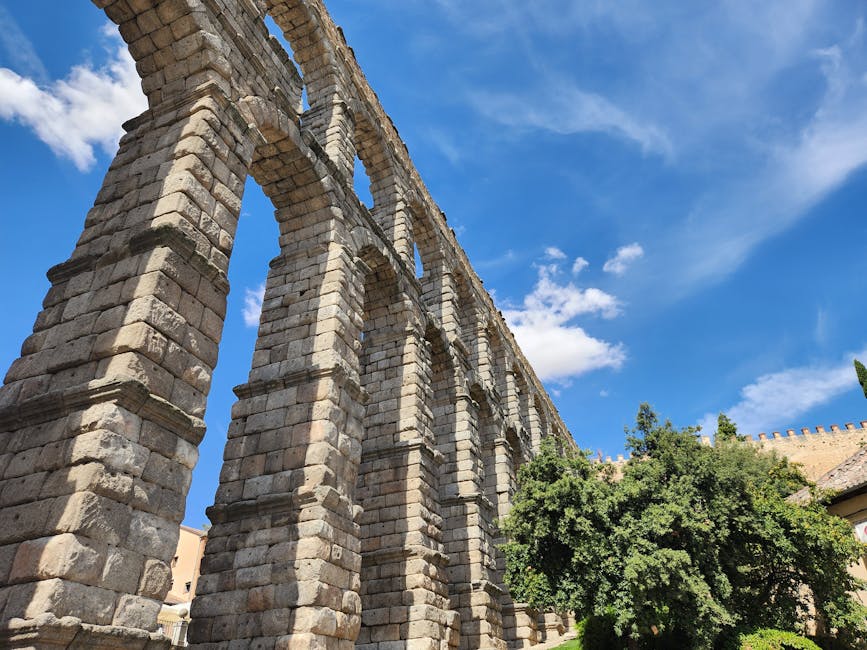
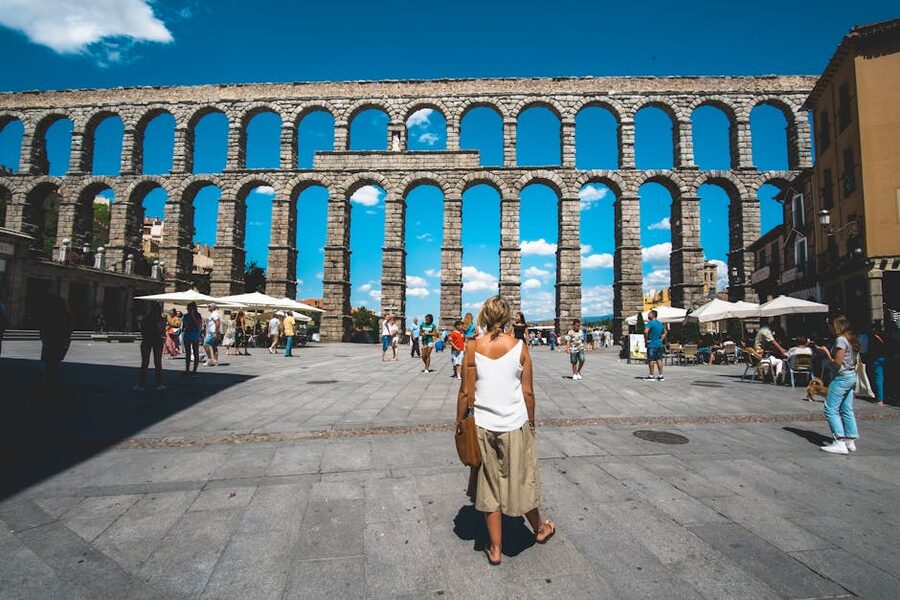
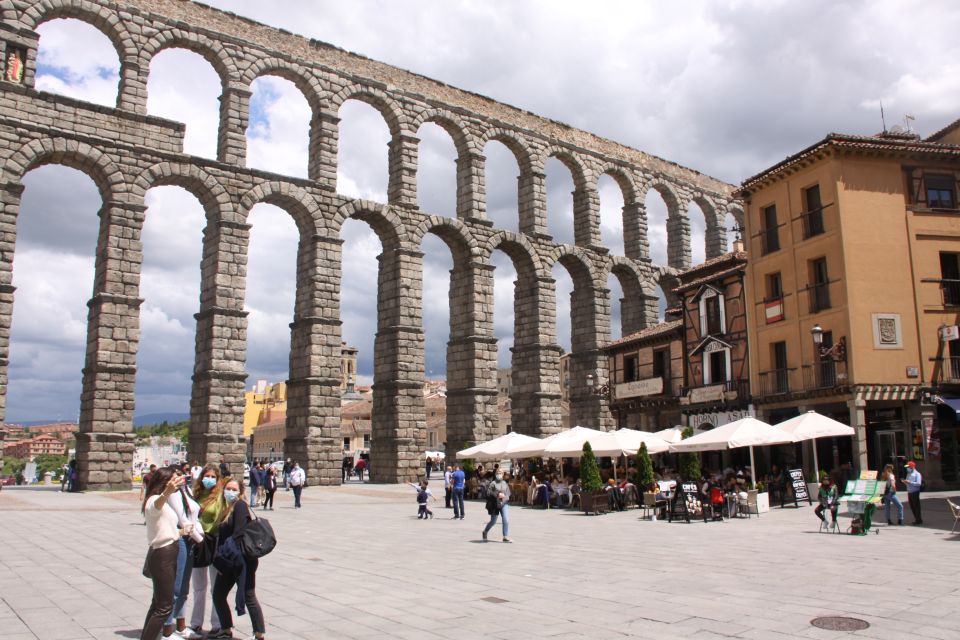
You stand at the foot of the Roman aqueduct in Segovia and look up. The first row of granite arches starts above your head. The second tier rises higher than most six-storey buildings. Somewhere up there, almost three storeys overhead, is a stone channel that carried water down from the Sierra de Fuenfría to fountains in the city for nineteen hundred years. The aqueduct was finished around the late 1st century AD. It carried water until 1973. And the part most people don’t know until a guide says it: there is no mortar between any of these stones. Every block is dry-fitted, held in place by gravity and the geometry of the next stone above it.
That’s the moment most travellers fall in love with this day trip. You leave Madrid in the morning expecting a “two old towns from the bus window” kind of day. You come back having stood inside something built by people you’ll never know, two thousand years ago, that still works.
This guide is for travellers based in Madrid who want to do Segovia and Ávila in one day, with both UNESCO sites covered, all the major tickets included, and someone else doing the driving. Below are the three tours I’d actually book, what each one gets right, and the practical notes most reviews skip.
In a Hurry? Top Picks
Best overall: Ávila & Segovia Full-Day Tour With Tickets ($81.20). The flagship Viator: nine-hour day, both UNESCO sites, all major monument tickets included, the version most repeat travellers use.
Best value: Madrid: Ávila and Segovia Day Trip With Tickets ($74). The GetYourGuide version of the same itinerary. App-based check-in, modern coach, often cheaper than the Viator equivalent.
If you want Toledo too: Three Cities in One Day: Segovia, Ávila & Toledo ($126.96). Twelve hours, three UNESCO cities. Doable, but you trade slow for thorough.
Why Segovia and Ávila as a pairing
Madrid sits in the geographic middle of Spain and almost everything famous around it is a day trip. Toledo’s the obvious pick to the south. Segovia and Ávila are the obvious pick to the north-west. Most people who only have one extra day pick one or the other. If you have to choose Segovia-and-Ávila over Toledo, the deciding question is what kind of history you’re more interested in.
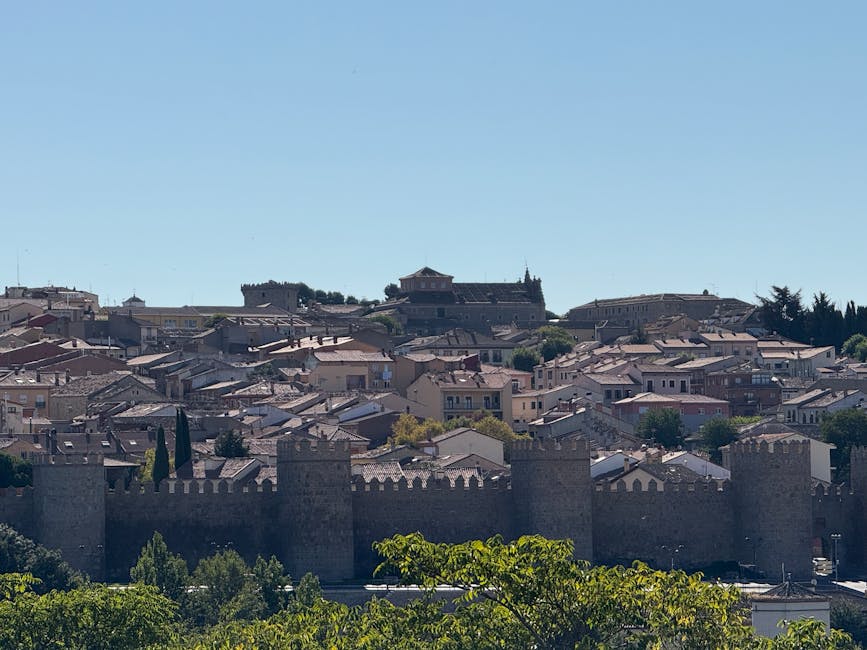
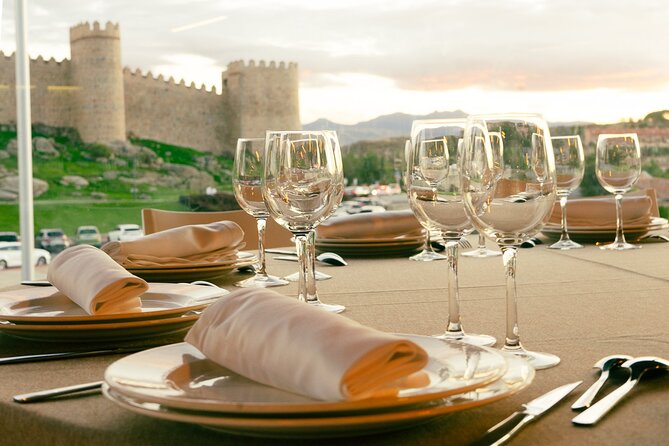
Toledo is the meeting point of three cultures. Christian, Moorish, Jewish, all in narrow streets stacked on top of each other. Segovia and Ávila are something else. Segovia is Roman engineering and a fairy-tale castle, both at once, in a city you can walk across in twenty minutes. Ávila is a medieval walled city that genuinely still feels walled, with its 11th-century circuit of stone and 88 towers wrapping the old town like a bracelet. Different period, different mood. Both UNESCO. Both worth the day.
The pairing works because the two cities are 65 kilometres apart and both about an hour from Madrid. A coach can run Madrid to Ávila to Segovia and back inside nine hours, with three to four hours of actual time on the ground in each old town. That’s enough to see the headline sights and eat lunch without sprinting. It’s not enough to walk the whole top of the Ávila wall and also climb the Alcázar tower and also have a long lunch. You pick two of three, in each city. That’s the trade.
How the day actually runs
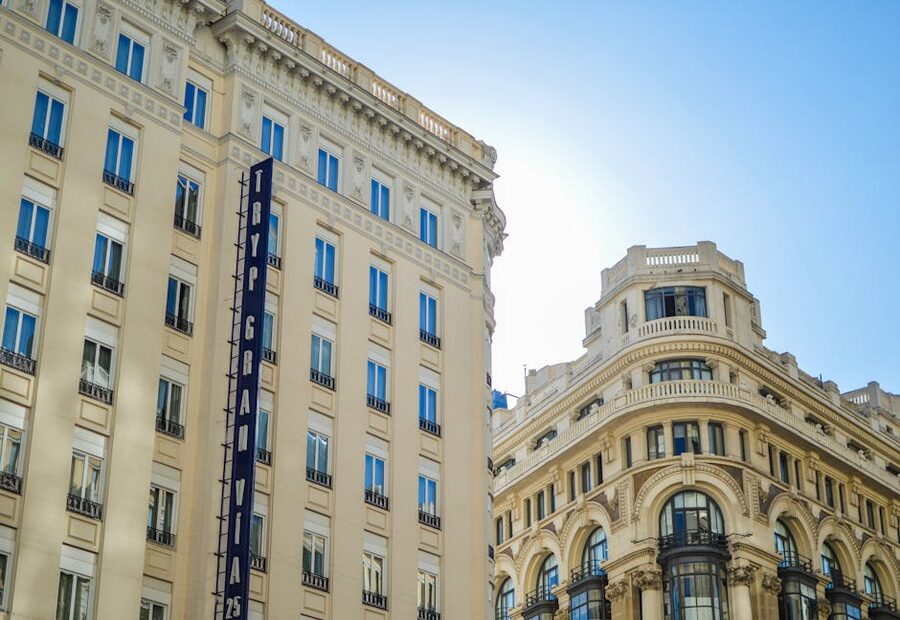
Most of these tours leave from Gran Vía in central Madrid, usually around 8:00 to 8:30am. You’ll be told to arrive 15 to 20 minutes before, which is real, not advisory: at the meeting point you’ll see groups of 80 to 100 people and several different tours all loading buses at the same time. Don’t panic when you see the crowd, you’re not all on the same coach. The check-in staff hold up clipboards with the operator’s name and you go to the right one.
The buses themselves are modern coaches, air conditioning, charging ports, free Wi-Fi, decent seats. The drive to Ávila is just over an hour on the A-6 motorway. Many tours stop at a viewpoint called Los Cuatro Postes for the first photo: a small monument outside Ávila’s walls with the city framed across the river. It’s a 10-minute restroom and coffee stop, and the photo really is the photo. Tour-bus stops sometimes feel forced. This one earns it.
Ávila first: the walled city
Ávila is the morning stop because it’s smaller and the light is better in the front half of the day. The bus drops you near the Puerta del Alcázar, one of the nine gates in the wall. From there a guide does about 45 minutes of orientation walk through the old town, hitting Plaza del Mercado Chico, the Cathedral, and the Basílica de San Vicente. Then you get free time. Usually around 90 minutes to two hours.
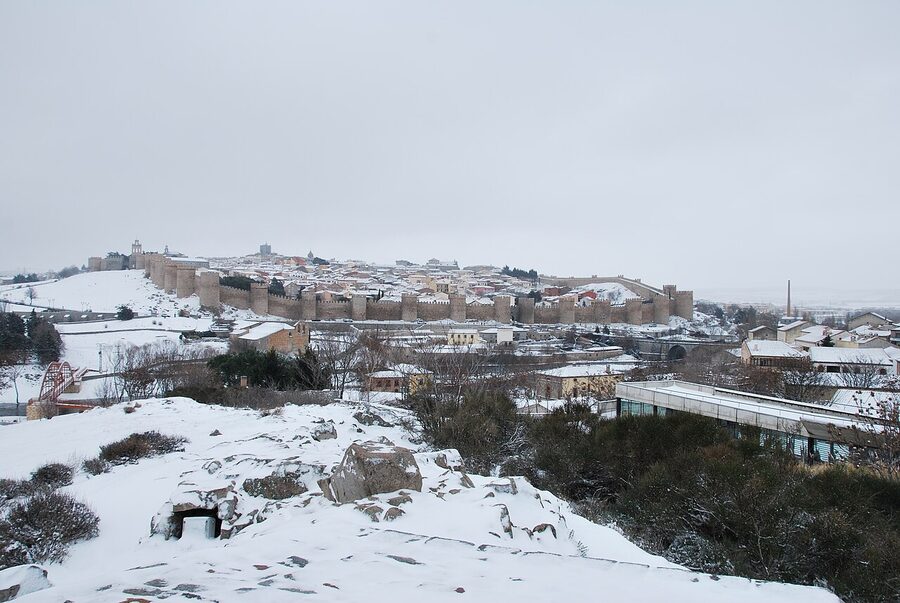
The walls
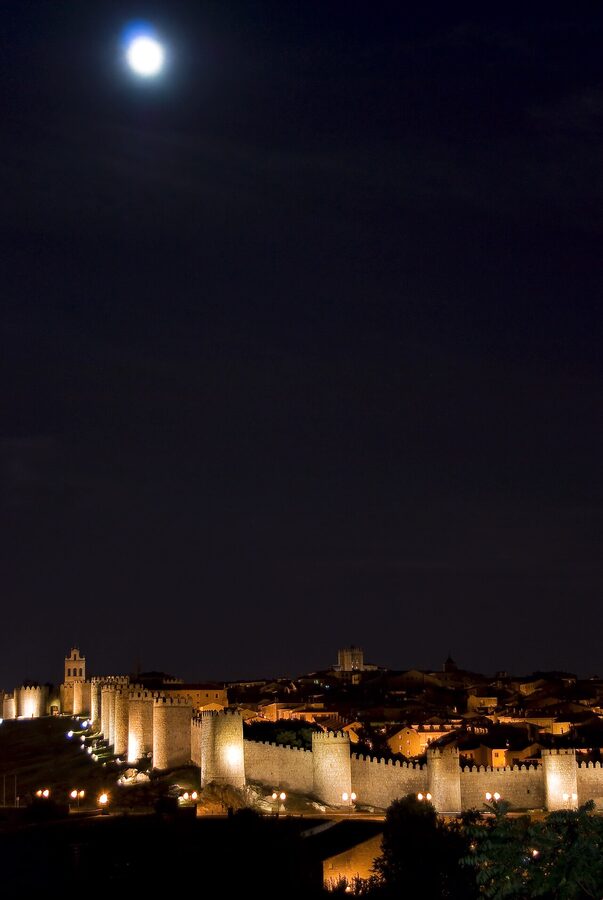
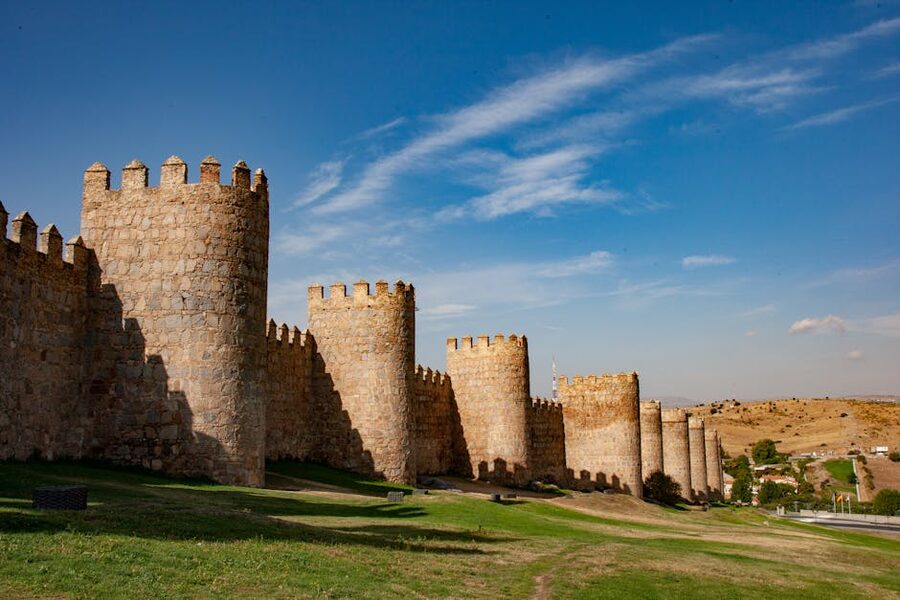
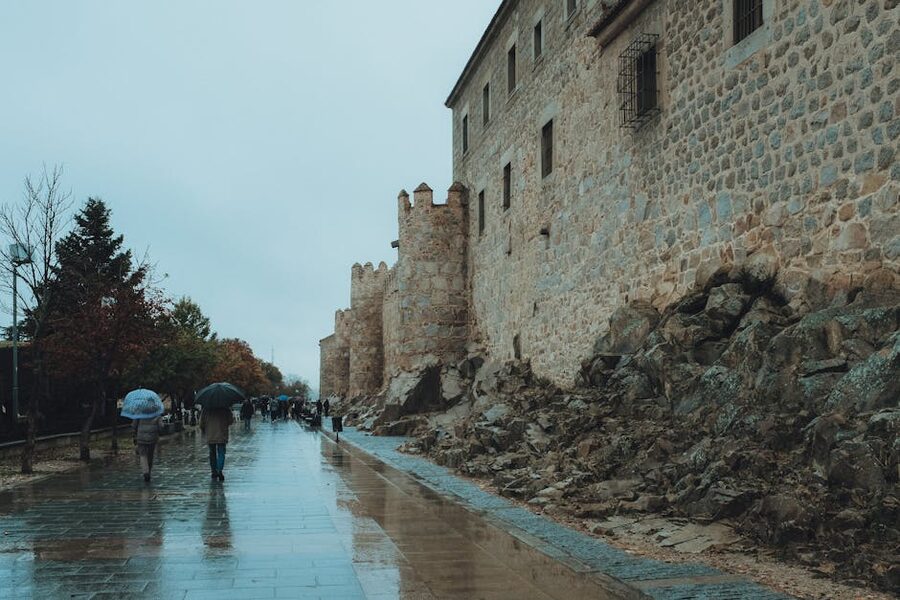
If you remember one thing about Ávila, it’s the walls. The full circuit is 2,516 metres, with 88 cylindrical towers and nine gates. The bracelet shape is the giveaway from the air. You can walk a section of the top, currently between Puerta del Alcázar and the Puerta del Carmen, for around €5 with the standard ticket. It’s about 1.7 km of walkable rampart in pieces, and the views down into the old town and out across the Castilian plateau are exactly what you’d hope for.
Most day-tour itineraries don’t include the wall walk in the included ticket package. Check yours before assuming. If it’s not included and you want to do it, that’s a use-your-free-time call: the wall walk takes about 45 minutes if you’re not lingering. The Castilian fortifications you cross overlap, in a thematic sense, with the kind of medieval civic defence you see in Italy at Palazzo Vecchio, except Ávila’s is an entire city wrapped, not one square. It’s a different scale of “we built this to keep people out.”
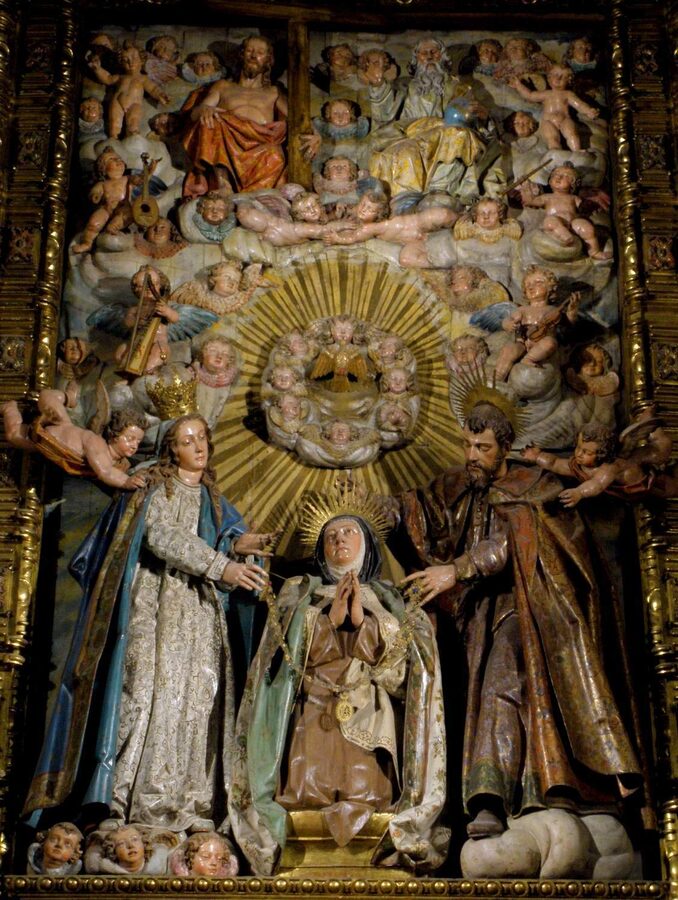
Saint Teresa, the cathedral, and San Vicente
Ávila is where Saint Teresa of Ávila was born in 1515 and where she lived most of her life. She’s one of two women named Doctor of the Church (the other is Catherine of Siena), and a foundational figure in Spanish mysticism. The Convento de Santa Teresa stands on the site of her birth house, inside the walls. It’s free to walk into, the relics chapel attached has Teresa’s ring finger and a piece of her cord belt, and even if you’re not Catholic the building itself is worth fifteen minutes.
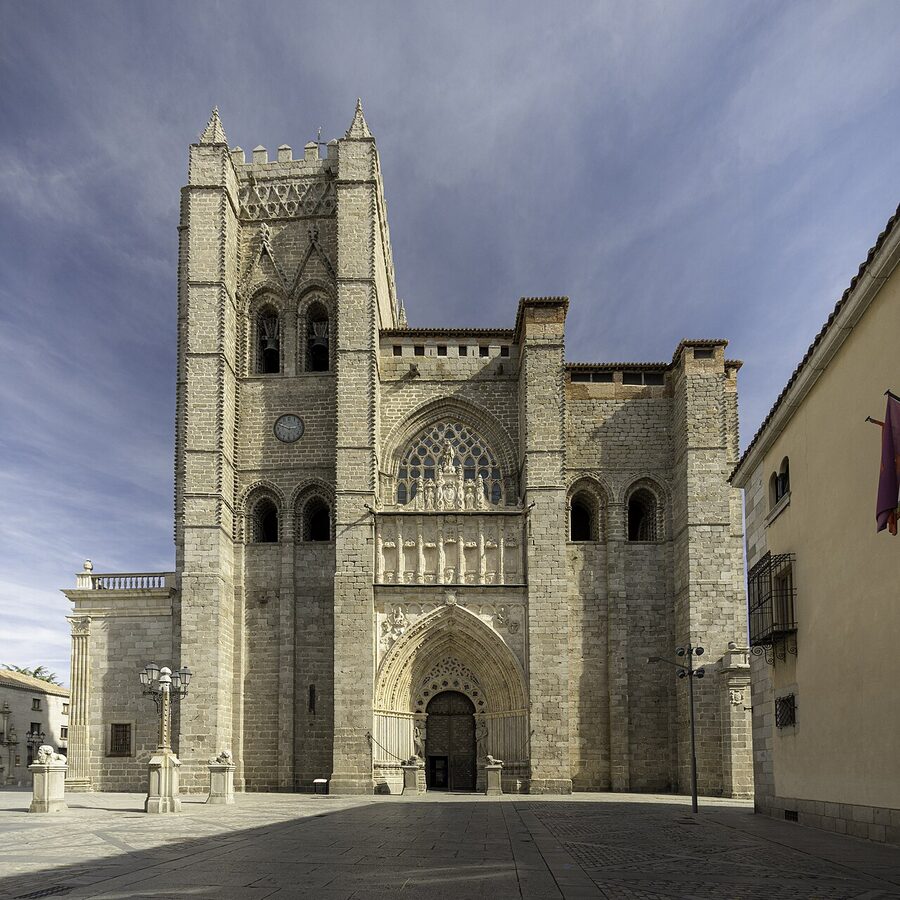
The Cathedral of Ávila is the other big one. It started in the 12th century in Romanesque, finished in the 14th in Gothic, and is built right into the eastern wall of the city. The apse, called the Cimorro, is literally a defensive tower. You can see it from the outside without paying. Inside, you’re paying to see the alabaster sepulchre of “El Tostado,” the 15th-century scholar with one of the great nicknames in Spanish history.
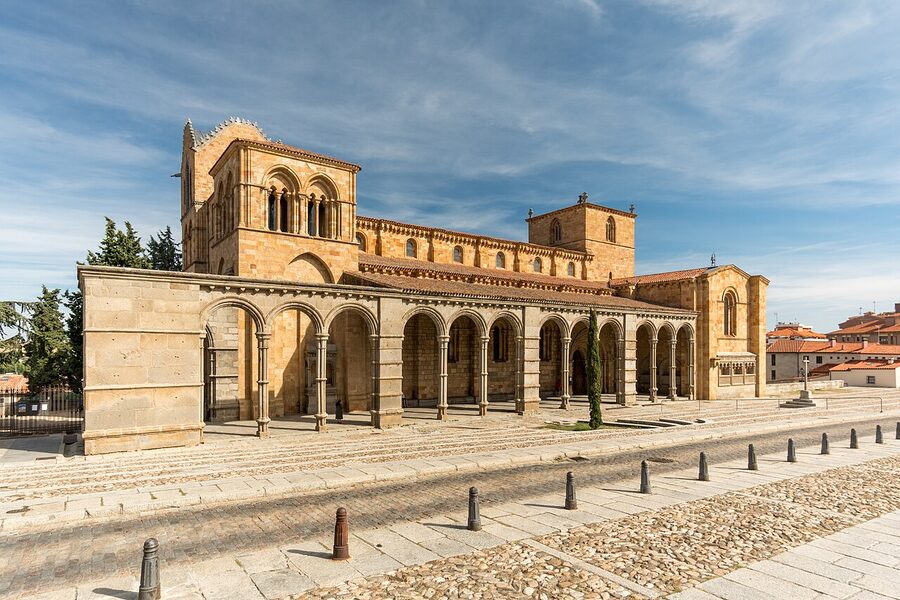
The Basílica de San Vicente, just outside the eastern wall, is older still. Romanesque, started in the 11th century, named for three siblings (Vicente, Sabina, Cristeta) supposedly martyred on this exact spot in 306 AD by the Romans. The west portal is one of the great pieces of Romanesque sculpture in Spain. Worth a slow look even if you don’t go inside.
Lunch in Ávila
Ávila’s signature dish is chuletón de Ávila, a thick T-bone steak from the Avileña-Negra Ibérica cattle bred on the high plateau around the city. It’s rough, tender, and better than the steak in most of Madrid. Many tours offer an optional lunch add-on at a participating restaurant. If you take it, the food is fine, you sit with the group, and you don’t waste 25 minutes finding a table.
If you want to do better and you have the free-time window, walk to Mesón El Sofraje or La Bruja, both inside the walls and both reliable. Skip the obvious tourist spots on Plaza Santa Teresa. Yemas de Santa Teresa, the egg-yolk-and-sugar sweets that Ávila is famous for, are worth a small box from any of the older bakeries. The tradition started with the convent kitchens; the current commercial brand is the one with the nun on the label.
The drive to Segovia
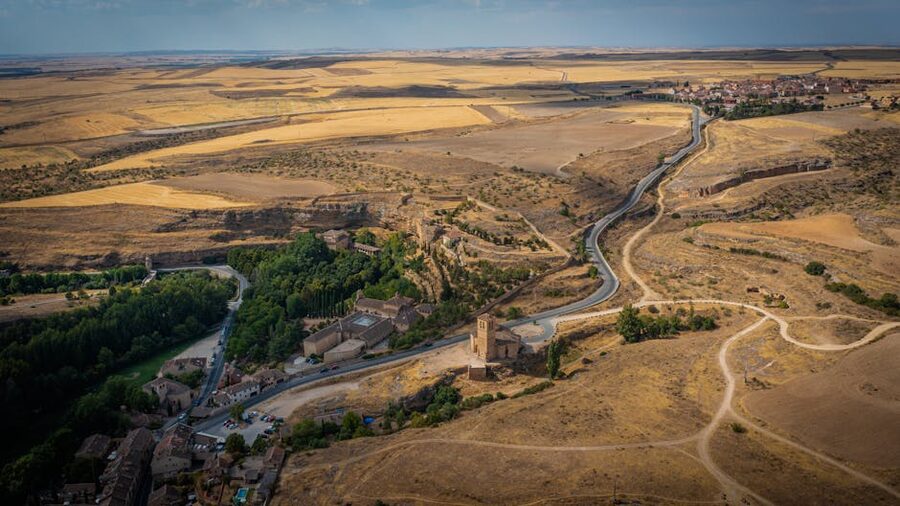
Ávila to Segovia is about 65 km, just under an hour, and the route runs across high open meseta. Brown grass, scattered stone outcrops, sheep. It looks like the Castile of every map you ever saw. Most tours don’t stop on this leg. You doze, you watch the country go past, you wake up as the bus pulls into the lower car parks below the aqueduct.
Segovia: aqueduct, cathedral, castle
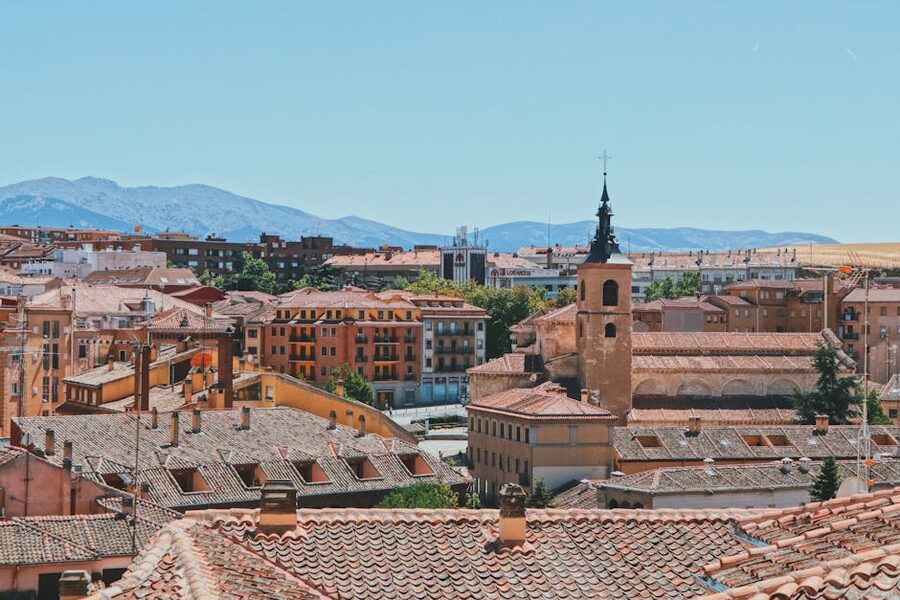
Segovia is denser than Ávila. The old town squeezes onto a rocky promontory between two rivers, the Eresma and the Clamores, with the Alcázar at the prow and the aqueduct at the stern. You can walk the entire length in twenty minutes if you don’t stop. You won’t not stop. The three big things, in the order most tours run them, are the aqueduct, the cathedral, and the Alcázar.
The aqueduct
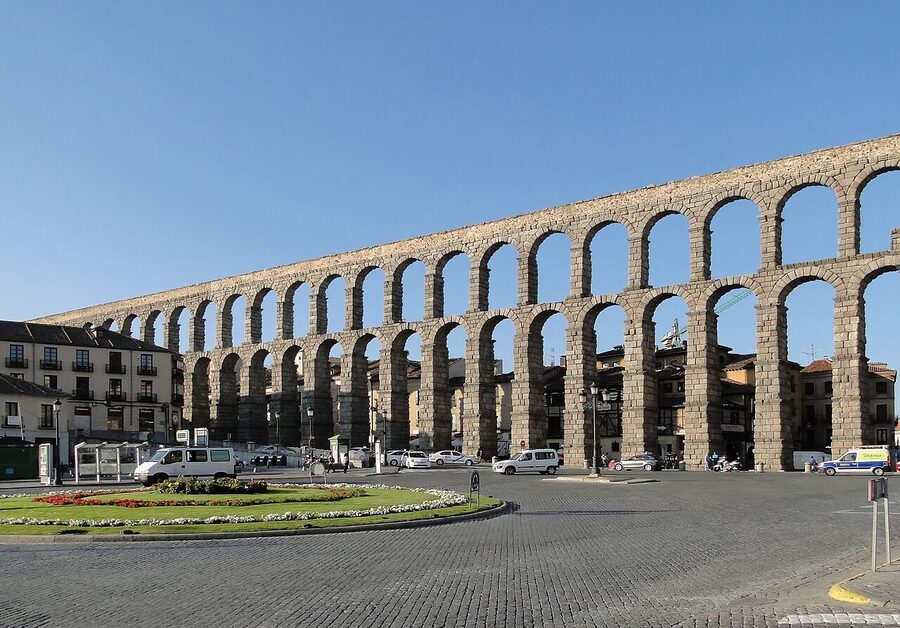
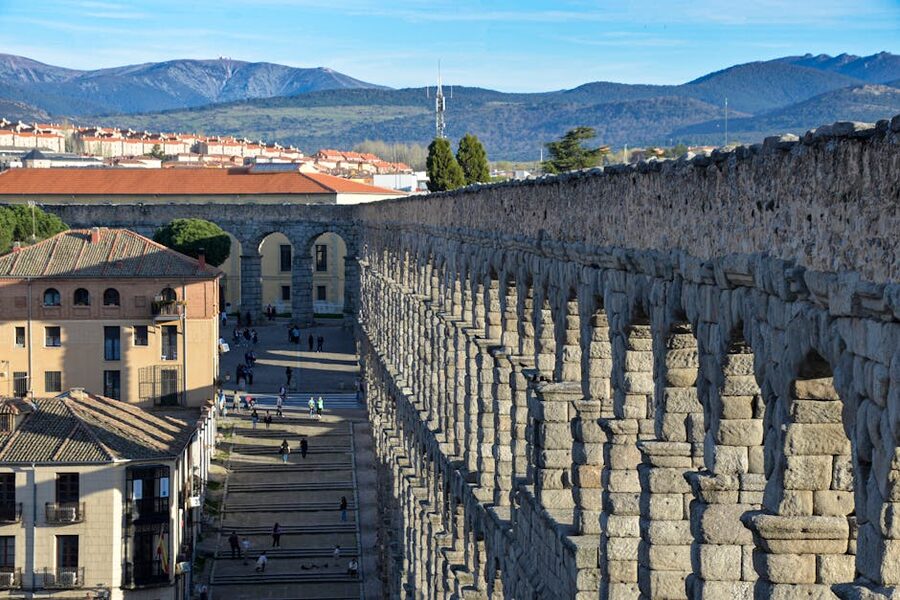
The aqueduct was built somewhere between 50 and 100 AD. The exact date is debated. What’s not debated is that the Romans cut and stacked roughly 25,000 granite blocks without using a single drop of mortar. The structure is held up by precise cuts and the weight of the stones above pressing the lower arches into compression. Earthquakes, civil wars, and the Spanish Civil War all left it standing. It carried water from the Río Frío down to the city continuously until 1973, when it was finally taken out of active service for conservation reasons. Almost nineteen centuries of working life. There’s no other piece of Roman civil engineering in Europe that ran that long.
The way to see it is to start at the Plaza del Azoguejo, which is the lowest point and the spot where the central twin-arcade rises overhead. You can walk a path that runs alongside it uphill. The Mirador del Postigo, the small viewpoint at the top, is the angle every photographer wants. This is the same kind of “Roman engineering still working” magic you find at Pompeii, except Pompeii is what didn’t survive and Segovia’s aqueduct is what did.
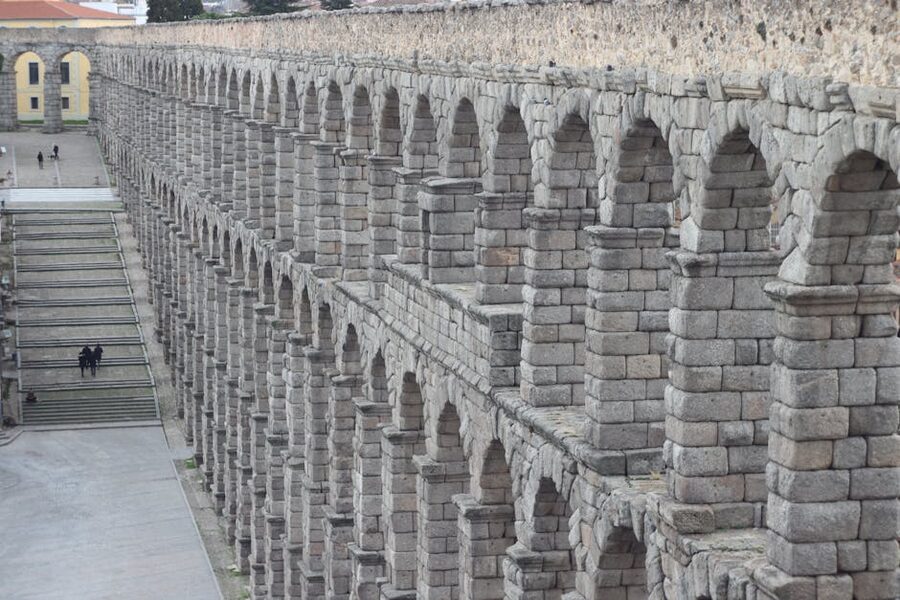
If you have free time and the legs for it, walk up to the top of the aqueduct via the Postigo stairs. The climb is steep, the view from up there is the panorama, and you understand instantly why the engineers picked this exact slope.
The cathedral
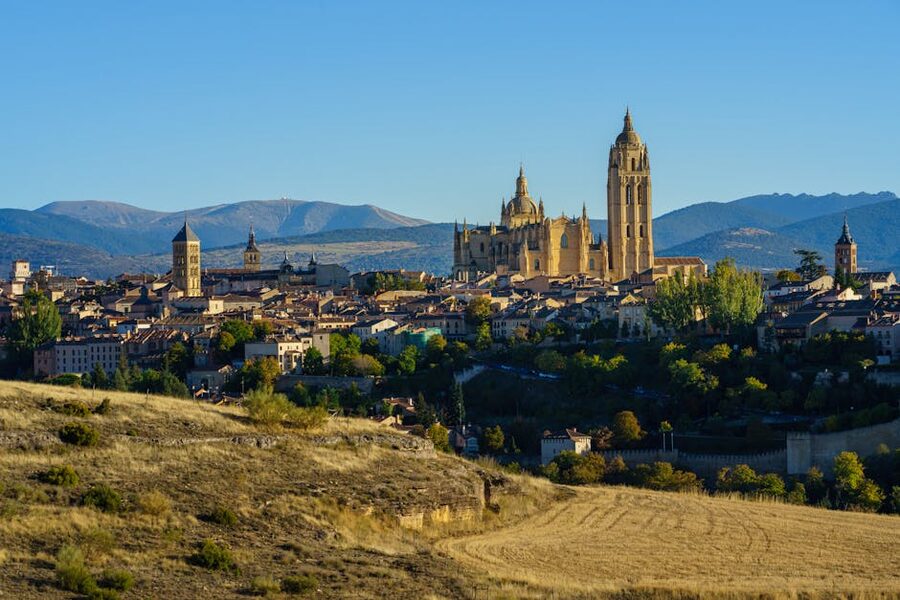
Segovia Cathedral is sometimes called “La Dama de las Catedrales,” the Lady of Cathedrals, for the way it presides over Plaza Mayor. It’s also the last great Gothic cathedral built in Spain, started in 1525 and not finished until 1768. By the time the masons were laying the final stones, the rest of Europe had been doing Baroque for two centuries. Segovia just kept going Gothic.
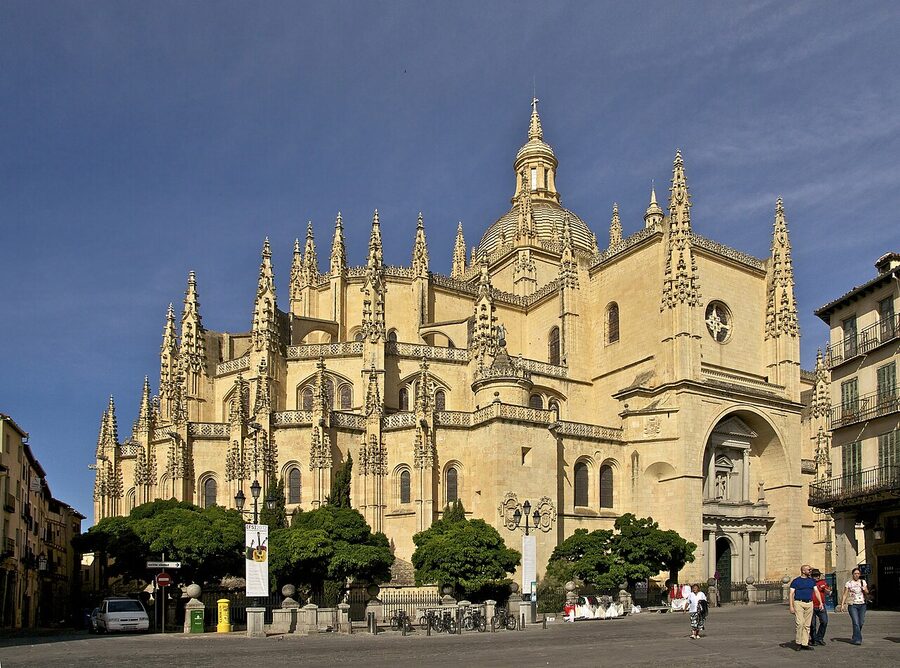
The interior is sober for a cathedral of its size. Tall, late-Gothic, mostly white stone, with a 15th-century cloister that was originally part of the older cathedral that stood on Plaza Mayor before it burned in the 1520 Comuneros revolt. The choir stalls are 15th century, moved from the previous building. The treasury holds a small collection of religious silverwork worth ten minutes if you’re already inside.
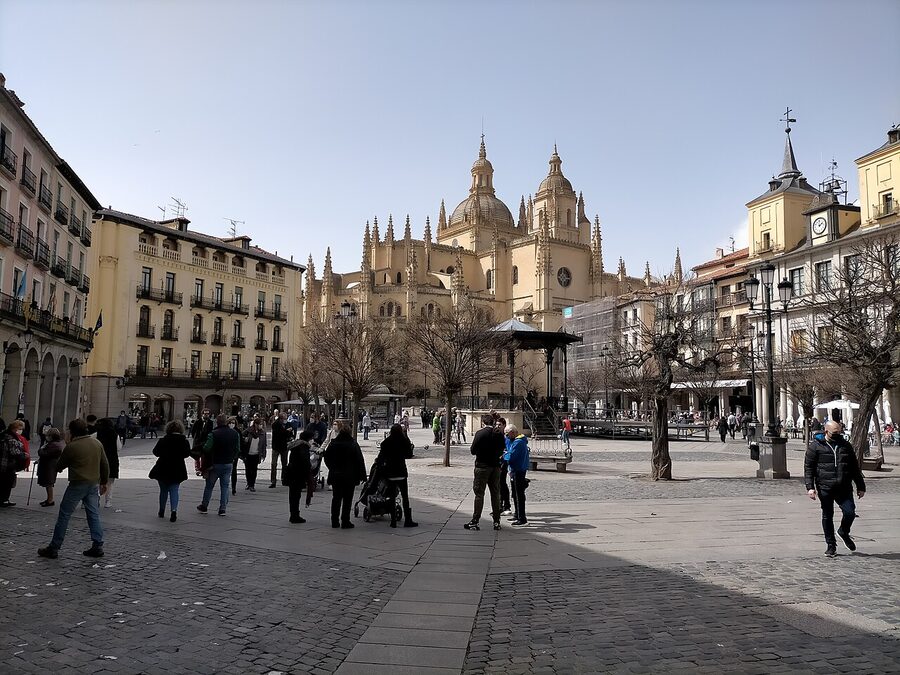
If you’ve already been inside Florence’s Duomo or Milan’s, this won’t blow your mind. It’s a regional cathedral, beautifully made, but not on that scale. What it has, that the Italian heavyweights don’t, is its setting: Plaza Mayor wraps around it, with cafés on three sides, and the Alcázar peeking over the rooftops to the west. The piazza experience is a big part of the value.
The Alcázar
The Alcázar is the postcard. A castle on the prow of the rocky outcrop, with two rivers below and the Sierra de Guadarrama beyond. It’s the one most people remember. The story you’ll hear from every guide is that Walt Disney used the Alcázar as a reference for Snow White’s castle in 1937. Disney never confirmed it directly, the company has hedged for decades, but the Alcázar’s silhouette and the Snow White castle’s silhouette are similar enough that the story has stuck and the city sells it.
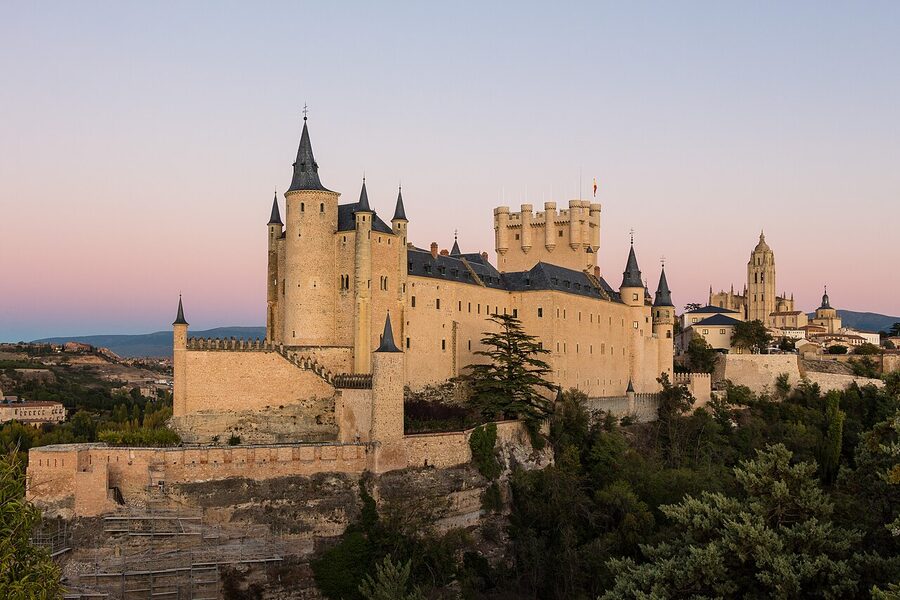
Inside, the rooms are good but not extraordinary. Mudéjar ceilings, the Hall of Kings with its frieze of 52 Castilian and Leonese monarchs, a small armoury with crossbows and breastplates. The thing that’s worth the climb is the Tower of Juan II. It’s 152 steps up a tight spiral and the views from the top are the best in Segovia. You see the cathedral, the rooftops, the long line of the aqueduct in the distance, and the rivers below. If you only do one paying thing inside the Alcázar, it’s the tower.
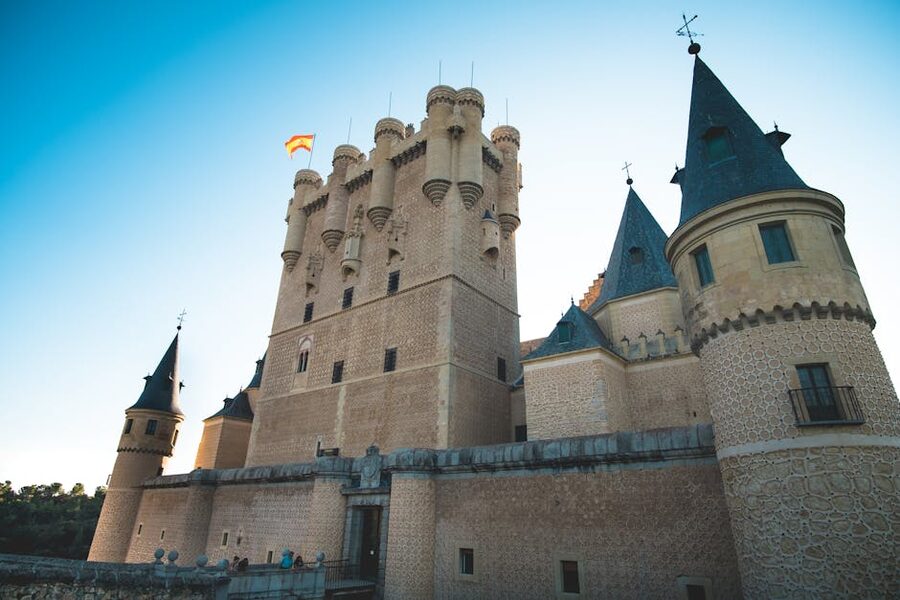
Isabella I was crowned Queen of Castile in the Alcázar in 1474. Christopher Columbus had at least one of his pre-voyage audiences here. It was a working royal residence for several centuries before it became a state prison, then an artillery academy, then a museum. The “castle” you see now is layered: 12th-century base, late medieval expansion, post-1862 reconstruction.
Plaza Mayor and free time
You’ll get a chunk of free time after the guided portion. The right move is Plaza Mayor for a coffee or a small plate, then the walk down to the Alcázar’s gardens, then back up via the Calle Real to the aqueduct. That covers all three big sights in about two hours and gives you a meal break.
The food: cochinillo
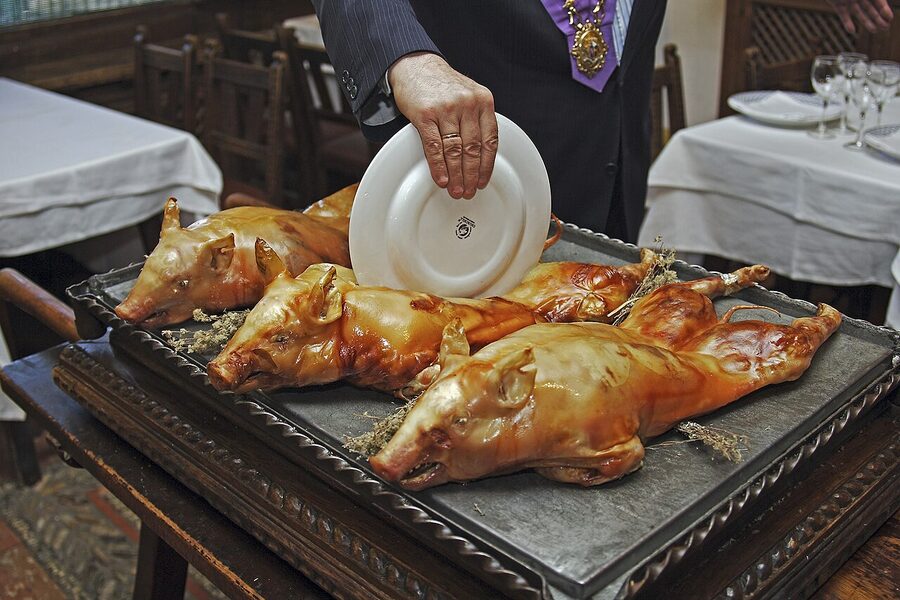
If you’re in Segovia for lunch and you’re a meat eater, you eat cochinillo asado. Roast suckling pig, prepared in the Castilian wood-fired-oven tradition, and the dish that put Segovia on the food map. The meat is slow-roasted until the skin shatters and the inside is buttery. The classic restaurant is Mesón de Cándido, on Plaza del Azoguejo right beside the aqueduct, where the cochinillo has been served continuously since 1786 and the house ritual is to slice it with the edge of a porcelain plate to prove how tender it is. The plate is then thrown to the floor and broken. It’s dramatic, it’s a tradition the family has run for generations, and yes, it’s tourist-oriented but also genuinely good.
If Cándido is full or you want a slightly less touristed version, José María on Calle Cronista Lecea has its own oven and serves the same cut to a slightly more local crowd. Either is fine. Both are sit-down, plan an hour, expect to spend €25 to €35 a head with a glass of Ribera del Duero. If you’re not eating meat, the menu also runs to judiones de La Granja, big white beans in a stew, which is the regional vegetarian-leaning option, and the bean is genuinely good in a way most travelling vegetarians don’t expect Castilian cooking to be.
The three tours: which one to book
What follows are the three tours I’d actually pick depending on what you want from the day. Prices are current as of writing and shift slightly across the year.
1. Ávila & Segovia Tour With Tickets to Monuments: $81.20
This is the version most repeat day-trippers end up on, and it’s the one I’d default to: nine hours, modern coach, a guide who actually knows the difference between Romanesque and Gothic, and tickets to the Alcázar plus the included sites in Ávila already in your booking. Our review walks through the inclusions in detail. If you’re booking blind and only want one thing to click, this is it.
2. Madrid: Ávila and Segovia Day Trip With Tickets to Monuments: $74
The GetYourGuide version of the same day. Same nine hours, same two cities, same UNESCO inclusions. The differences are operational: GYG’s app handles tickets and last-minute changes more cleanly, and the price tends to run a few euros lower. Our review covers the cancellation window in detail. If your travel plans might shift, this is the one to book.
3. Three Cities in One Day: Segovia, Ávila & Toledo: $126.96
This is the long version. Twelve hours, three UNESCO cities, a real risk that one of them feels like a drive-by. Pick this only if you have a single day in Madrid and absolutely need to tick all three; otherwise, do Ávila/Segovia on one day and Toledo from Madrid on a separate day, which gives both trips room to breathe.
What’s included vs not
The two main things that are always included on these tours: round-trip air-conditioned coach from Madrid, and a guided walking tour in each city in either English or Spanish (sometimes both, alternating). What varies is the monument tickets. Read carefully.
The Alcázar of Segovia is on most of the included lists. So is the Cathedral of Ávila and entry to a section of the wall. Some tours bundle the Segovia Cathedral, others don’t. None of them include lunch by default. The optional lunch add-on is offered separately, usually in Ávila, and runs €15 to €20 for a set Castilian menu (often the chuletón).
What’s never included: gratuities for the guide (€5 to €10 a head is normal), the cochinillo lunch in Segovia if you want the proper sit-down version (you’ll do that on free time and pay separately), and any side trips to the Royal Palace of La Granja de San Ildefonso, which is a separate excursion and a different post.
Practical tips that actually matter
A few things I wish I’d known before my first trip:
- Wear real shoes. Both old towns are granite cobbles. Sandals will eat you alive by 3pm. The wall walk in Ávila is rough underfoot in places.
- Bring layers, not a coat. Castilian high plateau weather. October to April it can be 5°C in the morning and 18°C by 1pm. May to September the reverse is true, with hot afternoons and cool dawns.
- Cash is still useful. The smaller cafés and the Yemas de Santa Teresa shops in Ávila prefer cash, especially under €10.
- Don’t expect to walk the whole Ávila wall circuit. Only sections are open and the day-tour timing won’t fit a full loop. Pick one segment.
- Use the bus restroom on departure, not arrival. The Ávila viewpoint stop has restrooms but a long queue when 80 people arrive at once.
- Don’t book the optional add-on lunch if you really wanted cochinillo. The lunch slots are usually in Ávila where the dish is chuletón, not Segovia. Plan free-time food in Segovia accordingly.
- The aqueduct doesn’t need to be photographed at sunrise. Plaza del Azoguejo faces roughly south-east; the best light is mid-morning. By the time your tour arrives in Segovia (1 to 2pm) you’re past peak, but the structure works in any light because of its scale.
When to go
Late spring (April, May) and early autumn (September, October) are the best windows. Crowds are manageable. Temperatures sit in the 15 to 22°C range. Light is good for photos. July and August are hot and crowded, especially in Segovia where the aqueduct shadow doesn’t help much. Winter is genuinely beautiful but the wall walk in Ávila can be icy and the panorama from the Alcázar tower is sometimes closed in poor weather.
Christmas markets run in both cities through December and the first week of January. They’re small but real, with mulled wine and local craft stalls. If you happen to be in Madrid at that time, the day trip becomes a different experience and a good one. Not the same as the summer version. Lower energy, slower pace, more wool.
Ávila vs Segovia: which one wins
I’m asked this often. They’re not really competing, despite how it looks on a brochure. Segovia is the bigger headline because of the aqueduct and the Alcázar; Ávila has the more atmospheric old town and a more focused feel within its walls. If you only had time for one (you don’t, on this tour, you get both), Segovia wins for headline sights and Ávila wins for soul.
The reason the day-trip pairing works is that they cover different chapters: Roman engineering and medieval romance in Segovia, walled medieval city and Counter-Reformation mysticism in Ávila. You leave Madrid and you’ve walked through two different versions of “old Spain” inside one day. That doesn’t happen on the Lake Como day from Milan, where the day is one place. It does happen on Pisa-Siena-San Gimignano from Florence, which is the closest Italian analogue.
Should you stay overnight instead?
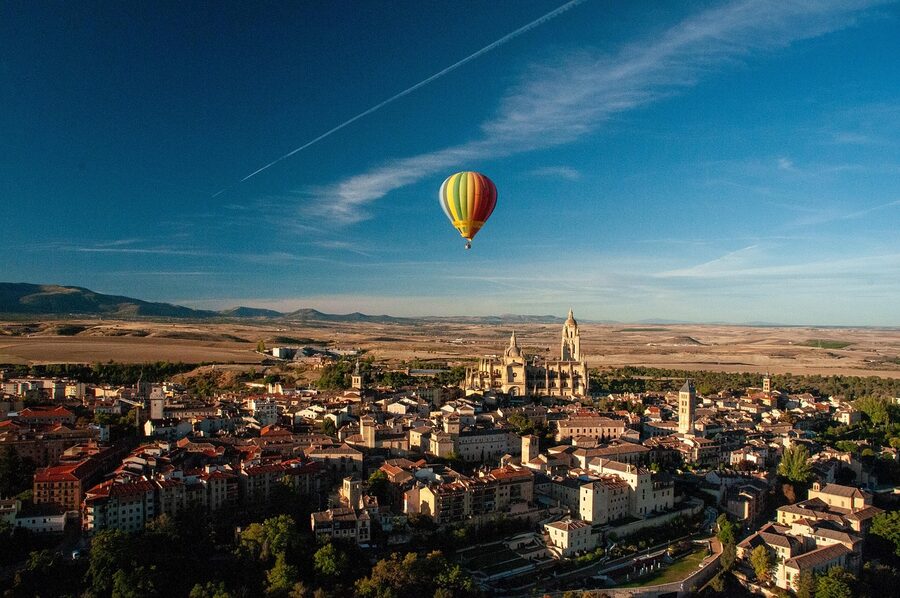
If your schedule allows, yes. Segovia at night, after the day-trip buses are back in Madrid, is a different city. The aqueduct is lit, the Plaza Mayor empties out, and you can have dinner at Mesón de Cándido without the lunch crowd. Ávila is similar; the walls are lit and the streets thin out.
The downside of overnighting: you give up half a day in Madrid, and the morning bus crowds will catch you again on the way back. If you have three or more nights in Madrid, an overnight in Segovia is worth it. If you have two nights or fewer, the day tour is the right call.
How this stacks up against other Madrid day trips
Madrid has a deep bench of day trips. The Toledo run to the south is the classic Madrid day trip, and the one most people pair with this tour if they have two extra days. It’s one city, not two, so the pace is gentler. Toledo wins on density of single-city detail. Ávila/Segovia wins on variety.
The other comparison worth making is to the Spanish three-city day from Andalusia, which usually pairs Granada with Córdoba or Seville with Cádiz. Those are seven-hour drives at minimum. The Madrid-out-and-back radius is much friendlier. From Madrid you can do real, substantive day trips and be home before dinner. From Seville, the equivalent days are longer and harder to enjoy. Paris travellers will already know the same out-and-back instinct from a multi-stop Loire Valley castles day, while a sacred-rock pilgrimage like Mont Saint-Michel is the closer mood match for Ávila’s wall and Segovia’s aqueduct.
One more thing
If you have a moment in Plaza del Azoguejo at the end of the day, before getting back on the bus, walk to the front of the central twin arcade and just look up. Tour groups will be milling everywhere. Buses will be loading. Someone will be selling roasted almonds. And above all of it, two thousand years of granite is doing the same job it was built to do, which is to stand. There aren’t many travel days where the headline attraction is older than every government, every religion, and every language you’ll hear around it. Segovia and Ávila on the same day is one of them.
If you liked this, you’ll probably like
The closest in spirit to this day on our site is the Pisa, Siena and San Gimignano day from Florence: another three-stop, two-UNESCO, “see a different chapter of the country in one bus day” trip. From Italy, the Cinque Terre from Florence is the better pick if you want a one-place, slow-day rhythm; from northern Italy, Lake Como and the Borromean Islands work the same way. If you fell for the Roman engineering on the Segovia aqueduct, Pompeii is the obvious next stop, and the Colosseum the one after that. For Madrid follow-ups, the Royal Palace, the Prado, and a real flamenco show are the three I’d queue up first. And if you’ve been thinking about Catalonia, the Montserrat day from Barcelona is the closest emotional cousin to this one: leave a city, walk into a much older version of the country, come back changed. The Amsterdam answer to that same impulse is the windmill-and-cheese loop at Zaanse Schans, with the spring-only flower-field detour to Keukenhof as the seasonal twin.