
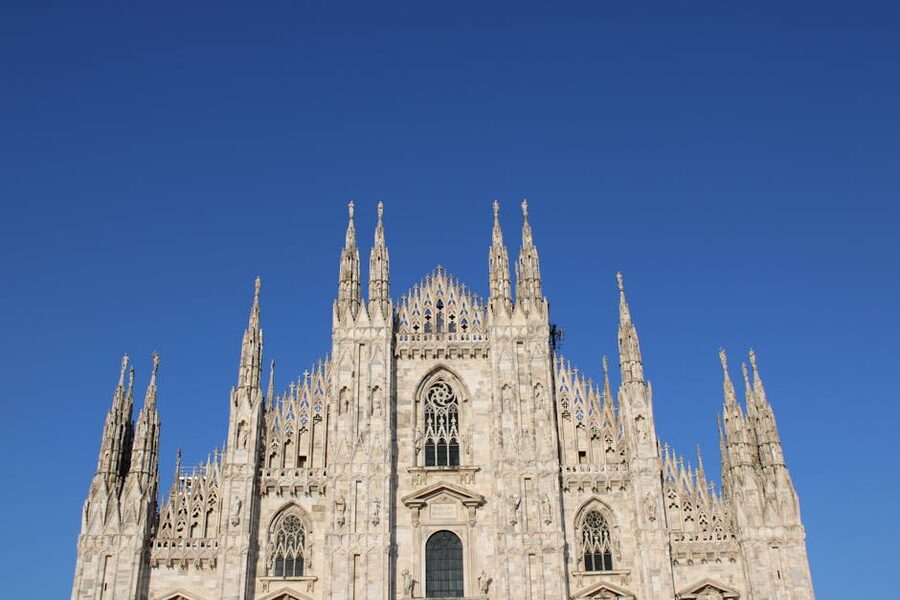
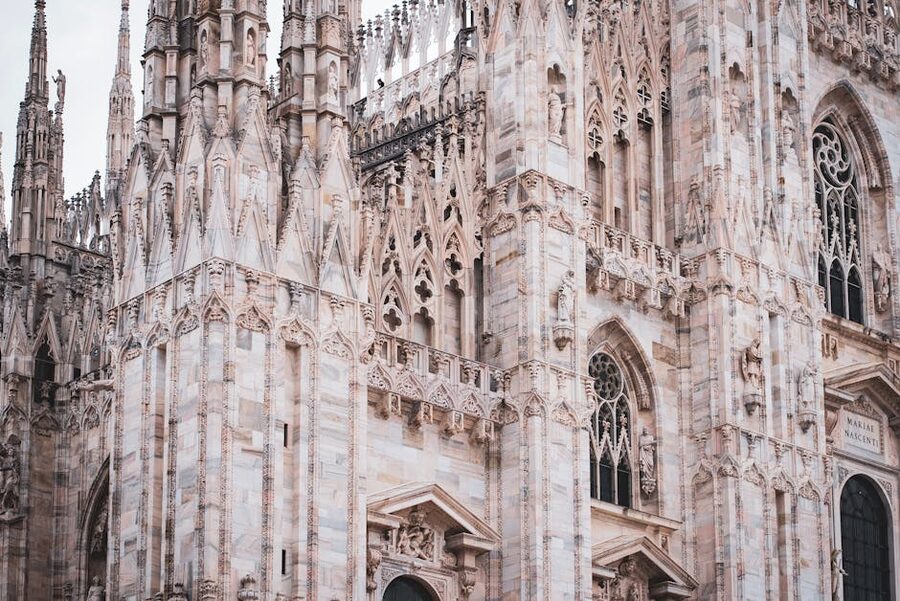
Construction on the Milan Duomo started in 1386. It is still going. The Carrara-marble facade you photograph today is being progressively replaced because Milan’s air, particularly the soot of the post-war decades, eats limestone the way salt eats steel. Stonemasons sit in scaffolding alcoves carving replacement pieces. The cathedral is six and a half centuries old and technically still a building site.
That’s the bit that reframes the visit. You’re not just going up onto a finished medieval rooftop. You’re walking around a working one.
In a hurry? My three picks
- Cathedral + Terraces (lift): the all-in option, around $30. Check availability
- Terraces only (stairs): cheapest way up, around $22 and a faster line. Check availability
- Cathedral only (skip the line): around $13 if you’re skipping the rooftop. Check availability
Should You Even Bother With the Terraces?
Yes. With one caveat.
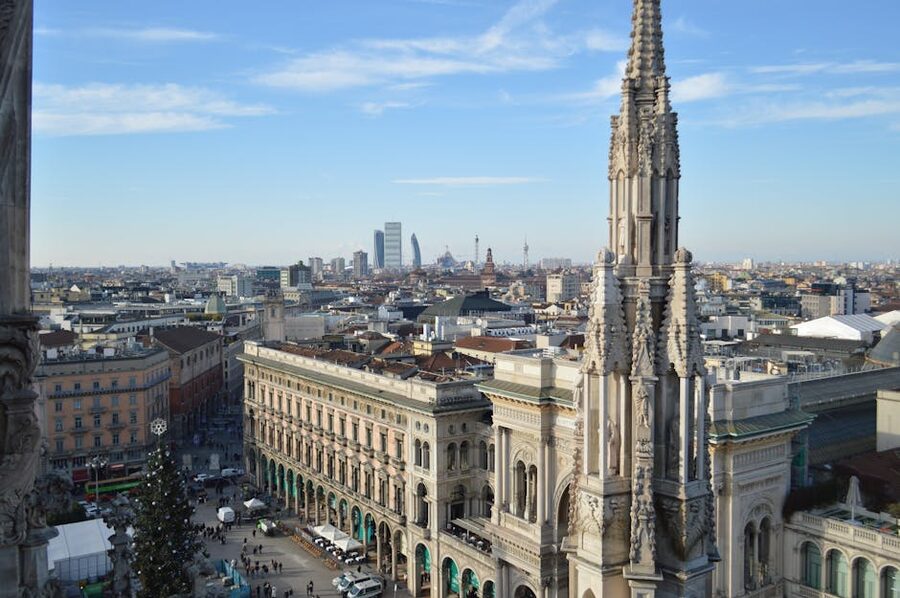
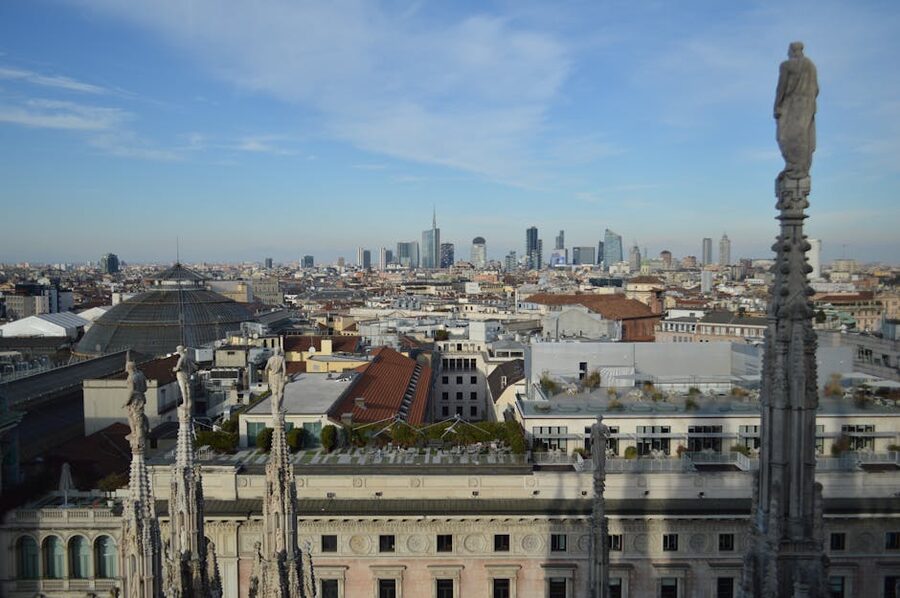
The cathedral interior is a five-minute “huh, that’s enormous” experience for most people. The terraces are where Milan starts to make sense. You’re 70 metres up, walking on lead-and-stone roofing between flying buttresses you can almost touch, with views that on a clear day reach the Alps. That’s the ceiling of Lombardy you’re looking at on the horizon, and on the right kind of February afternoon you can read Monte Rosa and the Grigne off the skyline.
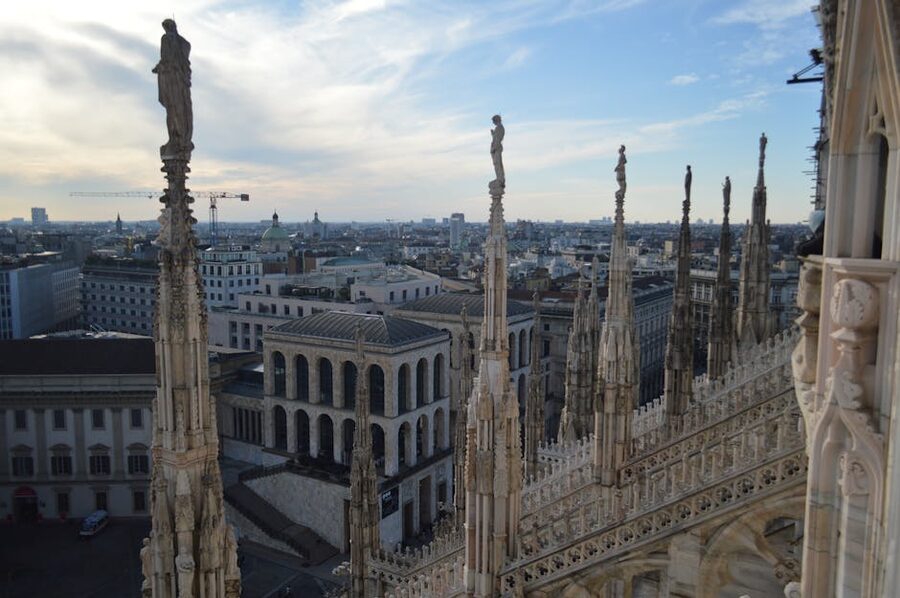
The caveat: if it’s the middle of a humid August afternoon and you can’t see beyond the next block, the terraces become a slow shuffle on hot marble with a flat grey backdrop. On those days, prioritise the cathedral interior and come back the next morning early. Or skip the rooftop entirely and put the saving toward a day trip up to Lake Como where the air actually moves.
The Ticket Tiers, Translated
The official site (Veneranda Fabbrica del Duomo) is the authority, and it’s where I’d start. The naming is confusing, so here’s the plain-English version of the four tiers as of 2026 (the multi-tier cathedral pricing structure is identical to the way Sagrada Familia in Barcelona sells the church and the towers as separate add-ons):
- Cathedral only: the church interior, no rooftop. About €10.
- Terraces only by stairs: rooftop and nothing else, you climb up. About €16.
- Terraces only by lift: rooftop only, no climb. About €18.
- Combo (cathedral + museum + terraces by stairs): the full visit, climbing. About €22.
- Combo by lift (the same plus the lift): the full visit without climbing. About €26.
The combo tickets are now valid for two days. So you can do the cathedral and museum on the morning you arrive, then go back up to the rooftop the next morning when the light’s better. Worth knowing if you only have a weekend.
Stairs vs lift: the honest comparison
250 steps up. Steep, narrow in places, and one direction only (down is by stairs regardless of how you got up). The stairs queue is usually shorter, and the climb itself is part of the experience: you pop out onto the lower terrace through a small marble doorway and the city just opens up. The same payoff-after-the-stairs hits at the Giralda climb at Seville Cathedral, where the ramped tower swaps stairs for slopes but ends in the same way.
The lift is for people who don’t want the climb, or are travelling with kids or older parents. It costs about €2-€4 more depending on the bundle. The lift only goes to the first level. To get to the upper terrace you still walk up a flight or two of stairs, and to come down you walk down. So “by lift” is not “no stairs at all”, it’s “no big climb up”.
If you can manage a steady ten-minute climb, take the stairs. The view through the spires on the way up is one of the things you came here for.
Inside the Cathedral, Briefly
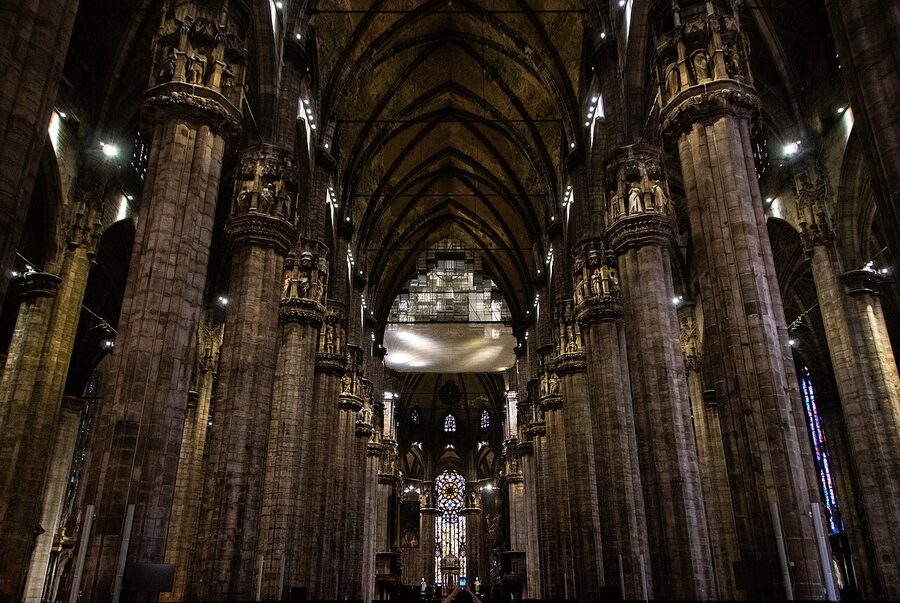
I’ll say this gently: most travellers find the interior less rewarding than the rooftop. It’s vast, it’s serious, the columns are a forest. But it’s a fairly austere Gothic space (very different from the gold-and-fresco Roman basilicas you may have just come from), and you can do the meaningful stuff in 30 minutes.
What to actually look at:
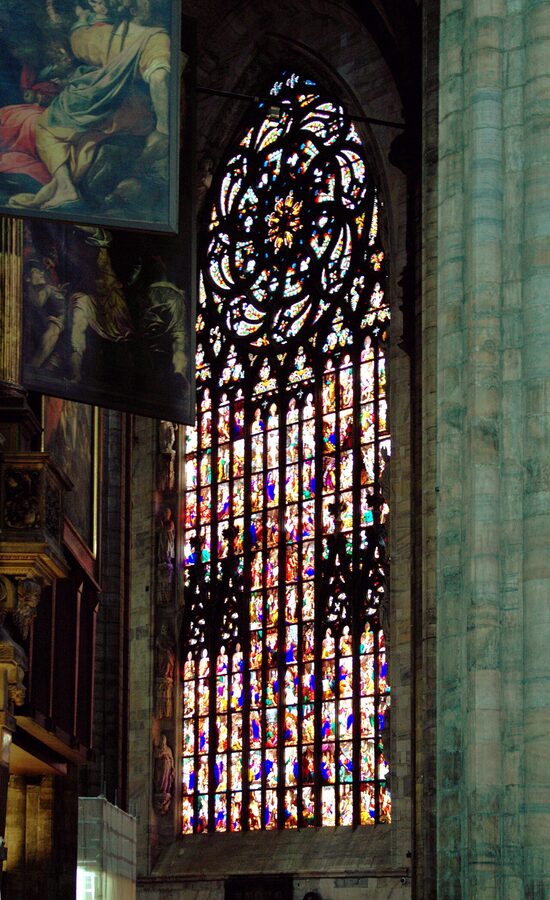
- The stained glass. The windows of the apse are 15th- and 16th-century, and on a sunny morning they cast colour across the marble floor in a way no photograph ever quite catches. The closest stained-glass set-piece in Europe is at Sainte-Chapelle in Paris, where the glass is older and the room is one-tenth the size, which is part of why the colour-on-stone effect is so concentrated.
- The Holy Nail. Mounted high above the altar, said to be from the cross. Once a year on the Saturday closest to 14 September, the bishop is hoisted up to retrieve it using a winch system designed by Leonardo da Vinci. (You will not see it being lowered unless you plan around it; the rest of the year it’s a small gilded receptacle in the apse vaulting.)
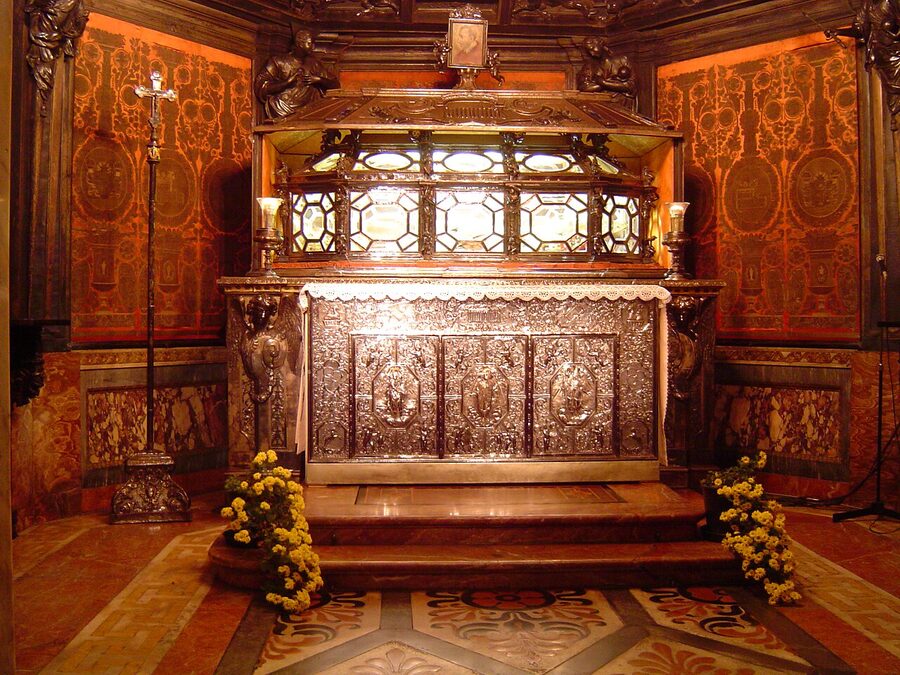
- The crypt and tomb of St. Charles Borromeo. Down the stairs to the right of the altar, encased in glass and silver. He’s Milan’s most beloved cardinal and the saint who shaped the cathedral’s interior more than anyone else.
- The brass meridian line on the floor. Set into the marble near the south entrance, running across the nave. It’s a sundial, installed in 1786 by astronomers from the Brera Observatory, with zodiac markers along it. At solar noon a beam of light from a hole in the south wall hits the brass and tracks the date along the line. Most visitors walk straight past it.
The crypt and the archaeological area, the remains of the 4th-century San Giovanni baptistry where St. Ambrose baptised St. Augustine in 387, are included with the combo ticket but most people don’t realise it. They’re worth the extra ten minutes. Same booking parallel to the timed-entry system at the Vatican Museums: pre-paid, scan-and-go, your bundle determines which doors open.
Top Tours to Book
Three tickets cover almost everyone visiting. They’re all flagship products, all consistently the most-booked Duomo tickets on the affiliate market, and the choice between them is really a question of how much you want to see.
1. Milan: Cathedral and Duomo’s Terraces Entrance Ticket: $30
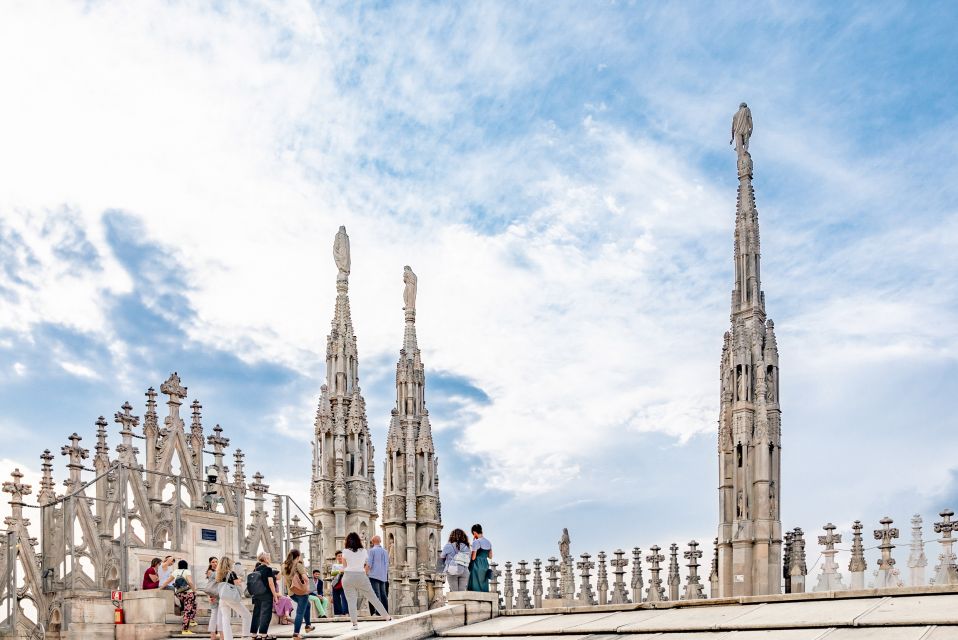
This is the ticket I’d book if you only book one. It’s the most-purchased Duomo ticket on the market by a wide margin, and our full review of the combined entrance ticket covers the audio-guide options and the 72-hour pass details. Pick this one if you want to do both the cathedral and the terraces and not have to think again.
2. Milan Cathedral: Duomo Terraces Ticket (No Church Access): $22
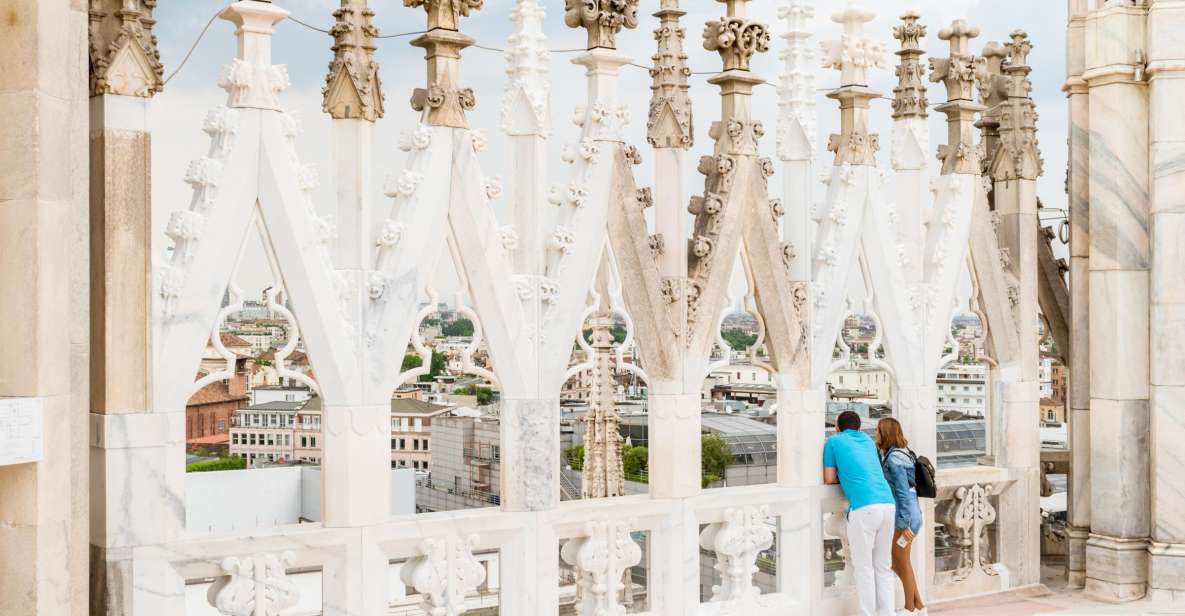
Pick this if you’ve decided you only want the rooftop, or if you’ve already been inside on a previous trip. Our full review of the terraces-only ticket goes through the discount on the gift shop and the small Duomo souvenir thrown in. It’s the option that surprised me most: faster line, and the best photographs of the trip.
3. Milan: Milan Cathedral Direct Entrance, Terrace Excluded: $13
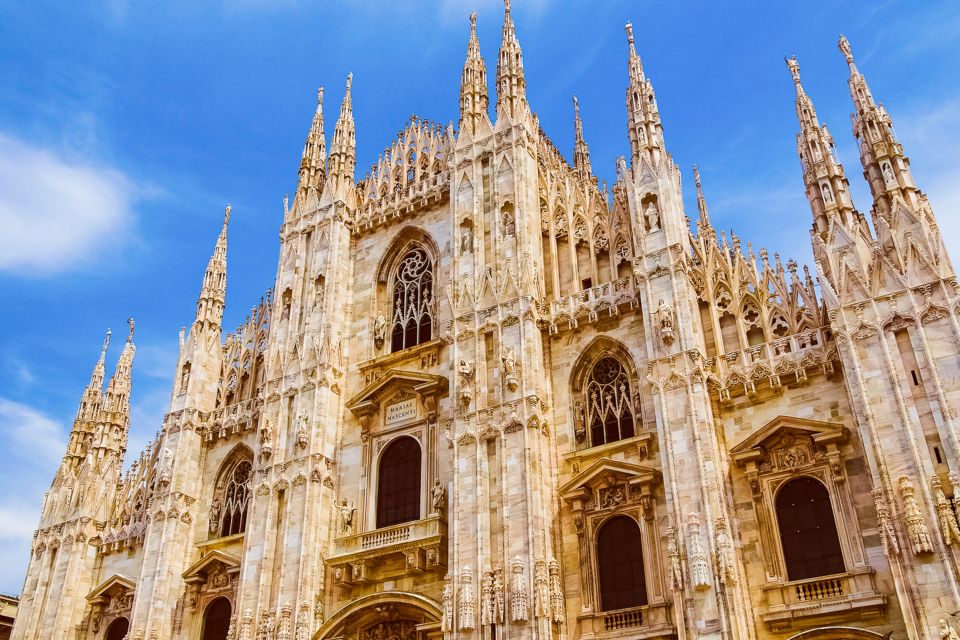
This is the church-only skip-the-line ticket, and the right pick if the weather has killed the view or you’re short on time. Our full review of the direct-entrance ticket covers what’s included (museum is not, surprisingly) and where to upgrade on the day if you change your mind. Don’t combine this with separate stairs-only terrace tickets; the combo costs less.
When to Go (Hour by Hour)
The cathedral opens at 9am, last entry 6:10pm, closing 7pm. Practical timings:
9–10am. The best slot. Light is low and warm, the marble glows, and the rooftop is half-empty. If you can drag yourself out for a 9am ticket, do it.
10am–12:30pm. Busiest of the day. Tour groups stack up. Lines for non-pre-booked tickets get long; pre-booked is still fine but the rooftop gets crowded.
12:30–2:30pm. Lunchtime dip. A small window of relative calm.
2:30–5pm. Steady traffic. Heat in summer becomes the deciding factor. Marble holds heat; bring water and don’t expect shade up there.
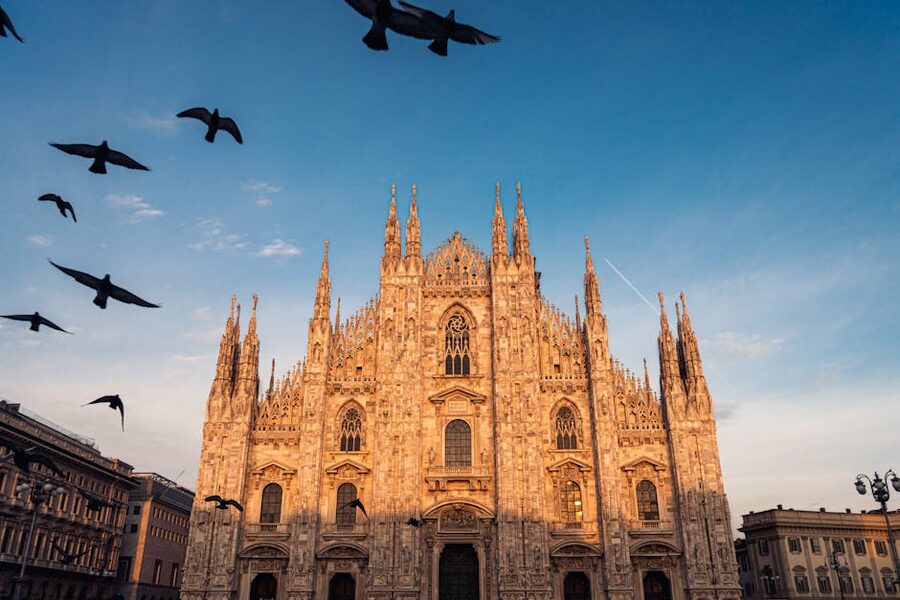
Last hour (5–6pm). If you’ve timed it right, you’ll be on the roof for the golden hour, with the spires catching the late sun. The catch is that last entry to the lift is around 5:30pm and it’s strict.
Closed dates worth knowing: Christmas Day, Easter morning, and any time the cathedral is being used for a major Mass (the website lists these). The museum closes Wednesdays.
Getting There and Around the Square
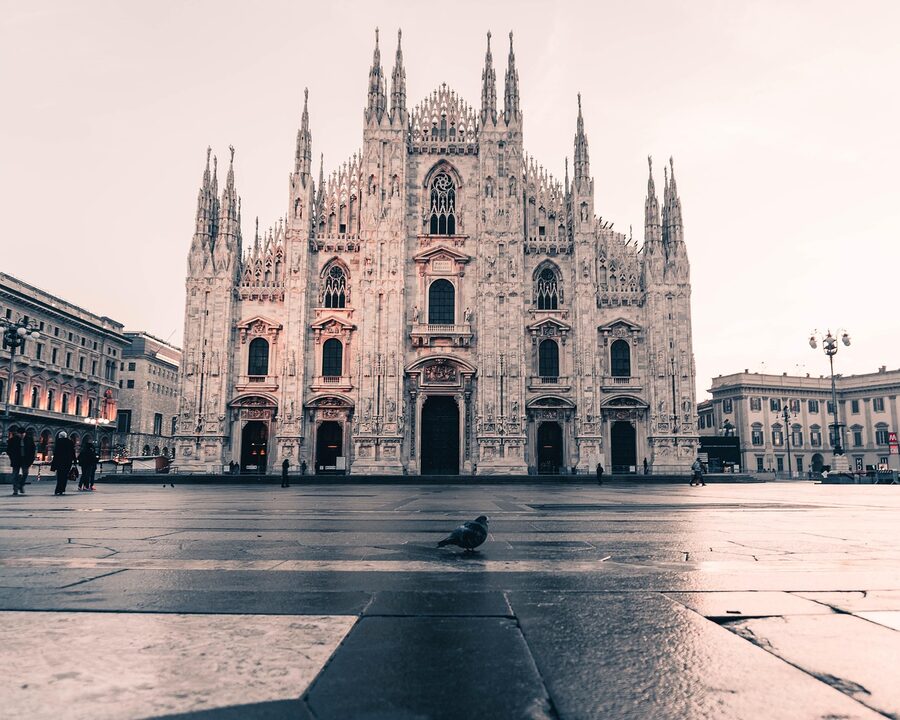
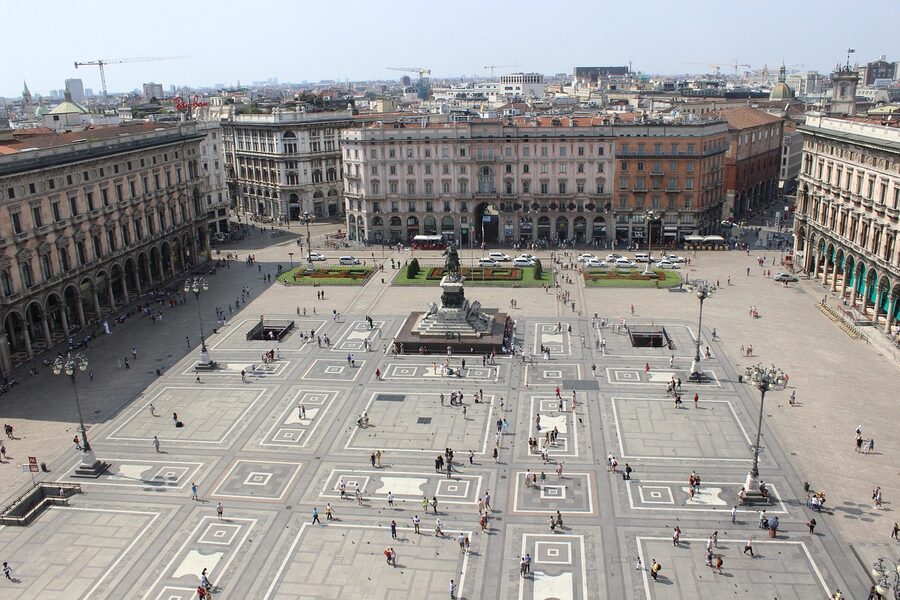
The cathedral sits at the geographic centre of Milan and you almost can’t miss it. The metro stop is, helpfully, called Duomo (yellow line M3 and red line M1, change at Cadorna or Centrale depending on where you’re coming from). From Centrale station it’s about a 12-minute ride.
If you’re walking, every street that ends at the piazza dumps you out with the cathedral suddenly there. There’s no good “approach” angle from the city; the building was wedged into a medieval street grid that wasn’t designed to frame it.
The closest entrance for pre-booked tickets is the small north door (look for the green Veneranda Fabbrica signs). The big main doors are for unticketed visitors and the queue moves slowly through bag check. If you’ve booked online, do not stand in that line; walk past it to your designated entrance.
What to do in the same square
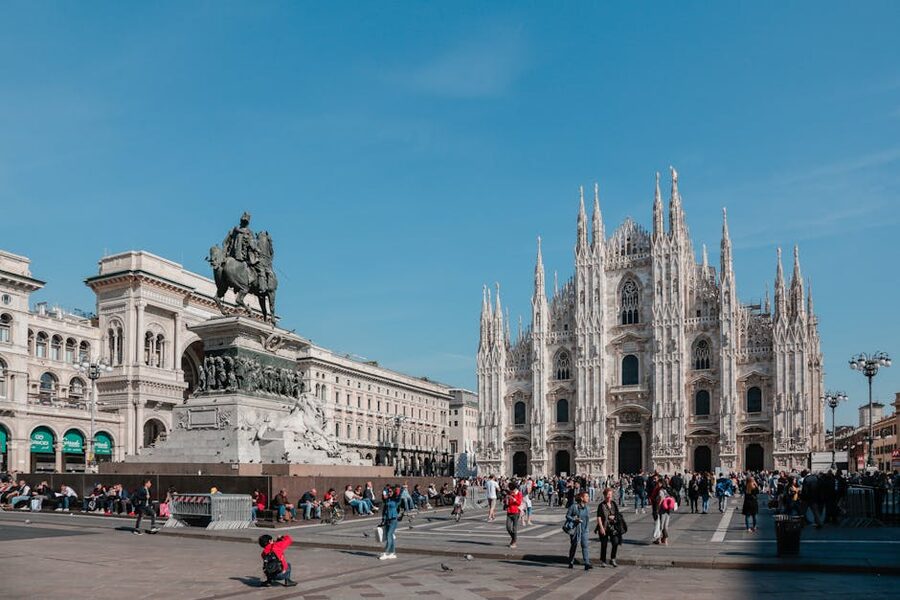
You’re going to spend more time on Piazza del Duomo than you plan to. Some of it on purpose:
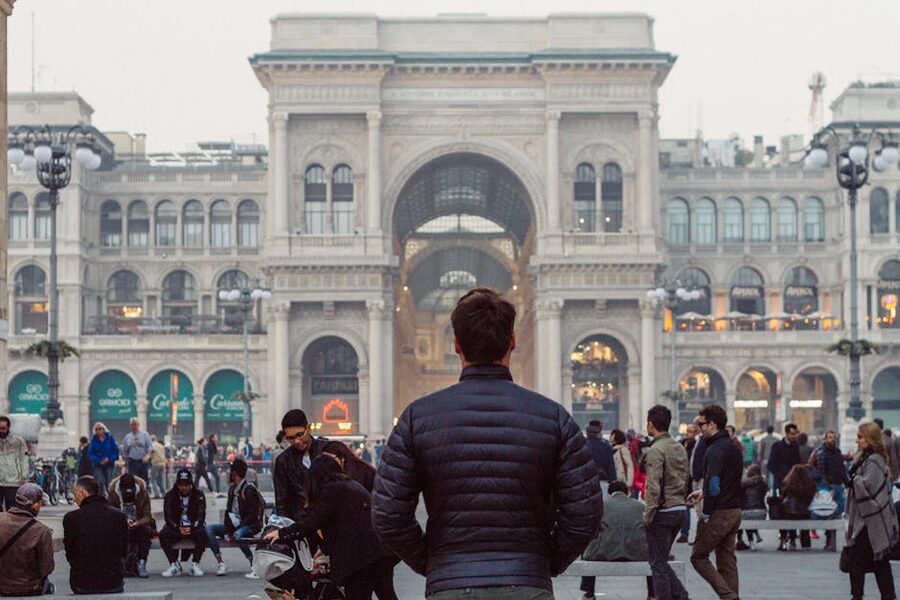
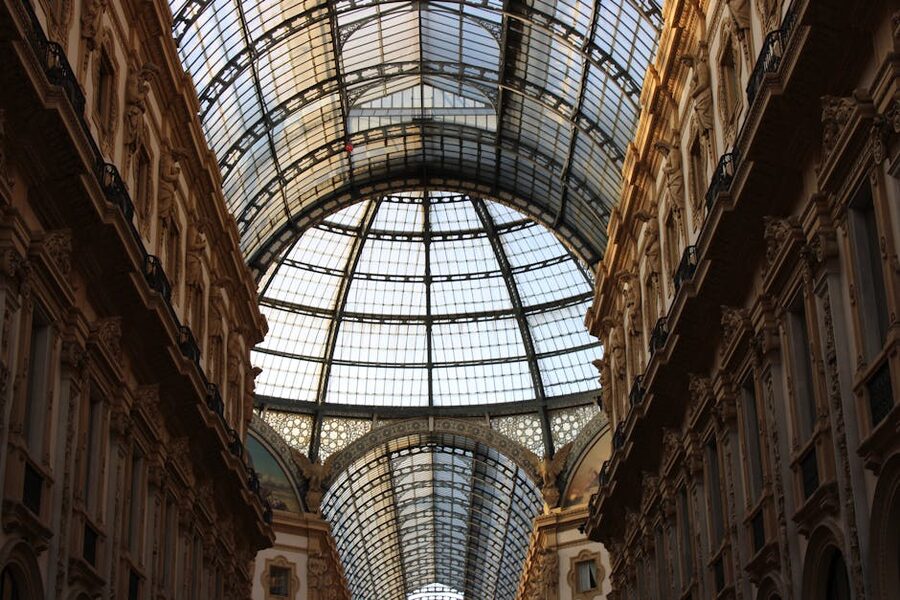
- Galleria Vittorio Emanuele II. The 1877 glass-roofed shopping arcade, attached to the north side of the piazza. Walk through even if you’re not buying anything; it’s the prototype of every grand shopping arcade built since.
- The bull mosaic. In the centre of the Galleria, set into the floor. Tradition says spinning your heel three times on the bull’s testicles brings good luck. The mosaic has a worn-down hole.
- Caffè Camparino. 1915, in the corner of the Galleria, where the Campari aperitivo arguably became Italian. A spritz here is around €15 and you’re paying mostly for the room.
- La Rinascente rooftop. The department store at the back of the cathedral has a free rooftop terrace bar with a face-on view of the Duomo’s east end. Drinks are €12-€18; the view is included.
The Bit Most Visitors Miss: The Rooftop Walk
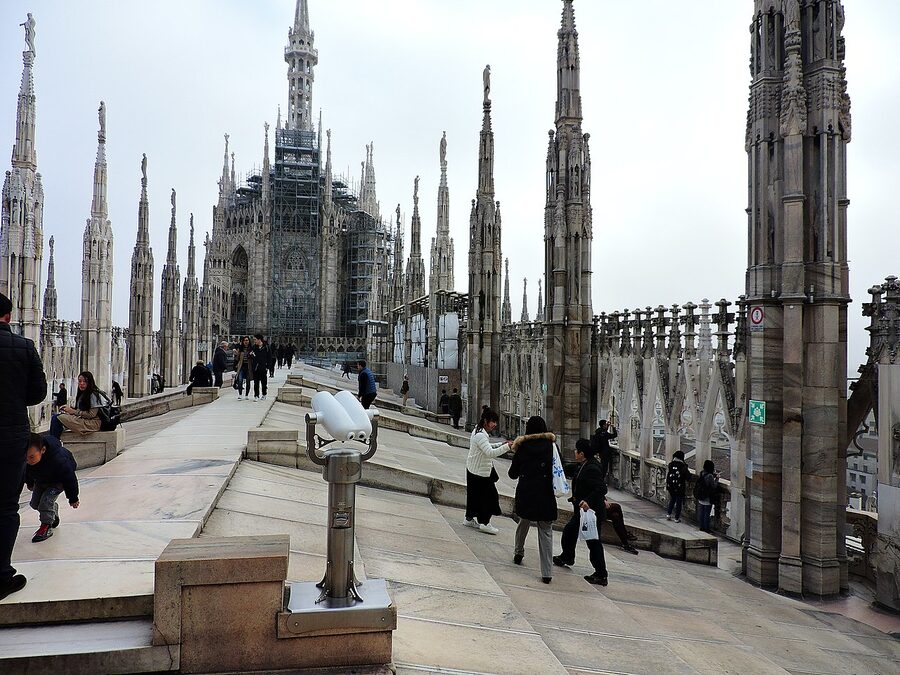
Most visitors think “Duomo rooftop” means standing at a railing looking at Milan. It’s better than that. The closer-to-railing-with-skyline experience belongs to towers like Montparnasse in Paris, where the view is the whole product. Here you’re also walking on the building.
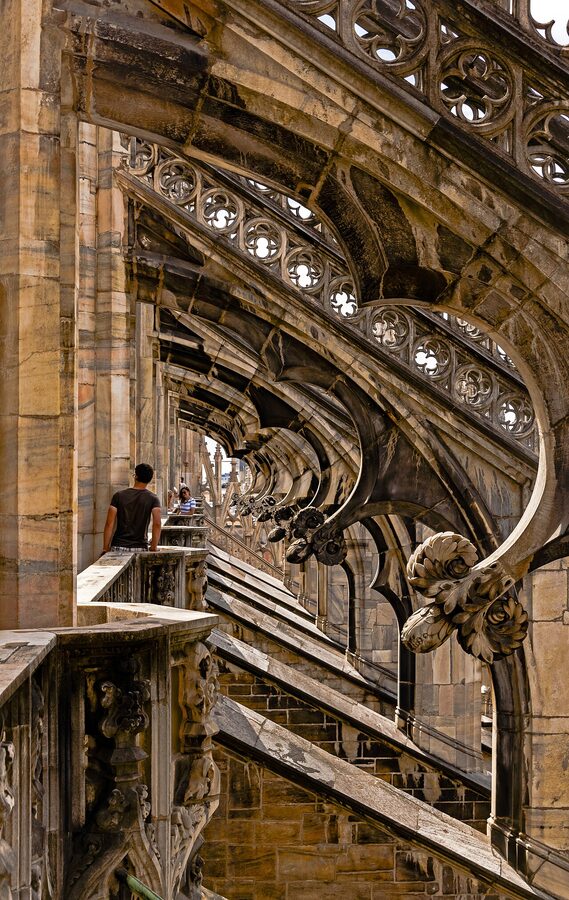
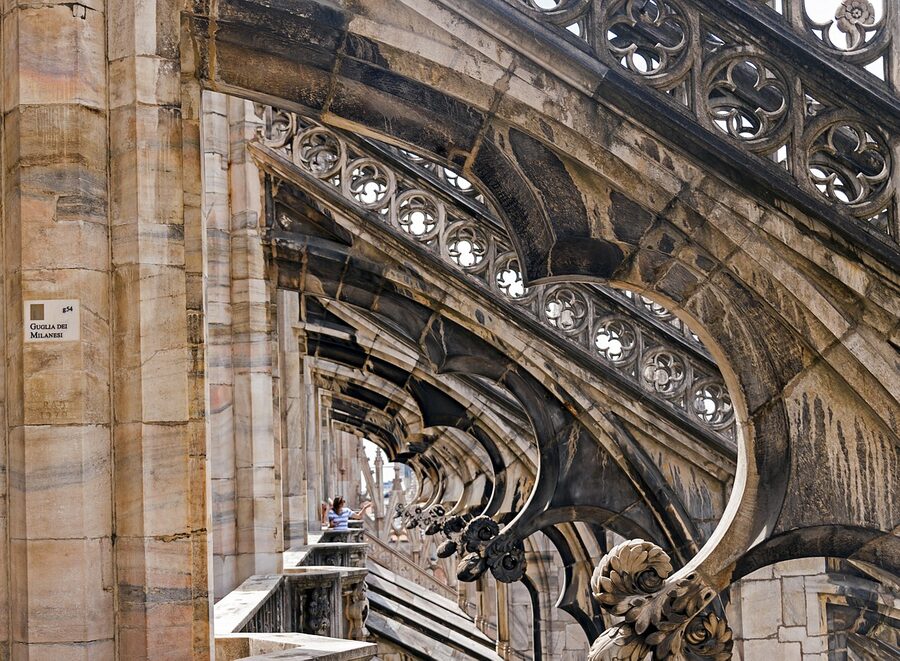
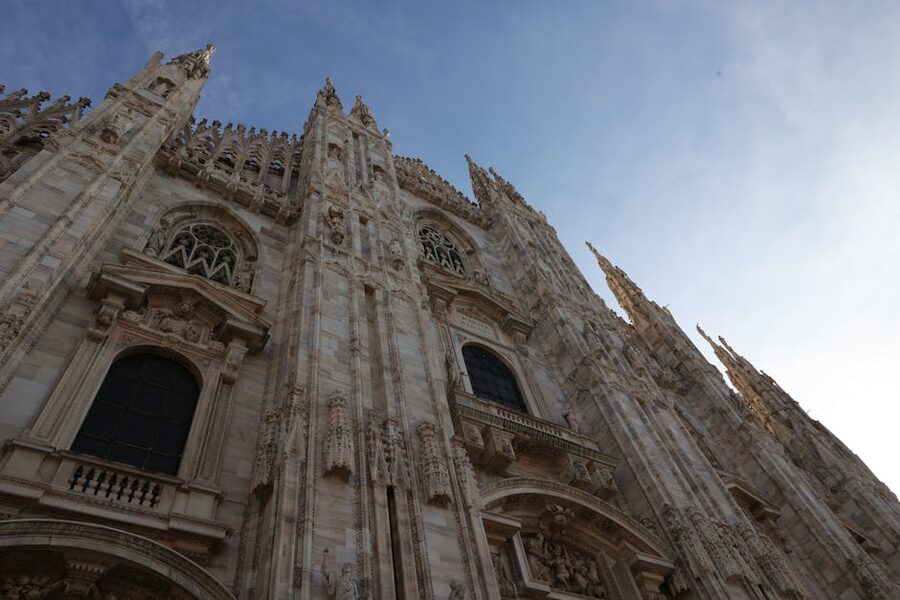
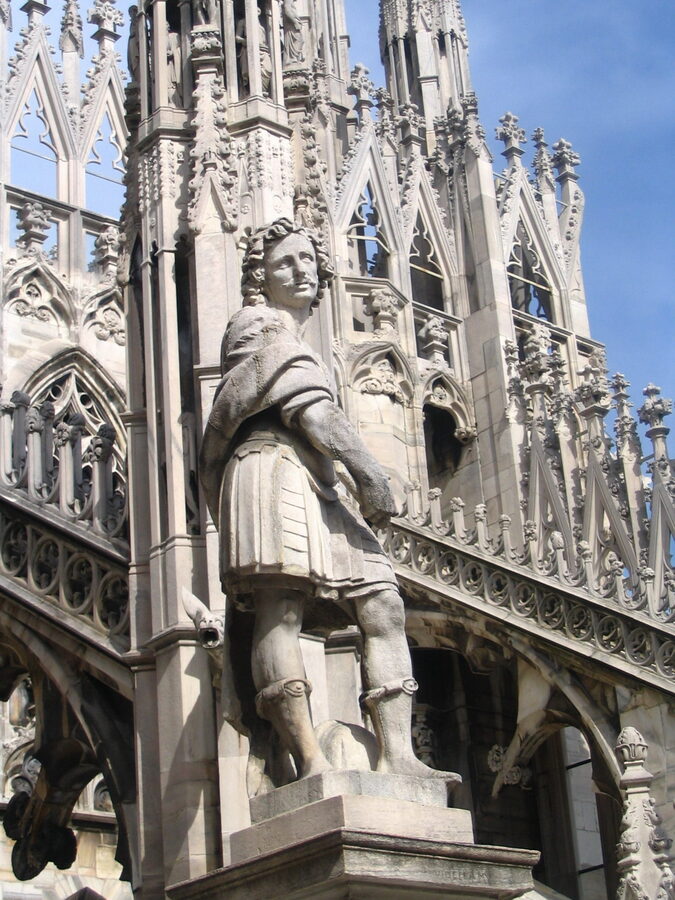
The terraces are a network of marble walkways at three different levels, threading between the buttresses, the pinnacles, and the 135 spires. You walk along the lead-and-stone ridges of the building itself. Statues that look small from the square are at your shoulder. You can see the chisel marks on individual saints. There are 3,400 of them up there in total.
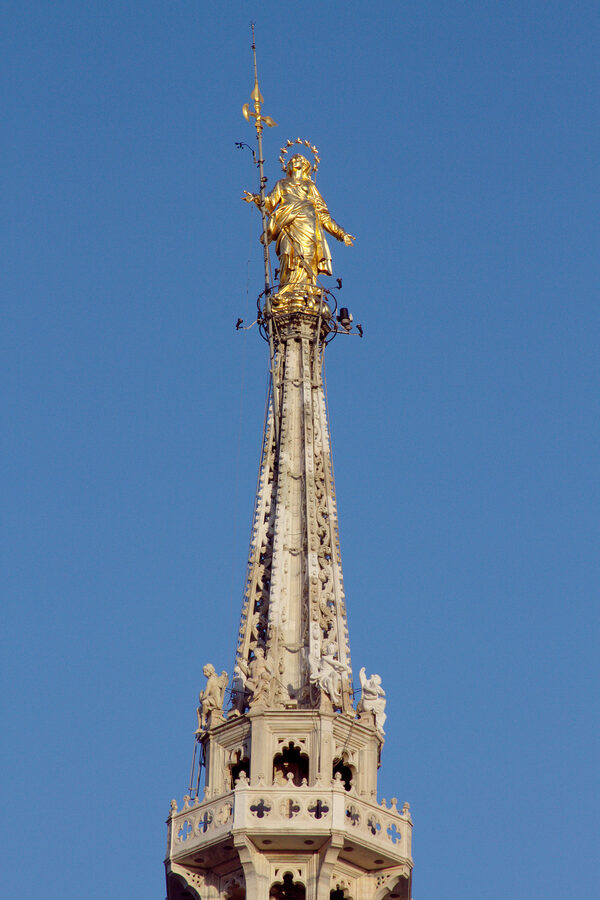
The Madonnina, the gilded statue of the Virgin atop the central spire, is the symbol of Milan. By city tradition no building in Milan is allowed to be taller without a copy of her on top: the 1960s Pirelli Tower has a small Madonnina; the 2010 Palazzo Lombardia has one too. The original up there is from 1774 and weighs about a tonne.
What to look for once you’re up there:
- The replacement marble. Look at any cluster of pinnacles closely. You’ll see panels of bright white next to panels of grey-yellow stone. The white ones were carved this decade. There’s an entire workshop, the Veneranda Fabbrica, that has done nothing else since the 1380s.
- The flying buttresses. You walk between them, not under them. There aren’t many cathedrals in Europe where that’s possible at building scale.
- The view of Galleria Vittorio Emanuele’s roof. The Galleria’s iron-and-glass dome is right there, below you to the north. From the ground it’s hidden; from the rooftop it’s a different building.
- The graffiti. Lower-level visitors have been carving names into the marble for centuries. Some of it is from the 1700s. The Veneranda Fabbrica are not happy about it but it’s part of the texture now.
A Short History (For the Curious)
The cathedral was started in 1386 by Gian Galeazzo Visconti, Duke of Milan, on the site of an earlier (5th-century) basilica. He was, characteristically for the Visconti, doing it as much for political reasons as religious ones: a giant Gothic cathedral signalled to Rome and Florence that Milan was a player.
The choice of marble (Candoglia, near Lake Maggiore, white shading to pink) was Gian Galeazzo’s. He gave the Veneranda Fabbrica del Duomo a perpetual right to quarry it, a right that still exists today. The marble travels along the Naviglio canals to Milan, the same route it took in the 1390s.
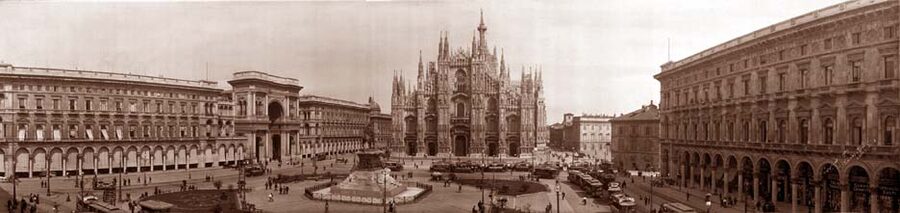
For the first four centuries the cathedral was a building site without a finished facade. Napoleon, of all people, finished the front. He pushed for completion before his 1805 coronation as King of Italy (he was crowned in the Duomo with the Iron Crown of Lombardy). The current facade was largely his project, finished around 1813.
The last bronze doors went on in 1965. Which is why the official line is that the cathedral was completed in the 1960s, and why a tour guide here will tell you, slightly tongue in cheek, that it took 579 years.
And the marble degradation issue isn’t new. Even by the 1880s the soot from Milan’s industrial age was visibly eating the soft Candoglia stone. The Veneranda Fabbrica started the rolling replacement programme then. They’ve been carving and swapping panels ever since. Modern Milan smog is gentler than it used to be (the city banned diesel in the centre in 2019), but the work continues.
For another deep dive into Italian Gothic cathedrals with rooftop access, our Florence Duomo and Brunelleschi’s Dome guide is the strongest counterpart. Florence is engineering theatre; Milan is endurance theatre. Both are worth climbing.
Mistakes to Avoid
Buying tickets at the door. The line for unticketed visitors is the worst of any major Italian attraction I’ve queued at. It’s also the only one where buying online genuinely costs the same. Same do-not-walk-up rule applies at the Anne Frank walking tour in Amsterdam, where the actual house is famously almost impossible to walk up to. There is no upside to walking up.
Booking the lift when you can do stairs. The lift is great if you need it. If you don’t, you’re paying €2-€4 extra for a slower experience and worse photographs. The stairs are part of the visit.
Skipping the museum. If your ticket includes the Duomo Museum (combo tickets do), and you’re not exhausted, give it 30 minutes. The same skip-the-museum-tax applies at the Royal Palace in Amsterdam, where the audio loop adds a half-hour most travellers think they will not use. It has the original 14th-century stained glass cartoons, gargoyles up close that have been swapped out from the roof, and the wooden model of the cathedral built in 1519 to plan the central spire. It’s the kind of museum you can do in half an hour and walk out understanding the building five times better.
Only doing it once. I’d happily go up the rooftop twice on a long Milan trip: once for the building, once for the view. Two-day combo tickets actively reward this.
Forgetting it’s a working church. Sunday mornings and major feast days have restricted access during Mass; the rooftop and museum are usually still open but the cathedral interior closes for liturgy. Plan around it.
Where the Duomo Fits in a Milan Itinerary
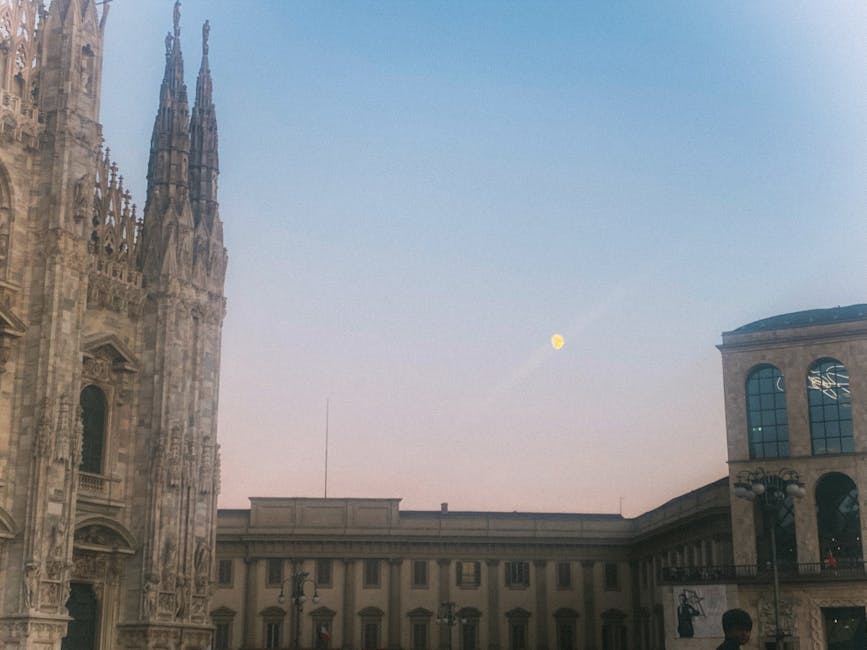
If you have one full day in Milan, the Duomo plus the rooftop plus the Galleria takes a comfortable morning. The afternoon belongs to Leonardo’s Last Supper at Santa Maria delle Grazie, which is a 15-minute timed slot and a totally different experience: tiny, contemplative, weirdly intimate after the cathedral’s scale. You have to book the Last Supper weeks ahead.
If you have two days, day two is for either Sforza Castle and Brera (city day), a Lake Como day trip if the weather is on (the train takes about 40 minutes to Como), or the hop-on hop-off bus if you’d rather a passive overview of the city, though my honest read on the Milan HOHO is that the city is too compact and too pedestrianised for it to really pay off.
If you’re coming to Milan from Rome and have already done the St. Peter’s dome climb, you’ll find Milan’s rooftop a softer experience: less puff, more sprawl, more time outside in the open air. They both belong on the same trip if you can manage it.
Practical Notes Before You Go
- Bag check is at the cathedral entrance. Knives and large bags refused. There’s no left luggage on site; use the lockers at Centrale or the small shops around the piazza.
- Dress code is enforced. Shoulders covered, skirts/shorts to the knee. They will turn you away. A scarf in your bag in summer is the easiest fix.
- Photographs allowed everywhere except a few altar zones. No flash, no tripods.
- The crypt is wheelchair-accessible via lift. The terraces are not (the lift only reaches the first level; getting higher needs stairs). The Veneranda Fabbrica have details on accessibility on their site.
- Bathrooms. There are toilets in the museum and a small set near the lift entrance to the terraces. None on the rooftop itself; go before you go up.
- Pickpockets in the piazza. Standard advice for Italian piazzas, but the Duomo’s is one of the worst. Keep your phone in a zipped bag.
One Last Thought
The thing that surprised me most about the rooftop, the second time I went up, was how few of the spires you can actually see from the ground. Walking the terraces, you realise the cathedral’s full silhouette is something you only really get from up there or from a drone. The architects 600 years ago were designing for a view that almost no one would have for centuries. Now you can have it for €18 and a steady ten-minute climb.
If you only do one Milan thing, do the Duomo terraces. Then add the museum if you have time, the cathedral if you have more, and the Last Supper on a different day. And if you’re stitching together an Italy trip with rooftop climbs, the Florence Duomo’s Brunelleschi dome climb and Rome’s St. Peter’s dome finish a hat-trick that’s hard to beat. For the day-trip side, Lake Como pairs especially well with a morning in Milan, and the Chianti day from Florence is the same shape further south. The cities link up better than the train timetable suggests.