
“The roads in Como can be a bit narrow,” wrote one tour-bus passenger in their review last year, “so you need a very good driver.” It’s the kind of detail that doesn’t make it onto Instagram. The lake is famous for villas and movie-star celebrities, but it’s also a working town of about 80,000 where bus drivers learn the lakeshore curves by heart, ferry captains time their docking against the wakes of the next boat in, and locals queue at the tabaccheria for the same paper as the morning before.
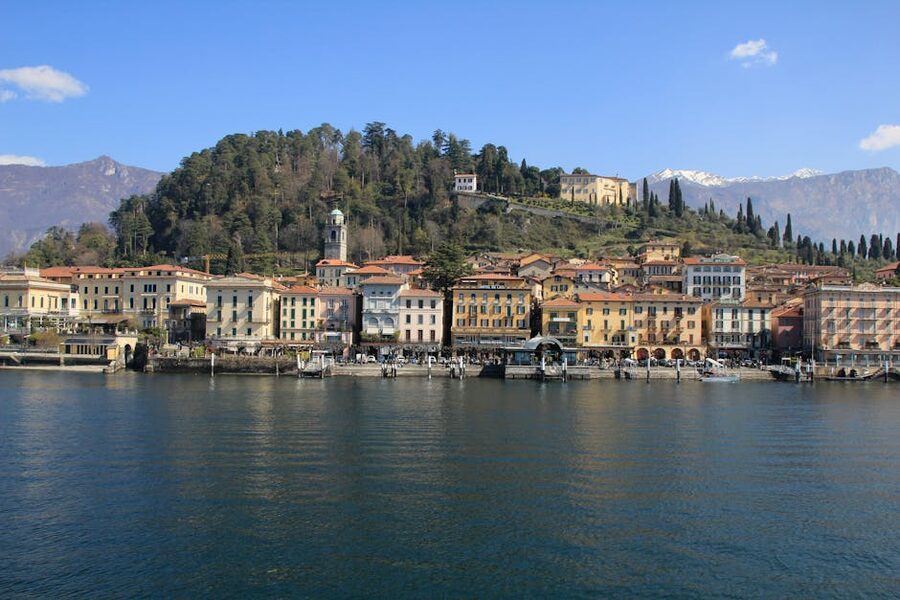
That’s the version of Lake Como that survives a day trip from Milan. Not the postcard. The lake is just over an hour’s train ride away, the towns are walkable, and the ferry network does most of the work for you. The closest mainland-Spain equivalent is the Montserrat day trip from Barcelona, where the train-and-cable-car combination does most of the heavy lifting on its own. This guide is for the version of the trip you can do without a private driver, plus the three guided coach-and-boat tours worth booking if you’d rather hand the logistics to someone who knows the curves.
In a hurry? Three day-trip picks from Milan
- Best all-rounder (around $90): Coach from Milan to Como, private boat cruise, free time in Bellagio. Book on GetYourGuide
- Bus and private boat combo ($112): Same shape, slightly tighter itinerary, includes Varenna stop on some dates. Book on GetYourGuide
- Two countries in one day ($95): Como, Bellagio, plus a border crossing into Lugano, Switzerland. Book on GetYourGuide
Should you go guided or do it yourself?
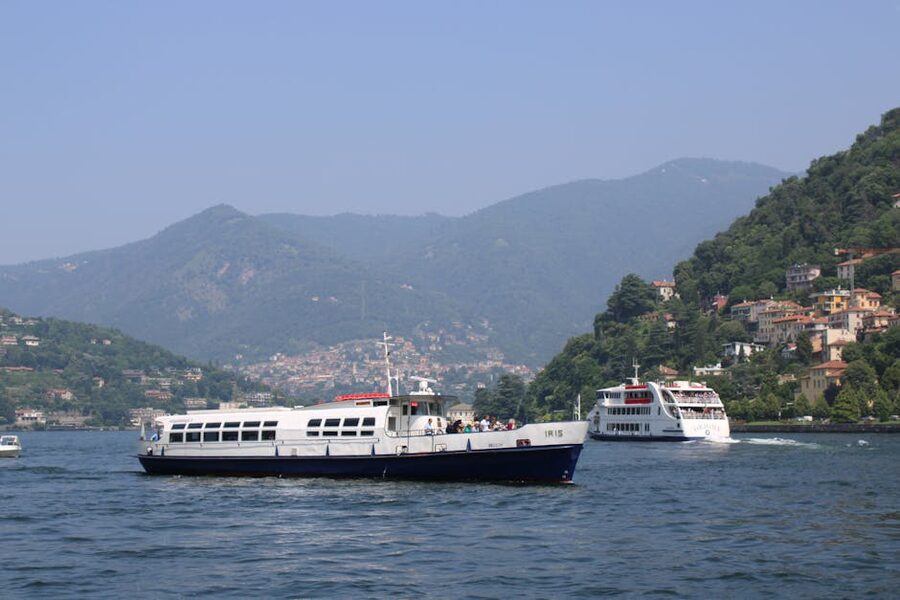
The real answer depends on whether you can read an Italian ferry timetable without a stress headache. The do-it-yourself train-and-ferry route is cheaper, more flexible, and lets you stay until sunset. The guided coach tours are easier, faster on the road, and put you on a private boat that goes places the public ferry doesn’t, like the front gardens of Villa del Balbianello.
Here’s the trade-off in one paragraph. A second-class train from Milano Centrale to Como San Giovanni runs roughly €12 and takes 40 minutes, with departures throughout the day. A guided coach tour runs most of the day, costs three to five times as much, and removes every decision you’d otherwise make about ferries, lunch, and what to skip. If you’ve already had a long week of solo train-juggling in Italy, paying for the bus is not lazy. It’s reasonable.
The one scenario where guided is clearly the right call: you only have one day, you want to see Como, Bellagio, and Lugano, and you don’t want to rush. The public ferries can’t link those three in time. A coach-and-boat day does it, just.
The do-it-yourself route, town by town
If you’re going self-guided, the route is fixed by the geography of the lake. Milan to Como by train, ferry up the western arm to Bellagio, ferry across to Varenna, train back to Milan. You can do it in reverse. Don’t try to add a fourth town.
Como (the city)
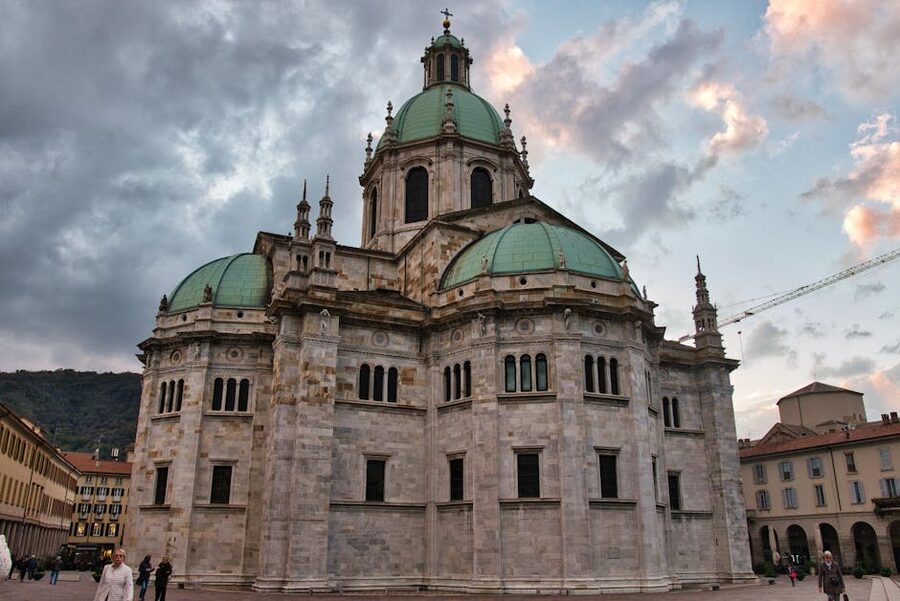
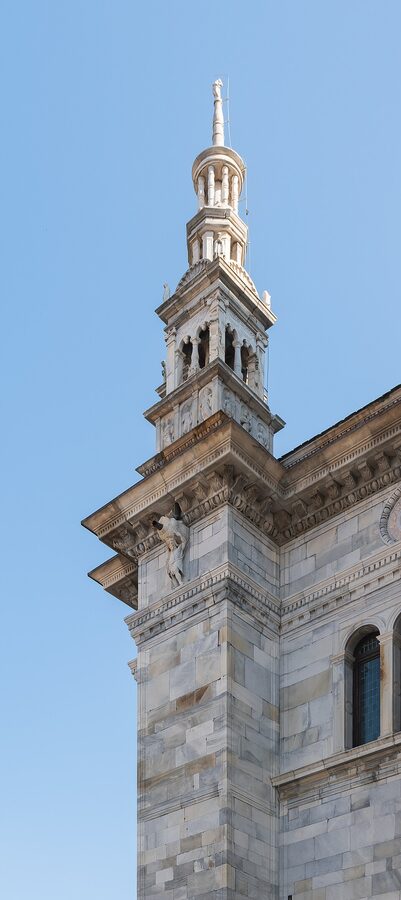
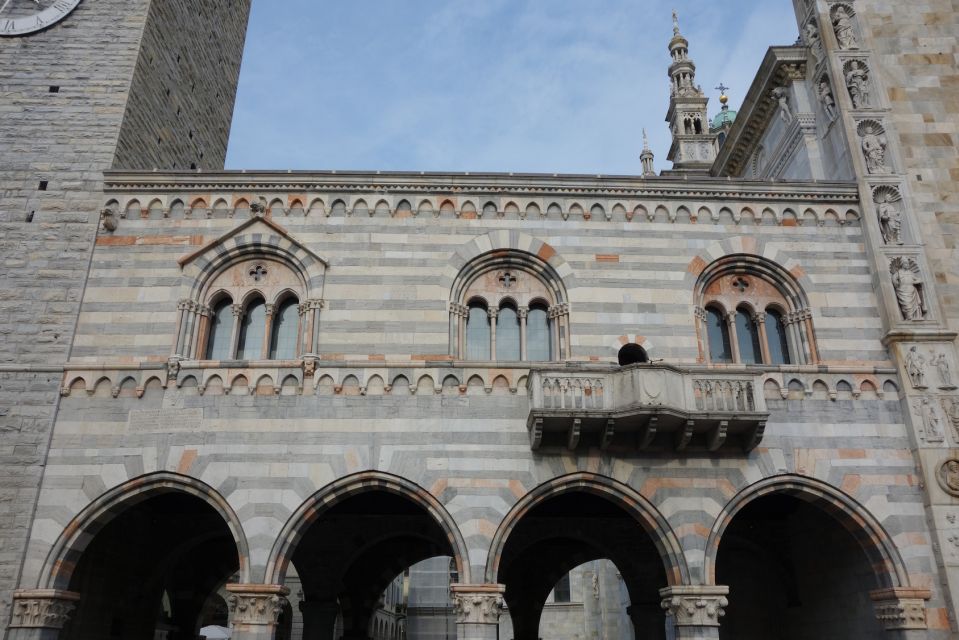
Como is the lake’s biggest town and the place most day-trippers underestimate. It’s not just a transit point. The cathedral on Piazza del Duomo took roughly four centuries to finish, started in Gothic in 1396, capped with a Baroque dome in 1770, and the carving on the facade includes statues of two Roman pagans, Pliny the Elder and Pliny the Younger, on a Catholic cathedral. That’s the kind of mongrel architectural history you also see at the Duomo of Florence, where Brunelleschi’s dome capped a Gothic shell two centuries after the church was started.
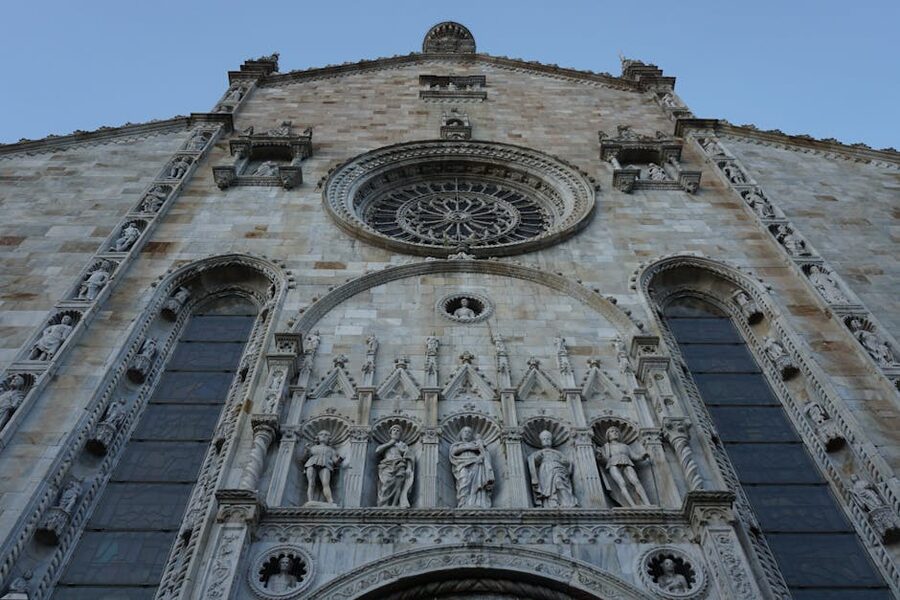
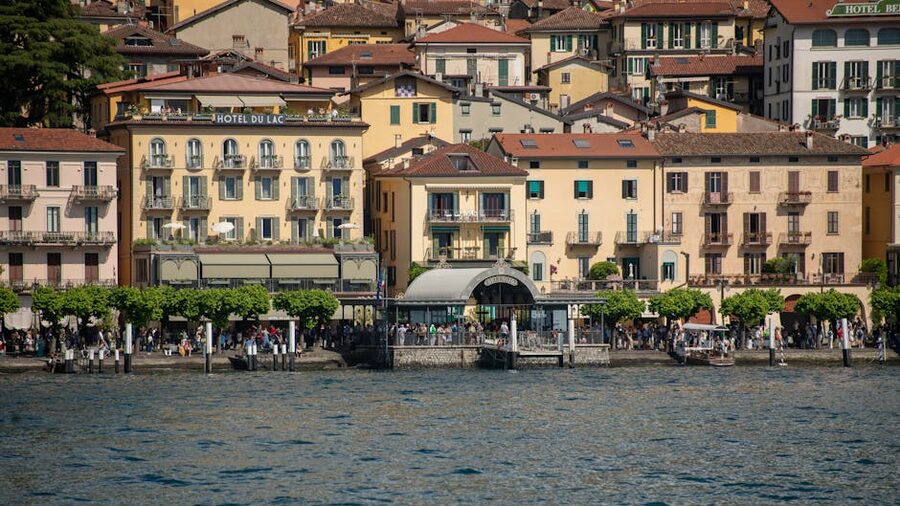
From the cathedral, walk five minutes downhill to Piazza Cavour and you’re at the ferry pier. Buy your fast-service ticket to Bellagio in person, look at the timetable, and if you have an hour to spare before the next departure, take the funicular up to Brunate. It’s seven minutes each way, costs a few euros, and gives you the panorama view that does most of the heavy lifting on Lake Como Pinterest boards. Skip it if your ferry leaves in under 90 minutes. There isn’t enough time and you’ll feel rushed both directions.
Bellagio
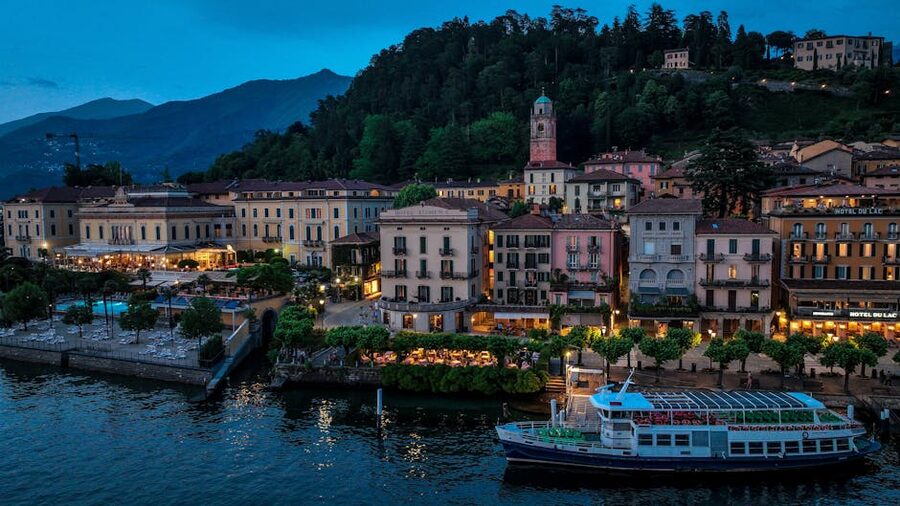
Bellagio is where the lake splits in two. The town occupies the tip of the promontory, which means every street that runs uphill from the waterfront opens onto a view of one of the two arms. The painters-and-water aesthetic translates almost directly to Giverny outside Paris, where Monet built his lily-pond garden specifically because the water-side village pulled him. It’s also the most visited town on the lake, which means it’s the most expensive and the most crowded. Both of those things are true and neither cancels out the fact that the place is genuinely lovely.
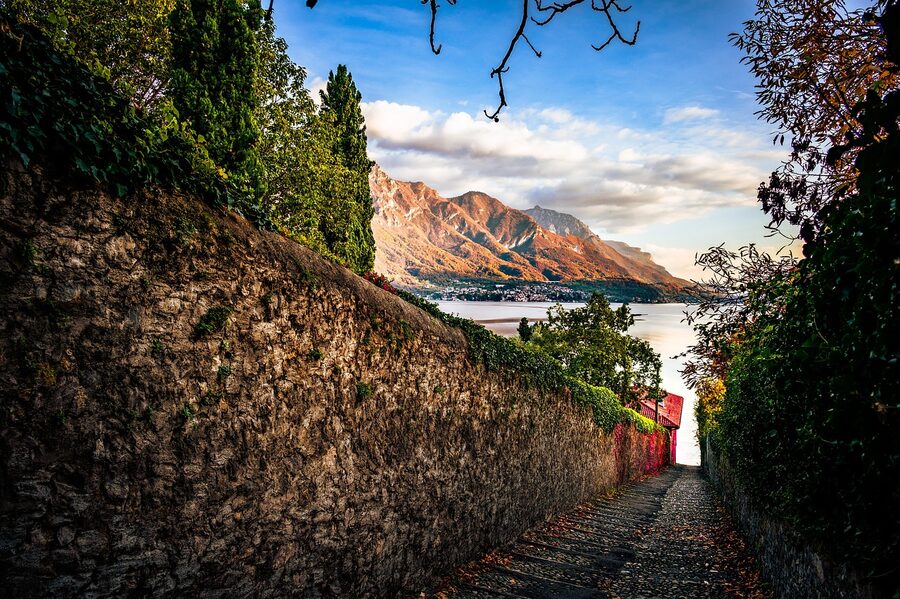
The Salita Serbelloni is the cobblestone staircase that climbs from the ferry dock through the centre of town. It’s steep, paved with rough granite, and lined with shops selling silk scarves, leather goods, and a lot of olive-oil tasting sets. Bring a water bottle and don’t wear new shoes. The stones are polished smooth by 200 years of foot traffic, which is poetic until you slip in a drizzle.
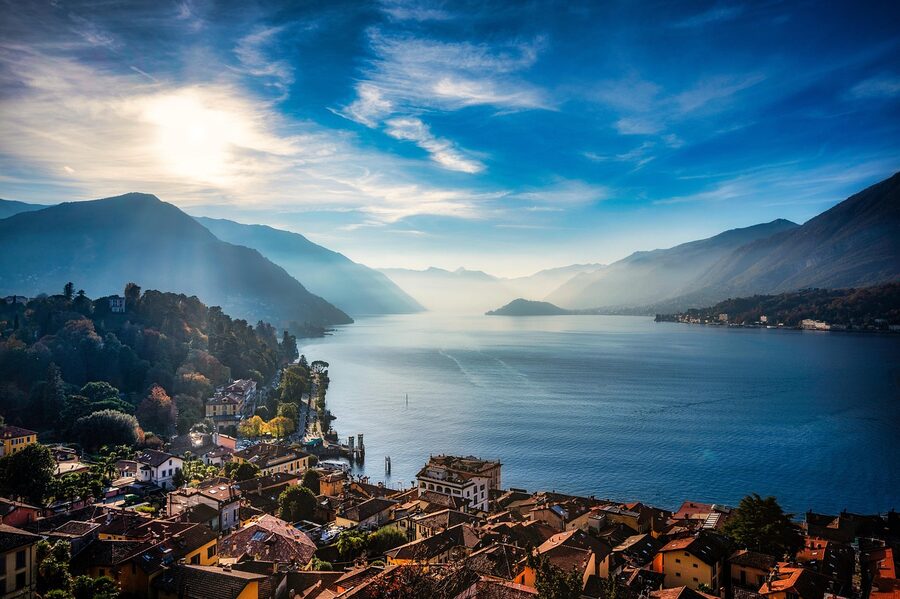
The two villas worth your time are Villa Melzi and Villa Serbelloni. Villa Melzi’s botanical gardens are open daily through the warm season, cost a few euros, and run along the waterfront south of the ferry pier. The villa-plus-garden formula is identical to what makes the Loire Valley chateau day trips work; the architecture matters but the gardens are usually what travellers remember. Villa Serbelloni is the one on the headland with the famous gardens, and you can only enter on a guided tour at fixed morning and afternoon slots. Get to the visitor centre half an hour early because numbers are capped.
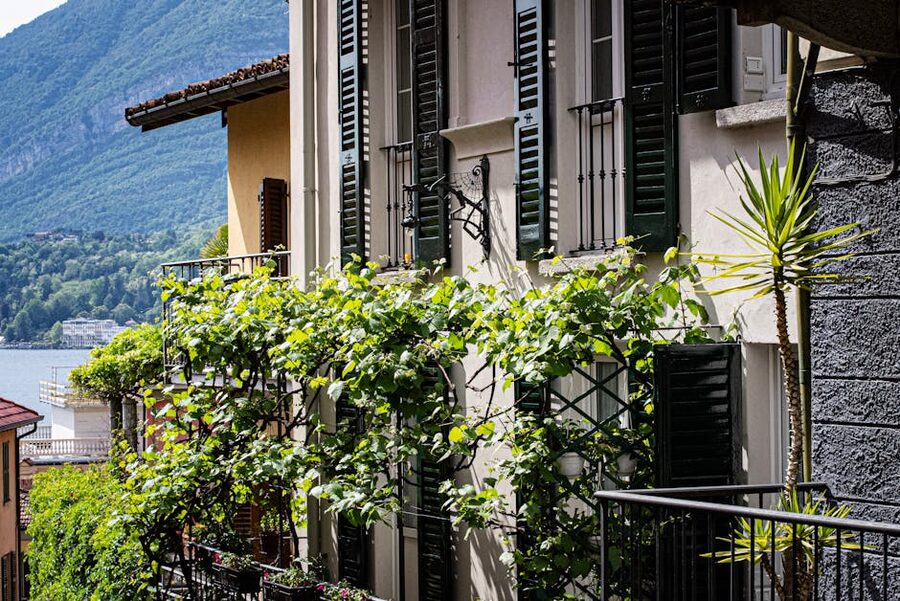
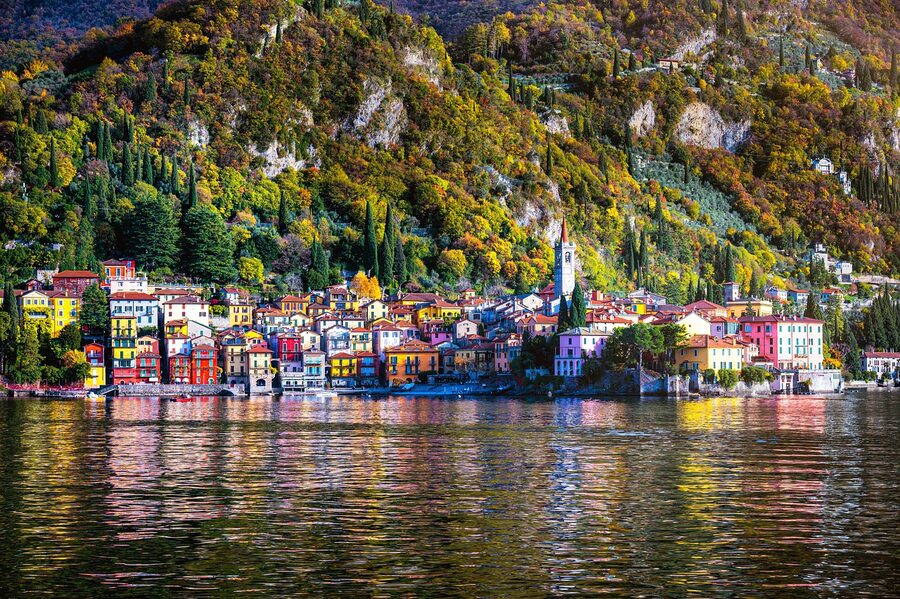
Varenna
Varenna is the quiet one. It’s directly across the lake from Bellagio, the ferry takes 15 minutes, and most people who visit Bellagio never see it. The same skip-the-headline-stop instinct rewards travellers at Zaanse Schans outside Amsterdam, where the windmills get all the photos but the working bakery and clog workshop hold their own. That’s the tell. Varenna has a railway station, which means you can take a train back to Milan from there without retracing your route. It’s the smartest way to end the day.
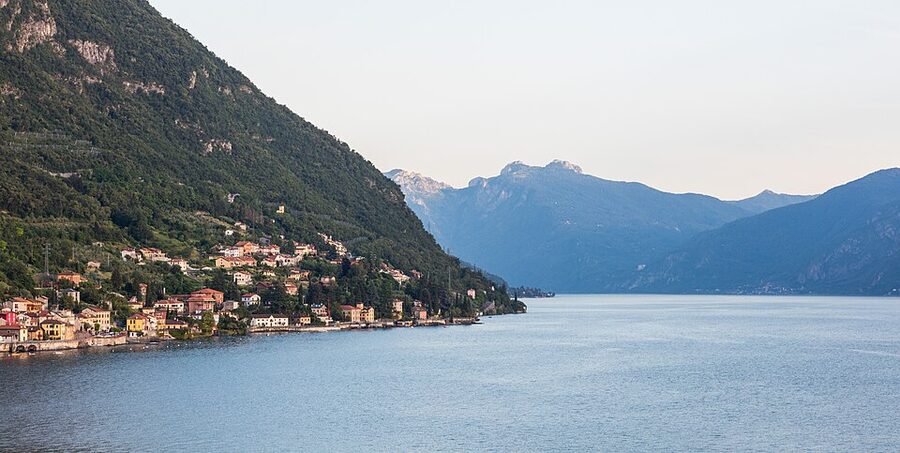
The Passeggiata degli Innamorati (“Lovers’ Walk”) is a raised concrete path that runs along the lake from the ferry dock to the train station. It takes maybe seven minutes if you’re moving, longer if you stop at every bend. Past the path, the old fishermen’s quarter at Riva Grande has a set of wide stone steps that go straight into the water. Locals still swim from them in summer.
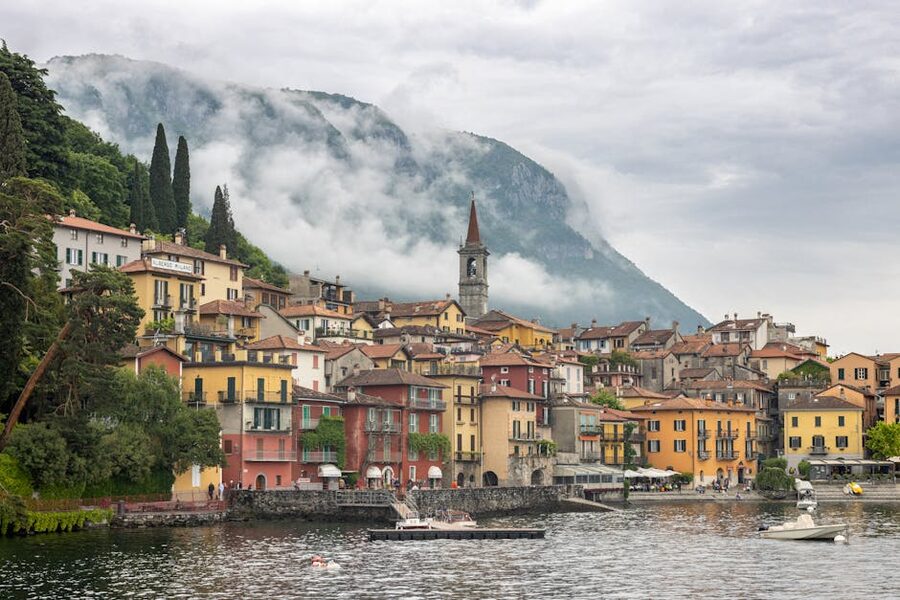
Villa Monastero is the headline attraction. It’s a former Cistercian convent turned private villa turned public museum, with botanical gardens that run for two kilometres along the shore. The arrive-early-for-the-gardens rule applies just as strongly at the Keukenhof flower gardens outside Amsterdam, where the morning slots are genuinely calmer than the post-lunch crowd. The interior is interesting but skippable if you’re short on time. The gardens are not. Open most days, closes around 7 or 8pm in summer, costs around €10 with garden access.
The trains and ferries, in plain English
Trenord runs the regional trains. Trenitalia runs the longer-distance ones. For a Milan-Como-Varenna day trip, you only need Trenord. Tickets are sold online at trenord.it or in the machine at the station, and they’re cheap enough that you don’t need to book ahead. Same buy-on-the-day rhythm works on the Toledo train from Madrid, where the high-speed seats fill but the slower regional service usually has space at the platform. Validate the paper ticket at the green or yellow box on the platform before you board, or get a fine. App tickets validate themselves.
- Milano Centrale to Como San Giovanni: direct, about 40 minutes, second class around €12.
- Varenna-Esino to Milano Centrale: direct, about 65 minutes, second class around €7 to €12 depending on time of day.
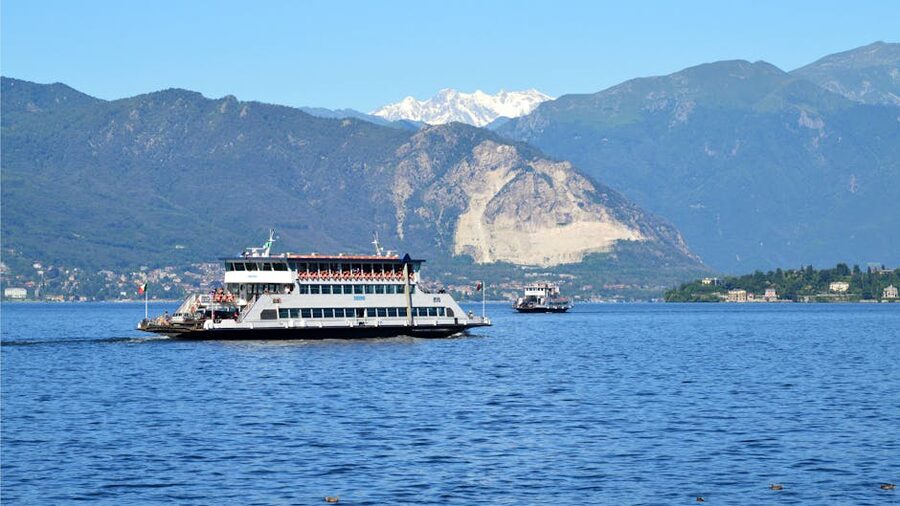
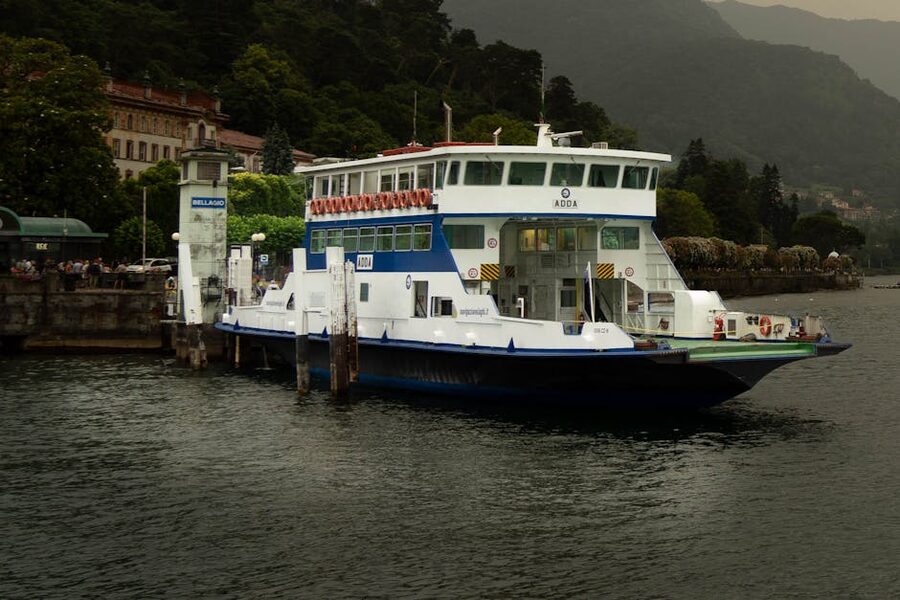
- Como to Bellagio fast ferry: 45 minutes. Buy in person at the Como pier. Around €15 to €18 one way.
- Bellagio to Varenna ferry: 15 minutes fast service, 30 minutes slow. About €5 to €7.
The total ferry-and-train spend is around €40 to €50 per person if you take the fast services and skip the funicular. The Como ferry company (Navigazione Lago di Como) is on strike often enough that it’s worth checking their site the night before. If they’re striking, the train still runs to Varenna and you can do a Varenna-only day, which is a perfectly good fallback.
Three guided day trips worth booking
If you’d rather hand off the logistics, these are the three coach-and-boat tours from Milan we keep coming back to. All three start at or near the central train station early in the morning, and all three return between 6pm and 8pm. They cover the same general shape with different add-ons.
1. From Milan: Como & Bellagio with Private Lake Como Cruise: ~$90
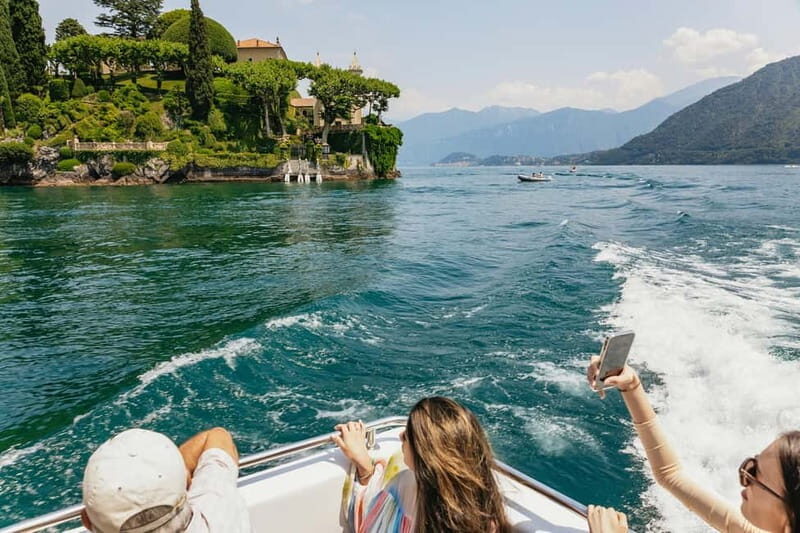
This is the default pick for a first-timer who wants Bellagio and the lake without working out the ferry schedule. Our full review covers the small-group format and what the private cruise actually includes. Reviews repeatedly praise the guides by name, which is unusual on a coach tour.
2. From Milan: Lake Como & Bellagio by Bus & Private Boat Tour: $112
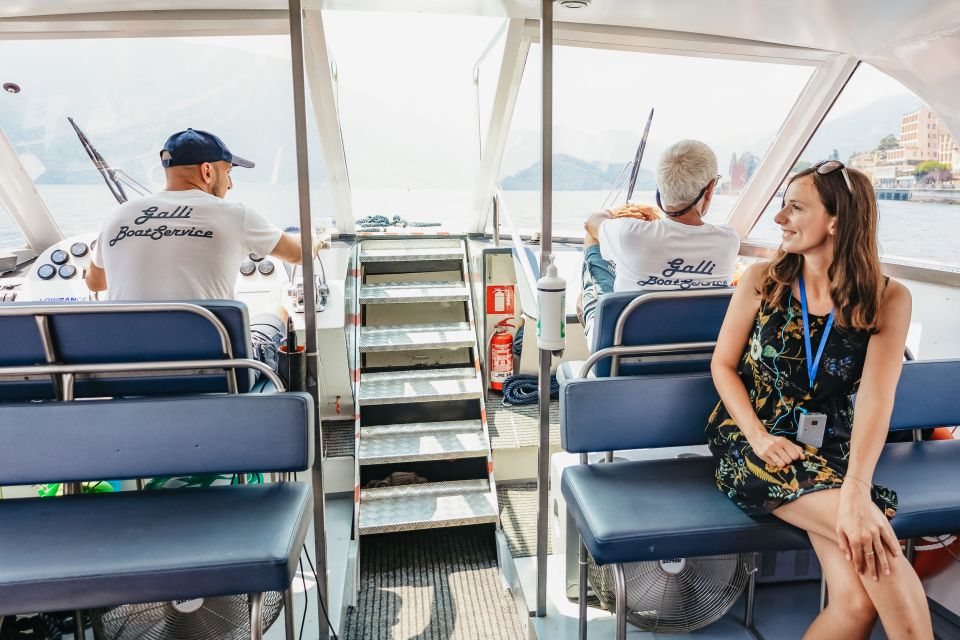
The pricier sibling of the first card. The detailed walkthrough is in our review, including the Villa Olmo stop and how the small-group bus pickup works at Milano Centrale. Pick this if you want a guide who’ll explain the architecture as you go.
3. From Milan: Como, Lugano and Bellagio Exclusive Boat Cruise: $95
Eleven hours, two countries, and a private boat. Our review walks through the border crossing and how much time you actually get in each town. Bring your passport even inside the Schengen Area, because spot checks still happen at the Lugano border.
What to eat (and where to skip)
Lake Como food is northern Italian, butter-and-rice country, with a freshwater fish bias. The two dishes worth trying that you’ll only see here are missoltini (sun-dried shad, pressed with bay leaves and served with polenta) and risotto al pesce persico (perch fillets fried in butter on a bed of saffron risotto). Both are old. Both are still served at the lakefront restaurants. Both are usually overpriced when the menu is in four languages.
If you want a proper Como meal at non-tourist prices, walk five minutes inland from the cathedral. Osteria del Gallo on Via Vitani is the obvious pick, with handwritten menus, no pretence, and the same lasagne the locals eat. In Bellagio, the alleys above Salita Serbelloni hide places like Trattoria San Giacomo where the menu is in Italian only and the bill arrives without you asking. In Varenna, Al Prato near the church is the long-standing local recommendation. Reservations help in summer.
The same instinct that works in Florence applies here. If you’re craving more food-focused content, our piece on Florentine food tours goes deep on the cucina povera side of Tuscan eating, which contrasts neatly with Como’s lake-and-butter cuisine.
How to time the day so it actually works
The single most common trip-killer is leaving Milan too late. Aim to catch one of the early morning trains, do Como first, then ferry-hop. Here’s the shape that works:
- Early train Milan to Como. Around 7:30 or 8am from Milano Centrale.
- Walk Como. Cathedral, lakefront, fast-ferry tickets bought in person at the pier.
- Mid-morning ferry to Bellagio. Roughly an hour on the water, including dock turnaround.
- Lunch and afternoon in Bellagio. Walk above the main staircase, eat where the menu is in Italian.
- Mid-afternoon ferry across to Varenna. Fifteen minutes.
- Three hours in Varenna. Villa Monastero gardens, Lovers’ Walk, dinner.
- Evening train back to Milan. Direct from Varenna-Esino, home well before 10pm.
Common mistakes to avoid:
- Buying the slow ferry by accident. The online portal defaults to slow service. Buy fast at the dock.
- Trying to add Menaggio. It’s a fourth town and there isn’t time.
- Booking a Villa Serbelloni guided tour without arriving 30 minutes early. They cap the numbers and once it’s full, you’re out.
- Eating lunch on the Bellagio waterfront just because you’re hungry. Walk three minutes inland.
- Skipping Como city. It’s the historical anchor of the trip and most day-trippers race straight through.
A bit of context that helps
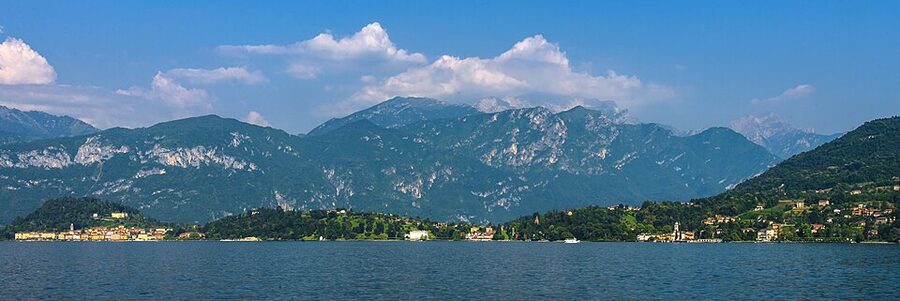
Lake Como sits at the foot of the Italian Alps, formed about 10,000 years ago when a glacier carved out the Y-shaped basin. It’s the third-largest lake in Italy and one of the deepest in Europe at over 400 metres. The Romans had villas here. Pliny the Younger wrote letters from his place on the lake describing the same view you’re now looking at, which is the kind of continuity you don’t get often.
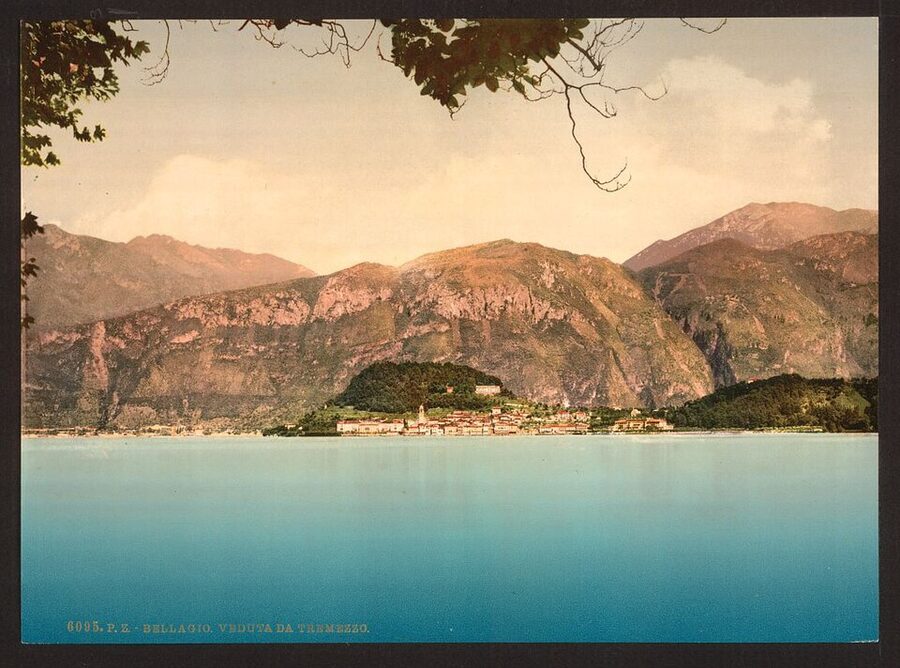
The villas you’ll see along the shore mostly date to the 1700s and 1800s, when the lake became a summer retreat for Milanese aristocracy and then European royalty. Villa Carlotta near Tremezzo, Villa Melzi in Bellagio, and Villa Monastero in Varenna are the three open to the public. Villa del Balbianello, the famous one on the headland, is open from late March to early November and reaches it by boat or a 1-kilometre uphill walk from Lenno.
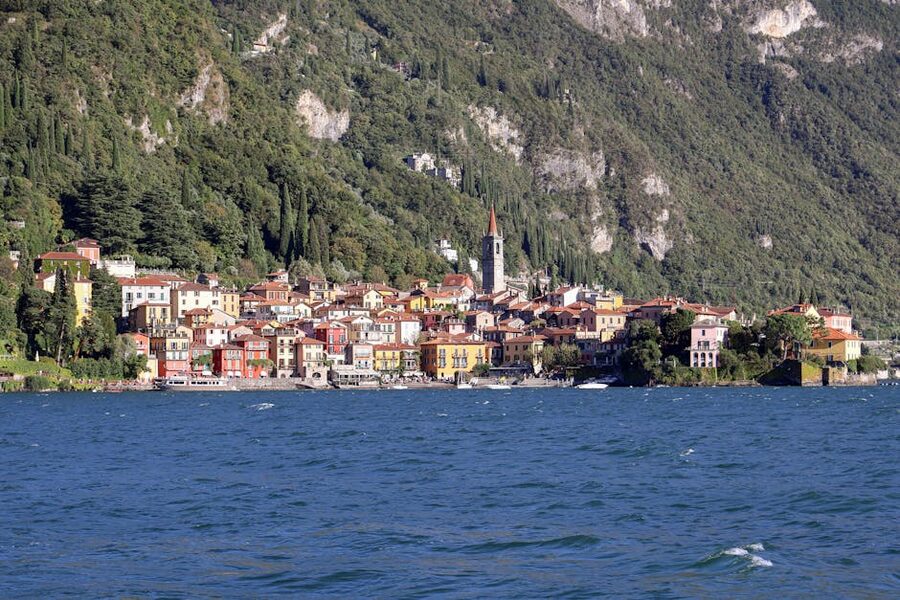
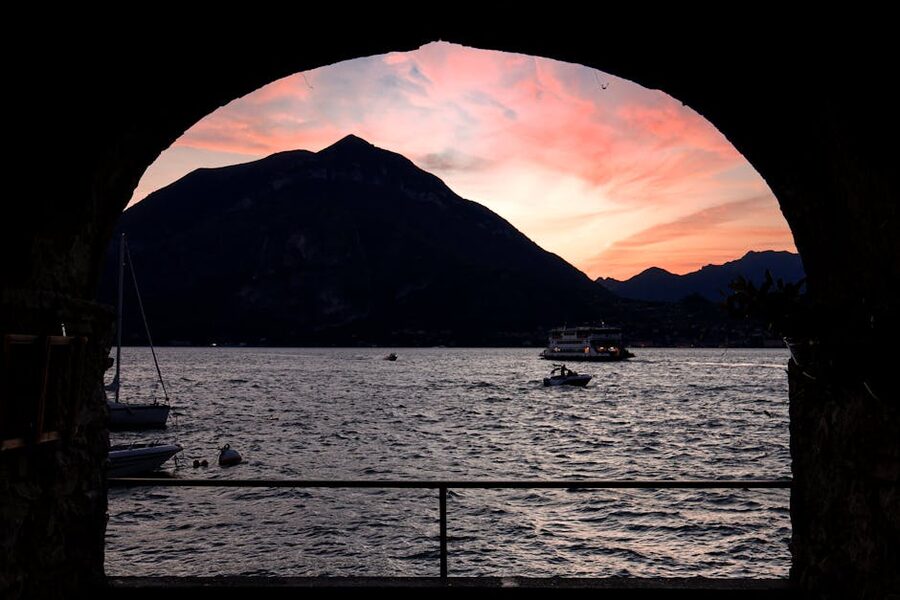
The lake also generates its own weather. Mornings are calm and misty, afternoons get a steady wind from the south called the Breva, evenings switch to the Tivano blowing down from the north. Ferry captains know the schedule and adjust docking accordingly. If you’re prone to seasickness, take the slow service in the afternoon. The fast hydrofoil chops through the Breva and bounces.
One day not enough?
If your schedule allows, an overnight in Varenna is the best add-on you can make. Book ahead. The good places sell out months in advance for high season. Hotel Royal Victoria, Hotel Olivedo, and a handful of small B&Bs around Riva Grande are the usual recommendations. Staying overnight gives you a slow morning on the lake, which is genuinely a different experience from a day trip.
If you’re chaining day trips, Lake Como pairs well with the wine-country pattern of a Chianti day trip from Florence later in your itinerary. Both are coach-or-self-guided, both are about an hour from a major city, both are easy to overload. Treat them as the same kind of trip and pace yourself accordingly. The Murano-Burano-Torcello pattern of Venice’s lagoon islands works the same way: a single full day, three towns, public boat doing most of the work. If you’re already eyeing other Venetian water trips, a gondola ride sits at the opposite end of the price spectrum.
Where to go next
Day trips from Italian cities have a rhythm: a coach or train, a couple of villages, a slower lunch, a long way home. If you’re staying in Milan and want a city day instead, the same logic of “go early, book the timed entry, eat where the menu isn’t translated” applies to seeing Da Vinci’s Last Supper and climbing the Duomo terraces. The Milan hop-on bus is also worth a look if you’ve decided not to leave the city, though we’re not entirely sold on it. Different city, same instinct: get out before the crowds, eat where the locals do, leave when the light goes.