
The horseshoe arches inside the Synagogue of Santa María la Blanca were built in the 1180s by Christian craftsmen, in the Islamic Mudéjar style, for Jewish patrons. All in the same room. That room is still standing in Toledo, about an hour south of Madrid, and it tells you everything you need to understand about why this city is the most underrated day trip in Spain. Toledo isn’t a side trip from the capital. It’s the capital Madrid replaced.
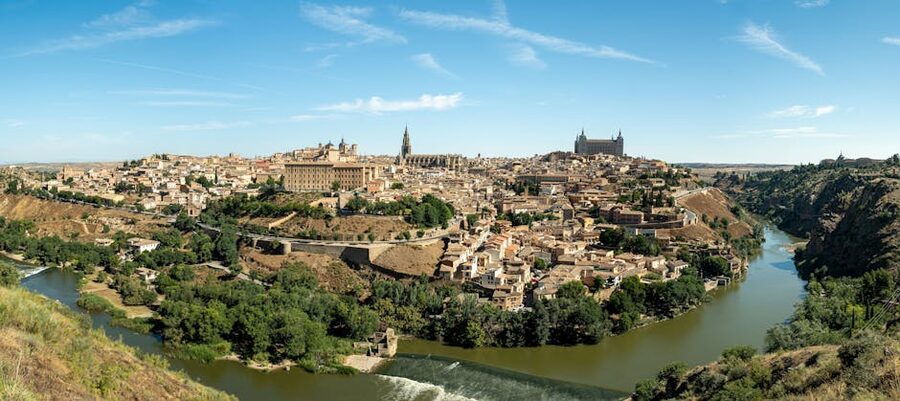
I’m going to walk you through how to actually book a Toledo day trip from Madrid, which tour to pick depending on how much time you have, and what to do once you’re inside the walls. The booking part is simple. The “what to actually see” part is where most travellers leave 90% of Toledo on the table.
In a hurry? Three Toledo day trips that work
- Combined Segovia + Toledo from Madrid ($48): Best value if it’s your only day-trip slot. Two old capitals, one bus, knowledgeable guide. Check availability on GetYourGuide.
- Toledo with Cathedral, Synagogue & Santo Tomé ($81.20): The full multi-faith circuit with skip-the-line entries. Best if you only care about Toledo. Check availability on Viator.
- Toledo Half or Full Day ($64): Pick the half-day if you’ve got an evening flamenco show in Madrid; pick the full day to actually breathe. Check availability on Viator.
Why Toledo isn’t really a day trip
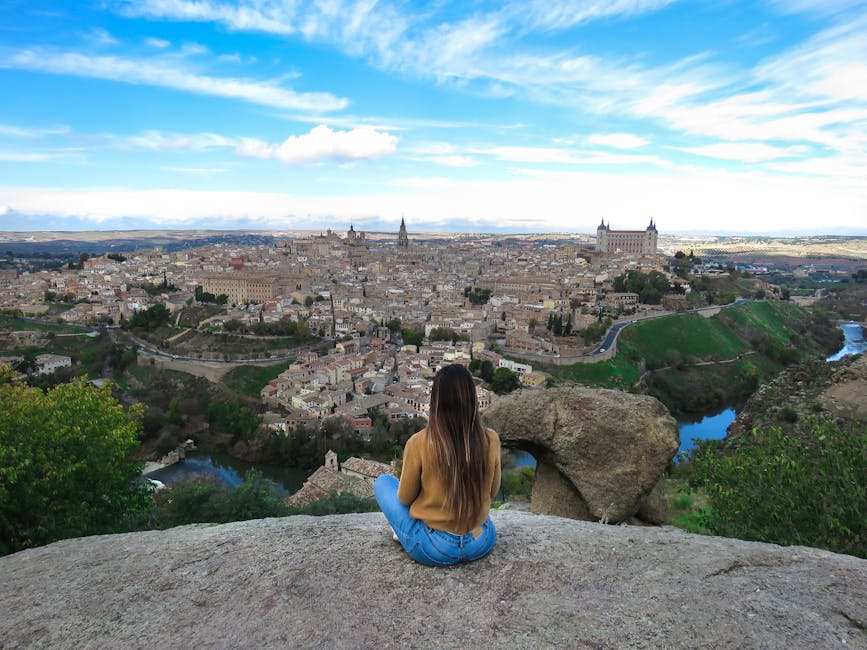
Most of the capital cities you visit in Europe replaced something. Madrid replaced Toledo. Until 1561 the Spanish royal court was based in Toledo, not Madrid, and Felipe II only moved it because the city was too small to hold an expanding empire’s bureaucracy. Toledo was the political, religious and cultural heart of Castile from the 11th century, and the architectural heart of three faiths going back further than that. The Alhambra in Granada is a Moorish palace. Córdoba’s Mezquita-Catedral is a mosque inside a cathedral. Toledo is something rarer: a whole city where Muslim, Jewish and Christian buildings sit five minutes apart, often in the same architectural language.
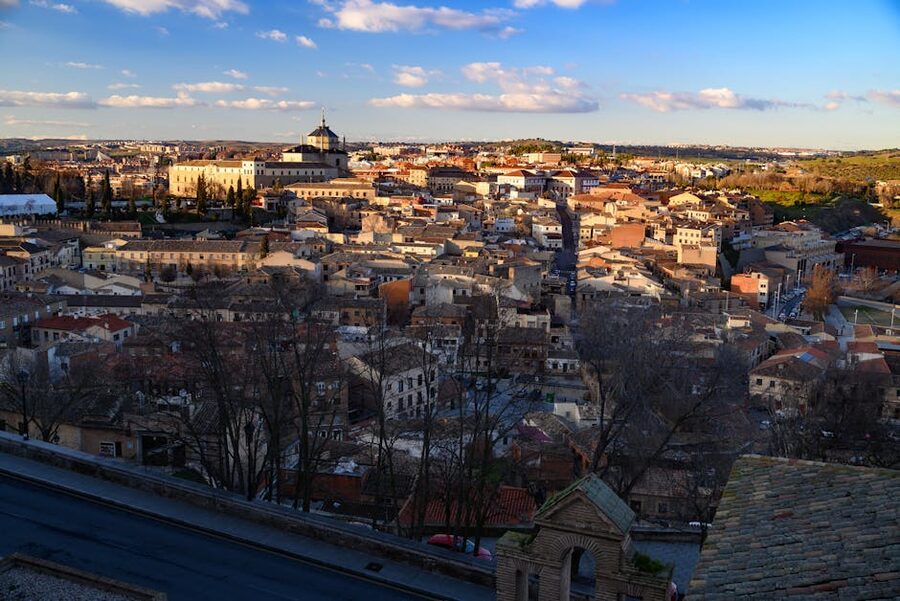
The day trip market sells Toledo as a checklist: cathedral, Alcázar, El Greco, lunch, bus back. That’s a fine half-day. But the city the tours don’t lean into is the Mudéjar one. Mudéjar is the architectural style that Christian Spain kept building in after the 1085 reconquest of Toledo, using Muslim craftsmen and their geometric vocabulary on Christian and Jewish buildings. It’s not Moorish. It’s not Romanesque. It’s the in-between thing that only really happened here.
How to get to Toledo from Madrid
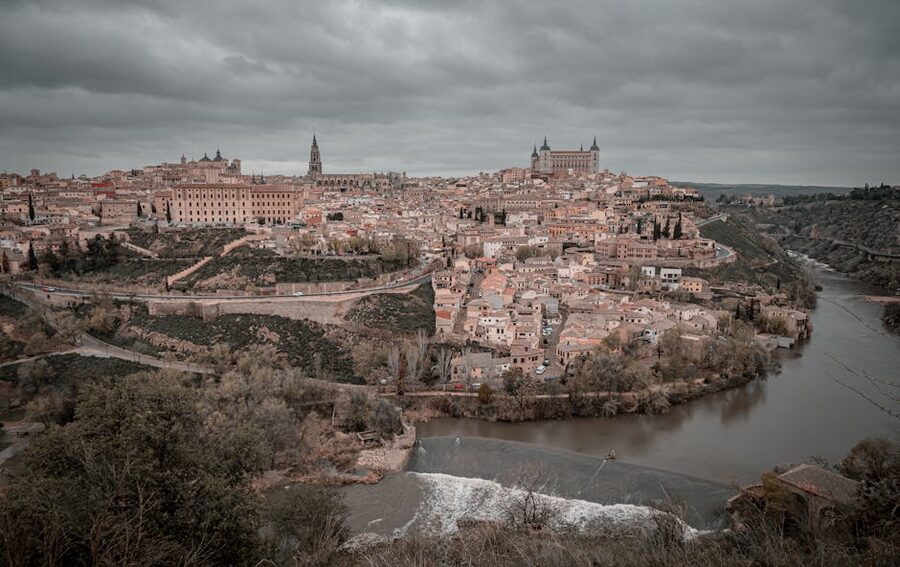
The two real options are AVE high-speed train, or coach tour. There’s also a slower regional bus, but I’d skip it.
AVE train: Madrid Atocha to Toledo in 33 minutes flat. Trains run roughly hourly. Round-trip fares start around €22 if you book a few days ahead, more if you book day-of. The Toledo train station is itself a small Mudéjar-revival monument worth ten minutes (built in 1919, all painted ceilings and stained glass and azulejos). Walk-in to the city centre is about 25 minutes uphill, or there’s a local bus and taxi rank outside.
Coach tour: Pick this if you don’t want to plan anything, or if you want a guide narrating on the bus. Most leave from Plaza de España or Plaza Mayor between 8 and 9am. The advantage isn’t the transport. It’s that the tours bundle skip-the-line entries to the cathedral and the synagogues, which can be a 40-minute time saving if you’re trying to do everything in one day.
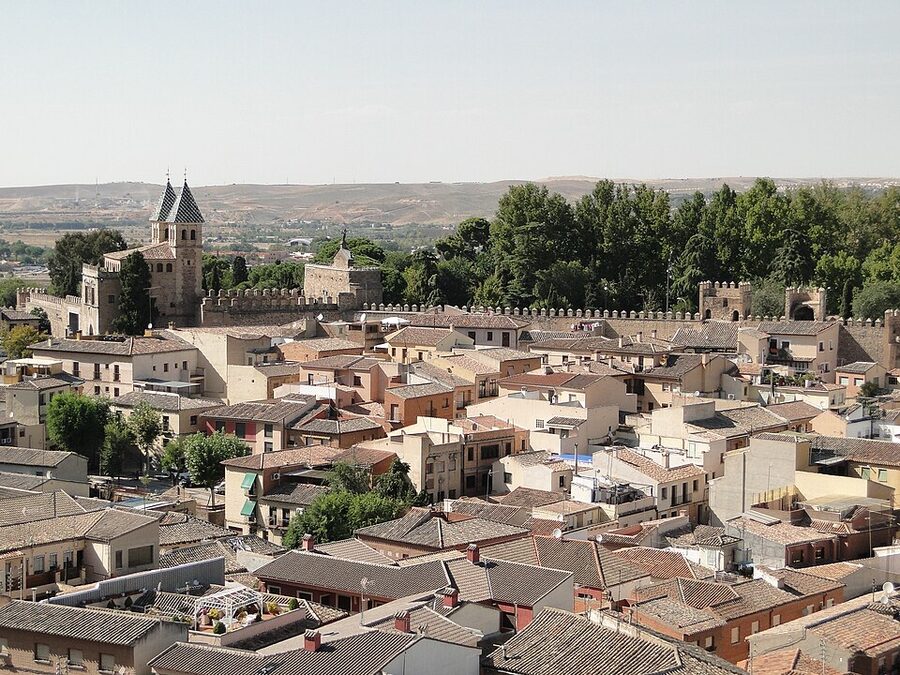
If you’re already comparing day trip options, the train-versus-tour calculation here is the same one you’d run for Segovia and Ávila from Madrid: tour saves you the planning and gets you queue-skip, train gives you control over your day. Toledo’s old town is small enough to walk in three hours, so a half-day with the train is genuinely viable. For Segovia plus Toledo combined into one day, you really do want a coach.
Best Toledo day trips from Madrid
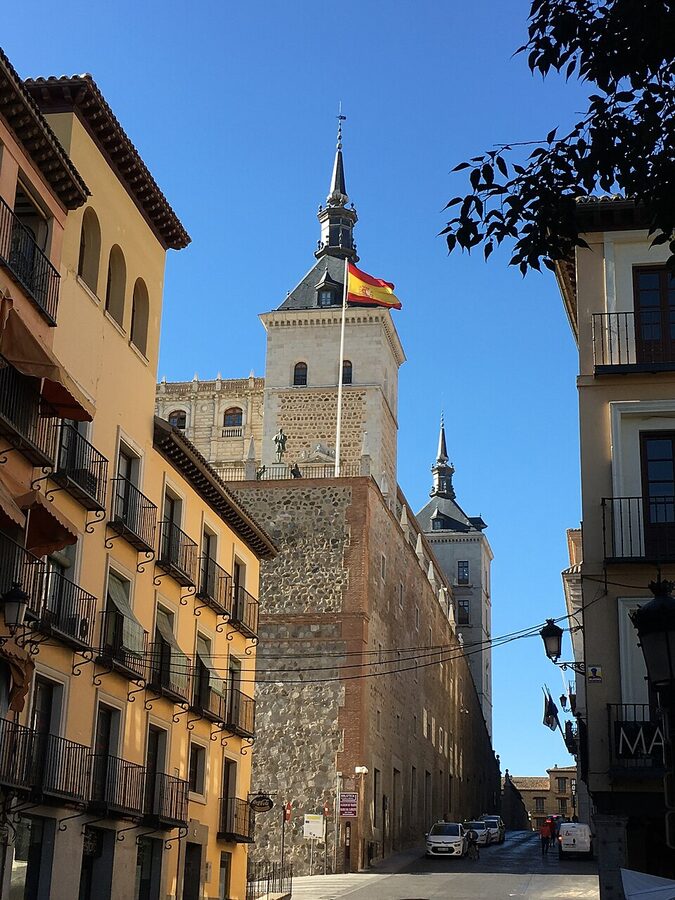
Three tours cover most use cases. I’d pick based on whether you want Toledo only, Toledo plus Segovia, or maximum flexibility on departure time.
1. Madrid: Segovia and Toledo Tour, Alcázar and Cathedral: $48
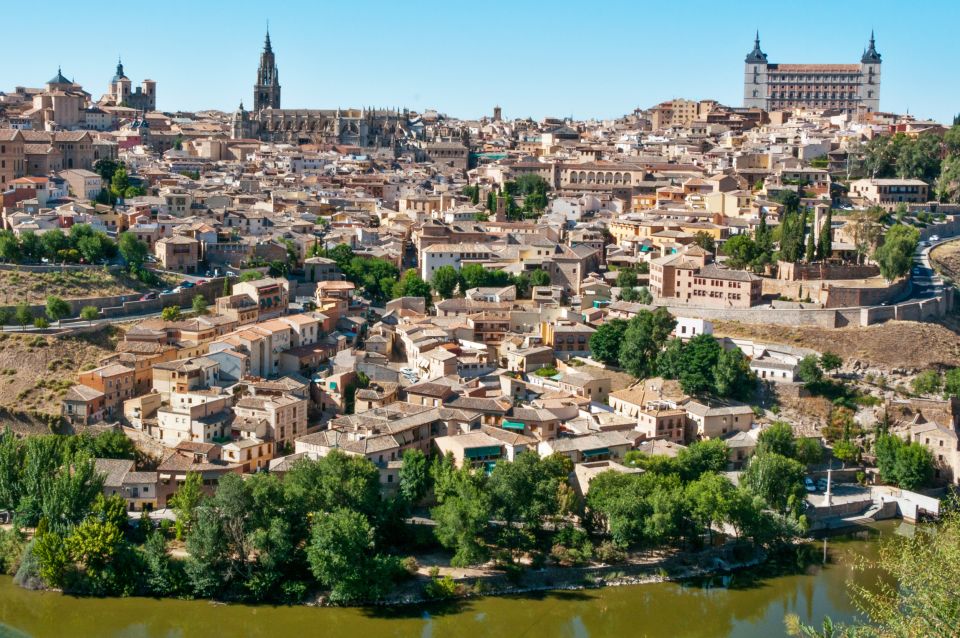
This is the right pick if Toledo is just one stop on a fast Spain itinerary and you also want Segovia’s Roman aqueduct in the same day. Our full review covers what you give up versus a Toledo-only tour: less time inside each city, more time on the bus. At $48 it’s the cheapest combined two-capital option I’ve found.
2. Toledo Tour With Cathedral, Synagogue and Santo Tomé from Madrid: $81.20
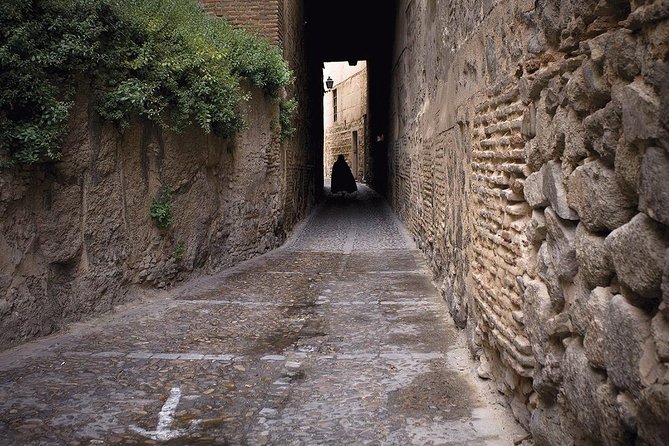
This is the one if you only have one day-trip slot in Madrid and you want it spent on Toledo proper. It’s the only tour in the pool that puts you inside the synagogue, the cathedral, and the El Greco room. Our full review notes the audio quality on the headsets is hit-or-miss, so stick close to the guide. The price reflects the bundled entries; doing them solo is similar money but more queue.
3. Toledo Half or Full-Day Guided Tour From Madrid: $64.08
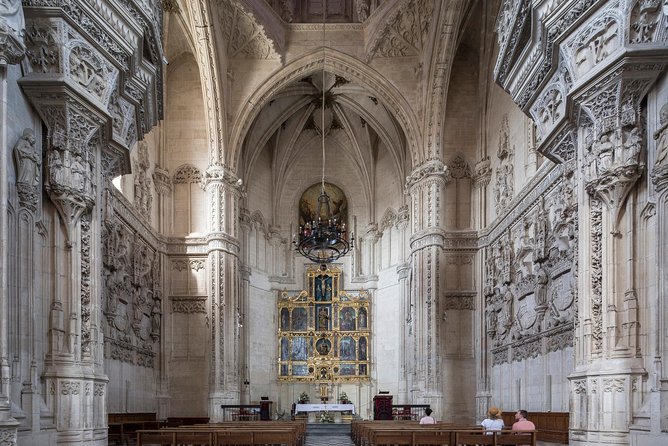
This is the right pick if you’ve already got a flamenco show booked for the evening in Madrid and don’t want to commit to twelve hours away. The half-day version drops you back in central Madrid by mid-afternoon, our full review walks through what you sacrifice (mainly: the synagogues). Same operator, same guide quality, just less of the city.
The three faiths, building by building
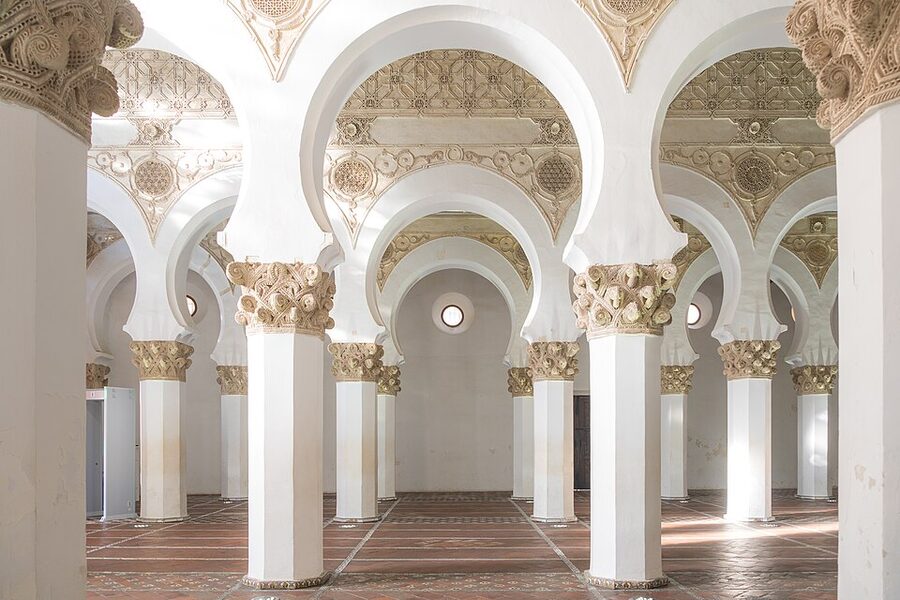
The interesting thing about the Mudéjar buildings here isn’t that they exist. It’s that they are still doing the cultural translation work they were built to do, eight hundred years later. Three places I’d genuinely prioritise.
Synagogue of Santa María la Blanca: built 1180
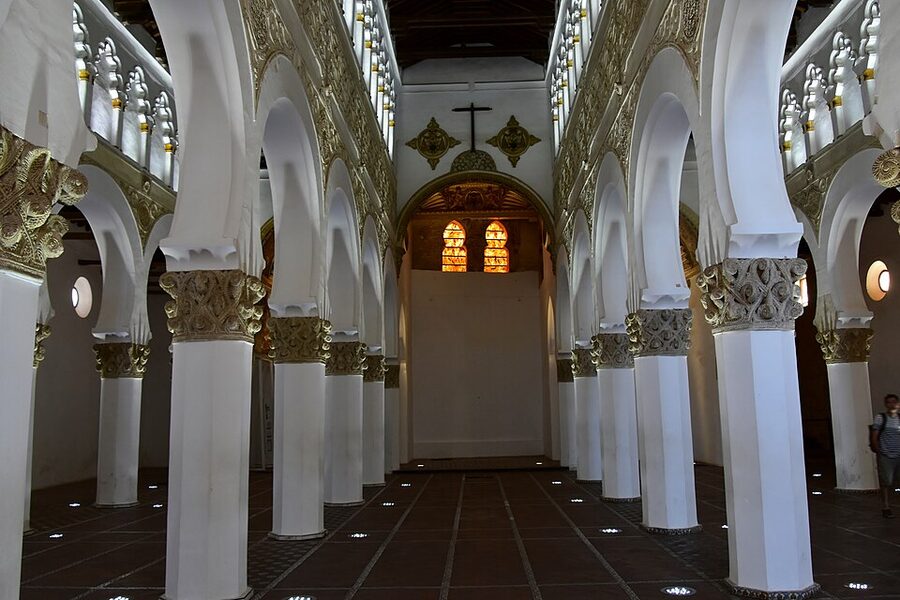
Built as a synagogue. Converted to a Catholic church in 1411 after a pogrom. Used as barracks, refuge, and warehouse. Restored in the 19th century. Now a museum that the Catholic Church technically still owns. The name “Santa María la Blanca” comes from the Christian period; nobody has changed it back, and Jewish tour groups occasionally find that uncomfortable, which is its own layer of the story. Entry is around €4 and worth it just for the silence inside. Most groups spend twelve minutes here. Spend twenty.
Mosque of Cristo de la Luz: built 999 AD
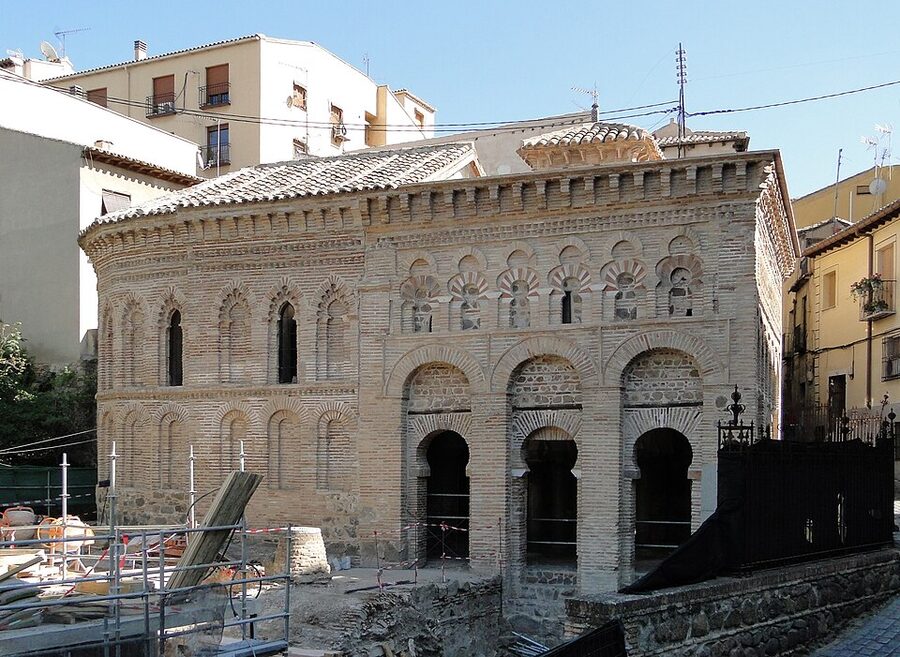
This is the small one nobody on the half-day tours sees. It’s a 9-square-bay mosque from the year 999, with nine different vault designs in the ceiling, each one a slight variation of the others, like a thesis project on what early Islamic vaulting could be. After the Christian reconquest in 1085 it became a Christian chapel, and a Romanesque apse was added on the east end. You can stand in the middle and see Almohad geometry on three sides and Romanesque arches on the fourth. Entry is about €3.
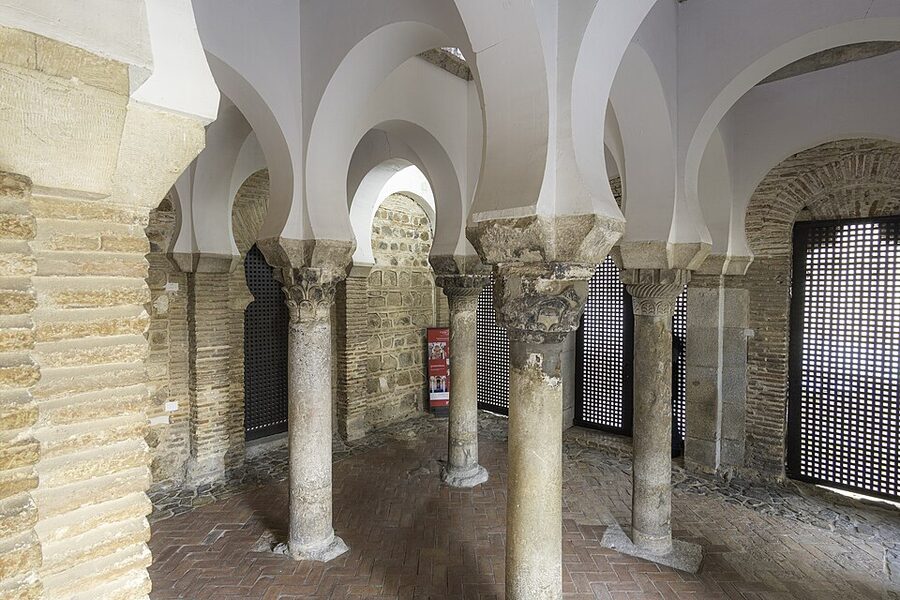
Skip the gift shop and walk out the back into the small garden. The view down toward the Tagus from up here is one of the best in town and barely anyone uses the bench.
Sinagoga del Tránsito: built 1356
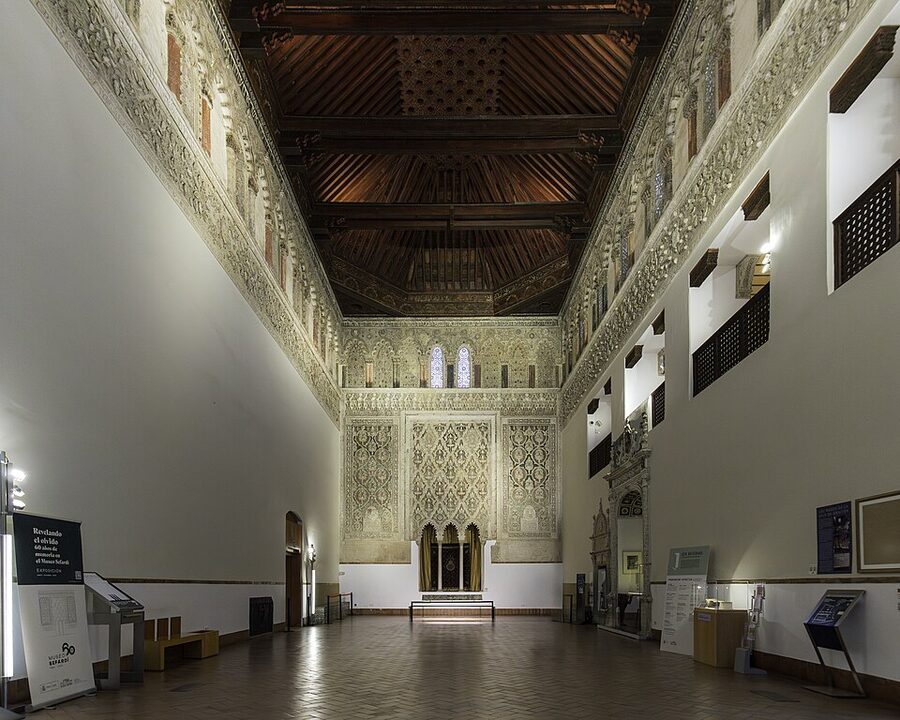
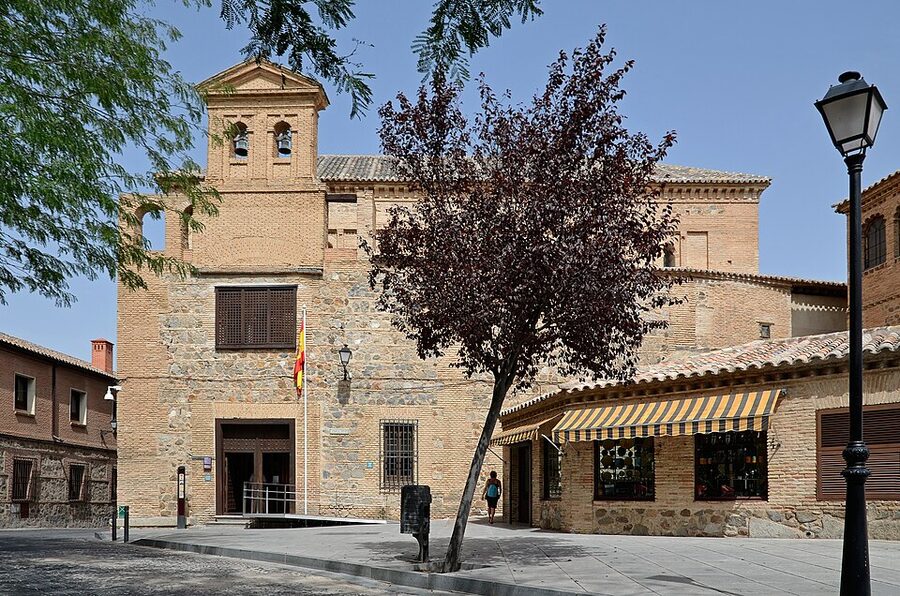
Five minutes’ walk from Santa María la Blanca, this is the second of Toledo’s two surviving medieval synagogues. After 1492 it became a church, then a cavalry barracks, then a Sephardic museum, which it still is. The exhibits are good (bilingual Spanish/English, generous on the post-1492 expulsion and what happened to Toledo’s Jewish community after), and the prayer hall itself is the headline. Combined ticket with the rest of the Sephardic museum is about €4. The Tránsito and Santa María la Blanca are both in the old Judería quarter and you do them in the same loop.
Toledo Cathedral, briefly
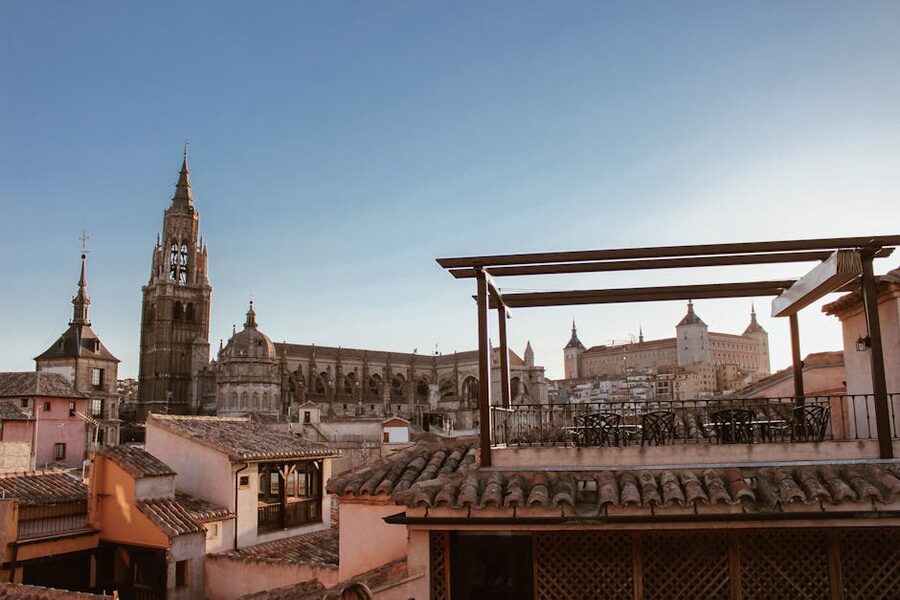
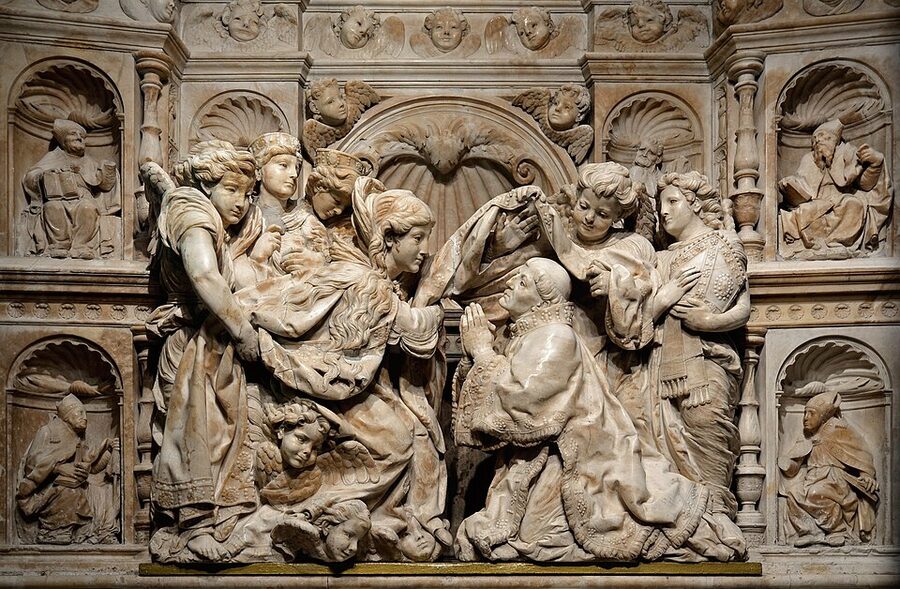
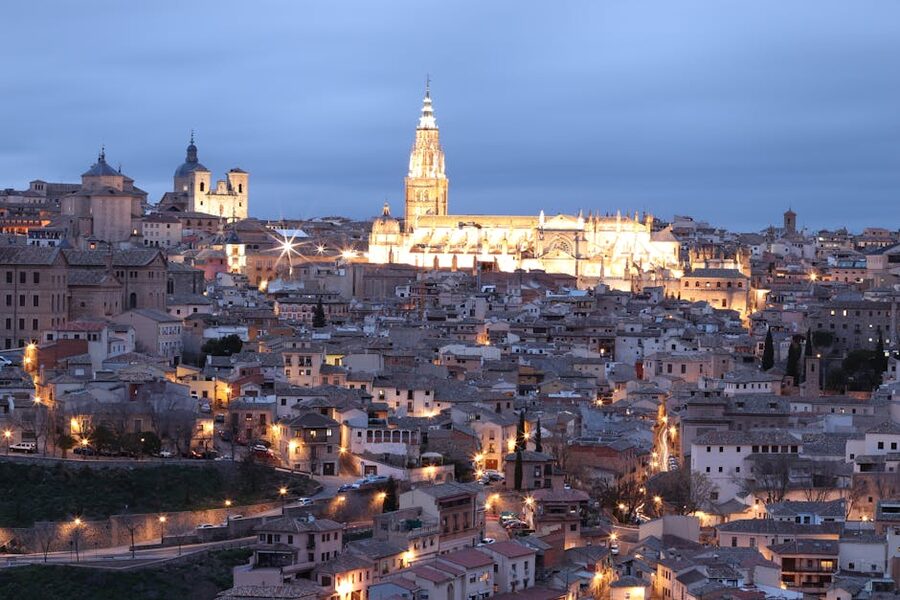
The cathedral is the second-most-important Catholic church in Spain after Seville’s, and from the outside it doesn’t look like much because the streets around it are too narrow to back up far enough. Once you’re inside, the choir stalls and the Transparente are the two things that justify the €15 ticket. The Transparente is a Baroque ceiling carved in 1732 by Narciso Tomé, with a hole cut into the medieval ceiling above it so a beam of natural light always falls on it from the morning side. Bring binoculars or a phone with good zoom.
If you’ve already done a few Spanish or Italian cathedrals (the Sagrada Família in Barcelona, Florence’s Duomo, Milan), Toledo is not the one that will leave you breathless on first sight. It’s a slower cathedral. Spend forty minutes inside, not ninety.
El Greco lived and died here
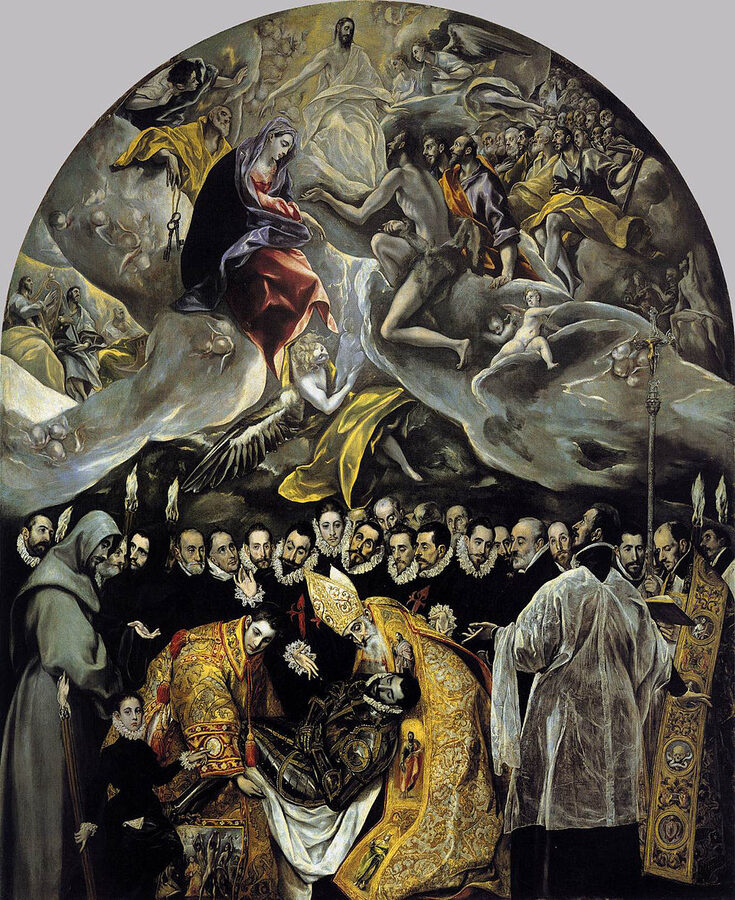
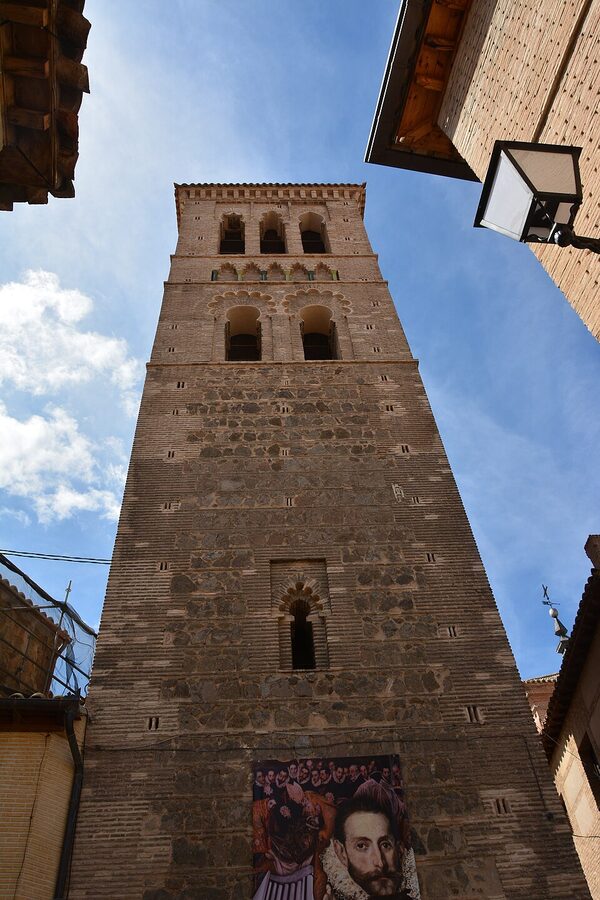
El Greco wasn’t from Toledo. He was Greek, born in Crete in 1541, trained in Venice and Rome, and arrived in Spain in 1577 hoping to get hired by Felipe II as court painter at the Escorial. The king didn’t like his work. So El Greco moved to Toledo, where the cathedral chapter and a generation of local nobility kept him fed for the rest of his life. He died here in 1614. The Burial of the Count of Orgaz is in the small church of Santo Tomé, ten minutes’ walk from the cathedral, and the entry is €4. You go in, look at one painting, leave. That’s the visit.
A few streets away is the Museo del Greco, which most tours don’t include and is the underrated stop. It’s not actually El Greco’s house (that legend was invented in the early 20th century by the same restoration that built the museum), but it does hold about a dozen of his paintings, including the View of Toledo studies, and the period courtyard is a nice break from cathedral fatigue. About €3 entry. If you’re a single-painting person, just do Santo Tomé. If you want to understand what El Greco was working on in his last years, do both. He’s the closest Spain gets to a Caravaggio: dramatic, slightly weird, completely committed.
There’s a useful comparison here with seeing the Last Supper in Milan: both paintings are famous, both have stayed in the buildings they were made for, and both visits take less than an hour. The difference is that Toledo doesn’t make you book six weeks ahead. You walk up, pay €4, walk in. That’s a small miracle of European art access.
The Alcázar and the rooftop view
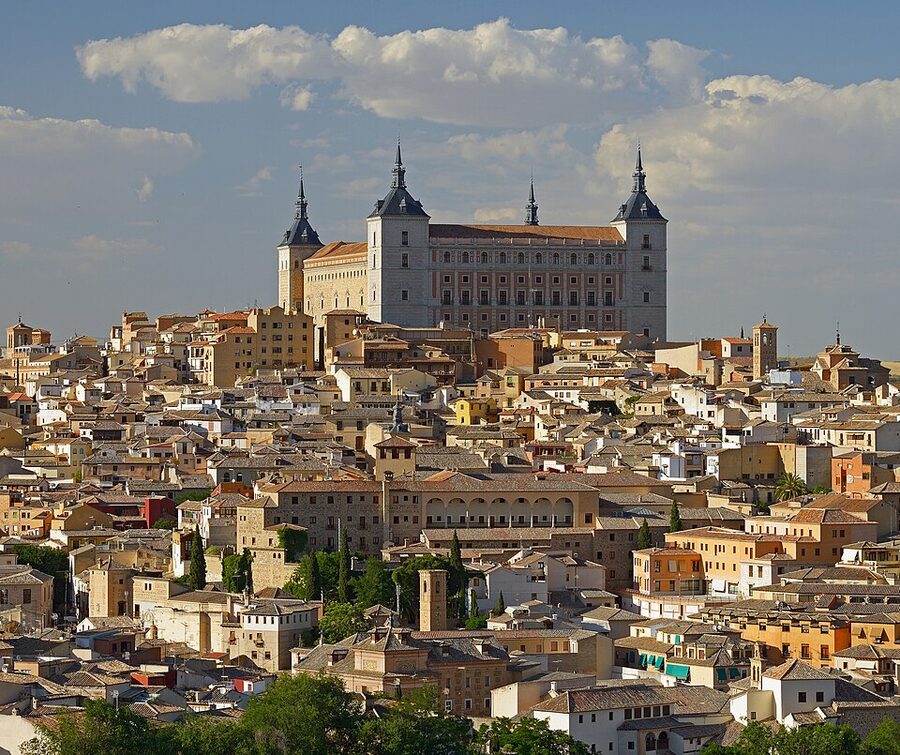
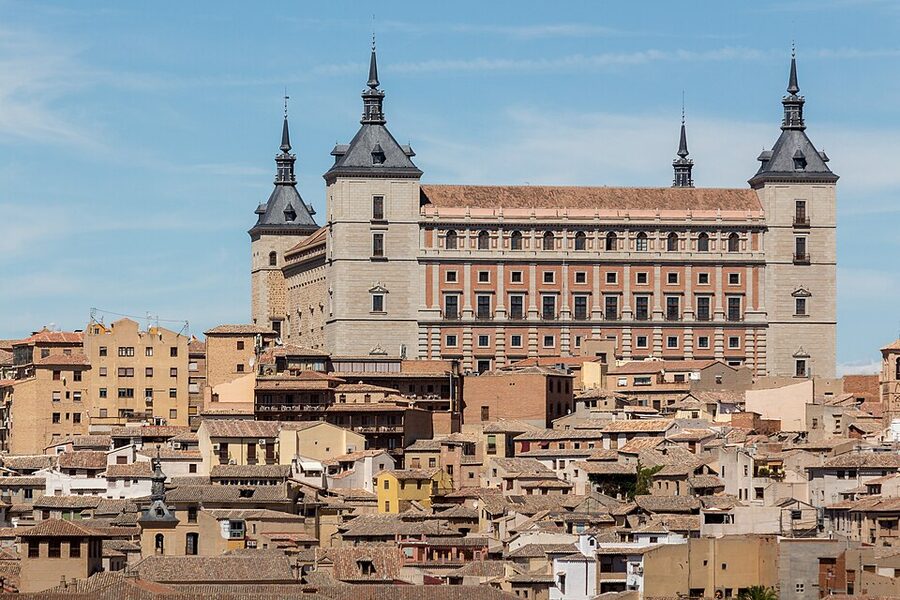
The Alcázar is now the Museo del Ejército, Spain’s army museum. It’s a long building with a lot of weapons in it, and the curation is mixed: some galleries are sharp on Spain’s military history, others read like an attic. But two reasons to go in anyway: the rooftop café, which has the best 360-degree view in town for the price of a coffee, and the basement, which has the partial archaeological remains of every previous building on this site, including a Roman castrum wall and a 10th-century Moorish foundation. Entry is €5; free on Sundays.
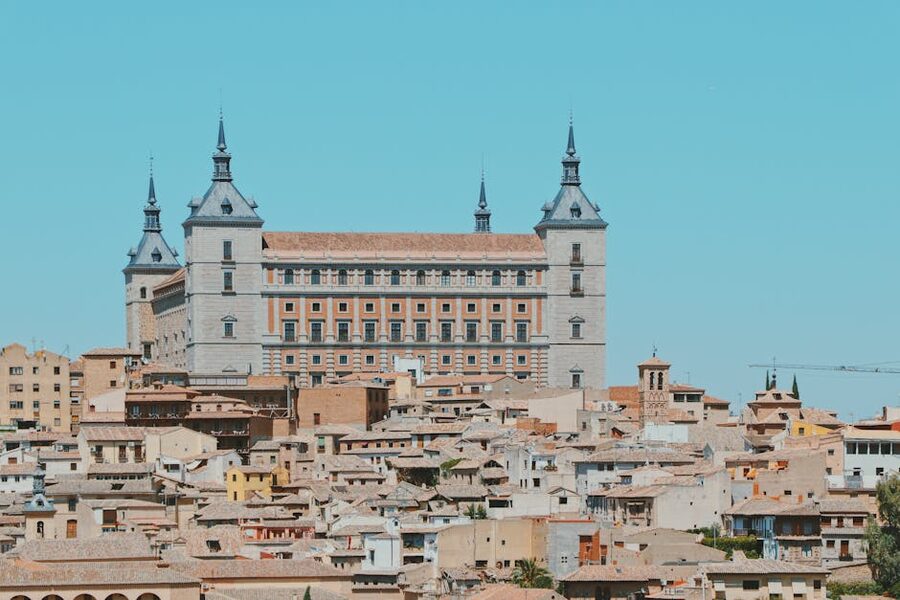
The 1936 siege is the bit the Spanish army museum wants you to know about. Whatever your politics, the story is grim and worth knowing: 1,000 Nationalist soldiers and their families held out for 70 days while the Republican forces shelled the building to rubble. Franco used it as a propaganda set-piece. The reconstruction was a deliberate political project. The basement shrine to the defenders is still there. The interpretive material has been gently rebalanced over the last decade but it remains a Nationalist-era monument inside a museum.
The Monastery of San Juan de los Reyes
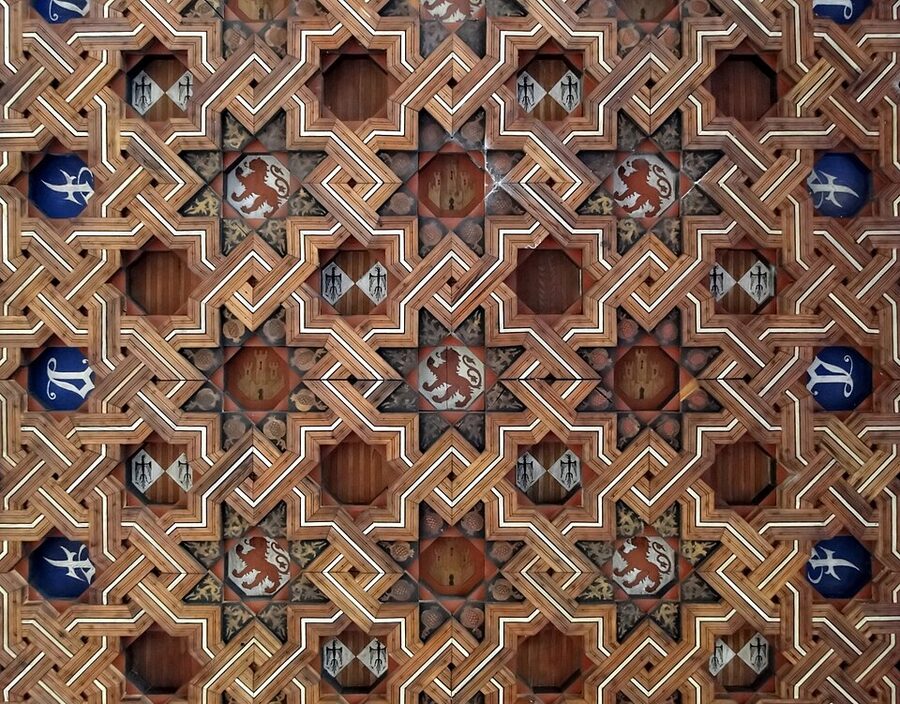
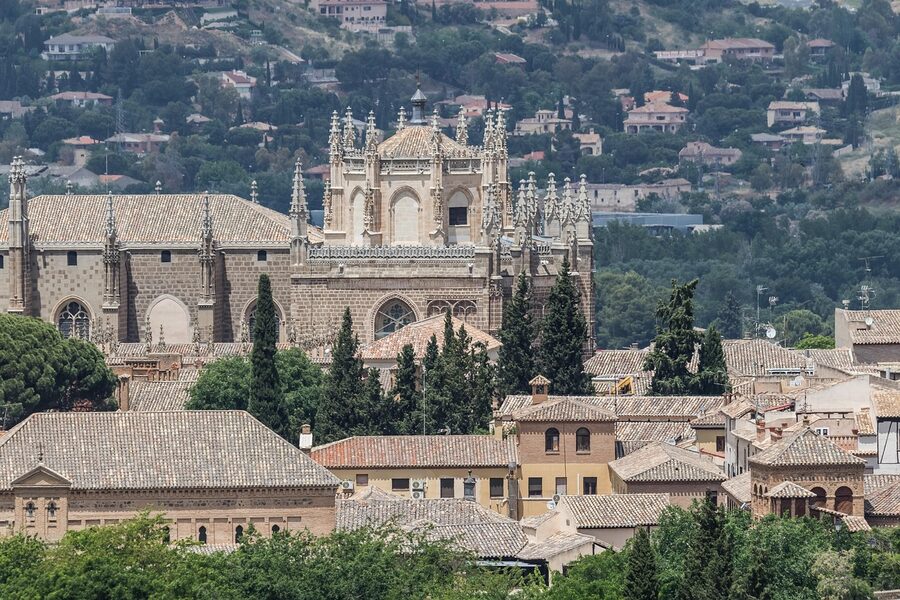
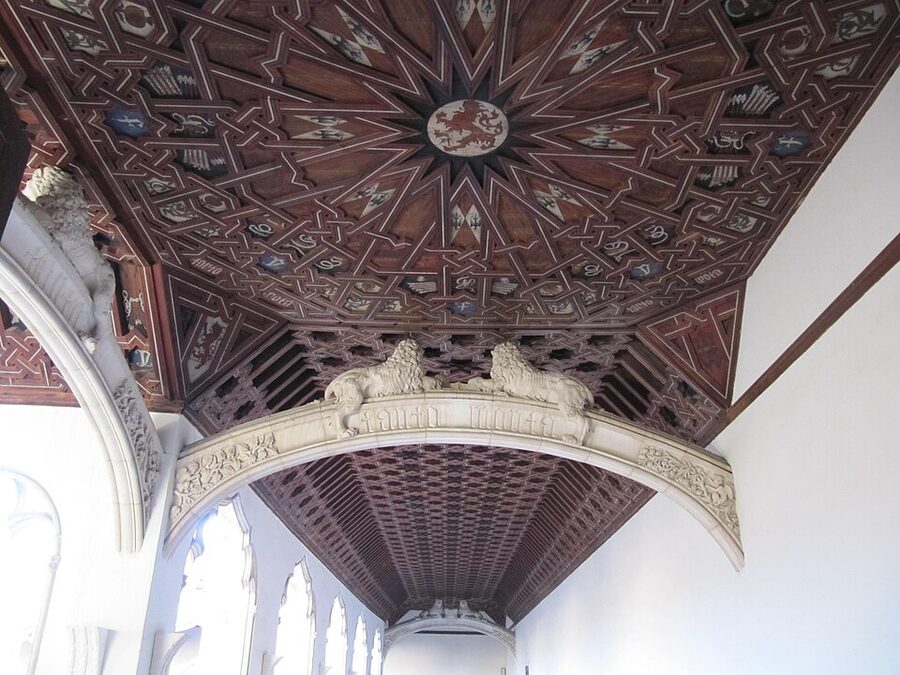
San Juan de los Reyes was commissioned by Ferdinand and Isabella in 1477 to be the royal mausoleum of the new unified Spain. Then they conquered Granada, decided to be buried in their own Royal Chapel down there instead, and this monastery was left as a kind of orphan triumph, ridiculously over-built for what it ended up being. Late Gothic, with the most photogenic two-storey cloister in Toledo. Entry is around €3.50. It’s the building most half-day tours cut. If you have the full day, go.
Walking the bridges and the river
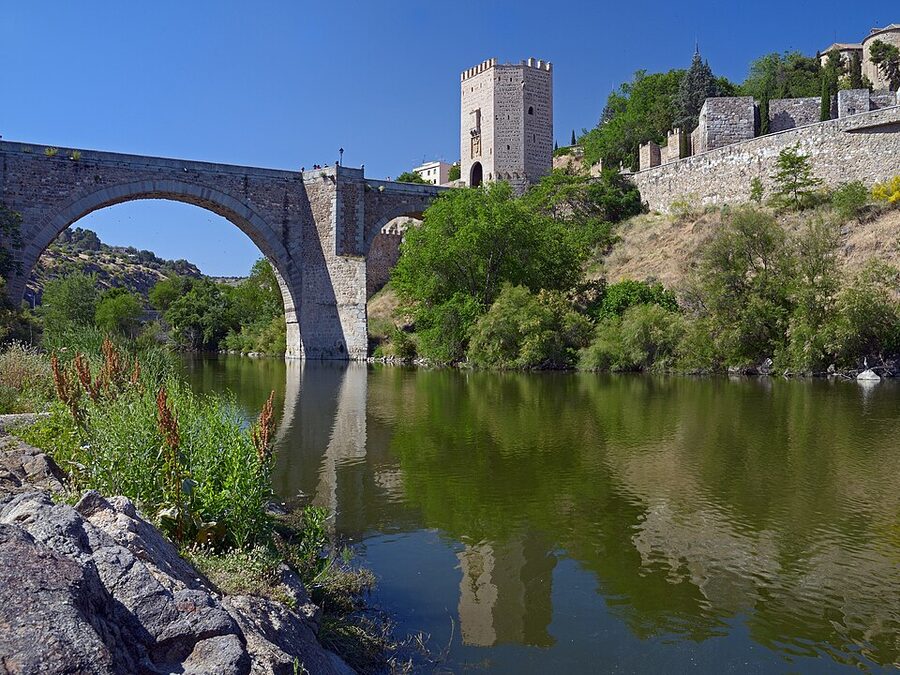
If you’ve got time and energy, walk the river loop. From the train station you cross the Puente de Alcántara, climb up into town through the Puerta de Bisagra or the Puerta del Sol, do the city, then on the way back take the Puente de San Martín on the western side and cross back via the south bank. It’s a 4km loop with the city above you on one side and the gorge below you on the other. Halfway round there’s a footpath up to the Mirador del Valle for the postcard view.
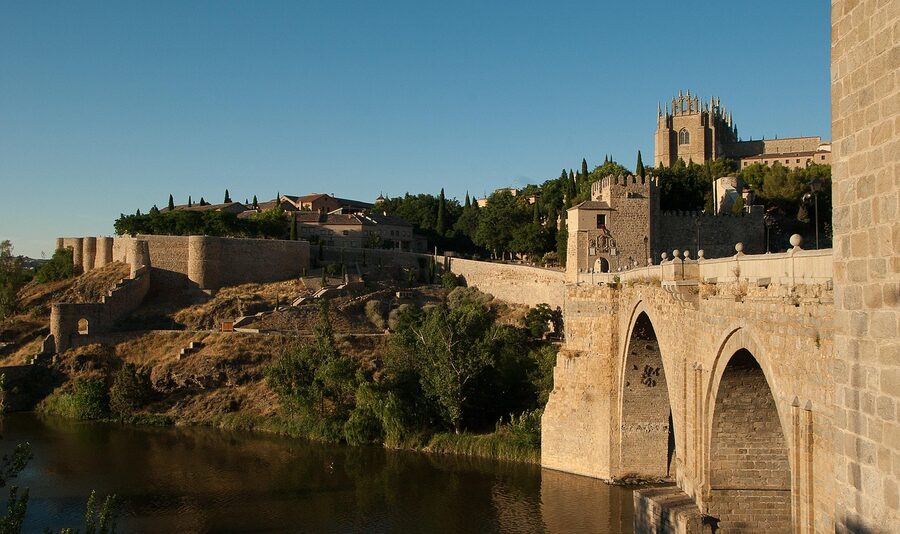
The river walk is also where Toledo most resembles other walled-island cities I’ve written about: Matera in southern Italy with its layered cave settlement, Pisa’s tower-crowded historic centre, even Venice from the Basilica’s loggia. Old European cities with this much vertical history all share a feeling: the topography is doing some of the storytelling and you’re just walking through it.
Lunch and marzipan
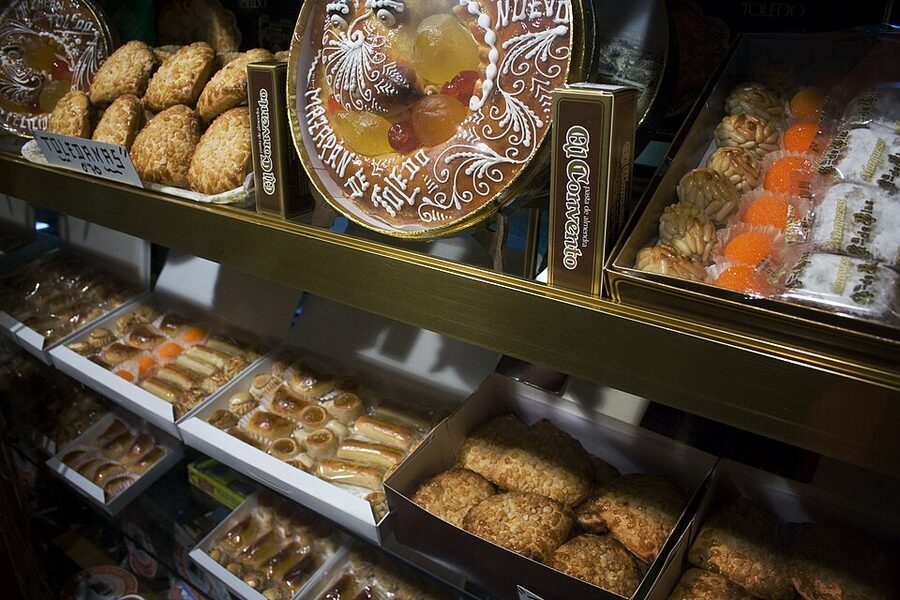
Lunch in Toledo is generally fine. It’s not Naples pizza and it’s not Barcelona tapas. You’ve got two main local specialties: carcamusa, a slow-cooked pork stew with peas and tomatoes, and venison or partridge stew (estofado de venado, perdiz) at the slightly nicer places. The pavement cafés on Plaza de Zocodover are touristy but the food is decent and the view is the thing. For better cooking, walk five minutes off the square in any direction.
The thing to actually buy and bring back is mazapán. Toledo marzipan is registered IGP, made of almonds, sugar, egg yolk, and nothing much else, and the convent-made versions taste different to factory ones. They’re moister and less aggressively sweet. If you only have ten minutes for shopping, the convent of Santa Isabel sells theirs through a turning wooden hatch where you don’t see the nun who hands it over; you put your euros on the wheel, the wheel turns, the box comes back. It’s the only time I’ve ever bought something through what is essentially a medieval drive-through.
Half day or full day?
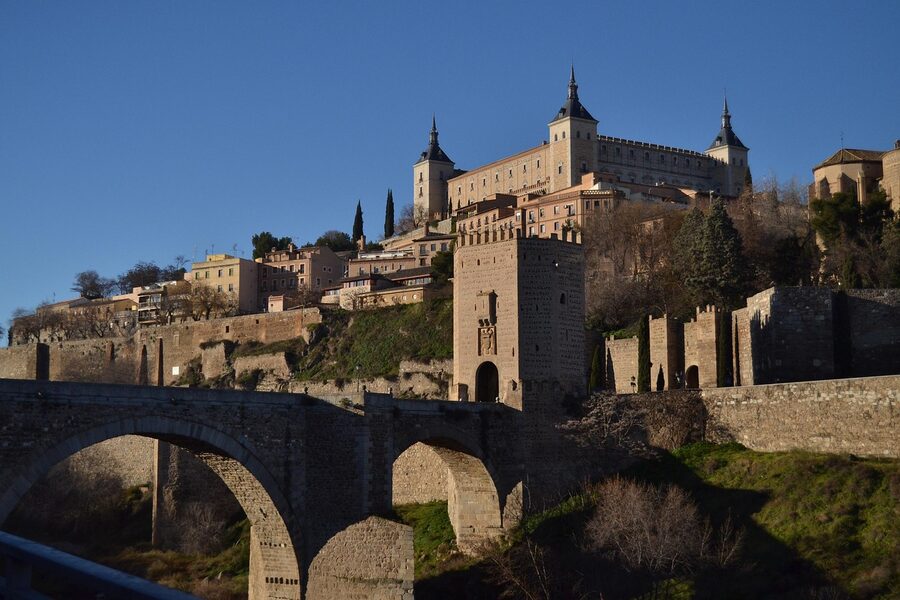
Half a day works if you’re cathedral-plus-photo-plus-lunch and back to Madrid for dinner. You’ll get the Mirador, the cathedral, El Greco at Santo Tomé, and a fast loop of the old town. Full day works if you want the synagogues, the mosque, and San Juan de los Reyes on top of that. That’s where the Toledo story actually lives. If I had to pick, I’d take the full day with the Toledo-only tour and skip Segovia for another trip. Segovia is a good day, but it’s a different day. Trying to do both in 12 hours leaves you with two cities you only half saw.
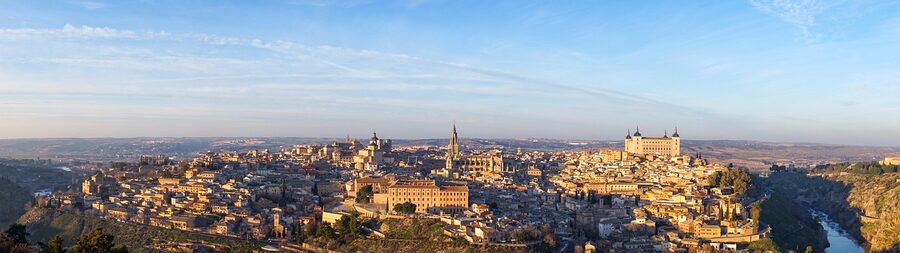
One overnight, if you can swing it, is the secret-best version. Toledo empties out completely after the last 6pm bus back to Madrid. The streets I’d told you to walk are quiet again. You can have dinner at one of the hill restaurants, watch the cathedral lights come up, and walk home to a parador across the river. The day-trip version is fine. The overnight version is the city the locals get. The Amsterdam equivalent of the same step-out-of-the-capital ritual is the wooden-village half-day at Zaanse Schans, with the spring-only flower run to Keukenhof as its seasonal partner.
Where Toledo fits in your Spain plan
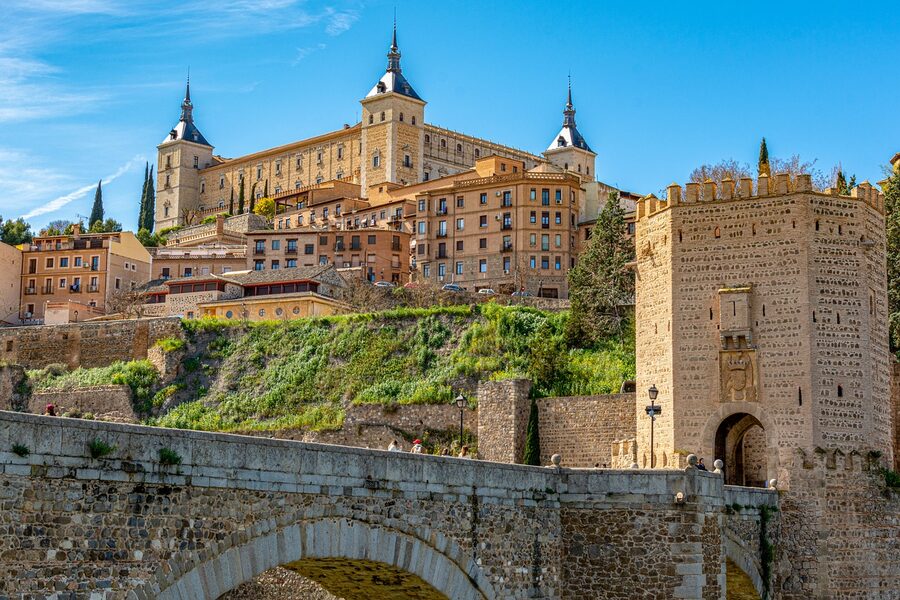
If you’re building a Madrid week and have room for two day trips, my pairing is Toledo plus Segovia and Ávila. The three “old capitals” together give you a fast course in central Spanish history without leaving the train zone. If you’re doing Madrid plus Andalusia later, Toledo is the dress-rehearsal for Córdoba’s Mezquita-Catedral: the same Christian-on-Islamic-on-Roman layering, just smaller and walkable in a morning. And if you’re hopping to Montserrat from Barcelona later in the trip, you’ll already understand what Spain does with its mountain-top monasteries because you’ll have seen what it does with its hilltop cities. The closest French parallel for the medieval-walled-town day trip is Mont Saint-Michel, with a multi-stop Loire Valley castles day as the equivalent for visitors who want layered history out of a capital.
The cathedral, the Alcázar, El Greco at Santo Tomé. That’s the postcard Toledo. The synagogue, the mosque, the Mudéjar cloister at San Juan de los Reyes. That’s the real one. Pick the tour that gets you inside both versions of the city, and Toledo stops being a side trip from Madrid.