
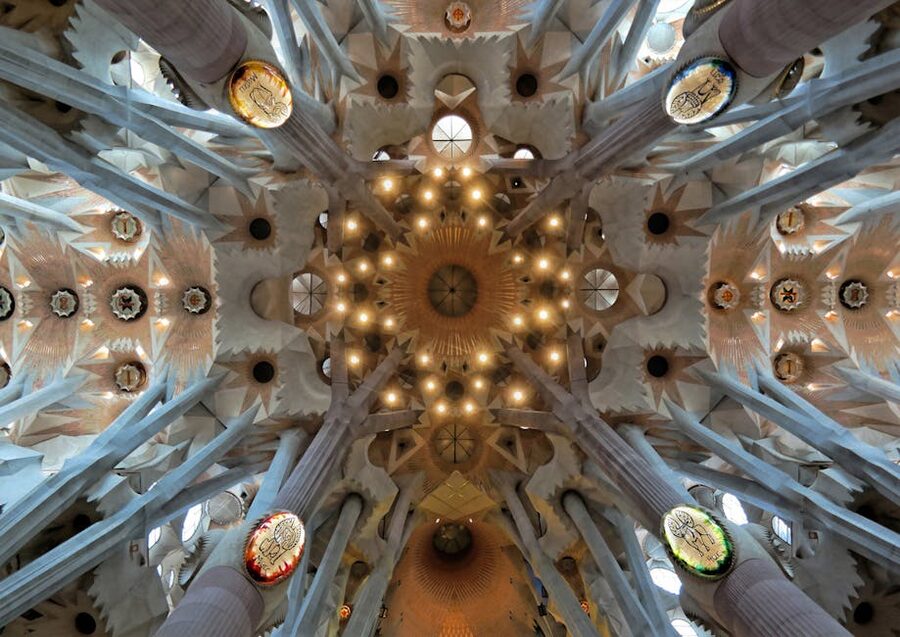
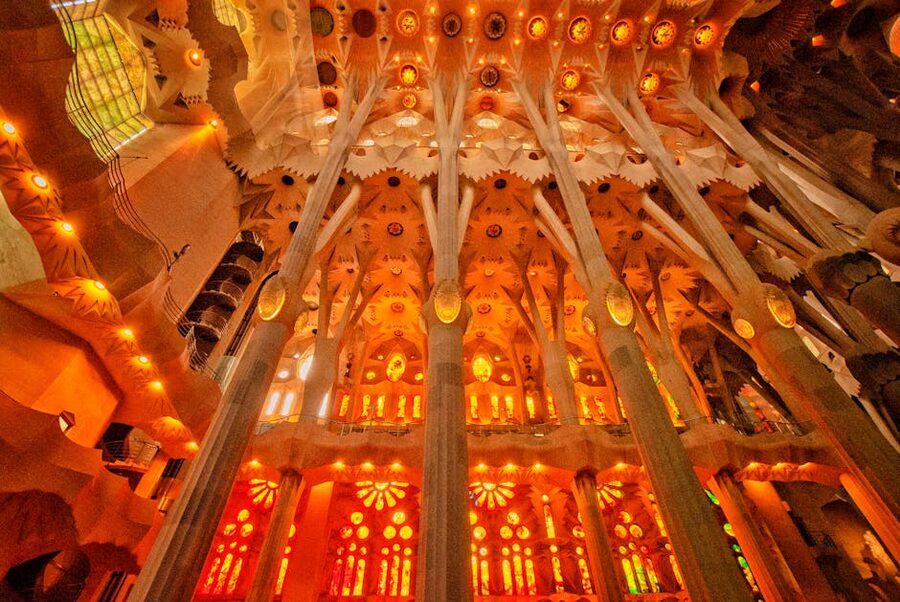
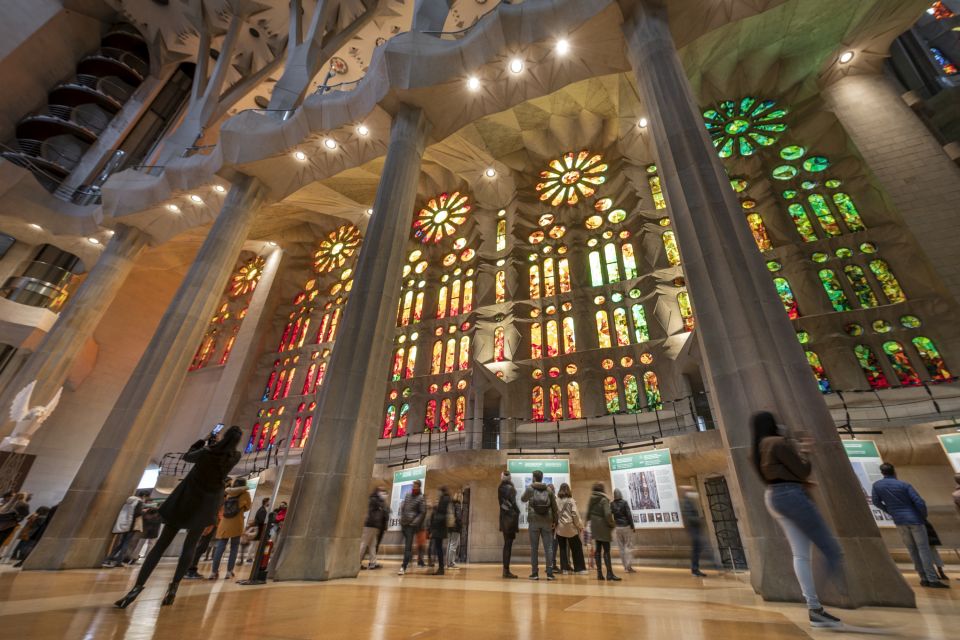
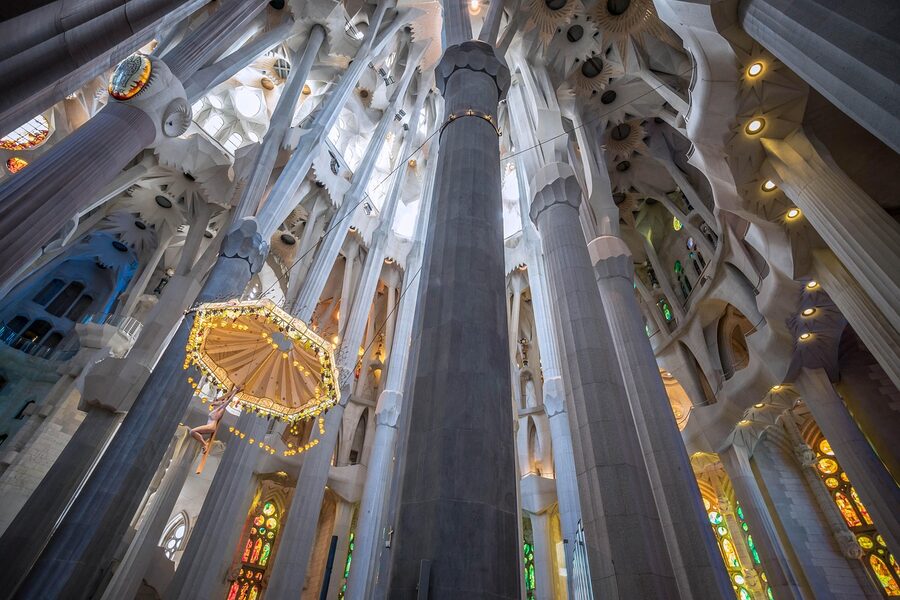
It’s late afternoon on a Tuesday in March, and I am standing inside the Sagrada Familia nave with my neck craned so far back that the woman next to me, also a stranger, also a tourist, laughs because we both look ridiculous. The west-facing stained glass is throwing reds and oranges across the stone floor in long warped rectangles. The east side is doing the same thing in cobalt and emerald. The columns above us branch like trees because that’s what Antoni Gaudí told them to do, and a hundred years later masons are still adding stone to the towers above our heads. Somewhere up there, a crane is moving. You can hear it.
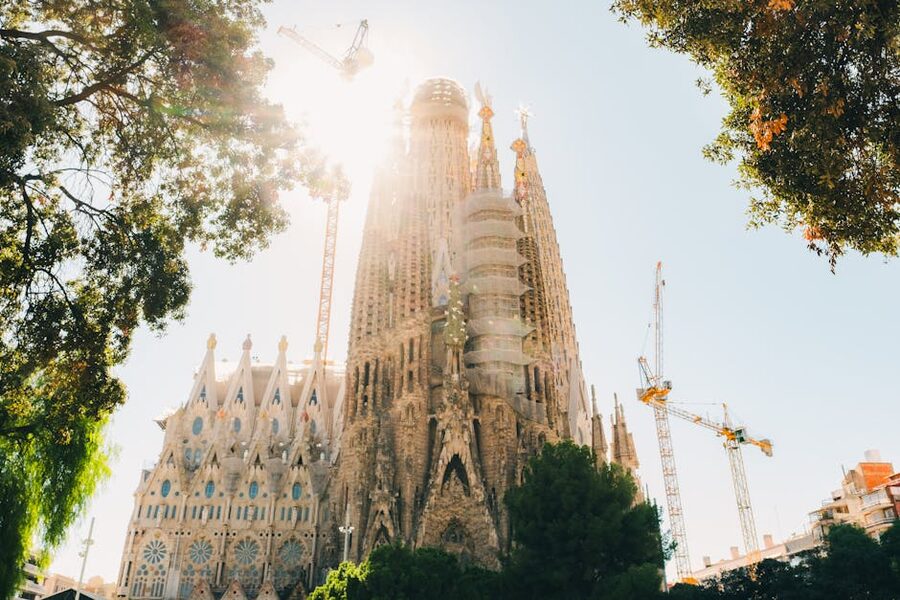
That’s the thing nobody quite prepares you for. The Sagrada Familia is not a finished cathedral you tour. It is a working construction site that the public is allowed to walk through, and the construction has been going on since 1882. The current target for completion is 2026, the centenary of Gaudí’s death. As of writing, that target is slipping again.
In a Hurry: Three Picks for Sagrada Familia
Quickest answers
- Cheapest entry with audio guide ($39): most people only need this. Book the audio-guide entry.
- Best guided tour ($67): the live guide is what makes the symbolism click. Book the guided skip-the-line tour.
- Tour with tower add-on ($56): guided plus the lift up to the towers for the city view. Book the tour with tower visit.
What You Actually Walk Into
Most cathedral interiors I have stood in feel heavy. Stone presses down. The Sagrada Familia does the opposite. Gaudí designed the columns to lean and branch overhead like the trunks of pine trees, splitting into smaller branches near the ceiling, and the effect is that the whole space feels like it’s trying to grow. There are no straight lines. He was almost evangelical about that. If you’ve stood in St Mark’s in Venice with its weighty Byzantine domes pressing down, you’ll feel the contrast immediately. Most cathedrals try to make stone feel solemn and heavy. Gaudí made it weightless.
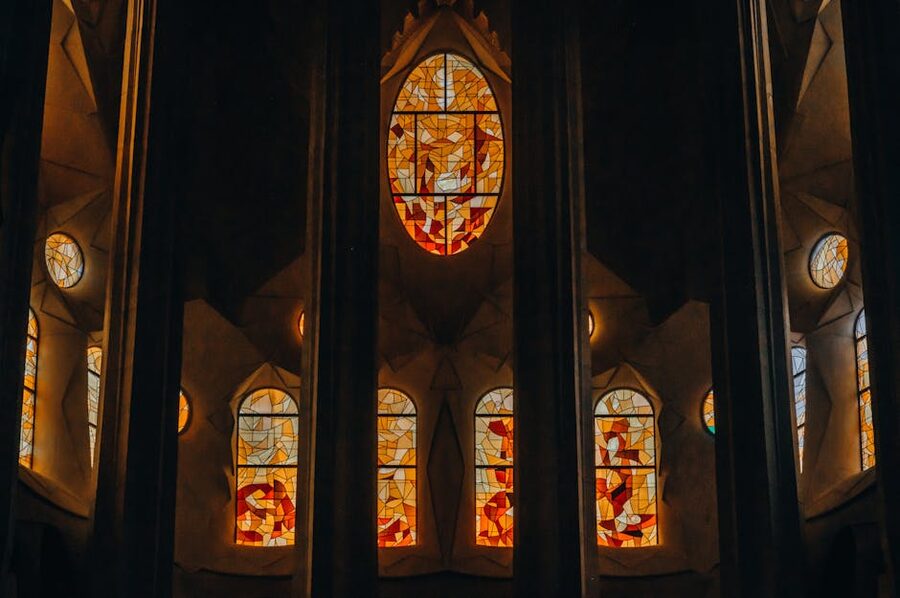
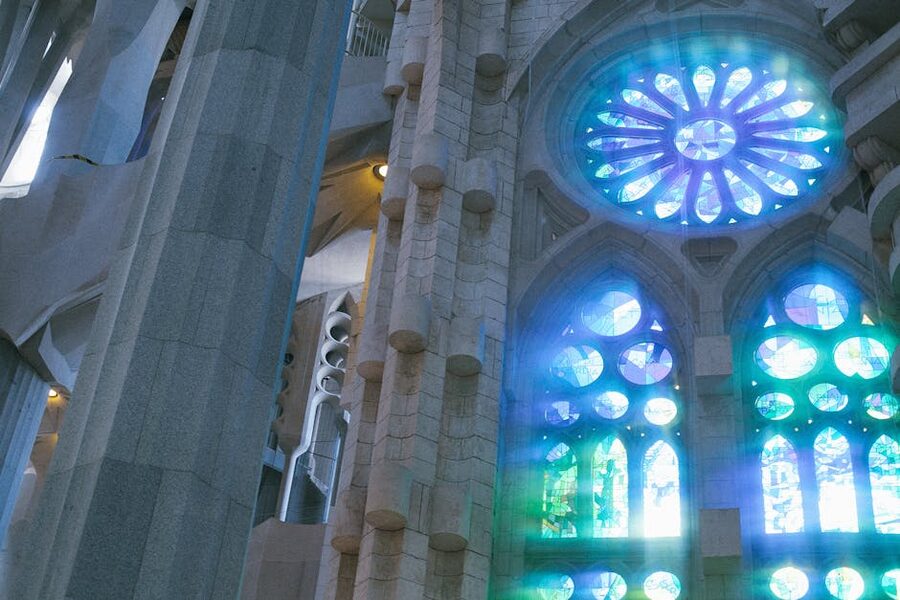
The light is the other thing. The eastern wall is mostly blues, greens, and yellows, lit by the morning sun. The western wall is reds, oranges, and deep purples, lit by the afternoon. By 4pm the floor on the west side of the nave looks like someone tipped a paint pot. If you want this, book your entry slot for late afternoon. The official site lets you pick a 15-minute time window, and that timing matters more than people realise.
How Tickets Actually Work
The basilica is run by a private foundation, which means tickets are timed and capped. They sell out. Not in the abstract “you should book ahead” way that travel guides love to repeat. They actually sell out, two to three weeks ahead in summer, sometimes longer. If you turn up at the door without a booking on a Saturday in June, the answer will be no. The model is closer to Leonardo’s Last Supper in Milan than to most cathedrals: a strict time slot, capped numbers, and you’re either in or you’re out.
The official tickets come from sagradafamilia.org. Resellers like GetYourGuide and Viator buy allocations from the foundation and bundle them with extras (audio guide, live guide, tower lift). Prices are roughly the same. The reason to use a reseller is usually one of three things: the official site is sold out for your dates and the reseller still has stock, you want a guided tour included, or you want everything in one booking with your other Barcelona plans.
Ticket types break down as follows:
- Basic entry only: basilica plus crypt, no audio guide. €26 from the official site. Cheapest option, fine if you’ve read up beforehand.
- Entry with audio guide: same plus a multilingual audio guide. About €30 official, around $39 via resellers. This is what I’d pick for most first-time visitors.
- Guided tour: same plus a live guide for about an hour. From around $67. The guide is what makes the symbolism click.
- Tower access: add a lift up one of the towers for €10 extra. You pick Nativity tower or Passion tower. More on which to pick below.
One thing the official site does that the resellers don’t: it shows you the actual remaining slots in 15-minute increments. If you’re flexible on the day, that’s where you’ll find the visit time you want.
Which Tower to Climb (If You’re Climbing One)
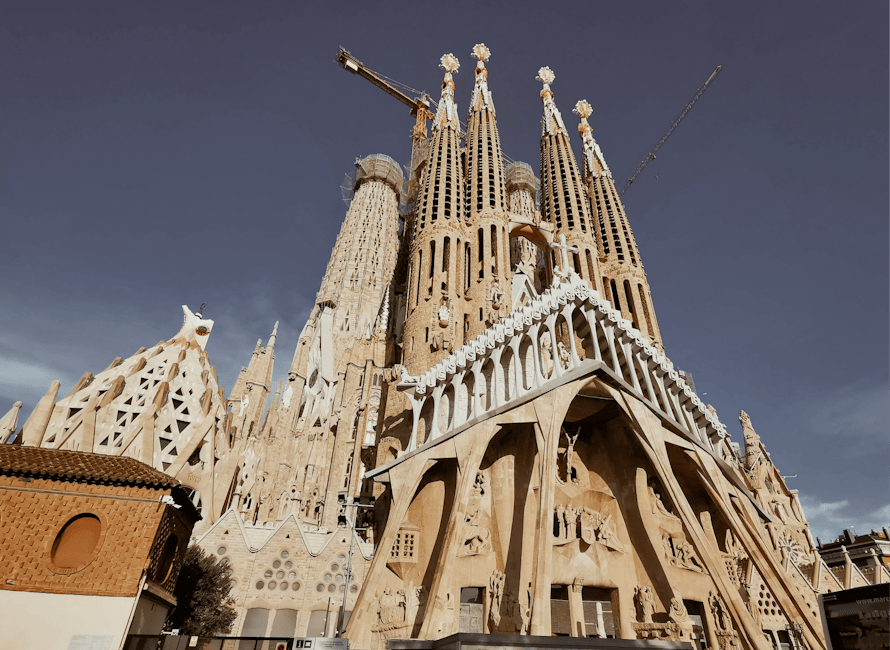
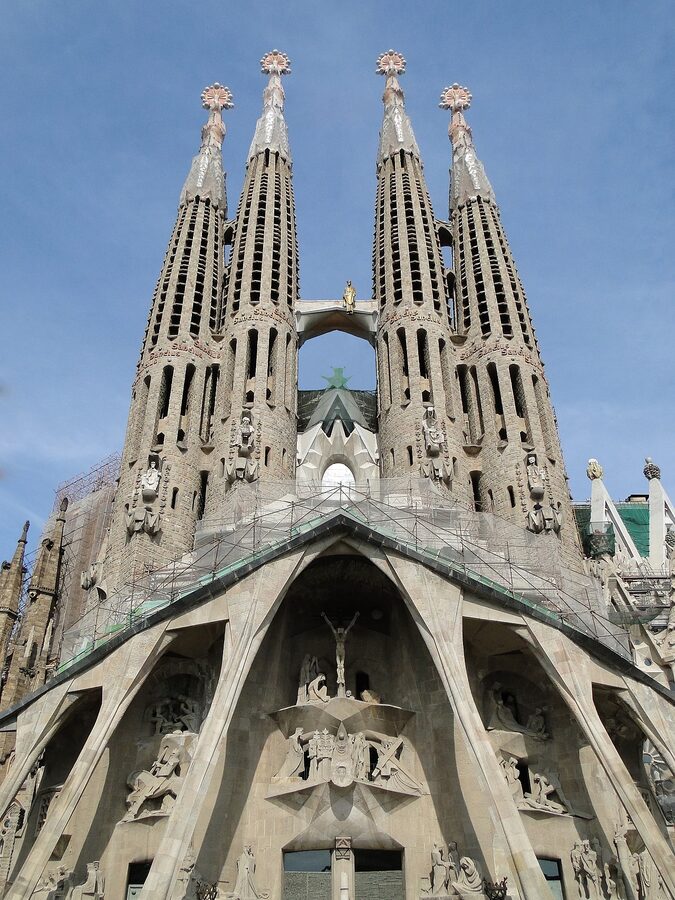
You can only access one tower per visit, and the choice matters. The Nativity tower faces the older, finished side of the basilica and overlooks Plaça de Gaudí and the city’s older Eixample grid. The Passion tower faces the newer, harder, more modernist Passion façade and looks toward the sea. Both involve a lift up and a stair walk down. The Nativity descent is narrower and more cramped. If you’re claustrophobic, take the Passion tower. If you want the photogenic angle of the older Gaudí-era stonework, take the Nativity.
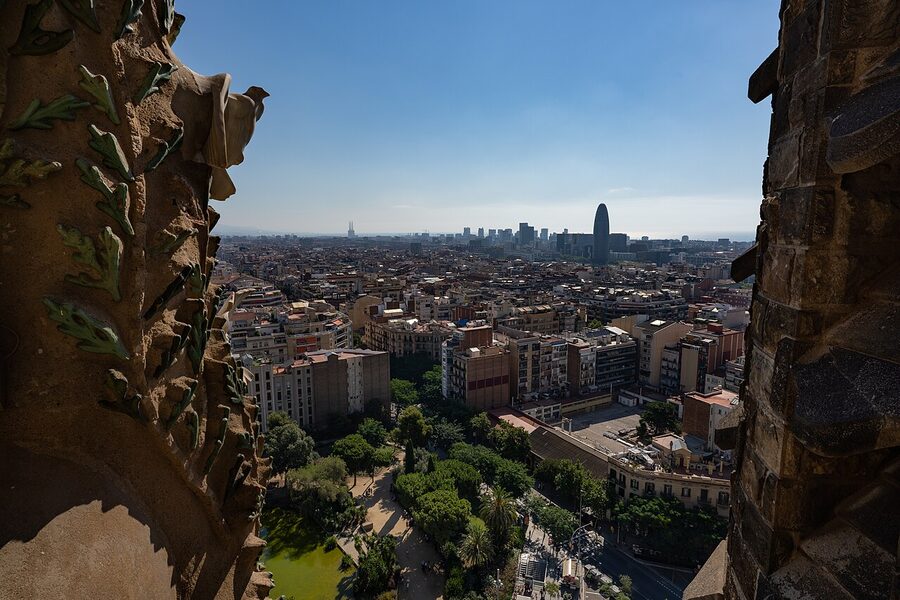
Skip the tower entirely if your time is tight. The interior of the basilica is the headline experience. The view from the tower is fine but you can get a comparable city panorama from Park Güell’s terrace for less effort, and the tower descent is the one part of the visit a lot of people genuinely don’t enjoy. If rooftop cathedral access is the thing you actually want, the roof of Milan’s Duomo is the better experience anyway: walkable, level, you can spend an hour up there. For a pure city panorama at lift speed, the Eiffel Tower and the Montparnasse Tower in Paris each give you a wider Barcelona-to-skyline-style view without the cathedral-stair workout.
How Long You Need Inside
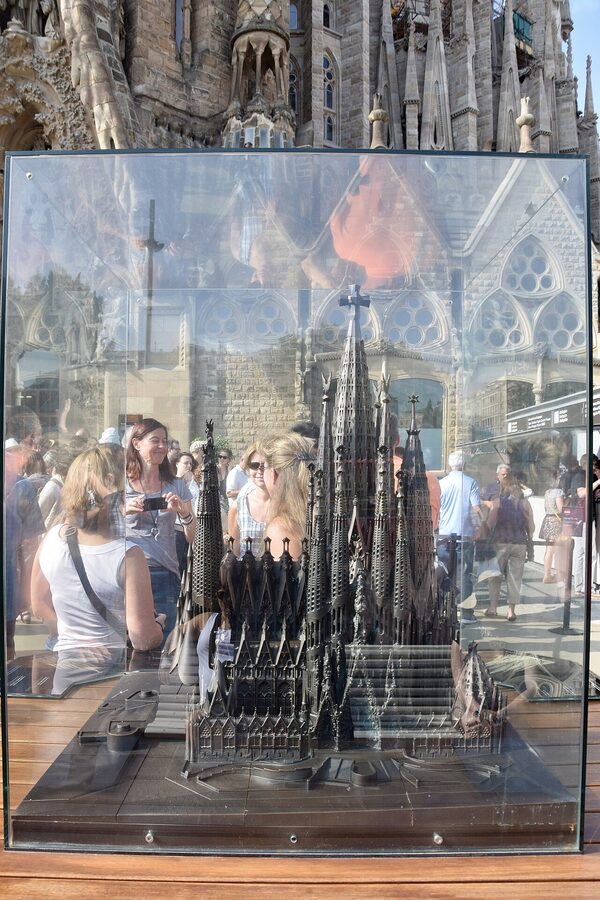
Realistically, 90 minutes for the basilica plus crypt at audio-guide pace. Add 30 minutes if you’re doing a tower. Add another 30 if you want to sit and watch the light change, which I recommend on a sunny day. The museum below the basilica is included in your ticket and most people skip it. They shouldn’t. The original 1:25 plaster models Gaudí made are down there, plus the catenary string-and-weight model that Gaudí used to work out the column angles by hanging weights from string. That model is the most useful single object in the visit for understanding how he designed the structure without computers, calculators, or finished mathematics. Milan’s Leonardo Museum is the closest thing I’ve seen elsewhere: hands-on engineering reconstructed from the master’s notes.
The Construction Story (Stay With Me, This Is Why You’re Here)
Construction started in 1882 under a different architect, Francisco de Paula del Villar, who designed a fairly conventional Gothic Revival church. Villar resigned a year in. The commission went to a 31-year-old Antoni Gaudí, who threw out almost all of Villar’s plans and started over with the design that is now half-built around you. The parallel I keep thinking of is Brunelleschi: the same age, the same outsider’s confidence, taking on a building everyone else had given up on. Florence’s Duomo is the closest spiritual sibling to this place.
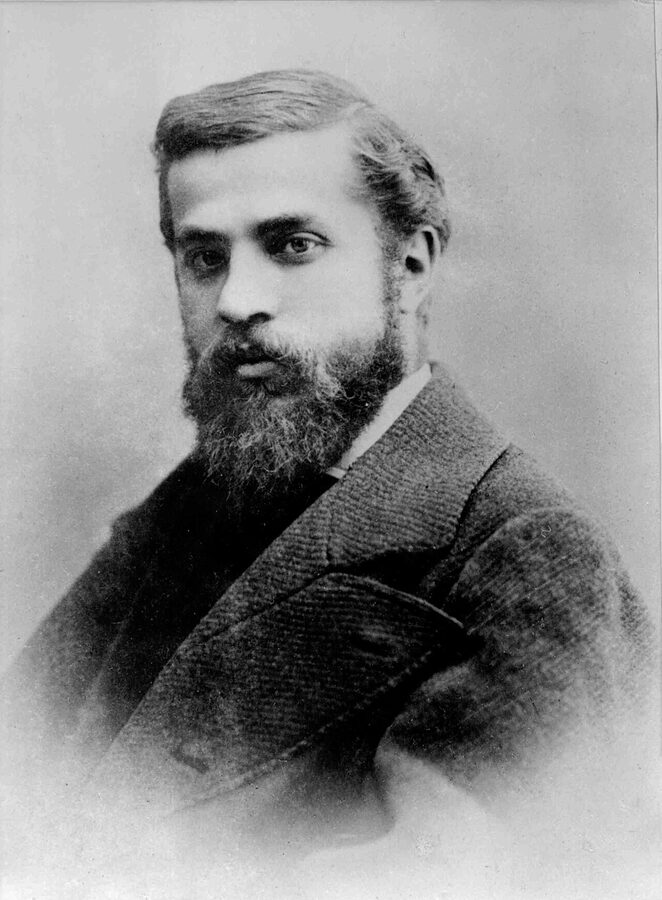
Gaudí worked on the basilica for 43 years. By the time he died (hit by a tram on Gran Via in 1926, an old man in a shabby coat that the hospital staff initially mistook for a beggar), only the crypt, the apse, and most of the Nativity façade were complete. He had finished maybe a quarter of his own design. Pictures from the 1920s show what he had to leave behind.
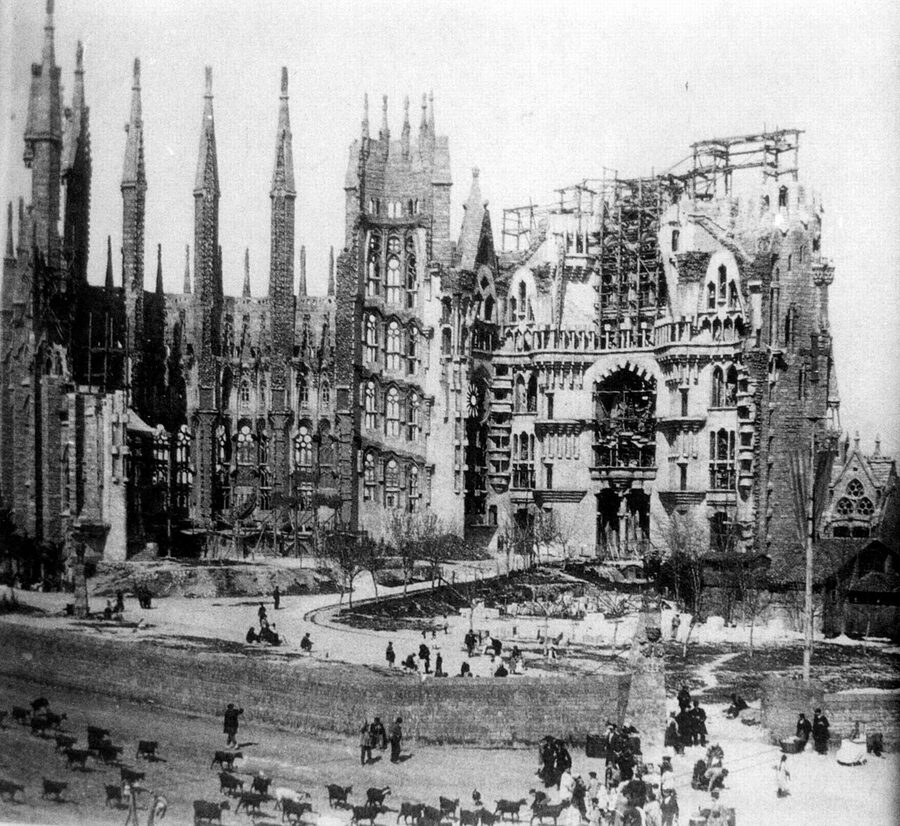
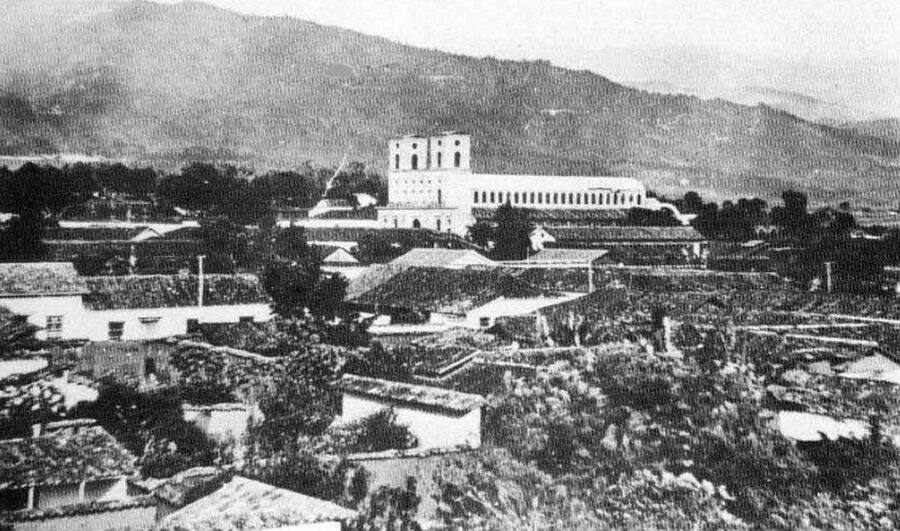
The Spanish Civil War made everything worse. Anti-clerical mobs broke into Gaudí’s workshop in 1936 and smashed many of his original plaster models. Construction stopped for years. What’s been built since is partly reconstruction from the model fragments and partly interpretation by later architects working from Gaudí’s notes. That’s a real source of controversy. Some Catalan architects argue that the post-1936 work doesn’t represent Gaudí’s intentions at all. Others (including the current chief architect) argue that Gaudí himself expected later hands to finish the work and explicitly designed the building so it could be continued. You can decide for yourself once you’re inside.
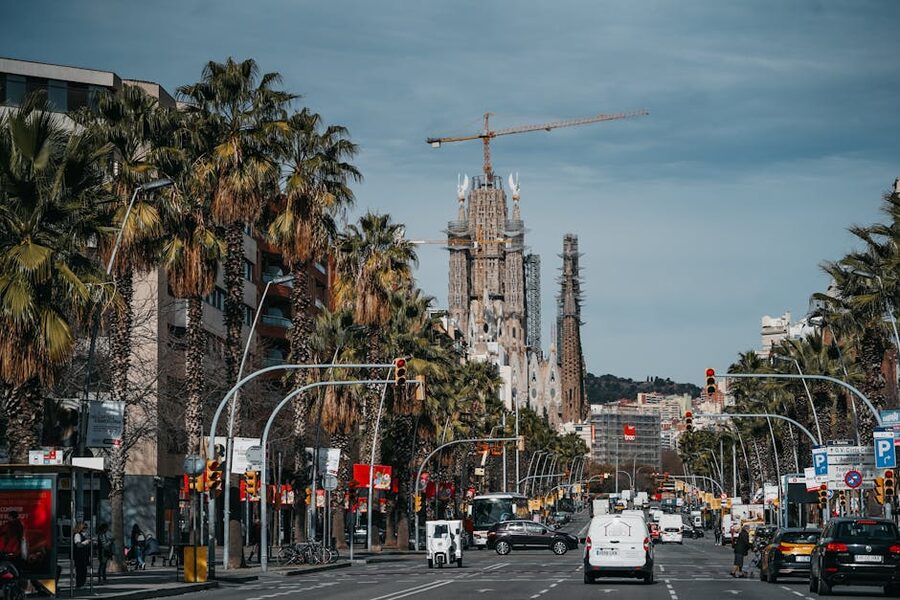
Which Façade Is Which
The basilica has three façades, designed to tell the life of Christ in stone. Two are visible to visitors today. The third is the main one and isn’t built yet.
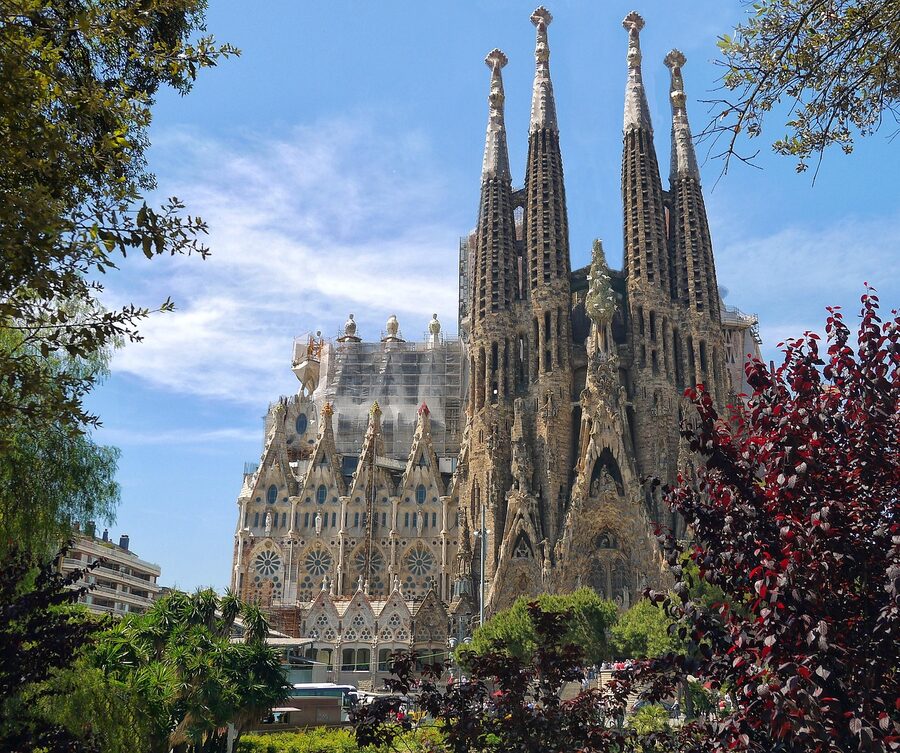
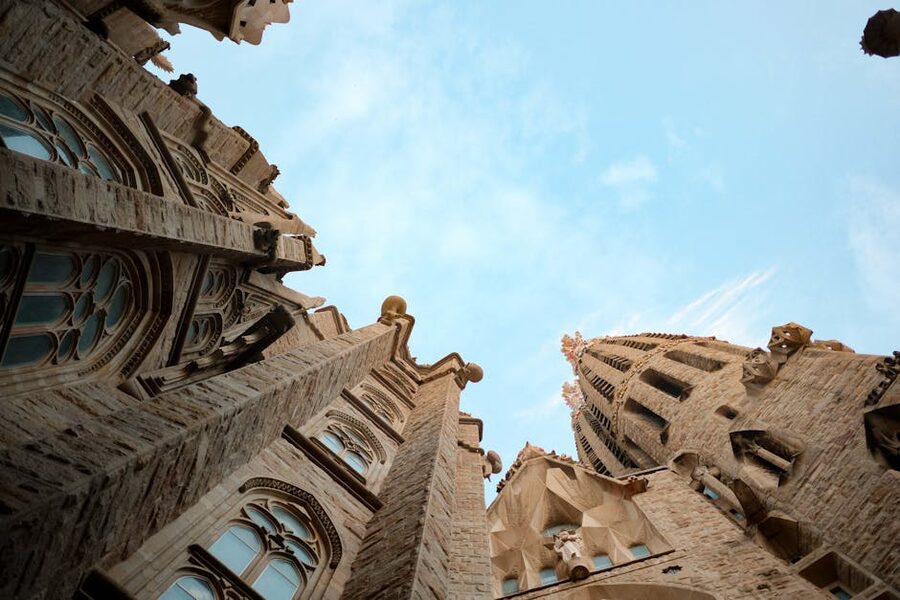
The Nativity façade faces east and is the original Gaudí-era work. He finished it himself between 1894 and 1930, supervising the carvers personally. It’s busy, organic, almost overwhelming. Every space is filled with leaves, animals, angels, instruments, and a stone tortoise at the base of each main column (one for the land, one for the sea). This is the side most travel photos show. It’s also the side you stand under if you book a tower climb up the Nativity face.
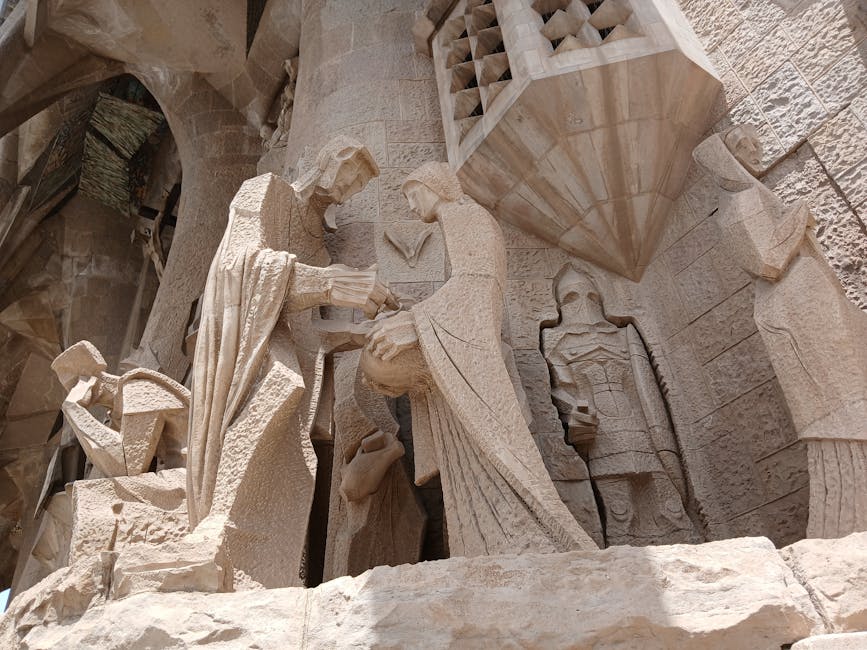
The Passion façade faces west. It was built between 1954 and 2018 to plans drawn by Gaudí but mostly carved by the sculptor Josep Maria Subirachs. Subirachs took massive liberties. The sculptures are angular, austere, almost cubist. Christ is a faceless suffering figure, the soldiers wear helmet-armour that looks more sci-fi than Roman. Many Catalans hate the Passion façade. Others, myself included, think the contrast with the Nativity side is the point. Suffering shouldn’t look like a wedding cake.
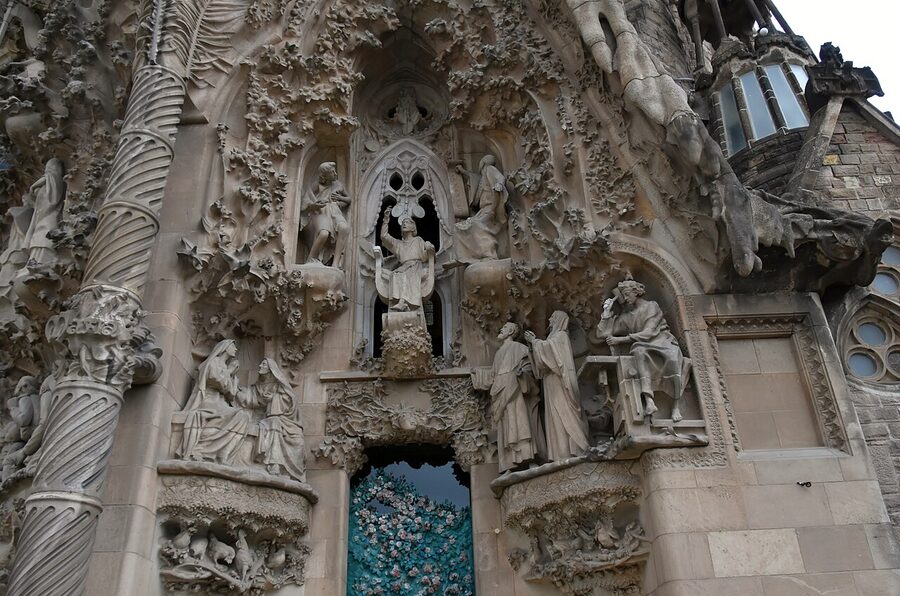
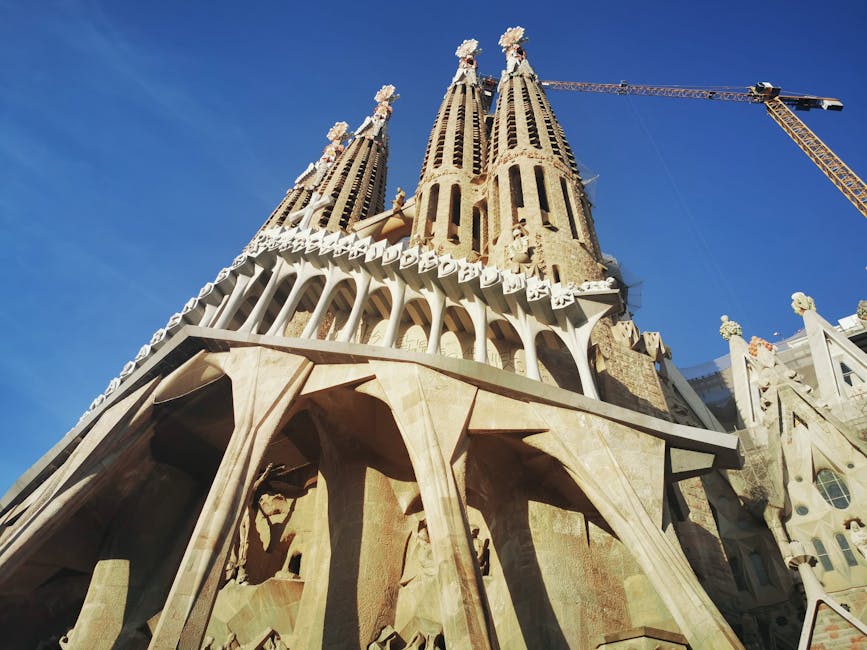
The Glory façade faces south, and is intended to be the main entrance once finished. As of 2026, it’s still under construction. There’s currently a residential block in the way that the foundation has been trying to compulsorily purchase for two decades. The legal fight over those buildings is one of several reasons the 2026 completion target keeps slipping. It would be remarkable if the basilica is structurally finished by 2030.
Best Tours for Sagrada Familia
I’ve done this visit a few different ways across multiple Barcelona trips, and the differences between ticket types matter more than they do at most attractions. Here’s how the three main options stack up.
1. Sagrada Familia Entry With Audio Guide: $39
This is the one I recommend by default. You move at your own pace, the audio guide actually explains the symbolism (which is otherwise invisible, and our full review covers what’s worth pausing for), and you can sit on a bench in the nave for as long as you want without a guide pulling you on. The pricing is essentially identical to the official site once you factor in the included audio guide.
2. Skip-the-Line Entry Ticket and Guided Tour: $67

Worth the upgrade if you respond to people more than recordings, or if it’s your first cathedral visit anywhere with this much religious symbolism. The live guide can answer your questions, point at things, and decide where to linger based on the group’s interest. Our review covers what to expect from the guide quality and group size.
3. Sagrada Familia Tour and Optional Tower Visit: $56

The tower add-on is what makes this option worth considering. For not much extra over a basic guided tour, you get the lift up one of the towers for the city view. Our review notes that the tower-down stair descent is steep and narrow, so the option is best for people without mobility or claustrophobia issues.
When to Visit (And When Not To)
The basilica is open most days from 9am, with the last entry around 6pm in winter and 8pm in summer. Sunday morning is usually closed to tourists for mass. Entry resumes around 2pm.
The light is the deciding factor. Late morning (around 11am) gives you the strongest blue and green tones from the east windows. Late afternoon (around 4-5pm) gives you the reds and oranges from the west. If you can pick only one, pick the afternoon. The warm light is what most people remember.
Avoid the first slot of the day if you want photographs without crowds. The 9am entry tends to fill instantly with tour groups racing to be the first ones inside. The 11am to noon window is busiest. After 4pm thins out noticeably as the day-tour buses leave for other parts of Barcelona.
Getting There
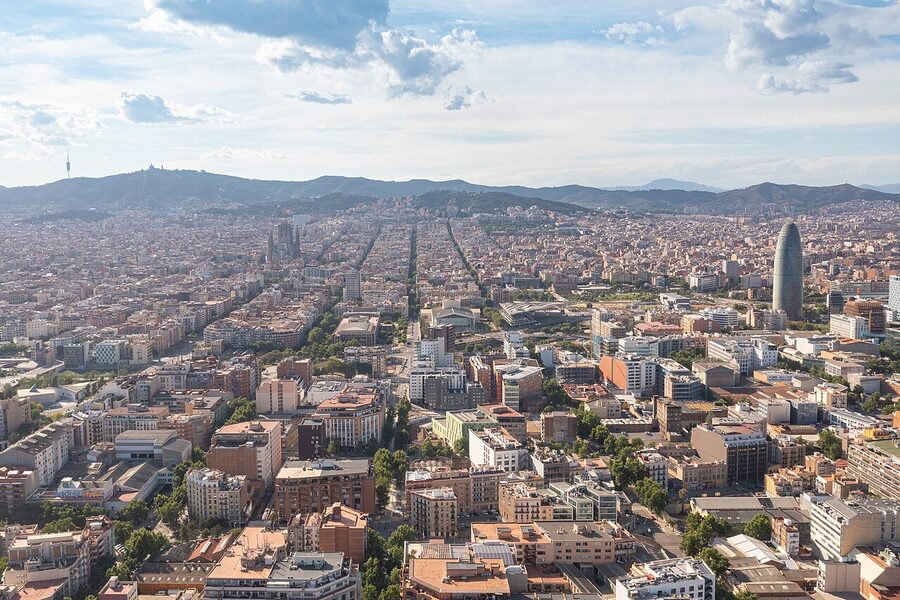
The metro stop is Sagrada Família on lines L2 (purple) and L5 (blue). The exit signage points you up a flight of stairs and you emerge directly opposite the Nativity façade, which is a memorable way to first see the building. The Hola Barcelona travel card covers the metro for the full duration.
If you’re coming from the Gothic Quarter or Las Ramblas, the metro takes about 15 minutes. Walking takes about 35 minutes through the Eixample grid, which is flat, mostly shaded, and worth doing once if the weather is mild. Taxis are cheap by European capital standards (€8-€12 from the centre).
The Barcelona hop-on hop-off bus stops at Sagrada Família too, but the metro is faster and a third of the price for the same trip.
Inside the Symbolism (What the Audio Guide Won’t Tell You Quickly)
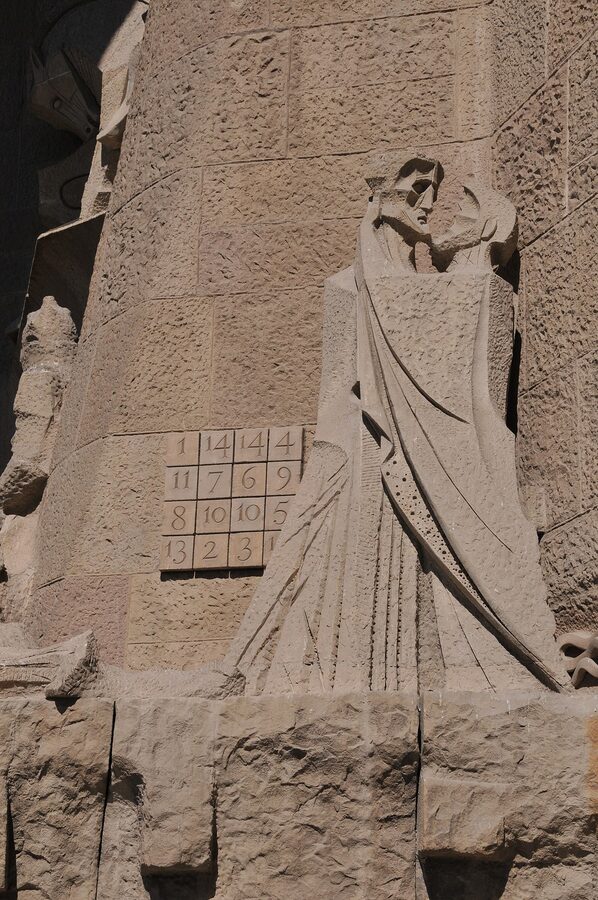
If you’re going to look up one thing before you visit, look up the magic square on the Passion façade. It’s a 4×4 grid of numbers carved into the stone next to the kiss of Judas. Every row, column, diagonal, and most other combinations add up to 33, the age of Christ at his crucifixion. Most visitors walk past it without noticing.
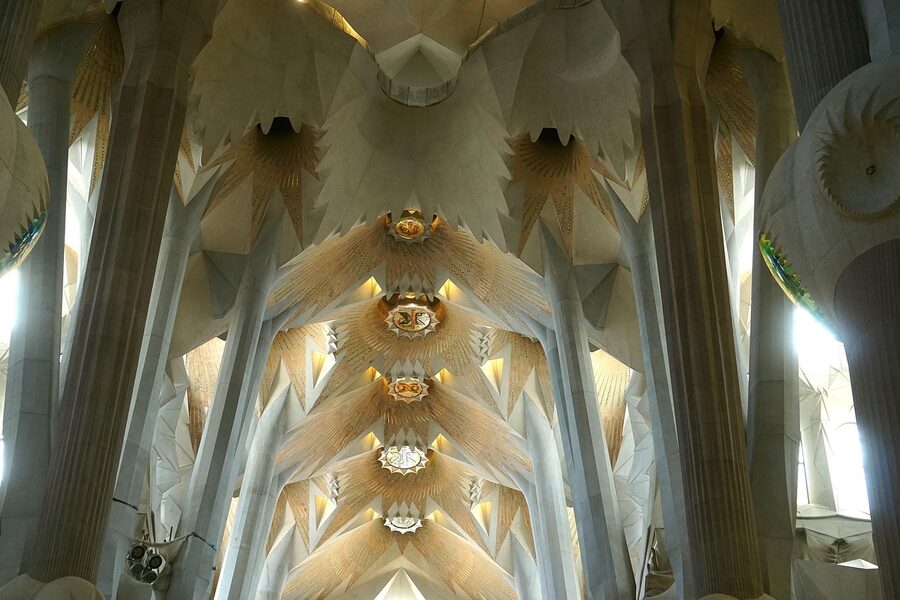
The other thing worth knowing: Gaudí used catenary arches throughout. A catenary is the curve a chain or rope makes when hung from two points: the shape that handles gravity most efficiently. Gaudí built upside-down models of the basilica with weighted strings to find the right curves, then turned them upright as the design. The columns lean because they’re following the lines of force, not because they look pretty. The model is in the museum below the basilica. You won’t fully understand the building without spending five minutes there.
The Crypt
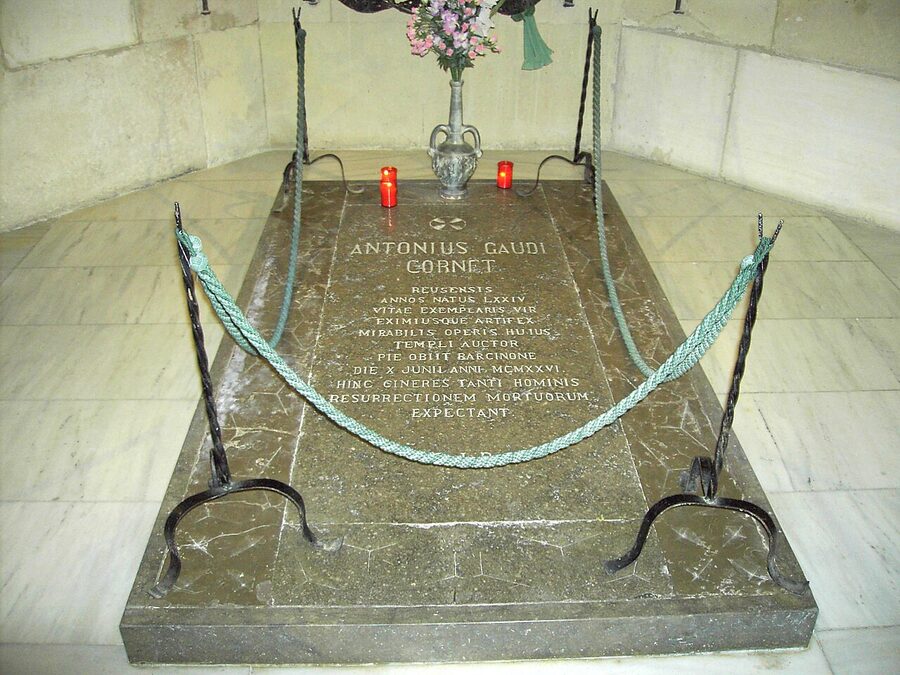
The crypt is where Gaudí is buried. It’s beneath the apse and is the oldest finished part of the basilica. Most visitors miss it. Your ticket includes access but the entrance is easy to walk past.
The crypt is also still a working chapel. Mass is held there. If you’re not Catholic, the right thing is to visit during non-service hours and stay quiet. There’s a small altar to Our Lady of Montserrat (the Catalan patron saint, whose actual monastery is an hour outside the city and worth a day trip if you’re staying long enough). Gaudí’s tomb is simple: a slab with his dates and an inscription. After the spectacle of the nave above, the simplicity hits hard.
What to Combine This With
If you’re spending a full day in this part of Barcelona, the obvious pairing is more Gaudí. Casa Batlló on Passeig de Gràcia is a 20-minute walk south and gives you Gaudí’s residential work: the dragon-scale roof, the bone-shaped balconies, the ocean-themed Noble Floor. Park Güell is harder to combine logistically because it’s uphill on the other side of the city, but it’s the third anchor of any serious Gaudí itinerary.
If you’re more in the comparing-cathedrals mode, the Sagrada Familia rewards being seen against its peers. St Mark’s in Venice is the Byzantine end of the spectrum: gold mosaics, dome upon dome, opulent. St Peter’s in Rome is the Renaissance answer: mathematical, vast, imperial. Milan’s Duomo is, like Sagrada Familia, still being finished after centuries; its own Italian masons have been adding stone since 1386. Each one solves the same problem (how do you build a really big church) with different metaphysics. Paris’s Sainte-Chapelle is the stained-glass extreme of that lineage, and Amsterdam’s Royal Palace on Dam Square (originally the Stadhuis) belongs in the same conversation as a civic-classical contrast to Gaudí’s biological one.
A Few Caveats Before You Go
The basilica is not, currently, a peaceful contemplative space. It is loud. Tour groups talk in fifteen languages at once, the audio-guide users hold their phones up to their ears and turn the volume up to compete, and the constant low rumble of construction equipment never quite stops. If you want quiet awe, Catholic mass on Sunday morning is closed to tourists for a reason. The basilica becomes a working church for a few hours each week and the difference in atmosphere is dramatic.
The other thing to know: Gaudí’s work is divisive. There are people who find the building overwhelming in a bad way. Too much, too organic, too kitsch in places. I think they’re wrong but I understand the reaction. If you found Park Güell’s mosaics overdesigned, the Sagrada Familia will not change your mind. Go in clear-eyed about that.
One Last Thing
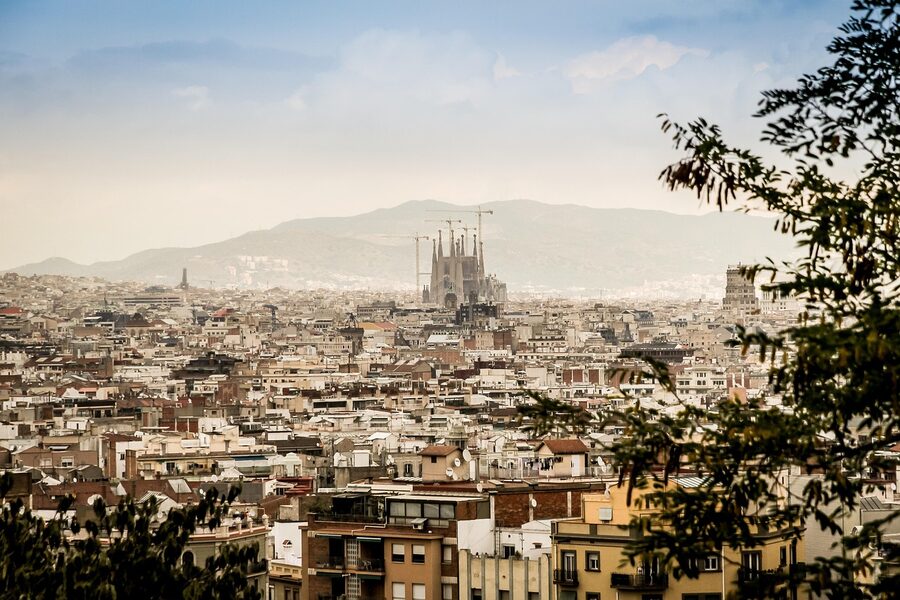
The thing I keep coming back to about this building is that it is the only major cathedral in Europe still being built by the original architect’s plan. Florence’s Duomo took 140 years and Brunelleschi only got the dome done. Leonardo’s Last Supper in Milan is fading on the wall it was painted on; the basilicas of Rome are restored and re-restored. The Sagrada Familia is something else: a building still becoming, with masons cutting stone from quarries in Galicia and shipping them to a workshop next to a Barcelona metro station, where they are hauled up by cranes that you can hear from inside. You are not visiting a finished thing. You’re catching a glimpse of one mid-construction. There may not be many places left where that’s still true.
If you go, book ahead, pick the afternoon, take the audio guide, sit down for at least ten minutes inside the nave with your phone away, and do not skip the museum below. That’s the visit.