The Colosseum took eight years to build and held 50,000 spectators. Getting inside today takes about 90 seconds — if you’ve booked a ticket in advance. If you haven’t, it takes about two hours standing in a line that wraps around the building and offers zero shade.
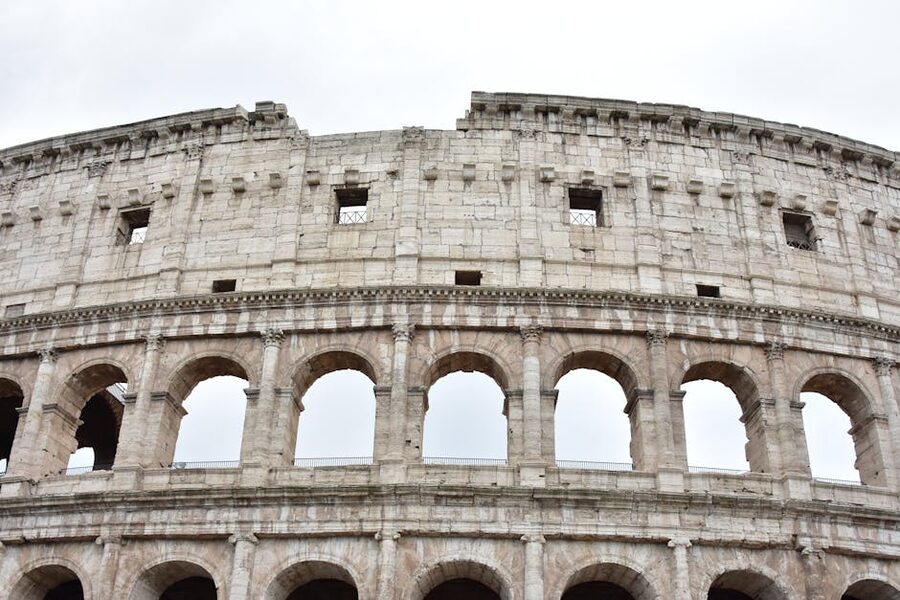
I’ve visited the Colosseum three times across different trips to Rome. The first time I tried to buy tickets at the door and almost gave up. The second time I booked a basic timed entry, which got me inside but left me confused about what I was actually looking at. The third time I booked a guided tour and it was a completely different experience — the kind where you leave feeling like you actually understand the place.
Here’s what I’ve figured out about the ticketing system so you don’t have to learn the hard way.
Short on Time? My Top Picks
Colosseum, Palatine Hill & Forum Guided Tour — $52. Skip-the-line, expert guide, 2.5 hours. The best overall option and the one I’d book again without thinking twice.
Colosseum, Forum & Palatine Guided Tour — $78.57. Premium guided experience with smaller groups. Worth the extra money if you want a more intimate tour with fewer people around you.
Colosseum, Forum & Palatine Hill Tour — $55. Solid mid-range option with headsets so you can hear the guide even in crowds. Around 2.5-3 hours.
How the Colosseum Ticket System Works
The Colosseum runs on timed entry. You pick a date and a 30-minute entry window when you book. Miss your window and they won’t let you in — there’s no flexibility on this.
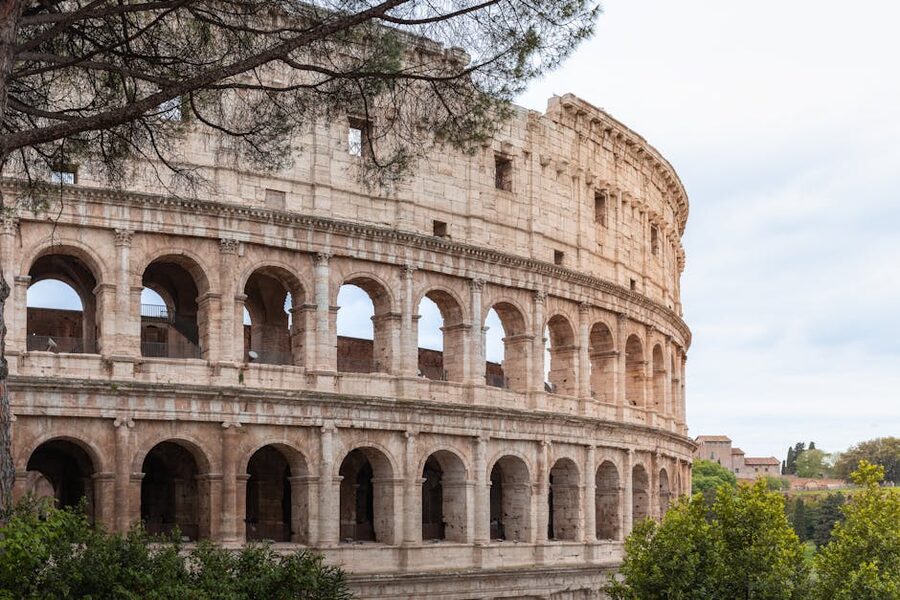
Every ticket to the Colosseum also includes access to the Roman Forum and Palatine Hill — they’re treated as a single archaeological zone. Your combo ticket is valid for two consecutive days: enter the Colosseum on day one, then take your time exploring the Forum and Palatine Hill on day two. Or do it all in one day if you have the stamina.
The official ticket site is ticketing.colosseo.it. If you remember the old Coop Culture website, that’s gone — the ticketing system changed hands in 2024 and the new site is honestly much easier to use.
Ticket Types and Prices
This is where it gets confusing, because there are now several different ticket tiers.
Standard 24h Ticket (€18) — Gets you into the Colosseum ground floor, the Roman Forum, and Palatine Hill. This is the basic ticket. No underground, no arena floor, no upper levels. Valid for 24 hours from first scan.
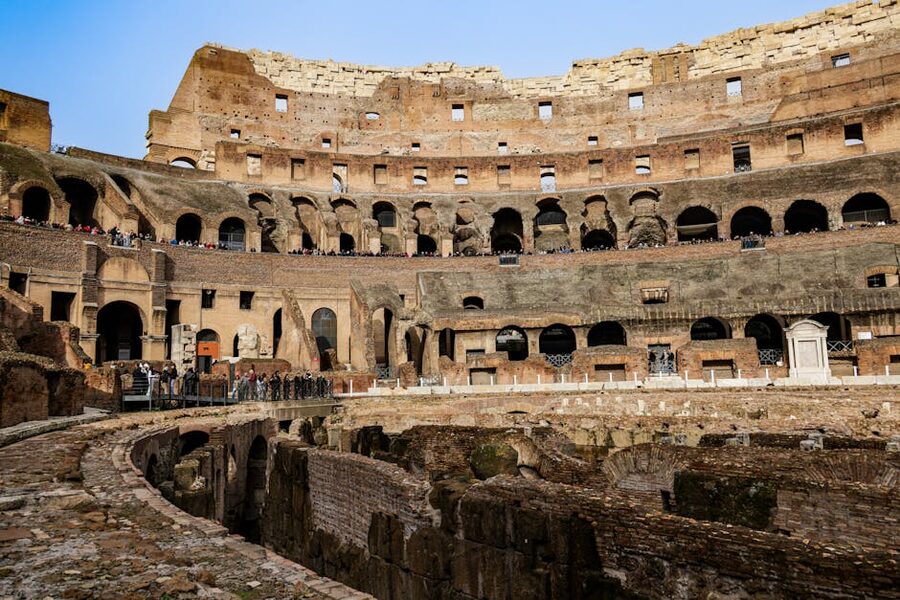
Full Experience (€24) — Everything the standard ticket includes, plus access to the underground hypogeum (where gladiators and animals were held before fights) and the arena floor. This is the ticket I’d recommend if you’re going the self-guided route. The underground is genuinely fascinating and most visitors don’t realize it exists.
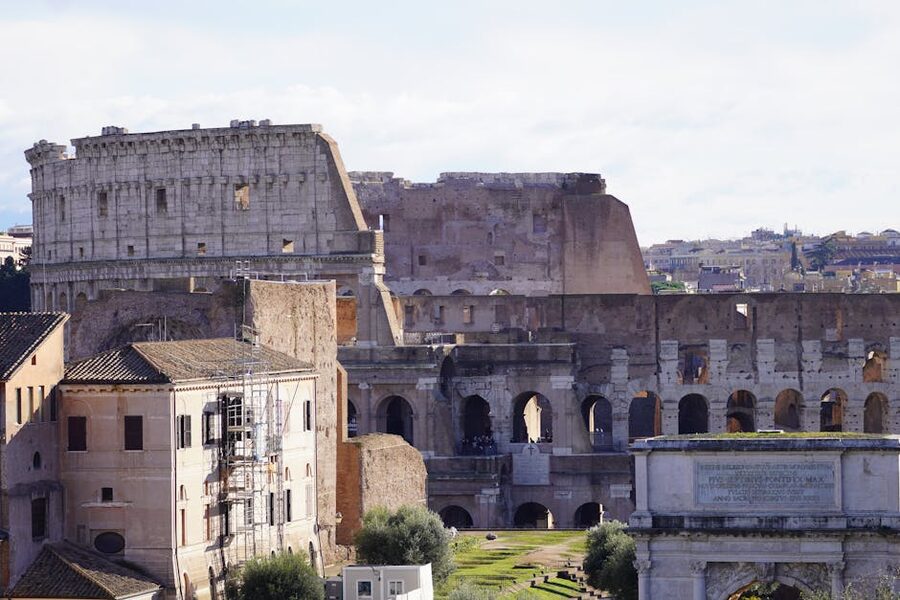
Full Experience with Guided Tour (€32) — Same access as above but with an official guide walking you through in Italian or English. Smaller groups than third-party tours but limited departure times.
Full Experience Attic (New in 2024) — Includes a ride on the new panoramic elevator to the upper levels. The views from the attic are outstanding — you can see the full arena from above and out across the city. Availability is limited.
Free Entry — Under 18s enter free (EU and non-EU), but you still need to book a timed slot. First Sunday of each month is free for everyone, but the lines are extraordinary — I’d avoid it unless you genuinely have nowhere else to be.
When to Visit
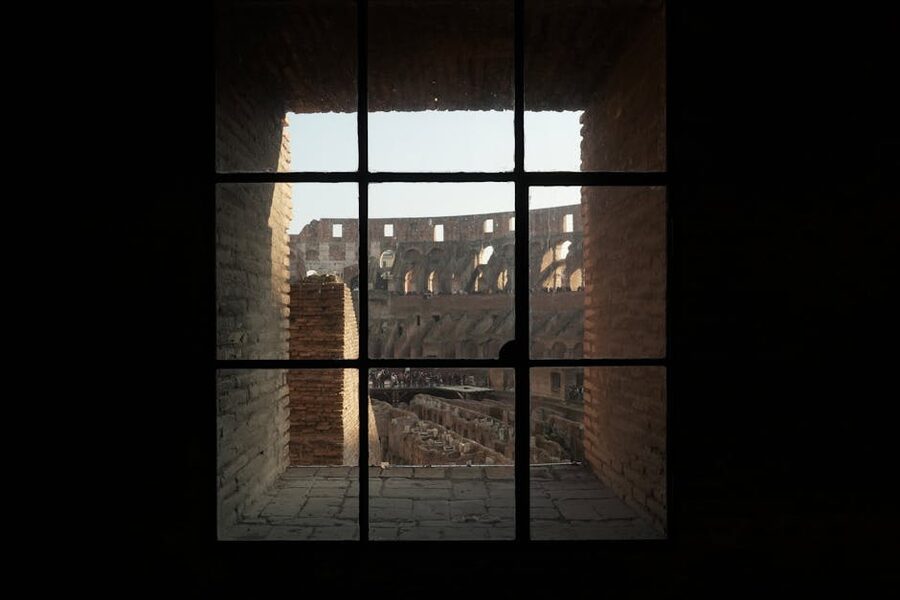
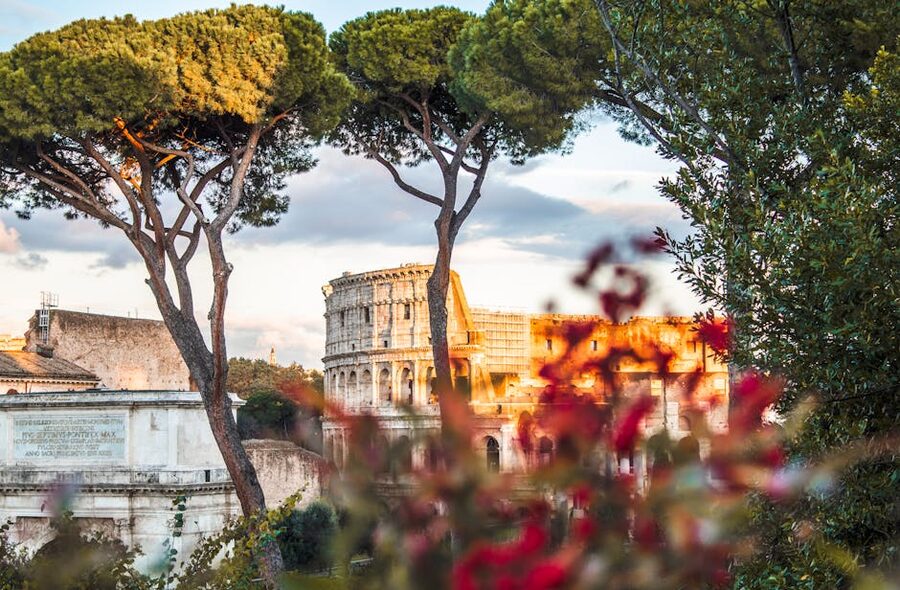
The Colosseum opens at 9 AM year-round. Closing time varies by season — 4:30 PM in winter, 7:15 PM in summer. Take the earliest slot you can get. By 11 AM the crowds are thick and the heat in summer is punishing — there’s almost no shade inside the structure.
Wednesday mornings tend to be quieter because the Papal Audience draws travelers toward the Vatican. Late afternoon slots (after 3 PM) are also significantly less crowded, and the light is better for photos.
November through February is the least crowded period overall. If you can visit Rome in early December, you’ll have the Colosseum practically to yourself compared to summer, the same off-season trick that works at Granada’s Alhambra and Carcassonne’s medieval citadel, where winter visits flip a packed icon back into something walkable.
Official Tickets vs. Guided Tours: Which Should You Book?
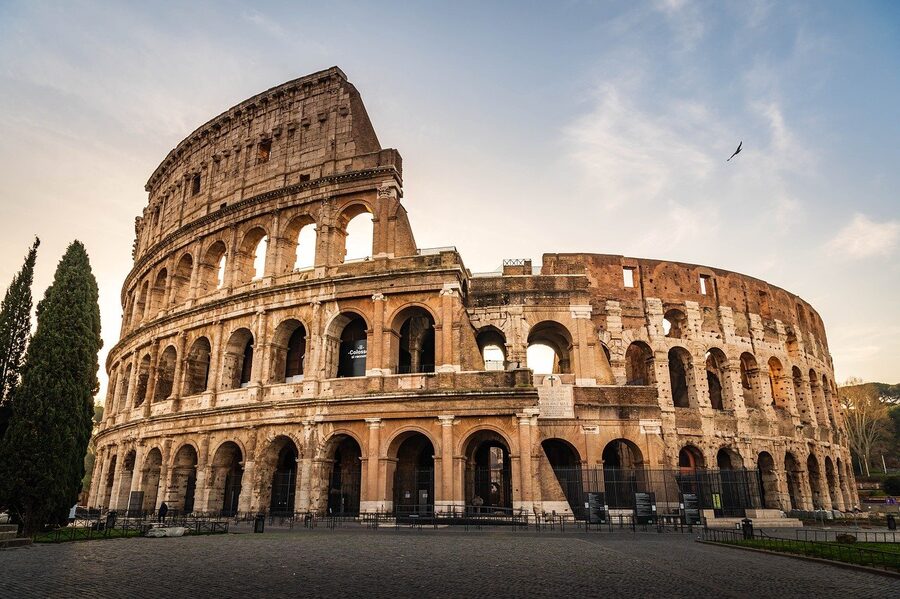
If you’ve never been and this is your only shot at the Colosseum, book a guided tour. I’m not saying that as a sales pitch — I’m saying it because I’ve done both, and the self-guided experience left me standing in the middle of a ruin wondering “what am I actually looking at?” A good guide transforms a pile of ancient stone into a story you can picture.
If you’re a return visitor, or you’ve done your homework and genuinely prefer exploring at your own pace, the official Full Experience ticket at €24 is the way to go.
Third-party guided tours (through GetYourGuide, Viator, etc.) cost more than the official site but come with genuine benefits: better cancellation policies, headsets so you can hear the guide over the crowd noise, and guides who are often more engaging than the official ones. You’re paying for convenience and quality.
The Best Colosseum Tours
I’ve sorted these by what kind of visitor you are.
1. Colosseum, Palatine Hill & Roman Forum Guided Tour — $52
This is my top pick. At $52 it hits the sweet spot between price and experience — you get skip-the-line entry, a knowledgeable local guide, and 2.5 hours covering all three sites in a logical order. The guides are passionate and the headsets mean you can hear every word even when the Colosseum is packed. I’ve put together a full breakdown of the route and what you’ll see at each stop if you want to know exactly what 2.5 hours gets you.
2. Colosseum, Roman Forum & Palatine Guided Tour — $78.57
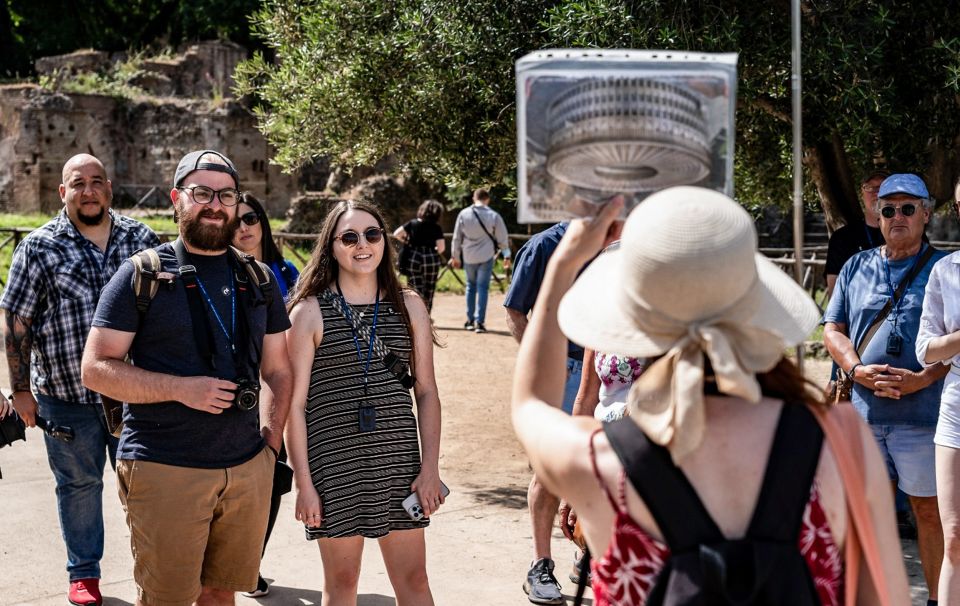
The most booked Colosseum tour on GetYourGuide with 63,000+ reviews. This one costs more but delivers a more premium experience — smaller groups, priority access, and guides who clearly know their material. If you want the Colosseum without feeling like you’re in a crowd of 40 people straining to hear, this is the upgrade. We cover how the group sizes actually compare to the cheaper options and whether the premium price is justified.
3. Guided Tour of Colosseum, Roman Forum & Palatine Hill — $55
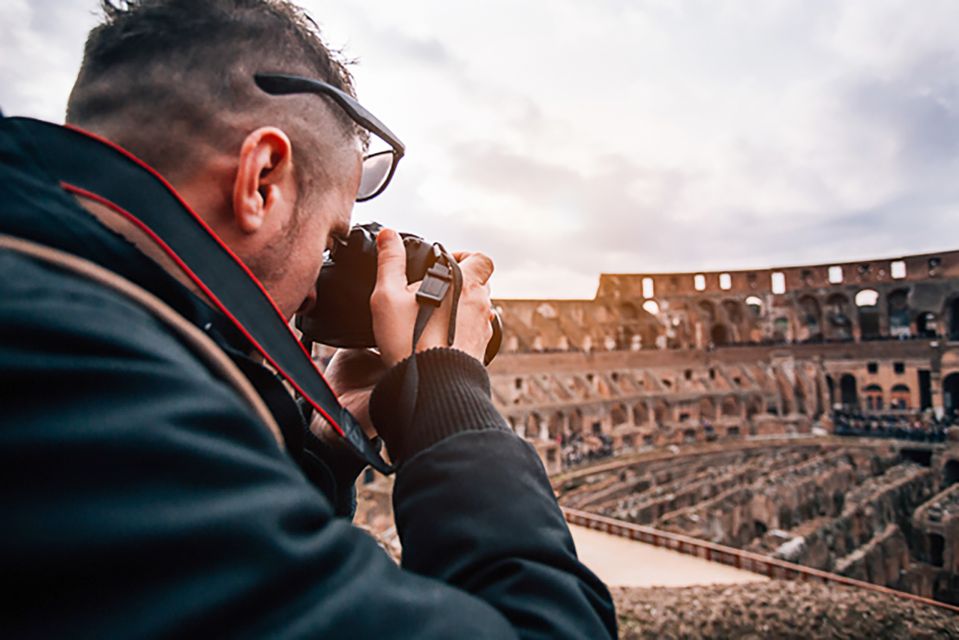
The reliable middle ground. At $55, it’s priced between the budget and premium options, with 27,000+ positive reviews backing up the quality. Covers the same three sites in about 2.5 to 3 hours with headsets included. The guides are experienced locals who bring real energy to the history — the kind who make you forget you’re on a tour and feel like you’re getting a private history lesson. More on what makes this one stand apart from the budget options.
What You’ll See Inside
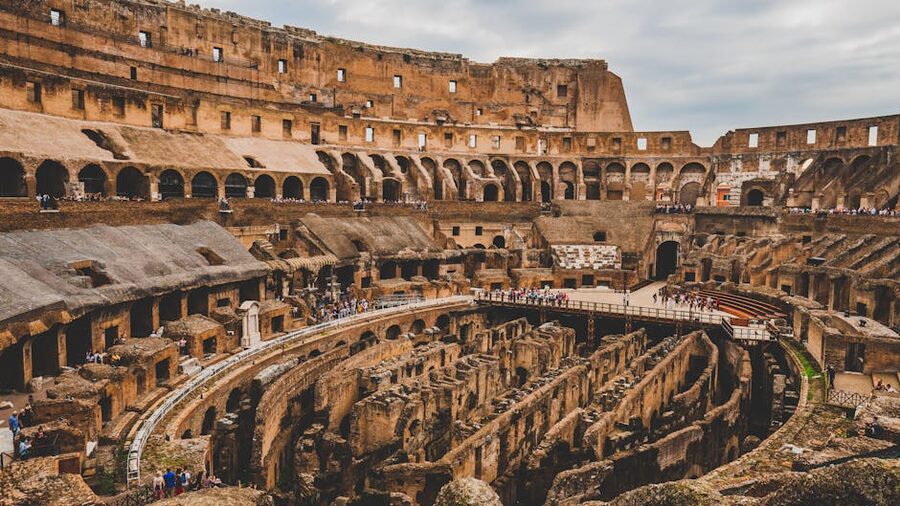
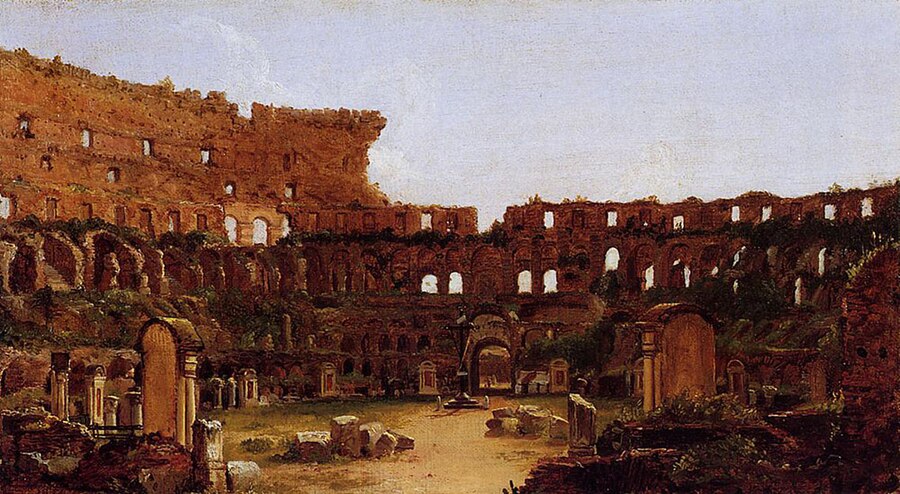
The Colosseum looks like a ruin — and it is — but understanding what you’re looking at changes everything. Here’s what each area actually is and why it matters.
The Arena Floor
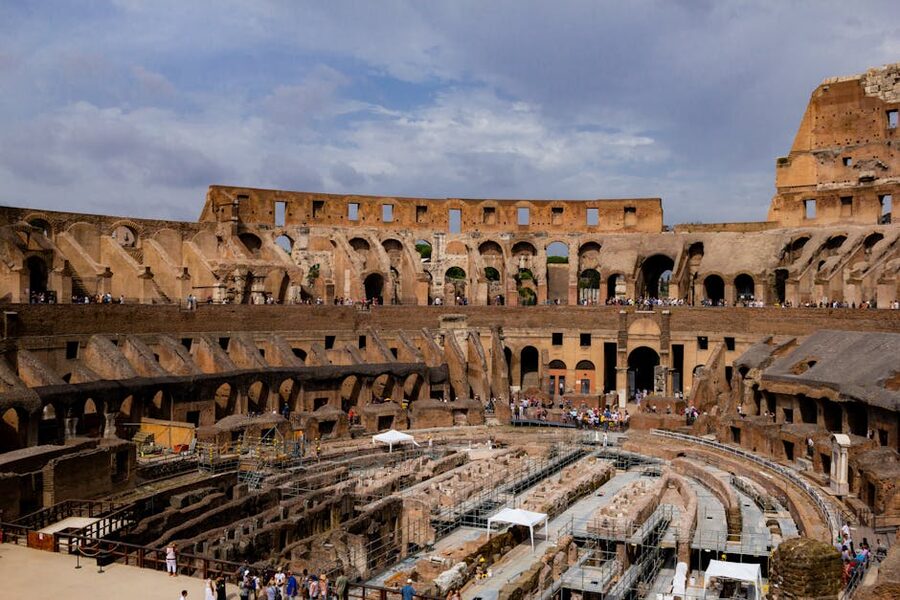
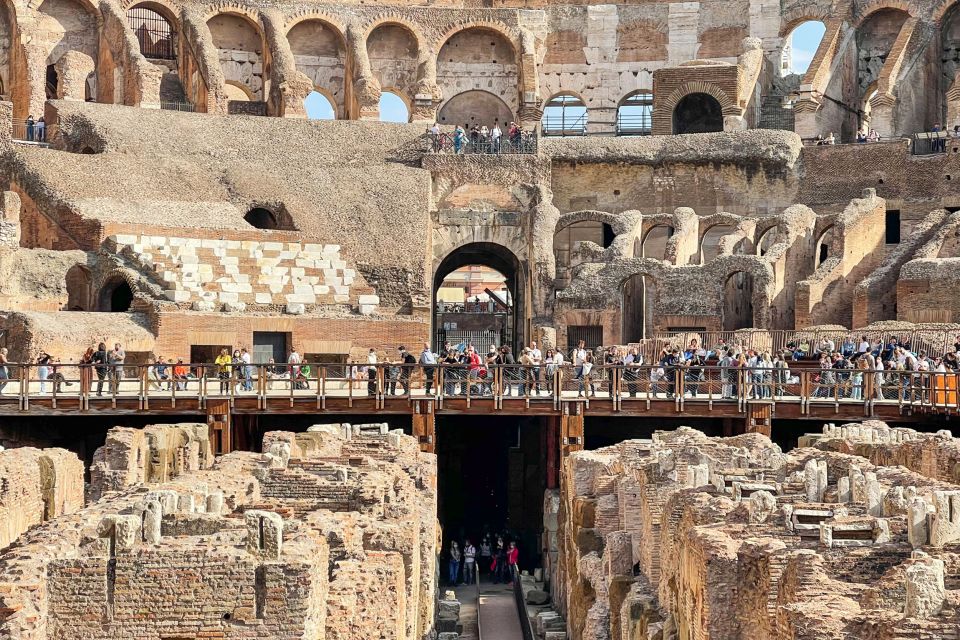
The arena floor is where the action happened. Today, most of it is gone — you’re looking down into the exposed underground structure. A partial wooden floor reconstruction on one side gives you a sense of what gladiators actually stood on. If you have a Full Experience ticket or a guided tour with arena access, you can walk on this reconstructed section and stand roughly where the fighters stood. The perspective from floor level, looking up at 50,000 empty seats, is something photos can’t capture.
The Underground (Hypogeum)
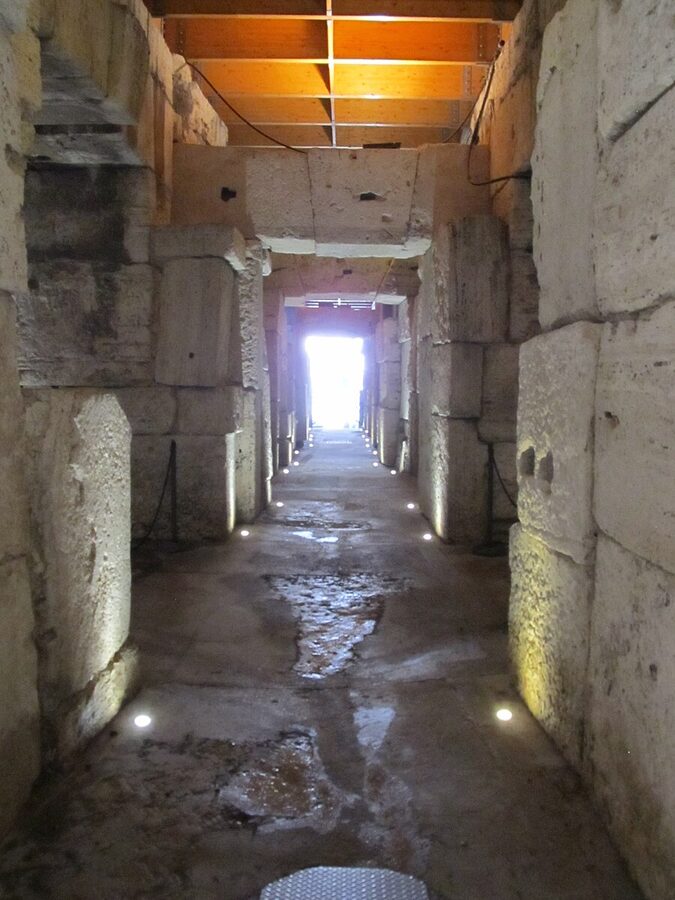
This is the part most people don’t know about and the reason I recommend the Full Experience ticket. The hypogeum is a two-level underground network of tunnels and chambers directly beneath the arena floor. This is where gladiators waited before combat, where exotic animals were caged, and where an elaborate system of lifts and trapdoors created dramatic entrances into the arena above.
The underground was only opened to the public in 2021 after years of restoration. Walking through the narrow corridors with the arena floor visible above you through the gaps is genuinely eerie, a feeling shared with Anne Frank’s Amsterdam neighbourhood or the marble halls of Amsterdam’s Royal Palace, where the architecture itself carries the weight of what happened in it. You’re standing in the space where people waited to fight, possibly to die, two thousand years ago.
The Upper Levels
The standard ticket gets you to the second level. The new Attic ticket takes you higher via a panoramic elevator installed during recent restorations. From the top, you can see the entire arena layout below and out across the Roman Forum toward Palatine Hill. On a clear day, you can pick out the dome of St. Peter’s Basilica in the distance.
The Roman Forum
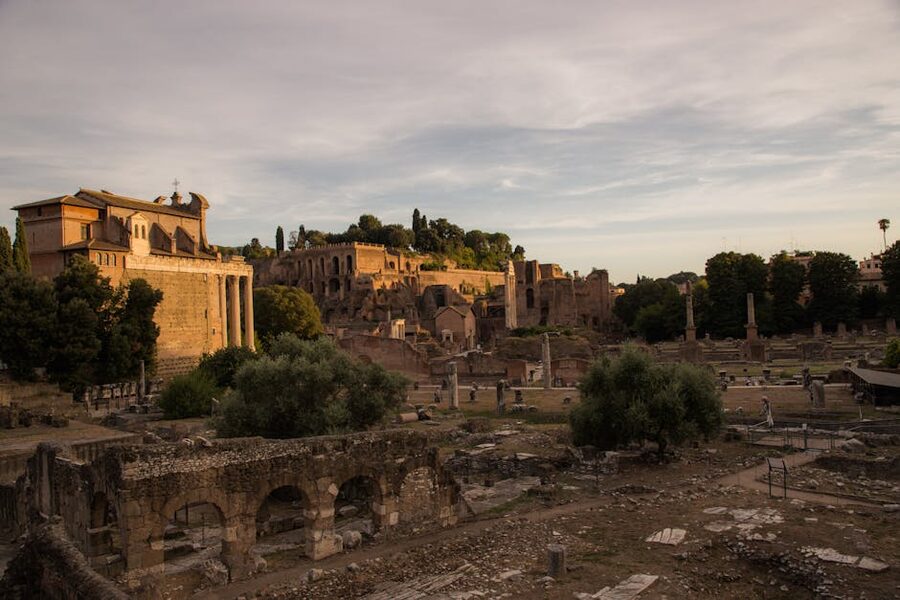
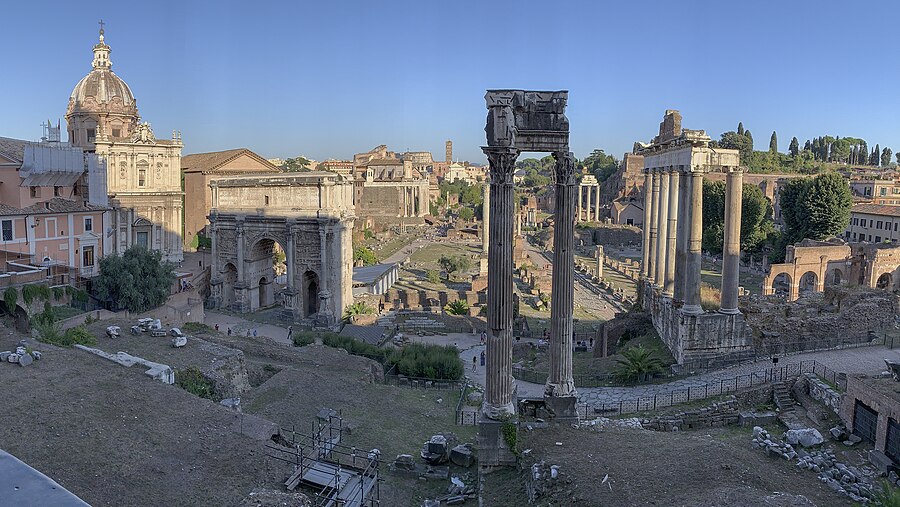
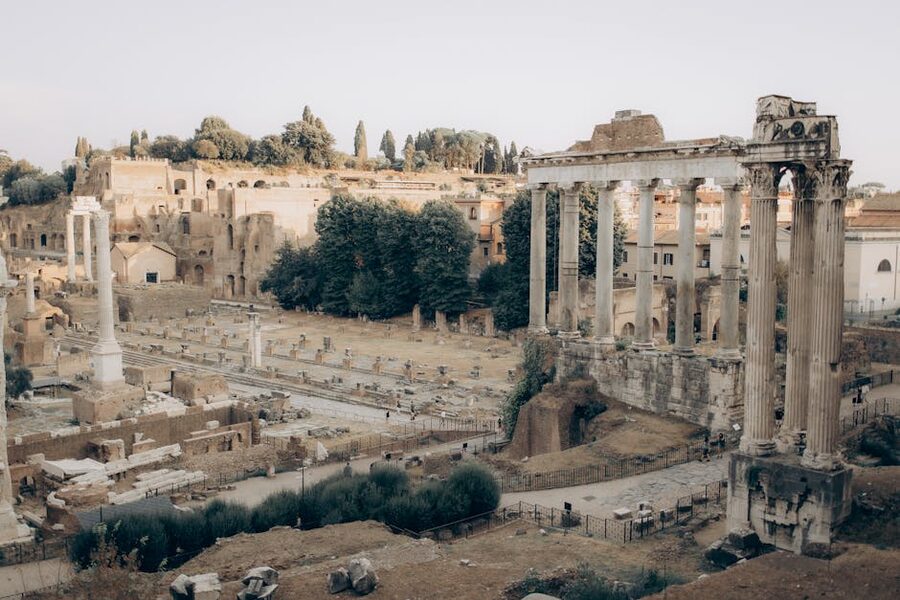
Your Colosseum ticket includes the Forum, and you should use it. The Roman Forum was the commercial, political, and religious center of ancient Rome for over a thousand years. It’s where Julius Caesar was cremated, where senators debated, where triumphal processions paraded through after military victories.
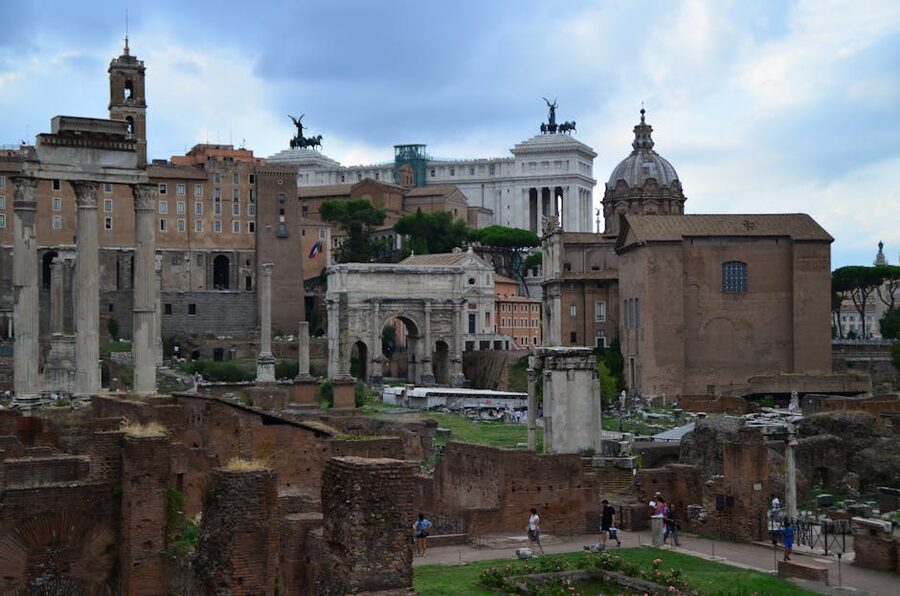
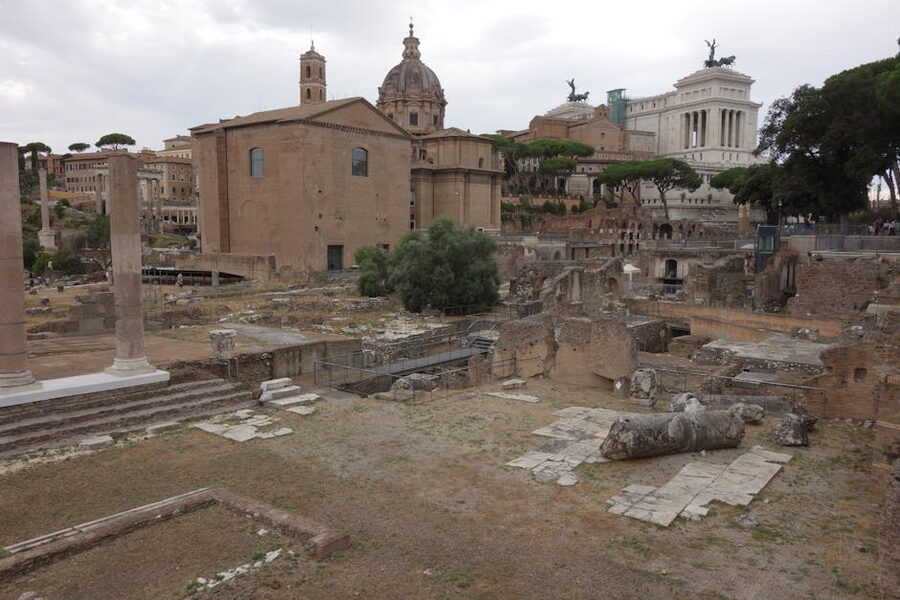
Without a guide or at least a good audio app, the Forum can feel like a confusing field of broken columns. With context, it’s one of the most remarkable places on earth. The paving stones on the Via Sacra are the same ones Caesar walked on. The Arch of Titus shows carved reliefs of Romans carrying treasure looted from the Temple of Jerusalem in 70 AD. These aren’t reproductions — they’re the originals.
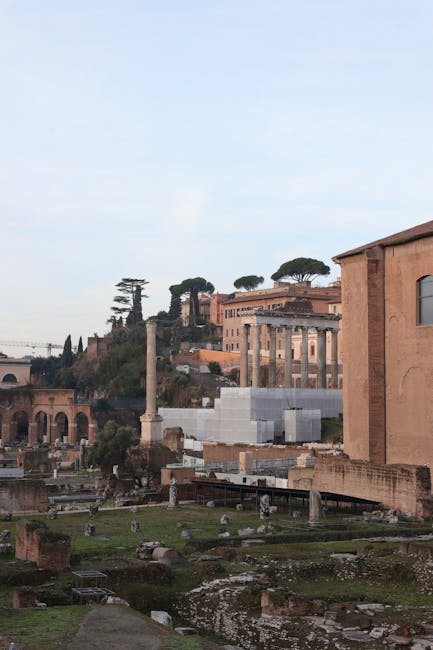
Enter the Forum from the Via dei Fori Imperiali entrance (not the Colosseum-side entrance) if you want to walk it chronologically from oldest to newest. Budget about 90 minutes for a proper visit, or 45 minutes if you’re just hitting the highlights.
Palatine Hill
Palatine Hill is the third leg of your combo ticket and the one most visitors skip — which is a mistake. This is where Rome was literally founded, according to legend. It’s where Romulus drew the boundaries of the city in 753 BC and where emperors built their palaces for the next 700 years. The word “palace” itself comes from “Palatine.”
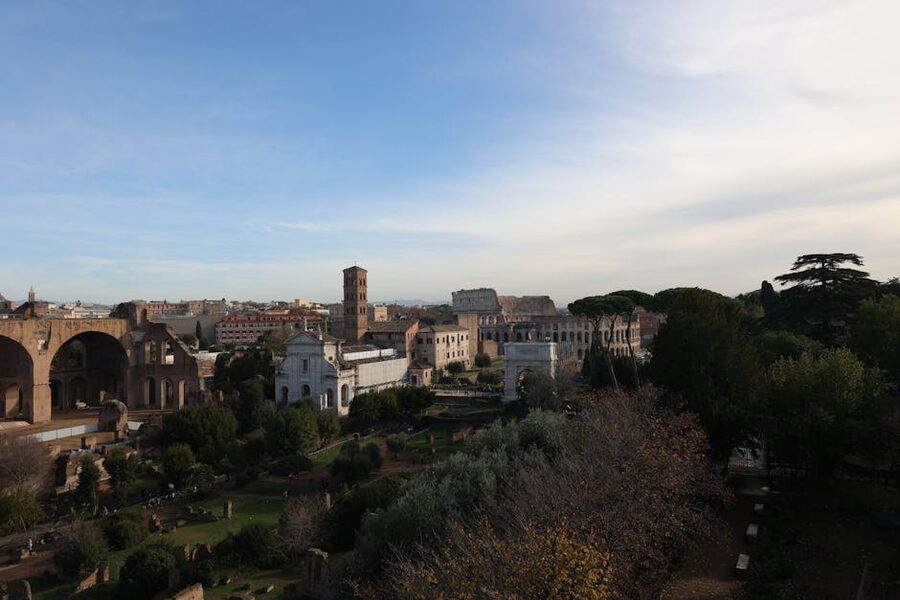
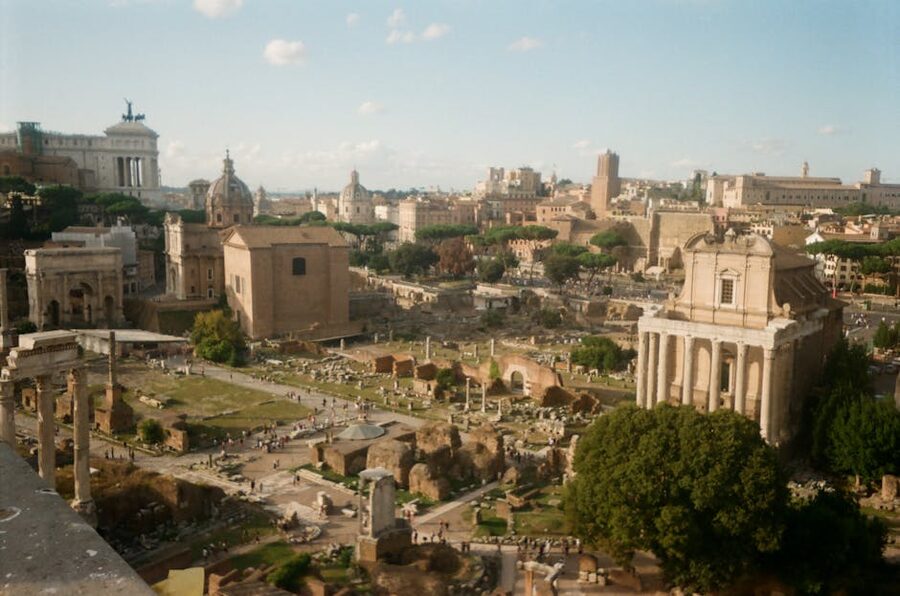
The ruins on Palatine Hill are less intact than the Forum, but the setting is beautiful — overgrown gardens, scattered columns, and sweeping views in every direction. The Farnese Gardens at the top are a peaceful spot to rest after the intensity of the Colosseum. Augustus’s house, recently restored and opened to visitors, still has original wall frescoes in remarkably good condition.
If you’re using your ticket across two days, save Palatine Hill for day two. It’s a hillside site with lots of walking and uneven ground — you’ll want fresh legs.
A Brief History of the Colosseum
Emperor Vespasian ordered construction in 70 AD, funded by treasure looted from the siege of Jerusalem. His son Titus inaugurated it in 80 AD with 100 consecutive days of games that reportedly killed 5,000 animals. The final gladiatorial contests took place in 435 AD, and animal hunts continued until 523 AD.
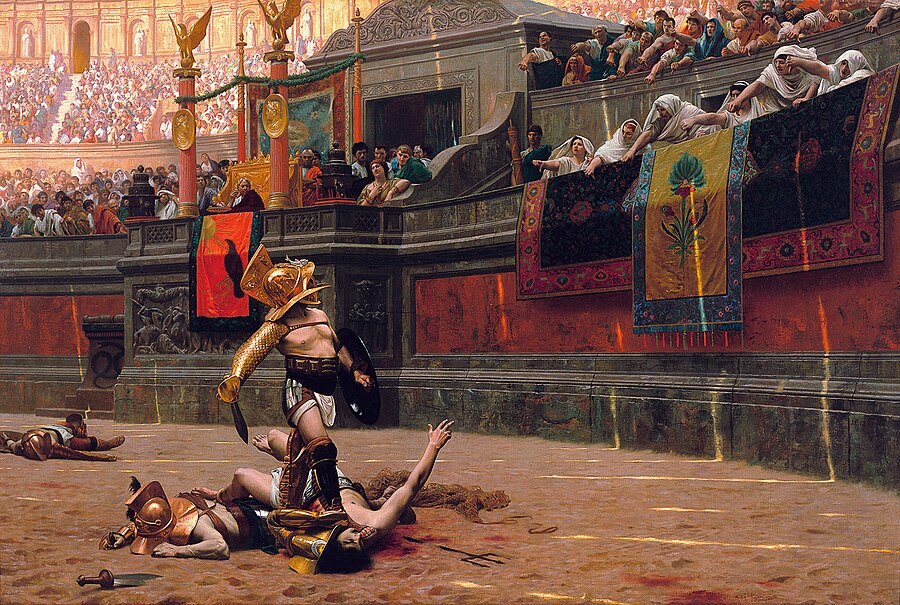
At its peak, the Colosseum could seat 50,000 spectators and had a retractable canvas awning (the velarium) operated by a dedicated team of sailors. Water channels beneath the arena allowed it to be flooded for mock naval battles, though historians debate how often this actually happened. The engineering was extraordinary for any era, let alone the first century.
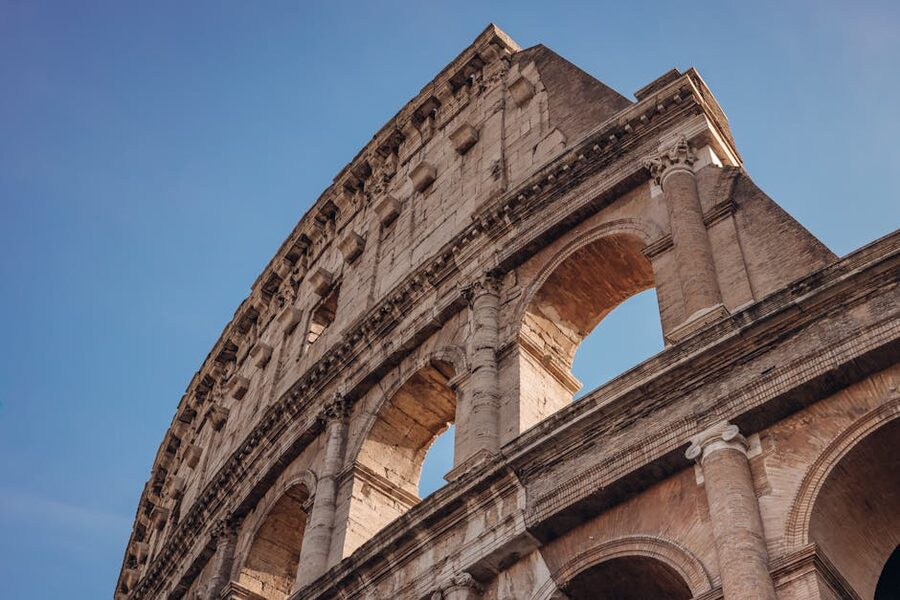
After the fall of Rome, the Colosseum was used as a quarry for centuries. Much of the travertine stone that originally covered the exterior was stripped away and reused in buildings across Rome, including St. Peter’s Basilica and the Palazzo Barberini, the same recycling logic that turned Córdoba’s Roman columns into the Mezquita-Catedral and Paris’s old basilica into the columned Panthéon. What remains today is roughly one-third of the original structure.
Practical Tips
Book 2-3 weeks in advance during summer. Peak season (June-September) sells out fast, especially for morning slots and the Full Experience. Off-season you can often book a few days ahead.
Bring water. There’s no shade inside the Colosseum and very limited options to buy drinks. There are two drinking fountains (nasoni) near the entrance — fill a bottle before you go in.
The Metro stop is right there. Colosseo station on Line B drops you at the front door. It’s also an easy walk from the historic center — about 15 minutes from Piazza Venezia down Via dei Fori Imperiali, which is pedestrianized on weekends and offers spectacular views of the Forum as you walk.
Backpacks are allowed but will be X-rayed. Security screening takes 5-10 minutes. Large suitcases and coolers are not permitted.
Don’t buy tickets from street vendors. People outside the Colosseum will approach you offering “skip the line” tours at inflated prices. Some are legitimate operators, but many are not. Book in advance through the official site or a reputable platform.
Combine with nearby sights. The Arch of Constantine is right next to the Colosseum entrance — free to view, no ticket needed. The Domus Aurea (Nero’s Golden House) is a 5-minute walk away and offers fascinating underground tours, but requires a separate ticket booked in advance.
Getting There
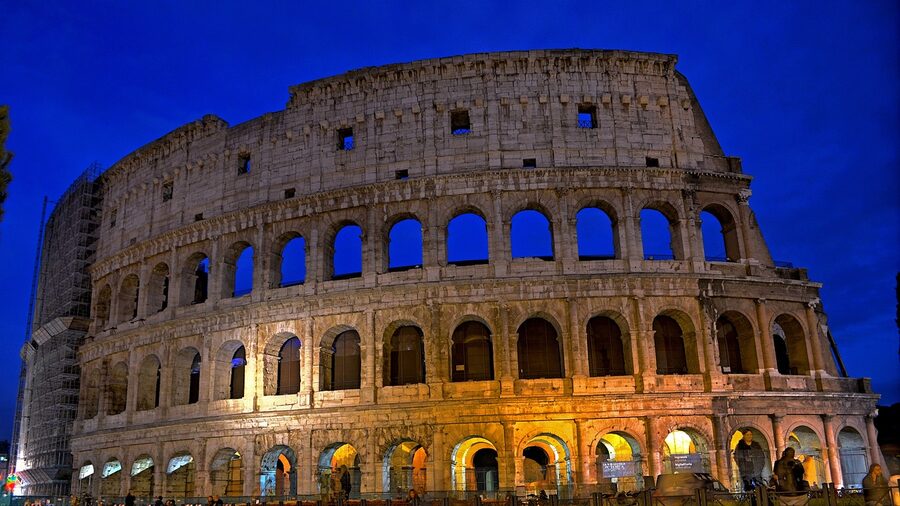
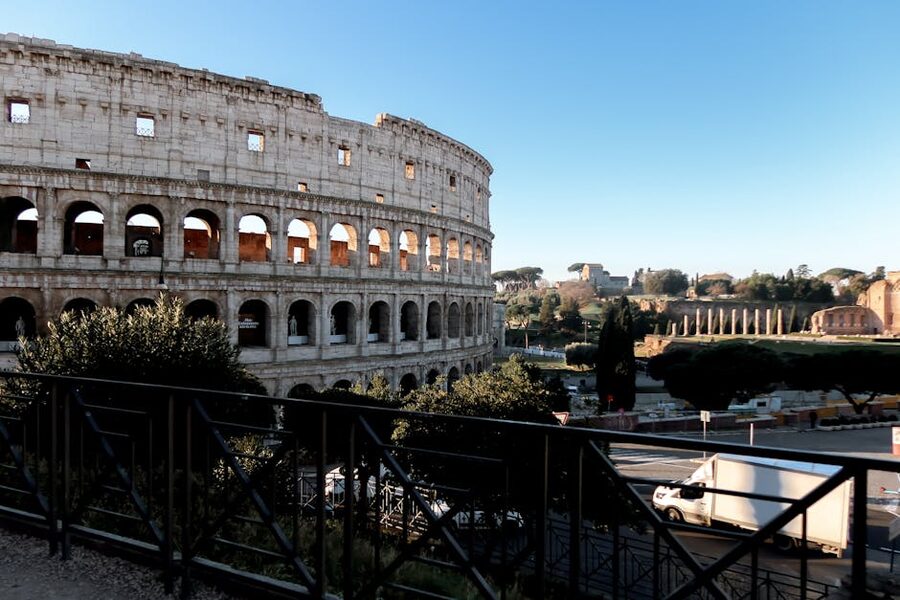
The Colosseum is in the heart of central Rome. The easiest option is Metro Line B to Colosseo station — the exit puts you directly in front of the amphitheater.
From Termini station, take Metro B two stops south. From the Vatican area, take Metro A to Termini, then switch to Line B (one change, about 20 minutes total). From Trastevere, it’s a 25-minute walk across the Tiber and through the historic center — a pleasant route that takes you past the Teatro di Marcello and the Forum Boarium.
Tram 3 also stops near the Colosseum if you’re coming from Trastevere or the south side of the city.
More Booking Guides for Rome
If the Colosseum is your first booking in Rome, the Vatican Museums and Sistine Chapel should be your second — the ticketing system is similarly timed and sells out on a similar schedule. St. Peter’s Basilica dome climb is free to enter but the queue for the elevator can stretch to an hour, so getting there early matters. And Rome’s food tours through Trastevere and Testaccio book up fast in peak season — if you’re planning to eat well (and you should), reserve a spot before you arrive.