
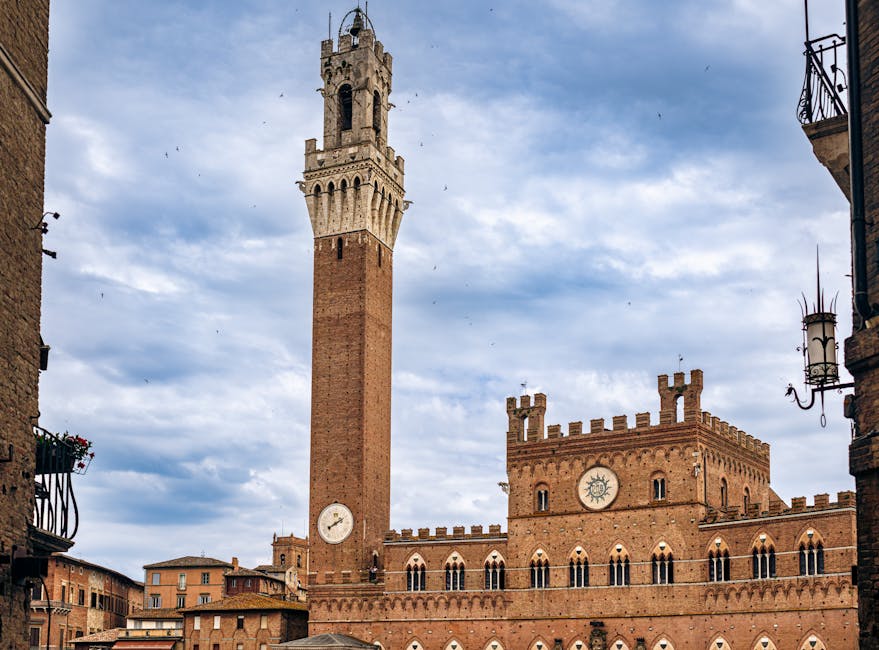
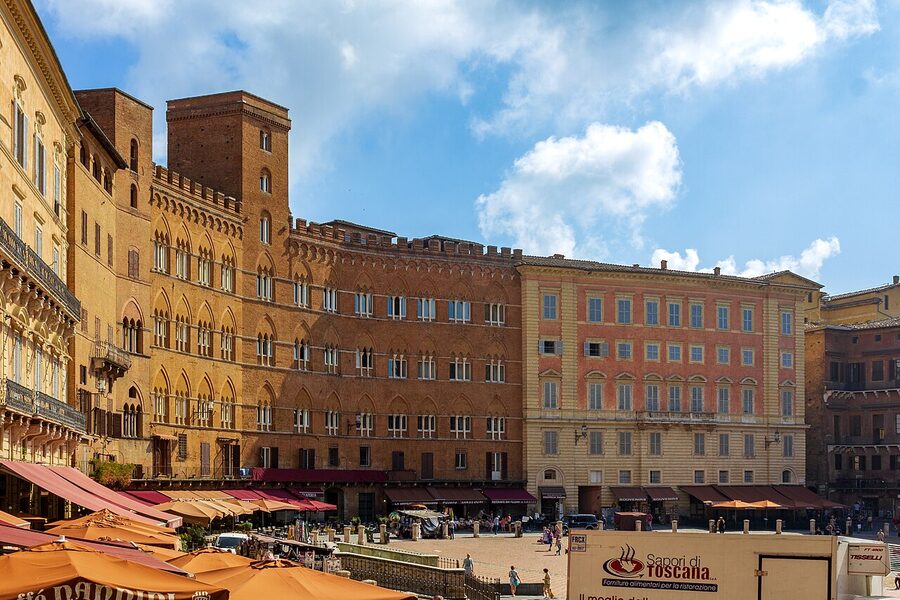
It’s just past four in the afternoon and you’re standing in the middle of Siena’s Piazza del Campo. The brick fans out from your feet in nine pale wedges, sloping toward the Palazzo Pubblico like the inside of a giant shell. Twenty minutes ago you were on a coach from Florence. In an hour you’ll be back on it, heading for a vineyard lunch. And tomorrow you’ll be telling someone you saw three Tuscan towns in a single day, and they’ll either nod approvingly or pull a face. Both reactions are fair.
Doing Pisa, Siena, and San Gimignano from Florence in one day is the most-booked excursion in Tuscany. It is also the trip travel snobs will tell you not to do (they say the same thing about a Segovia-and-Ávila day from Madrid or a Loire Valley castles loop out of Paris). They’ll say you should give Siena a full day, San Gimignano another, sleep in Volterra, take the slow train to Pisa, and eat dinner in a different agriturismo every night. They are correct. They are also describing a holiday most people are not on. If you have one free day in Florence, this article is for you.
The Three Best Tours in a Hurry
If you only read one section
Premium with vineyard lunch (the one most people end up booking): Tuscany Day Trip with Lunch at a Winery ($114.88). The lunch and the four-wine tasting do most of the heavy lifting; you come back genuinely fed instead of foraging in Florence at 9pm.
Best value with lunch included: From Florence: Day Trip to Pisa, Siena & San Gimignano With Lunch ($58). Same three towns, lighter lunch, half the price. The pick if you’re flexible on lunch quality and just want the day done well.
Cheapest with a Chianti detour: Pisa, Siena, San Gimignano, and Chianti Experience ($52). Adds a short Chianti stop on the drive back. Tight on time everywhere, but covers the most ground for the lowest price.
What This Day Actually Looks Like
You leave Florence around 8am from Santa Maria Novella station. The pickup is at the taxi rank in Piazza Stazione, usually outside McDonald’s. Bring a printed voucher. The drivers will not chase you down.
The order varies. Most coaches do Siena first because the cathedral is open early, then a vineyard lunch in Chianti, then San Gimignano in the afternoon, then Pisa as the last stop on the way back to Florence. A few flip the order to start with San Gimignano if there’s a cycling event blocking the Siena approach roads, which happens more often than you’d think. You’re back in Florence around 8.30pm. The whole thing runs 11 to 12 hours door to door.
The framing matters: you get roughly 90 minutes per town. Two hours each in Siena and San Gimignano if you skip the vineyard lunch on a stripped-down version of the trip. About an hour at Piazza dei Miracoli in Pisa, which is actually plenty for what you came to see. Most of the rest of the day is the bus, the lunch, or queuing for a coach toilet that one person has been in for fifteen minutes.
You walk a lot. Several reviewers I read clocked 15,000 to 20,000 steps over the day. A good chunk of that is uphill in San Gimignano and on uneven medieval cobbles in Siena. If you have a knee that complains, bring whatever you usually bring. If you’re picking between this and the easier Lake Como day from Milan or a flat Zaanse Schans windmill day from Amsterdam, the contrast is real: those are boats and flat lakeside or canalside towns, this is hills and stairs and stone.
Siena: 90 Minutes Inside the Shell
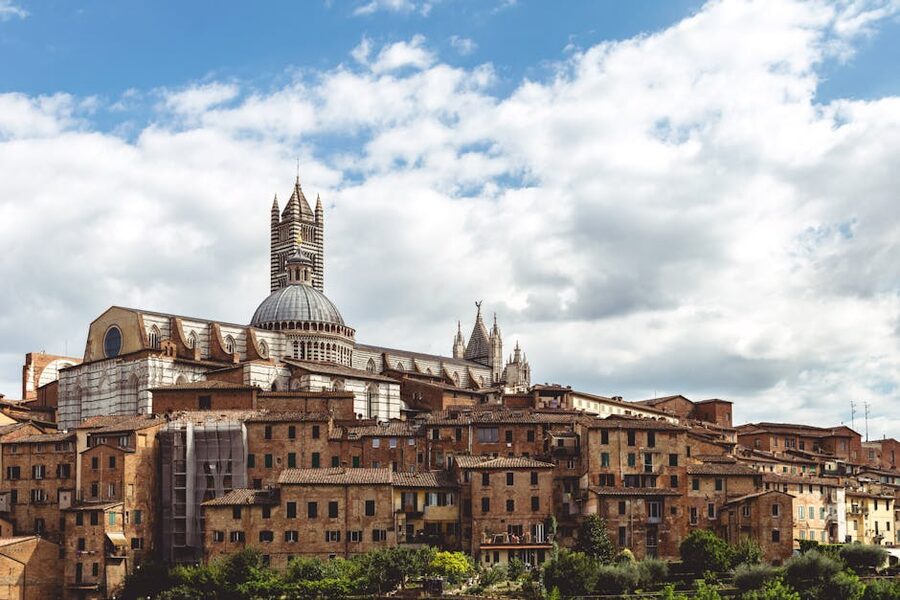
The guided walk usually drops you off at Porta Camollia and walks down the spine of the city to Piazza del Campo. Along the way you’ll pass the Banca Monte dei Paschi di Siena. Founded in 1472, it is the world’s oldest bank still operating. Your guide will say this. They will not mention that it nearly collapsed in 2017 and got bailed out by the Italian state. Both facts are true and both belong in the story.
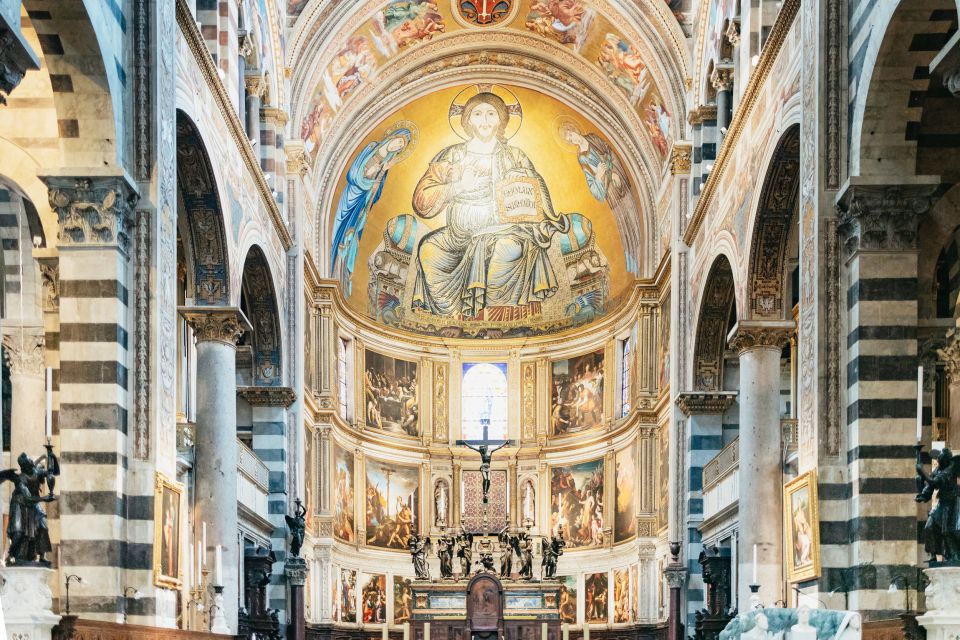
The walking tour ends at the cathedral. Entry is included on the premium tours, which is good because the floor is the reason to go in. The Duomo’s marble inlay floor has 56 panels carved between the 14th and 16th centuries, and most of it is covered most of the year to protect it. You’re hoping to be there between mid-August and late October when the panels are uncovered. If you’re not, the rest of the cathedral is still extraordinary; the Piccolomini Library frescoes by Pinturicchio are the second reason to go in. The black-and-white striped marble that defines Siena’s cathedral is repeated on a much grander scale at the Florence Duomo, but the Sienese version is older, and arguably the prettier of the two.
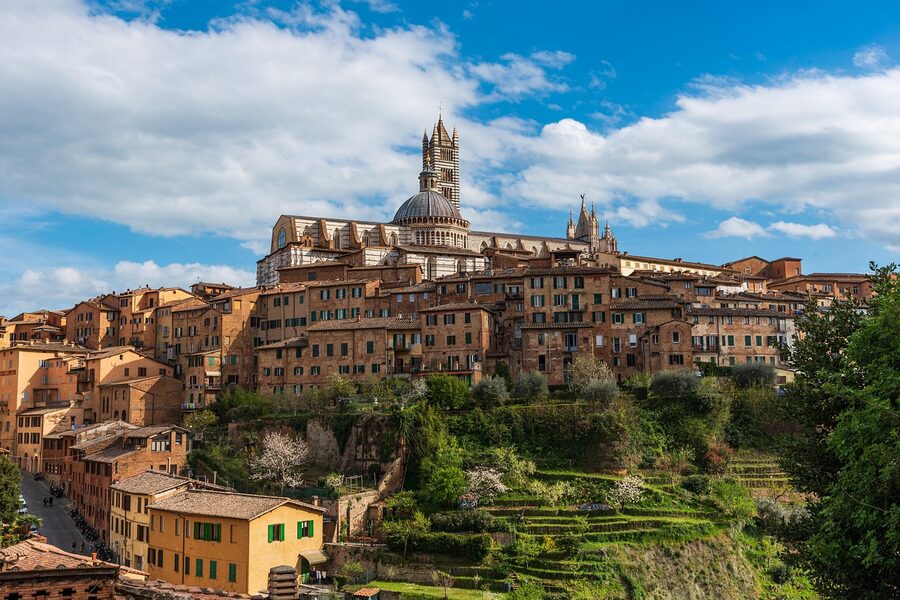
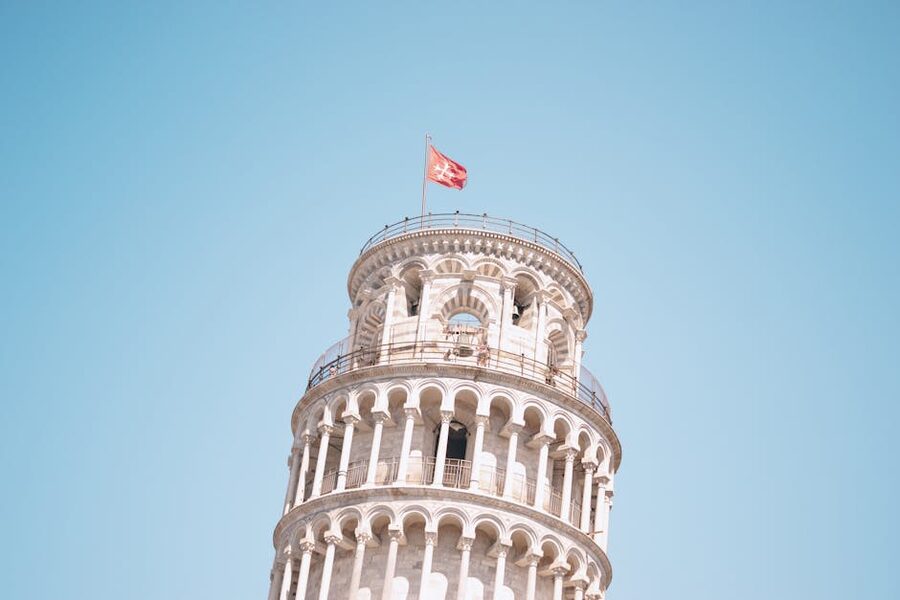
After the walking tour you get free time, usually 30 to 45 minutes. This is short. Do not try to climb the Torre del Mangia in your free time. The queue alone is 30 minutes and the climb is 400 steps. If you want a tower climb in Tuscany, save it for the Leaning Tower of Pisa at the end of the day, where the queue moves on a timed-entry system and the climb is shorter.
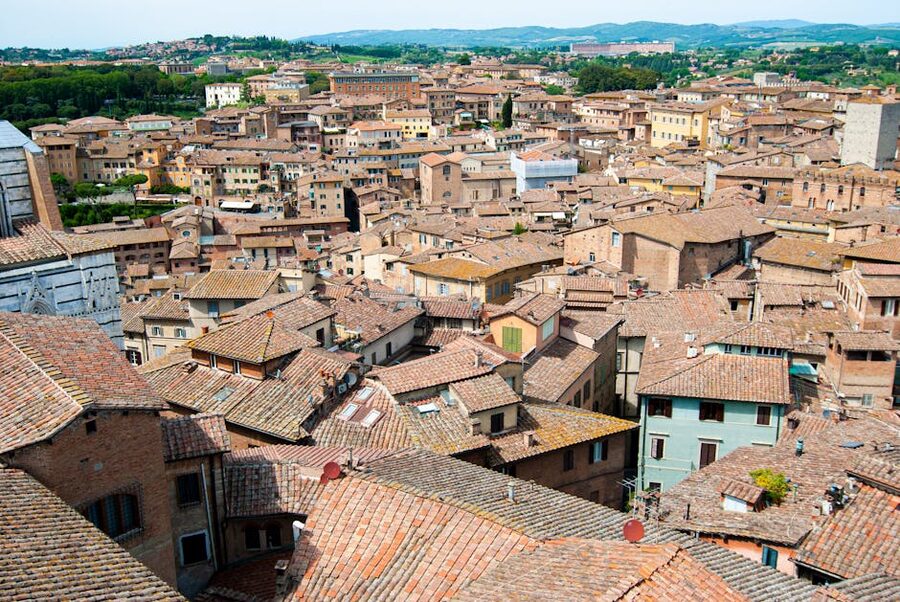
What to actually do with the free time: walk back into Piazza del Campo, sit on the bricks for ten minutes, get a gelato from Kopa Kabana on Via dei Rossi (a few minutes from the square, family-run, the saffron is not a gimmick), and head back to the meeting point five minutes early. The pickup is at Porta San Marco or wherever the coach can park. Confirm with your guide before you wander. Coaches don’t wait.
The Palio thing
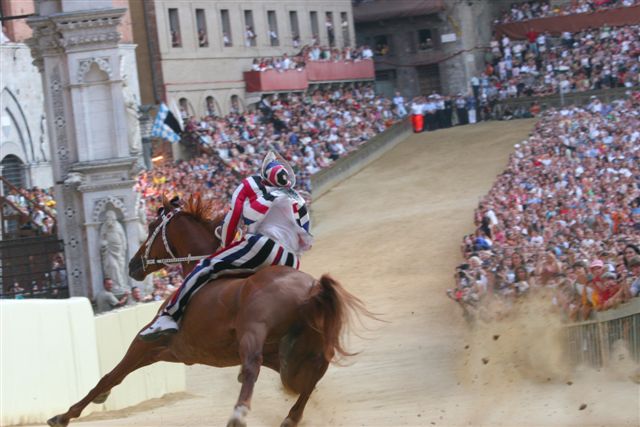
Your guide will spend ten minutes explaining the Palio. Listen to this part. The race is 90 seconds long, run bareback around the perimeter of Piazza del Campo, and the seventeen contrade (neighbourhoods) of Siena spend the other 364 days a year scheming about the next one. The bricks of the square are covered in dirt for the race. The dirt comes from the same hill it has come from since 1633. That’s the kind of thing Siena cares about, and it explains why a 30-minute walking tour does not really cover the city.
The Vineyard Lunch (Skip This Section If You Booked the No-Lunch Option)
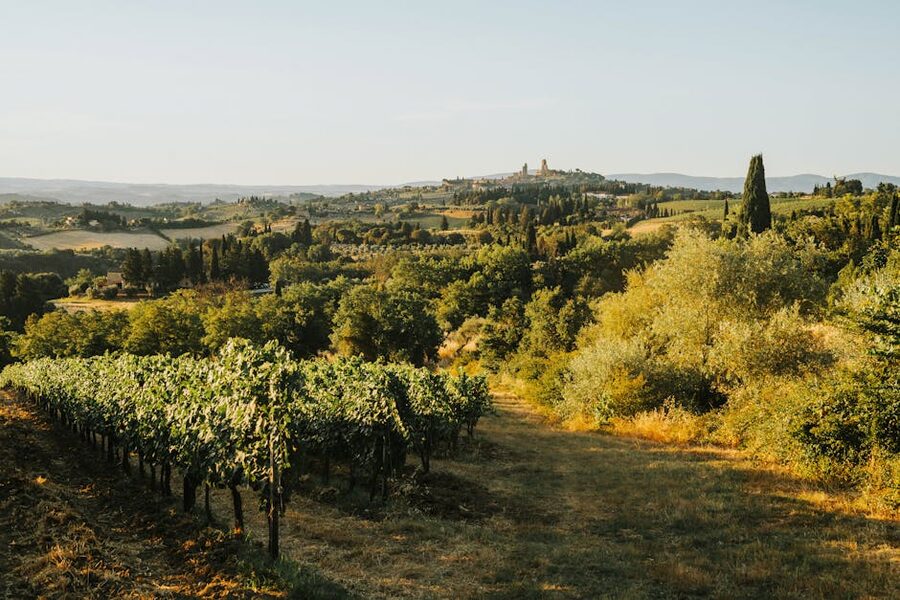
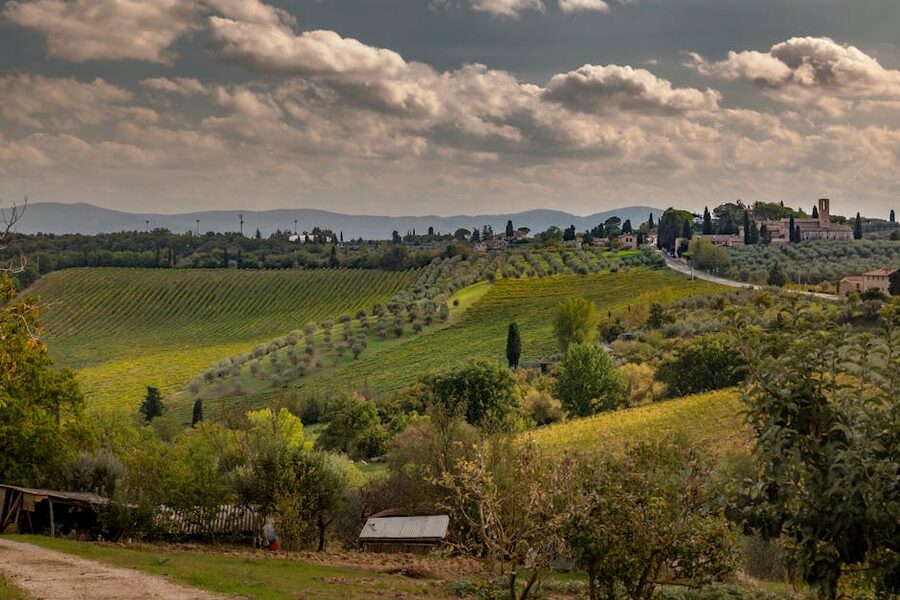
This is the part of the day everyone secretly books the tour for. You stop at an organic family-run estate somewhere in Chianti, usually for around two hours. The Walkabout tour I researched does four wines: a Chianti, a Vernaccia (which is white, the only DOCG white in Tuscany, and grown around San Gimignano), a Tuscan red, and Vin Santo at the end with biscotti for dipping. The pours are generous. Some reviewers describe a full glass of each.
The food is what they call cucina povera done well: homemade pasta, prosciutto and salami the family cured themselves, garden salad, pecorino, biscotti. You’re outside on a terrace if the weather lets you be. If you’ve already done a dedicated Chianti wine tour from Florence, this lunch is a lighter version of the same thing, basically one stop instead of two. If you haven’t, it’s plenty. The dishes here are first cousins of what you’d eat on a pasta-making class in Florence: same flour, same eggs, same hand shapes, plus a view.
The Vernaccia is worth flagging. It’s the wine you’ll see on every shop window in San Gimignano in the afternoon. They’ve grown it there for at least 800 years; Dante mentions it in the Divine Comedy. If you like white wine and you’re going to buy one bottle on the trip, buy the Vernaccia in San Gimignano in the afternoon, not at the winery at lunch where it’s marked up.
San Gimignano: 90 Minutes Among the Towers
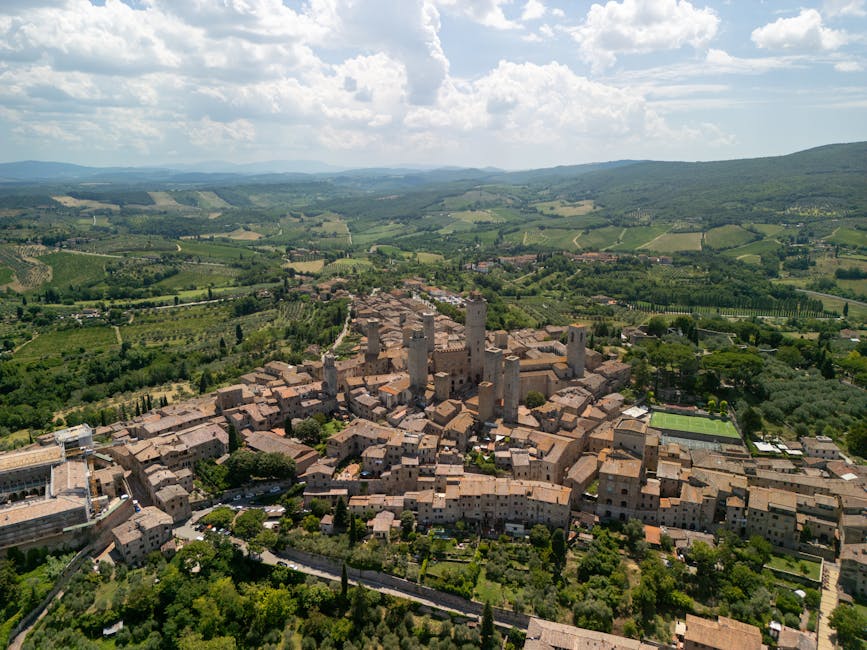
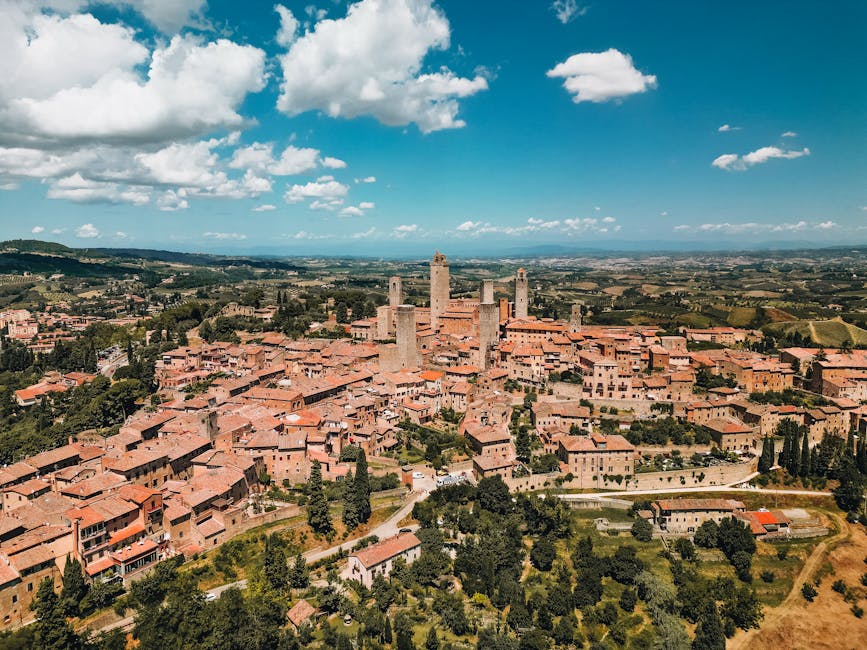
The coach drops you at one of the gates, usually Porta San Giovanni at the south end. You walk up Via San Giovanni, through the gate, and the town opens out in front of you with the towers stacked up on the ridge. This is the moment everyone takes a photo. It does not look fake. The town genuinely is that compressed.
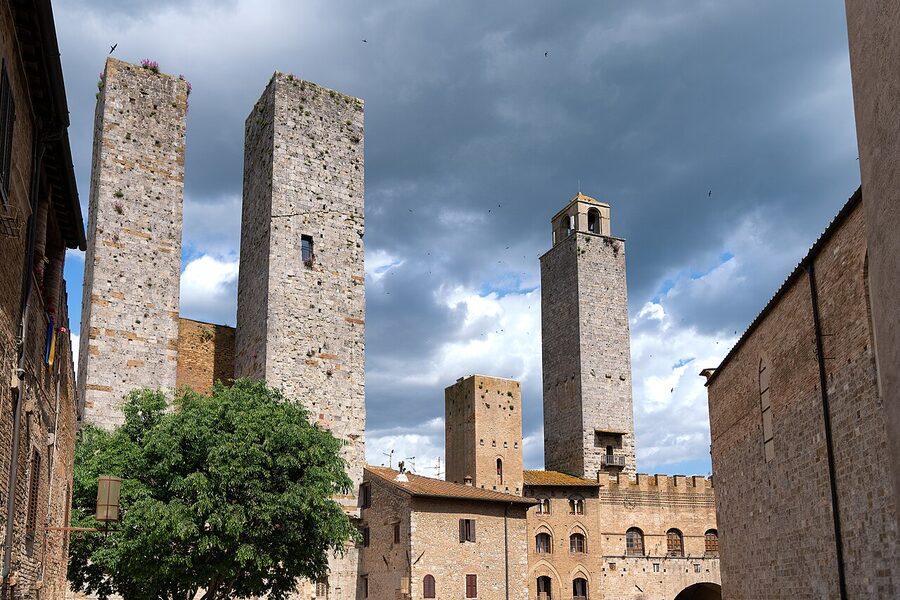
The walk uphill takes about 10 minutes. The town is small. You can do a loop in 30 minutes if you keep moving. So what do you do with the other hour?
The four things worth doing
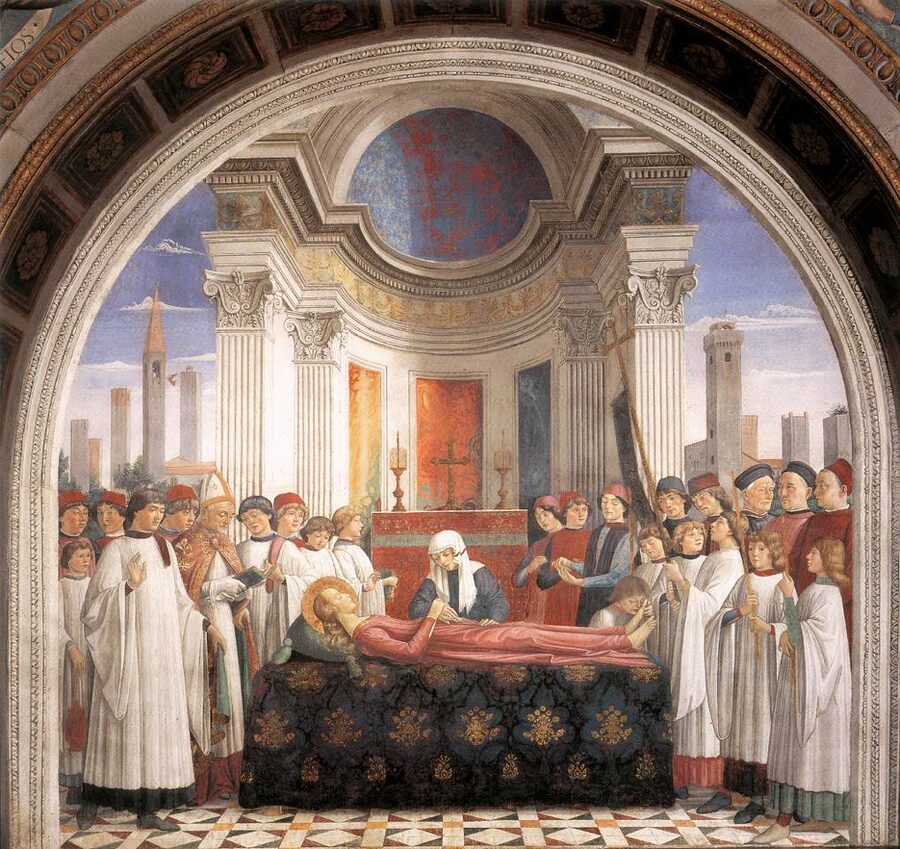
- Go inside the Collegiata di Santa Maria Assunta. €5, opens at 10am, closes at 7.30pm. The reason to go in is the Ghirlandaio fresco cycle in the Chapel of Saint Fina. Painted in 1475, it tells the story of a 15-year-old local girl who lay paralysed on a wooden plank for five years and saw visions. When she died, violets bloomed on the plank. The frescoes are the second reason to go in. The first is that the chapel is small and quiet and you’ll be away from the crowds in the piazza for ten minutes.
- Climb the Torre Grossa. 54 metres, the only tower in town you can climb, included in some Civic Museums combined tickets. The view at the top is the only place where you can see the towers as a group from above, the way they look in postcards. If you’ve done the Milan Duomo terrace climb, this one is a fraction of the height but the air is cleaner and you’re looking down at fields, not freeways.
- Eat a gelato at Gelateria Dondoli on Piazza della Cisterna. The owner has won the Gelato World Championship twice. The queue moves fast. Order the Crema di Santa Fina (saffron and pine nuts, named after the same girl in the Ghirlandaio fresco) and one other flavour you can’t get in Florence.
- Buy a bottle of Vernaccia. Any of the enotecas on the main streets. Around €12 to €15 for a bottle that would cost double in Rome. La Buca di Montauto and Da Gustavo both pour tasting flights if you want to try before you buy.
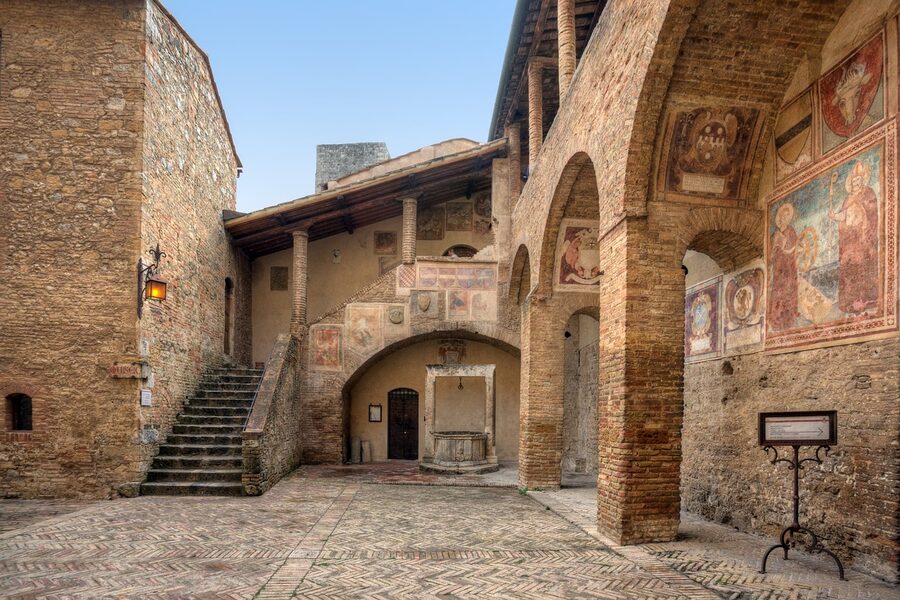
What to skip: the Torture Museum on Via San Giovanni. It’s expensive (€10), the exhibits are mostly replicas, and you have 90 minutes in a town with two UNESCO-listed fresco cycles. There’s nothing wrong with a bit of grim, just not on this clock.
The coach pickup is usually back at Porta San Giovanni. Be there ten minutes early, especially if you’ve climbed the Torre Grossa. The descent is faster than the climb but the queue at the bottom for the toilets is the trap.
Pisa: One Hour at Piazza dei Miracoli
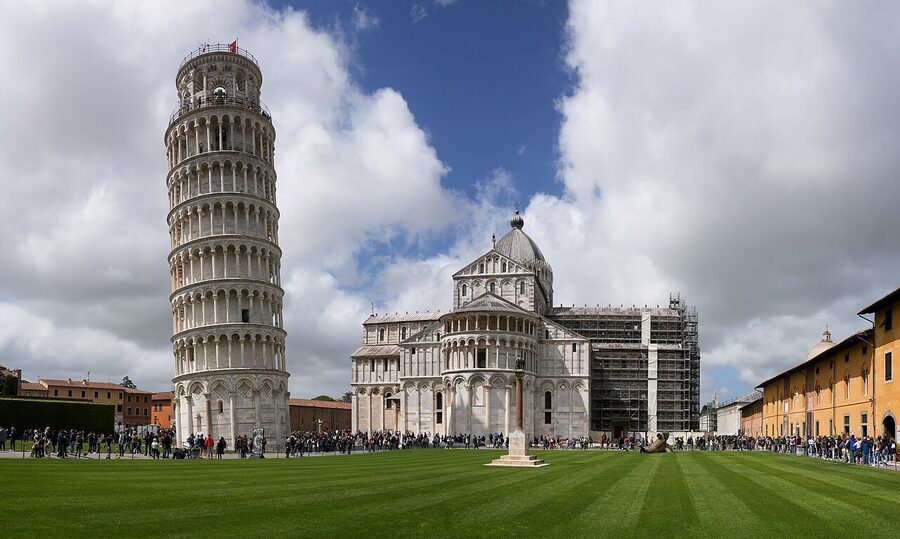
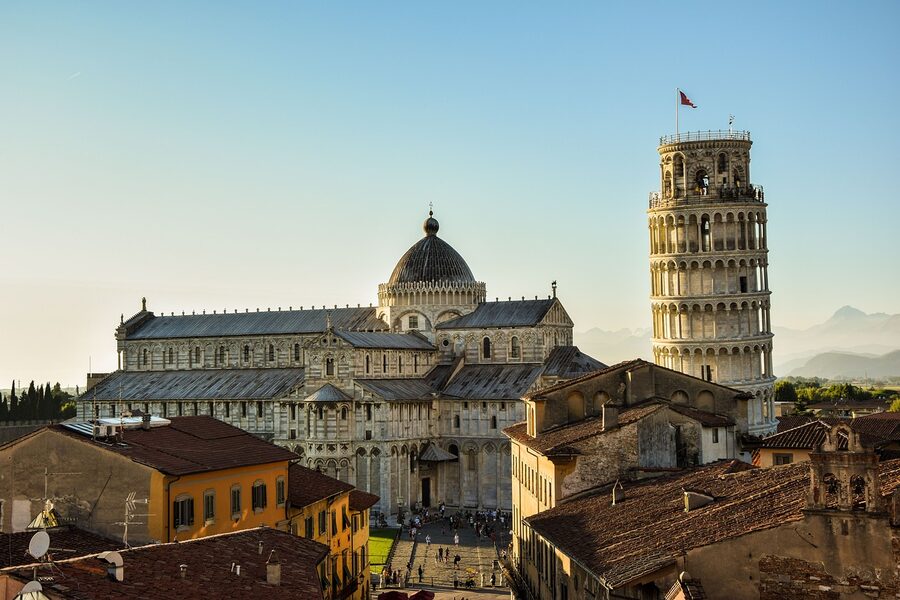
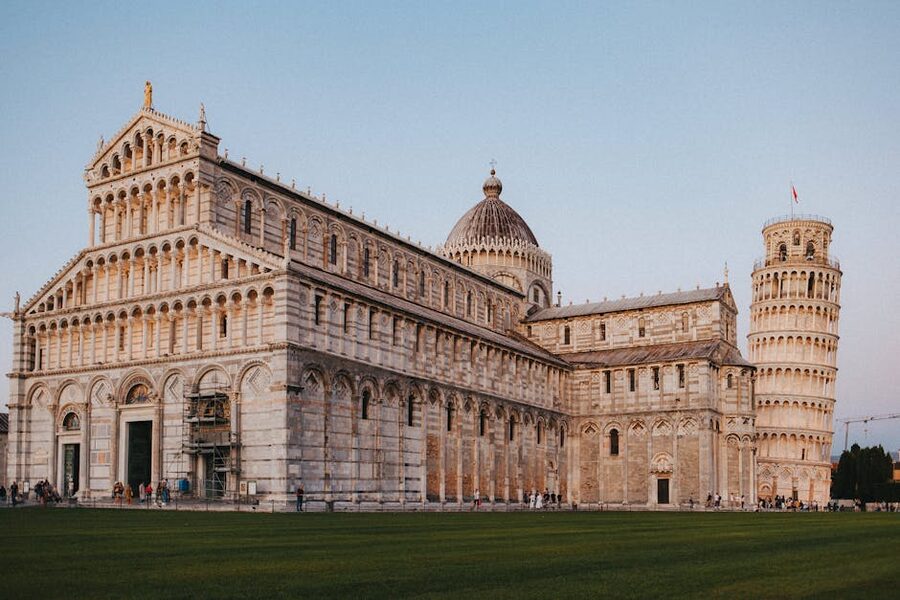
The bus drops you on Via Pietrasantina, a 10-minute walk from the piazza. You walk in through the medieval wall and the entire complex spreads out in front of you on a green lawn. It is the strangest assembly of marble in Italy. Five buildings, all leaning a little, none more than the tower itself. The contrast with the tight, dim interior of St. Mark’s in Venice or the scaled crowds of St. Peter’s in Rome is striking; Pisa’s piazza feels almost sparse, more lawn than landmark, until you stand at the foot of the tower itself.
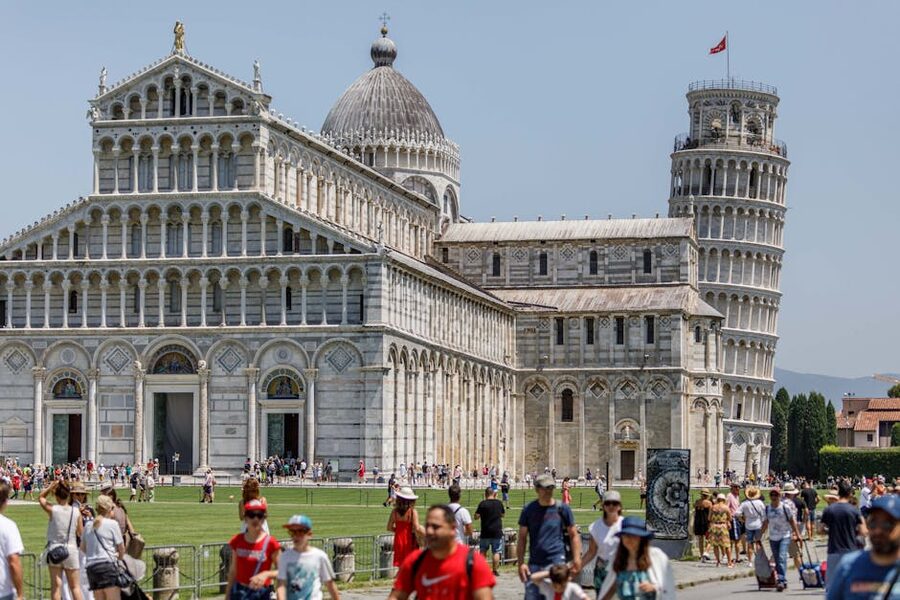
You have about an hour. The hard call here: do you climb the tower or not? Most reviewers I read say the beauty of the tower is viewing it from afar and they didn’t bother climbing. The opposite take is that you came all the way to Pisa and the climb is the experience. Both are fair.
If your tour offers a skip-the-line tower upgrade, the practical bits to know:
- Around €25 extra on top of the day-trip price.
- Timed entry, half-hour slot.
- 251 steps, no lift, narrow spiral.
- Children under 8 are not allowed up.
The full case for and against the climb (and why I’d do it on a return trip but maybe not on a day where your legs are already cooked) is in our deeper guide to the Leaning Tower.
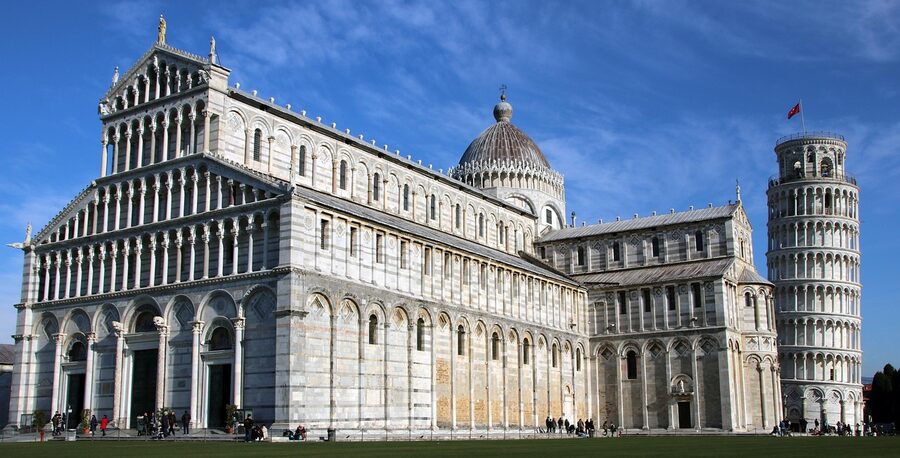
What to actually do with one hour, in order of return on time:
- Walk to the back of the cathedral first, before you do anything else. The classic photo angle is from the south-west corner of the lawn. Get this done before the next coach arrives.
- Go inside the Baptistery. Entry is around €5 on a combined ticket and the hourly acoustic demonstration (a guard sings two notes; the dome holds the second one for 12 seconds) is the thing nobody talks about.
- If you’re not climbing the tower, walk around the back of it. The lean is more obvious from behind than from the front, and the crowd is thinner.
- Skip the Camposanto unless you have time. It’s the medieval cemetery, and the frescoes inside are interesting, but on a one-hour stop it’s the cut.
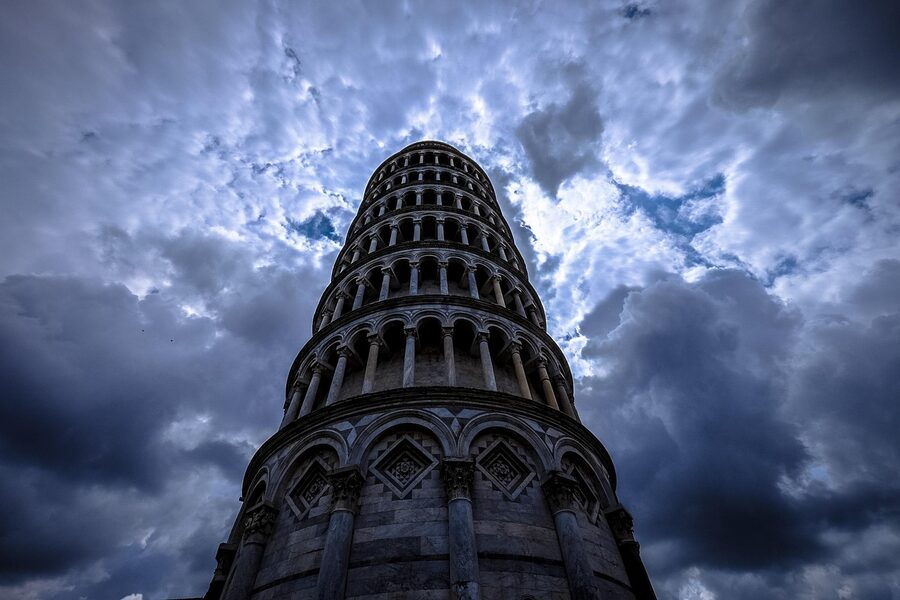
The lean, briefly: the tower started tilting during construction in 1178, because the foundations sit on saturated clay. Construction stopped twice over the next two centuries, partly because of the lean. In the 1990s they dug clay out from the high side and straightened it by a few centimetres. It has been monitored continuously since. It is no longer falling. It is just leaning.
Time for the souvenir? There’s a long row of stalls along the wall opposite the tower selling mass-produced everything. Skip them. The good stuff (real leather, real Tuscan ceramics) is in the streets between Piazza dei Miracoli and the river, but you don’t have time to walk there. If you absolutely must buy a thing, the magnets at the official Opera della Primaziale shop near the cathedral are the same price as the wall stalls and the money goes to the cathedral foundation, not a wholesaler in Bologna.
Pick the Right Tour
Three tours are the realistic shortlist. The differences are lunch quality, group size, and whether they bolt on a Chianti detour. I’ve ranked them by what most travellers actually want, not by price.
1. Tuscany Day Trip with Lunch at a Winery: $114.88
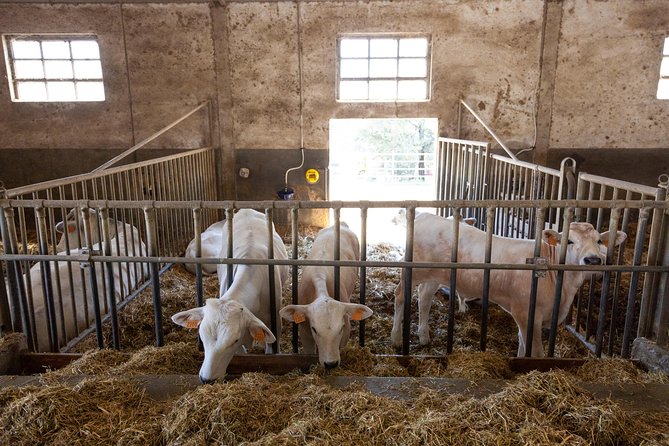
This is the version most people remember as “the day they did three Tuscan towns from Florence”. The premium price buys a real two-hour vineyard lunch with four wines instead of a packed sandwich, which makes the difference between a good day and a great one. Our dedicated Chianti tour guide explains why the Chianti Classico DOCG region matters and what to look for in the wines they pour.
2. From Florence: Day Trip to Pisa, Siena & San Gimignano With Lunch: $58
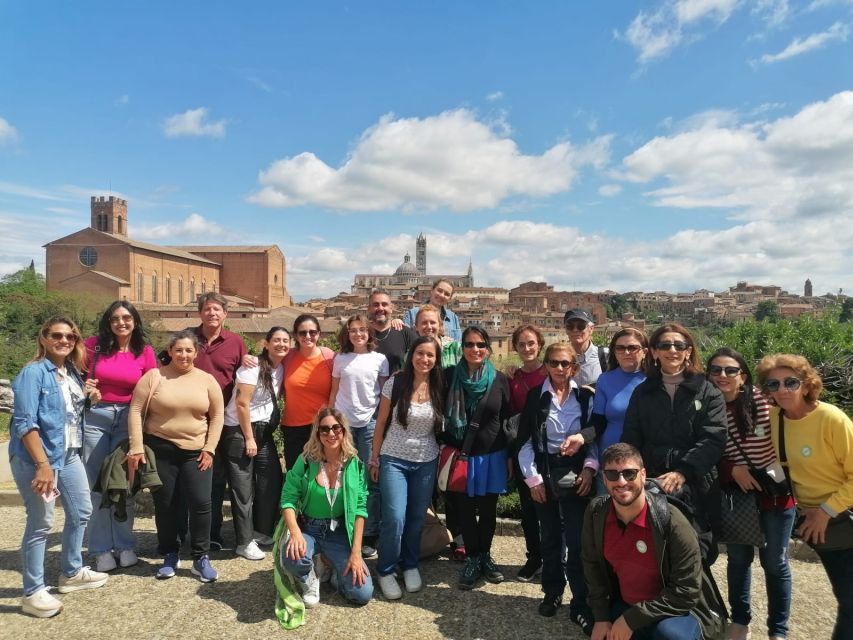
The pick if you want the day done well without paying for a long vineyard lunch. The lunch on this version is simpler (often a one-course Tuscan plate at a roadside agriturismo with one or two wines), and the time saved goes back into the towns. Our review walks through what’s included versus the premium tour, including how the group sizes differ.
3. Pisa, Siena, San Gimignano, and Chianti Experience: $52
The cheapest option, with a short Chianti winery stop bolted on. The trade-off is real: pacing is tight in every town, and the Chianti stop is a tasting rather than a sit-down lunch. Good if you want maximum coverage on a budget; our full review compares it directly with the lunch-included option above.
Practical Things That Will Make or Break the Day
Some things worth knowing before you book.
Pickup is at Santa Maria Novella, not your hotel. You walk to the station yourself. Allow 15 minutes from anywhere in the historic centre. The Walkabout-operated tours meet at the taxi rank under the WALKABOUT TOURS sign, opposite McDonald’s. Don’t go to the inside of the station. The pickup is outside.
Book at least three days ahead in summer. The premium tour with the winery lunch sells out a week ahead in July and August. The cheaper tours with bigger coaches have more flexibility but you’re risking a 50-person group instead of a 20.
Bring the right bag. Small day pack, water bottle, comfortable shoes that have already been broken in. The day is hard on feet that haven’t done 15,000 steps recently. If you’re coming straight from a flat-walking holiday like the Amalfi Coast day trip from Naples, this one is a different beast: less driving, more climbing.
Wheelchair access is non-existent. The towns are medieval. The cobbles, ramps, and stairs in San Gimignano alone rule out the day for a wheelchair user. Most of these tours explicitly will not accept passengers with serious walking limitations. Read the small print.
Vegetarian works, gluten-free is harder. The lunches usually offer a vegetarian option if you flag it at booking. Coeliac travellers should email the tour operator directly; the family-run wineries don’t always have a separate gluten-free kitchen.
The bus has a toilet, but it’s grim. Use the cathedral cafe in Siena and the bar on Piazza della Cisterna in San Gimignano. Both are €1 espresso for the privilege.
Children under 8 cannot climb the Leaning Tower. If you’re travelling with a 6 or 7-year-old who has been promised the climb, this is the day they find out. Worth flagging at home before the trip rather than at the base of the tower.
What to Pick Instead (If This Sounds Like Too Much)
If three towns in a day sounds breathless, here are the realistic alternatives. They all live in the same Florence-day-trip family.
One town done deep. Skip the bus tour, take the regional train to Siena (90 minutes from Florence, around €10), spend the whole day there, eat a proper lunch on the Campo, train back at sunset. You see one city instead of three, but you see it properly. The same logic applies to Pisa, where the train is 60 minutes from Florence and the Piazza dei Miracoli is a 20-minute walk from Pisa Centrale.
The wine version. If the lunch is the part you want, do a Chianti wineries day trip from Florence instead. Same vineyard lunch, two or three wineries, no Pisa, no Siena, no San Gimignano. Cheaper, slower, and you actually remember the wines.
The coast version. If you want a five-villages-in-a-day kind of day but with sea views, the Cinque Terre from Florence trip is the parallel option. Different geography, similar pacing, ferries and hiking trails instead of cobbles and towers. You won’t see Siena or Pisa, but you’ll be looking at the Ligurian Sea by mid-morning.
The slower mainland version. Some travellers come back from this day and wish they’d done a single-village hilltop deep dive instead, the way Montserrat from Barcelona or Ronda from Seville reads as a one-place day rather than a sampler. If that’s you, look at the smaller Tuscan towns the bus tour skips: Volterra, Pienza, Montepulciano. They need a car or a different bus tour, but the pacing is gentler.
Going Back to Florence
You’re back in Florence around 8.30pm. You will be tired in a way you weren’t expecting. The thing nobody tells you: do not book a 9pm dinner reservation at a restaurant on the other side of the Arno. Walk to the closest decent trattoria to your hotel, eat pasta, drink water, sleep. If you have a free morning the next day, that’s when you do the Uffizi or the Florence Duomo and Brunelleschi’s dome climb. Not tonight.
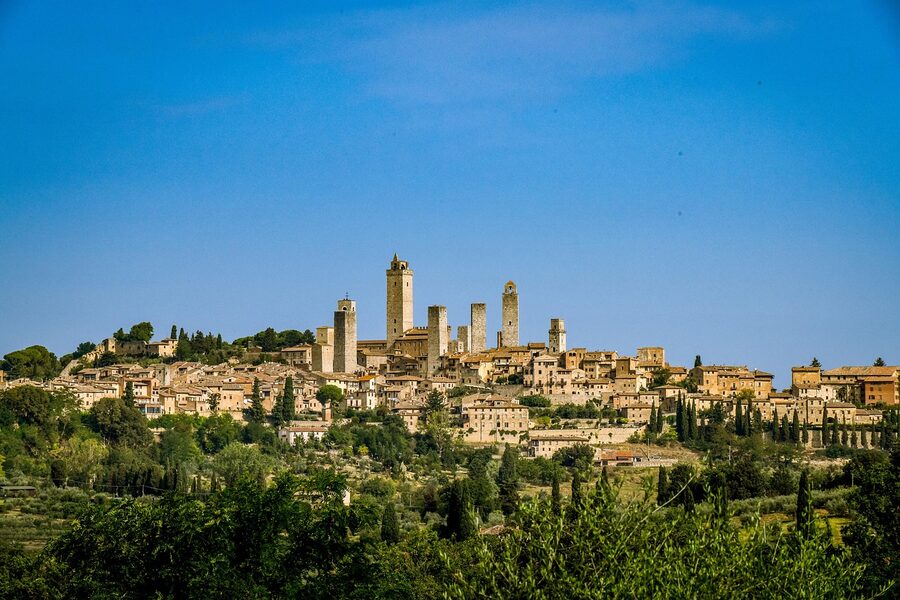
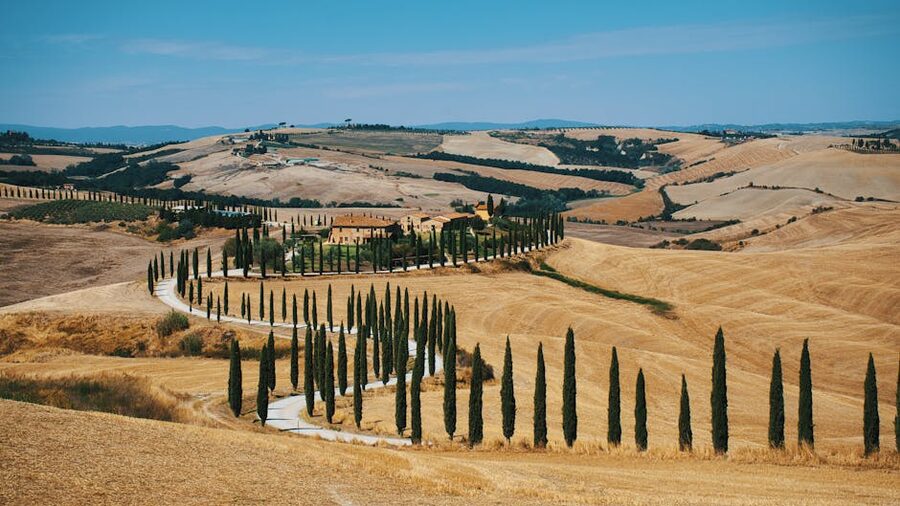
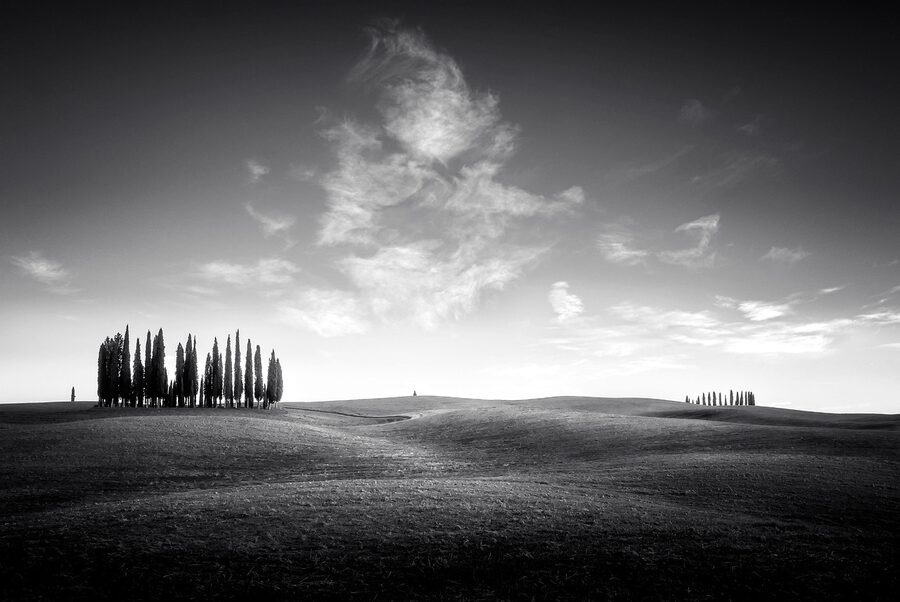
The day at the end of the day: you do not see Siena, San Gimignano, and Pisa properly. You see them at speed. What you do see, and what you remember, is the Tuscany in between. The cypress drives, the lunch on a terrace, the moment the towers stack up on the ridge as the bus pulls into San Gimignano, the strange marble assembly at Piazza dei Miracoli. If that’s enough, this is one of the great day trips in Italy. If you wanted a full meal of Siena and you got tasting-portion Siena, you’ll be back. Most people are.
If You Have More Days in Tuscany
If this trip lit a fire and you’re rebooking your itinerary on the bus home, the obvious next moves are an actual night in Siena (the city after the day-trippers leave is half the reason to go), a separate visit to Pisa with the tower climb done properly, and a wine-focused day in Chianti. From Florence itself, the natural pairings for the rest of your stay are the Uffizi, the Accademia for Michelangelo’s David, and a Florence food tour that walks you through the city’s markets. Save those for the day after this one. You won’t have the legs tonight.