
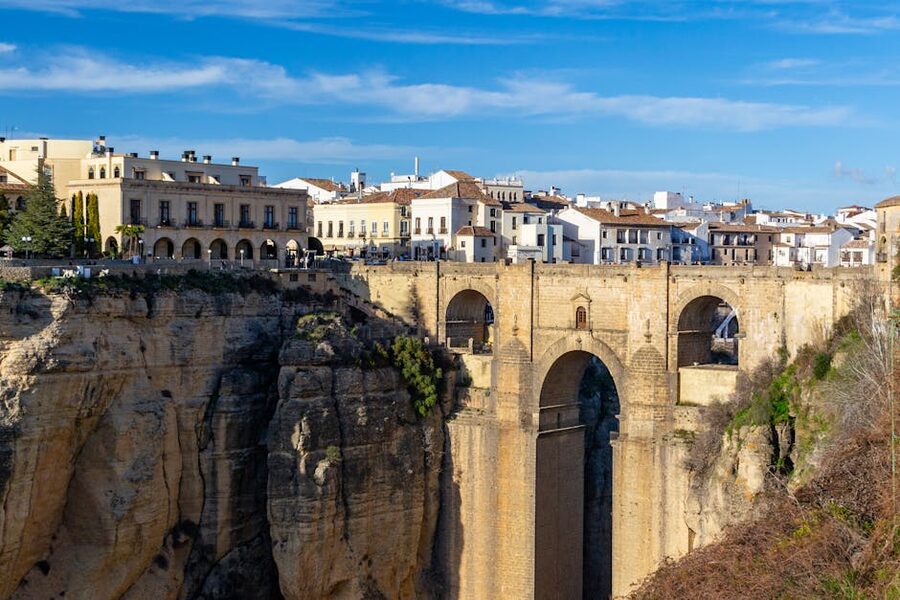
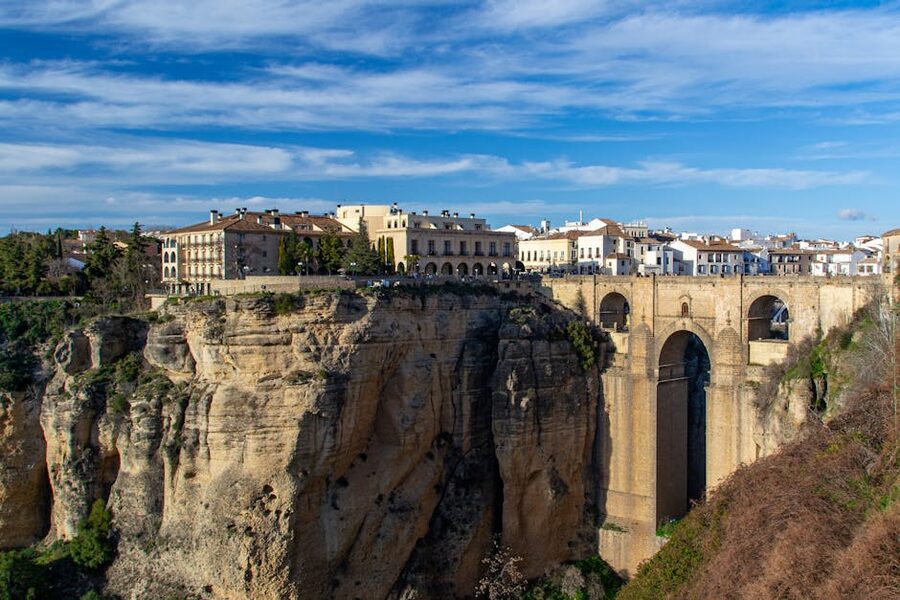
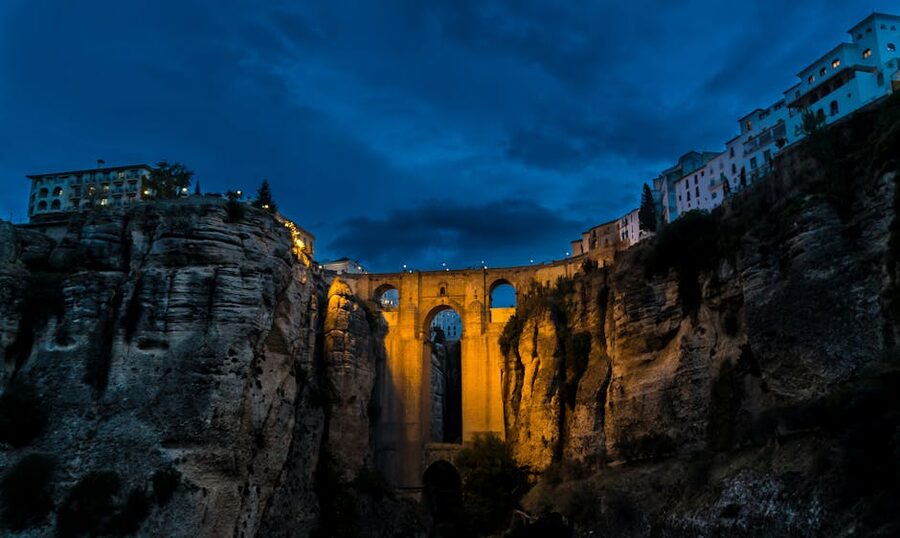
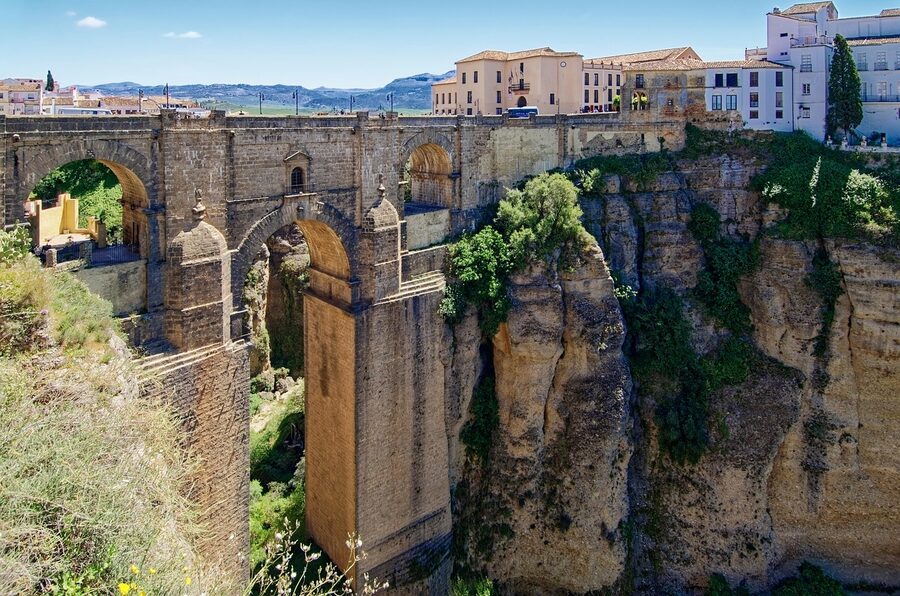
Stand on the Puente Nuevo at sunset, lean against the limestone parapet, and look down. The El Tajo gorge drops 98 metres beneath your feet to the Río Guadalevín, a thread of water you can barely make out at the bottom. Behind you, the white-painted town stretches in two halves on either side of the chasm, glowing pink in the late light. This is the moment people come to Ronda for, and it is the moment that explains why every guidebook from Hemingway to Rick Steves has called this the most beautiful town in Andalusia.
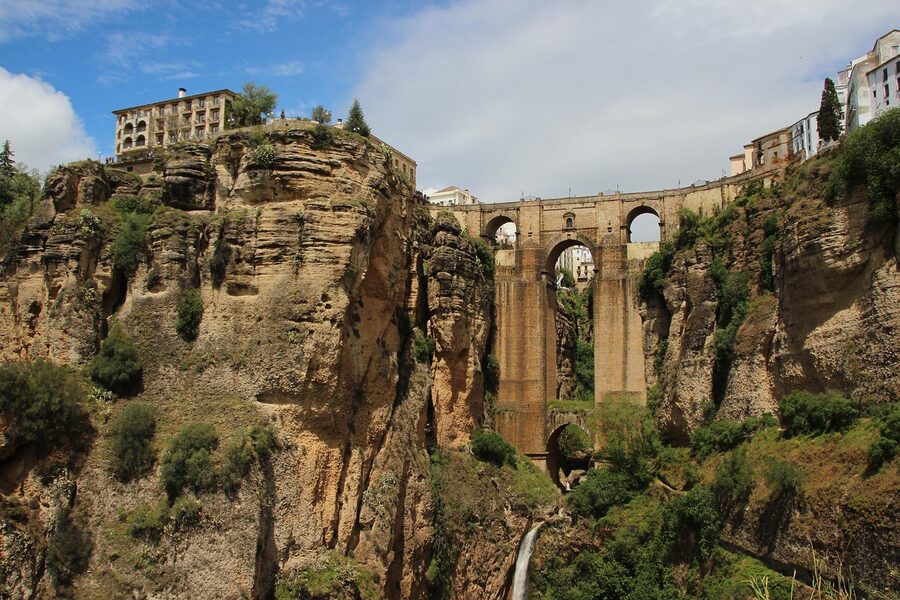
I’ll tell you the secret most travellers miss in three sentences. The view from the bridge is the famous one. The view of the bridge, taken from the riverbed below after a hot 25-minute scramble down the Casa del Rey Moro path, is the photograph you actually want. Almost nobody bothers, which is why the bottom of the gorge is the quietest place in town at any hour.
In a Hurry? Three Day Trips That Get You to Ronda
From Málaga (best value): Ronda & Setenil de las Bodegas with optional Sunset ($34). Leaves Málaga, hits both towns in one go, optional sunset upgrade if you want the bridge in golden light.
From Seville (the white villages route): Pueblos Blancos and Ronda Full-Day Trip ($52). Zahara de la Sierra and Grazalema before Ronda, the prettier mountain drive of the two Seville options.
From Seville (Setenil version): Ronda and Setenil De Las Bodegas Day Trip ($53). Skips the mountain villages, goes straight for Setenil’s rock-eating houses, longer time in Ronda.
Where Ronda actually is, and why that matters
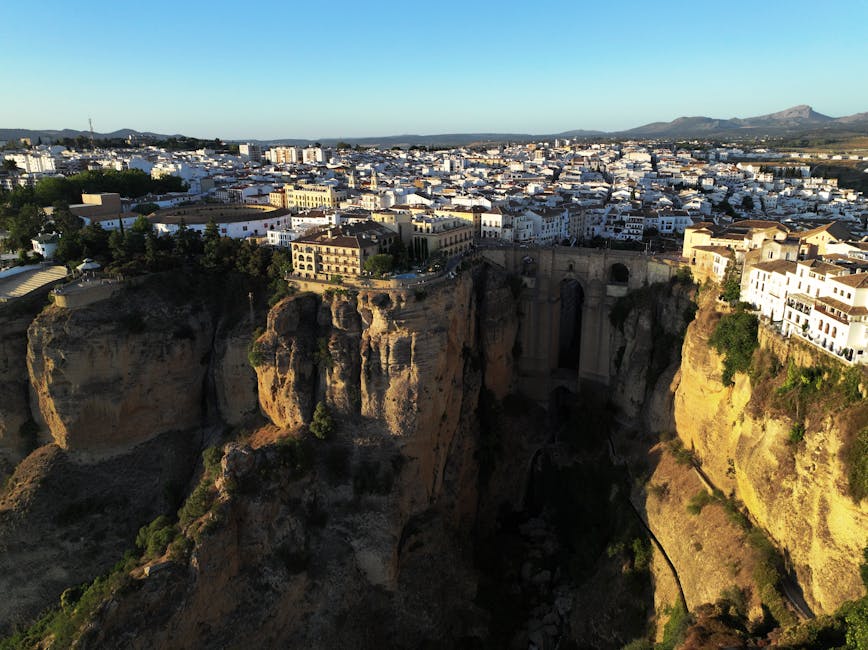
Ronda sits 128 km from Seville and 102 km from Málaga, which puts it almost exactly equidistant between Andalusia’s two big tourist hubs. From either side, you climb. The town sits at 750 metres altitude on a plateau in the Serranía de Ronda mountains, with the Mediterranean about 50 km south as the crow flies but invisible behind a wall of sierra. About 34,000 people live here year-round.
The plateau is split in two by the Río Guadalevín, which over a few million years carved the El Tajo gorge that defines the town. The Romans called the place Arunda, meaning “around”, because from the higher city you could look around the entire surrounding country and see anyone coming. That strategic perch is also why the Moors held Ronda longer than almost anywhere else in Spain. The town didn’t fall to the Catholic monarchs until 1485, only seven years before Granada and the Reconquista’s final act.
If this layered cliff-and-river geography sounds familiar, it should. Andalusia’s other vertiginous classic, the Caminito del Rey, is an hour and a bit north of Ronda by car and uses the same kind of limestone gorge for entirely different effect. Where Caminito puts you on a wooden walkway clinging to the cliff face, Ronda puts a town on top, the same trick the perched villages do along the French Riviera coast from Nice.
Getting to Ronda from Seville
Ronda is hard to reach from Seville. It’s 128 km on the map but the road climbs into the Serranía and bends through every white village along the way, so the drive is closer to two hours than 90 minutes. Public transport is worse. The bus through Avanza takes 2.5 hours direct. The train, weirdly, routes you via Córdoba and takes a full 3.5 hours one way, killing any day-trip math.
This is exactly why the organised day trip exists, and it’s why I’d take one over the train without thinking about it. The bus tours from Seville do the route in a coach designed for the mountain switchbacks, with a guide who’ll tell you which white village is which and a built-in schedule that gets you back the same evening. Two of them appear in our recommendations below.
If you have a rental car, drive. The route via the A-376 and A-374 (the inland route) is faster than the coastal alternative and far more scenic, passing Zahara de la Sierra and Grazalema along the way. Montserrat from Barcelona is the closest equivalent in Spain for “iconic geology you reach by climbing into the mountains for a half-day”, and the closest French parallel is the Verdon Gorge from Nice. Like both, the drive is most of the experience.
Getting to Ronda from Málaga
From Málaga, the trip is a real day trip. The drive is 102 km and takes about an hour and 45 minutes via the A-357. There’s a direct train (not the Córdoba routing) that takes about two hours, and Avanza buses take roughly the same. The Málaga-departure tour at the top of the page is the cheapest way to see Ronda and Setenil de las Bodegas in a single day, and it’s the most-booked of the three I’ve recommended for a reason.
If you’re staying in Málaga and trying to plan an Andalusian week, Ronda pairs naturally with the Málaga Alcazaba on the city day and with Caminito del Rey on the other excursion day. That’s three “high points” of Andalusia in three days, all within easy reach of one base.
The bridge itself: Puente Nuevo
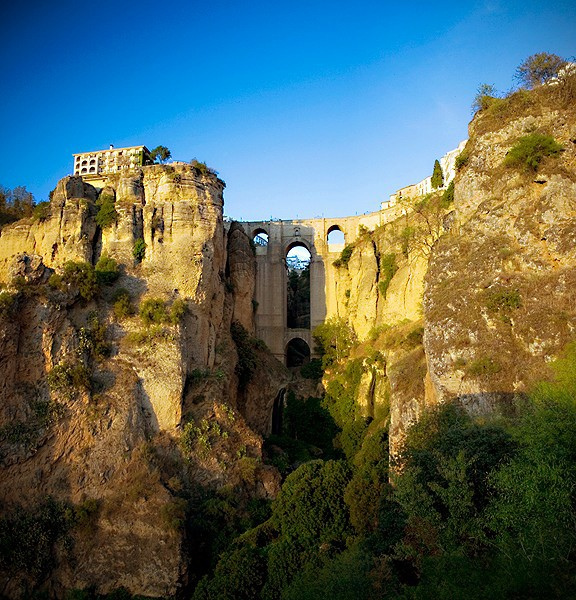
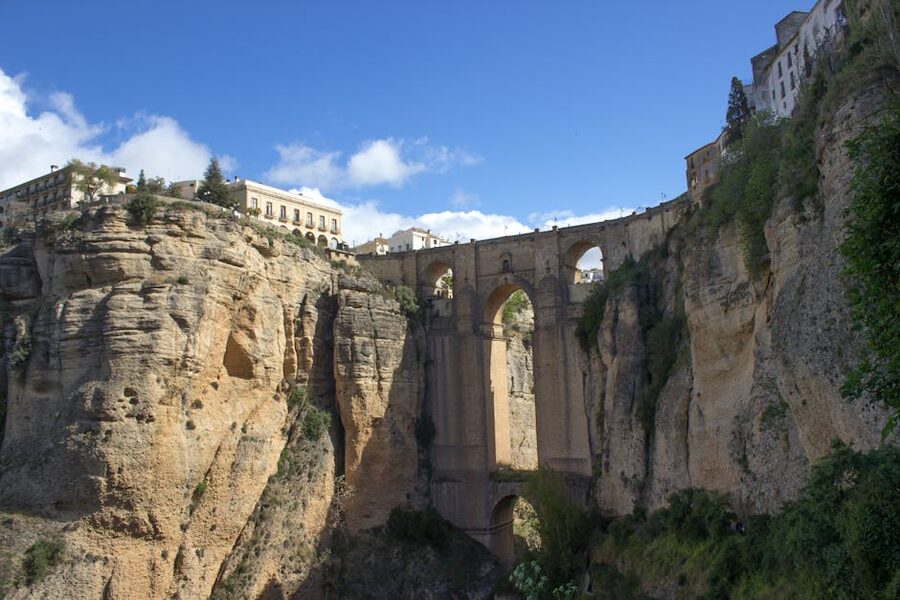
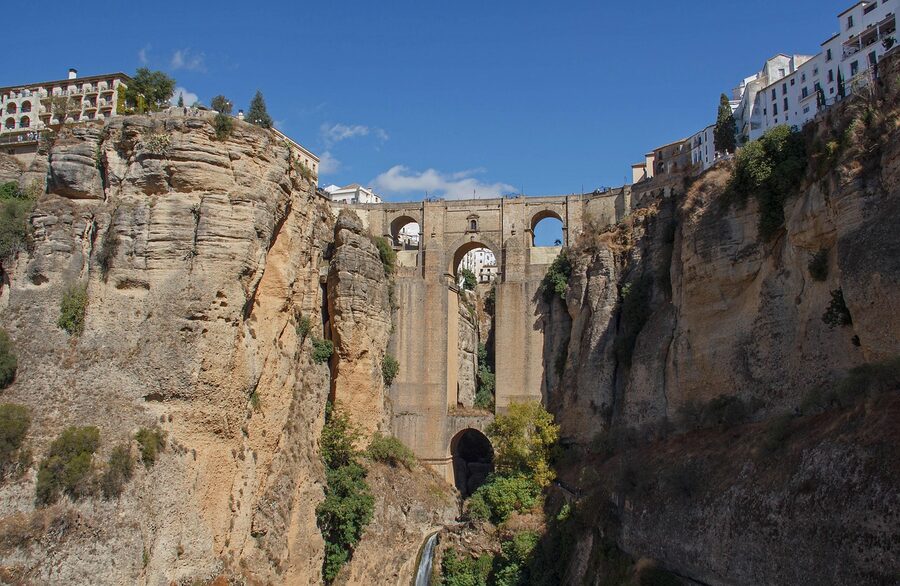
Ronda has three bridges over El Tajo, but only one is the Puente Nuevo. The Puente Romano (Roman) and Puente Viejo (old, 16th-century) cross the gorge further down where it’s narrower and shallower. The Puente Nuevo crosses the deepest section, and that’s why everyone fights for the same Instagram angle.
The numbers worth knowing: the bridge stands 98 metres above the river. Construction started in 1751 and ran 42 years (a previous attempt fell down). The architect, José Martín de Aldehuela, also designed Ronda’s bullring and is rumoured to have died falling from the bridge while inspecting his own inscription, though the historical record actually has him dying peacefully years later in Málaga. Don’t let any guide tell you otherwise.
The chamber inside the central arch was used variously as a guard post, a tavern, and a prison during the Spanish Civil War. You can visit it for a few euros through the small museum entrance on the north side of the bridge. The view down through the floor grate into the gorge is more memorable than any artefact in the room.
Walking down into the gorge
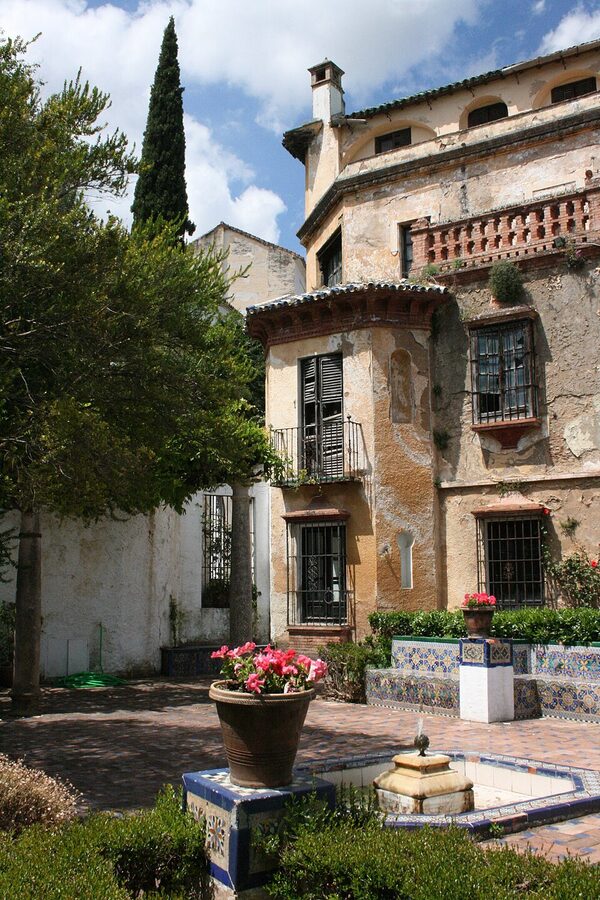
This is the Ronda experience most travellers skip, and it’s the one I’d push you toward if you only had time for one thing besides the bridge view. The Casa del Rey Moro contains a water mine, a staircase carved into the rock wall by Christian slaves under Moorish rule, leading from the top of the cliff all the way down to the river. About 200 steps. Wet, slippery, dim. You descend through the rock itself and emerge at the bottom of the gorge, where the only sound is the river and the only sight is the bridge spanning the sky directly above you.
Tickets are around €10. Bring shoes with grip. The descent is harder than the climb back up because of how steep and uneven the steps are, and the railing is not what a North American or British safety inspector would call a railing. Skip if you have any knee or balance issue. Take if you want the photograph 95% of day-trippers leave town without.
The Plaza de Toros
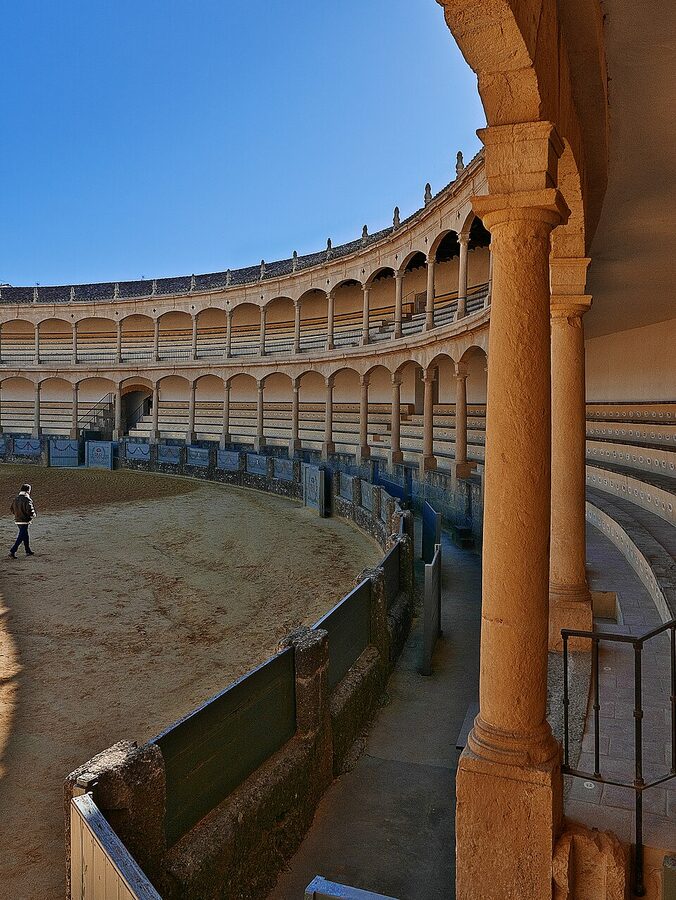
I’ll be straight with you on bullfighting. Most readers of this site will not want to attend an actual corrida, and that’s fine. The Plaza de Toros de Ronda is interesting anyway, as a piece of architecture and as a museum. It opened in 1785, holds 5,000 spectators, and was designed by the same architect who built the Puente Nuevo. It’s the oldest bullring in Spain still standing in stone (Sevilla’s predates it but is partly rebuilt).
The on-site Museo Taurino is small but informative on the Real Maestranza de Caballería de Ronda, the noble horsemanship order founded in 1572 that still owns and operates the ring. Tickets are €9 and include the museum and the arena floor. If you want the closest equivalent in atmosphere on this site, the Fenice opera house in Venice hits the same “ornate empty performance space you walk through at your own pace” register.
Don’t book a corrida casually. The Goyesca, held the first weekend of September, is the only fight most years. Tickets sell out fast and run €60 to €200. If you go because you want to and not because the trip itinerary said so, that’s your call to make.
The Old Town: La Ciudad
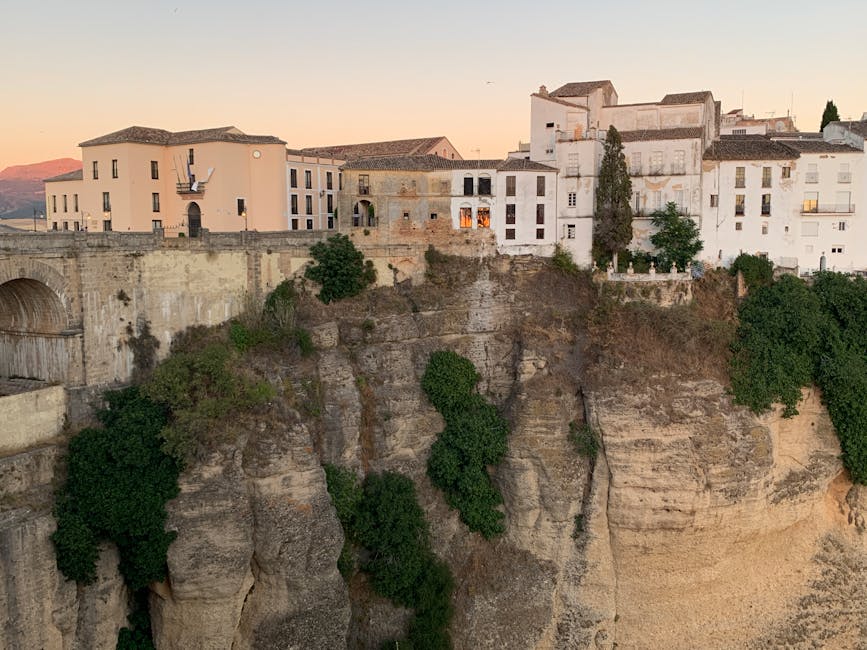
The old town, La Ciudad, sits on the south side of the bridge, the side that was Moorish for longer and held out latest against the Reconquista. It’s a tangle of small lanes and small squares and small panoramic moments, walkable in 90 minutes if you don’t stop for coffee, three hours if you do. The walking-only old town is small enough that you don’t need a map, and getting briefly lost is part of the point.
The set-piece sights in La Ciudad worth pacing yourself for:
- Iglesia de Santa María la Mayor. Ronda’s main church, built on the site of the old mosque. Construction took two centuries so it shows Gothic, Renaissance and Baroque all stacked on top of each other.
- Palacio de Mondragón. A small palace with Moorish-style gardens and a museum on regional history. Step out to the cliff-edge garden for one of the best free viewpoints in town.
- Baños Árabes. 13th-century Almohad-period Arab baths, among the best preserved in Spain.
- Casa del Rey Moro. Covered above, but the gardens alone are worth a quick wander even if you skip the water mine.
- Museo Lara. An idiosyncratic private collection of clocks, weapons, scientific instruments, witchcraft paraphernalia and torture devices, all in one 18th-century palace. Either you’ll love it or you’ll wonder what just happened to your afternoon.
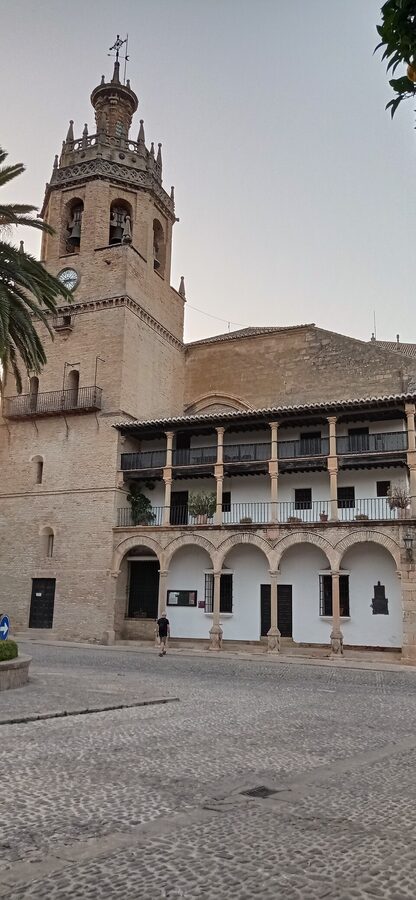
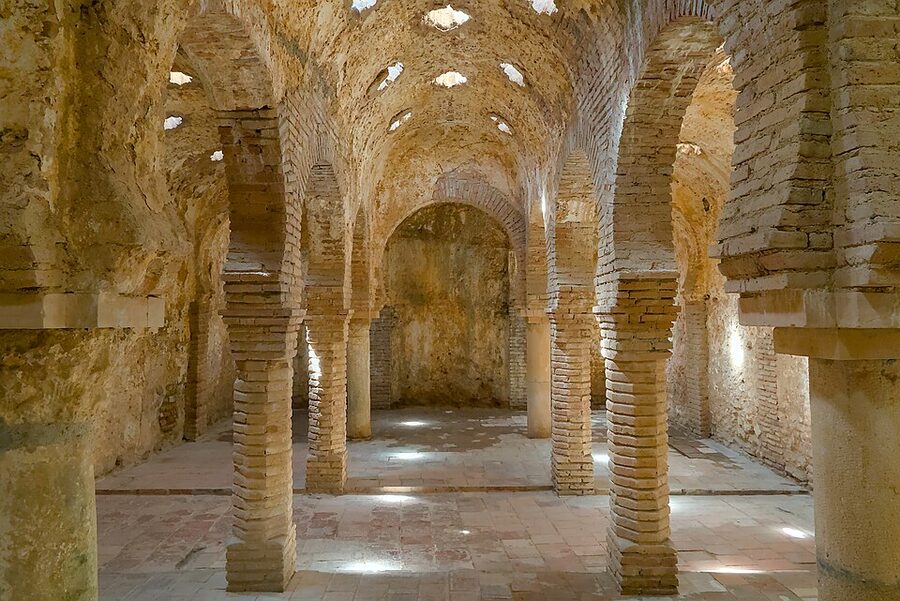
The brickwork on the Santa María bell tower is exactly the kind of detail that rewards travellers who’ve already seen Córdoba’s Mezquita or the Alhambra. The Moorish-Christian layering shows up everywhere in Andalusia once you’ve trained your eye.
Best viewpoints (in ranked order)
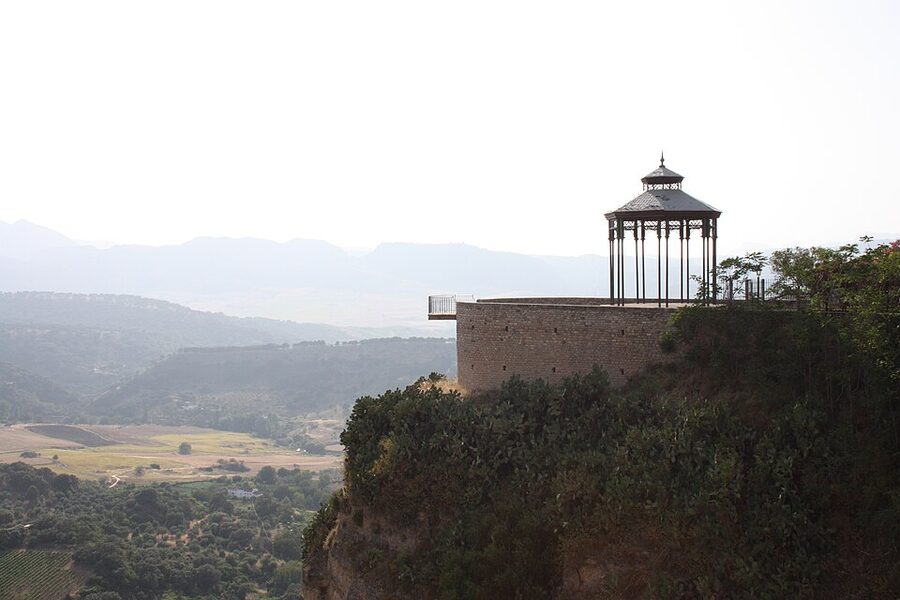
Ronda has half a dozen good viewpoints and they’re not equally good. Ranked:
- The Casa del Rey Moro water-mine bottom. Bridge from below. Not technically a viewpoint, but the best photograph in town.
- Mirador de Aldehuela. The road approach view, just south of the Plaza de España. The classic shot of the bridge with the gorge dropping behind it.
- Alameda del Tajo park. The cliff-edge promenade above the gorge. Long, peaceful, free, and views go for miles toward Sierra de Grazalema.
- Plaza de María Auxiliadora. Small terrace just south of the bridge on the old-town side. Less famous than Aldehuela, often empty.
- The Puente Nuevo itself. Fine, but crowded, and the bridge is in your shot. You can’t have the bridge be the bridge if you’re standing on it.
The white villages: Setenil de las Bodegas
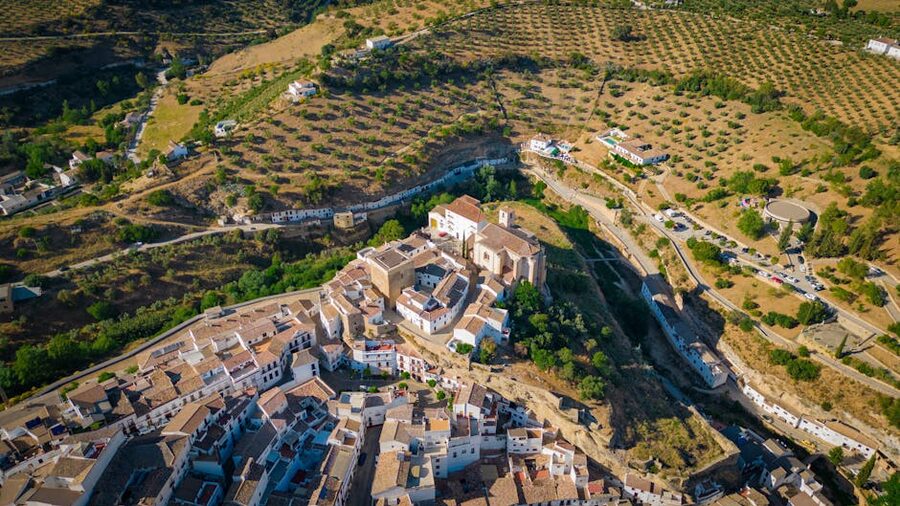
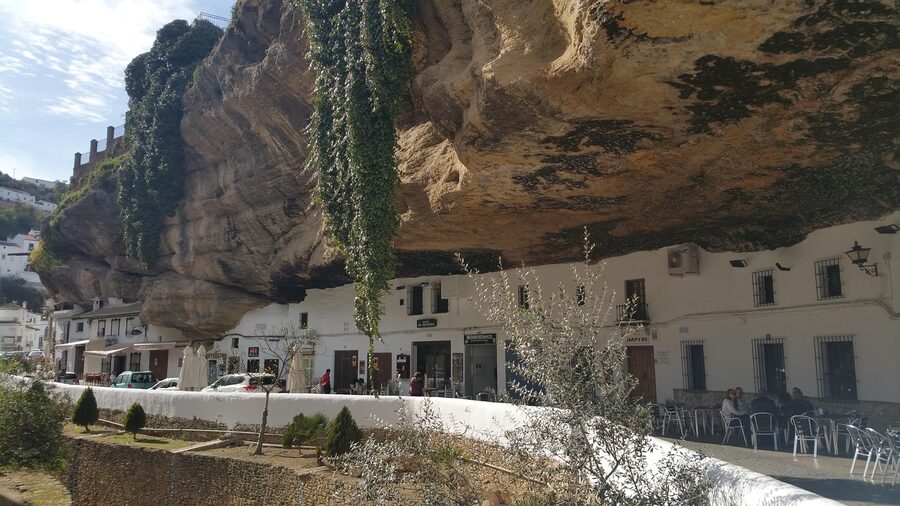
Setenil is 17 km north of Ronda and is the white village that made the white villages famous. The reason it’s photogenic is structural: a bend in the Río Trejo cut a tight overhang into the limestone, and the locals built their houses underneath it. The rock is the roof. Calle Cuevas del Sol and Calle Cuevas de la Sombra are the two streets where this is most dramatic, with bars and tapas places lining both sides under the rock ceiling, the kind of preserved-trade-village rhythm that fills Zaanse Schans north of Amsterdam.
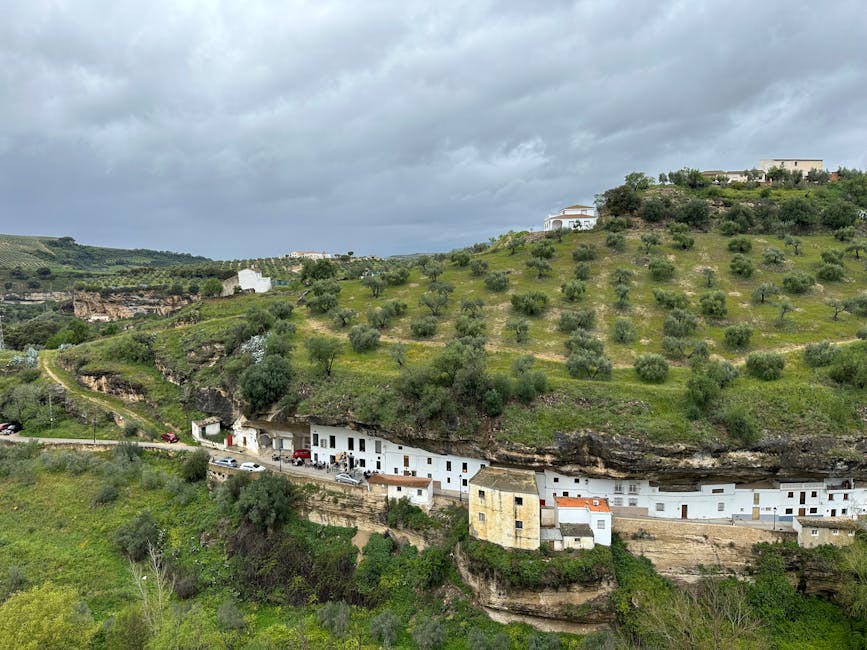
If you’re on the Málaga-departure tour above, Setenil is included. From Seville, the villages-route tour skips Setenil for Zahara de la Sierra and Grazalema; the alt Seville tour goes the other way. Pick based on which you’d rather see. Setenil wins for unique geology; Zahara wins for the lake-and-castle panorama.
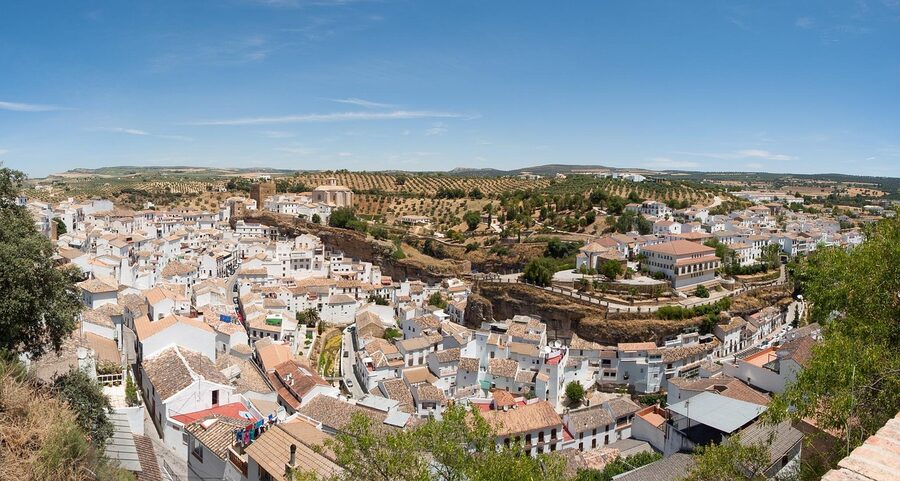
Zahara de la Sierra
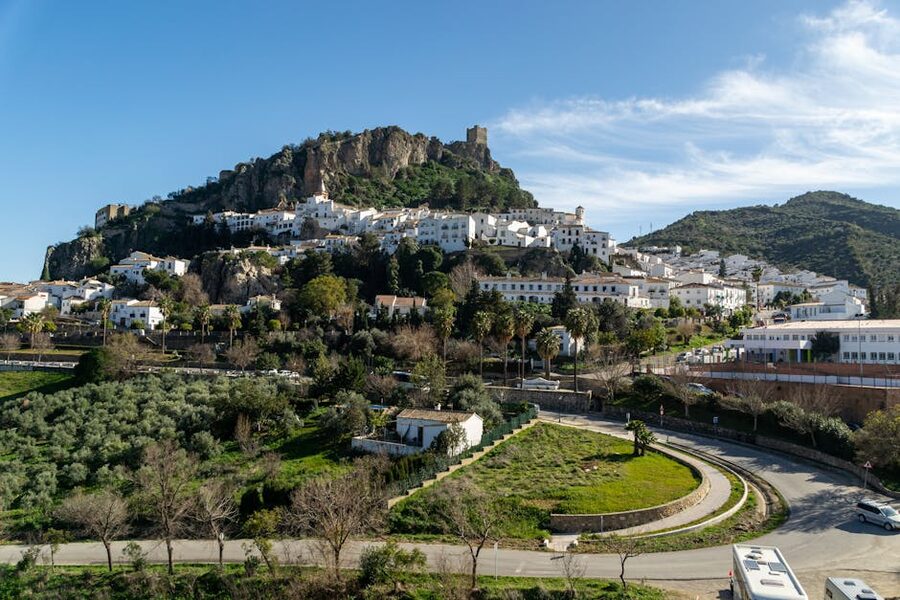
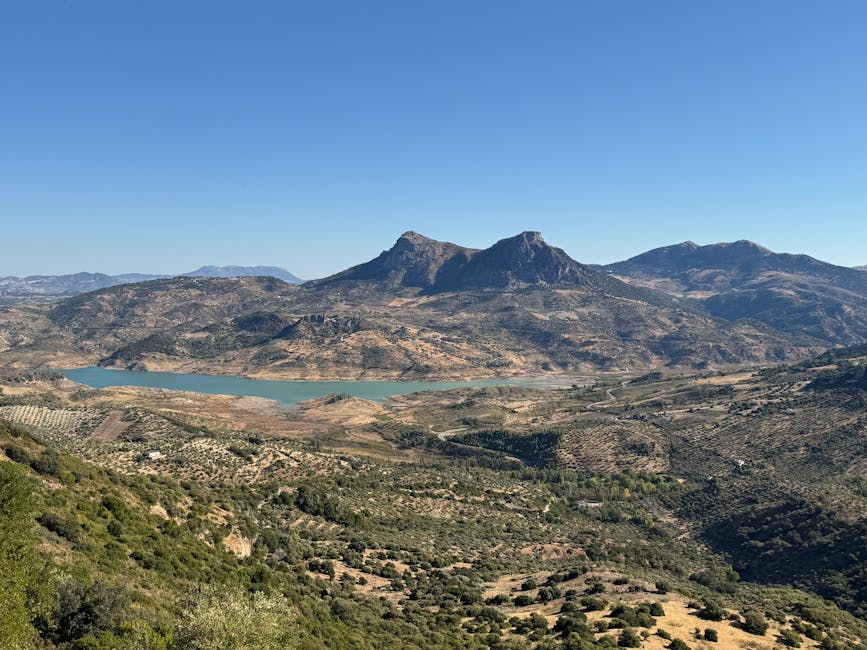
Zahara de la Sierra is the postcard village of the Pueblos Blancos. It sits on a hilltop above an unreal-blue reservoir, with a 12th-century Moorish castle on top and white houses spilling down toward the water. The view from the castle is the kind of thing you’d half-believe was photoshopped if you saw it on Instagram.
It’s a 30-minute drive northwest of Ronda along the A-372, past Grazalema. The Seville-Pueblos Blancos tour above includes Zahara as the climax. If you’re driving yourself, go up to the castle (the climb takes 20 minutes from the village square, mostly steps) and then have lunch at one of the restaurants on Calle San Juan looking down at the lake.
Grazalema and the Sierra
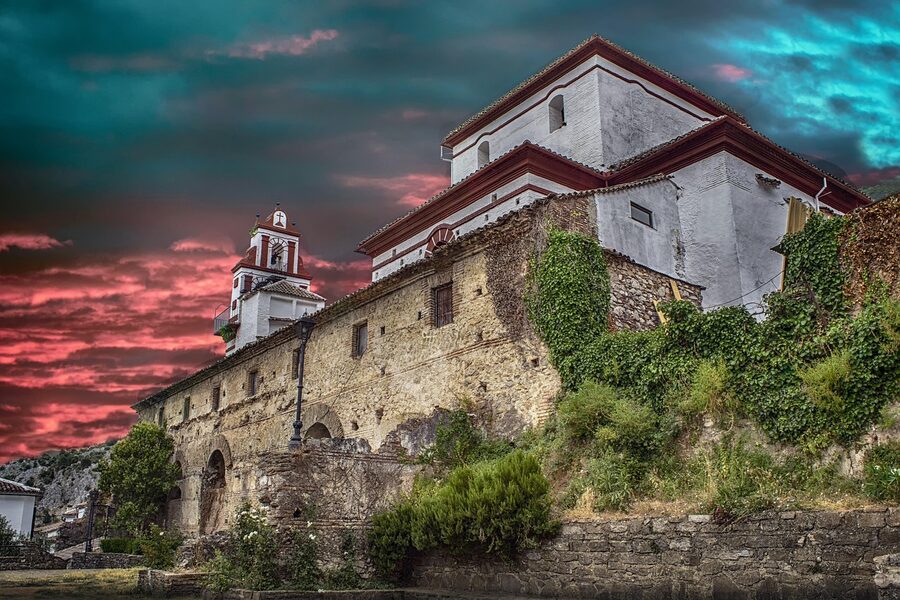
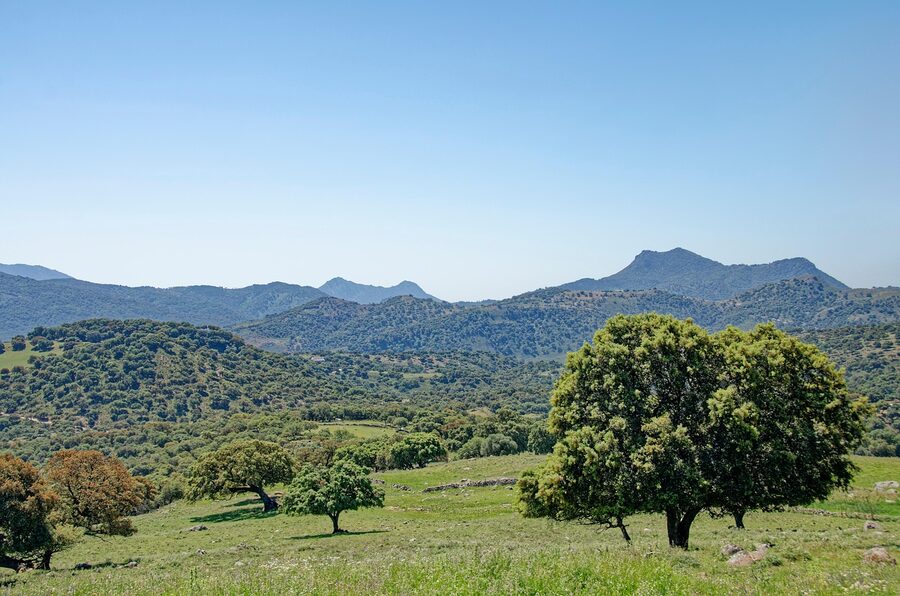
Grazalema is the gateway to the Sierra de Grazalema Natural Park, the wettest place in Spain (2,200mm annual rainfall, more than London) thanks to the way the Atlantic systems hit the mountains here. That rainfall means the park is unusually green for Andalusia, with cork oaks, holm oaks, and the rare Spanish fir clinging to north-facing slopes.
The town itself is small and walkable, with a tradition of hand-loomed wool blankets you can still buy at the Artesanía Textil de Grazalema workshop on Carretera del Olivar. They’ve been making them since the 1860s, and unlike most “traditional craft” shops in tourist Spain, this one is genuinely old.
Olvera
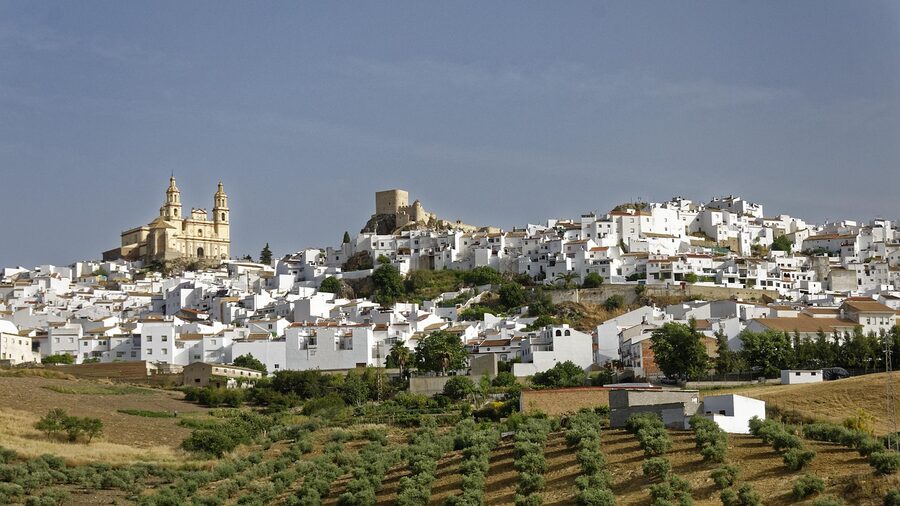
Olvera is further off the main loop and most day-tours skip it, which is why I’d point you to it if you’re driving and have an extra hour. It’s an hour northeast of Ronda along the via verde de la Sierra (a converted railway track that’s now Spain’s longest greenway, walkable and cycleable for 36 km).
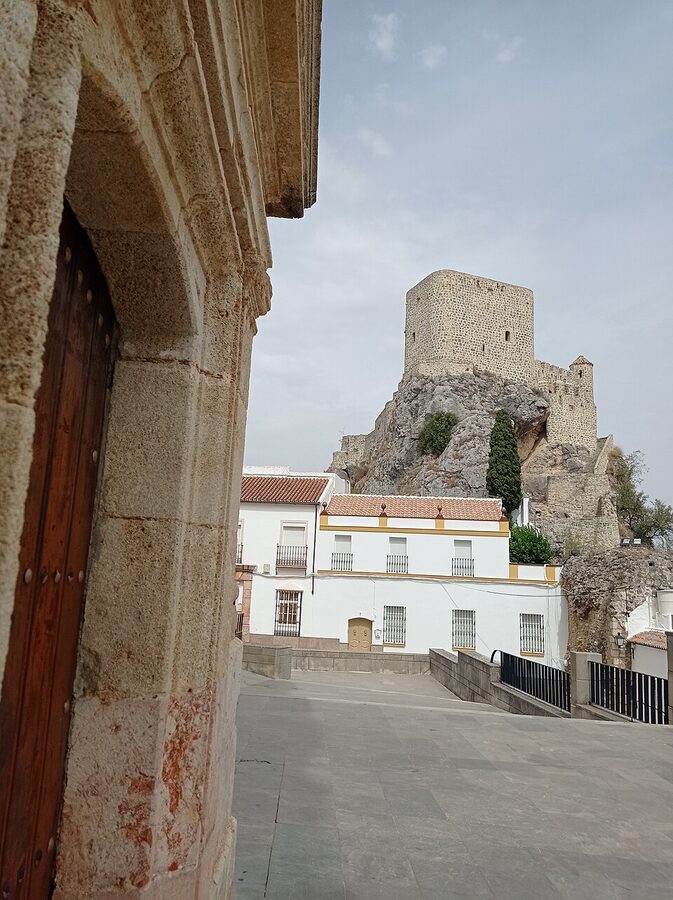
The castle climb takes about 15 minutes from the main square. The neoclassical Iglesia de la Encarnación next door is open to visitors most afternoons and the spiral staircase up the bell tower is one of the better hidden viewpoints in the Sierra de Cádiz.
The three day trips compared
I’ve done both the Málaga and the Seville departures. They are not the same trip. The Málaga route is shorter (about 100 km each way) and the bus typically does Ronda + Setenil in roughly 10 hours total. The Seville route is longer (about 130 km each way through mountains) and adds either Zahara/Grazalema or Setenil depending on the operator, also in 10 hours.
Three rules of thumb if you’re choosing:
- From Málaga, take the option with the sunset upgrade. Coming back over the Sierra Bermeja with the bridge in golden light is the experience the standard tour misses.
- From Seville, take the Pueblos Blancos route over the Setenil-only. Zahara and Grazalema are more scenic than Setenil and the mountain drive is the prettier of the two options.
- If you want both Setenil and Zahara, drive yourself. No tour does all three of Ronda, Setenil and Zahara well in one day. The driving loop from Ronda doing Setenil-Zahara-Grazalema as a half-day is feasible if you’re already in town overnight.
Three Day Tours Worth Booking
1. Málaga: Ronda & Setenil de las Bodegas with Optional Sunset: $34
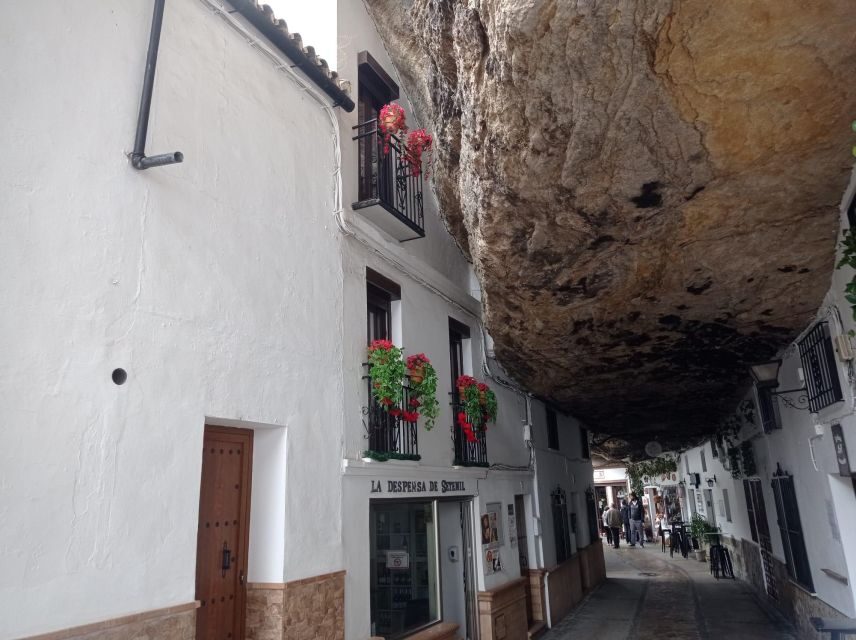
This is the right pick if you’re staying in Málaga and want to do Ronda and Setenil in a single 10-hour loop without thinking about it. The sunset add-on is genuinely worth the upgrade if you’re going in summer when sunset lands at 9.30pm. Our full review covers what’s included in the standard versus sunset versions and whether you actually need the latter.
2. From Seville: Pueblos Blancos and Ronda Full-Day Trip: $52
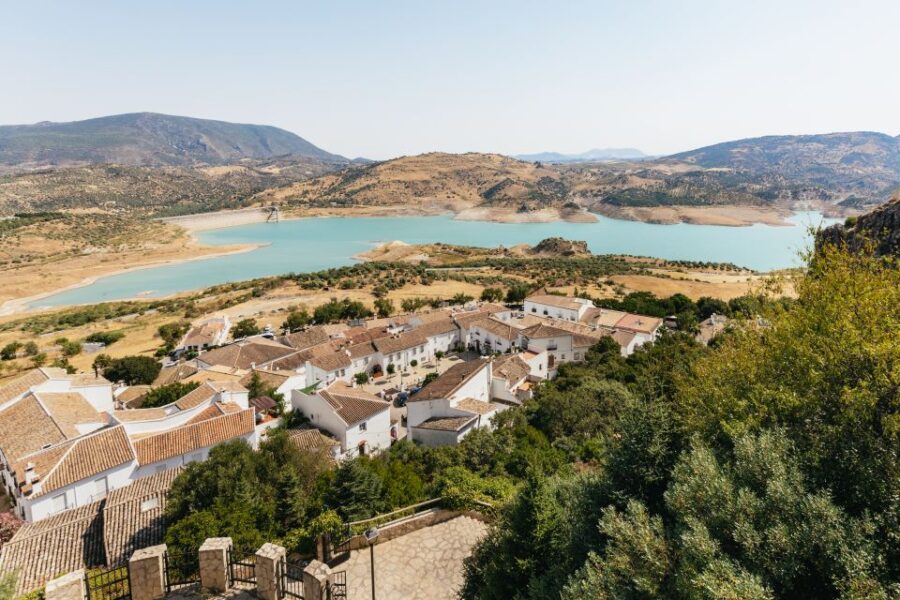
Pick this one if you’re based in Seville and want the prettier inland drive. Two hours each way through the Sierra de Grazalema is genuinely scenic, not just connecting tissue between stops, and our full review walks through where the bus actually stops and how much free time you get in each town.
3. From Seville: Ronda and Setenil de las Bodegas Day Trip: $53
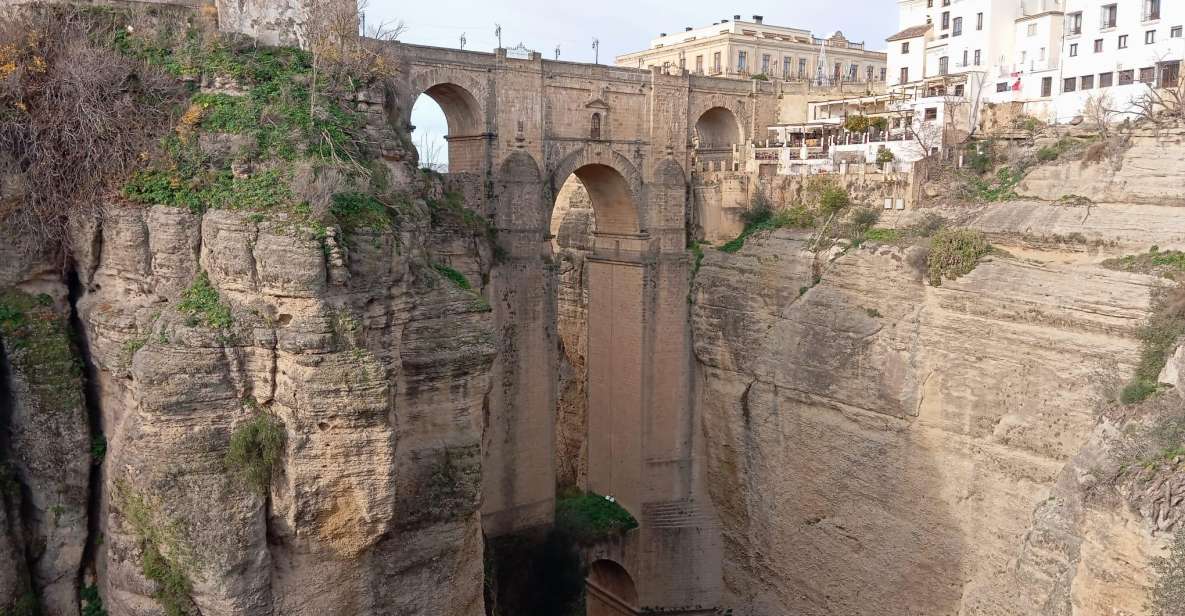
Choose this if you want Setenil over Zahara, and you’re willing to give up the Sierra de Grazalema mountain drive to get more time on the ground. The trade-off is real and the price is nearly identical, so the call comes down to which scenery you’d rather see (read our full review for the side-by-side itinerary breakdown).
When to come
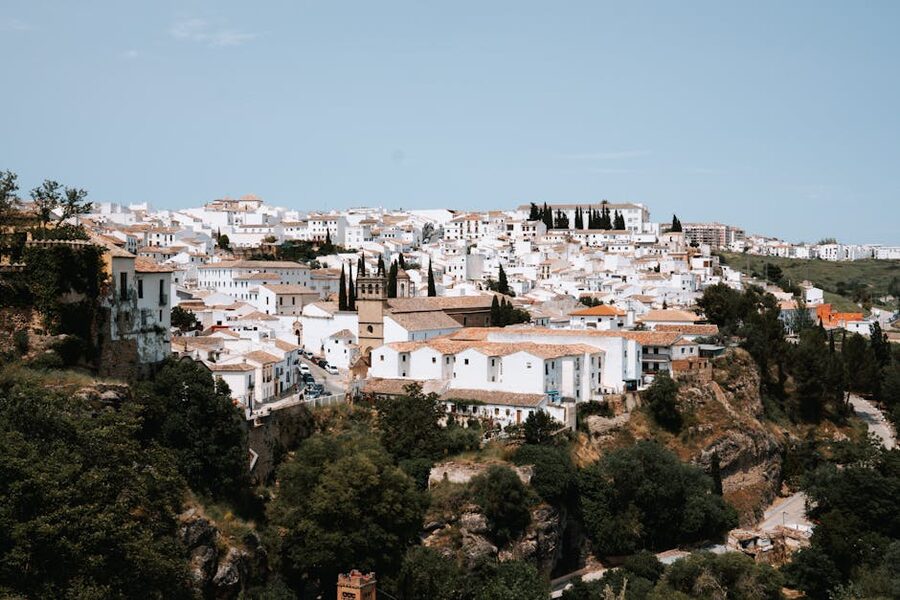
Ronda’s altitude saves it from the worst of Andalusian summer. July and August can hit 35°C but it’s drier and breezier than Seville or Córdoba, and evenings on the plateau are genuinely cool. May and October are the best months for combining warm weather with manageable crowds, the same warm-shoulder windows that work for Keukenhof in spring. Winter (December to February) is mild but wet, with average highs around 11°C and rain on roughly half the days; the upside is no day-tour buses and the bridge to yourself.
If you’re on the morning Seville bus, you’ll arrive between 11.30am and 12.30pm, which is exactly when the day-tour coaches roll in too. The bridge will be busy. The trick: walk straight past the bridge on first arrival, do the old town first, and circle back to the Puente Nuevo around 4pm when the morning buses have left and the late-afternoon light is right. This is the single most useful timing tip in this article.
Where to eat
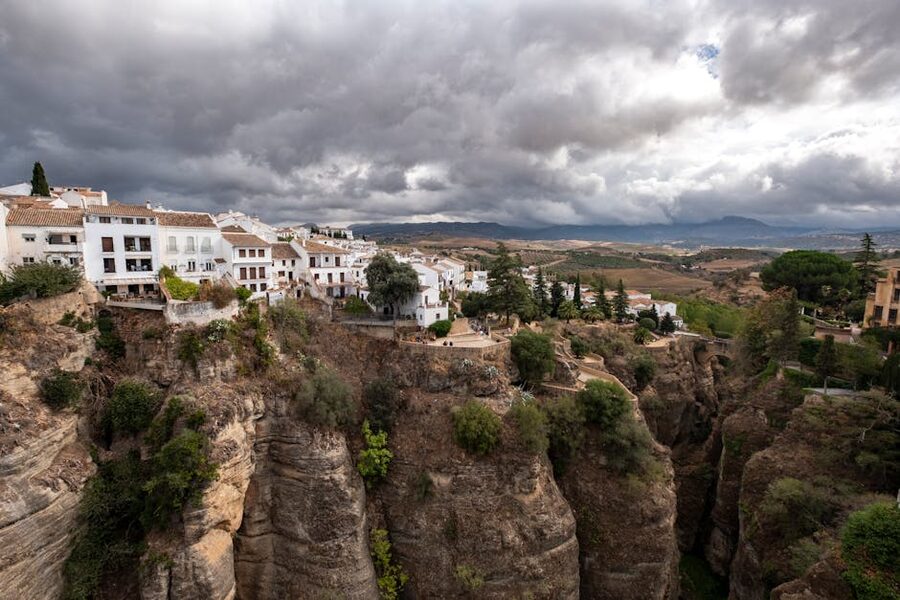
For the view-with-lunch experience, the restaurants along Plaza de España on the new town side of the bridge have terraces over the gorge. Tragabuches and Bardal are Ronda’s two Michelin spots if you’re chasing stars, but they’re a stretch for a day trip given the booking lead time.
For a normal good meal, Restaurante Pedro Romero (named after the famous Ronda-born matador) does heavy traditional Andalusian food: rabo de toro (oxtail stew), cordero al horno (roast lamb), the kind of plate-loading you regret an hour later but enjoy in the moment. Tragatá in the old town is the casual sister to Bardal and does sharing plates well at half the price. For coffee and a sit, Café-Bar Faustino on Calle Santa Cecilia is local-priced and unhurried.
Where to stay if you overnight
I’d push you to overnight if your schedule allows it. The bridge changes character completely after 8pm when the day-trippers have left, and the lighting at night is genuinely better than during the day. The Parador de Ronda sits in the old town hall on the cliff edge with rooms that have private balconies over the gorge. Not cheap (think €180 to €300) but you’re literally sleeping above El Tajo.
For mid-range, Hotel Montelirio is a 17th-century palace also right on the cliff, and Catalonia Ronda is a four-star next to the Plaza de Toros with pool views over the bullring. Hotel Soho Boutique Palacio San Gabriel is the romantic option, an 18th-century villa in the old town with a quiet courtyard. All three sit in the €120-200 range in shoulder season.
How Ronda fits into a wider trip
If you’re putting together an Andalusian week and trying to figure out where Ronda goes, the natural rhythm I’d suggest is: Seville for two nights, day trip out to Córdoba, then either Ronda as a day trip from Seville or (better) on the way south as an overnight, then on to Granada for two nights, then Málaga as the closing base. That way each city is its own thing and Ronda gets the time it deserves.
The natural Italian comparisons for what Ronda is as an experience would be Cinque Terre for the cliff-and-village geography, or Matera for the rock-built-village texture (Setenil rhymes with Matera more than with anywhere in Spain). The closest pure equivalent on this site for “small Andalusian town built on a piece of impossible geology” is Caminito del Rey, which makes a perfect pairing with Ronda for a Málaga-based traveller’s two-day excursion week.
Practical bits
- Ronda tourist info: Plaza de España, just north of the bridge. They hand out a free walking-tour map that’s better than the paid ones.
- Parking: Don’t drive into the old town. Park at the Parking Martínez Astein near the Plaza de Toros (about €15/day) or at the Plaza del Socorro underground.
- ATM: Several around Plaza Carmen Abela in the new town. Old town has fewer.
- Walking: Cobblestones throughout the old town and the Casa del Rey Moro descent. Decent shoes are not optional.
- Tickets to the bridge interior chamber: Buy at the small office on the north side of the bridge, €2.50, no need to book ahead.
- Tickets to the bullring/museum: Same-day at the door is fine outside Goyesca week.
- Casa del Rey Moro: €10, last entry around 7pm. Allow 90 minutes for the descent and climb back.
One thing I’d skip
The Museo del Bandolero (the bandit museum) on Calle Armiñán gets recommended in some guidebooks and I’d give it a pass. It’s a small, dusty private museum about Andalusian highwaymen with a few costumes and weapons, and at €4 you’ve spent the equivalent of a coffee for 20 minutes of mild interest. Use those 20 minutes for an extra coffee at the Alameda del Tajo viewpoint instead. Better return on the investment.
The final answer to “is it worth it?”
Yes, with the caveat that Ronda needs at least one full day on the ground, and ideally an overnight, to repay what it took to get there. Day trips work and the three I’ve recommended above cover the realistic ways to do it from Seville and Málaga. But if your itinerary lets you put a night in Ronda between two coastal stops, take it. The town empties out at 6pm, the bridge lights come on, the dinner restaurants on the cliff edge open up, and you understand for a moment why Hemingway used to come here for the run-up to bullfighting season and ended up staying.
That late-evening Ronda is the one almost no day-tripper sees, and it’s the one that makes the place feel like more than a dramatic photograph. The dramatic photograph is real and worth the trip on its own. The town behind it is the bonus.