
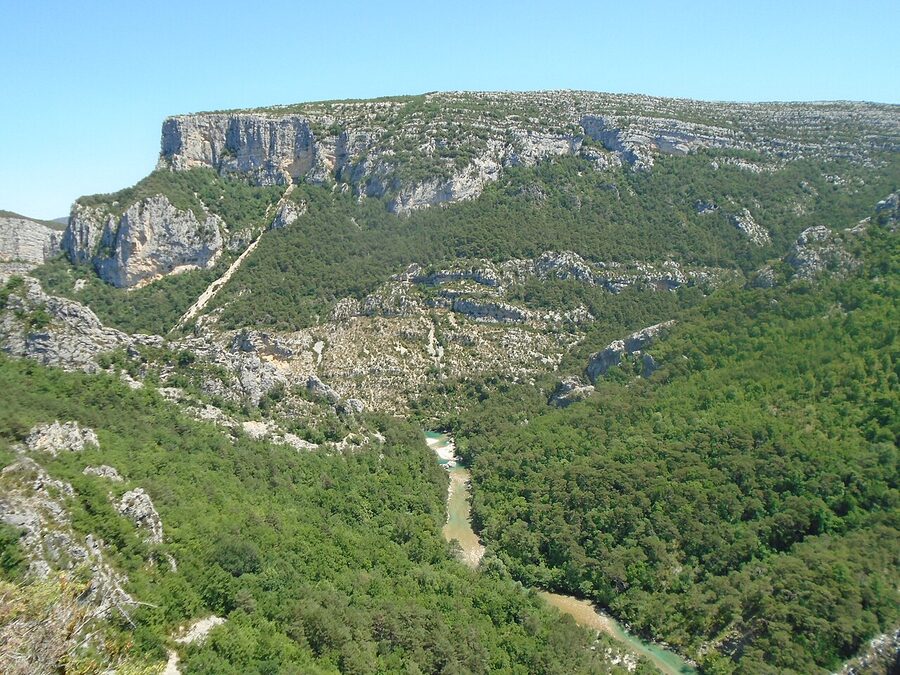
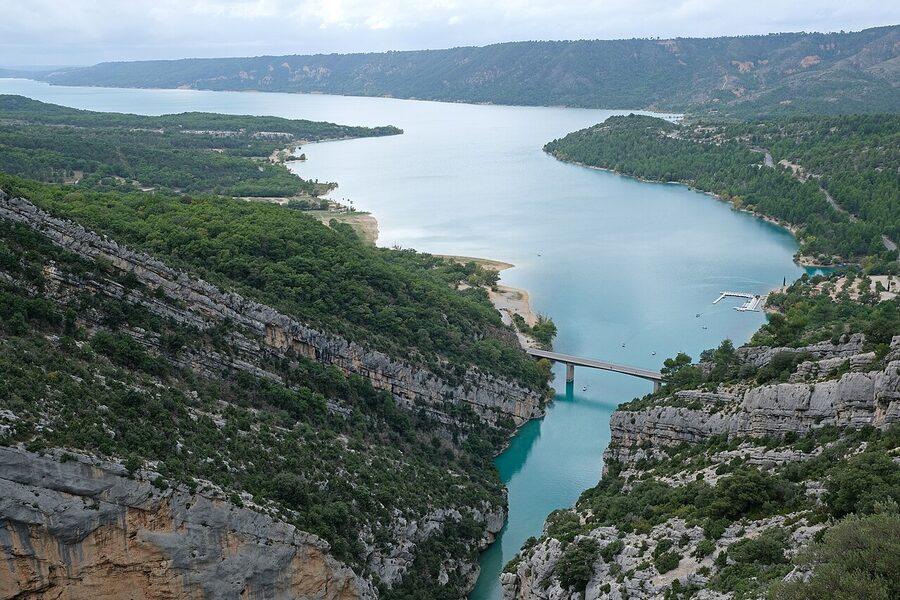
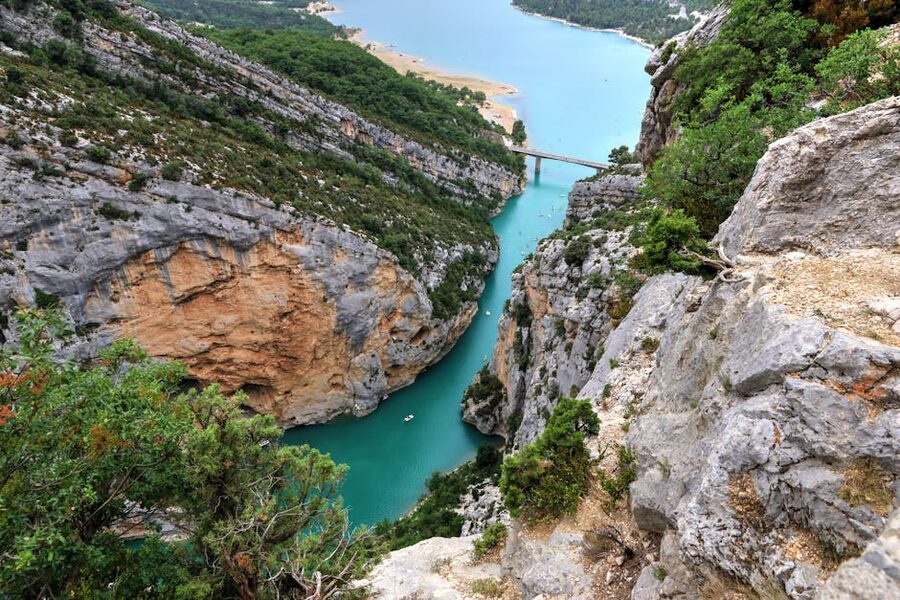
Stand at Point Sublime around 9am and the gorge below sounds like nothing. No traffic, no kayak engines, no birds. Just the wind moving along 700 metres of vertical limestone and the river so far down you have to convince yourself it’s water and not paint. The Verdon is the deepest canyon in Europe, and the Verdon at Point Sublime is the photograph people come for.
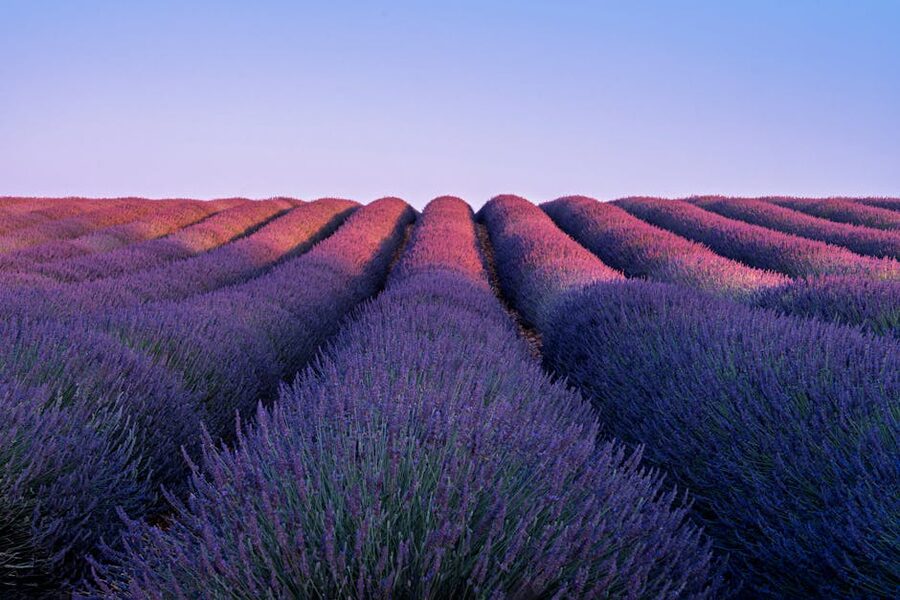
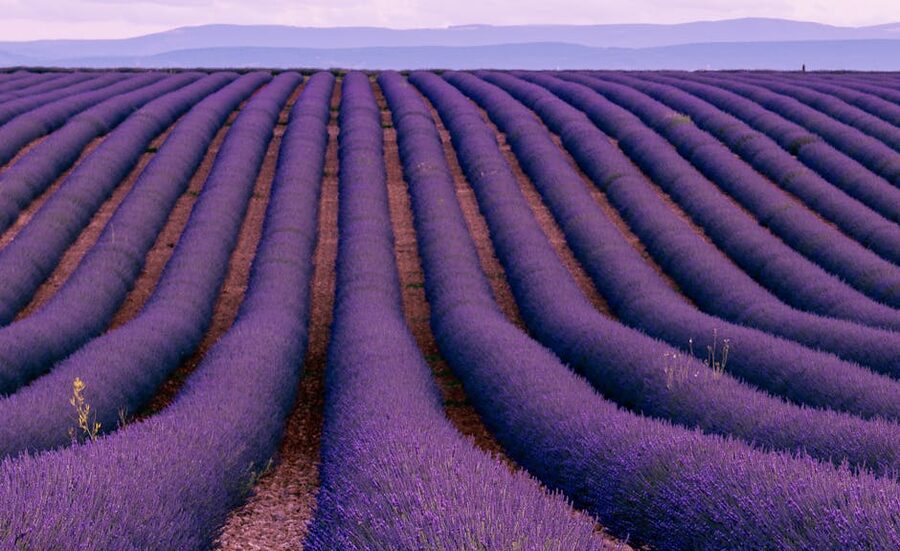
Then you get back in the van and drive another half hour to Valensole, where the lavender plateau stretches out flat to the horizon and the air smells like it’s been infused for you specifically. June into mid-July is when those rows are purple. The rest of the year they’re silver-green stubble, and the tour operators run the same trip anyway.
This guide is the unvarnished version of the day trip from Nice: what you’ll actually see, what the long drive feels like, and the awkward truth that almost everyone who does Verdon as a day trip from Nice wishes they’d booked two nights in Moustiers-Sainte-Marie instead.
In a Hurry: Top 3 Picks
- The flagship combo, Verdon and lavender: Nice: Gorges of Verdon and Fields of Lavender Tour ($125). The full classic, gorge plus Valensole, lunch in Moustiers, mid-June to mid-July only for the purple rows.
- Provence villages instead, smaller and slower: From Nice: Provence and Its Medieval Villages Full-Day Tour ($112). Grasse, Gourdon, perfumery stop. Skip if you came for the canyon.
- Verdon-only premium, longer day, smaller group: From Nice: Gorges Du Verdon Guided Tour ($163). Ten hours, fewer stops, more time at the rim and the lake.
What you’re actually looking at
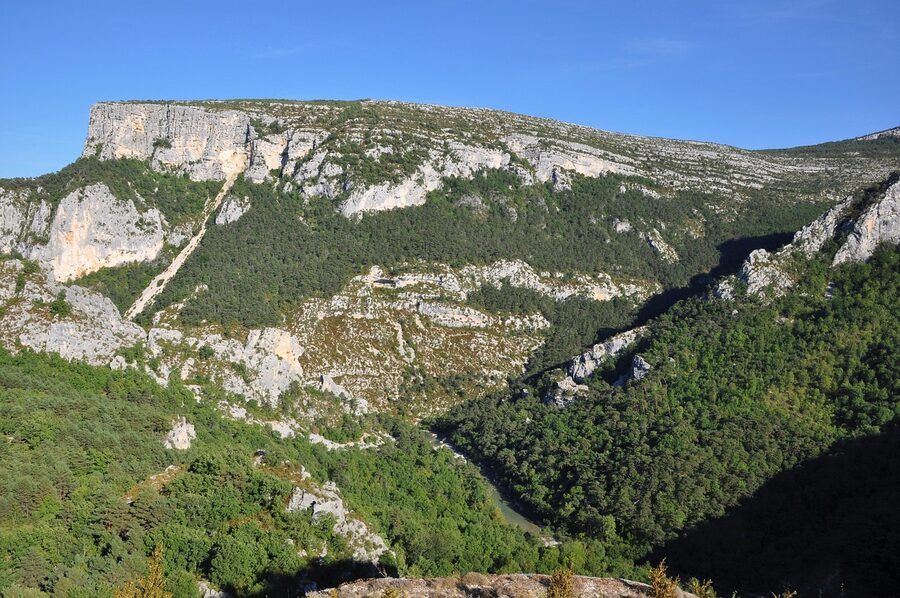
The Verdon Gorge is 25km long and up to 700 metres deep. At its narrowest the canyon walls are 6 metres apart. At its widest, where the river spreads out before it hits Lac de Sainte-Croix, the gap opens to 100 metres. Every metric description of the place undersells it. You can read “deepest canyon in Europe” in advance and still arrive at Point Sublime and lose the ability to speak for about thirty seconds.
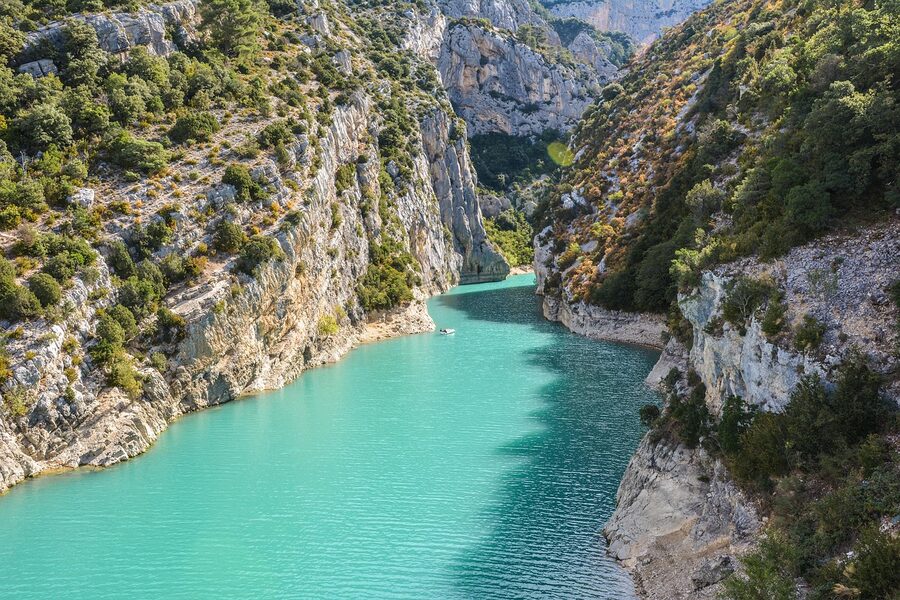
The water at the bottom is the part that looks unreal in photographs. That turquoise-green is real, and it’s caused by limestone-fed minerals plus very fine glacial flour suspended in the river. The Verdon is a tributary of the Durance, with its source up in the southern Alps. By the time it reaches the gorge it’s been picking up minerals for sixty kilometres, and that’s what gives it the colour. There is no filter being applied.
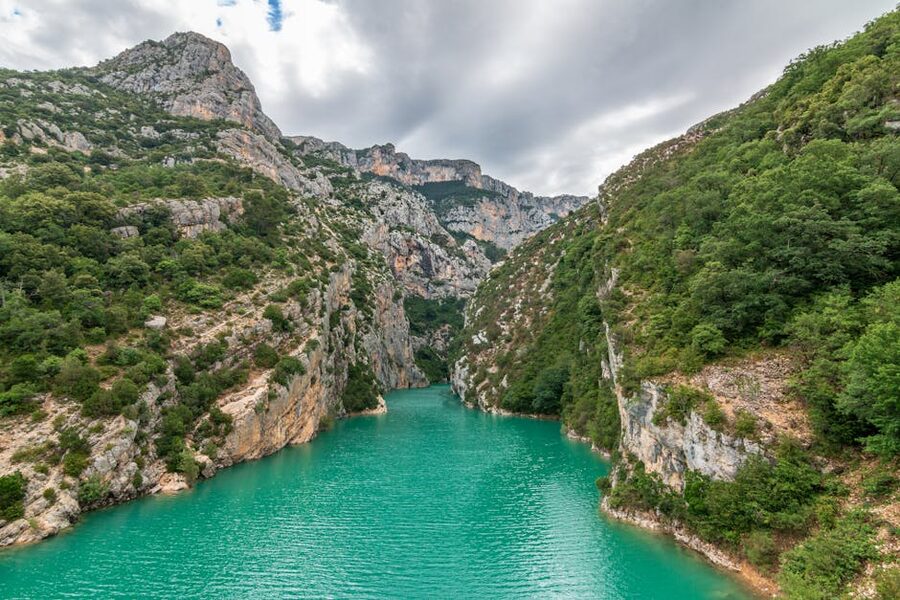
It sits in the Provence-Alpes-Côte d’Azur region, about 150km west of Nice as the crow flies. As the actual road goes, it’s roughly three hours from your hotel in Nice to the first viewpoint, and three hours back, and that drive is the part of this trip nobody markets to you up front.
The day trip from Nice, the real version
Here’s the structure of every full-day Verdon tour out of Nice. You’ll be picked up around 7am. You’ll spend the first three hours on the A8 motorway and then on D952, a sandstone-walled mountain road that climbs into Haute-Provence. You’ll stop somewhere for coffee, usually Castellane at the eastern entrance to the gorge. You’ll do a viewpoint or two, often Point Sublime or one of the Route des Crêtes belvédères. You’ll have a long lunch in Moustiers-Sainte-Marie. You’ll get an hour at Lac de Sainte-Croix, which is where the boat rentals are. If it’s lavender season, you’ll add Valensole. Then you’ll drive three hours back, often arriving in Nice at 8 or 9pm.
That’s a 12-hour day with 6 to 7 hours of it inside a vehicle. The gorge time itself is 3 to 4 hours, broken up across stops. If you’ve already done the coastal day trip along the Riviera and you’re looking for the inland alternative, this is the obvious counterpoint, but be honest with yourself about whether you want to spend most of your daylight hours on the autoroute. The coastal version is half the drive and twice as many photo stops.
The reframe almost everyone reaches by the time they’re back in their hotel: the right Verdon trip is two nights based in Moustiers, not a 12-hour blitz from Nice. If you have the calendar room, do that. Drive the rental car up on a Friday afternoon, swim Saturday, do the Route des Crêtes Sunday morning, drive back. You’ll see four times as much for the same effort. But if you only have a single free day in Nice, here’s how to make it count.
Lavender is the fragile part of the calendar
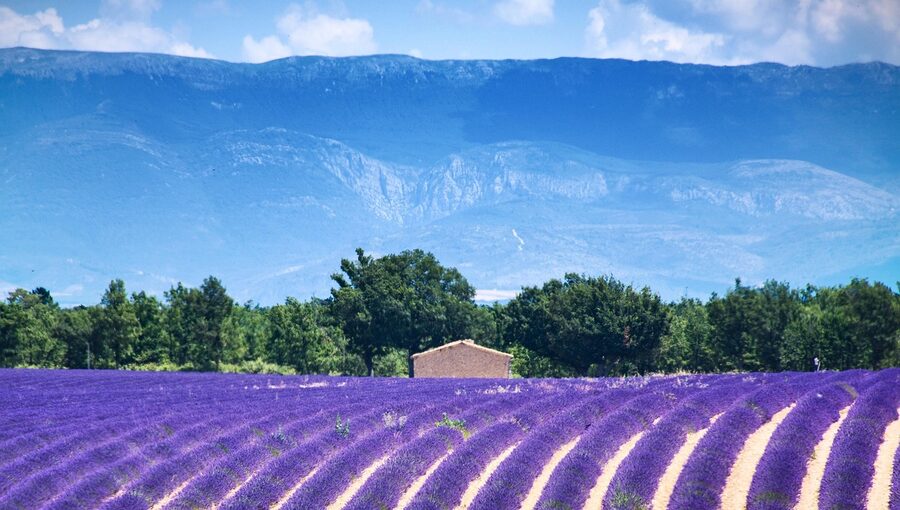
The Valensole lavender plateau is what gets people on the plane. It’s an 800-metre-elevation plateau covering about 800 square kilometres, the largest lavender region in France, and roughly 80% of the country’s commercial lavender oil comes from this triangle of Valensole, Manosque and Sault. When it’s blooming, it’s the most photographed farmland in Europe. When it’s not, it’s stubble.
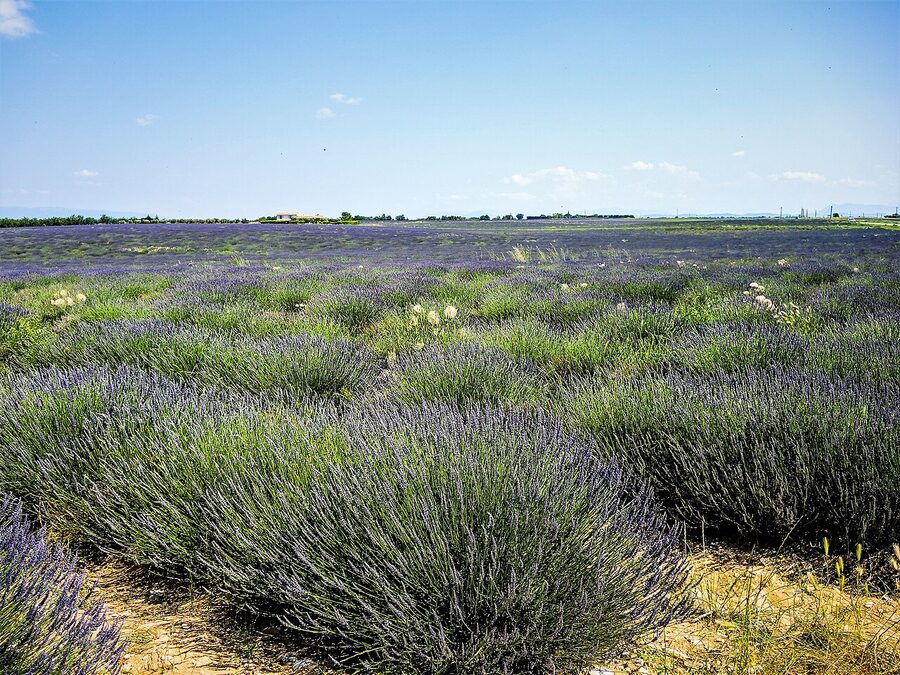
The bloom window matters more than people realise when they book. Mid-June to mid-July is the window. Cooler years can stretch it into early August. Hot dry springs can pull the harvest forward into the last week of June. By 25 July most years, the harvest has started and the rows you see in the brochure photos are gone. The same operators run the same tour route in October and February. There is no lavender on the plateau in October. The drive is the same length.
If lavender is the reason you’re booking, check the regional bloom report from the Routes de la Lavande tourism office before you commit. If you’re outside the window, the day is still worth doing for the gorge, but pick a Verdon-focused tour rather than a “Verdon and lavender” tour, because the lavender stop becomes a brown field on a hot road. The cliff-walks of Caminito del Rey in Andalusia are the Spanish parallel for canyon-and-gorge specifically without the lavender season problem, if your dates are wrong here. The flower-pilgrimage equivalent in the Netherlands is Keukenhof, where the tulip window runs mid-March to mid-May and the same brown-stubble disappointment hits any visitor who arrives a week late.
Point Sublime is the right photograph
If you only have time for one viewpoint on the rim, make it Point Sublime. It sits on the southern rim at the junction of the D952 and D17, just outside the village of Rougon. The car park holds maybe forty cars and fills up by 11am in summer. From the lot it’s a five-minute walk along a stone path to the railing.
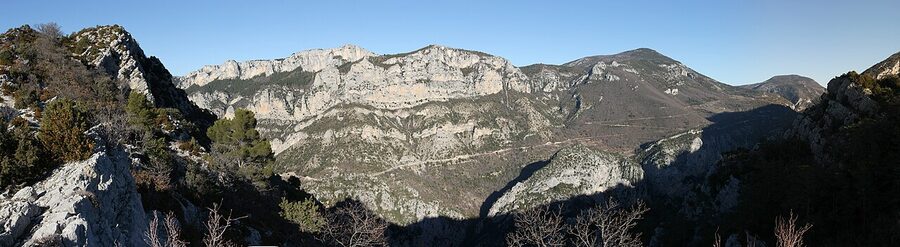
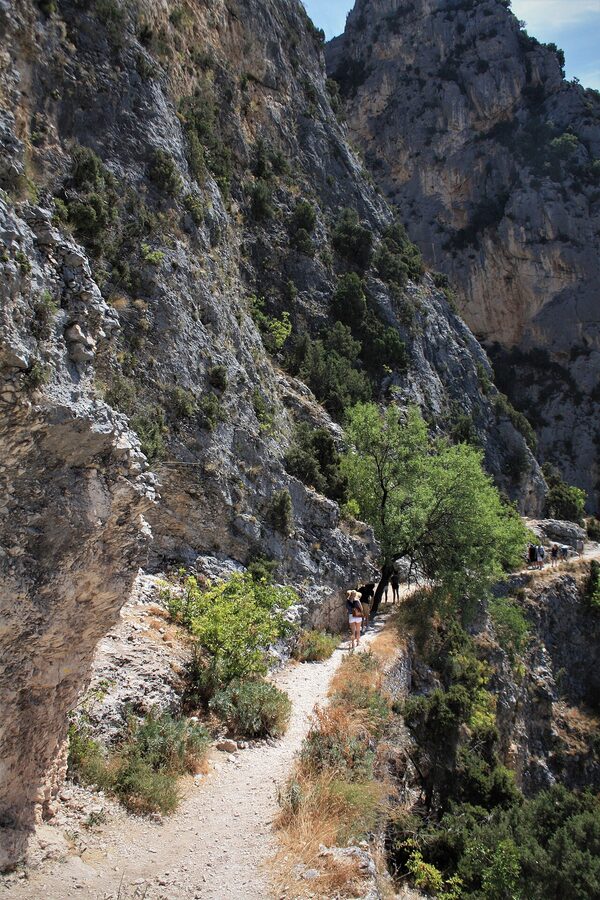
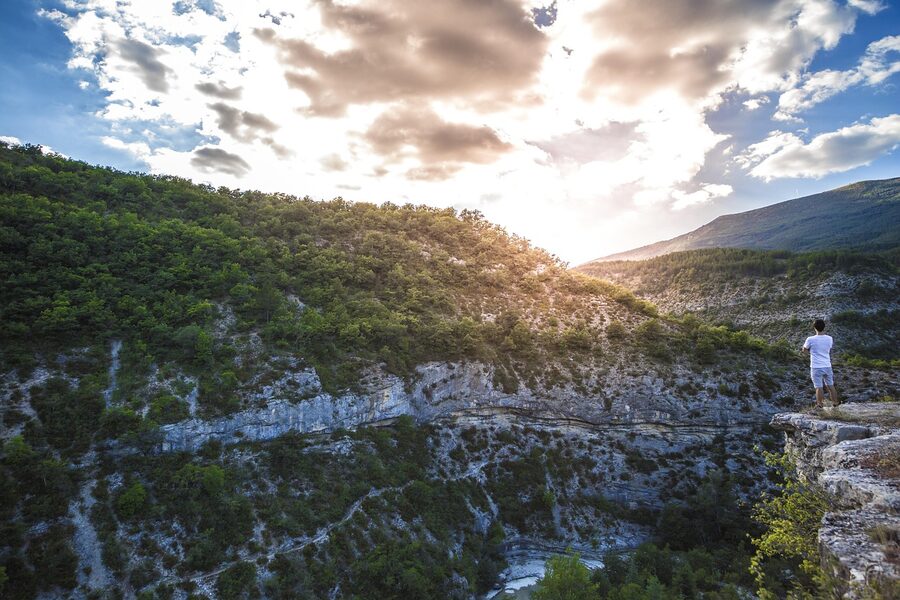
From the railing you’re looking down into the Couloir Samson, the narrowest section of the canyon, where the river is squeezed between cliffs and the gorge is at its dramatic best. The view is roughly 700 metres from rim to river. Wear sturdy shoes. The path is rocky in places and the railing isn’t continuous on every angle. Keep small kids close.
Most day tours from Nice stop here for 30 to 45 minutes. That’s enough for the photo and a slow walk along the rim, not enough to feel the place. If you’re driving yourself, give it 90 minutes. Bring water. There’s no shade at the railing and the limestone bounces the light back at you.
The other rim drive: Route des Crêtes
If you have a rental car and an extra hour, the Route des Crêtes is the drive. It’s a 23-kilometre circular cliff road on the gorge’s north rim, opened in 1973, with 14 numbered belvédères where you pull over and look down. Sections of it are one-way clockwise from La Palud-sur-Verdon, which means you can’t easily backtrack to a viewpoint you missed. Plan ahead.
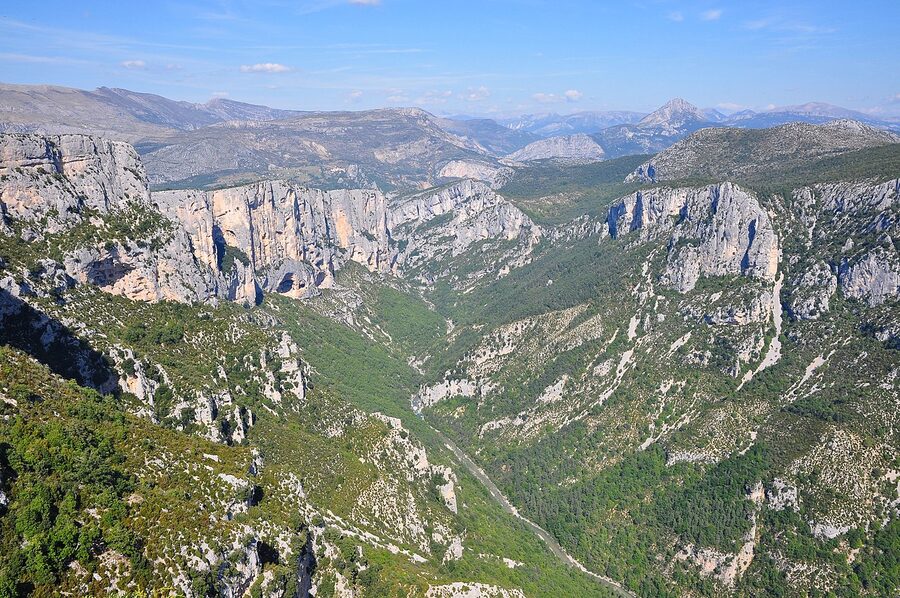
The road is narrow, steep, and not for nervous drivers. There are sections where the cliff drops directly off the right shoulder of the car and the lane width feels generous if you’re a cyclist and tight if you’re in a hire SUV. Day tours from Nice rarely include the Route des Crêtes because the coach can’t physically take some of the corners. If you want it, you need a car or a small-vehicle premium tour.
Belvédère du Tilleul, Belvédère de la Carelle, and the Belvédère du Pas de la Bau are the three pull-offs locals point you to. Each is ten minutes’ difference, and each gives you a different angle on the same canyon. If the Route des Crêtes is closed in winter or after heavy rain, the rim drive on the southern side via D71 covers some of the same ground from the opposite cliff and is open year-round.
Lac de Sainte-Croix and the swim
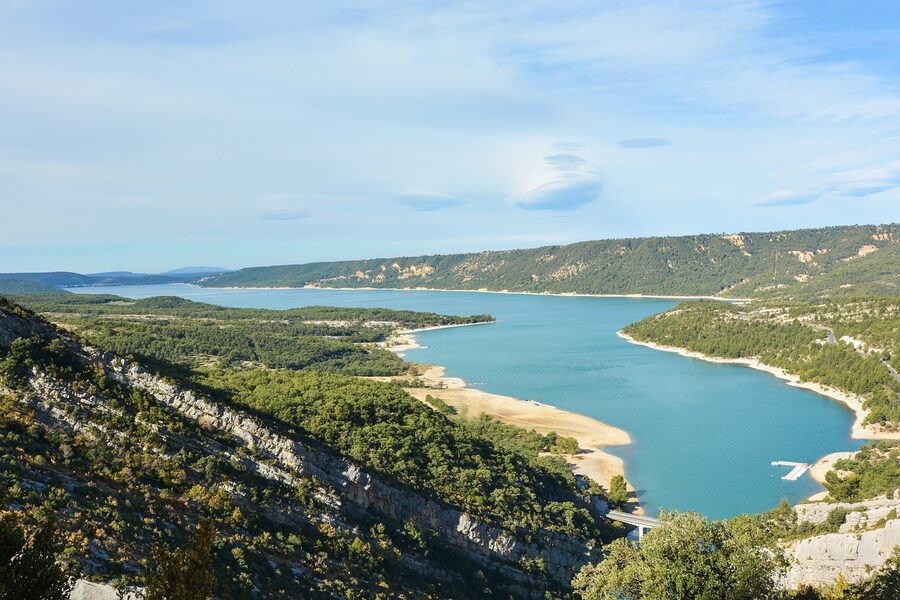
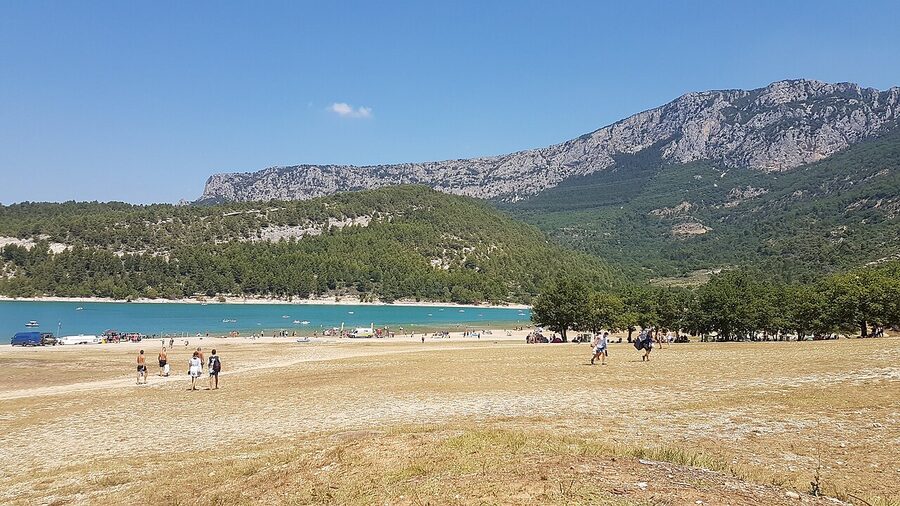
The Lac de Sainte-Croix is the artificial reservoir that sits at the western end of the gorge, where the Verdon flows out of its narrow walls and spreads into a 22-square-kilometre lake. It’s the swim. The water is the same turquoise as the gorge, the air temperature in July hits 32°C on shore, and the water sits at 22 to 26°C from late June into September.
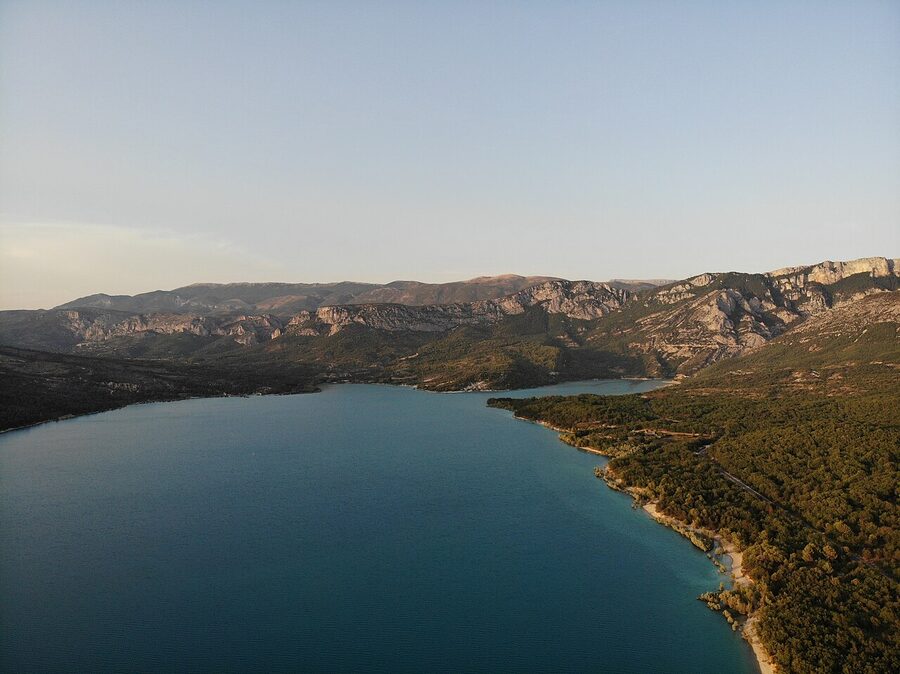
The drowning of Salles-sur-Verdon is a story locals will tell you over coffee if you ask. It’s the same kind of post-war infrastructure-trumps-village story you see in alpine valleys all over Europe, and it’s the part of the lake’s history brochures don’t mention. The new village was built on the eastern shore, well above the high-water mark.
The main beach for day trippers is at Pont du Galetas, the bridge where the Verdon meets the lake. There’s a parking lot, a couple of kayak rental kiosks, and a stretch of pebble beach. The beaches are pebble, not sand, and the swimming entry can be sharp on bare feet. Water shoes pay for themselves.
Renting a kayak or a paddle boat
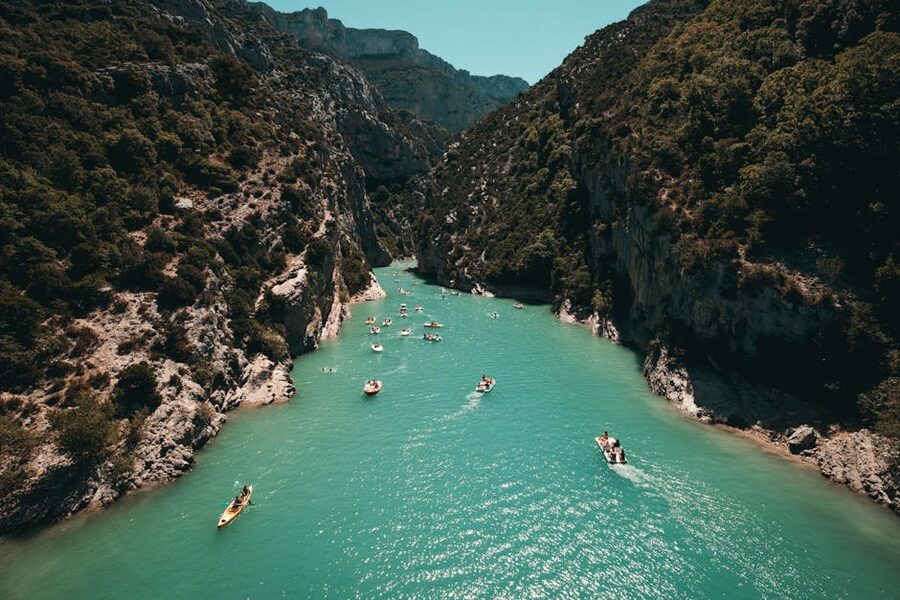
The kayak rentals at Pont du Galetas open around 9am from May to September. A two-hour single kayak runs about €25, a two-hour double kayak about €40, a pedal boat about €30, and a small electric motorboat about €70. The motorboats fit 4 to 6 people. Rental usually requires a credit card swipe as deposit and a passport for ID.
You can paddle from the lake into the mouth of the gorge for about 1.5 kilometres before the canyon is closed for environmental protection. That 1.5km is the best part. The cliffs rise above you, the water gets a darker shade of blue the further in you go, and after about ten minutes the road noise from the bridge falls away completely. There are small pebble beaches along the route where you can pull up, swim, and float for a while before paddling back.
If you’re on a guided day tour from Nice, the kayak isn’t usually included. You get an hour at the lake to walk along the beach and swim, and that’s it. If swimming and paddling are why you’re going, the right move is to book your own car for two days, base in Moustiers, and rent the kayak yourself. The cliff-and-water rhythm is closer to the boat-and-village rhythm of the Cinque Terre from Florence than to a typical day-tour photo loop, and like Cinque Terre it really wants more than a single afternoon. The Dutch parallel for an unhurried rural-day-from-the-city is Zaanse Schans outside Amsterdam, where the same trade between coach-pace and self-driven slowness applies.
Moustiers-Sainte-Marie, the village at the gateway
Moustiers-Sainte-Marie sits at the western entrance to the gorge, tucked under a limestone cliff that splits the village in two. A 227-metre golden chain stretches across the gap with a star hanging from the middle of it, a votive offering supposedly placed there by a returning crusader in the 13th century. The current star is the seventh, replaced periodically when the chain breaks.
The village is famous for faïence, a tin-glazed earthenware that’s been made here since 1679. There’s a small faïence museum on rue du Seigneur de la Clue if you want context, and a row of working potters down the main street selling everything from €15 espresso cups to €600 dinner services. The cheap pieces are fair tourist souvenirs. The expensive pieces are real, hand-painted, and worth what they cost.
Lunch in Moustiers is the part of the day tour everyone universally remembers as the highlight that wasn’t the gorge. The classic spot is La Treille Muscate, on the lower terrace, with a 35€ lunch menu that usually includes a tarte aux légumes du soleil and a Provençal lamb. Les Santons nearer the cliff is the higher-end alternative if your tour includes a free choice. Most coach tours give you 90 minutes here. Take the full 90.
If you’re driving yourself, this is also where you’d base for a two-day trip. Hotels run from €90 to €280 a night. The village is walkable in 20 minutes and the climb to Notre-Dame-de-Beauvoir takes about 30 minutes up the switchback path, with the chain-and-star directly overhead at the top.
Castellane, the eastern gateway
Castellane is the village at the gorge’s eastern end, on the D952 about 90 minutes from Nice. It’s where coach tours stop for a coffee break before entering the canyon proper. The village itself is unremarkable, a small main square, a handful of cafés, and a chapel called Notre-Dame du Roc balanced on top of a 184-metre limestone outcrop directly above the town. The walk up takes 30 to 45 minutes and ends at a view back over the Verdon valley that’s worth doing if you have the time and the legs.
Most day tours from Nice don’t give you longer than 20 minutes here. You get coffee, a stretch, and back into the van. If you’re driving yourself, give it an hour. The gorge entry from Castellane along D952 is 25 kilometres of cliff road that takes you all the way to Point Sublime and beyond.
Tour pickups and what’s actually included
Pickup for full-day Verdon tours from Nice is usually 7 to 7:30am from the central hotel zone or the Massena tram stop. Most operators run a small minivan, 8 to 16 passengers, rather than a coach, because the gorge roads can’t take coach traffic past Castellane. Drop-off is back where you started, between 8 and 9pm.
What’s included: transport, English-speaking guide, viewpoint stops, a lavender field stop in season, time at the lake. What’s not: lunch, kayak rental, museum entries. Lunch in Moustiers runs €15 to €35 depending on where you eat. Kayaks are extra and have to be booked separately if you want one. There’s almost never time on a day tour to actually use a kayak, so don’t plan on it.
Cancellation policies vary. The big GetYourGuide and Viator listings usually offer free cancellation 24 hours before. Smaller boutique operators on their own websites are stricter, sometimes 7 days. If you’re booking a Verdon-and-lavender tour and the bloom is uncertain that year, the GYG version with the flexible cancellation is the safer book.
Three Verdon-from-Nice tours that hold up
I’ve written tour reviews for all three of these on this site. The picks below are my own view on which one fits which traveller. None of them are perfect. The Verdon day trip from Nice is a long, padded day no matter who runs it, and the difference between operators is mostly about how the long parts are handled.
1. Nice: Gorges of Verdon and Fields of Lavender Tour: $125
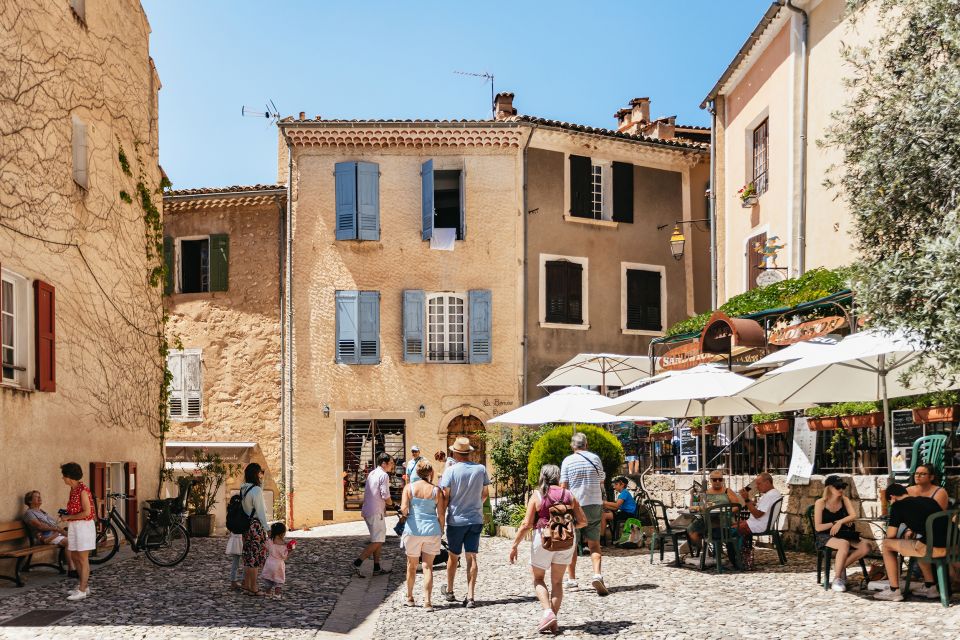
This is the right pick if you’re travelling in mid-June to mid-July and the lavender is the reason you came to Provence. Our full review covers the timing of the Valensole stop and the trade-off of having a tighter window at Lac de Sainte-Croix to make room for it. Outside the bloom window the lavender stop is brown stubble and you should book a Verdon-only tour instead.
2. From Nice: Provence and Its Medieval Villages Full-Day Tour: $112
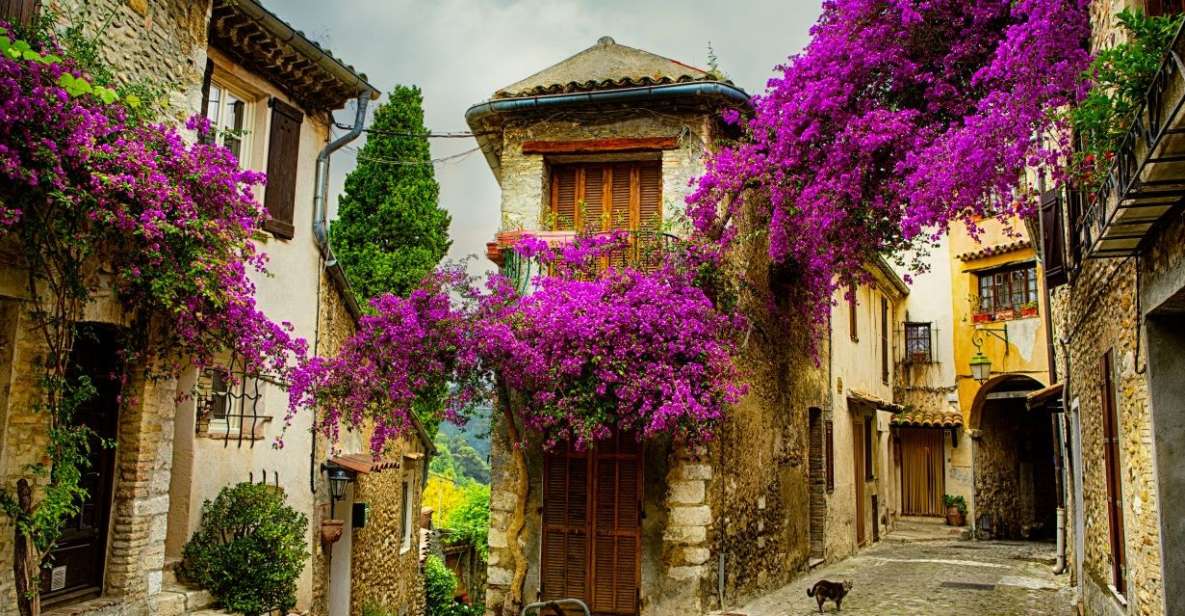
Pick this if your group includes someone who’d find six hours in a vehicle for a single canyon view exhausting, or if you’re outside the lavender window and want a Provence day that doesn’t need it. Our full review covers what’s actually inside the perfumery visit and which villages give you something Nice can’t. It’s a different trip from the Verdon one, so don’t book it expecting the gorge.
3. From Nice: Gorges Du Verdon Guided Tour: $163

Pick this if the gorge itself is the priority and the lavender is a bonus rather than the headline. Our full review covers the extra rim viewpoints this operator includes and the smaller-group dynamic that makes the long drive less of a chore. The price step up over the flagship is worth it if you’re a serious nature photographer or just don’t want a packed minivan.
The two-day version, if you can swing it
If your calendar in Provence has any flex, this is the pitch. Pick up a rental car in Nice. Drive up Friday afternoon, three hours, arriving in Moustiers in time for dinner. Hotel runs €120 to €200 for the kind of room you want. Saturday morning, drive out to Pont du Galetas, kayak into the gorge for two hours, swim at Aiguines on the southern shore. Saturday afternoon, drive the Route des Crêtes circuit, finishing at Point Sublime around golden hour for the photograph that day-trippers can’t get because they have to be back on the bus. Sunday morning, Valensole if it’s bloom season, then drive back.
The car rental from Nice runs about €60 to €90 a day for a small economy with insurance, less if you book ahead. Petrol on the round trip is roughly €70. Two nights in Moustiers at the mid-tier level is €240 to €400. Add €150 for kayak rental, lunch, and dinners. You’re at €600 to €900 for two people for a proper Verdon weekend, versus roughly €500 for two people on a single day tour where you spend most of the time in a van.
The maths matters. You’re not saving money with the day tour. You’re saving the planning effort, and that’s a perfectly valid reason to book it. But if effort is the only thing keeping you from the two-day version, it’s worth the planning.
Driving yourself: what to know
The route from Nice is A8 west to Le Muy, then north on D955 and D952 through Comps-sur-Artuby and Castellane to the gorge. The A8 stretch is straightforward motorway, three lanes, two tolls totalling about €18 each way. After Le Muy the road narrows and climbs. Some of the stretches near the gorge are sandstone-walled mountain road with passing places rather than two clear lanes, and they close occasionally for snow in winter or after heavy rain.
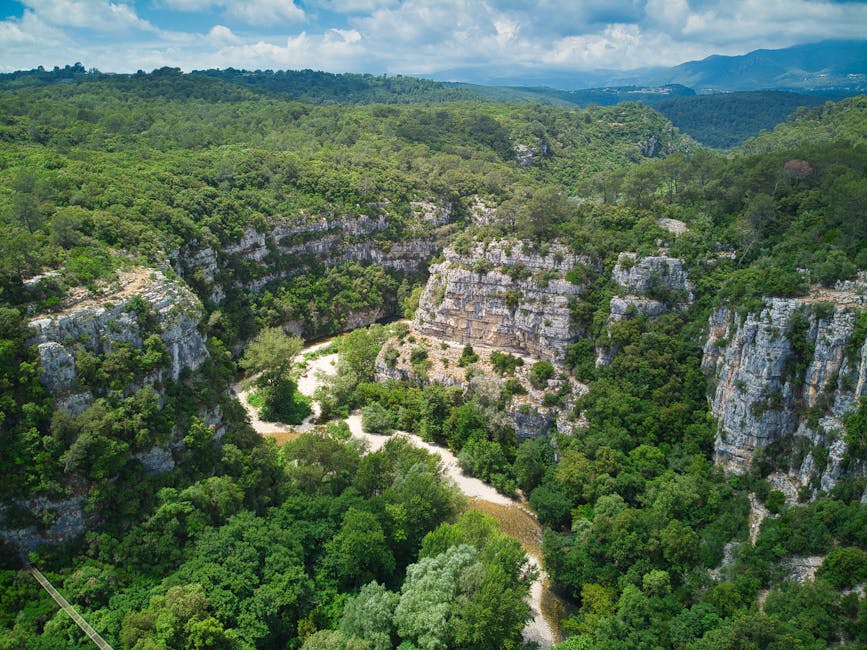
If you’ve been moving around southern Europe and you’re already used to mountain roads, this is no harder than the cliff roads at the Ronda gorge in Andalusia, which is the closest Spanish parallel to Verdon, or the climbs around Mount Etna from Catania. If you’ve never driven a tight European mountain road before, take a deep breath at the bottom and trust that everyone else is doing it too. The locals are unfailingly patient with hesitant rental drivers.
Parking at Point Sublime is free but limited. Parking at Pont du Galetas is paid, about €5 for the day, and the lot is large. Parking in Moustiers is paid in summer, with a couple of free lots a 10-minute walk from the village centre. There’s no toll booth on the gorge roads themselves; the tolls are all on the A8.
The lake activities, in detail
Beyond kayaking, the lake itself supports paddleboarding, swimming, sailing, and small electric motorboats. The water temperature in summer is genuinely warm, 22°C in late June up to 26°C in early August, which is unusual for an Alpine lake at this elevation. The reason is the artificial water management: the dam at the southern end keeps water levels stable through the season, so the lake stays full and the surface heats up evenly.
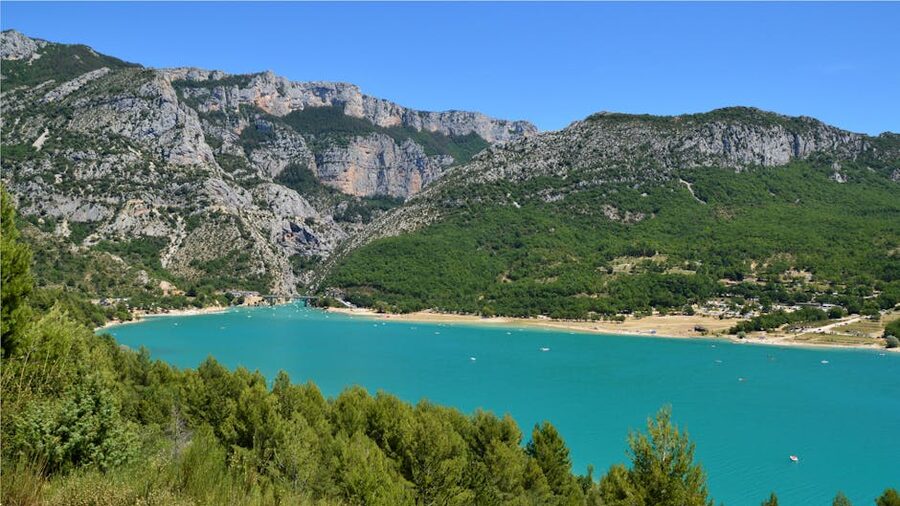
Paddleboard rentals run about €20 for two hours. Sailboat rentals (small Optimist or Hobie Cat) are about €60 for two hours and require a basic certification check, though enforcement is loose. The lake has no motorboat traffic faster than 5 knots, so the water surface is generally calm and good for beginners. Wind picks up in the late afternoon, and that’s when the sailing crowd takes over from the paddleboarders.
The most photographed angle of the whole gorge isn’t from a viewpoint. It’s from a kayak about 200 metres into the canyon mouth, looking back at the bridge with the cliffs framing it. Light is best around 11am to 1pm, when the sun reaches the bottom of the canyon and the turquoise gets its proper lit-up tone. The kayak rentals know this and the queue at 10am is real. Book online or arrive at 9.
The lavender season, in detail
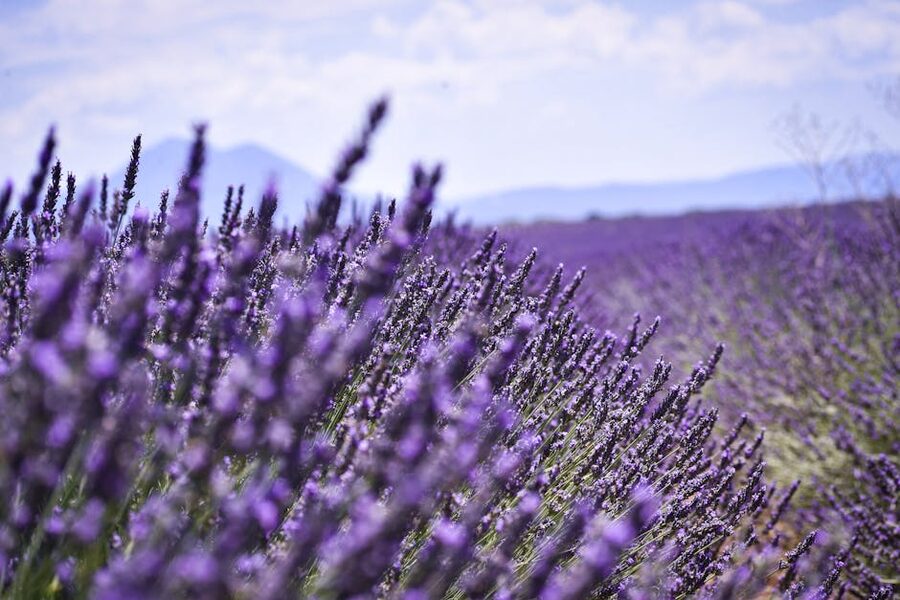
Lavender on the Valensole plateau blooms in three rough phases. The early fields, on the south-facing slopes near Riez and the southern edge of the plateau, can start in the second week of June. The main bloom across the central plateau peaks the first week of July. The high-elevation fields around Sault, technically a different plateau but often grouped with Valensole on tours, peak around 15 July and can hold colour into early August. So the absolute window across the wider region is mid-June to mid-August, but the Valensole-specific window is roughly 20 June to 25 July.
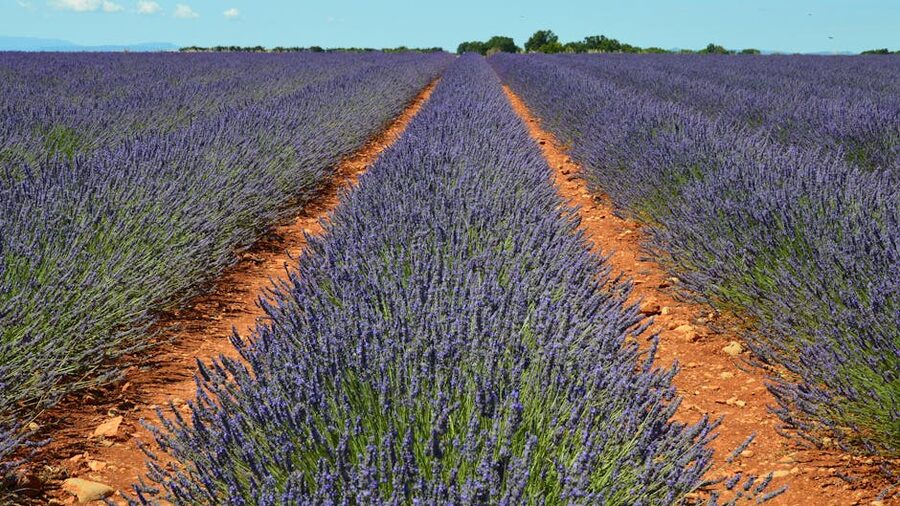
The harvest is what ends the season. Once a farmer cuts a field, it’s stubble for the rest of the year. Harvest typically starts the last week of July and runs through August. The cut lavender is distilled within 48 hours into essential oil, and the small distilleries around Valensole sometimes let visitors watch the process. The Distillerie Angelvin in Valensole and Mas de la Lavande near Riez both do tours.
If you’re combining lavender with the gorge on a day tour, the realistic time at Valensole is 30 to 45 minutes. That’s enough to walk the rows, take photographs, smell the place, and buy honey or oil from the roadside stalls. It’s not enough to do a distillery tour. If a distillery tour is the priority, the right tour is one of the lavender-focused options that goes via Marseille or Aix-en-Provence rather than via Verdon, and the day is closer to the Camargue from Arles in scope: focused, regional, no five-hour driving padding.
What to bring, and what to skip
Pack for the rim and the lake separately. At the rim it’s exposed, hot in midday, with no shade and a 700-metre drop. Sunscreen, hat, water, sturdy shoes, and a light layer for the wind that picks up at the railing. The lake is warmer than the rim and the swim entry is pebble, not sand. Water shoes, a swimsuit you can wear under your day clothes, a small towel that fits in a daypack, and dry shorts for after.
Don’t bother with hiking boots unless you’re planning the Sentier Blanc-Martel, the 14-kilometre canyon-floor hike that takes 6 to 7 hours and isn’t realistic on a day tour. Trail runners are fine for everything else. Don’t bring a tripod for the lavender. The fields have very explicit “no entering the rows” signs, and the photograph everyone wants is taken from the road shoulder. Don’t bring a drone. The whole gorge area is a regional natural park and recreational drone use is restricted; a guide can lose their job over it.
Lunch is the part most travellers underestimate. The villages charge €25 to €40 for a sit-down menu, and the kiosks near Pont du Galetas charge €12 for a sandwich that’s adequate, no more. If you’re driving yourself, stop at a Carrefour Express in Castellane on the way and pack a picnic. Cheese, ham, baguette, fruit, cheap rosé. Eat on the rim. The view is better than any restaurant terrace and you’ll have lunch on a million-dollar table for thirty euros total.
Best months to go
June and early July are the best general window. You get lavender, swimmable lake, long daylight (sunset is 9:30pm), and weather that’s hot but not yet brutal. September is the photographer’s pick: light is gentler, the heat has broken, the crowds have thinned, but the lake is still warm enough to swim. The lavender is gone by then. May and October work for the gorge alone but the lake is cold and the kayak rentals are seasonal, often closing in early October.
August is the worst month, despite being the busiest. The Valensole plateau has been harvested by mid-August in most years, the gorge is packed with French school holidaymakers, the parking lots fill by 9am, and the heat regularly hits 38°C. Tour minivans are full and the rim viewpoints are shoulder-to-shoulder. November to April is winter: the gorge is dramatic in a different way (snow on the rim), but the lake is unswimmable, the kayak operators are closed, and the Route des Crêtes is sometimes closed for snow.
How Verdon compares to other natural-feature day trips
If you’ve got a Mediterranean trip planned and you’re stacking natural-feature day trips, Verdon sits in a particular place on the spectrum. It’s the largest canyon, but the activities are more constrained than at, say, Mount Vesuvius from Pompeii, where you can actually walk to the crater rim, or Mount Etna from Catania, where you can stand on cooling lava flows. At Verdon you photograph the canyon, you don’t enter it.
The Spanish parallel is Ronda’s El Tajo gorge, but Ronda’s gorge is 100 metres deep, urban, and you can walk across it on the Puente Nuevo. Verdon is wilder, deeper, longer, and harder to access. Caminito del Rey, the wooden boardwalk pinned to a Spanish cliff face, is closer to the experience of being inside a canyon, but at smaller scale. Verdon is the European canyon for views; the Spanish gorges are for walking through them.
Two other useful comparisons: Lake Como from Milan is the comparable “long alpine lake day from a major city” play, with similar drive times and similar swim-versus-photograph trade-offs. The Verdon’s lake is wilder than Como’s but lacks the towns and ferries. Chamonix and Mont Blanc is the high-mountain version of the same outsized-natural-feature day trip, with the same caveat that you really want two nights, not one day.
Other day trips out of Nice that pair with Verdon
If you’re stacking day trips out of Nice across a week, Verdon is the inland deep dive. The complement is the coastal pair: the French Riviera coast tour covers Èze, Villefranche, and the Saint-Paul-de-Vence hill village in a much shorter day, and Monaco from Nice is a half-day on the train. The Cannes-to-Sainte-Marguerite ferry is the third coastal option, an offshore island half-day. Mix a Verdon day with a Riviera day and a Monaco half-day for a varied three-day Nice base.
Further afield, Marseille on the hop-on bus is a 2.5-hour train from Nice and works as an overnight if you want a city day with no driving. The Camargue wetlands and the wild horses near Arles are the other inland natural-feature option, though it’s better as a base from Arles than a day from Nice. If you’ve got the longer flexibility and you’re heading west afterwards, the Loire Valley castles sit on the same Provence-to-Paris arc, and Monet’s house at Giverny is the closing-loop pilgrimage if you’ve spent the trip noticing how often Provence light shows up in Impressionist painting.
Practical FAQ
Can you swim at Point Sublime? No. Point Sublime is a rim viewpoint 700 metres above the river. You can swim at Lac de Sainte-Croix and at small pebble beaches inside the gorge if you’ve taken a kayak in.
Are the boat rentals cash only? Most take cards now but a few of the smaller operators on the southern shore are still cash-only. Bring €100 in small notes if you’re planning to rent.
How cold is the water at the rim? The river temperature in the gorge stays around 14 to 18°C even in summer because the Verdon is fed by Alpine snowmelt. The lake is much warmer because it’s still and shallow at the edges.
Can I see the lavender from a coach window without stopping? Yes, but the photograph everyone wants is from inside the field. The roadside fields on D8 between Valensole and Riez are the easiest to access. The deeper fields are private and posted no-trespass.
Is there food inside the gorge? No restaurants once you leave Castellane. The villages on the rim, La Palud-sur-Verdon, Aiguines, Moustiers, all have small cafés. Pack water for sure.
Is the trip stroller-accessible? Not really. Point Sublime has a rocky path and a railing that’s not toddler-safe. The villages have cobblestones and stairs. The lake beach is pebble. A baby carrier works better than a stroller for the day.
What if it rains? The gorge is dramatic in low cloud and the photography can be moody and beautiful, but the activities (kayaking, swimming, lavender photographs) are all weather-dependent. Tour operators don’t usually cancel for rain. The Route des Crêtes occasionally closes after heavy rainfall.
Is the long drive worth it for kids? Probably not for kids under 8. Twelve hours in a vehicle for a 30-minute viewpoint and a swim is a lot. The two-night Moustiers version is much better for families. The same critique applies to comparable long-haul day trips like the Borromean Islands from any non-local base.
If you only do one thing
Skip the Valensole stop if it’s not the right week. Skip Castellane if you’re tight on time. Skip the Route des Crêtes if you’re not driving yourself. But don’t skip the kayak. The hour you spend paddling 1.5km into the gorge mouth is the hour the day was about. From the kayak you understand the place in a way that no rim viewpoint can give you, because you’re inside the canyon, looking up. Everyone else is looking down from a railing. You’re looking up at the full 700 metres of vertical limestone with the turquoise water under you.
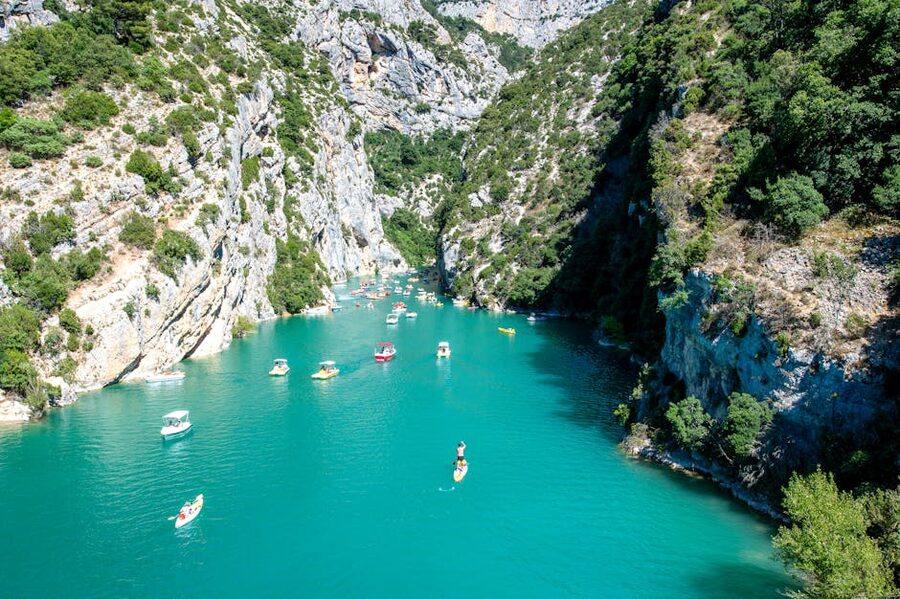
That’s the photograph you actually came for, and almost no day-tour itinerary builds it in. If you book one of the three tours above, ask the guide on the morning of the trip whether there’s a 30-minute kayak slot in the schedule. There usually isn’t, but the guides can sometimes adjust if the lavender stop is shorter than usual. Failing that, prioritise the swim at Pont du Galetas, get in the water as far in toward the canyon mouth as you can wade, and at least look up.
Where this fits in a Provence trip
Verdon is the inland anchor of the Provence-Alpes-Côte d’Azur region. The coastal anchor is the French Riviera. Most travellers get one and skip the other, and that’s a mistake. The two halves of this region are two completely different trips. The coast is dense, walkable, perfumed, expensive, and built on top of itself. Verdon is empty, vertical, mineral, and built into the rock. You need both to understand what Provence actually is.
If you’ve already done the coast and you’re trying to figure out what’s next, Verdon is the logical inland answer. If you’ve done Verdon as a day trip and you’re thinking about coming back, come back for two nights in Moustiers and do it properly. The day-trip version is a sampler. The two-night version is the real thing. Almost everyone I know who’s done both says the same sentence at the end of the second one: “I wish I’d done it this way the first time.”