
A friend of mine in Madrid for four nights last March booked the first flamenco she found, a dinner-and-show package on Gran Vía advertising “real flamenco” with paella for €60. She got a 45-minute show shortened to fit dinner timing, mediocre paella that arrived lukewarm, a room half-full of bus-tour groups, and a gnawing feeling she had paid double to see less. The dancing was technically fine. It was just dancing in a tourist canteen, not a tablao.
Here is the mistake. Dinner-plus-show combos prioritise the dinner. The kitchen has to feed 80 people in 90 minutes, so the show shrinks to fit. Standalone tablao shows at Casa Patas, Cardamomo, Las Carboneras, Tablao Las Tablas, Corral de la Morería, the venues where the actual artists work, give you a longer set, a smaller room, and a drink in your hand instead of a plate of cooling shrimp. This guide is about how to skip the regret and book the right thing.
If you only have ten minutes to book
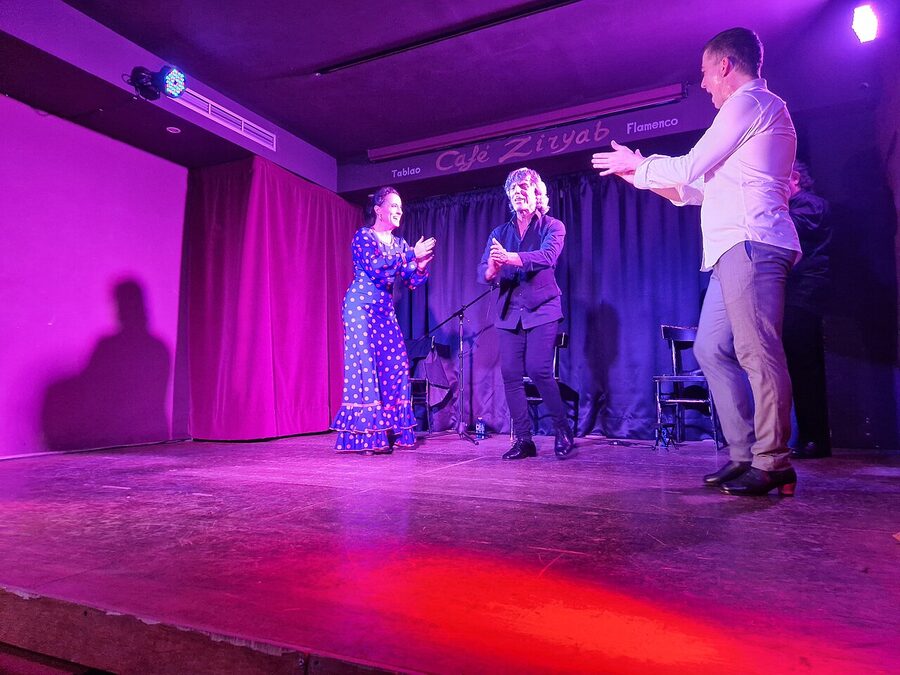
- Madrid Emotions Live Flamenco ($34): the easiest pick. Theatre stage, strong dancers, no dinner pressure. Check availability
- Torres Bermejas show with optional food ($33 show only): a classic 1960s tablao on Calle Mesonero Romanos. Order the show without dinner if you can. Check availability
- La Cueva de Lola ($38 with drink): the smallest, candlelit room of the three. Best if you want intimacy over polish. Check availability
Why Madrid for flamenco at all
Flamenco is not from Madrid. It is from Andalusia, born among Romani communities in Cádiz, Seville, Jerez, Granada and the small pueblos in between, somewhere between the 16th and 19th centuries depending on which scholar you trust. If you want the homeland, go south. Flamenco in Seville hits differently than Madrid does, and the cave shows in flamenco in Granada, in a Sacromonte cueva carved into the hillside, are their own thing entirely.
So why bother in Madrid? Because Madrid is where the artists come to make a career. Capital cities work this way. Granada or Jerez might raise a dancer; Madrid pays the rent. The best cuadros (the company of singer, guitarist, dancers and palmeros that makes up a show) rotate through the city’s tablaos between international tours. Japan is a huge flamenco market, oddly, so are Venezuela and the United States, and the artists touch down in Madrid between trips. On any given Tuesday in February you can see a dancer in a 60-seat room who was performing in Tokyo the week before.
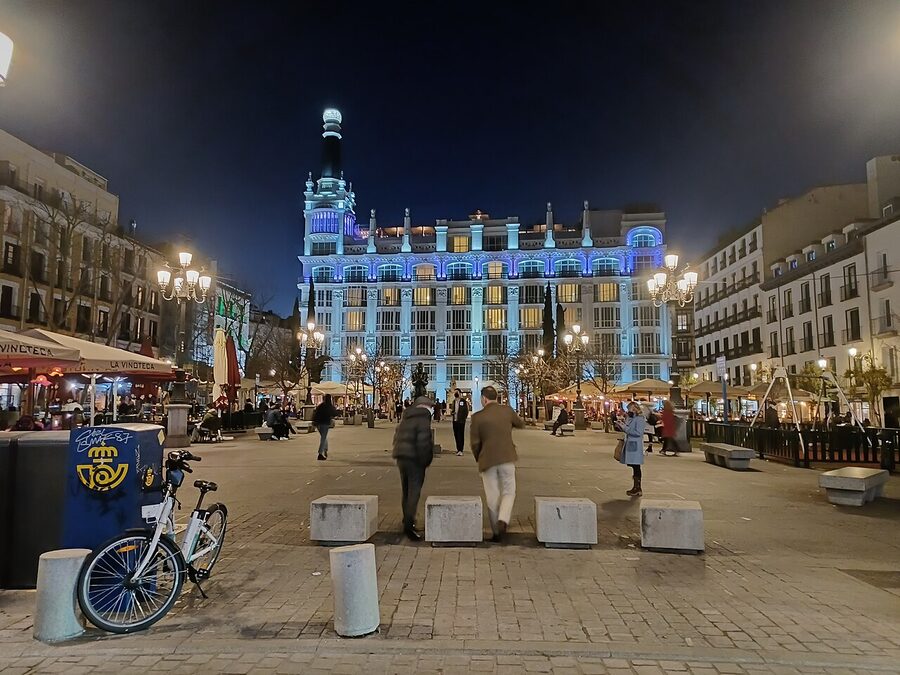
The other reason: density. Madrid has more standalone tablaos than any other Spanish city, clustered into a walkable 25-minute square between the Royal Palace and the Literary Quarter. You can compare two on the same trip without changing neighbourhoods.
Tablao versus dinner show: the actual difference
I want to spell this out because the marketing blurs it on purpose. A tablao is a dedicated flamenco room. The seating is built around the stage, which is usually a wooden platform two or three steps off the floor so the front row can feel the footwork. The bar serves drinks, not three courses. The set runs 60 to 90 minutes without an intermission, and includes singing (cante), guitar (toque), and dance (baile) in roughly that order of priority. The cante is the soul of it. New visitors expect the dancing to be the centre, but a real flamenco fan will tell you the singer is the one carrying the show.
A dinner-show is a restaurant that hosts a flamenco set during dessert. The room is laid out for tables of four facing the stage, which means half the room sees the dancers in profile while waiters circulate between courses. The set is shortened, often to 45 minutes, sometimes 50, because the kitchen needs the dance to end before the espresso arrives. The food is built for volume. I have eaten paella at three of these venues. The best of them was acceptable. The worst was a yellow rice dish that had no business being called paella.
Tablaos are not always more expensive. A standalone show at Cardamomo or Las Carboneras runs €40 to €55 with a drink. A dinner-and-show package starts around €60 and climbs to €120 for the dinner-with-tasting menus at Corral de la Morería. The price gap is the food, not the flamenco. If you want the flamenco, eat tapas before, walk to the tablao, drink a wine during the show, eat dinner after at midnight when Madrid eats anyway.
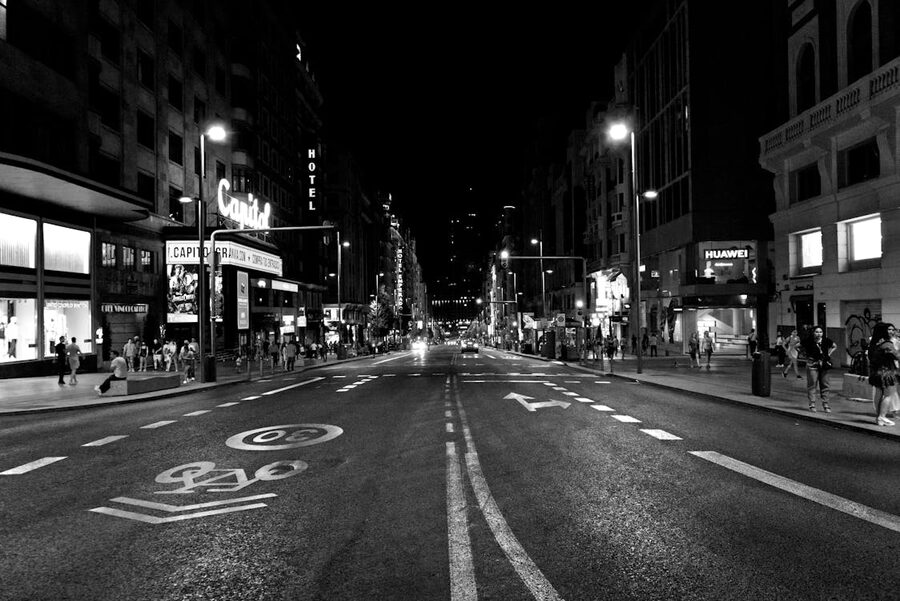
The tablaos worth knowing by name
Madrid has roughly a dozen working tablaos. These are the ones I would send a friend to, in rough order of how I rank them. None of them are bad. They are different, and the right one depends on what kind of evening you want.
Casa Patas: the institution
On Calle de los Cañizares, a five-minute walk from Plaza Tirso de Molina. Casa Patas has been running since 1988 and works as both a venue and a dance school. Spain’s top performers cycle through the schedule because the school’s reputation pulls them. The room seats about 130, the stage is wider than most tablaos, and the front rows are close enough that you watch the sweat. Drinks at the bar are open to the public, so even if you do not have a ticket you can stop in around 11pm and listen to artists from the show talking shop at the counter.
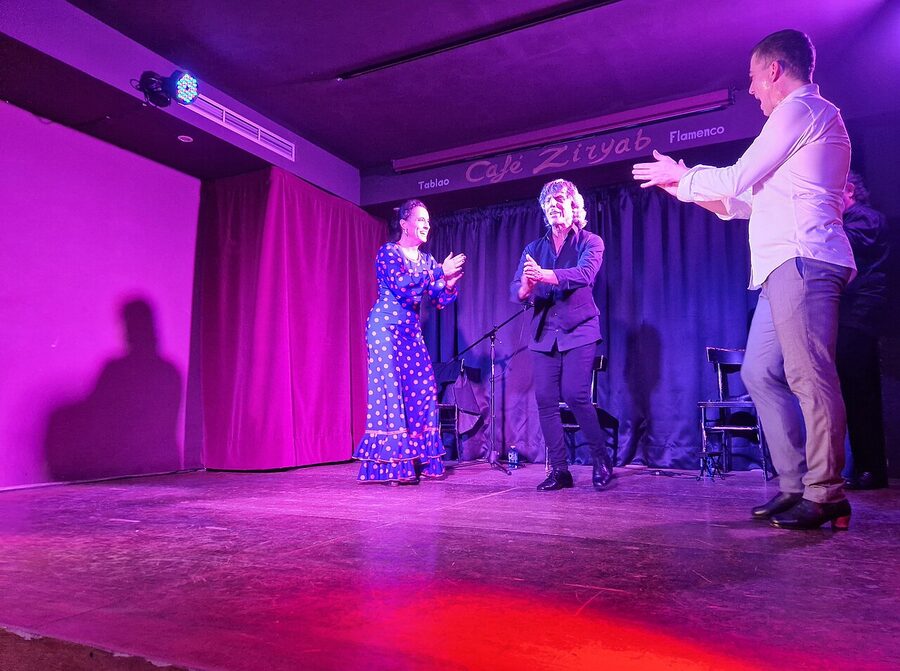
Cardamomo: where the New York Times sent its critic
Calle Echegaray, 15. A 70-seat room in the Literary Quarter that started life as a flamenco bar in the 1990s, where dancers and musicians from other tablaos came after their shows to eat and end up performing. It still has that feel, even though the schedule is now formal. Two sets a night, 7pm and 9pm, sometimes a third at 11pm on weekends. The audience tends to be a mix of locals who care about the form and visitors who did real research before booking. Cardamomo is also the show I would send anyone with no flamenco background to, because the introductions before each piece are clean and short, in Spanish and English, and you walk out understanding why the singer just sounded like that.
Tablao Las Carboneras: the small-room pick
Plaza del Conde de Miranda, near the Cathedral and the Royal Palace. Around 90 seats, a low ceiling, and a stage you can almost reach across. Las Carboneras is the one I send people to who say “I want to feel the room shake.” The footwork is loud here in a way that does not happen in bigger venues. Tickets at Las Carboneras are typically €53, and the show runs about 80 minutes.
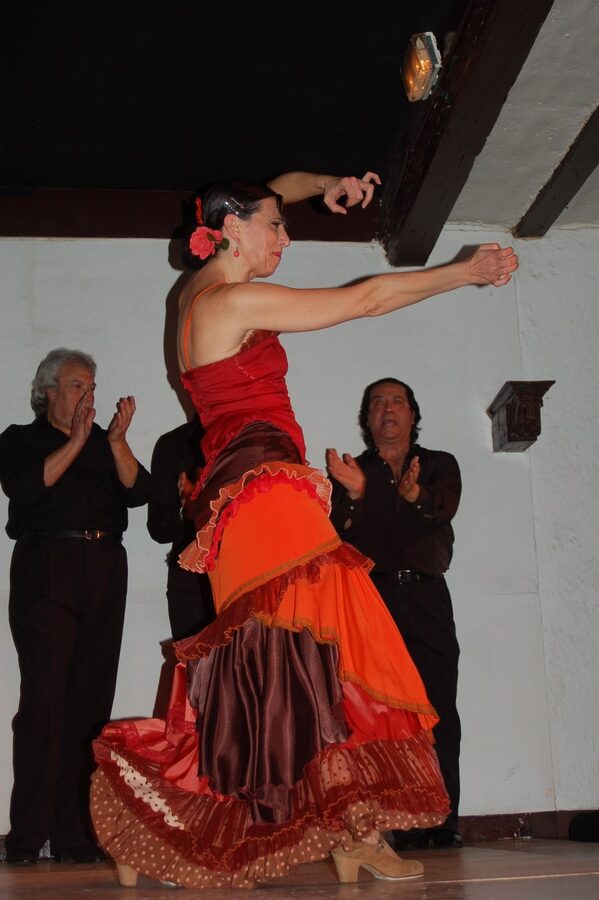
Tablao Las Tablas: the easy-walk one
Plaza de España, 9. A larger room, around 200 seats, with a stage built like a small theatre. Las Tablas is the one I recommend when someone is staying near Gran Vía and does not want to walk fifteen minutes after the show in cold rain. The dance company is solid, the price is fair, and the proximity to the metro and the hotels around Plaza de España makes it the practical pick.
Corral de la Morería: the dinner-show that is actually serious
Calle de la Moreria, 17. This is the exception to my dinner-show warning. Corral has been running since 1956, has a Michelin-starred kitchen since 2018 (yes, in a tablao, the only one in the world), and the show takes its full length seriously even when there is dinner. The catch is the price. The show-only ticket is around €50; with a tasting menu it climbs to €130 or more. If you have one fancy night in Madrid and want to combine, this is where to do it.
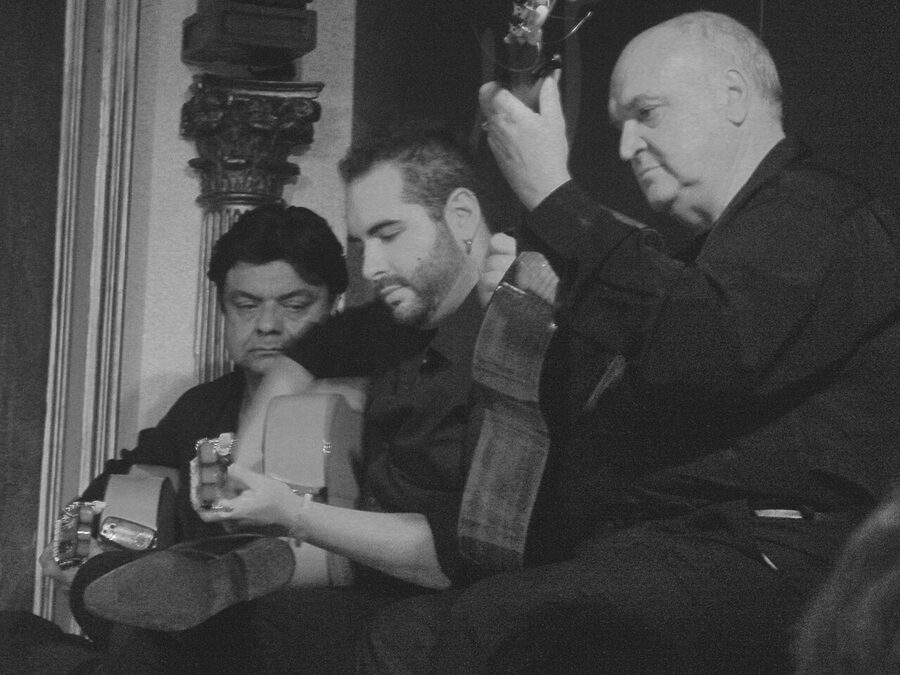
La Cueva de Lola: small, candlelit, intense
Calle del Codo, just off Plaza de la Villa. The smallest of the named tablaos, around 40 seats arranged in a cave-like arched room. The show is one hour with a drink. The atmosphere works hard. If you have already seen flamenco at a larger tablao and want a contrast, this is the contrast.
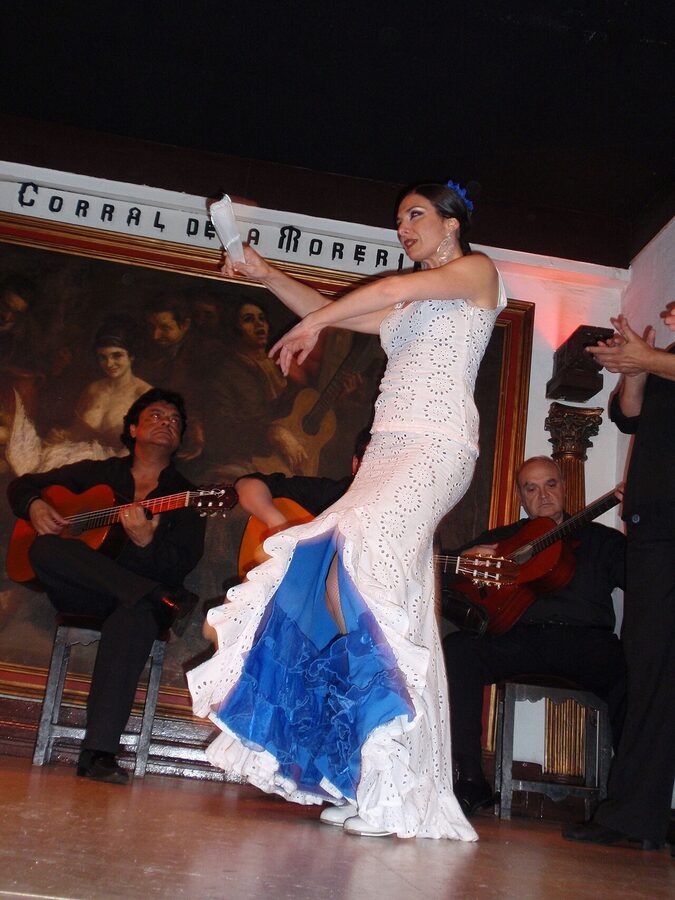
Café de Chinitas, Villa Rosa, Café Ziryab
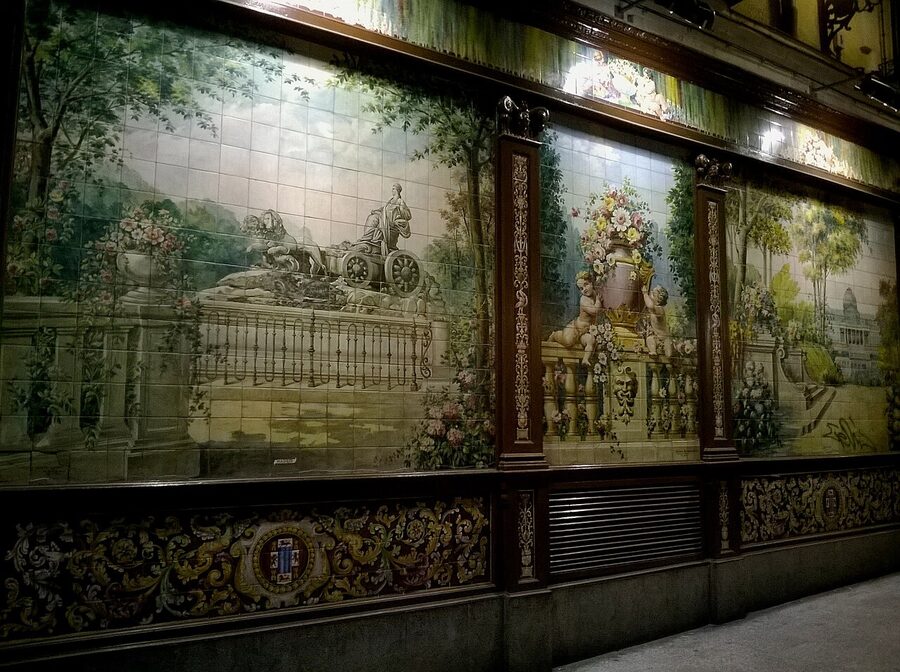
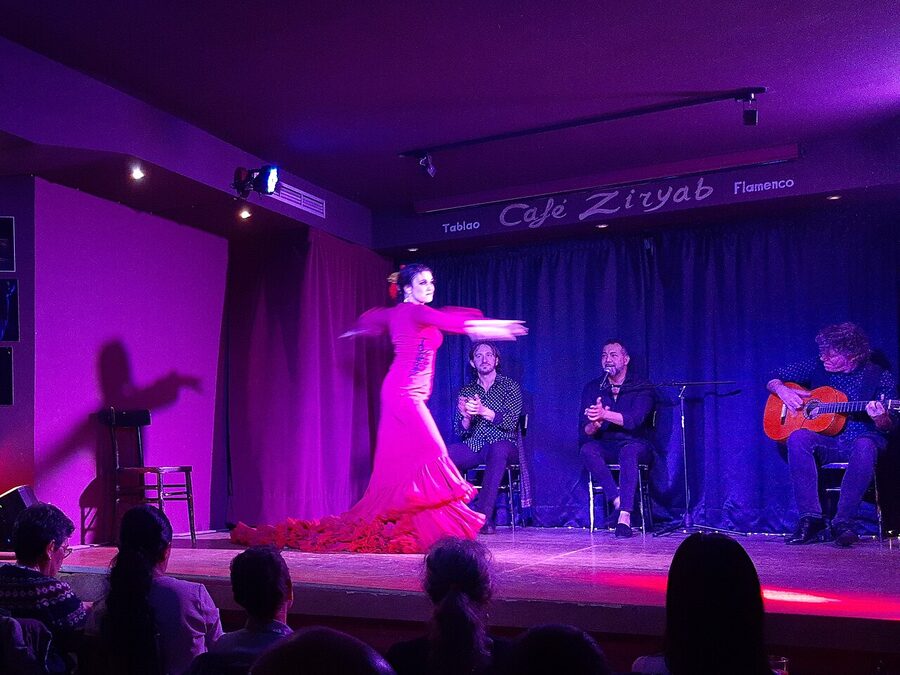
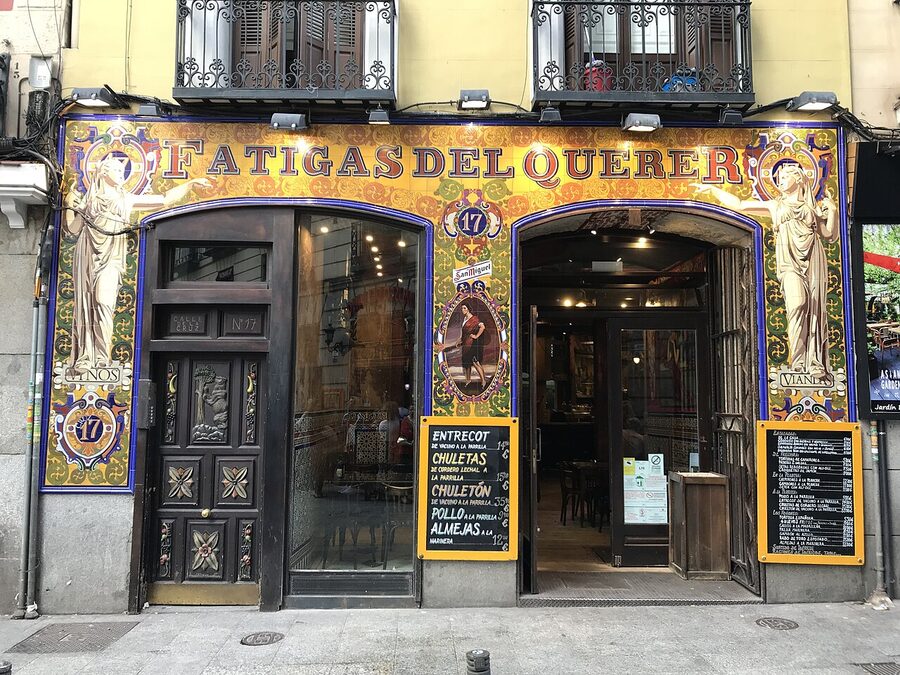
Three more honourable mentions. Café de Chinitas (Calle Torija) is the most family-friendly, with dancers who interact with the audience and a full menu. Villa Rosa, on Plaza de Santa Ana, is worth visiting for the 100-year-old tile facade alone, and the show is a perfectly competent one in a venue that has been part of the Literary Quarter since 1911. Café Ziryab, near the Lavapiés side of the centre, is the one for after-hours sessions on Friday and Saturday, where local artists drop in and the schedule gets loose.
Three to book online tonight
If you do not want to think too hard, these three are the easiest to book and the most consistently strong on the night. Book any of the three, you will not have wasted the evening. I have laid out who each one is for.
1. Madrid Emotions Live Flamenco: $34
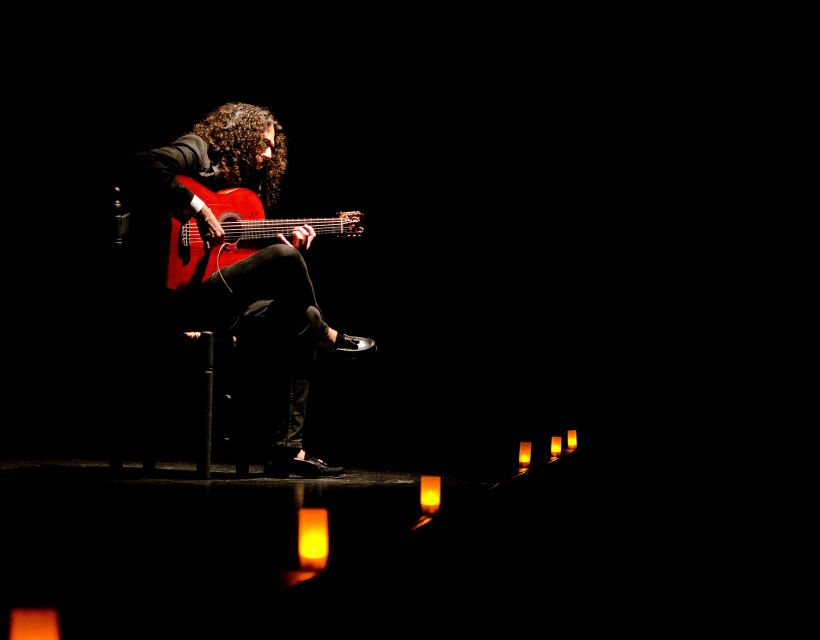
This is the right pick if you want a sure thing on a budget. The venue is purpose-built for flamenco, the company rotates strong performers, and our Madrid Emotions review covers the seating and what you actually see from each section. The show runs 75 minutes with a welcome drink included.
2. Torres Bermejas Flamenco Show, with or without food: $33
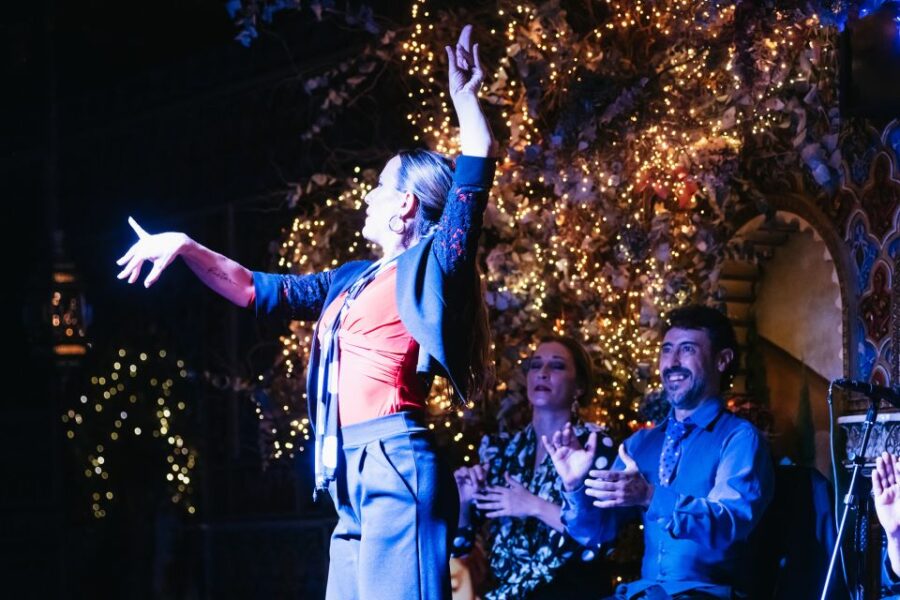
Torres Bermejas is the venue I recommend when someone wants old-Madrid atmosphere without paying Corral de la Morería prices, and our Torres Bermejas review walks through which dining tier (if any) is worth it. The show alone is $33 with a drink, the dinner versions climb to $80, and the food is fine but never the reason you came.
3. La Cueva de Lola Flamenco Show with Drink: $38
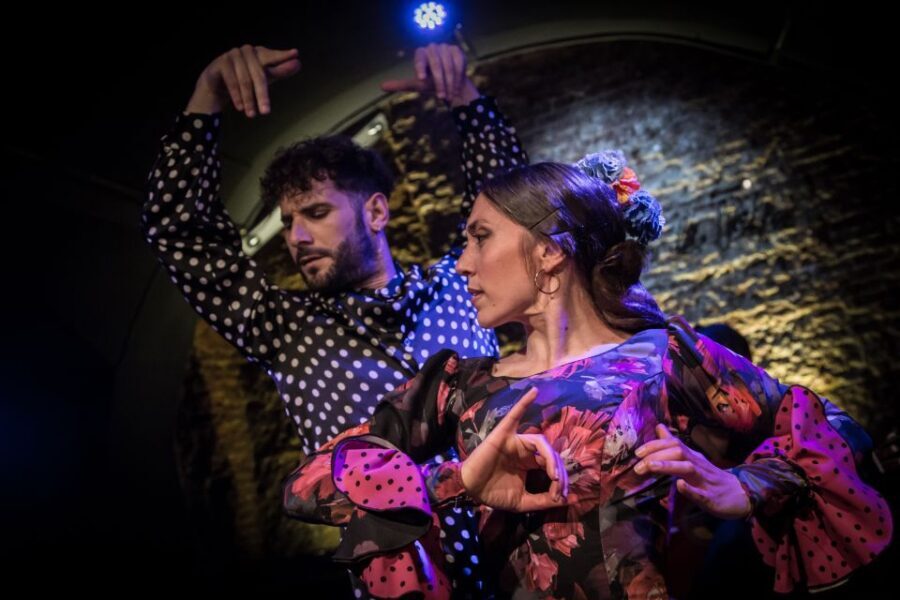
La Cueva de Lola is for visitors who want the smallest possible room with the most direct view, and our La Cueva de Lola review explains how the seating and timing affect the experience. Bring earplugs if you sit front-row; the heel work in a room this small is genuinely loud.
What to expect inside the room
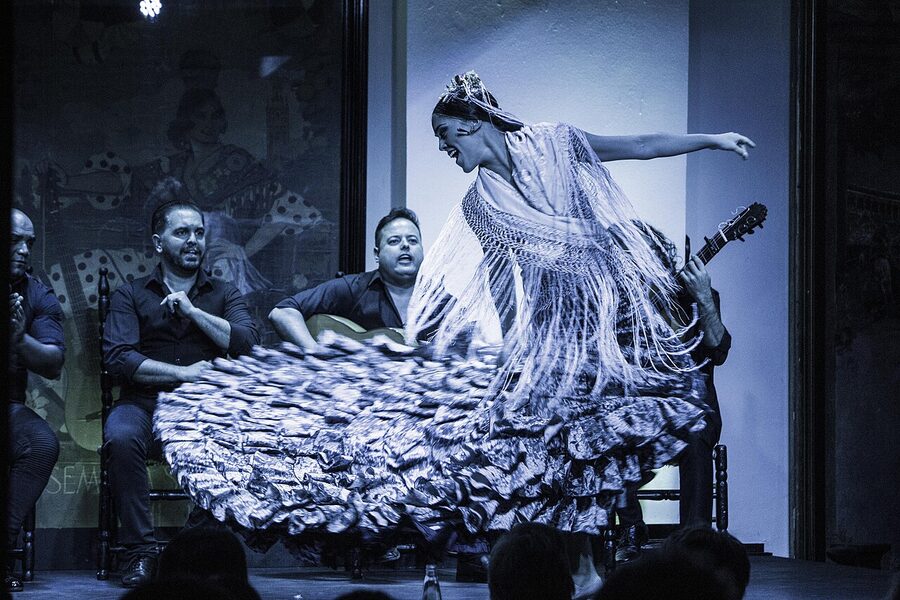
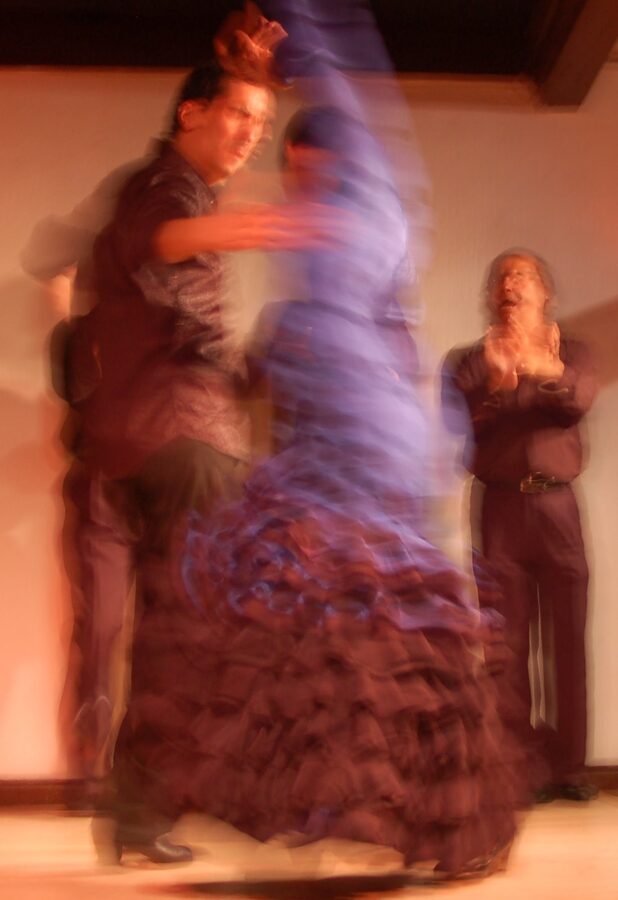
A flamenco show is not a recital. It is a conversation. The singer (cantaor or cantaora) opens, usually unaccompanied, with a long held note that sounds like complaining and is actually the entire emotional template of the piece being set up. The guitar (toque) joins. The dancer waits, sometimes for a full minute, eyes closed. Then she steps into the middle of a phrase and the room shifts.
The forms cycle through the night. Soleá is heavy, slow, mournful. Alegrías are bright and from Cádiz. Bulerías are fast, played for and with the audience, often the closer. Tangos (not the Argentine kind) are looser. Seguiriyas are the saddest of them all. You do not need to know the names to feel the difference; one set is fast and you smile, the next is slow and you are sitting very still.
What you do as the audience matters. Shouts of olé, vamos, así, are not optional decoration. They are how the audience tells the dancer she landed something. Madrid audiences are quieter than Sevillian ones, but they still call out at the right moments. If you are sitting next to a Spanish family, watch their reactions; they know when to be loud and when to be still.
One thing to mind: phones away. Almost every Madrid tablao now has a no-phones policy during the show. Some venues will stop the music and ask you to leave. Save the photo for the curtain call.
Where to sit, what to drink, what to wear
Front row is best for footwork, second row is best for the singer’s face, and the third row is where you should sit if you want to see all of it without your neck angled up. At Casa Patas and Cardamomo, every seat has a reasonable view; at Las Tablas and the bigger rooms, ask for a table close to the stage when you book.
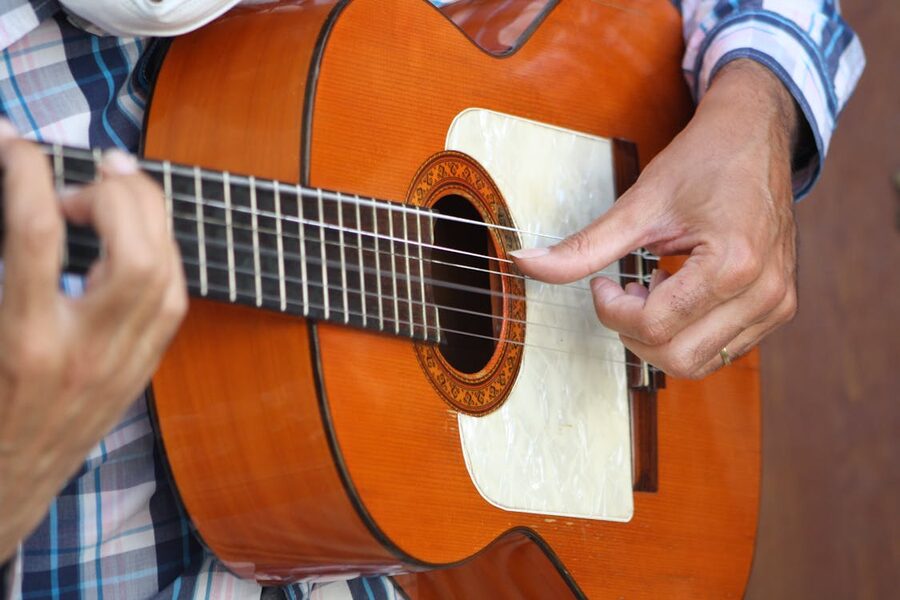
The drink. Most tickets include one. Take wine, not beer. Tinto de la casa is fine; if the menu offers a Ribera or a Rioja and the ticket bumps a few euros, take it. If you order a vermut, the waiter knows you have done this before.
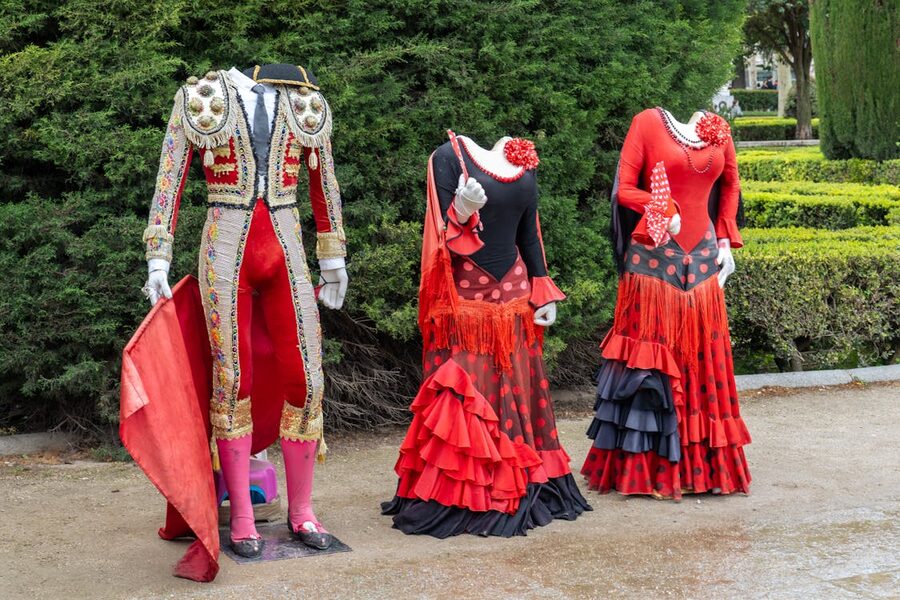
Dress code: there isn’t one. People show up in jeans, in dresses, in suits, in flip-flops in summer. The room is dark enough that nobody minds. Madrid in winter gets surprisingly cold at night and most tablaos are not over-heated, so a layer is sensible. In summer the AC works hard.
How to book and when
Madrid tablaos run two sets most nights, around 7pm and 9pm, with later sets at 10:30pm or 11pm on Friday and Saturday. The earlier set on Tuesday and Wednesday is the most likely to be lightly attended; the late set on Friday is the one to book a week in advance.
For the named places (Casa Patas, Cardamomo, Las Carboneras, Corral de la Morería) book three to seven days ahead in spring and autumn, two weeks ahead in summer, and the day-of is usually fine in January and February. For the larger venues like Las Tablas and Torres Bermejas, walk-ups often work outside summer.
I book through GetYourGuide for the named venues because cancellation is free up to 24 hours, prices match the venue’s own site, and the confirmation goes to my email faster than the venue’s own ticketing systems. The same logic applies to flamenco in Barcelona and the southern shows: GYG aggregates the small tablaos that often have wonky direct-booking pages. For Corral de la Morería with dinner, book direct on their site; the dinner tier options are clearer there.
The Andalusian context, briefly
If you are Madrid-only on this trip, fine. If you are doing more of Spain and have to choose where to spend a flamenco night, here is the rough calculus.
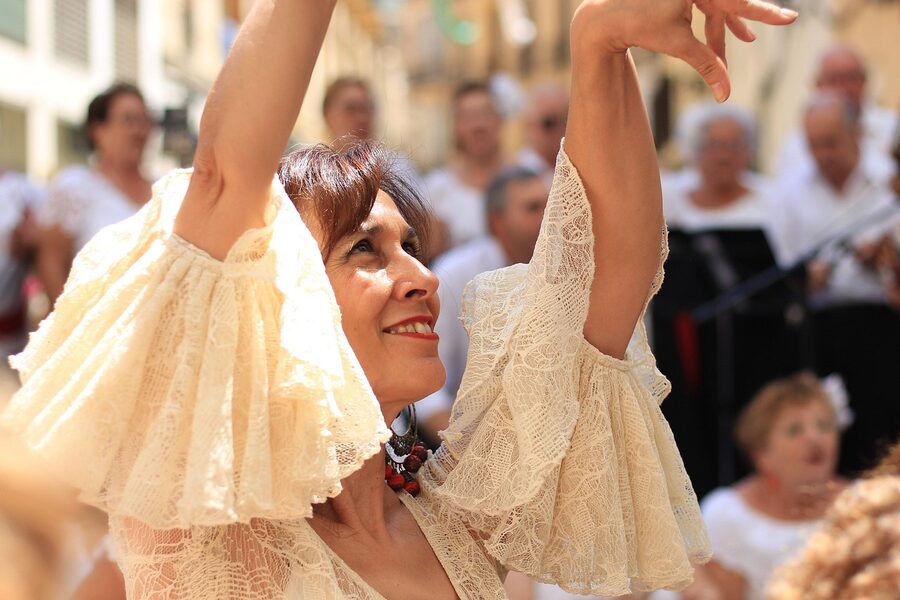
Seville is the homeland and you will know it within thirty seconds of any decent show there. Flamenco in Seville is denser and rougher around the edges; the small peñas (private clubs) admit visitors and are the closest you will get to the form as it actually exists in Andalusia. Granada has the cave shows in Sacromonte, which are touristy in their own way but visually unmatched. Málaga has fewer venues but the ones it has are good. Jerez de la Frontera is the most authentic of them all, but the Jerez show schedule is sparse compared to its sister attraction, the Jerez horse show, which runs more reliably.
Madrid sits above all of this. The artists pass through; the rooms are denser; the booking is easier; the standard is high. If your itinerary already routes through Andalusia, save your tablao night for there. If Madrid is your only Spain stop on this trip, you are still going to see something good.
What to do before and after the show
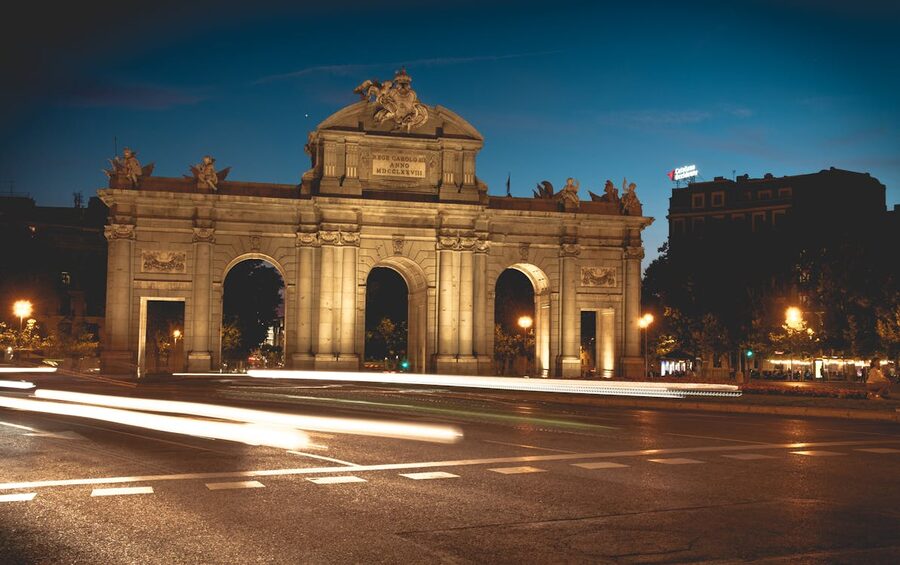
A flamenco show usually starts at 9pm or 9:30pm. That gives you a long Madrid afternoon and evening to fill, and Madrid is not lacking for things to fill it with. The Royal Palace is a 15-minute walk from Corral de la Morería, and the late afternoon entry is when the gardens are best. The Prado closes at 8pm, which lines up perfectly with a 9pm tablao if you do the museum’s last two hours.
For dinner before the show, eat tapas at one of the bars around Plaza Santa Ana or Plaza de Tirso de Molina; both are walking distance to the central tablaos. La Venencia, right next door to Cardamomo, is a sherry-only bar from the 1920s with no music, no menu beyond a handful of tapas, and a strict no-photos rule. It is the right warm-up.
For after the show, the same logic. Madrid eats late. Restaurants in the Literary Quarter take orders until midnight or 1am, and the bars stay open until 2am or later. Casa Patas itself runs its own bar past show time; Cardamomo has the surrounding streets full of options. The cuadros from the show often eat at the same nearby places, so if you sit at the bar at La Sanabresa or El Tigre at 11:30pm you will see them eating their cocido.
The brief history that helps you watch better
Flamenco is younger than people assume. The first written reference to flamenco as an art form is from the 1770s; the first commercial cafés cantantes (the precursors to today’s tablaos) opened in Seville and Cádiz in the 1860s. The form’s three pillars (cante, toque, baile) coalesced into something recognisable by the 1880s, and Madrid’s first dedicated tablao, Villa Rosa, opened in 1911.
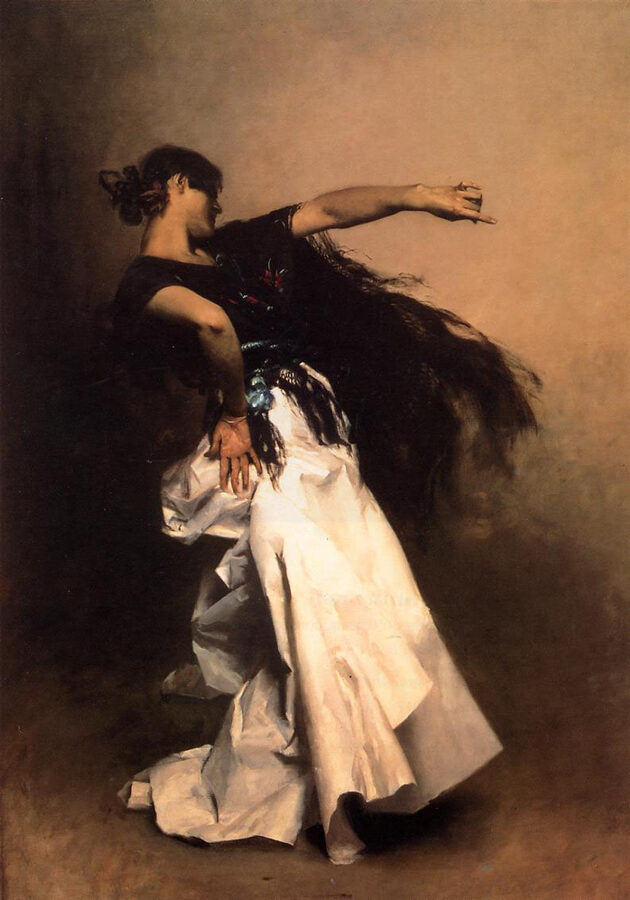
The Romani communities of Andalusia (called gitanos in Spanish) shaped the music, and many of the great families (Camarón de la Isla, Paco de Lucía, the Habichuela clan, the Montoyas) come from those communities. The non-Romani contribution is real too; Spanish folk music, Arabic-Andalusian melodic structures, even Jewish liturgical phrasing all show up in the cante. UNESCO listed flamenco as Intangible Cultural Heritage in 2010.
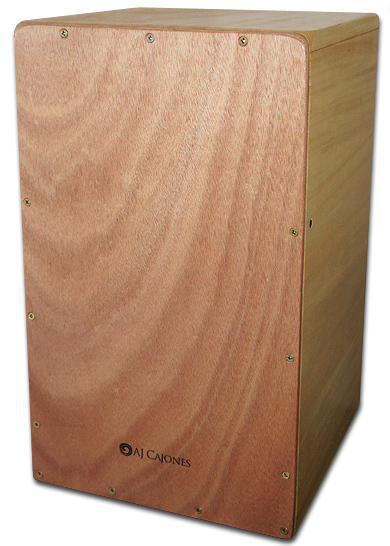
The 20th-century history shaped what you see in Madrid. Franco’s regime wanted flamenco as a folkloric symbol of Spain, which both kept it on stage and stripped it of some edge. The 1970s nuevo flamenco generation, led by Paco de Lucía and Camarón, dragged it into modernity by adding the cajón, jazz harmonies, and electric instruments, against fierce traditionalist objection. What you see at Casa Patas now is the post-1980s settlement: traditional in form, technically more virtuosic than ever, with cajón and a wider harmonic range than the 1920s tablaos had.

Two short warnings
One: do not book the “flamenco-and-paella” packages. I know I led with this. I am repeating it because I have watched too many friends ignore it. The shows are shorter, the rooms are noisier, and the food is the kind of paella that gives paella a bad name. If you want both flamenco and a Spanish meal, do them separately, two hours apart, in two different venues. You will pay roughly the same and have a vastly better night.
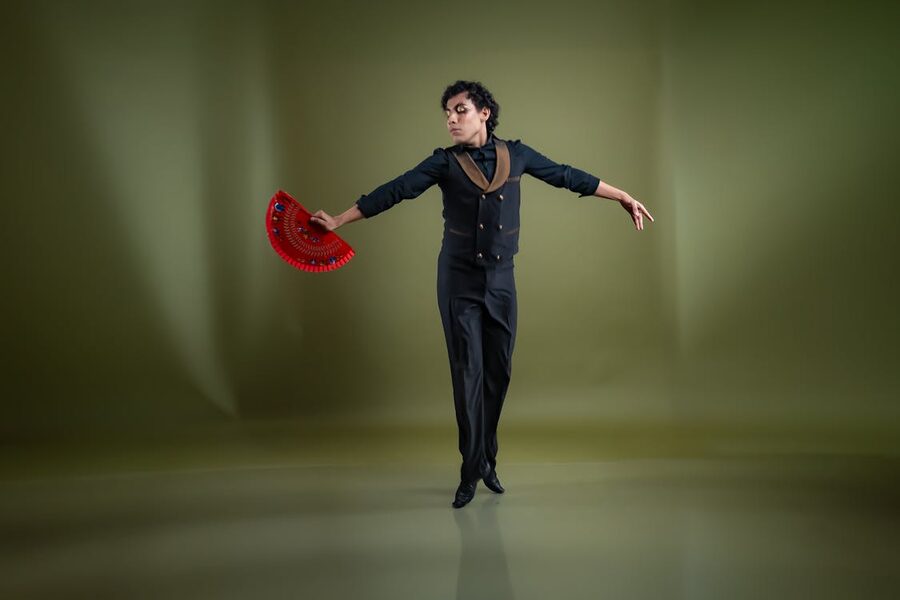
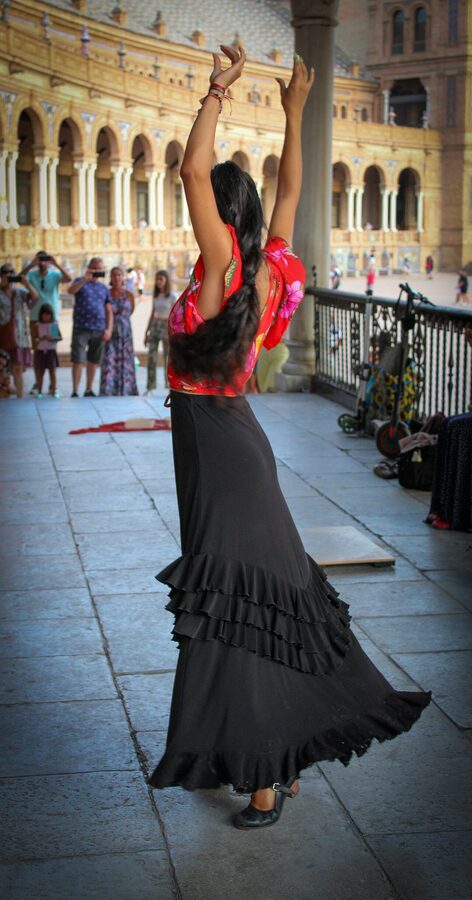
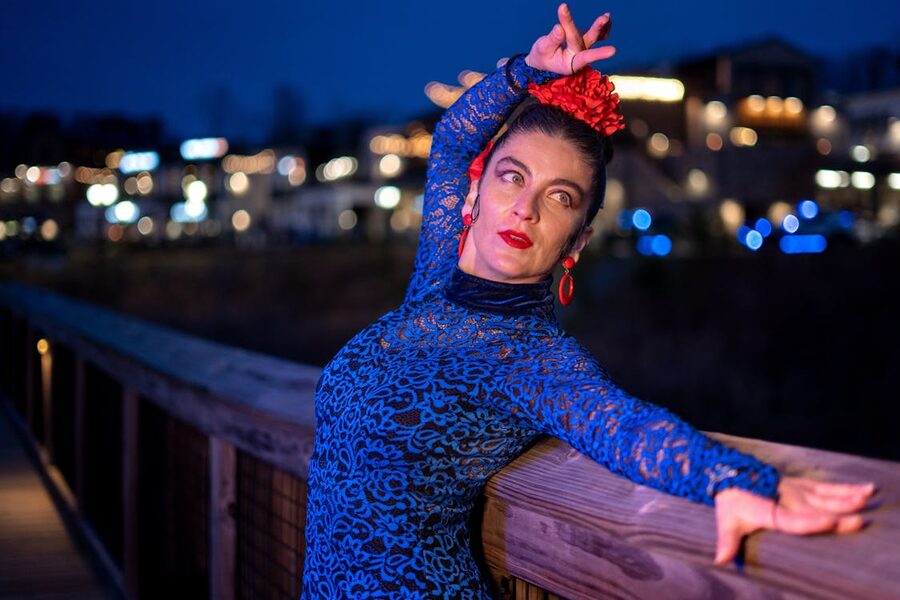
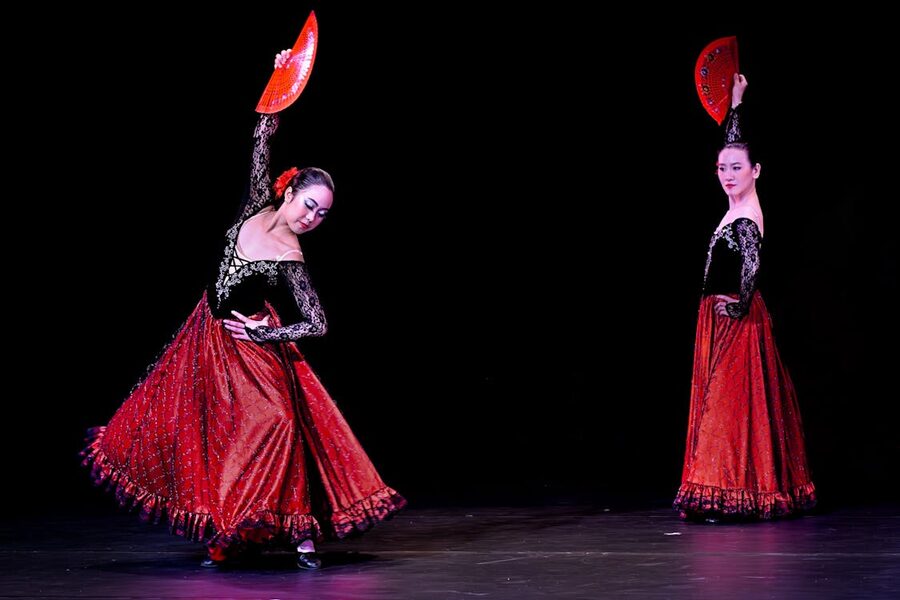
Two: the marketing photos lie. Every flamenco ad uses the same three images, the dancer in red, the dancer with a fan, the dancer mid-spin. Real flamenco rooms are dark, the dancers are usually in black or dark brown, the costumes are not the polka-dot-and-frills caricature, and the dance is more upright and less swirly than the postcards suggest. If anything, the actual show is more austere than the ad. That is a feature, not a bug.
If you came for one show, this is what to do
Pick Cardamomo or Casa Patas. Book the 9pm or 9:30pm Tuesday-to-Thursday set, two days ahead. Eat a light tapas dinner at La Venencia or any of the bars around Plaza de Santa Ana around 7:30pm. Show up at the venue 15 minutes early. Order a glass of red. Sit second row. Listen to the singer first, then watch the dancer. Stay in your seat through the slow forms; they are the ones that matter. After the curtain call, walk out into the Literary Quarter and find a late dinner.
That is the night. It will be one of the best nights of your trip. I have done versions of it eight or nine times now and I have never come out of a Madrid tablao thinking I had wasted the evening, with the single exception of one Gran Vía dinner-show I went to for research that I will not name here.
A few related Madrid evenings
If flamenco is not the only spectacle on your Madrid list, the city has its own opera nights at the Teatro Real, classical concerts at the Auditorio Nacional, and the football. The Bernabéu tour after its rebuild is its own thing, less a spectacle than a museum, but on a match night the stadium is its own kind of theatre. For something Andalusian-adjacent without leaving the centre, the Real Escuela in Jerez runs the equestrian show that pairs naturally with a flamenco trip if you have a few days in the south. And if you are in Italy later in the trip, the opera at La Fenice in Venice is the other classic European spectacle worth booking ahead. The Paris equivalent is the cabaret tradition at the Moulin Rouge, with the slower-burn version of an evening as event on a candlelit Seine dinner cruise.
For day trips with a different flavour, Segovia and Ávila from Madrid handle the daylight side of the city’s Castilian context, while Toledo works as a half-day. None of those are flamenco. They are what you see during the day so you have earned the long Madrid night. The Amsterdam version of the late-evening walking event is a guided Red Light District tour, and the contained-room spectacle category continues at the projection-and-sound rooms of the Fabrique des Lumières.