
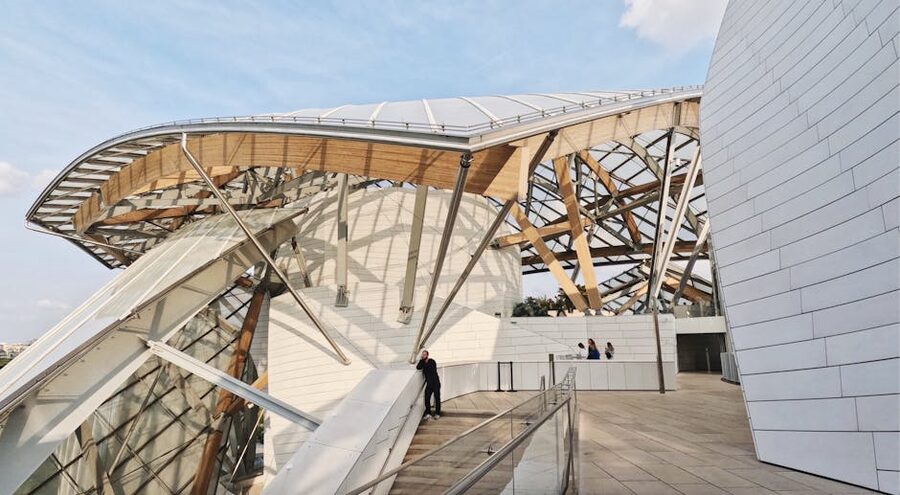
The first time the rooftop at the Fondation Louis Vuitton stops you, you’ve already gone up four flights of staircases and it’s a clear afternoon and the eleven glass sails curve overhead like the underside of a ship hauled out of water. You look back across the lake of the Jardin d’Acclimatation. The Eiffel Tower is straight east. La Défense is right behind you, a wall of skyscrapers two miles west. And the building you’re standing on, a Frank Gehry, is the closest thing central Paris has to a contemporary architectural statement. Most travellers to Paris never come out here. That’s the reframe of the whole visit.
This is a guide to actually getting in. The standard ticket is $25, exhibitions included, and the building is what you came for as much as the art on the walls. Pre-book it. Take the dedicated shuttle from the Arc de Triomphe and don’t try to navigate the metro stairs at Étoile on a museum day.
If you’re short on time
- Premium Access Ticket ($25): the standard skip-the-line ticket, audio guide app, free shuttle from Étoile included. Book the Premium Access ticket.
- Exterior + Premium Entry Tour ($62.50): guided exterior walking tour focused on the architecture, then your timed entry inside. Book the guided architecture tour.
- Sidecar Tour + Foundation Entry ($172): a vintage sidecar ride through Paris that finishes at the Foundation, premium entry included. Book the sidecar combo.
What this building actually is
The Fondation Louis Vuitton is a private museum that functions as a public one. Bernard Arnault, chairman of LVMH, commissioned Frank Gehry in 2006 to design a building in the Bois de Boulogne to house the LVMH contemporary art collection. Cost was around 135 million dollars. It opened on 27 October 2014 after seven years of legal challenge over whether new construction belonged inside a protected park.
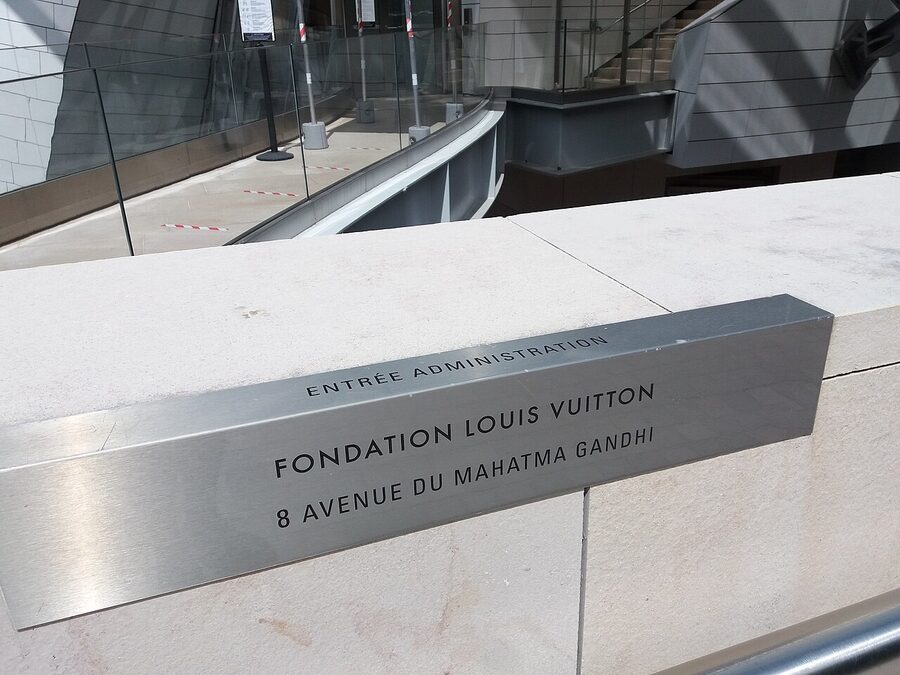
The address is 8 Avenue du Mahatma Gandhi, in the 16th arrondissement, on the western edge of the Bois de Boulogne. That puts it about as far from the Louvre as you can get and still be inside Paris’s city limits. Most visitors who skip it skip it for that reason. The trip is the reframe.
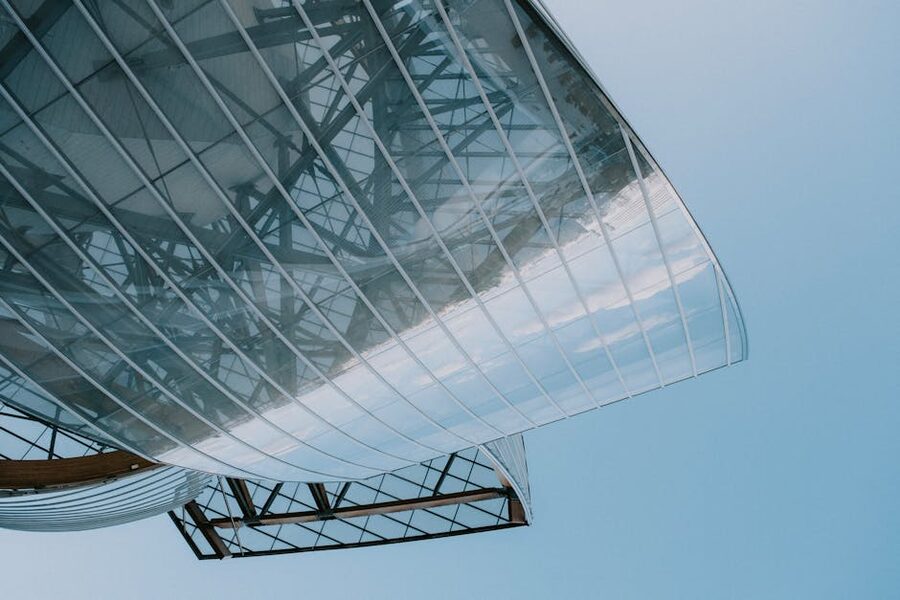
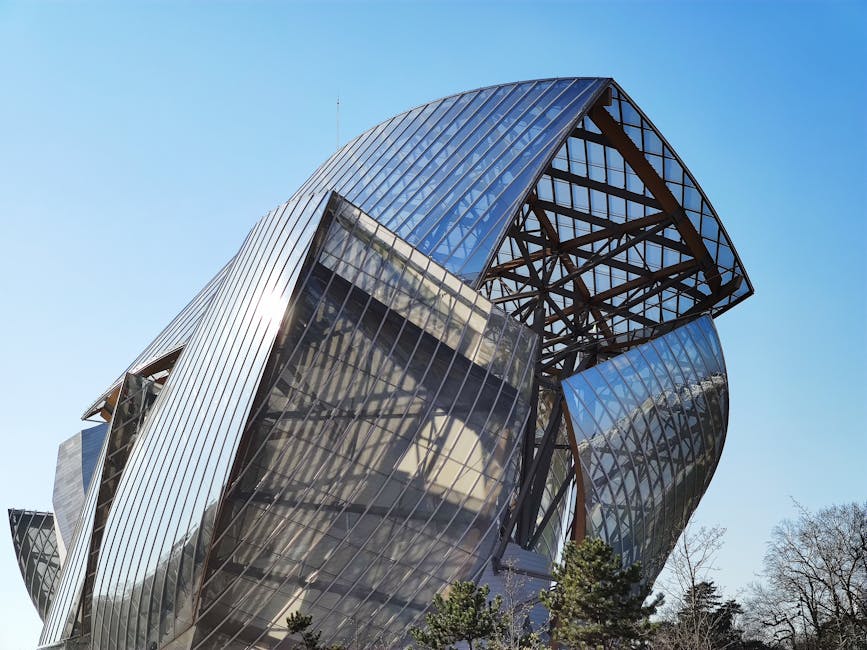
What you’re paying for: the architecture comes first, the rotating exhibition second, the permanent LVMH collection third. The building is roughly 13,500 square metres of interior space across eleven galleries, plus a 360-seat auditorium with one curved wall, plus four levels of rooftop terraces. The eleven sails are made from 3,584 individual panels of curved glass and no two panels are identical. The fabricator was Bellapart in Spain. Gehry’s office spent three years iterating the geometry.
The eleven sails, briefly explained
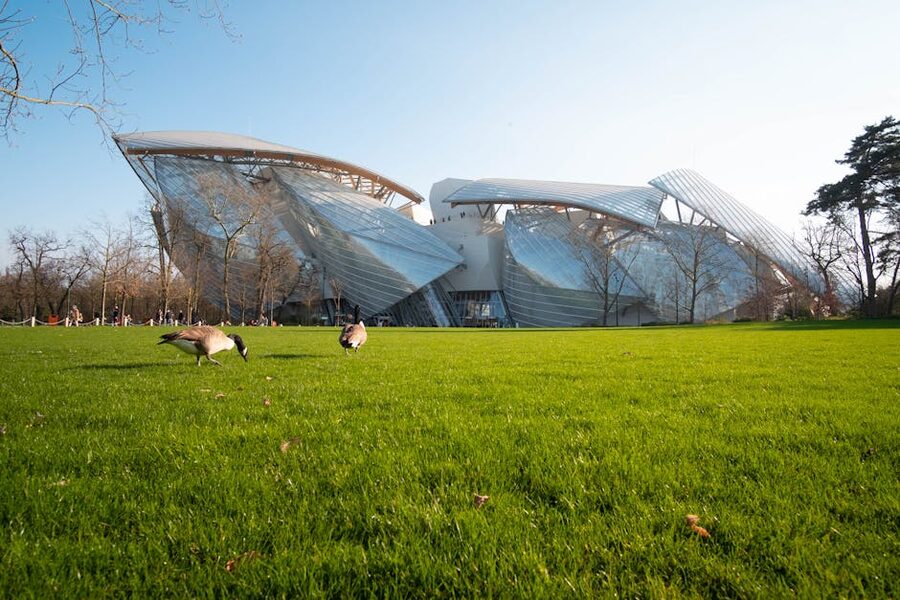
This is the part everyone wants explained. The “iceberg” is the inner box of galleries, made from a fibre-reinforced concrete called Ductal. The “sails” are eleven separate curved-glass canopies that wrap around and over the iceberg, each tilted differently to catch light. They sit on a steel frame with timber stiffeners.
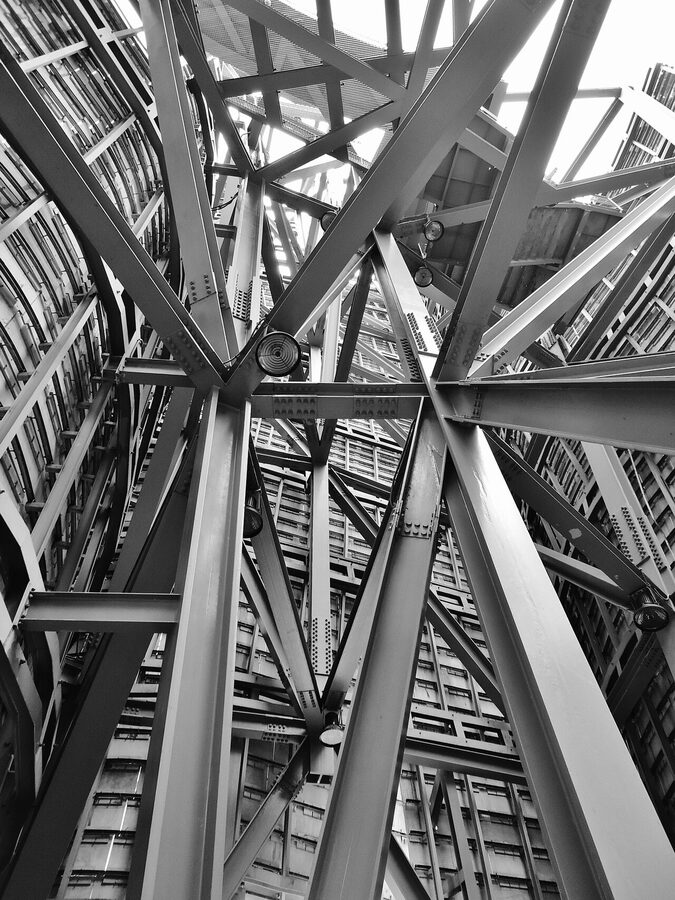
If that sounds like over-engineering, it is. Gehry’s earlier glass-and-titanium projects, the Sagrada Família generation included, taught structural engineers to push curved-panel cladding toward whatever the geometry asked for. The Foundation is a step further: every panel got its own jig, its own bending profile, its own three-dimensional positioning data fed through Gehry’s Digital Project software. The reason no two panels match is that the geometry isn’t symmetrical and the panels follow it.
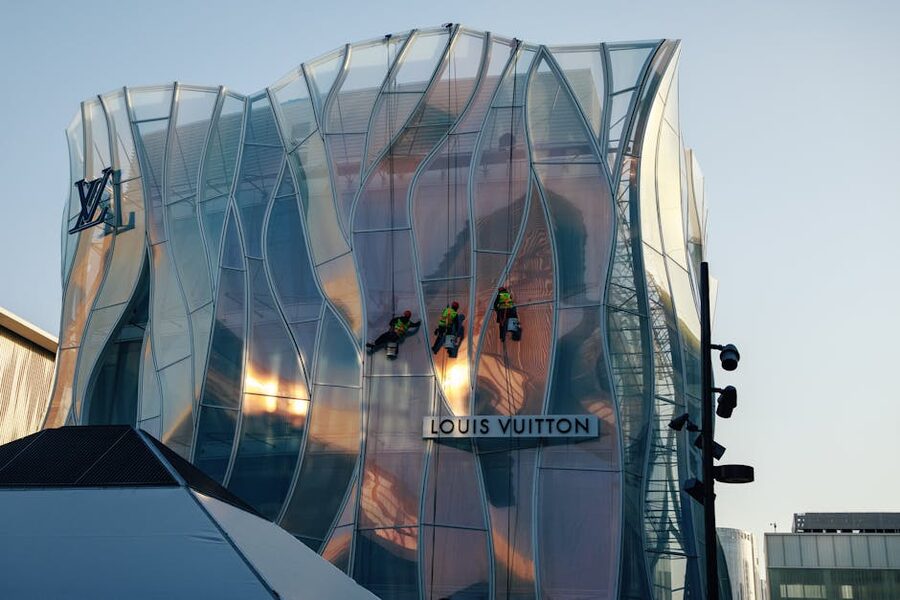
You don’t need to know any of this to enjoy the building. But once you do, the iceberg-and-sails idea reads in a single look. The white concrete inner box is the museum. The glass is the gesture.
The hook: starting on the rooftop, working down
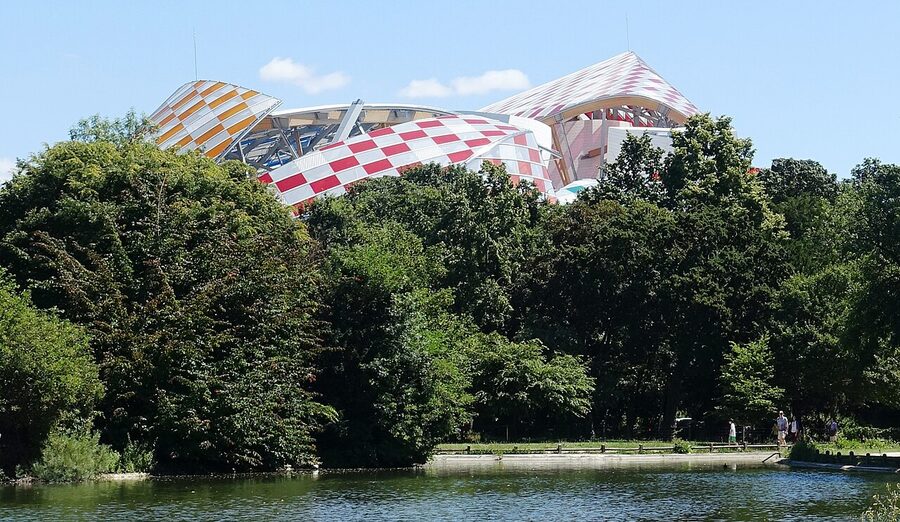
Most museums you do bottom-up. Atrium, ground floor, first floor, rooftop or attic last. This one I’d reverse. Take the elevator straight to the top, walk every staircase down through the rooftop terraces, then start on the galleries. The rooftop is what you came for. Doing it first means you’re not chasing closing time when the light is good.
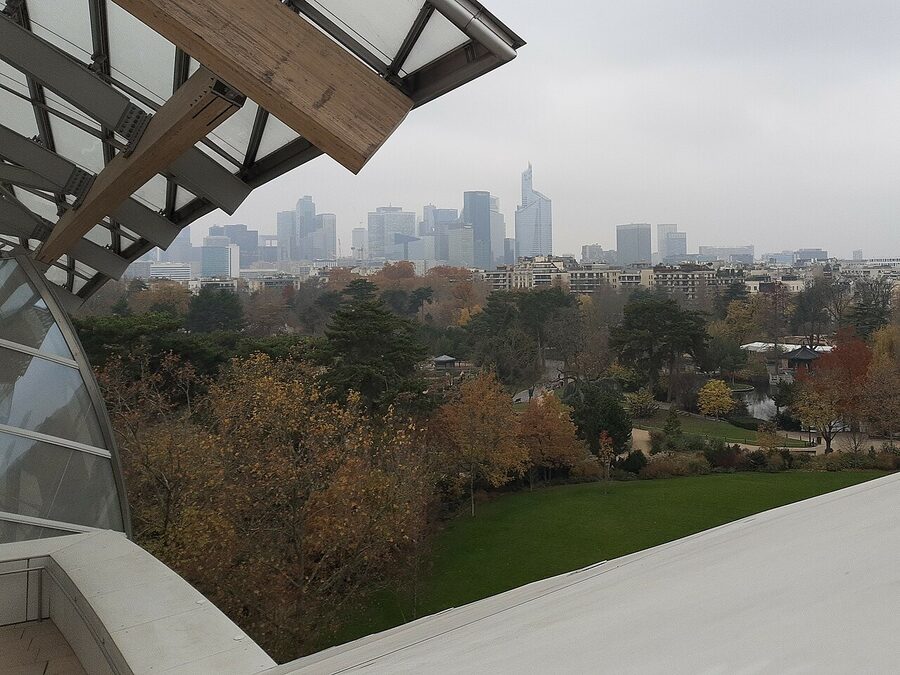
Walking the terraces takes about 25 minutes if you’re not in a hurry. Four levels, joined by external metal staircases, with the sails crossing overhead at every level. There’s a cafe on the top deck. Drinks are expensive (it’s an LVMH property, draw your own conclusions). The cafe closes at 5pm even when the museum is open later, which catches a lot of visitors out. If you want a coffee with the view, go up first thing.
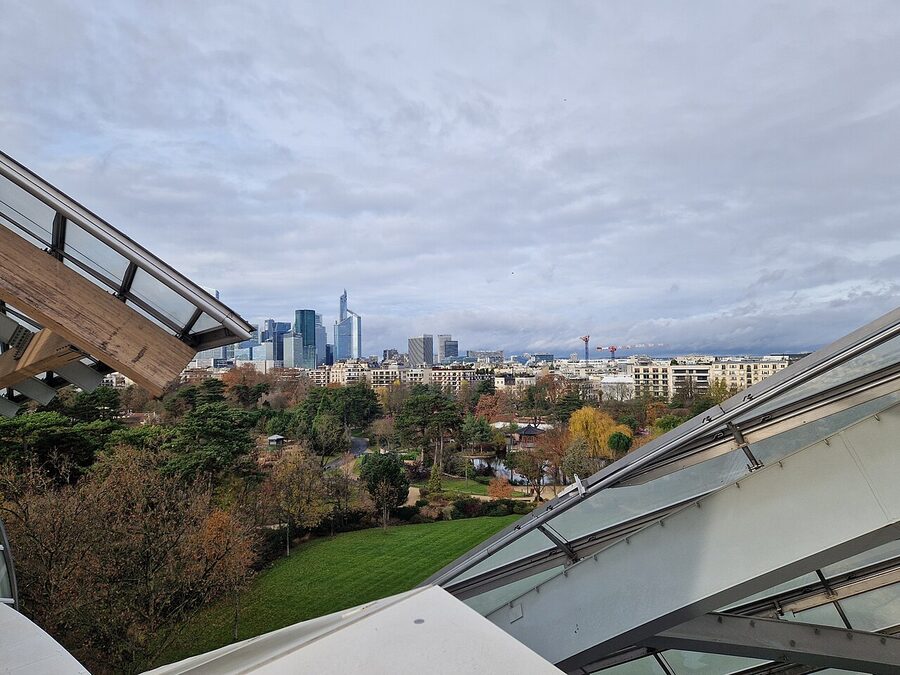
What you’re looking at: the city’s roof shape. Most of central Paris is locked at six storeys because of Haussmann’s nineteenth-century plan. From up here you can see how rare exceptions feel: the Eiffel Tower, the Montparnasse Tower, La Défense’s curtain of glass beyond Neuilly. The Foundation itself is the newest visible exception. Paris is not a contemporary-architecture city. The eleven sails are part of why.
The collection, briefly
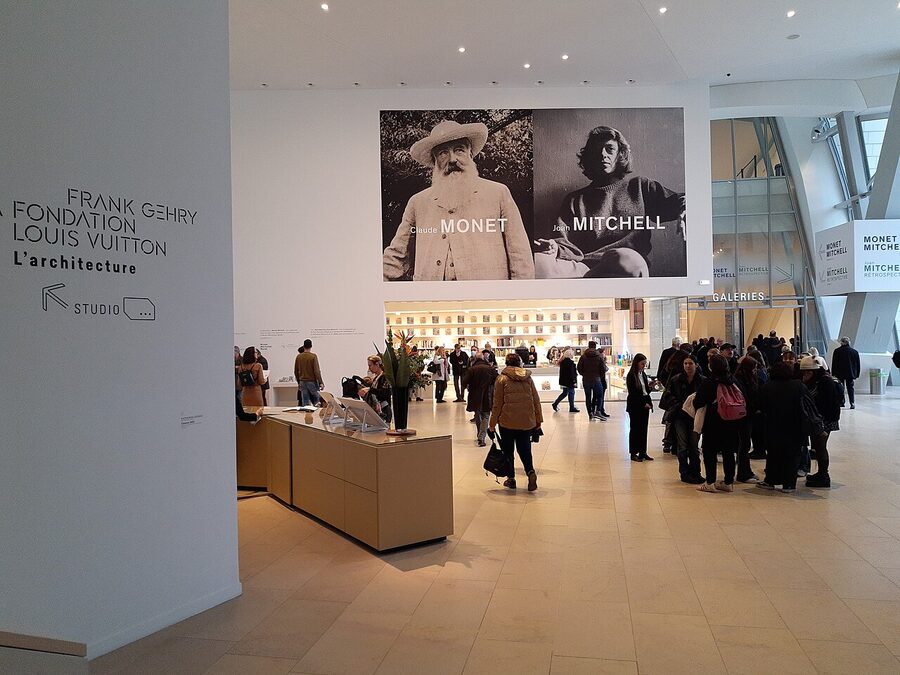
Here’s a useful frame for the contemporary art. Paris’s museums break the chronology by century. The Louvre covers everything up to about 1850. The Orsay covers roughly 1848-1914 (Impressionists and post). The Orangerie holds Monet’s late Water Lilies plus some twentieth-century private collection. The Centre Pompidou owns most of the mid-twentieth century. The Fondation Louis Vuitton picks up where Pompidou stops. It’s the contemporary endpoint of the chain.
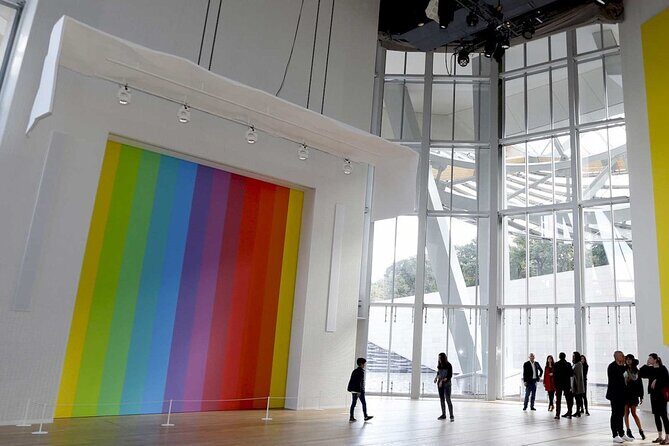
That chain is the right way to read the LVMH collection. You’re looking at art that mostly dates from the 1960s onwards: Ellsworth Kelly, Christian Boltanski, Pierre Huyghe, Cy Twombly, Gerhard Richter, Olafur Eliasson. Some of it lives permanently. Most of what you’ll see depends on the rotating exhibition program.
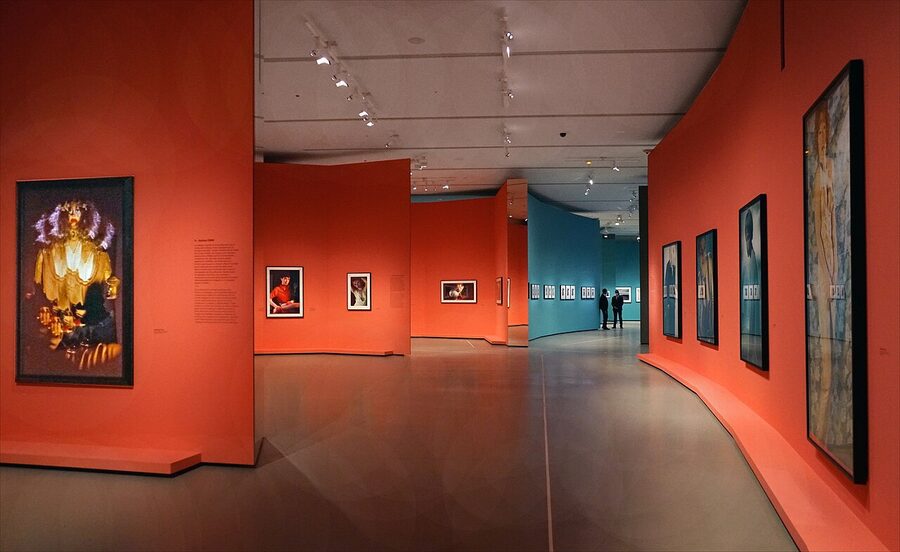
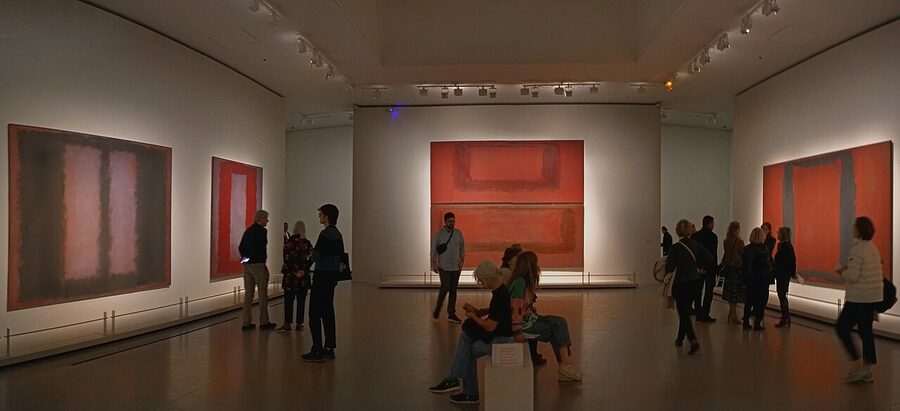
Recent exhibitions have been the heavyweight kind. Basquiat × Warhol in 2023. Yves Klein and Cindy Sherman both in 2024. Mark Rothko’s Seagram Murals reunited as an exhibition in early 2024. These are the kind of shows that travel from MoMA, Tate Modern, and the Pompidou and land here for six months at a time. Check what’s on before you book.
What I’d skip: the gift shop wraps you around it on the way out and the catalogues are fifty euros. The cafe drinks aren’t great value. What I wouldn’t skip: the auditorium, if there’s a concert or a screening on. It’s a 360-seat curved-wall venue with the sails visible behind the stage glass and the programming is the kind of contemporary chamber music or arthouse film you don’t bump into elsewhere.
How to actually get there
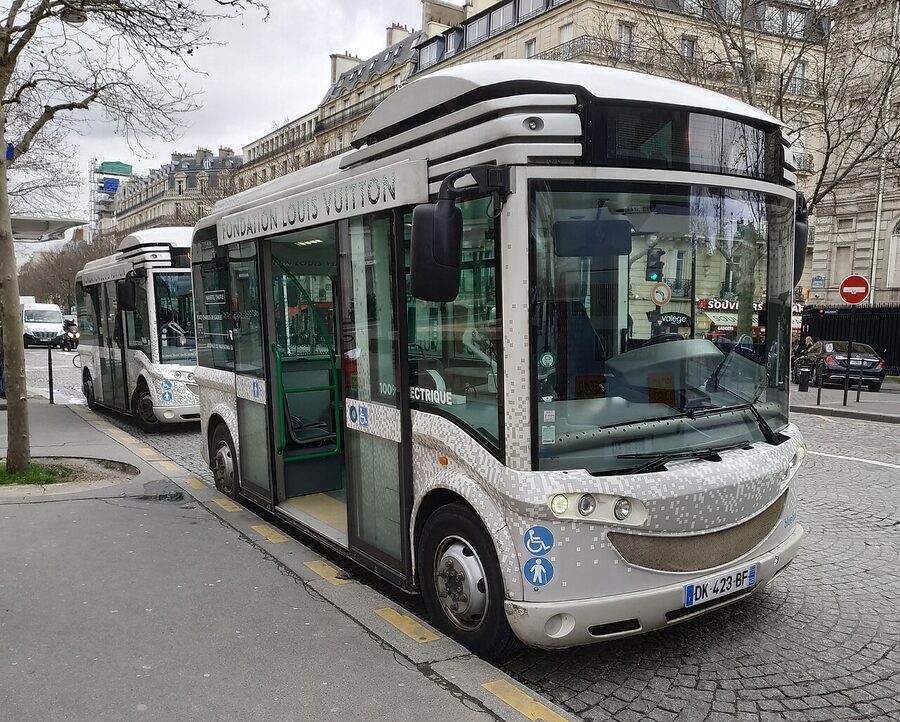
The official shuttle is the right answer for nearly everyone. It runs from a stop on Avenue de Friedland, just off the Place Charles de Gaulle Étoile, every 20 minutes when the Foundation is open. Two euros each way. It drops you at the Foundation entrance after about 15 minutes. If you arrive at Étoile by metro, walk up to street level via the south-east exit and you’ll see the shuttle stop within two minutes.
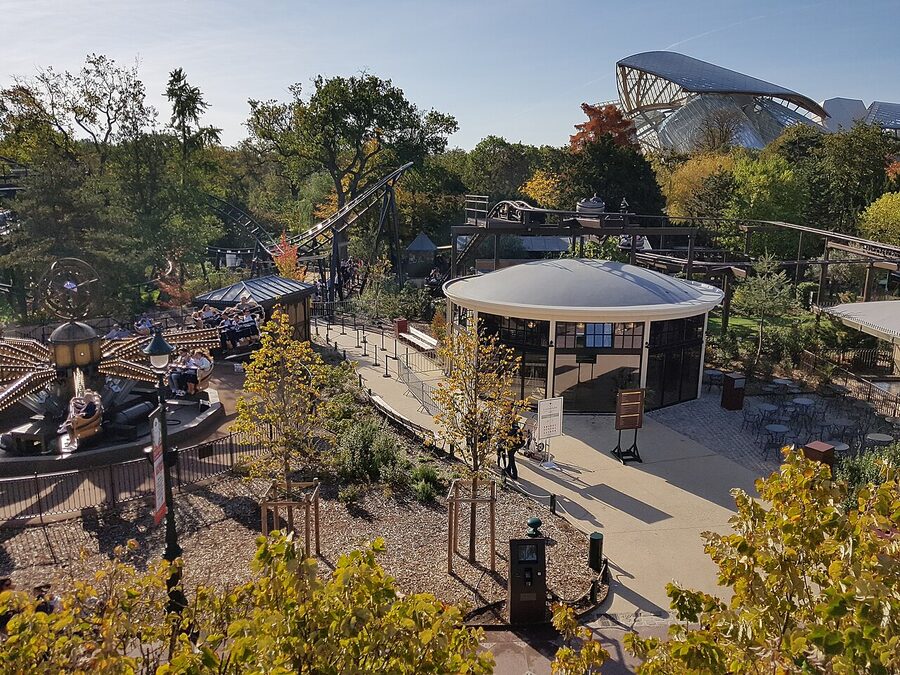
The other option is Metro Line 1 to Les Sablons, then a 10-minute walk through the Jardin d’Acclimatation. Cheaper if you have a Navigo or carnet. Slower, and you have to pay the 7-euro Jardin entry to walk through (Foundation tickets often bundle this in, but check).
If you’re driving in from outside Paris, parking is signed off the Avenue Maréchal Maunoury but it’s tight on weekends and peak exhibition runs. Don’t drive unless your hotel is in Neuilly. Don’t take a taxi from central Paris when the shuttle exists; the fare back from Étoile is roughly 15 euros and the shuttle is 2.
The Bois de Boulogne is the side trip
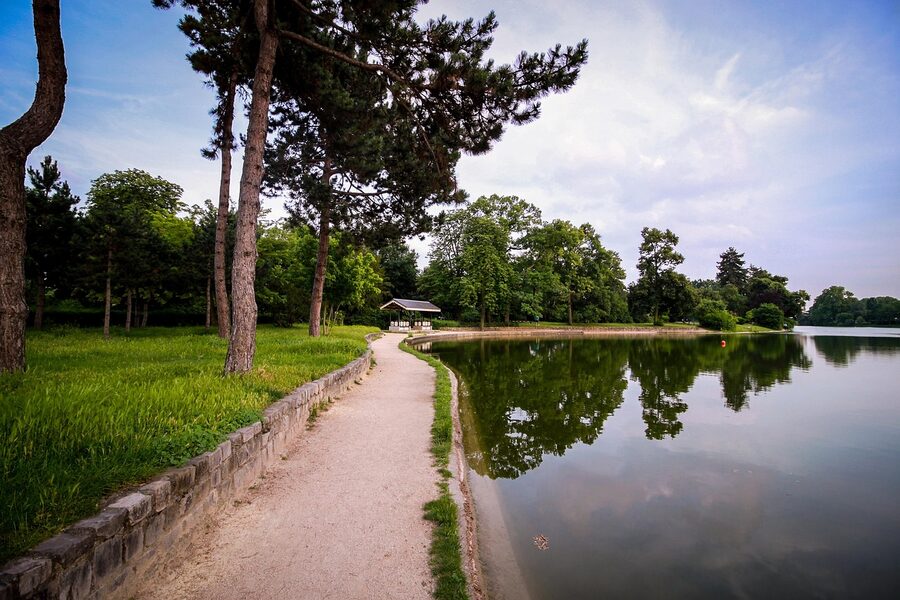
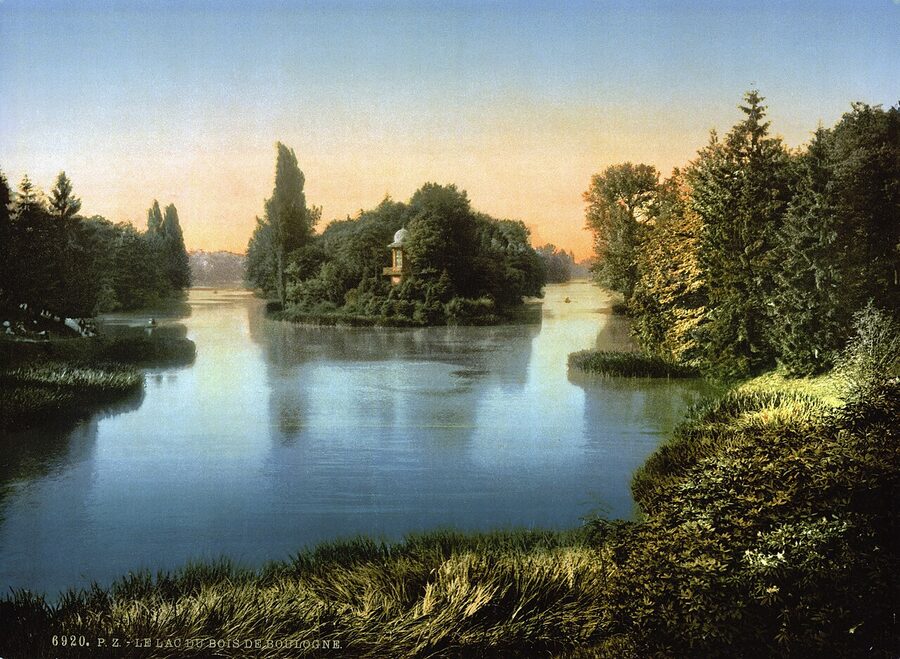
This is what travellers don’t realise until they’re out here. The Bois de Boulogne is the western lung of Paris: 846 hectares of woodland, lakes, formal gardens, two horse-racing tracks, the Roland-Garros tennis stadium, and a chain of restaurants and follies that date back to Napoleon III. It’s three times the size of Central Park. The Foundation is in the north-east corner.
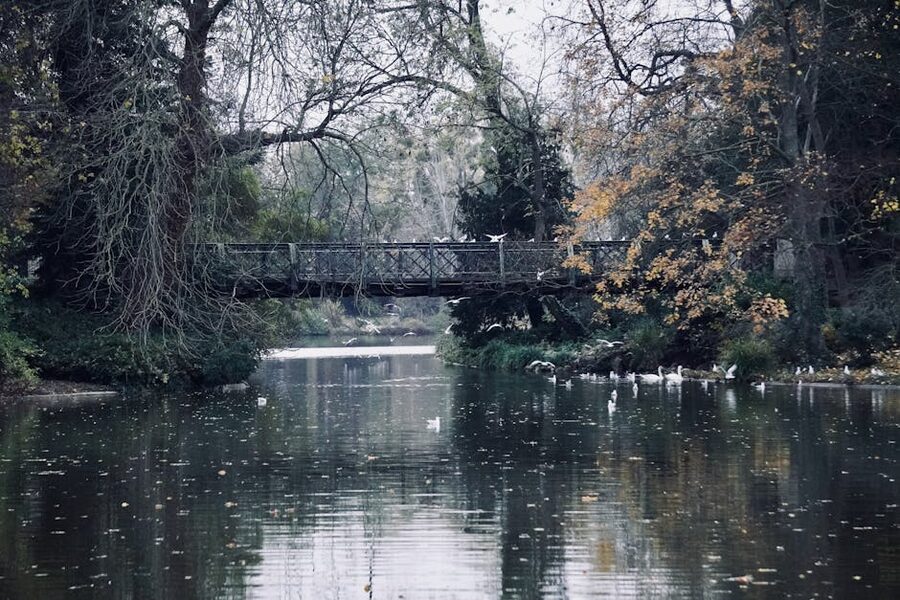
If you have an extra hour or two, walk south from the Foundation toward the Lac Inférieur. There’s an island in the middle reached by free chain ferry, a couple of cafes you’d never find without a map, and a mostly-empty path system that locals run on. The Allée de Longchamp, the racetrack horse-walk, runs east-west across the southern half of the park. None of this is on most Paris itineraries.
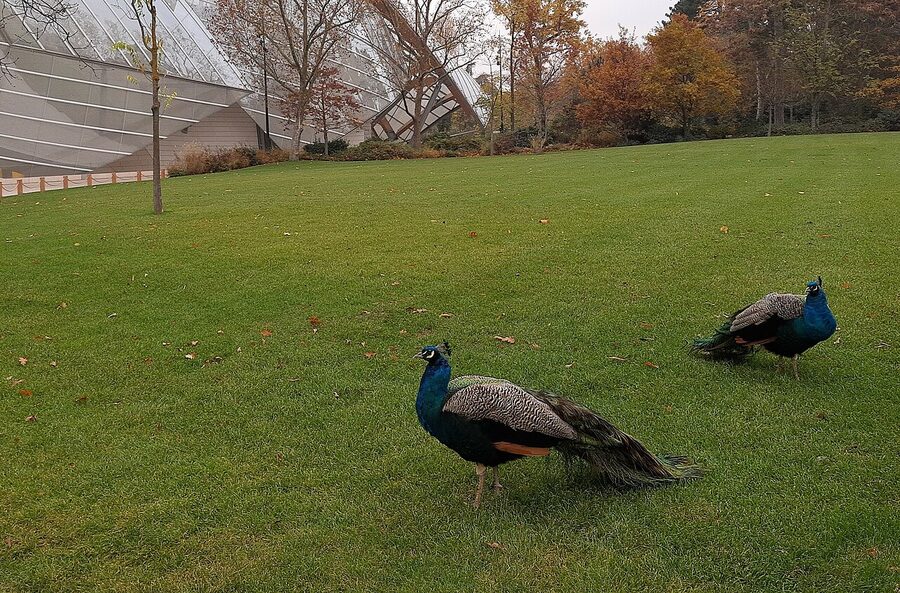
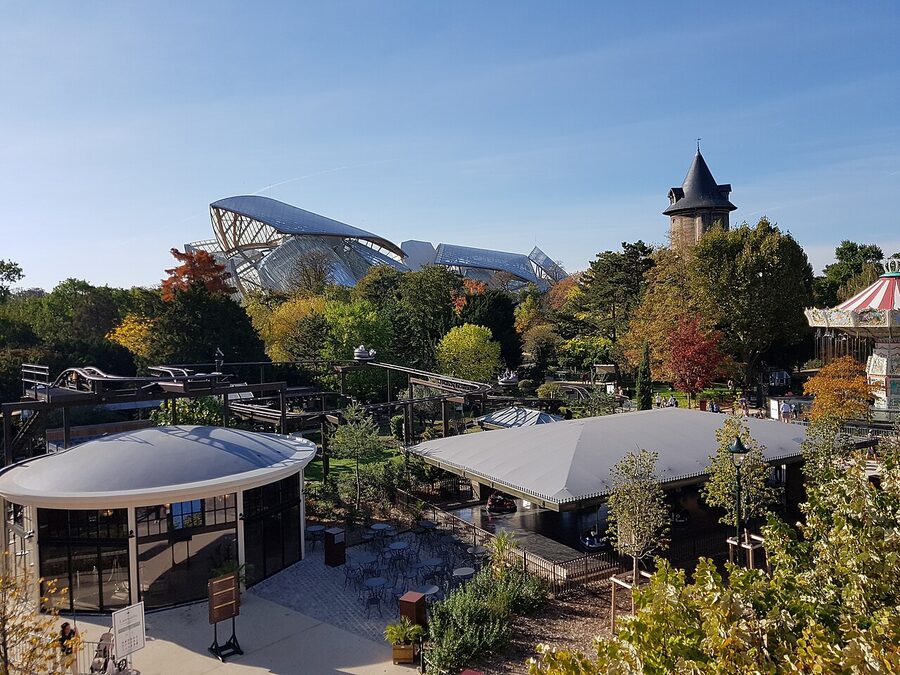
About the peacocks. The Jardin d’Acclimatation, on the Foundation’s doorstep, has resident free-range peacocks that wander over toward the Foundation’s south side. They’re not a marketing prop. They’ve been there since the Jardin was a 19th-century menagerie. Visitors sometimes mistake them for an installation.
Tickets, hours, and the timing question
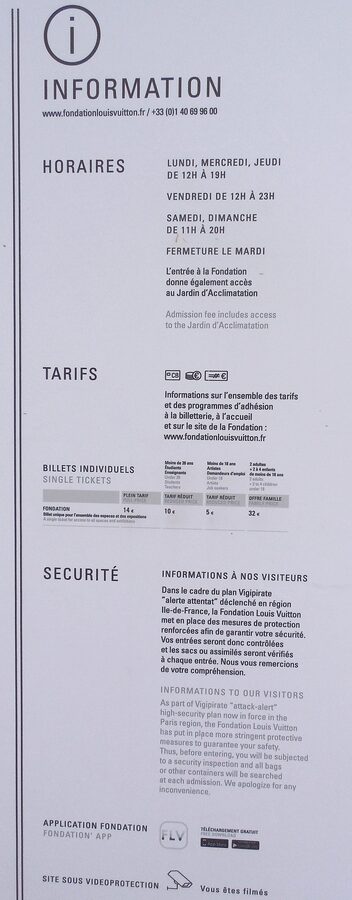
The standard Premium Access ticket is 22 euros (about 25 dollars) and covers timed entry, audio guide app, and the shuttle from Étoile. A combined ticket including the Jardin d’Acclimatation runs 27 euros. The architecture-and-entry guided tour from Viator runs about 56 euros and is worth it if the building is your priority more than the show.
Standard hours are 11am to 7pm. Friday and Saturday run later during major exhibitions. The Olympics run pushed hours wider in summer 2024, opening earlier and closing later. Tuesdays the museum is closed. Don’t show up on a Tuesday.
Best time to go: weekday afternoons, two hours before close. The morning crowd that came on the early shuttle has cleared. The light from the west catches the glass. You get the rooftop in calmer weather and the ground floor before the cafe queues.
Three booking options worth considering
1. Fondation Louis Vuitton Premium Access Ticket: $25
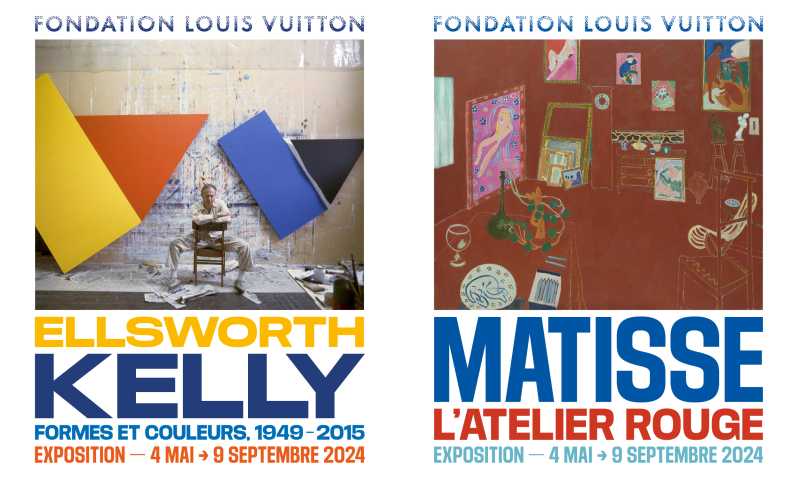
This is the right pick for almost everyone visiting Paris. You get timed entry without the queue, the shuttle voucher to Étoile, and the audio guide on your phone. Our review calls out the Ellsworth Kelly opening and the Gerhard Richter rotation specifically. Book a slot late in the afternoon and stay through closing.
2. Exterior Walking Tour and Premium Entry: $62.50
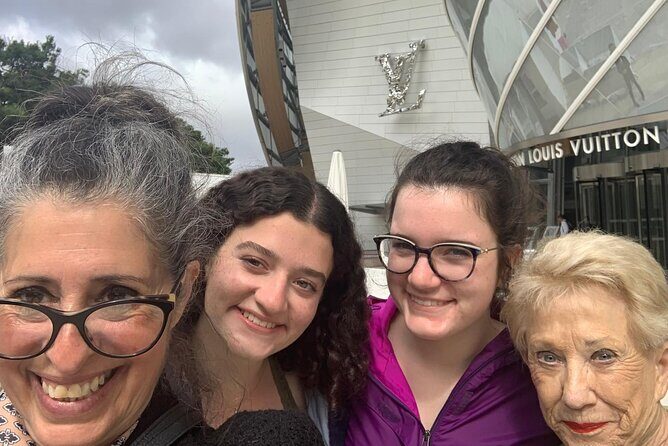
Pick this if Gehry’s design is the actual reason you’re going and you want context before you walk in. The guide takes you around the south and east sides where the sails layer best, then hands you off at your premium entry slot. Our review notes the meeting point sits about half a kilometre from the Foundation entrance, so factor in the walk.
3. Vintage Sidecar Tour and Foundation Entry: $172
This is the splurge option and the one I’d reach for on a special-occasion day. A vintage sidecar runs you past the Eiffel Tower, the Seine, and the Champs-Élysées before delivering you to the Foundation; our review highlights driver Rafael’s habit of asking what you’ve already seen and routing accordingly. Best on a sunny weekday afternoon.
Why this building exists where it does
The site was a forgotten corner of the Jardin d’Acclimatation that previously held a bowling alley. Sounds like nothing. It became something because Bernard Arnault wanted a Gehry building specifically and the Bois de Boulogne is a protected park where new construction is, in theory, banned. The 2007 building permit landed in a public-interest gray zone: a private foundation, on city-owned land, with a 55-year lease that returns the building to Paris when it expires.
The challenge ran from 2007 to 2014. A coordination of preservationist neighbours led by the Coordination pour la sauvegarde du Bois de Boulogne sued repeatedly. The Conseil d’État partially overturned the permit in 2011. The French parliament then passed an act of legal exception specifically for the Foundation in 2011, and construction continued. Doha money via LVMH paid the bill; the city of Paris covered nothing.
If that backstory feels familiar, it should. Most of the polarising contemporary museum buildings in Europe followed similar paths. Gaudí’s Casa Batlló was hated by Barcelona’s bourgeoisie when it went up in 1906. The Setas de Sevilla, an enormous timber pergola that opened in 2011, divided Seville for a decade and is now the city’s signature contemporary moment. The Centre Pompidou opened in 1977 to similar protest. Every one of these became iconic on the same arc: legal challenge, public ridicule, partial collapse of the ridicule, eventual postcard.
Frank Gehry, very briefly
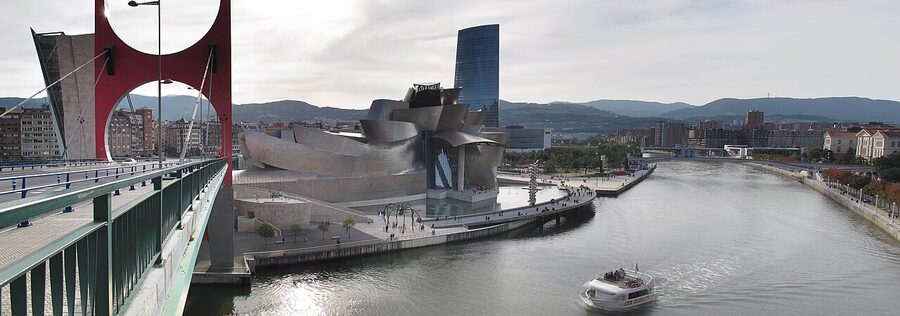
Frank Gehry, born 1929 in Toronto, based in Los Angeles since the 1960s. The architect who made the curved-surface museum its own genre. The Guggenheim Bilbao in 1997 cracked the form open: a Spanish steel-mill town nobody visited became a tourist destination because of the building, and the term “Bilbao effect” entered urbanist vocabulary. He is in his nineties and still working.
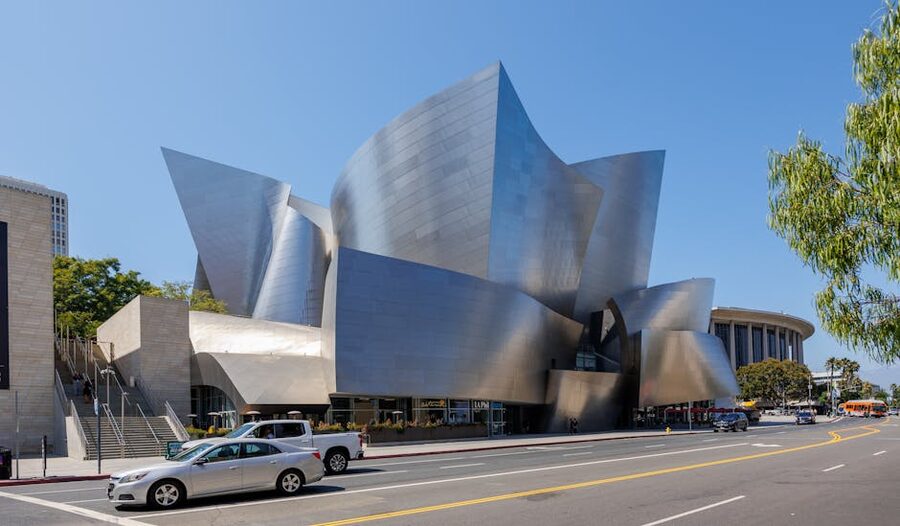
The Foundation is his only major Paris commission. He has buildings in Düsseldorf, Berlin, Barcelona, Bilbao, Prague, Los Angeles, Seattle, Toronto, Cleveland, Chicago, Sydney, Hong Kong, and a long list of universities. Paris held out for thirty years and then said yes once, to LVMH money, after a fight.
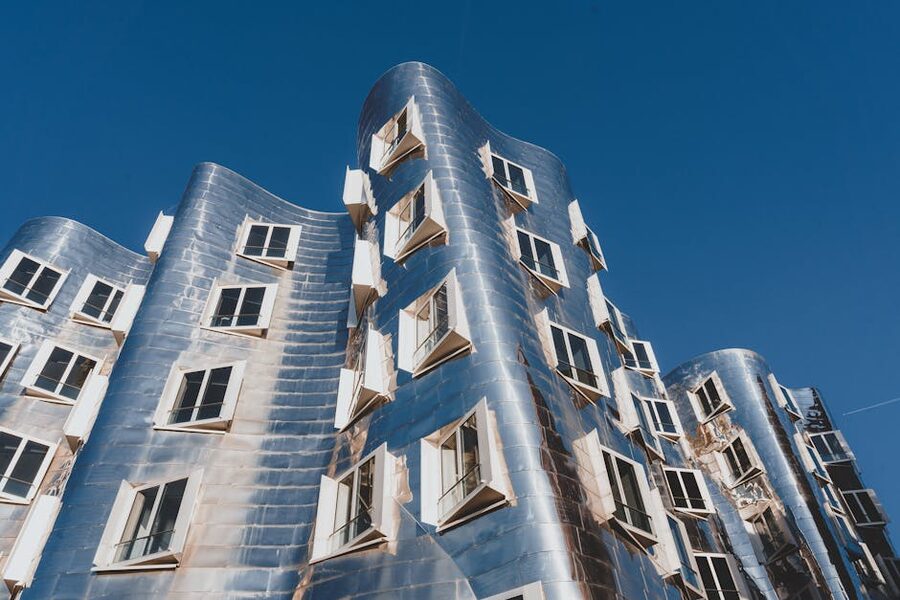
Why he was the right architect for this site: he is one of the few living architects who can persuade a 6-storey-Haussmannian city to allow a single contemporary statement. Paris had said no to many proposals before this one. Gehry’s name and the LVMH budget combined got it built.
The neighbourhood: 16th arrondissement and beyond
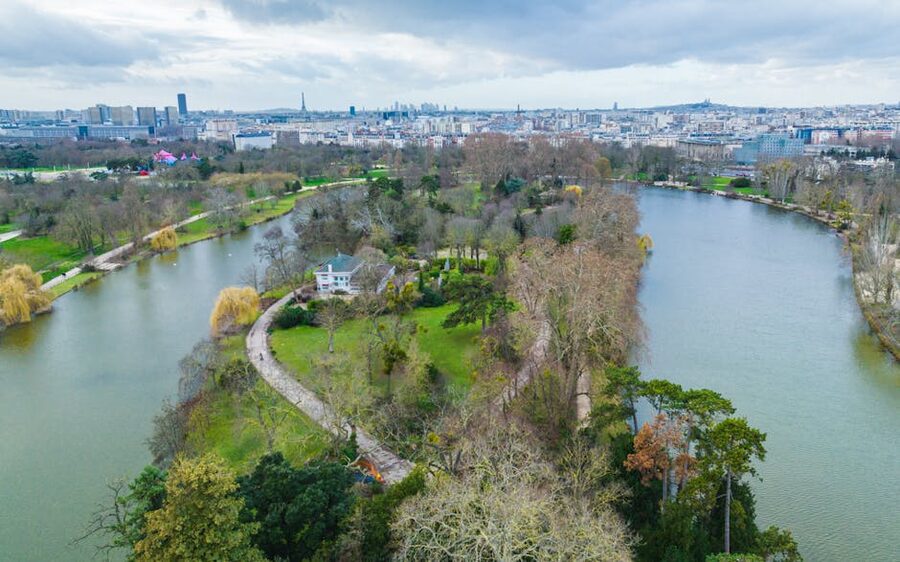
The 16th is the wealthiest postal code in the city and arguably the dullest. Wide boulevards. Tall apartment buildings with limestone facades. Few restaurants worth crossing the river for. It’s the part of Paris the Hemingway crowd ignored. But it’s where most of the expensive contemporary architecture lives, partly because there’s still room and partly because the residents have the political weight to override Haussmannian preservation.
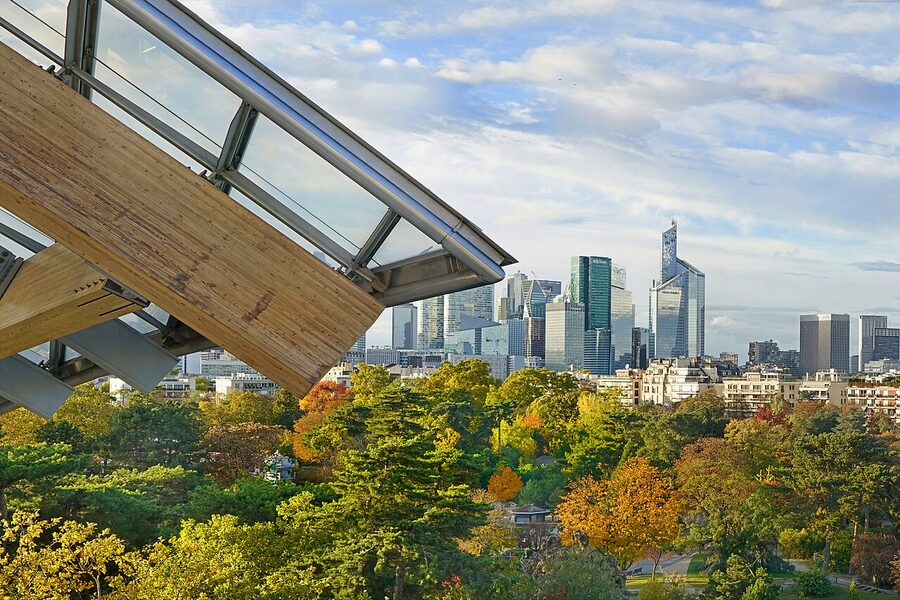
If you continue west from the Foundation by foot or metro you’ll hit La Défense in 25 minutes. The Grande Arche is the western terminus of the Voie Triomphale axis that runs through the Arc de Triomphe, down the Champs-Élysées, through the Tuileries to the Louvre, and out to the Place de la Concorde. Stand on the Foundation’s rooftop and you can see the whole axis lined up. It’s one of the few places in Paris where the urban geometry reads at a glance.
Half-day routings that work
Three half-day combinations I’d actually recommend.
Foundation in the morning, Trocadéro and the Eiffel Tower in the afternoon. Take the shuttle out at 11, do the Foundation through 14:30, taxi or metro back via Trocadéro for the postcard view of the Tower. Lunch at one of the Trocadéro brasseries.
Foundation plus a Seine afternoon. Foundation 11-14, taxi to Pont d’Iéna, board a Seine river cruise at 15:00, finish at sunset by the Île de la Cité near Sainte-Chapelle. This is the museum-and-water variant.
Foundation plus the chronology completion. If you’ve already done the Orsay and the Orangerie earlier in your trip, the Foundation closes the loop. The chronological progression (Louvre to 1850, Orsay 1848-1914, Orangerie’s late Monet, the Pompidou’s mid-twentieth century, Foundation for contemporary) is the best art-history through-line in Europe.

Things you’d wish you knew before you went
A short list, ordered by how much it’ll change your visit.
Closed Tuesdays. This catches a lot of people because most Paris museums close Mondays instead. The Foundation goes opposite. If your Paris trip is Saturday-to-Tuesday, you get one shot.
The cafe closes at 5pm. Even on extended-hours days. If you want the rooftop coffee, book a morning or early-afternoon slot. The shop on the ground floor stays open later.
Phone signal is patchy inside. The audio guide app needs to be downloaded over WiFi before you arrive. The on-site WiFi is fine on the ground floor but inconsistent on the rooftop. Download at the entrance.
Bring a windbreaker for the rooftop. The terraces are exposed and even in summer the wind off the Bois cuts through. Sweaters get borrowed back at the cloakroom for free.
Bag check is required for anything bigger than a tote. Free, but the queue takes 10-15 minutes if you arrive at peak. Travel small.
Photography is fine almost everywhere. No flash, no tripod, no commercial use. The exceptions are signed at the gallery entrance and depend on the loaning institution. Rothko was no-photos in 2024. Cindy Sherman was photos-OK with no flash.
Cost-per-experience math
The 22-euro standard ticket is about right for the experience. Three hours inside, plus the architecture, plus the rotating exhibition, plus the rooftop. That’s roughly the same time you’d spend at the Louvre for 22 euros, with significantly less queueing and a better building.
The 56-euro architecture-and-entry tour is overpriced unless contemporary architecture is genuinely your thing. The guide adds maybe 90 minutes of context you could otherwise read in our piece on the building. If you’d gladly pay 30 euros for that context, take it. If not, save the money.
The 172-euro sidecar combo is a one-time experience, not value-for-money. It’s a sunny-afternoon, special-occasion booking. The Eiffel Tower lit up at night plus the Foundation by day plus the wind in your hair is what you’re paying for.
The Paris Museum Pass does not include the Foundation. The Foundation is not state-run, so the pass system that covers 50+ city museums skips it. If you’re optimising the Paris Museum Pass across a four-day visit, the Foundation is a separate ticket on top.
Where the Foundation fits in your Paris
This is the question travellers actually ask, so I’ll answer it directly. The Foundation is a half-day visit on a four-day-or-longer Paris trip. It is not on a three-day Paris trip. The headline museums (the Louvre, the Orsay, the Orangerie) plus the headline monuments (the Eiffel Tower, the Arc de Triomphe, Sainte-Chapelle) plus a Seine cruise plus a Versailles day fill three days completely.
On a longer trip, the Foundation pairs naturally with the Bois de Boulogne, the Trocadéro, and any half-day you have free in the western half of the city. It’s also the right destination for repeat visitors who’ve done the headline list and want something less obvious. People who’ve already seen the Louvre twice tend to like this place more than first-time Paris visitors.
One sister booking that complements the Foundation: the Disneyland Paris end of the contemporary-built-environment spectrum. Both are the western edge of the metropolitan region, both required new construction in protected zones, both are Bernard Arnault tangentially involved (LVMH and Euro Disney share boards). If you find yourself thinking “what’s the most contemporary built-environment Paris has”, the Foundation answers it on the city side and Disneyland answers it on the suburban side. Different scales, similar logic.
If you only see one Gehry building, see this one
I’ve seen most of the major Gehry buildings now. Walt Disney Concert Hall in Los Angeles, the Guggenheim in Bilbao, Marqués de Riscal in Rioja, Neuer Zollhof in Düsseldorf, the IAC building in Manhattan, the Pritzker Pavilion in Chicago. They share a vocabulary and they do different things with it. The Foundation is the one I send people to first. It’s the most accessible architecturally, not because it’s simple but because the structure is legible (you can read the iceberg-and-sails idea in a single look), and it’s in Paris, which means most travellers will get there once anyway.
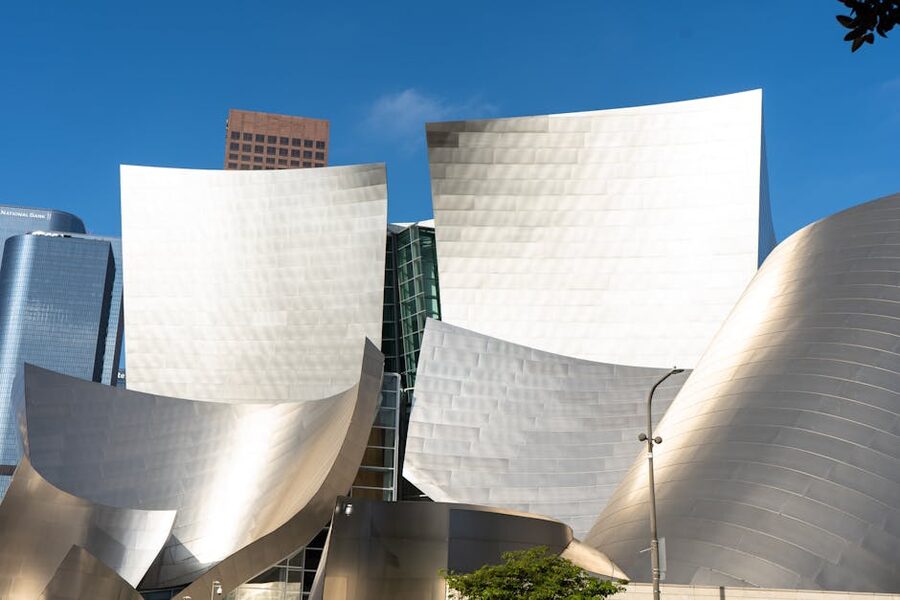
The Bilbao is the older sibling and arguably the more important building in art-history terms (the Bilbao effect changed how cities thought about contemporary architecture). The Disney Hall has the better music inside. The Foundation has the better setting and the better integration with the city around it. If contemporary architecture is one of the reasons you travel, this is the building to see in Europe.
Sister architectural pilgrimages worth the detour
If the Foundation works for you, here’s where to go next. Antoni Gaudí’s Casa Batlló in Barcelona is the closest spiritual sibling: an iconic single-architect statement on a city street, polarising at the time, now postcard. The Sagrada Família is the same architect’s life’s work, still under construction 140 years in. The Setas de Sevilla is the contemporary-intervention parallel: huge timber pergola, hated for ten years, now Seville’s icon. Amsterdam’s NEMO Science Museum is the Renzo Piano version of the same single-architect-statement idea: a green-copper hull rising over the IJ harbour, divisive when it opened in 1997, now a fixture of the city’s skyline and the only Renzo Piano building in the Netherlands. Casa Vicens and La Pedrera round out the Gaudí cluster in Barcelona.
For the contemporary-art-pilgrimage angle, the closest comparison is Leonardo’s Last Supper in Milan: the building (Santa Maria delle Grazie) is the protector and the painting is the object, but you really go for the room. The Foundation reverses that. The building is the object, the art is the second reason. Amsterdam’s Fabrique des Lumières sits at the contemporary end of the same idea: a former gas factory turned 360-degree projection space, where the architecture is the canvas and the rotating exhibition is whichever painter is being thrown across the walls that month.
And if you’ve made it to Paris and want to do a Bois de Boulogne day with kids, the Jardin d’Acclimatation theme park is right next door (about 7 euros adult entry, often bundled with Foundation tickets). Smaller scale than Disneyland Paris, easier logistics, more historic. Built by Napoleon III in 1860 originally as a zoo and pleasure garden.
Practical bottom line
Book the standard 22-euro ticket online for an afternoon slot. Take the shuttle from Étoile (2 euros, 20-minute departures). Go up to the rooftop first. Walk every staircase down through the four levels. See the rotating exhibition. Read the building. Take the shuttle back, or walk south through the Bois to Lac Inférieur, or metro from Les Sablons. Three to four hours total, plus shuttle time.
Skip if your Paris trip is three days or fewer. Skip if contemporary architecture leaves you cold. Definitely go if you’ve done the headline list before, or if Gehry is on the list of architects you’ve always wanted to stand under, or if you have an extra half-day and the western half of Paris is unfamiliar terrain. The 16th arrondissement is not glamorous on its own. The building is the reason to go.
One last unromantic note. Bernard Arnault is one of the world’s wealthiest people and the Foundation is his philanthropic monument. The price of admission funds operations; LVMH owns the contents. There’s a tension in that worth thinking about. The building is genuinely public-spirited in feel (open hours, the shuttle, the educational programme) and genuinely private in ownership. Paris contains both.