
The first time I walked under the railway arch onto Main Street USA at Disneyland Paris, I made the rookie mistake. I’d bought the cheap one-day, one-park ticket months in advance, marched through the gates of Disneyland Park at opening, and by lunchtime I was staring across the plaza toward the second set of gates wondering what was over there. Crush’s Coaster, as it turns out. Avengers Assemble: Flight Force. The Tower of Terror. Everything I’d actually flown to Paris to ride.
That second park, the one I didn’t have a ticket for, is now called Disney Adventure World. Until 29 March 2026 it was called Walt Disney Studios Park. Same plot, same rides, new sign over the gate plus a brand-new World of Frozen area. The two parks sit five minutes’ walk apart on the same patch of land in Marne-la-Vallée, 32km east of central Paris. Most travellers buying tickets online for the first time don’t realise how short the walk is. They pick the cheaper one-park option, get there, and spend half the day wishing they could just hop the gate.
This is the article that fixes that mistake. If you’re already cross-shopping the Eiffel Tower and the Louvre for the same Paris trip, the Disneyland day is the one with the most variables: which ticket, which park, what time to arrive, when to eat. Get those four right and one day genuinely covers both parks.
If you only have a minute
- Cheapest one-day ticket (most people): Disneyland Paris 1-Day Ticket on GetYourGuide from $61 per person. Pick a date, get a QR code by email, walk straight to the turnstile.
- Two days, both parks, the way Disney recommends it: Disneyland Paris 2/3/4-Day Ticket from $171 for two days, which works out around $85 per day and is a much better economic choice if you want to ride everything.
- Flexible date if your trip might change: Disneyland Paris 1-Day Flexible Date Ticket at $140. Pricier than the dated ticket but you can use it any day for a full year.
The single most important decision: which ticket
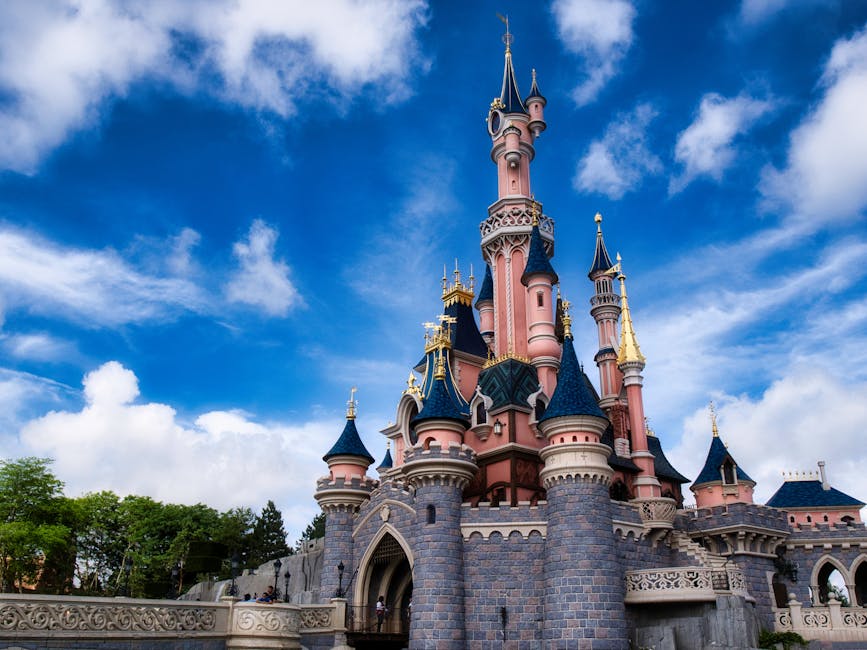
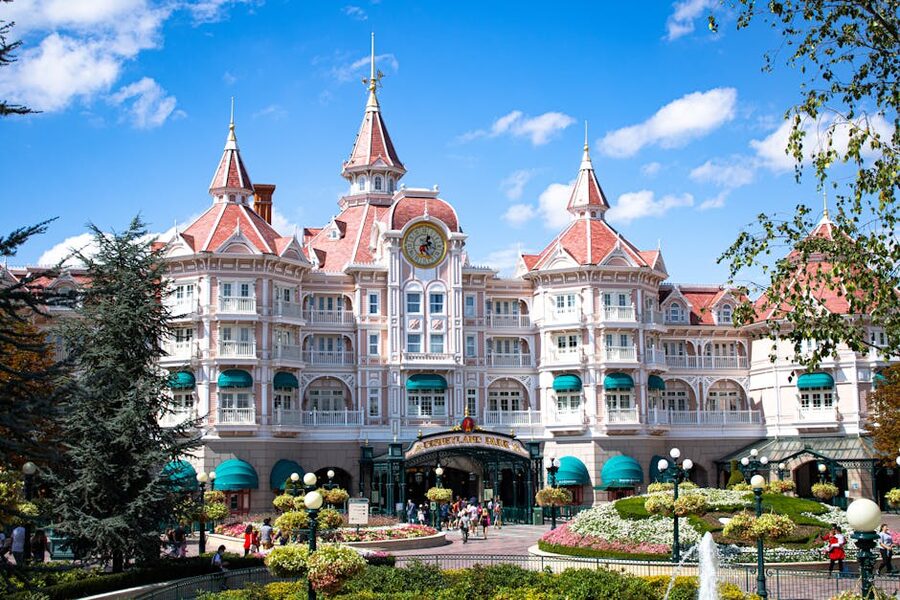
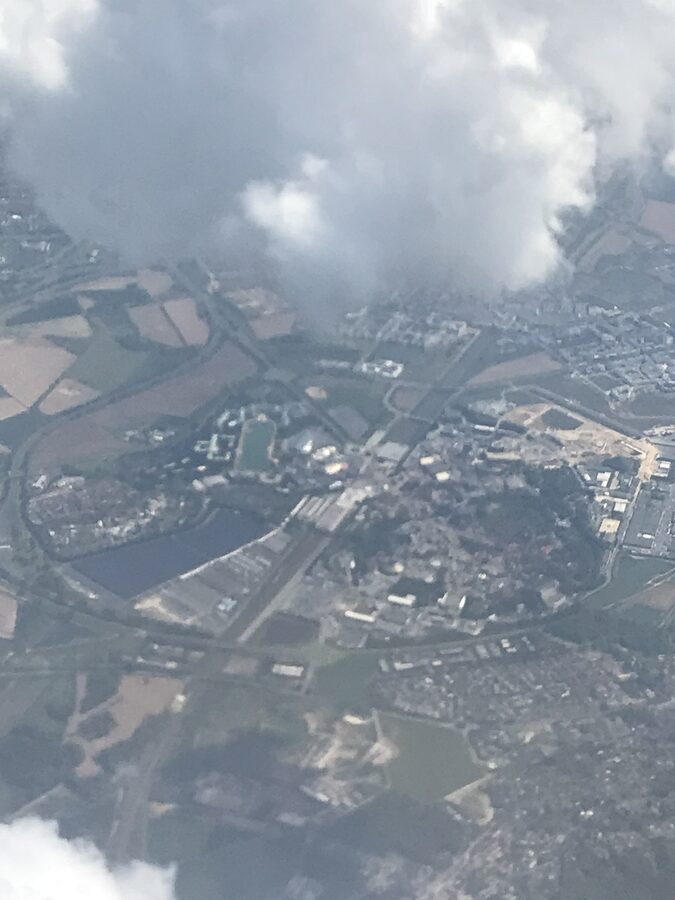
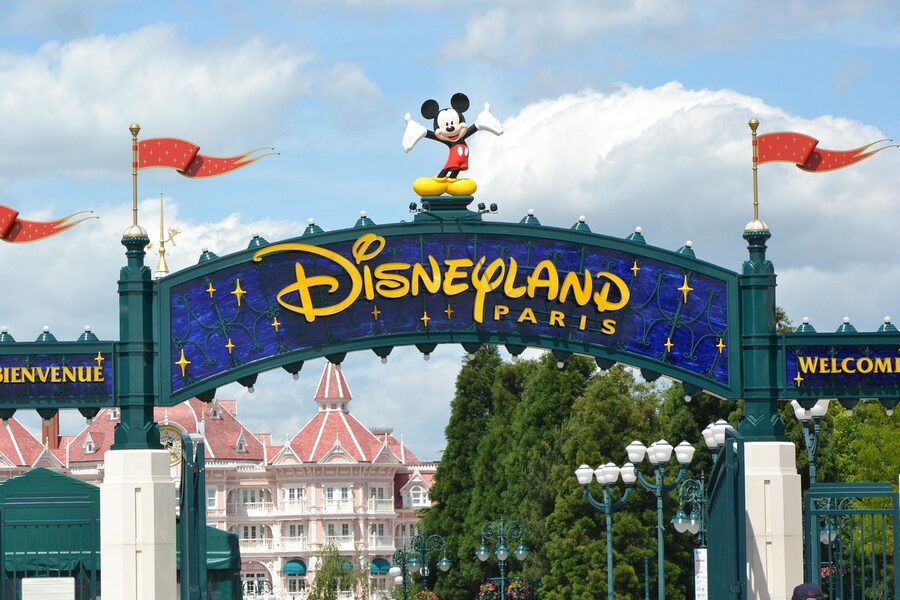
Disneyland Paris is two parks on the same plot. Disneyland Park, which opened in 1992 as the Magic Kingdom equivalent. And Disney Adventure World, which opened in 2002 as Walt Disney Studios Park and got rebranded in March 2026 with the new World of Frozen area. They’re separated by an open plaza maybe 200m wide. You walk under a fountain, past the Disneyland Hotel, and you’re at the second set of turnstiles.
So the ticket decision is not “one park or both.” It’s how many days you want.
The flagship is the 1-Day Ticket at $61. That gets you into one park, your choice on the day. It’s the cheapest legitimate way through the gate and the most-booked Disney ticket on the market by a long way. If you’re only in Paris briefly, this is what you buy. The trade-off: you’ll see roughly half of what’s there. If you head to Disneyland Park you’ll get Big Thunder Mountain, Phantom Manor, Pirates of the Caribbean, the castle and the parade. If you head to Disney Adventure World you’ll get Crush’s Coaster, Tower of Terror, Avengers Assemble: Flight Force, and the new World of Frozen. You don’t get both.
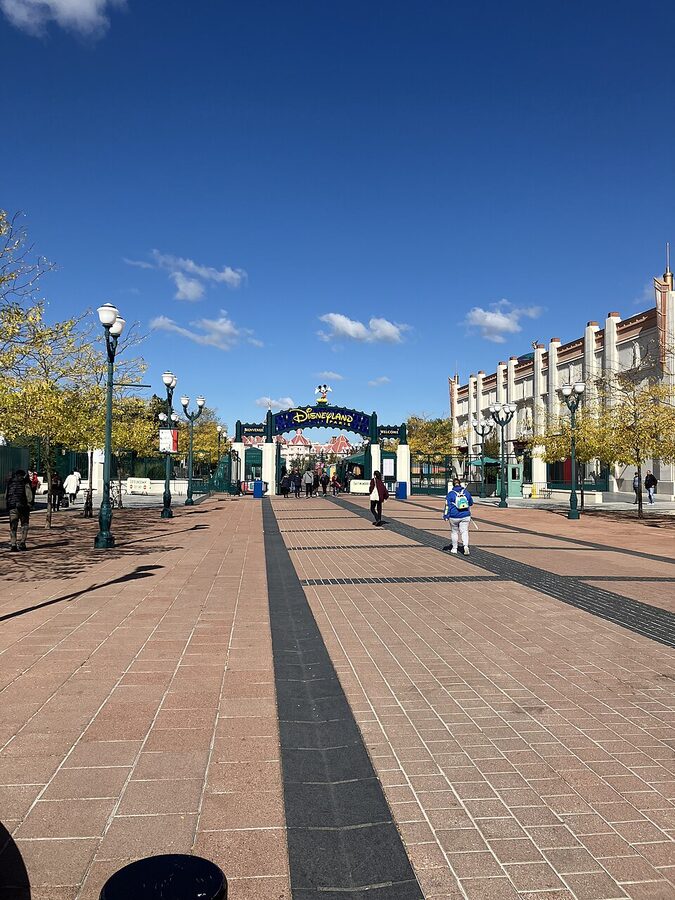
The next option up is the 2/3/4-Day Ticket from $171. Two days work out at around $85 per day, which is more per day than the one-day ticket, but it includes both parks every day, and two days is what Disney themselves recommend for a non-rushed visit. If the budget stretches, this is the right answer for first-timers. You ride everything in Disneyland Park on day one without sprinting between Fantasyland and Frontierland, then spend day two in Disney Adventure World on the rollercoasters and the Frozen ride without queuing at 9am.
The 1-Day Flexible Date Ticket at $140 is for travellers whose Paris plans aren’t locked. You buy now, use any time within 365 days. It’s expensive for what it is and most people don’t need this kind of flexibility. The dated ticket is half the price. Buy that unless you genuinely don’t know which day you’ll go.
How to actually book
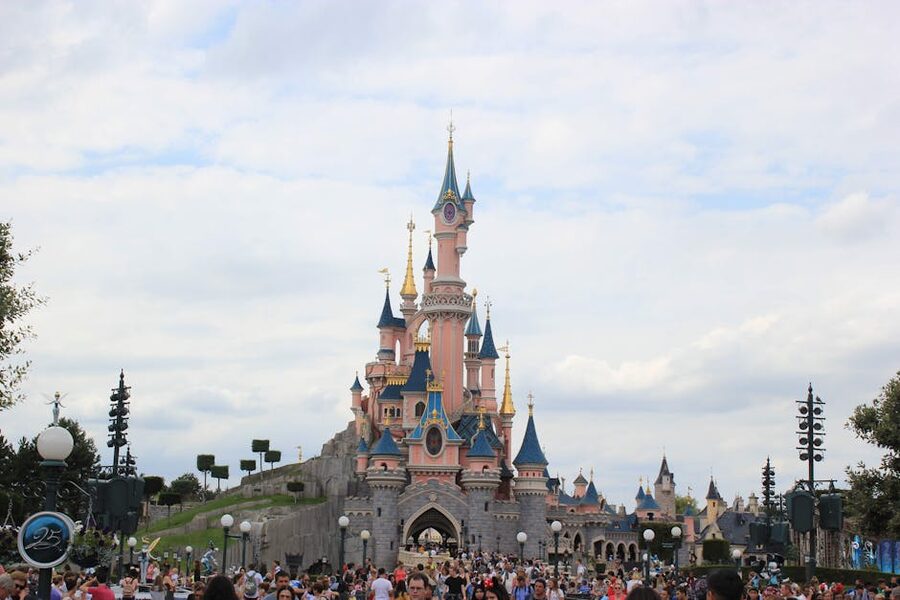
You cannot buy tickets at the gate. Disney scrapped that years ago. Tickets must be bought in advance, online, with the QR code emailed to you. Three places sell them at identical prices: the official Disneyland Paris website, GetYourGuide, and Klook. We use GetYourGuide because the cancellation policy is friendlier (cancel free up to three days before the date) and the booking flow is faster than Disney’s own. The QR works exactly the same at the turnstile.
One quirk worth knowing. Disney prices the dated ticket dynamically by date. A weekday in mid-January costs around €88. Christmas week, Easter, and the high-summer school holidays climb to €140 or more for the same one-park ticket. The cheapest way to visit is a Tuesday or Wednesday in late January or early February, or a midweek day in late September or early November. We’ve done the same one-day ticket at €88 in February and €128 in October half-term. Same park, same rides, €40 difference.
If you’re combining Disneyland Paris with the city’s other big-hitter attractions, the timing matters. The day before or after a Versailles trip is fine. The day after the Eiffel Tower climb when your legs are already toasted is brutal. Disneyland Paris is 30,000 steps. You will measure it on your phone afterwards and not believe what your legs did.
Why the parks are smaller than you expect (and why that’s good)

Disneyland Park is 39 hectares. That sounds big until you compare it to Disneyland California (200+ hectares, including the resort) or Walt Disney World Florida (over 10,000 hectares of total land). Paris is the smallest Disney property in the world. Disney Adventure World next door is even smaller, around 25 hectares.
What you get for the smaller footprint is ride density. There’s no monorail, no ferry boat between lands, no ten-minute walk between Frontierland and Adventureland. Disneyland Park’s five lands all radiate from the central castle hub. You can stand by the floral Mickey at the entrance and walk to any ride in the park within seven minutes. The bottleneck is queues, not transit time. That changes how you plan a day. You don’t need to map a careful clockwise route around a vast park. You just hit the things with the longest queues first and bounce around freely afterwards.
This density is why a park-hopping day actually works in Paris when it’s punishing in Florida. You can ride Pirates of the Caribbean in Disneyland Park, walk to Crush’s Coaster in Disney Adventure World, ride that, walk back across the plaza to Phantom Manor in Disneyland Park, and have spent maybe 12 minutes total on transitions. Try that at Disney World Florida and you’d be on the bus network for an hour. The closest comparison anywhere in Europe is probably the cluster of family attractions on Tenerife, where Siam Park and Loro Parque sit 20 minutes apart by free shuttle, but those are still two separate ticket purchases, not one resort.
Disneyland Park: the five lands
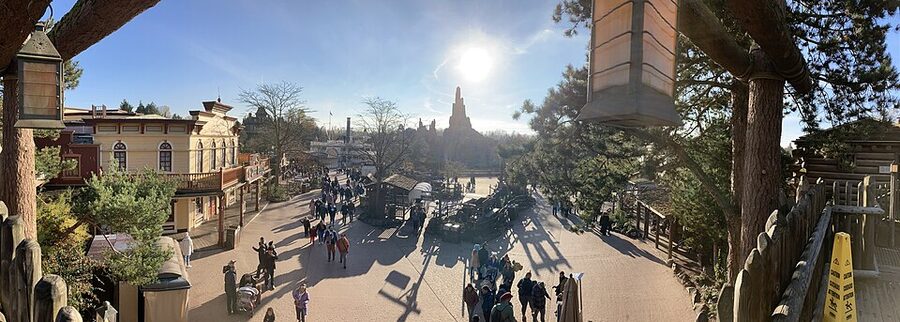
Five lands fan out from the central hub. Main Street USA on entry, then clockwise: Frontierland, Adventureland, Fantasyland, Discoveryland. They’re sized roughly evenly, except Main Street which is more of a long corridor than a land. Each one looks completely different and the walk between them takes three to five minutes.
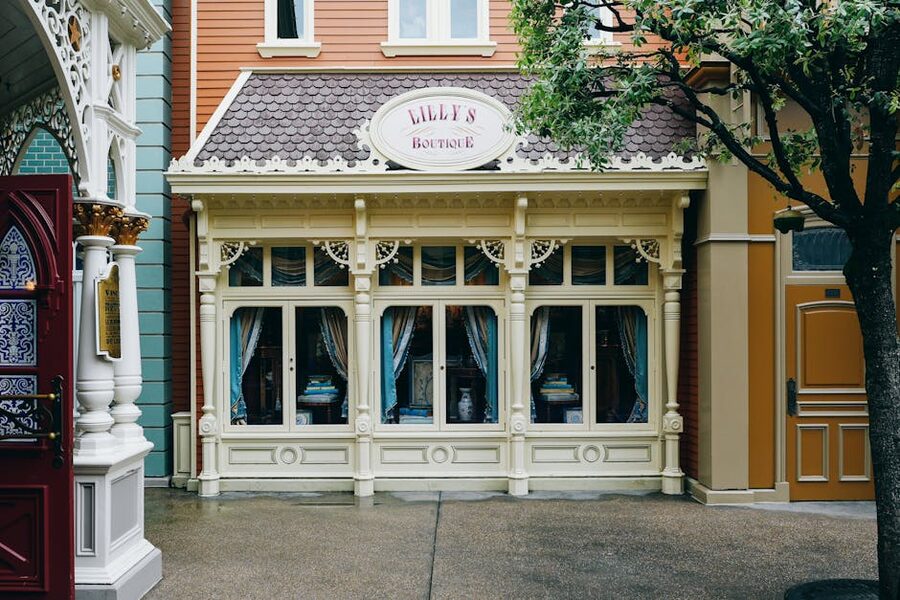
Main Street USA is the entry corridor. Victorian shopfronts, a horse-drawn omnibus, a Disneyland Railroad station overhead. The European version drops the American kitsch a little. You can buy actual croissants in the bakery here, which is the kind of small culture-shift detail you only notice later. Skip the shops on the way in, you’ll have time on the way out when your feet are dead.
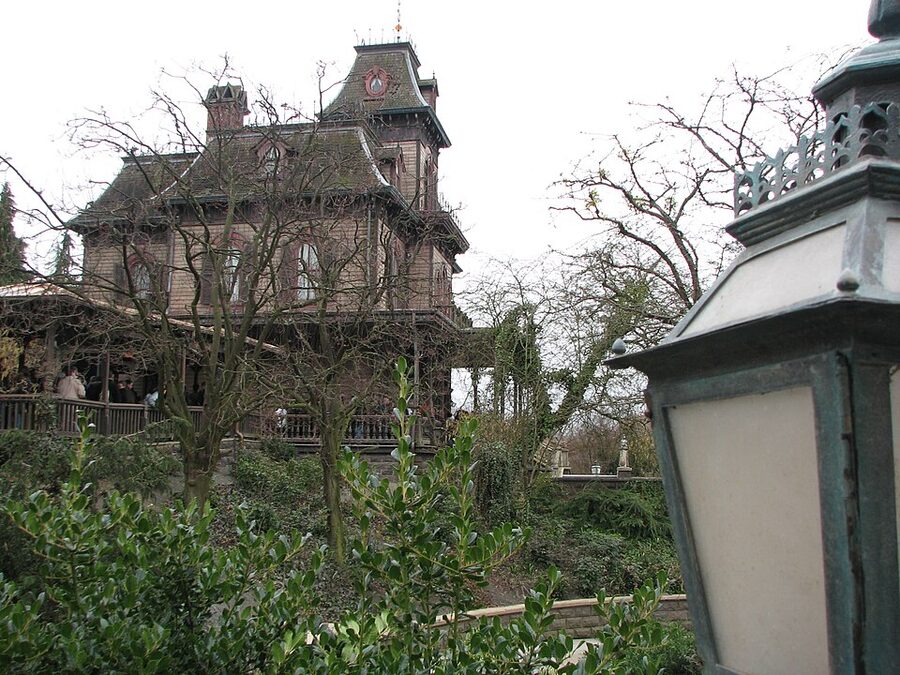
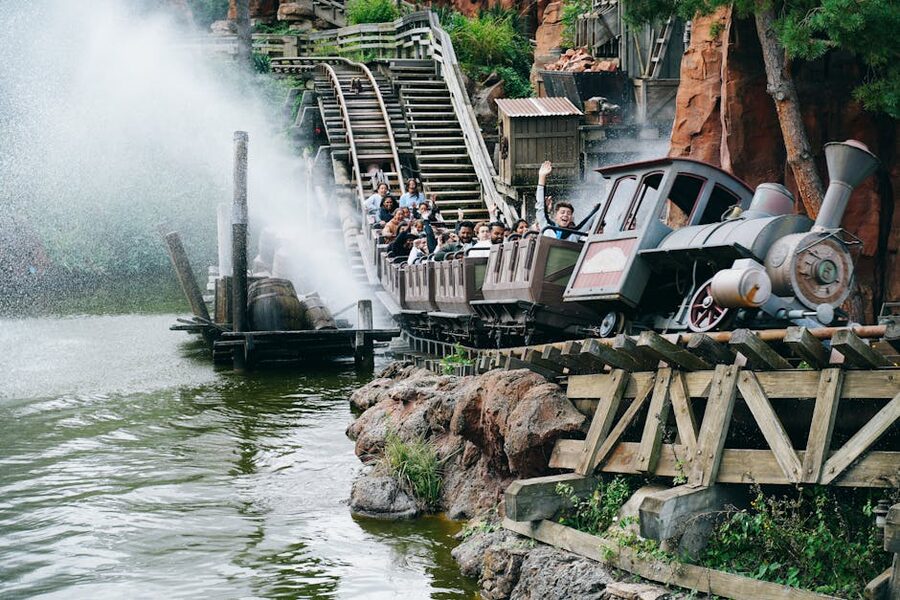
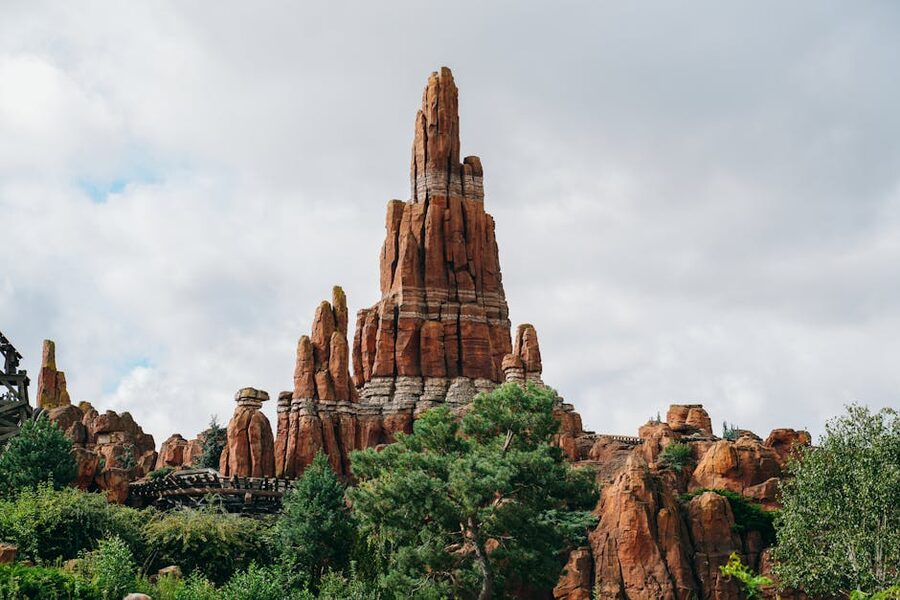
Frontierland is the Wild West side. Big Thunder Mountain Railroad sits on its own island in the middle of a man-made lake (Disneyland Paris built it bigger than the California or Florida versions because they had the space). Phantom Manor is the European take on the Haunted Mansion, with a Western frontier-town backstory: the bride is named Mélanie Ravenswood and the manor sits on Boot Hill cemetery. It’s darker and creepier than the American Haunted Mansion, less comedic, more genuinely unsettling. We rate it the best dark ride in any Disney park outside Tokyo.
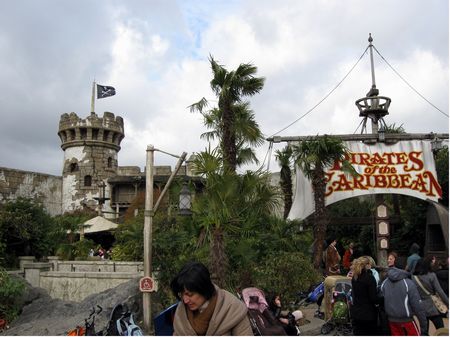
Adventureland has Pirates of the Caribbean, the original 1992 attraction that the films are loosely based on. The ride drops you down two waterfalls into a town being raided by pirates, with audio-animatronics that have been refurbished and upgraded several times. It’s longer than the California or Florida versions and considered the best Pirates ride in any Disney park. The Adventure Isle area in the same land has caves and a treehouse you can climb through. Most adults skip these, which is a small mistake. They’re a free, queue-free way to spend 20 minutes when the rides are too busy. If you’re a fan of family aquarium-style attractions, the closest thing in scale and intent in the rest of Europe is the Genoa Aquarium, also built around walk-through environments rather than rides.
Fantasyland is the kid zone. Peter Pan’s Flight, Dumbo, the Mad Hatter’s Tea Cups, the Snow White ride. If you don’t have small children with you, most of these can be skipped. The exception is Le Pays des Contes de Fées (the Storybook Land canal boats), which is a slow, beautifully detailed boat ride past miniature villages from the Disney films. Underrated. The queue is usually short.
Discoveryland is the futuristic land, with Hyperspace Mountain (Disneyland Paris’s version of Space Mountain, currently themed Star Wars and significantly more intense than the American originals, with multiple inversions), Buzz Lightyear Laser Blast, and Star Tours. Hyperspace Mountain is one of the rides you should do first if you’re a coaster fan.
Disney Adventure World: the second park
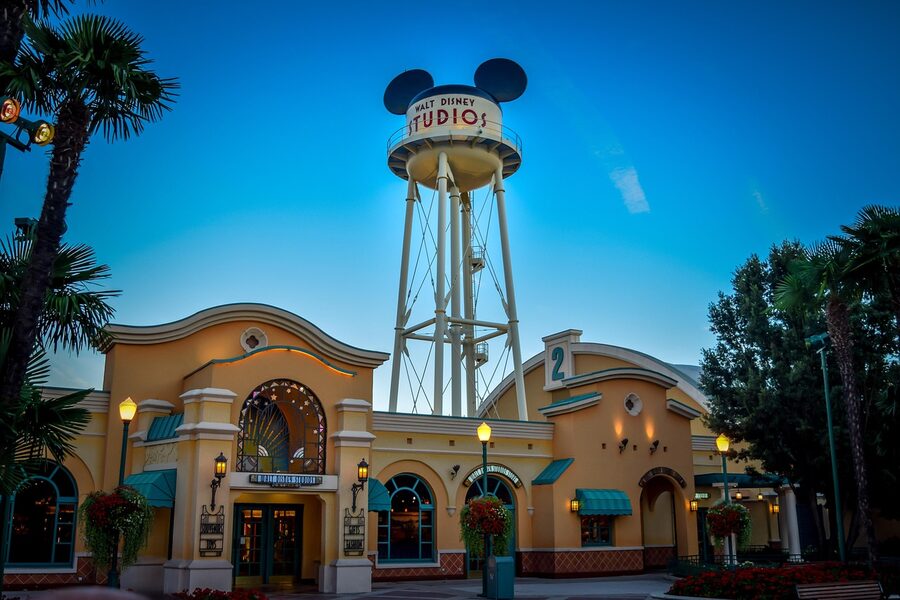
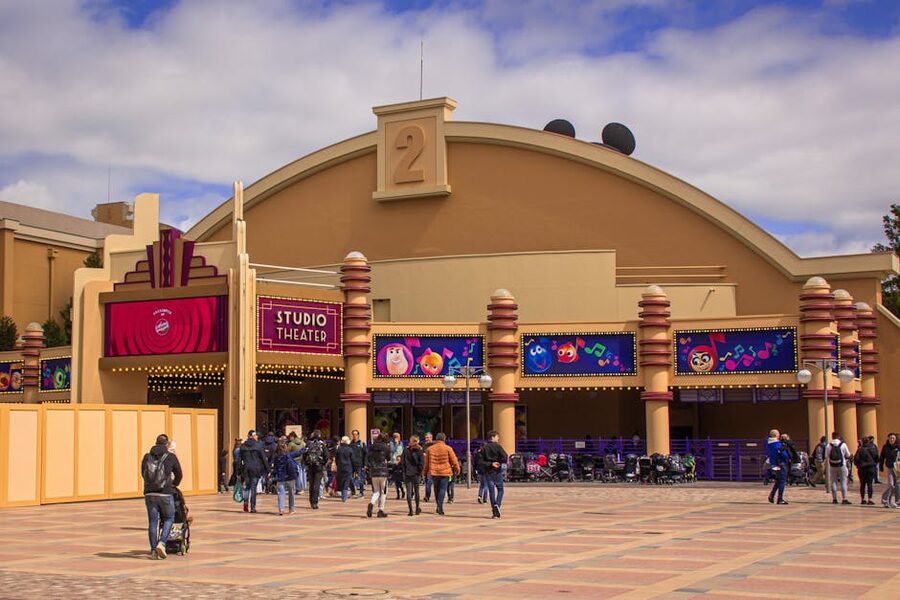
The second park has a complicated history. It opened in 2002 as Walt Disney Studios Park, modelled on the now-closed Disney-MGM Studios in Florida. For 20 years it had a reputation as the half-day park, the cheap day out you did between Disneyland Park visits. The rebrand to Disney Adventure World on 29 March 2026 came with the opening of World of Frozen, the upgrade of the Tower of Terror queue, and a phased plan that adds a Tangled area, an Encanto area and a Lion King area between now and 2027.
It’s still smaller than Disneyland Park. Around 25 hectares versus 39. But the ride lineup has caught up.
Crush’s Coaster is the editorial reason most adults pay for the multi-park ticket. It’s a spinning roller coaster on the Finding Nemo theme, opened 2007, the only Pixar-themed coaster in Europe and the only spinning coaster in any Disney park. You’re seated four to a car. The car spins independently while travelling along the track, mostly indoors and in the dark. Top speed is only 30km/h but the spinning makes it feel double that. The queue is the longest in either park. Plan for an hour or more in line, or pay €15-20 for Premier Access on the day, or use the single-rider queue if you don’t mind being split from your group.
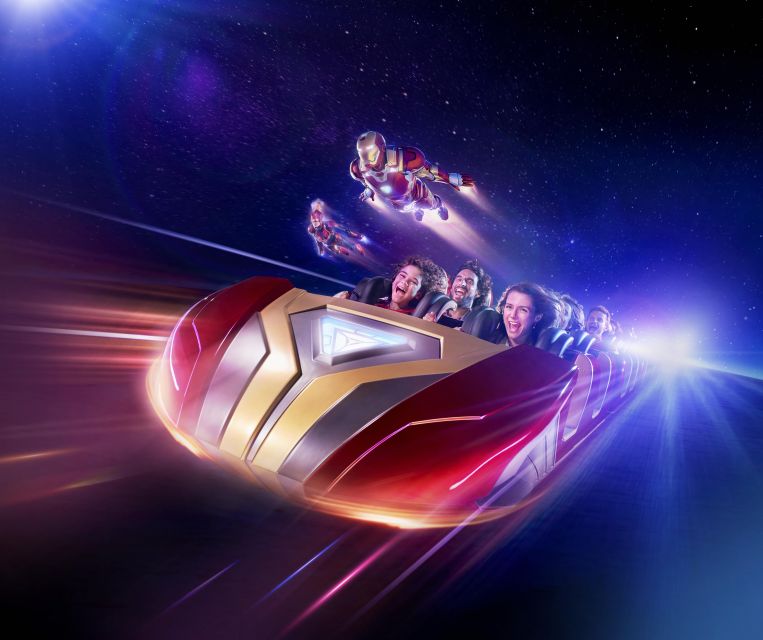
Avengers Assemble: Flight Force is the most intense rollercoaster in either park. Indoor, launches you from 0 to 95km/h in two seconds, multiple inversions, a 360-degree loop. It opened in 2022 in the new Avengers Campus area. Counter-intuitively, the queues are shorter than Crush’s because Avengers fans split between this and the Spider-Man WEB Slingers ride next door. If you’re a coaster person, hit Avengers first.
The Tower of Terror is the European version of the Hollywood Tower of Terror, a 13-storey drop ride in a haunted hotel themed on Twilight Zone. The drop sequence is randomised. You can ride it three times in a row and get three different drop patterns. Queues are usually 30-45 minutes.
World of Frozen is the new headline area. Frozen Ever After is the marquee ride, a slow boat ride through the Arendelle of the films, which is family-friendly rather than thrill-orientated. There’s a near-identical version at Tokyo DisneySea and the consensus among regulars is the Tokyo version is slightly better-themed. The Paris version is brand new in March 2026 and the queues will be punishing for at least the first year. If you’re going specifically for Frozen, buy Premier Access for it the moment you walk through the gate.
The Premier Access question
Disney’s old free FastPass system was scrapped in 2022. The replacement is Premier Access, which is paid. The economics are very different from a city pass like the Paris Museum Pass, which front-loads a flat fee and saves money the more you use it. Disney Premier is the opposite: pay-per-ride, with prices that climb on busier days. It works two ways:
Premier Access One is per-ride, per-person. You open the Disneyland Paris app, pick a ride, pay €5-23 depending on how popular the ride is and how busy the day is, get a return time slot, walk into the priority lane at that time. You can stack three or four of these across a day if you really want to maximise.
Premier Access Ultimate is a flat €110+ per person per day for unlimited priority access on 18 rides. Worth it on a peak day with two people who want to ride everything. Brutal value on a midweek off-peak day when standby queues are 20 minutes anyway.
Realistically: most travellers don’t need Premier. The standby queues at Disneyland Paris are shorter than the American parks because the place is genuinely smaller and crowds spread thinner. We’ve done multiple visits without paying a euro for Premier. The exceptions are Crush’s Coaster, the new Frozen Ever After, and Peak-day visits during Christmas, Halloween, or French school holidays. For those situations, buy Premier the moment you enter the park, not later.
The free alternative most people miss: single rider queues. Crush’s Coaster, Avengers, Ratatouille and a couple of others have separate single-rider lines. You queue alone, get slotted in to fill empty seats. Wait time is typically 20-30% of the standby. We’ve waited five minutes for Crush’s Coaster on the single rider line at 2pm on a day where standby was 90 minutes. The catch: you don’t ride with your group. Fine for one or two of you, less fine if the kids want to sit with mum and dad.
The early-morning move that beats most queues
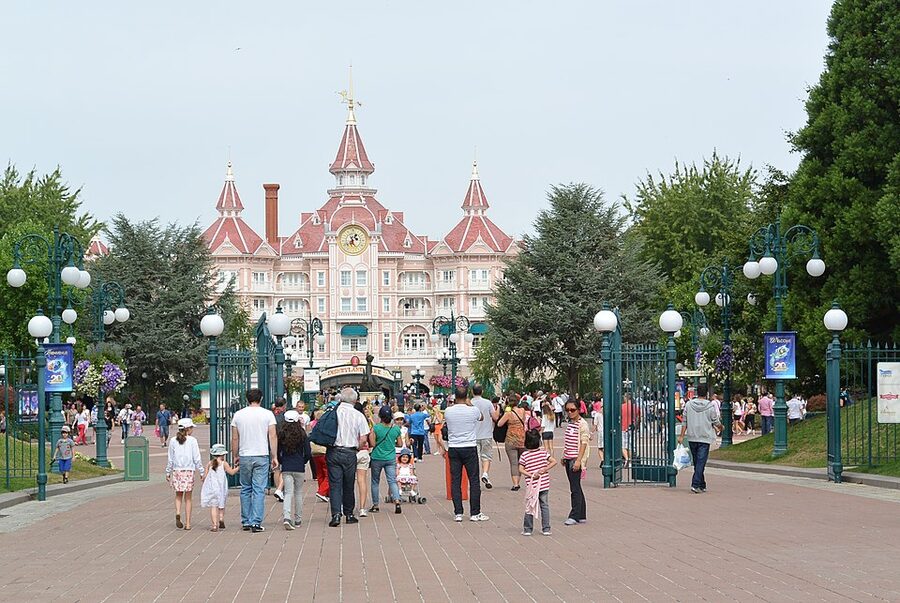
Park opening is officially 9:30am or 10:00am depending on the season. Get to the gates 30 minutes earlier. The turnstiles open before the rides. They funnel you onto Main Street where Disney holds you behind a rope until rope-drop. When the rope drops, the cast members signal you toward whichever land is opening. Sprint, walk briskly, whichever you can manage. The first 30 minutes after rope-drop is when the longest-queue rides have their shortest waits of the entire day.
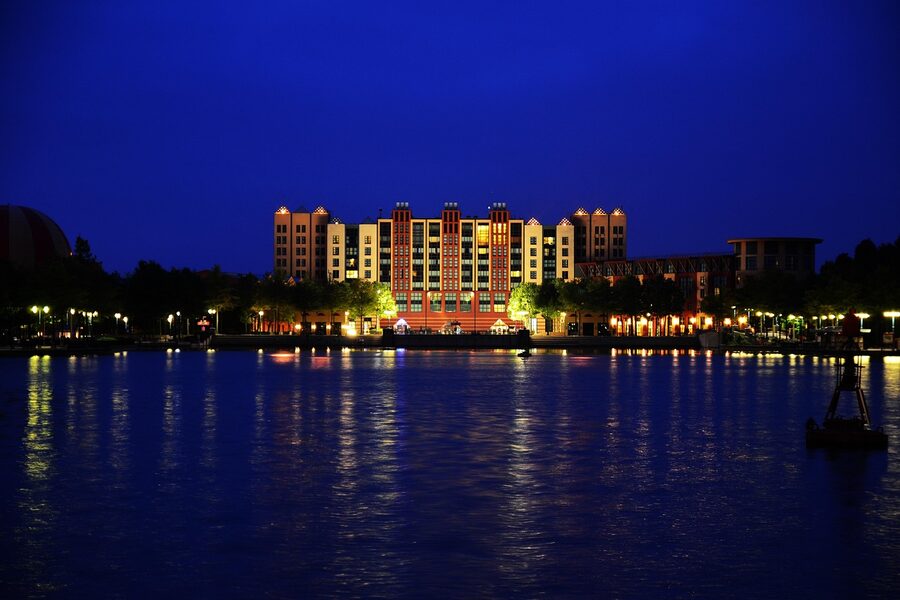
Hotel guests get an extra trick. Anyone staying at an official Disney hotel (the Disneyland Hotel above the gate, the New York Art of Marvel, the Newport Bay Club, the Hotel Cheyenne, the Hotel Santa Fe, the Davy Crockett Ranch) gets Extra Magic Time: 30-60 minutes of access before the gates open to the public. We’ve ridden five major rides in the first hour of Extra Magic Time. It’s the single biggest practical advantage of staying onsite, more valuable than the breakfast or the proximity. The principle is the same as the early-entry slot at Barcelona’s Montjuïc cable car for hotel guests up the hill: the small early window is worth more than any other paid upgrade.
The trade-off: official Disney hotels cost €250-800 per night and aren’t great value as hotels. The Davy Crockett Ranch cabins are the cheapest, the Disneyland Hotel above the gates is the most expensive. If you’re flying to Paris specifically for Disneyland Paris and budget allows, the New York Art of Marvel is the smart middle option. If you’re already staying in central Paris, the RER A train gets you to the park in 35 minutes from Châtelet-Les Halles for €11 return, and you skip the hotel premium entirely. The same logic that makes the Arc de Triomphe rooftop a quick add-on rather than a destination of its own applies here: Disneyland Paris is best as one big slice of a longer Paris trip, not as a stand-alone weekend.
How to get there from Paris
The RER A line from central Paris is the answer for 95% of visitors. Catch it at Châtelet-Les Halles, Gare de Lyon, Auber or Nation. The train terminates at Marne-la-Vallée-Chessy station, which is one minute’s walk from the park gates. The journey is 35-40 minutes. A return ticket costs around €11. Trains run every 10-15 minutes from 5:45am until just past midnight. It’s the same line you’d use to get out to Versailles on a different day, but in the opposite direction (Versailles is at the western end of the RER C, not the RER A; an easy mix-up for first-timers).
Buy a paper return ticket from the machines at the station, not a Navigo daypass, unless you’re planning multiple zone-5 trips that day. The Disneyland Paris ticket includes the return leg, which can sit in your wallet all day without expiring.
The main alternative is the TGV high-speed train, which arrives at the same Marne-la-Vallée-Chessy station from elsewhere in France (Lyon, Marseille, Lille) and from London via Eurostar (with one change at Lille). If you’re coming from outside Paris this is faster than going via central Paris. From Charles de Gaulle airport the Magical Shuttle bus runs direct to the resort hotels for €25. From Orly there’s no direct option: take the Orlyval to RER B, then change at Châtelet-Les Halles for the RER A.
Driving is possible. There’s a 12,000-space car park at the resort costing €30 a day. We’ve never bothered. The RER is faster, cheaper, and you skip the Paris ring road traffic.
What to eat
Disneyland Paris food is genuinely better than Disney World Florida food, mainly because French health regulations stop Disney from serving the worst of the American theme-park staples. There are no Mickey-shaped pretzels on Main Street. There are croissants. There are crêpes. There are cheese plates. The execution varies wildly by venue, but the average meal is closer to a chain bistro than to a county fair. It’s not Paris-bistro-level, that bar is unmovable, but for a captive theme-park audience the gap is smaller than you’d expect from any of the American Disney parks. If you’re spending the night before in central Paris, get a proper meal somewhere on the river before you board the RER (one of the dinner options on a Seine river cruise works well as a pre-Disney evening).
Auberge de Cendrillon in Fantasyland is the character-dining flagship, where you eat a three-course French menu with Disney princesses circulating between tables. Around €80 per adult. Books out three months ahead during peak season. If you have small children who want princess photos, it’s the move.
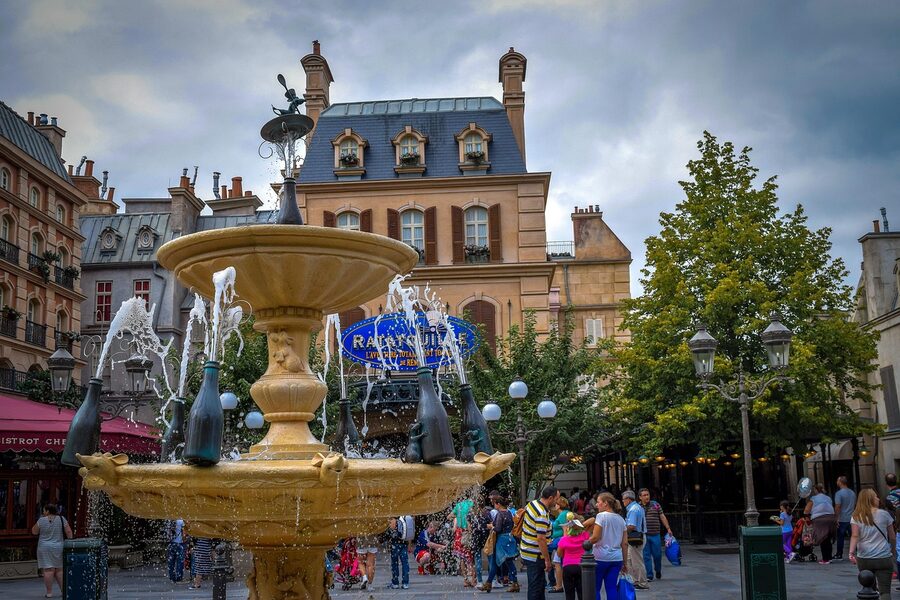
Bistrot Chez Rémy in Disney Adventure World, in the Ratatouille area, is the underrated mid-tier pick. The whole restaurant is themed as a giant kitchen with rat-sized furniture, you sit on Camembert wedge stools at a table made from a dinner plate, and the menu is short, classic French (boeuf bourguignon, ratatouille of course, crème brûlée). Around €45 per person. Worth booking ahead. We’ve eaten here three times.
Walt’s: an American Restaurant on Main Street is the splurge sit-down spot. American comfort food (steak, burgers, ribs) inside a recreation of Walt Disney’s apartment, themed by land. Around €60 per person. Slightly old-fashioned but the rooms are beautiful and the queue management is the best in either park.
For quick service on the cheap, Casey’s Corner on Main Street does hot dogs and chips for around €13. The hot dog is unusual in that it’s actually pretty good. The fries (chips) are not. Toad Hall Restaurant in Fantasyland does fish and chips for around €15. The fish is fine. The mushy peas are skip-able.
The best months to go
Crowds are everything at Disneyland Paris. The same ride that takes 25 minutes on a Tuesday in February takes 90 minutes on a Saturday in mid-July. The cheapest ticket prices, the shortest queues, and the most pleasant park experience all line up in shoulder season.
Best months in order: mid-January through early March (cold but quietest), mid-September through end of October (warm enough, before half-term, before Halloween crowds), mid-November through mid-December (Christmas decorations are up, the parade is the best of the year, weekday crowds still moderate). The same shoulder months work well if you’re combining Disneyland Paris with a museum-heavy week in central Paris built around the Orsay and the Louvre, since the museums are also quietest in those windows.
Worst months in order: late March through April (Easter and French school holidays), mid-July through end of August (European school summer), Christmas week through New Year (most expensive tickets and longest queues all year), Halloween week (the Halloween parade is brilliant but the park hits capacity by 11am).
Day-of-week matters too. Sundays are calmer than Saturdays. Tuesdays and Wednesdays are the quietest weekdays. Avoid Mondays and Fridays during French school holidays because they’re the most popular long-weekend day-trip dates from Paris itself.
Tickets compared in detail
Three tickets cover 95% of trips. Here’s how I’d actually rank them and why.
1. Disneyland Paris 1-Day Ticket: $61
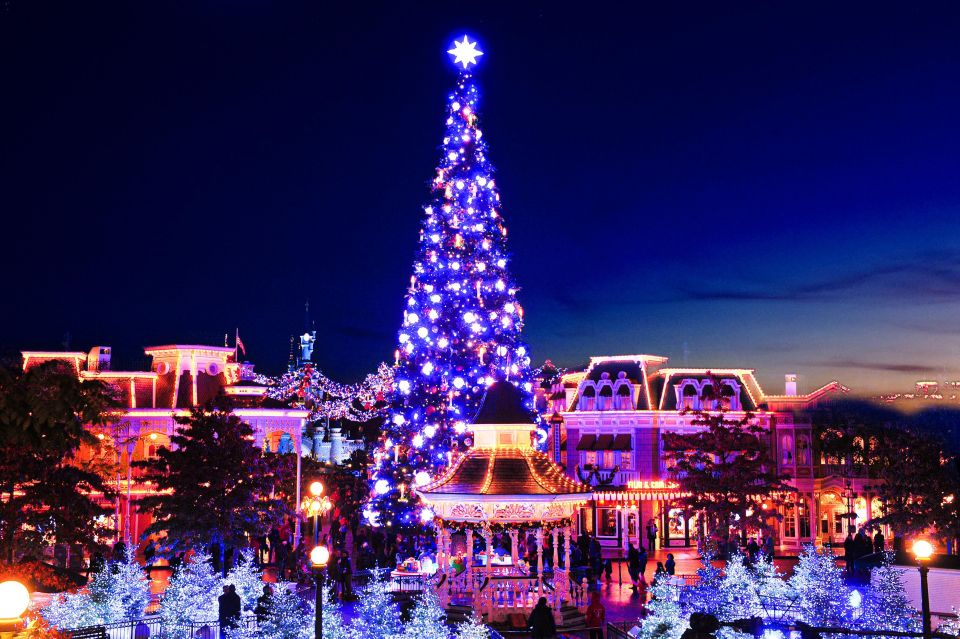
The right pick for the day-trip-from-Paris crowd. Pick which park you want, ride seven or eight headline attractions, eat at a Main Street restaurant, watch the evening fireworks, head back. Our full review of this 1-day ticket covers the dynamic-pricing dates and exactly which days run cheapest in the year.
2. Disneyland Paris 2/3/4-Day Ticket: $171

This is the right pick if your trip can stretch to a Disney overnight. The full 2-day version covers Disneyland Park properly on day one and Disney Adventure World plus repeats on day two. Our full review walks through how to split the days and which rides to do in which order.
3. Disneyland Paris 1-Day Flexible Date Ticket: $140
Buy this only if you genuinely don’t know which day you can go. Most travellers know within a week of booking flights, in which case the dated ticket at $61 is the better answer. Our flexible-date review covers when the price premium actually pays off (cruise passengers with shifting itineraries, Eurostar travellers booking late).
A one-day, two-park itinerary that actually works
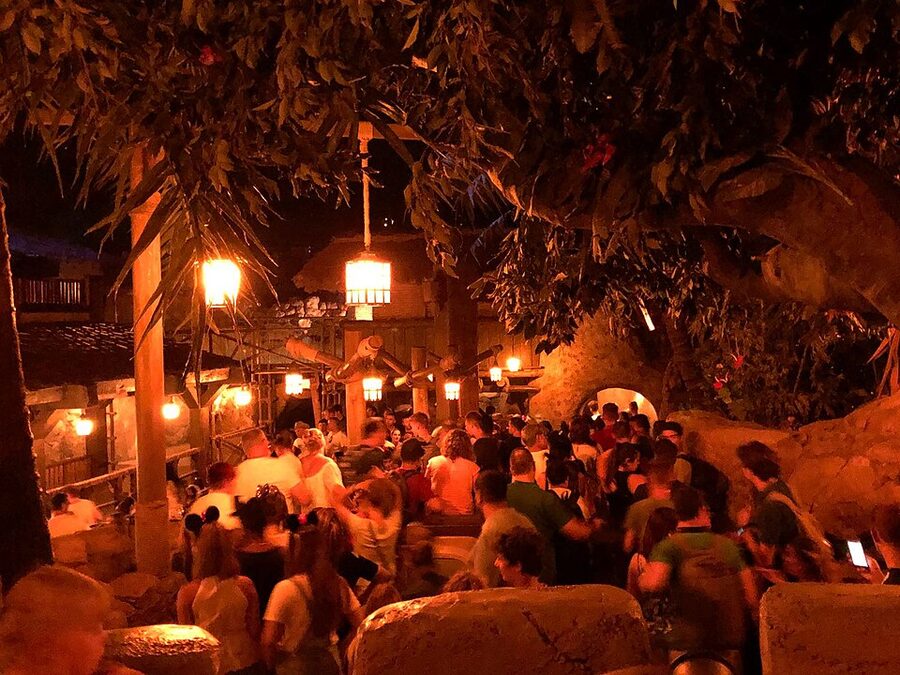
If you have one day and the multi-park ticket, here’s the order that actually works. We’ve tested versions of this on five different visits.
9:00am: arrive at the gates 30 minutes before the 9:30 opening. Have your QR code ready on your phone. The turnstile beep is loud, you’ll know when it scanned.
9:30 to 11:00am: head straight to Disney Adventure World. This is the counter-intuitive move. Most first-timers go to Disneyland Park first because the castle is there. Adventure World is smaller and its queues build slower, so you can knock out Crush’s Coaster, Avengers Assemble, Tower of Terror and the new Frozen Ever After in your first 90 minutes if you sprint. If Frozen has Premier Access available, buy it for an early-afternoon slot and ride Crush first.
11:00am: walk back across the plaza to Disneyland Park. Hit Big Thunder Mountain, Pirates of the Caribbean, Phantom Manor in Frontierland and Adventureland. These are clustered close together.
1:00pm: lunch. Bistrot Chez Rémy if you booked it (in Adventure World), Walt’s or a Main Street quick-service if not. Avoid eating between 12:30 and 1:30 if possible: the kids’ lunch crowd hits then.
2:30pm: Discoveryland for Hyperspace Mountain and Buzz Lightyear, then Fantasyland for the underrated Storybook Land canal boats. The afternoon parade goes through Main Street around 3 or 5pm depending on the season; check the day’s schedule on the Disney app when you arrive.
5:00pm: walk back to Adventure World for Frozen Ever After if you have a Premier slot, or anything you missed. Adventure World quietens significantly in the late afternoon.
7:00pm: dinner. Casey’s Corner on Main Street if you want quick. Sit-down restaurants need a reservation made earlier in the day on the Disney app.
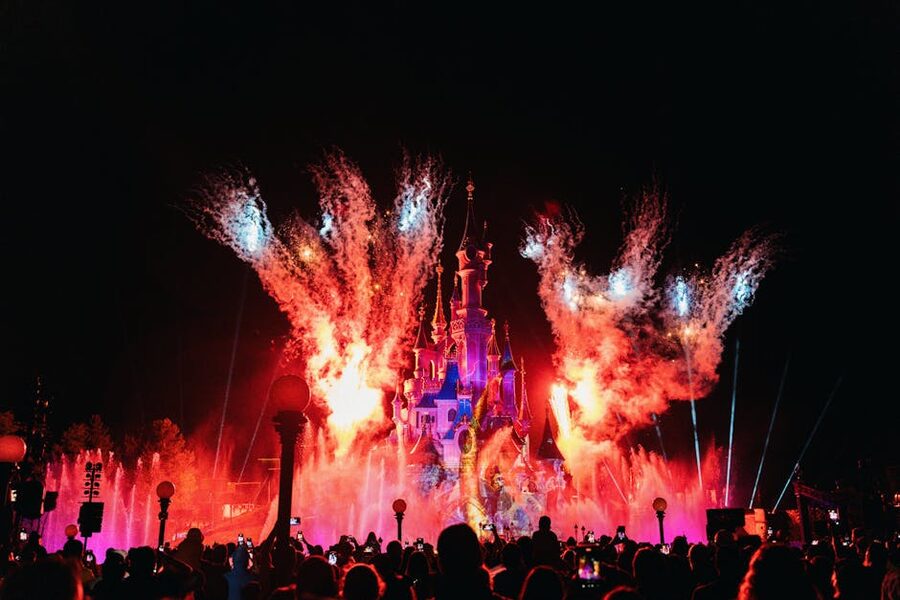
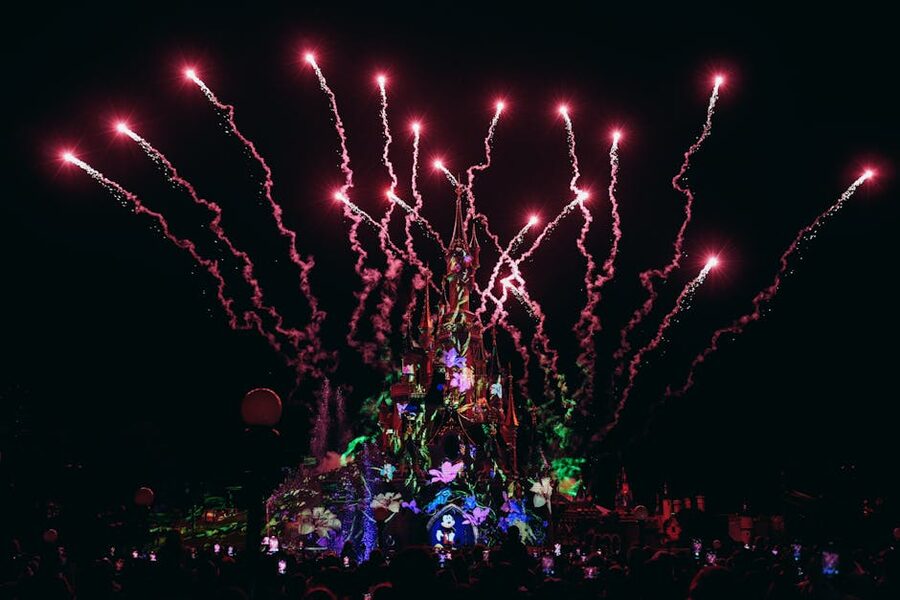
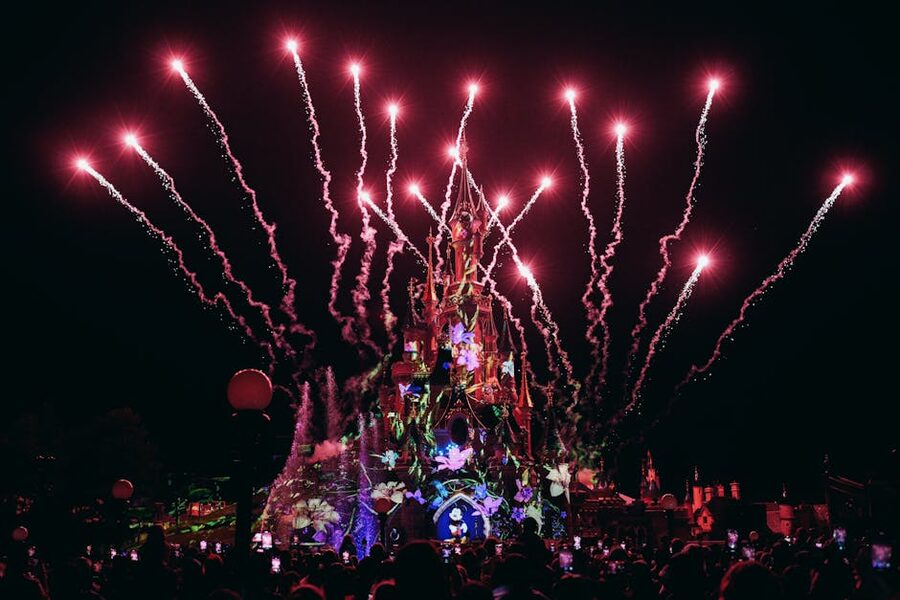
9:00pm: position yourself in front of the castle for the evening Disney Dreams! show. Get there at least 30 minutes early to claim a spot. The show runs about 25 minutes. Disney has a second evening show at the lake in Adventure World, but you can only see one because they run simultaneously. The castle one is the better spectacle for first-timers.
10:00pm: walk out, ride RER back to Paris. Last train runs around midnight on most nights, just past midnight on Friday-Saturday.
How Disneyland Paris compares to a regular Paris day
A normal day in central Paris hits maybe two attractions: the Louvre in the morning, the Eiffel Tower in the afternoon, dinner somewhere in between. You’re walking maybe 15,000 steps. You’re spending around €60 on tickets and €80 on food. The day ends around 10pm.
A day at Disneyland Paris is different in scale. The ticket alone is €61-95. Food adds another €40-80. You walk 25,000-35,000 steps. The experience is intense for 12 hours straight rather than the gentle pace of museum-then-monument-then-dinner. We rate the value as roughly equivalent on a per-day basis (€100-150 per person either way), but the energy demand is completely different.
If you’re choosing between Disneyland Paris and one of the central Paris attractions you haven’t done yet, our take: do the central Paris attractions first. Orsay for the Impressionists, a Seine cruise for the river views, the Arc de Triomphe rooftop for the city panorama. Disneyland Paris is the right add-on once you’ve covered the headline city sights. It’s also the right answer if you have kids who’ll mutiny if dragged through one more museum, in which case you cut the museum day and substitute Disney.
For travellers planning multiple ticketed Paris attractions, the Paris Museum Pass covers most of the central museums but not Disneyland Paris. The two are completely separate purchases.
Where Disneyland Paris fits among European theme parks
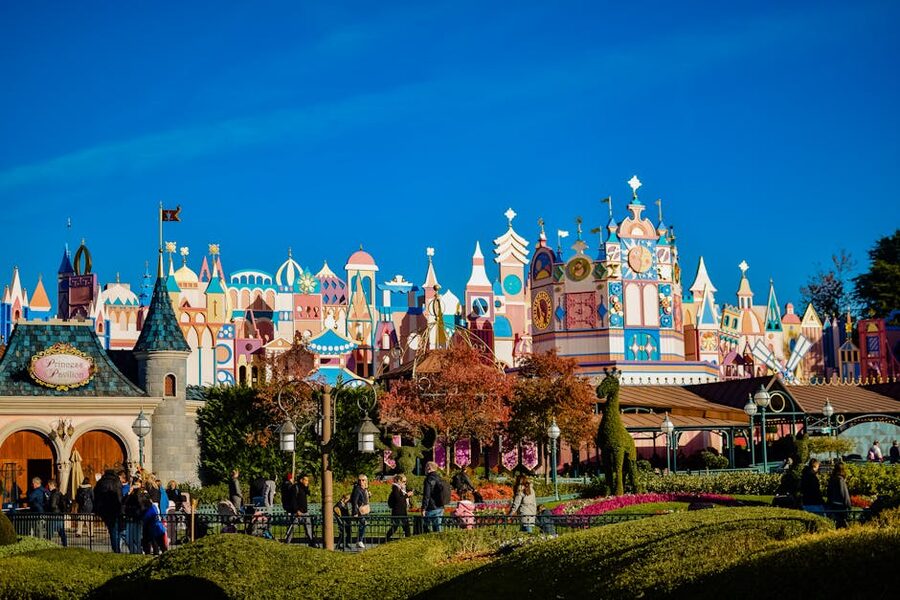
Disneyland Paris is Europe’s most-visited theme park, by a long way. It pulls around 16 million visitors a year combined across the two parks. The next-biggest European theme parks are Europa-Park in Germany (around 6 million visitors) and Tivoli Gardens in Copenhagen (around 4 million). It’s not even close.
For comparison points within our own coverage, the closest equivalents on different rules:
If you want a more thrill-rides-focused theme park in Europe with shorter queues and a fraction of the price, the Spanish Canary Islands have Siam Park in Tenerife (the world’s top-rated water park, €40 a day) and Loro Parque (animal-led rather than rides-led). They’re not Disney, but they’re cheaper and they hit a different button.
If you want a single-attraction family day-out in Italy, the Genoa Aquarium is Europe’s biggest at 27 million litres of water, with sharks, dolphins and an Antarctic penguin pen, costing around €25. It’s a four-hour visit rather than a 12-hour one. Different scale, same family-day-out logic. The Amsterdam equivalents are NEMO Science Museum (a hands-on five-storey Renzo Piano building where kids can run experiments for €19) and the Upside Down Museum for the photo-attraction logic at a single-room scale.
If you want a transit-mountain experience that delivers a kid-friendly thrill day in central Barcelona, the Montjuïc cable car runs up to the castle for €17 and gives you the harbour view. It’s not a theme park but it’s the kind of compact, high-impact European day-out that Disney equivalents can’t quite replicate. Madame Tussauds Amsterdam is the indoor city-centre cousin: a wax-figure walkthrough that hits the same characters-and-photo-ops button at a fraction of the time and money commitment.
Common mistakes
The five mistakes we see first-timers make, in rough order of how much time they cost.
Buying the one-park ticket and regretting it. By far the most common. People save €30 on the ticket and spend half their day looking at the second park’s gates. If you can stretch to the multi-day, do.
Arriving at official park-open time, not 30 minutes earlier. The first 60 minutes is when you can ride three or four headline attractions in the time it’ll take you to ride one at 11am.
Paying for Premier Access on rides that don’t need it. Big Thunder Mountain, Pirates, Phantom Manor, Buzz Lightyear, the Storybook Land canal boats: these have standby queues of 20-40 minutes most days. Paying €10 to skip a 25-minute queue is bad value when you’ve already paid €61 to enter. Save Premier for Crush’s Coaster and Frozen Ever After.
Eating between 12:30 and 1:30pm. Disney lunch crowds are predictable. Eat at 11:30am or 2pm and skip the worst queues at the quick-service venues.
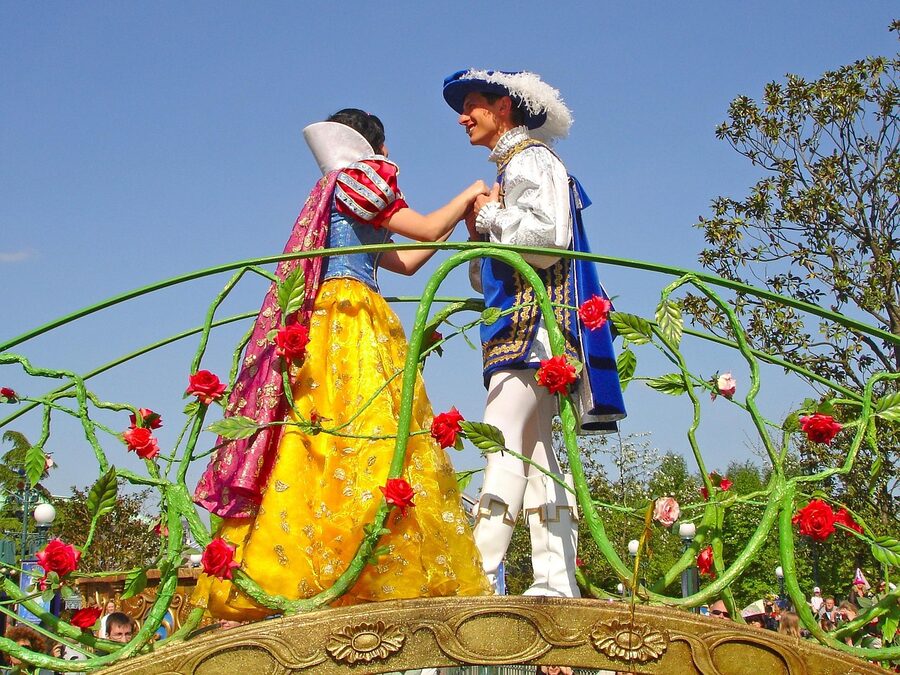
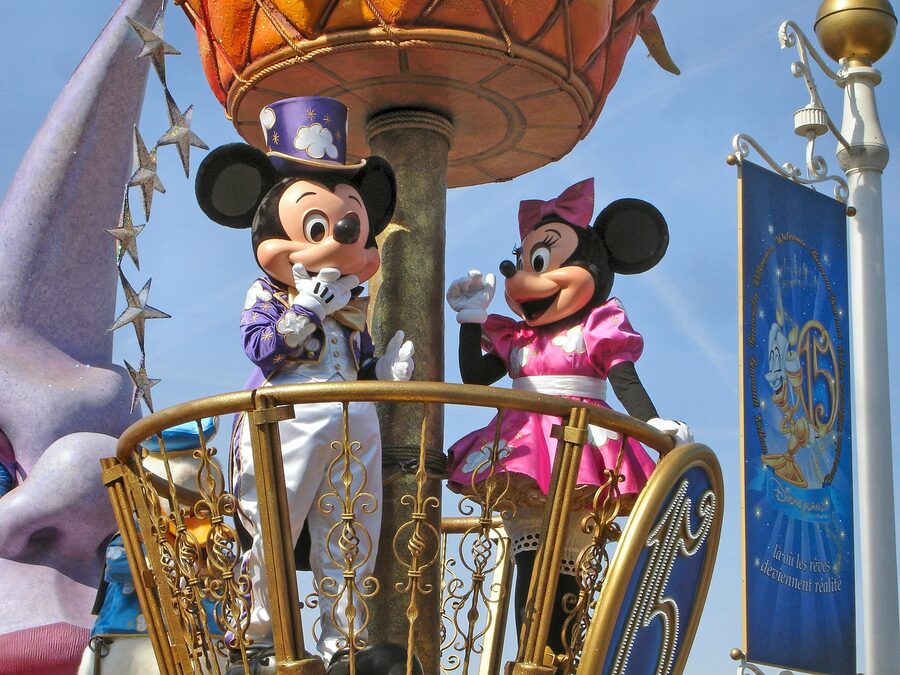
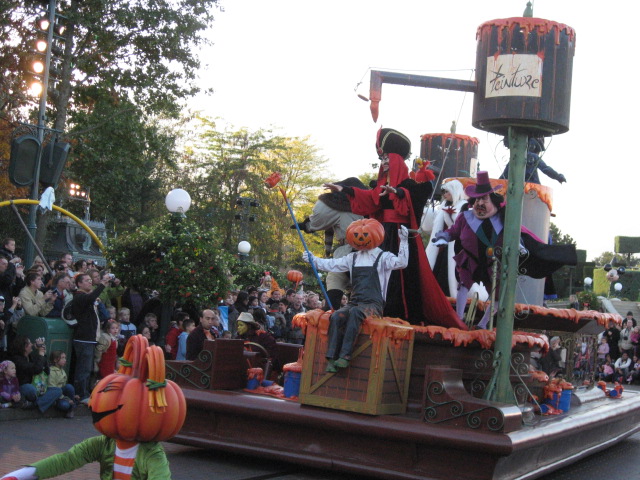
Skipping the daytime parade because of the evening fireworks. The two are different. The daytime parade has the headline characters on floats up close on Main Street; the fireworks are about projection mapping on the castle. See both. Position for the parade by 2:45pm if it’s the 3pm one.
Worth knowing about Disneyland Paris’s history
Disneyland Paris opened on 12 April 1992 under the name Euro Disney Resort. It was the most expensive theme park ever built at that point: $4.4 billion. It nearly killed the Disney company. The first three years were a financial catastrophe. Visitors came but didn’t spend. French politicians called it “a cultural Chernobyl.” Disney had assumed Europeans would behave like Americans inside the gates, eating four meals a day and buying merchandise. They didn’t. Disney had to restructure the resort’s finances twice in the first decade.
The rebrand to Disneyland Paris in 1995 helped. The Walt Disney Studios Park add-on in 2002 was a half-measure: it doubled capacity but the park itself was rushed and underwhelming for years. The 2014-2025 period was when Disneyland Paris finally hit its stride: the Ratatouille area in 2014, the Avengers Campus in 2022, the Tower of Terror upgrade, and the rebrand to Disney Adventure World plus World of Frozen in March 2026. Today it’s profitable, busy, and genuinely good. The history is a useful corrective if anyone tells you American Disney parks are categorically better. Paris has had three decades to fix its problems and has fixed most of them.
One detail visitors often miss: the Sleeping Beauty Castle has a dragon in the basement. Le Repaire du Dragon (the Dragon’s Lair) is a small walkthrough underneath the castle where a 27-metre animatronic dragon sleeps in a cave, occasionally waking up to roar at visitors. It’s free, it’s open most of the day, and most adults walk past it because there’s no signage at park entrance level. Step through the small door at the base of the castle stairs. Worth two minutes.
Other Paris attractions worth pairing
Most travellers visit Disneyland Paris as one slot in a longer Paris stay. The pairings that work and the ones that don’t.
Combining Disneyland Paris with the Versailles day trip on consecutive days is the most punishing combo. Both are 12-hour days, both are RER rides out from central Paris, both involve serious walking. We’ve done it. We don’t recommend it. Space them with a rest day in between.
Disneyland Paris the day before or after a long-haul flight is the other classic mistake. Jet lag plus 30,000 steps plus park crowds is brutal. Build in a recovery day.
Better pairings: Disneyland Paris on day three or four of a Paris trip, after you’ve done the Louvre, the Eiffel Tower, and a Seine cruise. By that point you’ve earned the indulgence and you’re in the rhythm of long days. Or Disneyland Paris as a full-rest day from monuments and museums, with the Orsay on the day before. Or as the last day of the trip, with the morning train back home from Marne-la-Vallée-Chessy on the TGV.
If you’re a transit-card optimiser, the Paris hop-on hop-off bus won’t help you on the Disney day (the buses don’t run east of central Paris). The Paris Visite zone 5 daypass technically covers the Disney run on the RER, but only saves you a euro or two compared to the standard return ticket. Skip it.
The recap
Disneyland Paris is smaller than the American parks and that’s a feature, not a bug. The ride density makes a one-day, two-park visit genuinely possible in a way it isn’t in Florida. The food is better. The architecture is more European. The crowds are bigger than you expect, especially in school holidays. The cheapest one-day, one-park ticket is good value at $61 but most first-timers regret not buying the multi-day. The Premier Access system is mostly a tax on bad planning. Get to the gates 30 minutes early, ride Crush’s Coaster first thing in Adventure World, walk to Disneyland Park by 11am, and you’ll see almost everything that matters in one long day.
If you’ve only got time for one park, our pick is Disneyland Park rather than Disney Adventure World. The castle, Phantom Manor, Pirates and Big Thunder are the experiences that have aged best. Adventure World is the better park for thrill-seekers and Frozen-mad kids, but Disneyland Park is the more complete day out for everyone else.