
Paris is one of the few cities in the world where the hop-on hop-off bus has to do a real job to justify its existence. The metro here is the third-best on the planet (after Tokyo and Seoul), most of the headline sights cluster within a 4 km diameter, and a single-day metro pass costs about a third of what the Big Bus charges. So when someone asks me whether the Paris HOHO is worth it, my answer is: usually no, sometimes a hard yes. The trick is knowing which “sometimes” you’re in.
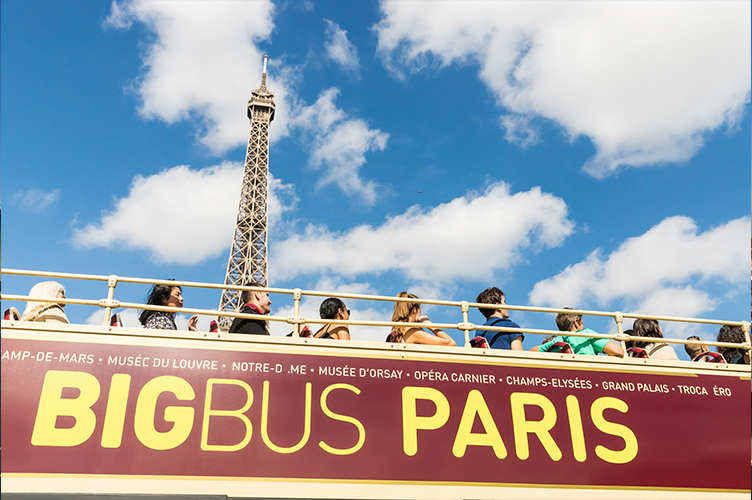
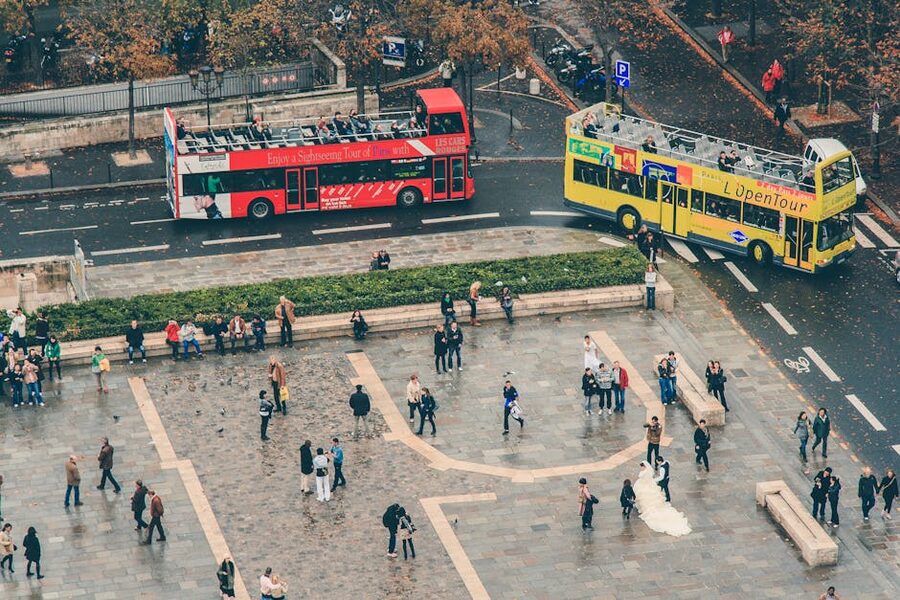
There are three operators competing for your fare. Big Bus (red, double-decker, the brand most travellers picture) runs a tight 10-stop loop in about two hours and fifteen minutes. Tootbus (yellow, formerly Open Tour) runs a slightly longer 12-stop loop. And the Seine HOHO Cruise Pass isn’t a bus at all; it’s a hop-on hop-off boat with nine river stops. The decision between them matters less than the decision about whether to buy any of them in the first place.
If You’re In a Hurry
- Big Bus 24-hour pass ($43): The market-leader. Big Bus Hop-On Hop-Off With Optional Cruise
- Tootbus 24-hour pass ($49): More stops, slightly slower headways. Tootbus Hop-On Hop-Off With Optional River Cruise
- Big Bus Night Tour ($35): The actual editorial pick. Big Bus Panoramic Night Tour by Open-Top Bus
The Verdict, Up Front
I’ll skip the long preamble. Here’s the structure of the answer.
Buy the daytime HOHO if: you have a single day in Paris and zero orientation, you’re travelling with elderly parents or small kids who can’t manage metro stairs, or you genuinely cannot read a map under any circumstances. That’s it. Those are the three scenarios.
Buy the night tour if: you’re in town any number of days and you want to see Paris lit up from an open roof, including the Eiffel Tower’s hourly sparkle from a moving vehicle on the road below. The night tour is a different product. It’s not hop-on hop-off; it’s a fixed two-hour loop. It’s the one I actually recommend.
Skip both and walk + metro if: you’ve got two days or more, you’re physically able, and you’d rather see the city at street level. Paris at walking pace is a better Paris than Paris from a moving bus stuck in Champs-Élysées traffic. The Paris Museum Pass for €70 over four days will save you more time and money than any HOHO ticket.
That’s the whole article in three paragraphs. The rest is the reasoning, the route specifics, the comparison with Tootbus, the timing tricks for the night tour, and the alternative spending under each scenario.
Why the Paris HOHO Has to Justify Itself Harder Than Most
In most cities the HOHO bus has at least one easy argument: the metro is bad, or the sights are spread out, or there’s a single famous loop the bus does brilliantly (Rome’s three hills, Florence’s Piazzale Michelangelo, Naples’s coastal Posillipo run). Paris doesn’t really have those. The metro is fast, frequent, and covers the entire city in 16 lines plus the RER. The major sights are densely packed: the Louvre to the Arc de Triomphe is a 35-minute walk along the Champs and Tuileries. The Eiffel Tower to Trocadéro is six minutes on foot across the Pont d’Iéna.
So what does a Paris HOHO actually do for you? Three things, ranked by how much they matter:
- Open-top viewing. You see Paris from above the parked-car eye-line of street level. On a clear day the upper deck is genuinely better than the metro, especially along the river. This is the real product.
- Audio commentary. Multilingual recorded commentary tied to a GPS trigger so you hear about each landmark as the bus passes it. Quality varies; Big Bus’s is solid, Tootbus’s is shorter but more anecdotal.
- Orientation. If you’ve never been to Paris, doing the full loop without getting off gives you a mental map you’ll use for the rest of the trip. This is where I think the HOHO genuinely earns its price for first-timers, and only first-timers.
What it doesn’t do: save you time. A 24-hour HOHO pass in Paris is slower than the metro in almost every scenario except the one where you would have walked 25 minutes between two stops on the loop. Bus traffic on Rue de Rivoli, the Champs-Élysées, and the riverside expressways at peak afternoon hours regularly grinds the loop to 25 km/h average. The metro between any two stops in central Paris is 8-12 minutes. The bus is 35-50 minutes for the same distance.
Big Bus Paris: 10 Stops, 2 Hours 15
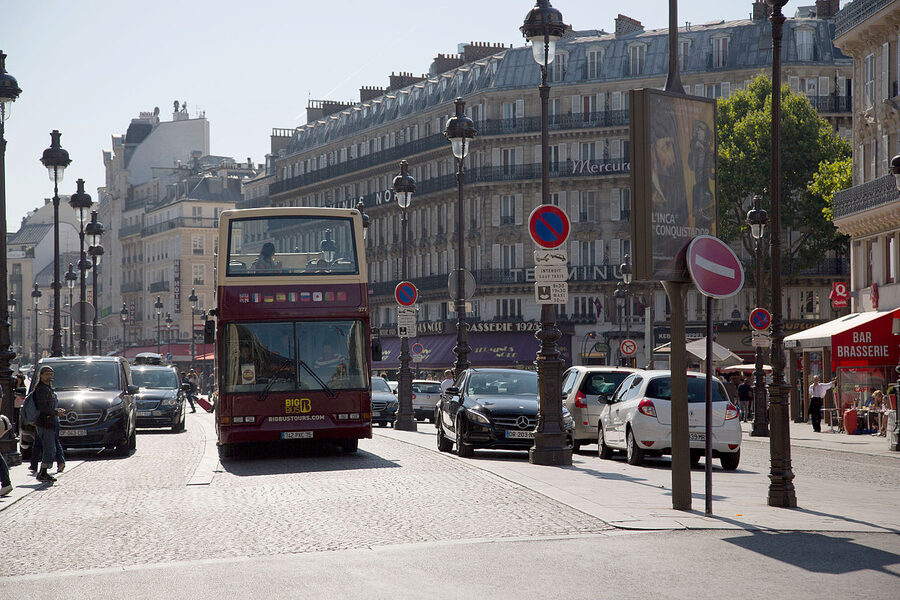
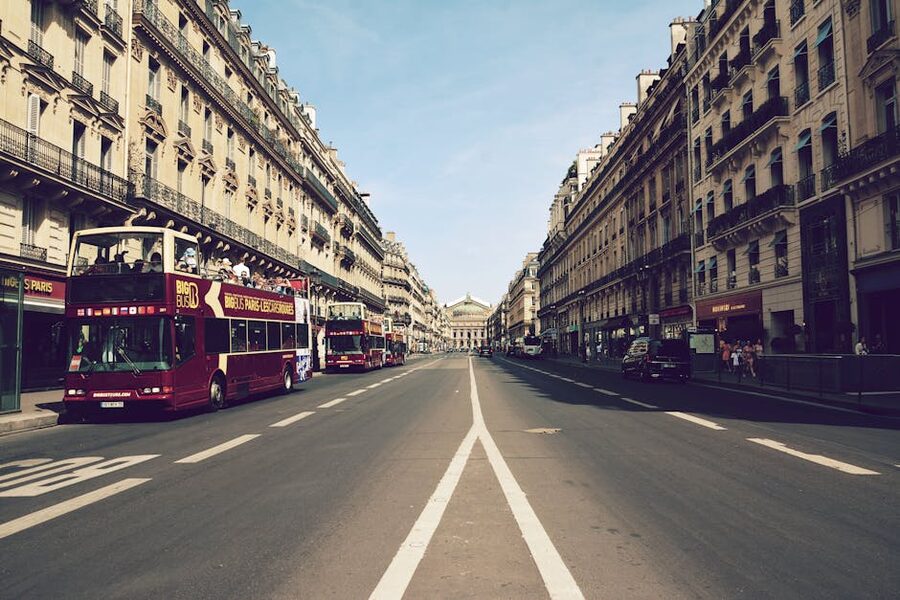
Big Bus is the larger and more polished of the two operators. They run the same loop you’ve seen in 30 other cities under the same brand: red double-decker, open top, 8-language audio guide on a wired headset. In Paris the loop is 10 stops, designed as a tight central tour that hits every landmark a first-timer needs to see at least once.
The stops, in order:
- Eiffel Tower, dropping you 2 minutes from Pont d’Iéna and the Trocadéro view (the Big Bus stop is closer to the Tower than most metro exits, one of the loop’s genuine wins)
- Champs de Mars, on the south side of the Tower if you want the lawn view
- Trocadéro, for the Palais de Chaillot and the postcard photo across the river to the Tower
- Champs-Élysées, on the upper portion near the Arc, with the most predictable traffic delays of the entire loop
- Opéra Garnier, the Boulevard Haussmann shopping district hop-off
- Louvre, dropping you a 90-second walk from the Pyramide entrance
- Notre-Dame / Île de la Cité, with Sainte-Chapelle and the Conciergerie a 4-minute walk away
- Musée d’Orsay, on the Left Bank river embankment
- Place de la Concorde, the Tuileries gateway
- Madeleine, the church-and-luxury-shopping stop most travellers skip
Headline numbers worth knowing before you buy:
- Loop time: about 2 hours 15 minutes without hopping off
- Headways: every 10-15 minutes peak, every 20-25 minutes off-peak
- First bus: roughly 09:30 daily
- Last bus: around 18:00 in winter, 19:30 in summer
The 2-hour-15 figure is the one that determines whether the 24-hour pass actually pays. If you’d hop off at four stops and spend an hour at each, you’ve used ten of your twenty-four hours and only ridden the bus for a fraction of that.
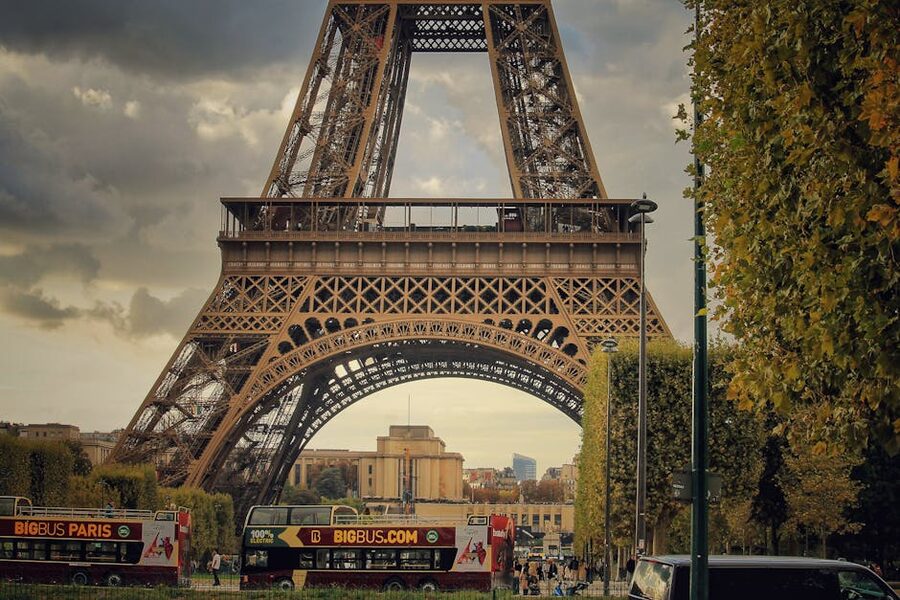
What Big Bus does well: the Eiffel Tower stop is genuinely closer than the metro, the Pont d’Iéna sweep gives you the textbook open-top approach to the Tower, and the recorded commentary on the Concorde-to-Louvre segment covers the obelisk, the Orangerie, and the Tuileries with enough context to make those landmarks click for you. Eiffel Tower tickets can be timed around when the bus drops you, which works if you’re booking the 11:00 or 14:00 entry slots.
What it does badly: the Champs-Élysées segment is unbearably slow at peak hours, the Madeleine stop is genuinely useless unless you specifically want the church (and walking-distance from Concorde anyway), and the audio quality on the older buses is muddy enough that you’ll catch maybe 60 percent of the commentary unless you’ve found a quiet upper-deck row.
Big Bus or Big Bus + Cruise: which combo?
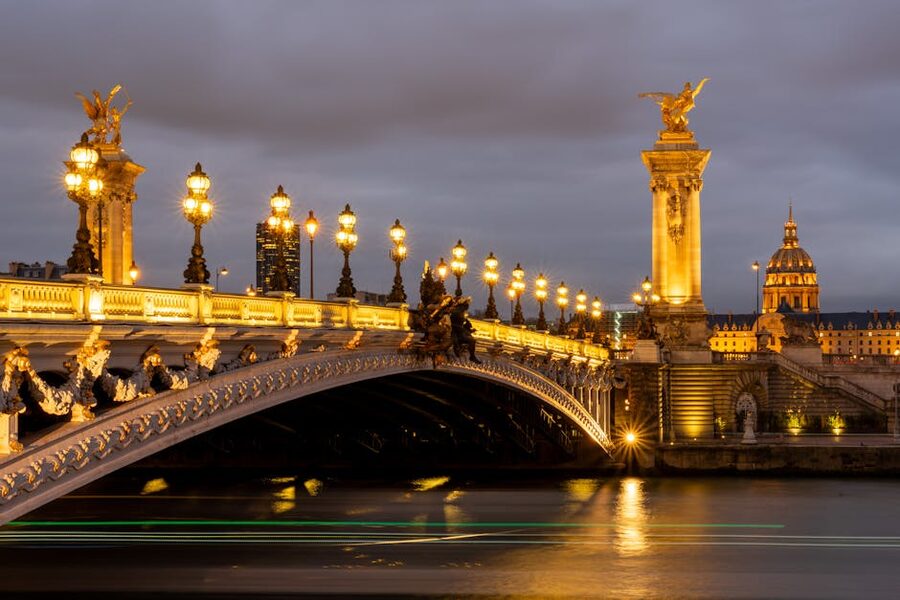
Big Bus’s flagship product bundles the bus pass with a Seine river cruise. The cruise add-on is roughly $7-12 more depending on the season, and uses the Bateaux Parisiens fleet that departs near the Eiffel Tower. If you weren’t already going to do a Seine river cruise separately, the combo makes sense. If you were, the combo is a slight saving but locks you into Bateaux Parisiens specifically.
My take: the bus + cruise is the package most first-time visitors should buy if they’re buying any HOHO at all. The two products complement each other (Tower and Louvre by bus, the bridges and Île by boat), and the cruise from the river is a better way to see Notre-Dame’s apse and the Pont Alexandre III than from the bus. The cruise alone, with no bus, costs about $20, so the bus part of the combo is effectively $23 if you were going to cruise anyway.
Tootbus Paris: 12 Stops, More Generous Loop
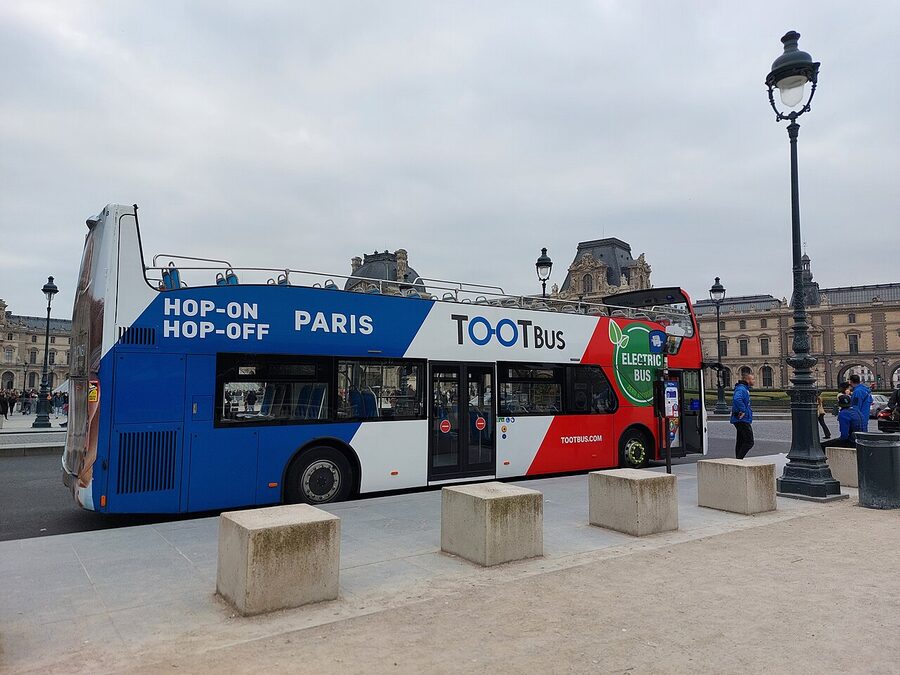
Tootbus is the rebranded successor to Open Tour, the yellow operator that ran the second Paris HOHO loop for years. RATP Dev (the same group that runs much of the Paris bus network) bought it and rebranded in 2020. The buses are newer, the audio is cleaner, and the route is two stops longer than Big Bus.
The Tootbus loop adds:
- Hôtel de Ville, the Paris town hall, between Notre-Dame and Saint-Paul
- Saint-Paul / Marais, the only HOHO stop that drops you near Le Marais (genuinely useful if you want to walk that neighbourhood)
The trade-off is that the longer loop runs slower headways. Tootbus buses come every 15-20 minutes off-peak, which means if you miss one in winter you can be standing on a wet Place de la Concorde for 18 minutes before the next yellow double-decker shows up. Big Bus’s tighter 10-stop schedule keeps headways at about 10-15 minutes most of the day.
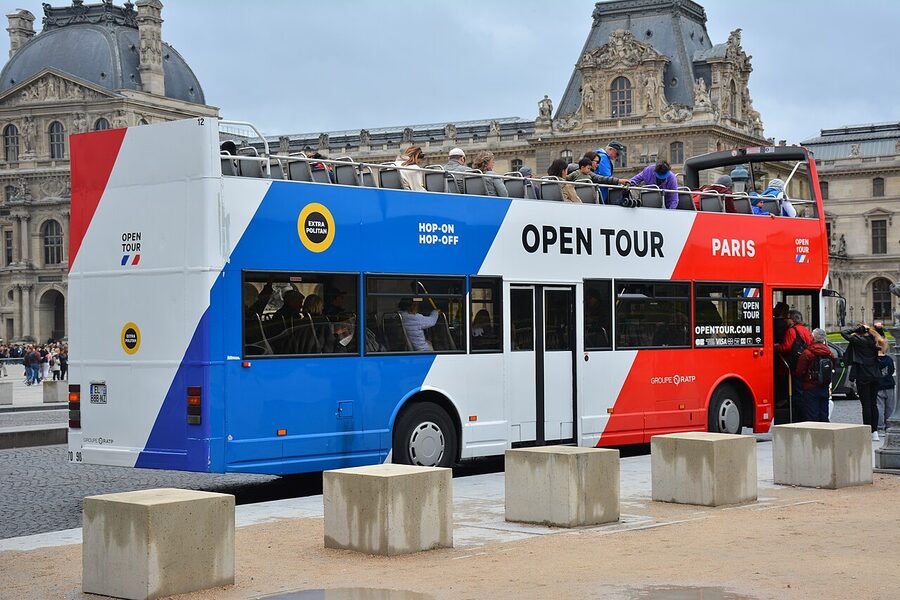
Big Bus vs Tootbus: which one?
The straight comparison:
- Pick Big Bus if you want the tighter loop, more frequent buses, the better Eiffel Tower stop, and the cleaner cruise combo. Their network is global, the buses are well-maintained, and the audio works on older smartphones too.
- Pick Tootbus if you specifically want the Marais stop, you’re staying near a Tootbus stop Big Bus doesn’t cover, or you prefer the newer fleet. Their app is also slightly better at showing live bus positions.
- Pick neither if you’ve got more than 36 hours in Paris, normal mobility, and any familiarity with maps. Walk + metro will outperform either bus on the same day for a third of the price.
The price difference (Big Bus $43, Tootbus $49) is small enough that it shouldn’t drive the decision on its own. Routes and frequency matter more than the $6.
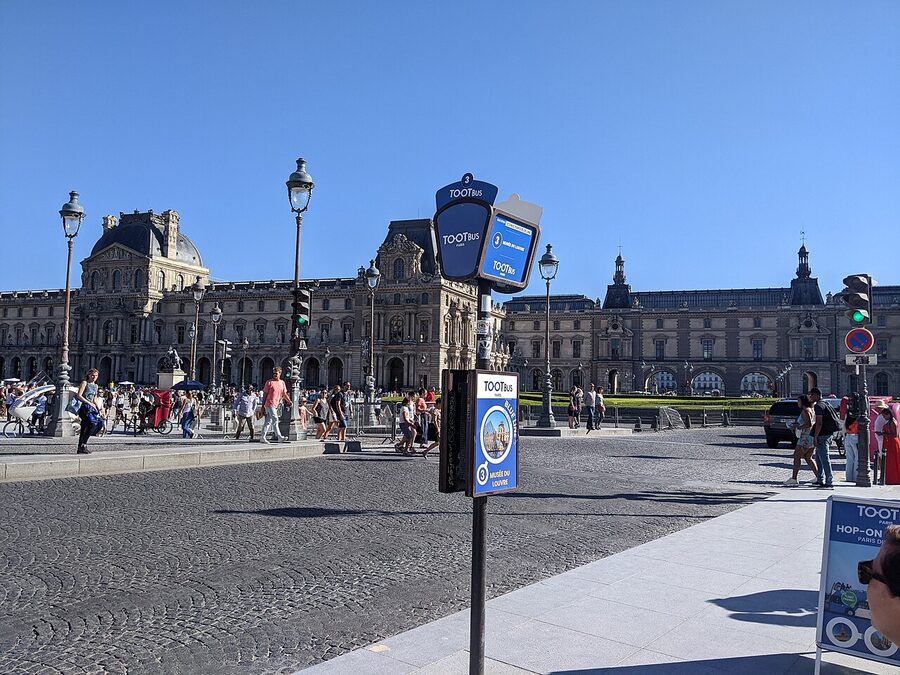
The Night Tour Is the Real Pick
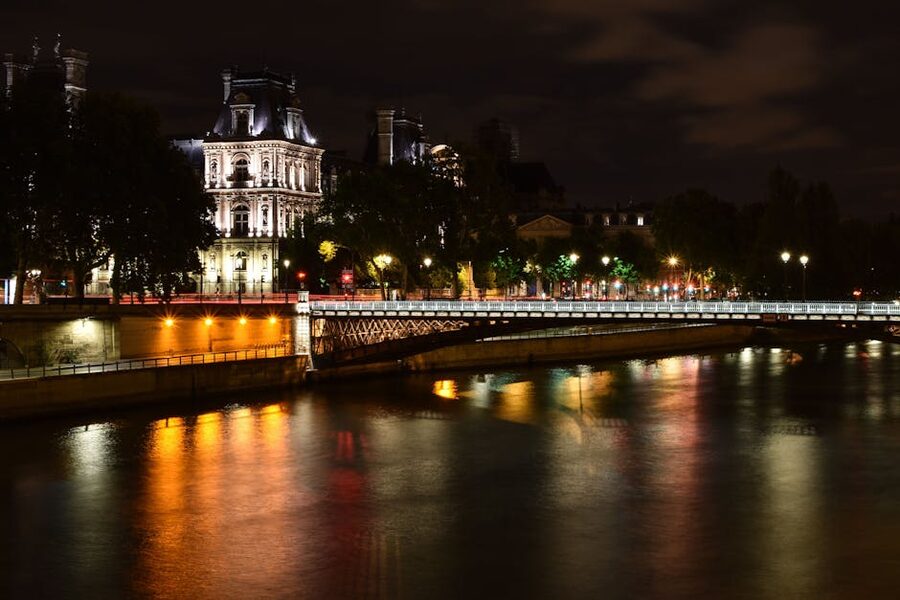
The Paris HOHO product I’d actually pay for myself is the Big Bus Panoramic Night Tour. Not the daytime hop-on hop-off. The night tour is a different product wearing the same brand: a fixed-route open-top loop, no hop-off, runs once or twice a night between roughly 19:30 and 22:00, costs about $35.
Here’s why it works in a way the day tour doesn’t.
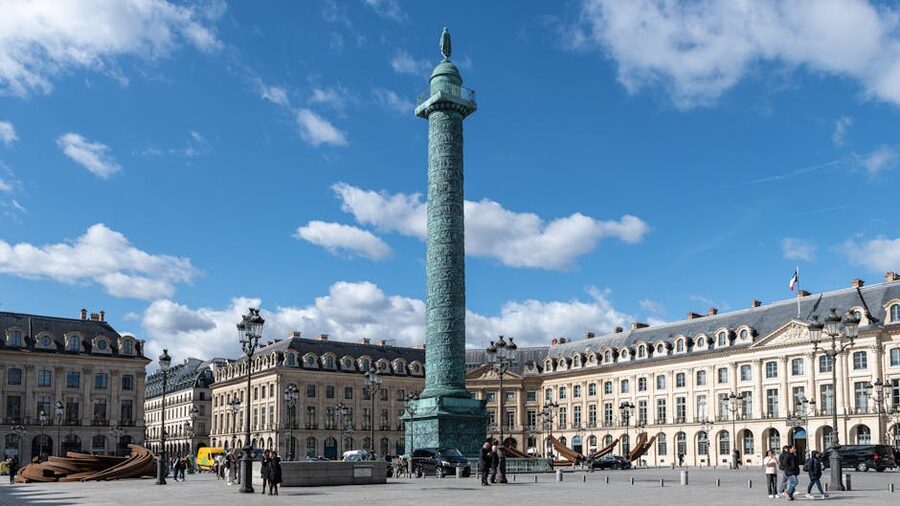
Paris is genuinely better at night. The riverside floodlighting on Notre-Dame, the gold leaf at Pont Alexandre III, the Place Vendôme column, the Madeleine columns: all of these were built to be seen lit. The metro can’t show you them in motion. The day bus sees them at full daylight, which is the least flattering view.
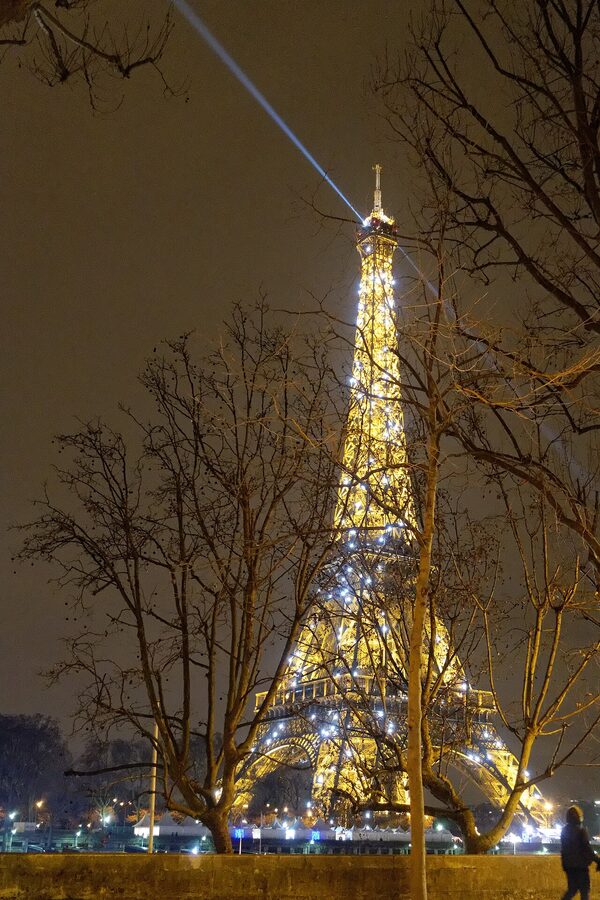
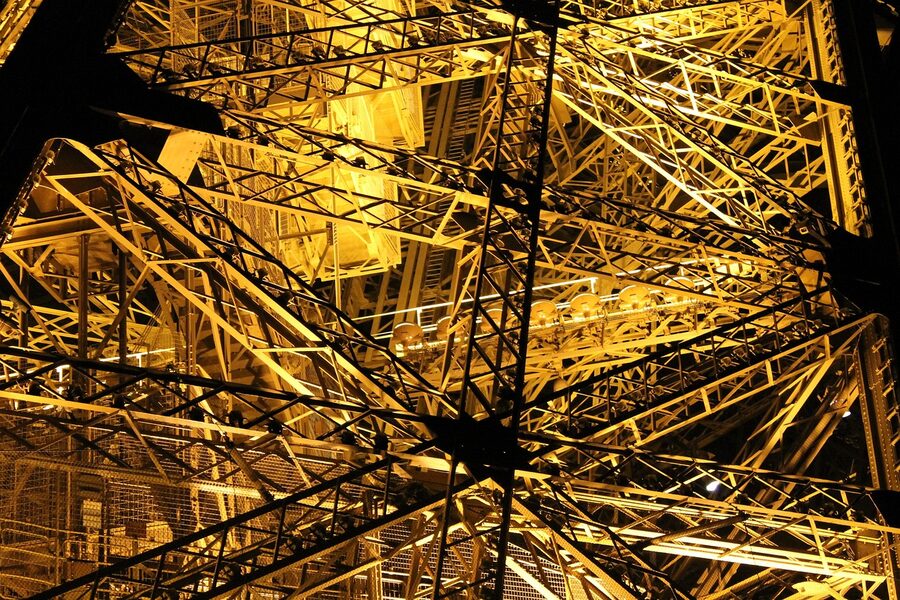
And the night tour times its loop specifically for the Eiffel sparkle. Every hour on the hour, from sunset until 1AM, the Tower’s 20,000 lights strobe for five minutes. The bus pulls onto the Pont d’Iéna and sits there for the duration of the sparkle. From the open roof, with the Tower filling your peripheral vision and the sparkle reflecting off the Seine, it’s the closest thing Paris has to a single-shot tourist moment that genuinely justifies the price tag of the experience that delivers it.
The route covers the same headline stops the daytime loop does (Eiffel, Trocadéro, Arc de Triomphe and the Champs-Élysées, Place de la Concorde, Louvre, Place Vendôme, Madeleine) but at night, with the floodlighting on, with no hop-off, with no traffic congestion (post-rush-hour Paris drives at 30-40 km/h on the loop), in two hours flat. The audio commentary is shorter and tighter, geared to the visual rather than the historical.
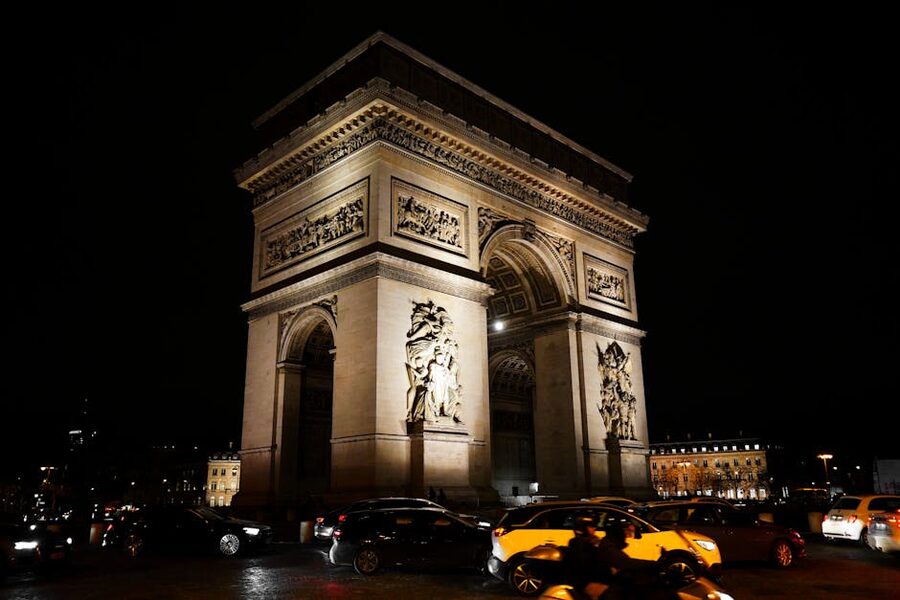
How to time it for the sparkle
The night tour’s first departure is usually 19:30 in summer, 19:00 in winter. The departure that catches the Eiffel sparkle on Pont d’Iéna depends on what hour the loop times its Tower pass for. Big Bus normally schedules the loop to hit the Tower right on the hour, at one of three slots, for exactly this reason. Check the booking confirmation for your specific date; the timing is published per slot.
Pick by season:
- Spring through autumn: the 21:00 departure is the editorial pick. You’ve eaten dinner, the Tower sparkles mid-loop, you’re back in your hotel before midnight.
- Winter: the 19:00 departure makes more sense. Sunset is early in December, full dark by 18:00, and the Tower starts sparkling on the hour right as your bus arrives.
Bring a layer
The “open-top” part is real. The night tour roof is permanently open in dry weather and only partially covered in rain. Paris in October-March on the upper deck is genuinely cold, and the wind chill from a moving bus on the Champs takes another 5°C off whatever you read on the forecast. The bus crews hand out plastic ponchos in rain but not blankets. Bring a fleece or a real coat. Twice now I’ve sat next to people in light cardigans who got off at the Trocadéro stop because they couldn’t take another hour of the wind.
The Tour Cards
1. Big Bus Hop-On Hop-Off With Optional Cruise: $43

This is the right pick if you have one day in Paris and zero familiarity with the layout. The optional cruise add-on is $7-12 extra and pairs with Bateaux Parisiens at the Eiffel pier. Skip it if you’ve got two days or more, normal mobility, and a metro app.
2. Tootbus Hop-On Hop-Off With Optional River Cruise: $49

Pick Tootbus if you specifically want the Hôtel de Ville or Marais stops, or your hotel is closer to a yellow-line stop than a red-line one. The bus quality is on par with Big Bus; the longer loop means slightly slower headways, which matters in winter.
3. Big Bus Panoramic Night Tour by Open-Top Bus: $35

This is the HOHO product I’d pay for. Two hours, fixed loop, no hop-off, scheduled to put you on the Pont d’Iéna for the Eiffel’s hourly sparkle. Bring a real coat; the open roof is genuinely cold from October to April.
What the HOHO Actually Shows You: Stop by Stop
Eiffel Tower / Pont d’Iéna
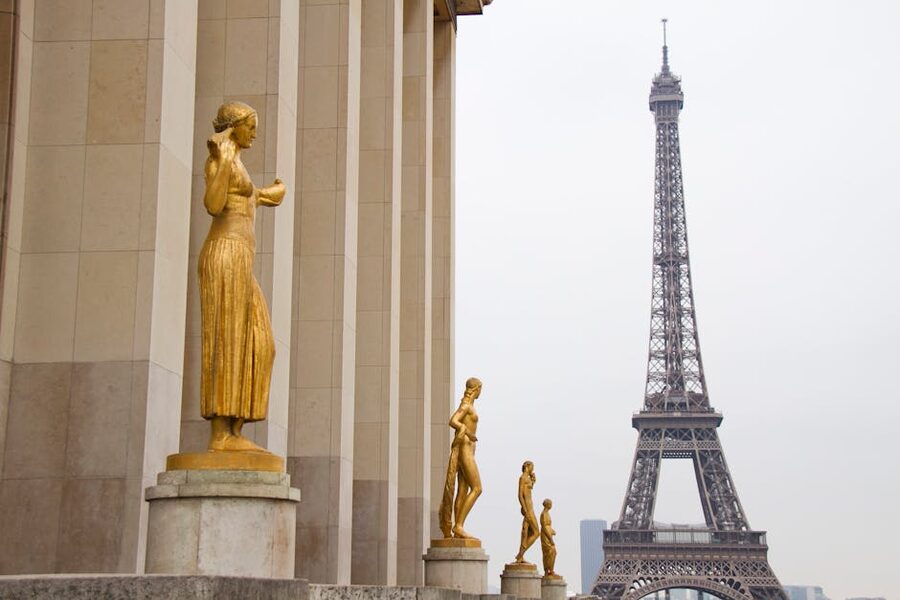
The single best HOHO stop in Paris. Big Bus drops you on the Quai Branly side, a 90-second walk from the Tower’s south pillar entry queue. Tootbus drops you slightly further at the Champs de Mars side. Both are closer than the Bir-Hakeim metro exit and noticeably closer than Trocadéro metro on the other riverbank. If you’ve timed your Eiffel Tower entry slot for the hour after the bus drops you, this is where the HOHO actually saves you 12 minutes.
Trocadéro
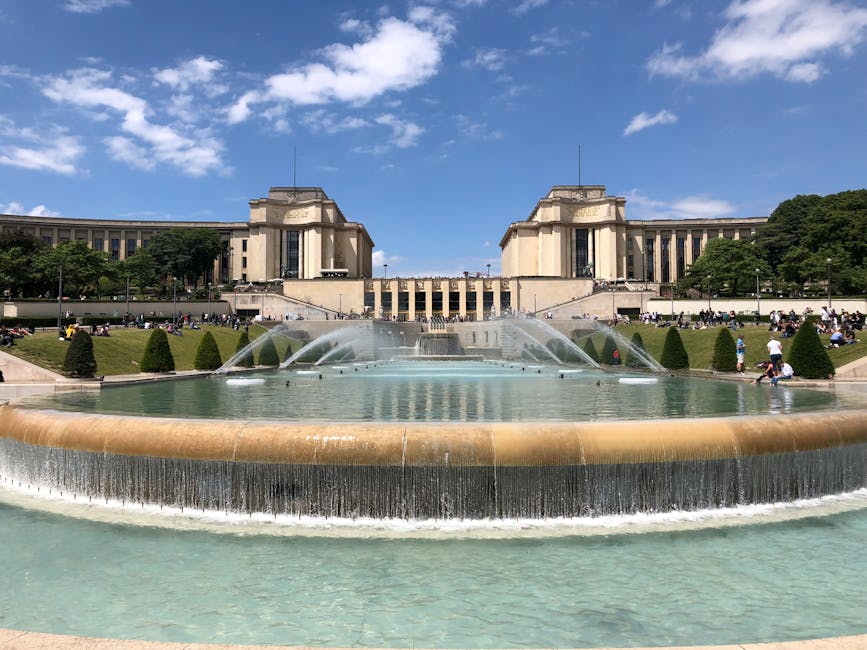
Across the river from the Tower, on the Right Bank. The Palais de Chaillot’s twin curving wings frame the postcard Eiffel shot, which is why every wedding photographer in Paris is up here at sunrise. The HOHO drops you on the upper terrace; the descent through the gardens to the river is fifteen minutes if you take it slowly. Worth doing if you skipped the Tower stop.
Arc de Triomphe / Champs-Élysées
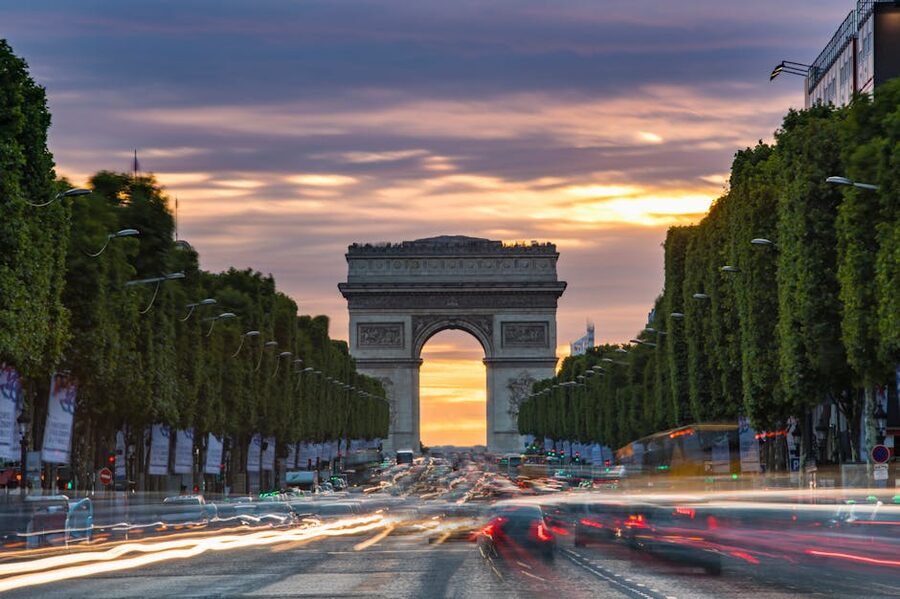
The Arc itself is a major HOHO stop, and the bus route runs the length of the Champs-Élysées (the exact route Napoleon planned as the city’s ceremonial axis, the Voie Triomphale). The road to the Arc is where the bus is most likely to be sitting in traffic; the road from the Arc back down toward Concorde is faster. Climbing the Arc rooftop from this stop adds 45 minutes if you’ve got Arc tickets pre-booked, and the rooftop view is the best central-Paris panorama you’ll get for €13.
Opéra Garnier
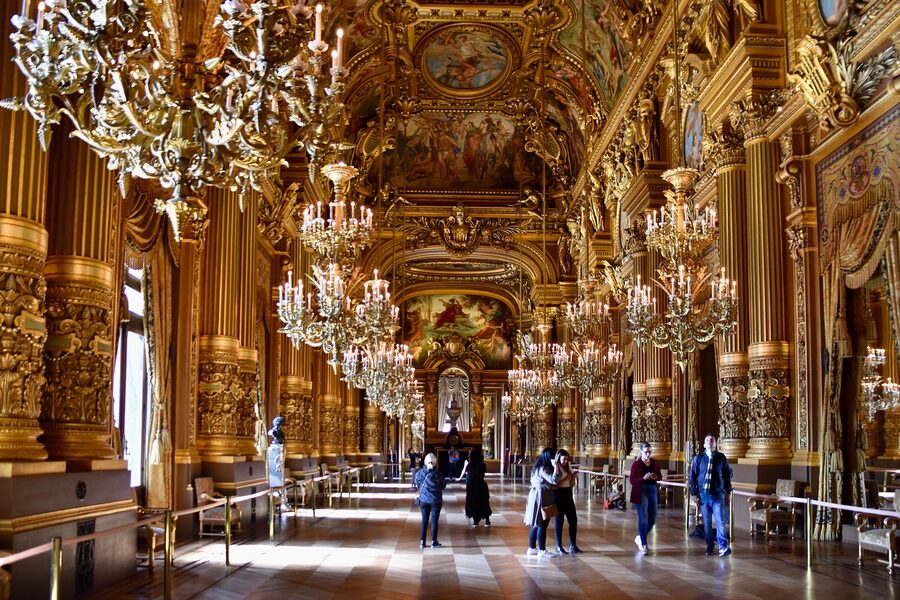
The Opéra Garnier stop drops you on the Galeries Lafayette / Printemps shopping side, a two-minute walk from the opera house facade. If you’re not shopping, this stop is mainly useful as a transfer to the metro at Opéra (lines 3, 7, 8, the most-connected metro station on the loop). I tend to get off here, walk the front of the Garnier, then jump on the metro instead of waiting for the next bus.
Louvre
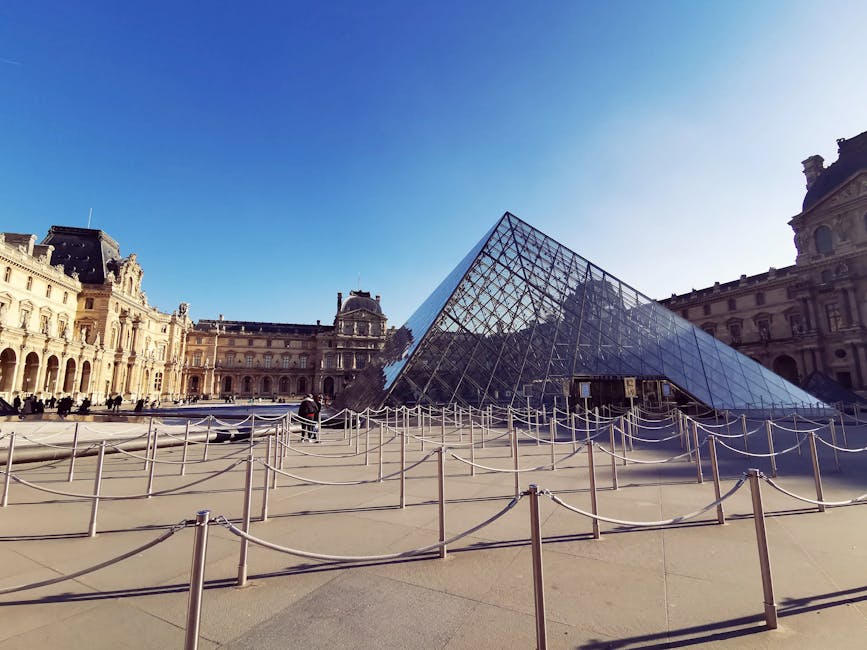
The Louvre stop is the second-most-useful on the loop (after Eiffel). The bus drops you essentially at the Pyramide, which is the Louvre’s main entrance. If you’ve pre-booked timed Louvre tickets, getting off here saves you the 6-minute walk from Palais Royal–Musée du Louvre metro and lets you join the security line immediately. This is where the HOHO actually replaces a metro trip cleanly.
Notre-Dame and Île de la Cité
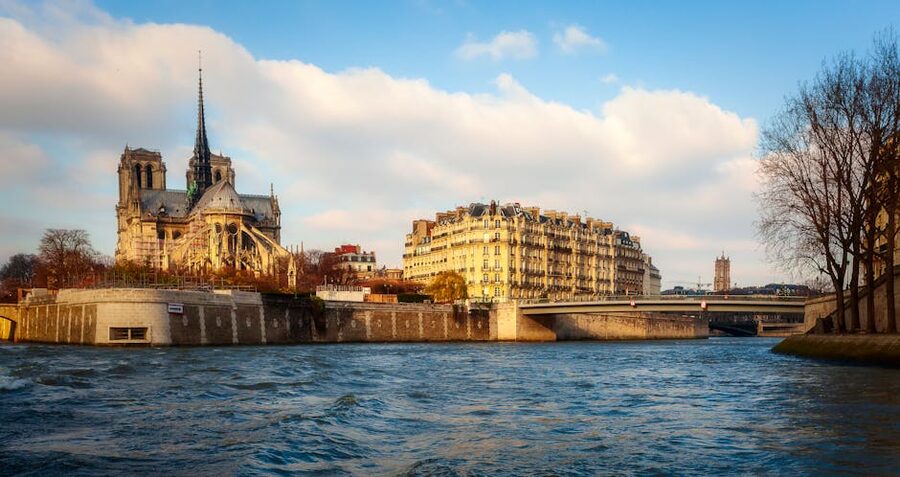
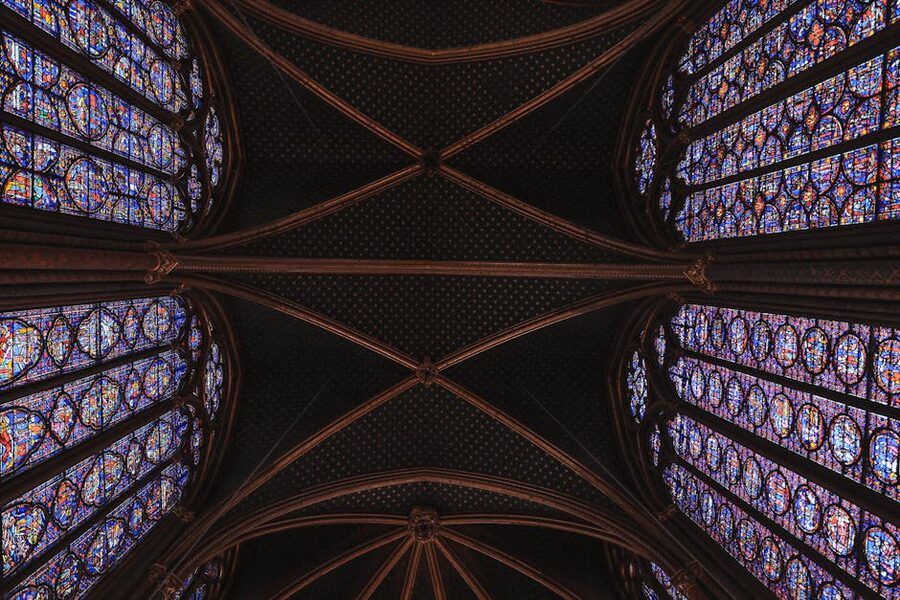
The Île de la Cité stop puts you within a 4-minute walk of three major attractions: Notre-Dame (now reopened post-restoration), the Sainte-Chapelle, and the Conciergerie. If you only have time for one, Sainte-Chapelle’s stained glass is the one most travellers underrate. The interior is genuinely one of the most beautiful spaces in Paris and the queue moves faster than Notre-Dame’s. Big Bus drops you on the bridge; Tootbus stops slightly closer to Hôtel de Ville on the Right Bank.
Musée d’Orsay
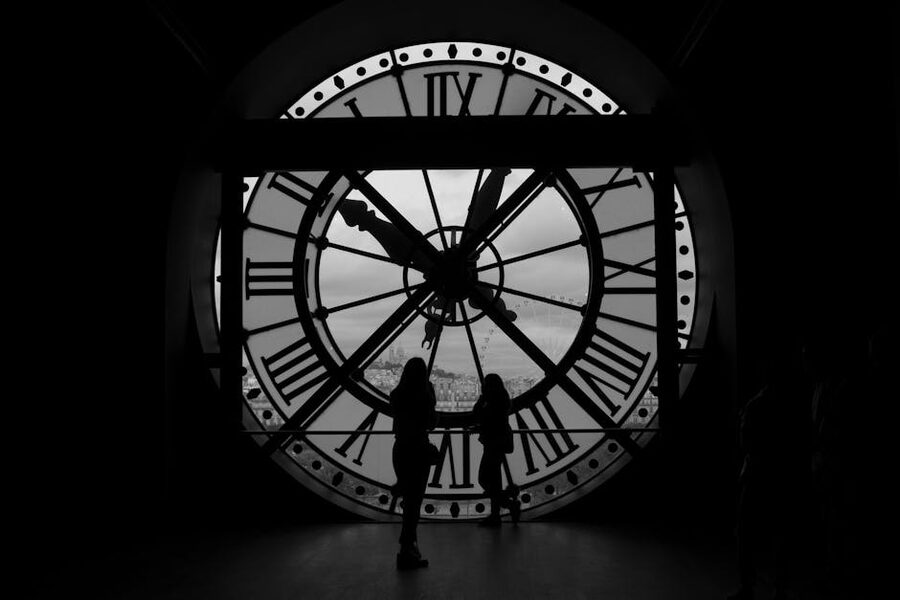
The Orsay stop sits on the Quai Anatole France, a one-minute walk from the museum’s main entrance. If your trip includes a planned Orsay visit, getting off here pairs neatly with the Tuileries-Concorde-Madeleine continuation by foot afterwards. Most HOHO buyers underuse this stop; people queue at Solférino metro instead.
Place de la Concorde and the Tuileries
This stop drops you at the Egyptian obelisk on Concorde, with the Tuileries Garden gates 30 seconds south, the Champs-Élysées stretching west toward the Arc, and the Madeleine columns visible to the north. Walk the Tuileries to the Louvre (12 minutes) instead of getting back on the bus; you’ll see more, the gardens are free, and you’ll save yourself the Champs traffic that’s already eaten the bus’s afternoon schedule.
When the Metro Wins (Most of the Time)
Here’s the unromantic mathematics. The price tiers, side by side:
- Metro day pass (Navigo Easy, t+ booklet): about €9, unlimited rides
- Weekly Navigo Découverte: €30, the whole region for seven days
- Big Bus 24-hour HOHO: $43, around €40
- Tootbus 24-hour HOHO: $49, around €45
For the same money you spend on a single HOHO day, you could buy four to five metro day passes. The math compounds quickly when you’ve got two or more days in town.
And the metro covers more ground. Sixteen lines plus five RER lines reach every major museum, every train station, both airports, every neighbourhood worth visiting. Every Paris museum is within 200 metres of a metro entrance. The HOHO loop covers 10 stops in a 4 km radius. The metro covers 305 stations across 100 km of track.
The metro is also faster. Almost always faster. From the Louvre to Montmartre on the metro is 18 minutes. On the HOHO loop, you can’t even reach Montmartre. It’s not on the route. Even within the loop, metro segments outpace bus segments by 2-3x. If you measure speed-of-arrival as the metric, the HOHO loses every category except “I want to see the city from above.”
So the structural truth is this: HOHO sells viewing experience, not transport. If you want transport, take the metro. If you want viewing experience, take the night tour, then walk. Don’t conflate the two products by buying a daytime HOHO and treating it as both.
The Seine HOHO Cruise Pass: A Better Idea
One product I think is genuinely better than the bus HOHO is the Seine HOHO Cruise Pass. About $27 for 24 hours of unlimited boat hops, nine river stops covering the same Eiffel-Notre-Dame-Louvre core, with the river replacing the road. Seine river cruises generally are an underrated way to see central Paris and the boat HOHO version is the one most travellers don’t know exists.
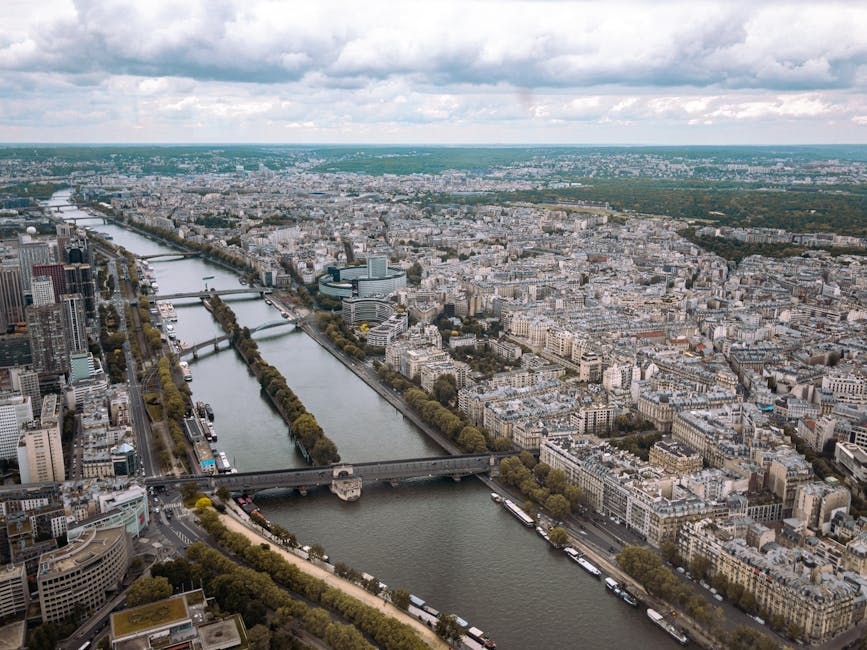
The reason it works: the road version of central Paris is congested and chaotic; the river version isn’t. The Seine has light traffic, no jams, predictable speeds. From the boat the sequence Eiffel → Trocadéro → Pont Alexandre III → Concorde → Louvre → Île de la Cité takes 35 minutes one direction at a steady glide. The same sequence by bus is closer to 70 minutes most afternoons.
The downside: nine stops instead of ten, no Marais or Opera coverage, and the boat operates only during daylight hours (the Seine HOHO doesn’t run after dark). So it’s not a complete substitute for either bus HOHO. But for the bus’s main job, central-core sightseeing in motion, the boat does it better.
Combining HOHO with Other Paris Tickets
If you’re already buying a HOHO pass, here’s how to stack other tickets for the same day so the loop earns its keep:
- HOHO + Eiffel Tower: Time the Tower entry for 11:00 (lift to 2nd floor) or 14:00 (summit). The HOHO drops you at Pont d’Iéna 5 minutes ahead of either slot. Pre-buy Eiffel Tower tickets; same-day at the gate is a 90-minute queue.
- HOHO + Louvre: The bus drop at the Pyramide is excellent, but the Louvre eats 4-5 hours of your day and the HOHO clock is ticking. Plan to do the Louvre on a non-HOHO day and use the bus stop only for the photo.
- HOHO + Arc rooftop: The 284 stairs to the top of the Arc add 45 minutes. The view from up there is the loop’s best photo opportunity, especially at golden hour. The rooftop ticket is €13 and worth every euro.
- HOHO + Orsay: The Orsay stop is one of the loop’s underused. Plan a 90-minute Orsay visit; timed entry means no queue and you’re back on a bus within two hours.
One thing not to combine: HOHO and the Paris Museum Pass. The HOHO doesn’t grant museum entry; the museum pass doesn’t grant bus rides. Doing both in one day is overspending unless you’re truly going to museum-hop hard. If you’re a heavy museum visitor, the museum pass alone is better value than HOHO + individual tickets.
Mobility, Kids, and the Real Use Case
The genuine non-tourist case for the Paris HOHO is mobility. Most Paris metro stations are deep underground (the lines are old, dug under existing buildings) and require multiple flights of stairs. Lift coverage is spotty. Lines 1 and 14 are the modern ones with good accessibility; almost every other line involves at least one staircase between street and platform.
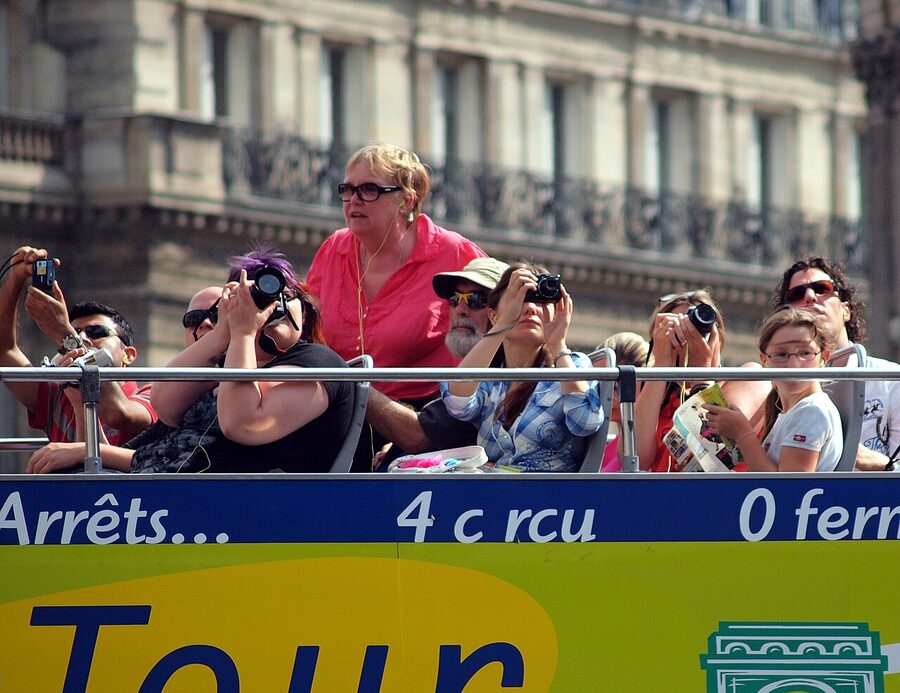
If you’re travelling with elderly parents, a partner with mobility limits, or small kids in strollers, the metro becomes punishing. The HOHO is genuinely the better solution: one boarding, fixed step at the door, sit for two hours, no transfer between vehicles, no underground stair-and-ramp navigation. The price difference becomes irrelevant against the daily wear of stairs.
For families with kids 5-10, the upper deck is the actual selling point. Children love being on top of a bus moving through Paris. They will not love being told they need to walk another 1.2 km to the next museum. The HOHO is the rare Paris product that’s genuinely better for kids than for adults.
For everyone else with normal mobility (solo travellers, couples, friends in their 20s-40s), walk and metro. You’ll see more, you’ll save €30-40, and you’ll know Paris better at the end of three days than you will from the upper deck of a bus stuck in Champs-Élysées traffic.
How This Compares to Other European HOHO Verdicts
The “is the HOHO worth it” question gets a different answer in different cities, and Paris falls roughly in the middle. The pattern across the European sites I’ve written:
- Barcelona HOHO: Yes for first-timers. Two routes (red and blue) cover Gaudí sites the metro can’t reach efficiently. Park Güell on the upper hill is genuinely faster by HOHO than by combined bus and walk.
- Seville HOHO: Skip. Seville’s centre is small enough to walk in three days. The HOHO doesn’t reach the strong viewpoints (Setas, Metropol Parasol) that aren’t already 10 minutes on foot.
- Palma HOHO: Once around for Bellver. Bellver Castle on the hill is the only stop the HOHO genuinely earns. Walk the old town, ride the bus once, don’t buy the 24-hour pass.
- Milan HOHO: Mostly no. Milan’s metro is excellent and the city is compact. The HOHO is purely a viewing-experience product, like Paris’s.
- Naples HOHO: Yes for the hill loop. Posillipo, Capodimonte, and Vomero are genuinely served by the HOHO better than by Naples’s chaotic surface buses.
- Florence HOHO: Skip the headline loop, do the Piazzale Michelangelo line. Florence’s old town is pedestrianised; the bus can’t reach the Duomo or Uffizi. Only Line A (Piazzale Michelangelo + Fiesole) earns the price.
- Rome HOHO: Yes if you don’t walk well. Rome’s seven hills make for genuinely punishing terrain on foot, and the HOHO covers Trastevere and the Aventine that the metro doesn’t.
- Amsterdam HOHO: Skip on a single visit, useful as a combo with the canal boat. Amsterdam’s centre is walkable in two days and the trams cover the gaps. The HOHO earns its price only when packaged with a canal-boat hop pass that uses the water as half the network.
Paris sits closest to Milan and Amsterdam in this list: a city with excellent metro (or in Amsterdam’s case, a canal-and-tram lattice that does the same job), dense central sights, and a HOHO that has to justify itself purely on viewing experience rather than transport. Where Amsterdam’s HOHO product wins is its bundled canal-boat add-on, which uses the water as a parallel network the bus can’t replicate; Paris’s Seine cruise sits in a separate product silo, which is part of why the daytime HOHO struggles to earn its place. The Marseille HOHO answer (sister article forthcoming at marseille-hop-on-bus) follows the same logic but with a tighter “yes” because Marseille’s sprawl genuinely exceeds the metro’s reach. Paris doesn’t.
What You’d Spend the Money On Instead
Concrete substitution math for the €40 a daytime HOHO costs:
- Sainte-Chapelle entry (€13) + Conciergerie combo (€10) + a coffee on Île de la Cité = €25, with €15 left over for the metro day pass
- Or: Orsay entry (€16) + a one-hour Seine river cruise from Pont Neuf (€18) = €34, again with metro change
- Or: Arc de Triomphe rooftop (€13) + Montparnasse Tower observation deck (€20) + metro = the two best central-Paris viewpoints, on foot, with no bus
- Or: the Big Bus night tour ($35) + a metro day pass (€9) = the right HOHO product plus full metro coverage, for €5 less than the day HOHO alone
That last one is the smartest reframe. If you’re willing to spend $40-50 on Paris transit anyway, splitting it across the night tour and a metro pass beats any single day-HOHO product. You get the open-top viewing experience where it matters most (after dark with the city lit) and the transport flexibility where it matters most (during daylight hours when sightseeing is happening).
Edge Cases Worth Knowing
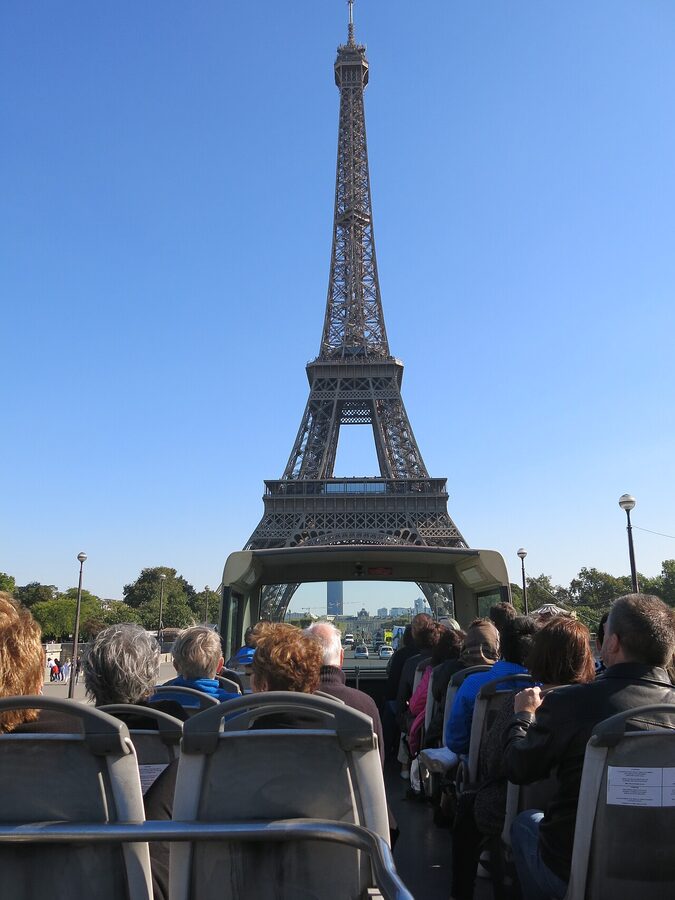
Some specifics that come up enough they’re worth flagging.
Strikes. Paris transit (RATP, SNCF) goes on strike on average 4-6 times a year. The HOHO is operated by private companies (Big Bus and RATP Dev’s Tootbus) and is generally unaffected by metro strikes. If you arrive during a metro strike, the HOHO becomes genuinely useful as transport rather than viewing. Worth checking the date of your trip against announced grèves.
Rain. Both operators have ponchos onboard but no proper covered seating on the upper deck. Light rain is fine if you sit at the back where there’s a partial roof. Heavy rain ruins the upper deck experience and pushes you downstairs where the windows are tinted and the view is significantly worse. If your week’s forecast is poor, lean harder toward the night tour where the rain coverage is slightly better and the visual product (illuminated landmarks) holds up.
Disneyland Paris. The HOHO doesn’t reach Disneyland Paris; it’s 32 km east of central Paris and requires the RER A. Don’t expect the bus to substitute. Same goes for Versailles (RER C) or any day-trip destination. The HOHO is centre-only.
Audio guide languages. Both operators offer 8-12 audio languages. Big Bus has the better French accent for English; Tootbus’s English commentary is delivered with a slight French accent that some travellers find harder to follow. For non-English audio, Tootbus’s German and Spanish are stronger; Big Bus’s Mandarin is stronger.
Validating your ticket. Both operators want you to scan a QR code from your phone or print confirmation. The validation happens on first boarding, after which the 24-hour timer starts. If you board the night tour first at 21:00 and the bus you take in the morning won’t run until 09:30 the next day, you’ve already burned 12.5 hours of your 24-hour pass on sleep. Plan first boarding for the start of your sightseeing day, not before.
Three Direct Recommendations
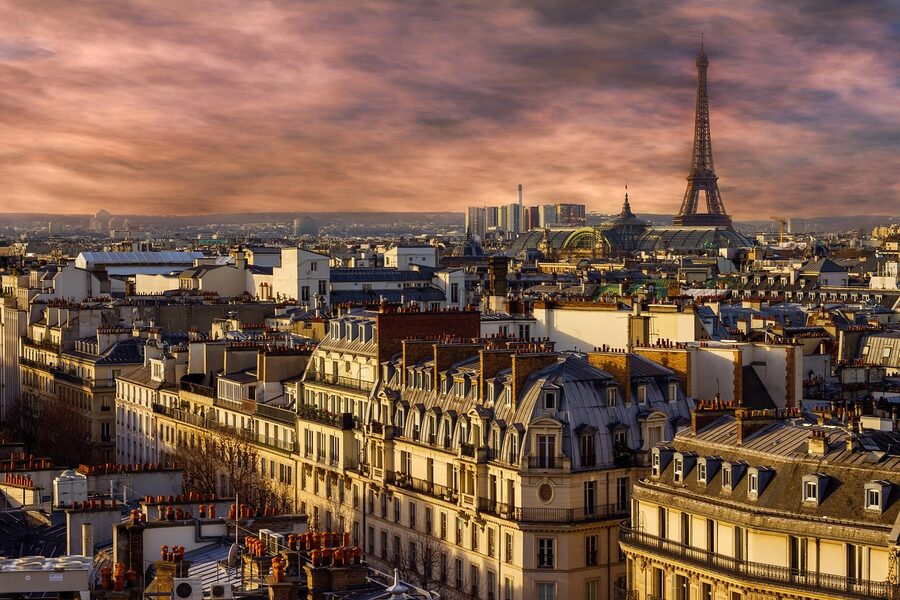
To consolidate, here’s what I’d actually book under the three scenarios that come up most.
Scenario 1: One day in Paris, total newcomer. Buy the Big Bus + Cruise combo. Use the bus for the morning loop (Eiffel-Trocadéro-Arc-Champs-Concorde-Louvre), get off at Notre-Dame, do Sainte-Chapelle and the Île on foot, and use the cruise add-on at sunset to see the city from the river. You’ll see more in 9 hours than you would by walking, and the orientation will be useful if you ever return.
Scenario 2: Two-plus days in Paris, normal mobility. Skip the day HOHO. Buy a Navigo Easy or a t+ booklet, the night tour for one evening, the Paris Museum Pass for two days, and individual Eiffel Tower tickets. Walk the centre, take the metro between districts, and let the night tour handle the open-top viewing experience that the day bus would have delivered worse.
Scenario 3: Family with kids or older travellers. Buy the Big Bus 24-hour pass, plan to use it heavily for two consecutive days (the Big Bus pass converts to 48 hours for an extra $10-15), do the Tower and the Louvre and the Orsay on foot from bus stops, and use the bus to spare everyone the metro stairs. The HOHO genuinely earns its keep here in a way it doesn’t for solo travellers.
Some Other Paris Reading That Pairs With This
If you’re working out a full Paris itinerary, the cluster of articles I’d send you to next depends on what you’re stuck on. For the Tower itself, our Eiffel Tower tickets piece covers the lift-versus-stairs decision, the timed entry slots, and which level (2nd floor or summit) is the smarter pick at your budget. For the Louvre, our Louvre booking guide works through the Mona Lisa queue, the Pyramide-versus-Carrousel entrance debate, and which wings to skip if you’ve only got two hours.
For the Seine itself, the Seine river cruises piece compares Bateaux Parisiens, Bateaux Mouches, and Vedettes du Pont-Neuf at the standard 1-hour level. Useful for deciding whether the cruise add-on to your HOHO is worth the price difference. The Orsay tickets piece explains why the Impressionist top-floor is the genuine reason to visit and how to time it to avoid the school groups. For the Arc rooftop angle of attack, our Arc de Triomphe guide covers the 284-stair climb and which time of day delivers the cleanest 12-avenue radial photograph.
If you’re including a kid-day, Disneyland Paris in one park-hopping day is the planner for the eastern day-trip the HOHO can’t reach. And if you’re a serial museum-goer, the Paris Museum Pass piece works through whether the four-day pass actually saves you against pay-as-you-go entry.
For the broader European HOHO question (whether the bus is worth it elsewhere) the comparison threads run through Barcelona, Milan, Naples, and Rome. Paris answers closest to Milan: it’s a viewing-experience product, not a transport product, and the night version is the one that earns its price.