
Is the Palma hop-on bus worth it? Two narrow scenarios where it absolutely earns the fare. A long list of scenarios where you’d be better off walking, busing, or just having a coffee.
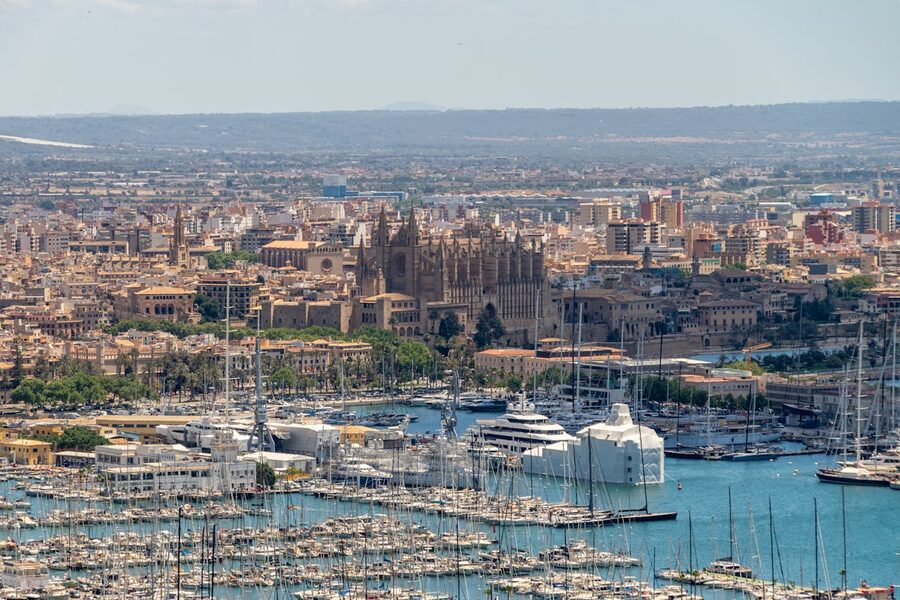
Palma’s old town is a 1.5 kilometre stretch from the cathedral steps to Plaça Major. You can walk it in twenty minutes if you don’t stop, an hour if you do. So the bus is not winning you anything in the historic core. Where it earns its money is the climb to Bellver Castle, the only circular castle in Spain, sitting on a 112 metre hill three kilometres west of the centre with no direct city-bus and no metro. And the run east to Es Molinar and Portixol, the working seafront strip that’s a 30 to 40 minute walk one-way and ten to fifteen minutes by bus. Two destinations, one ticket. That’s the case for the hop-on. Everything else is bus-on-rails.
In a Hurry? The Three Picks
- City Sightseeing Palma 24-Hour Pass ($32): The standard red-bus loop, 17 stops, audio guide in eight languages. The right pick for nine in ten travellers. Check availability.
- Viator-listed City Sightseeing Pass ($32.51): Same operator, alternate booking channel if you collect Viator credits. Check availability.
- City Sightseeing Premium with Boat ($40): Same bus loop but the ticket bundles a small harbour boat trip. The upgrade only makes sense if the boat is the missing piece of your trip. Check availability.
The Short Version, Right Up Front
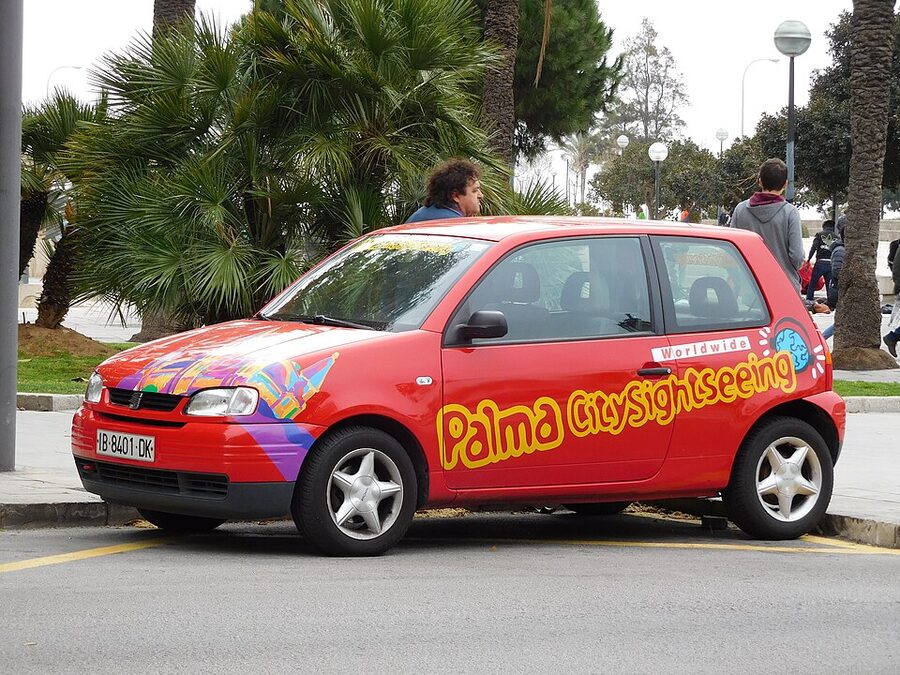
Buy the 24-hour ticket. Ride it once. Get off at Bellver Castle, walk up, walk back down, get on the next bus. Stay on for the loop east through the Paseo Marítimo to Es Molinar and Portixol. Have lunch at the seafront. Get back on, ride it back into Plaça d’Espanya. Walk the old town on foot the next day with no ticket and no schedule.
That’s the trip the bus is genuinely good for. Bellver and the seafront are the two pieces of Palma that don’t reward walking, and the hop-on is the cheapest way to reach them both. The 24-hour pass works out to about €30. A taxi to Bellver and back would run you €25 to €30 by itself, and you’d still need to figure out the Es Molinar leg separately. So the maths makes sense if you actually get off at the right stops.
What you don’t want to do is treat the bus as a sightseeing experience in its own right, or as a substitute for walking the historic centre. The 80-minute round-trip loop is a dawdle. Plenty of stops are residential, scenic in a “you’ve seen worse” way, and dropping you nowhere you’d otherwise plan to be. If your stay is two days, walk one and bus the other.
What the Loop Actually Looks Like
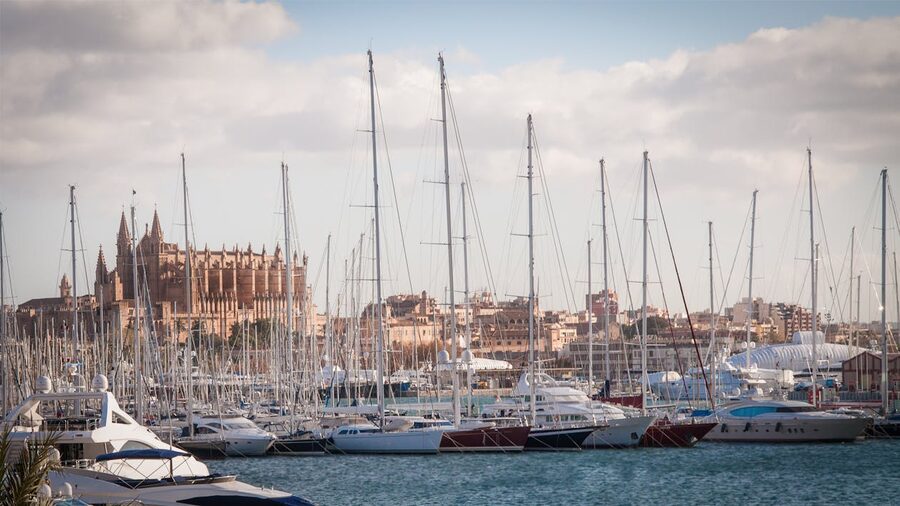
One operator, one ticket, one loop. City Sightseeing is the only company running the proper hop-on hop-off product in Palma. That’s a contrast with the two-operator situation in Barcelona where Bus Turístic and City Tour split the city between them, or the multi-operator scrum on the Paris hop-on bus circuit where four different liveries chase the same Champs-Élysées corner. Here it’s a single 17-stop circuit that you board, audio-guide, and ride.
The route divides cleanly into three arcs. The cathedral and old-town stops are the front half: La Seu, Almudaina Palace, the Born promenade, Plaça d’Espanya. Most of these you wouldn’t actually use because everything in this cluster is a four-minute walk from the next thing. Then the bus climbs out west through Avinguda Joan Miró toward Bellver and the Marivent area. This is the section that earns the ticket. After Bellver the loop drops back to sea level and runs east along the Paseo Marítimo, past the cruise terminal and the marina, all the way to Portixol and Es Molinar before turning back through the residential ring road to Plaça d’Espanya.
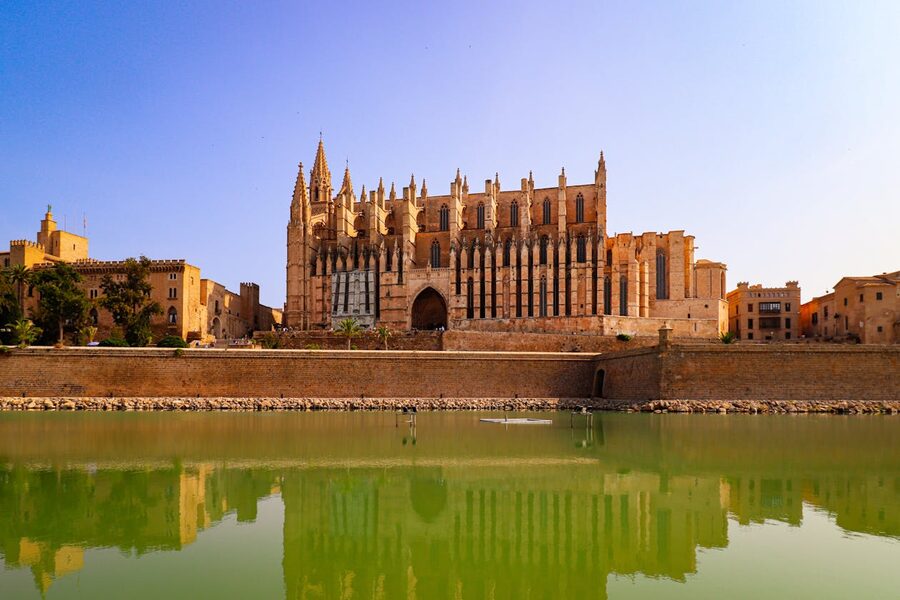
The audio guide runs in eight languages and tracks decently well to the route. It’s serviceable. Not the most engaging history you’ll hear in Spain, but it knows when the bus has reached Bellver, when you’re passing the windmills out at the eastern stretch, and when to keep quiet and let the cathedral pass by in the window. Eight languages: Spanish, Catalan, English, German, French, Italian, Russian, Mandarin. Headphones are provided at the stop and on the bus.
Frequency: every 20 minutes April through October, every 30 minutes in winter. Hours roughly 09:30 to 19:00 in high season, shorter in winter. Last departure varies by month. Check the operator’s site the day before, not the day of, because it shifts.
Stop 7: Bellver Castle, the Real Reason
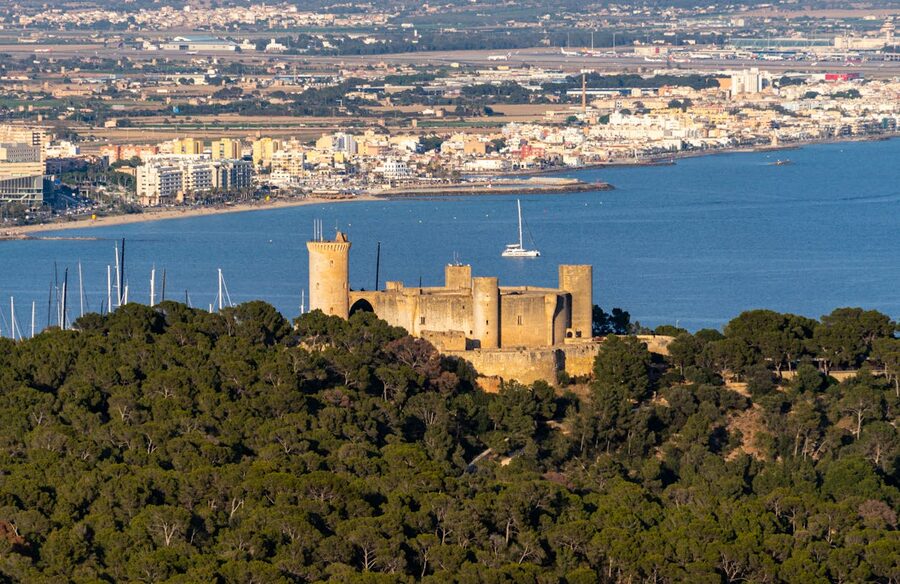
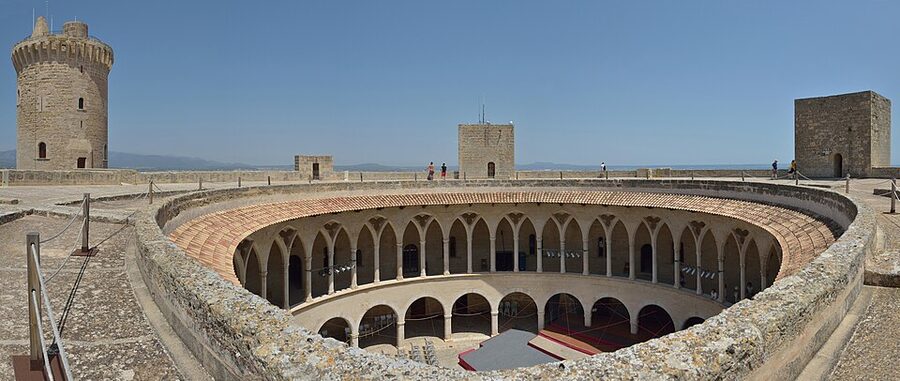
Bellver is why the bus exists. A 14th-century circular fortress sitting at 112 metres above sea level, a kilometre and a half west of the city centre as the crow flies, with no metro stop and no direct city bus from the main tourist core. You can taxi up for €10 to €12 from Plaça d’Espanya. You can walk it, badly, from Plaça Gomila in about 35 minutes if you’re fit and the heat’s reasonable. Or you can get the hop-on, which drops you at a layby about 250 metres from the castle gate.
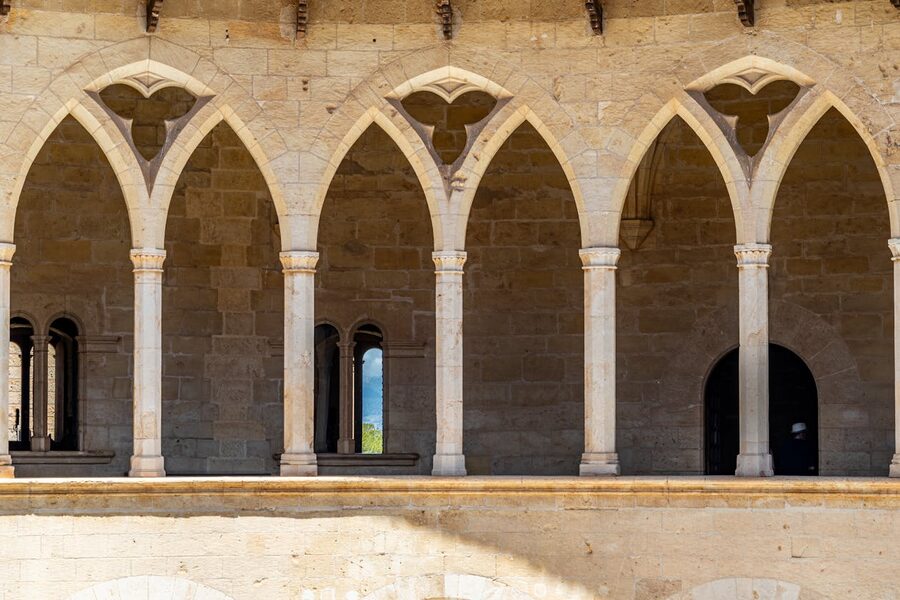
King James II of Mallorca commissioned it as a royal residence, finished by 1311 under master builder Pere Salvà. The shape is the giveaway: a perfect circle, four towers (one larger keep called the Torre de l’Homenatge), an inner courtyard with two-storey Gothic arcades, and a moat. Most circular castles in Europe were built much later. Bellver was already old when Columbus crossed the Atlantic.
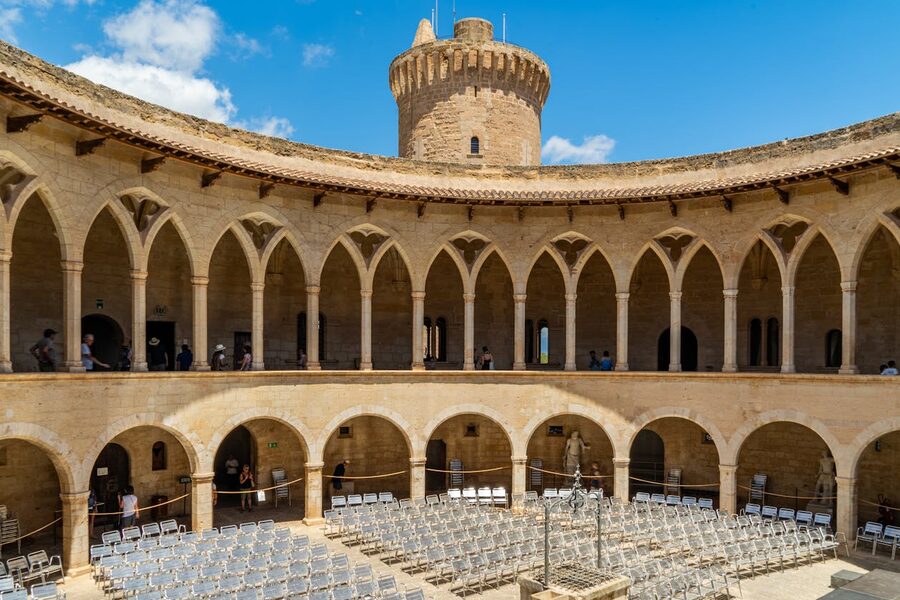
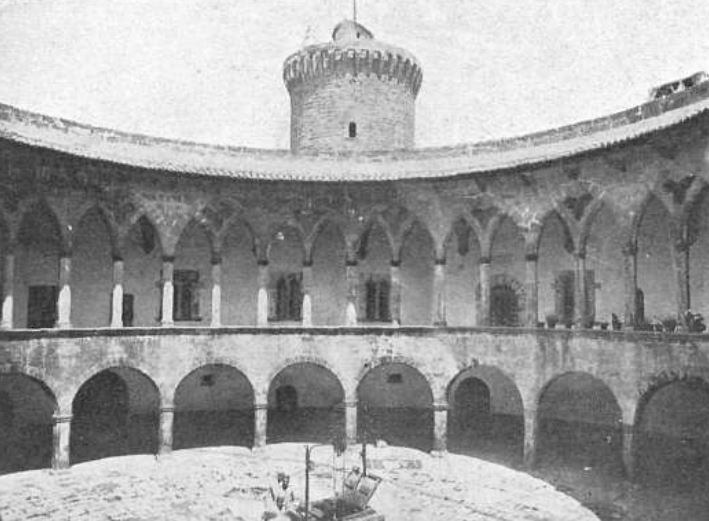
The castle stopped being a royal residence quite quickly and spent most of its history as a prison. Notable inmates: the politician Gaspar Melchor de Jovellanos (1801 to 1808, who used his time to write the first scholarly treatise on the castle’s architecture, which is still cited), and assorted French prisoners of war during the Peninsular War. It went public in 1932 and now houses the Museu d’Història de la Ciutat.
What you do once you’re there: walk the inner ring of arcades, climb the keep for the panorama, walk the parapet around the outer wall, find the well in the centre of the courtyard. The view from the top is the genuine selling point. On a clear day you see the entire bay of Palma, the cathedral on its rocky outcrop, the port, the Tramuntana mountains running west, and on a really clear day, all the way to Cabrera island 20 km off the south coast. Two hours is plenty. The bus comes back every 20 minutes; you don’t need to time it precisely.
Practical entry: €4 standard, €2 concession, free on Sundays. Open Tuesday to Saturday 10:00 to 19:00 in summer (10:00 to 18:00 in winter), Sundays 10:00 to 15:00, closed Mondays. The hop-on bus doesn’t include castle entry, so factor the €4 separately. The free Sunday is genuinely free but expect crowds. Tuesdays through Fridays in shoulder season is when the castle is at its best: cool, quiet, and you can stand in the courtyard alone.
Stop 13-14: Es Molinar and Portixol, the Other Reason
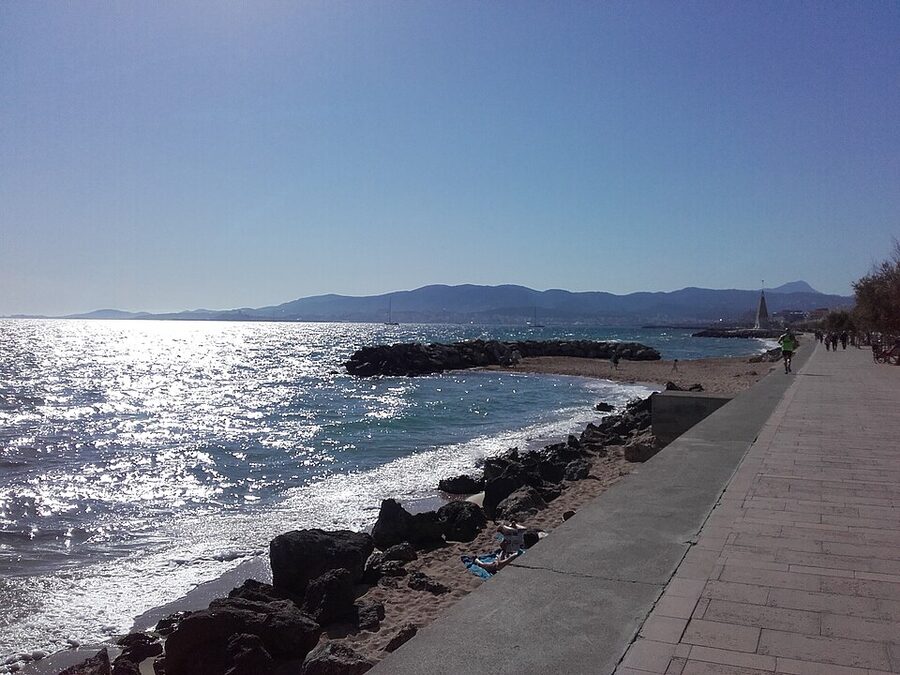
Es Molinar and Portixol are the other reason to hold the bus pass. They run as one continuous seafront strip about three to four kilometres east of Palma’s port, originally a separate working-class fishing village outside the old city walls. Until the 90s, no one came here. The walls came down, the city expanded east, the seafront promenade got rebuilt for the 2000 renovation, and what was a poor fishermen’s neighbourhood is now the restaurant strip the locals actually eat at when they’re not at home.
The bus stops at the western end of Es Molinar and again at Portixol proper, which is about 800 metres further east. Stop 13 puts you a five-minute walk from the windmill row at Molins des Jonquet (the working flour mills are gone, the stone towers remain) and from the Club Marítimo Molinar where the small fishing fleet still ties up. Stop 14 drops you at the inlet itself, where Portixol’s restaurant clutch sits.
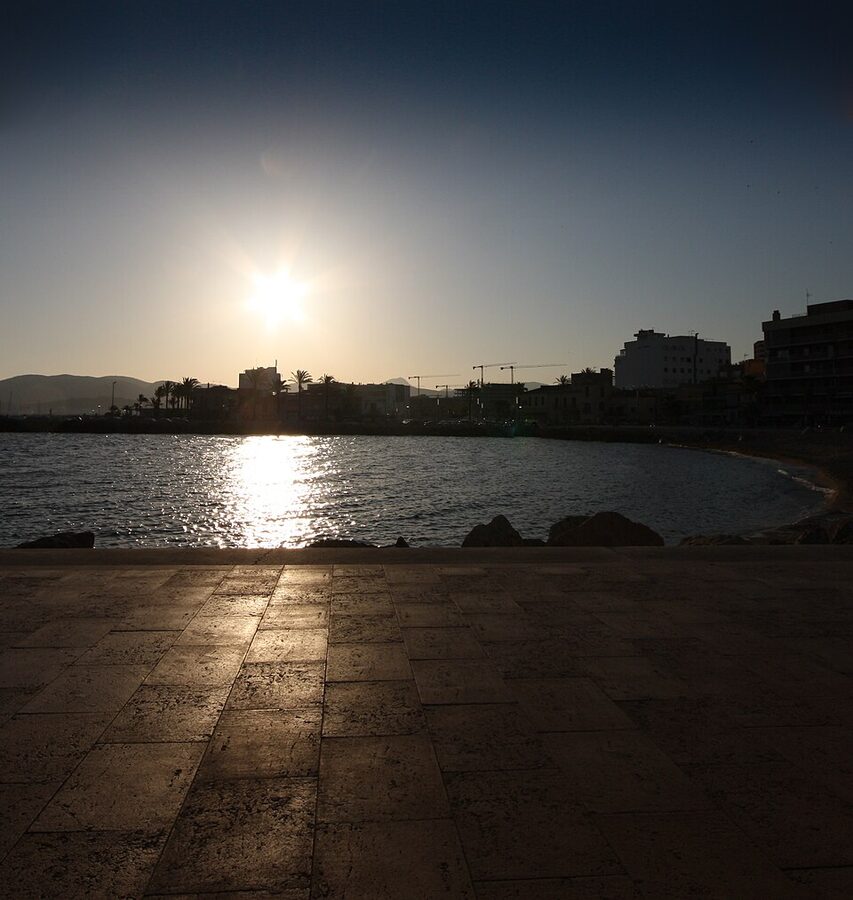
What’s worth eating, briefly. The seafront strip at Portixol has a half-dozen restaurants in a row, all sea-facing, all priced at “Mallorca evening on the water” rates rather than tourist gouge or local cheap. The standard order is a starter of clams or razor clams, a paella for two, or a whole grilled fish with salt crust. Tab for two with wine: €60 to €90 depending. The restaurants you’ll see local Palma residents at on Sundays are Bonet (rice specialist) and Yatch Club Molinar (old-school, no relation to the actual yacht club). The ones that show up in trip-blogger lists more than they should: Casa Fernando, Nassau Beach.
The walk back, if you decide to skip the bus on the return: about 50 minutes along the Paseo Marítimo with the harbour on your left and the city on your right. Pleasant in cool weather, brutal in August midday. The bus runs every 20 minutes and the trip back to Plaça d’Espanya is 25 minutes. Pick your preference. The Dutch equivalent of a long harbour-front walk you can shortcut by water rather than by bus is an Amsterdam canal cruise; the geometry is the same idea, the city’s main boulevard is the water, and the boat is the alternative to the slog.
Stops You’ll Actually Use (and the Ones You Won’t)
The 17 stops aren’t equal. About six are worth getting off at, three are worth knowing exist, and the rest are residential drops where you’d waste the journey if you got off. Here’s the breakdown.
The six that earn the ticket:
- Stop 1, Plaça d’Espanya: the transit hub. Inca/Sóller train station, intercity buses, taxis. This is your start and end point, and where you connect to the Caves of Hams day trip to Porto Cristo if that’s on your list (the train to Manacor leaves from this square).
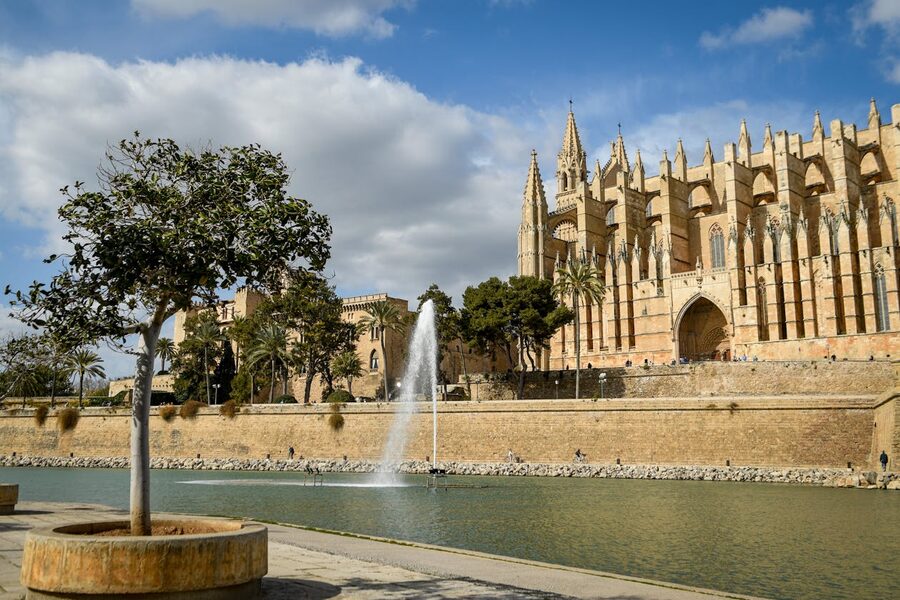
- Stop 4, La Seu cathedral: the front-row drop for the cathedral, Almudaina, and the harbour-side park. Walk three minutes to the cathedral entrance.
- Stop 7, Bellver Castle: the only sensible way to get there.
- Stop 11, Pueblo Español / Marivent: useful if you want a quick walk past the old “Spanish Village” replica architecture park or to gawk at the perimeter walls of Marivent Palace, the royal family’s summer residence. The interior of Marivent isn’t open. The Pueblo Español isn’t worth €11 entry.
- Stop 13, Es Molinar: windmill row and the seafront walk start.
- Stop 14, Portixol: the restaurant strip and the better of the two seafront drops.
The stops that get the most use you didn’t ask for:
- Stop 2, Avinguda Jaume III: the shopping street. If you needed a Zara or El Corte Inglés you’d walk five minutes from the cathedral to get here. The bus stop is a convenience, not a reason.
- Stop 3, Passeig del Born: the elegant tree-lined boulevard that connects the cathedral to Plaça Joan Carles I. Walkable from anywhere in the centre.
- Stop 6, Avinguda Joan Miró: a residential stretch on the way up to Bellver. Skip unless you specifically want to walk to the Joan Miró Foundation, which is at Cala Major further out.
The ones you’ll never use:
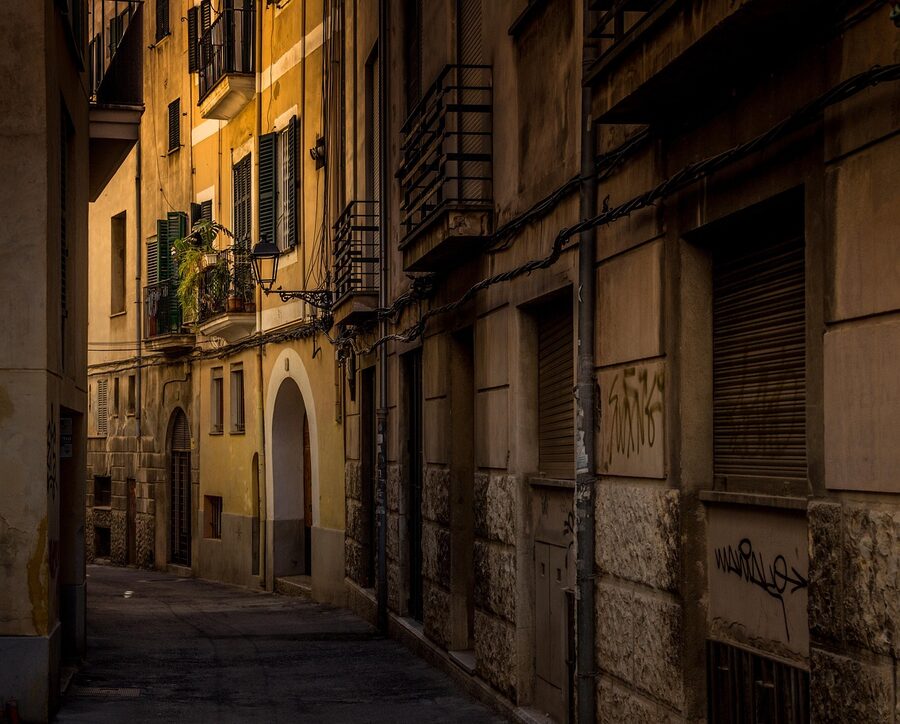
- Stops 8 to 10: the western residential ring through Son Armadams and Cala Major. Pretty in a Mediterranean-suburb way, useful if you’re staying out there, useless if you’re not.
- Stops 15 to 17: the eastern residential return through Es Coll d’en Rabassa back to Plaça d’Espanya. Bus is in motion, you’re not getting off.
The 24-Hour vs 48-Hour Question
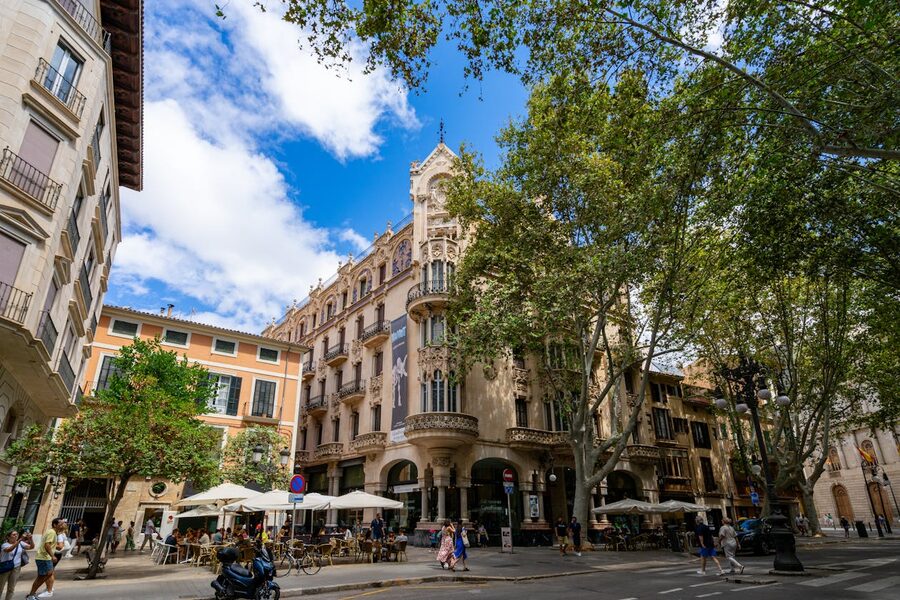
I’m going to make this argument in one paragraph: don’t buy the 48-hour pass. The 24-hour pass is €32. The 48-hour is in the €44 to €50 range depending on operator. The maths only works if you genuinely use the bus on two separate days. You won’t. Bellver is a half-day, Portixol is a half-day, and you can do both inside one bus ticket. The second day is for walking the old town, which is where the city’s actually interesting and where the bus can’t help you anyway.
The exception: cruise passengers with two days in port. If you’re docked Tuesday and Wednesday and want to do the full loop both days for some reason (the second day to revisit Bellver at sunset, say), the maths shifts. Otherwise pocket the €15 difference and put it toward a cathedral ticket and a glass of wine in Es Molinar.
Where the Bus Actively Loses Out to Walking
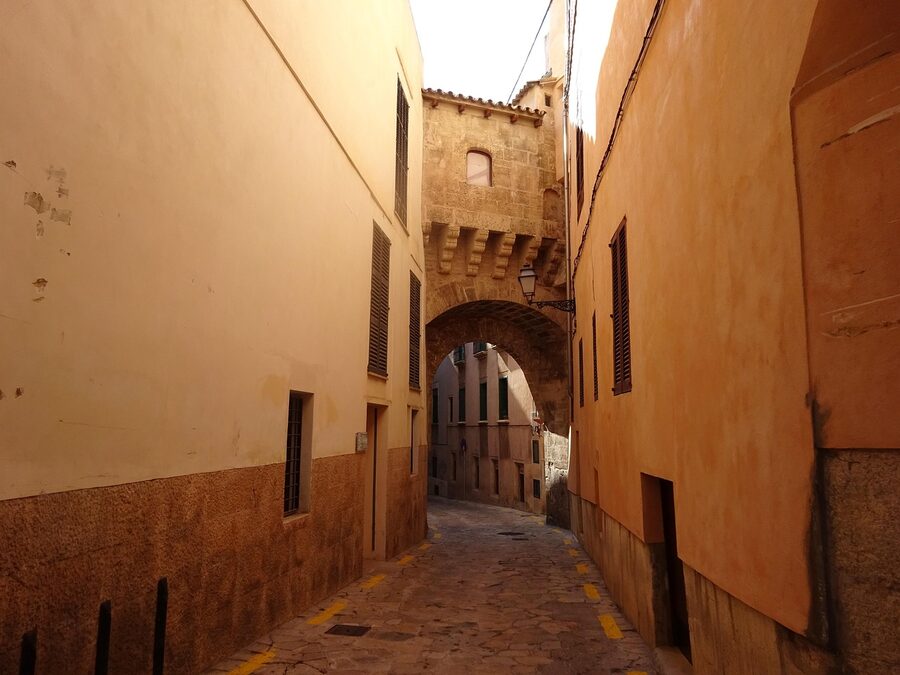
The historic centre is small. La Seu cathedral to Plaça Major is 1.5 km. Plaça Major to Plaça Cort is 300 metres. Plaça Cort to the Banys Àrabs (Arab Baths, the 10th-century ruins of a hammam from the Moorish period) is 400 metres. None of these are bus stops, none of them can be bus stops, because the lanes are too narrow to take any vehicle wider than a small van.
What this means in practice: if your day is “see the cathedral, see Plaça Major, see the Arab Baths, get a coffee at Forn des Teatre,” the bus is irrelevant. You walk. The whole circuit takes 90 minutes including the photos. Seville’s hop-on has the same problem: the historic city is older than wheeled vehicles and refuses to admit them, so the bus runs the perimeter while you do the interior on foot. Florence’s situation is even more extreme. The bus can’t enter most of the centre at all.
The framing that holds: HOHO buses earn their keep when a city’s worth-seeing attractions are spread out and the public transit either doesn’t reach them or doesn’t reach them efficiently. Palma is half that city. Bellver and the Portixol seafront are spread out and inadequately served by ordinary buses. Everything else is in a 1.5 km box you can walk.
If You’re Doing Mallorca, Not Just Palma
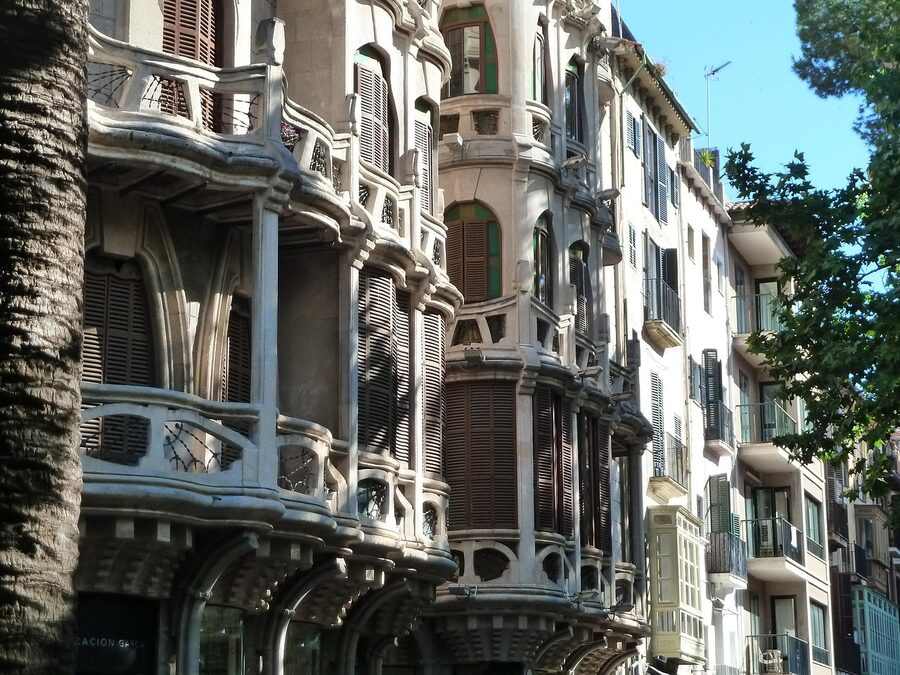
Worth being clear about scope. The hop-on bus is a Palma product, full stop. It doesn’t go to Sóller, doesn’t go to Valldemossa, doesn’t go to Porto Cristo or anywhere on the east coast where the Caves of Hams and Caves of Drach attractions sit. It doesn’t even go to the Joan Miró Foundation reliably (the loop nibbles the edge of Cala Major; the Foundation itself is a 15-minute walk from the closest stop).
If your Mallorca plan is more than Palma, the better transport stack looks like this. Palma walking + the hop-on for Bellver and Portixol on one day. The Sóller train (FEVE, departs from Plaça d’Espanya, the 1912 wooden carriages are a small marvel in their own right) for Sóller-Port-de-Sóller-Tramuntana. A rental car for Cap de Formentor and the east coast caves. A catamaran day cruise from the marina if your hotel is Palma-side and you want the boat experience without a five-hour drive. The hop-on bus is a small part of that stack, not a substitute for it.
The Three Tickets Worth Booking
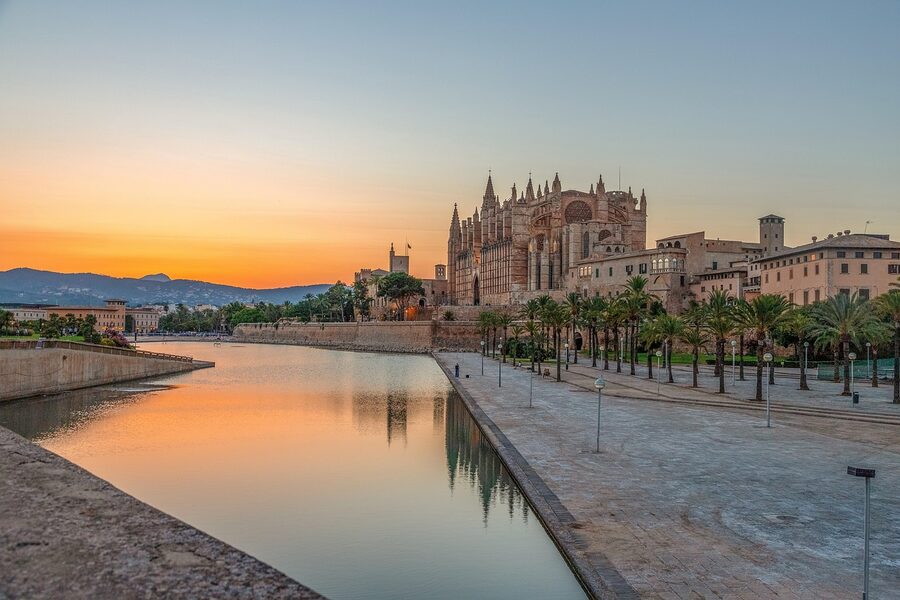
One operator, three booking flavours. Same red bus, same loop, same audio. The differences are channel and what the ticket bundles.
1. City Sightseeing Palma 24-Hour Bus: $32
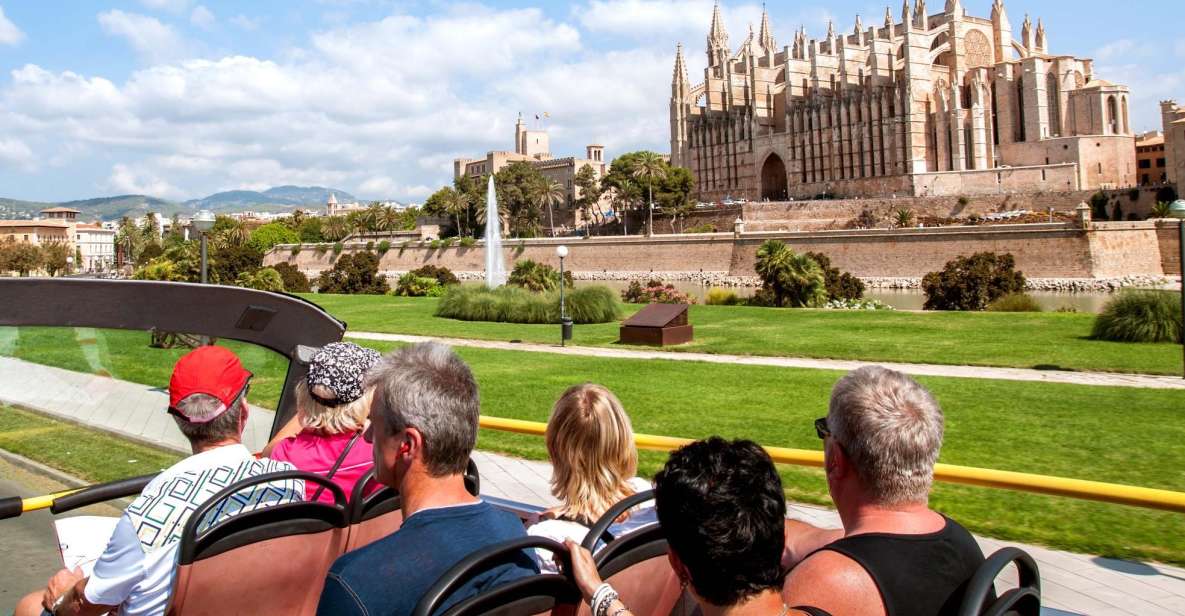
The standard ticket via GetYourGuide: 17 stops, 80-minute round trip, audio guide in eight languages, headphones included. Our full review covers the operator’s reliability across Mallorca and confirms the audio quality holds up across languages. The right pick if you’re new to Palma and want the Bellver-plus-Portixol combination this article keeps recommending.
2. City Sightseeing Palma via Viator: $32.51
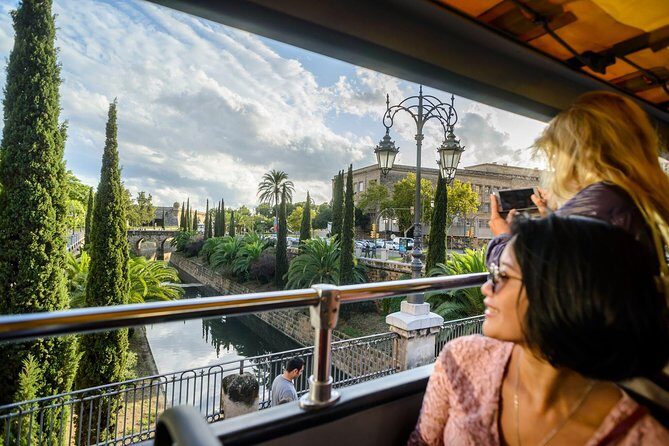
Identical product on an alternate booking platform: pick this if you collect Viator credits or prefer their cancellation terms. Our review notes the route and stop count match the GetYourGuide listing exactly. No reason to pay the small premium otherwise.
3. City Sightseeing Bus Plus Boat Bundle: $40
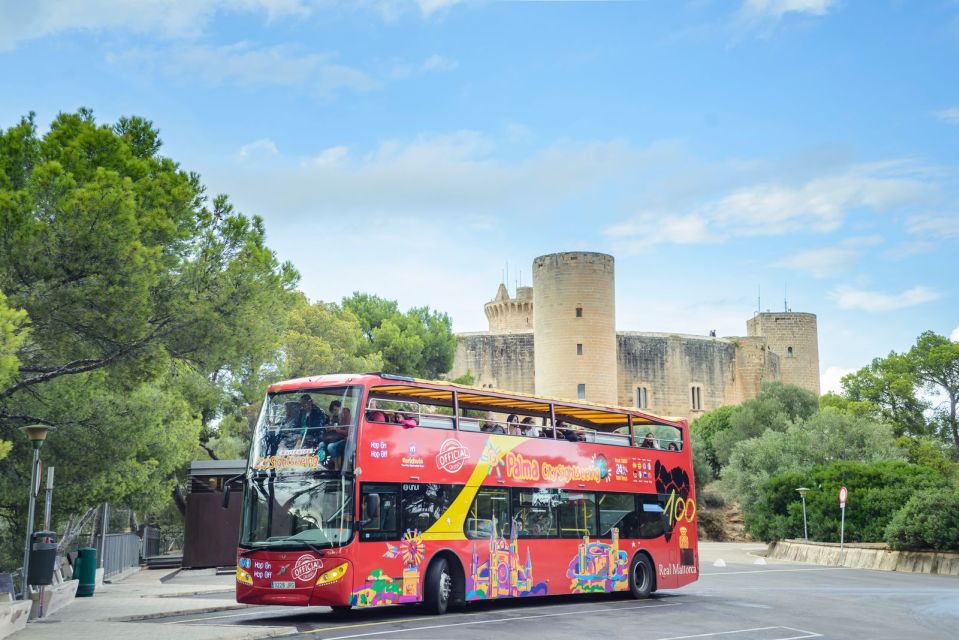
The 24-hour bus pass with a short harbour boat trip layered on, sold as a single ticket. Our review of the bundled version calls out that the boat is short and the value depends on whether you’d otherwise pay for a separate harbour cruise. If you weren’t going to, skip the upgrade.
How a One-Day Palma Plan Actually Looks
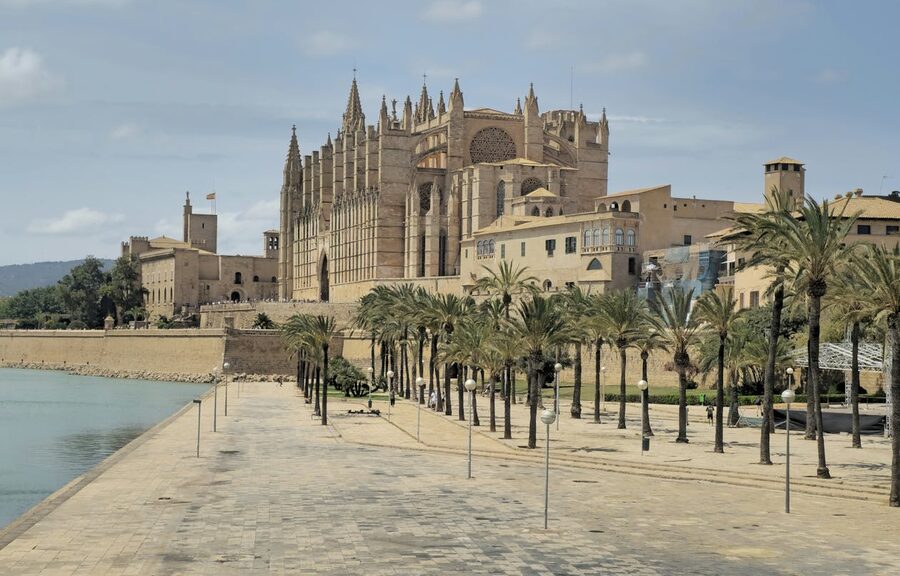
If your Palma is one full day with the bus, here’s the schedule that works.
09:00: Cathedral and Almudaina. Walk in from your hotel or get off the bus at Stop 4. Cathedral opens 10:00, but the line forms before. Buy your cathedral ticket online the night before to skip the queue.
11:00: Coffee at Forn des Teatre or in the Born. You’re now five minutes from the bus.
11:30: Bus to Bellver. Stop 4 to Stop 7 is roughly 25 minutes including the climb up Avinguda Joan Miró. Get off at Bellver, walk up the 250 metres to the gate.
12:00 to 14:00: Bellver Castle and the surrounding forest. Two hours covers the museum, the courtyard, the keep climb, and a slow walk around the parapet. The view from the top is the one moment of the day you don’t want to rush.
14:15: Bus down. Skip Stops 8 to 12 (residential western suburbs), stay on past the cathedral and through to Es Molinar. Total ride about 35 minutes from Bellver to Stop 14.
14:50: Late lunch at Portixol. You arrive in the gap between the official lunch service (which runs 13:00 to 15:30 in Mallorca) and the kitchen close, which is fine because the sea-front restaurants run continuously through the afternoon. Order a paella for two and a glass of white. Sit by the water for two hours.
17:00: Bus back. About 25 minutes through the eastern residential return loop to Plaça d’Espanya.
17:30: Walk the old town. Plaça d’Espanya to Plaça Major to Plaça Cort to the Banys Àrabs and back to the cathedral. About 90 minutes at a normal pace, longer if you stop for an aperitivo at one of the Plaça Major terraces. Watch the sun catch La Seu’s south face on the way back. End the day at the harbour-front bar of your choice.
That’s the bus pass earning its money. One ticket, two destinations the bus is genuinely good for, and the rest of the day spent on foot in the part of the city that rewards walking.
What the Bus Audio Guide Doesn’t Tell You
A few things to know that the eight-language audio is unlikely to mention.
The Marivent grounds at Stop 11 are a free public park. Most bus passengers assume Marivent is closed because the palace itself isn’t open. The grounds (the Jardins de Marivent) opened to the public in 2017 with sculptures by Joan Miró spread across the gardens. Free, open daily, ten minutes’ walk from the stop.
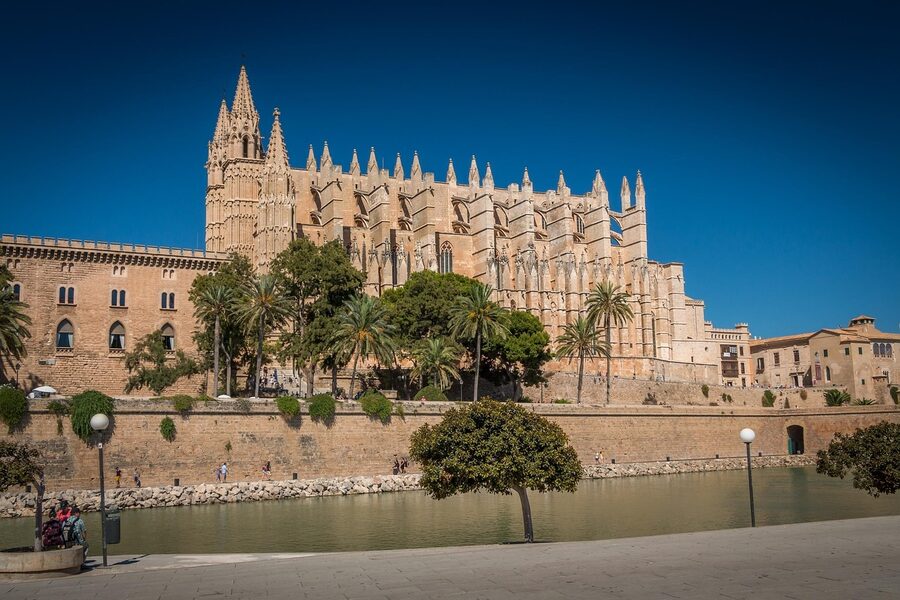
The harbour-side park around the cathedral has the best free panorama in the city. Parc de la Mar, the green space below La Seu, has a small bar (the Bar Es Mirador), excellent shade, and a view straight up the cathedral’s south face that you can’t get from inside the church. Better than the cathedral rooftop tour for half the price (which is to say, free).
Plaça d’Espanya is a transit hub for far more than the bus. The narrow-gauge wooden train to Sóller leaves from here. The intercity bus to Valldemossa, Inca, Manacor leaves from the underground bus station next to the train. The metro to the university leaves from the same square. If you’d rather skip the western and eastern bus loops and just do a day-trip out of the city, you can walk to a different platform and be in the Tramuntana mountains in 90 minutes.
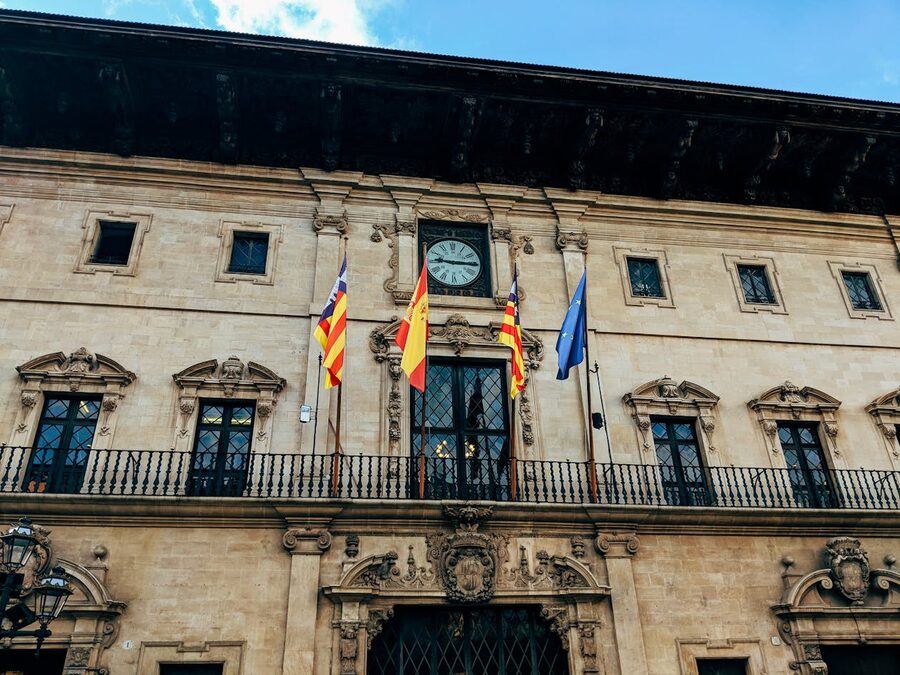
The 600-year-old olive tree on Plaça Cort. The big gnarled tree out front of the city hall. It’s not a decoration, it’s an actual living olive tree, transplanted from a finca in the Tramuntana, somewhere between 600 and 800 years old by the most generous estimates. Sit on the bench under it for ten minutes. There’s no audio guide that quite captures what that does.
If You Want the Bus But Not the Ticket Price

The cheaper workaround: Palma’s regular city buses (the orange EMT buses) cover most of the same ground for €2 a ride or €1.50 if you buy the ten-ride T10 card. Bus 1 from Plaça d’Espanya runs to Bellver via Avinguda Joan Miró (with a 700-metre walk up to the castle gate from the closest local stop, longer than the hop-on’s drop-off but doable). Bus 3 runs east toward Es Molinar. Bus 25 covers the western loop.
The trade-offs: no audio guide, no open top, no English signage on the schedule, and you’ll need a phone with offline maps and Google Translate. If you’re already using public transit on the rest of your trip and you’ve nailed the local bus app (TIB Mobilitat), this is genuinely cheaper. If you want a single ticket and you don’t fancy decoding orange-bus timetables in Catalan, the hop-on is what you came for.
This is a similar calculation to the Hello Barcelona travel card question: a tourist-branded transport ticket vs. just buying the local pass and figuring it out. Same answer in both cities. The tourist version is more expensive but it’s also more legible. The local version is cheaper but assumes you’re up for the navigation.
How Palma’s Bus Compares Around Spain and Italy
Worth knowing where Palma sits on the spectrum. The Barcelona HOHO is the strongest case in Spain because Barcelona is bigger, has Park Güell uphill and Montjuïc out at the harbour and Camp Nou in the suburbs, and the centre is too spread out to walk between attractions. Seville’s is the weakest because the tourist core is small enough to walk and the perimeter (Plaza de España, Triana) is also walkable from the cathedral.
Palma sits between them. Closer to Seville than to Barcelona. The case for the bus rests on Bellver and the Portixol seafront, two destinations that don’t reward walking. If you take those out, the answer is no, walk it. If you take the bus seriously as a way to reach those two places once each, the 24-hour ticket pays for itself.
For comparison, Milan’s HOHO has the same problem as Palma’s: the centre is walkable, the value is in the periphery (San Siro, the Navigli at sunset, the cemetery). Naples is similar. The centro storico is foot-only territory, but the bus pays for itself on the Posillipo coastal route. The pattern repeats. Rome’s is the outlier in Italy because the city is so big the bus is genuinely useful for distance-covering, not just for the awkward outliers. The Marseille hop-on is the closest French equivalent of the Palma case: the Vieux-Port and Le Panier are walkable, but Notre-Dame de la Garde sits on a 162-metre hill and the bus is what makes that climb sensible without a taxi.
The lens that holds across all of these: HOHO buses are at their best when a city’s must-see attractions sit on a hill, on a coast, or in a suburb that local transit handles awkwardly. They’re at their worst when those attractions are clustered in a 1.5 km old-town square that walks faster than any bus could navigate. Palma is partly the first kind of city and partly the second. So the answer is partly yes and partly no, and the trick is knowing which parts. The Amsterdam hop-on sits closer to the Palma case than to the Barcelona one: most of the central canal belt is faster on foot or by tram, and the bus only really pays off if you’re looping out to the museum quarter and the Heineken side.
What to Actually Do With This
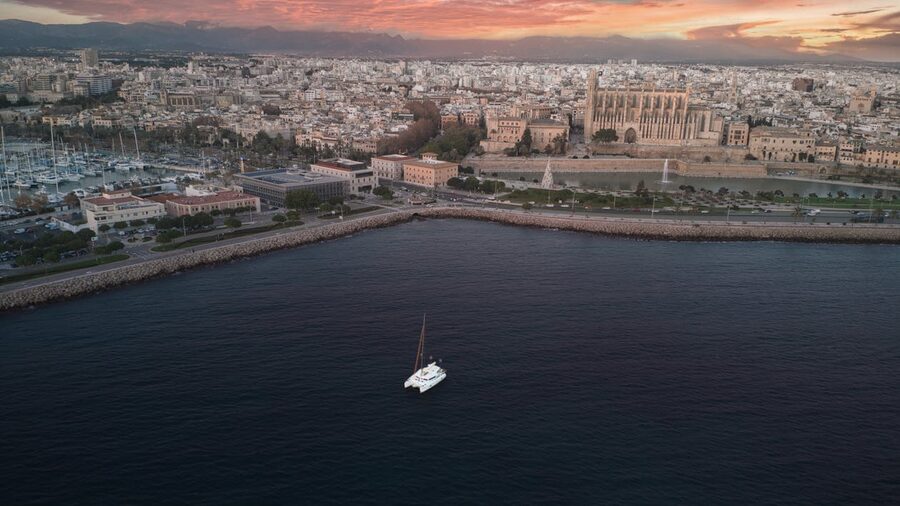
Book the cheapest 24-hour pass through GetYourGuide. Use it once for the Bellver-Portixol-Bellver-back run, exactly the schedule above. Walk the old town separately on a different day with no ticket and no schedule. If you’re docked off a cruise and only have one day, you can compress the whole loop into about seven hours and still get the cathedral, Bellver, and lunch at the seafront in.
What I wouldn’t do: buy the 48-hour pass. Pay the premium upgrade for the boat. Treat the audio guide as a substitute for actually getting off the bus. Use the bus to “see Palma” without ever walking the historic centre. Each of those is a small mistake but they add up.
If you’re piecing together a wider Mallorca trip, the better way to think about transport is in layers: walking for the old town, the hop-on for Bellver and the seafront, the FEVE wooden train to Sóller for the Tramuntana day, a rental car for the east coast and the Caves of Hams in Porto Cristo, and a catamaran cruise for the boat day. Each layer has its job. The hop-on bus does its job well within a narrow scope, and the moment you ask it to do more than that you’ll be disappointed.
One Last Word on Bellver
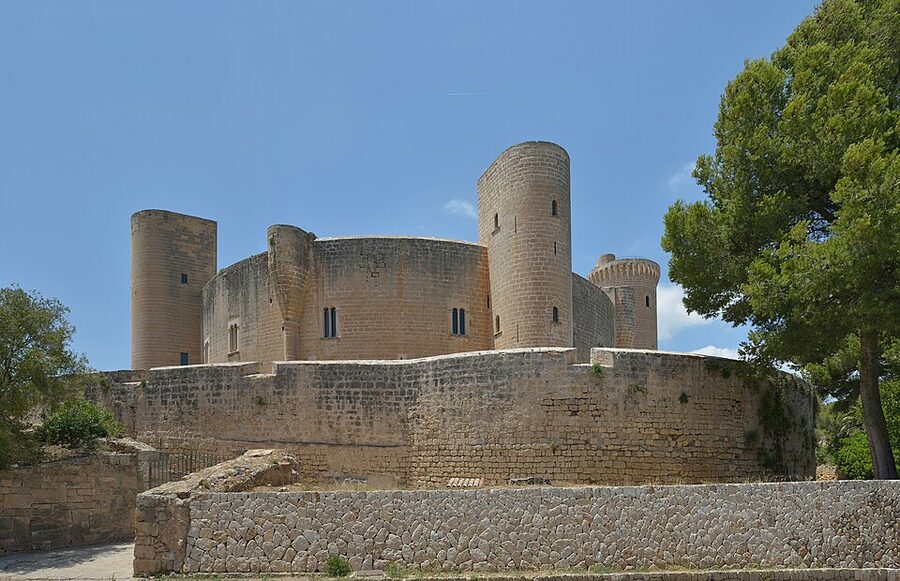
If you only do one thing with the bus pass, do Bellver. Properly. Pay the €4 to enter, climb the keep, walk the parapet, sit in the courtyard. The view from the top is one of the genuinely good Spanish coastal panoramas, on the level of Montjuïc in Barcelona or the Alcazaba in Málaga. It’s not on most travellers’ Mallorca shortlist because Mallorca’s reputation is beaches and clubs and the Tramuntana, not 14th-century military architecture. So you’ll usually have parts of the parapet to yourself.
The castle is also unique in Spain, which is a sentence I don’t write lightly. Spain has hundreds of castles. None of the others is circular. The decision to build a perfect ring with four towers and a moat in 1300 makes sense once you stand inside the courtyard and realise how the design works for both defence (you can see every angle from any single tower) and acoustics. There is no other castle like this in the country, and the bus is the cheapest way to reach it.
That’s the trip. Buy the cheap ticket. Use it for the two stops it’s actually built for. Walk the rest. Have lunch at Portixol. Go home.
Mallorca Beyond the Bus
If Palma’s the start of your Mallorca, not the whole of it, the bus pass is a small piece of a wider stack. The Caves of Hams day trip to Porto Cristo is the east-coast move (the cave system has a small classical concert performed on a subterranean lake, which is the kind of detail you don’t get from any guidebook). The catamaran day cruise from the Palma marina is the water option without committing to a five-hour drive. The cathedral itself is a half-day inside the building, separate from the bus drop on the harbour-front. And if you’ve been to other Spanish cities and want to compare HOHO experiences, the Barcelona and Seville versions are the closest analogues. Pick the parts that fit your trip. Skip the parts that don’t.