
Is the Seville hop-on hop-off bus worth it? Pull up a Seville map before you book and the answer almost writes itself, but it’s not the answer the booking site wants you to land on.
The Centro Histórico is small. Cathedral, Alcázar, Setas, Casa de Pilatos, Santa Cruz: that’s a tight 20-minute walk end to end. The bus can’t enter most of those streets anyway. So the centre is a clean no. Where the bus genuinely earns its keep is the things just outside the walking core: Plaza de España and Parque de María Luisa to the south, Triana across the river, and the Cartuja site north of the river. Those three corners are where Seville stops doing you favours on foot, especially in summer when the asphalt reads 40 degrees by lunch. Yes for the outer ring. No for the centre. That’s the answer earned, not the marketing one.
In a hurry? My picks:
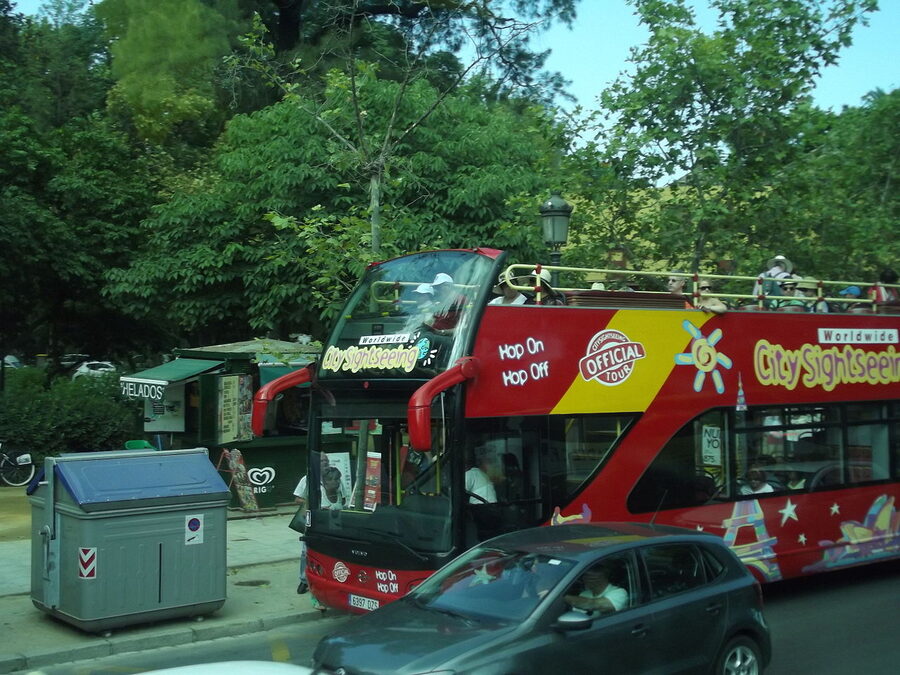
- The default 24-hour ticket ($33): the City Sightseeing red bus, the only operator I’d actually recommend, full circular route plus included walking tours. Book on GetYourGuide.
- The 2-day version ($32): same red-bus operator, 48-hour validity, useful only if you’ll genuinely use it twice. Book on GetYourGuide.
- The Viator alternative ($34): identical buses, identical route, booked through Viator if that’s your platform. Book on Viator.
The short answer first
Yes, but only if your Seville plan has Triana, Plaza de España, Parque de María Luisa, or the Cartuja site on it. Without those, skip it.
Each city HOHO earns a different verdict. Milan’s verdict was mostly no: a flat grid where the bus loops past everything you’re already walking to. Naples flipped that to a yes, because the city sprawls up cliffs and along coast in a way your legs hate. Barcelona was a hilltops-and-coast yes: walk the centre, ride the climbs. Paris was a soft yes for the river-axis monuments, while Marseille earned a yes for the coast climb to Notre-Dame de la Garde.
Seville sits in a fourth bucket. The historic core is too small AND too pedestrianised for the bus to help. But the half of Seville that nobody puts on a one-day plan, Plaza de España and Triana and the Cartuja and Parque de María Luisa, is genuinely too far to walk in summer heat with kids or a tired group. The bus is the right tool for that outer ring and a poor tool for the centre. Most travellers buy it for the wrong half of the city, then complain about it.
Why the centre is a no
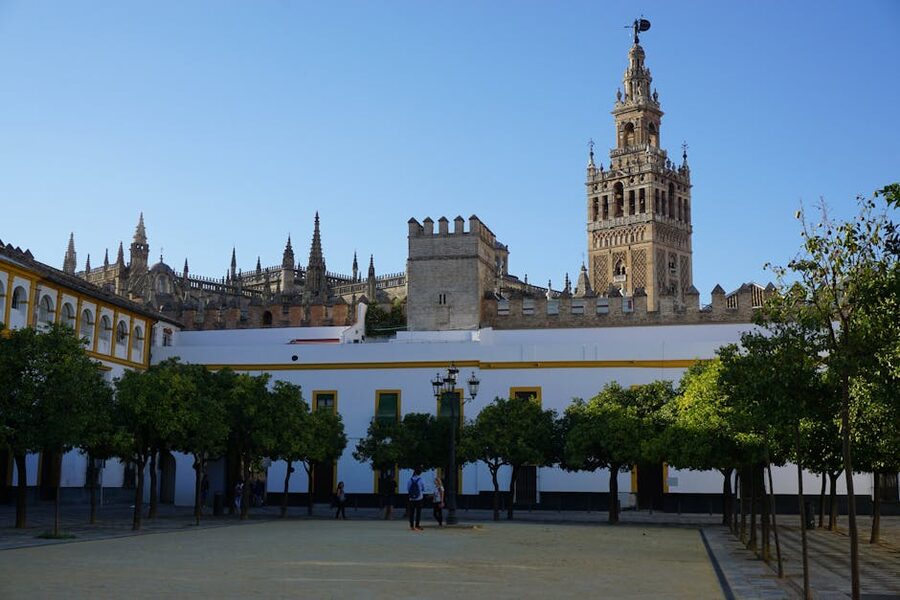
Seville’s old town is one of the densest medieval-Mudéjar street grids in Europe. Look at a map of the Santa Cruz neighbourhood: there are streets you can touch both sides of with your elbows. Tour buses physically cannot enter. They circle around the perimeter, drop you on a wide plaza outside, and you walk in.
That means every “stop near the Cathedral” is actually a stop on Paseo de Cristóbal Colón, Plaza del Duque, or Avenida de la Constitución. Five to seven minutes on foot from where you wanted to be. So the bus saves you nothing on:
- Seville Cathedral and the Giralda (centre, walk)
- Royal Alcázar (next door to the Cathedral, walk)
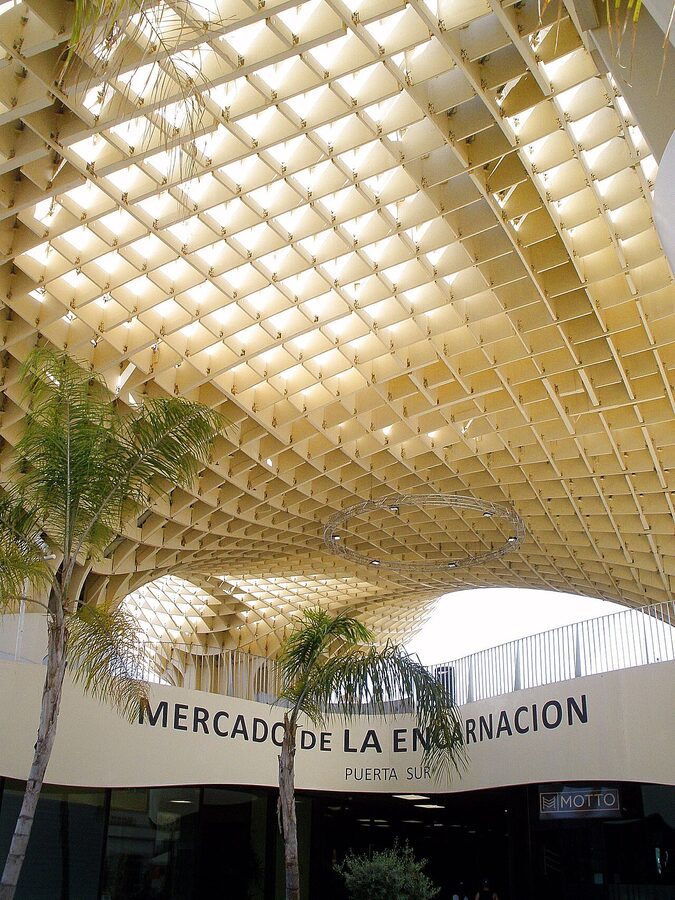
- Setas de Sevilla (12 minutes north of the Cathedral, walk)
- Casa de Pilatos (10 minutes east of the Cathedral, walk)
- Santa Cruz neighbourhood (next to the Alcázar, walk)
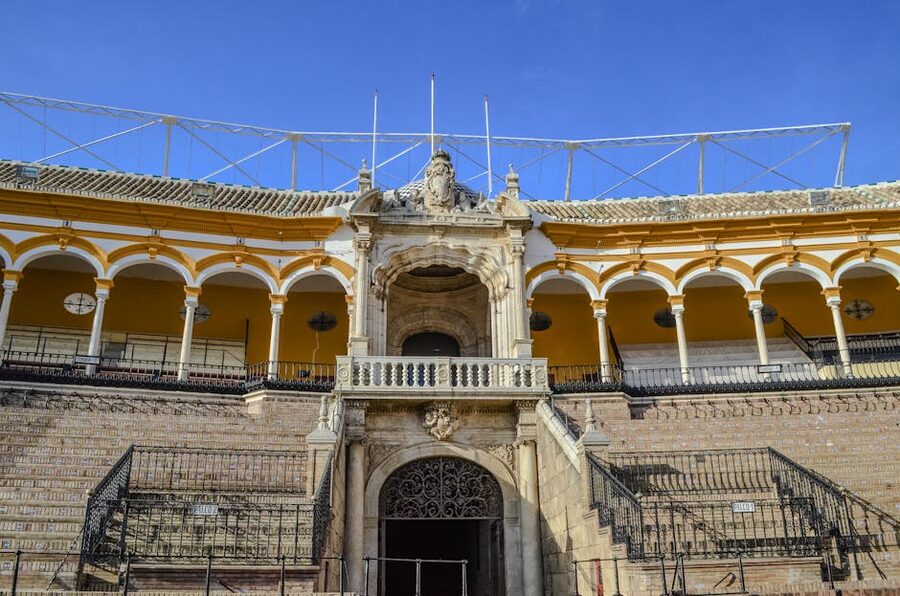
- Barrio del Arenal and Plaza de Toros (walk)
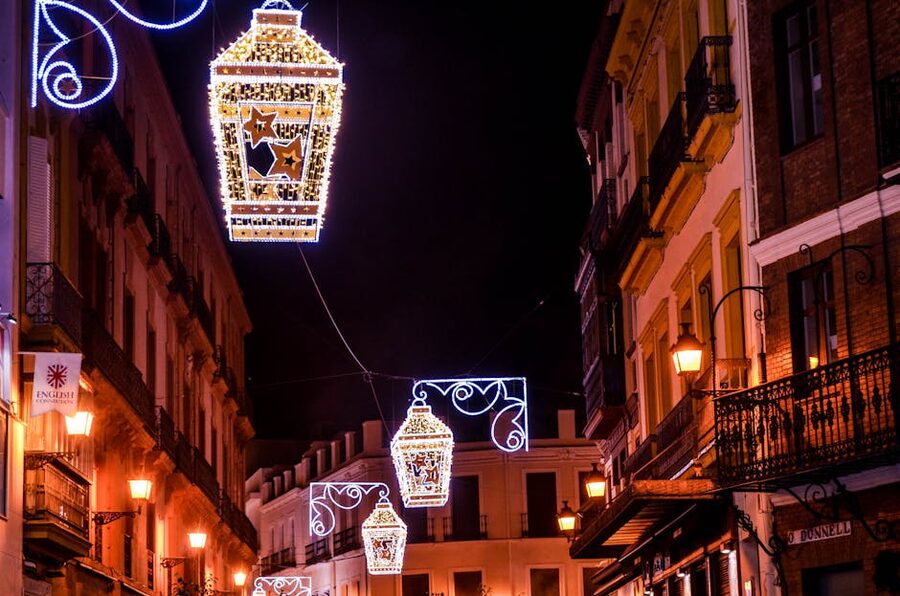
If your trip is two or three days inside the walls of the centro, you don’t need this bus at all. You need good shoes and a couple of bottles of water. The Cathedral, Alcázar, Setas, Casa de Pilatos, Santa Cruz, the river edge between Torre del Oro and Plaza de Toros: that whole ring is a 20-minute walk end to end at human pace. Add another hour for stops at a tile shop or a horchatería and you’ve covered everything.
Where the bus actually pays off
Now look at the map again with the centre crossed out. The four corners that remain are the bus’s job, and they’re worth doing.
1. Plaza de España and Parque de María Luisa
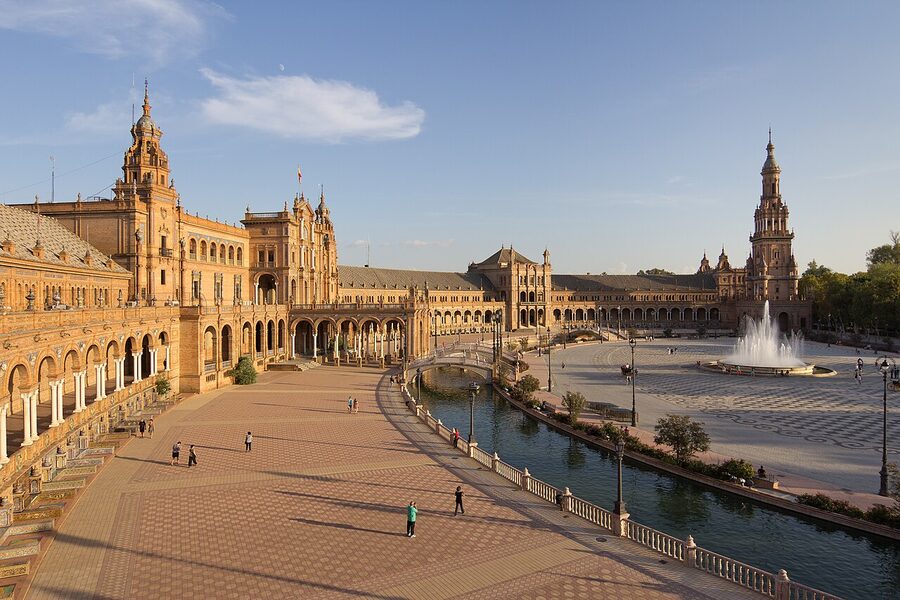
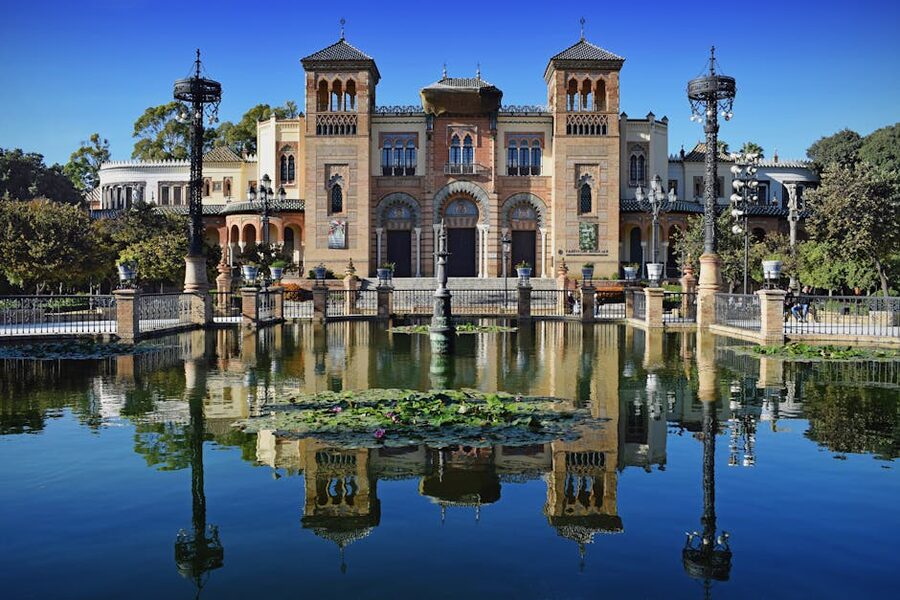
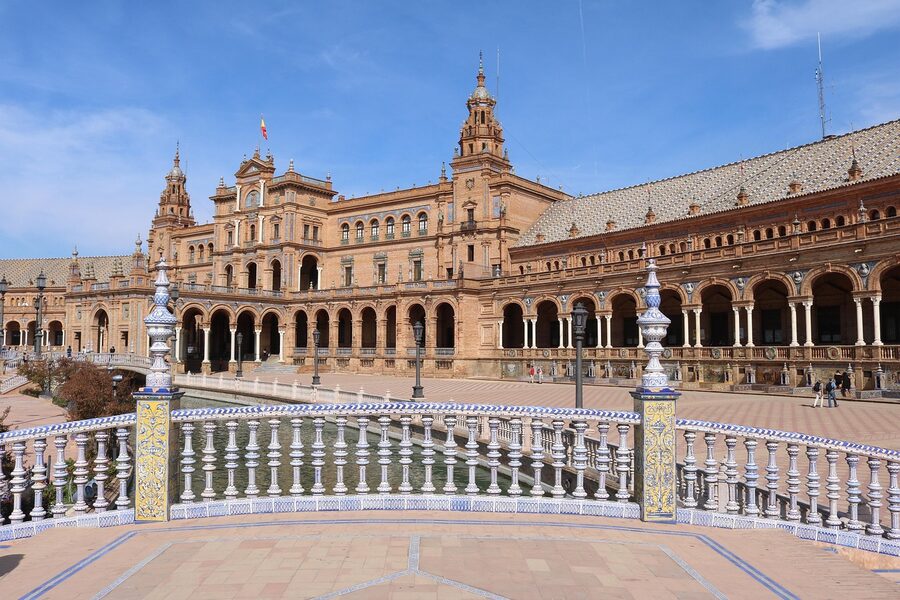
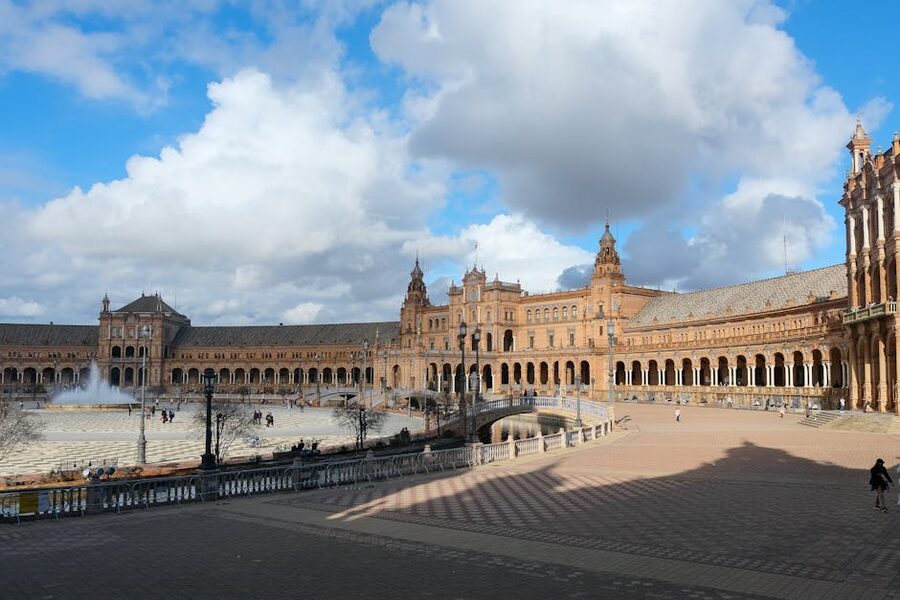
This is where the bus stops being a tourist gimmick and starts being a useful piece of transport. Plaza de España was built for the 1929 Ibero-American Exposition. Half-circle building, central canal, bridges representing the four ancient kingdoms of Spain, tile alcoves for every Spanish province. You’ve seen it in Star Wars Episode II and Lawrence of Arabia. In real life it’s a 25-minute walk south from the Cathedral, in summer easily 35 with stops in shade.
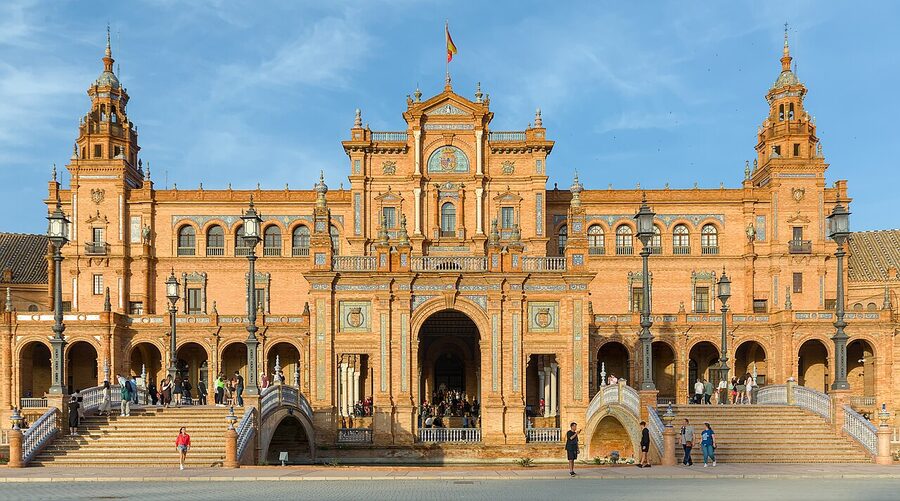
Parque de María Luisa wraps around behind it. Think a half-mile of pine and palm shade with fountains, ceramic benches, hidden Mudéjar pavilions, and a fountain dedicated to ducks that the kids will not leave. The combined visit takes two to three hours if you do it properly. On foot from the centre in August it’s just unpleasant.
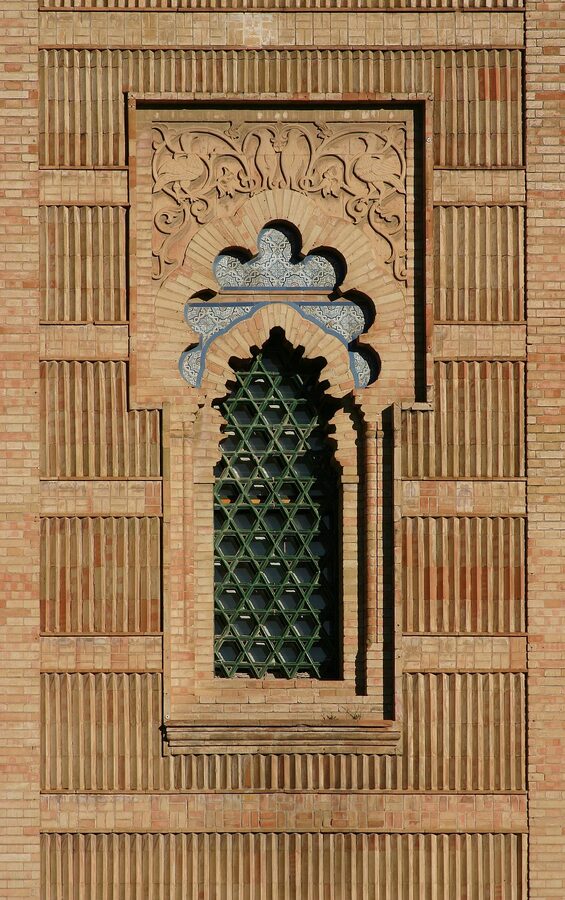
The bus drops you at Plaza de España, you walk through the park to the Mudéjar pavilion, you reboard ten minutes later. That single stop is the reason the ticket exists.
2. Triana, across the river
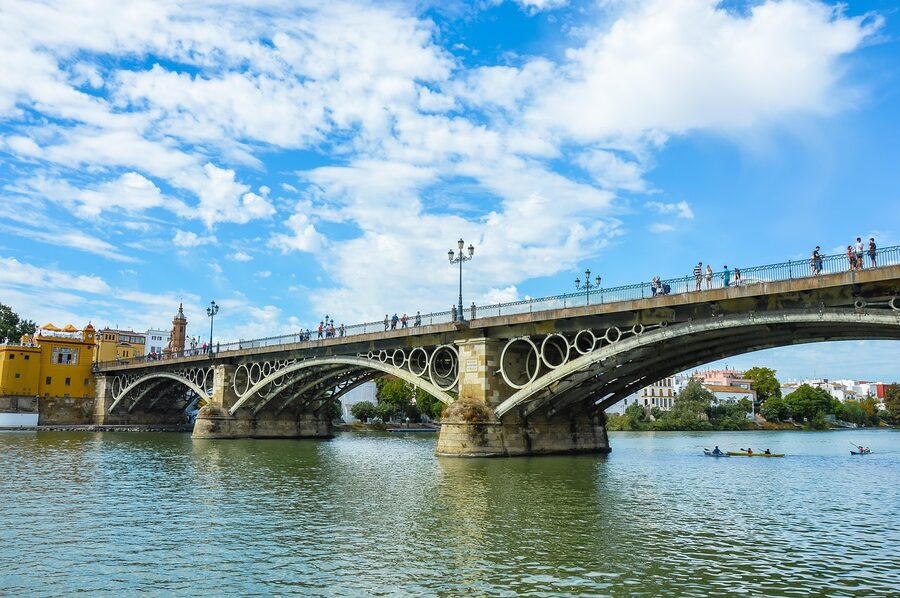
Triana sits across the Guadalquivir. Walking it from the Cathedral is doable, twenty minutes in good weather. The catch is that Triana is also long, stretched along the river, and once you cross the bridge you’ve still got a fifteen-minute walk to the southern half where the ceramic shops and the Mercado de Triana are. The bus saves you that second leg.
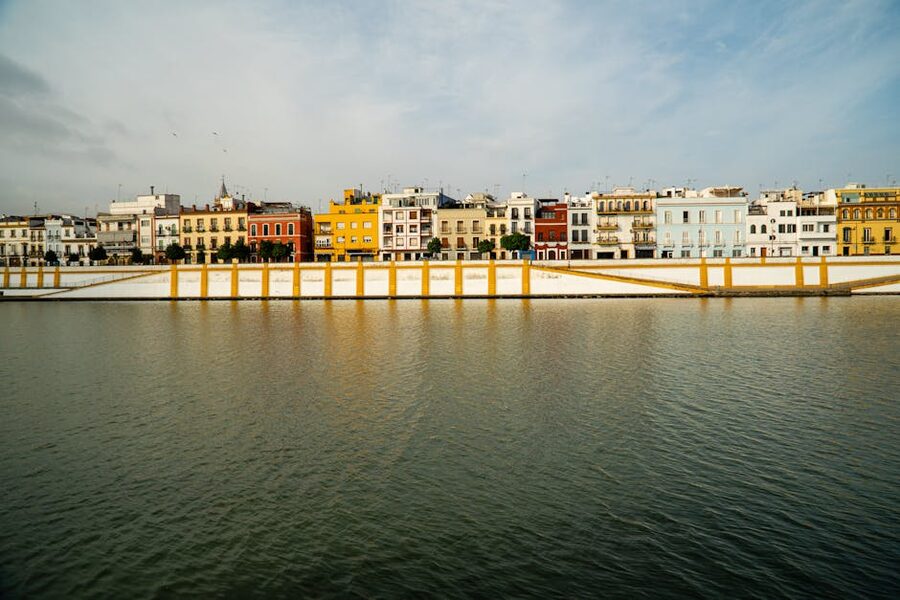
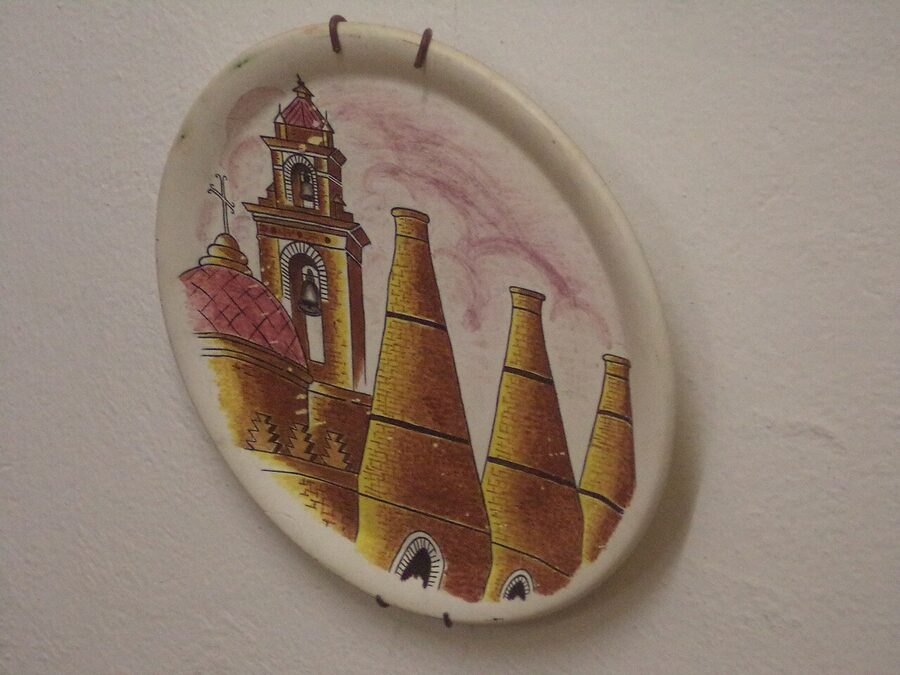
Triana is also where the city’s tile-making lives. The tile shops on Calle San Jorge and Calle Antillano Campos still hand-paint pieces using the same Mudéjar geometry the Alcázar uses. If you’ve already done the Royal Alcázar you’ll recognise the patterns instantly. There’s a small ceramics museum (Centro Cerámica Triana) on the same street, free with a Sevilla card, that explains the kilns and the families that ran them.

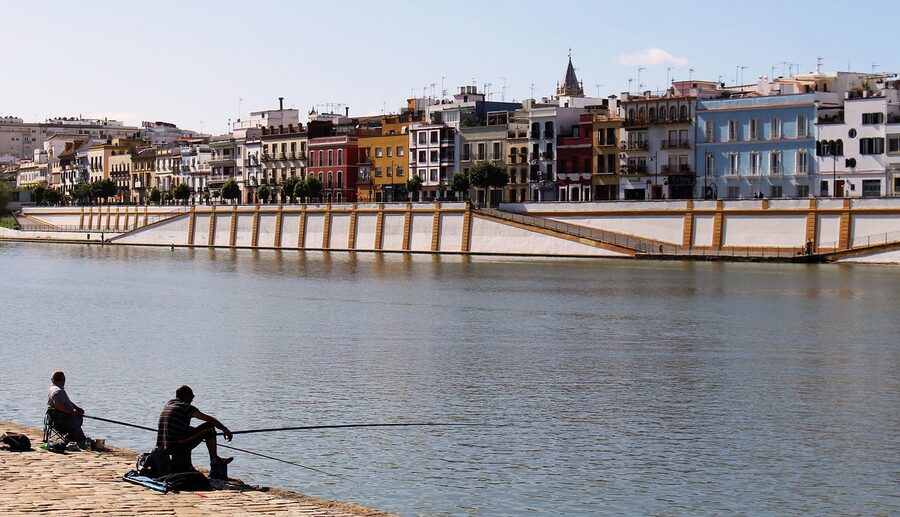
The other reason to bus to Triana is Calle Betis at sunset. The east bank of the river, looking back at the Cathedral and Torre del Oro across the water as the light goes warm. There are a dozen riverfront bars along that stretch and one of them will be the right one for you. The walk back over the Puente de Isabel II at golden hour is one of the best free moments in the city.
3. The Cartuja, north of the river
This one’s underrated. The Monasterio de Santa María de las Cuevas, locally just “La Cartuja”, is a 15th-century Carthusian monastery on Isla de la Cartuja, the island that hosted Expo ’92. It’s a 30-minute walk from the centre and there’s no good reason to do that walk. The bus drops you at the gate.
Inside, the monastery is half-restored, half-ruin, with an excellent contemporary art museum (CAAC) running through the cloisters. Christopher Columbus stayed here between voyages. His remains were temporarily buried here too, before they moved to the Cathedral. If you’ve done the Cathedral and the Columbus tomb, the Cartuja closes the loop on the same story from the other side of the river.
4. Torre del Oro and the river
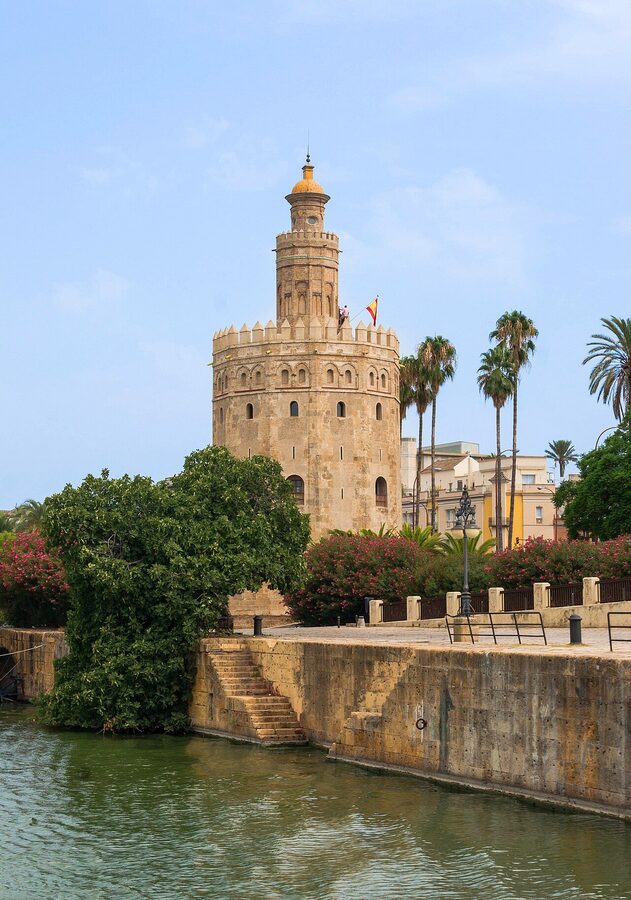
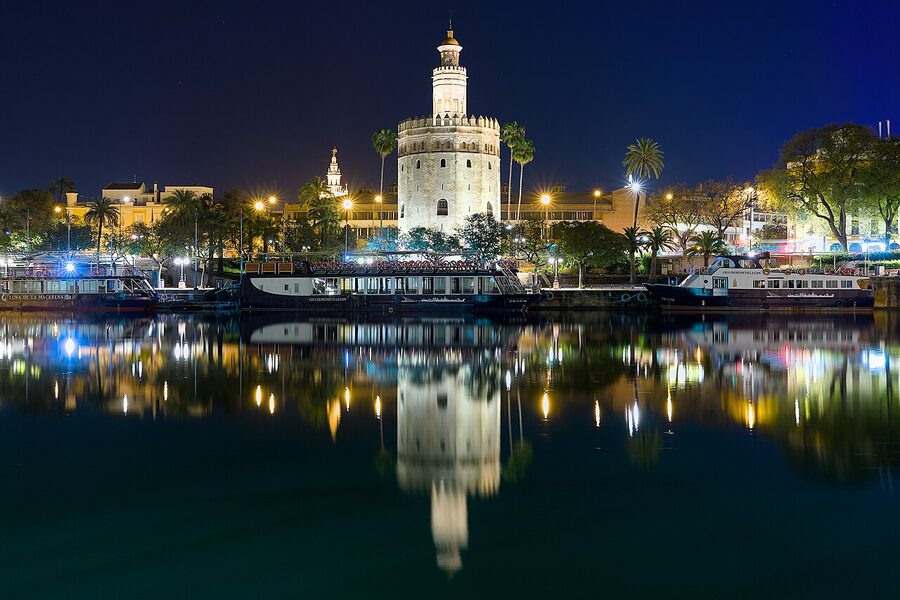
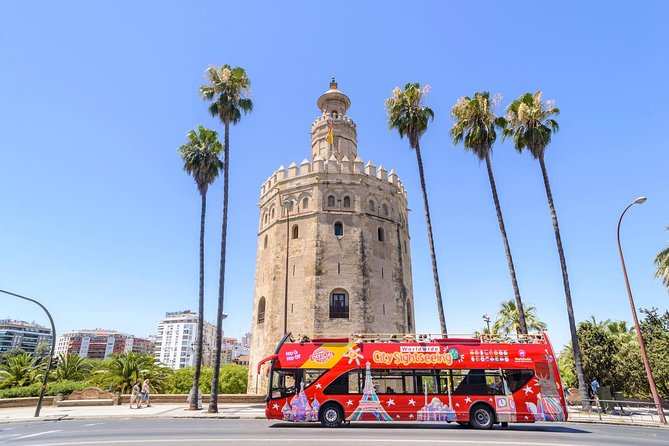
This isn’t a “bus is essential” stop. It’s a “the bus does it well” stop. Torre del Oro sits on the riverbank below the Maestranza bullring, where the bus runs anyway, and the stop is right at the door. If you’re combining a Plaza de España visit with a Guadalquivir river cruise from the dock right next to the tower, this is your single most efficient stop on the route, the same bus-plus-boat combo that works in Amsterdam pairing the bus with an Amsterdam canal cruise.
The two operators, and which one to take
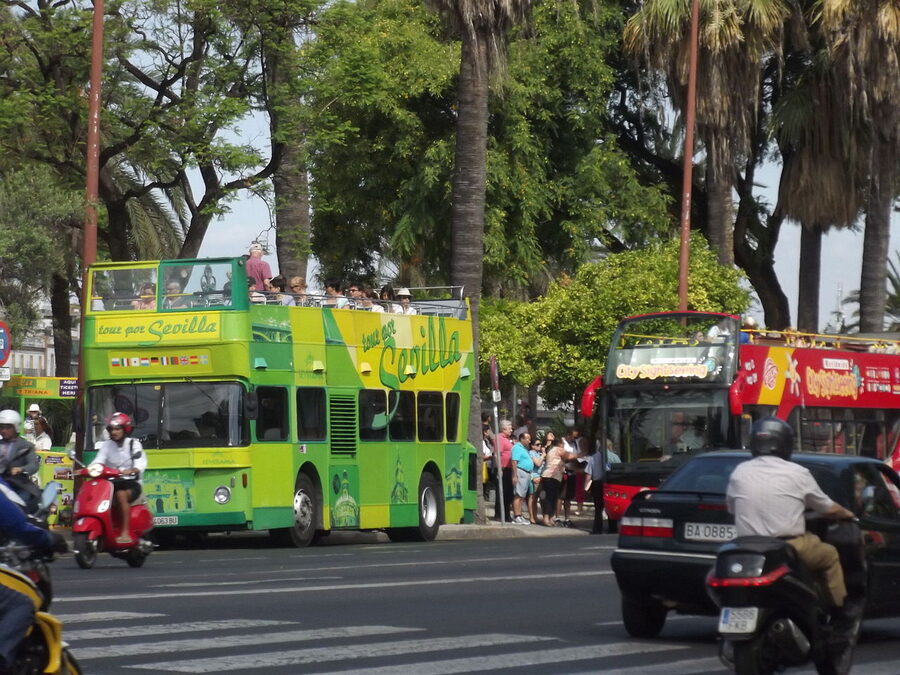
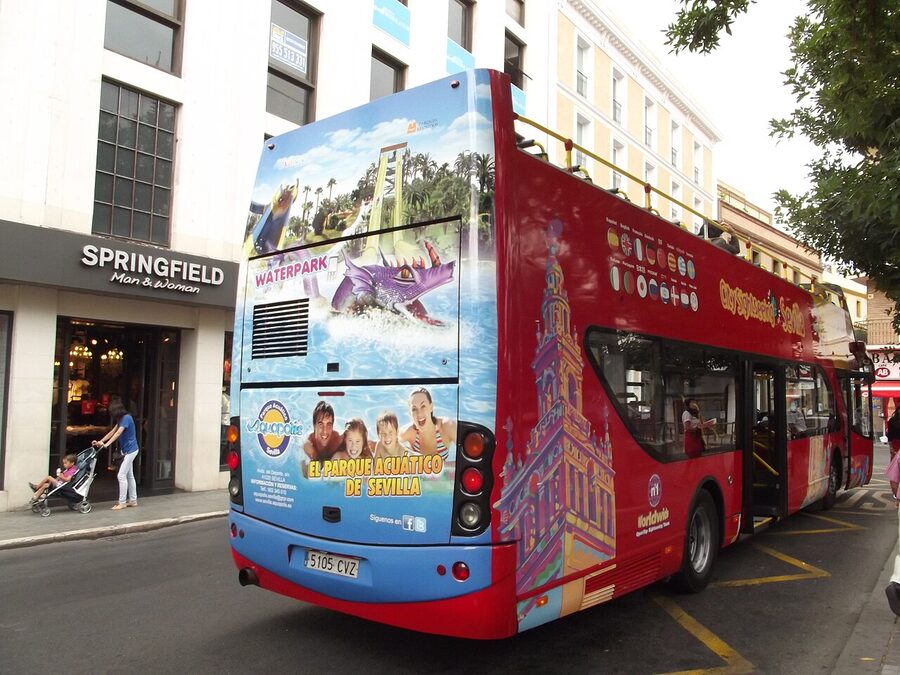
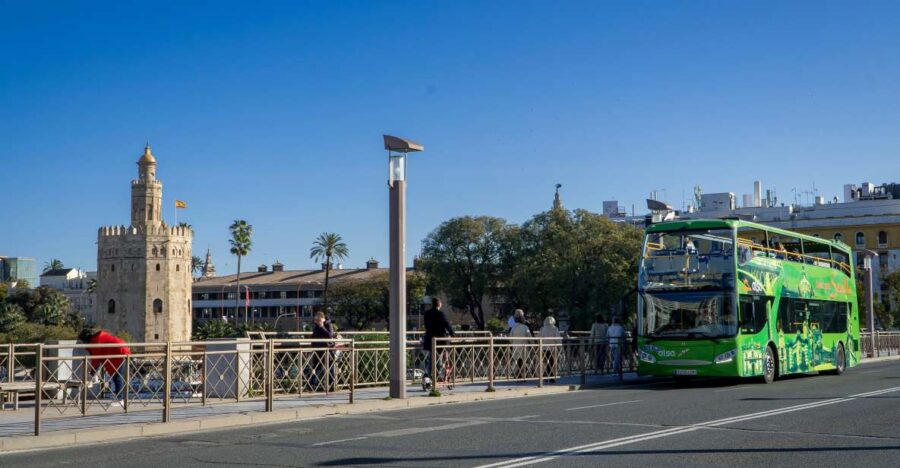
Two companies sell hop-on hop-off in Seville: City Sightseeing (red buses) and Sevirama (green buses). They look almost identical from the outside. They are not the same product.
The red City Sightseeing buses run roughly every 25 to 30 minutes through the day, with two free walking tours included in the ticket and reasonably reliable English audio. The green Sevirama buses promise the same thing on paper. In practice they run roughly every 45 minutes, sometimes worse, the audio commentary is patchy, and the “free walking tours” turn out to be a tip-based pitch with a guide who walks you along the bus route.
If a tout in the mall near the Cathedral offers you a green-bus ticket for “only €17, three routes”, do not buy it. The Tripadvisor reviews and the Spain travel forums tell the same story over and over. Pay the extra few euros for the red buses and have a normal experience. This is the same kind of “two operators, one is fine, one is a trap” pattern Naples has with its waterfront tour boats, and the same reason the Amsterdam hop-on operator field is worth picking carefully.
Frequency, audio, and what to actually expect
The red City Sightseeing route is one big circle. Fourteen stops. The full loop runs about 1 hour 15 minutes if you don’t get off, which a fair number of people do, especially on a hot day or in the rain.
Stops on the loop:
- Torre del Oro (river edge, near the cruise dock)
- Plaza de España (the headline stop)
- Parque de María Luisa
- Plaza de América (south end of the park, museum cluster)
- Plaza del Duque de la Victoria (close to the Setas)
- Isla Mágica amusement park (north, family-only)
- CAAC / Cartuja (the monastery and Expo ’92 site)
- Calle Betis Triana (the river-bar stretch)
- Plus six more linking stops on the major avenues
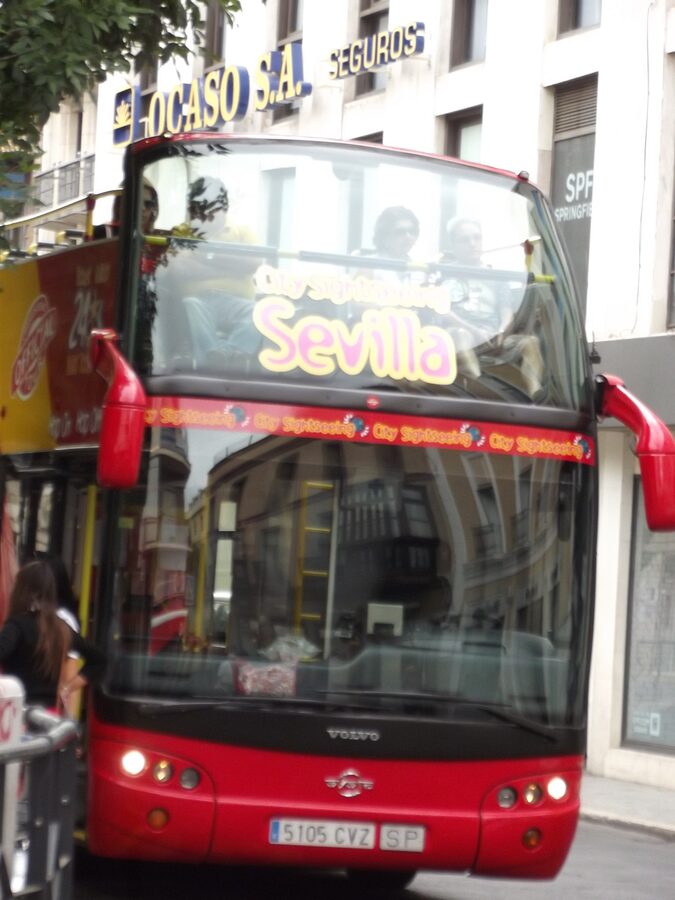
Real-world frequency on the red bus is closer to 25 minutes most of the day, dropping to about 40 in the early evening. Plan around that. If you’re hopping off for a 90-minute museum visit, the bus will be there. If you’re hopping off for a 15-minute photo at Torre del Oro, you’re fine. If you’re hopping off for a long lunch in Triana, accept that you might wait half an hour for the next bus when you’re done. Walking back via the Puente de Isabel II is often faster.
The audio commentary is on the bus itself, in eight languages, and runs as a loop tied to GPS. It’s better than Naples’s audio but worse than Barcelona’s. Some stops get a thirty-second commentary, some get nothing. Don’t expect a guided tour. Expect a moving overview with patchy narration.
When to ride it
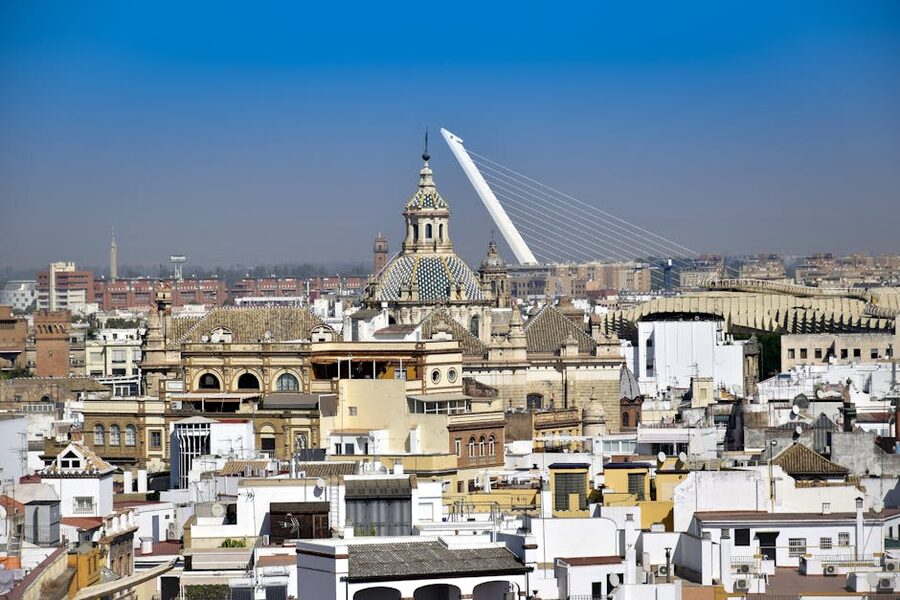
The right answer is: not in the middle of August at noon. The open top deck in summer between 11am and 5pm is a sunburn machine, with no shade and asphalt heat coming up off the road. The marketing photos of smiling riders on the upper deck were taken in March.
The two windows that work best:
- Mid to late morning, around 9:30 to 11am. Cool enough to ride upstairs, light is good, you’ve still got the day ahead.
- Late afternoon to sunset. The light goes from harsh to gold, the river crossings turn into postcards, Plaza de España glows. The night route, where it runs, is variable. Some seasons run a 6 or 7pm departure. Some don’t.
Avoid the mid-afternoon ride entirely. Between roughly 1pm and 5pm in summer, locals are inside. The bus is hot, the streets look bleached out from the upper deck, and you’re better off in a darkened bar with a vermouth.
Who this is right for
The actual filter, after all of the above:
Yes, buy it if: you’re in Seville for one or two days and want to add Plaza de España, Parque de María Luisa, Triana, or the Cartuja site to a centro itinerary; you’re travelling with kids, older parents, or anyone with mobility issues who can’t do a 25-minute walk in the heat; or you’re a cruise-day visitor with five or six hours and need to cover ground fast. If your group has any of those constraints, the bus is the right call.
No, skip it if: you’re in Seville for three or more days and your interests are concentrated in the Cathedral / Alcázar / Santa Cruz / Setas walking core; you don’t speak any of the audio guide languages (the experience drops sharply without commentary); or you’d rather spend your money on a single guided tour of the Alcázar plus a flamenco show than on transport between sites you can walk to.
For three-plus-day visitors, the better mix is: walk the centre on foot, do a one-hour Guadalquivir river cruise for the moving-overview experience, and use a single taxi or Uber to get to Plaza de España when you want to. That’s typically cheaper than a HOHO ticket and gives you better photos.
The tours, ranked
Three live products on the affiliate platforms. Same buses run on all three. The differences are the operator, the validity, and the booking platform.
1. Seville City Sightseeing Hop-On Hop-Off (24 hours): $33
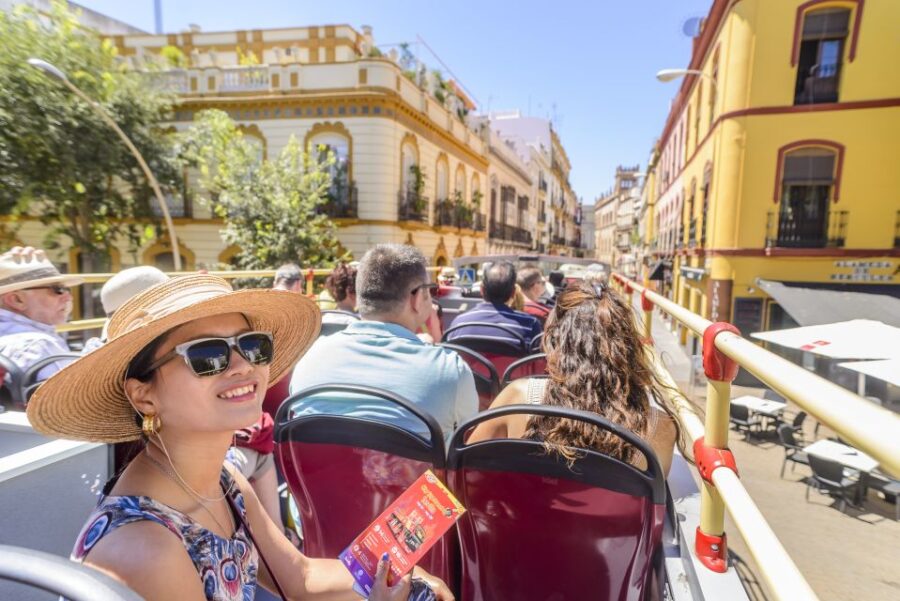
This is the one to book: red buses, 24-hour validity from first boarding, two included walking tours of the centro and the Triana side. Our full review of the City Sightseeing Seville HOHO walks through the route stop by stop and the audio quality. If you only buy one HOHO ticket in Seville, this is it.
2. City Sightseeing Seville on Viator: $34
Identical product to pick #1, sold through Viator instead of GetYourGuide. The audio commentary is less polished here than in the Barcelona version of the same chain, which our Viator listing review covers in detail. Pick this only if you’re already a Viator user.
3. Seville 2-Day Hop-on Hop-off Bus Ticket: $32
The 48-hour version of pick #1, marginally cheaper per hour but most travellers don’t ride it twice. Worth it if your plan is “Plaza de España on day one, Triana and Cartuja on day two” with a real reason for the split. Our 2-day pass review covers when it pays off and when it’s a waste.
Things people get wrong about it
A few things that come up over and over in the bus’s Tripadvisor reviews and that aren’t actually the bus’s fault:
“It doesn’t go near the Cathedral.” Correct. It can’t. Seville’s old town is closed to coach traffic by city ordinance and physically too narrow anyway. The closest stops are 200 metres away on Avenida de la Constitución. That’s a four-minute walk. If you wanted the bus to drop you at the Cathedral door, no bus tour in any historic European city does that.
“The audio was bad.” The audio is GPS-triggered. If your bus is running through traffic and the GPS lag is off by a block, you’ll hear the commentary for one stop while looking at the next one. This is the same complaint people level at Florence’s HOHO and Rome’s HOHO. It’s a feature of all GPS audio tours, not a Seville-specific failure.
“The frequency was way off.” This is a real complaint, but it’s almost always against the green Sevirama buses, not the red City Sightseeing ones. Read the previous section. Pay for the red. Don’t buy a green ticket from a tout.
“It rained and we didn’t enjoy the open top.” Seville averages 50 days of rain a year. The other 315 are sunny. If the forecast says rain, push the booking to the next day. This is one of the few HOHO products in Europe where the weather genuinely matters.
How it stacks up against the river cruise
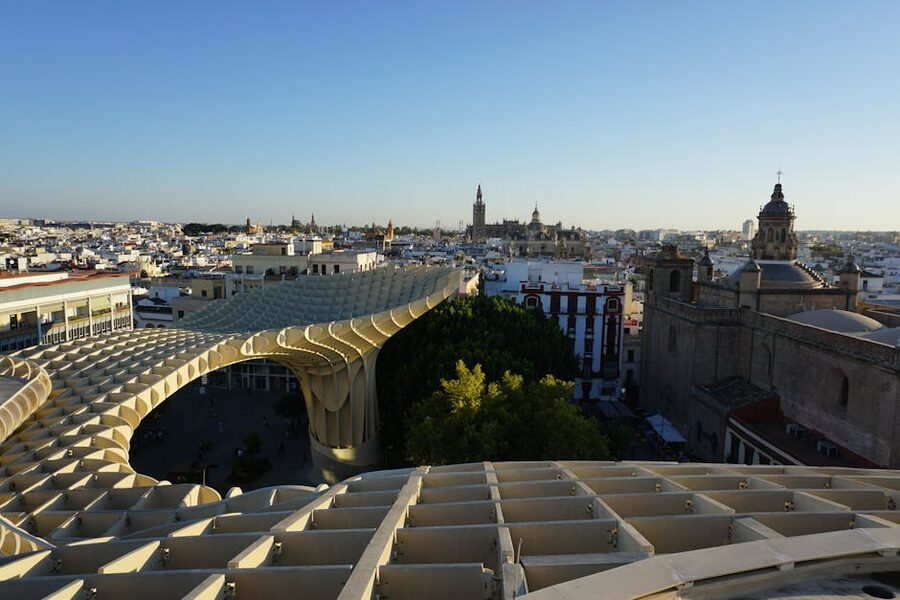
If your reason for buying a HOHO ticket is “I want a moving overview of the city without walking”, the bus has a real competitor here. The Guadalquivir river cruise is one hour, costs about €18, gives you the river-edge skyline (Torre del Oro, Plaza de Toros, Triana waterfront) from the water at a single fixed time, and is over before the sun gets brutal.
The trade-off is coverage. The bus reaches Plaza de España, Parque de María Luisa, and the Cartuja that the boat doesn’t. The boat catches the riverfront and Triana that the bus only touches. If you have one slot for “moving overview”, pick the boat. If you have two slots, do the boat in late afternoon and the bus the next morning.
Booking, refunds, and the small print
Both GetYourGuide and Viator let you cancel free up to 24 hours before the start time. The ticket is delivered as a QR mobile voucher; you scan it on first boarding and the 24 or 48 hour clock starts then. There’s no need to print anything.
The price has been stable at $33 (red 24-hour) for the last two seasons. Some Sevilla Card combinations include a HOHO discount or a fast-track Cathedral entry; if you’re already buying the city pass for the Alcázar / Cathedral skip-the-line, check whether it bundles the bus before you buy the bus separately.
If you book the 2-day version and only end up using day one (which happens a lot) you can’t get a refund on the unused day. Default to the 24-hour ticket unless you have a hard plan for the second day.
While you’re here
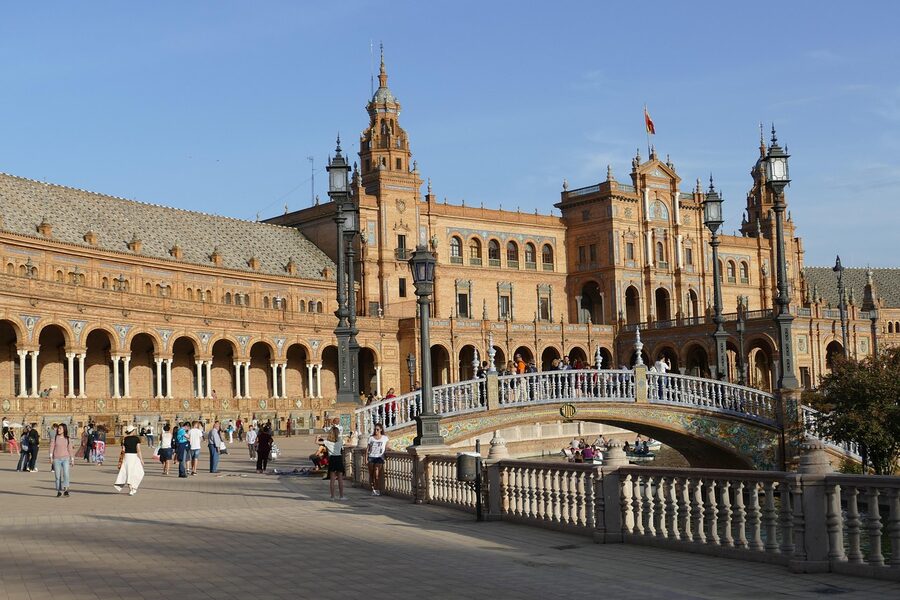
The HOHO bus is one corner of a Seville plan, and a small one. The big-rock items here are the Royal Alcázar and Cathedral and Giralda, both of which deserve their own half-days and both of which are walking-only. Casa de Pilatos is the underrated third palace, ten minutes’ walk from the Cathedral and a quieter version of the Alcázar’s tile and patio architecture. Setas de Sevilla is the modernist counterweight, ten minutes north on foot. Flamenco in Seville covers what’s actually worth booking on the dance front, and the river cruise is the alternative moving-overview product if the bus isn’t right for your trip. Pick the bus for the outer ring. Walk the centre. That’s the Seville plan that works.