
Last spring my friend Mara hit Barcelona for three days and tried to do the Gaudí trio in one morning. Casa Batlló at the 9am opening, La Pedrera by 11, lunch at noon. By the time she walked into the courtyard of Casa Milà she’d already absorbed forty-five minutes of dragon roof, fish-scale tiles, an audio guide narrated by a woman pretending to be the sea, and three flights of stairs. She made it to the rooftop, stared at the warrior chimneys for about two minutes, took one photo, and sat down on a bench. “I’d seen Gaudí,” she told me. “I just hadn’t really looked at any of it.”
This is the most common Barcelona pacing mistake in the Gaudí cluster. Casa Batlló and La Pedrera sit a five-minute walk apart on Passeig de Gràcia. Plenty of guides will tell you to do them back-to-back because they’re so close. Don’t. The two houses are physically near each other and aesthetically related, but visiting them in the same morning produces what Mara had. Gaudí fatigue, where everything starts looking like the same wavy stone.
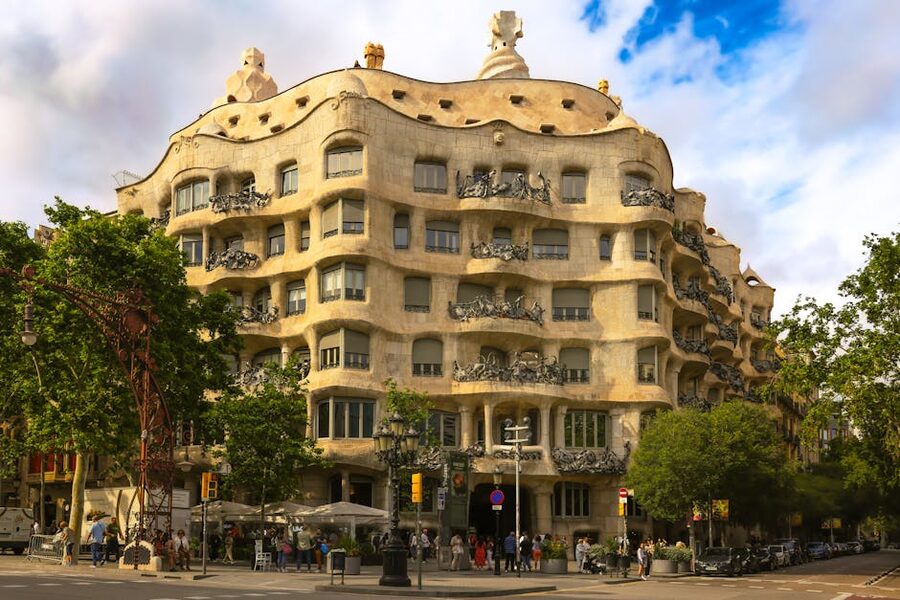
The right move is to split them. Do Casa Batlló in the morning when the audio tour is at its best with daylight pouring through the stained glass, then save La Pedrera for the evening Origins light show on the rooftop. Or, better, different days entirely. Casa Batlló on a museum-and-Gaudí day, La Pedrera at the start of a Sant Pau or Eixample day. The point is to give your eyes time to reset between two of the most visually loud buildings in Europe.
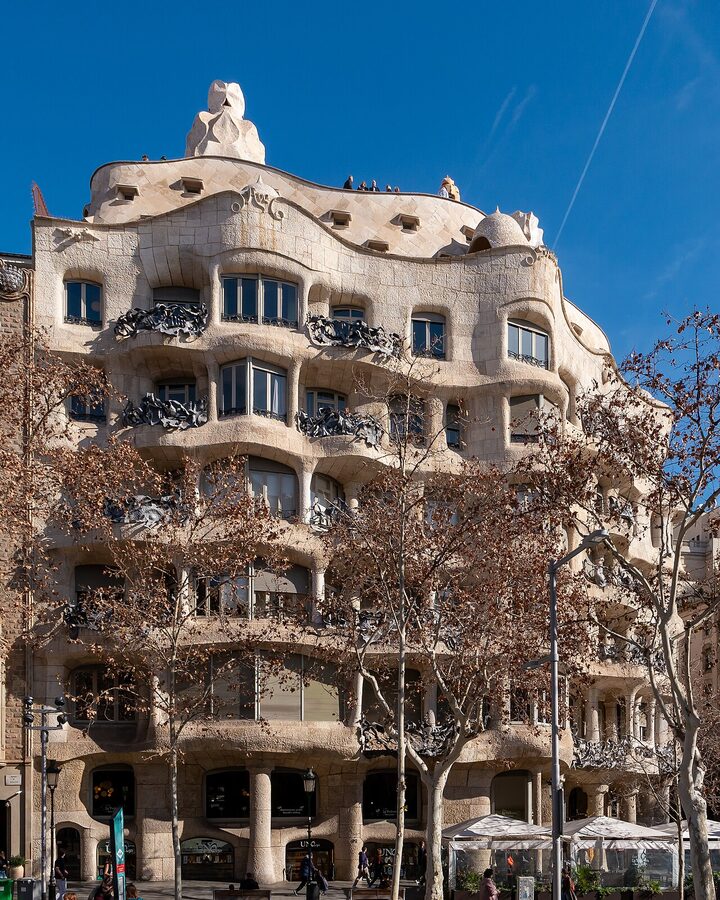
In a Hurry? Three Picks
Best daytime visit (under €30): La Pedrera Ticket with Audio Guide. Flagship daytime entry, the audio is excellent, around 90 minutes inside.
The evening Origins light show: La Pedrera Night Experience. Semi-guided plus a 20-minute video-mapping show projected onto the rooftop chimneys. Different building entirely after dark.
Sunrise with a real guide: Early Morning Access Guided Tour. First slot of the day, no crowds, a human walking you through the rooms.
Why La Pedrera Doesn’t Pair With Casa Batlló in One Morning
Both buildings are by Gaudí. Both sit on Passeig de Gràcia. Both have iconic rooftops with sculpted chimneys. Both run an audio tour that takes about an hour. On paper they look like a perfect double-feature.
In practice, they’re two of the most visually intense buildings you’ll ever walk through, and the brain runs out of capacity for that kind of architecture faster than you’d think. Casa Batlló is the more theatrical of the two: stained-glass aquarium light, a literal dragon’s spine running across the roof, fish-scale tiles, the famous skull balconies. By the time you walk out of it your visual cortex is already buzzing. Then you walk five minutes down Passeig de Gràcia, pay another €25, and do another hour of wavy stone and sculpted chimneys.
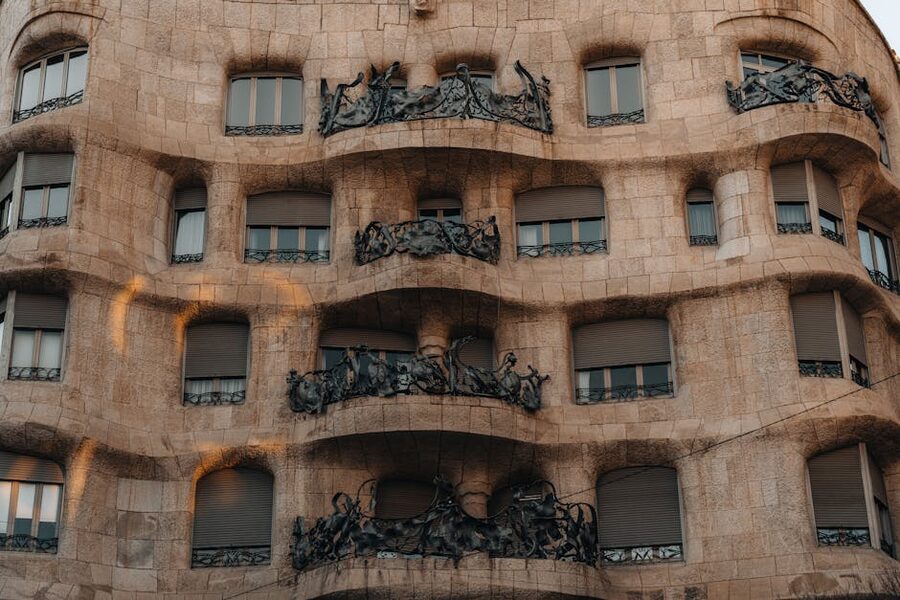
The audio tours don’t help. Both are in the same register: slightly mystical, lots of Gaudí-as-genius framing, frequent references to nature and biomimicry. Doing them back-to-back is like watching two episodes of the same show with the same narrator. The second one starts to feel repetitive even when the building isn’t.
I’ve watched friends do this twice now and both times the report was the same: “Casa Batlló was incredible. La Pedrera was nice.” That’s not La Pedrera being lesser. It’s La Pedrera being seen by tired eyes.
How to Actually Schedule Them
Three workable plans, depending on your trip length.
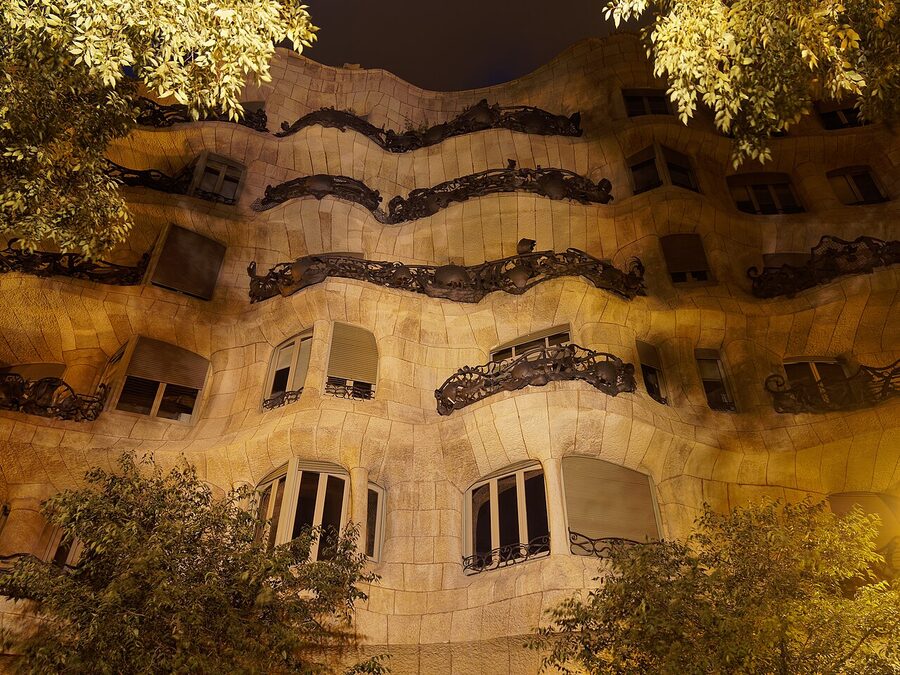
Plan A: different days. Best option if you have four days or more. Do Casa Batlló on a Gaudí-heavy day (pair it with Sagrada Família in the afternoon, since the cathedral is a 25-minute walk and your brain is already in the right register). Do La Pedrera on an Eixample-and-modernism day, ideally ending at the night show. The trio of Casa Batlló, La Pedrera, and the early-Gaudí oddity Casa Vicens spread across separate days will do more for your understanding of how Gaudí evolved than any single day pile-up can.
Plan B: same day, far apart. Casa Batlló at 9am opening (first slot is the calmest the building gets). Lunch and a long break: go to Park Güell for the afternoon, or just to a café with a notebook. Then La Pedrera at 7:30pm for the Origins night experience. The break of six hours and the change of register from daytime audio to evening light show is what makes this work.
Plan C: two-day Barcelona, doing both. Casa Batlló on day one, La Pedrera on day two. This is fine. The 24-hour gap is enough.
The plan to actively avoid is the back-to-back morning. 9am Casa Batlló, 11am La Pedrera. That’s the schedule the ticket sites push because it’s logistically clean. It produces the version of the visit Mara had.
The Building Itself: What You’re Actually Walking Through
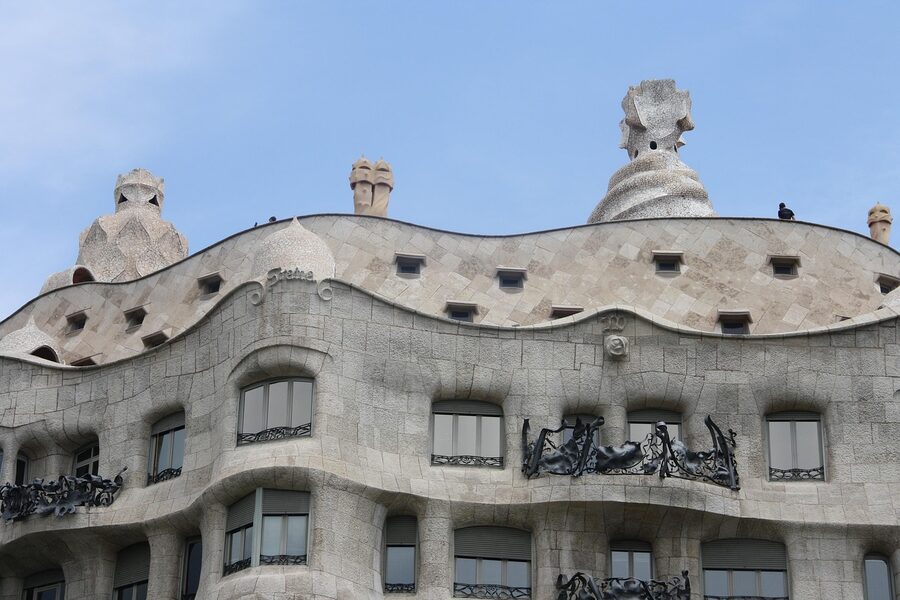
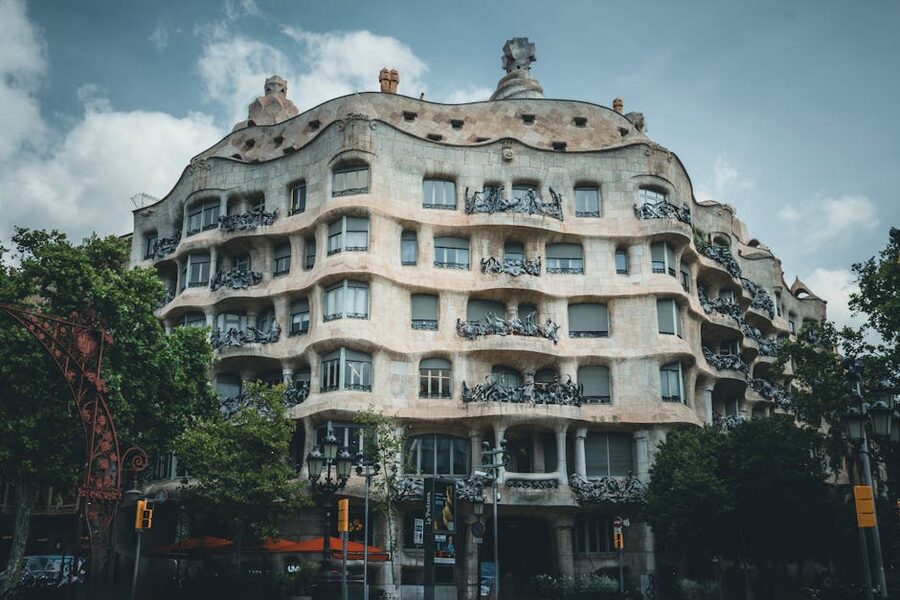
Casa Milà was built between 1906 and 1912 for Pere Milà and his wife Roser Segimon, who’d recently come into a lot of money and wanted a building on Passeig de Gràcia that would announce them to Barcelona’s upper class. They got more than they bargained for.
Pere Milà had seen Casa Batlló, finished a year earlier, and wanted Gaudí to do something on the same scale. Gaudí did, and then went further. The result was so radical that the city council fined the Milàs for exceeding height limits, the press mocked it as “La Pedrera” (the stone quarry), and Roser hated the building so much that after Gaudí’s death she covered up most of his interior work with conventional plasterwork. What you see today is largely a 1990s restoration.
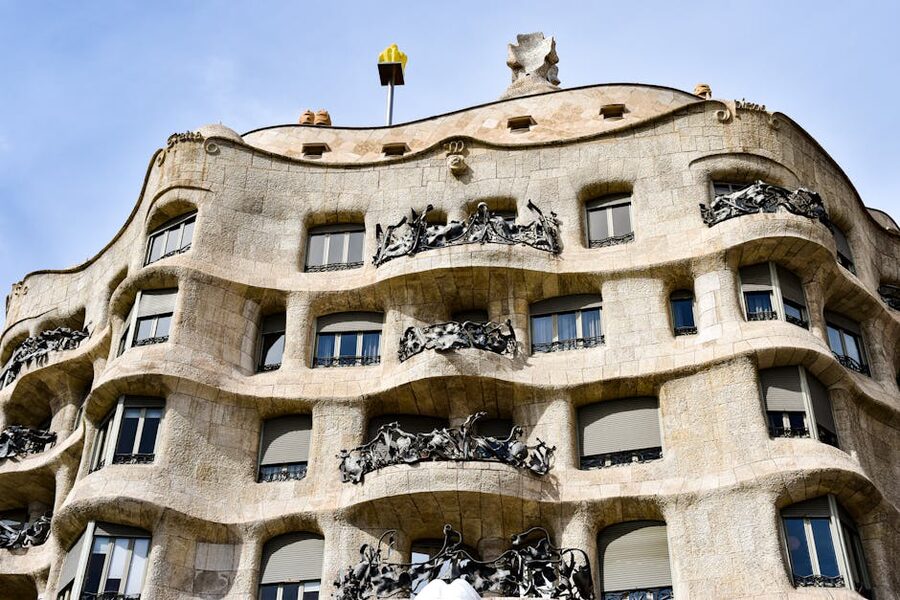
The Milàs lived on the main floor (the Pis de la Pedrera, now part of the visit). The other apartments were rented out. The structural innovation is hidden but radical: there are no load-bearing walls anywhere in the building. Every floor sits on a forest of internal columns, which is why the apartments could be reconfigured at will and the facade could undulate without structural consequences.
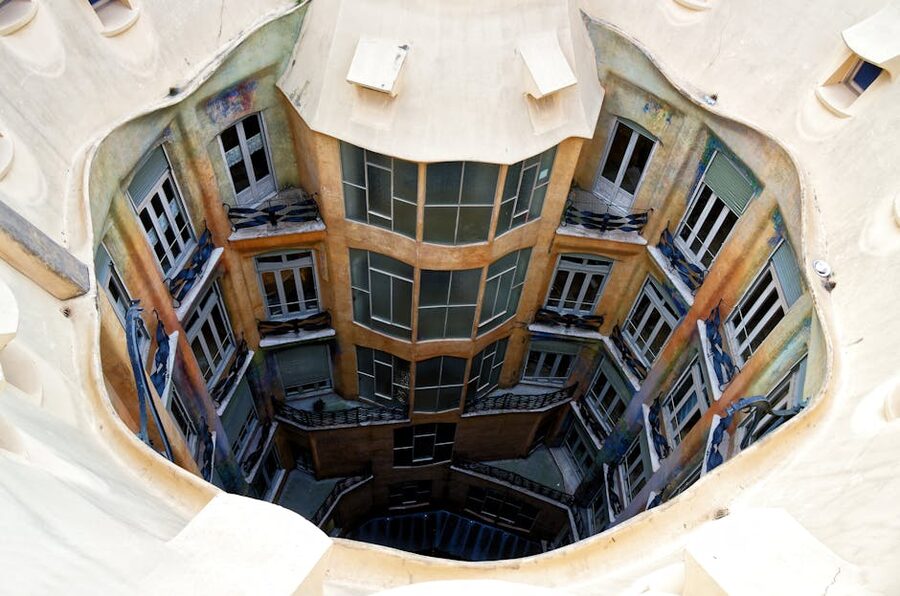
The Milàs wanted a top-floor chapel dedicated to the Virgin of the Rosary, which is why the building has its strange three-dimensional crown. The rooftop wasn’t designed as a viewing terrace. It’s a sculpted lid for a religious building that the Milàs eventually decided not to put a chapel into. Gaudí refused to remove the religious imagery from the facade. The whole building is, technically, a half-finished cathedral with apartments under it.
The Visit, Floor by Floor
The audio tour route runs courtyards, Pis (apartment), attic, rooftop. About 90 minutes if you take it slowly. You can’t shortcut it; the route is one-directional.
Courtyards
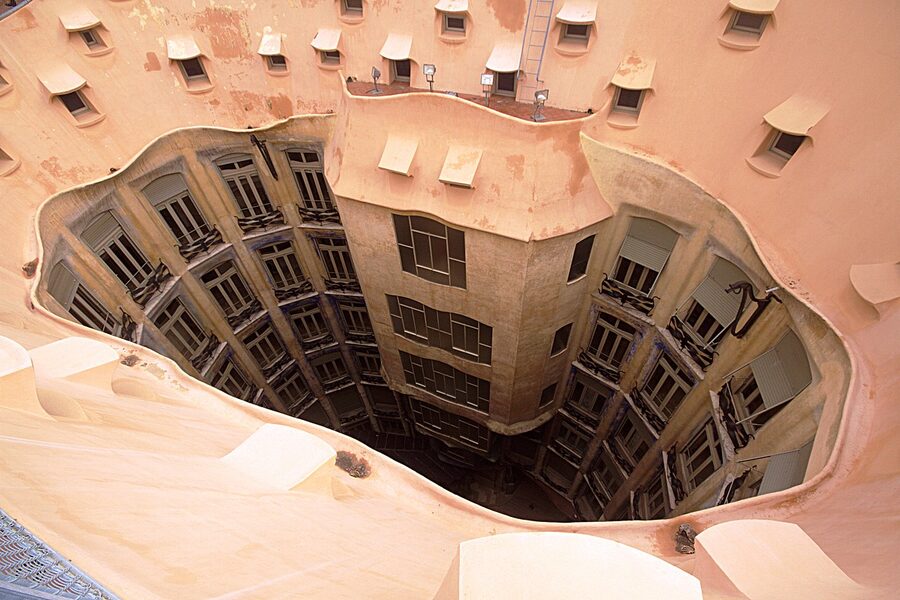
You enter through one of two grand carriage doorways and into the first courtyard. Look up. The first thing to notice is the murals. Gaudí had the courtyards painted with allegorical figures and floral motifs, mostly destroyed when the building was repurposed as office space mid-century, partly recovered in the 1990s. The mural fragments tell you most of what you need to know about how aggressively this building was originally decorated.
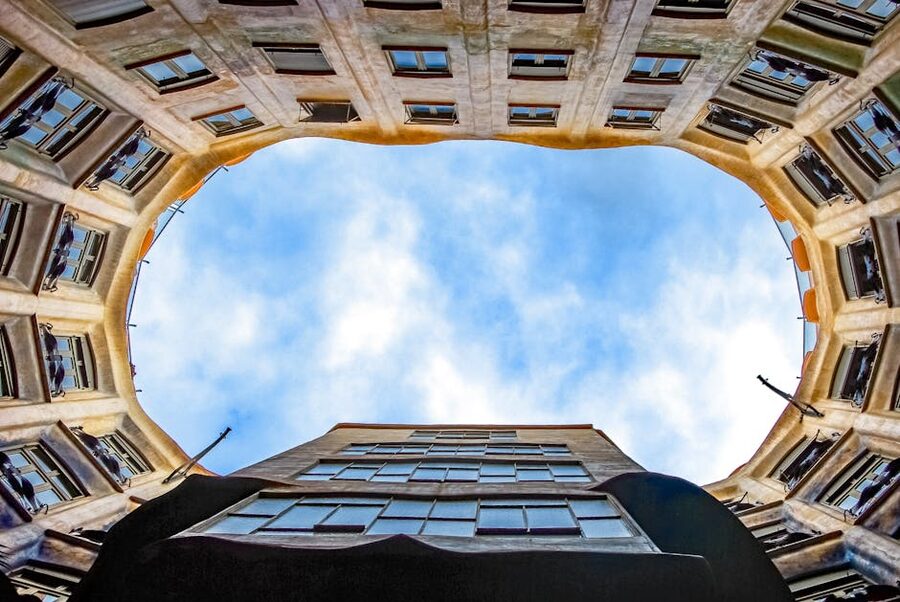
The lift you take up to the apartment level is original. Pay attention to the metalwork. The iron grilles in the courtyards and lift cage are by Josep Maria Jujol, Gaudí’s collaborator on most of his late work. Jujol’s metalwork is one of the secret layers of the building most visitors walk past.
The Pis (Apartment)
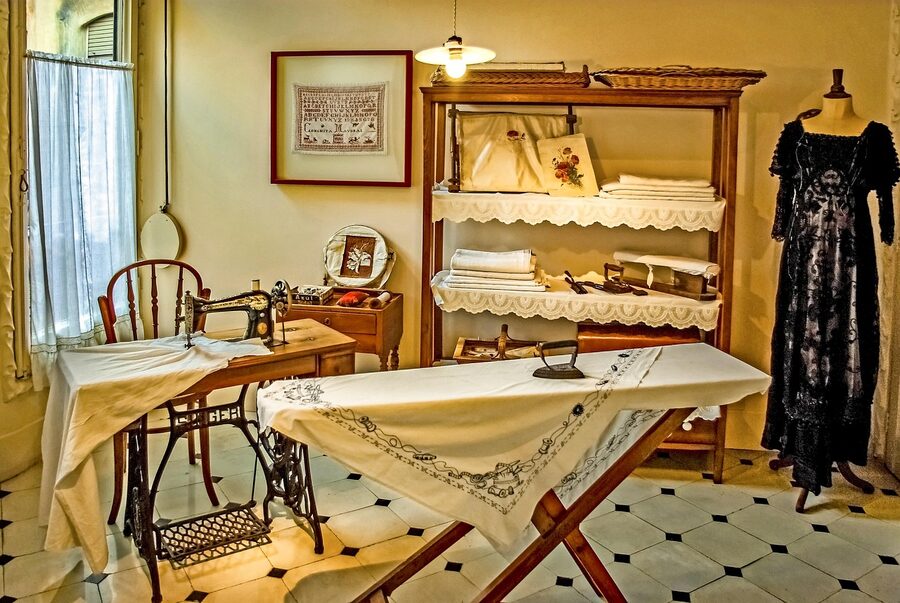
One floor below the attic, you walk through a recreated bourgeois apartment, what life looked like for a wealthy Barcelona family in 1912. This is the part of the visit travellers either love or feel ambivalent about. The blogger Nele at The Navigatio called it “a bit forced”, and she’s right that the period furniture is heritage-museum work rather than original Milà family pieces. But the ceilings, the door frames, the floor tiles, the hardware: all that is Gaudí. Look up and look down more than you look at the displays.
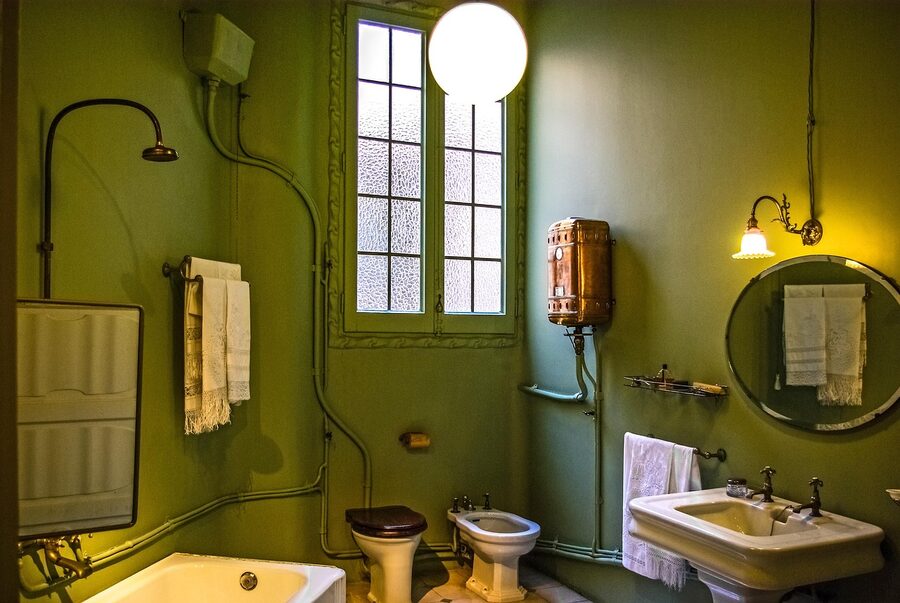
The flow of the apartment is unusual: rooms connect at angles, walls aren’t square, doorways are taller in some places than others. None of that is decorative. Because there are no load-bearing walls, every floor in Casa Milà could be laid out differently, and Gaudí used that freedom to make rooms flow like a river.
The Attic
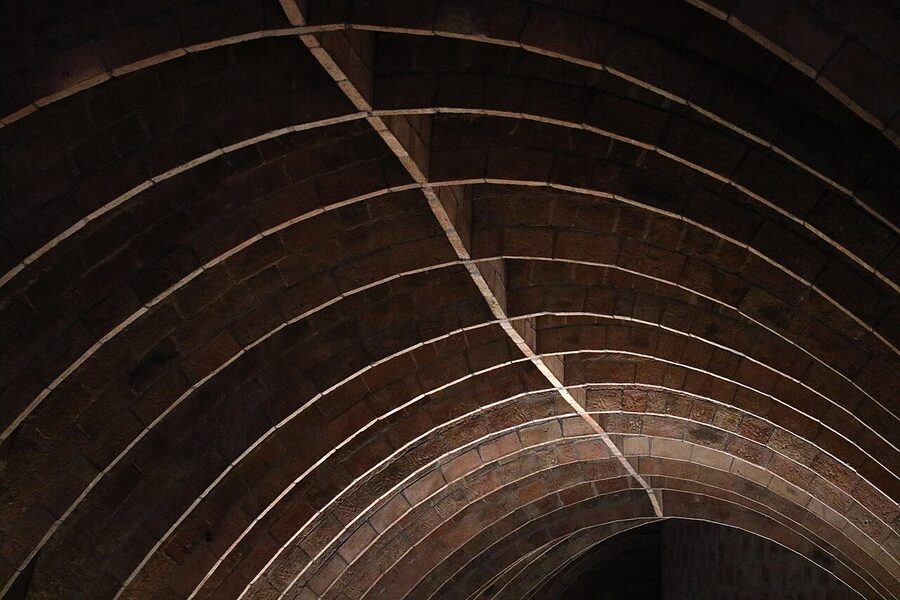
This is the floor most travellers blow past on the way to the roof. Slow down. The attic is a forest of 270 brick catenary arches: Gaudí’s signature structural form, the same shape he used in Sagrada Família‘s columns and the crypt of Colònia Güell. The arches hold up the roof above. Walk the length of the space and notice how the arch heights vary. Taller in the middle, shorter at the edges, because the roof above isn’t flat.
The attic is now the Espai Gaudí, a small museum with models of his other Barcelona buildings. Skip most of the displays unless you have time, but the catenary arch demonstration with hanging chains is genuinely worth two minutes. It’s the clearest physical explanation of Gaudí’s whole structural method anywhere in Barcelona.
The Rooftop
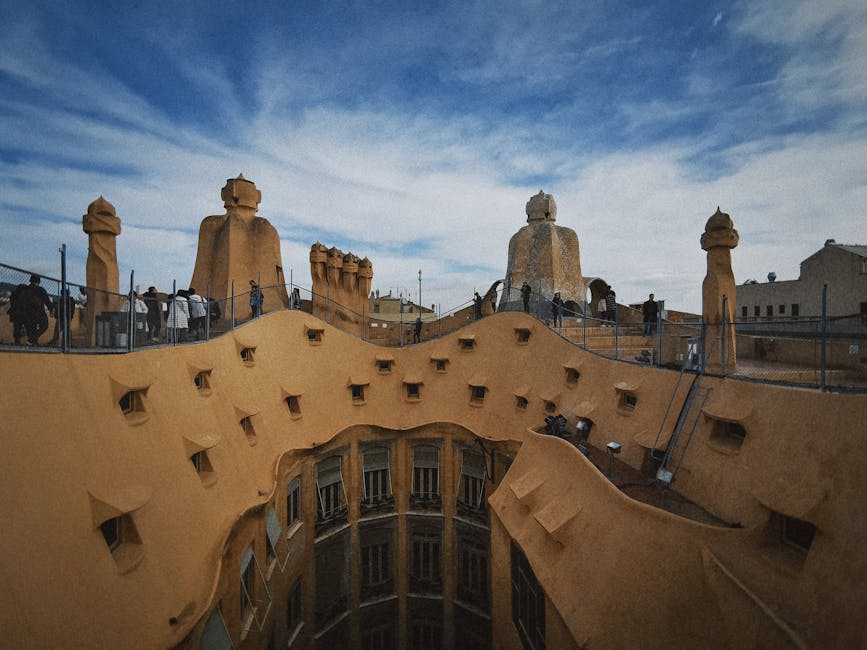
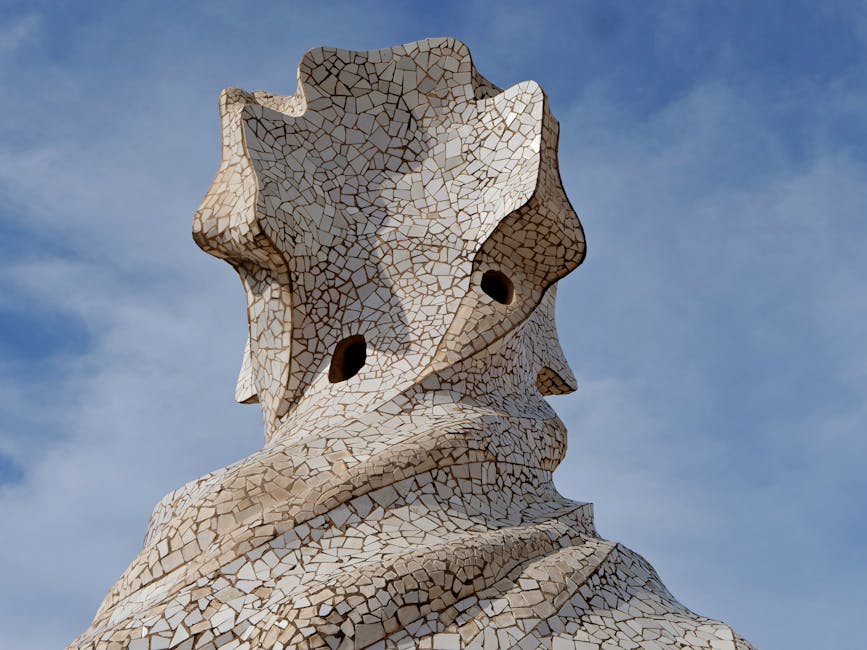
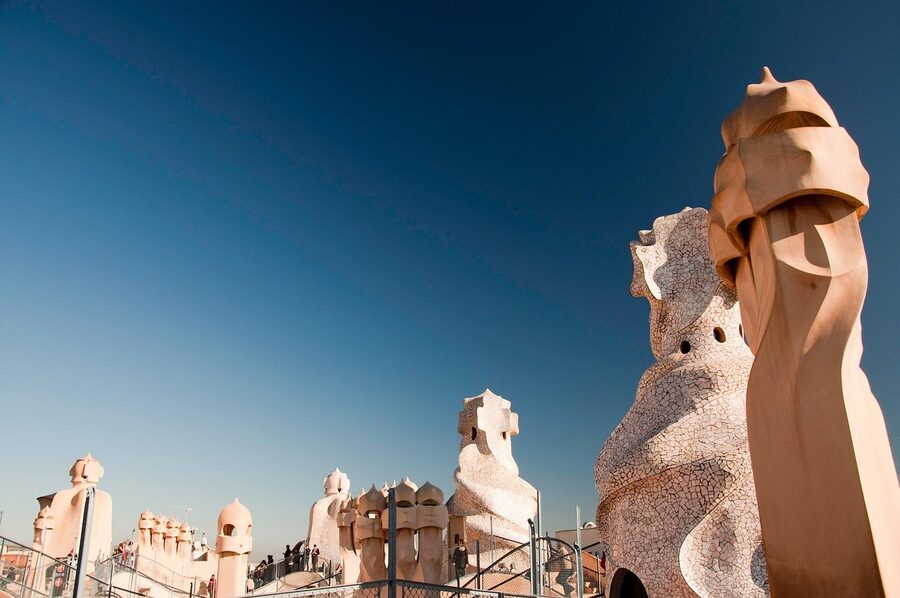
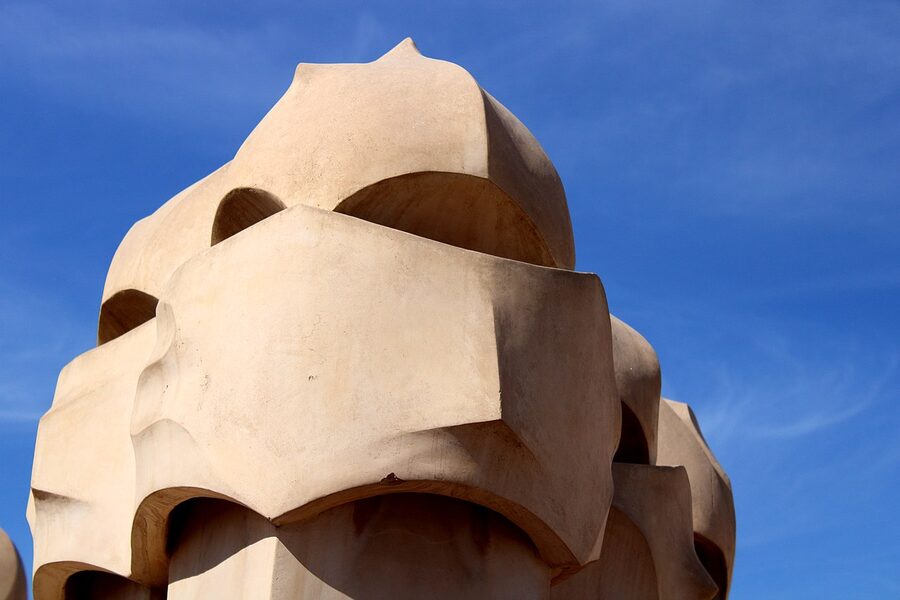
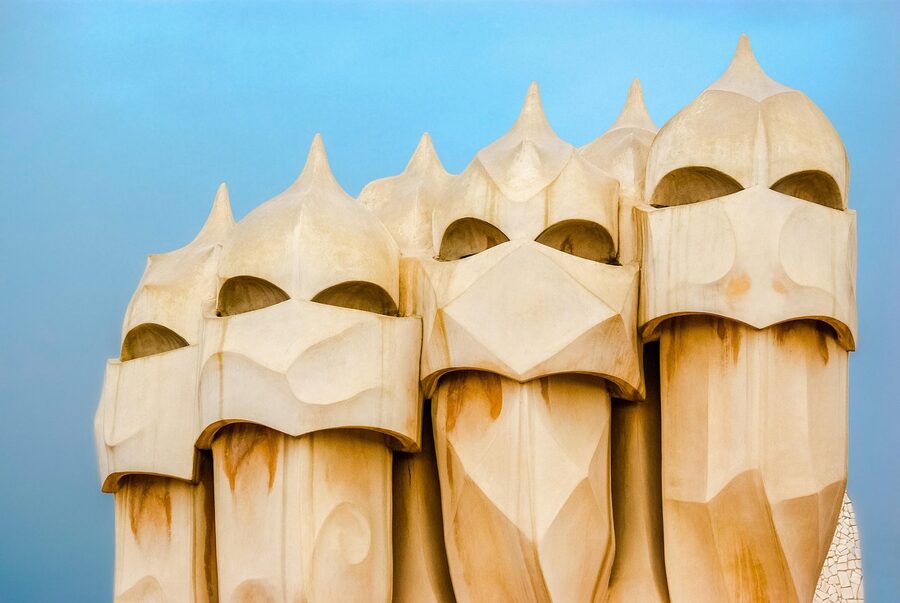
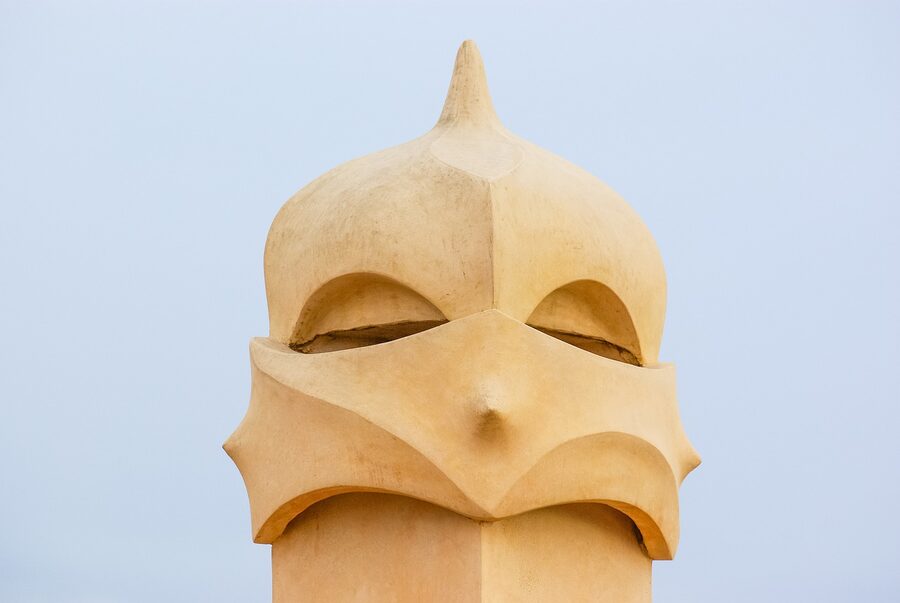
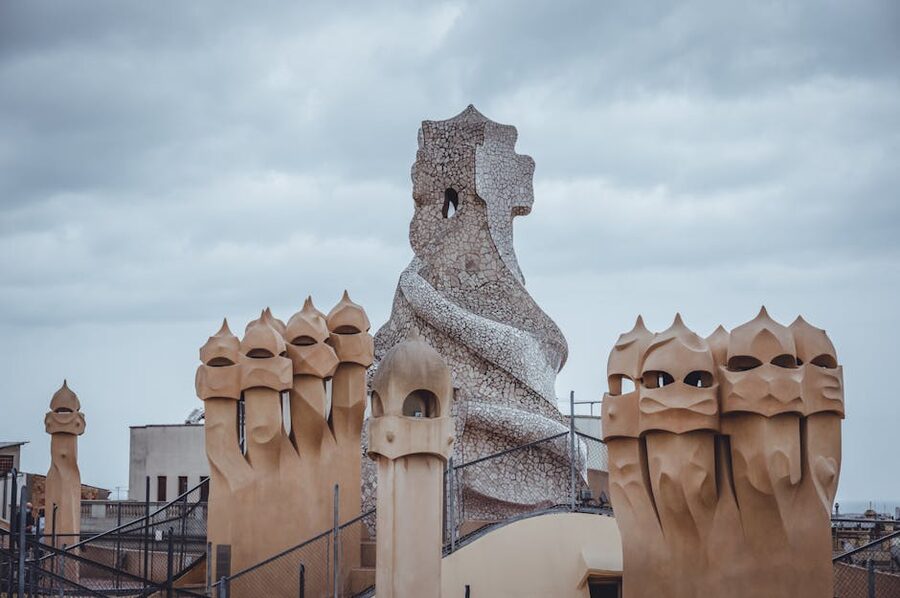
This is the payoff. The 28 chimneys, ventilation shafts, and stairwell heads are dressed as armoured warriors, hooded figures, and parabolic helmets. They’re functional (every one vents something), but Gaudí refused to leave any utility object un-sculpted.
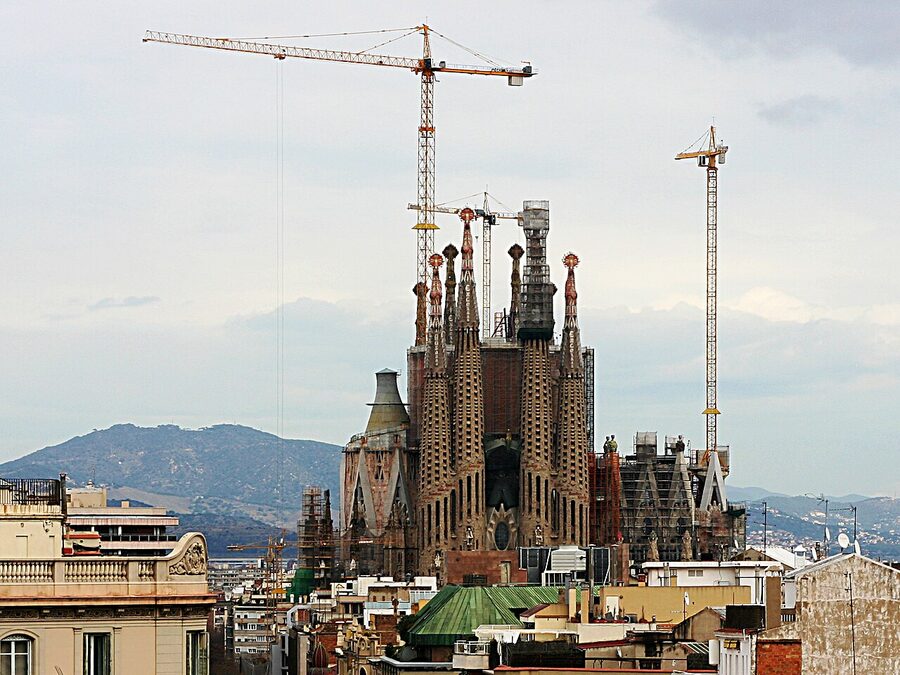
The roof has multiple levels connected by short steps and ramps. Walk the whole loop, not just the front terrace. The back of the roof, the side facing inland, is where you get the view of Sagrada Família in the distance. From this angle Gaudí’s two buildings line up almost as if they were planned that way (they weren’t).
The other directional views: Tibidabo on the hill behind, the Mediterranean to the east on a clear day, and most of the Eixample grid laid out in front of you. Park Güell is somewhere up the hill but partly hidden by trees. Casa Batlló‘s spine is just barely visible if you know where to look, five blocks back down the avenue.
The Origins Night Experience: Worth the €47?
This is the question I get asked most about La Pedrera, so I’ll just answer it. Yes, if it’s your first or second visit and you care about the building. No, if you’ve already done the daytime tour and you’re trying to decide whether to come back.
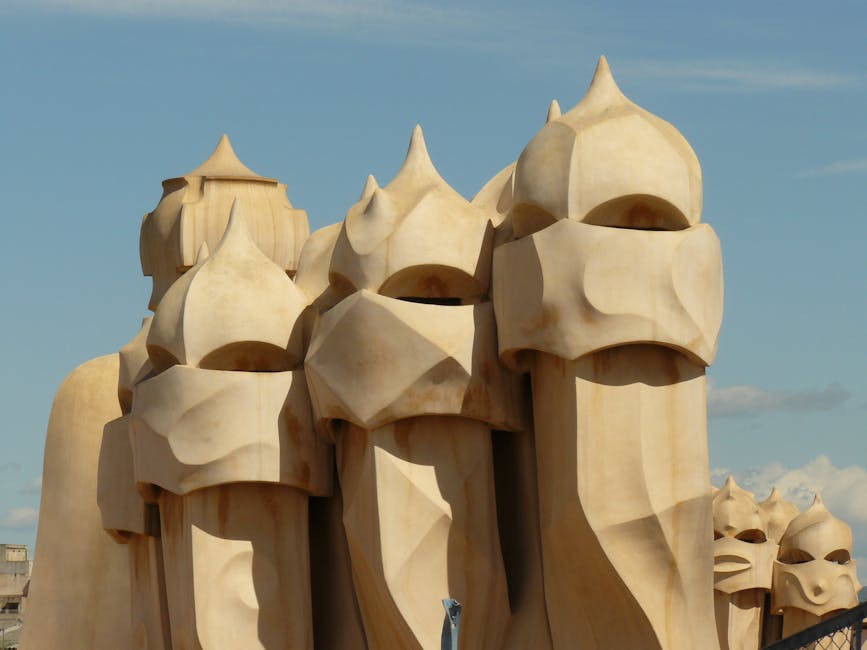
The Origins evening tour gets you into the courtyards and Pis without crowds, then up to the rooftop for a 20-minute video-mapping show projected onto the chimneys. The show layers Gaudí’s cosmological framework (water, life, geometry, time) onto the building’s surfaces, set to music, in the dark. It’s spectacular. The reason it works is that the rooftop in daytime is already a constellation of strange shapes; at night, with projections moving across them, the whole space becomes something else entirely.
Practical caveats. It’s outdoors, on a roof, in the open air. Bring a jacket even in summer. The wind picks up after sunset. The show runs in multiple slots between 9pm and 11pm. The 9pm slot in summer is the worst because it’s still light; pick the 10pm or later slot for the full effect. Skip it if you’ve got kids who’ll struggle past their bedtime, since there’s no shortened version.
Tickets, Times, Prices
La Pedrera runs daily, all year round. Daytime hours run roughly 9am to 6:30pm in winter, with extended evenings in high summer. The Origins night experience runs separately, with sessions starting late.
The daytime ticket types:
- La Pedrera Essential: €25 adult, €19 senior 65+, €12.50 junior 12-17, free under 12. The standard self-guided audio tour. Most visitors should buy this.
- La Pedrera Premium: around €39. Skip-the-line plus a video on a tablet device with extra content. Worth the upcharge if you want the deeper architectural backstory.
- Origins night experience: €47 (the show plus the building visit at night). Standalone; you don’t need to do daytime first.
- Sunrise / early morning guided: €47, with a real human guide and access before public opening. The rooftop empty at 7:30am is a different building.
Prices are accurate to early 2026. La Pedrera adjusts them seasonally, so check the actual ticket page when you book.
Online booking is mandatory in practice during peak season (April through October). The walk-up window exists but the queue can be 45 minutes in summer, and slots sell out by mid-morning. Off-season weekday mornings you can sometimes walk straight in.
Compared to Casa Batlló, which starts at €35, La Pedrera is the better value of the two Gaudí houses on a per-euro-per-minute basis. The Casa Batlló experience is more intensely produced (the audio-visual layer is heavier) but you also pay for that. If budget is a real constraint, La Pedrera Essential is the right choice.
How It Compares to the Other Gaudí Houses
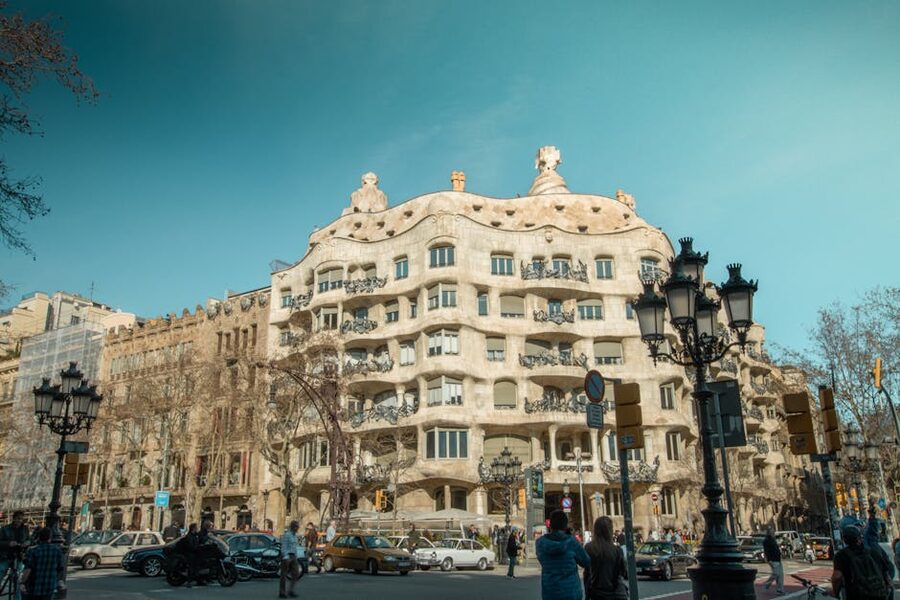
Three working Gaudí houses sit on the visiting circuit: Casa Vicens (1883-1888, Gaudí’s first commission), Casa Batlló (1904-1906), and Casa Milà / La Pedrera (1906-1912).
The three are best understood in chronological order. Casa Vicens is the apprentice work: Moorish, structured, almost geometric, the language of Islamic Spain on a small private villa in Gràcia. Casa Batlló is the showpiece: fully theatrical, every surface narrating a story, the dragon-and-Saint-George interpretation laid on heavily. La Pedrera is the late, mature, structural Gaudí. The storytelling has receded, replaced by pure form. The waves in the facade aren’t dragons; they’re just waves. The chimneys aren’t characters from a fairytale; they’re sculpted because Gaudí couldn’t bear to leave a functional object plain.
If you can only do one, the standard advice is Casa Batlló for the spectacle. I’d push back on that: La Pedrera is the more architecturally pure building, the one closer to what Gaudí was actually doing in his late period. If you’ve ever wanted to understand how he thought, this is the better visit. Casa Batlló is the better Instagram day. The same purist-vs-spectacle split shows up in Paris between Frank Gehry’s Fondation Louis Vuitton and the immersive room-scale projections at Amsterdam’s Fabrique des Lumières.
A Brief History of Why Barcelona Hated It
When La Pedrera was completed in 1912, the press hated it. Cartoons in Barcelona newspapers depicted the building as a parking garage for zeppelins, a monstrous wave eroding the avenue, a quarry that had been left in a state of demolition. The nickname La Pedrera, “the stone quarry”, was a sneer.
The city council fined the Milàs for exceeding the legal building height. Gaudí refused to alter the design and threatened to sue. The matter was eventually settled out of court but it scarred the building’s reputation for decades. Roser Segimon, the wife, came to despise her own home so much that after Gaudí’s death in 1926 she covered most of his interior decorative work with conventional plaster and replaced the period furniture with antique pieces in styles Gaudí would have loathed.
The building was sold and converted into office and apartment use through the mid-20th century. It nearly fell into demolition in the 1950s. There was a serious municipal proposal to tear it down because the maintenance costs were ruinous and nobody wanted to invest in restoring “that quarry.” The Caixa Catalunya foundation bought it in 1986, restored it from 1990 to 1996, and reopened it as a heritage site. It became a UNESCO World Heritage property in 1984. What you visit today is essentially a 1990s archaeological reconstruction of what Gaudí built.
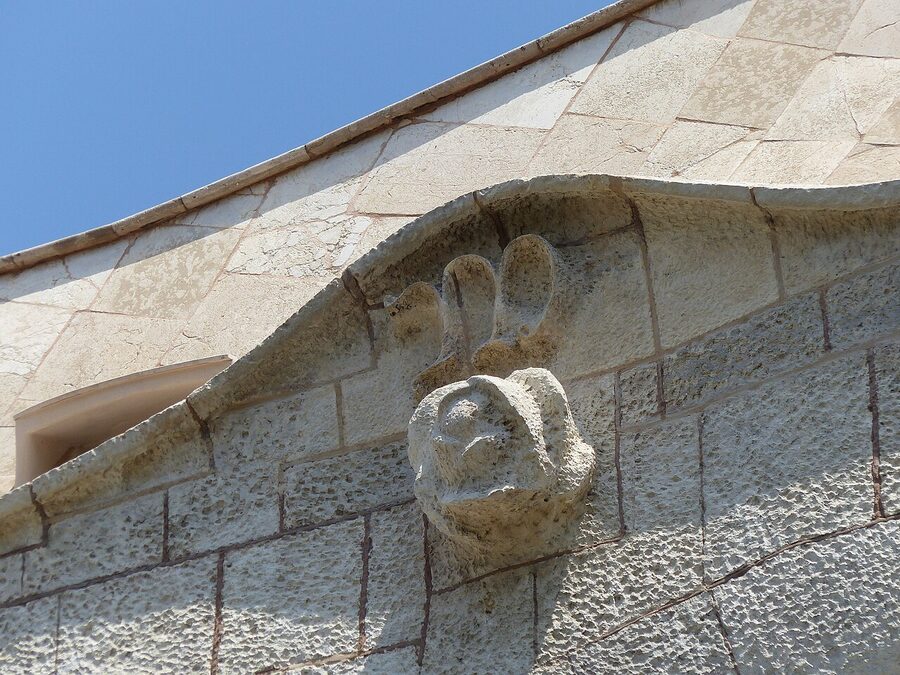
That’s worth knowing because it changes how you read the building. La Pedrera isn’t a perfectly preserved 1912 time capsule; it’s a meticulous restoration of a building that was hated, neglected, plastered over, and almost demolished before being rescued at the last possible moment. The fact that you can stand on the rooftop and see the warriors at all is itself a small miracle of European preservation work.
Practical Tips
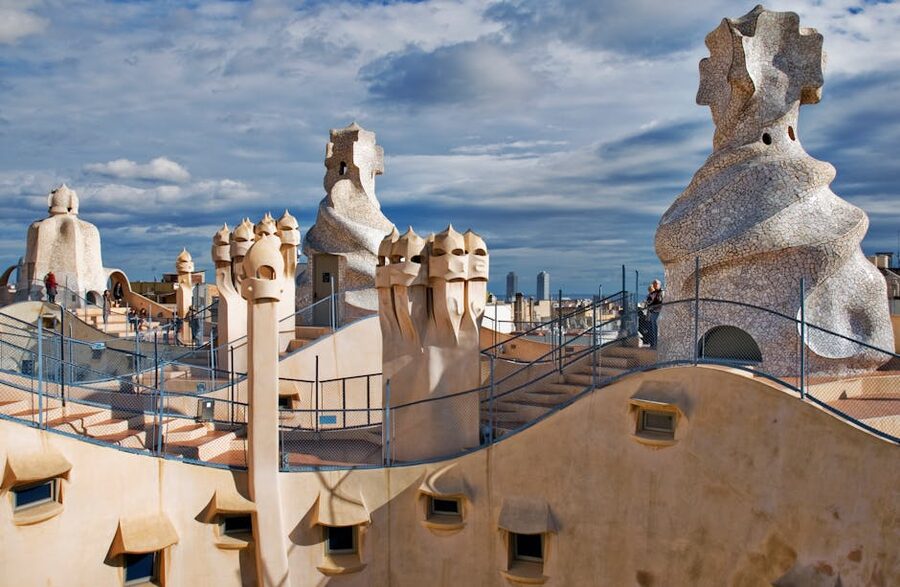
- Best time of day for photos: the rooftop catches morning light from the east and golden hour from the west. Avoid noon (hard shadows everywhere). The Sagrada Família view works best mid-afternoon.
- Wear shoes you can stand in for two hours. The rooftop is uneven, with steps and ramps and stone surfaces. Sandals slip.
- The lift only goes up. You walk down the stairs at the end, through the back service stairwell. This is fine for most people but worth knowing if mobility is an issue.
- Skip the gift shop unless you genuinely want a magnet. The bookshop on the ground floor has actually good architectural books on Gaudí, including the official building monograph; that’s the worthwhile shop.
- The toilets are at the start of the route, not the end. Use them before going up.
- No flash photography in the Pis. They enforce this. The rooftop and courtyards are fine.
- Eating nearby: Tapas24 (Carrer Diputació) is two blocks off Passeig de Gràcia and works for an unhurried meal between morning and evening visits. The Café de la Pedrera at street level is fine for a coffee but the food is forgettable.
Three Tours Worth Booking
I’ve stripped this down to three. The flagship daytime audio entry, the Origins night show, and the early-morning guided slot. If you’re trying to decide between them, the answer is mostly determined by what time of day works for your trip and whether you want a human guide.
1. La Pedrera Ticket with Audio Guide: $33
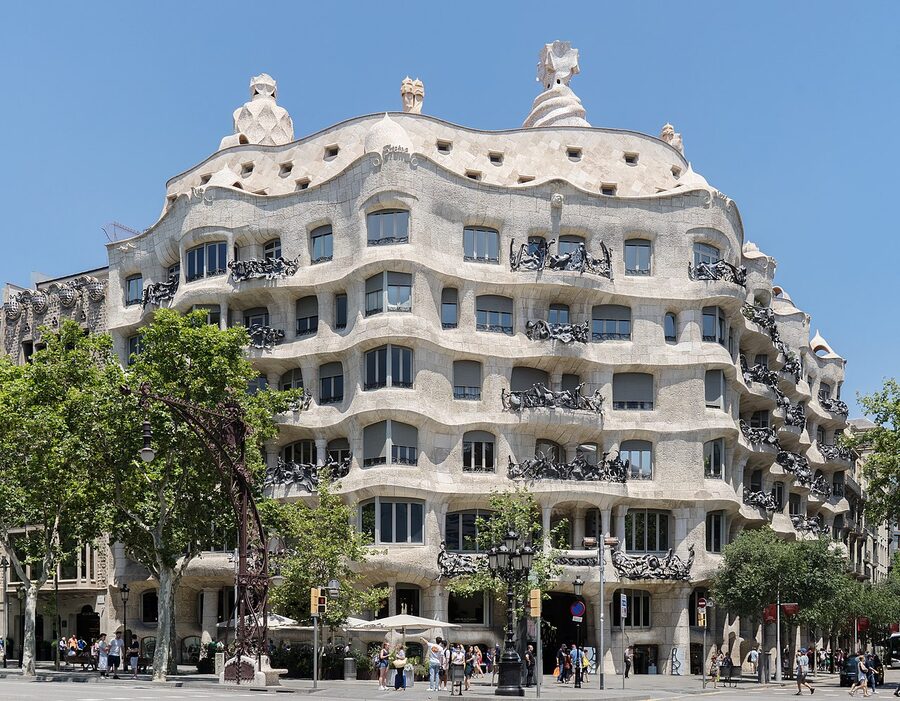
The default pick if you’re visiting during the day. Our full review covers the audio-tour route through courtyards, apartment, attic, and rooftop in about 90 minutes. Book the first slot at 9am or the last slot before close; both have noticeably thinner crowds than the midday rush.
2. La Pedrera Night Experience (Origins): $47

The semi-guided night visit plus the rooftop projection show, 1.5 hours total. Our full review walks through what the show actually does and which timed slot to pick. Bring a jacket; the roof gets cold after dark even in August.
3. Early-Morning Access Guided Tour: $47
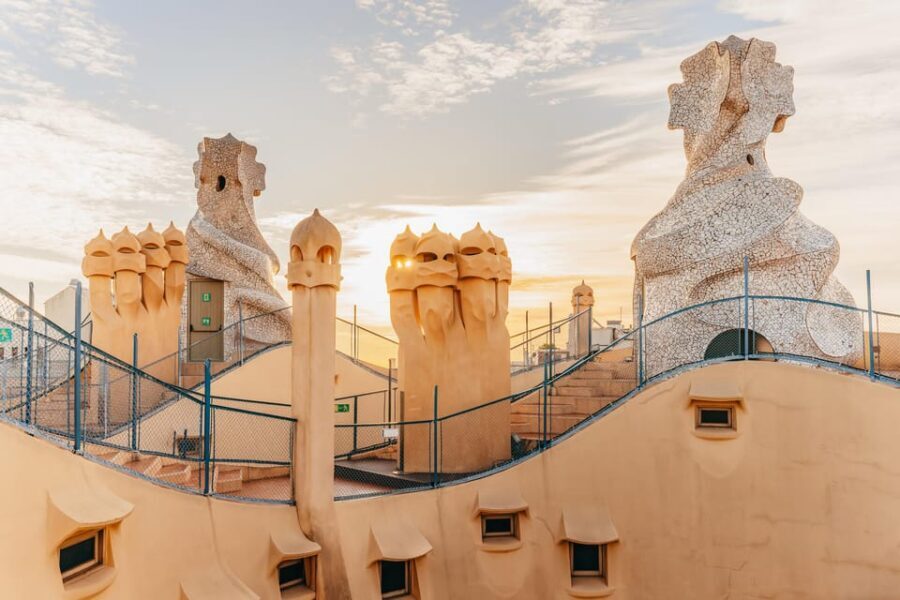
This is the splurge for travellers who’d rather have a real human walking them through the rooms. Our full review notes the guide also takes you into restricted areas not on the standard self-guided route. Worth the extra €14 over the audio tour if you’ve got specific questions about Gaudí’s structural method.
Where to Go Next on Your Gaudí Day
If La Pedrera is your first Gaudí visit and you’ve still got energy, walk fifteen minutes north to Casa Vicens in Gràcia for the bookend. Gaudí’s very first major commission, in a Moorish register that looks nothing like Casa Milà. The contrast between his 1888 work and his 1912 work is the most informative single comparison in Barcelona modernism. If you’ve already done the small Gaudí houses, head up to Park Güell for the open-air work, or on a separate day to Sagrada Família for the cathedral that’s still finishing the structural ideas Gaudí started in this attic. If you came on the hop-on hop-off bus from a cruise stop, the Eixample loop drops you back at the port via Plaça Catalunya. And if you want a comparable cathedral-engineering visit in Italy, the closest analogue is the Florence Duomo dome climb: different century, similar refusal to follow the structural rules of the time. The Loire Valley equivalent is the double-helix staircase at Chambord, which Da Vinci helped design as a one-architect statement, and Renzo Piano’s NEMO Science Museum in Amsterdam carries the same idea into the present century.