
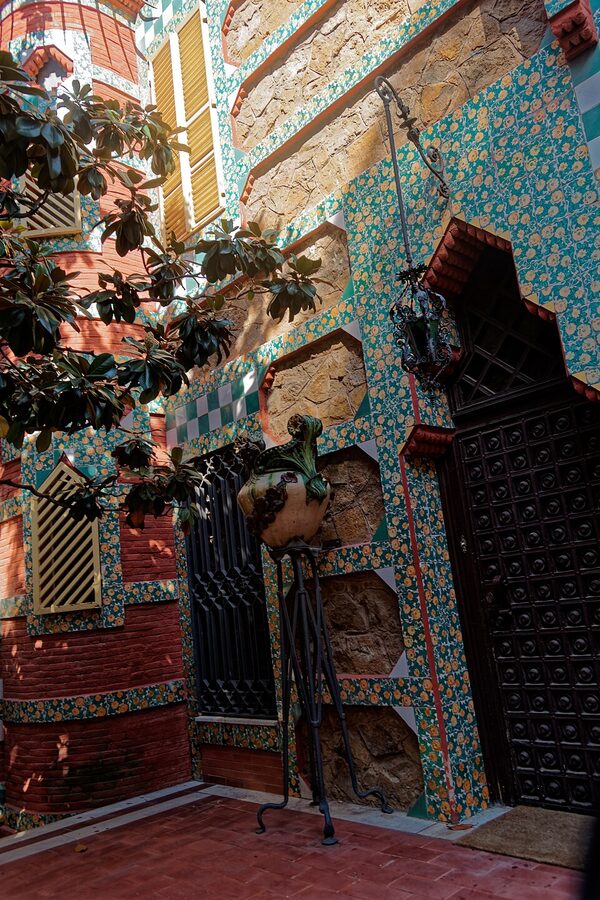
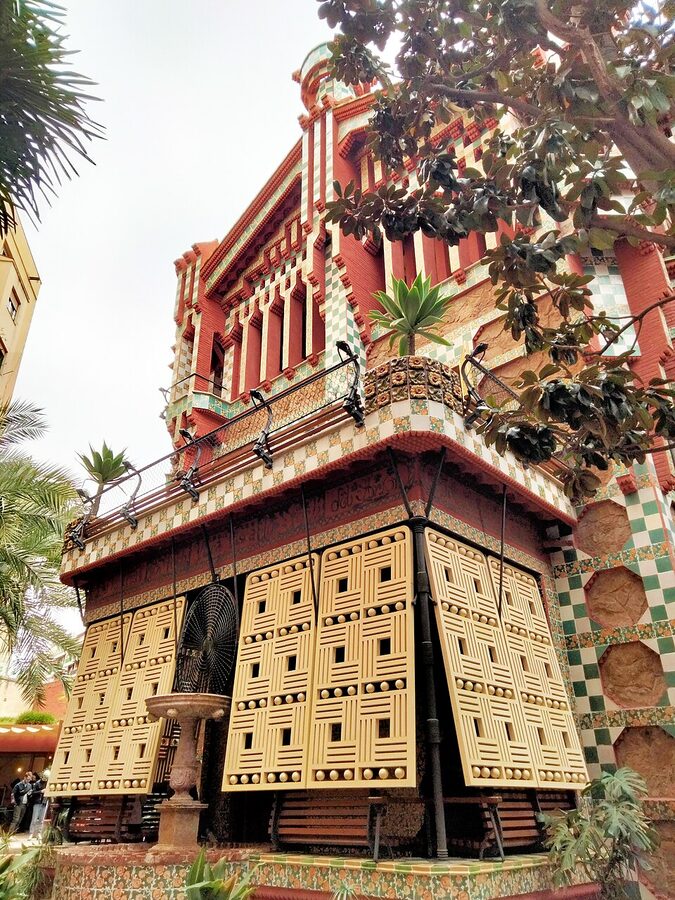
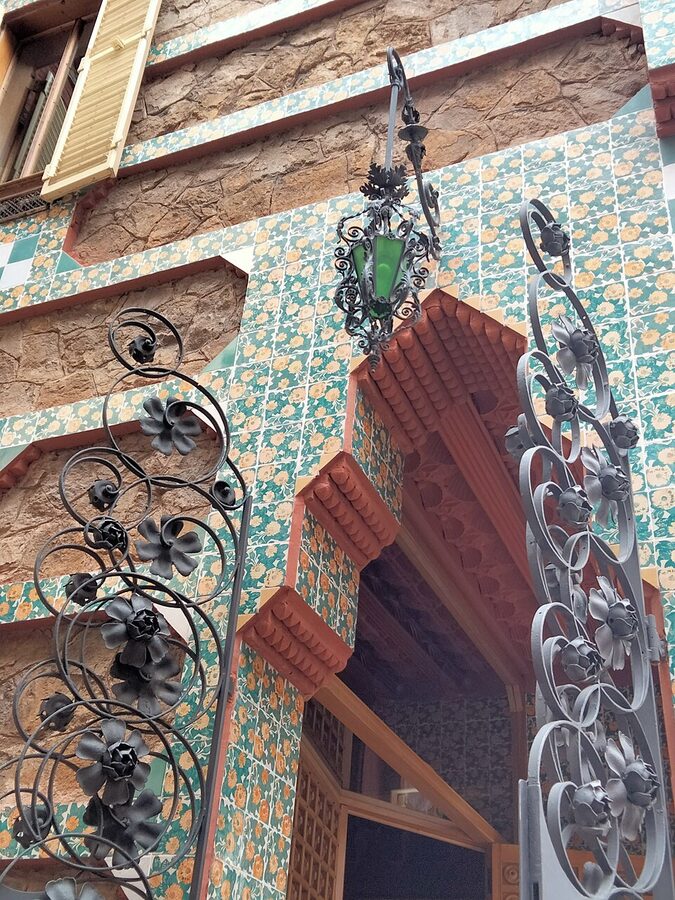
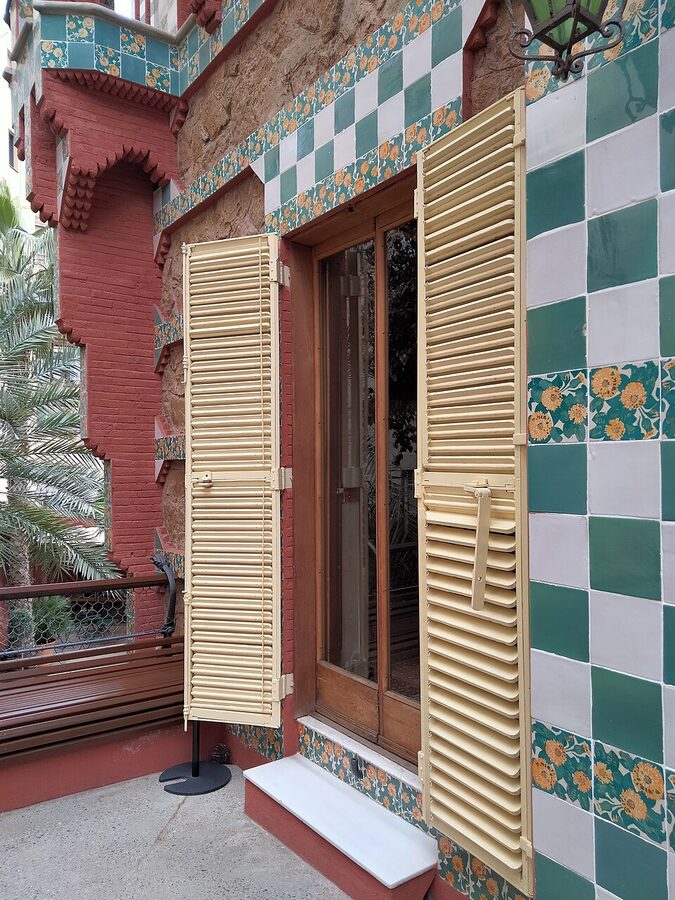
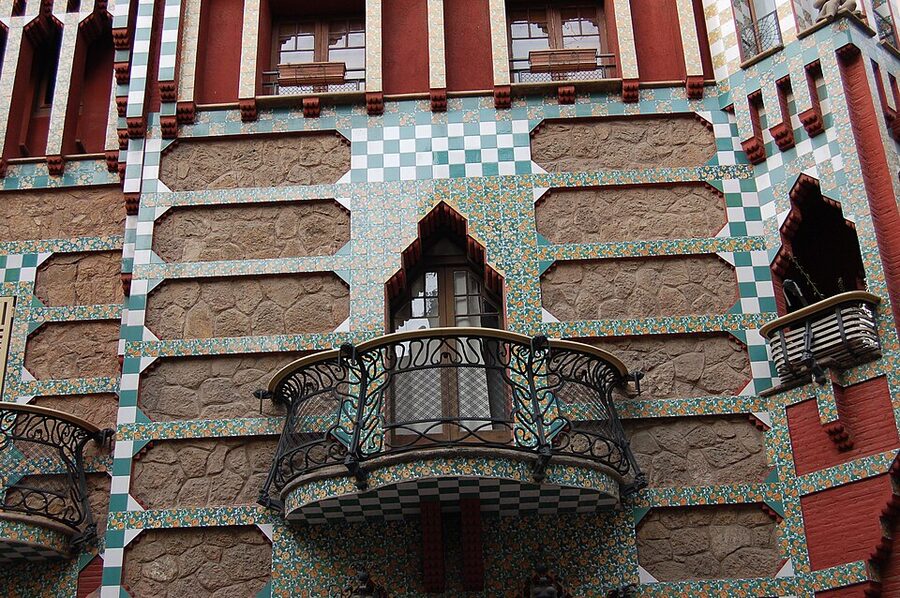
Most travellers walking up Carrer de les Carolines for the first time stop, look at the building, look down at the map, and look back at the building. This doesn’t look like Gaudí. There’s no undulating limestone, no tree-trunk columns, no serpentine roofline. What stands in front of you is a square brick-and-tile box with green and white checkerboards, a Hindu-temple cupola, palm fronds beaten in iron, and a small smoking room hidden inside that looks like the inside of a sultan’s tent.
That’s the point. Casa Vicens, built between 1883 and 1888, is where Gaudí’s 50-year evolution started. It’s the seed. He was 31 when he finished it. Half a century later he died on the way to mass two blocks from the still-unfinished Sagrada Família. If you visit Casa Vicens after seeing his late work, the trick is to read it backwards: every chimney garden on La Pedrera’s roof, every polychrome tile on Park Güell’s serpentine bench, every palm-frond column on Sagrada’s nave starts as a raw early idea on this corner in Gràcia.
In a hurry? Here’s what to book
- Standard skip-the-line ticket ($26): Self-paced visit with audio guide in 16 languages. The right pick for almost everyone. Book on GetYourGuide
- Guided tour ($27): Worth the extra $1 if you want context. 1.5 hours with a real human. Book on GetYourGuide
- Casa Vicens + La Pedrera private combo ($143): Splurge if you want one guide carrying you through both early and mature Gaudí in three hours. Book on Viator
Why Casa Vicens Doesn’t Look Like Gaudí
Here’s the disjunction. By the time most of us arrive in Barcelona, we’ve already filed Gaudí under “swirling, organic, late-period”. We’ve seen Sagrada Família’s tree-trunk columns, Casa Batlló’s bone balconies, and Park Güell’s trencadís lizard. Then we walk into Casa Vicens, and the building looks like it was designed by a different architect entirely. Square corners. Flat walls. Tile patterns that wouldn’t be out of place in a Lisbon merchant’s house. A Moorish smoking room. It’s so different that early biographers used to argue Gaudí can’t have done it alone.
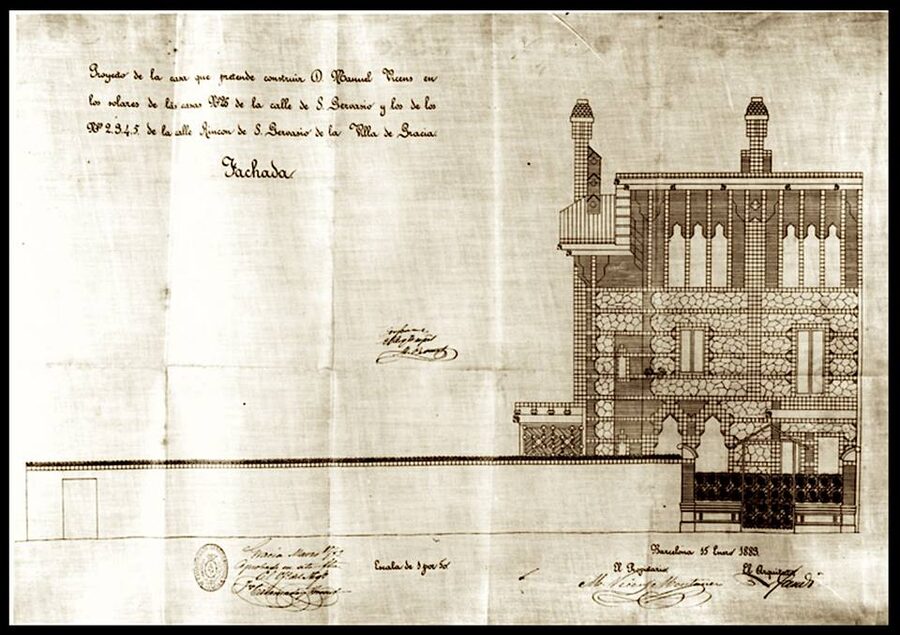
He was 31. He’d been licensed less than five years. The brief from Manel Vicens i Montaner, a Barcelona stockbroker who’d inherited a tile factory, was tight: a summer house on a small lot in what was then the village of Gràcia, north of central Barcelona. The site was an old garden full of marigold blooms (you’ll see them turn up later in the tile work) and palm trees (you’ll see them turn up in the iron). Vicens wanted something exotic. The 1880s in Spain were the high water mark of Orientalist taste, and the client owned a tile factory. So Gaudí gave him an Orientalist tile-clad house. It’s an early commission doing what an early commission should do: showing off everything you can do with the money you’ve been given.
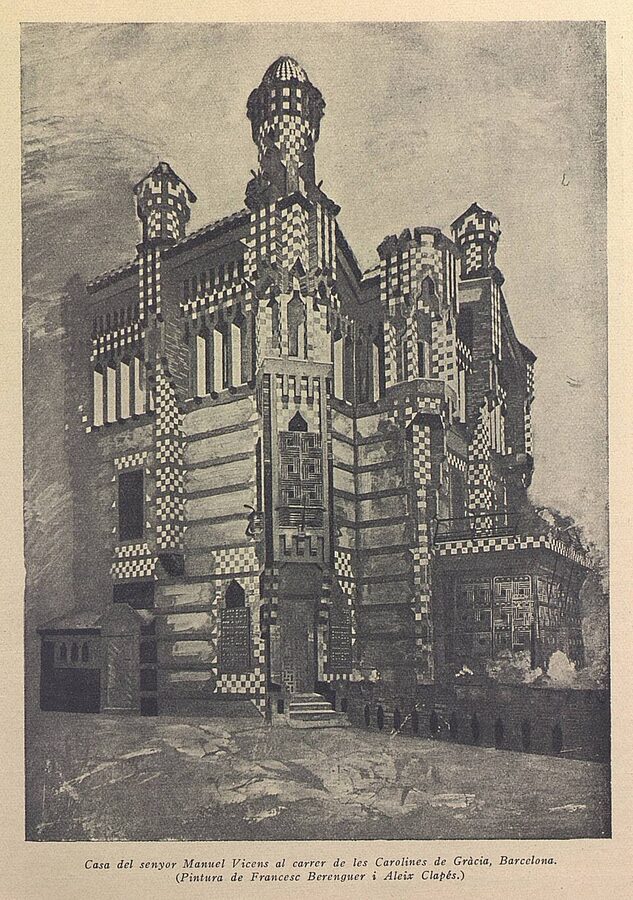
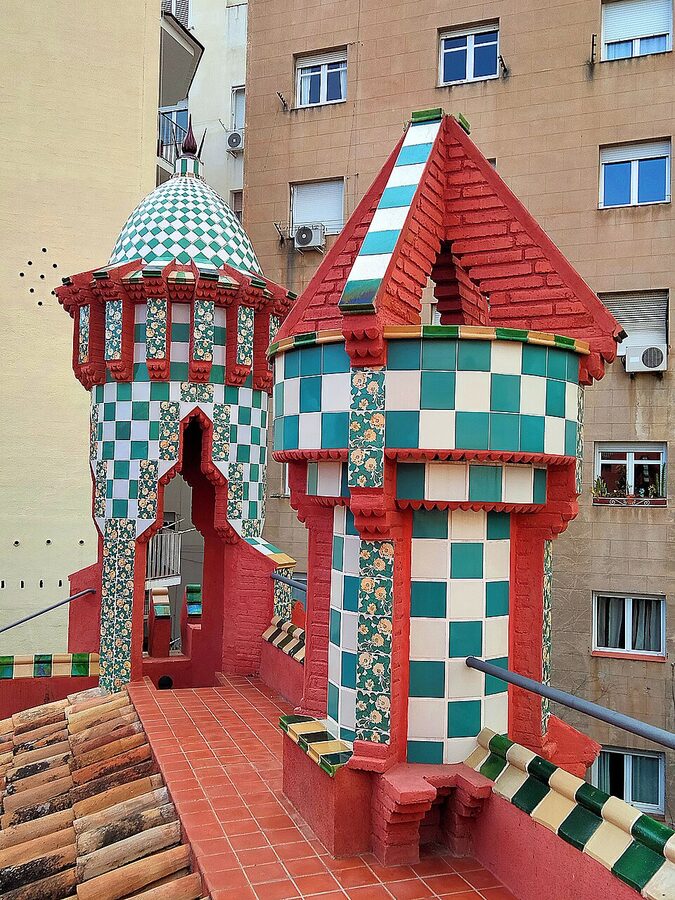
Once you’ve stood in front of the building for ten minutes you start to spot the future Gaudí inside the past Gaudí. The chimneys on the rooftop are tile-clad and slightly absurd, exactly like the warriors-with-helmets chimneys he’d put on La Pedrera 26 years later. The palm-frond ironwork around the perimeter is biomimicry: the same impulse that produced the tree-trunk columns inside Sagrada Família, just in metal instead of stone. The polychrome tile is a young version of the trencadís he’d shatter into mosaics for Park Güell. The seeds are all there. They just hadn’t sprouted yet.
How the Tickets Actually Work
Casa Vicens is small. The original house is about 600 square metres, and the museum route covers the basement, ground floor, first floor, attic, and rooftop. Every ticket type covers all of it. The differences are about pace and language, not access.
The standard skip-the-line entry is €19 online (about $26), a few euros cheaper than walking up to the ticket window. It comes with a self-paced audio guide in 16 languages. You can stay as long as you want, though “as long as you want” runs into the closing time. Most visitors are out in 75 to 90 minutes. The guided tour adds about a dollar and runs 60 to 75 minutes with a small group capped at 12, in English, Spanish, Catalan, French and a couple of others. There’s a half-decent café with a courtyard for an espresso afterwards, and the basement has the inevitable gift shop.
A few practical things the website buries. First: bring earphones. The audio guide is delivered through your own phone via wifi, and they don’t supply pads. Second: there are lockers, and bags above a small daypack are required to go in them. Third: photography is fine but filming is restricted on guided tours. Fourth: the closing schedule shifts seasonally: 9:30am to 8pm from April through October, 9:30am to 6pm November through March, with last entry 75 minutes before closing. The museum is closed December 25 and for a maintenance window in early January each year. Fifth: under 11s go free, students and seniors get a couple of euros off, and the Barcelona Go City pass and Barcelona Card both cover entry.
Getting There from Central Barcelona
Casa Vicens is at Carrer de les Carolines 18-24, in the village of Gràcia north of Avinguda Diagonal. It’s a 25-minute walk from Casa Batlló on Passeig de Gràcia, mostly uphill, or four metro stops on the green L3 line. Fontana is the closest stop, a flat two-block walk from there. Lesseps on the same line is a slightly farther but a useful alternative if you’re already up by Park Güell. The Bus Turístic stops a couple of blocks east, but if you’re using Barcelona’s hop-on bus it’s not the most natural drop-off point. Casa Vicens is on a different leg from Sagrada and Casa Batlló.
The case for the metro is straightforward: Gràcia is uphill, and the walk from Plaça de Catalunya gains about 70 metres of elevation. Coming from the south on the L3, Fontana is two stops past Diagonal, and the climb is on the train, not on you. The case for walking is that the route up Passeig de Gràcia takes you past Casa Batlló and La Pedrera, which is a neat way to do all three Gràcia-adjacent Gaudís in a sequence, but only if you’ve timed your tickets so you’re not racing. We’ve made the mistake of trying to do Casa Batlló at 11am and Casa Vicens at noon. You won’t enjoy either. Pick the morning for one and the afternoon for the other, with lunch in between in Plaça del Sol.
What You Actually See Inside
The route runs basement to attic to roof, and Casa Vicens is small enough that you can do it twice in 90 minutes if you want to. The first time round you take the audio guide. The second time round you ignore the audio guide and just look at things.
Ground floor: the living rooms
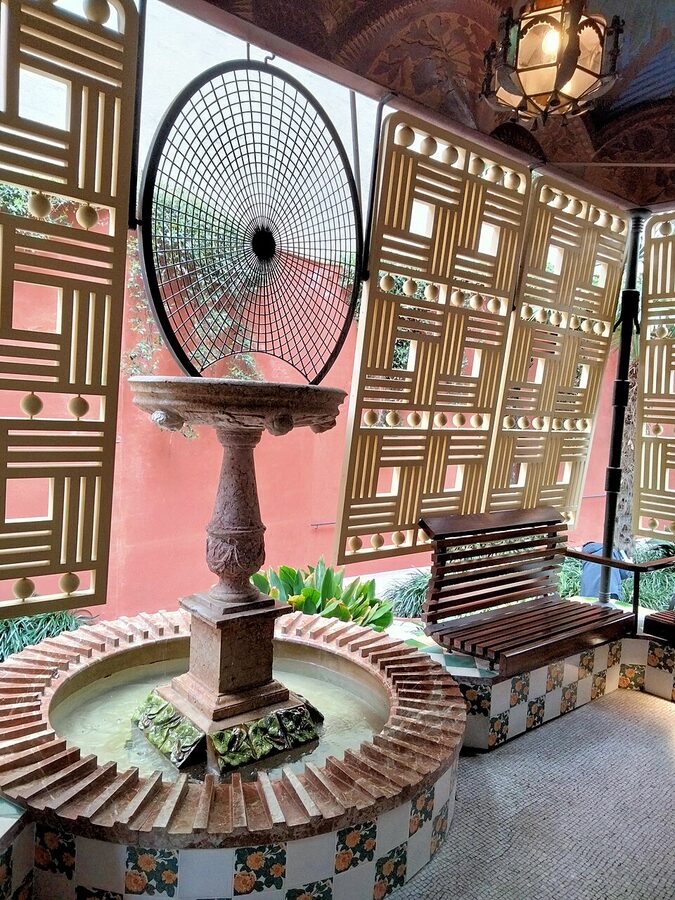
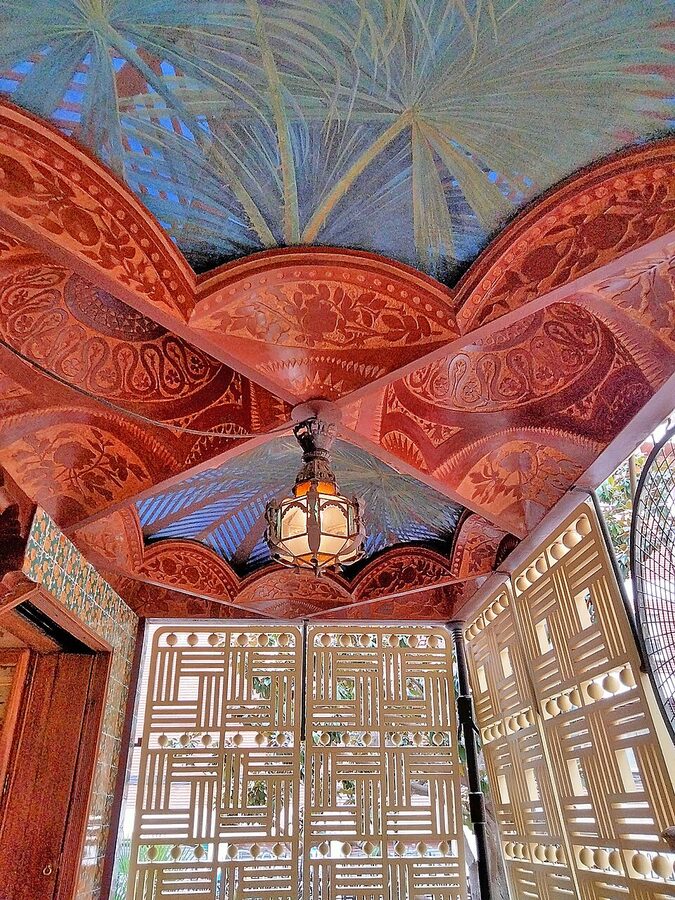
The ground floor is the part that looks closest to a normal 1880s house, until you start looking up. The dining room has a covered porch at the rear with a small marble fountain in a covered bay (a tribuna) that opens into the garden. The bay was Gaudí’s solution to summer heat: a curved alcove catching breeze and the sound of trickling water in lieu of air conditioning. The dining room itself was originally hung with 32 paintings by Francesc Torrescassana of plant and bird studies, framed in carved wood; only a handful are still in place after the restoration, with the gaps marked by the bare panel pattern.
The smoking room: the part you came for
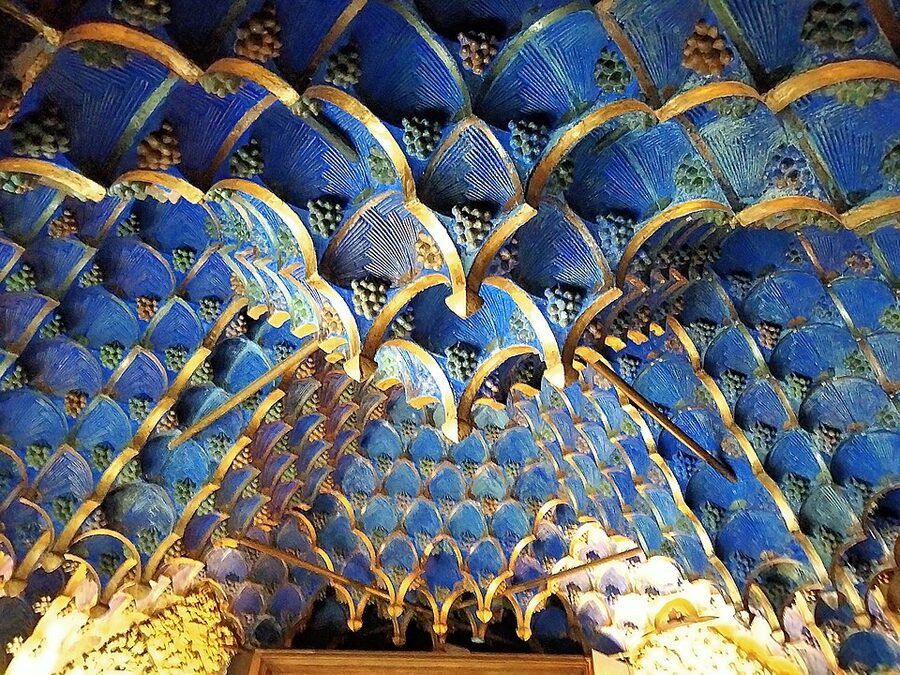
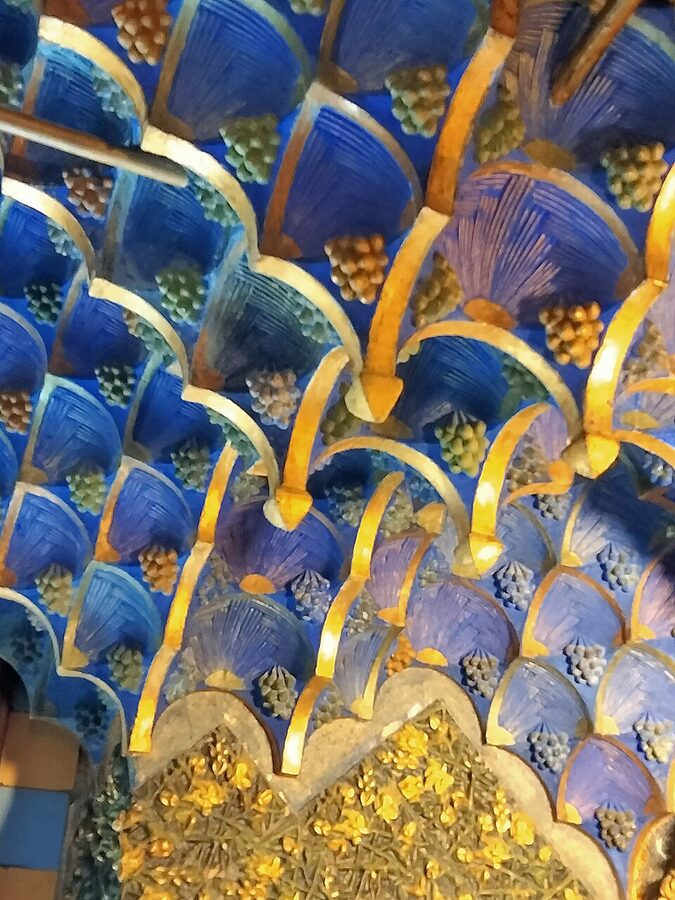
The fumador is the room everyone takes pictures of, and it deserves the attention. Gaudí built a small Moorish smoking room with mocárabe vaulting, those stalactite-like honeycomb forms you find in the Alhambra and Marrakech medersas. The vault here is papier-mâché. Yes, papier-mâché. He was experimenting with cheap materials that could carry heavy ornament without the weight, and the technique was traditional in 19th-century Catalan stage design. The colour scheme is deep blue and gold, the doors are carved teak, and the windows are a mix of stained glass and pierced wooden screens. It’s the room that pre-figures everything Gaudí did inside the Casa Batlló a quarter-century later.
First floor: the bedrooms
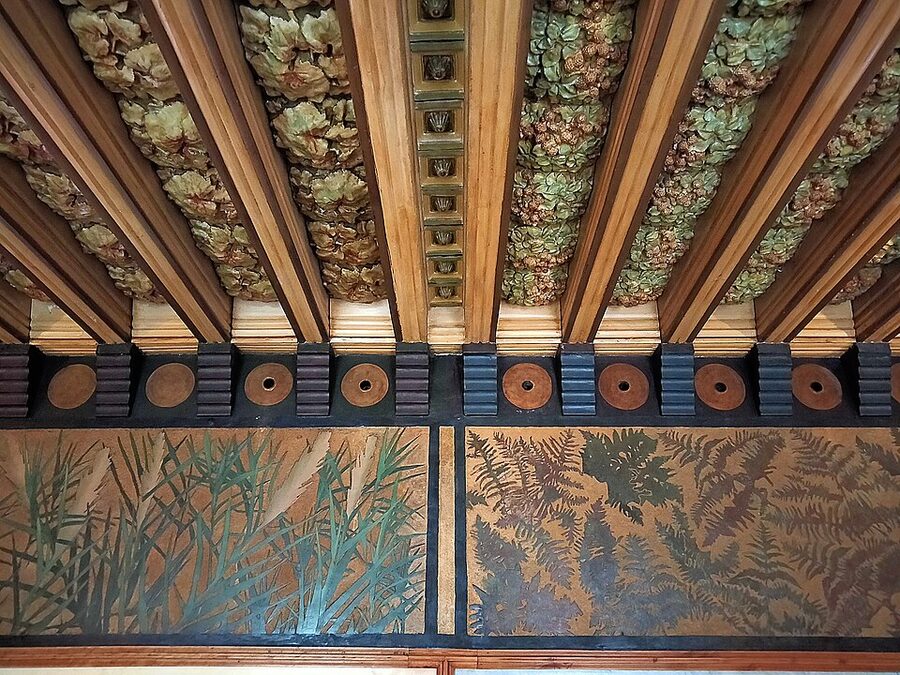
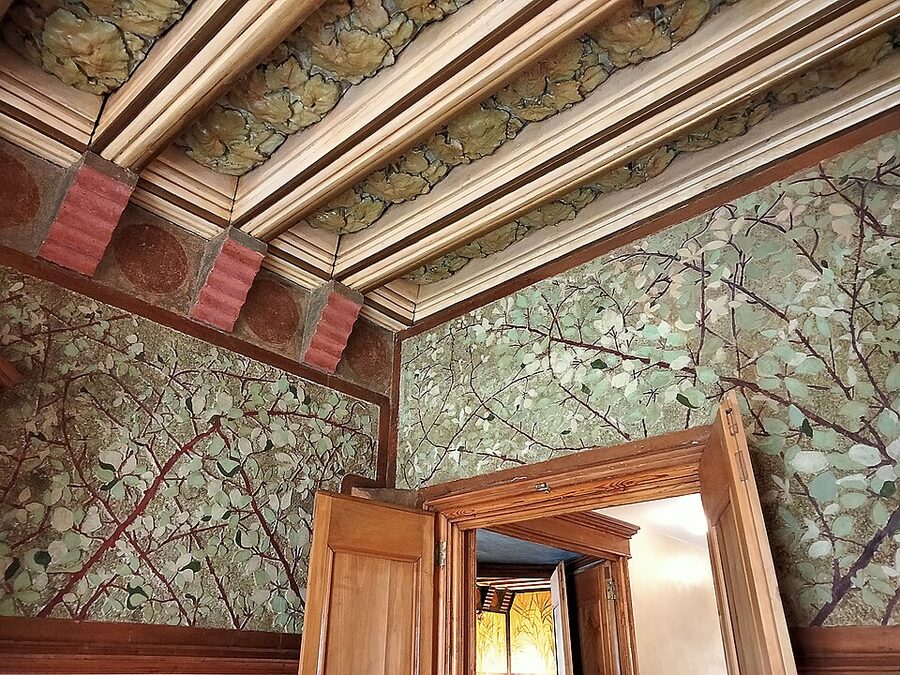
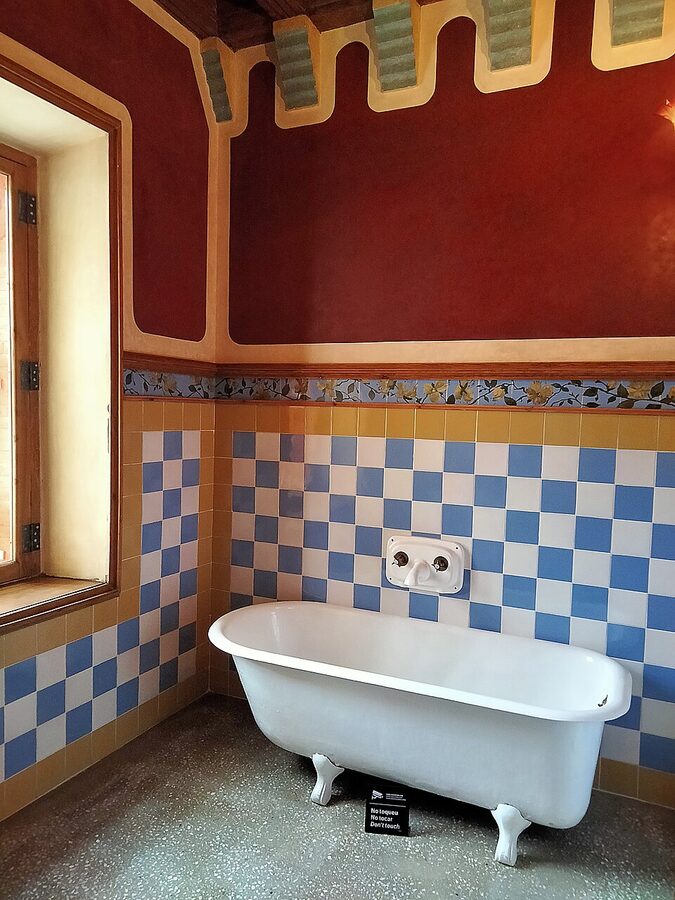
Up the staircase you reach the bedroom level. The master bedroom carries the same trick the dining room does: walls are calm, ceiling is loud. The plasterwork around the cornice is sgraffito, scraped to reveal an under-tone, an old Mediterranean exterior technique that Gaudí brought indoors. The Vicens daughters’ bedroom is the famous pink room, painted a colour that started as a real pigment and has been faithfully matched in the restoration.
Attic: the exhibition
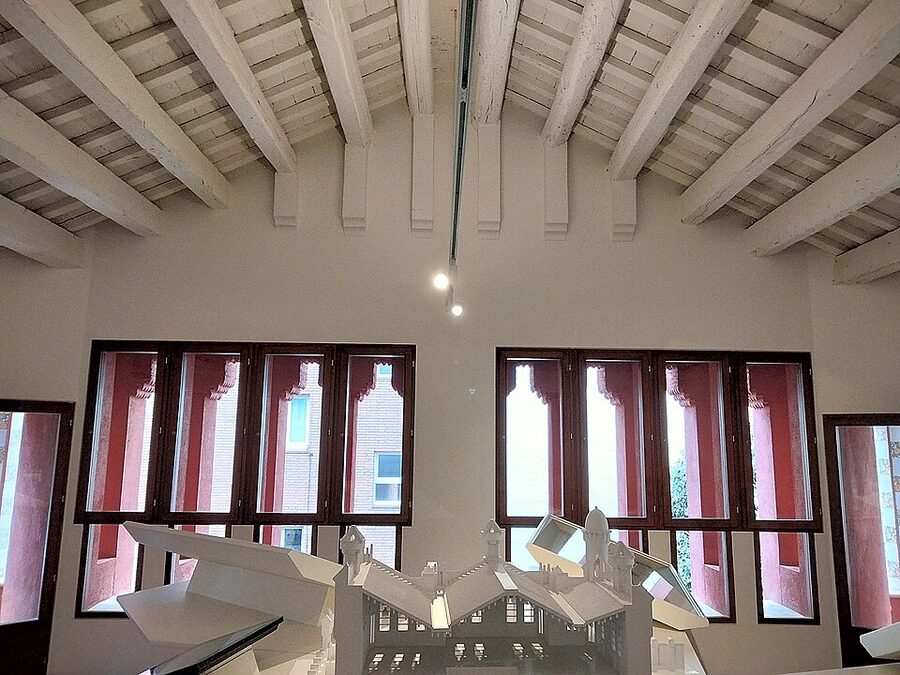
Above the bedroom floor is the attic, which was originally the servants’ level and now houses the museum’s permanent exhibition. There are 3D models of the original 1885 house, the 1925 extension, and the 2014-2017 restoration phases. There’s a video, well-edited, that explains how the team behind the restoration figured out which paint colours were original (samples scraped from layered surfaces and analysed under microscope) and which features had been lost (a waterfall in the garden, the St Rita shrine, several chimneys reduced or rebuilt). It’s the only part of the museum that genuinely needs the 12 minutes of your time. Most people skim it and miss the explanation of why the rooms downstairs look like they do.
Rooftop: the chimney garden in embryo
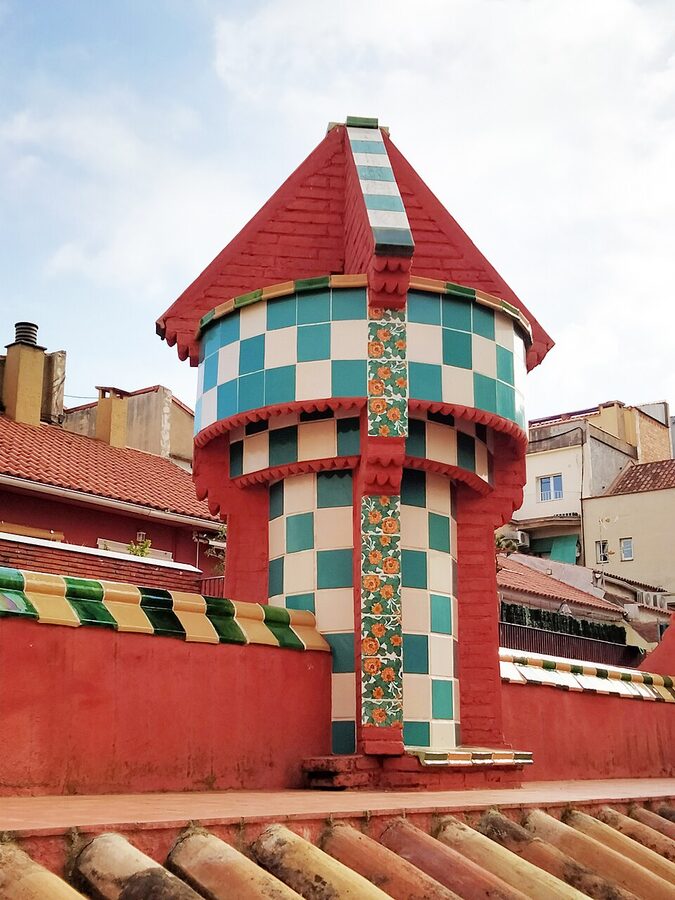
You climb up to the rooftop and the spell breaks open. This is the part where you stop seeing a Moorish summer villa and start seeing a Gaudí. The original chimneys still on the roof are tile-clad, asymmetric, slightly absurd. They’re a small earlier draft of every rooftop chimney garden he’d build over the next 40 years. La Pedrera’s warriors-with-helmets chimneys are the direct descendants. The ironwork railings are the same palm-frond motif as the perimeter fence three storeys below; Gaudí worked the entire facade and grounds as a single composition.
The garden and the palm-frond fence
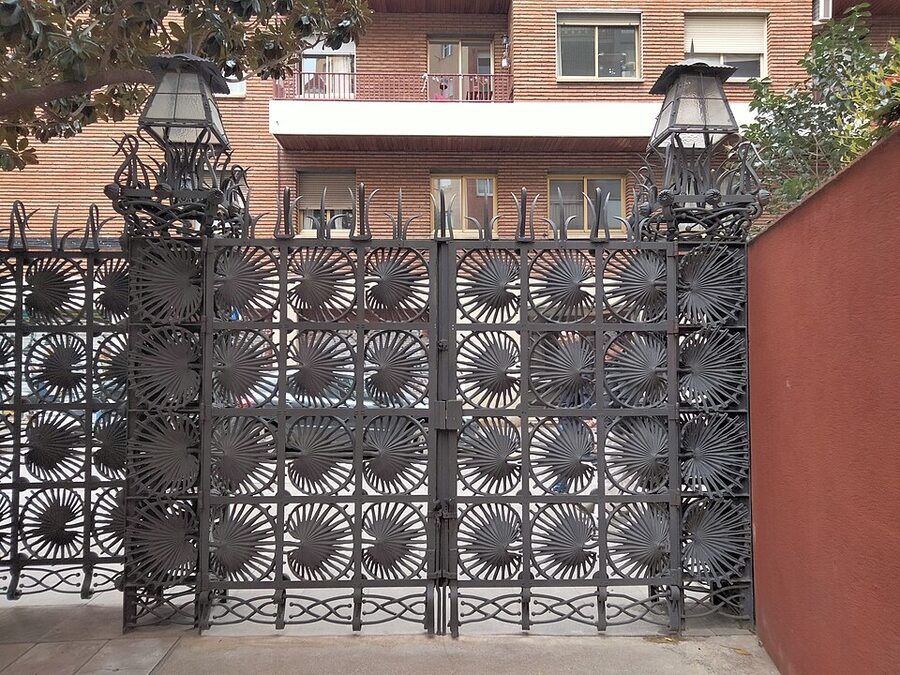
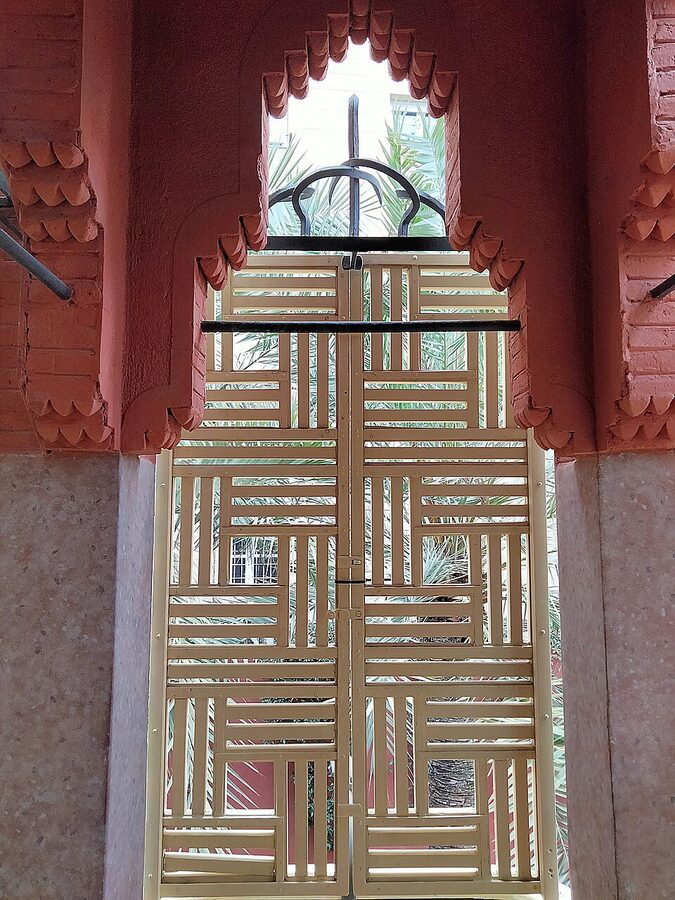
The garden is much smaller than it used to be. When the Vicens family owned the lot, the grounds wrapped around all four sides and held a waterfall, a pergola, and a small shrine to Saint Rita. The Jover family sold off most of the garden to developers in the 1940s, and what you see today is a compact courtyard with a few palm trees, a section of original wall, and the surviving pieces of the fence. Read the fence as the headline. Gaudí cast the form from real palm fronds growing on the original site, then beat the shape in iron. It’s the seed of his lifelong biomimicry, and you can stand at the gate and see the ironwork from the inside as well as the outside.


The Tile Factory Story (And Why the Facade Looks Like That)
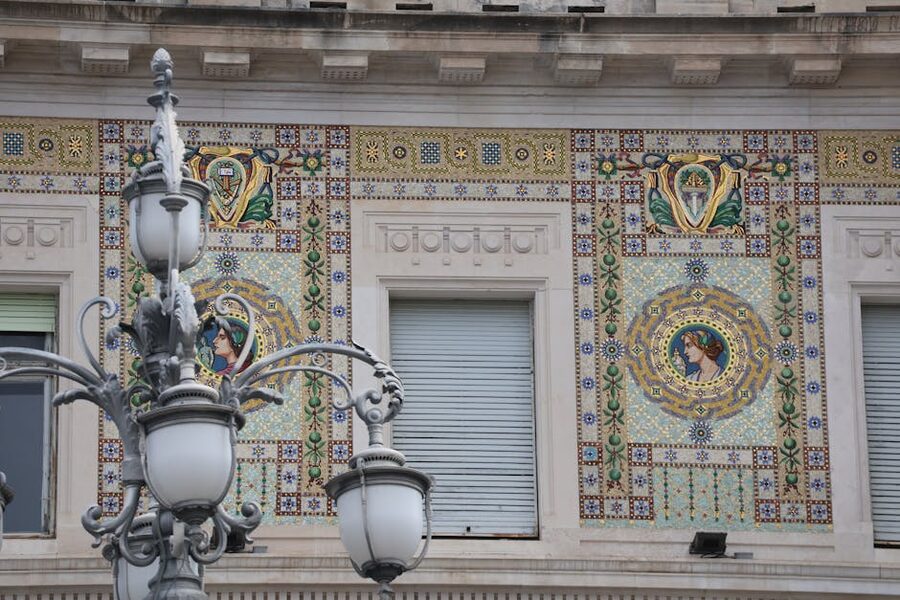
The thing nobody tells you about Casa Vicens is that the building is essentially a giant catalogue page for the owner’s tile factory. Manel Vicens i Montaner had inherited a ceramics business; he wanted his own house to advertise what the factory could do. Gaudí worked with that constraint and turned it into a virtue. The marigold tiles on the facade, the green and white checkerboards on the side walls, the tile-clad chimneys, the pierced tile screens around the windows: all of it was made on the Vicens production line. The house works as a sample book. Walk around it and you can imagine a 1880s buyer pointing at a panel and saying “I’ll have that for my entrance hall in Sarrià, please.”
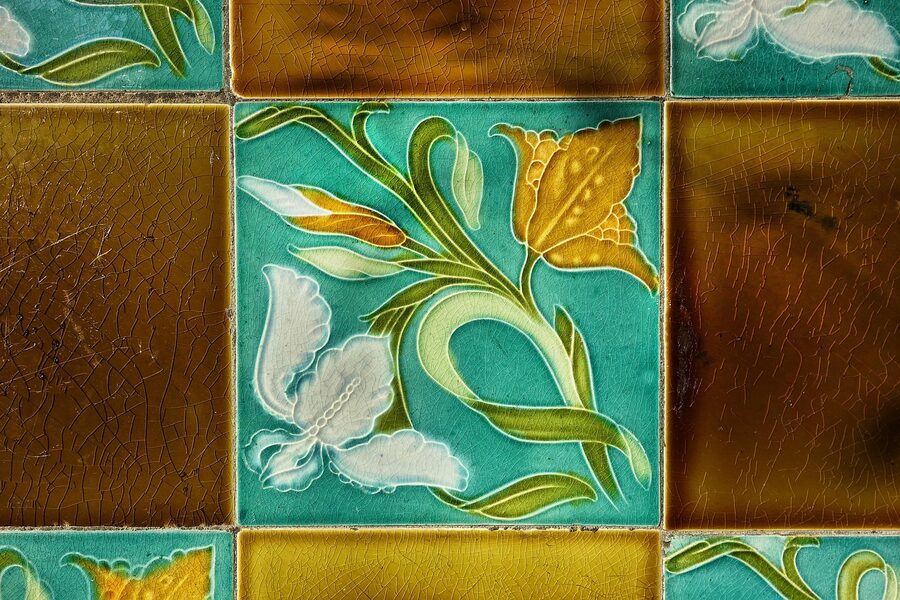
That commercial logic is why the tile patterns shift so dramatically room to room and elevation to elevation. The west facade has the marigold; the south has the checkerboard; the entrance has glazed greens. There’s no overall pattern. The building is more like a tile shop than a house, which is exactly what the client paid for. It explains why Casa Vicens is structurally one of Gaudí’s least-radical buildings: the load-bearing walls are conventional brick. The radical part is the surface. Strip the tile off and you’re left with a slightly weird square box.
Casa Vicens vs the Other Gaudís
If you’ve already seen Casa Batlló, La Pedrera, Park Güell, and Sagrada Família, the obvious question is whether Casa Vicens is worth a fifth ticket. The answer depends on how much you’ve fallen for the late Gaudí. If you walked out of Sagrada Família wanting more, the answer is yes. If you found the late stuff too much and want to see where the train left the station, the answer is yes. If you’ve decided Gaudí is overrated and you want to leave Barcelona at peace with that decision, you can skip Casa Vicens and not feel bad about it. The single-architect-as-debut-statement instinct is what links Casa Vicens to Frank Gehry’s Fondation Louis Vuitton in Paris and Renzo Piano’s green-roofed NEMO Science Museum in Amsterdam, both of them buildings where the architect’s signature is louder than the brief.
The comparisons that actually matter:
- vs Casa Batlló: Casa Batlló is the late Gaudí museum; Casa Vicens is the early one. Different architect at different points in his career. Both worth doing, in either order. Casa Batlló is busier, more expensive, more multimedia.
- vs La Pedrera (Casa Milà): La Pedrera is the mature urban apartment block on Passeig de Gràcia. Casa Vicens is the youthful summer villa in Gràcia. The chimneys on La Pedrera’s roof are the descendants of the chimneys on Casa Vicens’s roof.
- vs Park Güell: Park Güell is the polychrome public park; Casa Vicens is the polychrome private house. The trencadís technique on Park Güell’s serpentine bench grew out of the tile experimentation Gaudí started on Casa Vicens’s facade.
- vs Sagrada Família: the smallest and the largest of his projects. The biomimicry on Sagrada’s columns started in the palm-frond ironwork at Casa Vicens.
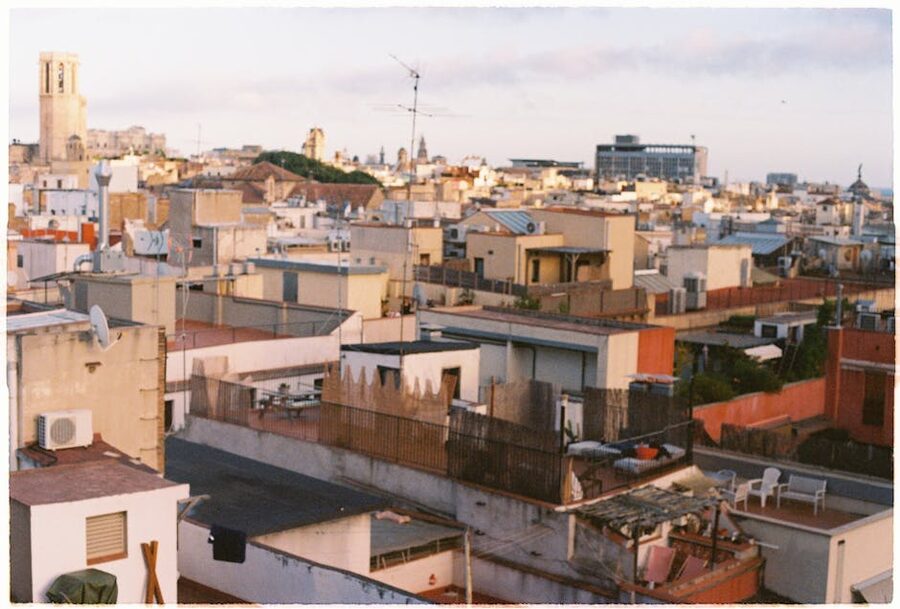
The Best Casa Vicens Tickets and Tours
Three picks below across price tiers. The cheapest covers everyone who just wants to see the house; the middle adds a guide; the splurge adds a guide and pairs Casa Vicens with La Pedrera so you cover early and mature Gaudí in one morning.
1. Casa Vicens Skip-the-Line Entrance Ticket: $26
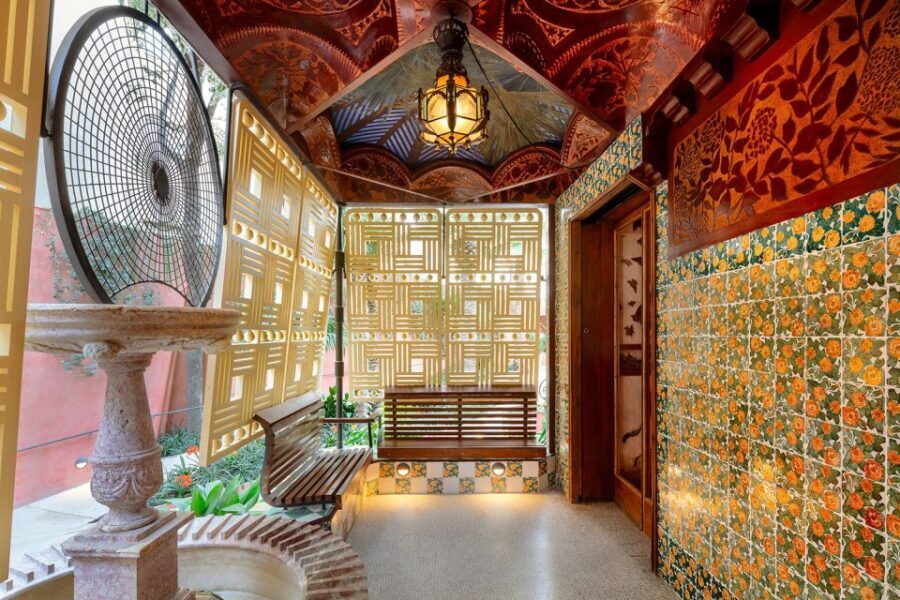
This is the right pick for almost everyone visiting Casa Vicens: the cheapest path in, with the same access as the more expensive options and an audio guide in 16 languages. Our full review of the skip-the-line ticket covers the timing windows that matter and where the audio guide skips important details. Bring earphones; the museum doesn’t supply them.
2. Casa Vicens Guided Tour: $27
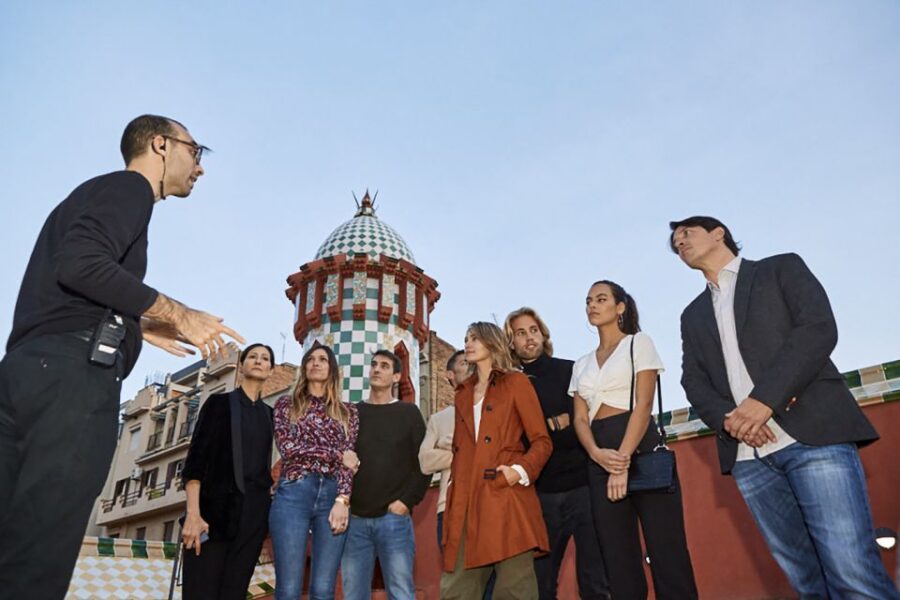
The guided tour is roughly the same money as the audio-guide ticket and is the better pick if you have any history-of-architecture curiosity. See our review for what the guides typically cover. The tour caps at 12, runs in English, Spanish, Catalan, and a couple of other languages, and the guides we’ve had walk you through the seam between the 1885 original and the 1925 extension that the audio guide barely mentions.
3. Casa Vicens + La Pedrera Combo: $143
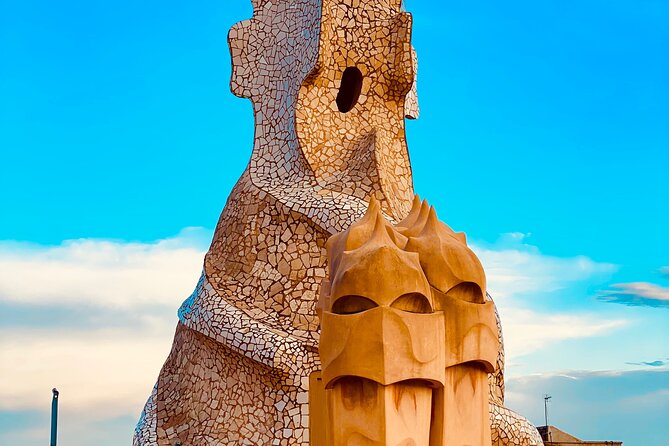
This is the splurge: a private 3-hour guide carrying you through Casa Vicens and La Pedrera in one go, with the comparison Gaudí intended. Our full review covers the pacing trade-off (three hours is fast for two houses), but if you’ve only got one day in Barcelona for Gaudí houses and you want a real expert in the room, this one earns the price.
What to Do With the Rest of Your Day in Gràcia
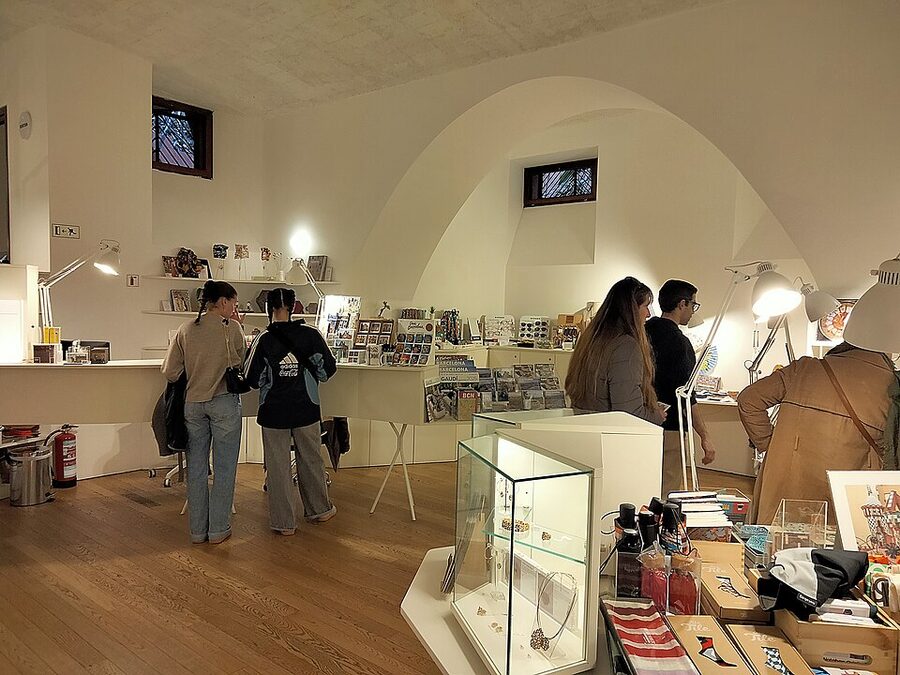
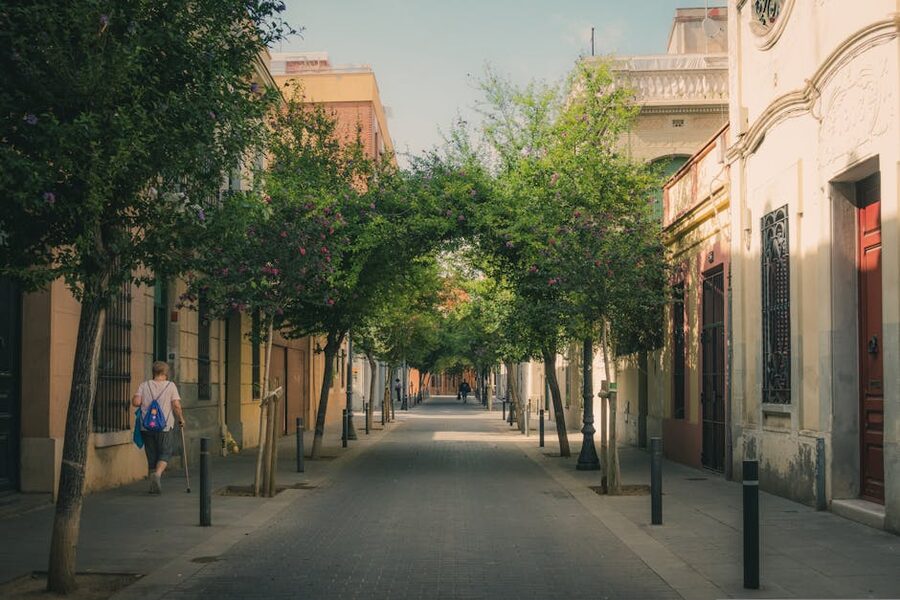
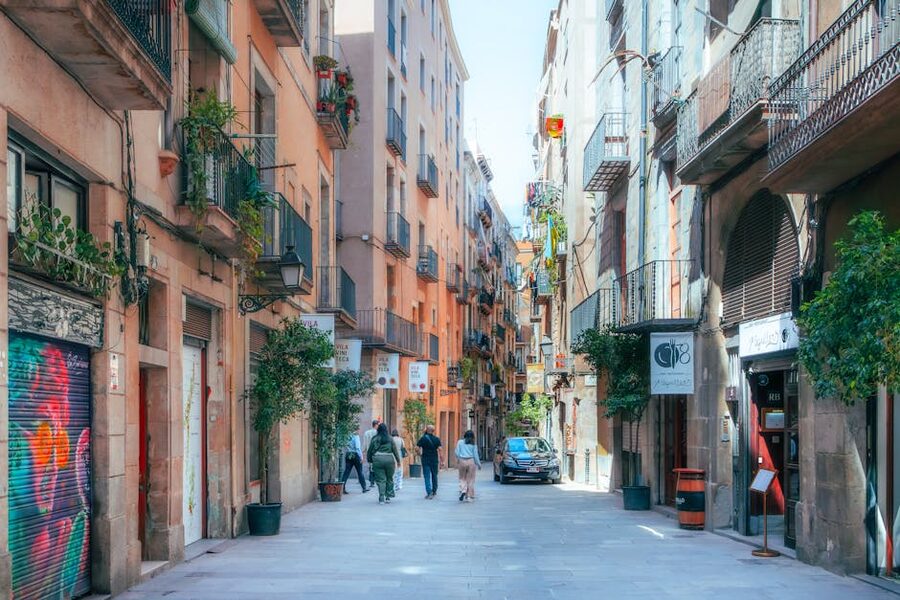
You’ve come up to Gràcia for Casa Vicens. Don’t leave straight after. Gràcia is one of the best neighbourhoods in Barcelona for an afternoon and an evening, and almost no day-tripping visitors actually walk it. Plaça del Sol is a five-minute walk and is the place locals go for vermouth on a Saturday. Plaça de la Vila de Gràcia, with its 1864 clock tower, is another five minutes east. The streets around them are full of independent shops, tapas bars, and the kind of small bookshops that have closed in central Barcelona. The food is better and a third cheaper than anything on Passeig de Gràcia.
If you’ve got energy left after the museum and a coffee, walk uphill twenty more minutes to Park Güell; it’s the most natural pairing with Casa Vicens because it’s both upper-Barcelona and full-Gaudí. Casa Batlló and La Pedrera are downhill on Passeig de Gràcia and are the natural sequence the next morning, when you’re fresh. The Loire Valley parallel for an architect’s first major commission is the Da Vinci-influenced staircase at Chambord, and Amsterdam’s Fabrique des Lumières shows the late-modernist version of the same single-author tile-and-light vocabulary.
Where Casa Vicens Fits in a Barcelona Trip
If this is your first Gaudí house, do Sagrada Família first and Casa Vicens last; the contrast does most of the storytelling work. If you’ve been to Barcelona before and you’ve already done Sagrada and Casa Batlló, Casa Vicens slots in as the missing prequel. Go in expecting an early-career portrait, not a greatest-hits compilation. We’d pair it most naturally with Park Güell in a single uphill day and leave Passeig de Gràcia (Casa Batlló, La Pedrera) for a separate morning. Save tile-and-modernism overdose for last; you can only stand under so many mocárabe vaults in a single 24 hours before they all start to blur. Skip if you’re seriously short on time, but if you’ve got three days in Barcelona, this is your slow afternoon.