
Most museums in Florence — and the Prado in Madrid, the Louvre, and Amsterdam’s Rijksmuseum — have a polite “do not touch” sign every two metres. The staff at the Accademia will gently ask you to step back if you get within arm’s reach of David. The Uffizi has barriers, alarms, and security guards in every room. The Leonardo Interactive Museum is the opposite of all of that. There are 65 wooden machines, you can crank, pump, and lever every single one, and the staff actively encourage you to break things if you can, most of the mechanisms have been re-engineered specifically to handle being touched 200 times a day, the same hands-on philosophy that drives Amsterdam’s NEMO Science Museum and the Upside Down Museum.
This guide covers the Leonardo Interactive Museum on Via dei Servi — what’s actually inside, how cheap the tickets are, and which similar-named museum to avoid (there’s a copycat museum 50 metres away that splits visitor reviews in half because travelers confuse them). Below is what to book and how to spend your hour inside.
In a Hurry — Just Tell Me What to Book
- Cheapest and most popular: Leonardo Interactive Museum Entry Ticket ($9) — basic entry, runs about 60-90 minutes inside, includes the workshops
- Viator alternative: Leonardo Interactive Museum Entrance Ticket ($11.95) — same museum, different reseller, slightly more expensive but works if GetYourGuide is sold out
- Combined ticket option: Visit to the Interactive Leonardo Da Vinci Museum ($11) — third reseller channel, sometimes has slots when the others are out
Tickets, Hours and the Museum Nobody Should Confuse This With
The official entry price is around €9 to €13 depending on season, with under-7s free and family discounts available. They run a perpetual “anniversary discount” (the museum opened in 2003) so the actual price you pay through resellers like GetYourGuide is often €7-€8.
Hours: open every day, roughly 10am to 6pm. They don’t close on Mondays, which makes this one of the few Florence museums you can actually visit on a Monday — the entire Pitti, Uffizi, Accademia, and Palazzo Vecchio circuit shuts on Mondays, leaving Leonardo as one of the only museum options.
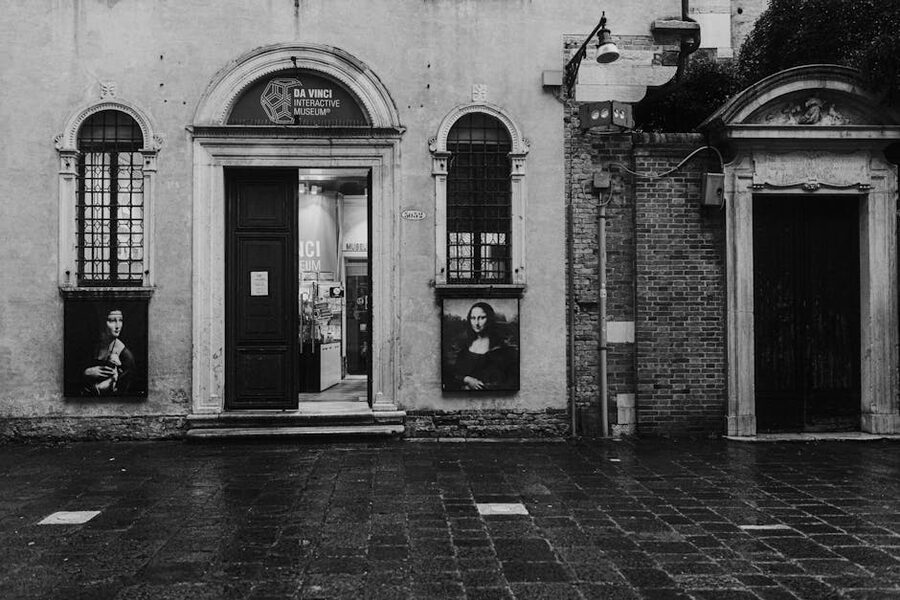
Now the warning. There are two Leonardo da Vinci museums on the same street, less than 100 metres apart. One is the original Leonardo Interactive Museum at Via dei Servi 66/r, opened in 2003 — well-reviewed, hands-on, family-run, with proper machine reconstructions. The other one (Museo Leonardo da Vinci) opened later, has a similar name, and gets noticeably worse reviews. Check the address on your ticket. The interactive one — the one this article is about — is the original at 66/r, with a green-bordered storefront and a trademarked “Leonardo Interactive Museum®” logo.
The Three Tickets Worth Booking
All three of these tickets get you into the same museum. The difference is the platform you book through. The official Leonardo Interactive Museum site sells direct, but the resellers buy bulk allocations and often have availability when the official is sold out. Same museum, same machines, same ticket price (or slightly higher with the markup) — you’re just choosing a vendor.
1. Leonardo Interactive Museum Entry Ticket — $9
This is what I’d book. $9 is cheap for any museum in central Florence, and it gets you the same access as the more expensive resellers. No audio guide is included but the machine labels are in seven languages and most exhibits have a “press here to see how it works” button. A walkthrough of what the entry process looks like — there’s no queue most days, just walk in.
2. Leonardo Interactive Museum® Entrance Ticket (Viator) — $11.95
Functionally identical to the GetYourGuide version. The €3 markup is the cost of having all your tour bookings in one platform, which is worth it if you’ve already booked your Vatican or Rome food tours through Viator. The mobile voucher works the same way as the GYG one — show the QR code at the door.
3. Visit to the Interactive Leonardo Da Vinci Museum — $11
A second GetYourGuide listing for the same museum. Why two? The reseller treats them as different “products” because they’re packaged with different supplier accounts on the back end. For practical purposes, this is the same ticket as Tour #1, just on a different SKU. If Tour #1 shows sold out for your date, check this one — it sometimes still has availability.
What’s Actually Inside
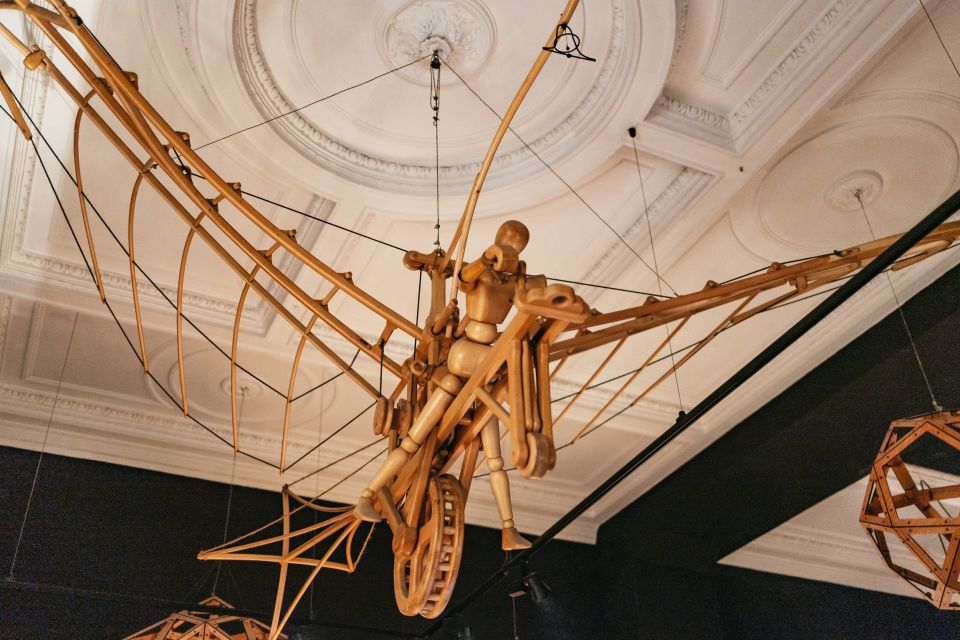
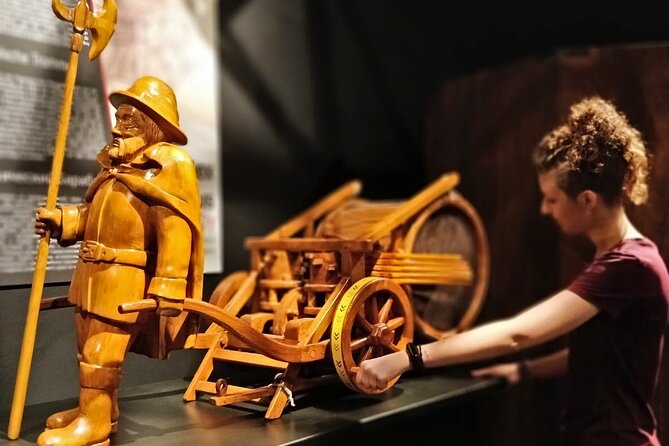
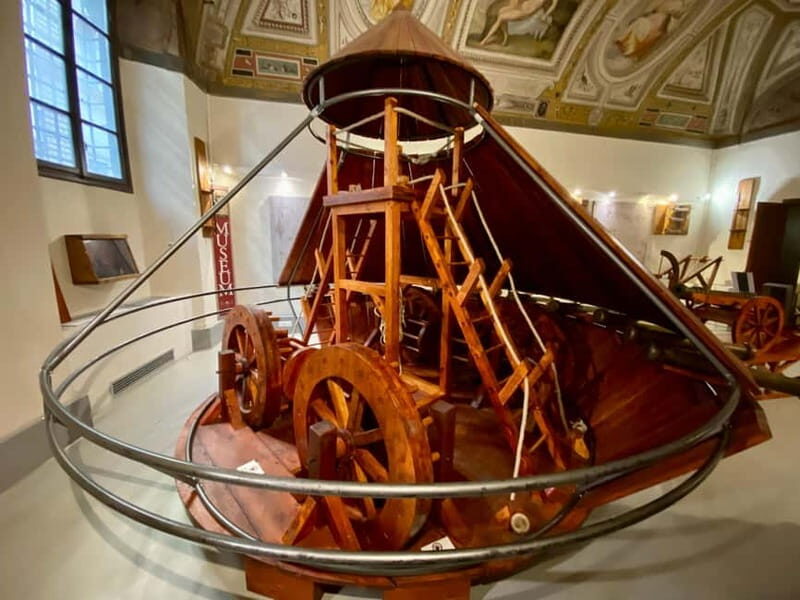
The museum is essentially three rooms full of working wooden reconstructions of Leonardo’s machines — about 65 in total — built from his original notebook drawings. Every one of them works. Cranks turn, levers move, gears engage, and the operating principles are demonstrated mechanically rather than explained on plaques.
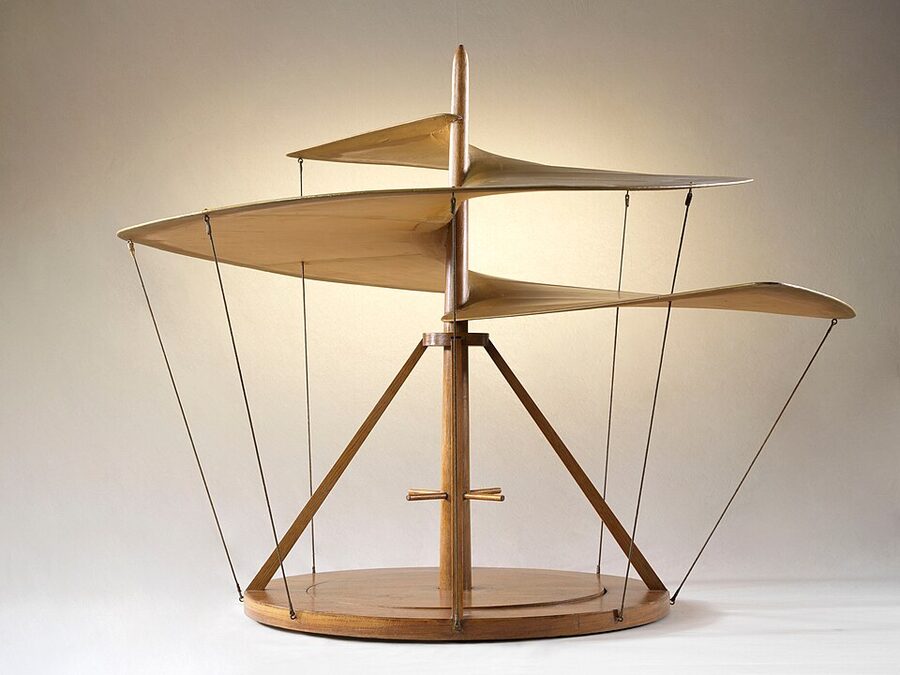
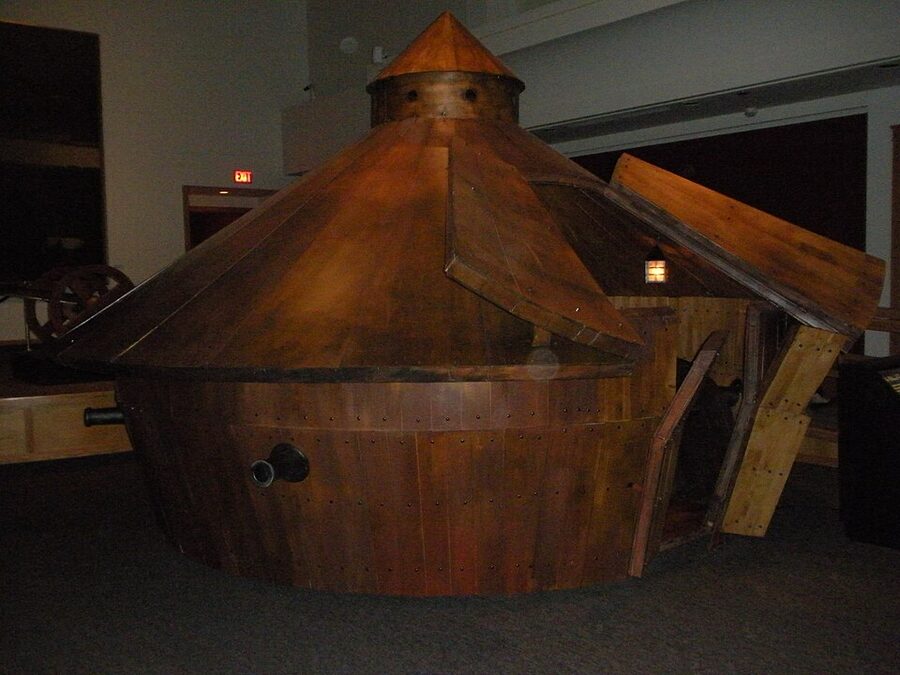
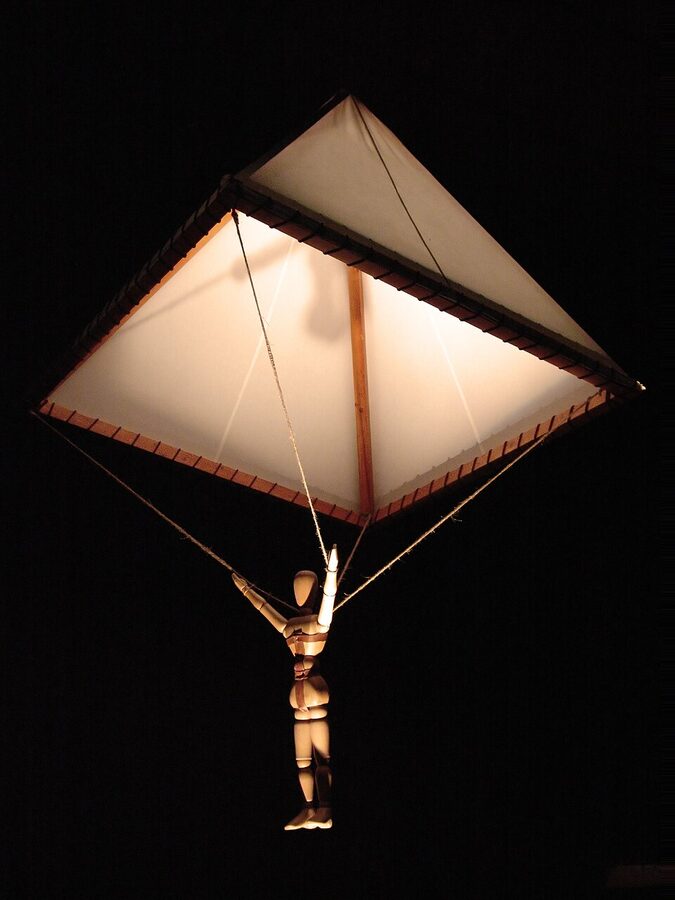
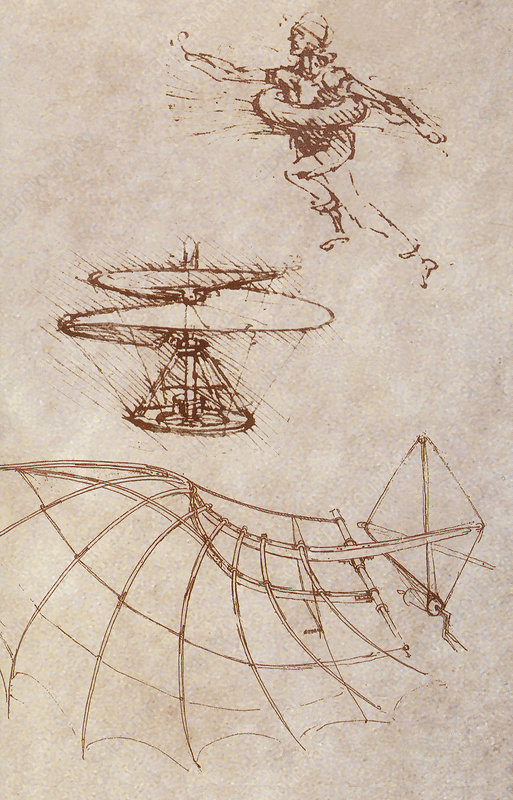
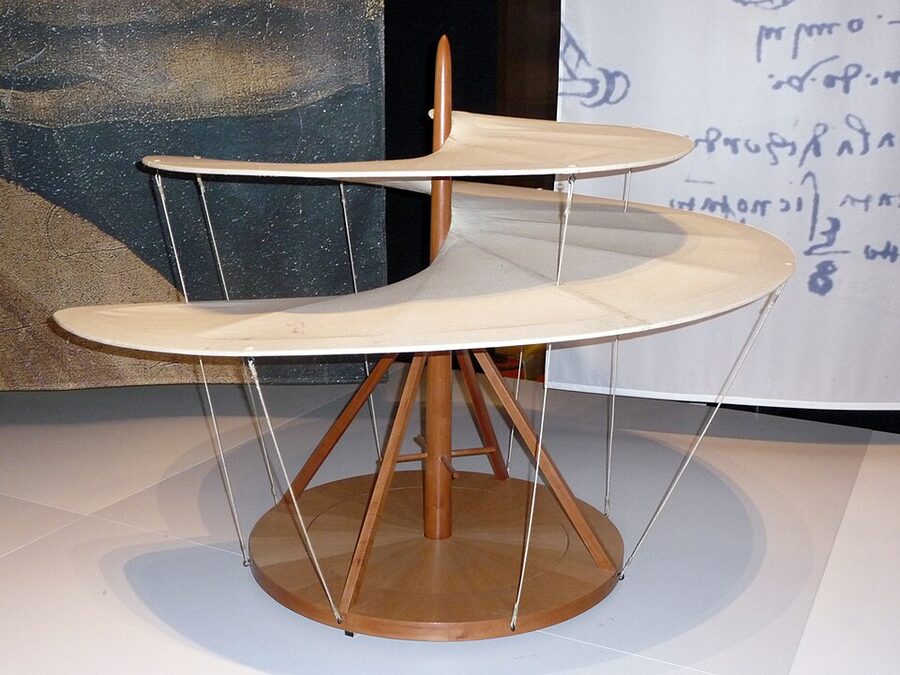
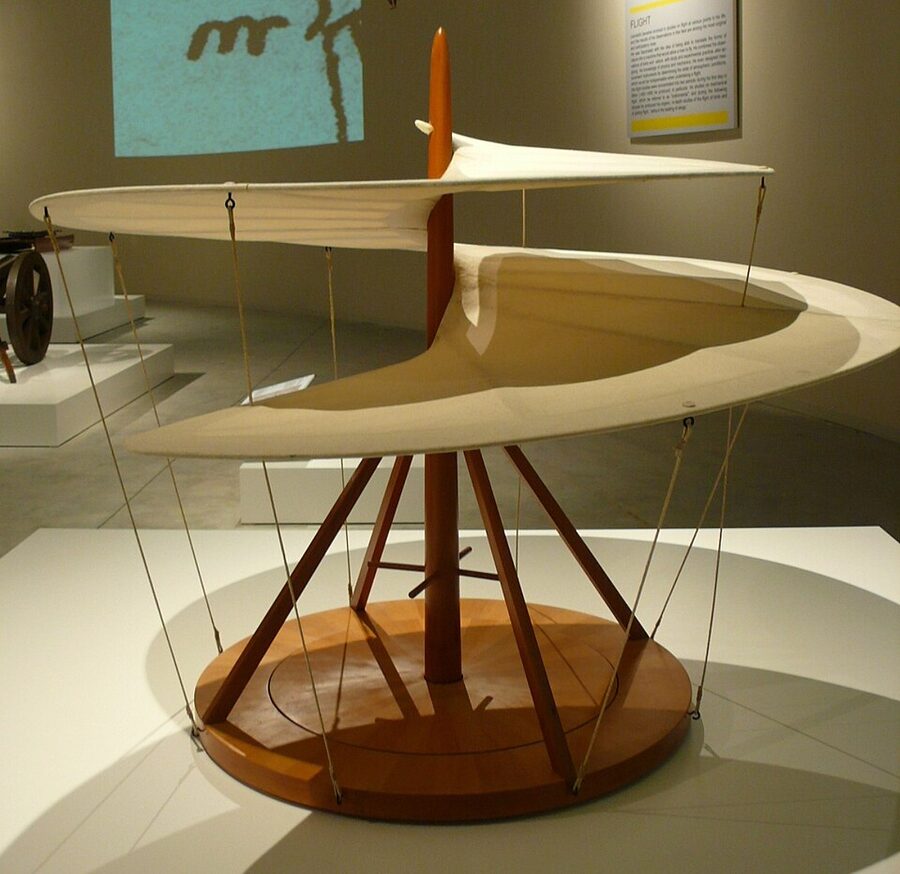
The headline machines are the ones you’ve seen in textbooks. The armoured tank (1487 design) sits at one end of the main room, with rotating cannons and a turtle-shell hull that hand-crank around in circles. The aerial screw (Leonardo’s helicopter, c.1485) is on display with its full helix rigged to a hand crank. The pyramid parachute (c.1485) hangs from the ceiling — Leonardo’s design was successfully tested in 2000 and worked exactly as he predicted.
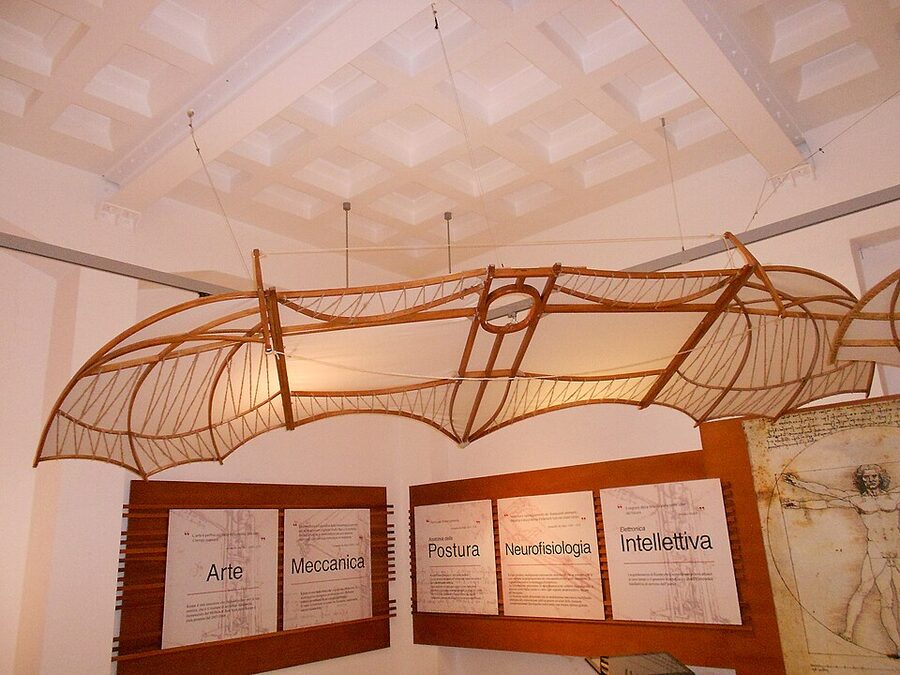
The smaller mechanical devices are the ones that surprise people. The hydraulic saw works on a foot pedal — push down, the blade cycles up and down, like a treadle sewing machine. The endless screw is a continuous-motion device that converts circular motion into linear lifting. The printing press reconstruction lets you stamp a paper with a Leonardo drawing.
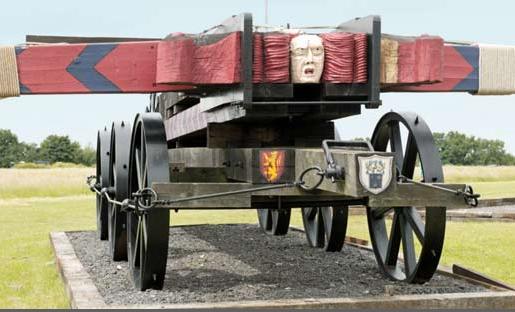
The military designs are gathered in their own corner. Catapults, crossbows, machine guns, ballistas — Leonardo spent much of his career as a military engineer for the Sforza family in Milan and the Borgia family in Romagna, and a third of his notebook drawings are weapons. The crossbow alone is 4 metres across, with hand-cranked tensioning gears.
The Drawings and Why They Matter
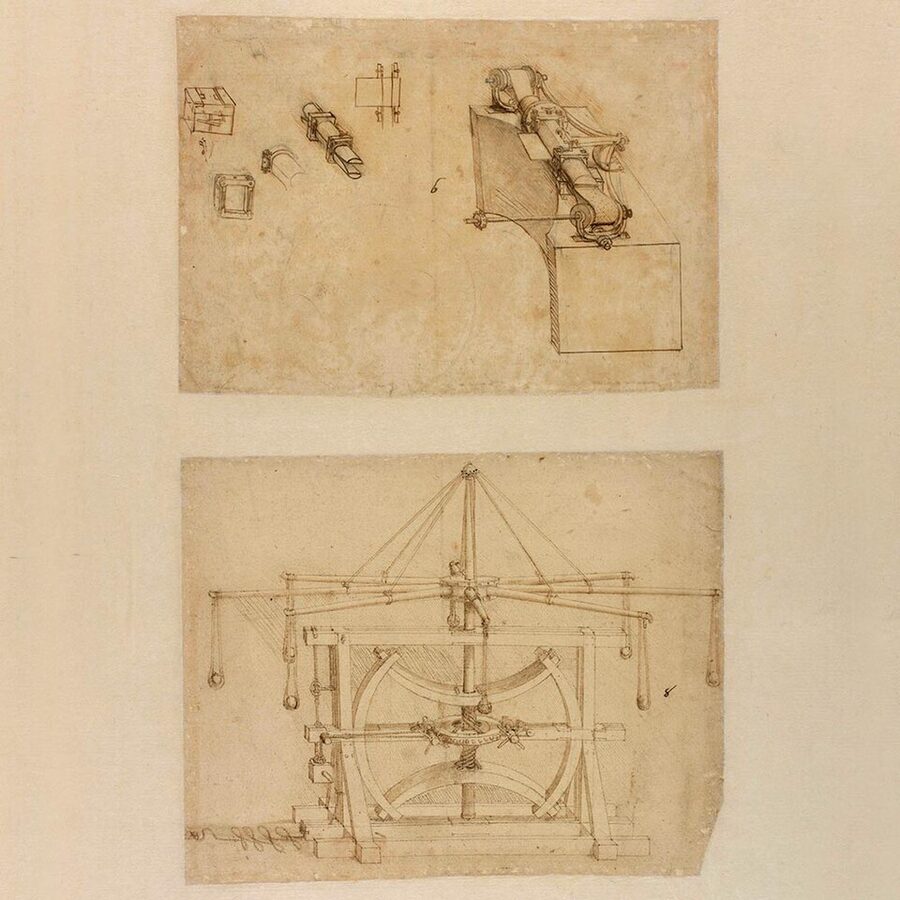
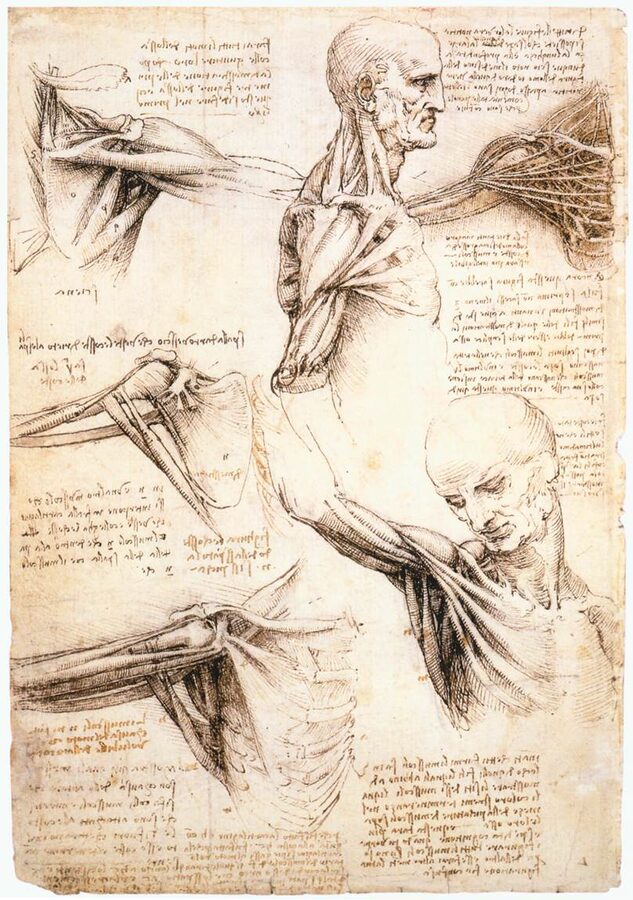
Each machine in the museum is mounted next to a reproduction of the original Leonardo drawing it’s based on. This is the part most visitors blow past on their way to crank the next gear, but it’s worth slowing down for. Leonardo’s engineering sketches are the prototype for every modern technical drawing — exploded views, cross-sections, multiple perspectives of the same component, dimensional annotations. He invented a graphical language we still use 500 years later.
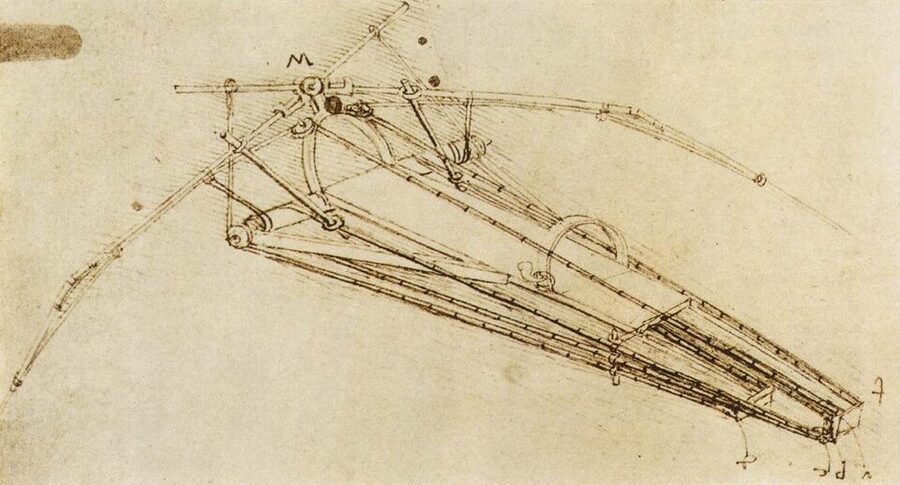
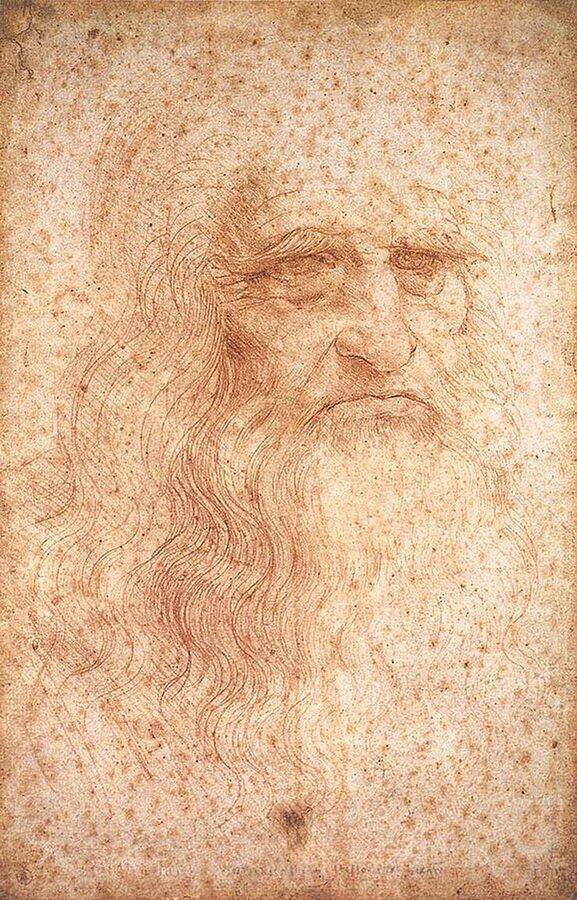
His handwriting is also famously mirror-written. He wrote right-to-left, with letters flipped. There’s no consensus on why; the popular theory is left-handedness combined with a mild dyslexia, the academic theory is that he was protecting his ideas from casual readers (anyone wanting to read the notes had to make an effort). The museum has reproductions where you can hold a small mirror up to the page and see the text resolve.
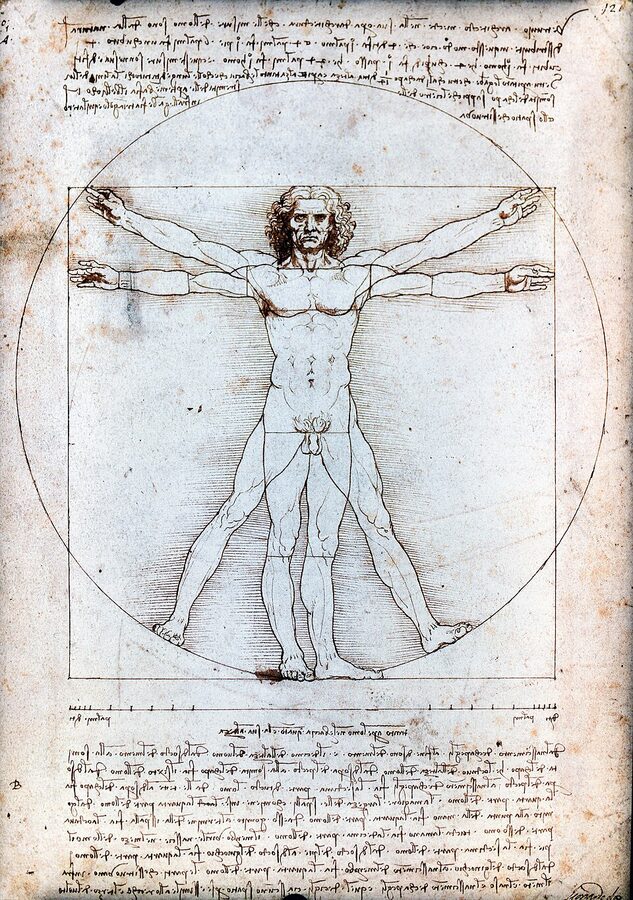
The most famous drawing reproduced in the museum is the Vitruvian Man (c.1490) — the figure inside a circle and a square, with proportions worked out to demonstrate the geometry of the human body. The original is paper, very fragile, kept in the Gallerie dell’Accademia in Venice (a different Accademia from the one with David in Florence; this confuses everyone). The Florence Leonardo museum has a high-resolution facsimile you can study at any distance.
The Workshops and Why You Should Try One
The “interactive” in the museum’s name isn’t just marketing. The entrance fee includes structured workshops at multiple stations throughout the museum. You can build a small wooden bridge using Leonardo’s pegless self-supporting design, assemble a model dome based on Brunelleschi’s principles (which Leonardo studied), or construct a polyhedron from cardboard nets. The workshops run all day, you walk up to the station and sit down, no booking required.
This is the part where adults often realise they’re enjoying themselves more than they expected. The bridge workshop in particular, Leonardo’s “self-supporting bridge” uses no nails, no rope, no fasteners; the wooden pieces lock together by tension alone, is a small puzzle that takes 5-10 minutes to solve and feels disproportionately satisfying. Kids tend to figure it out faster than parents, the same effect that hits visitors trying the touch-screen exhibits at the immersive Fabrique des Lumières or the projection-room sensors inside the Foundation Louis Vuitton building outside Paris.
If you’re with children aged 7 and up, this museum is the easiest sell in Florence. Other museums require advance briefing on why painting matters and what to look for. This museum just lets kids turn cranks. Most parents we know who travel with kids list this as the museum their children remember from Florence.
How Long to Spend
One hour minimum, 90 minutes optimal, 2 hours maximum. The museum is small. There’s a finite number of machines and after you’ve cranked 30 of them you start to repeat the motion. The workshops can extend the visit if you’re with kids who want to build the bridge twice.
The museum operators officially recommend “approximately one hour” but if you read every label, watch every demonstration, and try every interactive station, you’ll easily get to 90 minutes. Beyond that, there’s a point of diminishing returns.
Who This Museum Is For (And Who It Isn’t)
This museum is for: families with kids, anyone with engineering or design interests, people who want a quick break from Renaissance painting overload, anyone visiting Florence on a Monday when the major museums are closed, and people who want to actually do something rather than look at things behind glass.
This museum is not for: serious art history buffs (there’s no original Leonardo art here, only reproductions of his drawings and reconstructions of his designs), people allergic to anything that feels like a “themed experience,” and anyone who needs at least three hours of content to feel they’ve gotten value from a museum visit.
The honest answer: if you’re choosing between a 4-hour Uffizi visit and a 1-hour Leonardo museum visit, the Uffizi wins for cultural depth. But if you’ve already done the major museums and want a different kind of Florence experience — or if you have kids who’d glaze over at the David — this is the right pick. The €9 ticket also makes it easy to add to a longer day without ruining the budget.
When to Visit
The single best slot is opening (10am) on a weekday. The museum is rarely crowded — even at peak hours it doesn’t get overwhelmed because most tour groups don’t include it on their schedules.
Mondays are particularly good because most other Florence museums are closed and this one isn’t. If you’ve planned poorly and arrived in Florence on a Sunday night with a Monday departure, this museum is one of your only options for a museum experience that day.
Avoid weekends in summer only if you’re particularly crowd-averse — even then, “crowded” here means 30 people in three rooms, not the 800 people you’d be queueing with at the Uffizi. The interactive nature of the museum means there’s some queueing for individual machines on busy days; if you want to crank the printing press solo, come at 10am on a Tuesday.
Getting There
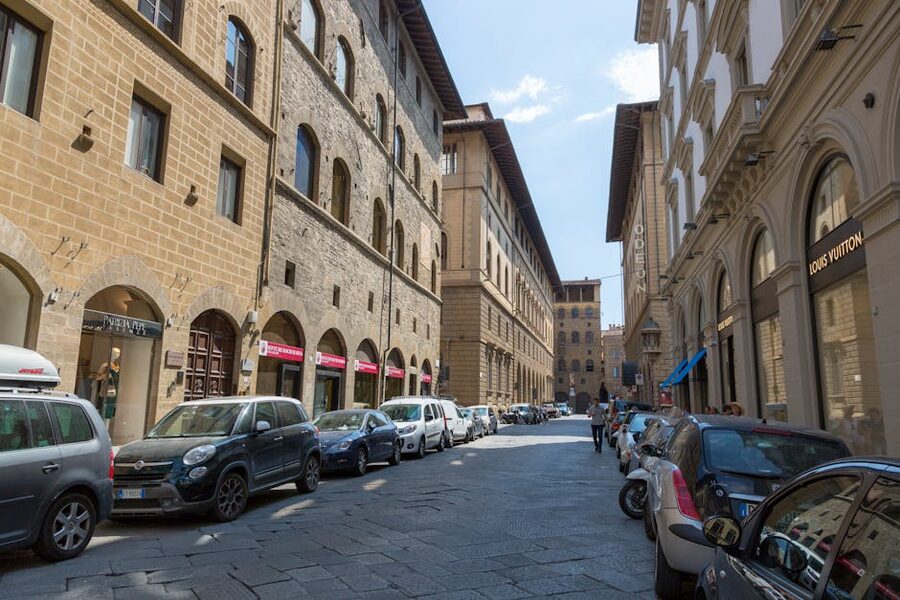
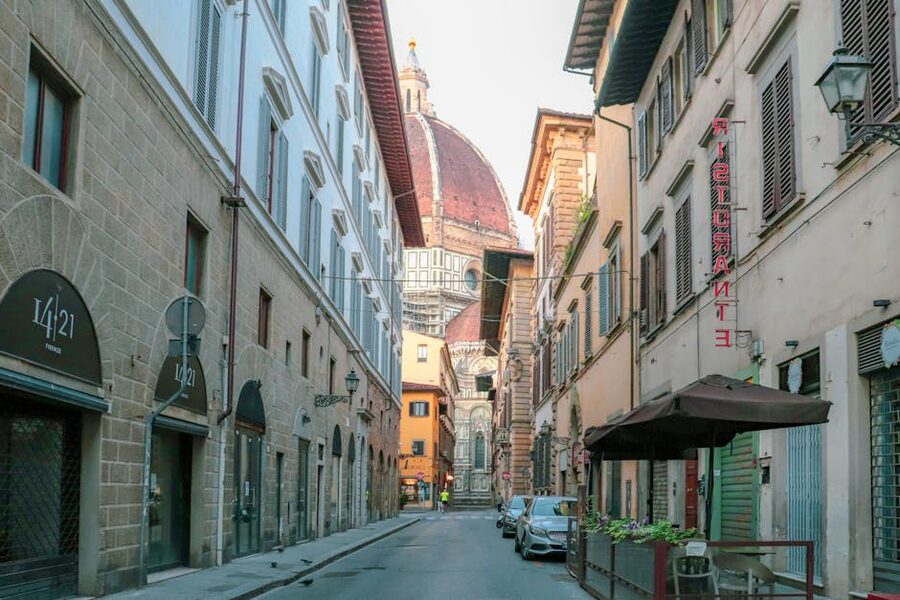
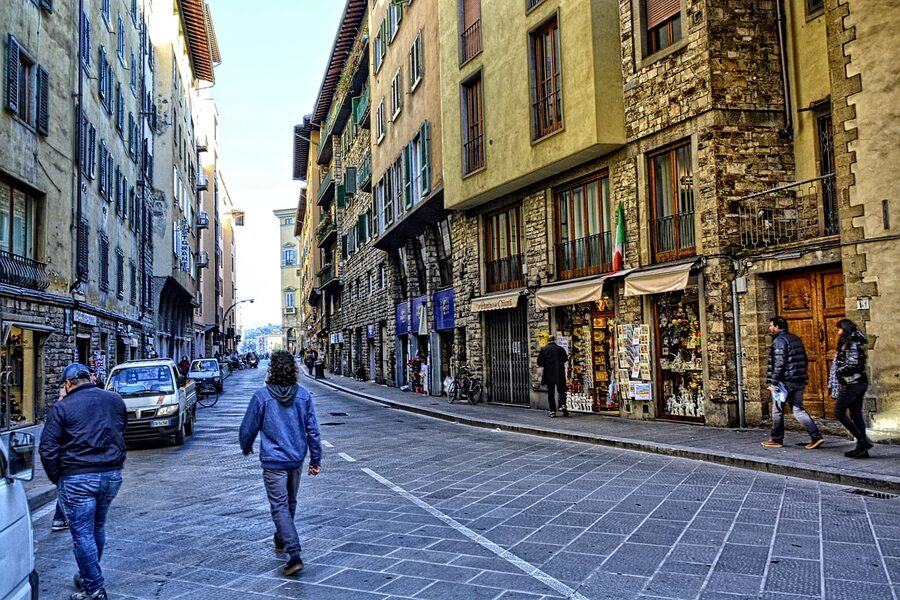
The address is Via dei Servi 66/r, 50122 Firenze. From the Duomo, walk north up Via dei Servi (which starts on the cathedral’s east side); the museum is on the right after about 3 minutes. From the Accademia, it’s a 5-minute walk south down Via Ricasoli, then one block east. From the Duomo’s main entrance, you walk past the building you’d climb to reach Brunelleschi’s dome.
The street is pedestrian-friendly with limited car traffic. There are no metro stops in central Florence; just walk. The museum entrance is the green-bordered storefront with “Leonardo Interactive Museum” above the door — look for the trademark symbol “®” after the name to confirm you’re at the right one.
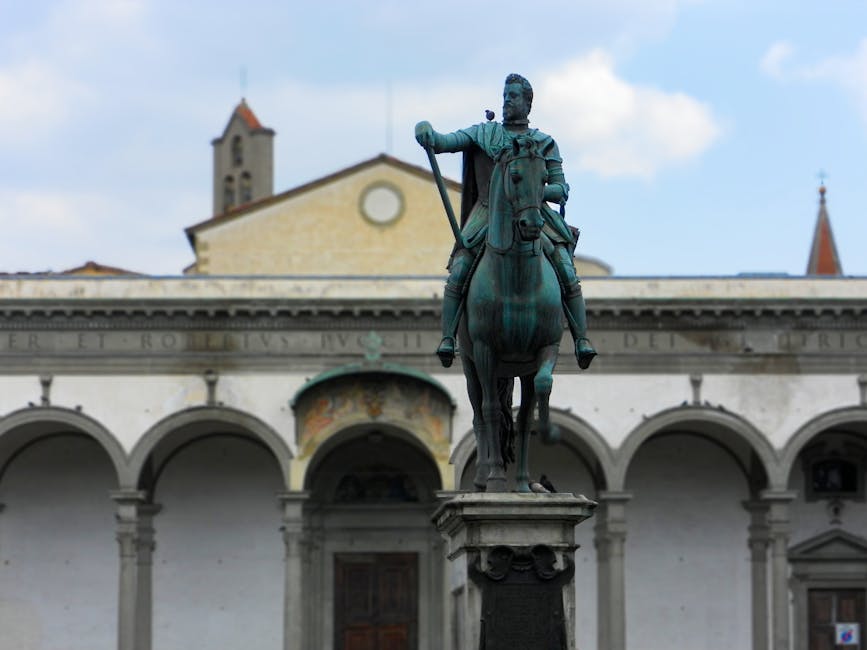
If you confuse this museum with the imitator next door, you can walk back outside and try again — they’re 50 metres apart and either staff will point you to the other if you mention you’re looking for the wrong one.
Practical Things Worth Knowing
Photography is allowed throughout the museum, no flash needed because the lighting is bright. Tripods aren’t necessary. Phone shots are fine.
The bookshop at the exit sells genuinely interesting Leonardo merchandise — reproductions of his drawings, small wooden machine kits you can build at home, books in multiple languages. The kids’ kits (small wooden bridges, little catapults) are reasonably priced and make better souvenirs than fridge magnets.
No restaurant or café inside. There’s a small water fountain near the entrance, and that’s it. Eat before or after.
Toilets are inside, near the bookshop at the back. There’s only one for each gender, so don’t queue up at peak hours.
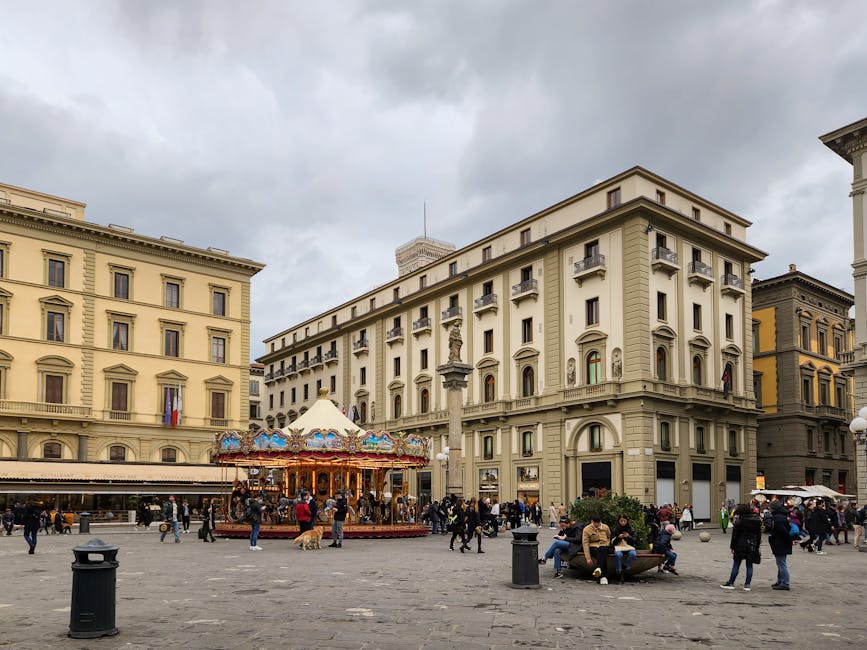
Bag check is available but not mandatory unless you have a large backpack. Most visitors carry small day bags through the museum without issue.
Eating nearby: the area around Via dei Servi is residential — fewer tourist traps than the Duomo neighbourhood directly. Trattoria Mario on Via Rosina (5 minutes’ walk) is the local favourite for lunch — cash only, no reservations, doors open at 11:30am, the queue moves fast. The streets around San Lorenzo market have proper Florentine food at non-touristy prices, also a 5-minute walk.
The Other Florence Museums to Pair It With
The natural pairing is the Accademia for Michelangelo’s David — they’re 5 minutes apart on foot. Both museums are smaller than the Uffizi or Pitti, both can be done in an hour to 90 minutes, and they balance each other: David is the static masterpiece you stand and look at, Leonardo’s machines are the kinetic ones you operate.
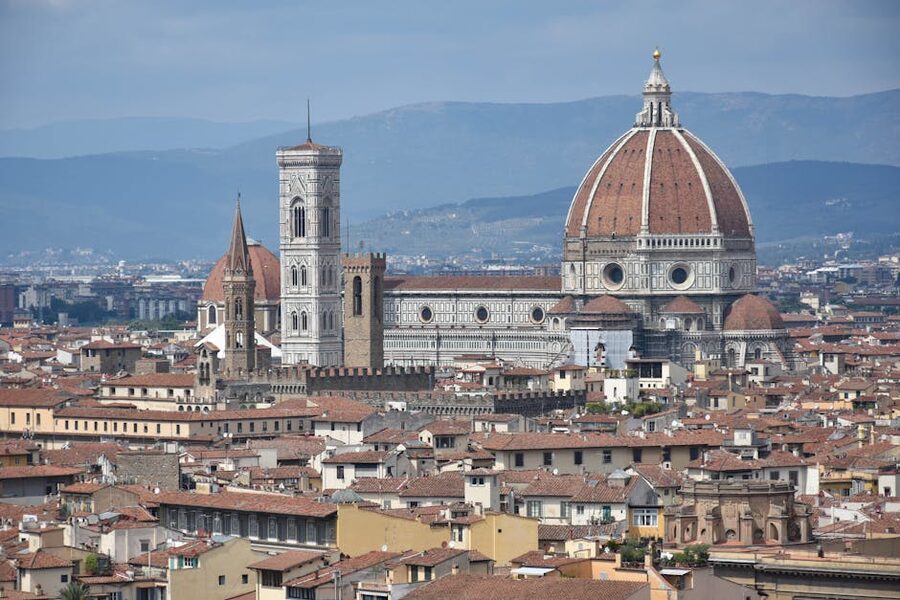
For a Renaissance “engineering” themed day, pair this with the Duomo and Brunelleschi’s Dome. Brunelleschi was the engineer Leonardo most studied — his notebooks contain detailed sketches of Brunelleschi’s lifting machines, the same ones you can see at the Opera del Duomo Museum. Doing both in the same day makes the Renaissance engineering tradition concrete in a way nothing else does.
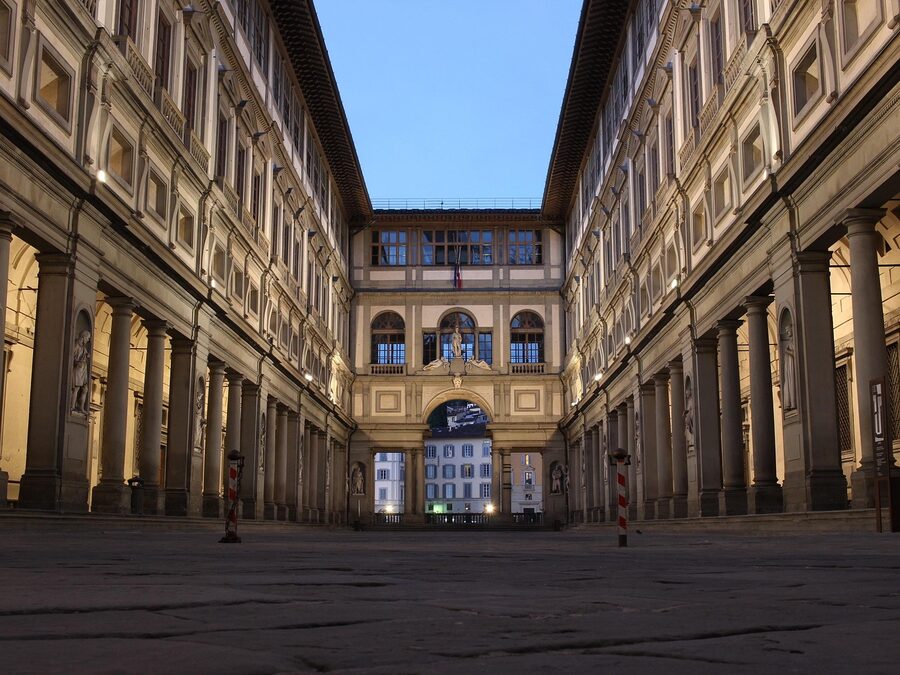
If you have older children who want serious art context too, pair this with the Uffizi — the Uffizi has actual Leonardo paintings (the Annunciation and the Adoration of the Magi), so you can see his finished art there and his engineering thinking here. For the full circuit, add the Pitti Palace for the Mannerist era that came right after Leonardo’s generation.
If your trip continues to Rome, the Vatican Museums have Raphael frescoes that show how Leonardo’s compositional ideas spread through the next generation. From engineering sketches in Florence to ceiling frescoes in Rome — that’s the Renaissance arc in two cities.