
The Pitti family built this palace in 1457 to outshine the Medici. They went bankrupt before they could finish it. A hundred years later the Medici bought it, doubled its size, and moved in, living for 200 years in the building their rivals had commissioned specifically to humiliate them. The Boboli Gardens out the back are 11 acres of formal landscaping the Medici planted in their newly acquired backyard, complete with grottoes, an amphitheatre, and a Neptune statue that’s been quietly judging travelers since 1571. Few European palace-and-garden combinations rival this scale, though Versailles outside Paris and Seville’s Royal Alcázar work in the same register.
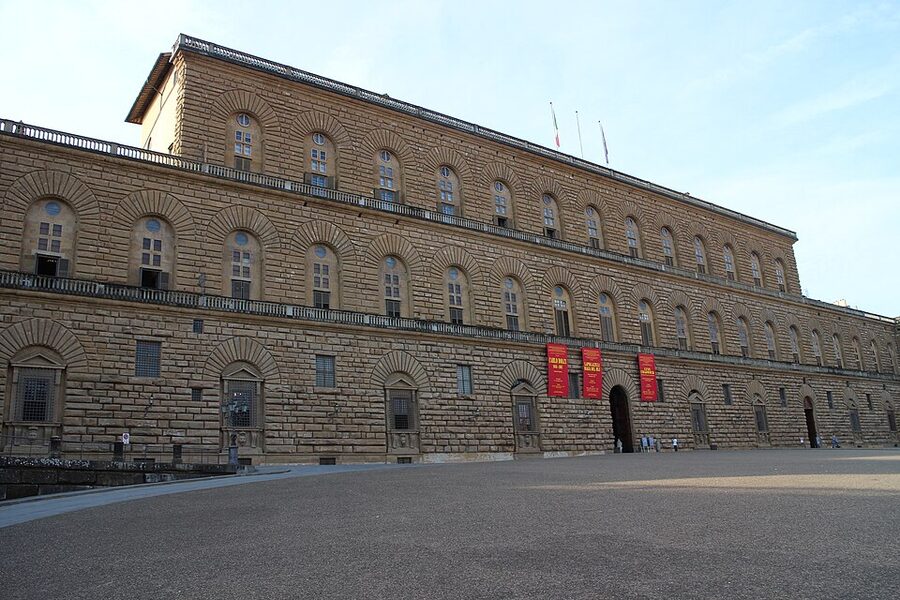
This guide covers both the palace and the gardens — they share an entrance but require separate tickets, which is the first thing most visitors get wrong. Below is what to book, how the combined passes work, and the rooms and gardens worth your time once you’re inside.
In a Hurry — Just Tell Me What to Book
- Just the gardens: Boboli Gardens Reserved Entry + Audio App — covers the 11-acre gardens with a downloadable audio guide, perfect for an afternoon stroll
- Just the palace: Pitti Palace Entrance + Audio App — gets you into all five museums inside the palace plus an audio app on your phone
- Doing both plus the Uffizi: 5-Day Combined Pass ($81) — the official pass bundling all three of Florence’s biggest galleries, valid for 5 days
Two Tickets, One Building (And Why That Matters)
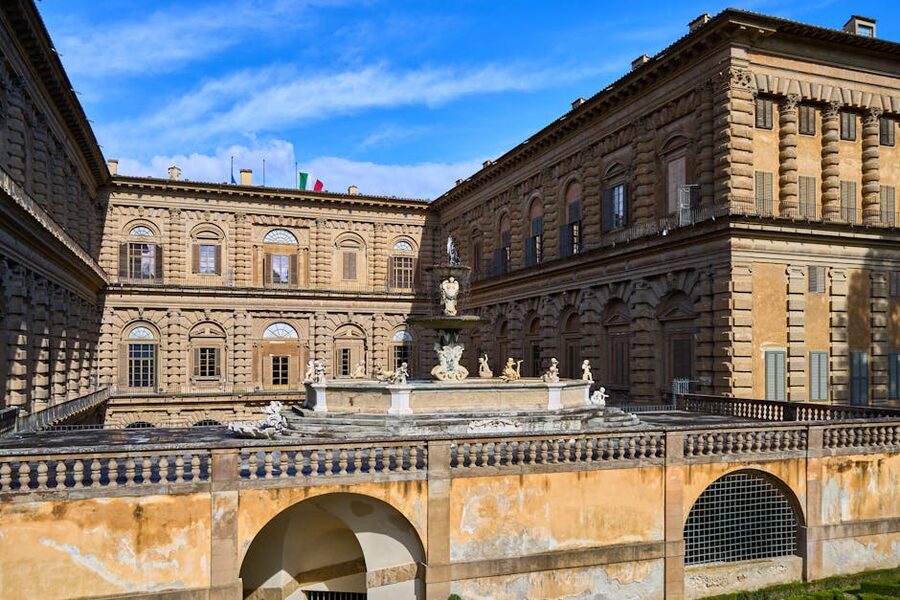
The most important thing to know before you book: Pitti Palace and Boboli Gardens are two separate tickets, even though they’re physically the same site. The official Uffizi system sells them as a combined ticket sometimes, separately the rest of the time, and the prices change between high and low season.
The official admission is roughly €16 for the palace in high season (March-October), €10 in low season, with under-18s free. The gardens are €10 to €13 depending on season. There’s a “PassePartout” combined ticket at the official site for around €38 that covers palace, gardens, Boboli, and the Uffizi for 5 days — but it sells out and the official site has a 2-step booking process that genuinely confuses people.
The smarter move for most visitors is to pick one ticket type — palace OR gardens, plus the audio app — and stick with that. Trying to do both in one day is exhausting because the palace alone holds five separate museums and the gardens are 11 acres uphill.
Hours: 8:15am to 6:50pm, Tuesday to Sunday. Closed Mondays. Last admission 6:05pm. Closed January 1, December 25. The first Sunday of months October to March is free admission — which sounds great until you realise it’s also when locals go, and the queue on those days runs to two hours.
The Three Tickets Worth Booking
The official Uffizi-Pitti-Boboli platform is slow, frequently shows “sold out” when GetYourGuide and the other resellers still have allocation, and the Pitti-only tickets often work better booked through GYG anyway because the audio app integration is built in.
1. Boboli Gardens Reserved Entry + Audio App — about $20
This is the right pick if you’ve already done several museums in Florence and want green space, views, and a couple of hours outdoors. The audio guide downloads to your phone and points out the things that aren’t signposted, the Buontalenti Grotto in particular hides in plain sight near the courtyard, the same way Monet’s water-lily pond at Giverny needs a deliberate route or you walk past it, and the tulip fields at Keukenhof reward visitors who follow the loop rather than wander. A walkthrough of how the gardens are laid out with a suggested 90-minute route.
2. Pitti Palace Entrance Ticket + Audio App — about $25
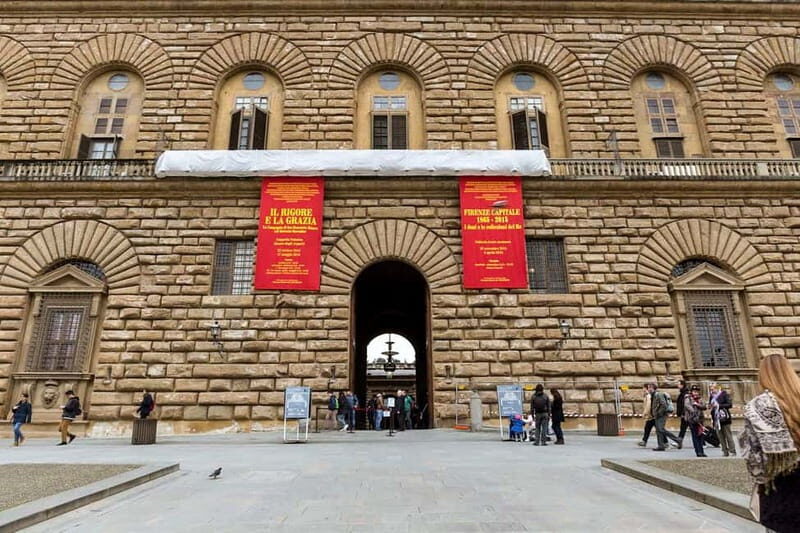
For most first-time visitors this is the better pick. The palace contains five separate museums covering paintings (Raphael, Titian, Rubens), royal furniture, modern art, costume history, and the Medici treasury of pietre dure objects. The audio guide actually walks you through the Palatine Gallery’s eccentric hanging system — the paintings are stacked four-high in some rooms because that’s how the Medici displayed them.
3. Uffizi, Pitti Palace & Boboli Combined 5-Day Pass — $81
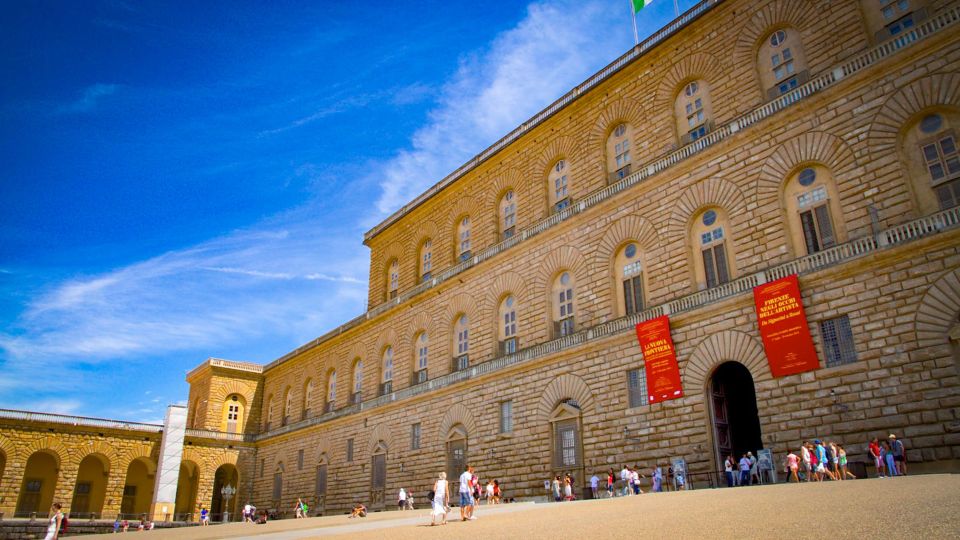
The PassePartout-equivalent reseller pass. €81 covers the Uffizi, the Pitti Palace (all five museums), and the Boboli Gardens, valid for 5 days from your first entry. Each site has its own timed slot booking. Worth knowing how the booking sequence works — you book each timed slot separately within the 5-day window, not all at once.
Inside the Palace
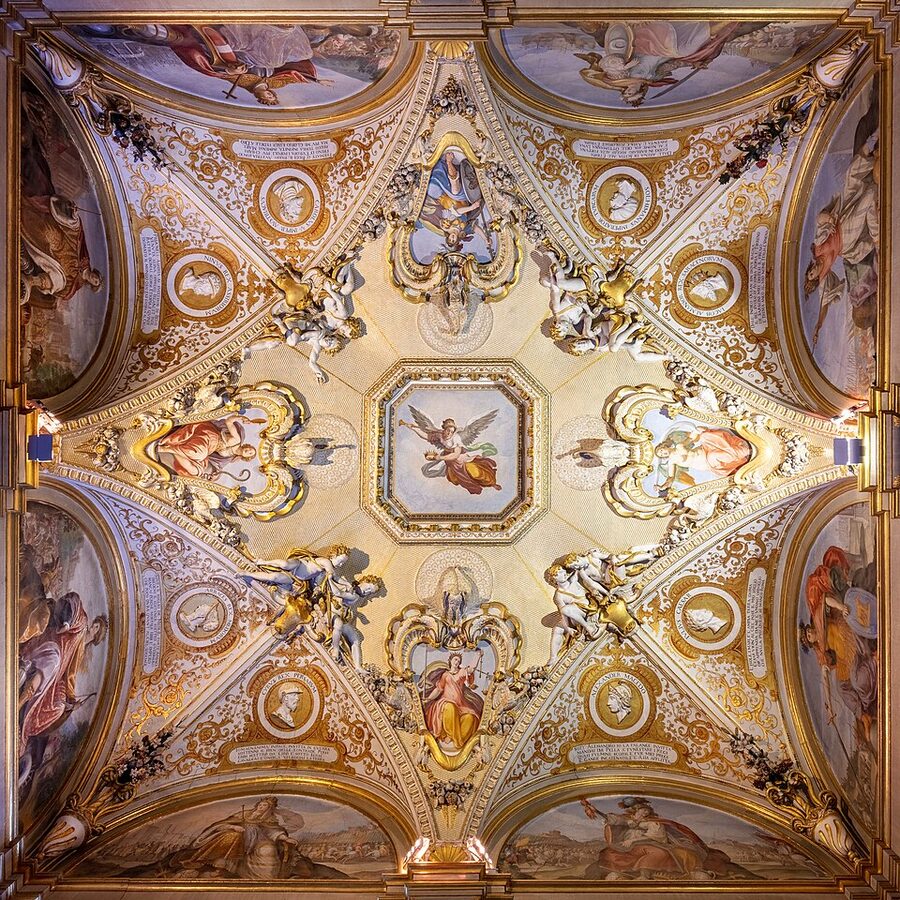
The palace contains five separate museums, all covered by a single Pitti Palace ticket. Most visitors don’t realise this and head for “the gallery,” then leave wondering what the rest of the palace was. Here’s what each one is and how much time to give it.
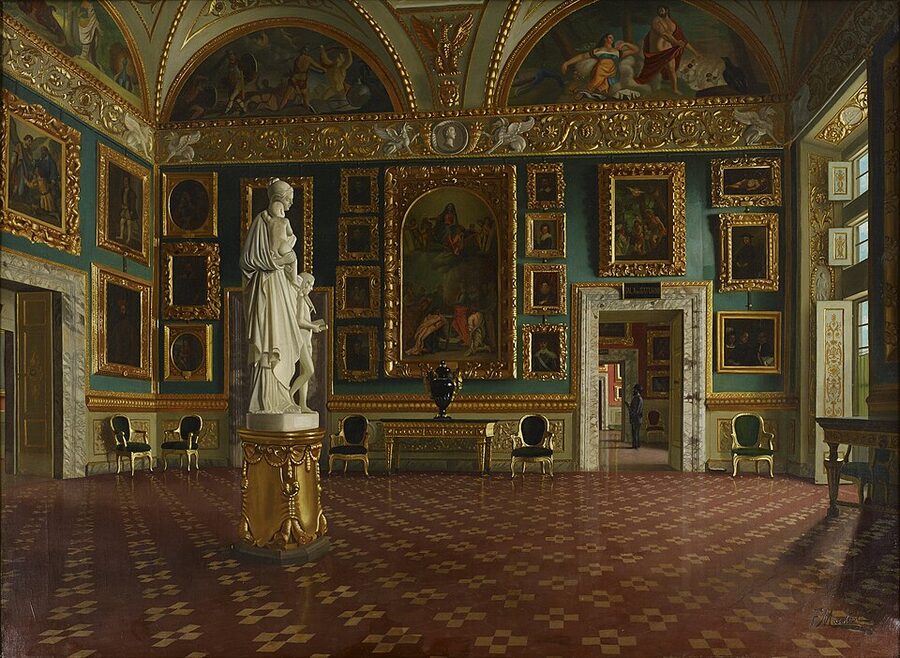
The Palatine Gallery is the headline. 28 rooms of paintings collected by the Medici between 1500 and 1700 — the kind of ferociously good private collection that money and three centuries of dynastic continuity buys. Eleven Raphaels, fourteen Titians, Caravaggio’s Sleeping Cupid, Rubens, Velázquez, Andrea del Sarto. The walls are red damask, the ceilings are frescoed, and the works are hung in the original 17th-century arrangement: stacked four high in some rooms, organised by size and frame rather than by artist. Plan 90 minutes minimum.

The Royal Apartments are next door. These are the actual rooms the Medici, then the Lorraine grand dukes, then briefly the Italian royal family lived in. Original furniture, family portraits, the bedrooms where they slept. The throne room is set up exactly as it was in 1865 when Florence was briefly the capital of unified Italy. About 30-40 minutes.
The Treasury of the Grand Dukes (formerly the Silver Museum) is on the ground floor. Medici cabinets of curiosities — rock crystal vases, ivory carvings, semi-precious stone inlays, gold jewellery, gem cameos. The Medici were obsessive collectors of pietre dure work (Florentine craft of cutting hard stones into pictorial mosaics), and this collection is the densest concentration of it anywhere. About 45 minutes.
The Gallery of Modern Art is on the second floor. “Modern” here means late 18th to early 20th century — Italian Macchiaioli (the Italian Impressionists), Risorgimento-era history paintings, art from a period most foreign visitors haven’t been trained to look for. Worth 30 minutes if you have any interest in 19th-century European painting, skip if not.
The Museum of Costume and Fashion rotates exhibitions from the Medici and Lorraine wardrobes — actual 17th and 18th century court dress, restored and displayed on mannequins. About 20 minutes. Closed for renovation in some years; check the official site before counting on it.
If you do all five at any pace, that’s a solid four-hour visit. Most people only do the Palatine Gallery and the Royal Apartments and call it done — a reasonable compromise that’s about 2 hours and covers what you came for.
The Boboli Gardens — What to Actually See
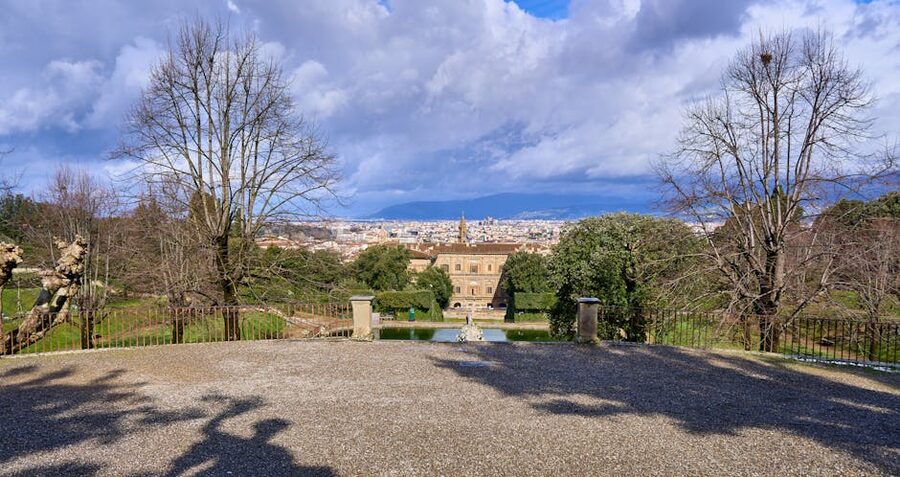
The gardens were laid out from 1549 onwards by Niccolò Tribolo and finished by Bartolomeo Ammannati and Bernardo Buontalenti. They cover 11 acres climbing the hill behind the palace, designed in the formal Italian Renaissance style, geometrical, symmetrical, sculpture-heavy, the prototype that Versailles would copy a century later. The Moorish water-and-shade plan at Granada’s Alhambra takes the same hillside-garden idea in a different climate. Wear shoes you can climb in. There are no benches at the bottom; you have to walk up.
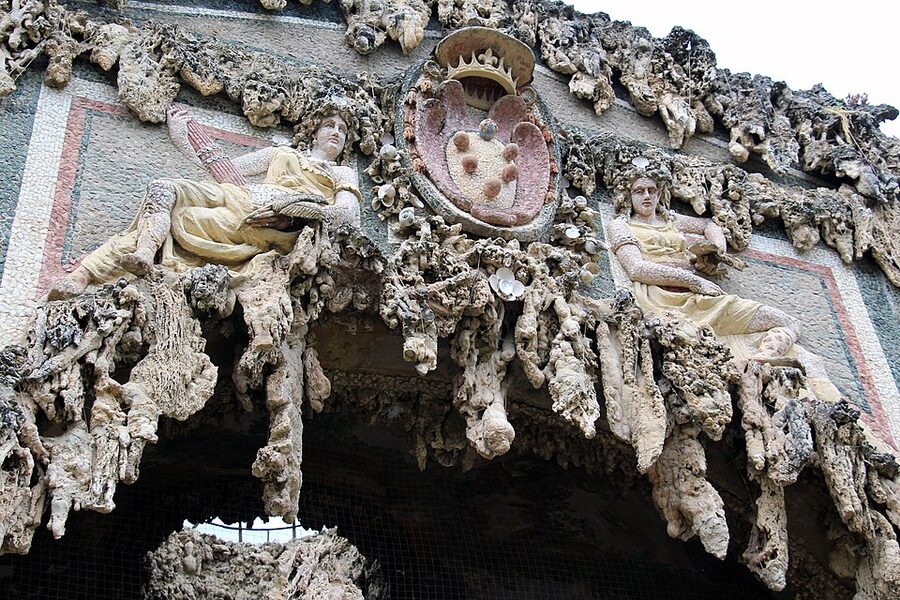
The single must-see is the Grotta del Buontalenti (Buontalenti Grotto). It’s near the entrance, behind a pillared portico that looks like it might be a normal archway. Walk in. The interior is three chambers shaped to look like natural caves — stalactite-encrusted walls, frescoed ceilings, sculpture set into the rock as if it had grown there. Originally Michelangelo’s Slaves stood in the first chamber (they’re now in the Accademia with the David); the copies in the niches today are 19th-century replacements. The grotto is opened only at certain hours — check before you climb away.
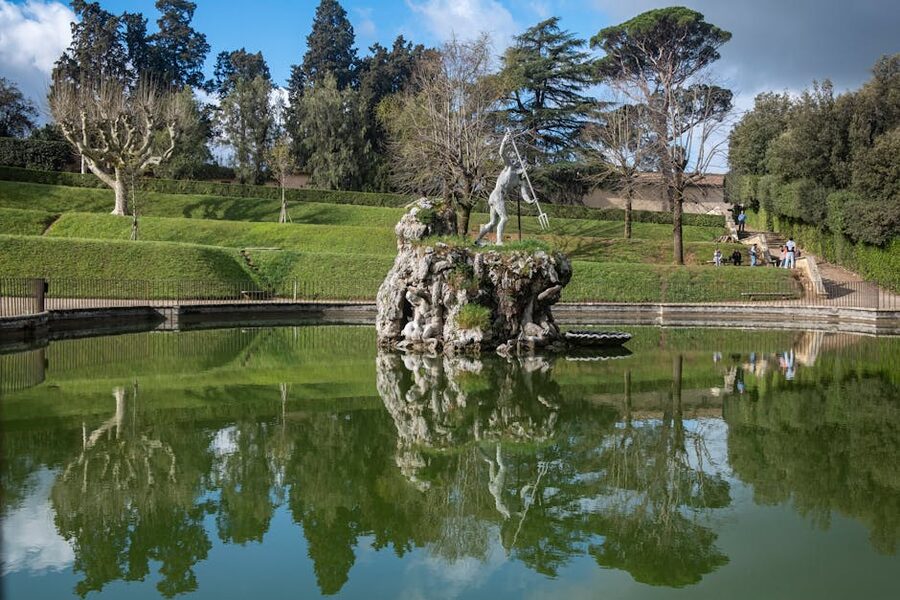
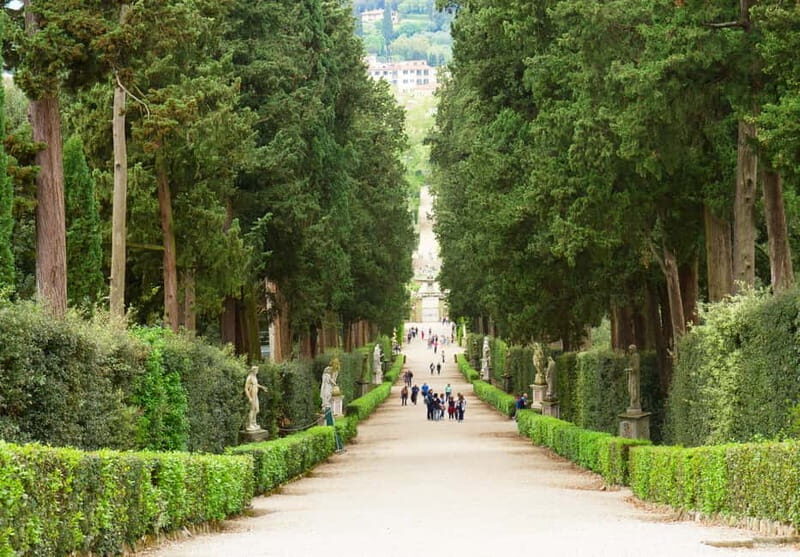
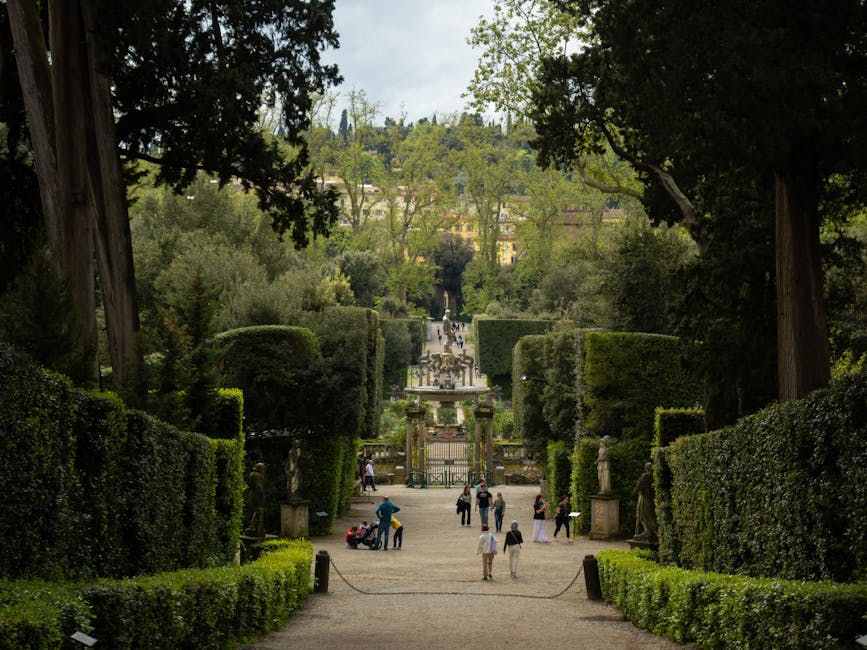
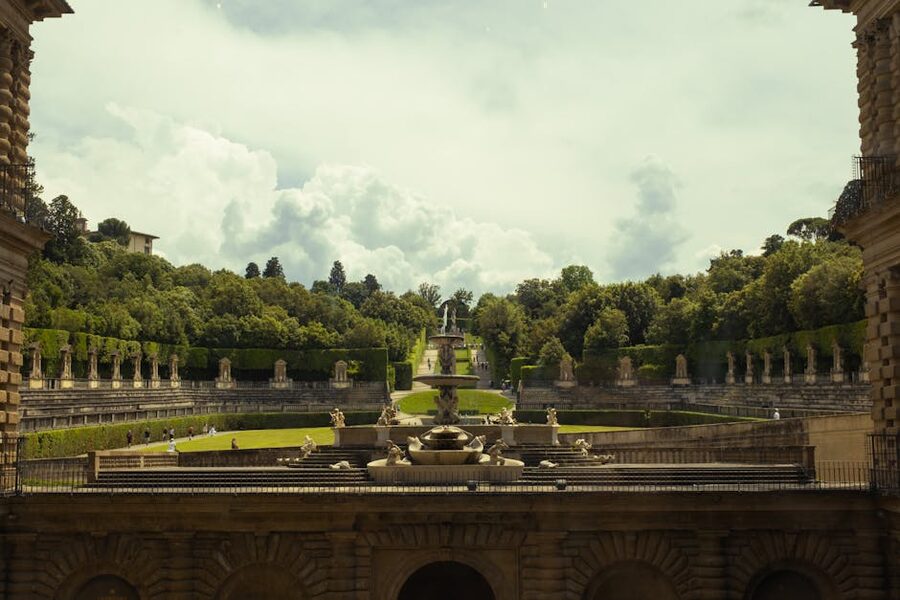
The main central axis runs from the palace courtyard up to a giant Neptune fountain (1571) and beyond to the Knight’s Garden at the top. This is the cypress-lined path that appears in every Boboli photograph. It’s about a 15-minute walk uphill at an easy pace, with statue-flanked terraces and the amphitheatre on your way up. Plan to stop and turn around — the view back down at the palace gets better the higher you go.
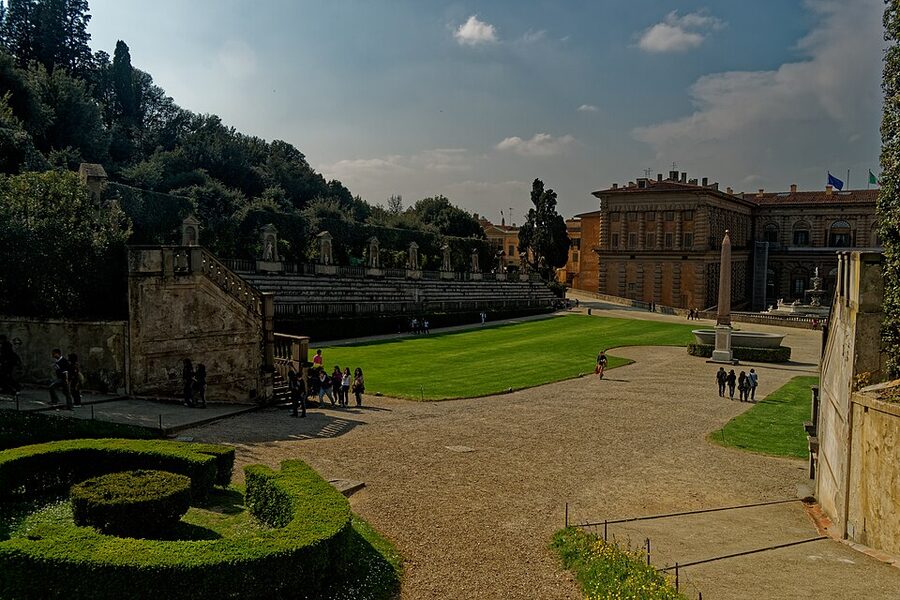
The amphitheatre is on the first terrace above the courtyard. Grass and stone seating arranged like a small Roman theatre, with an Egyptian obelisk in the middle that the Medici imported from Rome in 1789 (which Rome had imported from Egypt 1,800 years earlier). The amphitheatre was the venue where opera was effectively invented — the first opera performance in history, Jacopo Peri’s Dafne in 1598, was staged at the Pitti for the Medici. Subsequent operas in the 1600s were performed here.
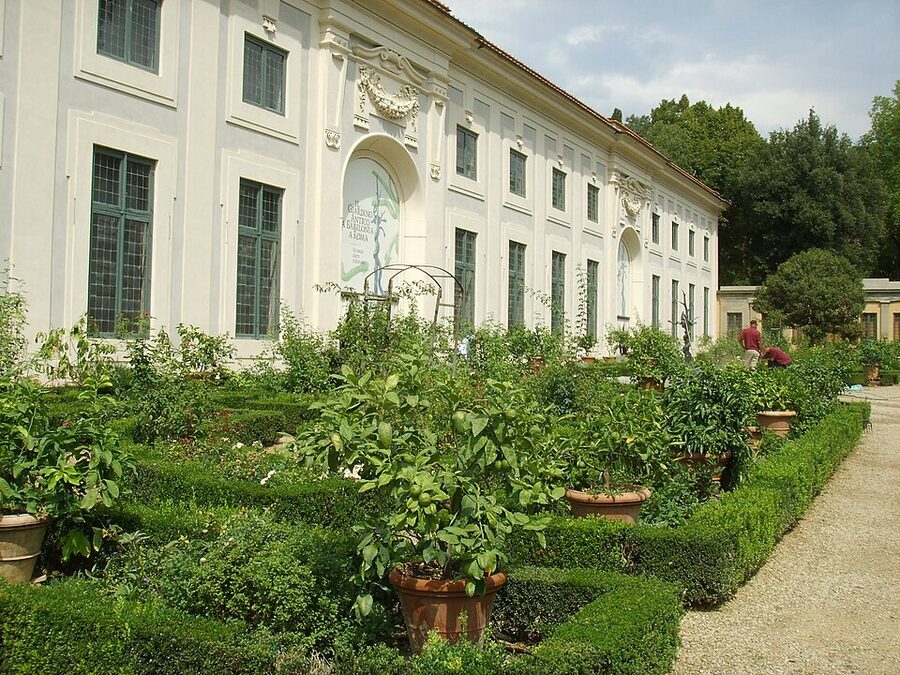
The Isolotto is the formal pond garden in the middle of the grounds, with the Ocean Fountain at its centre. Lemon trees in pots line the perimeter (they’re moved indoors for winter). It’s a 10-minute walk south-west from the central axis and most travelers never make it down there — which is exactly why you should.
The Forte di Belvedere at the southern edge of the gardens isn’t part of the Boboli ticket but is reachable through a gate that’s sometimes open — it’s a star-shaped fortress with possibly the best free view of Florence. If the gate’s closed (it often is), you can reach the Forte from outside via a steep walk up Via di San Leonardo.
The History (Why This Building Has Eight Different Architects)
Luca Pitti commissioned the original palace from Filippo Brunelleschi (yes, the same Brunelleschi who built the Duomo) in 1457. Pitti was a banker, a political rival of Cosimo de’ Medici, and a man with too much money and a chip on his shoulder. He wanted the largest private palace in Florence — bigger than the Medici’s, taller than anyone’s. Brunelleschi died in 1446, eleven years before construction started, so the design was actually executed by Luca Fancelli from Brunelleschi’s drawings.
The Pitti family ran out of money before they could finish it. The building sat half-built for nearly a century. In 1549, Eleonora di Toledo (wife of Cosimo I de’ Medici) bought it for 9,000 florins and the Medici took possession.
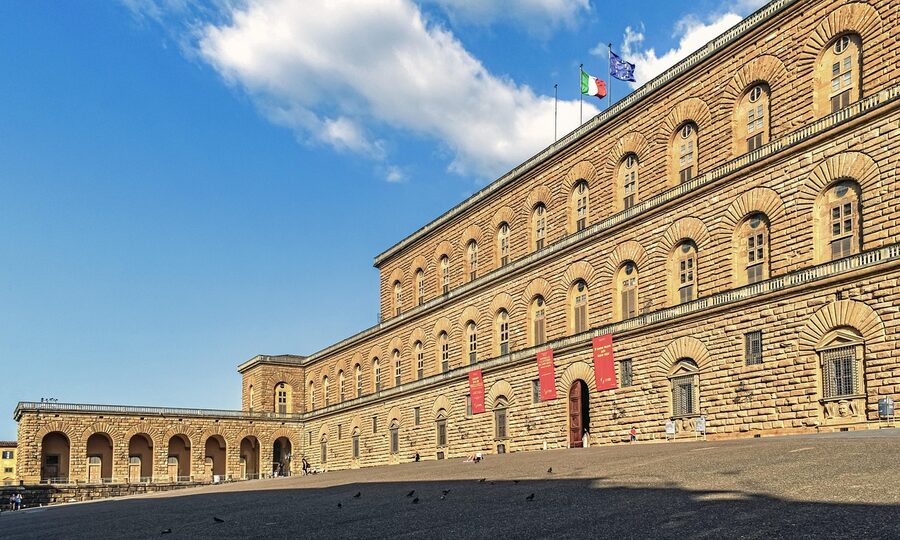
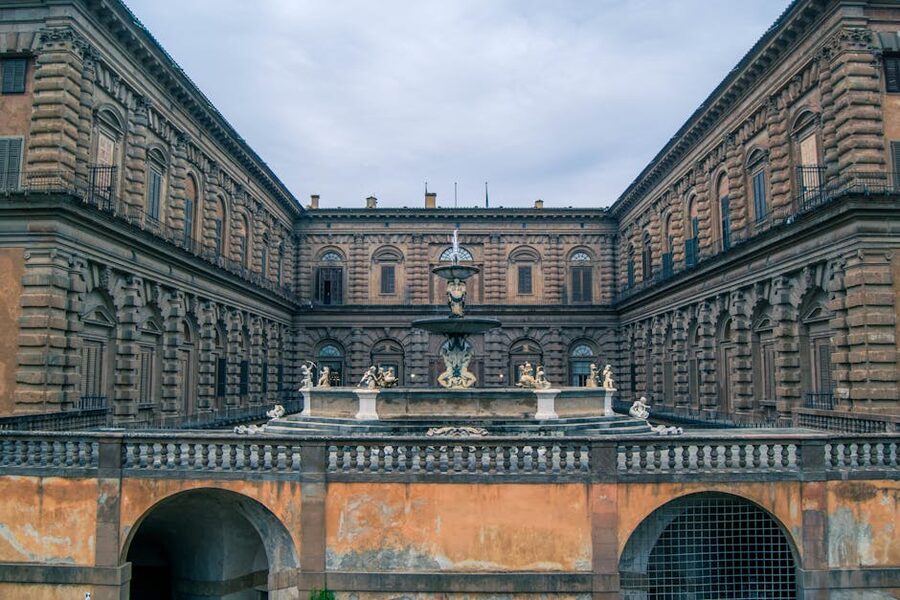
What followed was 300 years of architectural one-upmanship. Bartolomeo Ammannati built the courtyard you walk through after the ticket check (1560s). Giulio Parigi added the lateral wings in the early 1600s. The Lorraine dynasty (who took over from the last Medici in 1737) added two more flanking wings in the 18th century. By the time Italy became a unified country in 1861, Palazzo Pitti was the largest palace in Florence and the temporary royal residence, King Victor Emmanuel II lived here from 1865 to 1871, when the capital was Florence. Other royal residences shifted hands the same way: Amsterdam’s Royal Palace went from town hall to royal residence in the Napoleonic era, while Chenonceau in the Loire passed through nearly every French royal court of the Renaissance.
The Medici built the Boboli Gardens behind the palace from 1549 onwards. They commissioned Niccolò Tribolo, who died a year into the work, after which Ammannati and Buontalenti finished what he’d started. The gardens were extended through the 17th century, including the Isolotto pond garden in 1612-1620 and the Lemon House in 1777.
The whole complex passed to the Italian state in 1919, when King Victor Emmanuel III donated it. It’s been a museum ever since, except briefly in the 1940s when it was an Allied Forces command post.
The View From the Top
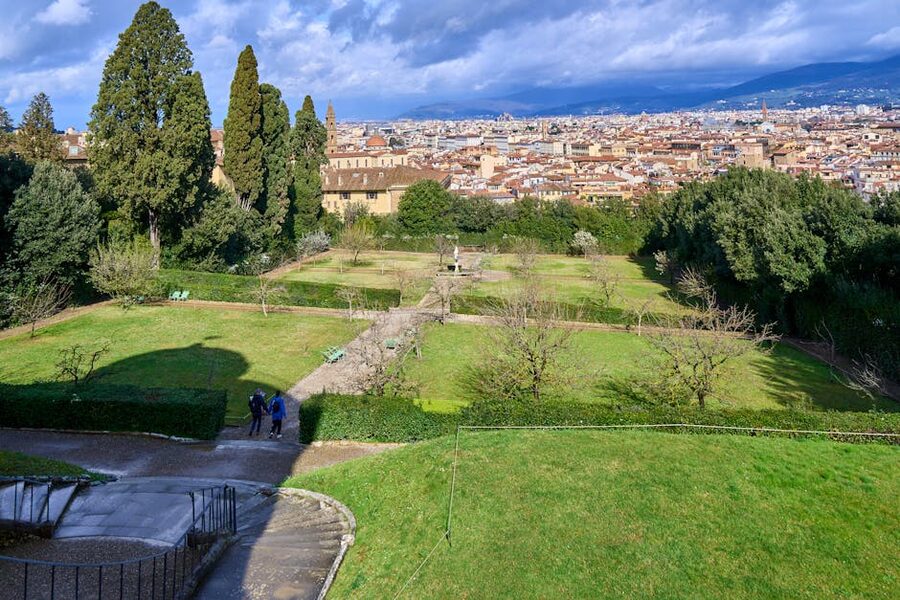
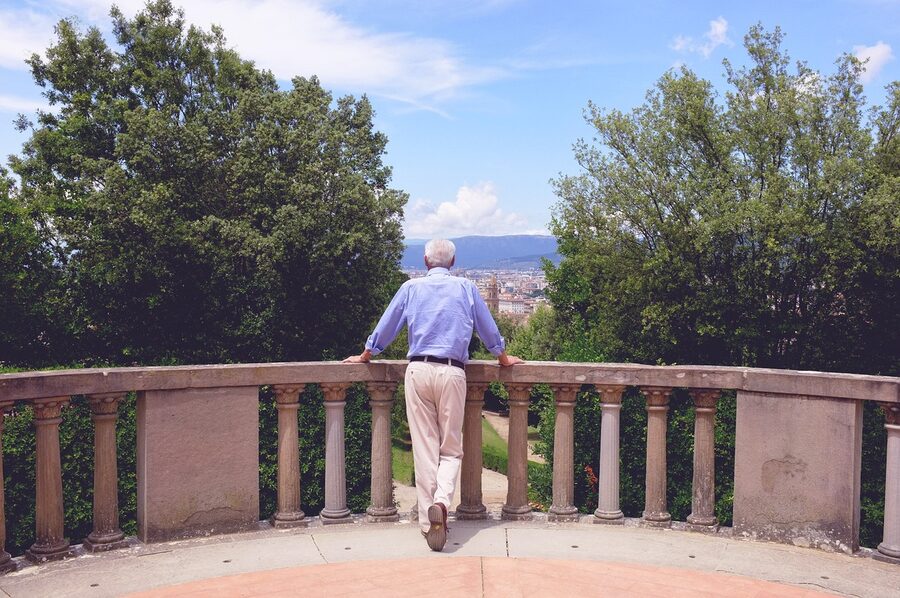
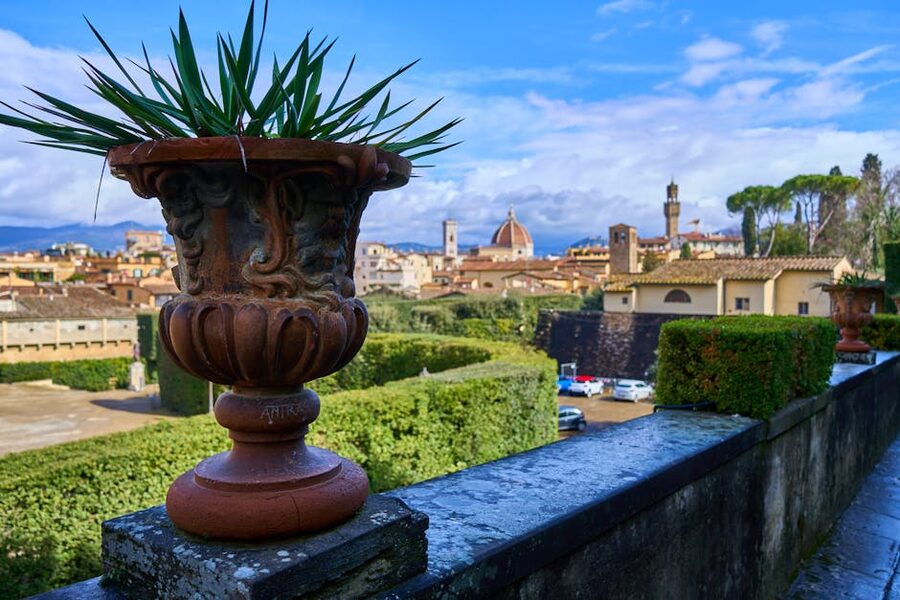
The reason the Medici picked this hill is the view. From the upper terraces you see the Duomo at eye level, the Arno valley curving away, and the Vasari Corridor — the elevated covered walkway that Giorgio Vasari built in 1565 so the Medici could walk from the Palazzo Vecchio to the Pitti Palace without setting foot in the street.
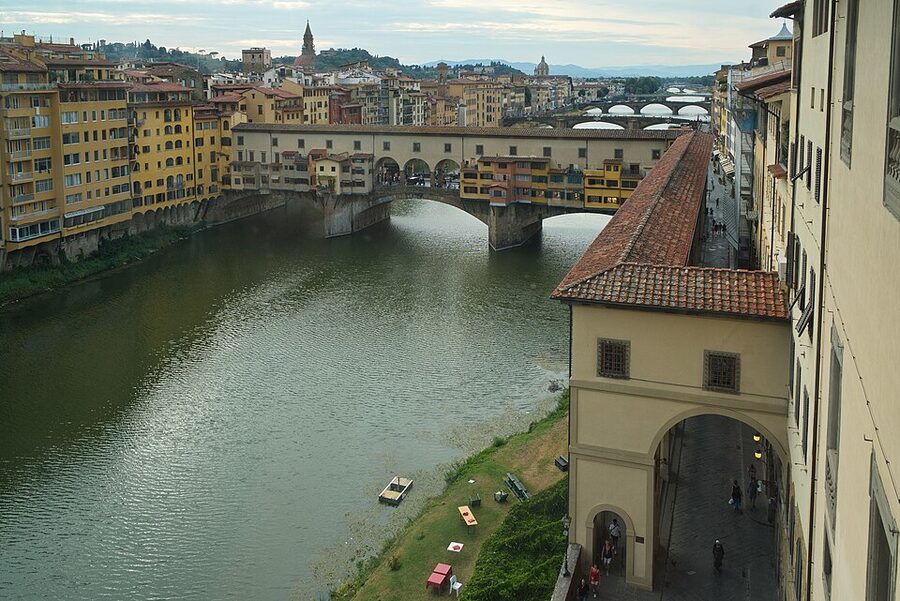
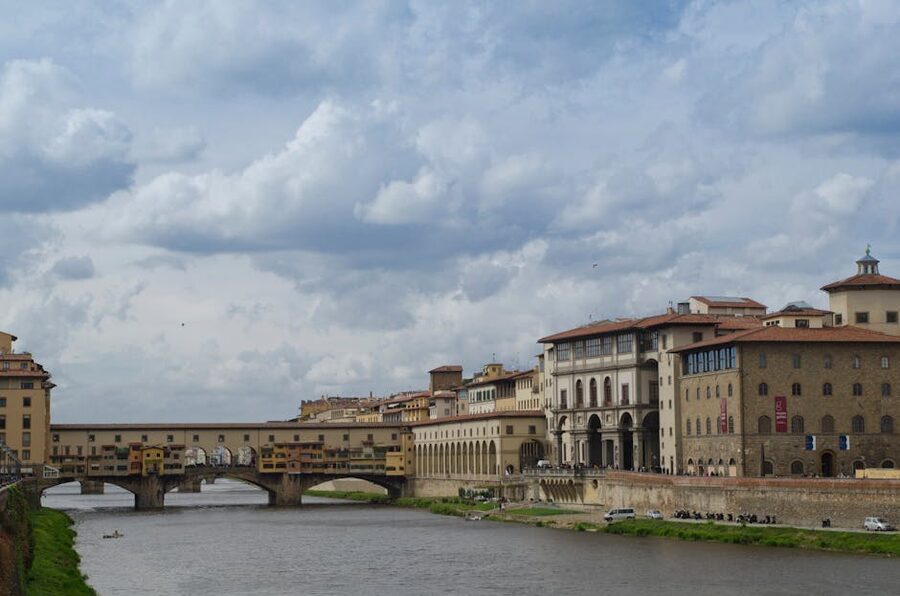
The Vasari Corridor runs across the top of the Ponte Vecchio (which is why the houses on the bridge have an extra storey on the inside — that’s the corridor). It’s about 1 kilometre long, mostly enclosed, mostly windowless. The Medici filled it with self-portraits over 200 years; today the corridor is closed for restoration but reopens periodically.
When to Visit and How to Avoid the Crowds
The single best time slot is 8:15am opening. Tour groups don’t arrive until around 10am, and the Palatine Gallery is essentially empty for the first 90 minutes. The light coming through the south-facing windows is at its best in the morning too — the Raphaels in the Saturn Room are nearly impossible to photograph in afternoon glare.
Late afternoon from 4pm onwards is the second-best window. The cruise day-trippers leave for their buses by 3pm, and the gardens in particular get magical in the slanting light. Last admission is 6:05pm, which means you can be inside until 6:50pm if you time it right.
Avoid Mondays entirely — closed. Avoid the first Sunday of the month from October to March — free admission day, two-hour queues. Avoid 10am to 2pm in summer — every guided tour group in Florence funnels through the Palatine Gallery in this window.
For the gardens specifically, spring (April-May) and autumn (September-October) are the best months. Summer in Florence pushes 35°C and there’s no real shade in the upper gardens — the cypresses are too sparse and the lemon trees are in pots, not the ground. Winter (November-March) gets you the gardens for free on the first Sunday but the lemon house is closed and the fountains are switched off.
Getting There
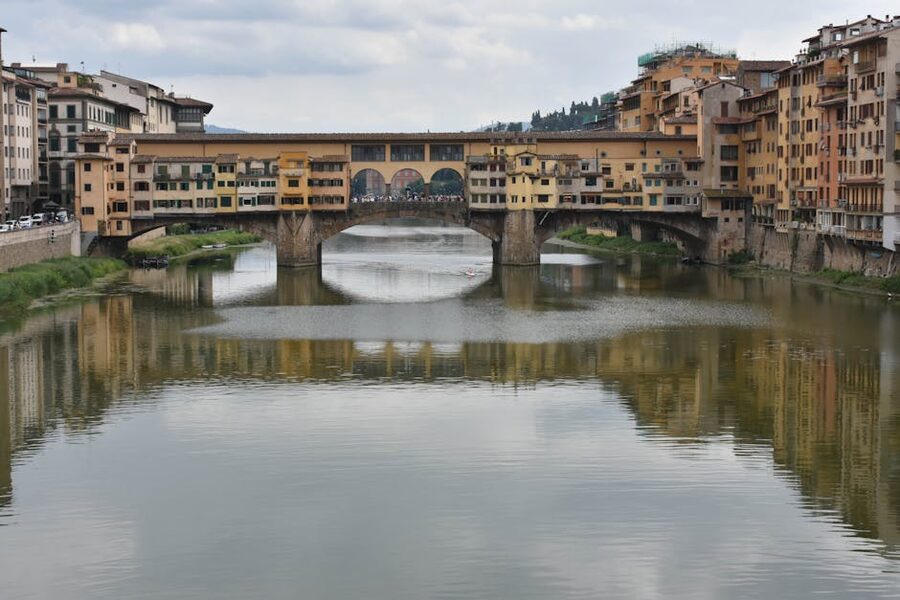
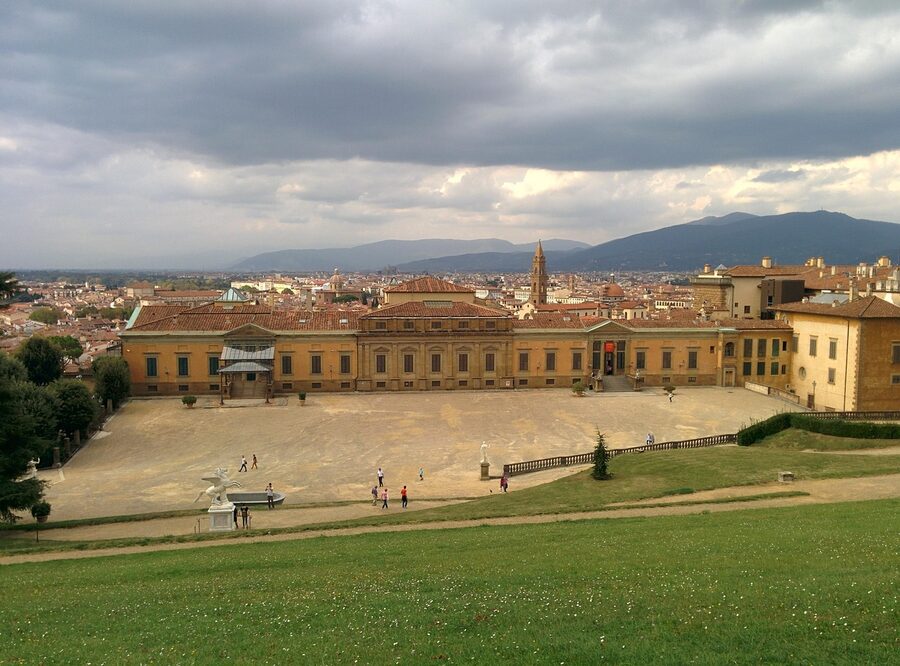
Pitti Palace is at Piazza de’ Pitti, 1, 50125 Firenze, on the south side of the Arno (called the Oltrarno — “across the Arno”). From the Ponte Vecchio it’s a 5-minute walk south, straight up Via Guicciardini. From the Uffizi, about 10 minutes including the bridge crossing. From Santa Maria Novella station, 15 minutes via the Arno.
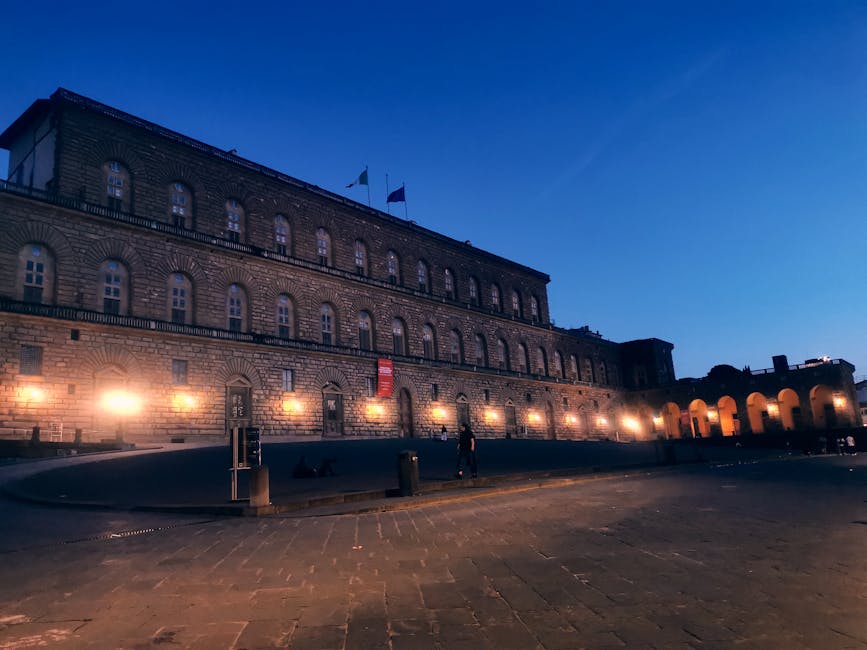
The entrance is the giant doorway in the centre of the rusticated facade. Go in, queue at the ticket window if you don’t have a pre-booked ticket, then through the courtyard. The palace tour starts on the first floor (up a wide marble staircase to the right). The gardens entrance is the doorway in the courtyard heading up and back.
If you’re arriving by bus, the C3 and D city buses stop near the palace. There’s no metro in central Florence. By car, parking in the centre is restricted (ZTL zone) — leave the car at the Parterre or Beccaria car parks and walk in.
Practical Things Worth Knowing
Photography is allowed in both the palace and gardens, no flash inside the rooms with paintings. No tripods anywhere. Phone photos are fine.
The palace has a dress code-light reputation compared to the Cathedral — bare shoulders are fine, but the staff will ask you to cover up if you’re in beachwear. Closed-toe shoes for the gardens (gravel paths, sometimes muddy in winter).
Bag check is mandatory for anything bigger than a small daypack in the palace. Free, but the storage is on the ground floor and you have to come back for your bag at the end.
There’s a café in the gardens on the upper terrace, but it’s overpriced and the menu is tourist-trap basic. Better to walk down to Piazza Santo Spirito (5 minutes) for proper Florentine lunch — Trattoria Casalinga is the local pick. If you’re combining the palace visit with food, the area west of the palace has some of Florence’s best cooking class venues in the Oltrarno neighbourhood.
Toilets are inside both the palace (after the ticket check, ground floor) and the gardens (near the amphitheatre). The garden toilets shut at 5pm in winter.
What to Pair It With
The natural pairing is the Uffizi Gallery on the other side of the river. Both galleries were built by the Medici, the collections complement each other (Uffizi is the early Renaissance, Pitti is high Renaissance and Baroque), and the combined ticket makes the cross-river itinerary cheaper. Plan to do them on different days — both deserve their own morning.
For the Boboli specifically, pair it with a walk to Piazzale Michelangelo or the Forte di Belvedere — they’re the same hill, both south of the Arno, both have the postcard view of the cathedral. Walk the Boboli in the morning, then continue south-east through the back gate (when open) toward Piazzale Michelangelo for sunset.
The Pitti complements the Accademia for the David well — both house specific masterpieces in defined collections. The Pitti’s Raphael paintings (especially the Madonna of the Chair) and Michelangelo’s David are the two artists’ best work in Florence.
If you’re carrying on to Rome after Florence, the Borghese Gallery is the closest cousin to the Pitti — another aristocratic family’s private collection, similarly stuffed into a smaller building, with a strict timed-entry system. The Borghese is to Roman Baroque what the Pitti is to Florentine Mannerism. Two cities, same logic, four hundred years apart.