
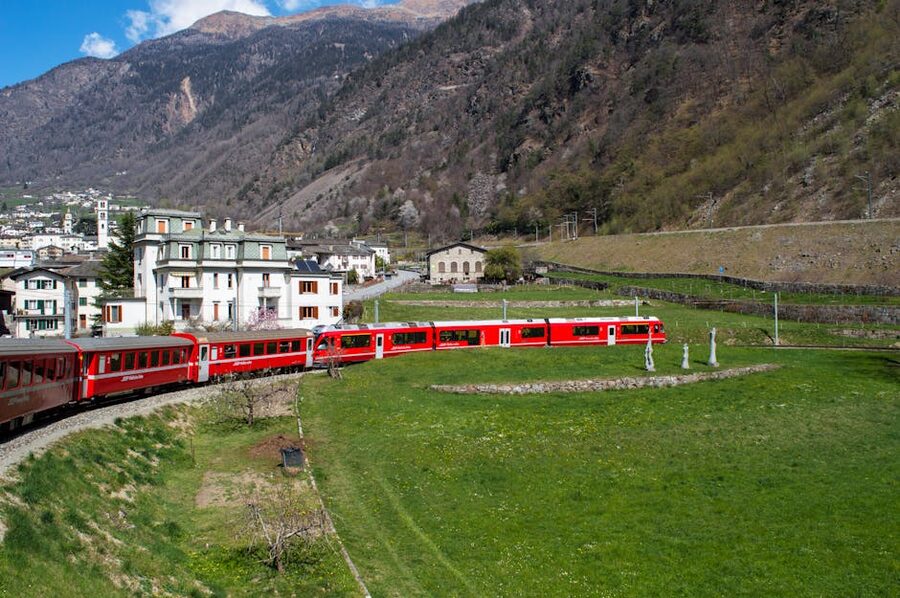
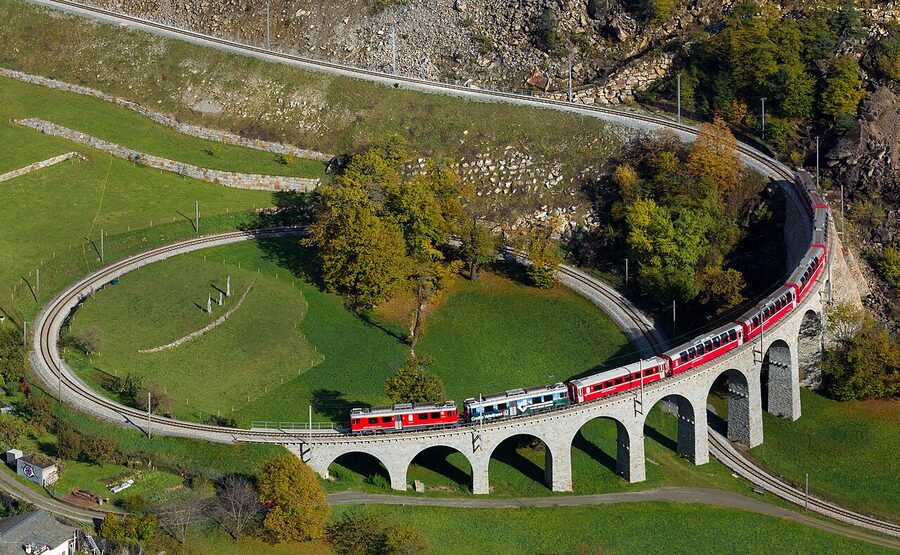
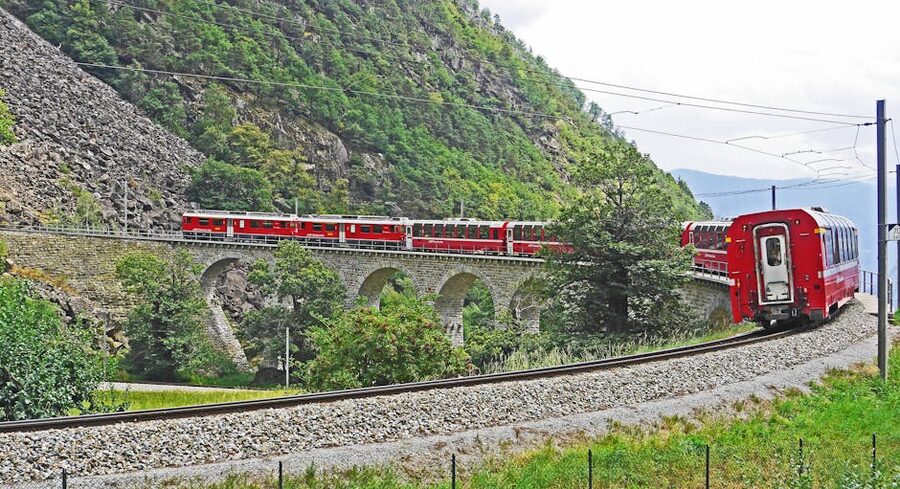
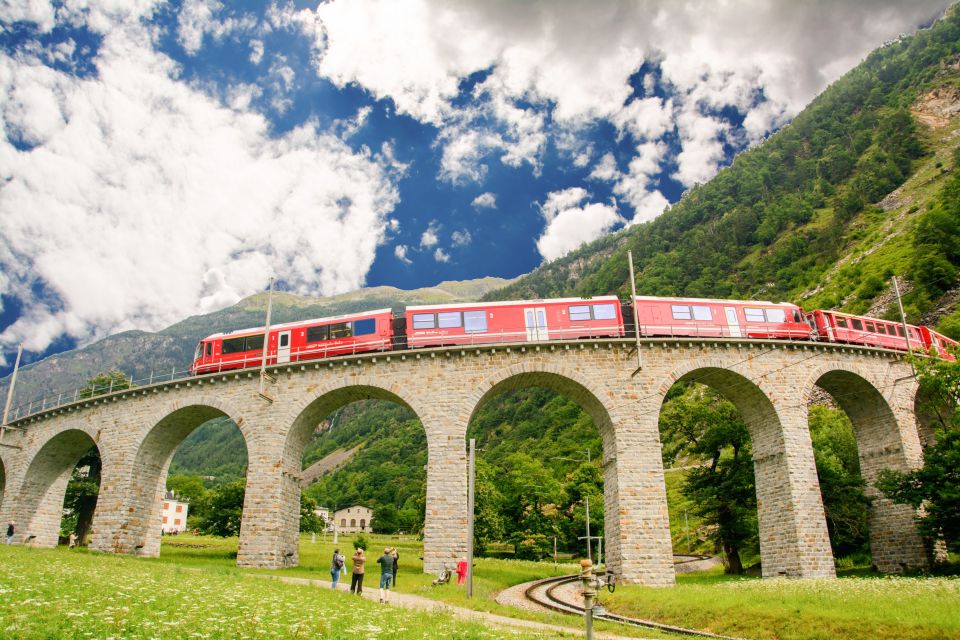
The train is climbing slowly out of the trees when the Brusio Spiral Viaduct comes into view, and you realise the engineers solved the gradient problem by making the railway curl back over its own roof. The carriage tilts. You see the locomotive disappear under the stone arches you were just standing on. Two minutes later you are looking down at the village square from a different height, and you have not stopped moving the whole time.
That is the Bernina Express, and you can do it as a day trip from Milan if you start before sunrise and accept that the day is long. This is the practical guide: tickets, panoramic carriages versus regional trains, the bus-plus-train tour option, what St. Moritz gives you for a two-hour stop, and the parts most travellers get wrong.
In a hurry? Three picks
The full combo (Lake Como + St. Moritz + Bernina, 13 hours): Book on GetYourGuide ($159). The most-booked version, adds a Como cruise to the day.
Bernina + St. Moritz only (12 hours, $122): Book on GetYourGuide. Same train, drops the Como stop, costs less and runs more often.
Five-star small group via Viator ($168): Book on Viator. Capped numbers, English-speaking guide, slightly pricier but the reviews are unusually consistent.
What the Bernina Express actually is
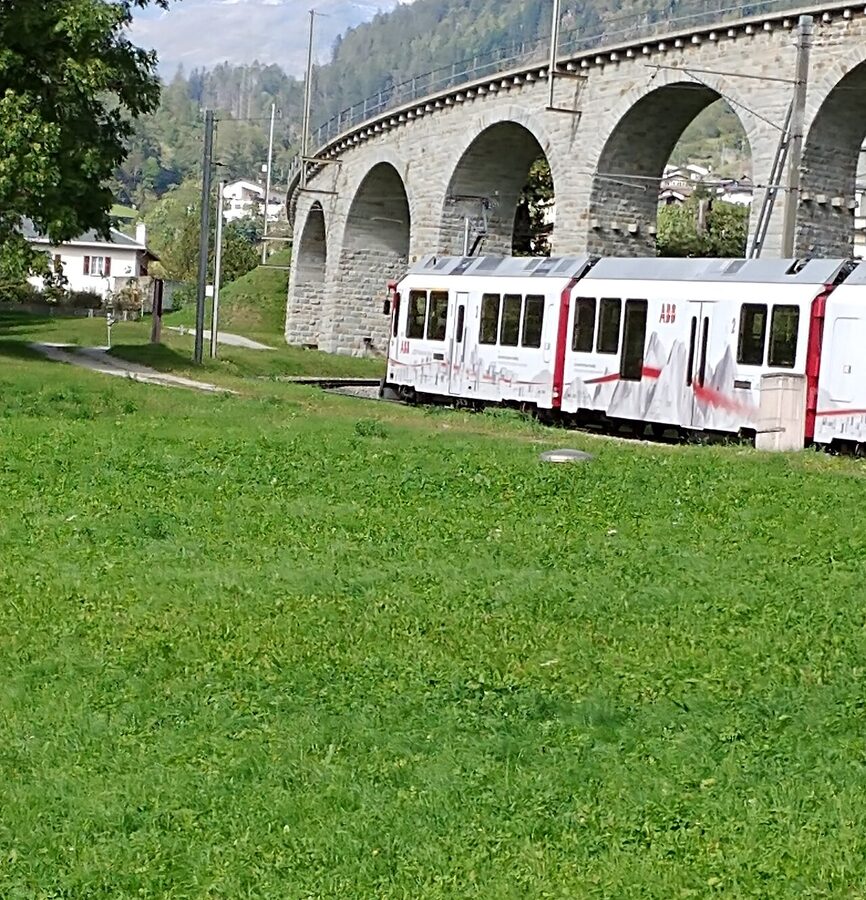
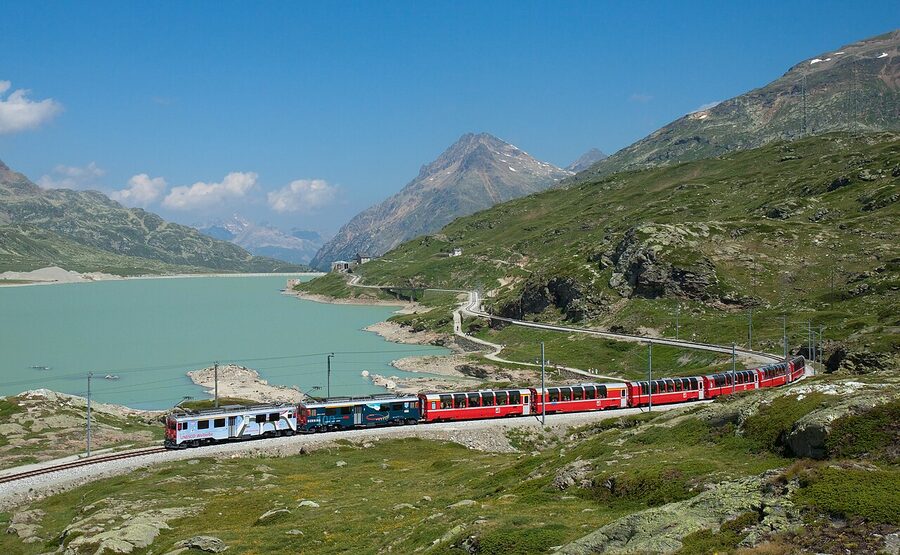
The Bernina Express is a named scenic service operated by the Rhaetian Railway between Tirano in northern Italy and Chur in eastern Switzerland. The southern half, the part you ride from Milan, is called the Bernina line. The closest scenic-rail parallel anywhere in Europe is the rack-and-cable network around Chamonix Mont Blanc, where the trains and cable cars do similar engineering tricks to climb out of the valley. It runs 144 kilometres, climbs to 2,253 metres at Ospizio Bernina, and is on the UNESCO World Heritage list. The construction is contemporaneous with the great early-twentieth-century European engineering projects that produced the steel-and-brick wonders of the era, the same restless ambition that built the Brunelleschi dome of Florence’s cathedral in a different earlier century.
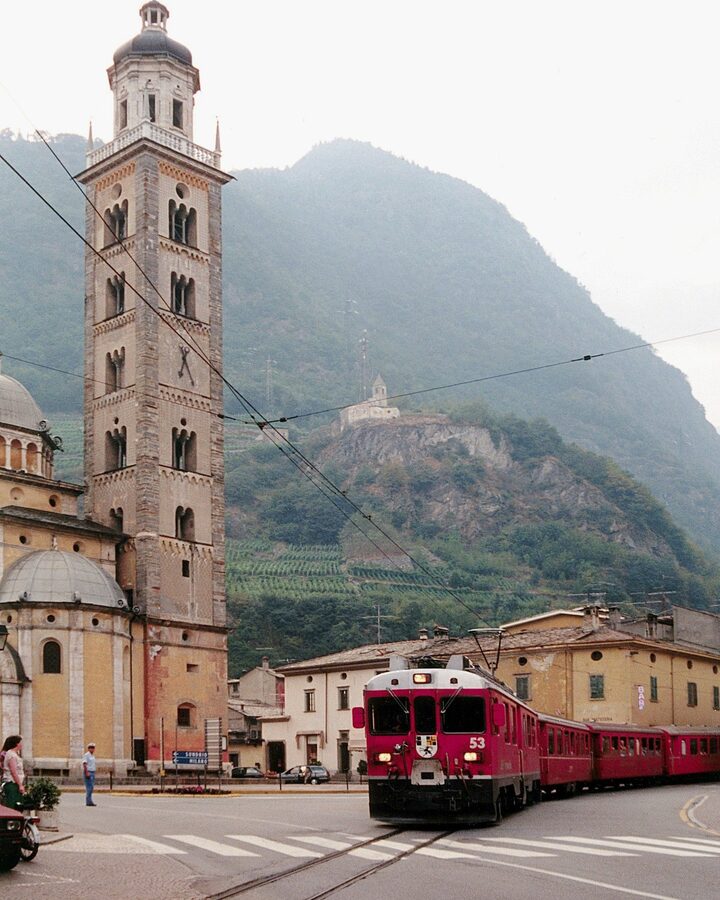
The line is narrow-gauge. That is why the train can take the curves and grades you are about to see. Standard-gauge railways need sweeping arcs. Narrow-gauge trains can corkscrew up a hillside, which is exactly what happens at Brusio. The pay-for-the-altitude formula is the same one driving the cable-car climb on the Mount Teide tour in Tenerife.
The two ways to do it from Milan
You have a real choice here, and the cheaper one is not automatically better. There is the independent train route, which is the same train the locals take to commute and works out around half the price. And there is the organised bus-and-train tour, which solves the part most people get wrong. I will go through both.
Option 1: independent, train all the way
Take a Trenord regional train from Milano Centrale to Tirano. They run roughly every two hours, the journey is two and a half hours, and a one-way second-class ticket is around €14. No reservation needed. Once at Tirano you walk across the station forecourt to the Rhaetian Railway side. It is a 90-second walk and the platforms are clearly signposted with red trains parked on them.
From Tirano you can take either the official Bernina Express (panoramic windows, mandatory seat reservation, a separate fee on top of the ticket) or the regional Bernina line train (the same route, the same scenery, no reservation, opening windows). The locals use the regional service and the Tirano-to-St. Moritz fare is around CHF 30 in second class. Add the Bernina Express seat reservation if you want it, around CHF 26 in summer, less in winter.
Total cost doing it independently: roughly €60 to €80 round-trip per person depending on the panoramic-carriage reservation. That is significantly cheaper than the tour, but you are managing four train connections in a day and you carry your own logistics if anything goes wrong. If you have done a Lake Como day trip from Milan independently and it went smoothly, you will be fine doing this independently too. The patterns are similar.
Option 2: organised bus-and-train tour
This is what most travellers actually book, and the reason is logistical, not snobbish. The bus picks you up near Milano Centrale around 7am, drives you to Tirano along the eastern shore of Lake Como, and drops you at the Rhaetian Railway platform with your ticket already in hand. You ride the train to St. Moritz, get two hours in town, and the bus meets you in St. Moritz for the drive back. You arrive in Milan around 9pm.
The advantage is not the train. The train is the same train. The advantage is that you ride the scenic line one way and the bus the other way, which removes two and a half hours of repeat scenery and adds a Lake Como driving section as a bonus. Some tours add a 30-minute boat cruise on Lake Como, which is the version with the highest review counts.
The honest scenery breakdown by section
The line is not equally beautiful end to end. There are payoff sections and there are connector sections. If you know what is coming you can put the camera down between them and just look out.
Tirano to Brusio: the corkscrew
The first 20 minutes after leaving Tirano is unremarkable agricultural Italy. Then the train hits Brusio and does the loop. The Brusio circular viaduct is a 360-degree spiral, built to gain 70 metres of altitude in a short distance without making the gradient too steep for the locomotive. From inside the train you feel the carriage tilt, you see the front of the train pass beneath you, and you understand exactly why this railway is on the UNESCO list.
Poschiavo to Alp Grüm: the climb
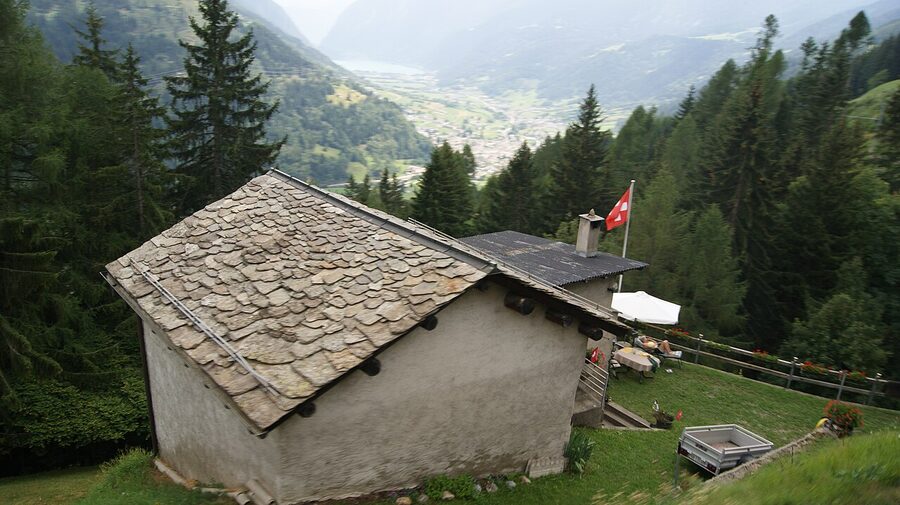
The train picks up the Poschiavo valley and follows it north along Lago di Poschiavo. This is a long, slow climb through forest and pasture. About 90 minutes after leaving Tirano you reach Alp Grüm. The platform sits at 2,091 metres with the Palü Glacier visible directly across the valley. The train pauses long enough that some passengers get out for the photograph.
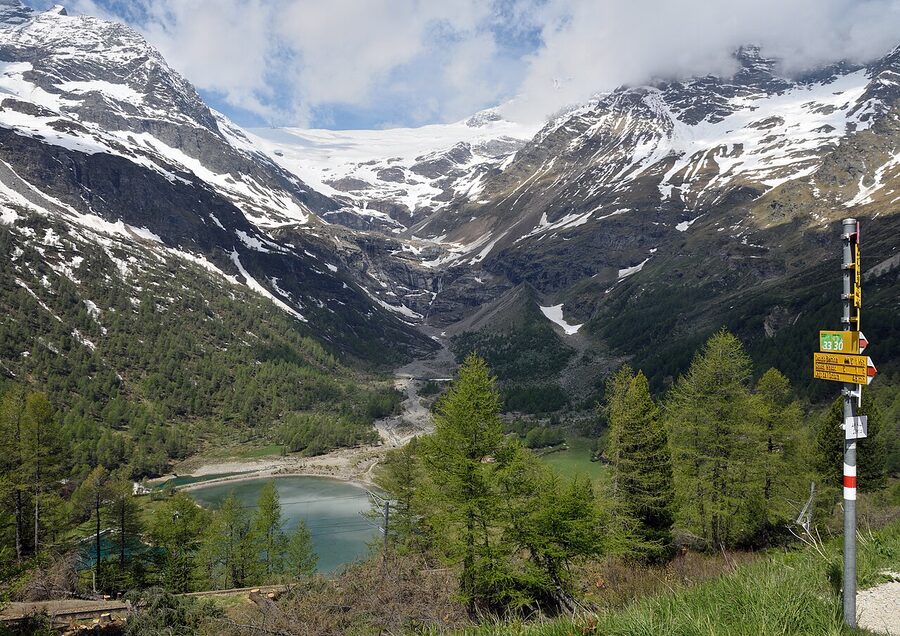
Ospizio Bernina and the pass: the watershed
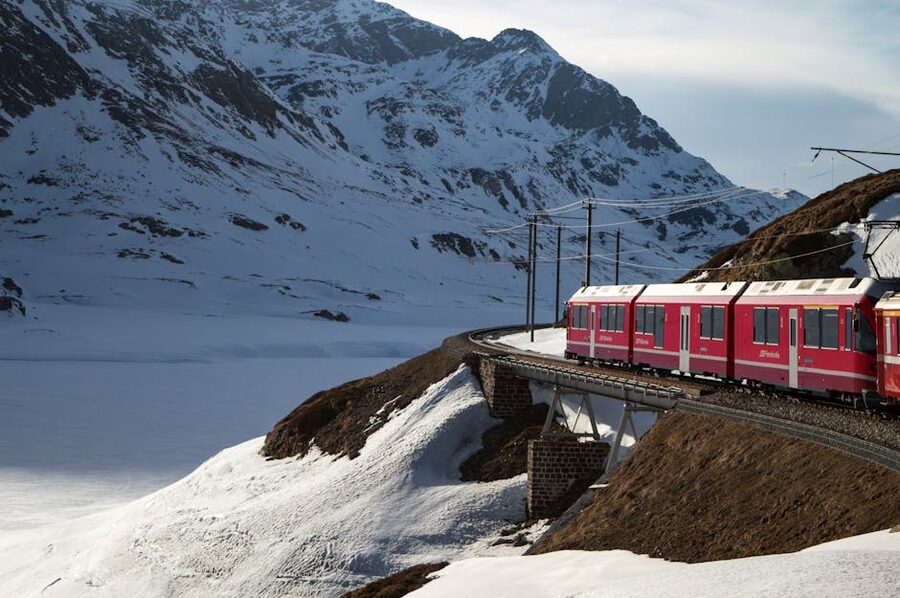
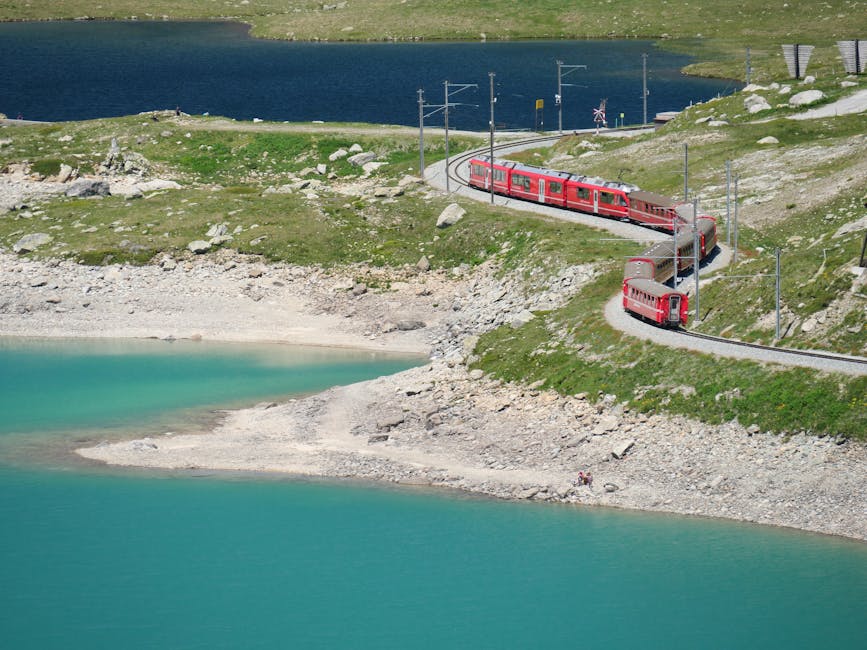
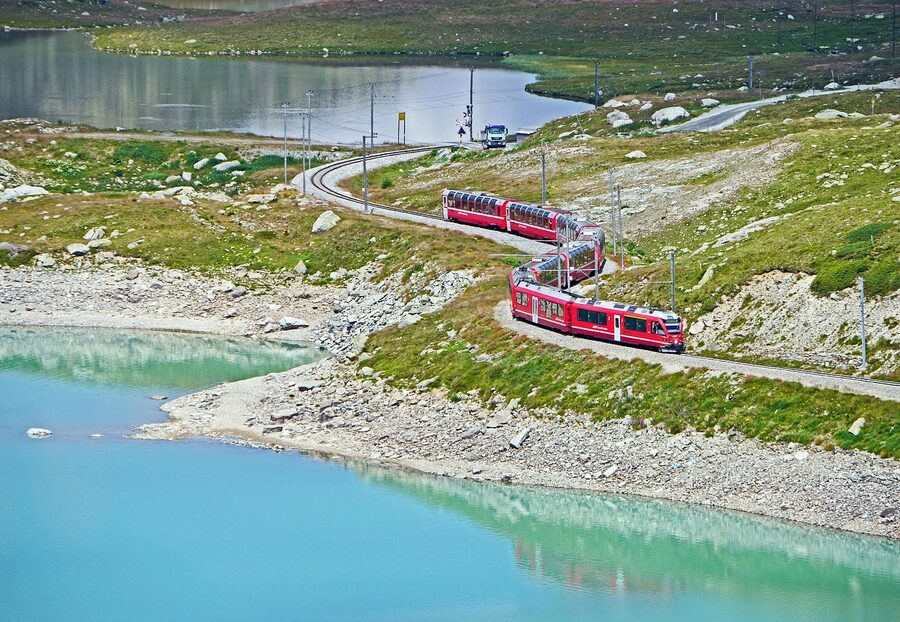
The summit of the line is Ospizio Bernina at 2,253 metres. The station is a wooden hut beside Lago Bianco, the upper of two glacier-fed lakes that sit on the pass. The train slows. The air thins. If you opened the window on a regional train at this point, which I did in October, the temperature drop is sharp enough to wake you up.
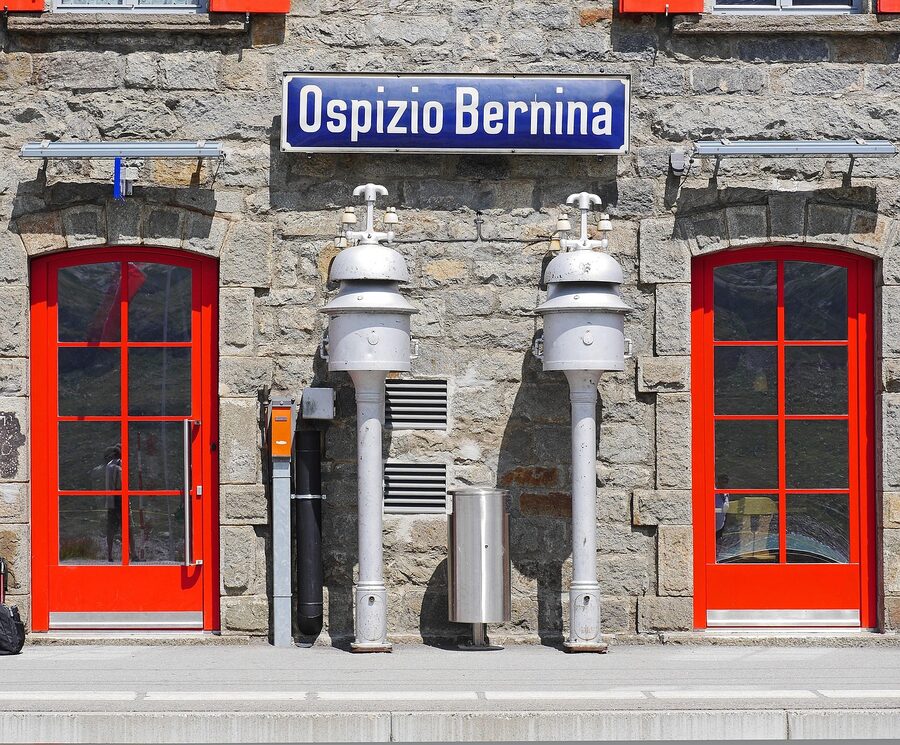
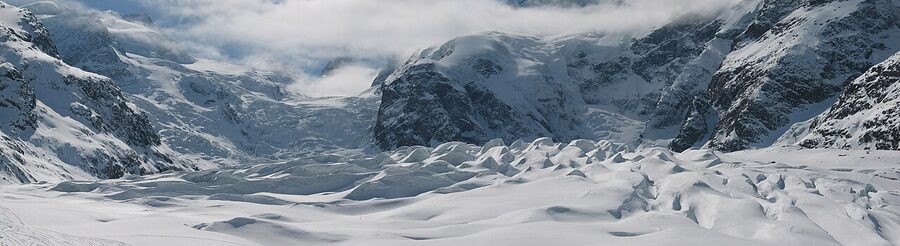
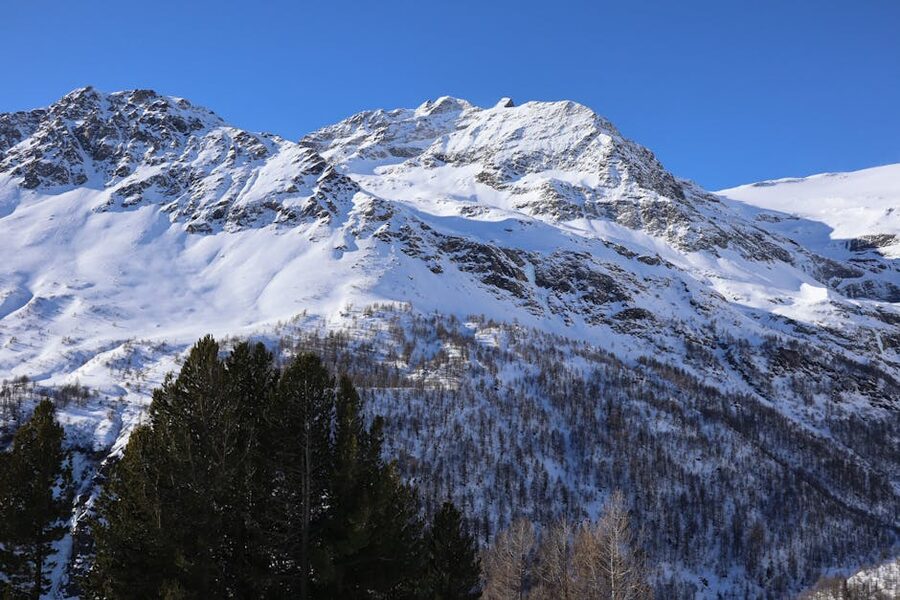
From the pass it is downhill into the Engadin valley. You pass the Morteratsch glacier on the right, framed by Piz Bernina and Piz Palü. The viewing window is brief but the glacier is the largest in the Bernina massif and impossible to miss when the weather is clear.
Pontresina to St. Moritz: the resort approach
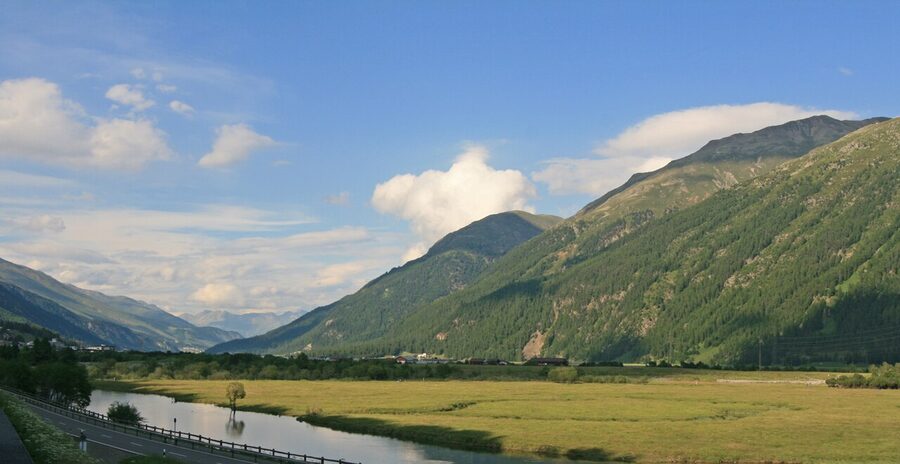
The final 20 minutes drops you into Pontresina, then St. Moritz. The scenery becomes pastoral. Larch forest, alpine meadow, frozen lake in winter, sailboats in summer. You arrive feeling like you have just travelled across a country, which you essentially have. The smaller-scale version of that engineered-transit-as-experience is the Montjuic cable car in Barcelona, where eight minutes of overhead transit does for the city what a half-day Alpine train does for the Engadin.
Panoramic carriage or regional train?
This is the question I get asked the most and I have changed my mind on it. Here is the honest answer.
The panoramic carriages have huge sealed roof-height windows. They are wonderful in summer and on cloudless days. The reflections inside the carriage are bad in winter, when low sun hits low angles, and the windows do not open so you cannot lean out for the Brusio shot. The seat reservation costs around CHF 26 on top of the basic ticket.
The regional train uses standard Rhaetian Railway carriages on the same route. The windows are smaller but they open. No reservation needed. The fare is roughly half. Locals use it. Photographers prefer it.
My take: if you are travelling in summer and the day is clear, take the panoramic carriage and pay the supplement. The roof windows are unbeatable for the Lago Bianco section. The same clear-weather-or-stay-home rule applies on the Verdon Gorge day trip from Nice, where the canyon is unreal in the right light and ordinary in haze. If you are travelling in winter, in shoulder season, or on a tour where the carriage is chosen for you, the regional train is genuinely fine. You are not missing anything that matters. Unlike a guided Last Supper viewing where the time slot is fixed and irrevocable, the train experience is the same train, the same window of the same valley.
The St. Moritz stop: what two hours actually buys you
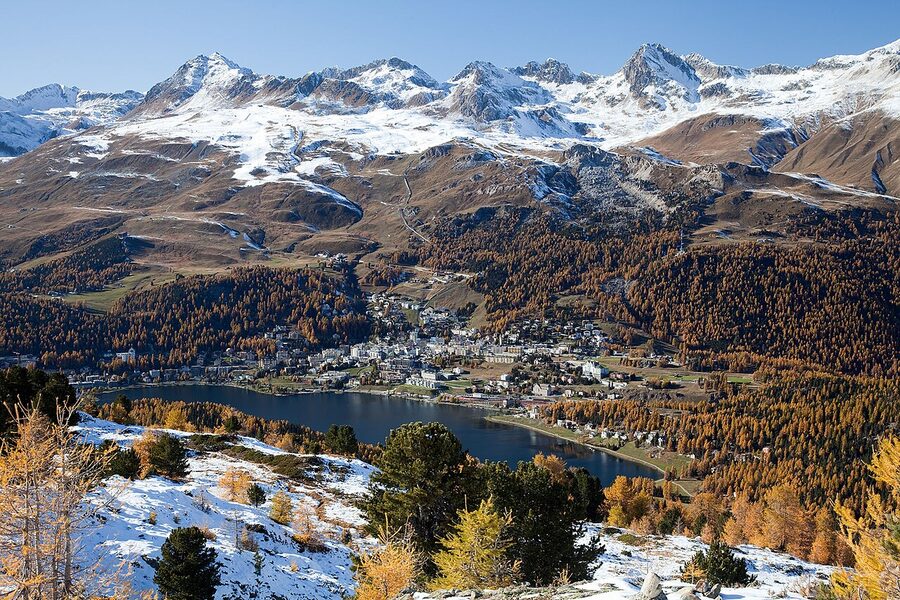
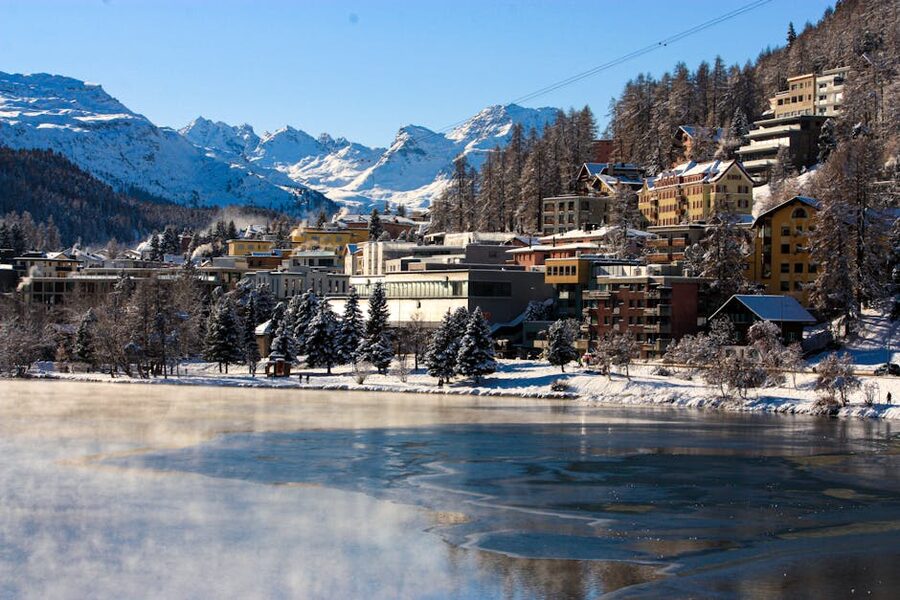
St. Moritz is wealthy and quiet in an English-Country-Hotel way. It hosted the Winter Olympics in 1928 and 1948 and was one of the first ski resorts in the world to install a chairlift. There are designer boutiques, the kind of place where the prices feel like a parallel currency to the kind of designer outlet shopping day trip in the opposite direction from Milan. There are very expensive restaurants. There is, in winter, an actual horse race on the frozen lake.
What you can do in two hours: walk Via Maistra, see the leaning tower of the old church, get a cake at Hauser Confiserie, and walk the lake path. That is genuinely it. Do not plan a meal. Do not try to ride a funicular. The clock starts when the train arrives and the bus leaves on time.
If you want more St. Moritz, you can do the trip the other way: stay in St. Moritz for a night, ride the train to Tirano, and do Lake Como from there. That requires Swiss accommodation prices, which are punishing, but if you are fitting the Bernina into a longer Swiss-Italian rail itinerary that ends at, say, the Venetian lagoon ferries, the overnight in St. Moritz works. A different version of the same trick is to use the Bernina as your scenic intercity hop and add a Milan Leonardo Museum day on either side as a contrast.
What it actually costs
Independent train, Milan to St. Moritz return, second-class regional service throughout: around €70 per person.
Independent train with the panoramic Bernina Express seat reservations both ways: around €140 per person.
Organised bus-and-train tour, no Lake Como cruise: around $122 per person. Includes coach from Milan, train ticket, English-speaking guide, return coach.
Organised bus-and-train tour with the Lake Como cruise added: around $159 per person. Same as above plus a 30-minute boat ride on Como.
The tour is therefore a 30 to 80 percent premium over the cheapest independent option, which buys you the bus the other way, the guide, and the logistical insurance. For a one-shot day trip it is reasonable. For someone who already knows European trains and wants to control their own pace, do it independently.
When to go
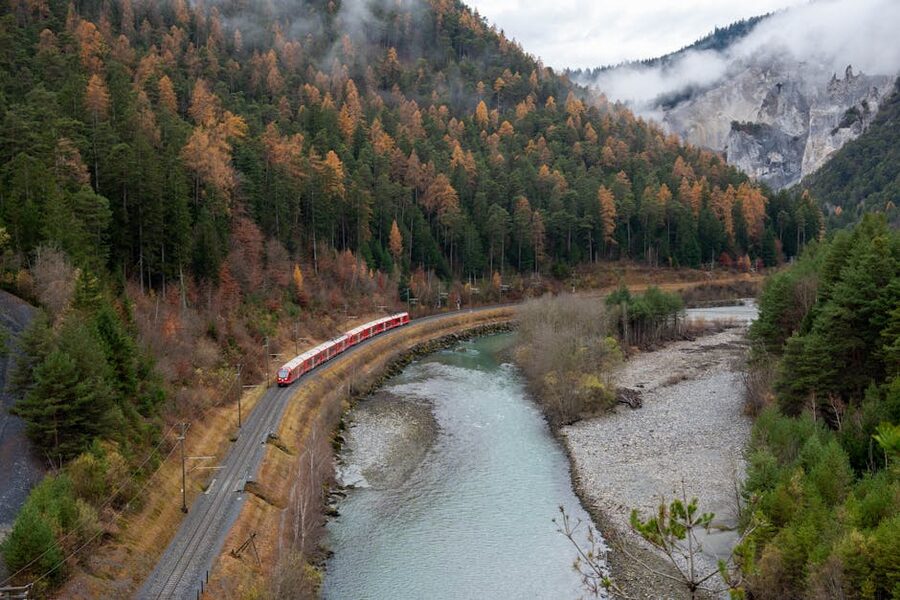
July and August are the busiest months and the panoramic carriages are usually fully reserved a week ahead. May, June, September, and October are all excellent and quieter. The same shoulder-season sweet spot applies to the Rotterdam harbour cruise, where the engineering tour is the same year-round but the deck space and the light both improve in the off-season. Late September into mid-October is the larch turn, when the alpine larch forest goes copper and the photography is genuinely better than peak summer. Avoid early November to early December: the larches have dropped, the snow has not yet stuck, and the line looks bare.
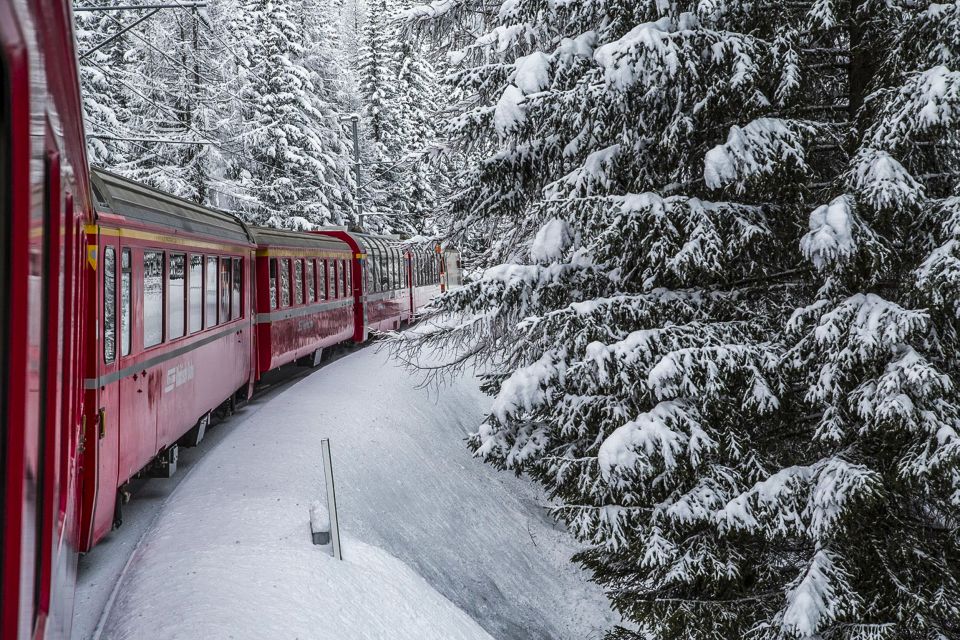
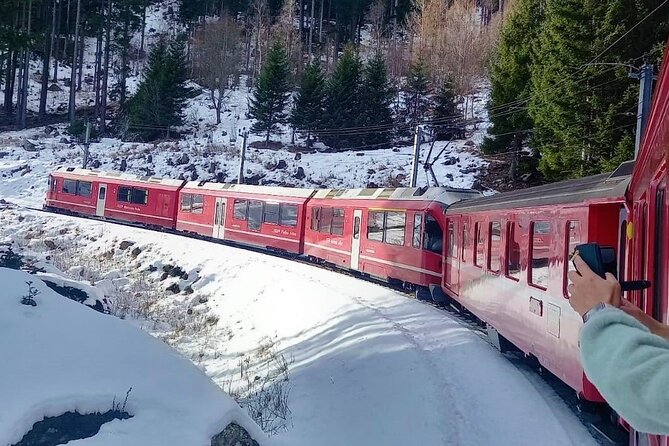
Winter is dramatic but the days are short. From Milan in January you leave in the dark, you have around six hours of usable light, and you return in the dark. The snow on the Bernina Pass section is unreal. Bring sunglasses. The reflection off fresh snow at 2,253 metres is brutal.
Getting to Milano Centrale early enough
Both options require an early start. Independent train to catch the 6:20 or 8:20 service to Tirano. Organised tour for a 7am pickup. By comparison, the Zaanse Schans day trip from Amsterdam is the easiest possible early-train day in this part of Europe, with first services running every fifteen minutes. If your hotel is not within a 15-minute walk of Centrale, factor in metro time and remember the metro starts at 5:40am, which is fine for the 6:20 train but cuts it tight.
If you are weighing the Bernina against other day trips, the calculus is straightforward. Lake Como is a half-day if you want it to be and a full day if you push it, and works on more weather. Serravalle is a four-hour shopping run with a coach back. The Bernina is the longest of the three day trips and the only one that crosses the Alps. Pick it on a clear-weather day and it is the best.
The three best tours to book if you do not want to DIY
1. Lake Como cruise + St. Moritz + Bernina Red Train: $159
This is the right pick if you want the maximum in one day and accept the early start. The Como cruise is the bonus that makes the price gap feel worthwhile. Our full review covers the pickup point, the boat operator, and the lunch logistics on the train.
2. Bernina Train and St. Moritz Day Trip: $122
This is the right pick if Lake Como is on a different day in your itinerary and you do not want to double up. Our full review walks through what the bus-leg cuts out compared to the combo tour and why the lower price is fair.
3. Bernina Express Tour Swiss Alps and St Moritz from Milan: $168
This is the right pick if you want a smaller group and a guide who actually walks the train carriage with you. The premium over the cheaper bus-tour is the small-group atmosphere, not extra inclusions. Our full review goes into who the guide is and what the in-carriage commentary covers.
What to bring
Sunglasses. Water. A snack. The official Bernina Express has a small trolley-cart service in summer; in winter or on the regional train there is no food at all. The bus-tour version usually includes a stop at a Tirano deli for a 30-minute window where everyone buys lunch to eat on the train.
If you are doing it independently, bring a passport even though you are crossing into the Schengen zone. Italy and Switzerland are both in Schengen but Switzerland is not in the EU customs union. Random checks happen, especially at Tirano, and the conductor occasionally asks. I had mine checked twice in five trips.
Layers. The carriage is heated. Alp Grüm is not. If you get out at the platform for the photograph, the wind off the glacier in November is genuinely bracing, even at midday.
The DIY mistake to avoid
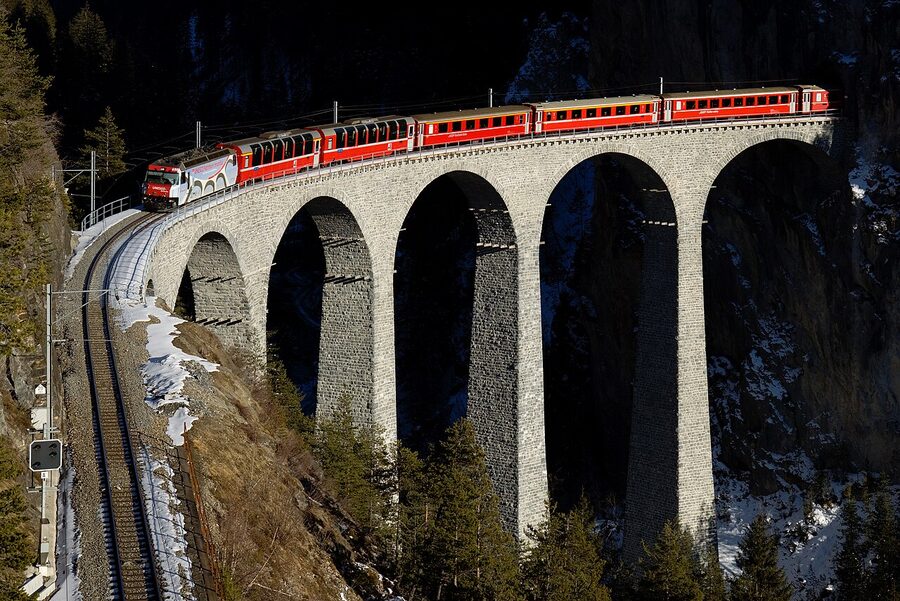
The single most common DIY mistake is trying to do the full UNESCO route in one day from Milan. The Bernina Express timetable lists the named service running all the way from Tirano to Chur, taking around four hours, and the official Bernina Express train technically continues onward. You cannot fit Tirano-to-Chur-and-back into a Milan day trip and still be home before midnight. Stop at St. Moritz. Reserve Chur for a different trip.
The other common mistake is booking the Bernina Express seat reservation for both directions and then realising you have committed yourself to the panoramic carriage even if the weather changes. The reservations are not cheap and not refundable on the day. If you are flexible, buy the basic ticket and decide on the platform whether to upgrade.
Looking ahead from Milan
If the Bernina is on your shortlist, the chances are you are also doing one or two other day-trippy things from Milan. The natural pairing is the Last Supper on a separate day, which uses the same booking-strict logic the Bernina seat reservation uses, just for a 15-minute viewing window instead of a 12-hour rail journey. Both reward the traveller who books early and shows up early. The Bernina also pairs with a relaxed afternoon on the Milan Duomo terraces as a recovery day, and with a half-day of Como if you have not folded that into the train trip itself. If you are working a longer Italy itinerary that ends in Tuscany, the Chianti day trip from Florence follows the same long-day pattern: leave early, embrace the drive, take the photographs at the right altitude.
Pick a clear day. Sit on the right going north. Watch for the spiral.