
Twenty minutes into lunch at Daniel et Denise on Rue de Créqui, the waiter set down a long white oval in front of me. Pike fish dumpling, the size of a small football, sitting in a pool of pale orange lobster sauce called sauce Nantua. He cracked open the surface with the side of a spoon and a thread of steam came out. This is the dish Lyon has been making since the 1830s. It tastes like a souffle that learned to be heavier on purpose, and it is the reason most of France argues about which city is really the food capital.
UNESCO settled it in 1998. Lyon is the gastronomic capital of France, and Vieux Lyon plus Croix-Rousse, Presqu’île and Fourvière were inscribed as a single World Heritage zone the same year. Most travellers still skip Lyon on the Paris-to-Provence run. They shouldn’t. A single day done right is one of the strongest 24 hours in France.
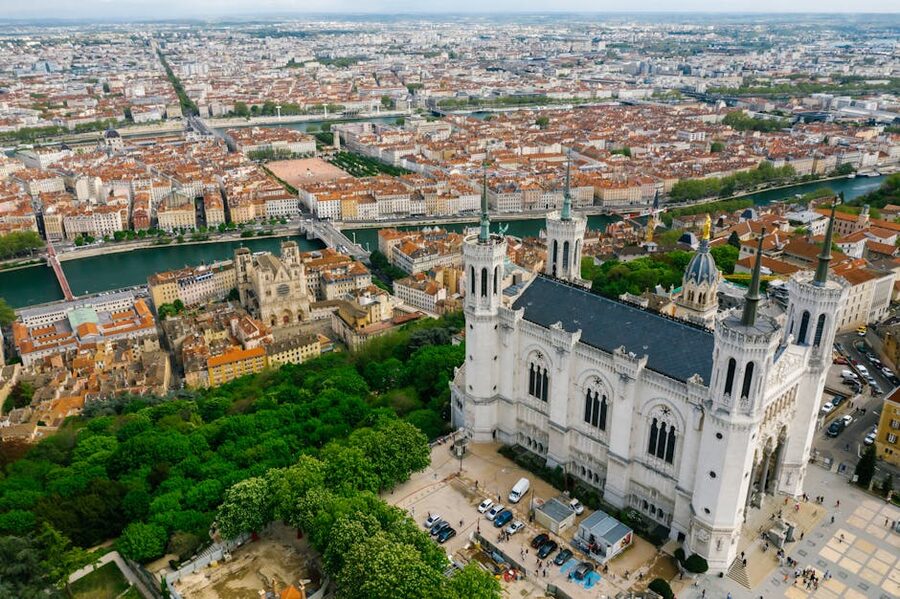
Here is the rough day I’d pick: morning in Vieux Lyon and a traboule walk, lunch in a certified bouchon, afternoon up the funicular to Fourviere for the city view, then back down through Croix-Rousse on foot. You can compress it. You can also stretch it. But that’s the spine.
In a hurry? My top 3 Lyon picks
- Lyon 1-hour river cruise on the Saone ($17). The cheapest, fastest way to see the UNESCO old town from the water. Run by Les Bateaux Lyonnais, the only river-cruise operator in town. Good if you only have an afternoon.
- Lyon City Highlights walking tour ($25). The small-group walk that opens at least three real traboules. You will not find them on your own. Worth the price for that alone.
- Do Eat Better food tour ($93). Pricey, but this is the food capital. Three hours, six stops, real bouchons not tourist ones. You leave full and slightly drunk.
Why Lyon is actually France’s food capital
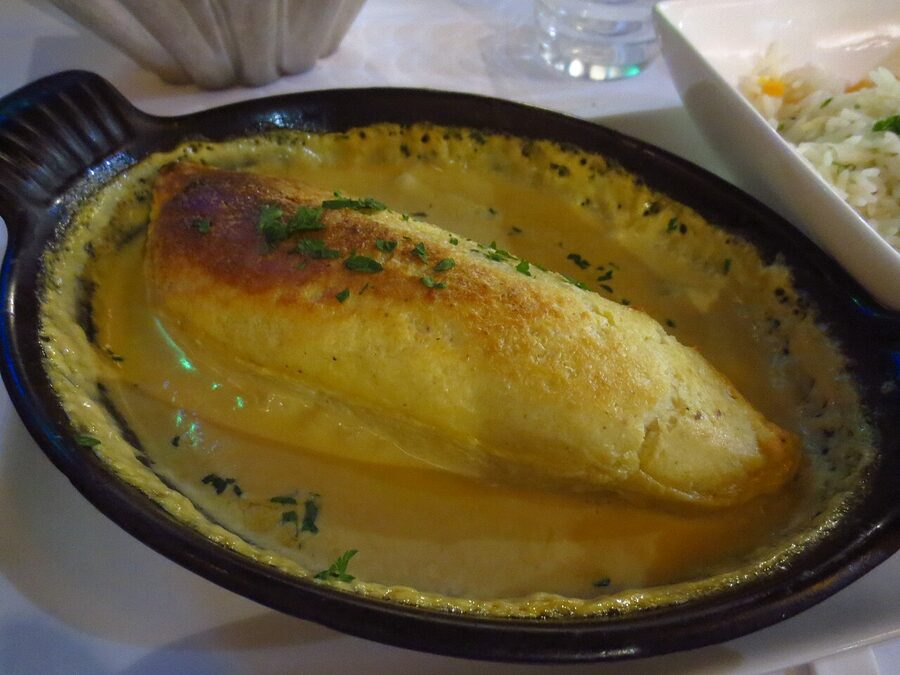
The food story starts with silk. In the 1500s, Italian merchants based in Lyon imported Tuscan recipes and ingredients along with their looms. By the 1700s, the city had its own canon: poached pike, lyonnaise potatoes (sliced, fried, finished with onions), cervelle de canut (a fresh cheese mixed with herbs and shallots), tablier de sapeur (breaded tripe), saucisson chaud (a fat Lyonnais sausage poached, served warm with potatoes), and the pink praline tart that still shows up in every bakery window in Vieux Lyon.
The cooks who codified this were women. From roughly 1750 to the 1950s, the Mères Lyonnaises (Mothers of Lyon) ran the city’s working kitchens, often alone. La Mère Brazier was the first woman in history to hold three Michelin stars, in 1933, in a small place a few blocks from where we’d just had lunch. The point is that this isn’t tourist food invented for visitors. It’s the only working-class regional cuisine in France that became a destination cuisine, and it kept its name.
The Florentine cucina povera story is the closest parallel I know: peasant ingredients refined into a regional canon. The difference is that Florence’s food got refined by Medici-era courts; Lyon’s got refined by working women cooking for silk weavers and bargemen. The roots stay visible on the plate, especially at the bouchons.
Lunch first: which bouchon to pick
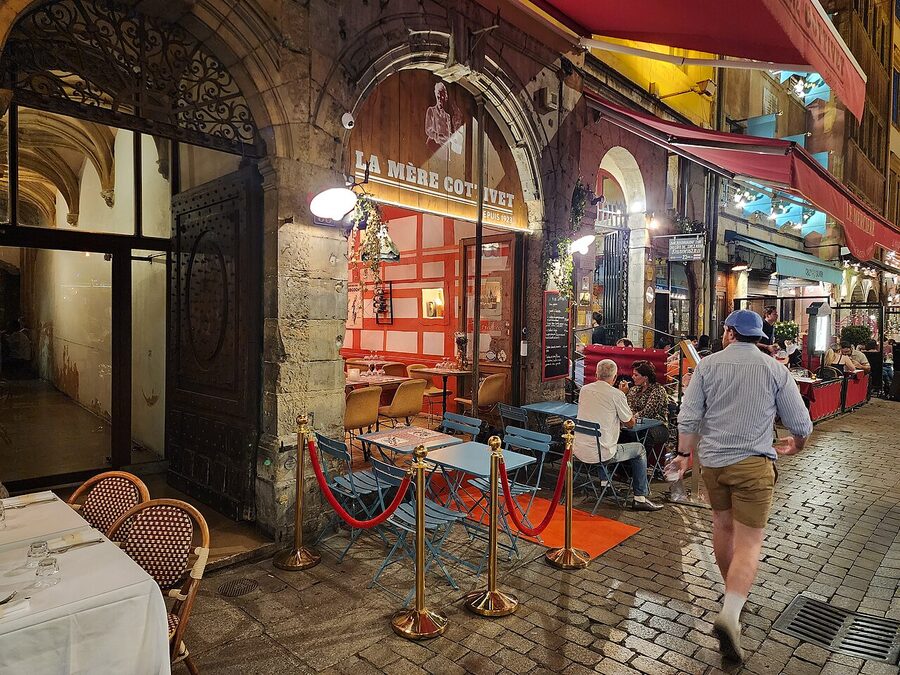
Bouchons are the working-class restaurants of Lyon. Long communal tables, paper menus that change rarely, no fuss with the wine list. Five or six dishes, all of them rich. The catch is that “bouchon” has no legal protection. Half the places on Rue Merciere call themselves bouchons and serve mass-produced food at tourist prices. The version you want is the certified one.
The certification is called Les Bouchons Lyonnais. Around 24 restaurants carry it. They have a metal plaque by the door, a Gnafron (the Lyonnais puppet) on the sign, and a written charter that covers things like serving the right kind of saucisson and not microwaving the gratin dauphinois. If you have one meal in Lyon, eat at one of these.
The shortlist I’d send a friend to:
- Daniel et Denise. Five locations now, run by Joseph Viola, a Meilleur Ouvrier de France (a national craftsman award). The Saint-Jean branch in Vieux Lyon is the one I keep going back to. Order the pâté en croûte. It’s a four-time world-champion recipe.
- Le Garet. Older, in the Presqu’île, no website worth mentioning. The room is small enough that you’ll hear the next table’s conversation, and the salade lyonnaise (warm bacon, poached egg, frisée, mustardy dressing) is the version other places try to copy.
- Café Comptoir Abel. The oldest bouchon in the city, on Rue Guynemer. It looks like a film set. Their volaille à la crème (chicken in cream) is the closest you’ll get to home cooking from a paid menu.
- Le Chabert et Fils. On Rue des Marronniers, which is technically Tourist Bouchon Row, but Le Chabert is the genuine one on the strip. Reservations needed Friday and Saturday.
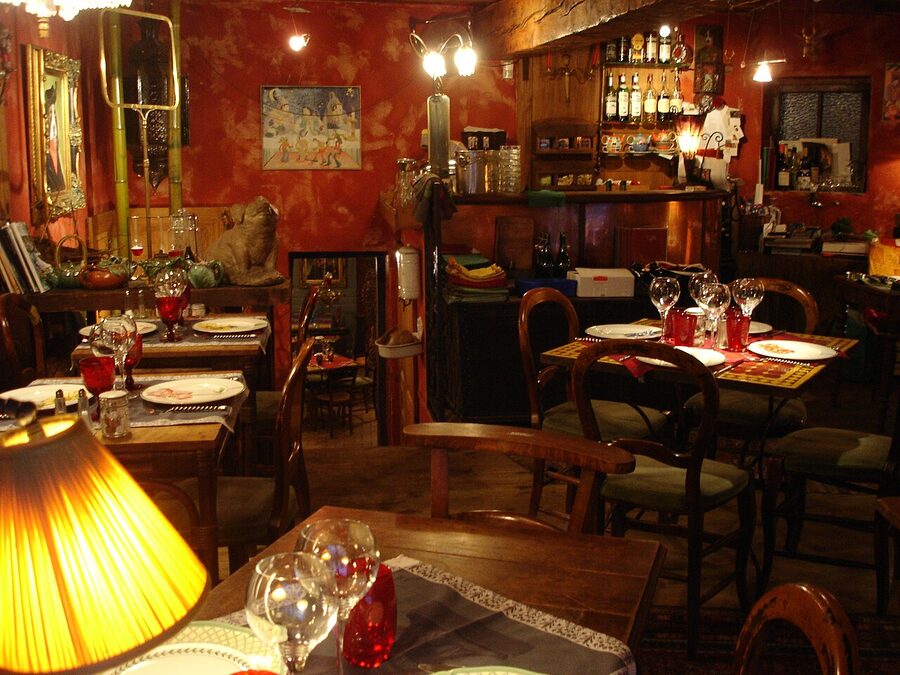
Practical points. Lunch is the better meal here. The set lunch (menu du jour) at most certified bouchons is 22 to 30 euros for two or three courses. Same dishes at dinner cost 38 to 55. Many bouchons close Sunday and Monday. Some close all of August. Cash is fine, cards are fine, but you’ll need a reservation in season, which is essentially March through November plus December’s Festival of Lights. Wine is poured from a pot lyonnais, the 46cl thick-bottom carafe that’s a Lyon-specific glass.
If you’re flat against time, do a guided food tour instead. The Do Eat Better Lyon tour hits five or six places in three and a half hours and the guide does the work of picking which version to try where. Same model as the Rome food tours, the Naples pizza walk and the Heineken Experience drink tour in Amsterdam. Lyon is where this format actually pays off, because the wrong sit-down lunch in this city ruins the whole day.
Vieux Lyon and the traboules
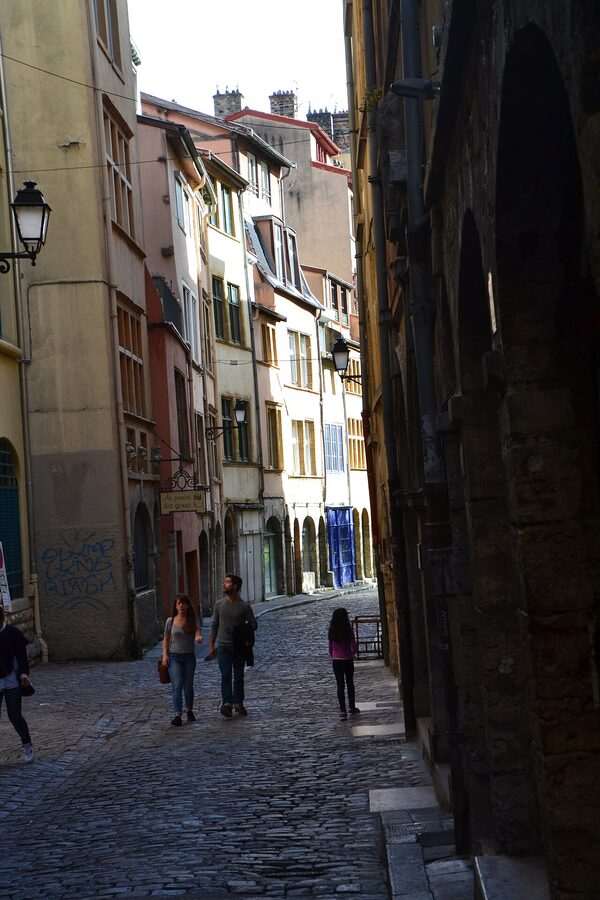
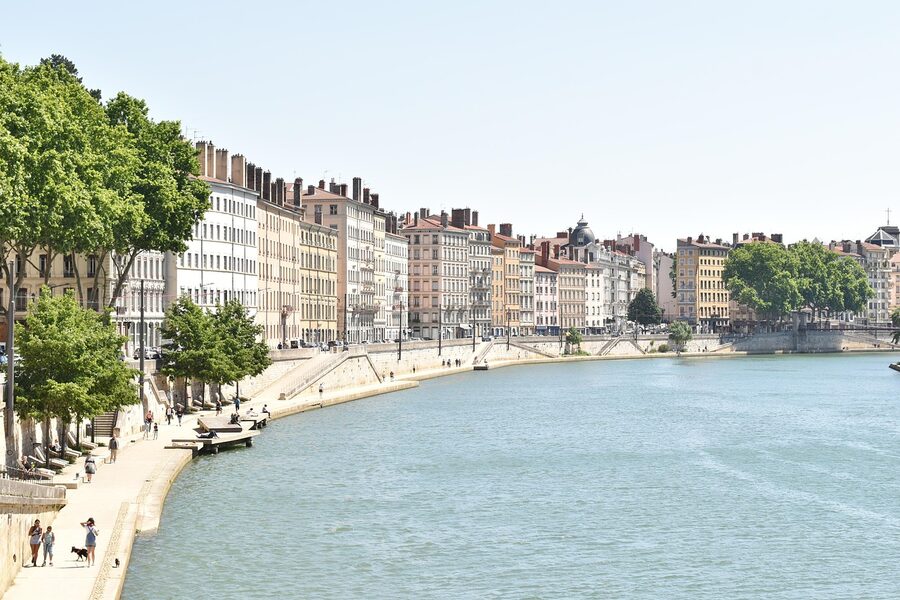
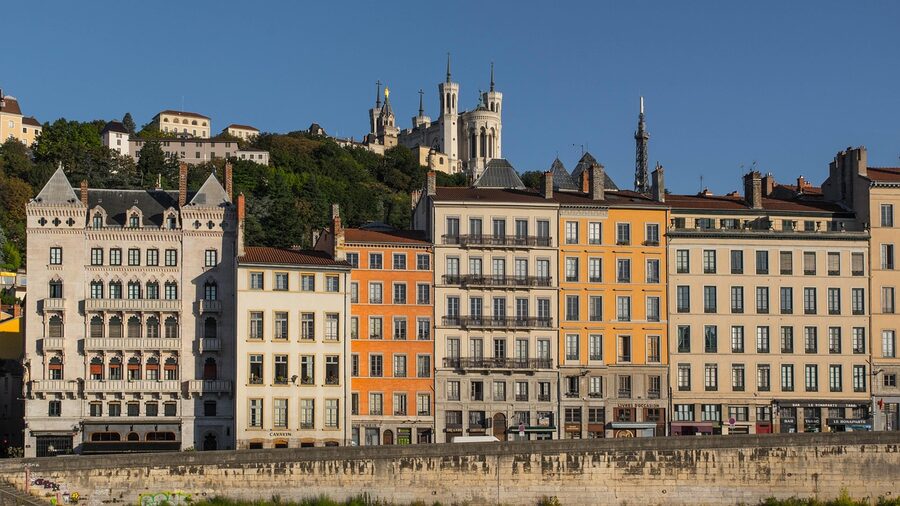
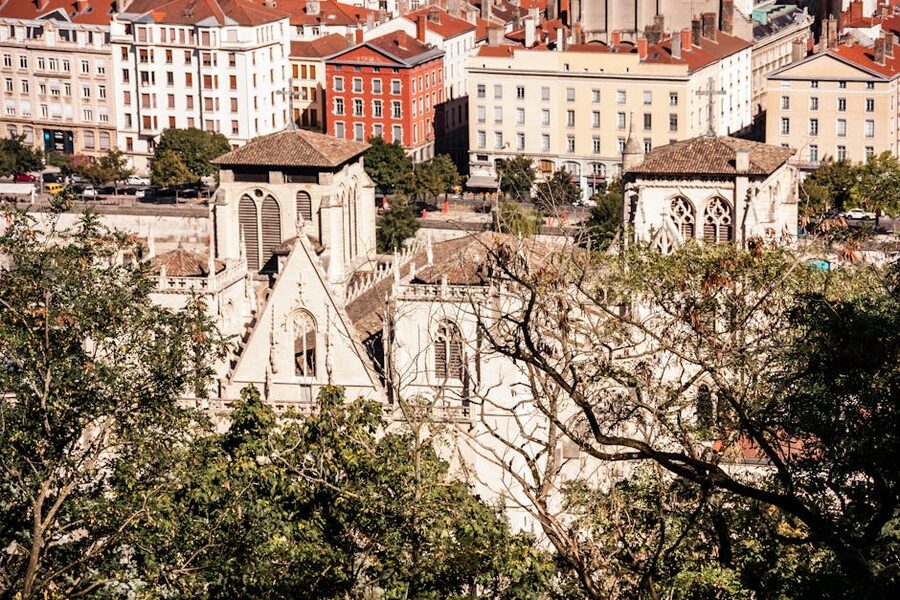
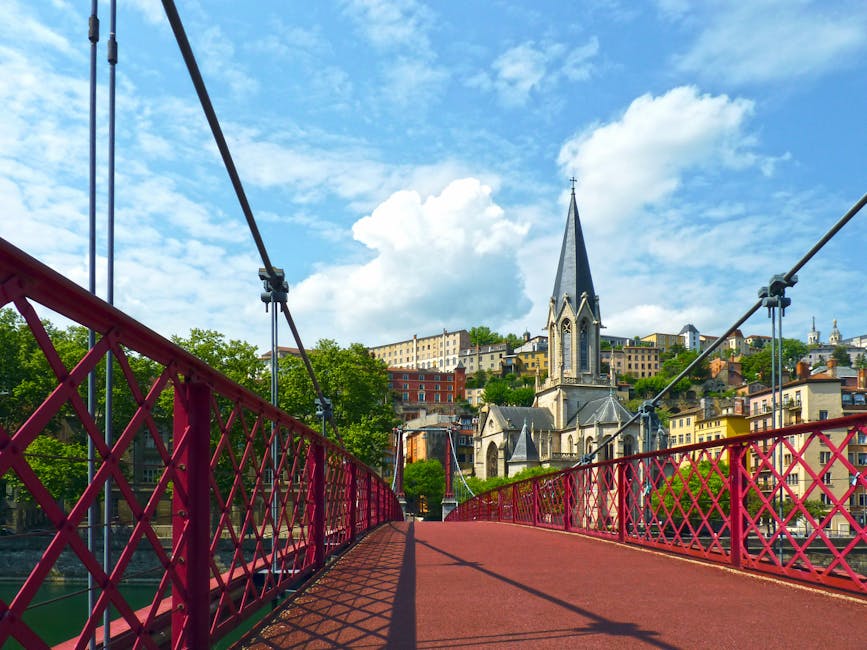
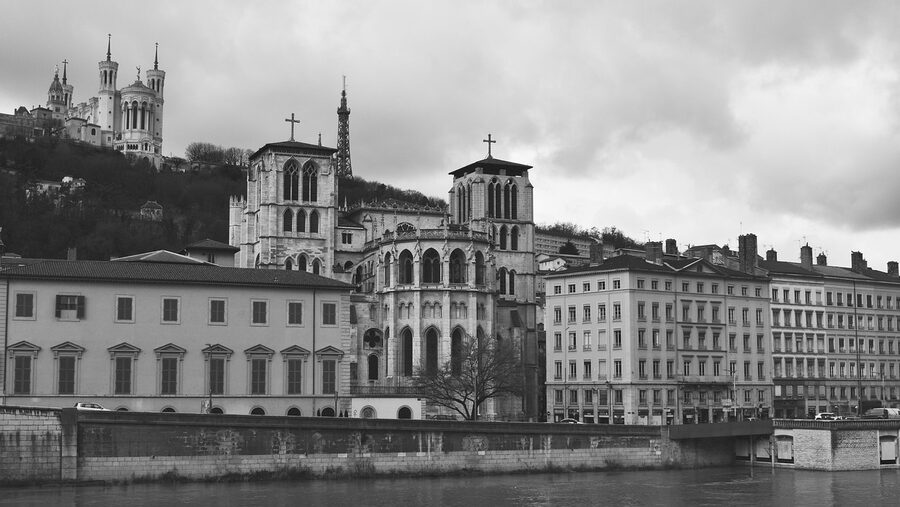
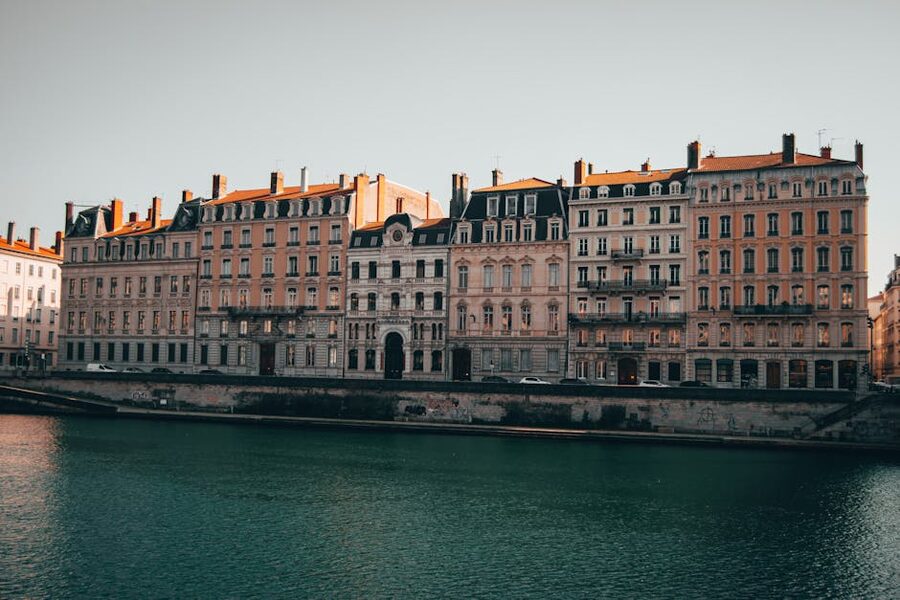
Vieux Lyon sits on the right bank of the Saone, under the Fourviere hill. Three parishes: Saint-Paul (north), Saint-Jean (centre, with the cathedral), Saint-Georges (south). Cobblestones the whole way. You can walk it end to end in 25 minutes if you don’t stop, but the point is to stop.
The cathedral is Saint-Jean-Baptiste, built between the 12th and 15th centuries, which is why the lower walls are Romanesque and the upper ones flamboyant Gothic. Free to enter. Inside, the 14th-century astronomical clock still strikes at noon, 2pm, 3pm and 4pm with a small mechanical performance. People line up for it. Worth seeing once.
Then the traboules. These are covered passages that run through buildings and connect parallel streets. There are about 400 of them across Vieux Lyon, Croix-Rousse and Presqu’île, and roughly 40 are open to the public. The reason they exist: silk weavers needed a fast, sheltered route to carry finished silk down from the workshops on Croix-Rousse to the Saone barges. A wet bolt of silk is ruined silk. The traboules kept it dry.
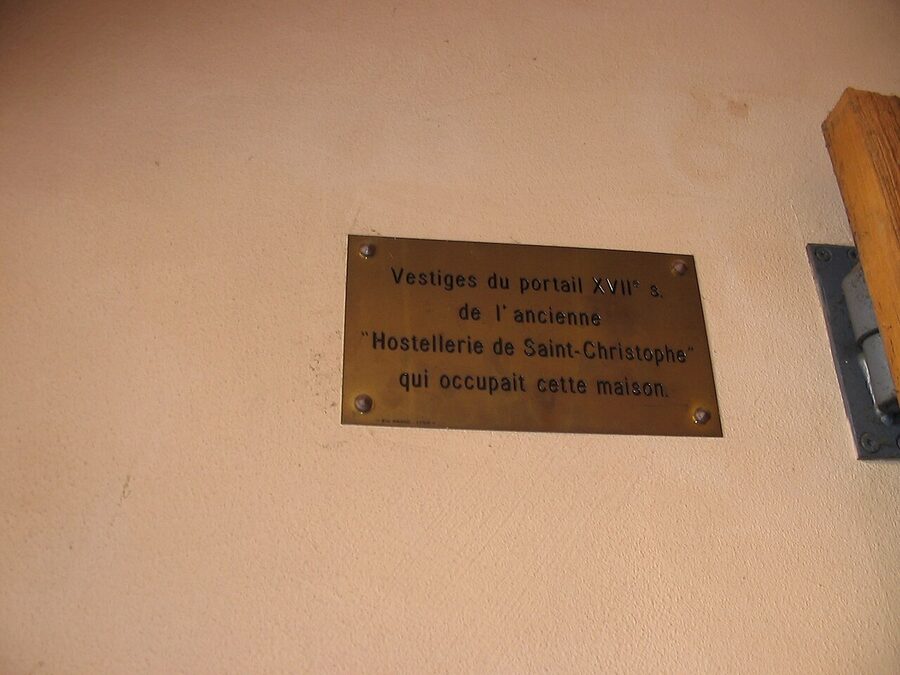
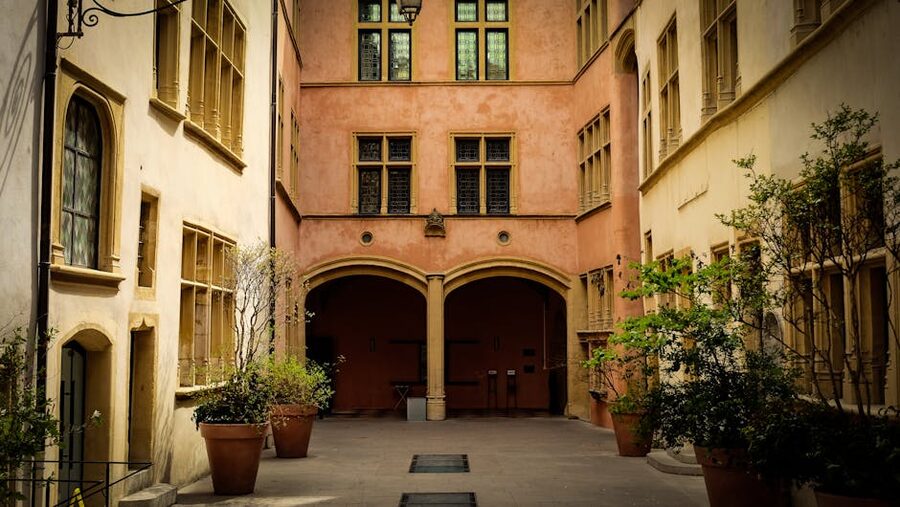
The best-known ones in Vieux Lyon are at 54 Rue Saint-Jean (the longest, four buildings deep), 27 Rue du Boeuf (with a pink-painted spiral tower called La Tour Rose), and 9 Place du Change (Renaissance gallery and well). Some have keypad doors and need a code; most are open in the day if you push the door gently. Locals still live here, so don’t shout, don’t take flash photos in the courtyard, don’t go in after about 7pm.
The 1940s twist: the Resistance used the traboules during the German occupation. Lyon was the unofficial capital of the French Resistance. Jean Moulin operated out of an apartment two blocks from where I had lunch. The traboules let leaflets, weapons and people move across the city without ever stepping into the open street. The plaques you see on some courtyard walls commemorate that.
Practical: the small-group walking tour exists mainly because of the traboules. The guide knows which doors are open today, which pads need a code, and which courtyards are private. Trying to find them solo, you’ll see maybe three. With a guide, six or seven. If you only do one paid thing in Lyon, this is the one I’d pick. The same guided-old-quarter-walk-with-secrets logic powers the Anne Frank walking tour through Amsterdam’s Jordaan, where most travellers would walk right past the layered 17th-century courtyards and hofjes without a guide pointing them out.
Up to Fourviere: the funicular and the basilica
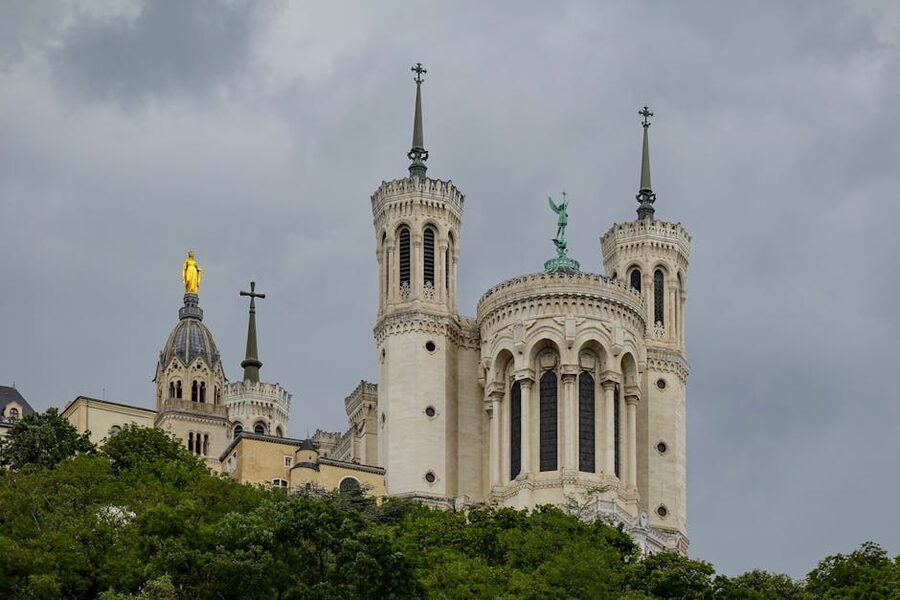
The hill behind Vieux Lyon was the original Roman city, founded as Lugdunum in 43 BC by a lieutenant of Julius Caesar. Capital of Roman Gaul, two emperors born here (Claudius and Caracalla). You walk on top of two thousand years.
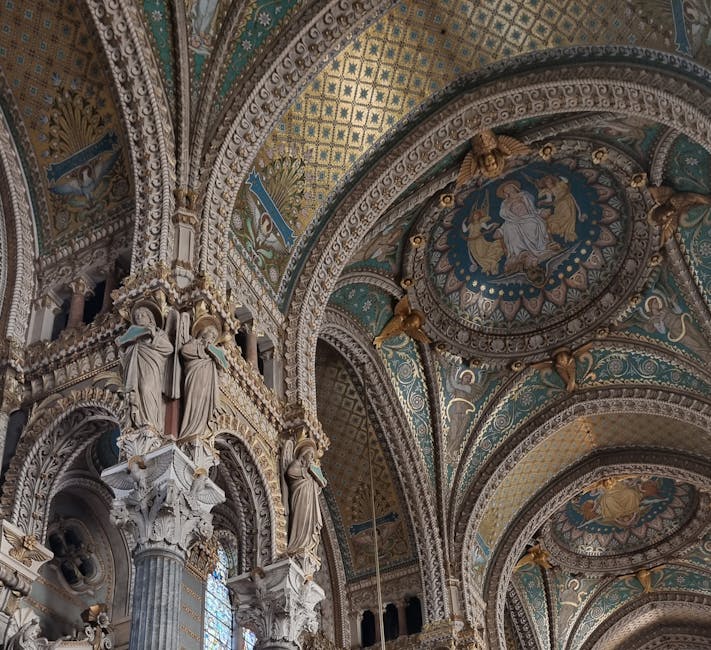
The basilica went up between 1872 and 1884 to thank the Virgin for sparing Lyon during the Franco-Prussian War. The architect was Pierre Bossan and the result is divisive. Some people think it looks like a wedding cake. Some people love it. Either way, the inside is what’s worth your 15 minutes: full mosaic walls, gold ceiling, four spiral marble columns, and a crypt below dedicated to Saint Joseph. The basilica is free.
How to get up there. Four ways:
- The Saint-Jean funicular from the bottom of Vieux Lyon (Vieux Lyon metro D station). Two minutes, included with a regular metro ticket (€2.10). The most popular option. Goes every 10 minutes.
- The Saint-Just funicular from the same lower station, longer route, drops at Saint-Just rather than the basilica. You can walk back via the Roman theatres on the way down.
- The Roman theatres path, on foot. About 25 minutes uphill from Place Saint-Jean via the Jardin du Rosaire and the rose garden behind the basilica. Steep but the city view opens up the whole way.
- The pink-string of stairs (Montée Nicolas de Lange or the Montée des Chazeaux). For the calf-burning option. Skip in summer.
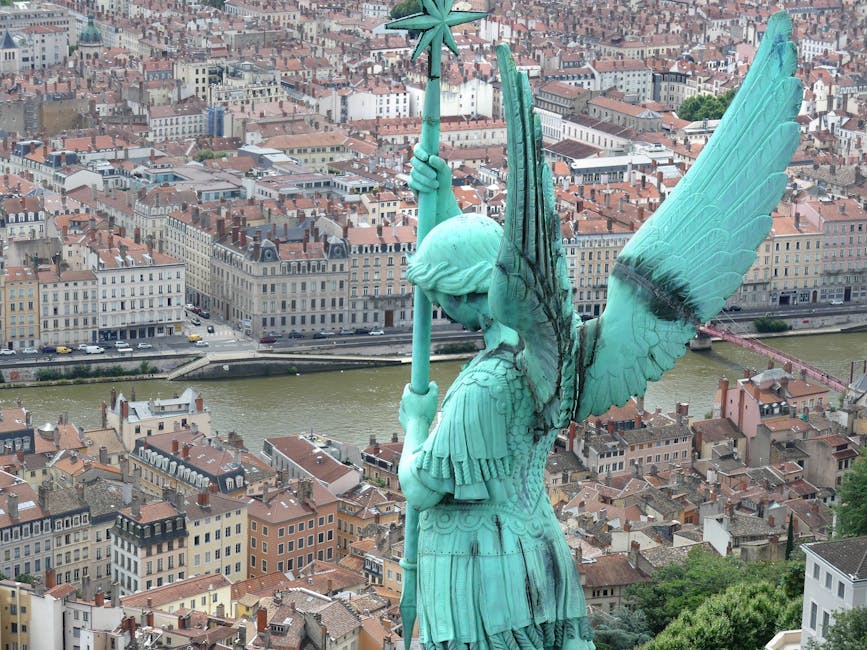
Behind the basilica are the Roman theatres. Gallo-Roman Theatre of Fourviere (built 15 BC, capacity around 10,000) and the smaller Odeon (built around 100 AD, capacity 3,000). Both are free to enter and you can walk down through the seats. Underneath is the Lugdunum Museum, the Roman archaeology museum, which costs €4 and is worth an hour if it’s hot or wet. Same period and tone as the Roman material at Les Invalides, but local and far less crowded.
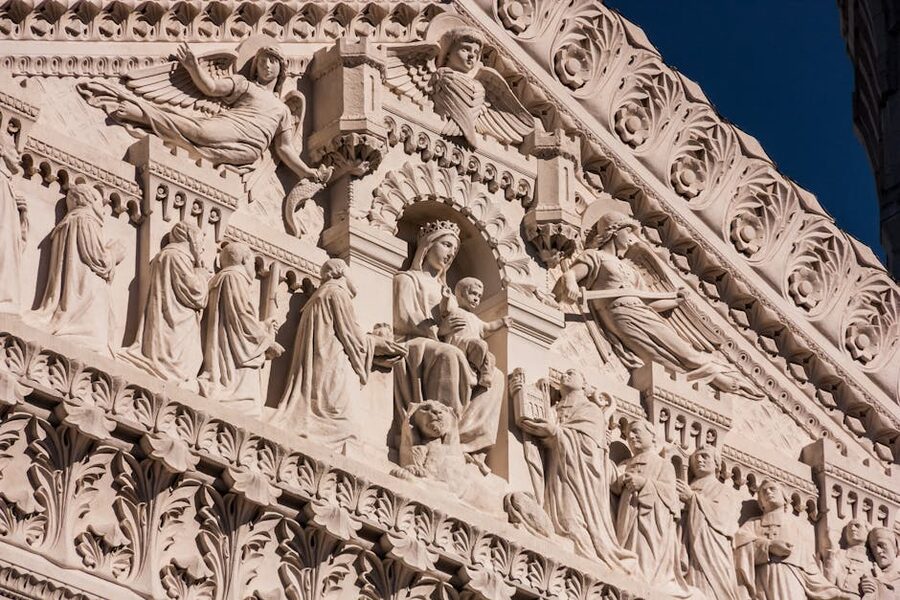
Time budget: 90 minutes for the basilica plus the view, two hours if you add the theatres, three if you add Lugdunum. I’d plan two and skip Lugdunum unless the weather turns.
Croix-Rousse: the silk-weavers’ hill
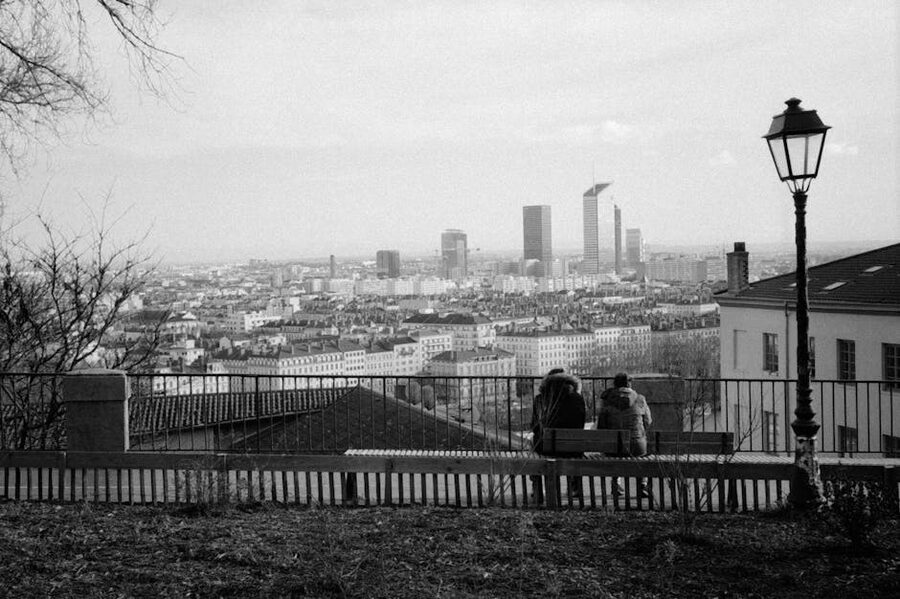
Cross the Saone, cross the Rhone, and the second hill is Croix-Rousse. This is where the silk weavers (the canuts) lived and worked from the late 1700s through the 1900s. The 1804 Jacquard loom needed three- or four-metre ceilings to operate, which is why the Croix-Rousse buildings are taller and narrower than anything else in the city. Walk in any apartment lobby on Rue d’Ivry and look up: those huge windows are weaving-light windows, and those tall ceilings used to hold a wooden loom three storeys tall.
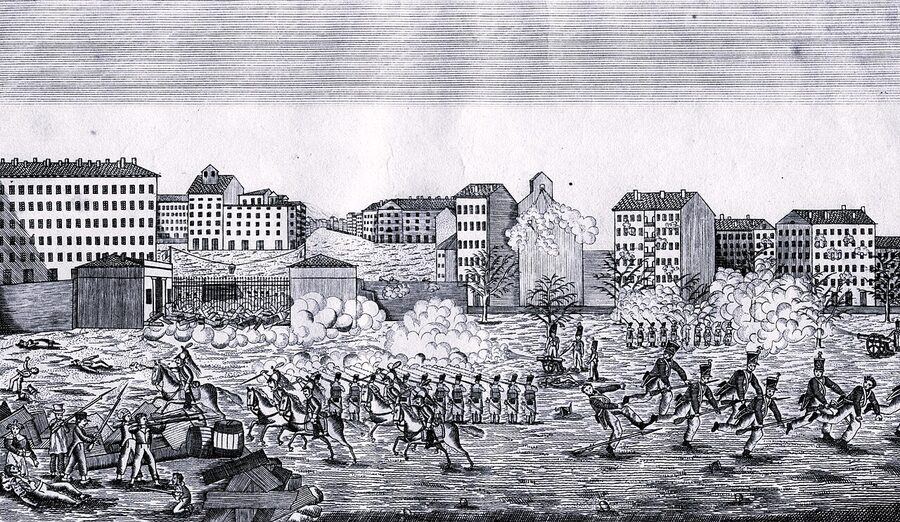
The canuts staged the first major French workers’ revolt in November 1831, then again in 1834. They went hungry, descended the hill in formation, and demanded a fixed minimum tariff. The army was sent in. The 1831 revolt is one of the events Marx and Engels studied later when they wrote about the European working class. The plaque is at Place Colbert.
What to actually do up there:
- The Cour des Voraces (entrances at 9 Place Colbert and 14bis Montée Saint-Sébastien). Six-storey open-air staircase, the showpiece traboule. Free, open. Easy to miss because the door is unmarked.
- Maison des Canuts on Rue d’Ivry, a working museum where the original Jacquard looms still operate. €8 entry, includes a 45-minute demonstration. The weavers will explain why a tiny bug called pebrine killed Lyon’s silk industry in the 1860s.
- Le Mur des Canuts, a giant trompe-l’œil mural at Boulevard des Canuts. Painted in 1987, repainted 1997 and 2013. Free. Three minutes’ walk.
- The Tuesday-to-Sunday market on Boulevard de la Croix-Rousse. Local, real. Saturday is the busiest. Tarte aux pralines stalls every five metres.
Sunday night I’d send you to Café Comptoir Abel for dinner, which sits between Croix-Rousse and Presqu’île and feels like the right place to end. But order light. Bouchon lunches are heavy.
The 3 tours I’d actually book
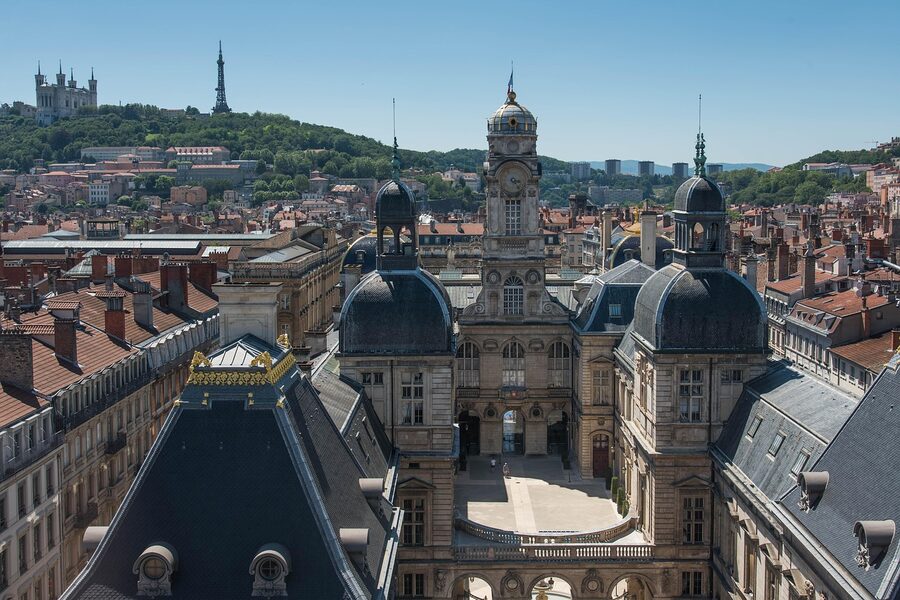
1. Lyon Saone Sightseeing Cruise: $17
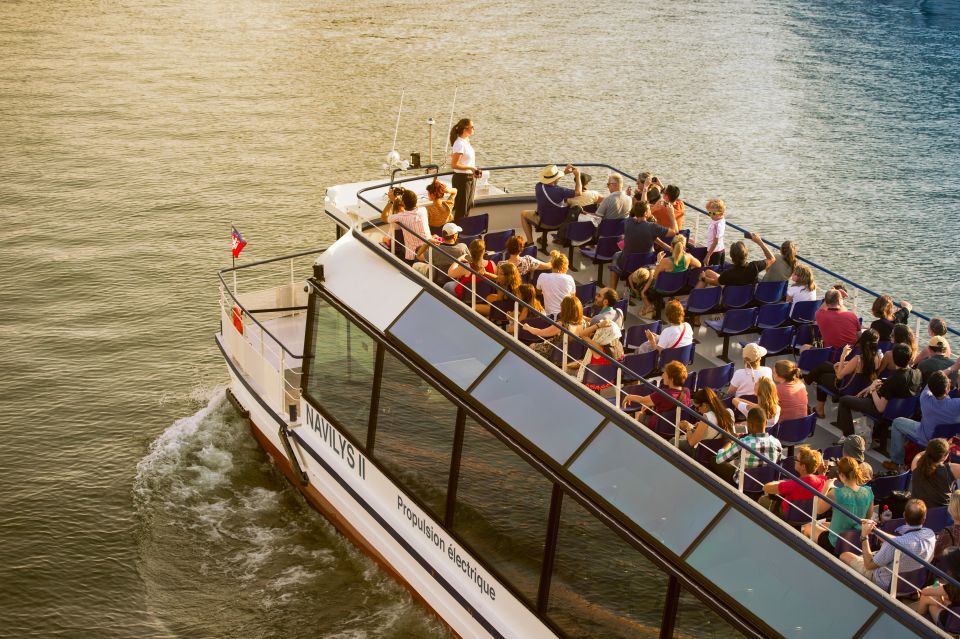
This is the most-booked Lyon tour on the market and has been for years. One hour, an hour and ten with the headphone commentary, departures every 90 minutes from the Quai des Celestins. If you only have an afternoon in Lyon, our cruise review covers the Saone vs Rhone route question. Pick the Saone one. You see the old town from it.
2. Lyon City Highlights Walking Tour: $25
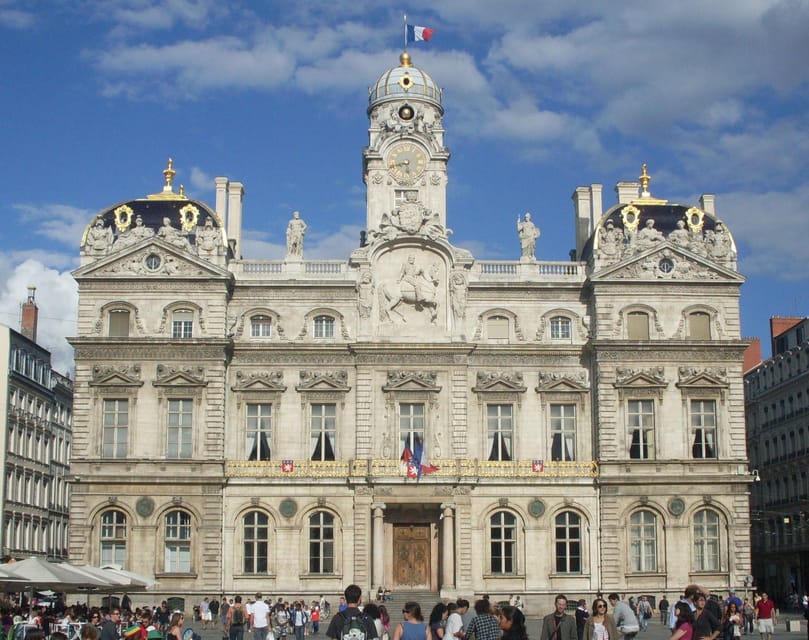
Tiny groups, normally six to ten, with a local guide who keeps the tempo. Two hours covers Vieux Lyon’s main traboules, Saint-Jean, the funicular up to Fourviere and a few unfussy stops along the way. Aidan’s the regular guide and his English is fluent. Our walking tour review covers the meeting-point logistics.
3. Do Eat Better Lyon Food Tour: $93
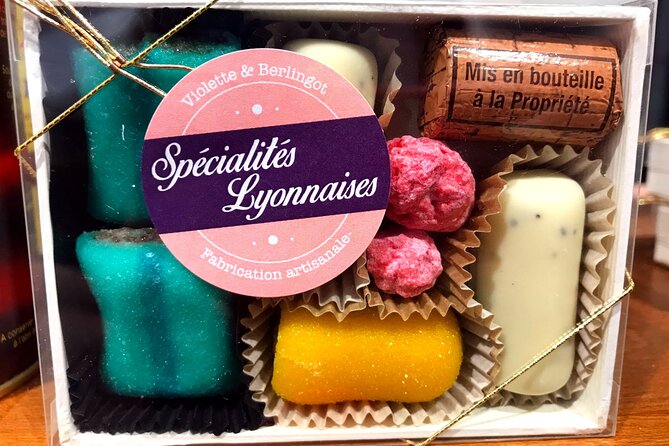
Three and a half hours, six places, real bouchons not tourist ones. Quenelle, saucisson chaud, pink praline tart, a glass of Côtes-du-Rhône, a stop at the cheese counter at Halles Paul Bocuse. Pricier than a Florence pasta class or a Barcelona tapas walk, but the Lyon equivalent is rarer and the work is in picking the right bouchons. The food tour does that for you.
Halles Paul Bocuse: the indoor market
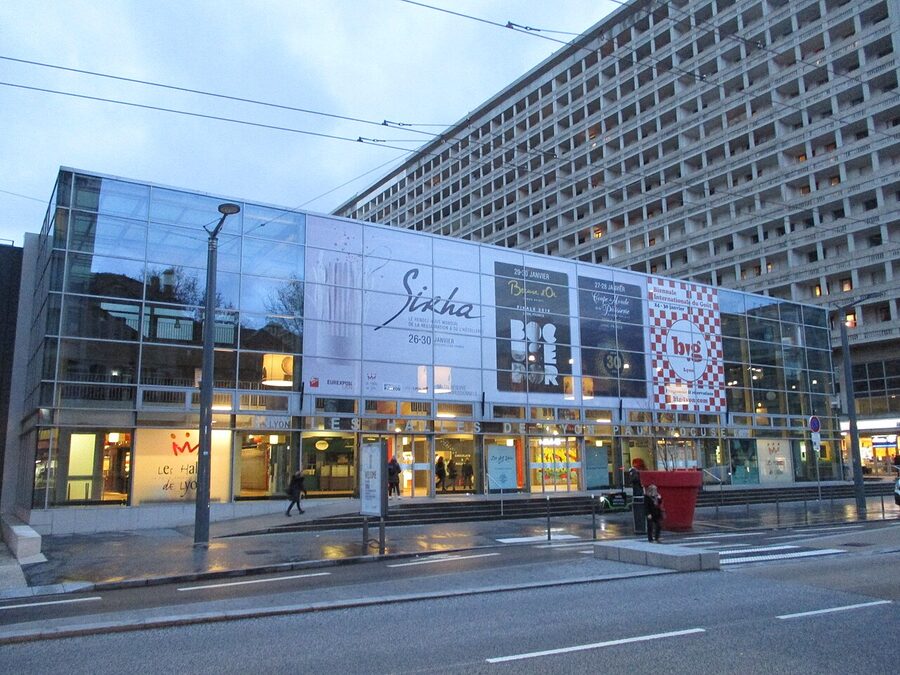
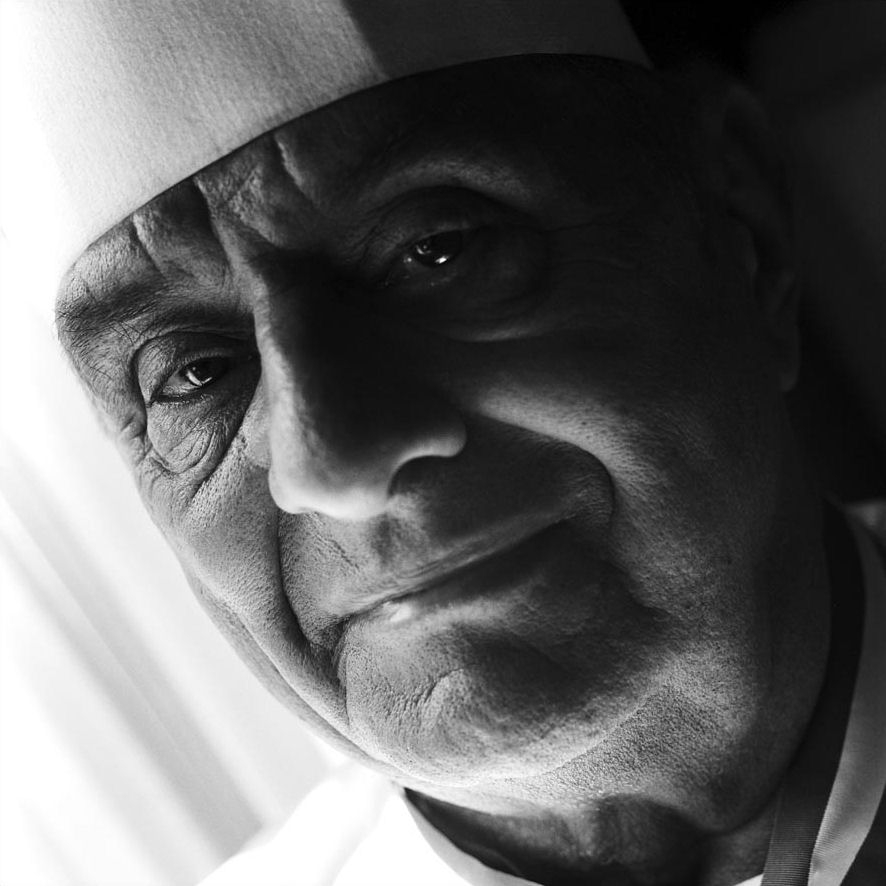
Halles de Lyon-Paul Bocuse, usually shortened to Halles Bocuse, is the indoor food market named for him. It opened in 1971, was renamed in 2006 while Bocuse was still alive, and feels less like a tourist attraction than a working market. Around 50 stalls. Cheese counters that supply the city’s restaurants, the only cervelas truffé in town, the praline-tart bakery whose recipe most cookbooks copy.
It’s not in the old town. It’s a 25-minute walk or one metro stop east, in the Part-Dieu area. Open 7am to 10.30pm Tuesday to Saturday, until 1pm Sunday, closed Monday. You don’t need long. 30 minutes is enough if you want to taste a few things and pick up a tart for the train. Two hours if you sit at the seafood counter and drink a glass of Sancerre with a plate of oysters.
If you’ve been to Florence’s Mercato Centrale or done a Florence cooking class, the model is similar. Lyon’s market is smaller and less designed for tourists. The lighting is fluorescent and the floor is concrete. That’s part of the charm.
Bellecour, Presqu’île, and the bits between the rivers
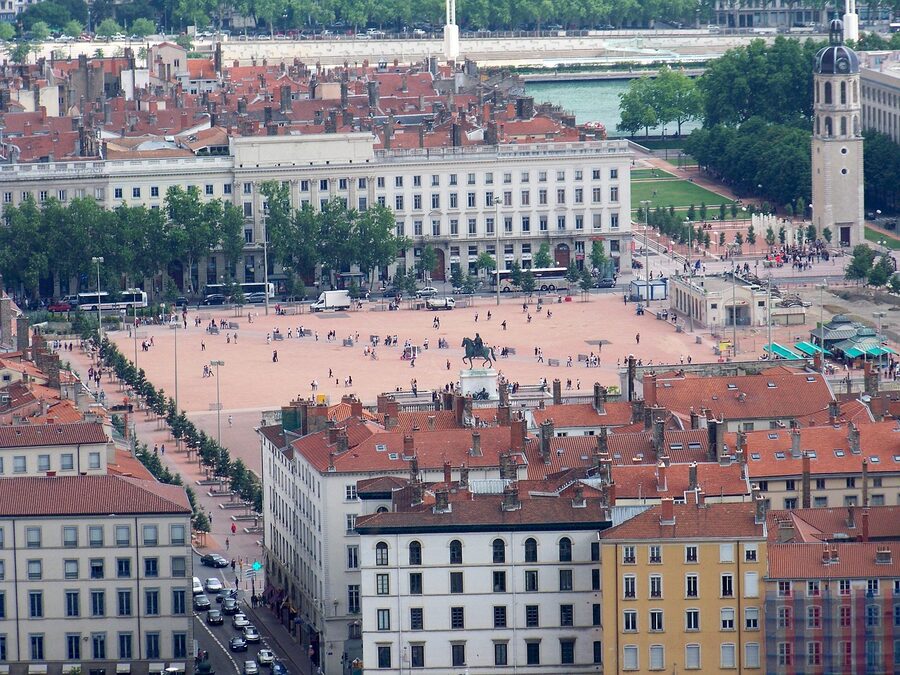
Presqu’île is the long peninsula between the two rivers. From north to south: Hôtel de Ville (the 17th-century town hall), Place des Terreaux (the Bartholdi fountain in the middle, the Musée des Beaux-Arts on the east side), Place Bellecour (the giant central square), Place Carnot, then Confluence at the southern tip where the rivers meet. Walking the whole peninsula end to end takes about 50 minutes.
The Musée des Beaux-Arts is the city’s main fine-art museum, set in a former 17th-century convent. €8. About 7,500 works, with a Rembrandt, two Veroneses, a roomful of Impressionists. Smaller than the Orsay and quieter than the Orangerie. Two hours is enough.
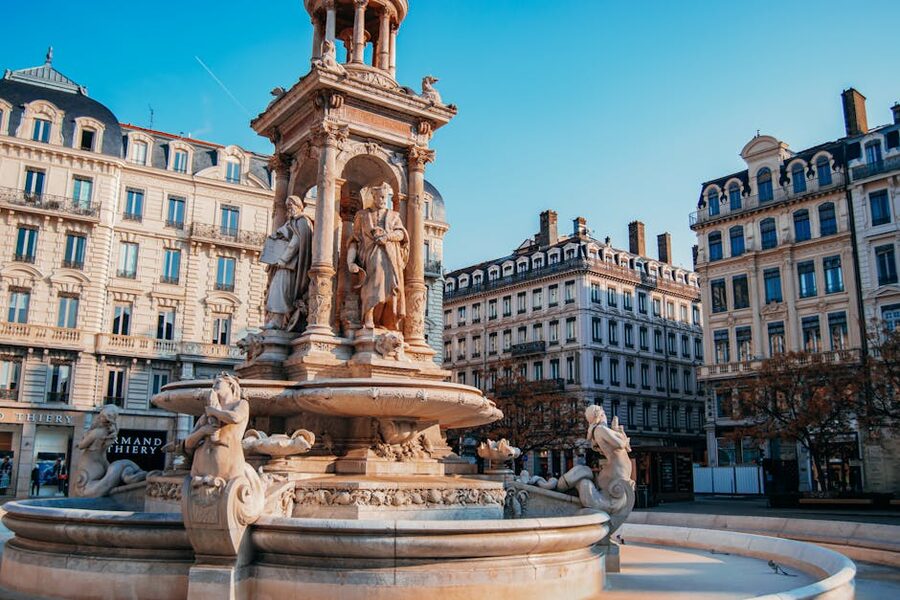
Place des Terreaux has the Bartholdi fountain (yes, the same Bartholdi who did the Statue of Liberty) and the most consistent street-musician scene in town. Around 5pm in summer there’s usually a violin or accordion. Free.
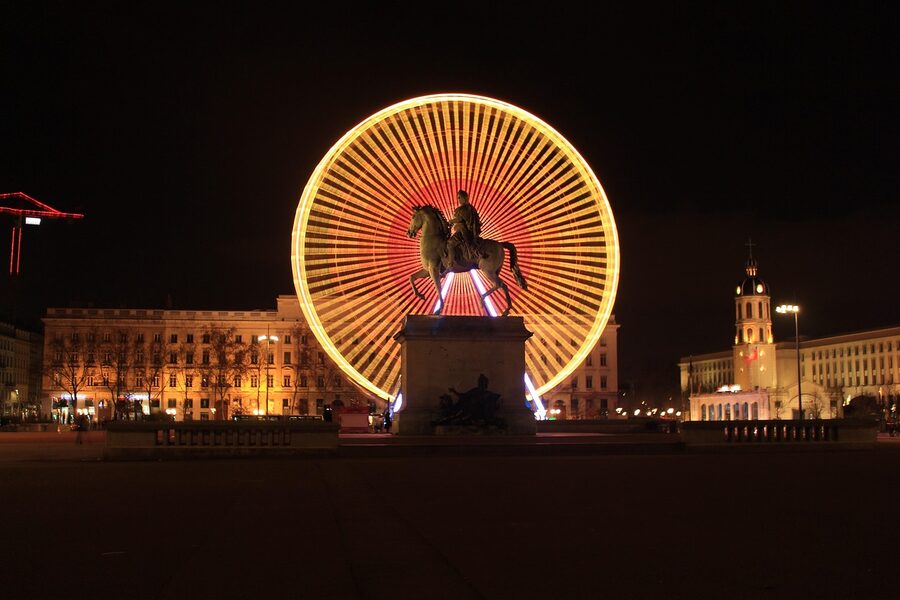
Confluence, at the southern tip of the peninsula, is the modern district. The Musée des Confluences (the silver-and-glass blob shaped like a deconstructed ice cube) sits at the literal point where the Saone meets the Rhone. Architectural marmite. Skip if you’re tight on time. The exhibitions are excellent if you have a half-day to spare and you’re into natural history or anthropology.
Saone vs Rhone: which river to do what on
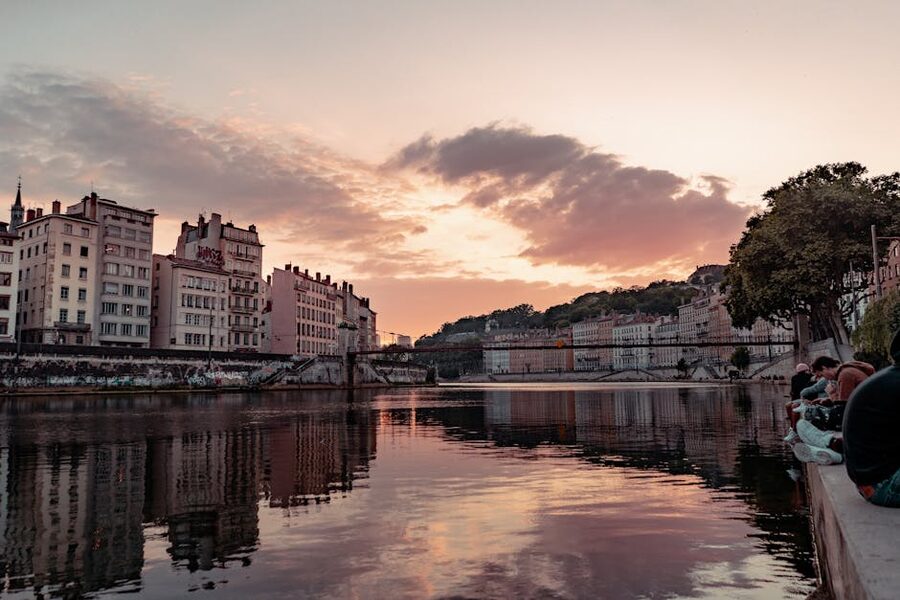
Two rivers, two different jobs. The Saone is narrower, slower, west side of Presqu’île. It runs along the foot of Vieux Lyon. This is the one you cruise on. The 1-hour Saone cruise covers the UNESCO old town front, both Saint-Georges and Saint-Paul, the cathedral steps, and a long look at Fourviere from the water. €17.
The Rhone is bigger, faster, east side of Presqu’île. The Quai du Rhone has the long pedestrian-and-cycle path that Lyon uses for its Sunday-morning runs. Berges du Rhone is the name of the riverside promenade. From May to September there are floating bars (péniches) along the east bank. They serve plastic cups of rosé and the music gets loud at night.
If you only have time for one, walk the Saone in the morning (cooler, prettier) and ride a bike along the Rhone before dinner. The Lyon equivalent of a Seine cruise in Paris is the Saone one, not the Rhone. Don’t get them muddled at the boat office.
How to get to Lyon
Train is the right answer.
- From Paris: 2 hours flat by TGV from Gare de Lyon to Lyon Part-Dieu. Around 30 to 90 euros depending on how far ahead you book. SNCF runs roughly hourly. Cheaper than flying once you add airport transfers.
- From Marseille or Nice: about 1h40 to Marseille, 4h30 to Nice. Lyon sits squarely on the Paris-Marseille spine, which is why most people skip past it. They shouldn’t. If you’re already on the Riviera-Provence-Paris route, plan a one-day stop here.
- From Geneva: 1h50 by train. Switzerland-to-France day trip works.
- By plane: Lyon Saint-Exupéry airport (LYS), 25km east of the city. The Rhonexpress tram from the airport to Part-Dieu runs every 15 to 30 minutes, takes 30 minutes, costs €17. Don’t take a taxi. The tram is faster and a quarter of the price.
Inside the city: get a Lyon TCL day pass (€6.40, valid all metro, tram and bus). Two metro lines and two funiculars cover everything you’ll want. The C funicular is the one that goes up Croix-Rousse (Henon stop). The D line passes through Vieux Lyon.
One day in Lyon, hour by hour
If you’ve got one day:
- 9.00. Coffee and a tarte aux pralines at Pignol or Pralus on Rue Saint-Jean. Both bakeries are five minutes from each other.
- 9.30. Vieux Lyon walk. Cathedral first, then traboules. Hit 54 Rue Saint-Jean, 27 Rue du Boeuf, 9 Place du Change.
- 11.00. Up the Fourviere funicular (Vieux Lyon metro D, then funicular) to the basilica. 30 minutes inside, 20 minutes on the esplanade.
- 12.30. Bouchon lunch. Daniel et Denise on Rue de Créqui or Le Garet. Order quenelle, salade lyonnaise, tarte aux pralines.
- 14.30. Walk down through Place Bellecour to the Saone quay. Board the 15.00 cruise.
- 16.00. Coffee at Place des Terreaux. Optional: 45 minutes at the Musée des Beaux-Arts.
- 17.00. Métro C up to Henon, walk Croix-Rousse, look at the Mur des Canuts, descend through the Cour des Voraces.
- 19.30. Apéro on the Berges du Rhone. Glass of Côtes-du-Rhône. Pre-dinner.
- 20.30. Dinner at Café Comptoir Abel or back to a second bouchon for something light.
- 22.00. Late TGV back to Paris if you’re day-tripping. Or a slow walk back over the Pont Bonaparte to bed.
When to come
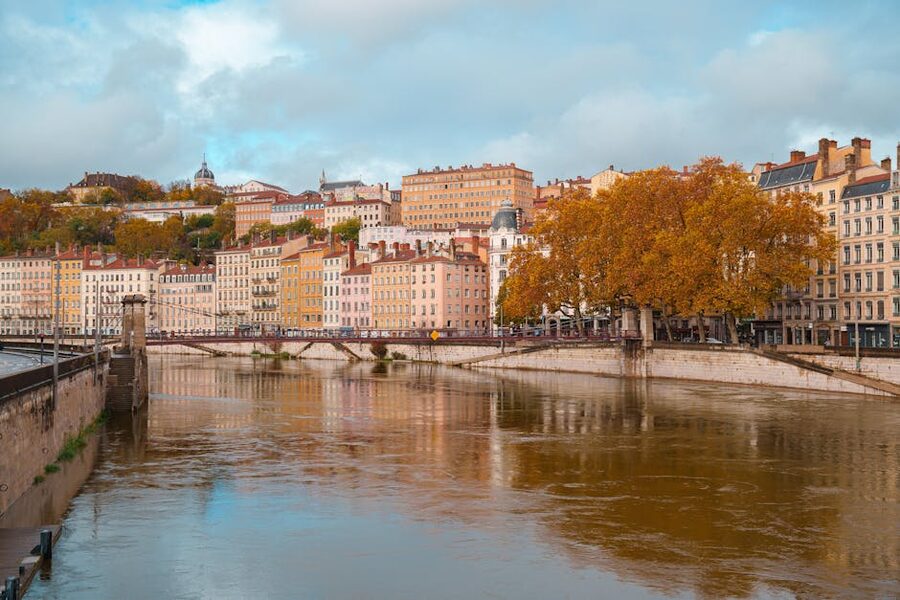
April through October is the safe range. May, June and September are the best months: warm enough to sit outside, the bouchon terraces are open, every museum is on summer hours.
July and August are hot. Lyon sits in a basin between two rivers and the air doesn’t move much. Daytime highs frequently 30°C or more. Many of the certified bouchons close for two or three weeks of August. Plan around it if you can.
December has the Festival of Lights (Fête des Lumières), four nights starting on December 8. The whole city projects light installations onto its main buildings. Five million people show up. Hotels triple in price. It’s spectacular if you book six months ahead and miserable if you don’t.
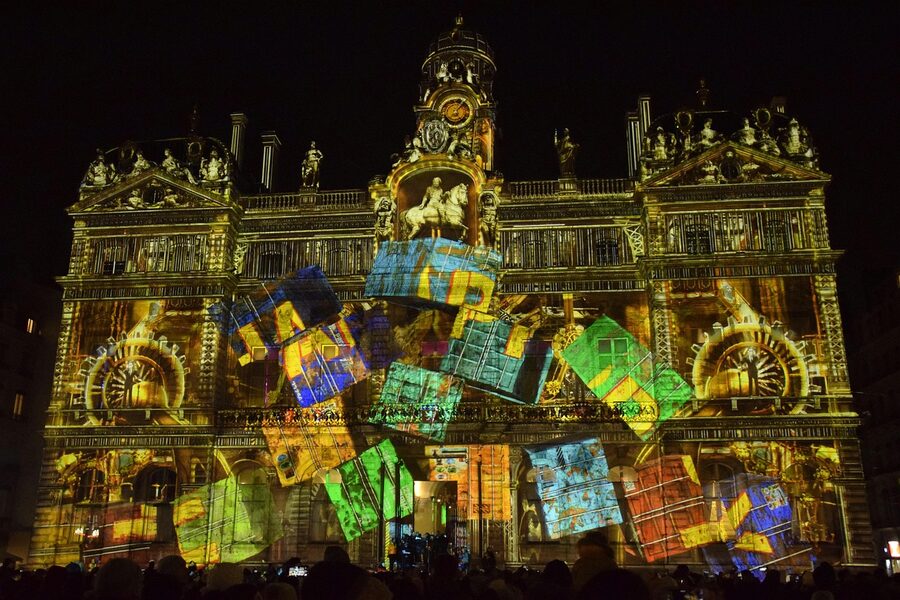
Winter outside the festival is fine. The basilica is gorgeous with snow. Bouchon prices drop. Everything still functions.
What to skip
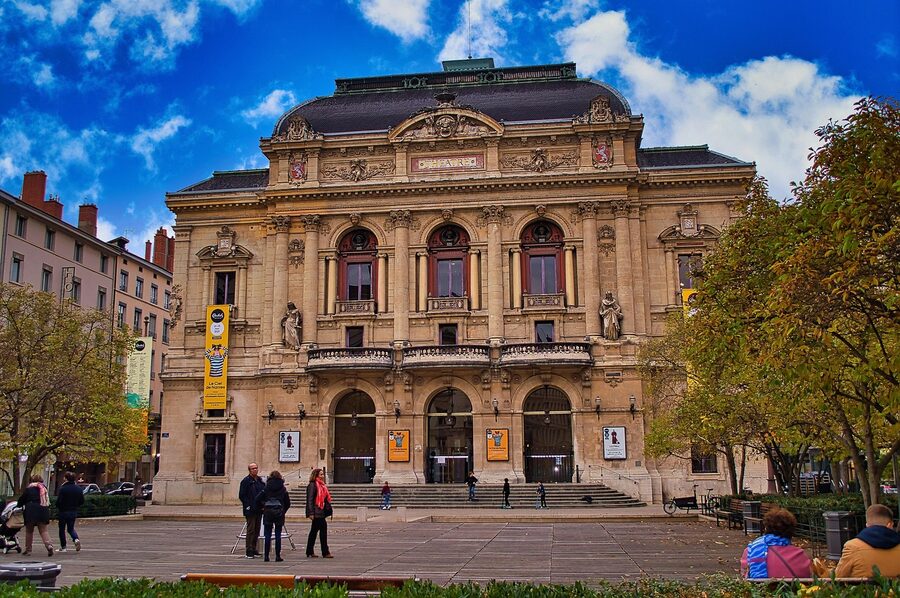
The hop-on hop-off bus. Lyon’s old town is pedestrian-only and the bus can’t get into Vieux Lyon at all. The route circles Presqu’île and a few outer landmarks but skips most of the things you came to see. If you’ve used the Paris HOHO or the Marseille version, the Lyon bus underdelivers compared to either.
The Musée Lumière, unless you specifically care about cinema. Lyon is the birthplace of cinema (the Lumière brothers shot the first film here in 1895). The museum sits in their actual house in Monplaisir, southeast of the centre. Worth an hour if you’re a film fan, skippable if you’re not.
Lyon’s zoo (Parc de la Tête d’Or). It’s a pretty park and a free zoo, but it’s a 20-minute metro out of the centre and you can do nicer parks in any French city. Skip on a one-day visit.
Where to stay if you’re staying
Three options worth knowing:
- Vieux Lyon. Most romantic. You wake up on a cobblestone street. But the noise carries (cobblestones, drunk groups), and the best traboules are 30 seconds from your door at 6am, which means the tour groups are too. Hotel Cour des Loges is the splurge here.
- Presqu’île, near Place des Cordeliers or Place des Jacobins. The most practical. You’re 10 minutes from everything. The food and shopping streets are this side. I’d default to this if it’s a first visit.
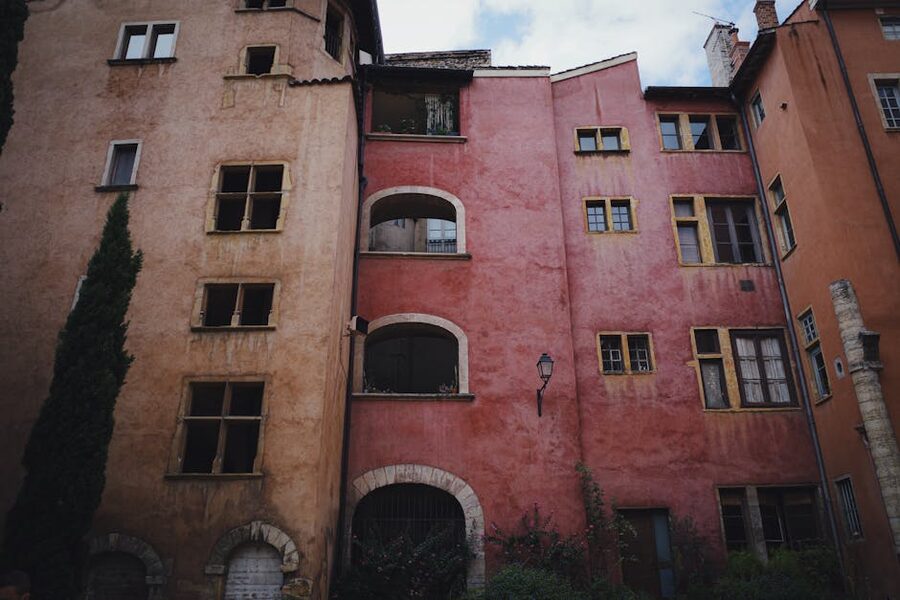
- Croix-Rousse. Quietest, most local. Tall buildings, weaver windows, real bread shop on every corner. A 12-minute funicular plus walk to Vieux Lyon. Stay here second visit.
Don’t stay in Part-Dieu unless you have an early TGV. It’s a business district. There are good hotels but no atmosphere.
Lyon as part of a longer trip
Lyon makes most sense in three trip shapes.
One. The Paris-Provence corridor. If you’re doing Paris plus the south, get off the train at Lyon for one day on the way down. Versailles, then a Lyon day, then Marseille and the Côte d’Azur. The corridor works in either direction. Adding 24 hours of Lyon to it costs you almost nothing in time and gives you the third pillar of French city food.
Two. The wine route. Lyon is the best base for the southern Beaujolais (45 minutes north) and the northern Côtes-du-Rhone (45 minutes south, Condrieu, Côte-Rôtie). Two-day add-on. If you’re already planning a Bordeaux wine trip or a Champagne day trip from Paris, Lyon as the third wine pillar makes a lot of sense. Different grape (Gamay and Syrah here, vs Cabernet Sauvignon in Bordeaux), different scale, different prices.
Three. The mountain pivot. Lyon is the gateway to Chamonix and the French Alps. TGVs from Lyon to Annecy are an hour, to Chamonix four. If you’re doing winter sports plus a city, Lyon plus Chamonix is the logical pair. Loire Valley in summer, Lyon plus Alps in winter.
I wouldn’t pair Lyon with the Saint-Emilion or Bordeaux wine country in the same trip unless you have ten days. It’s the wrong end of France. Save Bordeaux for a separate visit.
The other thing to know
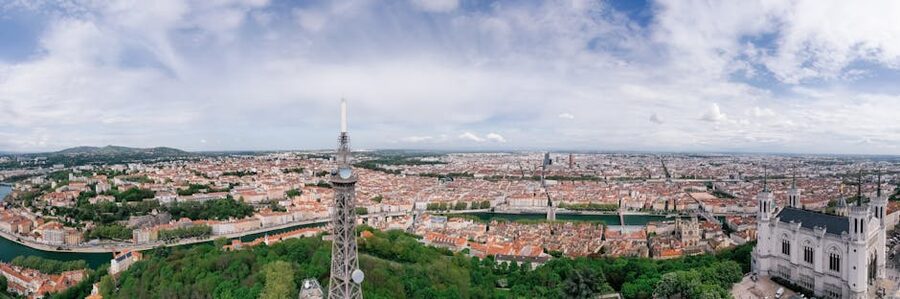
Lyon is the third-largest city in France. Population around 520,000 in the city proper, 2.3 million in the metropolitan area. It’s bigger than Marseille’s centre, comparable to Paris’s per-capita density. The reason most travel writing skips it is that it doesn’t have one trophy attraction, the way Paris has the Eiffel or Florence has the Duomo. Lyon’s strength is depth across categories: food, history, architecture, two rivers, two hills, and a layered story (Roman, medieval, Renaissance, silk-revolt, Resistance, Bocuse) that you can absorb in a single day if you let yourself walk it.
Pick a real bouchon. Walk the traboules. Take the funicular up. Eat a quenelle and a tarte aux pralines, and end on the Rhone with a glass of Côtes-du-Rhône as the sun sets behind Fourviere. That’s the Lyon day. The rest is choosing whether to stay another night and do Beaujolais in the morning.