
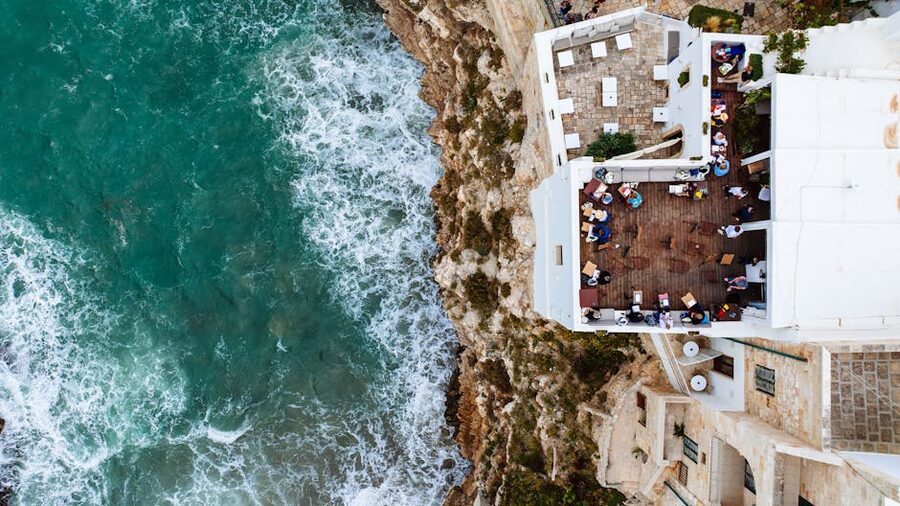
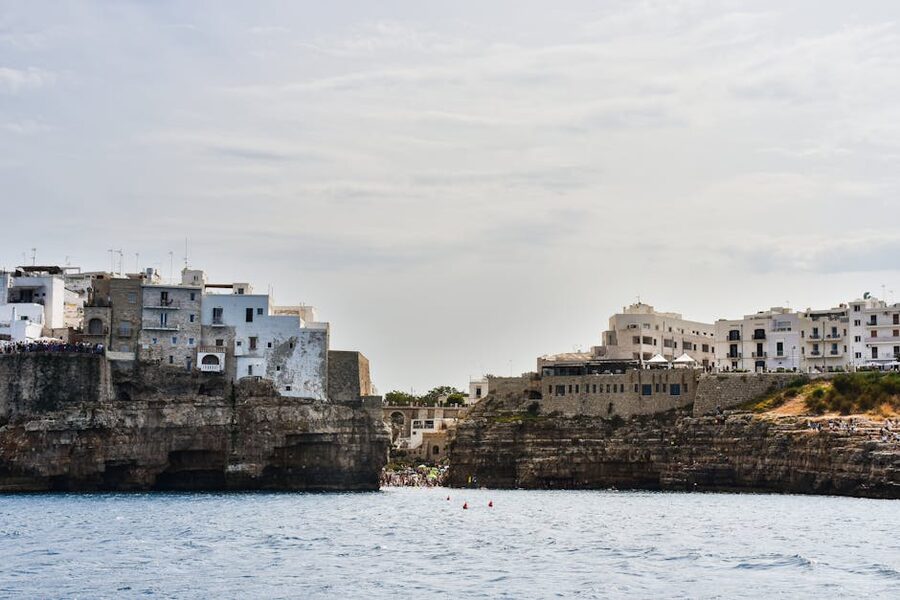
The cliff houses sit twenty-five metres above your head. The boat slows, the engine drops to a putter, and then the bow noses through a gap in the limestone and you’re inside the cove. The open Adriatic was choppy thirty seconds ago. Here it isn’t. The rock geometry has flattened it.
You roll off the side, kick once, and the water is colder than it looked from the boat. Not cold-cold. Just sharp enough to wake you up. The skipper points at the wall above your head where the swallows nest, and you tilt your head back and realise the cliff houses you’ve been photographing from above for two days are exactly where they’re supposed to be in every Polignano a Mare postcard ever taken.
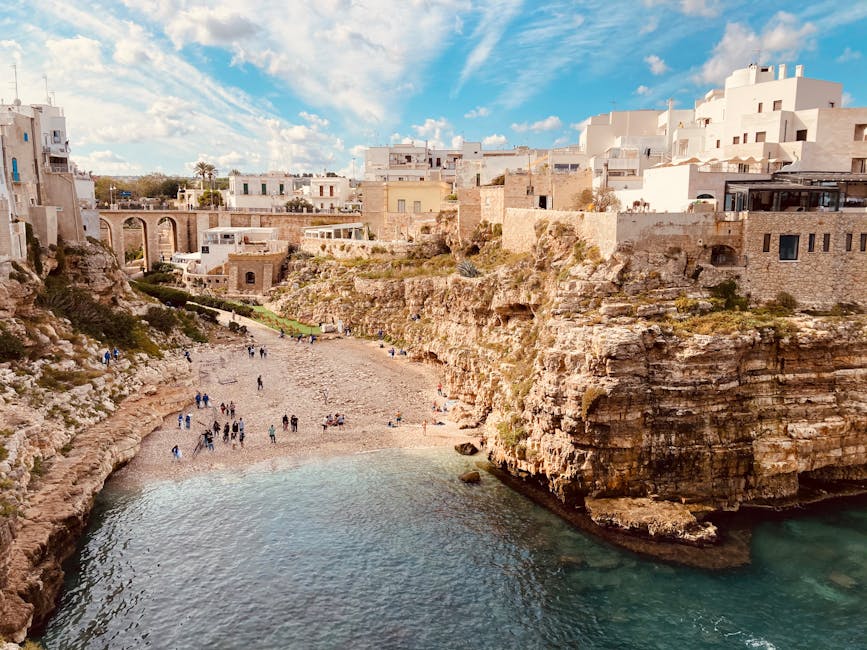
Polignano a Mare is the Apulian postcard town built on top of a limestone cliff on the Adriatic, about 35 km south of Bari. The boat tour is what gets you to the angle that justifies the photograph. Everyone walks the clifftop. Hardly anyone is in the water looking back up.
In a Hurry: Best Polignano Boat Tours
Quick picks
- Speedboat Cruise to Caves with Aperitif ($35): the flagship 2-hour run with a Prosecco stop. Book on GetYourGuide
- Boat Trip with Swim & Cave ($35): shorter 90-minute version, swim time built in. Book on GetYourGuide
- Wooden Gozzo Tour from Monopoli ($59): traditional wooden boat, slower pace, 3 hours. Book on GetYourGuide
What the Boat Actually Shows You
The tour is a coastline tour, not a destination tour. You don’t disappear over the horizon. You hug the cliff line, stop at three or four named caves, drop into the water for a swim somewhere protected, drink an aperitif on the way back. The whole route is maybe two kilometres of coastline.
That doesn’t sound like much. It is.
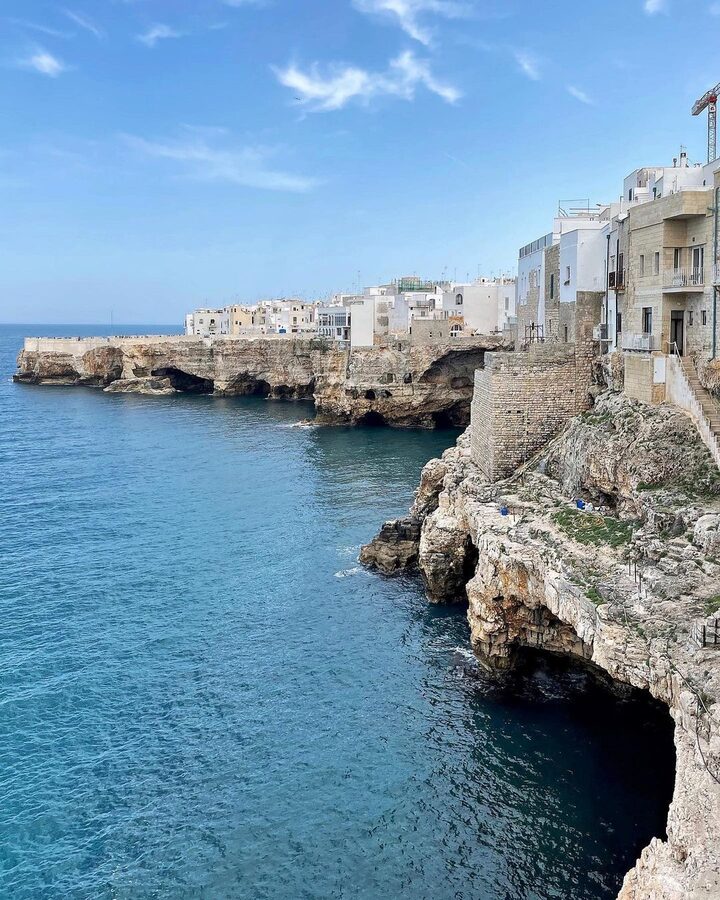
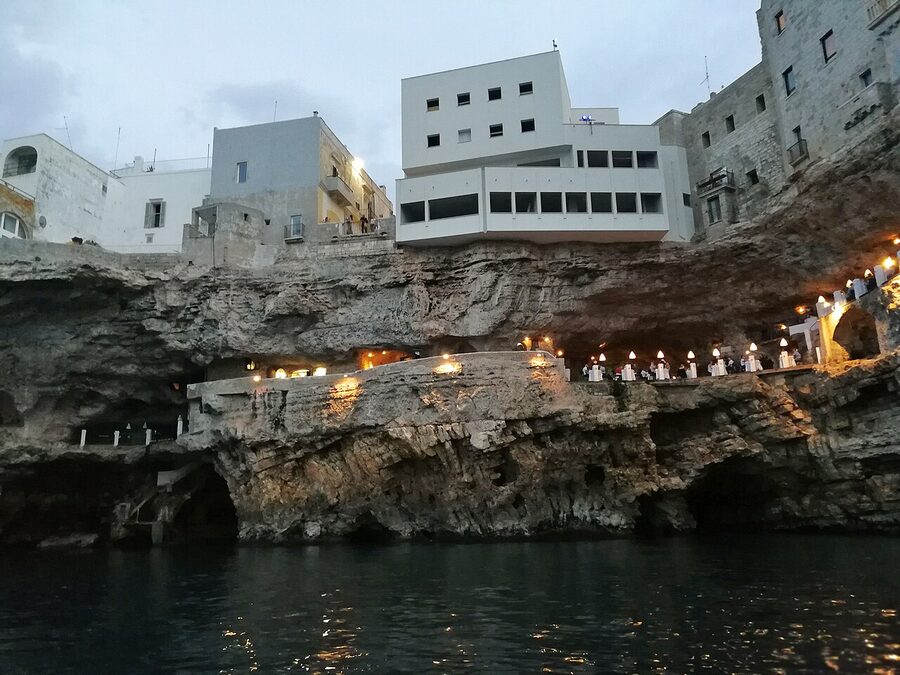
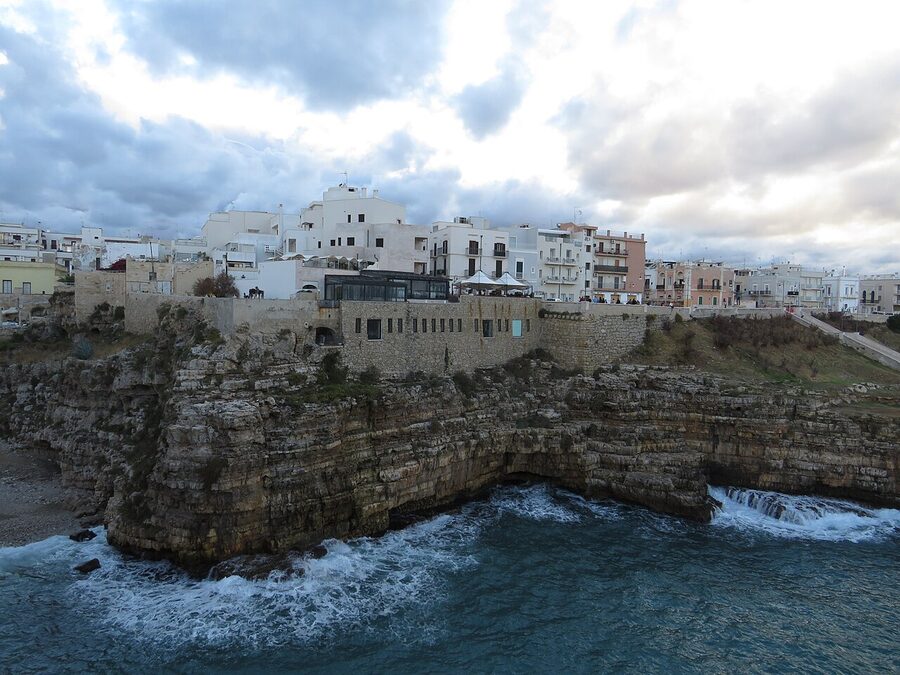
The reason it works is the geometry. Polignano’s cliffs are limestone, eroded by water and by the karst phenomenon (rainwater dissolving the stone from above), and the result is a cliff face full of holes. Some are tiny and you can only fit a kayak through. Some are big enough to steer a small motorboat into and idle for a minute while everyone takes the same photograph, the same low-headroom navigation that captains do on an Amsterdam canal cruise under the Magere Brug bridges. A few were big enough that medieval Polignano built fishermen’s cellars and noble families built balconies into them. One of those balconies became Grotta Palazzese, the cave restaurant you’ve probably seen in a hotel ad. You’ll pass directly under it.
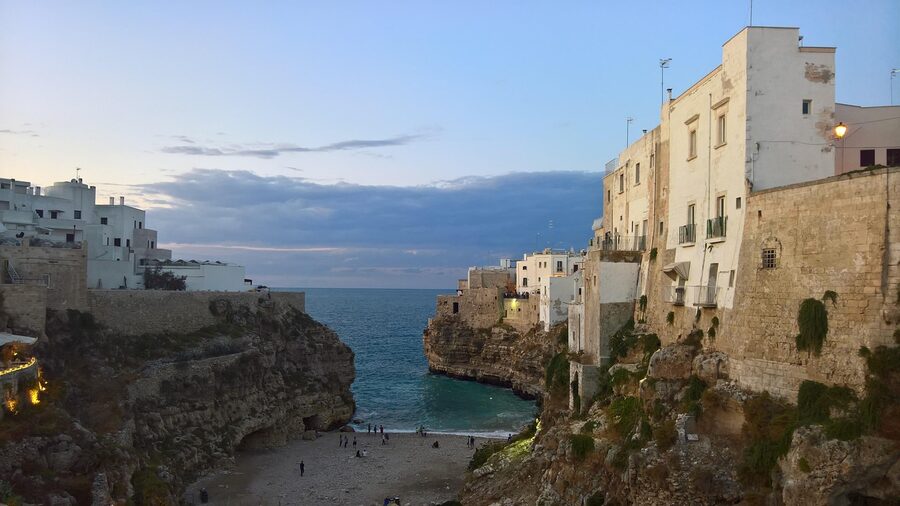
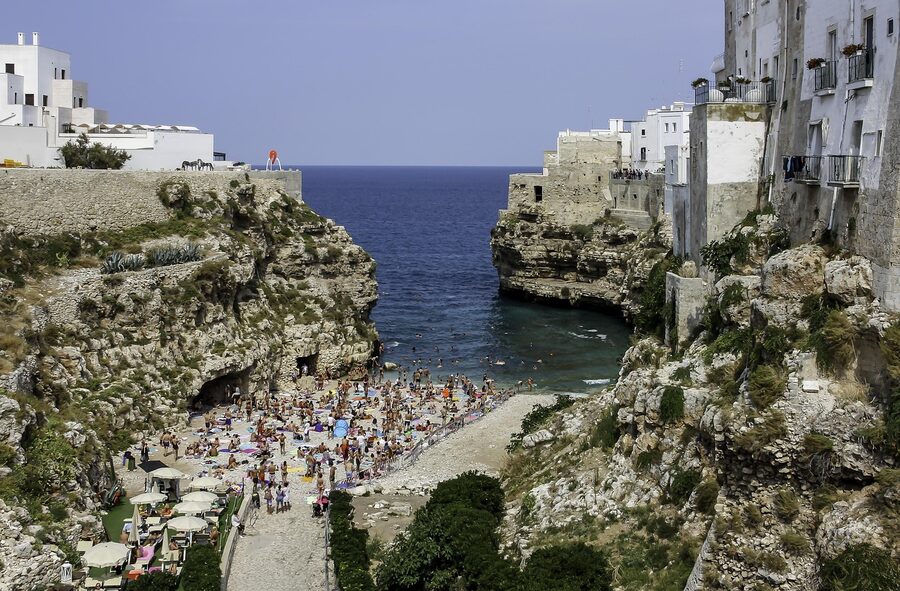
The other thing the boat shows you is the swim spot. Cala Porto, the small beach pinched between two cliff walls at the foot of Lama Monachile (the dry riverbed running through town), looks like a kidney-shaped wedge of sand on a map. From the water it’s the centrepiece of the whole town. You swim back toward the beach with the cliff houses arrayed above you like opera-house balconies, and that’s when you understand why this town keeps showing up on Italian summer lists, in the same coastal-village rhythm that pulls visitors to a French Riviera day from Nice.
The Named Caves: Which Ones Matter
Skippers know about ten named caves along this coast. They’ll usually point out three or four. The ones worth knowing:
- Grotta Palazzese: the famous one. A natural cave with an 18th-century terrace built into it for a noble family’s banquets. Now a hotel restaurant, prices in the “if you have to ask” register. You see it for free from the water.
- Grotta delle Rondinelle (Swallows’ Cave): named for the birds that nest in the rock. A lower, longer cave that the smaller boats drive into and turn around in. Boats stop here for photos.
- Grotta Ardito: bigger, more dramatic, deeper. Some tours swim into it.
- Grotta di Sella: a saddle-shaped opening that’s photogenic at sunset more than at midday.
- Grotta Piana (Flat Cave): lower-ceiling cave that some captains take you into to demonstrate echo. Touristy, fine.
The standard sequence on a 90-minute tour is two or three caves, one swim stop, return. Two-hour tours add a fourth cave or a longer swim. Three-hour tours (the gozzo and the catamaran options) push further south toward the Monopoli coast and add an aperitif stop in open water with the town silhouette in the background. That’s the photo you actually want.
Best Polignano a Mare Boat Tours
I’ve sorted these by what most travellers actually want: the cheap-and-cheerful flagship aperitif cruise, the slightly shorter swim-focused option, and the slow-paced wooden boat tour for people who want something quieter than a speedboat. Prices are 2026 list prices, expect them to climb in July and August.
1. Polignano a Mare Speedboat Cruise to Caves with Aperitif: $35
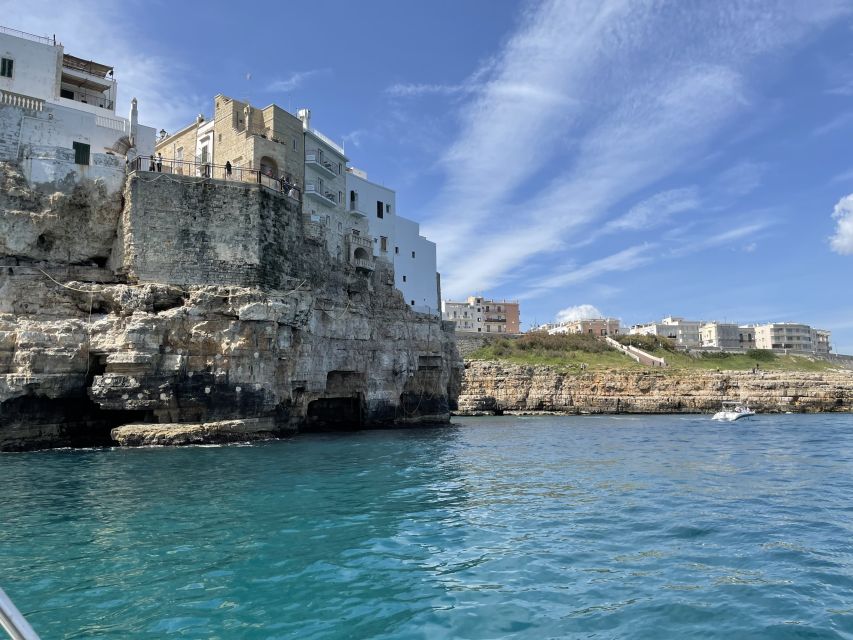
This is the default pick if you’ve never done a Polignano boat tour and want the standard experience without overthinking it. Two hours covers the named caves comfortably and leaves time for a proper swim, and the aperitif is genuine Prosecco rather than supermarket fizz. Our full review covers the small-group cap, the morning slot rationale (afternoon wind picks up), and which dock the boats leave from.
2. Polignano a Mare Boat Trip, Swim & Cave with Aperitif: $35
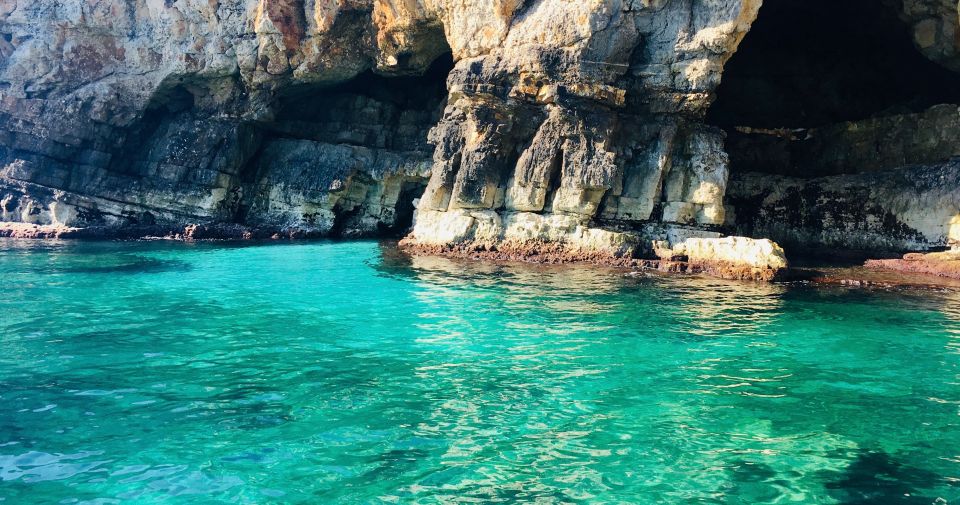
Same price as the speedboat above but a tighter 90-minute window with a guaranteed swim stop and one or two caves rather than three or four. Pick this one if you’re slotting Polignano into a tight day from an Amalfi-direction trip or stopping through on a southern Italy drive. Our review notes the guide tends to be a little more chatty on this version.
3. Wooden Gozzo Tour from Monopoli with Aperitif: $59
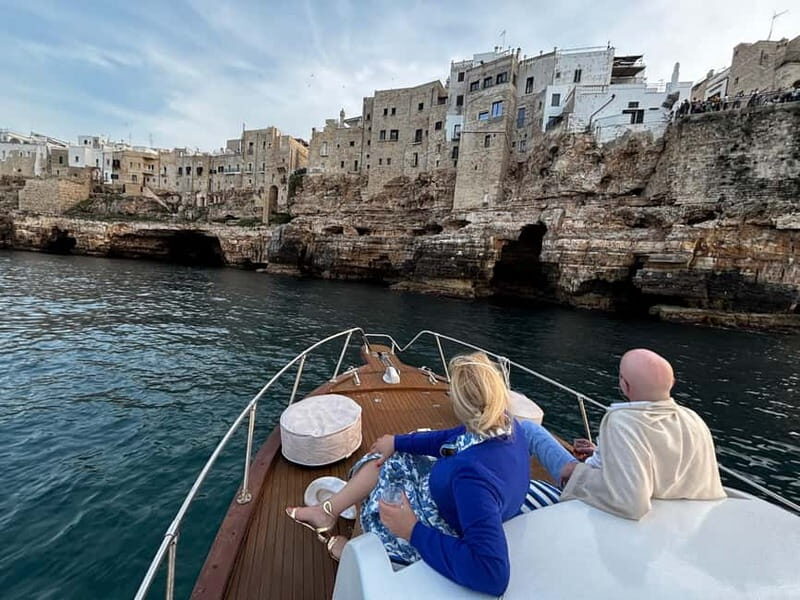
Three hours on a classic wooden gozzo from Monopoli (10 km south of Polignano), cruising at a quarter the speed of the speedboats with room to sit and watch the cliffs go past. Pick this one if you don’t want a speedboat and you’re happy to drive or train south to the launch port. Our review flags that it skews toward couples and older travellers; younger groups might find it slow.
How Polignano Compares to Italy’s Other Boat Towns
If you’ve already done a Capri boat tour, Polignano is going to feel smaller. Capri is a full-day archipelago experience with the Blue Grotto and a separate island to walk on. Polignano is a 90-minute coastal hop from a town you can walk in 20 minutes. That’s not a knock. It’s the difference between an excursion and a thing you do between lunch and a swim.
The closer comparison is Cinque Terre. Both are cliff-village-from-the-water experiences, both are short coastal stretches, and both look better from the boat than from the village (Cinque Terre is a controversial take, but stand on the harbour wall in Vernazza on a busy day and tell me I’m wrong). Polignano’s advantage is that it’s one town and you can actually swim under it. Cinque Terre’s advantage is that there are five towns and a proper hike between them. If you have the time for both on the same trip, do both.
Sardinia’s La Maddalena boat tour is the other obvious pairing. La Maddalena is a full-day archipelago boat with translucent water over white sand; Polignano is a half-morning along a single cliff. Different scales, different moods. La Maddalena is what you do on a Sardinia week. Polignano is what you do on a Bari long-weekend.
And if you’ve done the Borromean Islands hop-on boat on Lake Maggiore, Polignano is the saltwater opposite. Borromean is calm-water islands with formal gardens. Polignano is open Adriatic and limestone caves. Both fit a day. Pick by which water you’d rather swim in.
The Cove Itself: Cala Porto and Lama Monachile
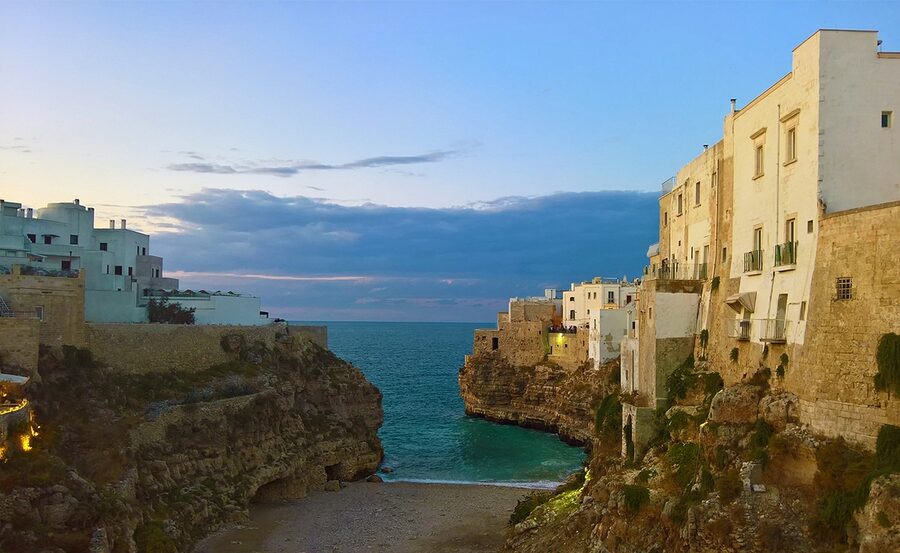
The cove the boat enters is the same one you see from the famous Ponte Lama Monachile bridge above. Lama Monachile is a dry riverbed (a “lama” in Apulian dialect) that cuts through the town and ends at the small beach. The Romans bridged it with a viaduct two thousand years ago. The current bridge is a 19th-century rebuild on Roman foundations.
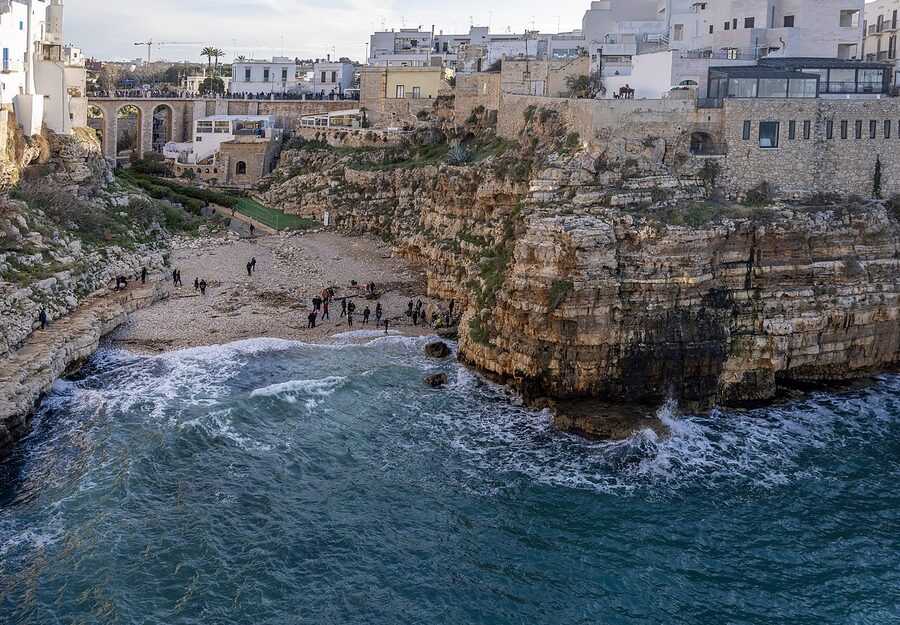
The beach is small. Maybe 80 metres of sand, often very crowded, especially in July and August. From the boat side it looks generous. Get there on land and there’s a queue for towel space. The free part of the beach is genuinely free; the lidos (umbrella-rental beach clubs) start at the cliff edges.
The good news: most of the boat tours drop you back near the beach for a swim, and you can swim toward the sand without ever fighting for towel real estate. You’re already in the water. The towel queue isn’t your problem.
Why the Water Is Different in the Cove
The cove geometry creates a circulation pattern. The two cliff walls funnel waves and the floor is a mix of sand and rock. This means: warmer water than the open Adriatic on a hot day, calmer water on a windy day, and (some days) a slightly milky tinge from suspended sand. The clarity peaks in late morning when the sun is high and the wind hasn’t built yet.
If you’re picking a tour by water clarity, book the morning slot, the same calm-water-then-wind pattern you meet at the cliff-edge boardwalk on a Caminito del Rey morning in Andalusia. If you’re picking by light for photography, book the late afternoon. Sunset slots exist (the Spritz-at-sunset variant) and they’re the most photogenic but the swim is colder.
The Cliff Diving Story
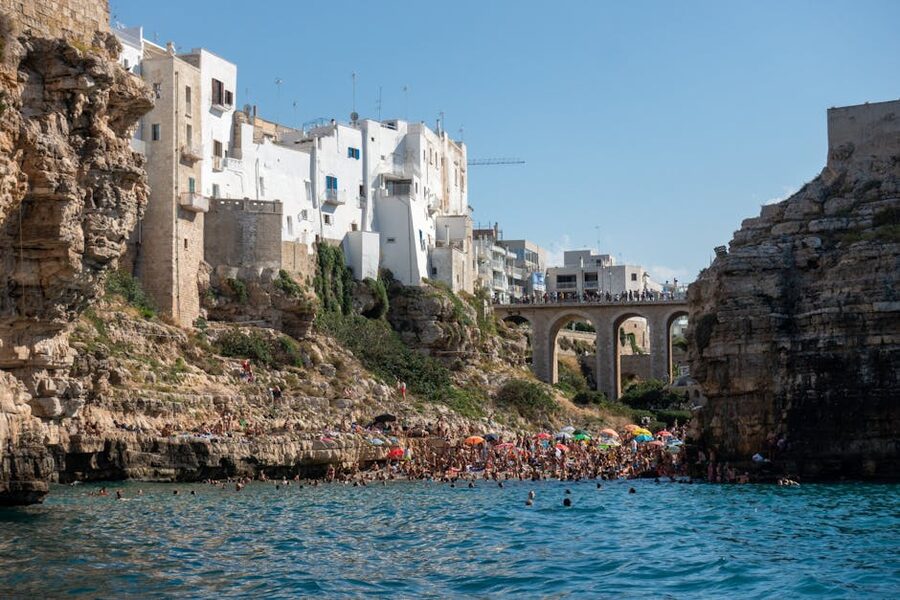
Polignano hosts a stop on the Red Bull Cliff Diving World Series most summers. The platform sits on top of the Bastione Santo Stefano (the southern wall of Cala Porto) at about 27 metres. Divers come off the platform, fall for nearly three seconds, and hit the water at around 85 km/h. The crowd watches from boats anchored in the cove and from the bridge above.
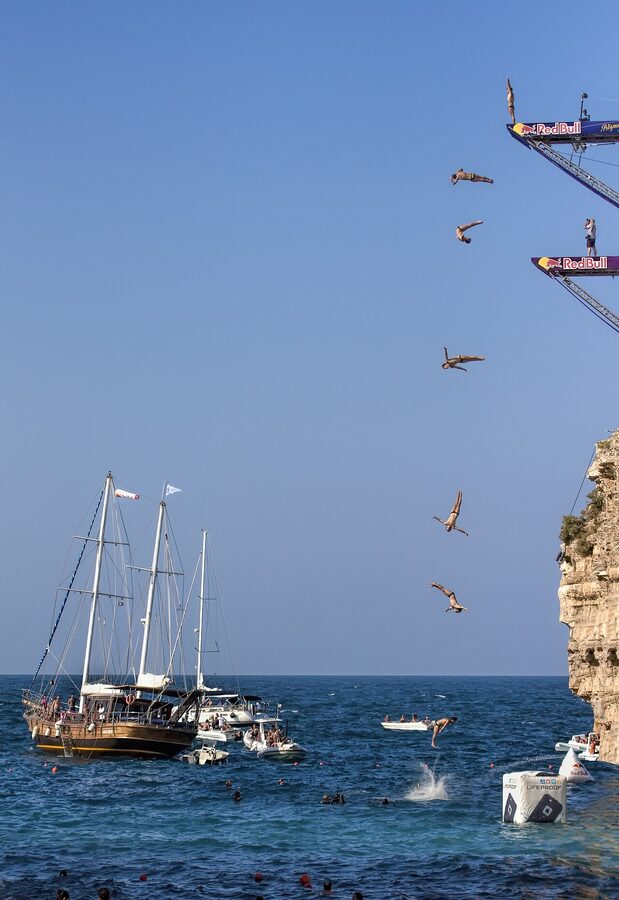
If you’re in town the week of the event, the boat tours run “spectator” cruises that anchor in the cove during the dives. They cost more, sell out fast, and if you don’t have one you’ll be watching from a clifftop crowd six deep. Book months ahead if this is the trip.
The rest of the year, the platform is gone and the cove is just the cove. The diving itself, watching local kids do their version of it from a 5-metre rock outside the official platform, happens all summer. They charge nothing, dive less spectacularly, and are arguably more fun to watch. The boat captains will sometimes pause near the local diving rock and let the kids show off.
Practical Booking Notes
Tour Length: How Long You Actually Want
Most operators run 60-minute, 90-minute, 120-minute, and 3-hour options. The 90-minute tour is the sweet spot for most people. Long enough to see the named caves, short enough that you don’t get sun-burned to a crisp. Sixty minutes is a touristy rip-off (you barely get to the second cave before you’re heading back). Two hours is genuinely better if you want a proper swim. Three hours is for couples who want to slow down or for people pairing it with the gozzo’s slower cruising speed.
Group Size and Boat Type
Speedboat group tours pack 8 to 12 people on a single boat. Private speedboat charters take 4 to 8 and let you steer the itinerary. Wooden gozzo tours seat 10 to 12 in a slower, lower-profile boat. Catamarans hold up to 20 and are the platform of choice for sunset Aperitivo cruises. None of these is wrong; the question is whether you want intimate (private speedboat), atmospheric (gozzo), or social (catamaran).
What to Bring
- A swimsuit under your clothes. Changing room on the boat is the size of a phone box, if it exists.
- A waterproof phone case. The cliff-house photos are the keeper, and you want them from the water.
- Reef-safe sunscreen, applied before boarding. The boat doesn’t have shade.
- A light cover-up for the ride back. The wind picks up.
- Cash for tipping the skipper if they’re good. €5–€10 per person is standard.
What you don’t need: a snorkel mask. The visibility is decent but not Sardinian, and the boats often supply masks anyway. If snorkelling is your priority, pick the snorkelling-specific tours rather than the standard cave runs.
Departure Points
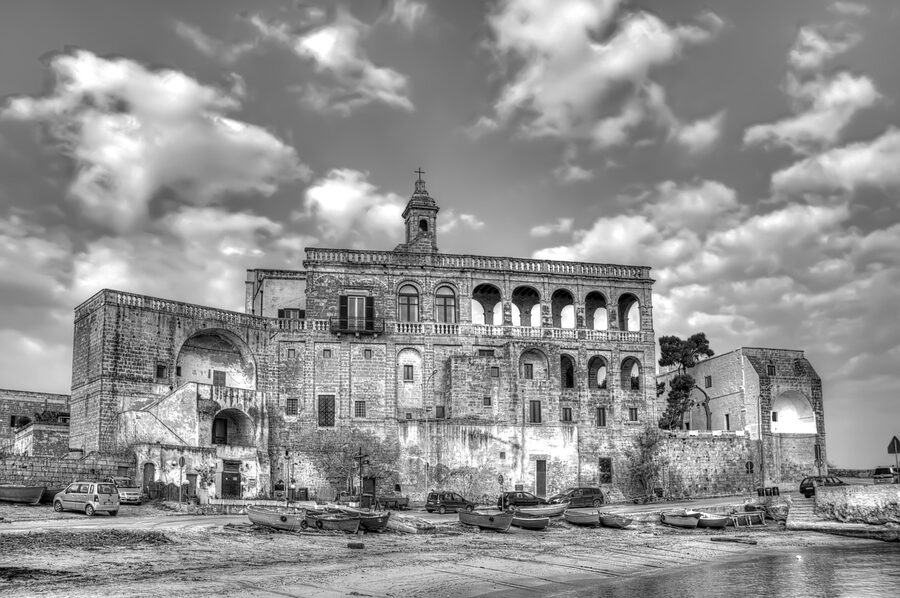
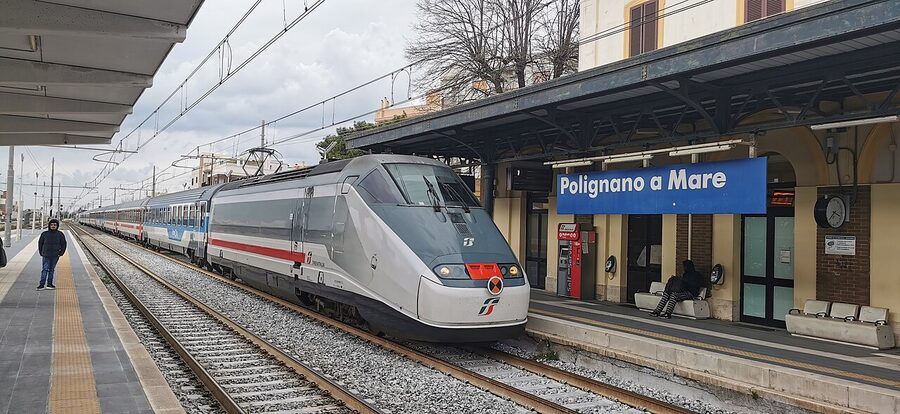
Most Polignano boats leave from San Vito harbour, a small port about 1 km north of the old town. There’s a free shuttle bus from the train station for many operators; check when you book. The Monopoli gozzo tours leave from Monopoli’s marina, which is its own day if you don’t have a car (the train from Polignano to Monopoli is 6 minutes and runs every 30 to 60 minutes).
Cancellation and Weather
Apulia gets sirocco winds in late spring and summer afternoons. If the wind is over force 4, the boats don’t run. Most operators offer free rebooking in bad weather; GetYourGuide and Viator’s “free cancellation up to 24 hours” applies, but if the operator cancels for weather you should get a same-day reschedule. Don’t pre-book five activities for the same day in Apulia. Build slack into your schedule.
How Polignano Got Famous (A Brief History)
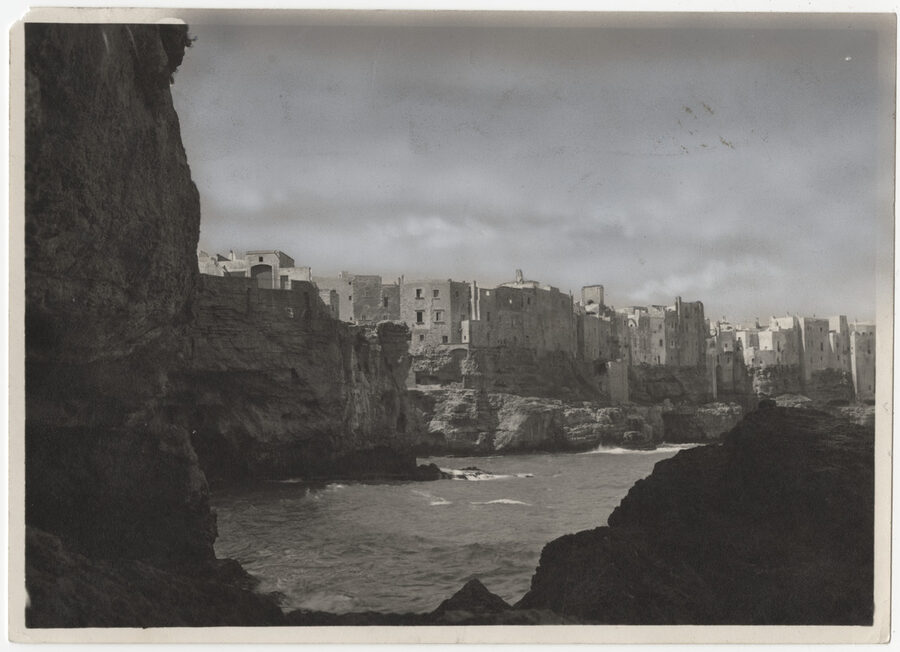
Polignano sits on a Greek-Roman foundation. The town was Neapolis on Roman maps, a small fishing port on the Via Traiana between Bari and Brindisi. The Roman bridge across Lama Monachile was part of that road. The cliff houses you see now are mostly 17th and 18th century, built on top of older medieval structures, which were built on top of older Roman structures, the same vertical heritage stack that built the white-painted hill towns visited on a Ronda and white villages day from Seville. Polignano is one of those places where every cellar is older than every house.
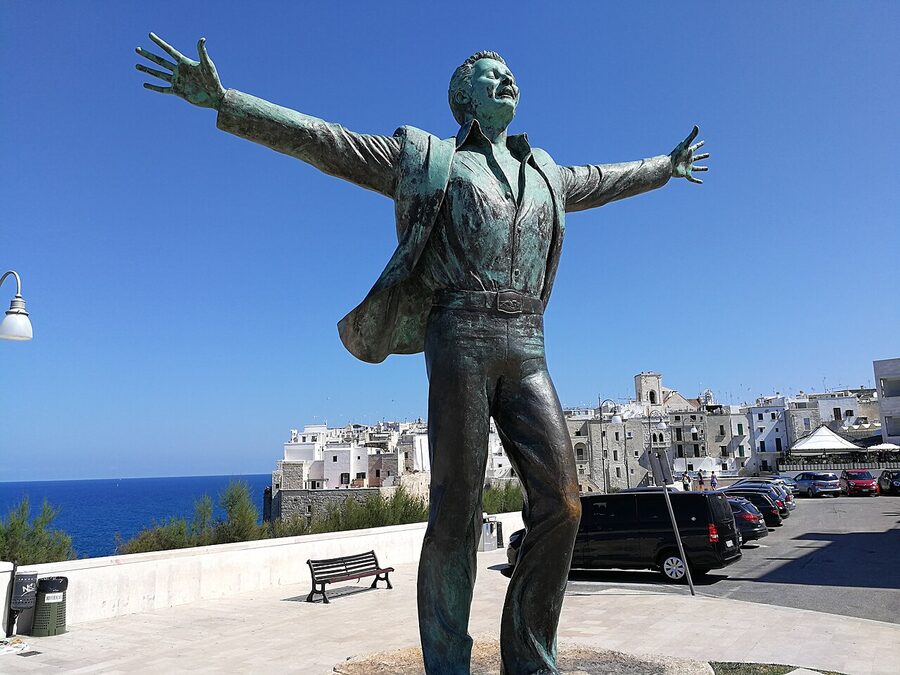
The town’s modern fame is partly down to one song. Domenico Modugno, who wrote and sang “Volare” (the most globally famous Italian song, the one that won the 1958 Eurovision and got covered by everyone from Dean Martin to David Bowie), was born in Polignano in 1928. The town has a bronze statue of him on the seafront with arms spread, mid-song. You’ll pass him from the boat on the way back to harbour.
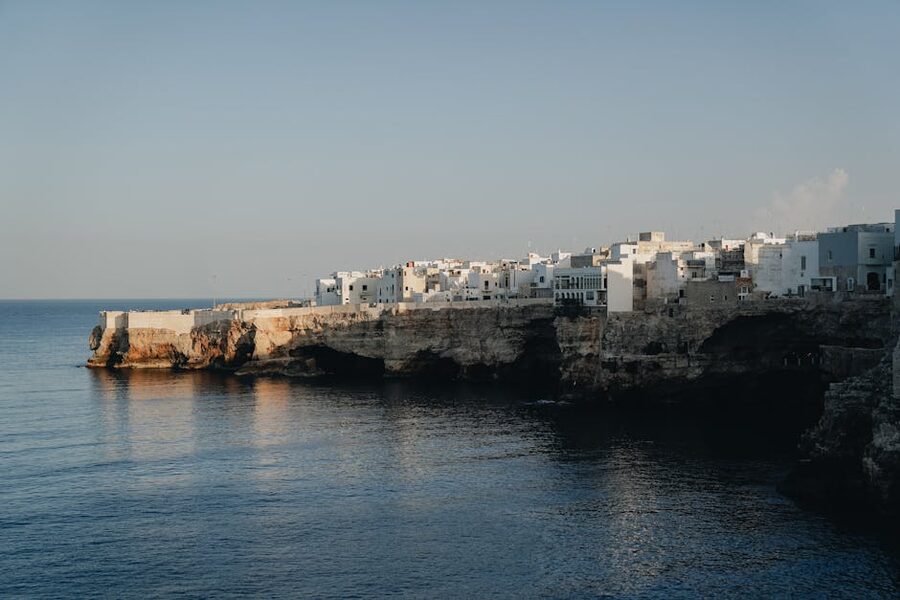
The tourism explosion is recent. Until about 2010, Polignano was a quiet southern-Italy summer town that Italians knew about and almost no-one else did. Then a few Instagram-era photos of Cala Porto went viral, the cliff-house view became one of those mandatory Italy shots, and the town’s centre is now genuinely crowded between June and September. The boat tour is partly a workaround for that. The cove is less crowded from the water than the bridge is from above.
Pairing Polignano with the Rest of Apulia
Polignano alone is not a trip. It’s a day, maybe two if you stay overnight. The boat tour fits inside half a morning, leaving most of a day for one of these:
- Alberobello (45 minutes inland by car): the town of trulli, the cone-roofed stone houses. Most tours combine Polignano + Alberobello as a Bari day trip.
- Monopoli (10 minutes south by train): a slightly larger old town with its own old port and far fewer tourists than Polignano. Good lunch.
- Bari (35 minutes north by train): the regional capital. The old town (Bari Vecchia) is a maze of street pasta-making and a cathedral with the bones of Saint Nicholas (yes, Santa).
- Matera (90 minutes by car): the cave city in Basilicata, an hour and a half inland. Our Matera Sassi guide covers the half-day visit. Doable as a day trip from Polignano if you start early.
- Lecce (90 minutes south): the baroque city of southern Apulia. Different feel; less crowded, the kind of slow-baroque town that travellers also chase via a Sainte-Marguerite ferry from Cannes for the same off-the-main-drag energy.
If you’re working out a southern-Italy two-week trip, Polignano fits naturally between Naples (the volcano coast: see our Vesuvius from Pompeii and pizza in Naples guides) and Sicily, with Apulia as the calmer middle section. The boat tour is your “we did the postcard” moment; the rest of your time gets spent in the trulli, in Lecce, in Matera.

Best Time of Year for the Boat
The boats run mid-March to late October, with most operators tightening to mid-April through early October for guaranteed daily departures. Within that window:
- May and June: best balance of warm water (around 21–23°C), light crowds, calmer afternoons. My pick.
- July and August: peak summer, water 25–26°C, crowds heavy, prices climb 15–25 per cent. Sirocco days kill afternoon tours.
- September: water still warm, crowds tail off after the second week, light is gold. Strong second pick.
- October: water dropping (18–20°C), some operators stop daily runs, but the light is incredible and the town empties out. Bring a light wetsuit if you actually want to swim.
- November to March: nothing runs. Polignano in winter is a quiet town that goes back to being itself.
Hour of the Day
Three slots run on most days: morning (9:30 or 10:30), afternoon (around 2:30), and sunset (around 6 in summer). Morning has the calmest water and clearest visibility. Afternoon is the most likely to be cancelled for wind. Sunset is the most photogenic and the most expensive.
If I had to pick one slot: 10:30 morning. Water still calm, sun high enough to read the colour through the cliff-cove water, time to grab a granita di limone afterwards in town.
What the Boat Tour Doesn’t Get You
The boat tour gets you the cove, the named caves, the cliff-house view from below, and a swim. What it doesn’t get you:
- The dives off the cliff (most boats keep a respectful distance from where the local kids dive).
- Inside Grotta Palazzese the restaurant (you see the cave; the dining terrace is members-only).
- The town walk. Polignano old town is small but worth an hour after the boat. Statues, sea-view balconies, gelato, Modugno’s house.
- A serious snorkel. The visibility is fine but Sardinia and Capri are clearer.
This isn’t an “instead of walking the town” experience. It’s an “as well as walking the town” experience. Plan for both.
If You Have More Italy Time
Polignano fits naturally with two other Italian boat experiences. Venice’s Murano-Burano-Torcello loop is the equivalent in the Adriatic’s far north. A different kind of water (lagoon, not open sea), a different kind of town (a millennium of trade history rather than a fishing-village glow-up), but the same logic of “see this place from the water”. The other parallel is a gondola ride on a Venice canal. A much shorter water moment, but the same idea of perspective. Polignano sits between those two as a southern Italy answer to “what’s the boat for here?”.
If you’ve come this far south, the volcanic coast is the obvious next move. Etna from Catania is a Sicily day trip; Pompeii from Naples is the archaeological half-day; the Amalfi Coast is the western-side answer to Polignano’s eastern-side cliff towns. Three different southern Italys. The Adriatic side (Polignano, Bari, Lecce) is the quietest of the three. That’s why people who keep coming back to Italy keep coming back to Apulia.
Frequently Asked Questions
Do I need to book the boat tour ahead?
In May, June, September, October, usually no. You can book day-of for morning slots. In July and August, yes: three to seven days ahead, especially for weekend slots. The 9:30 morning slot is the first to sell out.
Is the boat tour kid-friendly?
Yes for ages 5+. Most operators provide kid-sized life jackets. The speedboats can be bouncy on a windy day; the gozzo and catamaran are smoother. Kids generally love the cave entries and the swim.
Can I swim into the caves myself instead of taking a boat?
You can swim out of Cala Porto and reach a few of the smaller caves, but the famous ones (Grotta Palazzese, Grotta delle Rondinelle) are 1.5 to 3 km along the cliff and the local current is strong enough that this isn’t a casual swim. There are kayak rentals at Cala Porto for around €15 an hour if you want a self-paddle option, but you won’t get inside the caves the way a boat does.
Is there parking in Polignano?
Limited and paid (€2 per hour in the summer, often full by 11am). The train station is a 12-minute walk from Cala Porto and the train is genuinely faster than driving from Bari. If you’re staying in Bari, take the train.
Will I get seasick?
Usually no on a calm day. The route stays close to the cliff and there are no long open-water stretches. If you’re prone to seasickness, the gozzo and catamaran are gentler than the speedboats, and a morning departure is calmer than an afternoon one.
What about a private charter?
Private charters run €250–€500 for 90 minutes for up to 6–8 people, depending on operator and season. They’re worth it for groups of 4+ where the per-person cost actually matches a group tour. They let you set the pace and stop where you want. If you’re a couple, a group tour is fine; if you’re a family of 5, a private charter often works out cheaper.
Worth Booking?
Yes, but pick the 90-minute or 2-hour version, do it in the morning, and don’t expect a full-day excursion. The boat tour is the small specific thing that makes the rest of your day in Polignano sing. The town walk afterwards (Modugno statue, the bridge view down into the cove, a granita on Piazza Vittorio Emanuele) is the second half. The lunch (orecchiette and a glass of Primitivo somewhere with a sea view) is the third. The boat is the part you’ll actually remember.
You came to Apulia for the postcard town on the cliff. The boat is what gets you inside the postcard.