
“Don’t book the early boat for the photo,” the skipper told me at the Palau marina, tying off a fender. “Book the second wave. The first boat to Spiaggia Rosa rounds the headland in shadow. By the time the second one arrives the cliff face is lit, and the water turns that colour you came here for.” He pointed at his radar screen, then at the wind sock above the harbour office. “And if it’s blowing more than fifteen knots from the north, skip Budelli today and ask for Cala Corsara instead. You’ll thank me.”
That was my fourth trip to Sardinia and the first time anyone framed the boat tour as something you could choose well or choose badly. Most articles flatten La Maddalena into one experience. It isn’t.
In a hurry? Three picks for boating La Maddalena from Palau
- Full-Day Archipelago Boat Tour ($59): the most-booked tour in the Palau lineup. Group boat, six to seven hours, several swim stops. Good if you want the standard route at the standard price.
- Palau: Full-Day Trip by Boat ($59): same price tier, leaves directly from Palau marina rather than the Sardinia mainland coast. Pick this one if you’re already staying in Palau or Porto Pollo and don’t need pickup.
- Palau Catamaran Tour with Lunch ($184): the splurge. Smaller group on a catamaran, lunch and drinks included, the kind of day where you can nap on the trampoline net between stops.
What the boat tour actually does
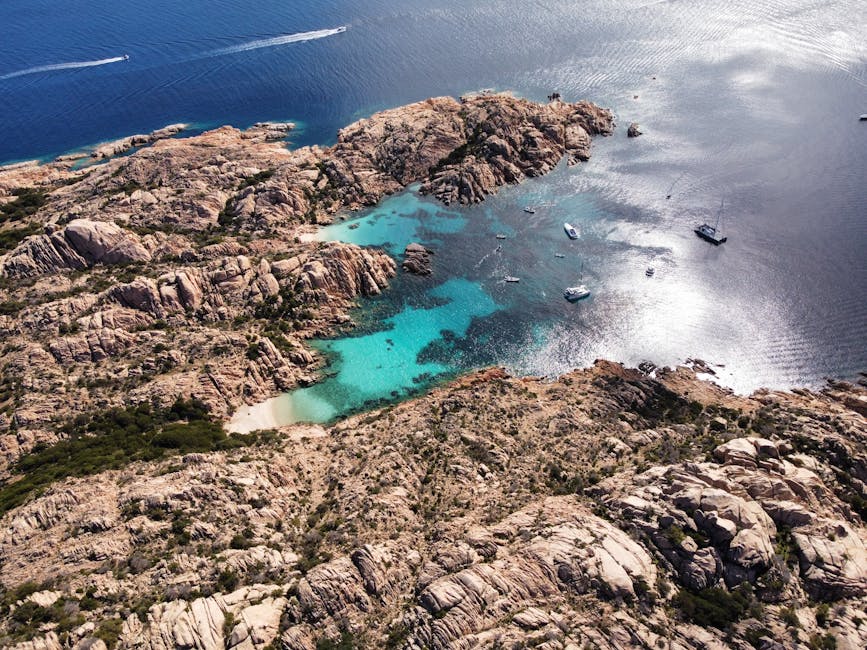
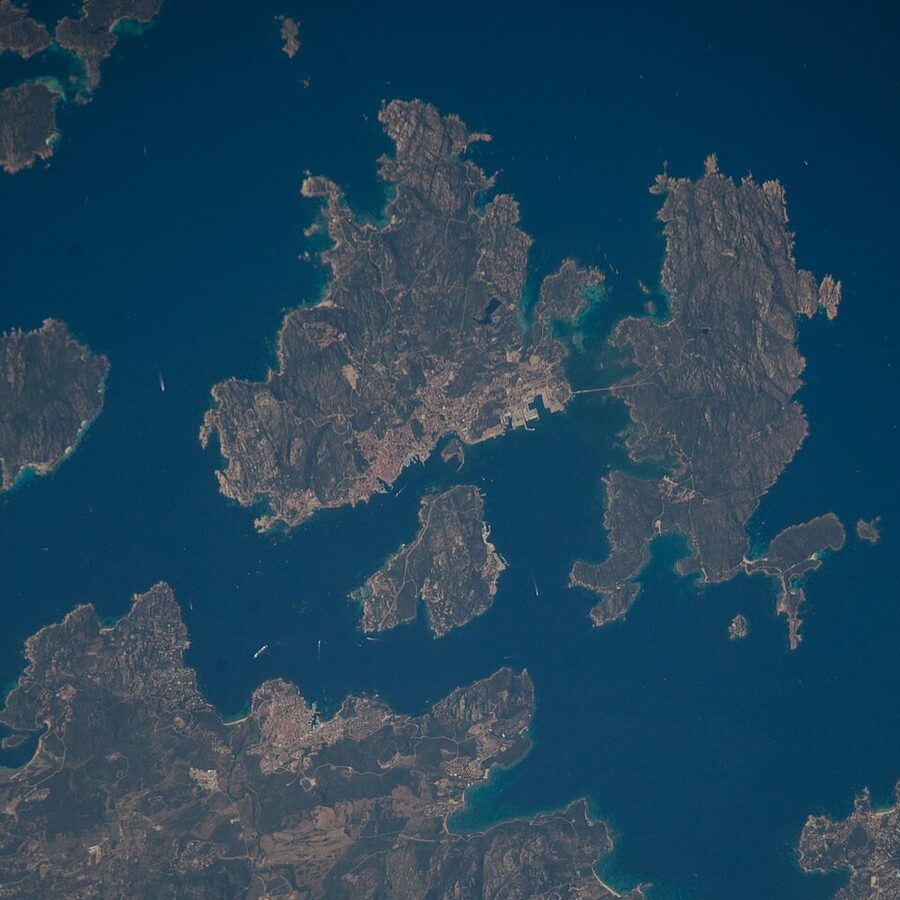
The La Maddalena archipelago sits in the strait between northern Sardinia and Corsica, the same stretch of water that captains work from an Ajaccio boat tour on the Corsican side. Sixty-two islands, by the official count of the national park that was created around them in 1994. Seven main ones (La Maddalena, Caprera, Spargi, Budelli, Santa Maria, Razzoli, Santo Stefano) and dozens of granite islets that the tour skippers know by name, by mooring, and by which way they shelter you from the wind.
The boat tours leave from a handful of harbours along the Costa Smeralda. Palau is the main one, and the one most travellers reach first. From Palau marina, you’re inside the national park within fifteen minutes of casting off. Compare that to leaving from further down the Sardinian coast, where you can spend ninety minutes just getting to the archipelago, and Palau’s appeal is obvious.
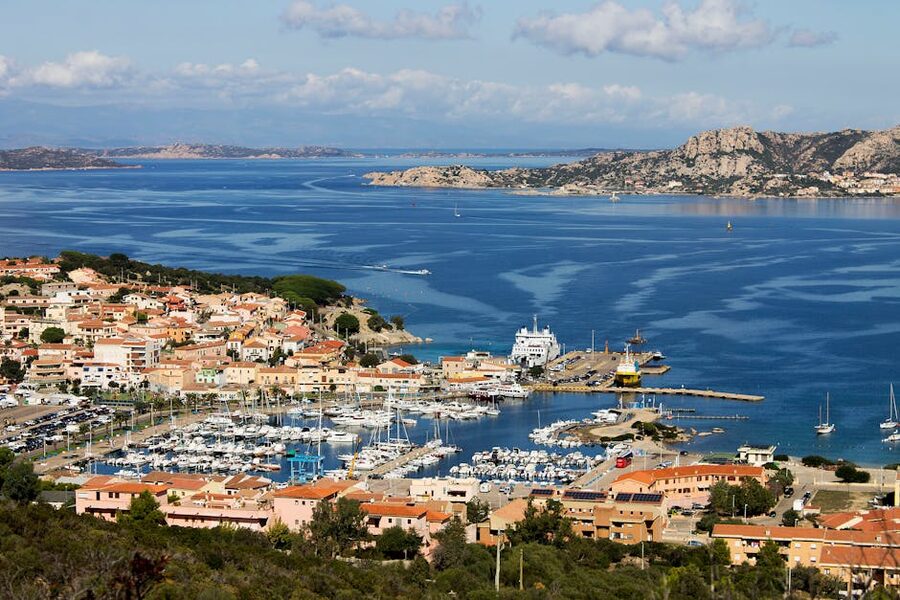
What you actually do on a typical full-day tour: the boat leaves Palau around 10:15, threads east through the channel between La Maddalena island and Caprera, and starts dropping anchor at swim stops. Most full-day group tours hit three to four stops. Spargi’s coves are usually first because they’re closest. Then Budelli, where you’ll see the famous Spiaggia Rosa from the water (you can’t land on it, more on that later). Then Santa Maria, which is the only stop where most boats let passengers actually step ashore and walk on a beach. Then a stop at La Maddalena town for an hour, and back to Palau by 17:00 or 17:30.
That’s the standard product. The variations are: how big is the boat, what’s the lunch, and which captain has read the wind correctly today.
The seven islands you’ll hear about
If you skim the tour booking pages, the same names keep coming up. Here’s what each one actually is, in the order you’re most likely to see them.
Spargi: cala corsara, cala granara, and the wild boars
Spargi is uninhabited except for the wild boars, which is something I didn’t expect to write in a boat-tour article. They’ve adapted to tourists. On Cala Corsara and Cala Granara they come down to the beach and try to steal whatever you brought ashore in your beach bag. Locals find this funny. Tourists with sandwiches find it less funny.
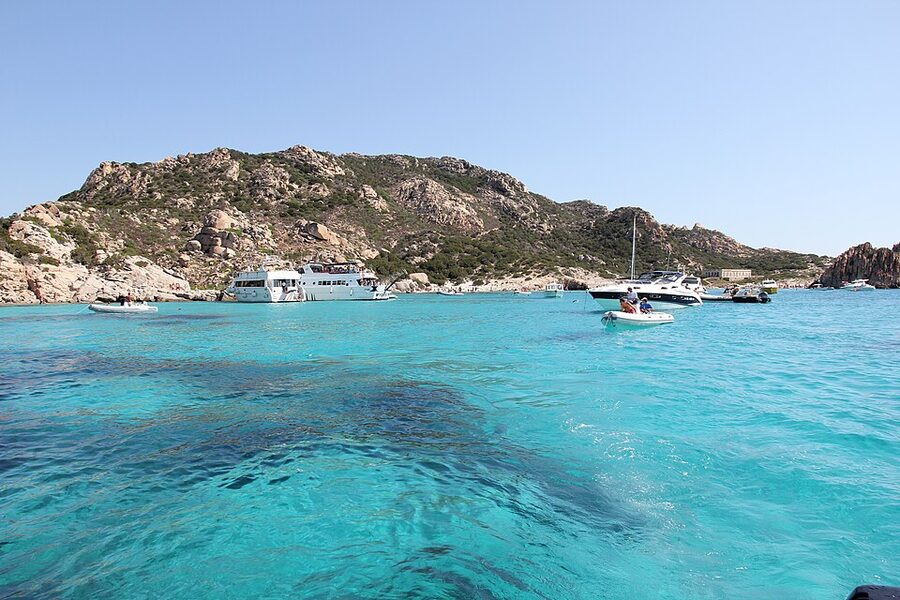
The cove the locals will quietly tell you to ask about is Cala Soraya, named after Princess Soraya of Iran, who came here in the 1960s when this part of Sardinia was still rough granite and goat tracks. The Aga Khan hadn’t built the Costa Smeralda yet. She swam, the cove kept her name, and most tourists today don’t know where it is. If your captain offers it as an alternative when the wind is wrong for somewhere else, say yes. The same wind-led flexibility runs the day on a Mallorca catamaran cruise, where skippers reroute around the maestrale much the way Palau captains do here.
Budelli and the Pink Beach you cannot land on
If there’s one image people associate with La Maddalena, it’s Spiaggia Rosa. The pink beach. The sand really is pink, from crushed shells and microscopic foraminifera that washed up over centuries. It’s the kind of place where the cliché tourist moment is to walk out, fill a bottle with the pink sand, and post the photo. Which is exactly why you can’t land there anymore.
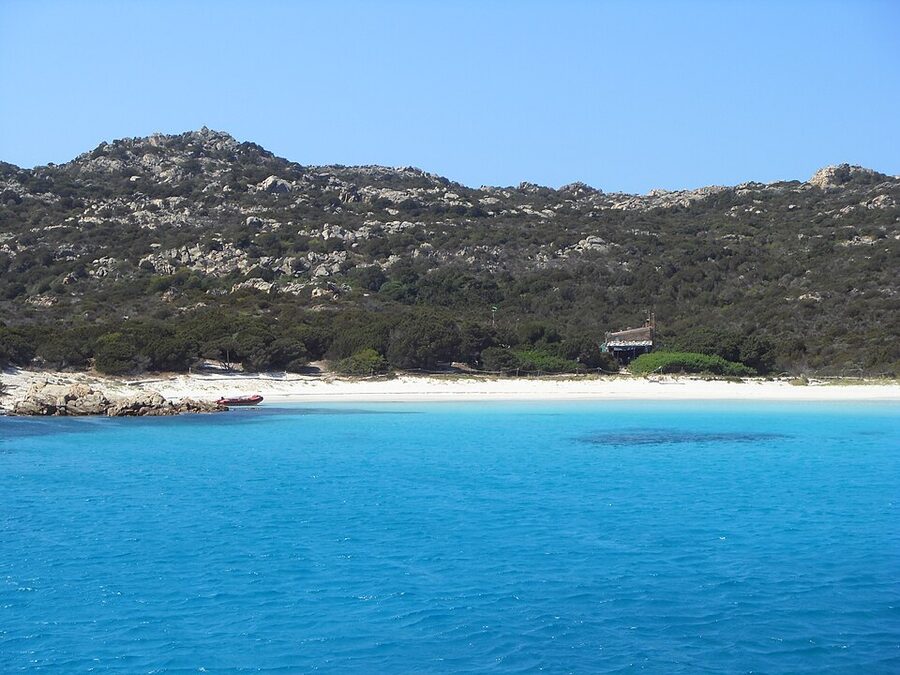
So here’s the actual rule, because the booking pages are vague. Boats anchor offshore from Spiaggia Rosa and you photograph it from the water. You can swim, but you cannot set foot on the sand. The national park enforces this. The only way to walk onto Budelli is on a guided tour led by a national park ranger, which leaves from Spiaggia del Cavaliere, on the other side of the island, and stays well away from the pink section.
The man who lived alone on Budelli for thirty-two years as the unofficial caretaker (Mauro Morandi, a former teacher from Modena who arrived by accident in 1989) was evicted in 2021. Every captain in Palau will tell you a different version of the story. The pink sand is still there. The ferryman is gone.
Santa Maria: the actual swim stop
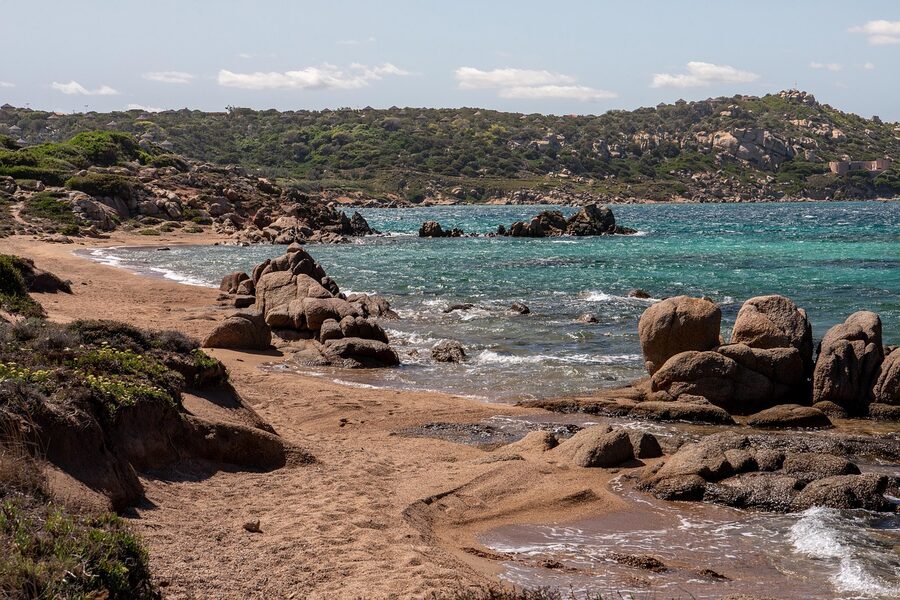
Santa Maria is where most full-day tours actually let you off the boat. It has a long, white, very fine sand beach that runs the length of the island’s south side. Families with small children love it because the water stays shallow for fifty metres before it deepens. There’s no bar on the beach, no restaurant, no lifeguards, no shade unless you brought an umbrella. Tour boats come and go on a schedule and the beach gets crowded between 12:00 and 14:00, then empties out by 15:30.
La Maddalena town: lunch break or skip it?
Most tours stop at La Maddalena town for an hour. This is the only built-up stop on the day. It’s a working town of about 11,000 people; the main island, the namesake of the archipelago, with a small harbour, ferries to Palau every twenty minutes, restaurants on the waterfront, and the panoramic bus that some tours include as an add-on.
The hour is short for the town. If you want to actually see La Maddalena, do it as a separate day; ferry across from Palau in the morning, rent a scooter, ride the panoramic road around the island, eat lunch at a real restaurant, ferry back. The boat-tour stop in town is more of a leg-stretch than a visit.
Caprera: the Garibaldi connection
Caprera is the second-largest island in the archipelago, joined to La Maddalena by a small bridge. Most full-day group tours don’t stop here, because you can drive to Caprera from La Maddalena town in fifteen minutes if you want to see it. The same skip-able-by-bridge logic applies on a Sainte-Marguerite ferry from Cannes, where the small ferry-served island next to the Riviera mainland is its own day if you want it. What you can do from the boat is round the eastern side, where Cala Coticcio (sometimes called the “Tahiti of Sardinia”) sits in a granite amphitheatre.
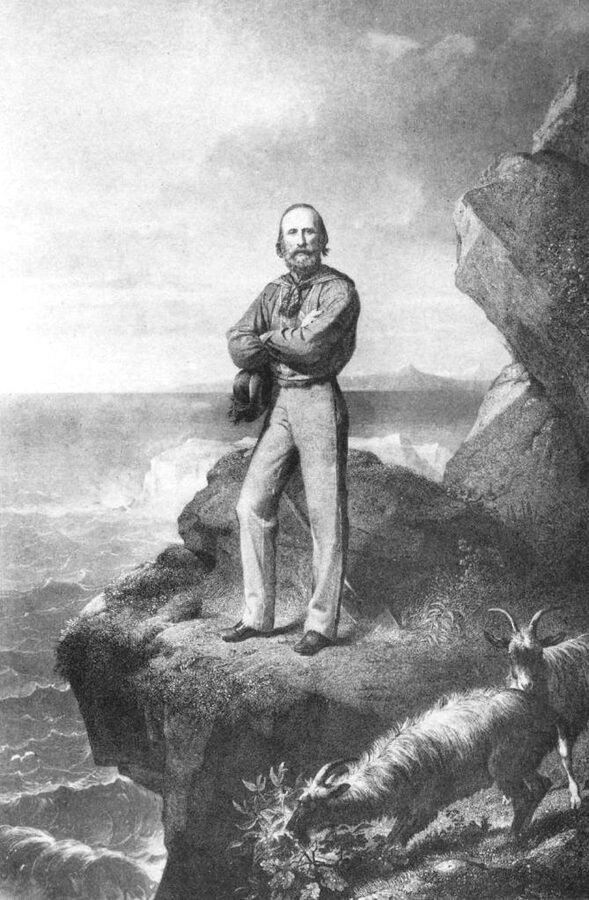
Caprera is also where Garibaldi, the architect of Italian unification, retired. He bought half the island in 1855 with money he’d inherited from his brother, built a white farmhouse called the Compendio Garibaldino, kept goats, and died there in 1882. His grave is on the property. The Compendio is open as a museum and you can walk the grounds; it costs a few euros and takes about an hour. If your tour stops in La Maddalena town with an hour to kill, this is too far. If you’re spending a full day on the islands separately from the boat tour, it’s the obvious afternoon stop.
Razzoli, Santa Maria pools, and the natural swimming basin
Between Razzoli, Budelli, and Santa Maria there’s a stretch of shallow water called the Piscine Naturali (the natural pools), where the three islands almost meet and the bottom is white sand and the water graduates from pale to the colour of pool tiles. Most full-day tours anchor here for the lunch swim. It’s the spot the brochures shoot for the cover photo.
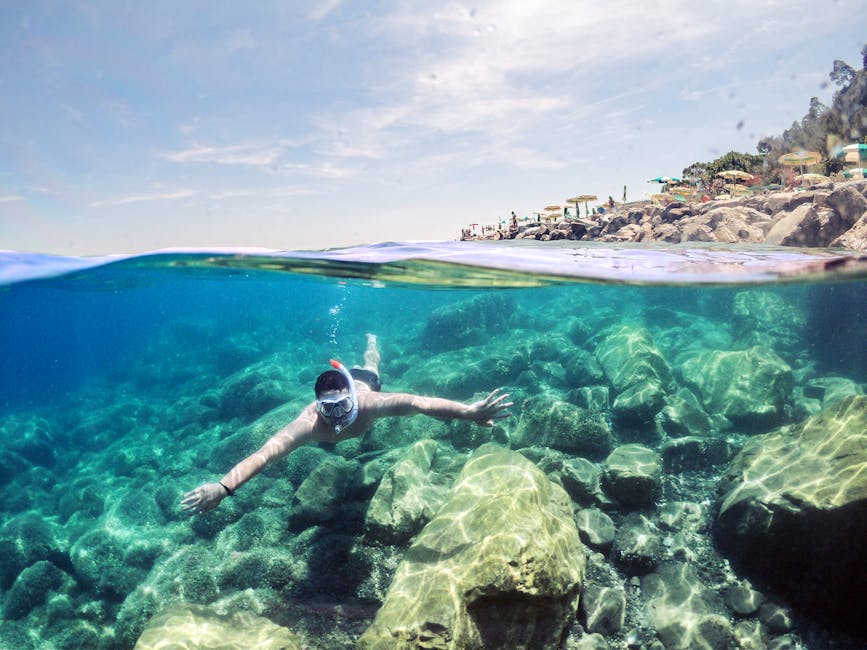
Snorkelling is good but not great. The water clarity is excellent, the marine life is moderate. Sea grass meadows, the occasional grouper, sea bream, the inevitable damselfish. If you’ve snorkelled the Faraglioni rocks at Capri, you’ll find the underwater here calmer and less dramatic. The reason to come is the water colour and the pace, not the marine biology.
Picking a boat: the four types and what you actually get
This is where most travellers get the booking decision wrong. Not all “boat tours” are the same product, and the price difference between them maps to a real difference in experience, not just a brand premium.
Big group boats (the budget option)
The cheapest tours, around €50 to €60 per person, are run on charter boats that hold up to 300 passengers. They have shade, toilets, a small bar where you can buy drinks and snacks, and a fixed itinerary that doesn’t deviate. The captain reads from a microphone in three languages. You’ll get to swim, but you’ll queue to use the ladder back up to the boat. Lunch is usually not included, or is something basic you can buy onboard.
This is the right pick if you want the day for under sixty euros and you don’t mind the cruise-ship feeling. It’s not the right pick if “intimate experience on the water” is what you came to Sardinia for. The big boats also can’t reach the smaller coves, so you stop at the same handful of beaches every other big boat is also stopping at.
Catamarans (the mid-range)
From around €100 per person, you switch to a catamaran that carries no more than twelve passengers. Lunch is included (bread, salad, pasta, fruit, water, wine), there’s shade and a toilet, and the captain will adapt the route based on the wind. Catamarans are slower than motorboats, so you cover less ground, but the trade-off is you spend more time at each anchor point and the trip feels less rushed, in the same way an Ibiza beach cruise trades distance for slow Mediterranean swim time.
If you’ve done a full-day public-boat hop around the Venice islands and didn’t love being herded between vaporetto stops on a schedule, the catamaran day in Sardinia is the opposite of that experience. The trampoline net at the front of a catamaran is, for many people, where they spend most of the day.
Small-group zodiacs and gozzi
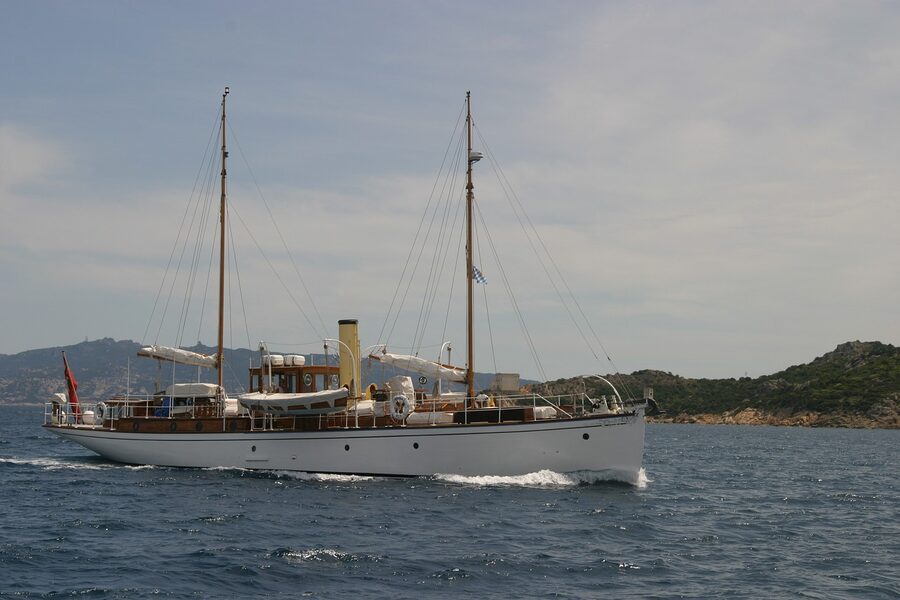
The local wooden fishing boat is called a gozzo, and several captains in Palau still run tours on theirs. These are eight to ten passenger boats, often family-run, often Italian-only, often with a home-cooked lunch the captain’s wife prepared that morning. They cost €100 to €130 per person. The zodiacs, which are large inflatable RIBs with outboards, cover similar ground at a similar price, but with more wind and spray and less shade.
This is the sweet spot for travellers who want the day to feel personal. You’ll talk to the captain. He’ll ask where you’re from. He’ll tell you which restaurant in Palau he eats at. He’ll point out the cove his uncle taught him to fish in when he was seven. None of this happens on the 300-passenger boat.
Private boats
From around €750 for the whole boat (max twelve passengers), you can book a private day. If you’re four to six travellers, this works out to about the same per-person price as the small-group tour, but you control the route and the timings. You decide when to swim, when to have lunch, whether to make it all the way to Lavezzi (a tiny island off the Corsican coast where you can usually clear into French waters for a few hours).
This is the pick for groups travelling together, families with mixed-age children, anyone with mobility constraints, or anyone who’s done one too many group days and just wants the boat to themselves.
Top tour picks for boating from Palau
These three are the ones I’d actually book, depending on what kind of day you want. They cover the budget tier, the Palau-direct option, and the catamaran upgrade.
1. From Sardinia: La Maddalena Archipelago Full-Day Boat Tour: $59
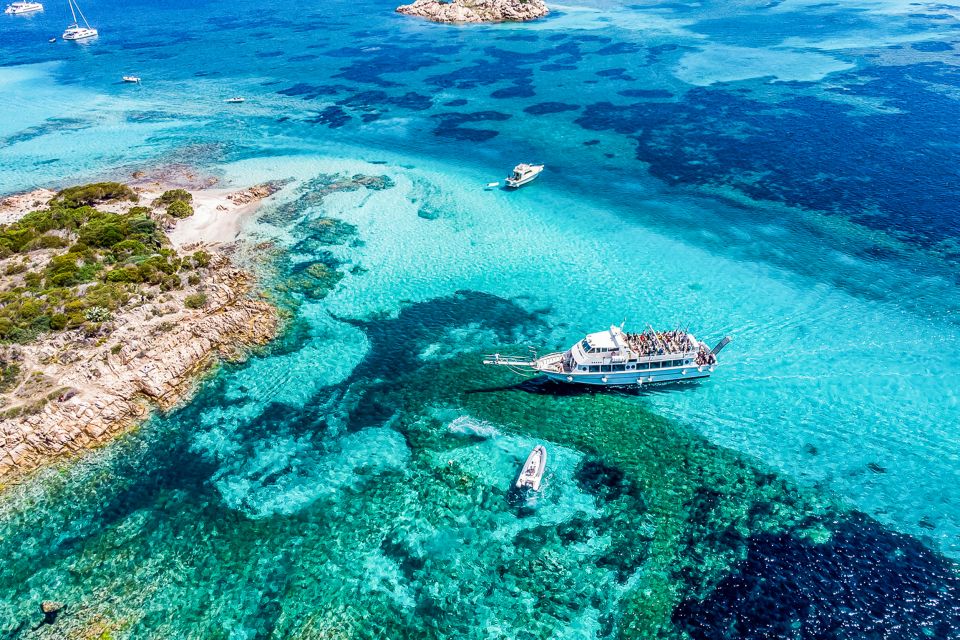
This is the workhorse of the Palau boat-tour scene and the right pick if you want the headline experience without overthinking it. It’s a group tour on a larger boat, which means cheaper but less intimate. Our full review covers the included pickup, the lunch options, and the Spargi-Budelli-Santa Maria itinerary.
2. From Palau: La Maddalena Islands Full-Day Trip by Boat: $59
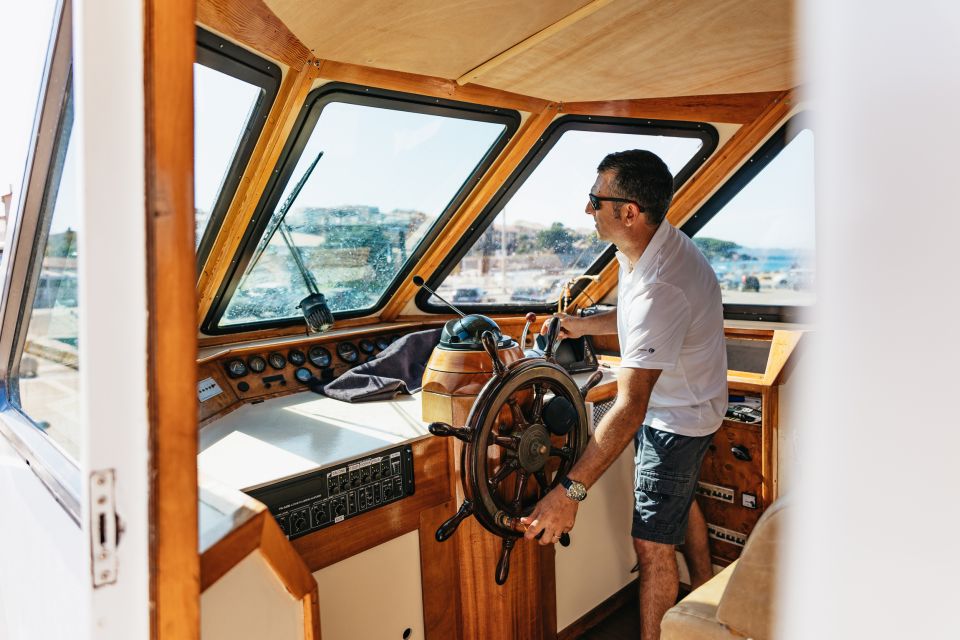
Pick this one if you’re staying in Palau, Porto Pollo, or anywhere along that northern stretch of the Costa Smeralda. Our review walks through the seven-hour itinerary and the Spiaggia Rosa stop. The departure-port difference is the whole reason this tour exists separately.
3. From Palau: La Maddalena Archipelago Catamaran Tour with Lunch: $184
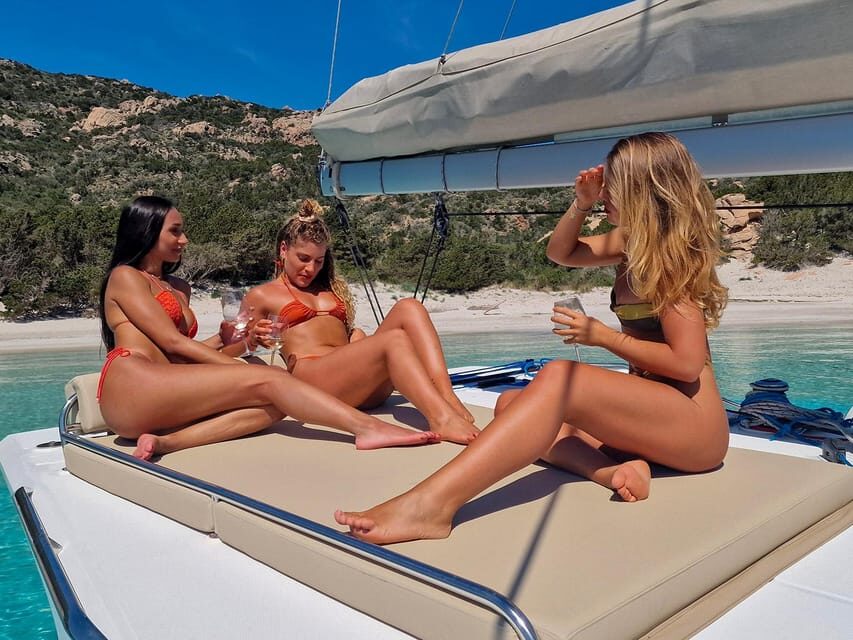
You’re paying triple the budget price for half the people on board, a real lunch, and a captain who’ll adjust the route to the wind rather than the schedule. Our review covers the catamaran setup, the included pasta lunch, and the typical Spargi-Budelli-Santa Maria route.
Getting to Palau
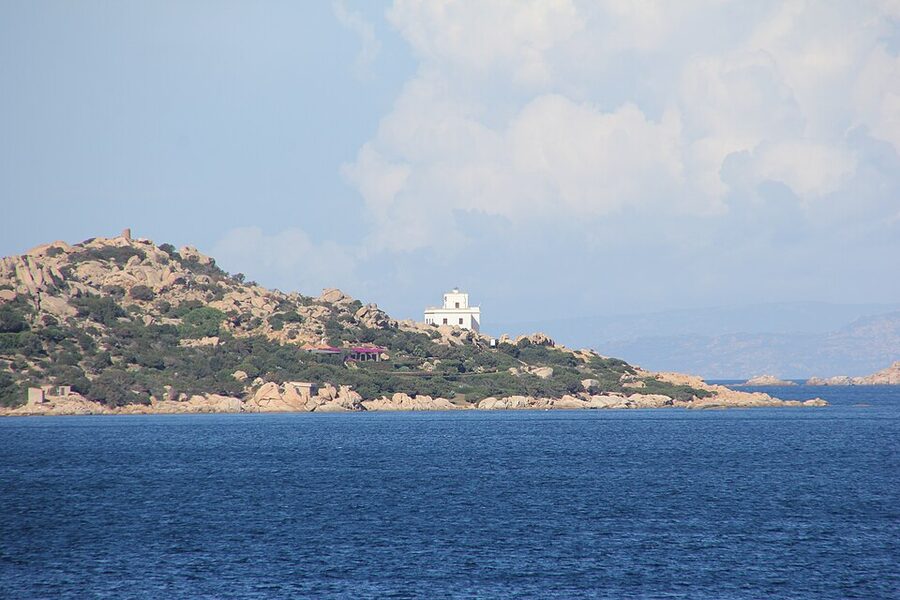
Palau sits on the northern Sardinian coast, about an hour’s drive from Olbia airport. If you’re flying in for the boat tour, Olbia is the obvious airport. The drive up the SP125 is straightforward, and Palau has a working marina with day parking that costs a few euros.
If you’re already in Sardinia and not driving, Olbia and Palau are connected by ARST buses (about ninety minutes, around €5). Cagliari is too far to come up for a day; if you’re based on the southern coast, the boat-tour day is one for a separate trip up north.
When to go (and when not to)
The Sardinian boat-tour season runs from May through October. Inside that window, the difference between months matters more than the difference between days.
May and early June are quiet, the water is still cool (around 18°C), and you’ll have whole coves to yourself. The downside is the wind is more variable, so a few tour days get cancelled.
Late June through early July is the sweet spot. Long days, water at 22°C, the worst of the tourist crush hasn’t arrived yet, and the boats are at full season. This is when I’d plan a trip if I had a choice.
Mid-July to late August is peak. Water is 24-26°C, perfect for swimming. Everything is booked solid two to four weeks ahead, especially the small-group tours. The big boats are full. Some of the coves get shoulder-to-shoulder by 11am.
September is the secret good month. The crowds drop sharply after the Italian school year starts on the first or second week. The water is still warm. The light is softer. If you can travel outside school holidays, September beats August on every metric except guaranteed weather.
October is the gamble. Some weeks you get late-summer sun and 21°C water. Some weeks the maestrale comes in and tours don’t run. If you’re booking for October, build in a buffer day.
Things you didn’t know you needed to know
The bits travellers learn the hard way, written down so you don’t have to.
The national park fee. A few tours include it, most don’t. It’s a few euros per person and the captain will collect it onboard. Bring small cash. Card readers on a wet boat at sea are theoretical at best.
You can’t take sand or shells. This is enforced at Olbia airport on the way out. The fines are real (hundreds of euros) and the customs desk has heard every excuse. The Spiaggia Rosa restriction exists precisely because for decades, people did this.
Bring your own snorkel. Most tours include a basic mask, but the silicone is shared and the seal often leaks. If you snorkel regularly, bring your own gear. If you’re doing the catamaran tour, the included gear is usually decent.
Sunblock and a hat are non-optional. The Mediterranean sun off Sardinia in July is not the same sun you get on the Lake Como ferry or in a Venetian opera house at 8pm. SPF 50, reapplied at every swim stop. You’ll burn faster than you expect because the boat moves and you don’t notice the cumulative exposure.
Posidonia is the stuff that matters. The seagrass meadows around the islands are protected, which is why your captain anchors in specific spots and not others. If a private skipper you’ve hired is willing to drop anchor anywhere, that’s a red flag, not flexibility. The fines are large and the ecological damage is real.
Sea sickness pills if you’re prone. The wind picks up after about 14:00, and the return leg back to Palau can be choppy. The catamaran is the most stable; the zodiac is the least; the big boats are somewhere in between. Bring tablets even if you don’t think you’ll need them.
Where La Maddalena fits with the rest of Italy by water
If you’re building an Italian trip around boats and islands, La Maddalena is one of three or four real candidates and they’re not interchangeable. The Capri boat tour out of Naples is the cliff-and-cave experience: dramatic limestone walls, sea caves, the Faraglioni rocks. The Borromean Islands on Lake Maggiore is the palace-on-a-rock experience: terraced 17th-century gardens, baroque palaces, a hop-on hop-off boat with a constructed island as the headline. The Polignano a Mare cruise on the Adriatic is the cliff-village swim experience: small caves, a 25-metre cliff with houses built on top, an aperitif on the boat at sunset.
La Maddalena is none of those. It’s an archipelago day: granite islands, white-sand coves, water in graduated colours, very little human infrastructure to look at. The closest sibling experience in Italy is probably the Venice islands by boat, but that’s a cultural day (glassblowers, lacemakers, the basilicas of Torcello), not a swim day. La Maddalena is a swim day. That’s the point of going.
The brief geological story
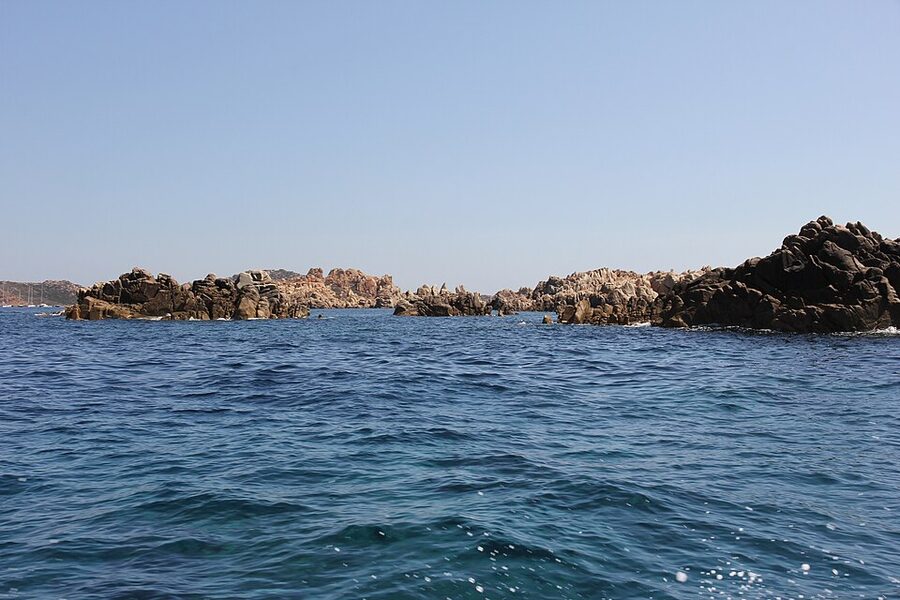
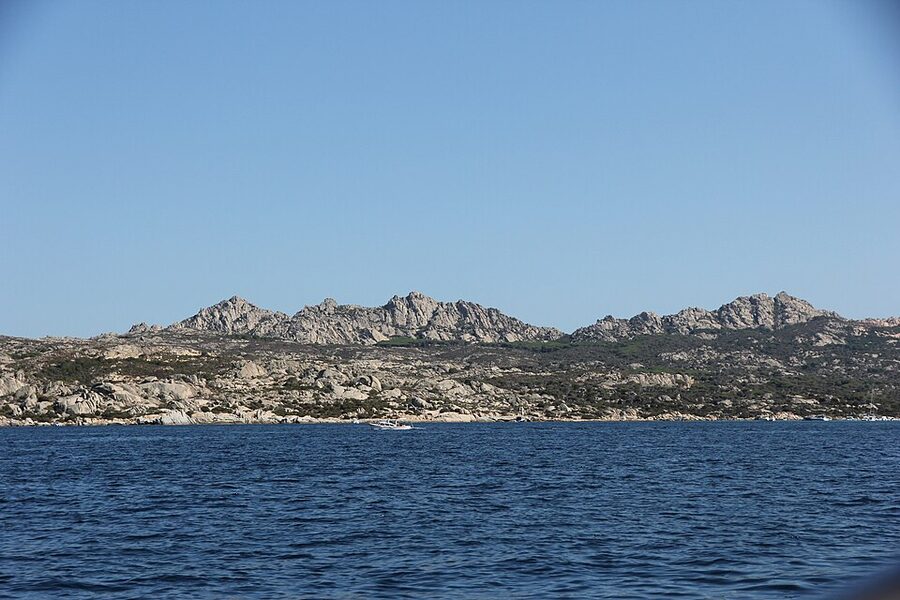
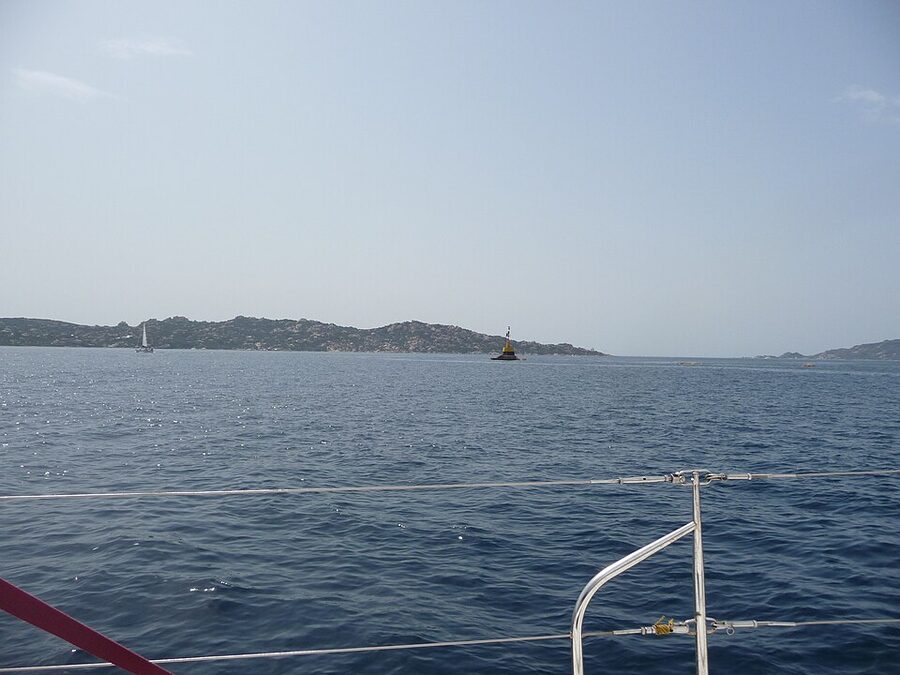
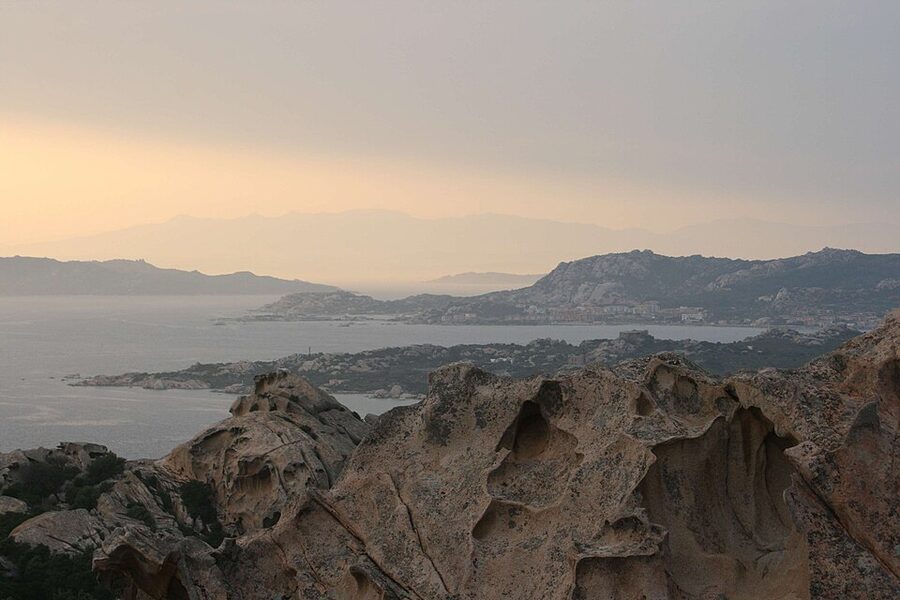
The granite is what you’re really looking at. The whole archipelago is a chunk of Hercynian-age granite, around 290 million years old, that was uplifted, scoured by glaciers, weathered by sea and wind, and left as a cluster of rounded boulders that ended up partly above the waterline. The ones above the waterline are the islands. The ones just below are the underwater rock fields the captains know to avoid.
The rounded shapes you see, like enormous river stones piled on each other, are called tafoni. They’re cavities and rounded forms eroded out of granite by salt and wind over millions of years. Spargi has the most famous tafoni; one rock formation looks like a giant boot and is named, predictably, the Stivale (the Boot). Captains will point it out as you round the western end of the island.
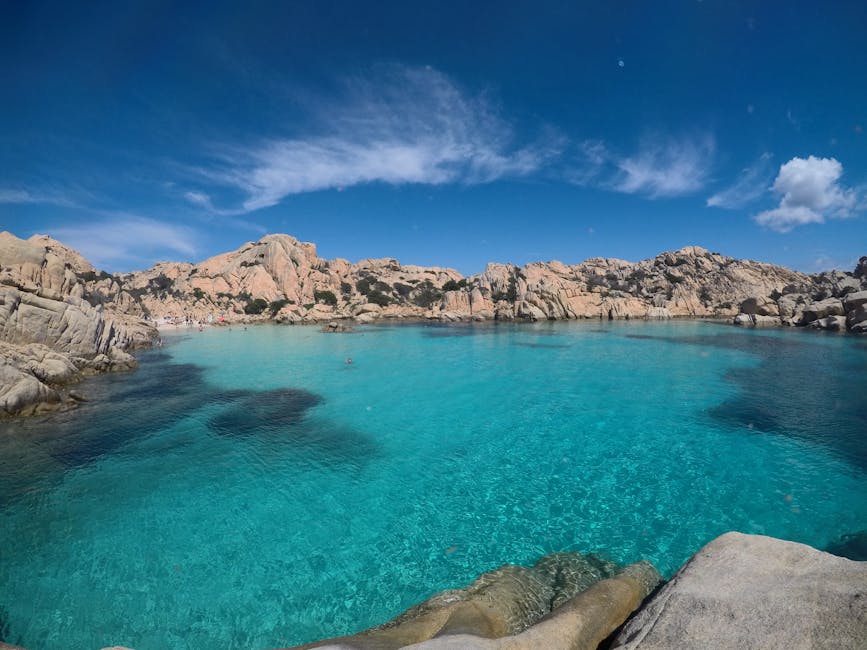
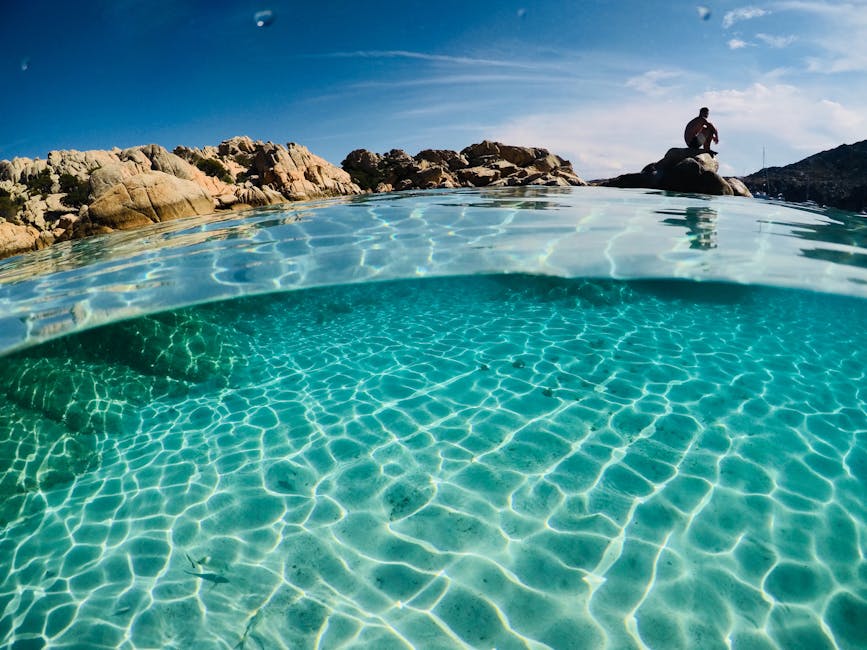
The colour graduations the brochures advertise come from the bottom. White sand at one to three metres depth produces the pale turquoise; sea grass at five to ten metres produces an emerald green; granite or rock at deeper depths produces dark navy. As your boat moves you’re crossing between bottom types, and the surface colour changes accordingly. It’s not a filter or an Instagram trick. It’s geology.
The protected park you’re paying to enter
The Parco Nazionale dell’Arcipelago di La Maddalena was established in 1994. It covers 180 square kilometres of land and sea, including all 62 islands and the protected waters around them. The protected status is what’s kept the archipelago looking like this when much of the Mediterranean coast hasn’t.
The rules visitors actually need to know: no anchoring on posidonia, no sand or shell collection, no fishing without a permit, no camping on the islands, no fires, no drone flights without authorisation, no walking on Spiaggia Rosa. Most captains will go through the rules in the welcome briefing. Most tourists will then forget half of them by mid-afternoon. The rangers in zodiacs do patrol, especially around Budelli, and the fines are not symbolic.
Lunch on the boat (or off it)
If you’re on a small-group or catamaran tour, lunch is part of the experience. Pasta with a fresh tomato sauce, bread, salad, fruit, often a glass of local wine (Vermentino is the obvious one). On the budget tours you’ll either pre-order something onboard or bring your own. The Santa Maria stop has no restaurant, so don’t plan to “eat ashore.” Bring water. Bring more water than you think.
If you’ve eaten the bistecca and the pici on a Florence food tour, the food on the boat day will feel basic by comparison. That’s because it’s basic by design. You’re paying for the day, not the menu. The lunch is fuel.
Doing it without the tour
You can also rent a small boat in Palau and skipper it yourself. The legal limit without a licence is 40 horsepower, which gets you a basic zodiac. The rental cost is around €200 per day plus fuel. For four or five travellers splitting the cost, it works out cheaper than a group tour.
I’d advise against it for a first visit. The wind in the strait can be vicious, the navigation requires reading charts and respecting protected zones, and the consequences of getting it wrong (fines for anchoring on posidonia, running aground on a granite outcrop you didn’t see, missing a weather window) are larger than the savings. If you have boating experience already and know the western Mediterranean, sure. If you’re a confident driver but not an experienced sailor, take the group tour.
The day-to-day reality
If you’re trying to picture the actual rhythm of the day, here’s how mine usually goes. Up early in Palau, breakfast at the bar by the marina (cornetto and a cappuccino, three euros, the same as everywhere in Italy). Walk down to the pier at 9:45 for the 10:00 boarding. Captain calls out names from a clipboard. Onboard, find a shaded seat, store the bag, accept the offered swim briefing.
The first hour is mostly transit, with the captain pointing out landmarks (Punta Sardegna lighthouse, the entrance to the strait, the granite formations on Spargi’s western face). First swim stop around 11:15 at one of Spargi’s coves. Twenty to forty minutes in the water depending on the boat size. Back aboard, dry off, transit ten minutes to Budelli for the photo stop offshore from Spiaggia Rosa.
Lunch swim around 13:30 in the natural pools between Razzoli, Budelli, and Santa Maria. This is the longest stop, usually an hour. Then transit to Santa Maria for the actual beach time, where you can walk ashore. Back aboard around 15:00, transit to La Maddalena town, hour-long stop, return to Palau by 17:30. Tip the crew if the day was good. They run on tips, the same convention you’ll meet on a Rotterdam harbour cruise on a different kind of working water.
What to pack
The captain of my last boat tour gave the briefing in three languages and ended in English with: “Whatever you’ve packed, you also need water, sunblock, and a hat. Whatever else you forgot, we don’t sell it on board.” Take that as the rule.
The actual list, what I’d bring: swimsuit (worn under your clothes), a light cover-up, a t-shirt for the boat ride home (when you’ll be slightly damp and the wind is cooler), a wide-brim hat, SPF 50, lip balm with sun protection, sunglasses, a towel, your own snorkel mask if you’re particular, motion-sickness tablets, a refillable water bottle, a small dry bag for your phone, cash for the park fee and tips, and a hoodie if you’re on the early-September trips when the wind off Corsica gets bracing.
If you only have one day
If the boat tour is the one thing you’re doing in northern Sardinia, pick the catamaran tier. The €185 versus €60 difference is real, but the experience is so different it makes the budget tour a different product entirely. Lunch on a catamaran in the natural pools, with twelve people instead of two hundred, is the day you’ll remember.
If the boat tour is one day inside a longer Sardinia trip, take the budget tour and put the money you saved into a separate day at Cala Coticcio on Caprera (drive over, hike in, swim in the cove the boats can only see from the water). That’s the combination that gives you both the archipelago overview and the close-up of the bit you actually wanted.
Where to stay in Palau
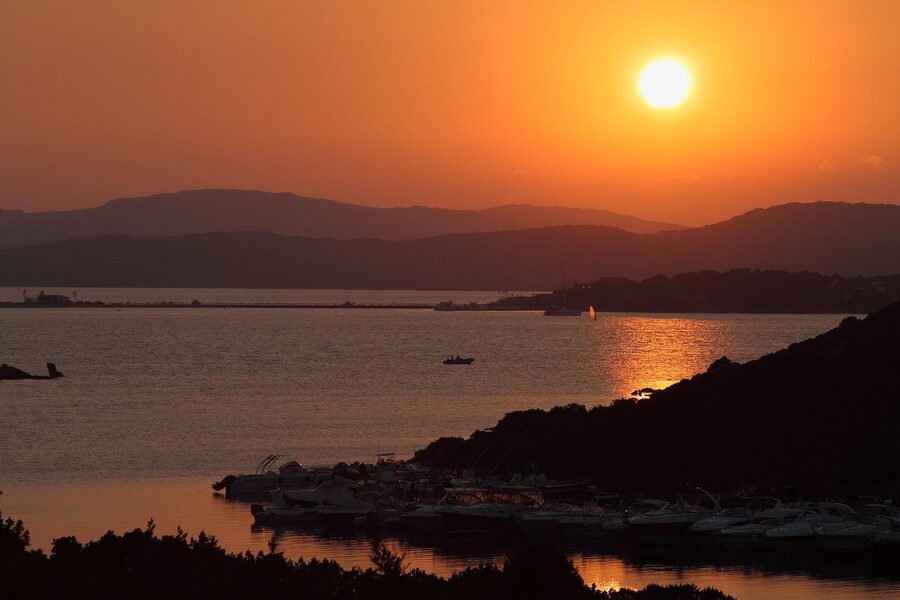
If you’re staying overnight rather than driving in from Olbia, Palau has the spread you’d expect. Mid-range hotels along the coast east of town (Porto Rafael, Capo d’Orso) are the picturesque option. In-town accommodation by the marina is convenient but loud in summer. Budget options open up if you go ten minutes inland to Arzachena.
The smart move if you’re already booking a boat day: stay one night in Palau the night before, do the boat day with no morning drive, drive back south on day two. Trying to do Olbia airport to Palau marina to a 10:00 boarding in one morning is possible but stressful, and the boat doesn’t wait for late arrivals.
Pairing the boat day with the rest of Sardinia
The boat tour is one perfect day, but it’s not a Sardinia trip. If you have three to four days in the north, the obvious round is: boat day from Palau, day at Cala Coticcio on Caprera, day at Capo Testa near Santa Teresa di Gallura (the granite headland that looks like the moon), day in Olbia or driving the SP125 down past Costa Smeralda. Five days lets you add a day in the Gallura interior at the cork oak forests around Aggius.
If you’re combining Sardinia with the rest of Italy, the natural pairings are with the southern islands. After the granite-and-turquoise of La Maddalena, the Amalfi Coast reads as a totally different Mediterranean: limestone cliffs, lemon terraces, hairpin roads. Or pair it with a Lake Como day from Milan for the lakes-and-mountains contrast to islands-and-sea, or with a Gibraltar transfer from Málaga for the strait-and-rock end of Iberian boating.
One last thing the skippers say
Every captain I’ve talked to has some version of the same advice when I ask what tourists get wrong. “Don’t book the day for the photos.” Three different skippers, three different boats, three different summers. The point is the same: if you’re chasing one specific shot of one specific cove on one specific morning, the wind will betray you, the light will be wrong, and the day will feel disappointing.
If you’re booking the day to be on the water for six hours in a place where the granite has been weathered for 290 million years and the sea is unusually clear and the captain has been doing this since he was nineteen, you’ll come back with the photos anyway. They just won’t be the ones you planned. They’ll be better.