
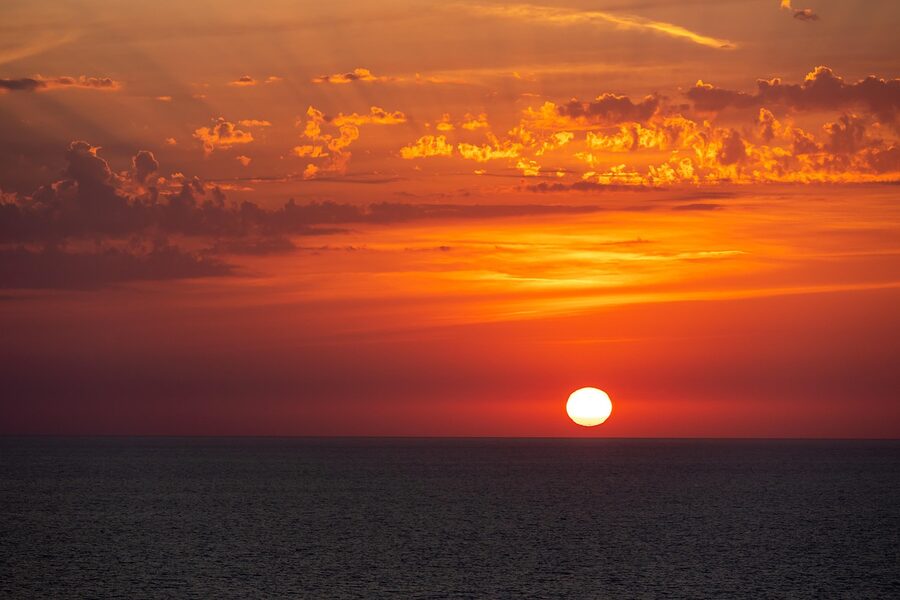
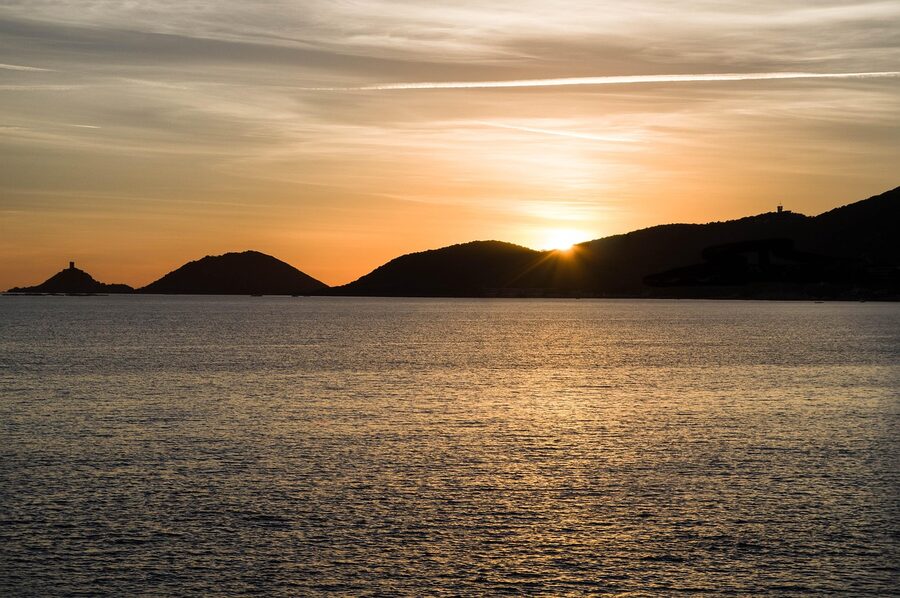
The boat had cut its engine ten minutes earlier, and we were drifting in the channel between Mezu Mare and the smaller pinnacle to the north. The sun was an inch above the lighthouse on the ridge, and the granite of the islands had gone the colour of red wine in shadow. Someone on the bench beside me handed over a plastic cup of Patrimonio rosé and said this was the moment the islands earn their name.
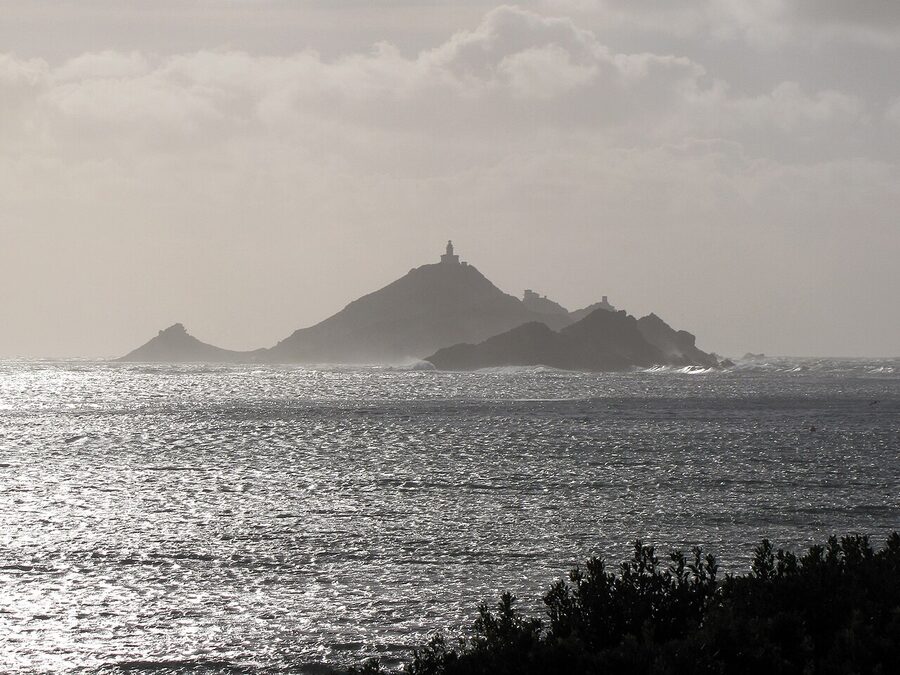
The Sanguinaires are four small islands at the entrance to the Gulf of Ajaccio, named for the way the iron-rich rock glows blood-red at sunset. The Italian word for blood is sangue, and 90% of the boats running this stretch of coast time their evening departure to put you exactly here, exactly now.
If you’ve come this far down the French map and not been to Corsica before, you should know what you’re getting into. This is France, technically, but it’s the version of France that was Genoese until 1768 and still speaks a language closer to Italian than to French. The local word for hello is salute. The 3,000m mountains drop straight into the sea. And the right way to do it is a 3-4 day base in Ajaccio with the boat trips as your spine.
In a Hurry: The 3 Boat Trips to Book
- Sanguinaires Sunset (3h, $42): The flagship. Departs Ajaccio late afternoon, returns after dark. Book on GetYourGuide
- Scandola Nature Reserve (full day, $82): The premium. UNESCO marine reserve, dolphins likely, longest crossing. Book on GetYourGuide
- Town Highlights Open-Top Bus (90min, $14): The cheap one. Decent if you arrive jet-lagged and don’t want to walk. Book on GetYourGuide
Why Corsica Is the France Most Travellers Skip
Roughly 8 million tourists a year visit Provence and the Côte d’Azur. Roughly 3 million reach Corsica, and most of those are French. The reason is the 200km of open Mediterranean between the mainland and the island, which means you fly or you take an overnight ferry, and most foreign trip-planners default to whatever is reachable by TGV instead.
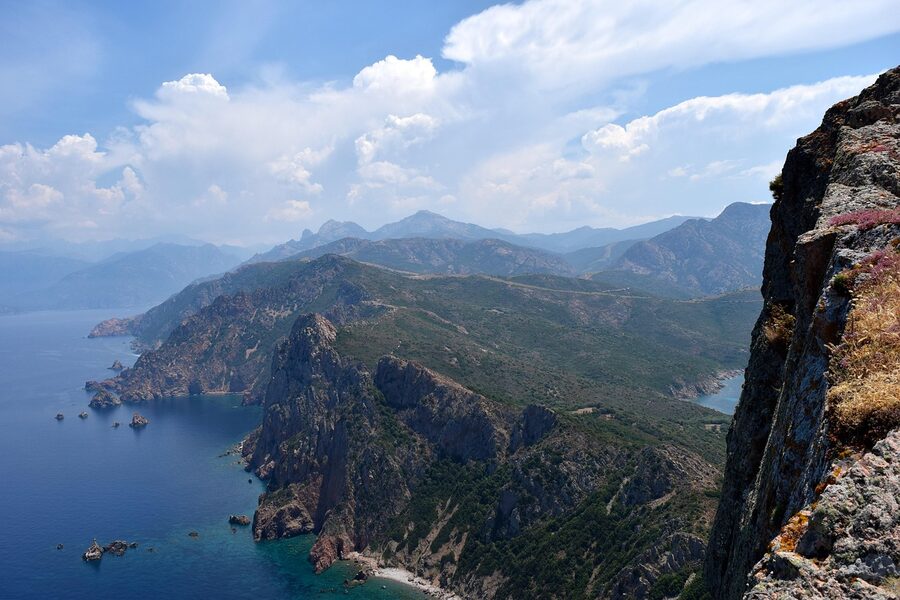
That gap is what makes the island worth the extra leg. Corsica is 8,680 km², about the size of Cyprus, with a population of around 340,000 and a culture that diverged from mainland France long before Napoleon was born here in 1769. The local language, Corsu, is a Tuscan dialect with French loanwords. The food is closer to Sardinian than to Provençal. The mountains are the tallest island peaks in the Mediterranean and the coastline alternates between granite cliffs and sand bays for 1,000km.
If you’re already planning the classic Côte d’Azur loop out of Nice, the framing is this: Corsica is a different trip, not an extension. Don’t try to bolt three days here onto a one-week France itinerary. You’ll spend a third of it on transit. Either give it five days minimum, or save it for a separate visit. The ferry from Nice to Ajaccio is 4 hours each way, which is comparable to the Cannes-to-Sainte-Marguerite hop only in concept; in practice it’s a different category of journey.
Getting There: Flights vs Ferries
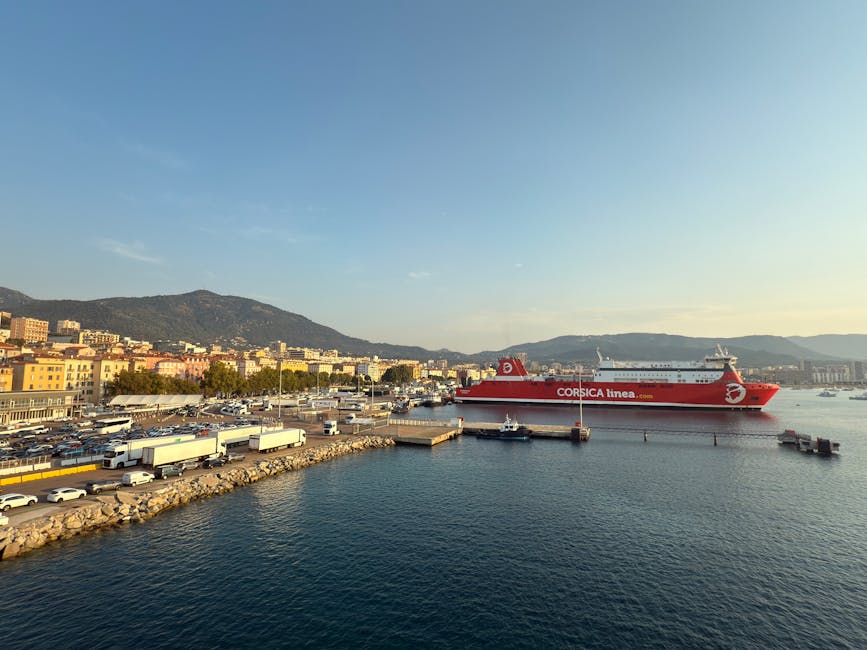
The fast option is a 50-minute flight from Nice on Air Corsica or Volotea. Round-trip in shoulder season (May, September, October) runs €70-130. Add Paris CDG and you’re at 1h45 for €100-200. The slow option is a car ferry from Marseille, Toulon, or Nice, run by Corsica Linea and La Méridionale.
Ferry routes I’d actually consider:
- Marseille to Ajaccio: 12 hours overnight, deck class around €60. Cabin €110-180. Best if you’re bringing a car and want to land rested.
- Toulon to Ajaccio: 10 hours overnight, around €50 deck. Smaller port, less queue chaos.
- Nice to Ajaccio: 4 hours daytime, around €70. The most scenic crossing if the weather is clean.
For a one-week trip without a car, fly. The bus between Ajaccio airport and the city centre is €5 and runs every 20 minutes. The taxi is €25 fixed. If you’re island-hopping further south, the bus down the west coast to Bonifacio takes 4 hours and runs twice a day. Hire a car for €40-60/day if you want to do the interior or the southern beaches at your own pace.
The Sanguinaires Sunset Boat: What You Actually Do for Three Hours
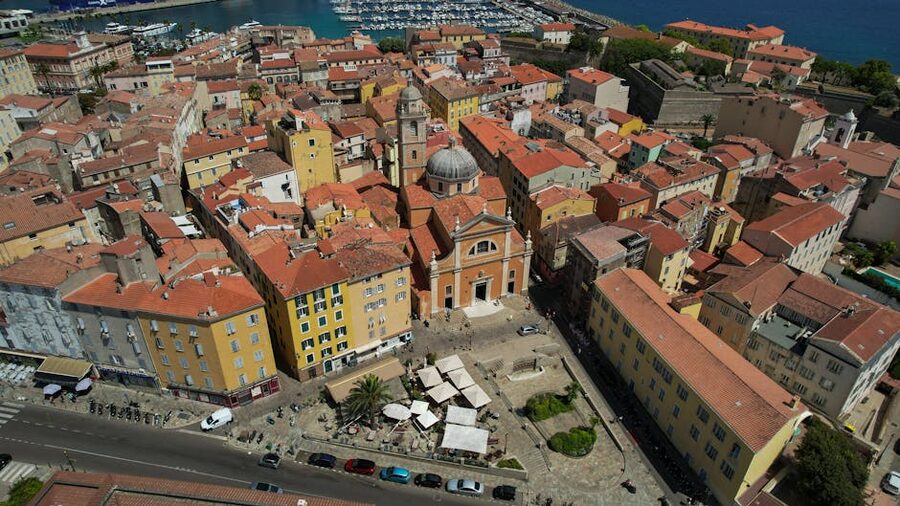
Boats leave from Tino Rossi quay, the small marina directly under the citadel walls, about 200 metres from Place Foch. Departure is between 5pm and 6:30pm depending on the month and the operator. May and September runs leave around 6pm; July-August boats leave around 6:30pm to track the later sunset.
The first 40 minutes is a slow cruise out of the gulf, with commentary on the citadel, the Genoese watchtowers along the south shore, and the line of beachfront mansions where Ajaccio’s wealthy summer. The boat skirts the cliffs of the Parata Peninsula. You can see the Tour de la Parata, a Genoese tower from 1608, on the headland. This is the same tower that looks across to the watchtowers on Île Sainte-Marguerite off Cannes; the chain of Genoese coastal defences runs along most of the western Mediterranean. The Dutch boat-with-narration parallel runs on Amsterdam’s canal cruises, where the same slow-cruise-with-commentary format walks you past 17th-century merchant houses instead of fortified Mediterranean towers.
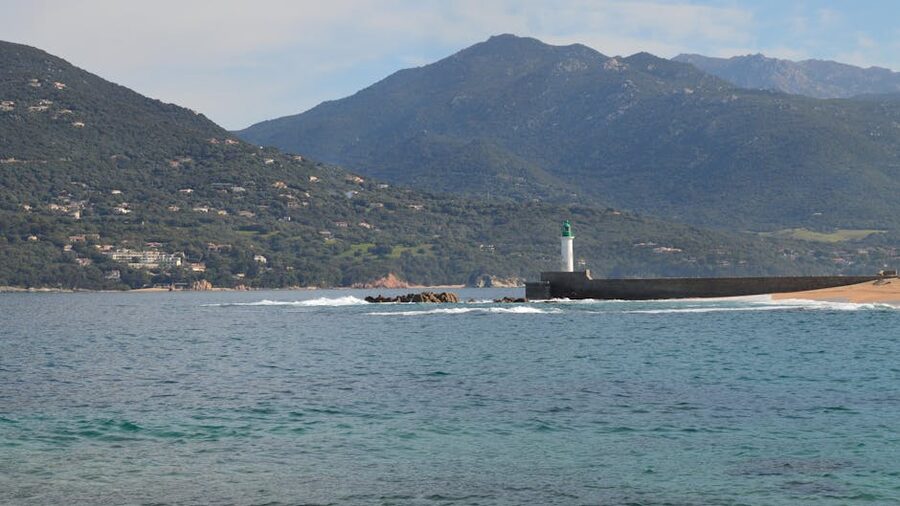
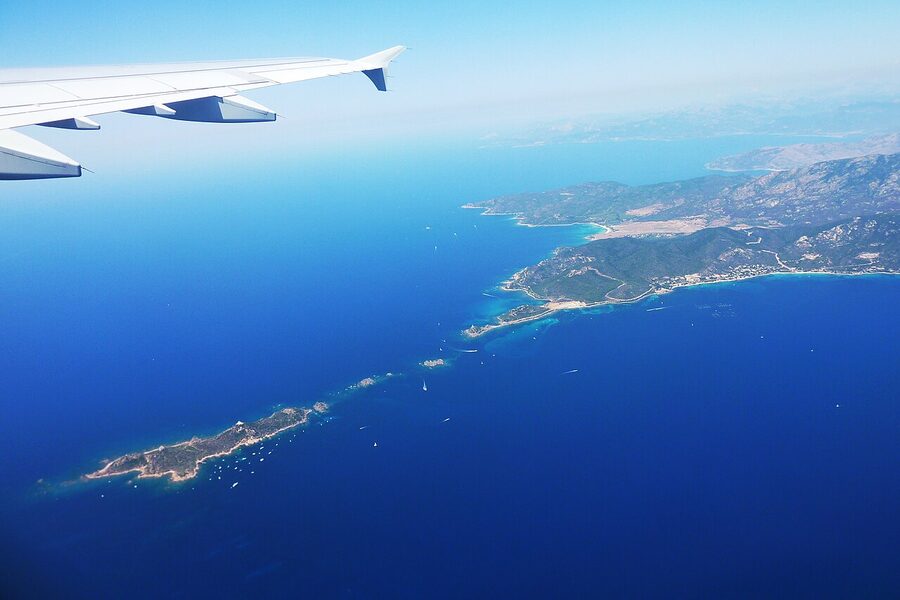
Around 50 minutes in, the four islands come into view in line astern. The largest, Mezu Mare (also written Mezzu Mare), is about 1.5km long and rises to 80m. It’s the only one boats are allowed to dock at, and the only one with a lighthouse, a semaphore station, and the ruins of an old quarantine hospital where coral fishermen were quarantined in the 19th century to prevent epidemics from reaching Ajaccio.
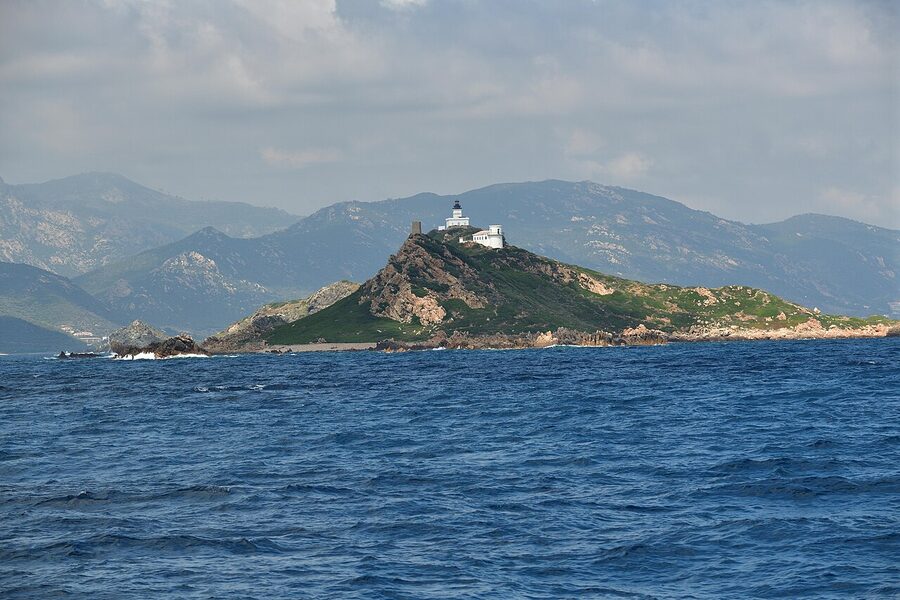
The afternoon variant of this tour will give you an hour to walk the lighthouse trail. The strict sunset variant skips the landing and uses that hour for a swim stop in a sheltered cove on the island’s east side. I’d take the swim stop. The lighthouse is photogenic from the boat, less so when you’re standing next to it, and the swim is better than 95% of beach swims you’ll get in mainland France.
After the swim or the walk, the boat positions itself in the channel between the islands, kills the engine, and the captain hands round plastic cups and a bottle. The aperitif on the boat is part of the price. Most operators serve Patrimonio rosé (the local wine, from the AOC at the north of the island) and a small charcuterie plate of figatelli or coppa. Some serve a non-alcoholic alternative; tell them in advance if you need it.
The sunset itself is 15-20 minutes long. The granite turns from amber to orange to a deep red, then drops into shadow. The boat re-starts and runs back to Ajaccio in the dark, which takes 35-40 minutes with the city lights coming up over the water. You’re back at Tino Rossi quay around 9pm in May, 10pm in July.
Scandola Nature Reserve: The UNESCO Day Trip
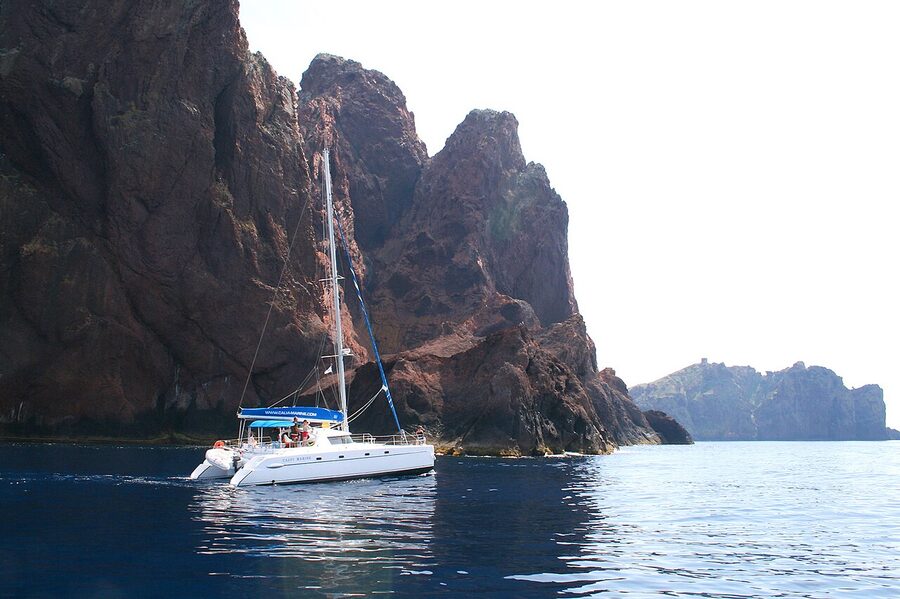
The Scandola Nature Reserve is a different category of trip. It’s serious. UNESCO listed it in 1983, the first French marine site protected at that level, almost three decades before the Calanques near Marseille got the same recognition in 2012. The reserve covers 1,919 hectares of volcanic coastline on the west side of the island, completely closed to land access. The only way in is by boat.
The boat from Ajaccio takes 3-4 hours each way. That’s a long crossing. There are shorter options from Porto on the west coast (about 45 minutes), and if you have a hire car and you’re already planning to drive across the island, leaving from Porto gives you a 4-hour total trip instead of an 8-hour one. But the Ajaccio departure is what most foreign visitors take, partly because it’s where you’re already based and partly because the longer route hugs the coast and shows you the entire west side of the island, including the Calanches de Piana and the Gulf of Porto.
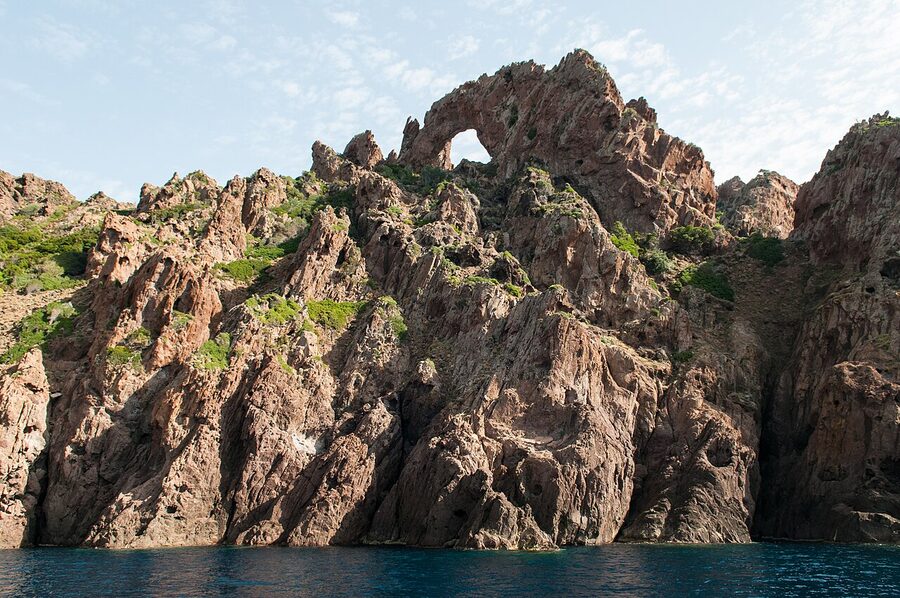
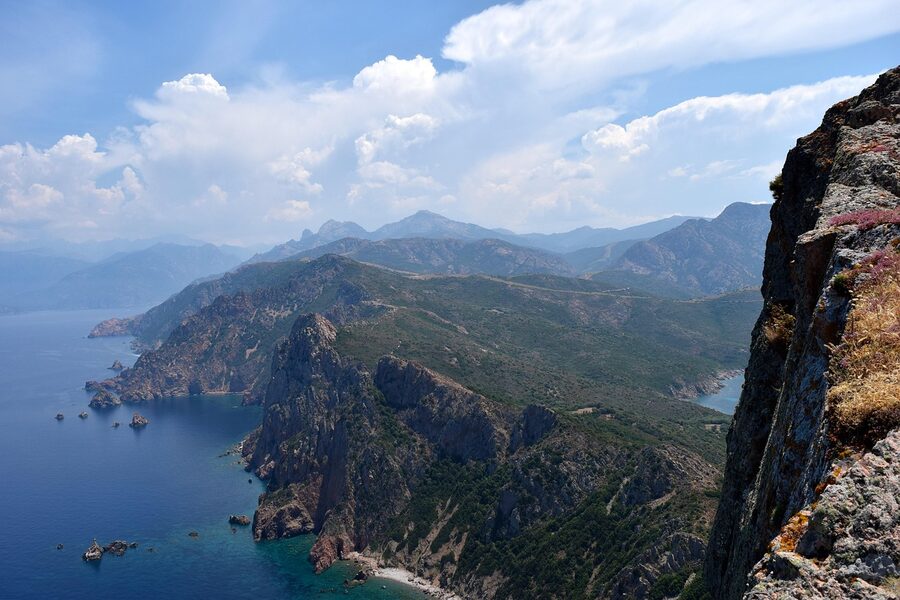
What you actually see at Scandola is geology. Red volcanic cliffs that drop 900m into the water. Sea caves the boat can enter only when the swell is small. Arches and stacks of pink porphyry. An inland fishing village called Girolata that’s only reachable by boat or on foot down a 90-minute trail from the road. The boats stop at Girolata for 45 minutes so you can have a Pietra (the local chestnut beer) at the single bar on the beach.
The wildlife is the other reason to go. Bottlenose dolphins are seen on roughly half of the trips between May and October. Pilot whales and fin whales pass through the Pelagos Sanctuary that surrounds the island, though they’re rarer on the standard tour route. Ospreys nest on the cliffs of Scandola itself; the reserve was created in 1975 partly to protect their colony, which had collapsed elsewhere on Mediterranean coasts.
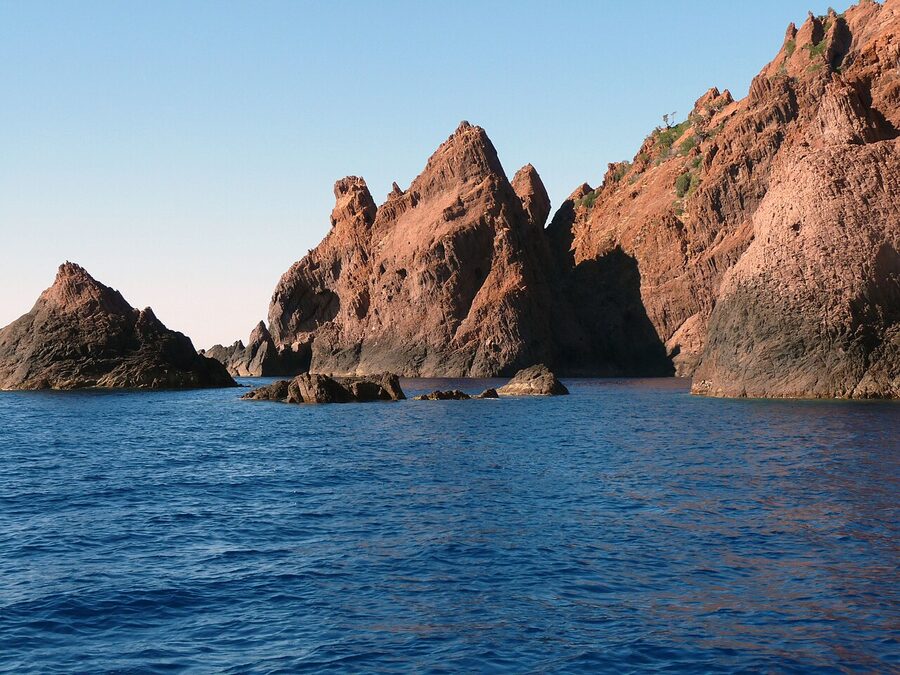
This is the most expensive of the three boat trips listed below ($82 per person), and it’s the one where the price actually buys something different. The Sanguinaires sunset is a beautiful 3-hour cruise close to home. Scandola is a full day at sea, with a UNESCO reserve, dolphin sightings, sea caves, and a village you can’t reach any other way. If you only do one boat trip and you’re prepared to give up an entire day, this is the one I’d choose. It scratches the same itch as the La Maddalena archipelago boat from northern Sardinia, which sits 11km off Corsica’s south coast and is, by local geology, basically the same place.
Calanches de Piana: The Detour Worth Adding
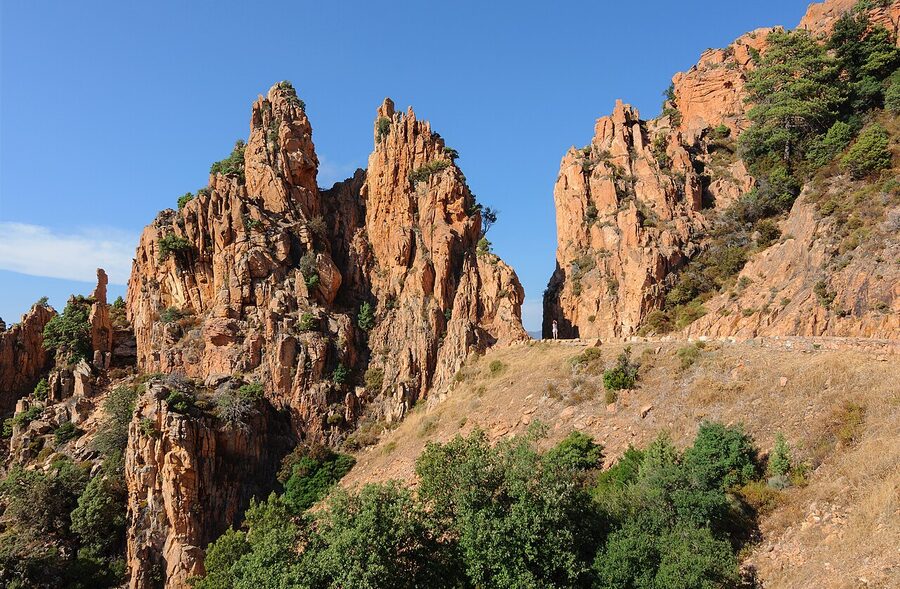
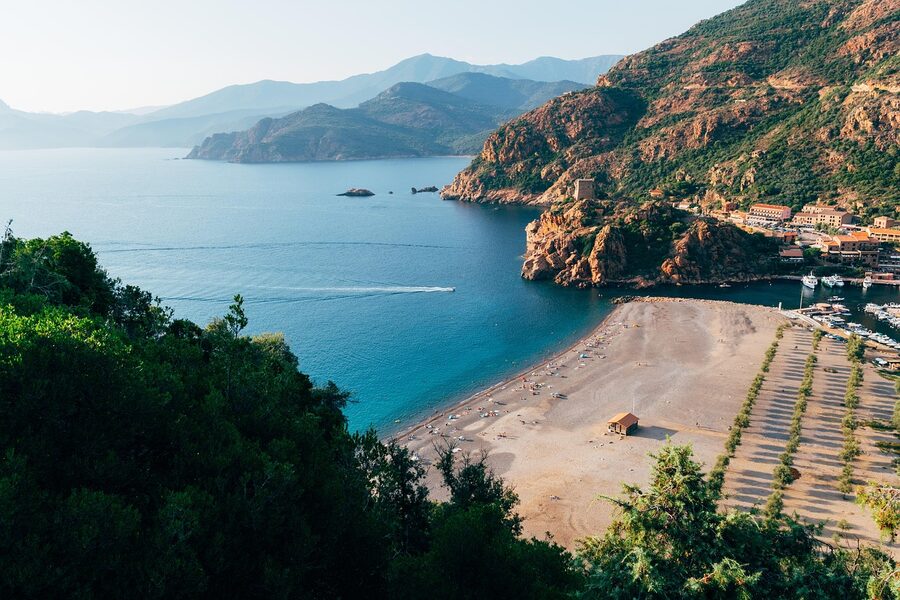
The Calanches de Piana sit between Scandola and the Gulf of Porto, and they’re the other UNESCO listing on this stretch of coast. They were inscribed the same year as Scandola, 1983, but get a fraction of the attention because they don’t need a boat to see them. The D81 road from Porto to Piana passes directly through them, and you can stop at half a dozen pullouts and hike the marked trails into the rock formations.
If you’re on the Scandola boat from Ajaccio, you’ll pass them twice and the captain will slow down for both passes. If you’re doing Scandola from Porto, you can drive the D81 the same morning. Either way, the formations are massive: pink granite eroded into spires, arches, and shapes that have local names (the Bear, the Pope, the Heart). The hike from the Tête du Chien pullout takes about an hour round-trip and ends at one of the better viewpoints over the Gulf of Porto.
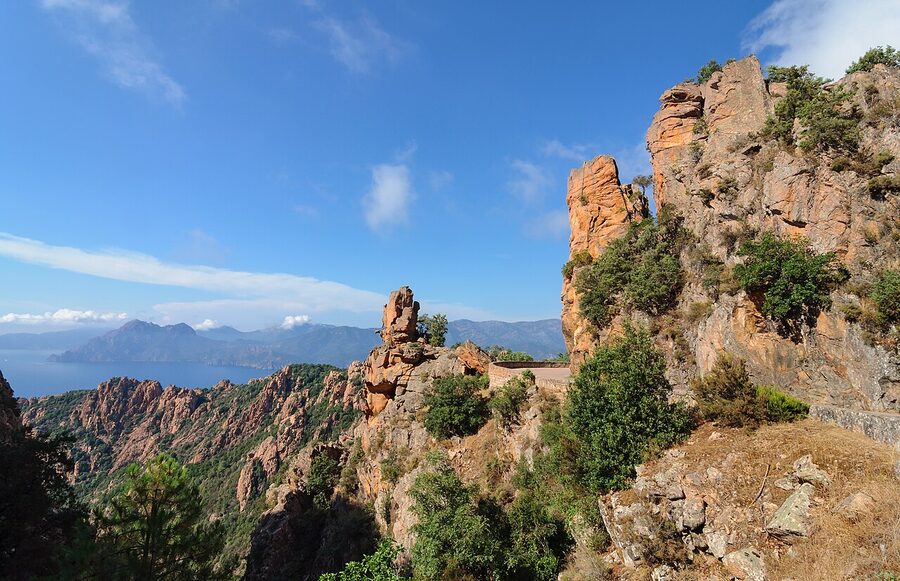
Worth knowing: the D81 is one of the most-photographed roads in France for a reason, and also a slow, narrow drive with heavy summer traffic. If you do it, leave early or go at the end of the day. The colours are best in the hour before sunset, which is also when the road is quietest because most day-trippers have already started back.
Bonifacio: The Cliff Town at the Other End of the Island
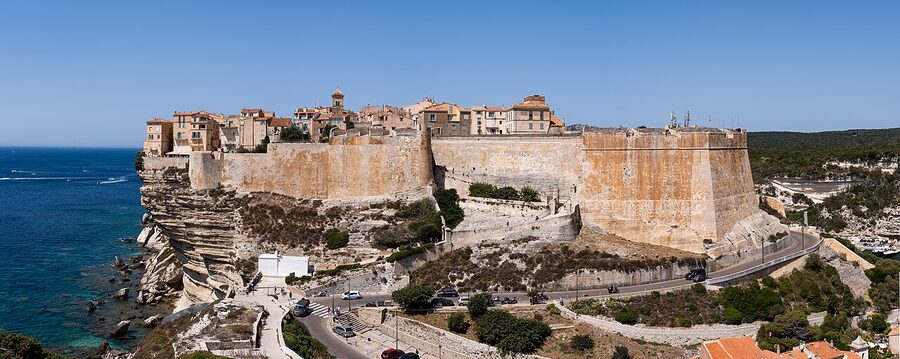
Bonifacio is the other photo destination most foreign travellers come to Corsica for, and it’s at the southern tip of the island, 200km from Ajaccio. The drive is 3 hours through the interior, the bus is 4 hours, and there’s no train. If you’re basing in Ajaccio for the boat trips, you can do Bonifacio as a long day-trip but you’d be better off splitting your stay: 2-3 nights Ajaccio, 1-2 nights Bonifacio.
The town itself is built on white limestone cliffs that overhang the sea. The Old Town sits 70m above the water on a peninsula that looks across the Strait of Bonifacio at Sardinia, 11km south. The cliffs are honeycombed with sea caves and arches, and there are boat trips from Bonifacio harbour that show you the cliffs from below: the Grain de Sable rock stack, the King of Aragon’s Staircase carved into the cliff face, and the Sdragonatu sea cave with the natural skylight.
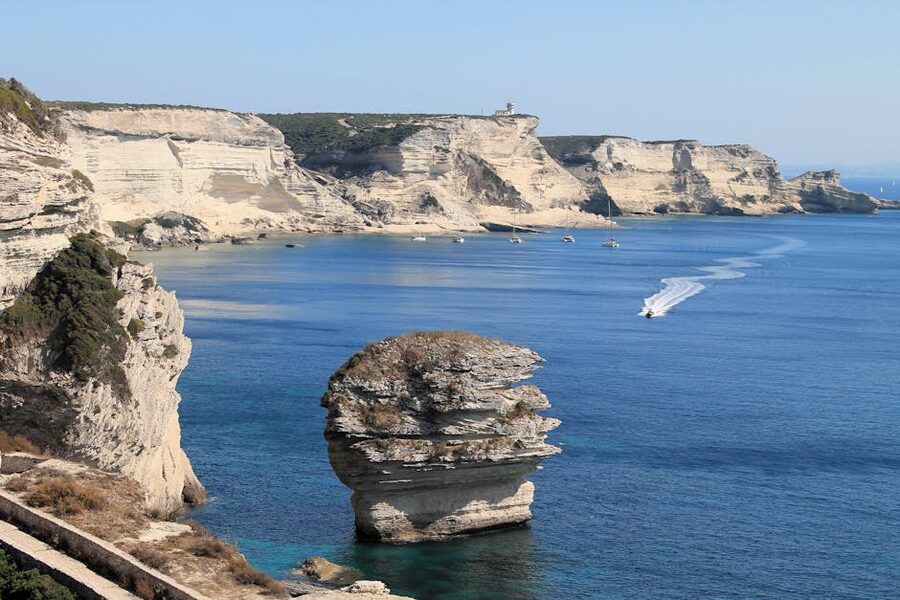
If you have the days, do both. The Sanguinaires and Scandola are about granite and sunsets and red rock. Bonifacio is about white limestone and cliff towns and the Italian coast on the horizon. They sound like the same trip and aren’t.
Ajaccio as a Base: What’s Worth Doing in Town
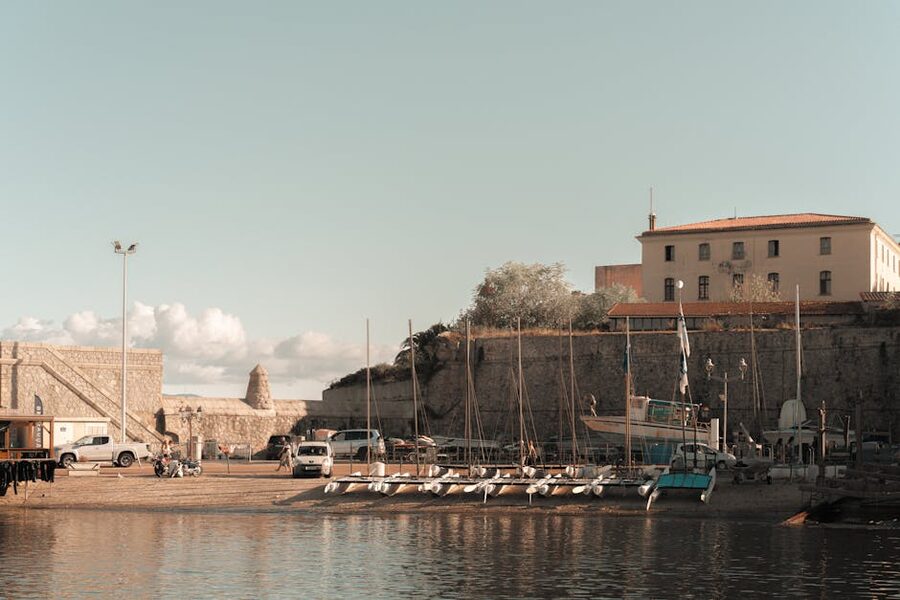
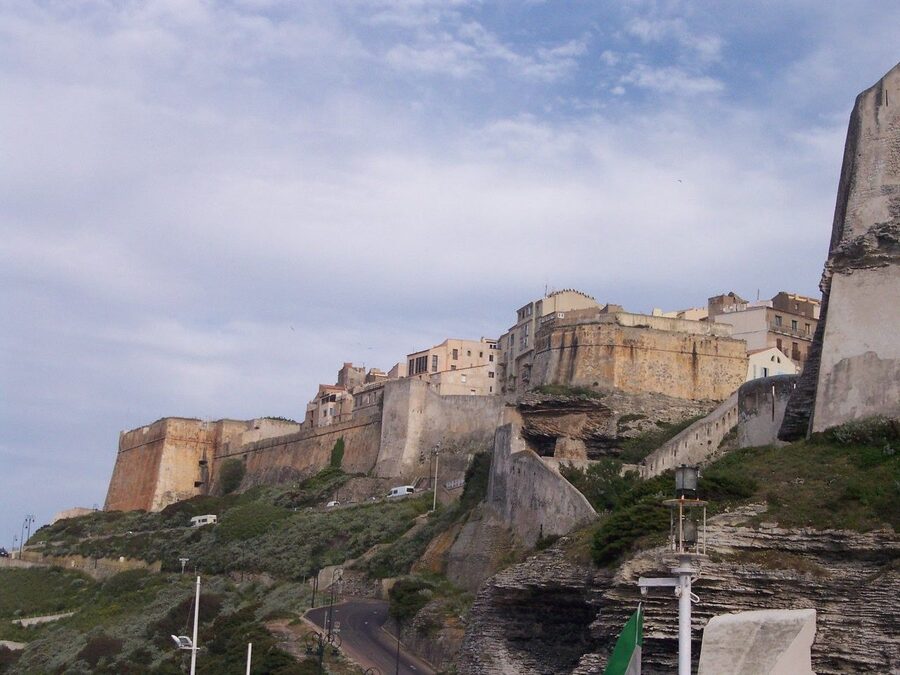
Ajaccio is a working town of around 70,000 people, which makes it the biggest in Corsica. It’s also Napoleon’s birthplace, and the entire centre is built around that fact. The Old Town fits inside the citadel walls and you can walk it end-to-end in 30 minutes. The Tino Rossi quay (where your boat leaves) sits directly under the citadel.
The non-negotiable Napoleon site is the Maison Bonaparte, the four-storey townhouse where he was born on 15 August 1769, the same year France acquired Corsica from Genoa under the Treaty of Versailles (a different one). The house is on Rue Saint-Charles in the Old Town, and entry is free with a EU passport (€7 for non-EU). It’s run by the French national museums and contains the family’s furniture, Napoleon’s baptism record from the cathedral around the corner, and the bedroom where Letizia Bonaparte gave birth.
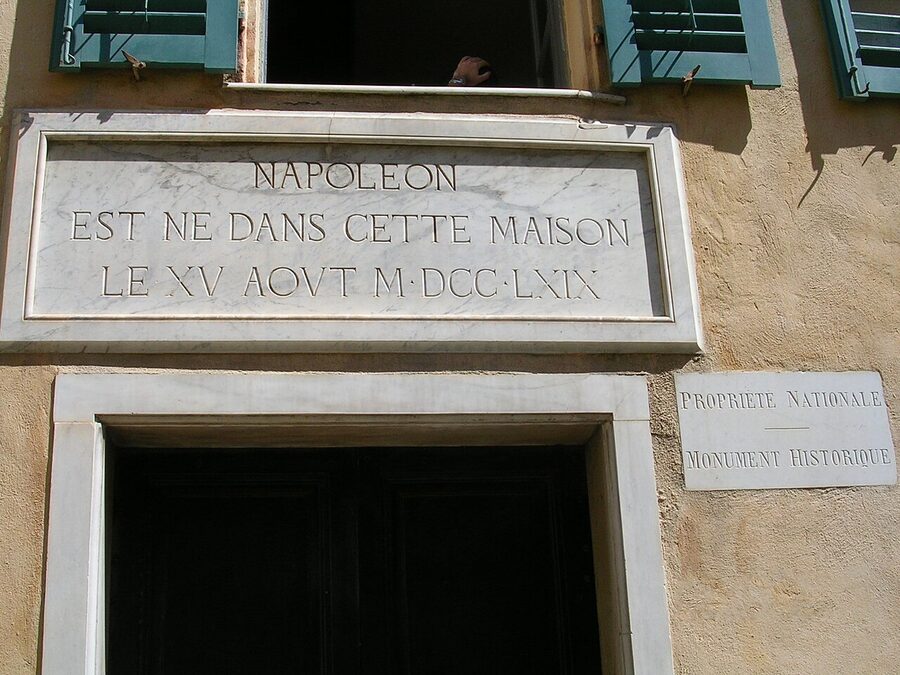
The Napoleon trail in town is short and worth doing in a single morning:
- Maison Bonaparte: the actual birthplace, with original furniture (or close copies).
- Place du Maréchal-Foch: Napoleon I as Roman emperor, on a four-lion fountain.
- Cathedral of Notre-Dame de l’Assomption: where he was baptised in 1771. Free entry.
- Salon Napoléonien at the Hôtel de Ville: a small first-floor museum with the family death masks and personal effects.
- Place d’Austerlitz: the giant statue at the top of the hill, with a model of the eagle of Austerlitz at the base.
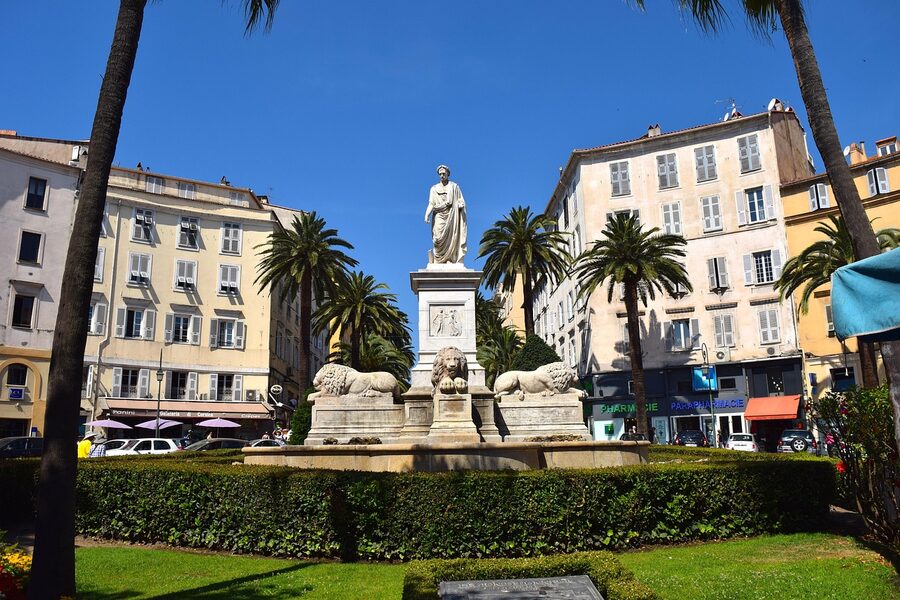
Napoleon’s life-arc reads like a continental loop: born here in Ajaccio in 1769, military school in mainland France, marriage and coronation in Paris, exile to Elba, Saint Helena, death in 1821 and burial back at Les Invalides in Paris in 1840 after a 19-year delay and a French naval expedition to retrieve the body. If you’re doing the full Napoleon pilgrimage, the bookends are this house in Ajaccio (his birth) and the gold-domed sarcophagus at Les Invalides (his tomb). The middle of the story is everywhere else in France. The same single-house-as-pilgrimage logic operates at the Anne Frank walking tour in Amsterdam, which uses one canal-side address as the spine of a much larger 20th-century historical arc.
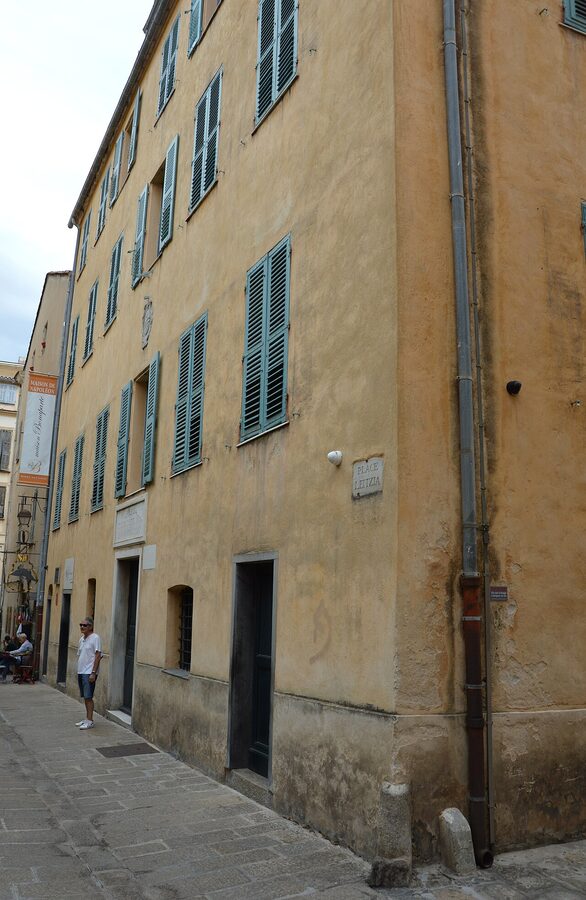
Walking the Old Town
The Old Town is best done on foot. Start at the Place du Maréchal-Foch with the lion fountain, walk up Rue Cardinal Fesch to the Musée Fesch (the second-best Italian Renaissance collection in France after the Louvre; Napoleon’s uncle Cardinal Fesch was the collector). The museum has Botticelli, Bellini, Titian, Veronese, and a single Caravaggio. €8, closed Mondays, takes about 90 minutes.
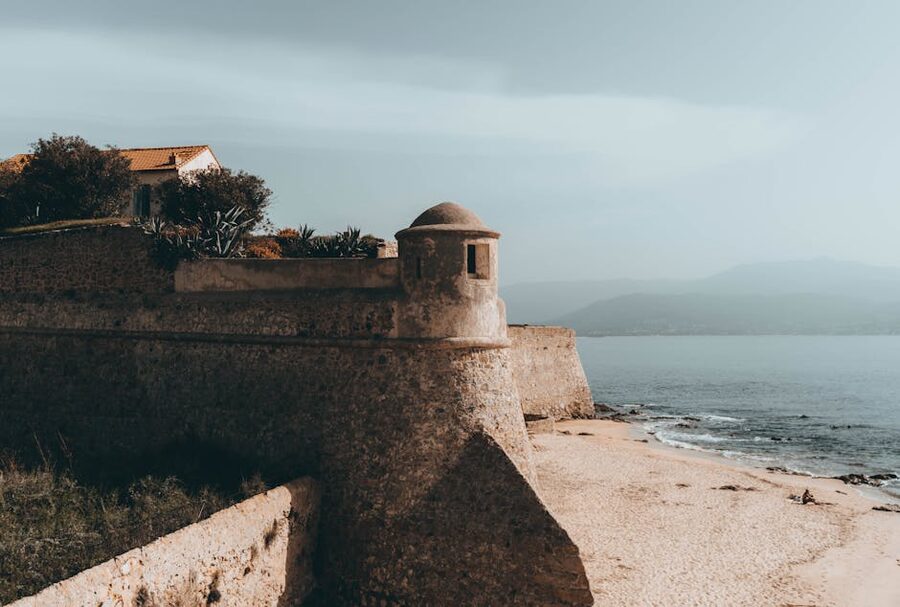
From the Musée Fesch, head back toward the citadel via Rue Bonaparte (passing the Maison Bonaparte) and onto the seafront. The citadel itself isn’t open to the public (it’s still a military site) but you can walk around the base on the Boulevard Danièle Casanova. The little Saint-François beach sits in the lee of the citadel walls and is the most central swimming spot in town.
Where to Eat
Three Ajaccio rules:
- Lunch is the meal. Most local places do a serious 90-minute lunch and a half-hearted dinner. Plan accordingly.
- Order the charcuterie. Corsican charcuterie (figatelli, coppa, lonzu, prizuttu) is from semi-wild pigs raised on chestnut forest acorns and is its own thing. The Italians took notes.
- The aperitif is Cap Corse Mattei, a fortified wine made on the north of the island since 1872. Order it sec, on ice, with an orange peel.
For dinner the traditional sit-down spots cluster around Rue Cardinal Fesch and Place de Gaulle. For something more casual, the night market on Place du Diamant runs 6pm-midnight in summer and is where locals actually eat in July-August. The cheap fish counter is the Marché du Casone on Rue du Cardinal Fesch in the morning; it’s the morning fish market and most of what you’ll see on restaurant menus that night was sitting on this counter at 8am.
The Three Boat Trips: Which to Book
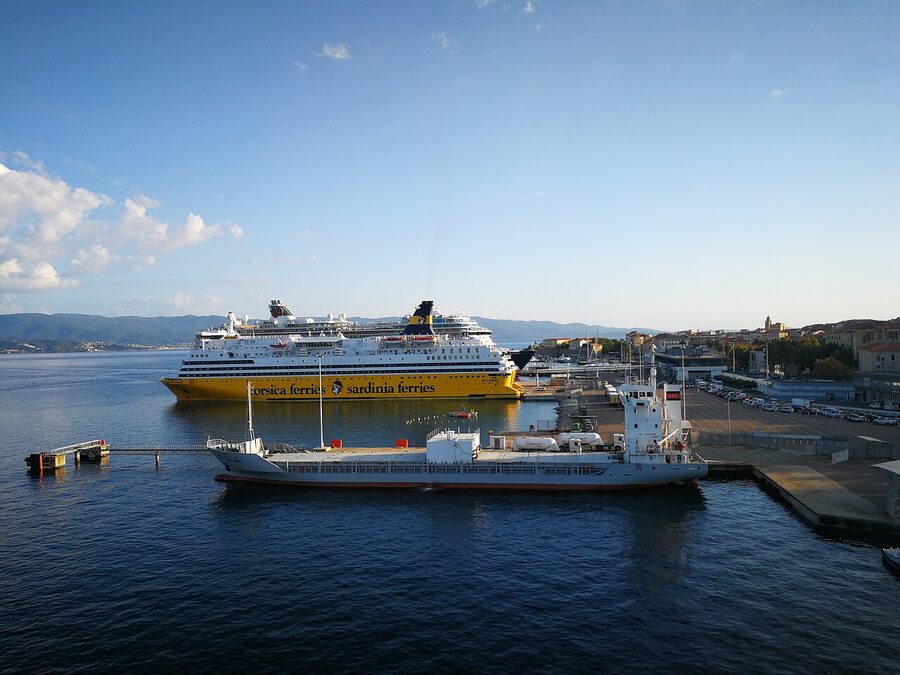
Three picks below. Different price points, different durations, different experiences. The Sanguinaires sunset is the cinematic 3-hour evening cruise that everyone should do once. Scandola is the serious all-day UNESCO trip for people who want the geology and the wildlife. The open-top bus is a 90-minute town tour for the day you arrive and don’t want to walk anywhere yet. They’re not interchangeable.
1. Sanguinaires Islands & Ajaccio Gulf Boat Tour: $42
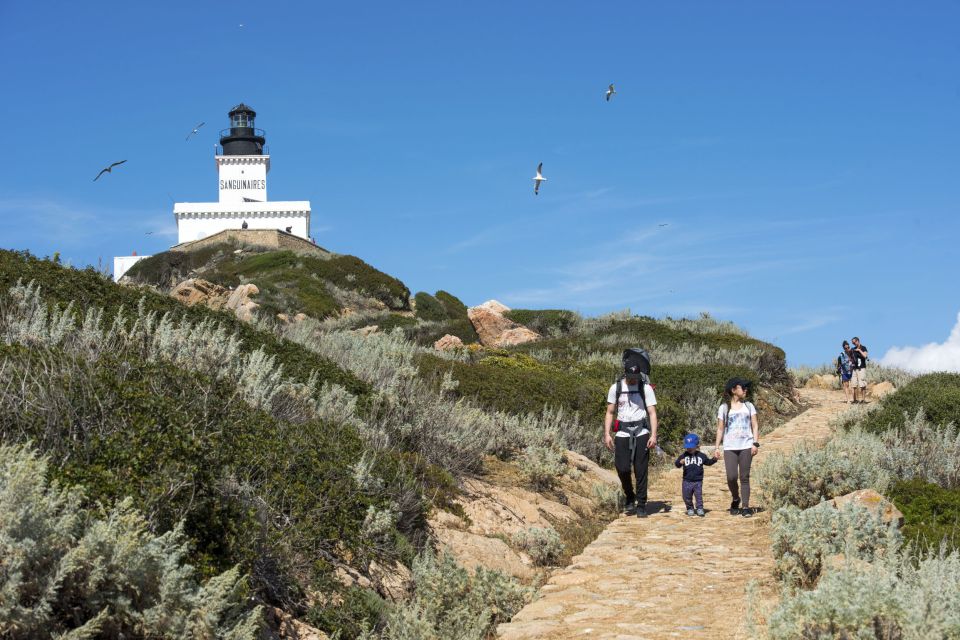
This is the right pick if you only have one evening in Ajaccio and want the postcard photo. The boat is a comfortable mid-sized vessel (40-60 passengers, indoor and outdoor seating), the commentary is in French and English, and our full review covers the swim-stop variant versus the lighthouse-landing variant. The trade-off is that the boat fills up in July and August, so book at least 48 hours in advance.
2. Scandola Nature Reserve Guided Boat Tour: $82
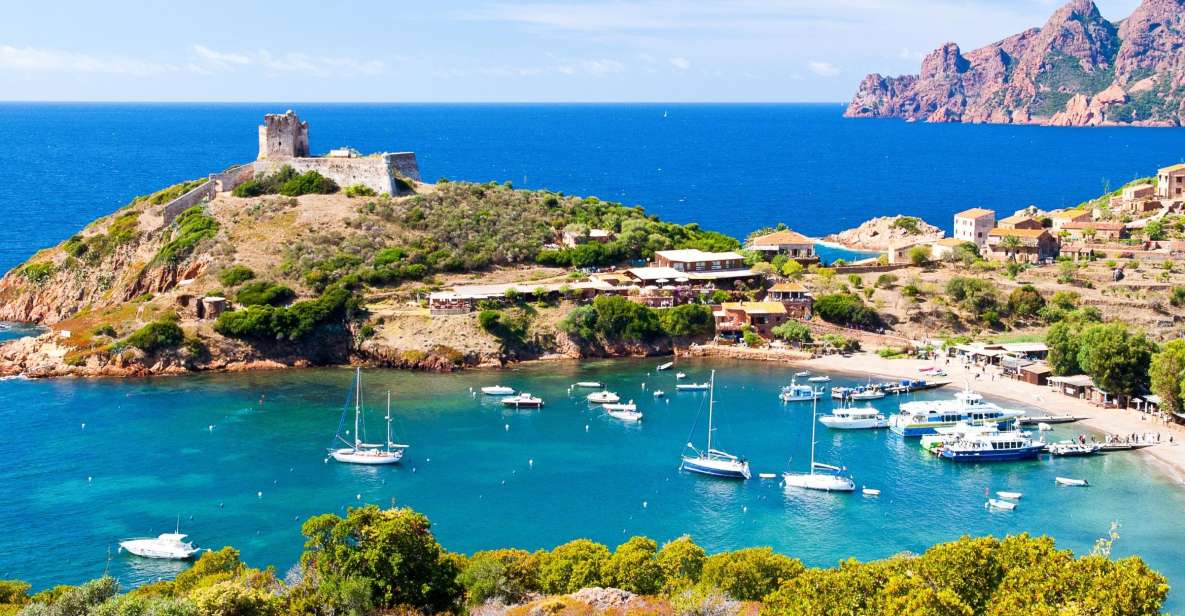
This is the pick if you can give up an entire day for one trip and you want the geology more than the sunset. The boat is faster than the Sanguinaires vessels (semi-rigid inflatable, 8-12 passengers, much more direct contact with the water) and our review explains why the Ajaccio departure beats the shorter Porto departure for first-time visitors. The trade-off is the long sea time; if you get seasick, take a tablet at breakfast.
3. Ajaccio Town Highlights Open-Top Bus Tour: $14
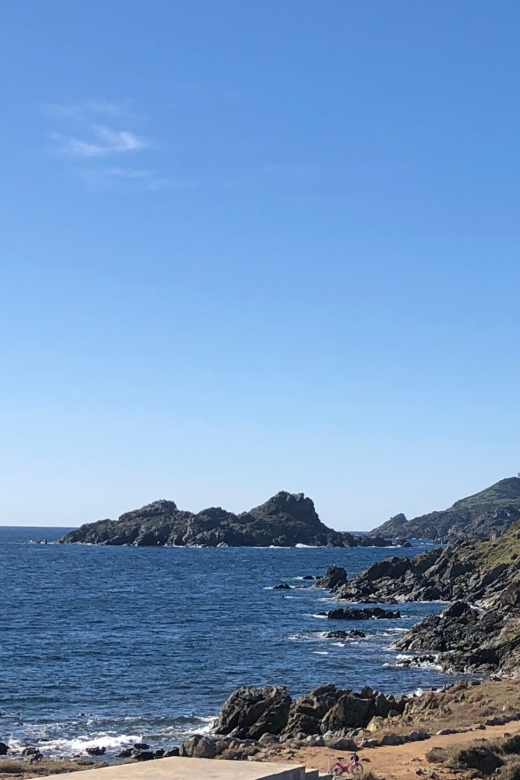
This works the same way as the Marseille hop-on-hop-off or the Paris bus tour: orientation, not depth. You’ll see the citadel, the Maison Bonaparte facade, Place Foch, and the Sanguinaires road out toward the Parata lighthouse. Our review notes that the commentary is decent but the route is short. Useful if you only have a day in Ajaccio between connecting boats.
When to Go (and When Not To)
The boats run May to early October. Outside that window, the Sanguinaires sunset cruise reduces to a 90-minute coastal pass with no sunset (because it’s dark by 5pm and the swell is too rough for the islands), and Scandola tours stop entirely because the swell prevents entering the sea caves. November to April, you can still come to Ajaccio but you’re doing town and museum days, not boats.
Inside the May-October window, here’s the seasonal breakdown:
- May-June: the right months. Water is 18-22°C (cold but swimmable), wildflowers cover the maquis, days are 25-28°C in town. The Sanguinaires boat is half-empty. Book 24 hours ahead.
- July-August: the busy months. Water is 24-26°C, town is hot (32°C+), every restaurant is full and prices double. Book everything a week ahead.
- September: arguably the best month. Water is at its warmest (24°C), crowds drop sharply after the second week, and the sunset is at a more civilised 7:30pm rather than the 9pm of July.
- Early October: the last good window. Boats still run, water is still 22°C, and you can get a Tino Rossi quay departure at 5:30pm with five other passengers. Book the day-of.
Avoid the second week of August (French school holidays end) and the first week of September (French school holidays begin) if you can. The ferries are full and prices spike.
Day-Trip Combinations
If you’re piecing together how the days fit, here’s the rhythm I’d run:
3-day base in Ajaccio: Day 1, arrival, town walk, Maison Bonaparte and the Napoleon trail. Day 2, Sanguinaires sunset boat in the late afternoon (free morning for the Musée Fesch). Day 3, Scandola full-day boat. This is the minimum that does the place justice.
4 days: add a drive into the interior. Vizzavona is the easy one (45 minutes, mountain village at 920m, walks in the chestnut forests). Or Bocca di Vergio further north (2 hours, alpine pastures, GR20 trail crossing). The interior is what most travellers don’t bother with and where Corsica feels least like France.
5+ days: add Bonifacio. 3 nights Ajaccio + 2 nights Bonifacio. Bonifacio is the cliff-town and the boat trips there go to the cliffs and Sardinia, not the Sanguinaires. They’re separate experiences that share an island.
What to Bring on the Boat
The boats are reasonably equipped but bring:
- A windproof layer. Even in August, the wind on a moving boat at sunset is colder than you expect.
- Sunglasses and a hat. The midday sun is brutal on water.
- Reef-safe sunscreen if you’re going to swim. Scandola has marine protection rules and standard sunscreen is discouraged in the swim coves.
- A waterproof phone pouch or a real camera. Spray happens.
- Cash for the bar (not all boats take cards). The Pietra beer at Girolata costs €5 and the bartender won’t mind that you only have a €20 note, but the change is going to be slow.
Other Mediterranean France Worth a Look
If you’ve made it as far south as Ajaccio, you’ve already done the harder logistical work, and the obvious next-step trips are the rest of Mediterranean France and the islands in the western Mediterranean basin. The Camargue wetlands south of Arles are the closest mainland equivalent in terms of feeling like a different country than the rest of France: white horses, pink flamingos, salt marshes, no Provençal villages. The Verdon Gorge inland from Nice is the inland version of what the Calanches deliver: turquoise water, vertical cliffs, and a road designed to test your nerves. The Monaco day trip from Nice sits at the opposite end of the Mediterranean France spectrum: tiny, pristine, expensive, and the inverse of Corsica’s wild interior.
If you want the same Italian-island geology a few hours south, the La Maddalena archipelago off northern Sardinia is the same volcanic Mediterranean rock formation as the Sanguinaires; the strait between them is only 11km wide. The Capri boat tours from Naples hit a similar sea-cave note (the Blue Grotto) at the limestone end of the spectrum, the way Bonifacio does. And further west, the Ibiza beach catamaran cruises are the same evening boat-and-aperitif format as the Sanguinaires sunset, just with a different rock colour and a Spanish soundtrack.
If you’re moving on from Corsica overland, the Marseille hop-on-hop-off is the natural first day back on the mainland after the overnight ferry, and the Lyon city tour picks up if you’re heading north toward the Loire and Paris. For the rest of the French itinerary, the Loire Valley castles, Giverny and Monet’s house, the Seine river cruises in Paris, and the Eiffel Tower are the standard Paris-and-onward circuit.
One Last Thing
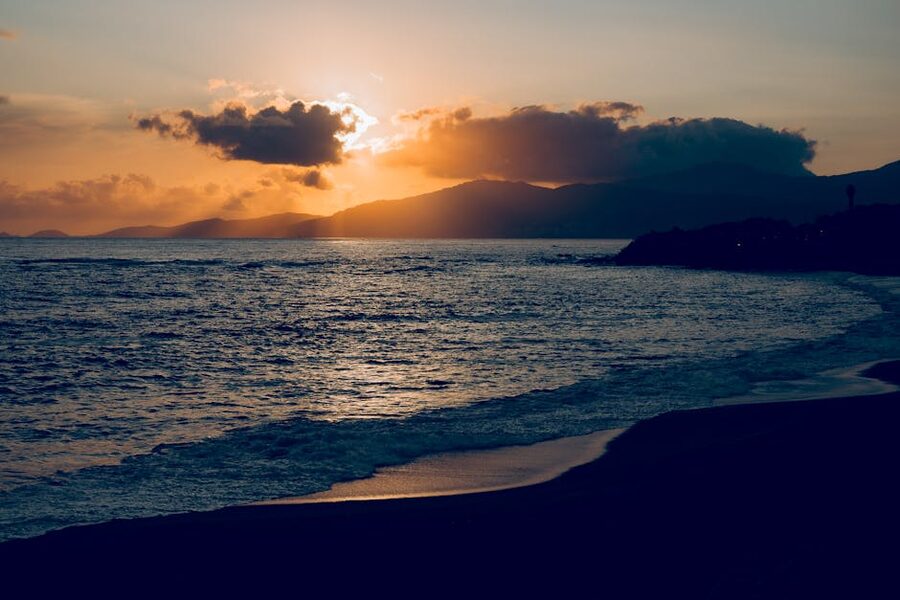
The Sanguinaires sunset is one of those experiences that survives the postcards. You can look at a hundred photos of red rock and orange water and the lighthouse in silhouette and think you’ve seen it. Then you’re on the boat with the engine off and a plastic cup of rosé in your hand and the sun starts dropping behind Mezu Mare, and the granite goes the colour of red wine, and you understand why the Genoese named these islands what they named them.
Three hours, $42, and you’re back on Tino Rossi quay by 9pm. Walk to dinner. Order the figatelli. The day after, do Scandola.