
A friend booked the Naples Underground tour for her group of six last spring. She booked the right thing in the wrong place. They turned up at Piazza San Gaetano in the historic centre, were politely told they had tickets for a different tour, and watched the Napoli Sotterranea group disappear into a stairwell without them. Their booking was for the Spanish Quarters Underground, on the other side of Via Toledo, twenty minutes away on foot. Two completely separate tours, both legitimately called “Naples Underground” by different operators, both worth doing, and almost no one explains the difference before you book.
This is that explanation. The Spanish Quarters Underground is not the famous one in the brochures. That’s Napoli Sotterranea, the headline tour with the pre-modern aqueduct chambers and the WWII shelter rooms full of recovered objects. The Spanish Quarters version is shorter, smaller, less famous, and sits underneath one of the most photographed neighbourhoods in southern Italy. It’s also genuinely fascinating, mostly because it pairs the tunnels with the alleys directly above them.
In a hurry? Three picks that actually work
- Spanish Quarters Underground Guided Tour ($17, 1 hour): the flagship, run by professional archaeologist guides, English or Italian. Book on GetYourGuide.
- Royal Palace + Spanish Quarters Small Group ($37, 2.5 hours): the version that pairs the alleys with the Royal Palace and Galleria Umberto. Book on GetYourGuide.
- Spanish Quarters Street Art Tour ($14, 2 hours): above-ground walking tour focused on the Maradona mural and the murals around it. Book on GetYourGuide.
The two underground tours, and why people get them confused
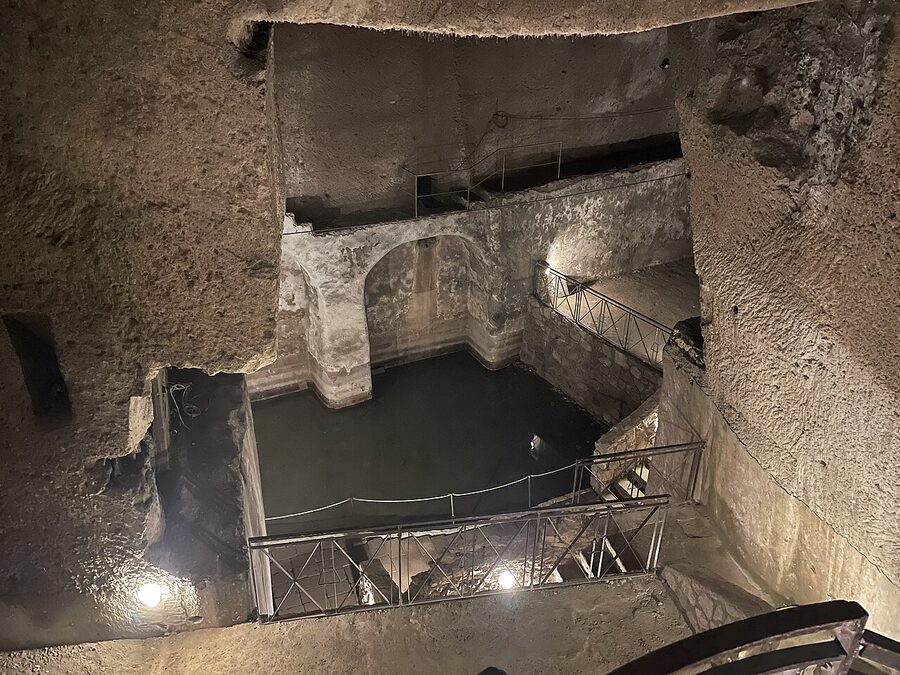
Naples sits on tuff, the soft volcanic stone the Greeks started quarrying around the 4th century BCE. The Romans turned the quarries into an aqueduct. By WWII the same network was used as bomb shelters. That whole system runs under most of central Naples, which is why there are several different tour operators selling several different “underground” experiences, all of them legitimate, all of them on slightly different stretches of the same network.
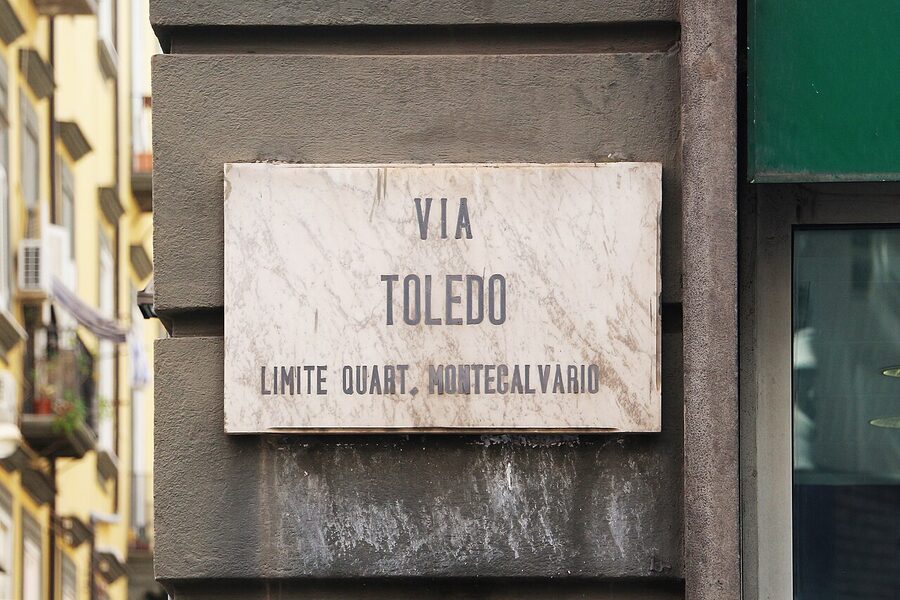
The two big ones for visitors are easy to mix up. Napoli Sotterranea, the famous one, is in the historic centre near Piazza San Gaetano. It’s longer (around 90 minutes), goes deeper into the WWII shelter rooms, and is what most travellers mean when they say they “did the Naples underground.” Our full Napoli Sotterranea guide covers that one. The Spanish Quarters Underground is the one this article is about. It’s an hour, smaller, and the entrance is on Vico S. Anna di Palazzo, near the bottom of the Spanish Quarters grid where Via Toledo meets Piazza Trieste e Trento.
If you’re trying to choose between them and have time for only one, do Napoli Sotterranea. It’s the more impressive sustained underground experience. If you have time for both, or you’re already going to be wandering the Spanish Quarters anyway, the Spanish Quarters version pairs really well with a walk through the alleys above. That pairing is the real reason to book it.
What the Spanish Quarters Underground actually is
You go down a staircase from the street, and within thirty seconds the temperature drops about ten degrees. The first chamber is a tuff quarry from the Greek period, recut by the Romans for the Neapolis aqueduct. The walls are vertical and the chisel marks are still visible (similar in feel to the natural-cave geology of the Caves of Hams in Mallorca, except this one is hand-carved rather than dissolved). You can see the historic water line running along one side, where standing water sat for centuries before the aqueduct was decommissioned in the late 1800s. There’s a ceiling opening (a “puteus”) that connects the chamber to a building above. Houses in this neighbourhood used to draw water through these openings with ropes and buckets. Most of them are sealed off now, but a few still go all the way up.
The middle section is the Bourbon-era cisterns, where rainwater was collected and stored. The guides at this point usually go into the legend of the Munaciello, the small spectral monk who supposedly haunted these tunnels. Locals partly believed in him and partly invented him to explain everything from missing food to mysterious noises (the same superstition impulse that filled the cells under the Conciergerie in Paris with their own catalogue of ghosts). The real explanation was that the well-keepers (the men who maintained the cistern openings) used to climb up through the puteus into people’s homes after dark, eat their food, and occasionally steal jewellery.
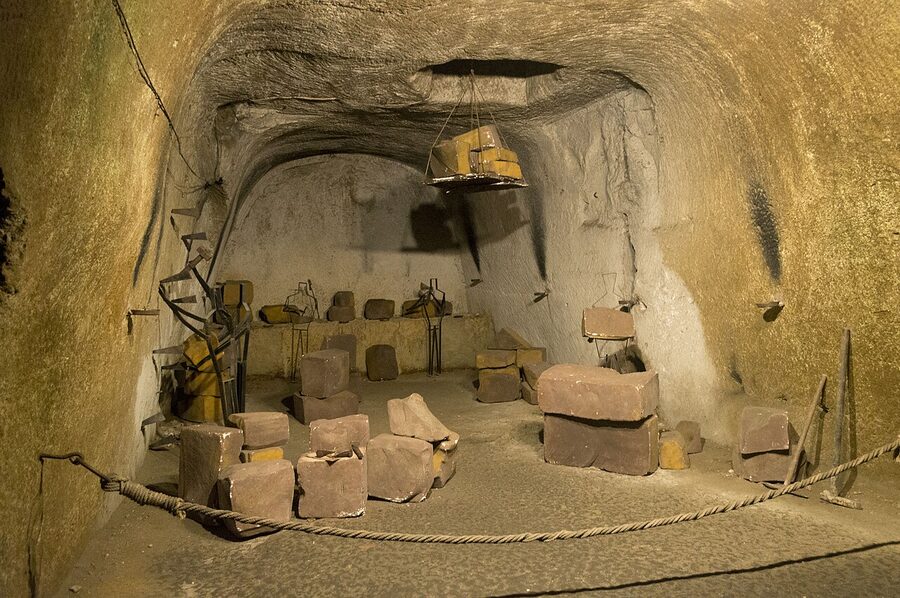
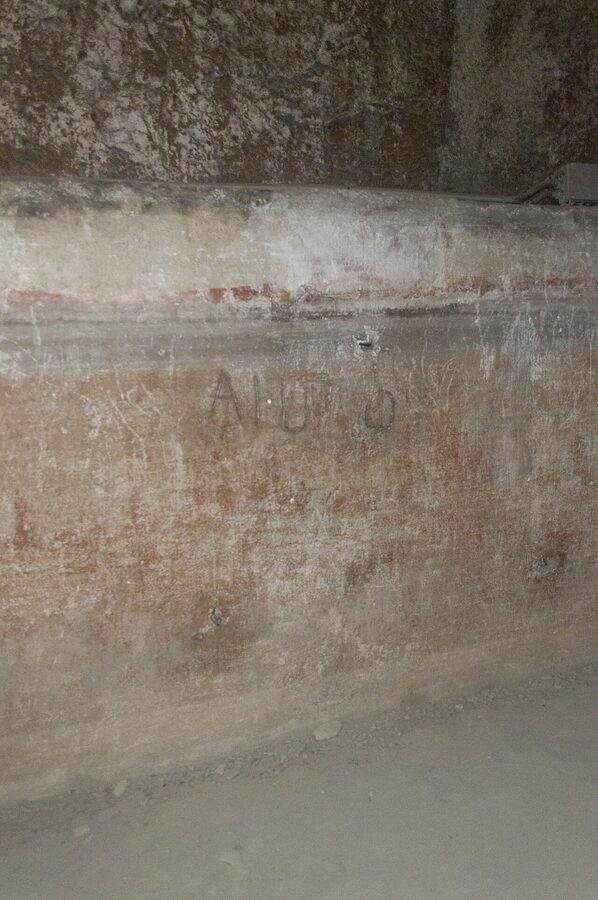
The last section is the WWII air raid shelter. It’s the smallest part of this tour and where Napoli Sotterranea has the more dramatic version. There are still a few painted graffiti from 1943, the year Naples was bombed more than a hundred times, and a few personal objects (a dented pot, some children’s drawings) of the kind that anchor the wartime narrative on the Anne Frank walking tour in Amsterdam and at Les Invalides in Paris. The guide will linger here. You won’t need long.
The neighbourhood above, and why it’s not what you’ve heard
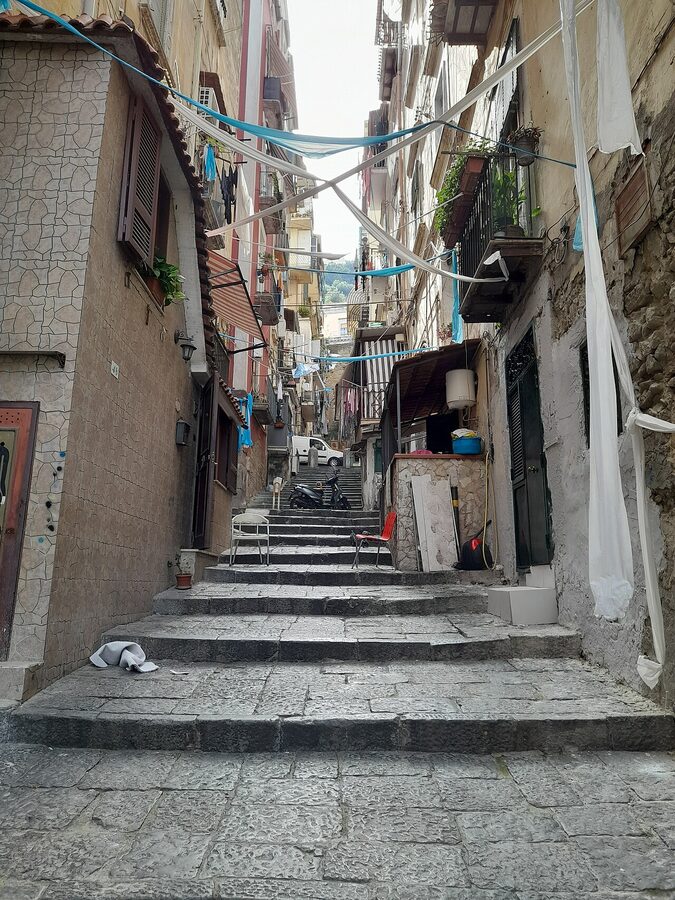
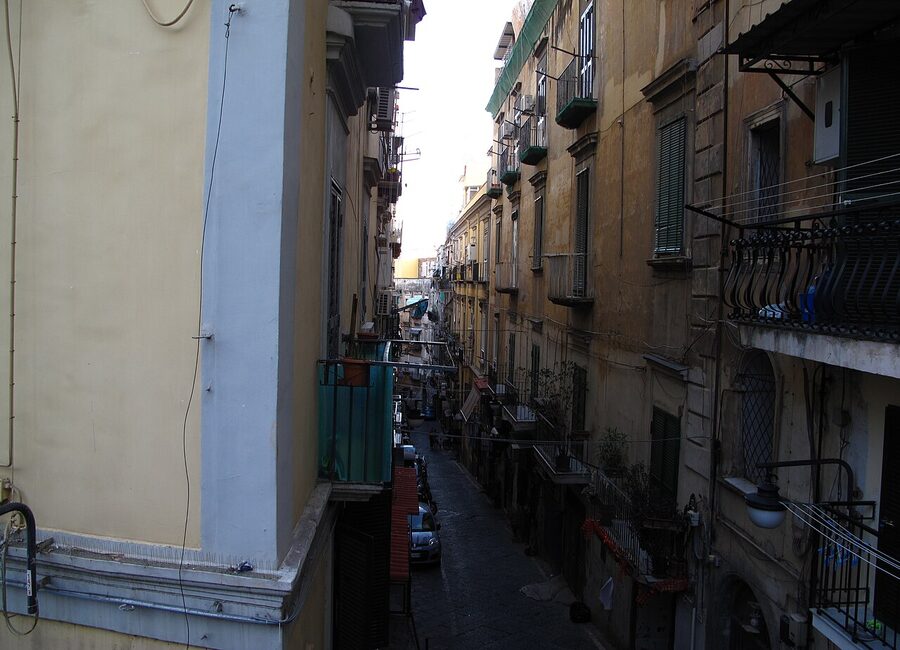
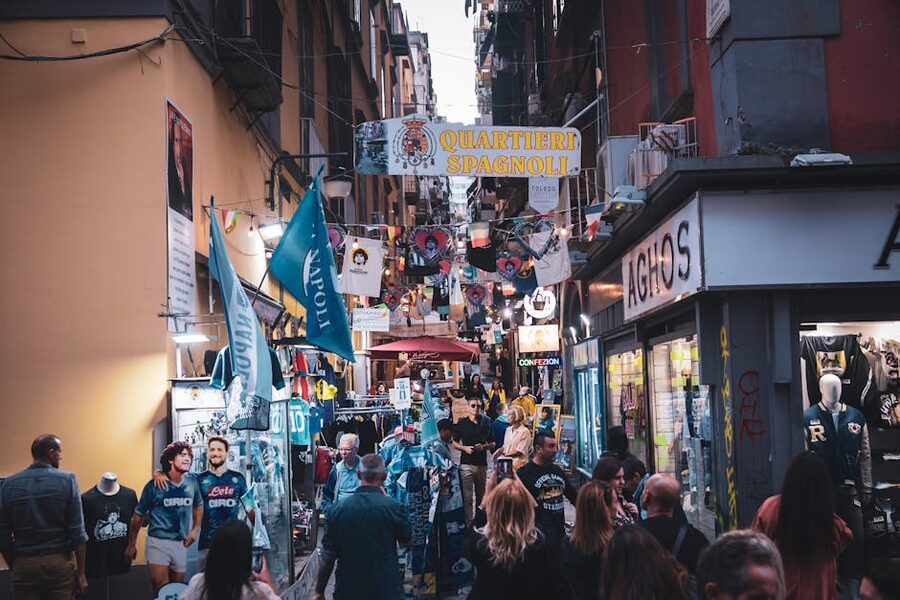
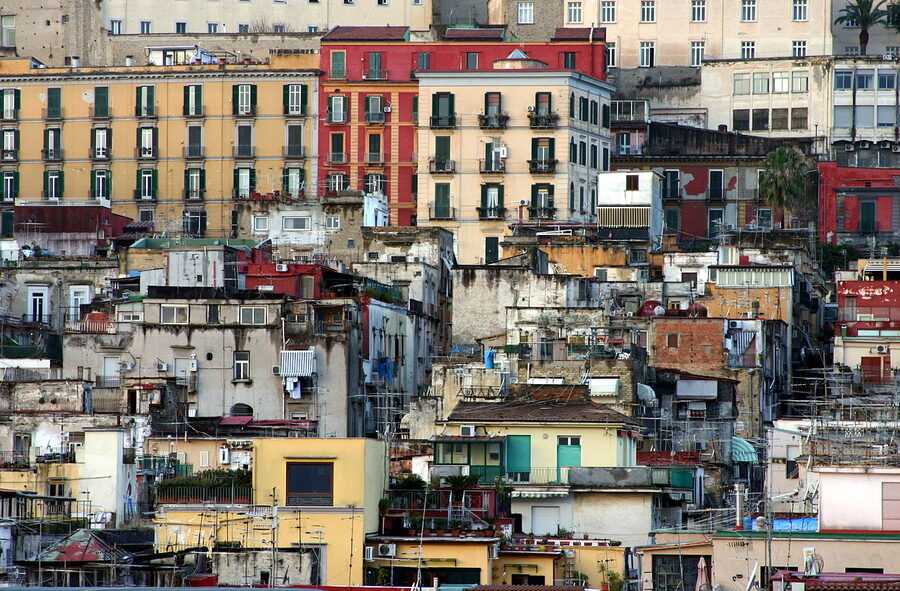
The Quartieri Spagnoli were built in the 1530s by the Spanish viceroy Don Pedro de Toledo to garrison troops controlling Naples. The grid is tight on purpose: narrow lanes, five-storey buildings, no breathing room. (The same garrison-grid logic produced the planned downtowns of Spanish-controlled Andalusia, which is why a wander through the Quartieri rhymes oddly with the modernist umbrella over the Roman foundations at the Setas de Sevilla.) When the Spanish left, the soldiers left, and a poorer working population moved in. For the next four hundred years the neighbourhood had the reputation it still has on most of the older travel forums (a reputation arc that resembles Amsterdam’s Red Light District: a dense quarter the city tells visitors to avoid, then quietly sells back to them as a walking tour). Loud, dense, dodgy, don’t go after dark.
That reputation is mostly out of date by 2026. The Maradona effect is real. Napoli won the Serie A title in 2023 (their first in 33 years), there’s a permanent Maradona shrine in the middle of the neighbourhood, and the daytime crowds in the Quartieri are now mostly tourists, locals, and football pilgrims in roughly equal share. A street-art scene has grown around the murals. Restaurants have opened. The pizza is genuinely some of the best in Naples, especially Concettina ai Tre Santi at the top of the grid. The old “don’t come here at night” line still gets repeated in guidebooks. It’s worth listening to in moderation: the deeper you go up the slope, the quieter the streets get after midnight, and like any dense urban neighbourhood there’s petty theft to watch for. But during the day, with a guide, walking the main alleys, you’re walking through one of the most photographed and tourist-friendly parts of the city.
The recommended tours
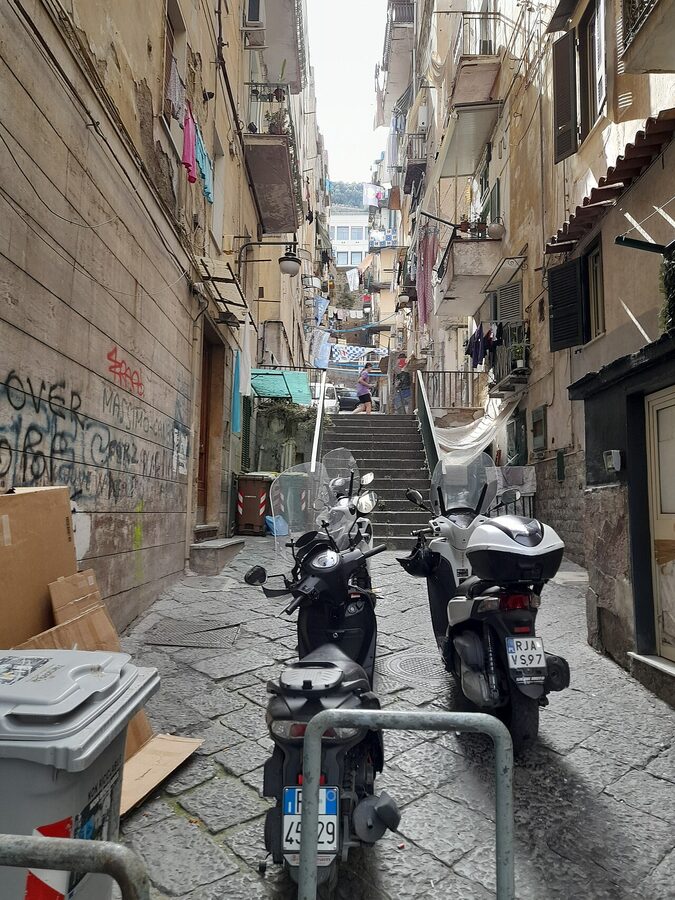
Three tours work for different visitor types. The first is the underground itself. The second is the underground plus the Royal Palace, which is the better option if you’ve never been to Naples and want a single tour that covers a lot of ground. The third is an above-ground walking tour focused on the murals, including Maradona, which is the better option if you’ve already done Napoli Sotterranea and want something different.
1. Spanish Quarters Underground Guided Tour: $17
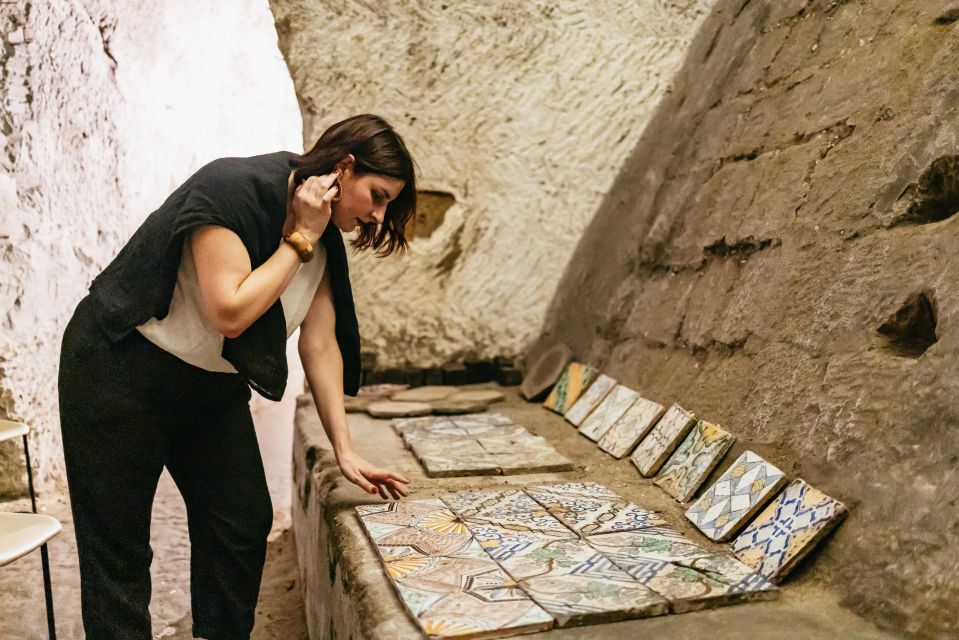
The cleanest version of this experience and the one most people should book. One hour, professional archaeologist guides who do this in English and Italian, and the smaller group sizes mean you can actually hear the guide in the tuff chambers. Our full review covers what to bring (a light jacket, the temperature underground stays around 15°C year-round) and the booking quirk where the meeting point is in the square outside, not at the entrance.
2. Royal Palace and Spanish Quarters Small Group Tour: $37
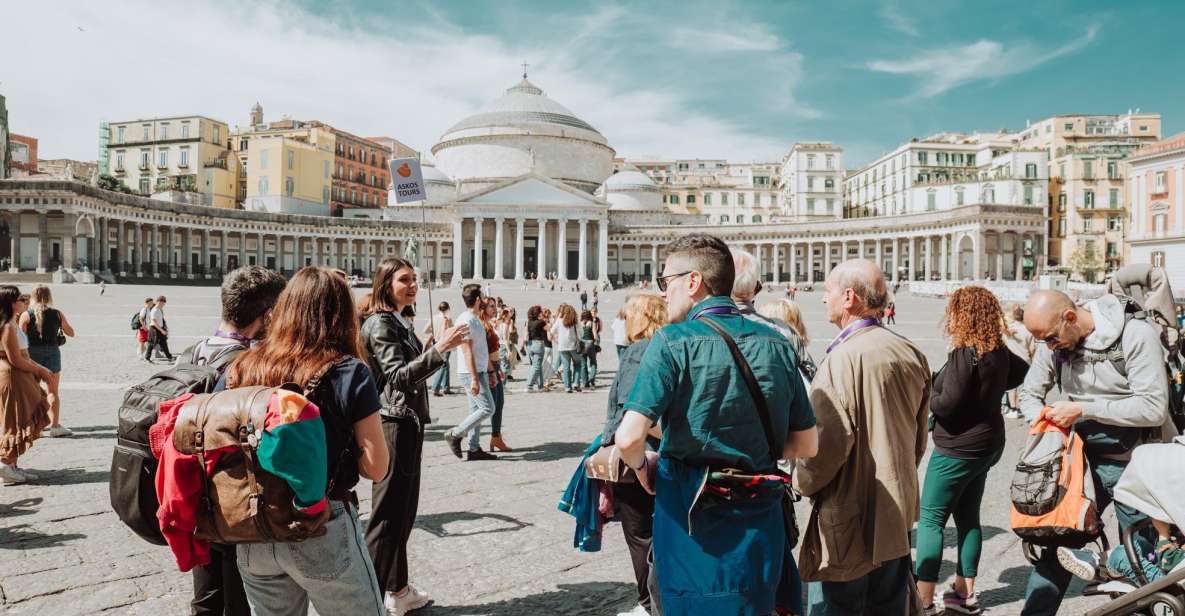
The right pick if you’ve never been to Naples and want one tour that gives you the monumental city and the popular city back to back. You’ll see Castel Nuovo, the Galleria, the Royal Palace from outside, then walk into the Spanish Quarters with context already in place. The full review notes that this version doesn’t include the underground; it’s a surface walking tour with the alleys as the main destination.
3. Spanish Quarters Street Art Tour: $14

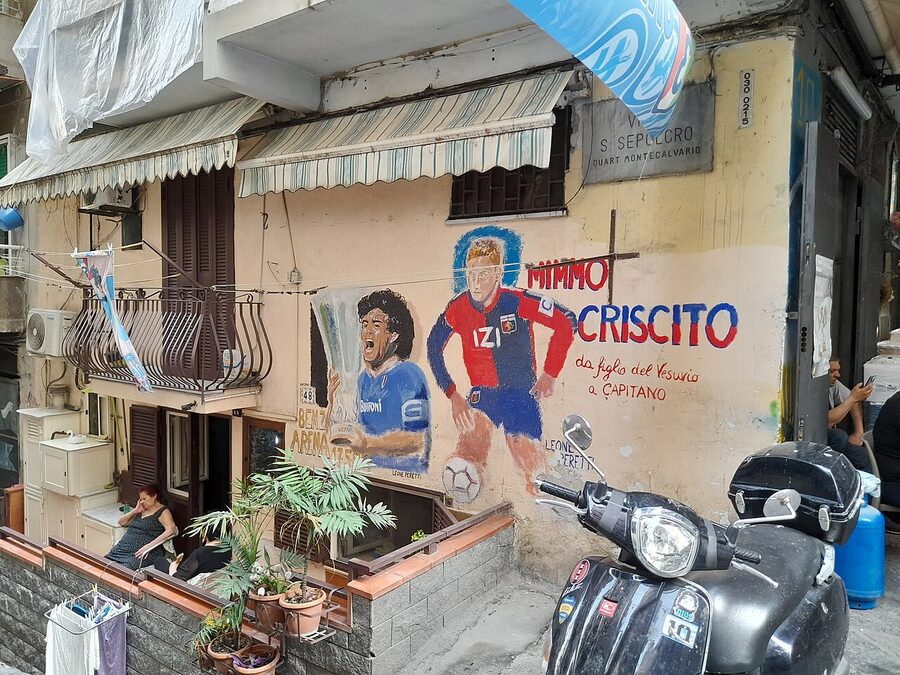
The right pick if you’ve already been underground in Naples and want to see the surface neighbourhood through the lens of its art. The guide will take you to the Maradona mural, the smaller painted shrines around it, and the lesser-known street pieces in the back lanes that you’d walk past otherwise. Our review recommends doing this one in the late afternoon when the light is right for the southern walls.
The Maradona shrine, and why it’s the heart of this place now
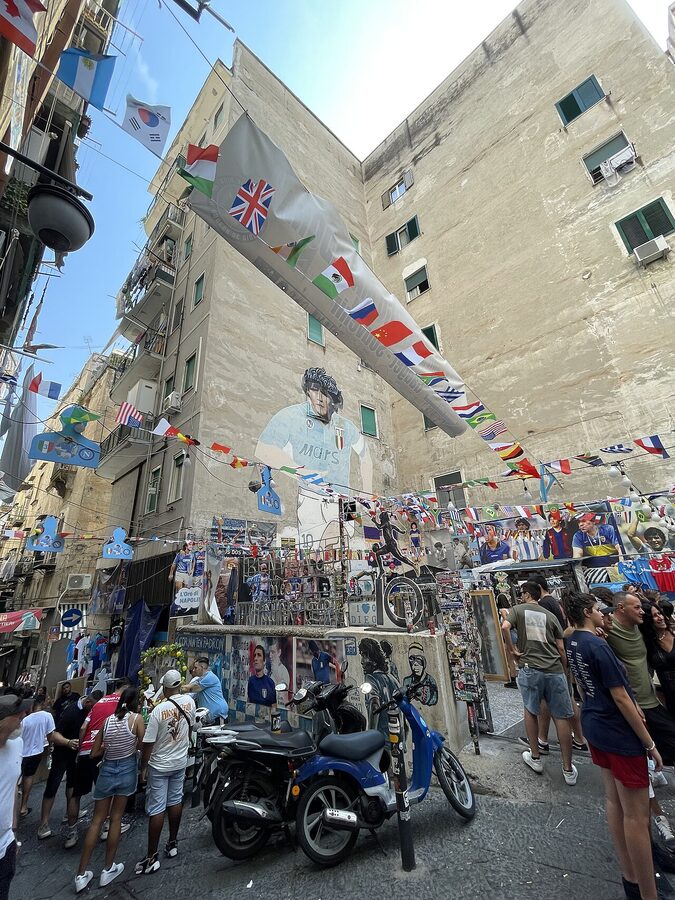
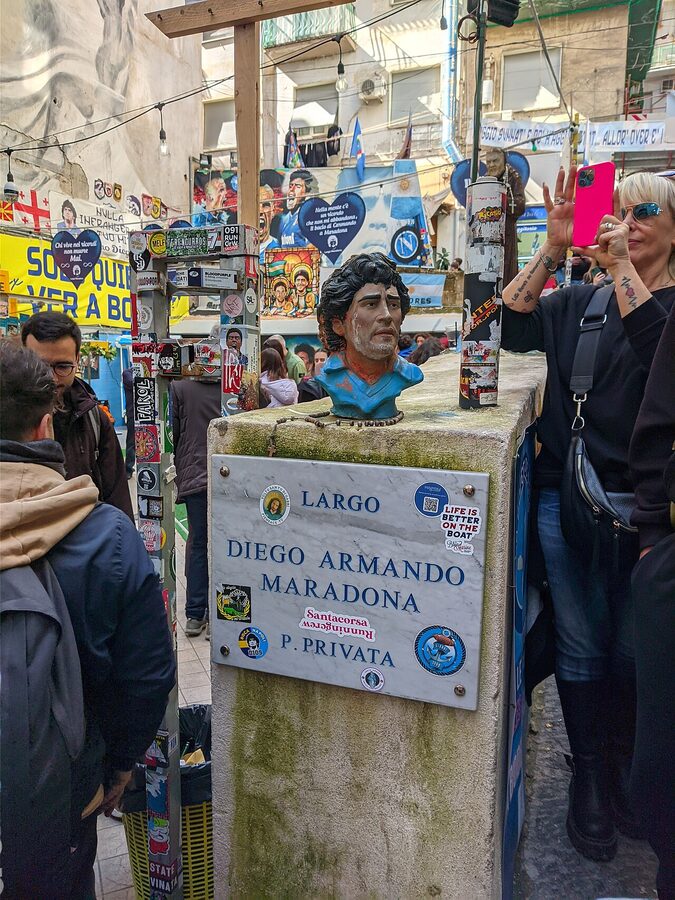
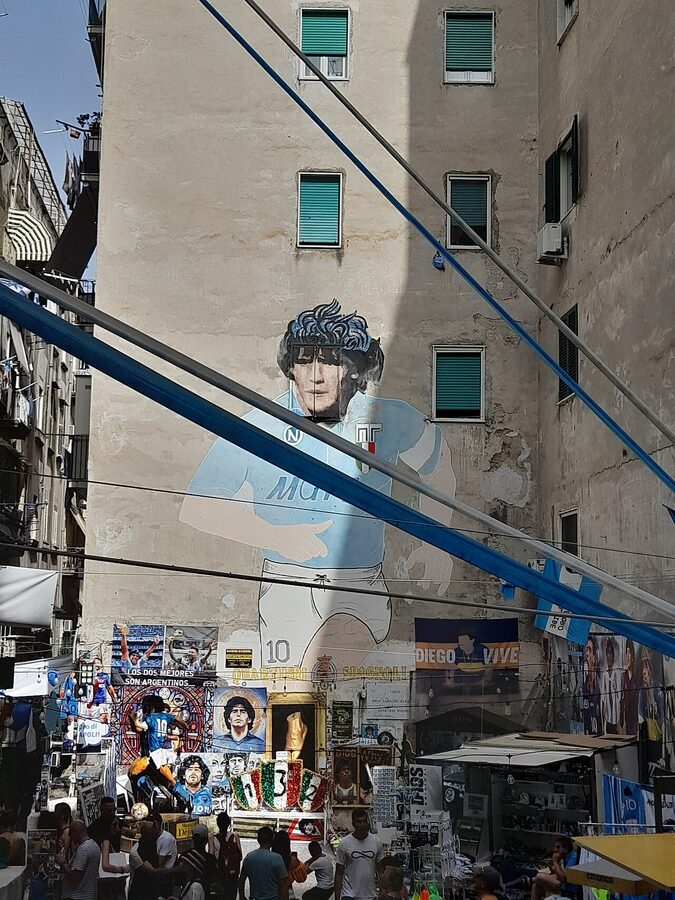
Diego Maradona played for Napoli from 1984 to 1991. He won the only two Serie A titles the club had ever had, then disappeared into a long and complicated exile from the city. He died in November 2020. Within hours, the Quartieri Spagnoli was draped in flags. Within days, the small back-alley mural that had existed on Via Emanuele De Deo since 1990 became a permanent shrine. The square in front of it was renamed Largo Maradona by the city in 2017, and the plaque was set into the wall after his death.
What you walk into now is a small piazza with the giant mural on one side, smaller murals (some of his face, some of his famous goals) on the others, an altar of candles and football boots and rosaries, and usually a vendor selling jerseys and scarves. It’s free to visit and it’s open all the time. The crowd thins out around lunch and after dark. If you have any interest in football, sports as religion, or the way a neighbourhood remembers a person, an hour here is worth more than another church.
How the underground and the alleys connect
This is the part that makes the Spanish Quarters Underground worth doing even if you’ve already been to Napoli Sotterranea. Most of the buildings on the alleys above were built directly on top of the existing tuff network. The same well-shafts that come into your tour from the surface go up into apartment buildings still occupied today. When you finish the underground tour and walk back into the alleys, you’re walking on top of the chambers you just stood in.
The good guides on this tour will point upward at specific buildings before you go down and tell you which one connects to which puteus. Then you stand in the chamber later and look up the same shaft and see daylight forty feet above you. It’s the kind of physical connection between two layers of a city that you don’t get from a museum. The same isn’t really true at Napoli Sotterranea, where the historic centre above is its own dense layer of churches and palaces and you don’t quite feel the relationship to the chambers below in the same way.
Above ground: what to do for the rest of an afternoon
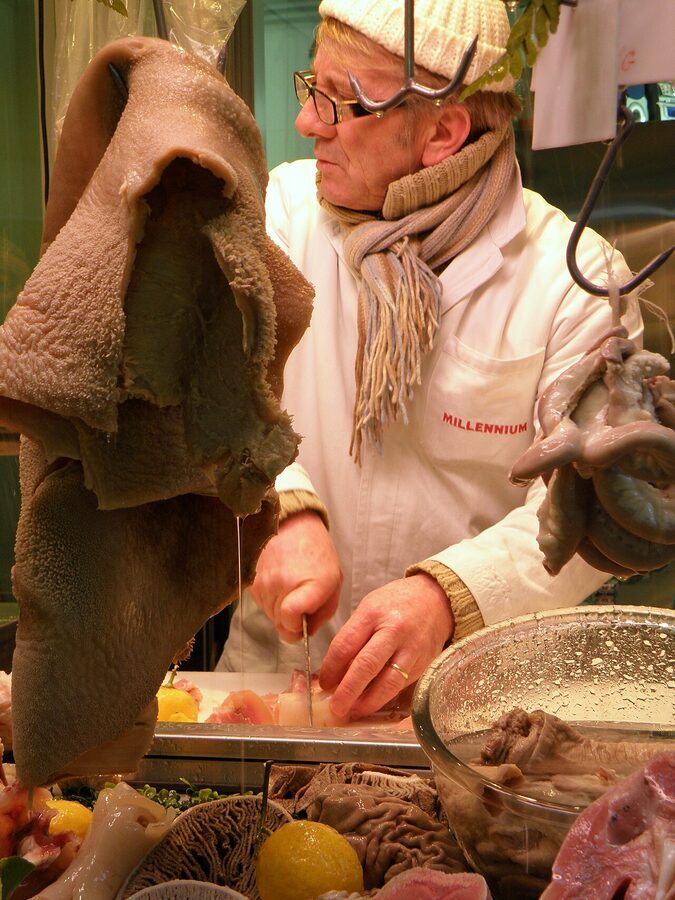
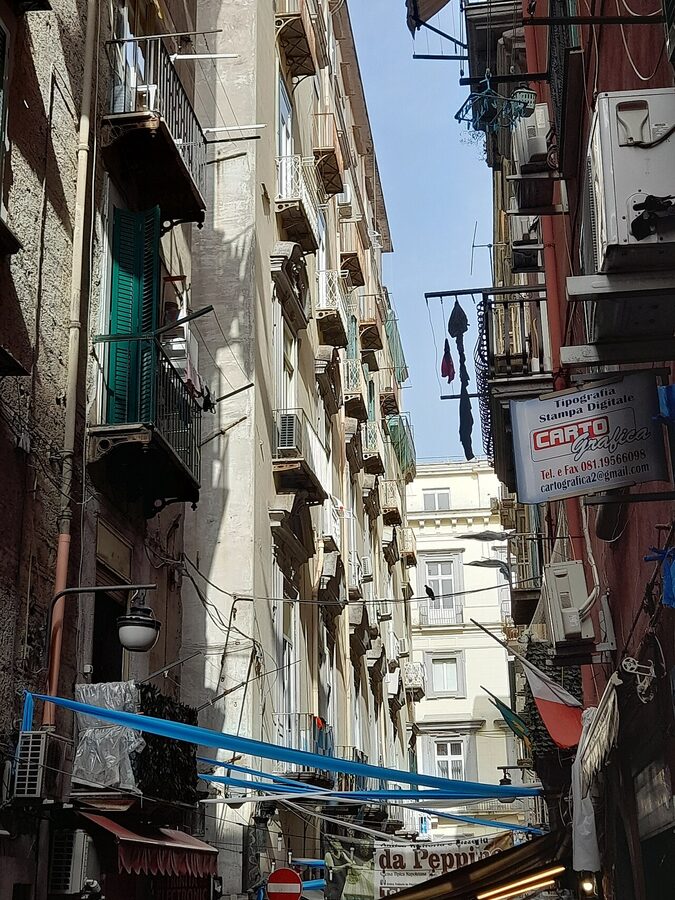
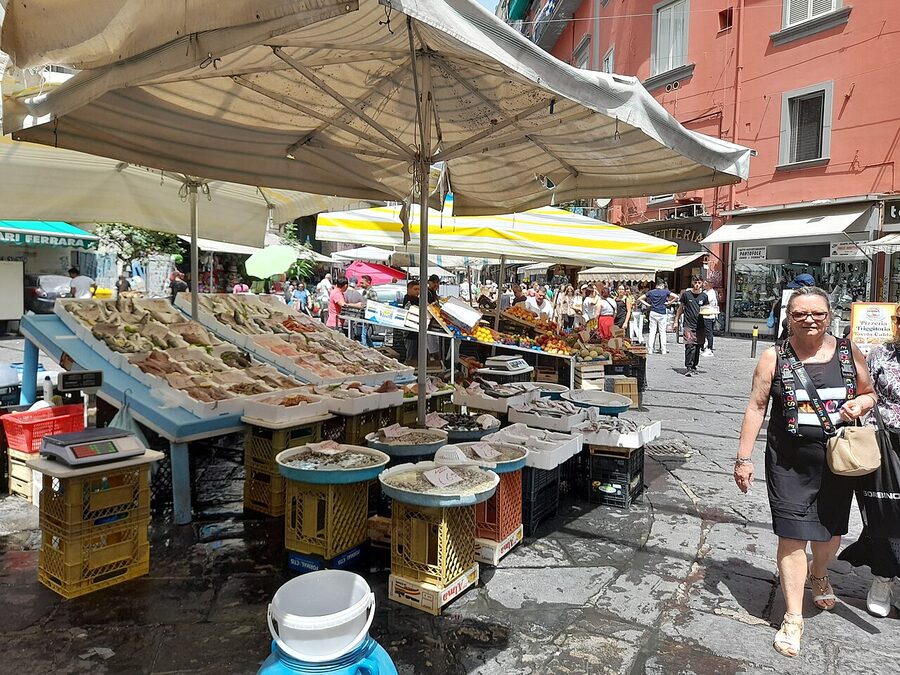
The underground tour is an hour. The neighbourhood deserves at least three more. From the entrance, walk uphill to Largo Maradona, then keep climbing through the grid. The quietest streets are at the top, near the Pignasecca side. Pignasecca itself, the open-air food market on the western edge, is one of the city’s best. The vegetable stalls keep summer hours; the fish counters and tripe seller open early and close around 2pm, so come in the late morning if you want the full picture.
Eat at one of the back-alley pizzerias before you leave. Concettina ai Tre Santi at the top of the grid is the famous one and worth the wait. For something faster, the cucinelle (basically tiny home-kitchen storefronts) along Vico Lungo del Gelso do plates of pasta for €6 to €8, and they don’t always have menus posted. Anything with seafood will be the day’s catch from the same network of small markets that supplies the famous pizzerias.
Practical info: getting in and getting around
The practical info that actually matters:
- Underground entrance: Vico S. Anna di Palazzo 52. Meeting point for tours: Piazza Trieste e Trento, near Bar Gambrinus.
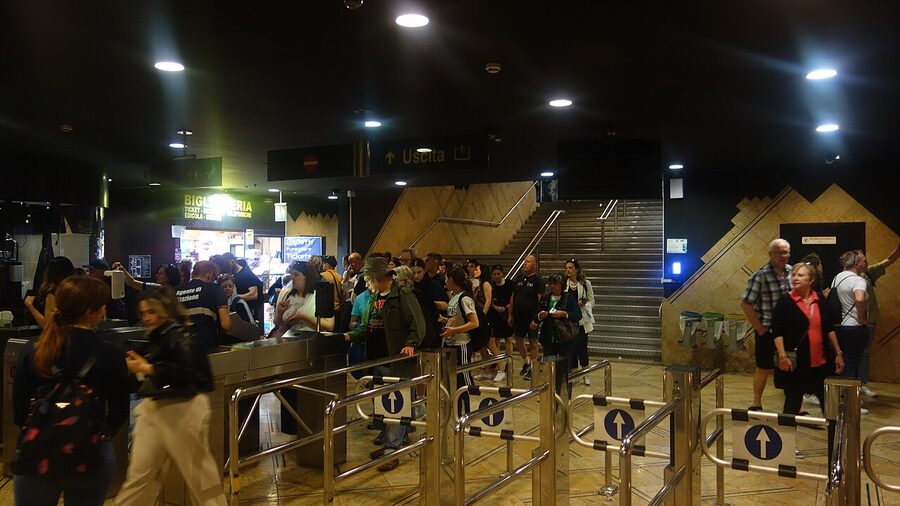
- Metro: Line 1 to Toledo station. The Toledo station is itself worth seeing, the deep blue mosaic ceiling has been called one of the most beautiful metro stations in Europe.
- Tour duration: 1 hour for the standalone underground, 2 to 2.5 hours for combined surface tours.
- Temperature underground: Around 15°C year-round. Bring a light jacket even in August.
- Footwear: The tunnel floors are uneven and damp in places. Sneakers or anything with grip. Not sandals.
- Group size: The Spanish Quarters Underground tour is generally smaller than Napoli Sotterranea, which is part of why it’s worth doing. Smaller groups, better acoustics in the chambers.
- Booking ahead: Recommended in summer and on weekends. Walk-up usually works in winter.
- Accessibility: Stairs throughout. Not wheelchair accessible.
How it fits with the rest of Naples
You can build a good two-day Naples around three undergrounds and a surface neighbourhood. Napoli Sotterranea in the historic centre, the Catacombs of San Gennaro up in the Sanità, and this Spanish Quarters tour, with the alleys above as the connective tissue. The three tours don’t repeat each other. San Gennaro is early Christian frescoes and a basilica-scale carved space. Napoli Sotterranea is Greek-Roman aqueducts and WWII shelter rooms. Spanish Quarters is the smaller domestic version of the same network with the neighbourhood directly above. Doing all three over two days gives you Naples in layers, top to bottom.
If you only have a day, this tour is a good half-day combined with a pizza lunch at one of the Spanish Quarters pizzerias and an hour at the Maradona mural. Then take the rest of the day for either Pompeii (the longer day trip) or the Amalfi Coast (the longer scenic one), depending on what kind of holiday you’re having.

Where it doesn’t work for everyone
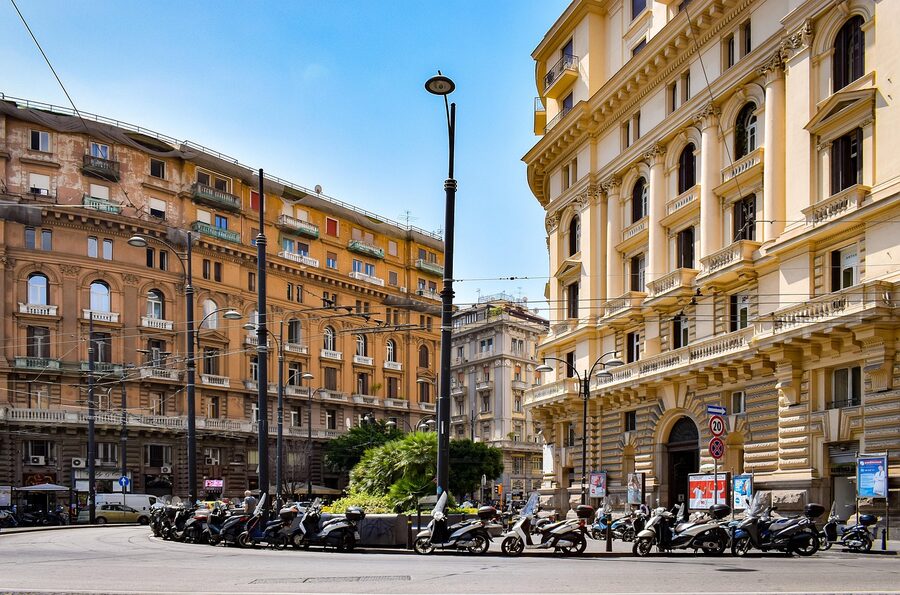
This tour is short. An hour is genuinely an hour, not the typical “90 minutes plus a gift shop.” If you’ve travelled a long way for a marquee underground experience, do Napoli Sotterranea instead. The tunnel sections aren’t claustrophobic in the way some catacombs are, but they’re narrow in places, and one of the chambers requires you to walk single file. Anyone uncomfortable with tight spaces should ask the guide before going down.
The neighbourhood above is loud. Scooters everywhere. Music from open windows. Someone always shouting. If you wanted polite walking-tour Naples, you wanted the Royal Palace half of tour two, not the Quartieri. That’s part of what makes it interesting, but it’s also why some travellers come back saying it was overwhelming. Walk slowly, stay on the wider lanes for the first half hour until your bearings come in, and don’t try to do the Spanish Quarters at the end of a long museum day.
What else to do nearby
If the Spanish Quarters is your introduction to underground Naples, pair it with Napoli Sotterranea for the full picture and the Catacombs of San Gennaro for the early Christian layer. For above-ground food, our guide to eating pizza in Naples covers the famous pizzerias near here, and a half-day at Pompeii or up Vesuvius rounds out the geological story (the same volcanic tuff under the Spanish Quarters is what made the eruption so devastating to the south). If you’ve got an extra day, the Amalfi Coast day trip and the Capri boat tour are the obvious additions, both reachable from Naples without too much logistical pain.