
Here’s the question I always come back to with San Siro. How does one stadium serve as the home ground for two of the biggest rival clubs in Italian football, AC Milan and Inter Milan, two clubs whose fans have spent more than a hundred years arguing about who really owns the place?
You can’t really book a tour without sitting with that for a minute. Most football cathedrals are tribal. One badge in the dressing room, one colour on the seats, one set of fans in the stands every other Sunday. San Siro plays host to two completely separate ecosystems that share the building, share the pitch, share the changing rooms, and somehow keep it civil enough that the lights still go on at 8:45 every weekend. The closest non-football parallel for a single venue carrying that much rival ritual is the Moulin Rouge in Paris, where rival cabaret traditions co-exist on the same Pigalle stretch and the audience switches sides nightly.
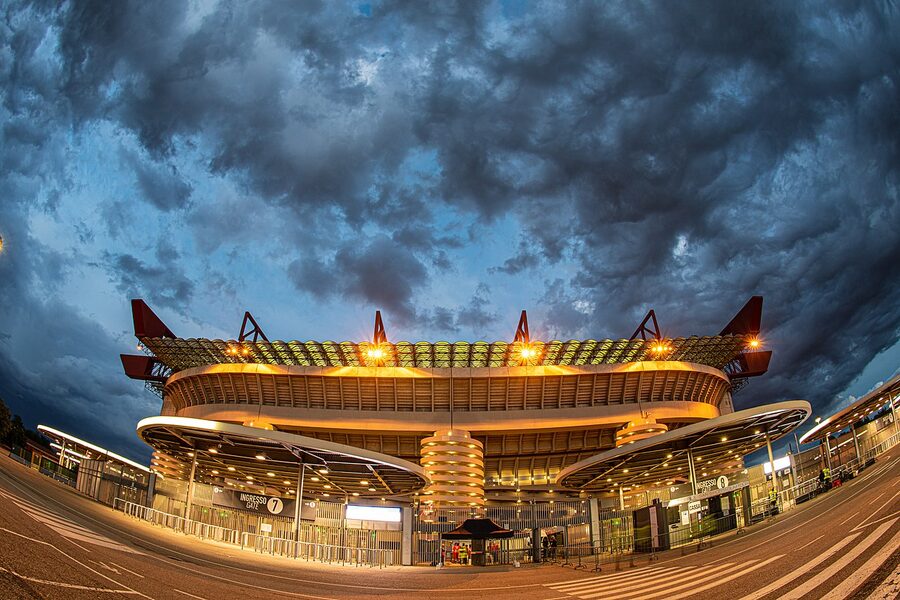
The tour is the cleanest way to see how that arrangement actually works. You walk both dressing rooms back to back, you stand on the pitch under the seventh-largest scoreboard in Europe, you climb to the press tribune, and you go through the museum where the trophies of two clubs sit fifty metres apart in the same building. The route is structurally similar to the Camp Nou tour in Barcelona: museum, tunnel, pitch perimeter, press box, exit through the shop. If you’re picking one Milan visit that doesn’t involve a ticket booked nine months in advance, this one’s the easiest yes.
Quick picks if you’re short on time
- Official guided tour with a real human ($40.98): the one to book if you want context, not just a wander.
- Self-guided entry, same rooms ($40.98): the right pick if you read every museum panel anyway.
- Stadium entry plus city HOHO bus combo (from $40): the practical pick if you also want to see the rest of Milan that day.
The two-clubs-one-stadium thing, explained
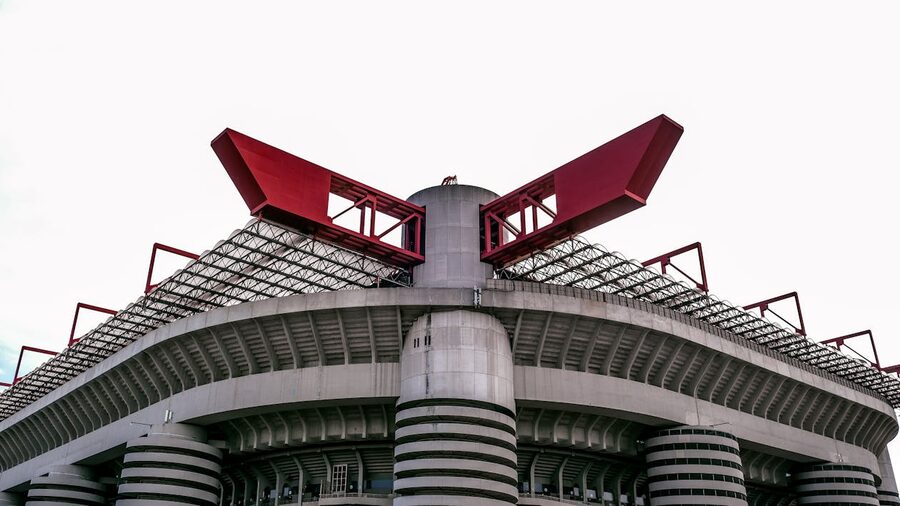
San Siro opened in 1926, paid for by AC Milan’s then-president Piero Pirelli (yes, of the tyre family). It was built specifically as Milan’s ground. The same one-club-then-multi-tenant story plays out at the Johan Cruijff Arena in Amsterdam, where Ajax now share with the Netherlands national team and a long roster of concert acts. Inter, the cross-town rivals founded in 1908 by a faction of Milan members who wanted the club to accept foreign players, played at the Arena Civica back then. So for the first two decades, San Siro was a one-club building.
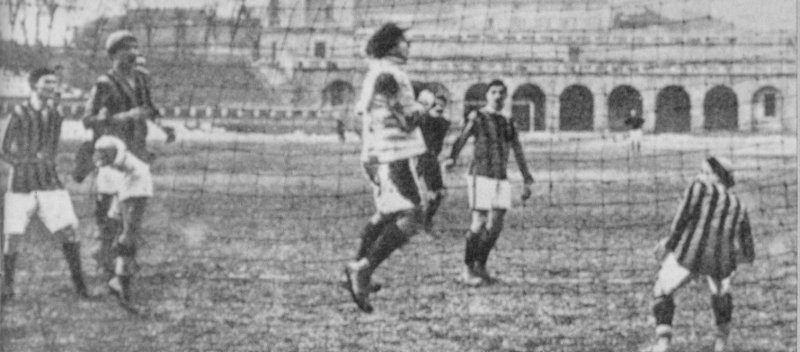
The arrangement that everyone now thinks of as the San Siro identity, two clubs sharing the place, only came in 1947. The City of Milan bought the stadium and Inter moved in as co-tenant. They’ve split it ever since. Alternating Sundays in Serie A. Joint use for European nights. Same dressing rooms swapped between matches, same pitch repainted with whichever club’s badge is at the centre circle that weekend.
The first thing the tour does, before you even get on the pitch, is take you through the practical mechanics of how that works. Two team areas in the dressing-room wing. Two press conference rooms. Two warm-up zones. The hospitality-side of European fandom is best understood at the Heineken Experience in Amsterdam, where the brewery doubles as a sports-lounge venue on European nights. The kit men hand the place over on Saturday night and the visiting club essentially treats the home dressing room as a hotel room, packs everything out by Sunday evening so the other club can move in next weekend. It’s the most quietly impressive part of the visit.
What the tour actually covers
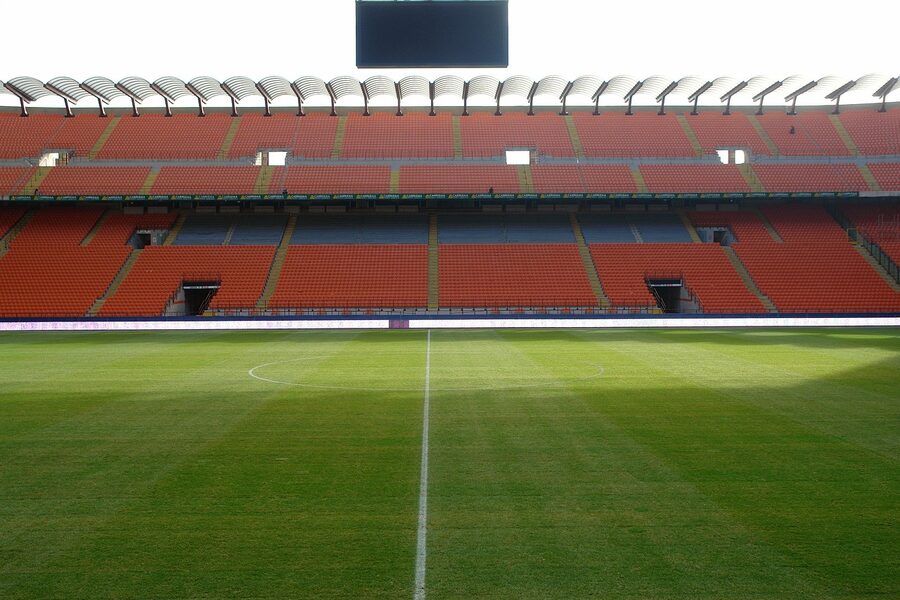
The official guided tour runs about 75 to 90 minutes, depending on how chatty your group is. You start in the museum, then walk down through the stands, into the players’ tunnel, the dressing rooms, back out onto the pitch perimeter (you don’t walk on the grass, but you stand on the running surround), and finish in the press conference room. The pacing is essentially the same as the Bernabeu tour in Madrid, though Madrid’s recent renovation makes that route more theatrical at the same length. There’s a small gift shop at the exit that exists mainly so kids can leave with a scarf.
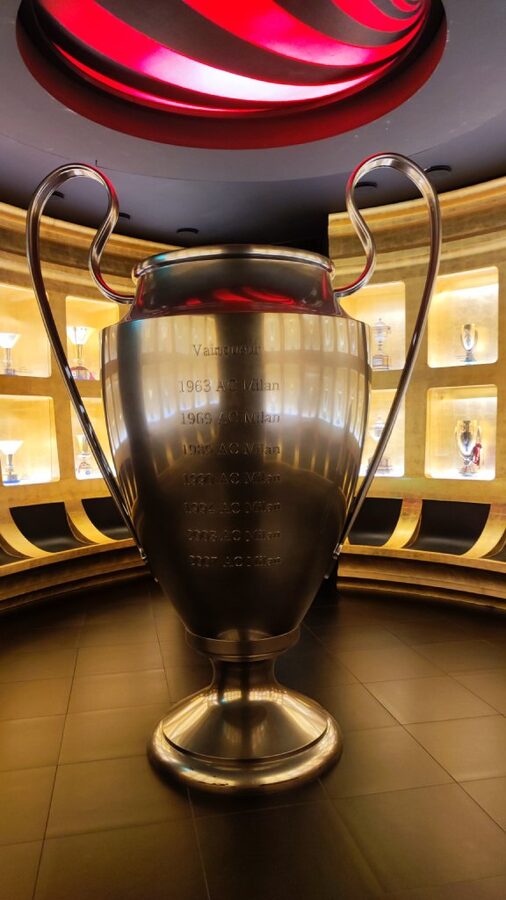
The order matters. You see the museum first because that’s how the rivalry frame is set up. The Inter section runs along one side of the corridor, the Milan section along the other, and they meet at a central display where the joint trophies (one Coppa Italia in 1939, the various derby cups) are kept. The guide will tell you which side is which without you having to ask, because they always do, and because a third of every group walks in wearing some kind of badge.
The dressing rooms are the part most people came for. They’re not particularly glamorous. Rectangular, low-ceilinged, with locker bays and a massage table at the back, exactly the way they look when a team photographer takes the post-match shot of someone sitting on the floor with their head in their hands. The shock is how plain it is. This is where the players who scored in Champions League finals were getting their boots on twenty minutes earlier.
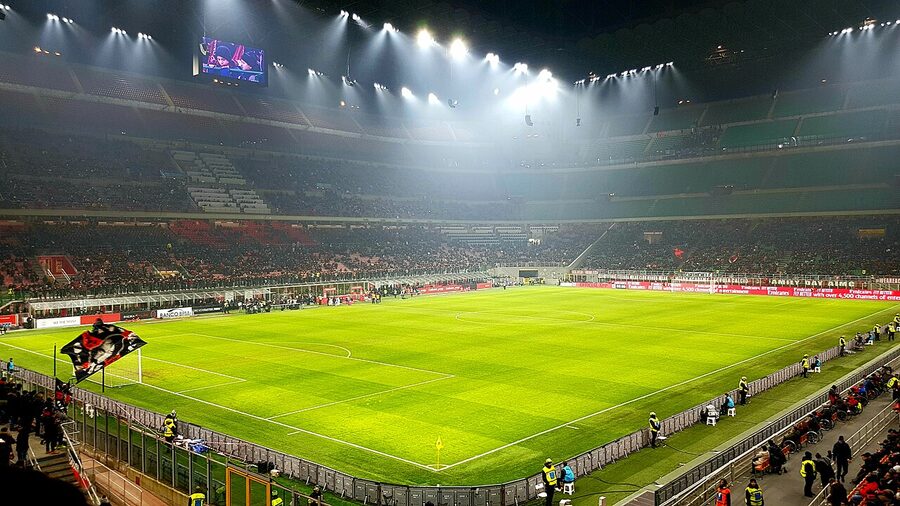
Then the tunnel. Studs on the concrete. Whatever guide you get will tell you to listen for the noise the boots used to make on the old surface. You walk out at the halfway line, look up, and the scale of the place suddenly makes sense in a way it doesn’t from photos. Three tiers, all of them stacked nearly vertically over the pitch.
Curva Nord vs Curva Sud: the architecture of the rivalry
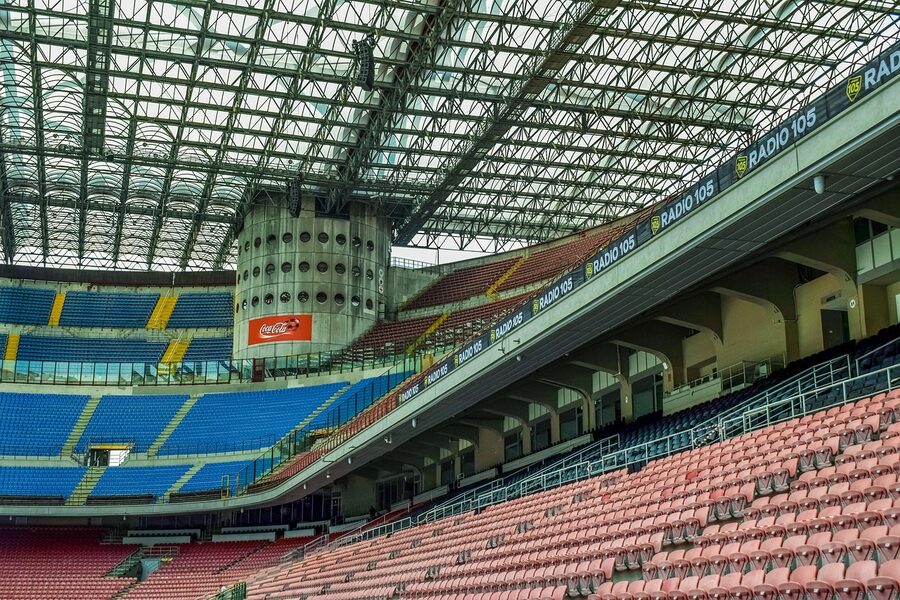
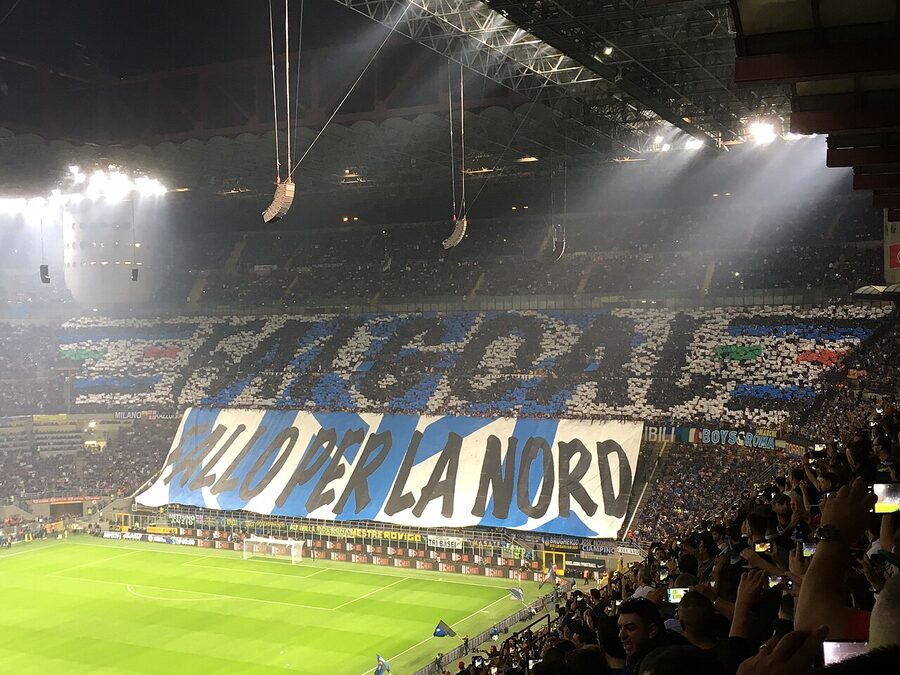
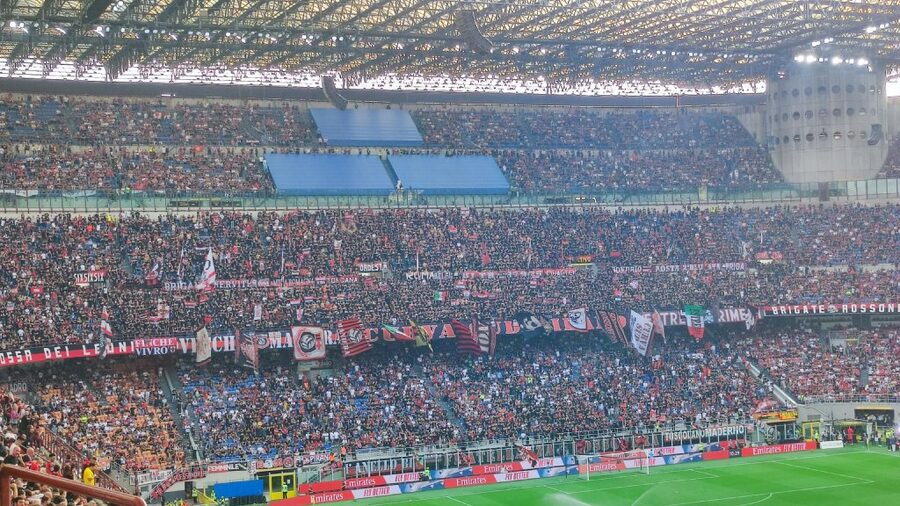
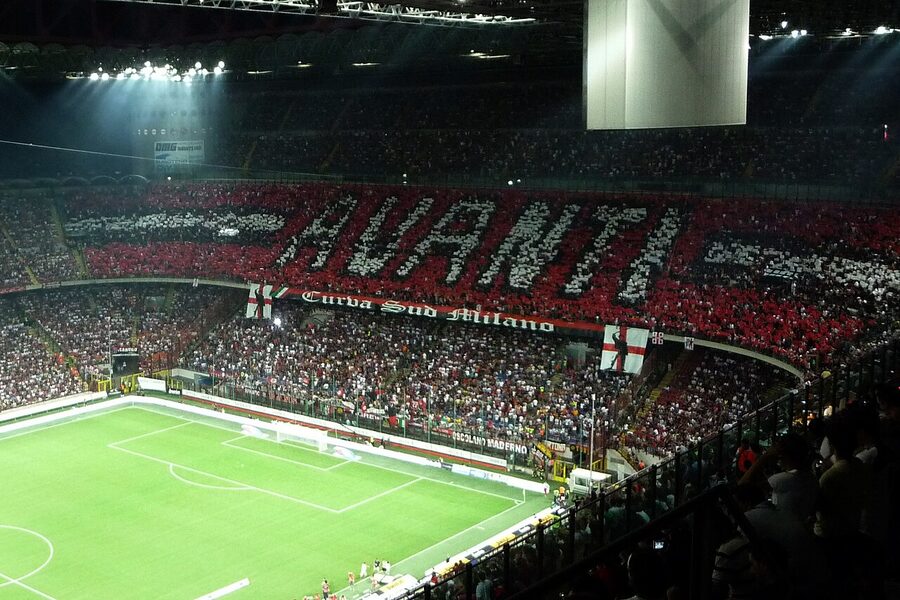
The two short ends of the stadium are where the rivalry lives. Curva Nord (the northern end) is Inter’s. Curva Sud (the southern end) is Milan’s. Walk around the outside of the stadium and you can see which is which without anyone telling you, because the graffiti on the gates changes colour by stairwell.
On match days both ends do choreographed displays called tifo. Hundreds of cards flipped at the same instant, banners rolled out across the whole curva, sometimes a flame or a smoke effect at kick-off. The Derby della Madonnina, when Milan and Inter actually play each other, is the only fixture in world football where both choreographies happen simultaneously in the same building. It’s loud in a way that doesn’t really translate to the TV broadcast.
The two long sides are called the Tribuna (west, the main stand) and the Tribuna Arancio (east). The Tribuna is the expensive side with the press box and the directors’ boxes. Tour groups always finish in there, mostly because the seats are good and the views are easy to photograph. If you’ve ever seen a Champions League broadcast where the camera is up high near the halfway line, you’ve seen it from the Tribuna.
Why the stadium is named after a man you’ve probably never heard of
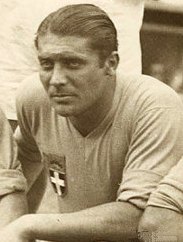
Officially, the building isn’t called San Siro at all. It’s the Stadio Giuseppe Meazza. The renaming happened in 1980 when Meazza, the man, died. He was an Inter player who later played for Milan, won two World Cups (1934 and 1938) with Italy, and is one of the only players in history that fans of both clubs claim as their own without arguing.
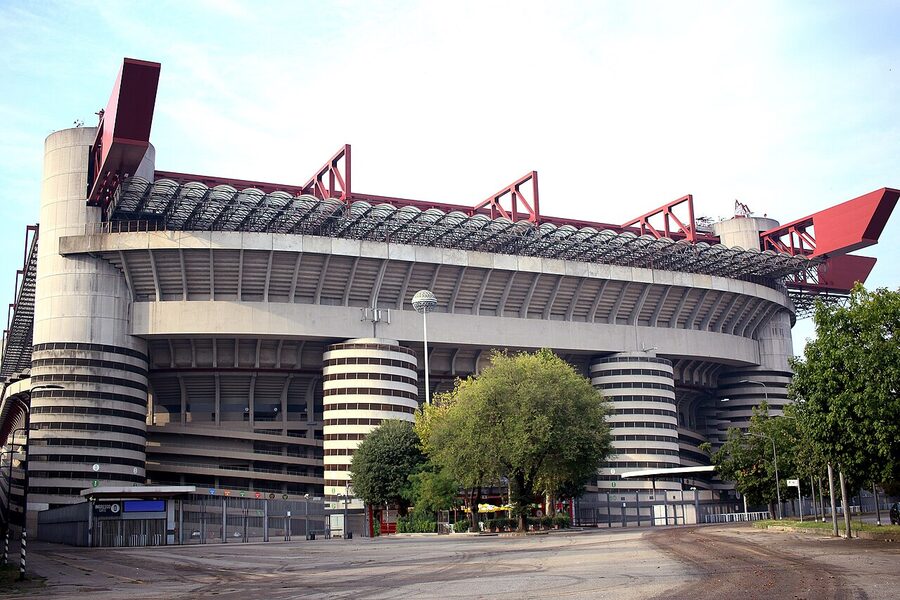
The “San Siro” name is just the neighbourhood. The stadium happens to sit in the San Siro district of northwest Milan, near the racecourse, and the locals never bothered switching to the Meazza name in conversation. So you’ll hear both, sometimes in the same sentence. The tour guide will use Meazza when they’re being formal and San Siro when they’re describing what the place feels like.
The Inter fans and the Milan fans actually agree on this one. If you ask either set whether they’re going to the Meazza or to San Siro, they’ll tell you San Siro. The official name has been there for forty-five years and it still feels like an HR initiative.
The 2027 demolition that may or may not happen
Here’s the part that changes the calculus on whether to visit now or later. Both clubs have spent the last decade trying to leave San Siro and build a new shared stadium. The plan is currently to demolish San Siro in 2027 and replace it on roughly the same site with a 71,500-seat new build, designed by Foster + Partners and Manica.
I say “currently” because the project has been threatened, signed off, blocked by heritage protection, unblocked, re-signed off, and re-blocked at least four times since 2019. The northern half of San Siro (the second tier and above) was given heritage status in 2024, then had it removed, then partially reinstated. The 2027 timeline is the one the city is presently working to. Whether that holds is another question.
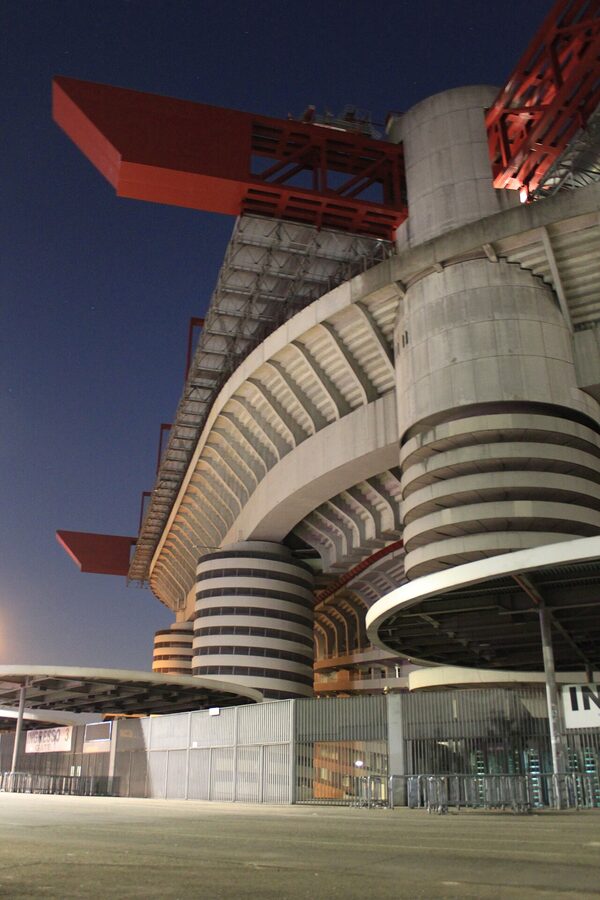
What that means for you, practically, is two things. One: there’s a real chance the building you see on the tour won’t exist in this form by the end of the decade. Two: every guide on every tour now mentions it, often unprompted, and the museum has added a small panel near the exit covering the new stadium plans. If you’ve ever wanted to walk through one of the great old football cathedrals before it’s gone, the window is closing. Maybe not in 2027, but soon.
How to actually book it
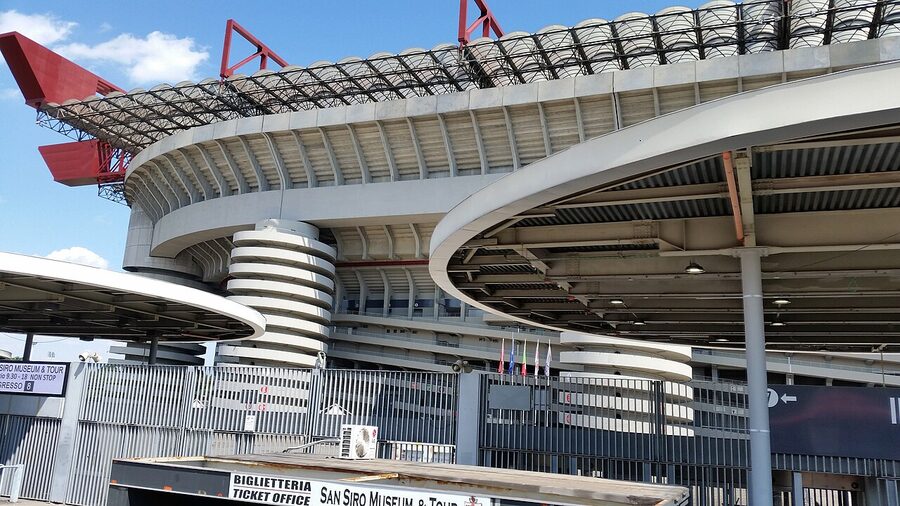
San Siro tours run almost every day the stadium isn’t being prepared for a match. Daily availability is roughly 9:30am to 5pm in winter, with longer hours in summer. The exception is the day before, day of, and morning after a home match for either club. Always check the calendar against the Serie A and Champions League fixture list before you commit to a date.
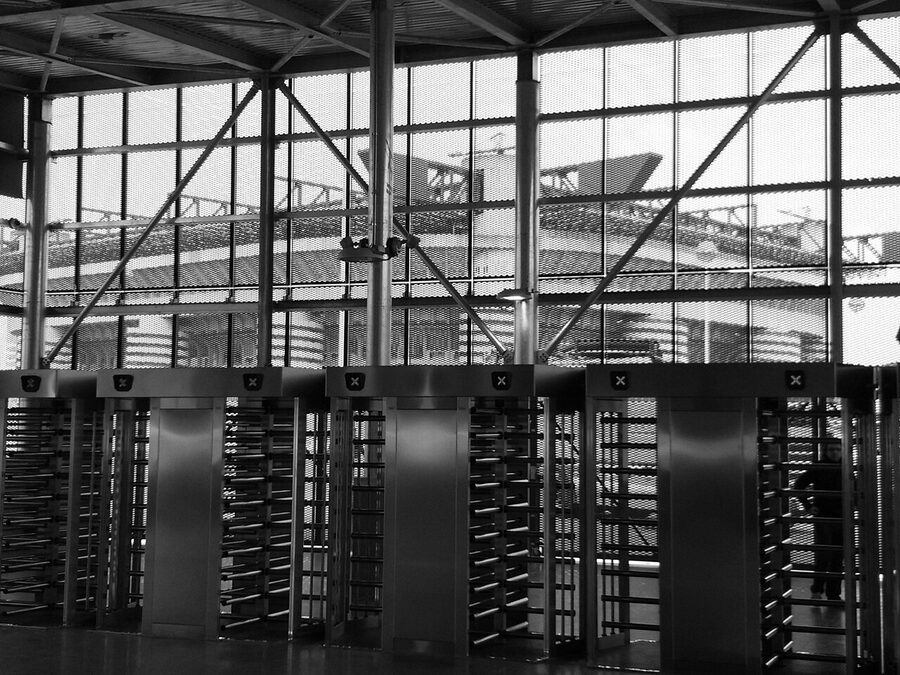
Three practical tips. First, book online rather than at the ticket window. The walk-up queue at gate 14 is not long but it’s slow because the staff process the tour ticket and the museum ticket as two transactions. Second, take the M5 metro to San Siro Stadio, not the M1 to Lotto. Lotto is the stop you want for the racecourse next door, not for the stadium. Third, give it a half-day rather than slotting it between two other things. The tour itself is 90 minutes but the museum can swallow another hour easily if you actually read the panels.
What it costs varies by which version you book. The official guided tour is around $40 to $42 with a live English-speaking guide. The self-guided museum-and-tour is the same price but you go at your own pace with a printed map. The combo with a Milan hop-on-hop-off bus pass starts around $38 to $40 for the bus alone and adds the stadium entry on top. The same bus-plus-attraction maths works on the Paris hop-on bus, where the loop pass is most useful when paired with a single big-ticket entry rather than bought on its own. If you’re already planning to do the Milan HOHO bus, the combo is the cheapest way to bundle them.
Should you book the guided or the self-guided?
Take the guided one if it’s your first time, or if you’re a casual fan rather than someone who knows the difference between Sandro Mazzola and Gianni Rivera off the top of their head. The guide tells you the rivalry stories, the Meazza biography, the dressing-room logistics, the 2027 demolition timeline. None of that is on the museum panels in the same depth.
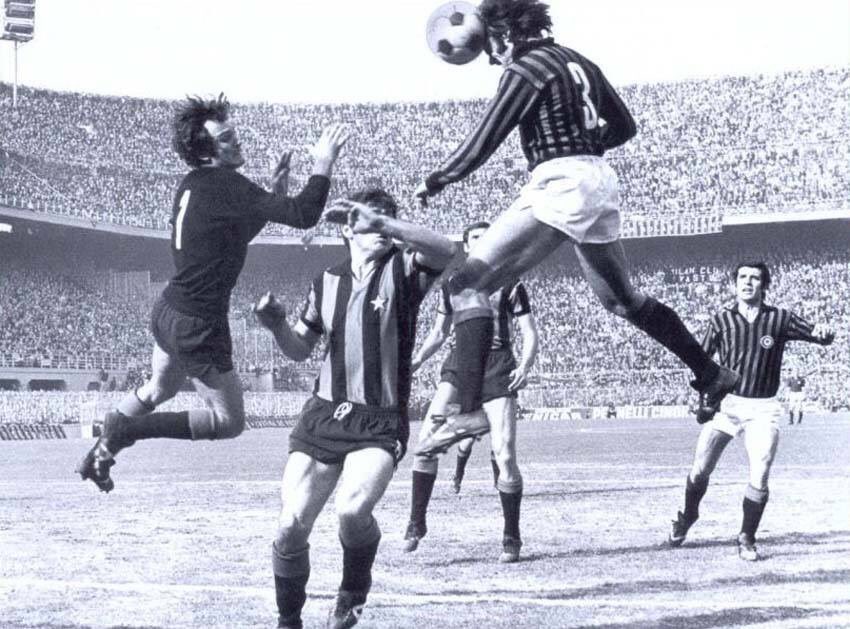
Take the self-guided one if you’ve been to San Siro before, if you’ve seen a match here, or if you genuinely want to read every panel without a group of twelve other tourists hurrying you along. You can take ninety minutes in the dressing rooms alone if you want to. The downside is the dressing-room context (which players were here, which derbies were prepared in this room) is much thinner without a guide adding the layer.
Skip the entry-only ticket without the bus add-on. It’s the same museum and stadium walk for almost the same price, and you lose the contextual narration. The combo with the city bus is fine if you’re going to use the bus anyway. If you weren’t, don’t manufacture a reason to.
Three tours worth booking
1. Official San Siro Stadium and Museum Guided Tour: $40.98
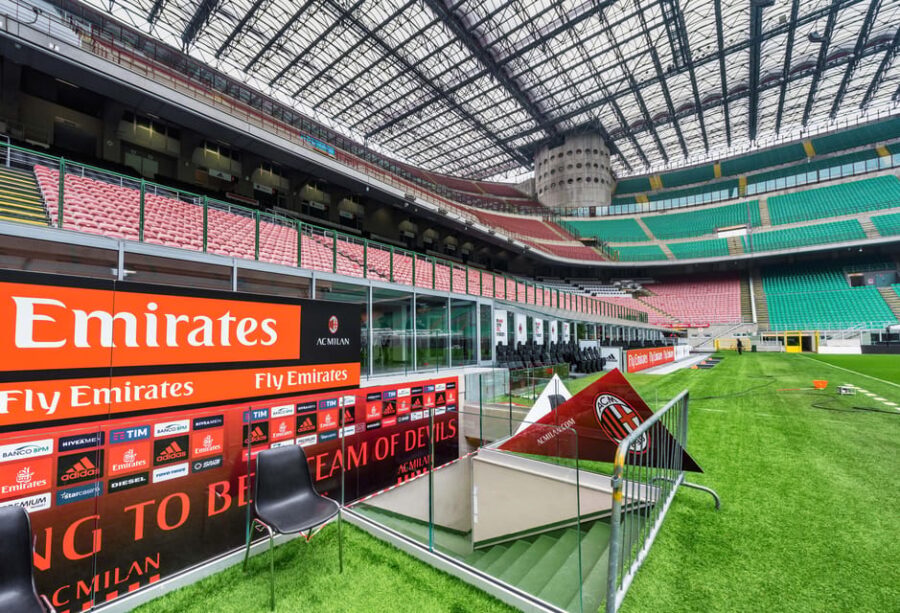
The flagship pick. Live English commentary, dressing-room access, pitch perimeter, and the museum included; our full review covers the full route order and how the guide handles the rivalry questions. Book it for the storytelling, not just the access.
2. San Siro Stadium and Museum Tour (Viator): $42.04
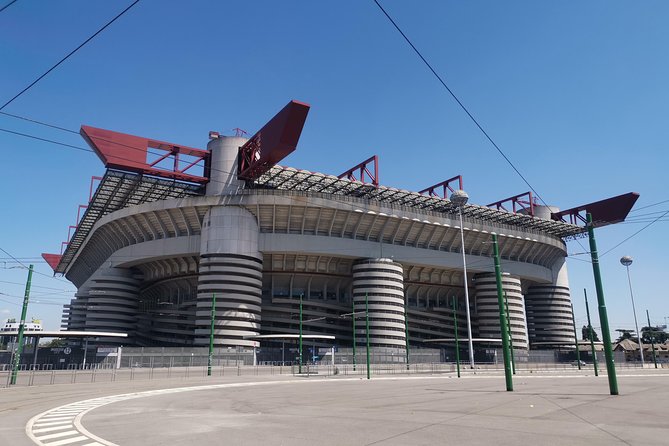
This is the Viator-platform version of essentially the same product, an hour-long English-language stadium and museum tour with the same access; our full review goes into how the Viator-fronted versions package up the experience. Pick this if you’ve already got the Viator app on your phone.
3. San Siro Entry Ticket plus Optional 48hr HOHO Bus: from $40
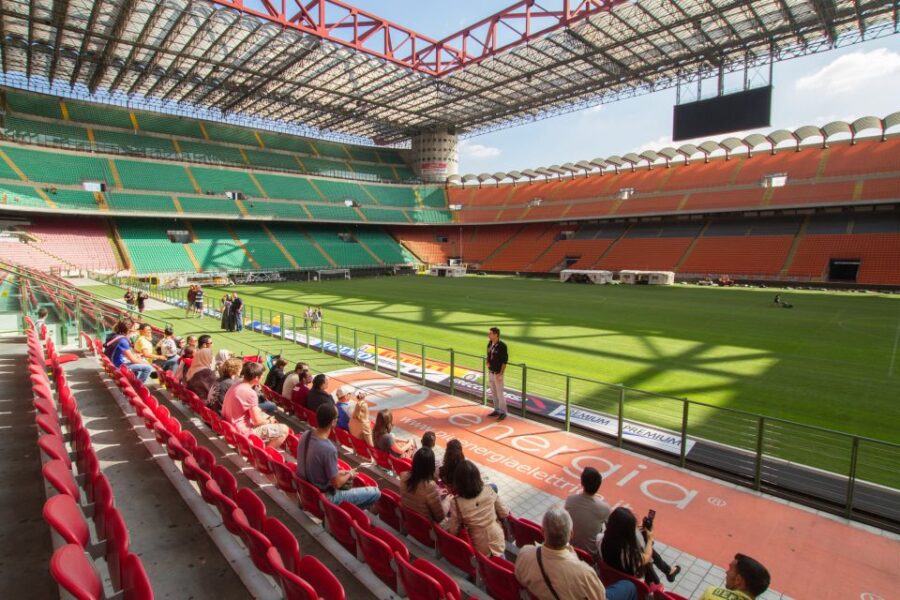
The combo plays well if you’re doing a one-day Milan stop and want both the stadium and a way to see the rest of the city without metro stops; our full review compares it against booking the bus and the stadium separately. Skip it if you’re staying in Milan more than two nights and want the proper guided commentary.
What to do with the rest of your day
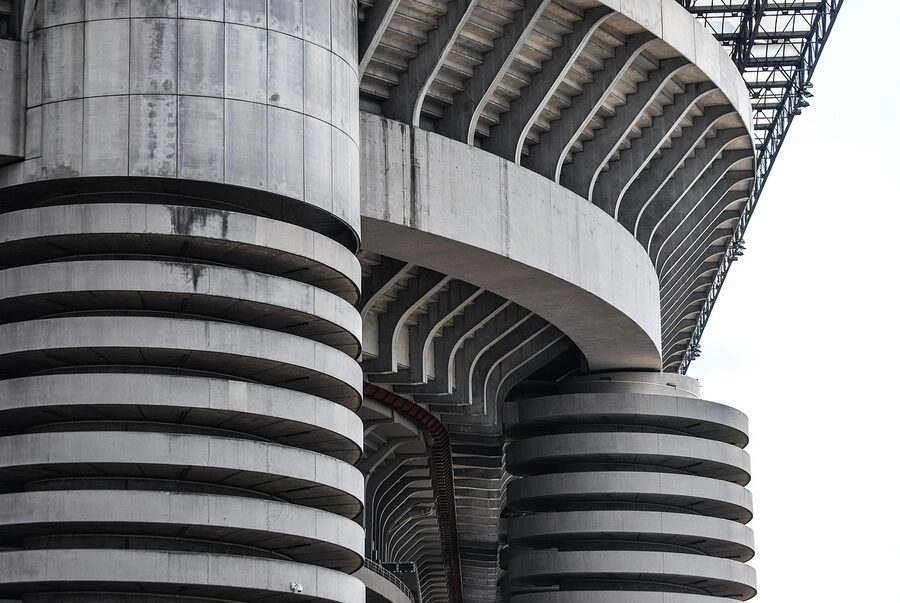
The stadium is in the northwest of the city, twenty minutes by metro from the centre. After the tour you’ve got most of an afternoon left. The most natural pairing is the Duomo terraces, partly because the Duomo is the visual antithesis of San Siro (Gothic spires versus 1980s concrete spirals), and partly because by 4pm the line for terrace tickets has finally calmed down. M1 from San Siro to Duomo is direct.
If you came to Milan for the football and you’ve still got time, consider what the city’s other booking-required attraction is asking you to do. Seeing the Last Supper takes about fifteen minutes once you’re in the room and demands a booking made up to two months in advance. Do that on a different day if you can. San Siro is a turn-up-and-go the way the Last Supper is not, and stacking the two on the same morning will rush both.
For something less central, Lake Como is the obvious day-trip pairing. Stadium tour in the morning, train from Cadorna to Como at 1pm, ferry to Bellagio by 3pm. It works if your San Siro slot is the 9:30am one and not later.
Quick practical answers
How long does the tour take? The guided version is 75 to 90 minutes. The self-guided is technically as long as you want, but most people are out in 60 to 90.
Do I get to walk on the pitch? No. You stand on the running surround at pitch level and the photo from there looks like you’re on the grass. The pitch itself is off-limits except for matchday-warmup access, which is not what this tour is.
Is there a discount for kids? Yes, usually. Reduced-price entry for under-14s, free for under-5s. Check the specific operator’s page when you book because the cutoffs vary.
Will the dressing rooms always be open? Almost always, but not always. If a club is preparing for a match the next day, that side’s dressing room will be closed off and you’ll only see the visiting one. The website usually flags this.
Is the museum worth it on its own? Yes, but only if you can’t do the tour for some reason (matchday closure, mobility limit on the tunnel walk). The trophy room and the kit displays carry most of the museum’s weight.
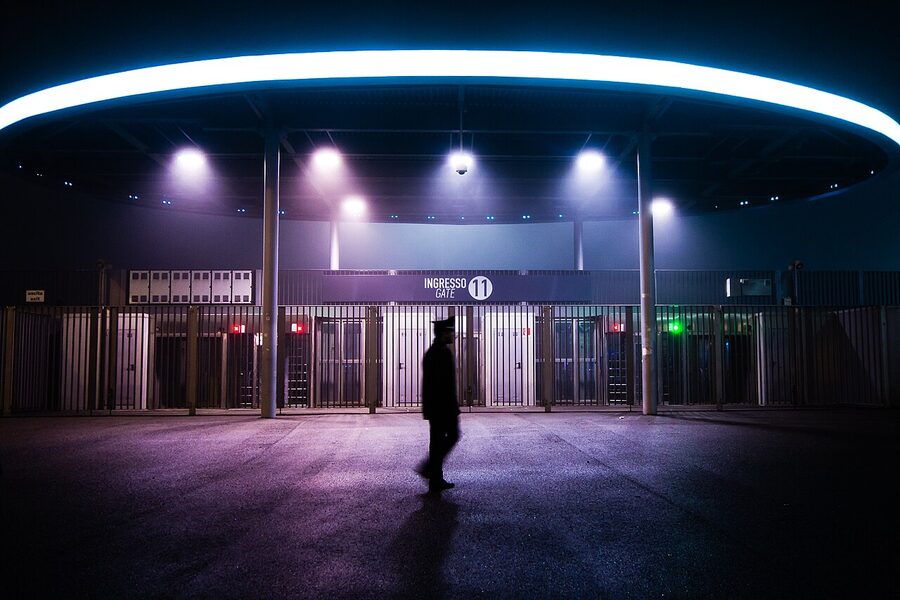
Can I see a match instead? Yes, both Milan and Inter sell single-match tickets through their own club sites and through aggregators. Match-day tickets don’t include a tour, and tour tickets don’t include a match. They’re separate products.
One more thing about the rivalry
The other reason to take the tour rather than just see the building from the outside is that the rivalry is genuinely friendly at street level. Walk into a bar in the San Siro district two hours after a Derby della Madonnina and you’ll see Milan and Inter scarves at the same table. They argue. They take the piss out of each other. Then they buy the next round. It’s the only thing the tour doesn’t really capture, because the only place to see it is in the bar afterwards.
Which is, in a way, the whole answer to the question I started with. How does one stadium serve as the home for two of the biggest rival clubs in Italian football? Because in Milan the rivalry is older than the stadium, the rivalry is older than the country in some ways, and the building is just the place they all agreed to meet up.
If you’ve enjoyed this kind of Milan
If the San Siro day clicks for you, lean into Milan’s other big bookable experiences. Booking the Last Supper is the city’s other heavyweight, and it punishes lateness in a way the stadium doesn’t, so do that one early in your trip. The Leonardo Museum pairs nicely on a wet afternoon if you’ve already done the Last Supper. For the easy stuff, the Milan HOHO bus works well as a connector between the stadium tour and the centre. And if you want to get out of the city the next morning, both Lake Como and the Bernina Express use the same Milano Centrale departures and pair sensibly with a late stadium tour the night before.