
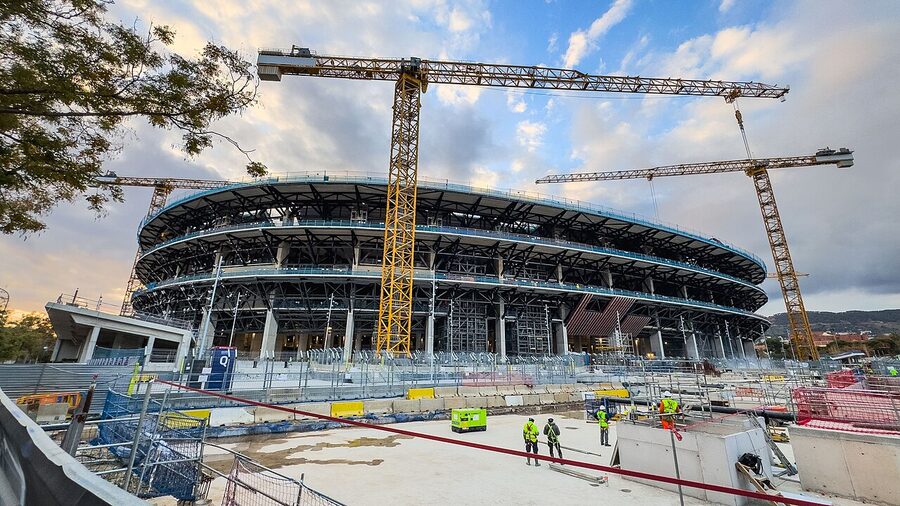
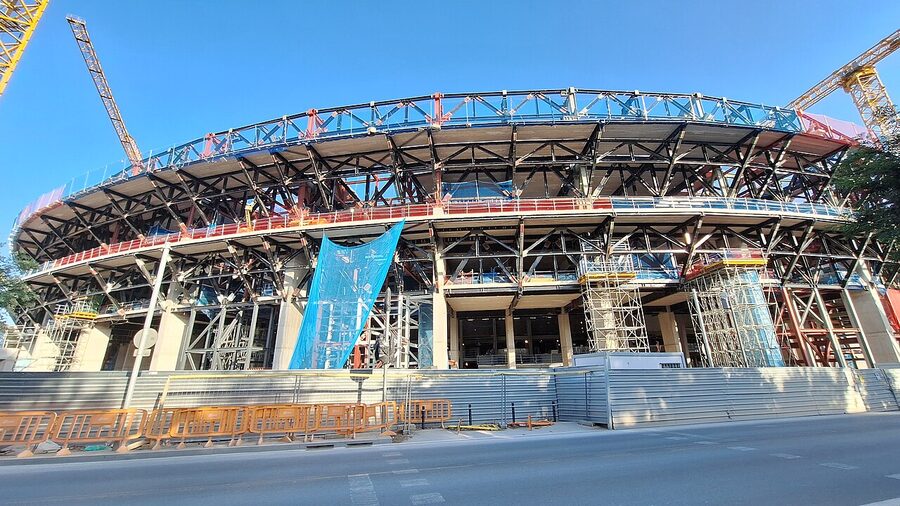
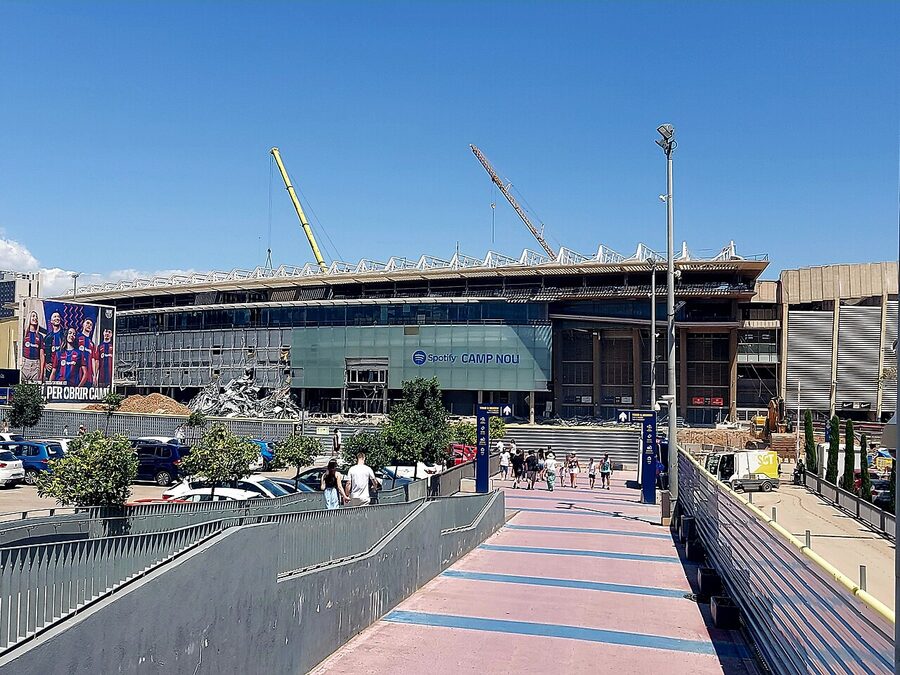
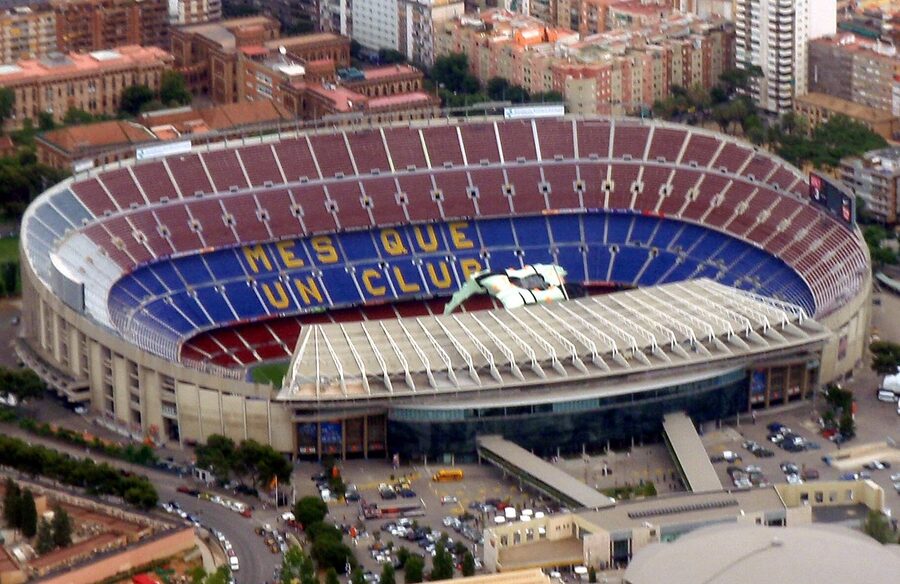
Camp Nou is being torn down and rebuilt around the visit. If you book a tour for 2026, you are not seeing the stadium in the photos. You are seeing a €1.5 billion construction site with the museum still functioning at one corner.
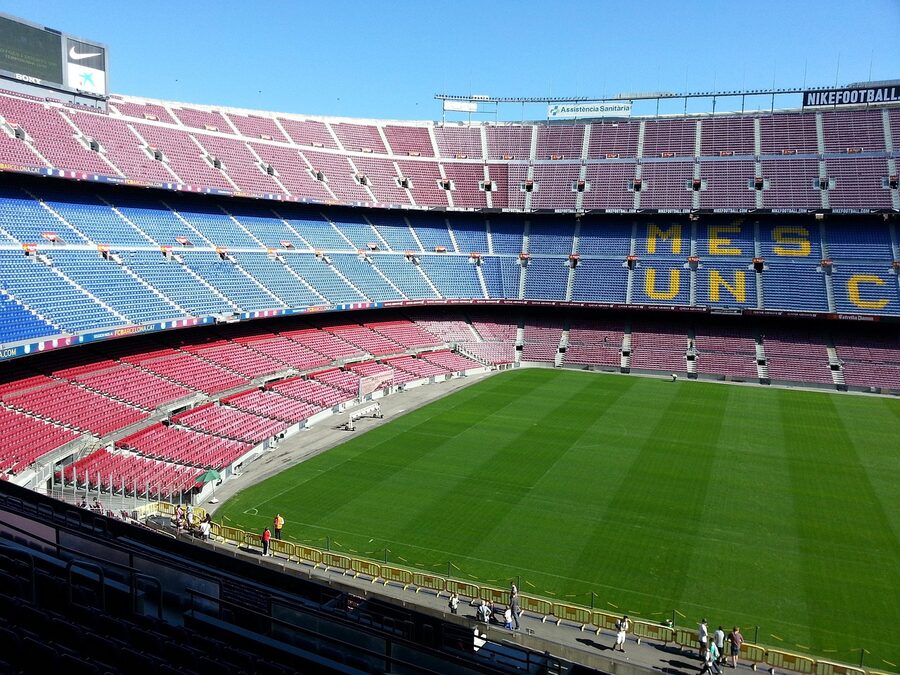
This is the Espai Barça redevelopment, started in 2023, originally due in November 2024, then October 2026, now slipping toward the end of 2026 or later. The pitch is exposed concrete. The upper tier is wrapped in scaffolding. The dressing rooms, tunnel, and player benches that used to anchor the old Camp Nou Experience are all closed. What you actually visit is the museum, a 360° immersive show, and an authorised viewpoint over the rebuild itself.
That sounds bad, and the TripAdvisor reviews from 2025 and 2026 reflect that frustration. The €36 ticket is a lot for a museum you can walk through in 45 minutes. But there is also a counter-argument that the official site does not make: this is the only window in human history when you can stand inside Camp Nou and watch it being torn apart and put back together. Once it reopens, the pre-2023 stadium tour comes back and the construction view is gone forever.
I’ll be straight with you about who this is for, who should wait, and how to book it without paying a third-party reseller a needless markup.
In a hurry? Here’s what to book
Best value (€36): The official Barça Immersive Experience is the entry-level ticket and includes museum, audio guide, 360° show, and the construction viewpoint. Book the Immersive Experience on GetYourGuide.
Best for collectors (€63): The Total Experience Pass adds the Messi 10 immersive show and skip-the-line entry. Worth it if you are a serious fan. Book the Total Experience on GetYourGuide.
Best one-and-done (€77): Hop-On Hop-Off bus plus Camp Nou Immersive in one ticket. The bus stops at the stadium, so you do not lose half your day on the metro. Book the bus + stadium combo.
What’s actually happening at Camp Nou right now

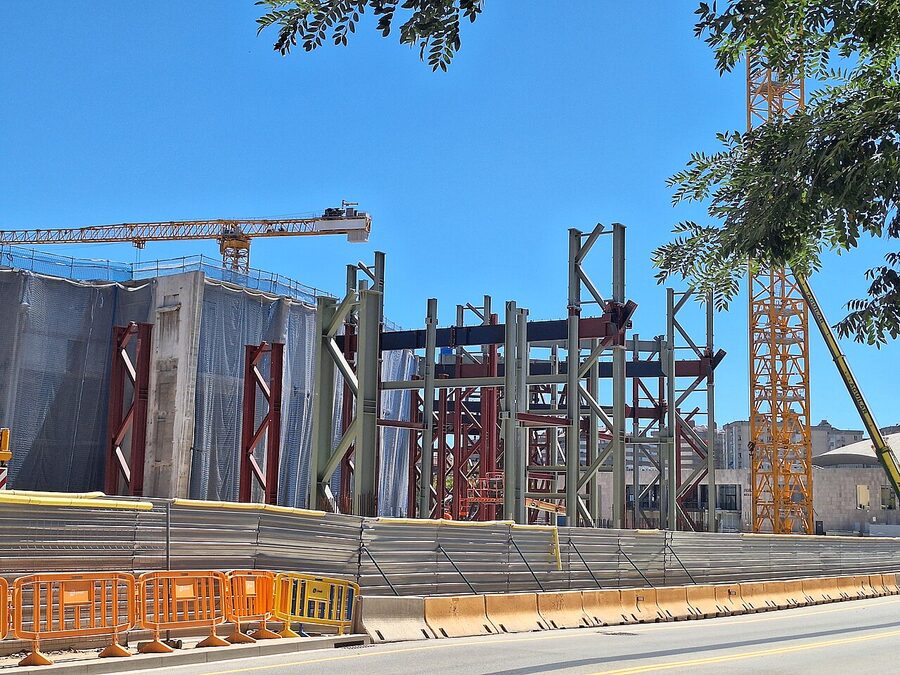
The Espai Barça project is the largest stadium rebuild in European football. It started in summer 2023 with the demolition of the third tier. The plan: keep the original 1957 footprint, raise the capacity from 99,354 to 105,000 (already the largest in Europe, soon to be larger), add a full roof, modernise the structure, and slot in a new ice rink and indoor arena across the campus. Total cost: around €1.5 billion, financed largely by the Goldman Sachs loan that has been the source of half the news cycle around this project.
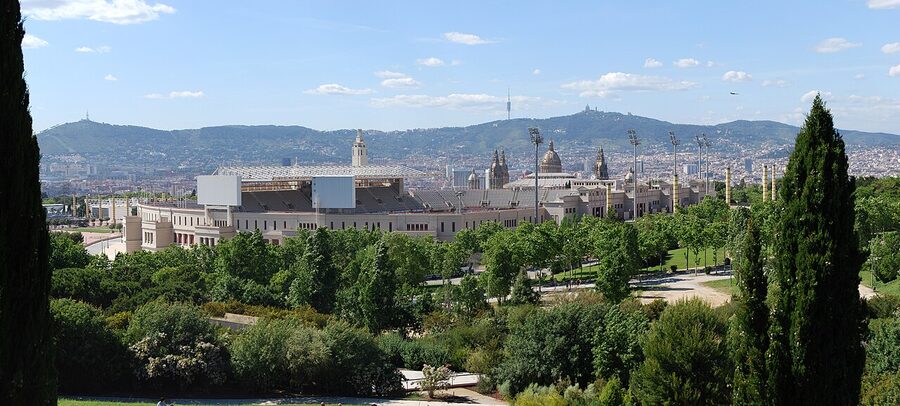
The original reopening was November 2024. That date came and went. The next target was October 2026, then August 2026, and at the time of writing the club is still issuing carefully worded “phased return” updates that boil down to: the stadium will reopen in stages, with limited capacity first, full capacity later, and the exact date keeps slipping. Barça has played its home matches at Estadi Olímpic Lluís Companys on Montjuïc since 2023, which is why some visitors get confused and arrive at Camp Nou expecting a match-day atmosphere.
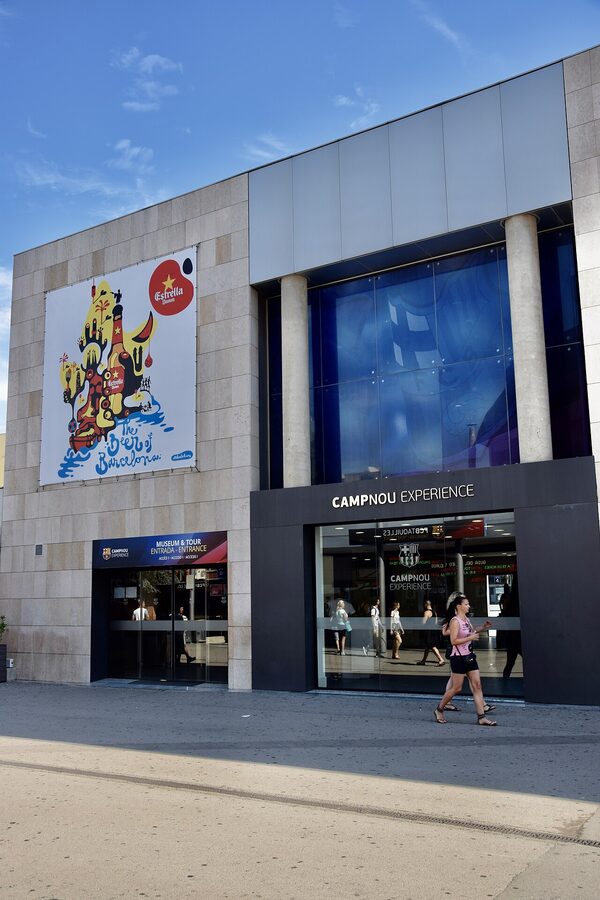
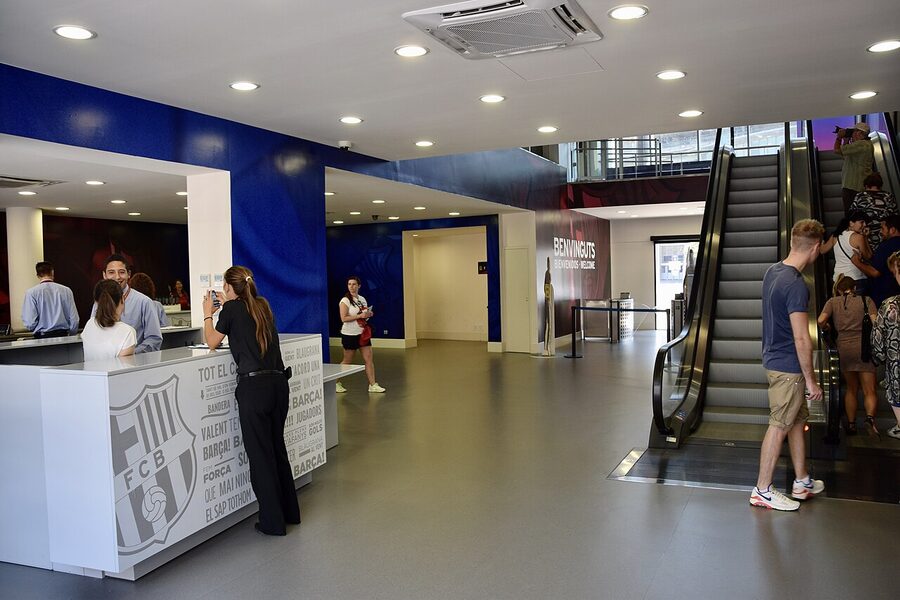
For tour purposes, what matters is this. The pitch is closed. The dressing rooms are closed. The tunnel walk is closed. The player benches are closed. What you can visit is the FC Barcelona Museum, which sits at the corner of the stadium complex and has stayed open through the rebuild, plus a designated viewpoint that lets you look down over the construction zone from a safe spot.
What you actually get for €36
The basic Barça Immersive ticket is €36 if you book direct on fcbarcelona.com or through GetYourGuide at face value. Third-party resellers will quietly charge you €5 to €15 more for the same access, which is the easiest way to overpay on this visit. Book direct or GYG. Skip the rest.
The €36 buys you four things, and one of them is the reason most people are disappointed.
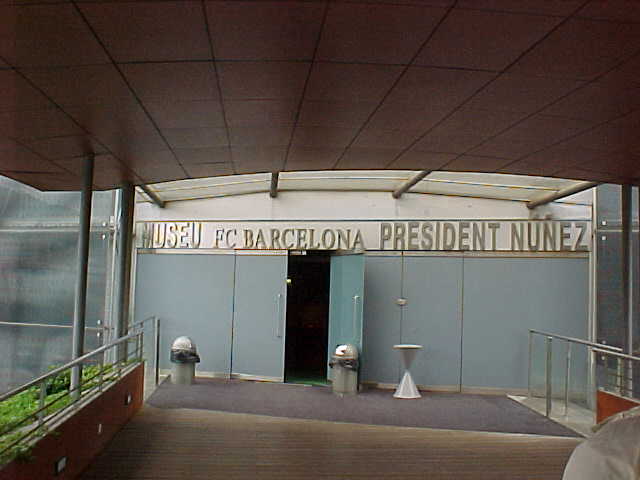
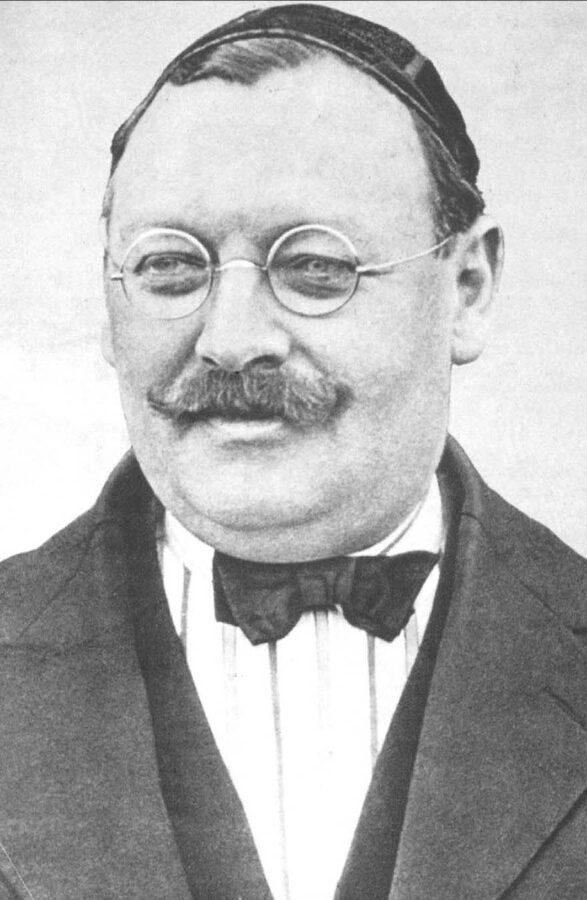
The museum. Around 2,400 m² across two floors. The collection runs from the 1899 founding by Joan Gamper through the Cruyff years, the Pep Guardiola tiki-taka era, the Messi-Iniesta-Xavi midfield, and the post-Messi rebuild. There is a Ballon d’Or section with the actual trophies (Messi has six of them; the others are Cruyff, Stoichkov, Rivaldo, Ronaldinho), original match kits going back to the 1950s, and a wall of footage from key moments. The museum is well designed, the lighting is good, and the timeline is genuinely educational if you care about the club.
Spotify Camp Nou Live. A 360° immersive room that surrounds you with stitched-together match footage, crowd audio, and the sound of the stadium reacting in real time. It is the highlight of the current visit. If you grew up watching Barça, the moment Iniesta’s 2009 Stamford Bridge goal cuts in with the commentator’s scream is genuinely emotional. If you do not care about the club, it is a slick 12-minute audiovisual show. You will know which camp you are in within the first 30 seconds.
The construction viewpoint. A designated spot, fenced off and reached through the museum exit, that lets you look down over the rebuild from above. Most visitors spend five to ten minutes here. You can see the partially dismantled upper tiers, the exposed structural frame, the cranes, and the pitch sitting at the bottom of what looks like a quarry. This is the part of the 2026 visit that has a genuine expiry date. Once the stadium reopens, this view is gone.
An audio guide. Available in seven languages on a digital app you load before you go in. It is fine. The English narration is a touch dry compared to the Italian-museum tradition of treating an audio guide like a small theatre piece, the way the audio at Florence’s Leonardo Interactive Museum does. But it covers the ground.
What you do not get: the pitch, the dressing rooms, the tunnel, the player benches, the press conference room, the chapel, the boardroom. All of those were on the pre-2023 tour. None of them are accessible right now. If those are why you wanted to come, wait.
Should you actually go in 2026?
This is the question every traveller actually wants answered. Here is my take, sorted by who you are.
You are a Barça supporter. Yes, go. The museum still works. The trophy hall, the Ballon d’Or section, and the 360° show are worth €36 if the club means anything to you. The construction viewpoint adds something nobody who visited before 2023 has ever seen. You will leave satisfied.
You like football but you are not a Barça supporter. Borderline. The 360° show works on its own terms, but most of the museum content lands hardest if you have an emotional connection to the names. If you have one free morning in Barcelona and a choice between this and a Gaudí site, the Gaudí site wins. If you have the time, this is a fine half-day.
You do not really care about football. Skip it. The €36 is better spent at Sagrada Família, Casa Batlló, or any of the other Gaudí buildings where the architecture itself does the work. You do not need a backstory to enjoy the dragon roof at Casa Batlló. You do need one to enjoy the Camp Nou museum.
You are travelling with kids. Worth it if the kids care. The interactive displays, the 360° show, and the optional RoboKeeper challenge (€4.40 extra, you take penalty kicks against a robot goalkeeper) work well with anyone old enough to follow football. Under-fours are free. Ages 4 to 10 get a reduced rate.
You can wait six months. Wait. The full pre-2023 stadium tour is coming back when the rebuild is done. Pitch access, dressing room walk, tunnel, player benches, the lot. If your trip is flexible and Barcelona will still be there in autumn 2026 or 2027, the post-reopening experience will be a substantially better visit than what is on offer now.
Three tours worth booking
The official Barça Immersive ticket is the same product across resellers, but a few packages add genuine value. These three are the ones worth your time. The order is by what most visitors actually need.
1. Barça Immersive Experience: $35
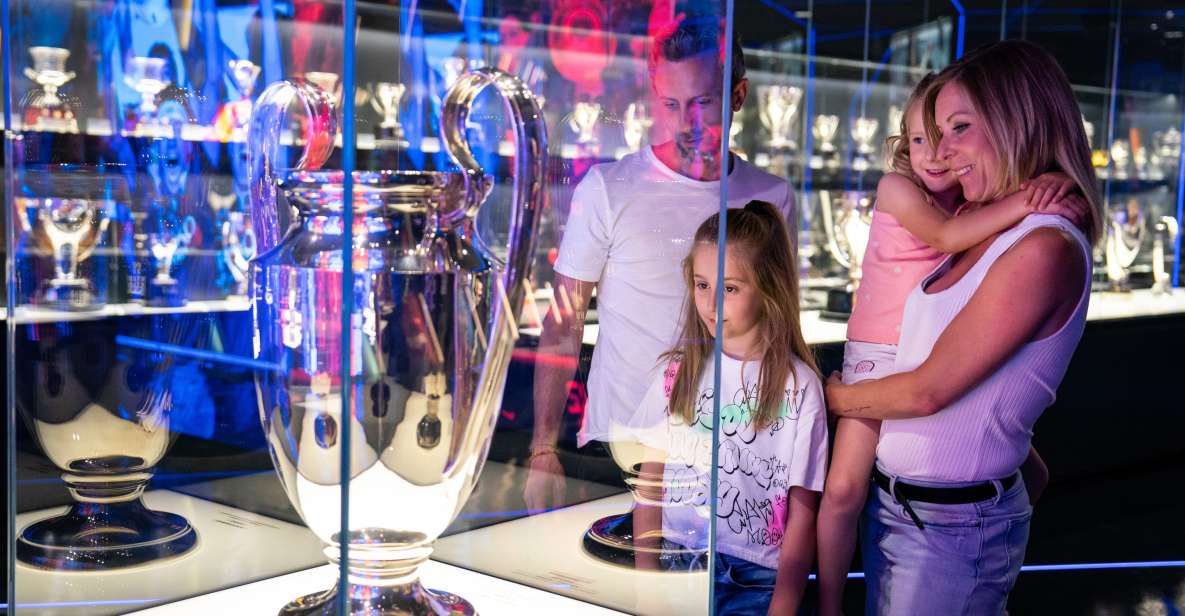
This is the default ticket and the one I would book unless you have a specific reason to upgrade. Our full review covers the museum loop and the immersive show in detail. Free cancellation up to 24 hours.
2. Barça Total Experience Pass: $63

For dedicated fans the upgrade is worth the €27 extra; the Messi 10 immersive room covers his career in a separate 360° show that is genuinely well produced. Our review walks through what the pass adds. Skip if you are a casual visitor.
3. Hop-On Bus + Camp Nou Immersive: $77
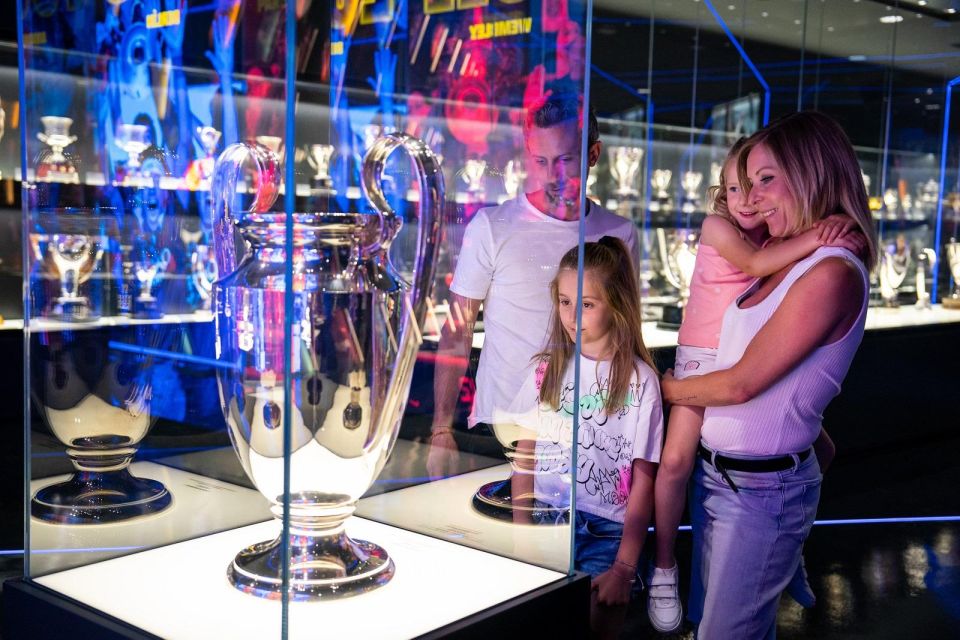
The HOHO is a sensible way to reach the stadium since Camp Nou sits 20 minutes by metro from the city centre, and we cover when the bus pays off in our Barcelona HOHO review. Fair value if you are doing the city in two days. Skip if you have already bought a transit card.
How to get there without losing two hours to the metro
Camp Nou is in Les Corts, the residential district northwest of the city centre. It is not near the Gaudí cluster, the Gothic Quarter, or the beach. Plan it as a separate trip rather than something you fit between Casa Batlló and lunch.
The metro is the obvious option. From Plaça Catalunya, take L3 (green) west to Palau Reial. The walk from the station is seven minutes through a quiet residential block. From the Eixample, L5 (blue) to Collblanc is about the same distance on foot.
If you have a transit card, the metro ride is free at point of use. The Hello Barcelona Travel Card covers it; the standard T-Casual ten-pack covers it; a single ticket is €2.65. None of those costs are part of your Camp Nou €36, and you do not need a city pass to get there.
The hop-on bus stops at the stadium. If you are doing the bus anyway, the combined ticket above is the easiest route. If you are not, the metro wins on every metric except sightseeing along the way.
Driving and parking are both terrible ideas. Barcelona is not a car-friendly city for visitors, and Camp Nou’s surface lots are reserved for season-ticket holders. The metro takes 20 minutes from the city centre. A taxi takes longer in traffic.
The best time to go
Weekday mornings, every time. The museum is busiest from 11am to 3pm on weekends, and the 360° show has a finite room capacity that can mean a 20-minute wait if you turn up at 1pm on a Saturday.
Open Monday to Saturday 9:30 to 19:30, Sunday 10:00 to 14:30. Last entry is 90 minutes before closing. Check the official site before you go because match days, training days, and special events all change the hours, sometimes at short notice. The full pre-rebuild Camp Nou Experience used to close on every match day. The current limited visit closes less often, but it still closes.
If you are visiting in summer, go first thing. The museum building is air-conditioned but the construction viewpoint is outdoors and Barcelona afternoons in July routinely hit 32°C with humidity. If you are visiting in winter, the visit is fine all day; rain is the only weather you need to worry about, and the museum is indoors.
What it looked like before
For context on what the rebuild is replacing, the original Camp Nou opened on 24 September 1957 with a friendly against Warsaw’s Legia. It was designed by Francesc Mitjans-Miró, Josep Soteras, and Lorenzo García-Barbón, and it cost €1.7 million in 1957 currency, three times the original budget, which is exactly the kind of overrun that has shadowed the rebuild.
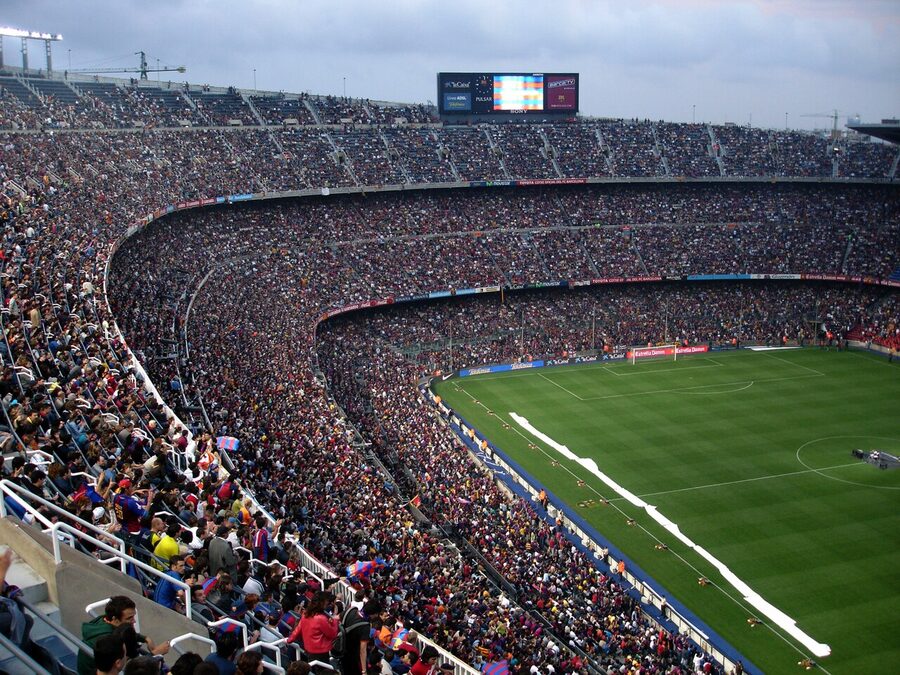
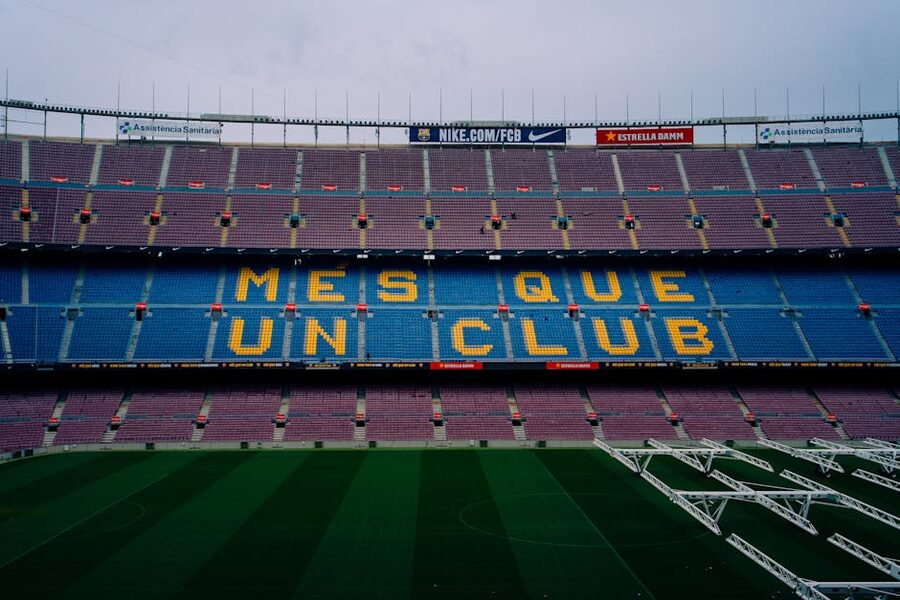
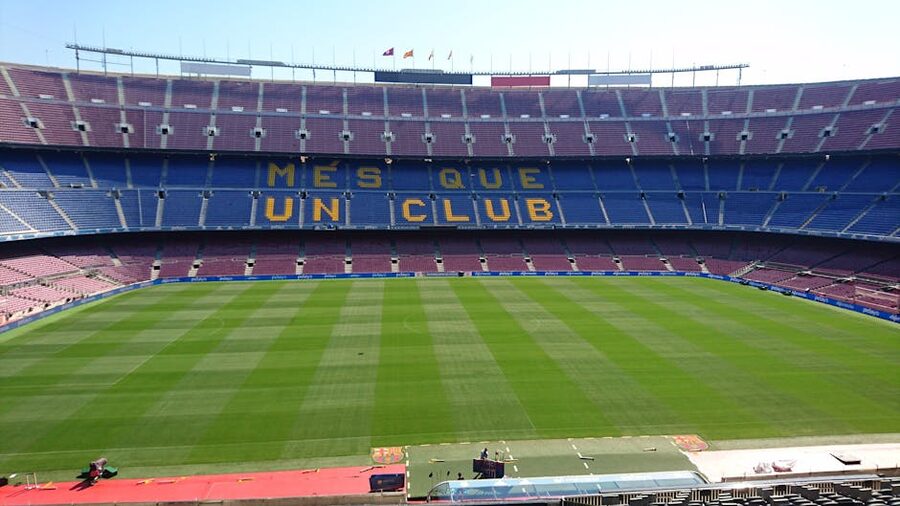
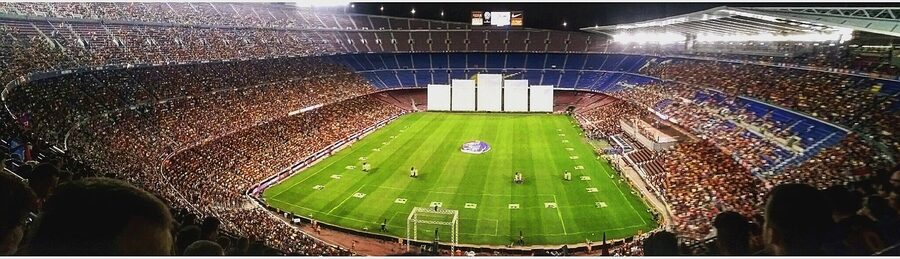
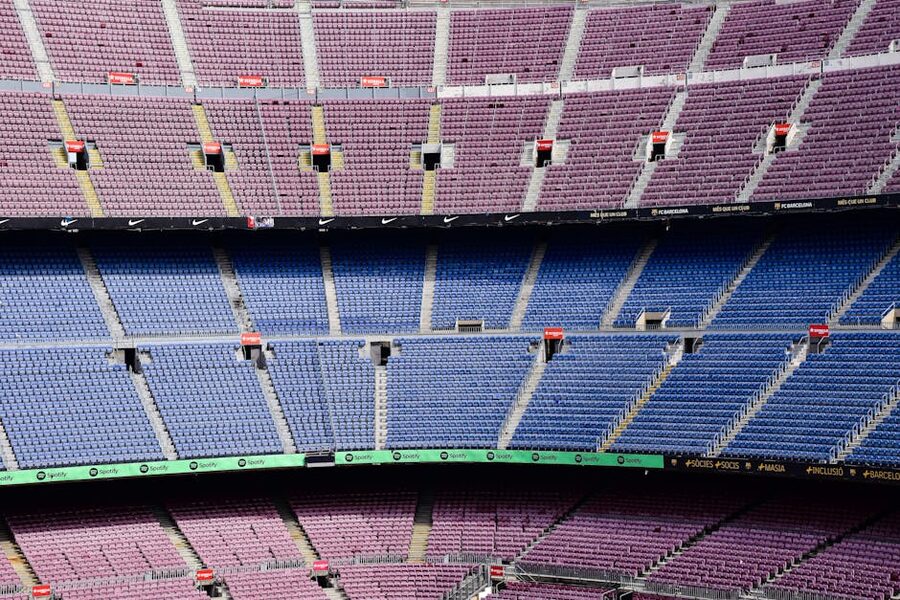
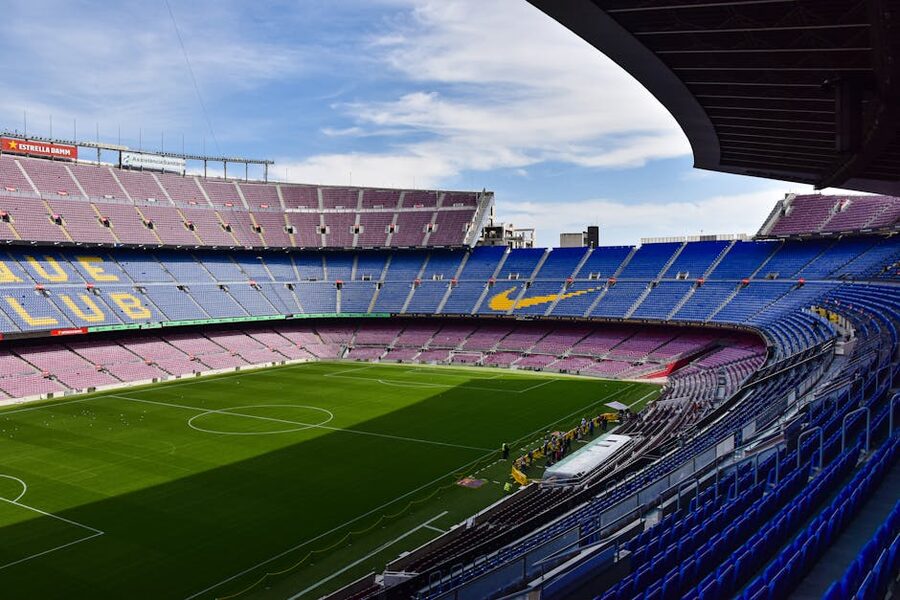
The capacity grew over time. The 1982 World Cup expansion lifted it to 121,000 (since reduced for safety and seating standards to 99,354). The Més Que Un Club slogan was unveiled in 1998 across the stands, an idea then-president Núñez had been pushing for years. Cruyff played here in the 70s, then coached the Dream Team here in the late 80s and early 90s. Pep Guardiola’s tiki-taka Barça won everything from this pitch between 2008 and 2012. Messi scored 474 of his Barcelona goals here over 17 seasons. There is a real reason this stadium has been mythologised, and the museum does the mythology well.
The 1957 stadium had two genuine architectural problems by 2020. The cantilevered roof did not cover the upper tier, so a third of the stadium was exposed in winter rain. The structural concrete had the typical post-war Spanish issue of needing major reinforcement, and the upper bowl had been patched repeatedly over 60 years. The rebuild solves both, raises capacity to 105,000, and adds a full roof. That is what the €1.5 billion is buying.
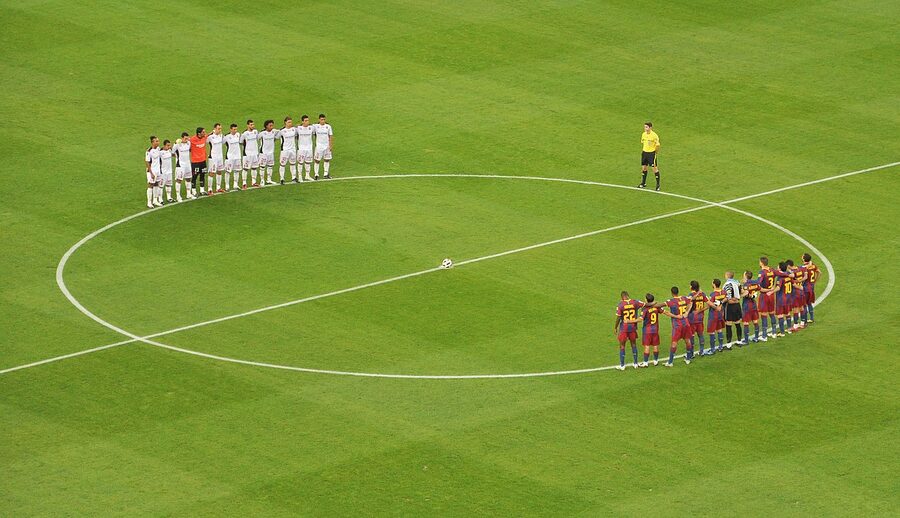
Barça is not the only European stadium going through this. Milan’s San Siro is in the middle of its own demolition debate, with both Inter and AC Milan pushing for a new shared stadium. The two cities have very different politics around their grounds, but the underlying logic is the same: the post-war giants are all hitting the end of their structural life at once.
Match days, opera-house style waiting, and what comes back
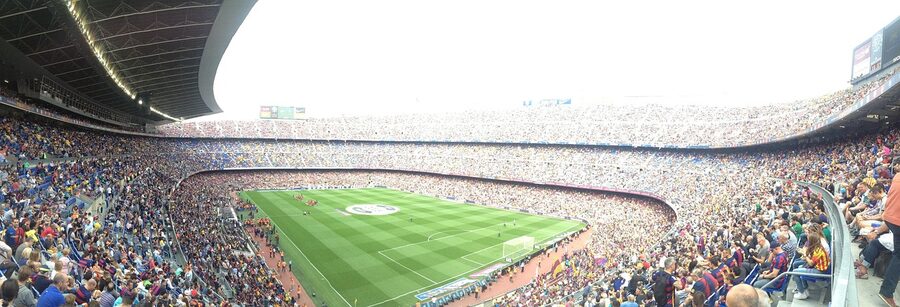
Right now, no match days. Barça plays at Estadi Olímpic Lluís Companys on Montjuïc, the 1992 Olympic stadium reused for the rebuild period. If you want to see Barça play in Barcelona between now and the reopening, that is where you go, not Camp Nou.
When the rebuild finishes, the full pre-2023 stadium tour comes back. That includes pitch access, the players’ tunnel walk (you exit onto the pitch the way the players do, music cue and all), the home and visitor dressing rooms, the press conference room, the trophy lift, and the chapel where players light candles before matches. The pre-2023 visit was rated 4.7 on TripAdvisor by 60,000+ visitors. The 2026 limited visit is rated about 4 by a much smaller number. If patience is an option, patience is the answer.
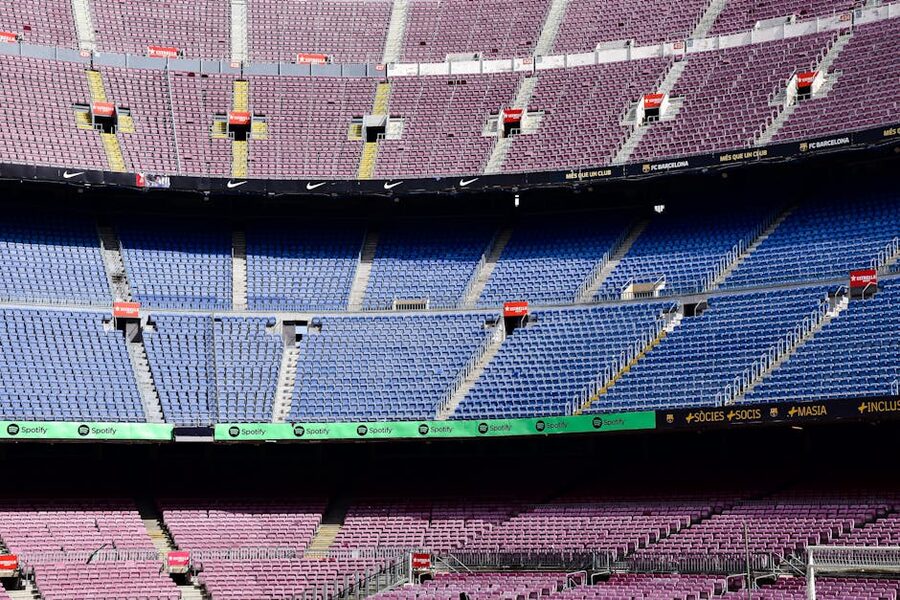
For comparison, La Fenice opera house in Venice burned down in 1996 and reopened in 2003 after a slow rebuild that ran years past schedule. Visitors who turn up at La Fenice today see the rebuilt theatre, not the burned shell. In ten years’ time, that is what visiting Camp Nou will feel like, you will see the new stadium and the photos of the 2023 to 2026 rebuild will be in the museum somewhere. Right now, you can stand inside the rebuild itself. There is something in that. The cleanest already-finished European stadium tour for travellers chasing the same ritual is Amsterdam’s Johan Cruijff Arena, where the Cruyff lineage that shaped Barça is told from the other end of the same story.
The Barça shop, the food, and the stuff around the stadium
The official FC Barcelona Megastore sits next to the museum. It has the full kit range, scarves, mugs, the lot, all at official prices. If you want a kit, this is the place. The same kit is available cheaper at unofficial shops on La Rambla, but the unofficial ones are about 40% likely to be a knock-off. The Megastore guarantees the real product. Pay the markup if it matters.
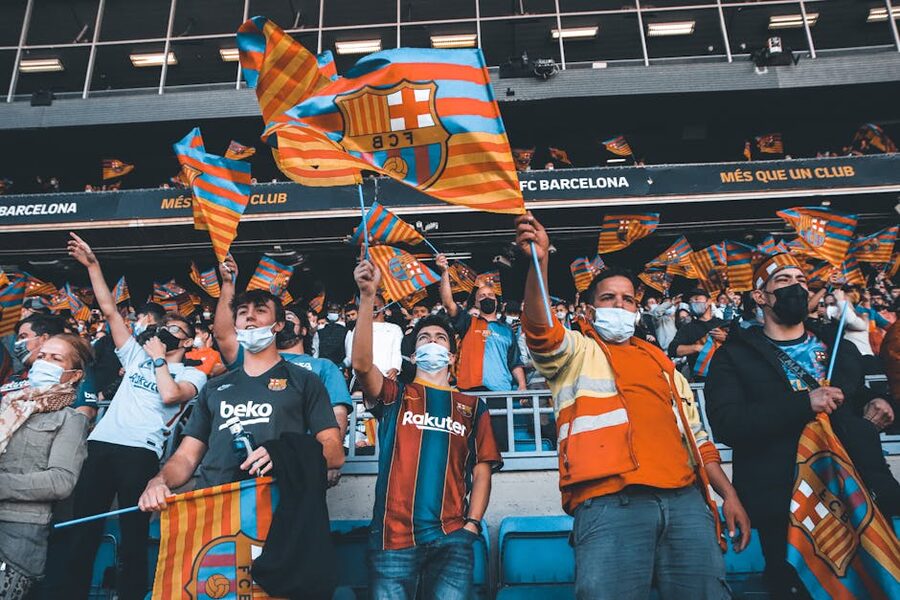
Food around Camp Nou is functional, not great. The museum café is fine for a sandwich and overpriced for what it is. Better to walk five minutes north to the Travessera de les Corts strip, where the restaurants serve actual Catalan food at locals-not-tourists prices. Pa amb tomàquet (the bread-and-tomato thing that should be on every Catalan table), botifarra (Catalan sausage), maybe a vermouth before lunch.
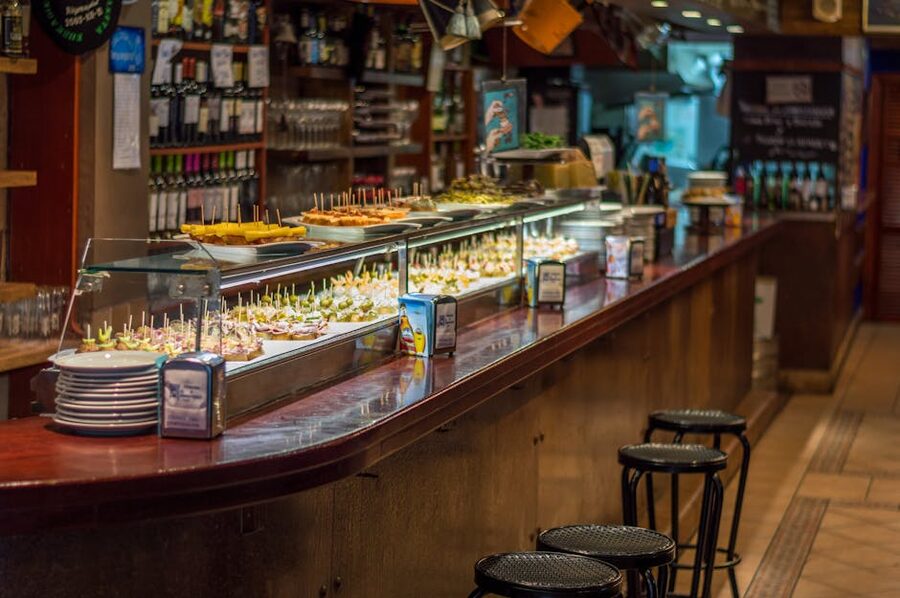

If you want a more involved Barcelona food experience after the museum, the Sagrada Família area has better tapas options about 25 minutes away by metro, and the Eixample restaurants between Casa Batlló and Casa Milà are some of the best in the city. Camp Nou is not the place to spend your food budget.
Common mistakes I see people make
Three things go wrong on this visit, more often than they should.
Booking through a third-party reseller. The same Immersive ticket sold for €36 on fcbarcelona.com costs €41 to €51 on resellers that have arbitraged the search results. Book on fcbarcelona.com or on GetYourGuide at face value. Anything else is paying a tax for nothing.
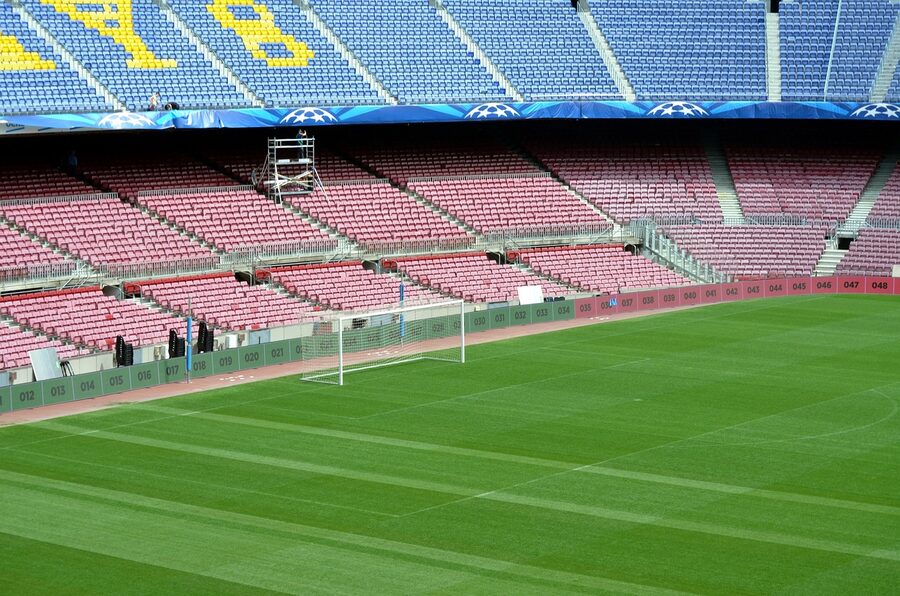
Expecting a stadium tour. If you booked the €36 ticket thinking you would walk on the pitch, walk down the tunnel, and stand in the dressing room, you will be disappointed. Read the small print. The 2026 ticket is a museum + show + viewpoint. The full stadium tour is suspended.
Showing up on a match day expecting Barça to be playing. They are not. They are at Estadi Olímpic Lluís Companys on Montjuïc, a separate metro ride away. If you want to see them play, book the actual match tickets and head to Montjuïc, not Les Corts.
Practical info
Quick list because this stuff matters and a flowing paragraph would bury it.
- Address: C. d’Arístides Maillol, 12, 08028 Barcelona (Les Corts)
- Metro: Palau Reial (L3, green) or Collblanc (L5, blue), both 7-10 minute walk
- Hours: Mon-Sat 9:30-19:30, Sun 10:00-14:30. Last entry 90 minutes before close
- Basic ticket: €36 (museum + audio guide + 360° show + construction viewpoint)
- Total Experience Pass: €63 (adds Messi 10 immersive room + skip-the-line)
- Children: Free under 4, reduced rate ages 4-10
- RoboKeeper challenge: €4.40 extra at the museum, optional
- Visit length: 60-90 minutes for most visitors, up to 2 hours if you read every panel
- Best time: Weekday morning, ideally Tue-Thu around 10am
- Hop-on bus stop: Yes, both lines stop at the stadium
- Match days: Barça is currently playing at Estadi Olímpic Lluís Companys on Montjuïc, not Camp Nou
What to do nearby (because Les Corts is not full of tourist sights)
Les Corts is a quiet residential and university district. The University of Barcelona’s main complex sits five minutes from Camp Nou, and the Royal Palace of Pedralbes (the grounds are free, the small museum charges) is about 15 minutes’ walk. If you have spent the morning at the museum, the gardens at Pedralbes are a good slow-down before heading back to the city centre.

The Sarrià-Sant Gervasi neighbourhood north of Les Corts has Tibidabo, the funicular, and some of the best Catalan restaurants in the city, but it is a separate half-day. Better to do that on a different trip than try to combine it with Camp Nou.
If you want a more obvious sequel to a Barça morning, head back to the centre and finish in the Eixample with one of the Gaudí houses. Both are 25 minutes from Camp Nou by metro, both are evening-friendly (Casa Batlló especially has a good night ticket), and both are a complete tonal shift from a sports museum, which is exactly what you want after 90 minutes of football trophies.
If you only have one Barcelona morning, this is not it
One last sanity check. If you are in Barcelona for two days and one morning, do not spend that morning here. Spend it at Sagrada Família, where the architecture stands on its own without needing you to know the backstory. Camp Nou in 2026 is a visit that rewards investment of caring. If you do not bring that investment, the museum does not magic it up for you.
If you are here for four days or more, and football is part of the reason you came, this is a fair half-day. The 360° show is the strongest single component, the construction viewpoint is the rarest, and the museum is the floor below which the visit cannot fall. €36 is a lot. €36 split across three things that will all change once the stadium reopens is, in retrospect, fair.
While you’re in Barcelona
The contrast between a stadium being torn down in Les Corts and a cathedral being slowly built in the Eixample is the perfect Barcelona double-bill. Both projects, weirdly, started in the same era of late-19th and mid-20th century Catalan ambition. Both are under scaffolding right now. Only one is finishing, and a morning at Sagrada Família is the obvious sequel to a morning here. If you have an extra day, the Montjuïc cable car goes up the hill where Barça is currently playing its home matches at Estadi Olímpic Lluís Companys, which closes the loop. Spain still has a Real Madrid stadium tour I have not covered yet, but for Barça in 2026, this is the visit that exists. For wider European architecture-as-spectacle parallels, Frank Gehry’s Fondation Louis Vuitton in Paris and Amsterdam’s Heineken Experience are the closest commercial-meets-civic visits in their cities.