The guard pointed at a narrow passage in the wall and said “this way.” I ducked through a doorway barely wider than my shoulders and found myself in a corridor that spiraled upward inside the thick outer walls of the castle. The passage was lit by slits in the stone that let in thin bands of daylight. Fifteen hundred years ago, a Roman emperor was carried up this same spiral ramp to his tomb. Six hundred years after that, a pope used it to flee an invading army.
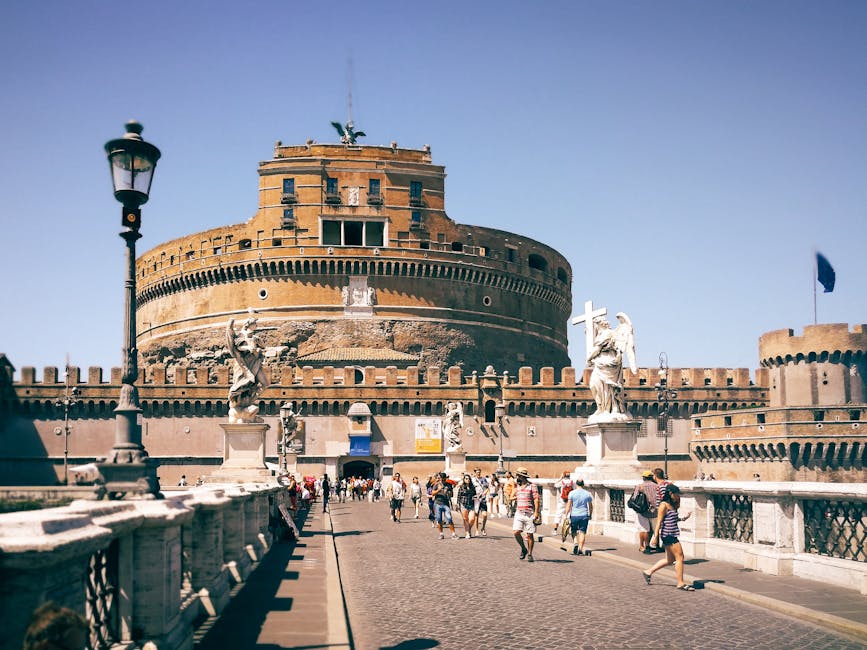
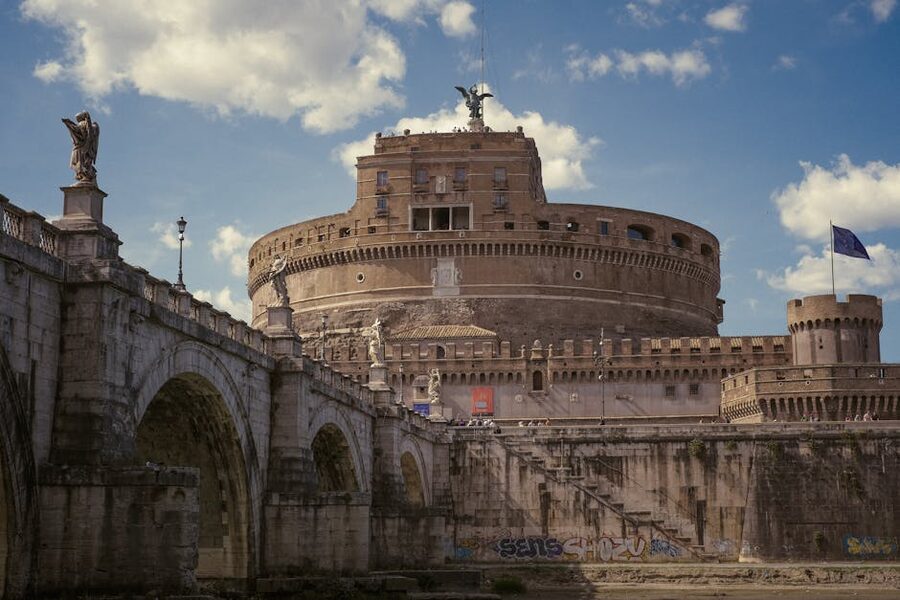
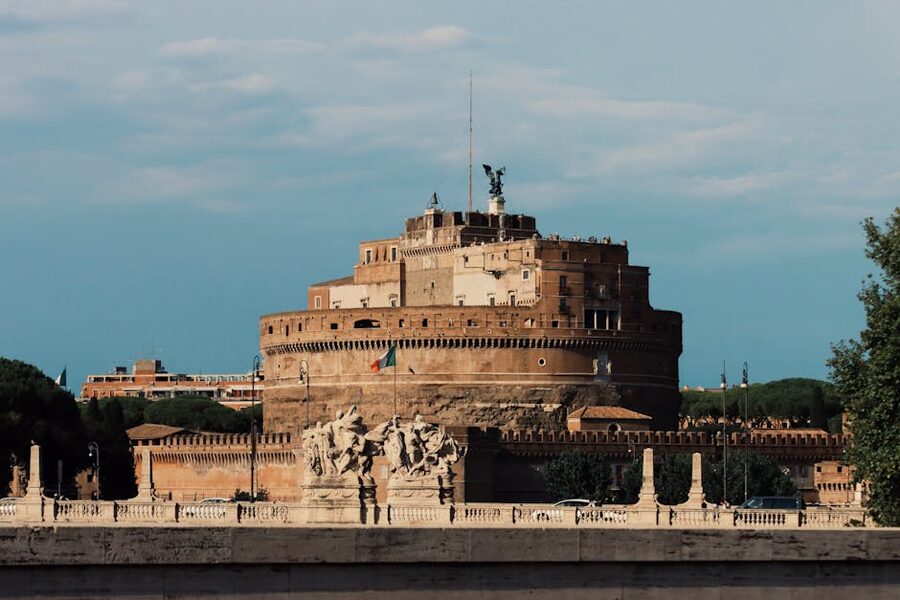
Castel Sant’Angelo is one of Rome’s most underrated monuments. Most travelers walk past it on the way to the Vatican without realizing that the cylindrical fortress overlooking the Tiber has nearly 2,000 years of Roman history compressed into its walls, from Emperor Hadrian’s burial chamber to papal escape tunnels to a Renaissance prison where Benvenuto Cellini was once held. Few European fortresses pack that much history under one roof, though the Alhambra in Granada and the watchtower at Málaga’s Alcazaba come close in their own Moorish way.
Here’s how to visit, what the tickets cost, and why it deserves a spot on your Rome itinerary.
Short on Time? My Top Picks
Skip-the-Line Entry & Audioguide — Skip the queue and explore with an audio guide that covers the building’s 2,000-year history. Most booked option with 5,200+ reviews.
Skip-the-Line Entry Ticket — $17. The budget option. Fast-track entry, explore at your own pace. Highest rated at 4.8 with 2,200+ reviews.
Small Group Guided Tour — $75. A guide who brings 2,000 years of history to life. Small groups, deep knowledge. Worth every penny if you want context.
How Castel Sant’Angelo Tickets Work
The castle uses timed entry with tickets available online or at the door. Entry is €16 for adults, free for under 18s (EU citizens — non-EU under 18s pay €2). Booking in advance is recommended on weekends and during peak season, but this isn’t the Colosseum — you can often walk up on a Tuesday morning and get in within 15 minutes.
The official ticket site is direzionemuseiroma.cultura.gov.it — the same system that handles the Pantheon. Third-party tickets through GetYourGuide run $17-34 and include skip-the-line access, which bypasses the general queue entirely.
When to Visit
Open daily from 9 AM to 7:30 PM (last entry 6:30 PM). Closed on Mondays — a detail that catches many visitors off guard.
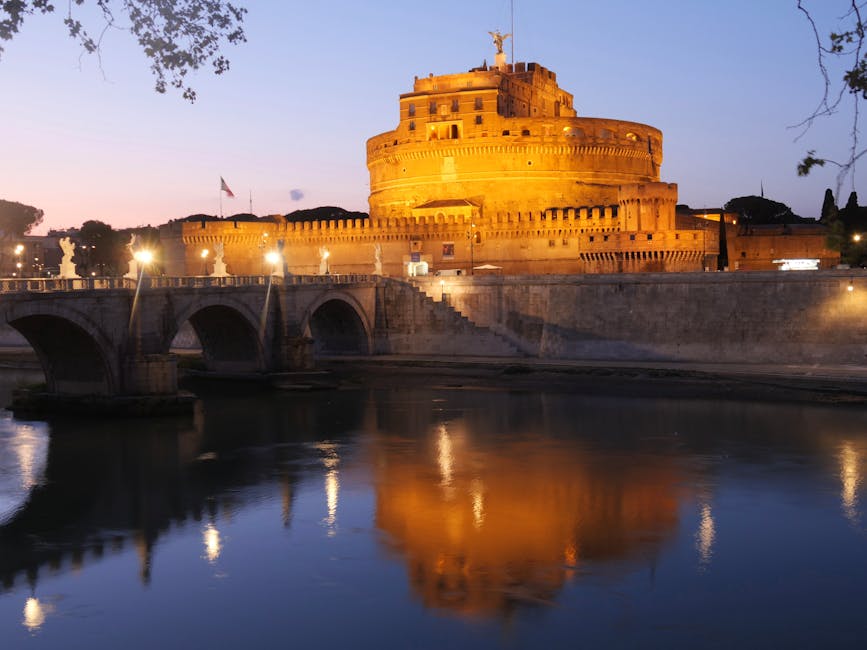
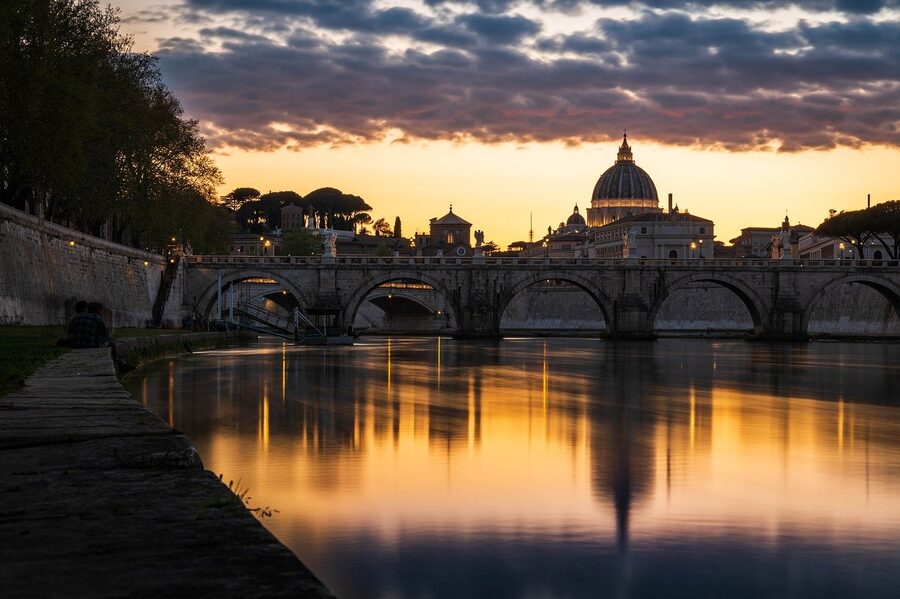
The best time to visit is late afternoon, around 4-5 PM. The crowds thin, the light softens, and you can time your visit to reach the rooftop terrace for golden hour. The sunset views from the top of Castel Sant’Angelo — with St. Peter’s dome glowing behind you and the Tiber stretching below — are among the best in Rome.
The Best Castel Sant’Angelo Tours
1. Skip-the-Line Entry & Audioguide
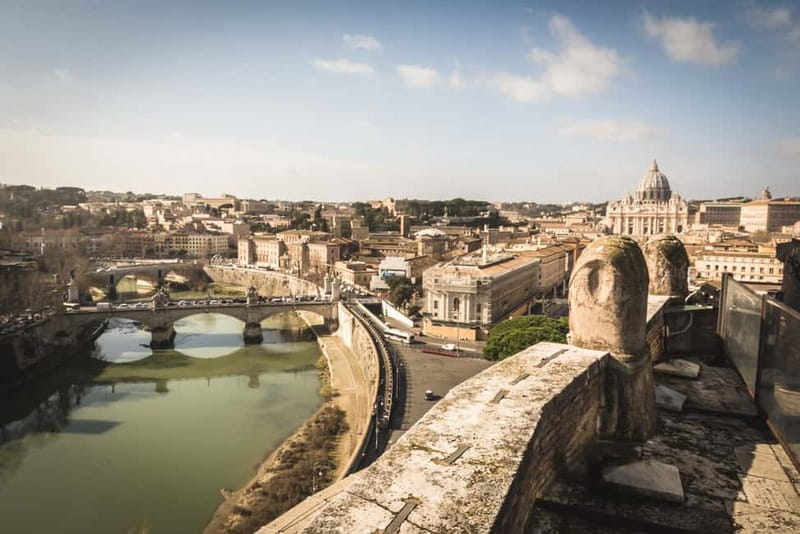
The most popular option with over 5,200 bookings. Skip-the-line access gets you past the general queue, and the audio guide walks you through each room’s history. This building has been so many things over 2,000 years that exploring without context leaves you wondering what you’re looking at — the audio fills that gap. We break down which sections the audio covers best and where it falls short.
2. Skip-the-Line Entry Ticket — $17
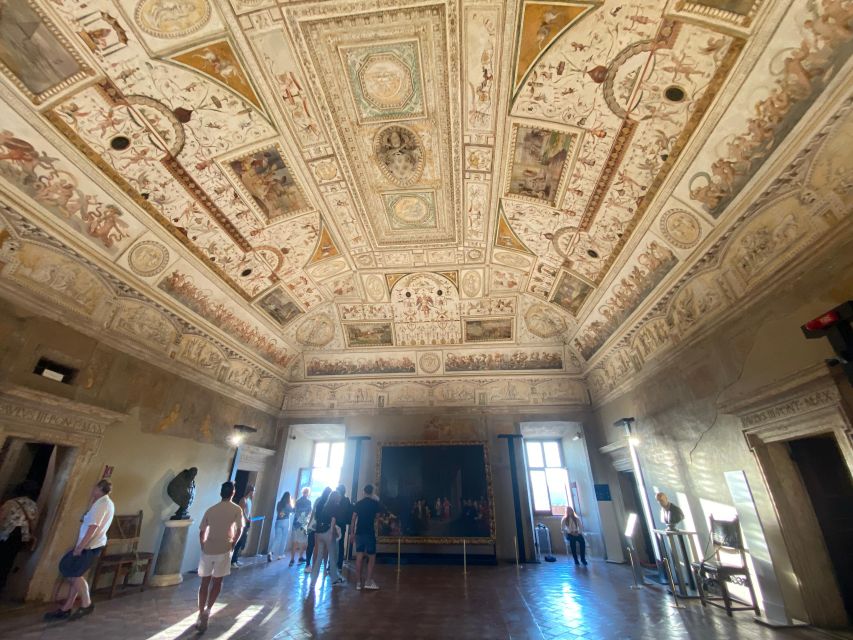
The budget pick. Just $17 gets you skip-the-line entry to explore at your own pace. No audio guide, no guide — just you and the castle. The 4.8 rating across 2,200+ reviews is the highest of any Castel Sant’Angelo ticket, which says something about the quality of the self-guided experience here. More on whether the castle is easy enough to navigate without a guide (short answer: mostly yes, but the underground levels are confusing).
3. Small Group Guided Tour — $75
The premium choice for history lovers. A knowledgeable guide walks a small group through 2,000 years of the building’s history — from Hadrian’s ashes to the Borgia Pope’s imprisonment of his enemies. At $75 it’s the most expensive option, but the depth of commentary justifies it. The guides at this site tend to be exceptional because the building’s history is so layered. We explore what the guides focus on and whether the small group format makes a difference compared to larger tours.
What You’ll See Inside
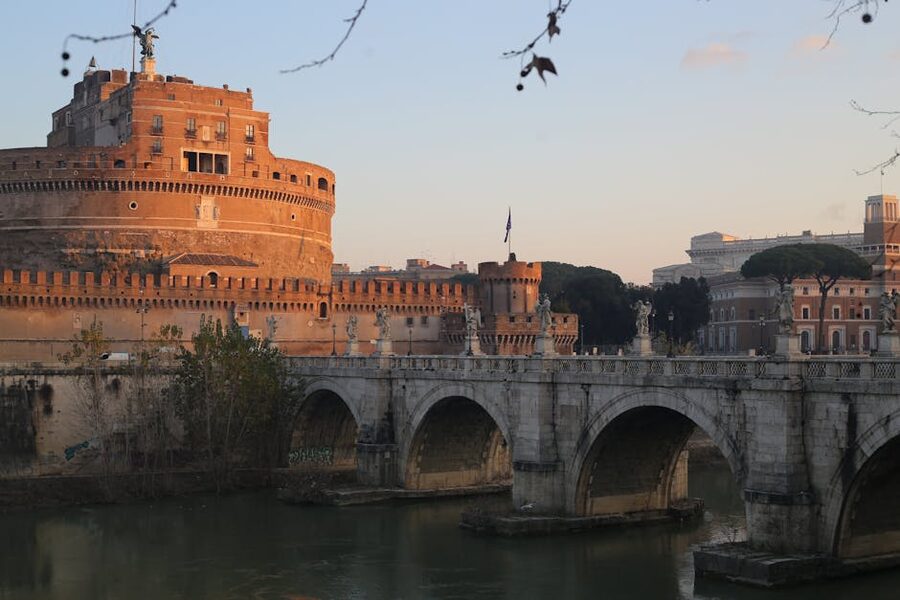
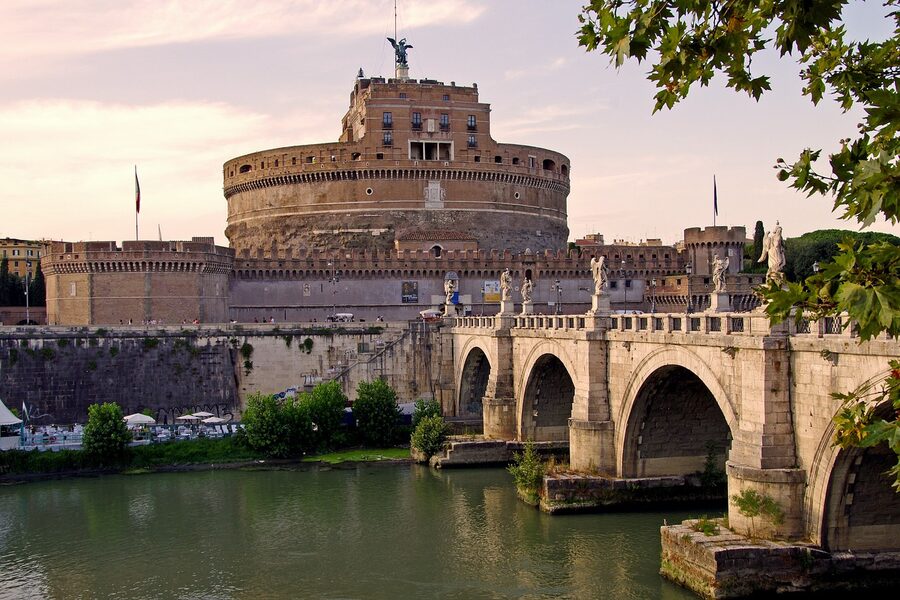
Castel Sant’Angelo is not a single building — it’s 2,000 years of construction layered on top of each other. You start at the bottom in the Roman era and climb upward through medieval fortifications, Renaissance papal apartments, and finally emerge on the rooftop terrace with panoramic views of the entire city.
The Mausoleum of Hadrian (Ground Level)
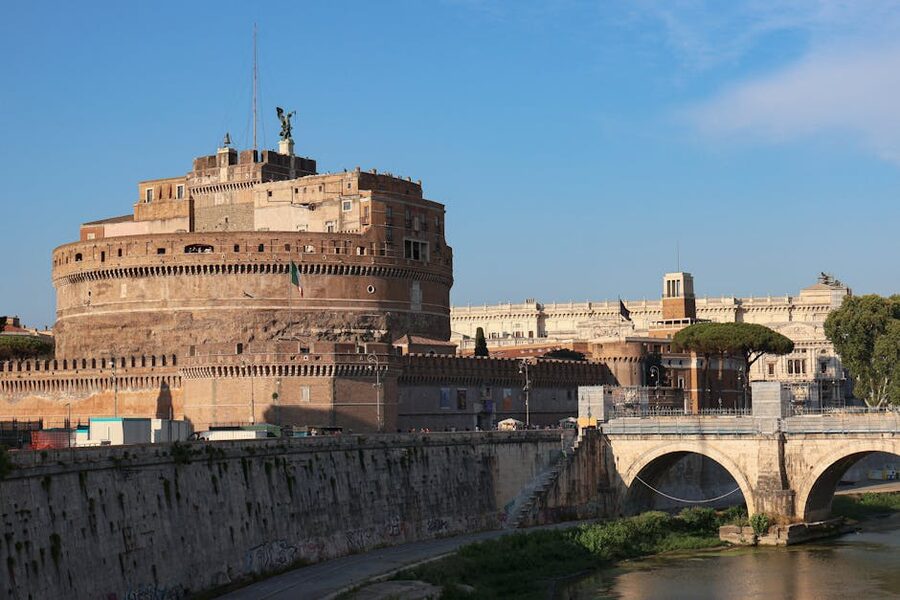
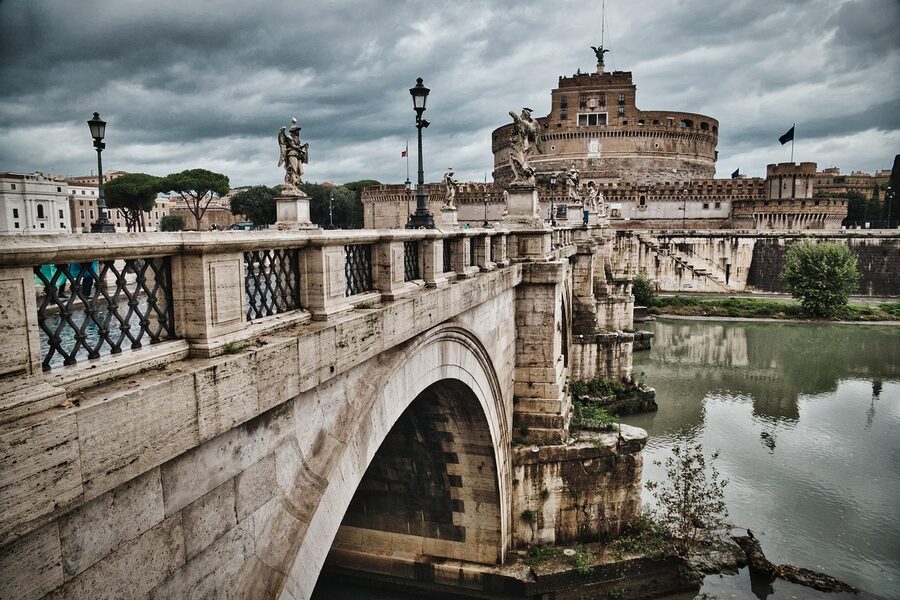
The building began its life in 123 AD as Emperor Hadrian’s mausoleum — a massive circular tomb designed to hold the ashes of the emperor and his successors. When Hadrian died in 138 AD, his ashes were placed in a chamber at the base of the structure. The ashes of every Roman emperor from Hadrian to Caracalla (217 AD) were eventually interred here.
The spiral ramp that leads upward from the original entrance is the same one used to carry Hadrian’s funerary urn to the burial chamber. Walking it today, in near-darkness, with the sounds of the city muffled by 6 meters of concrete walls, is one of the most atmospheric experiences in Rome.
The Medieval Fortress (Middle Levels)
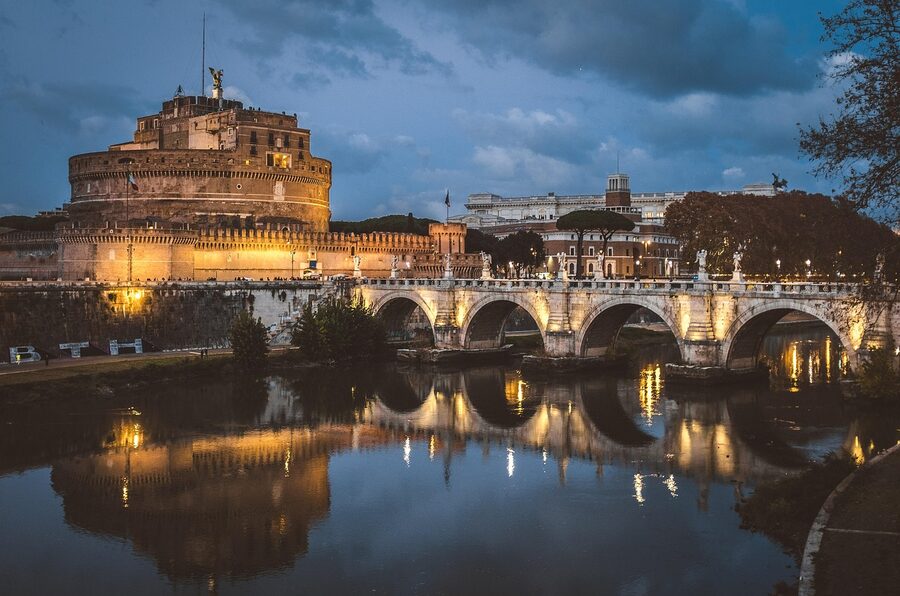
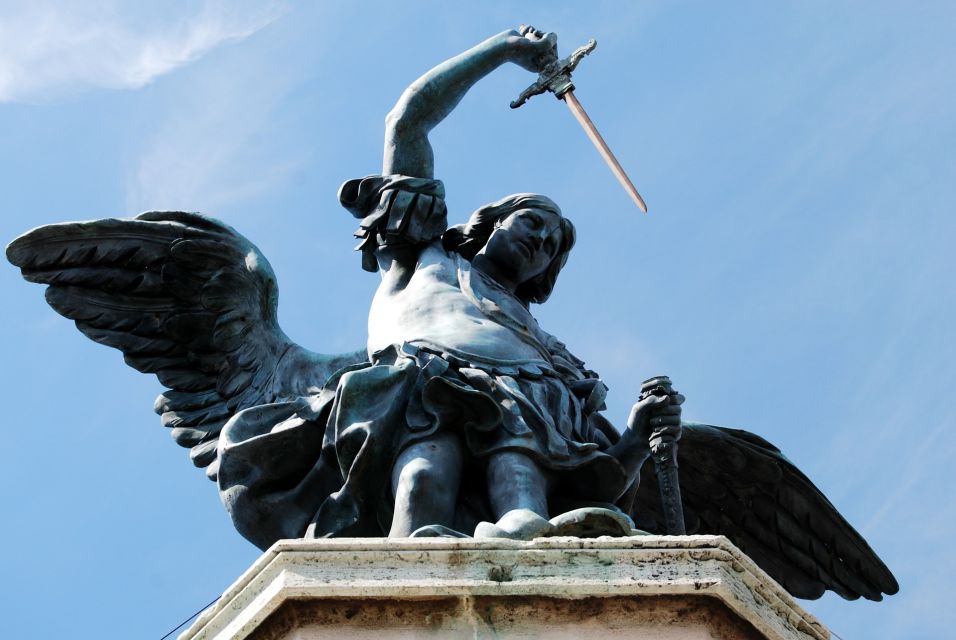
After the fall of Rome, the mausoleum was converted into a military fortress, one of the strongest in Europe. Pope Gregory the Great renamed it Castel Sant’Angelo in 590 AD after reportedly seeing a vision of the Archangel Michael sheathing his sword at the top of the building, signalling the end of a plague. The angel statue on the roof commemorates this legend, the kind of mythic plaque-and-stone story you find at Carcassonne‘s ramparts or stitched through the moats of Chambord.
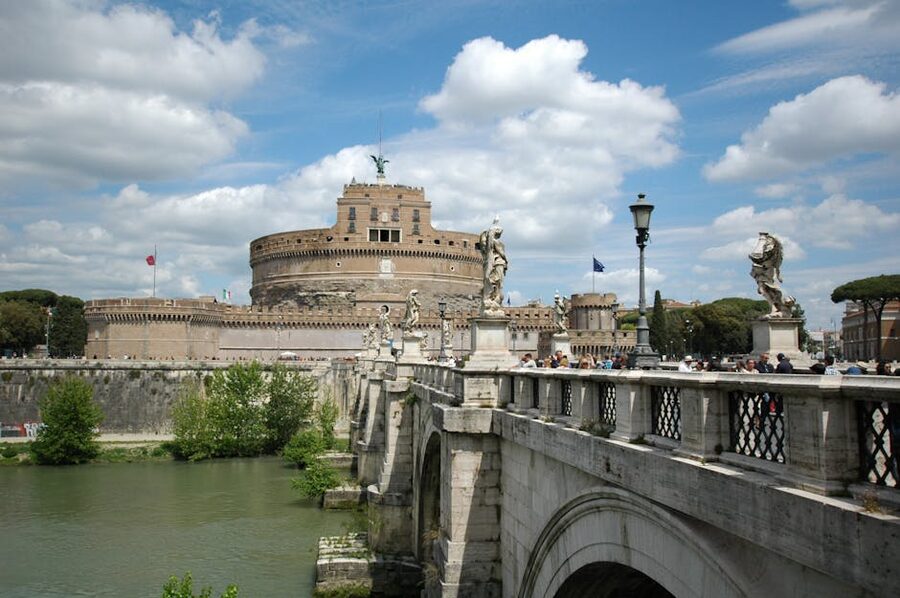
The middle levels contain the medieval fortifications: thick walls, defensive corridors, cannon emplacements, and the famous Passetto di Borgo — a secret elevated passageway that connects the castle directly to the Vatican. Popes used this 800-meter corridor to flee to the castle’s safety during attacks. Pope Clement VII famously ran through it in 1527 during the Sack of Rome, with enemy soldiers pursuing him across the rooftops.
The Papal Apartments (Upper Levels)
Renaissance popes turned the fortress into a luxurious residence. The papal apartments on the upper levels are decorated with frescoes, marble, and gilded ceilings that feel more like a palace than a castle. Pope Paul III’s apartment is the highlight, richly decorated rooms with grotesque-style frescoes that rival anything in the Vatican, the same fortress-to-palace shift that turned Chenonceau from a defensive bridge into a Loire showpiece, or upgraded the public-facing rooms inside Amsterdam’s Royal Palace.
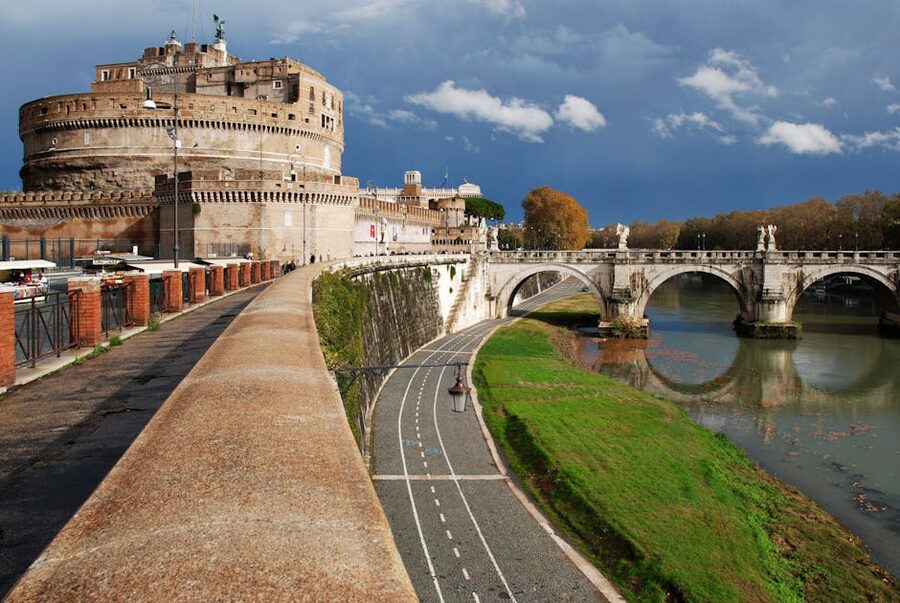
The same levels also house what remains of the castle’s notorious prison. Benvenuto Cellini, the Renaissance sculptor and goldsmith, was imprisoned here in 1539 and later wrote about his escape in his famous autobiography. Giordano Bruno was held here before his execution for heresy in 1600.
The Rooftop Terrace
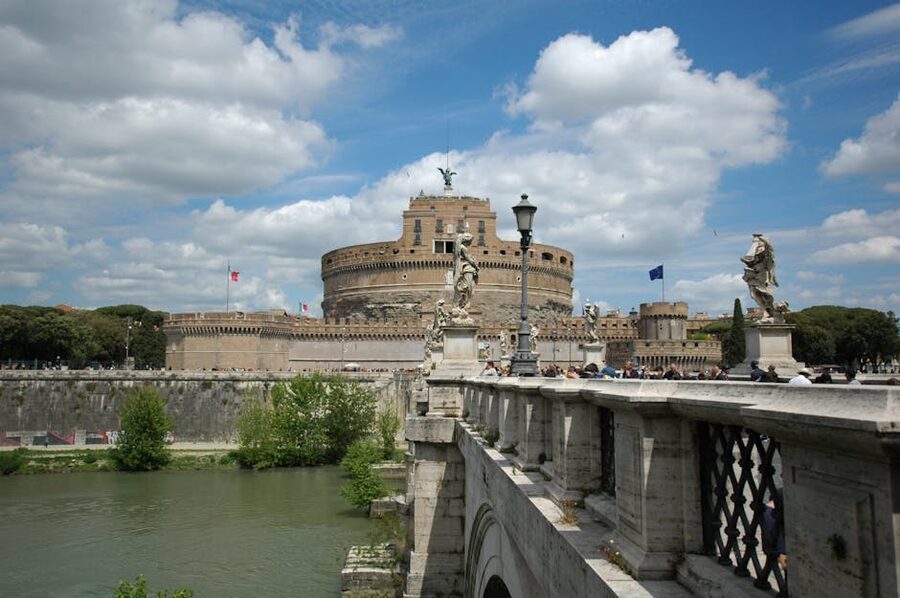
The terrace at the top of the castle is the highlight for most visitors. The bronze angel statue — a 1752 work by Peter Anton von Verschaffelt — stands at the peak, surrounded by a panoramic terrace that offers 360-degree views of Rome.

There’s a small cafe up here where you can sit with an espresso and watch the sunset over St. Peter’s dome. Bring a jacket — it’s windy at the top.
A Brief History
123-139 AD: Built by Emperor Hadrian as his imperial mausoleum. Completed by his successor Antoninus Pius in 139 AD.
271 AD: Emperor Aurelian incorporates the mausoleum into Rome’s defensive walls (the Aurelian Walls), effectively converting it from a tomb into a fortress.
410-590 AD: During the fall of Rome and subsequent invasions, the castle serves as a military stronghold. Pope Gregory the Great renames it Castel Sant’Angelo in 590 AD.
1277: The Passetto di Borgo — the secret corridor connecting the castle to the Vatican — is built by Pope Nicholas III.
1527: Pope Clement VII escapes through the Passetto during the Sack of Rome. The castle holds out against Charles V’s troops for seven months.
1530s-1800s: The castle serves simultaneously as a papal residence, a military headquarters, and a prison. Famous prisoners include Benvenuto Cellini and members of the Cenci family.
1901: The castle becomes a national museum. Major restorations begin.
2000s: The museum undergoes modernization with new exhibits, audio guides, and the rooftop cafe.
Practical Tips
Allow 1.5-2 hours. The castle is smaller than it looks from outside, but the spiral ramp, multiple levels, and rooftop terrace add up. Budget 90 minutes for a comfortable self-guided visit, or 2 hours with an audio guide.
Wear comfortable shoes. The spiral ramp inside is 125 meters long and gets steep in places. The stone floors throughout the castle are uneven. Heels and flip-flops will make the experience miserable.
Closed on Mondays. This catches a surprising number of visitors. If Monday is your only free day, plan for other sights.
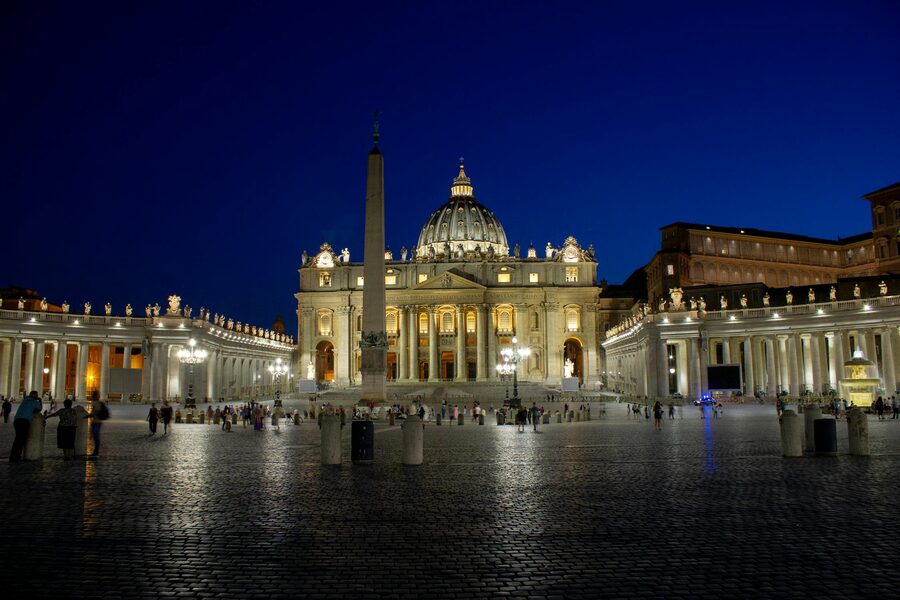
Combine with the Vatican. Castel Sant’Angelo is a 10-minute walk from St. Peter’s Square and a 15-minute walk from the Vatican Museums entrance. It pairs perfectly with a morning at the Vatican — do the museums early, then walk to the castle for a late afternoon visit and rooftop sunset.

The Passetto di Borgo is occasionally open. The secret papal corridor that connects the castle to the Vatican is sometimes opened for special guided tours. Check the museum website for current availability — it’s one of Rome’s most unique experiences, walking the same elevated corridor that popes used to flee invading armies.
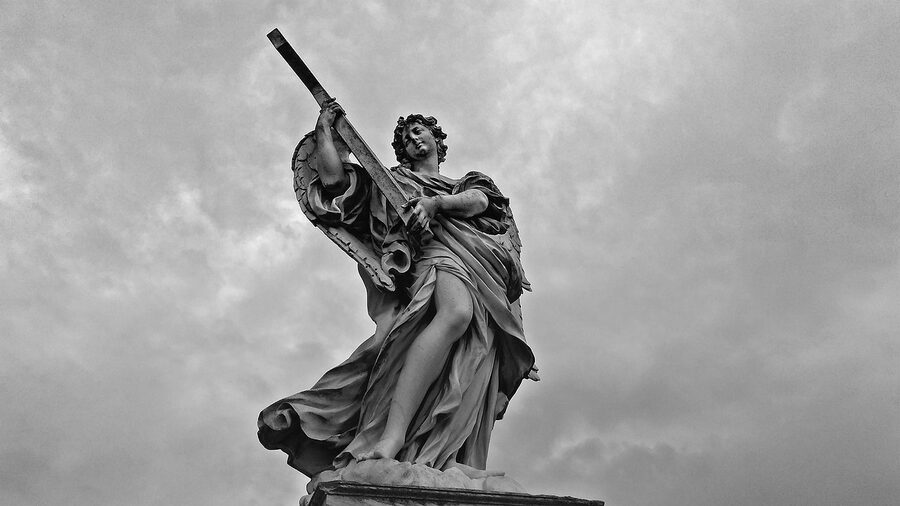
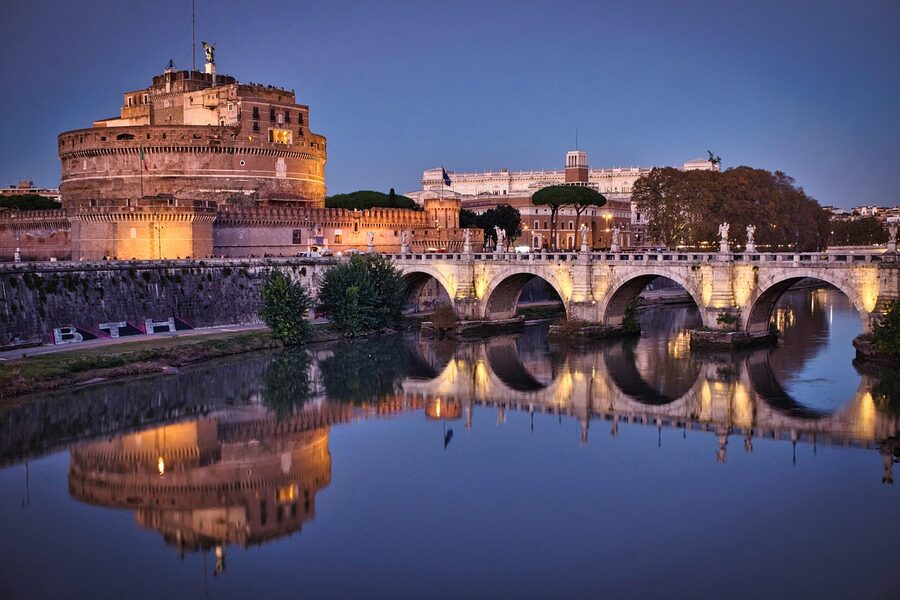
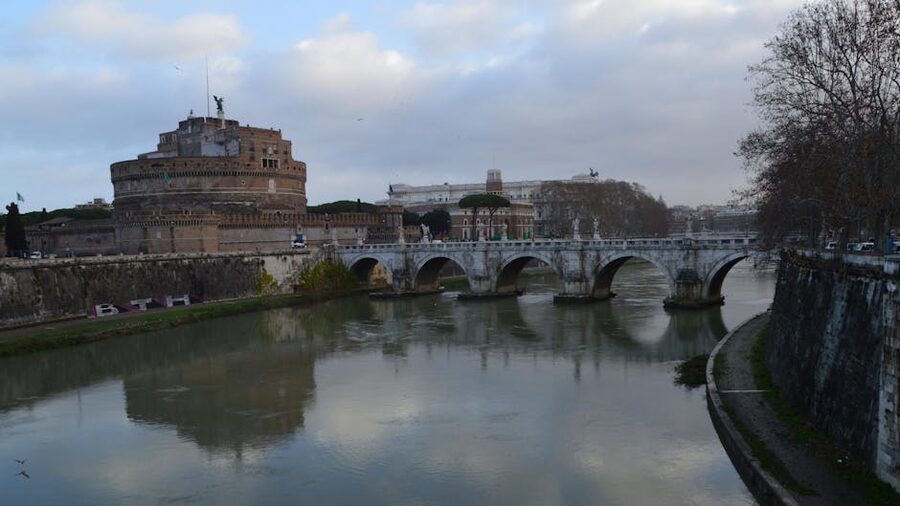
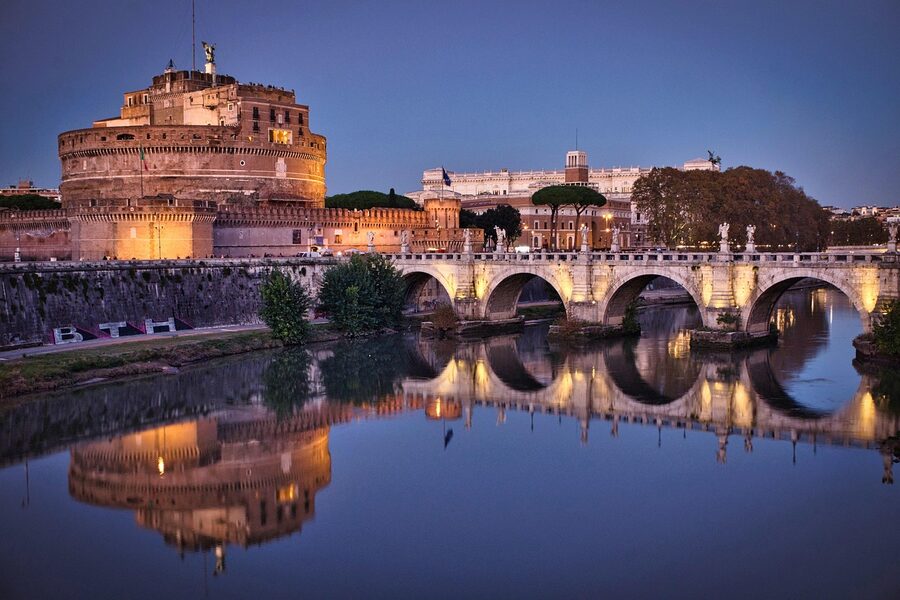
Visit the bridge at night. Ponte Sant’Angelo is beautiful during the day, but at night, when the angel statues are lit from below and the castle glows behind them, it becomes one of Rome’s most romantic spots. It’s pedestrian-only, so you can take your time.
Getting There
Castel Sant’Angelo sits on the west bank of the Tiber, between the historic center and the Vatican. The nearest metro station is Lepanto on Line A, about a 10-minute walk south. You can also reach it from Ottaviano station (Line A), which is the same station you’d use for the Vatican — about a 12-minute walk east.
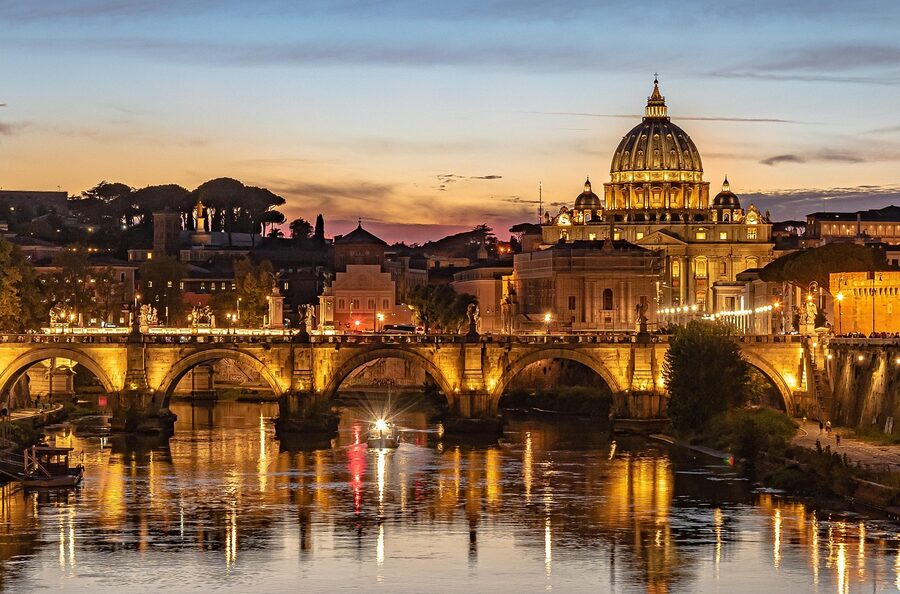
From the historic center (Piazza Navona, Pantheon area), it’s a 10-15 minute walk west across the Tiber. From St. Peter’s Square, it’s 10 minutes walking east along Via della Conciliazione. Bus 40 and 64 both stop nearby.
More Booking Guides for Rome
Castel Sant’Angelo pairs perfectly with the nearby Vatican Museums — do the museums in the morning and the castle in the afternoon. The St. Peter’s dome climb is also a short walk away and offers a different kind of rooftop view. For the rest of Rome’s major sights, the Colosseum and Pantheon are both on the other side of the river, easily reached by a 20-minute walk or a short Metro ride.