
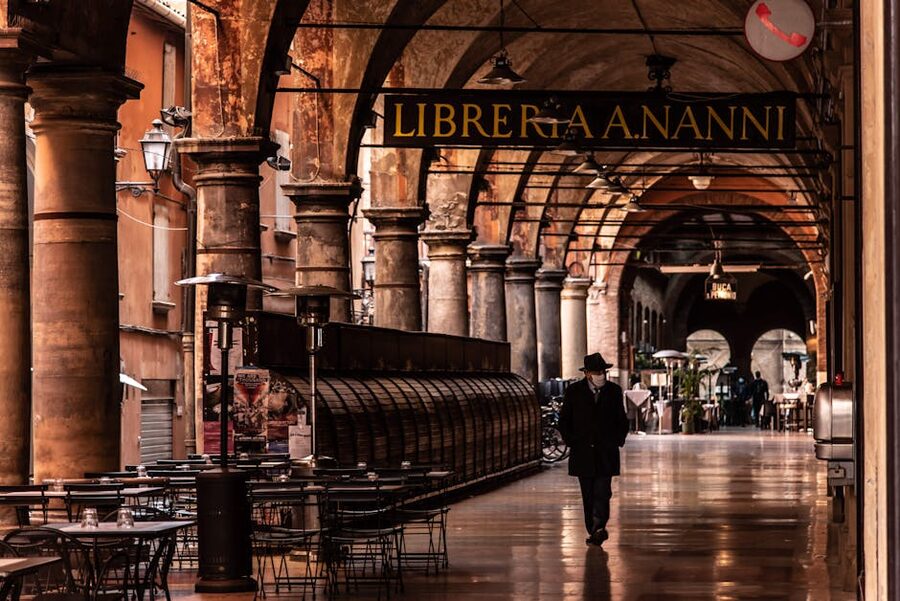
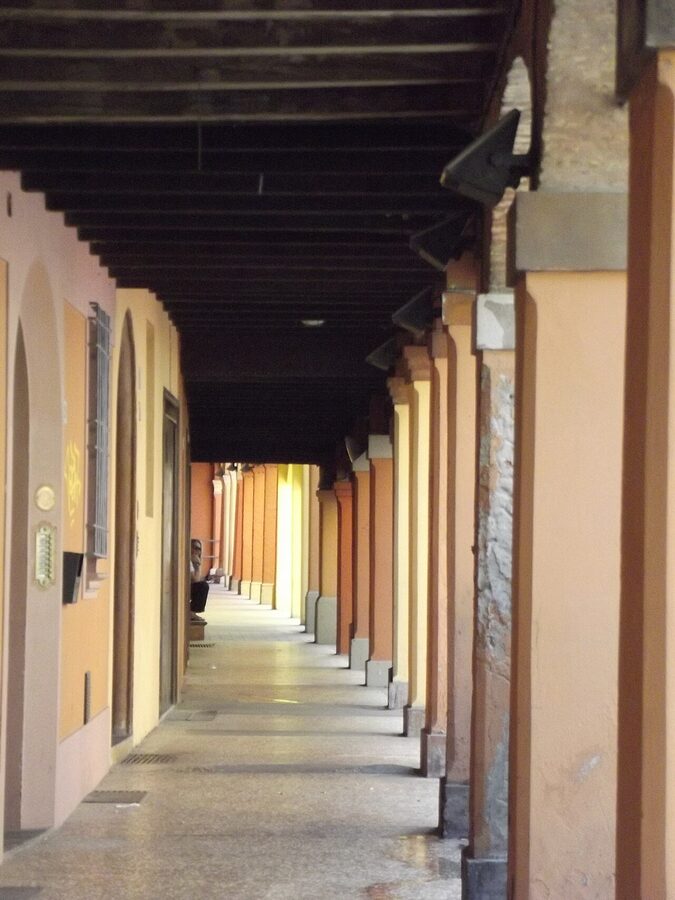
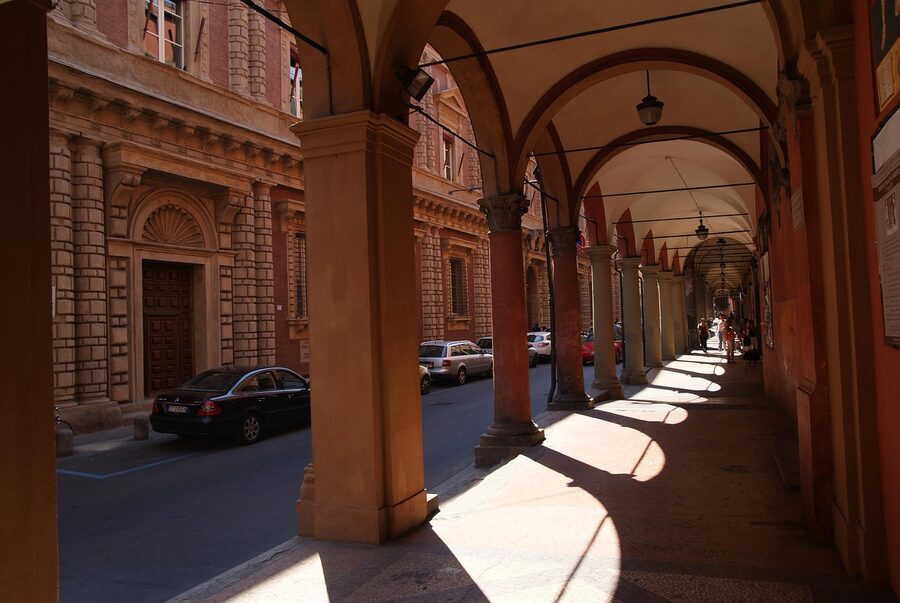
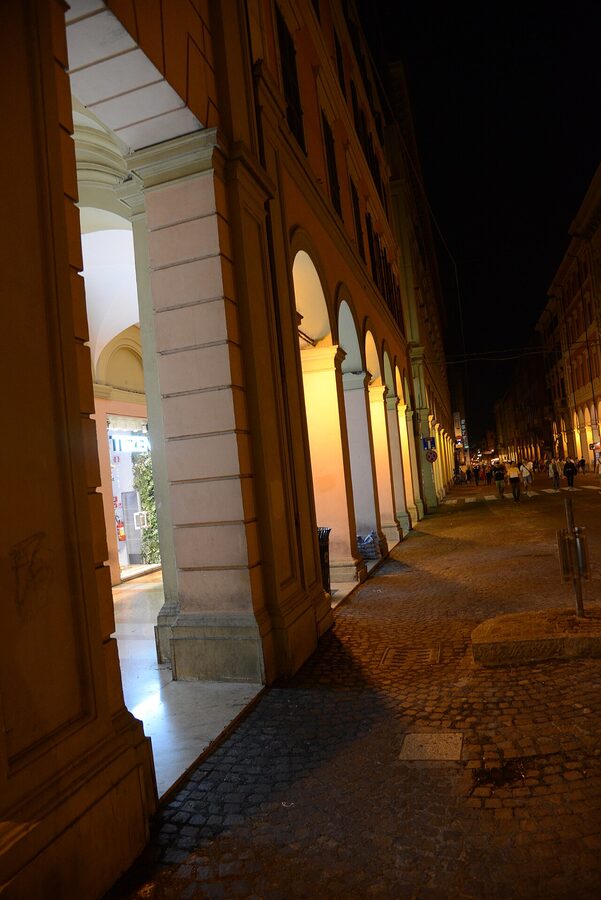
Step off Piazza Maggiore into the Pavaglione portico and the city changes register. The open-air noise of the square goes flat. Your footsteps echo against vaulted brick four metres above your head, and within a hundred metres you’re walking past a salumeria where mortadella the size of a tractor wheel sits behind the glass. Bologna has 62 km of these covered walkways through the city centre. UNESCO listed them in 2021, the same kind of architectural-walking listing that pulls visitors to Gaudí’s Casa Batlló in Barcelona. They’re how you actually see the city.
This isn’t Florence or Venice, where you queue at a single building for two hours. Bologna is a walking city. You move under cover, past food shops, university buildings, medieval towers, and small piazzas, and the route itself is the attraction. Four hours is enough to see the centre properly. A guide makes it sharper, because half the buildings hide a story you’d never get from a brochure.
In a Hurry? Top Bologna Walking Tour Picks
- City Center Walking Tour ($26): Two hours, the classic introduction, hits Piazza Maggiore, Neptune, the Two Towers, and the Quadrilatero food market. Check availability on GetYourGuide
- Secret Food Tours Walking Food Tour ($118): Three and a half hours, six tastings, run by the Bologna chapter of a global food-tour brand that’s been doing this since 2014. Check availability on Viator
- Bologna Food Experience: Factory Tours & Lunch ($216): Nine-hour day out into the countryside. Parmigiano-Reggiano factory, balsamic vinegar producer, prosciutto cellar, family-style lunch with wine. Check availability on Viator
Why a Guide Beats Walking Solo Here
You can absolutely walk Bologna without a tour. Pull up a map, point yourself at the Two Towers from Piazza Maggiore, and you’ll see the headline sights in two hours. Plenty of people do this. It works.
What you miss is the layer underneath. The reason the Portico della Morte is called that. The reason the Asinelli Tower leans (and why the Garisenda next to it leans even more, alarmingly so, and is currently fenced off pending stabilisation work). The reason a city of 400,000 has a market that locals still shop at instead of a supermarket chain. The reason the Anatomical Theatre at the Archiginnasio has a wooden table where, until 1803, public dissections were performed in front of paying audiences.
A good guide gives you those answers in the time it takes to walk between the buildings. You don’t need to stop and read plaques. You don’t end up at the wrong door of San Petronio. And the food shops, which look intimidating and Italian-only when you’re alone, become approachable when someone walks you in and orders a tasting plate.
The €26 walking tours are the best value. Two hours, small groups, English-speaking local guides. You learn enough to spend the next two days exploring solo with context. If you’ve got more time, the food-focused tours are richer, but they’re a different experience from a city overview, and most people want both. We’ll get to those.
What to Walk to in Four Hours: A Sensible Route
The standard walking tour goes Piazza Maggiore, Neptune Fountain, Quadrilatero market, Two Towers, Archiginnasio, and ends back at the square. Two hours, three kilometres of actual walking, almost all of it under porticoes, the kind of dense small-loop that travellers also book for an Anne Frank neighbourhood walking tour in Amsterdam. If you’ve got four hours, you add the Jewish Ghetto and the Santo Stefano complex, and you slow down at every food stop instead of hurrying past.
Here’s how the route lays out and what’s actually worth your attention.
Piazza Maggiore and San Petronio: The Starting Point
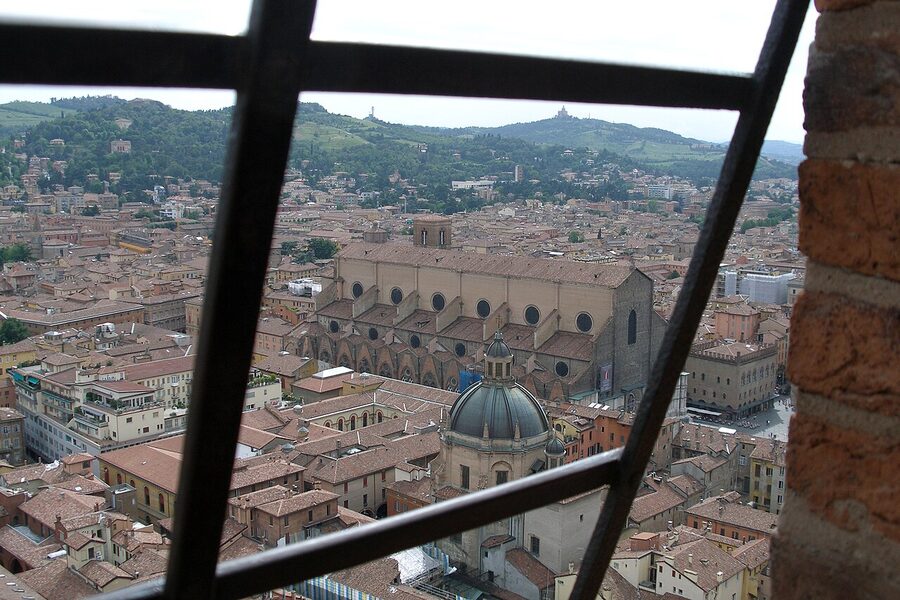
Every guide starts you in front of the basilica. San Petronio is the fifth-largest church in Europe by floor area and was meant to be larger than St. Peter’s in Rome. The Vatican vetoed that. You can see the join in the brickwork where construction stopped on the side facade. Inside, the meridian line on the floor (Cassini, 1655) is the longest in the world inside a building, used for centuries to set the calendar.
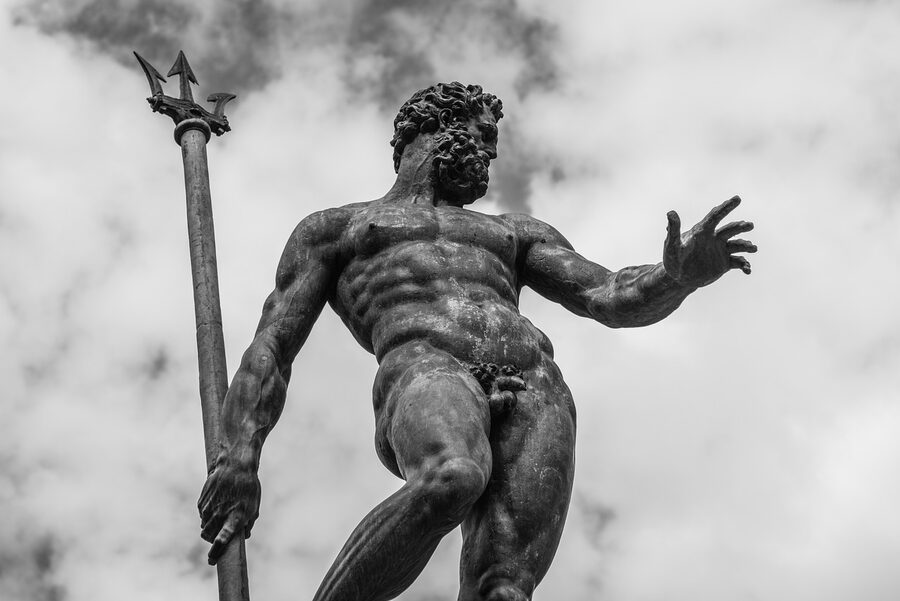
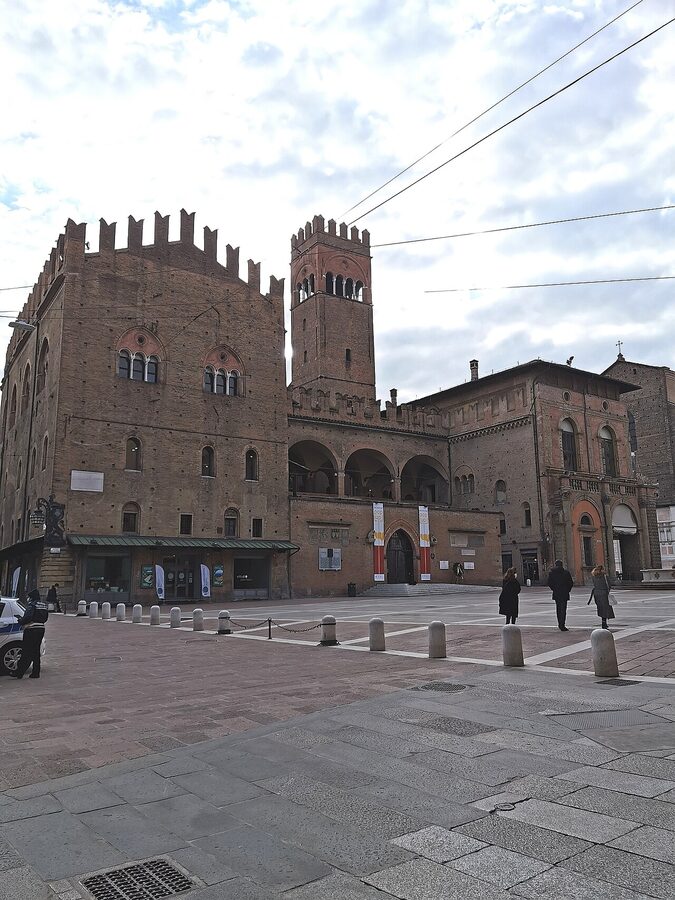
The square is also where you orient. Palazzo d’Accursio (the city hall) is on the west, Palazzo Re Enzo (the medieval prison that held the captured King Enzo of Sardinia for 23 years) is to the north. Neptune is a hundred metres in that direction, and the Quadrilatero (the medieval market grid) is one block east. Most tours hit all of this in the first 30 minutes.
The Quadrilatero: Where the Food Story Starts
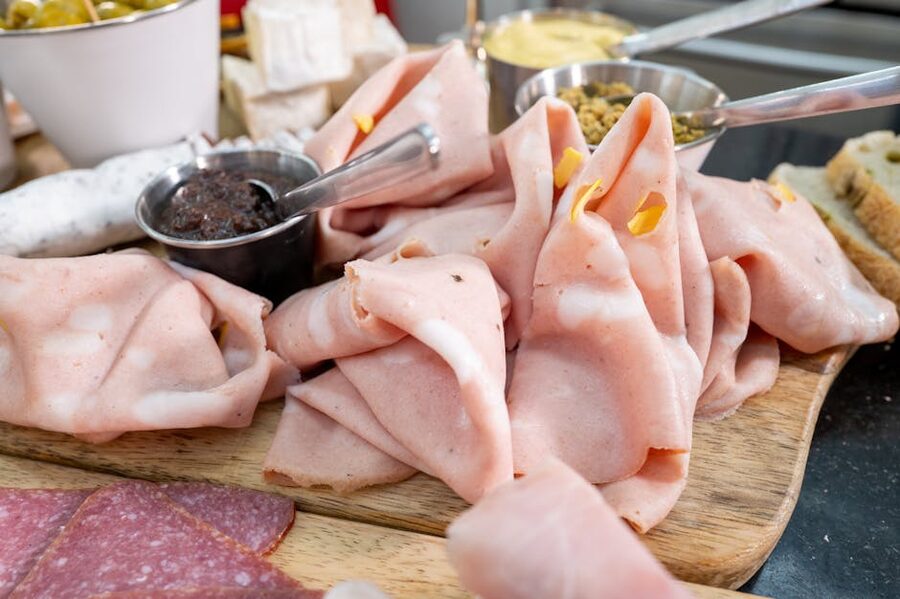
This is the moment most walking tours change pace. The Quadrilatero is a tight grid of seven streets just east of Piazza Maggiore. It’s been a market since the Middle Ages and it still works as one, in the way a Bordeaux wine tour still drops you into working châteaux rather than a museum facsimile. Locals come in for fresh pasta in the morning, fish at lunch, aperitivo in the evening. The smell from Salumeria Simoni’s window alone is worth the trip.
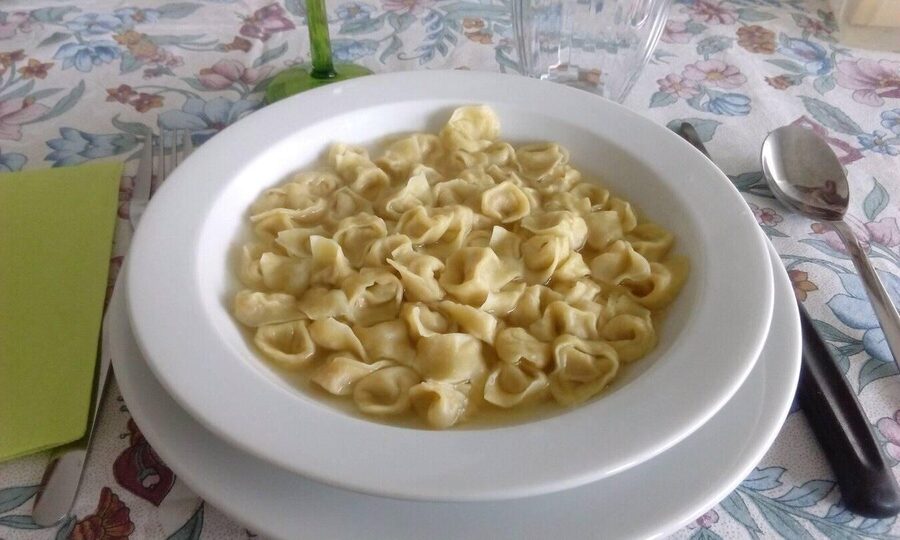
This is where the food-focused tours do most of their tasting work, but a city walking tour will at least walk you through and point at the right shops. Tagliatelle al ragù was invented here. Tortellini in brodo too. Mortadella, the original, is a Bologna product (not Sicily, despite what the export markets imply). If you’re booking a separate pasta-making class, you’re hand-rolling tagliatelle and tortellini that are technically Bolognese, even when you take the class in Florence.
The Two Towers: Why One of Them Is Fenced Off
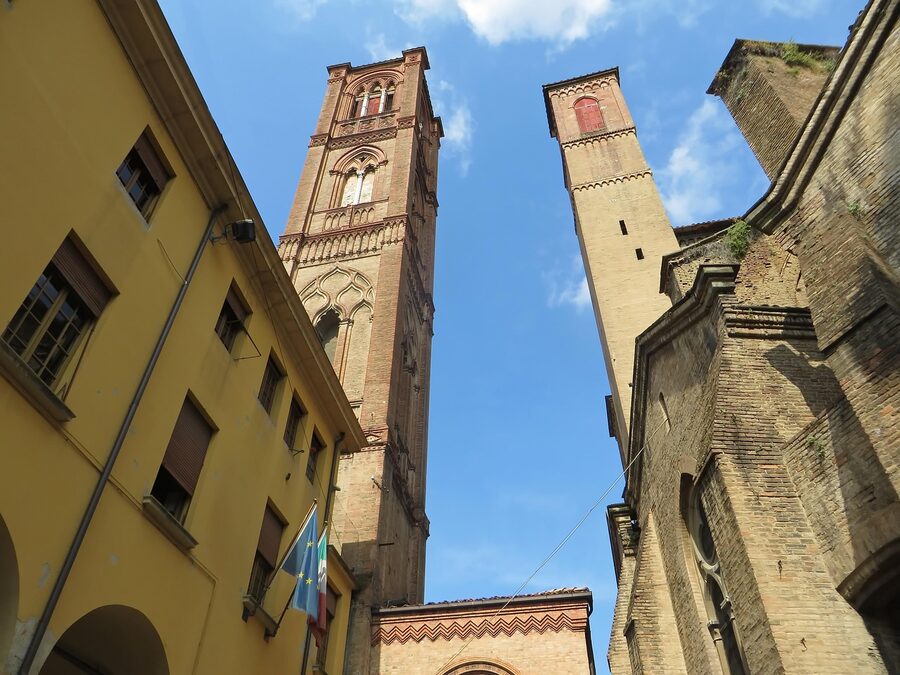
You walk fifteen minutes east of Piazza Maggiore and you’re at the Asinelli and Garisenda Towers. Asinelli is climbable when it’s open: 498 steps, narrow wooden staircase, a real workout but the view across the red-tiled rooftops is worth it. Booking is timed-entry and sells out for sunset slots; do it ahead.
Garisenda is the shorter of the two and has been leaning visibly since shortly after it was built in the 1100s. In late 2023 the city closed it and the area immediately around it after monitoring detected accelerating tilt. As of 2026 the stabilisation scaffolding is up and the immediate base is fenced. You can still see it. You can’t get within 30 metres. Walking-tour guides will explain the engineering project. There’s a real chance Garisenda is the next major Italian tower stabilisation, in the way the Leaning Tower of Pisa was a global engineering story in the 1990s.
The Archiginnasio and the Anatomical Theatre
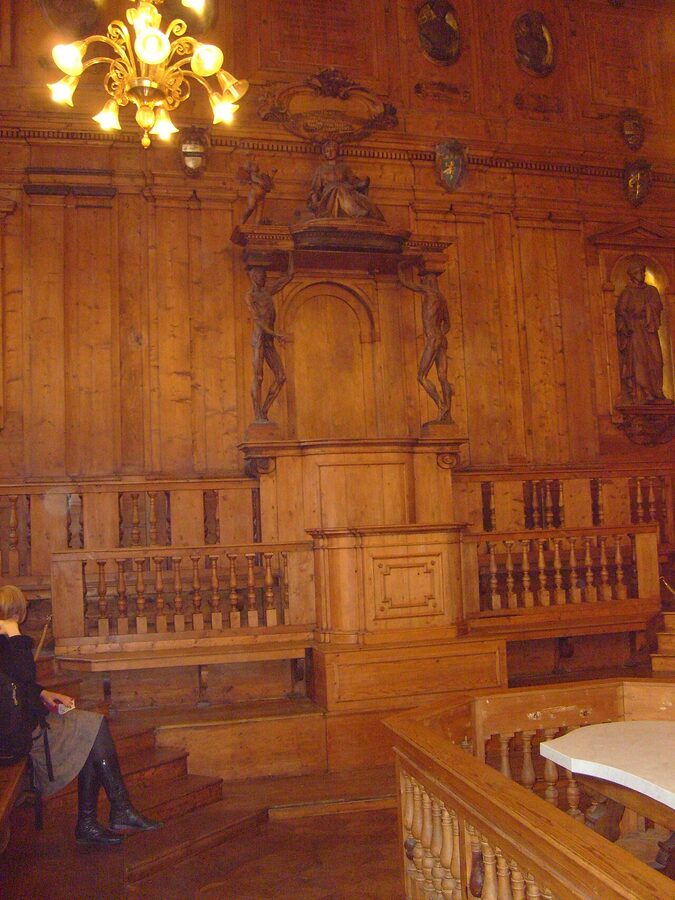
The University of Bologna, founded in 1088, is the oldest continuously operating university in the western world. The Archiginnasio was its main palace from 1563. It’s free to enter (the courtyard) and a small fee (the upstairs Anatomical Theatre and Stabat Mater hall). Both are worth your time.
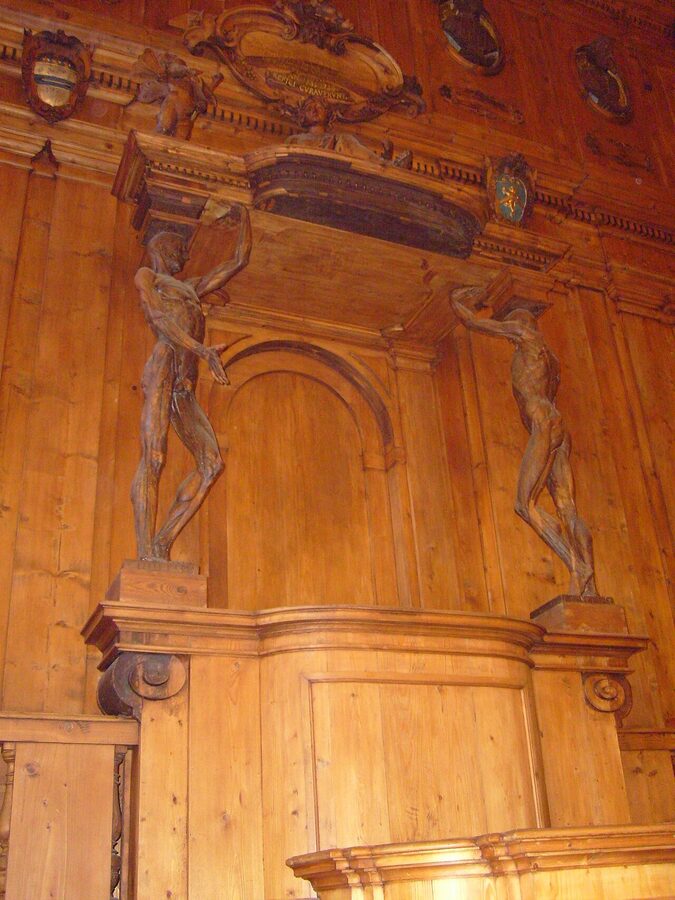
The Anatomical Theatre is the highlight: a wooden lecture hall built in 1637 where public anatomical dissections were performed in front of a paying audience and a watching priest, who could halt the proceedings if anything theologically iffy came up. The two flayed-skin statues holding up the lectern (Spellati, 1734) are the most-photographed sculpture in the building. It’s a strange place. Worth ten minutes.
Adding the Jewish Ghetto and Santo Stefano
If you’ve got the four hours, the route extends north and east. The Jewish Ghetto sits between Via Zamboni and Via Oberdan: narrow medieval streets that were the city’s confined Jewish quarter from 1556 to 1859. There’s a small museum (Museo Ebraico di Bologna) and the route is mostly residential. It’s quieter than the centre, and a good break from the food crowds.
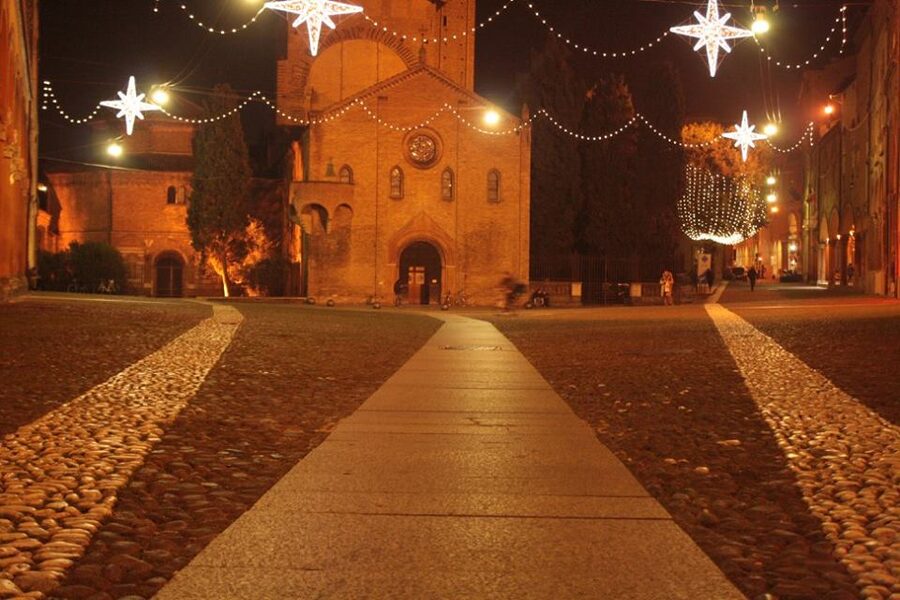
Santo Stefano is the other addition. It’s not one church but a complex of seven interconnected buildings (the locals call it “le sette chiese”, the seven churches) on a piazza that opens up unexpectedly off a narrow porticoed street. Romanesque, Lombard, Byzantine elements all stacked. The cloister has a stone basin that traditional accounts identify as the basin Pontius Pilate washed his hands in. The tradition is medieval invention. The basin is real and old.
The Best Bologna Walking Tours
Three tours, three different price points, three different reasons to book. The €26 city tour is the right starting point for almost everyone. The food tour is for the second half-day if you’ve got it. The factory day-trip is for serious food-history travellers. It’s expensive, it’s long, but it’s the only way to see actual Parmigiano production and balsamic ageing without renting a car.
1. Bologna City Center Walking Tour: $26
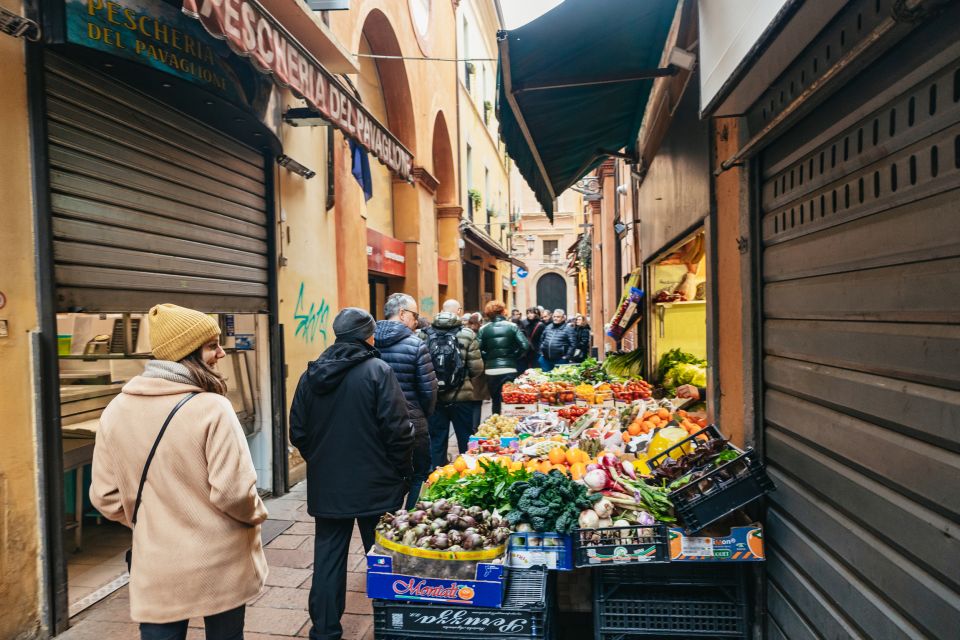
Best entry point if you’ve got one walking tour budgeted. Our full review of this tour covers the small-group sizes and which guide pickup point to use. The Asinelli climb isn’t included; book that separately if you want it.
2. Bologna Walking Food Tour with Secret Food Tours: $118
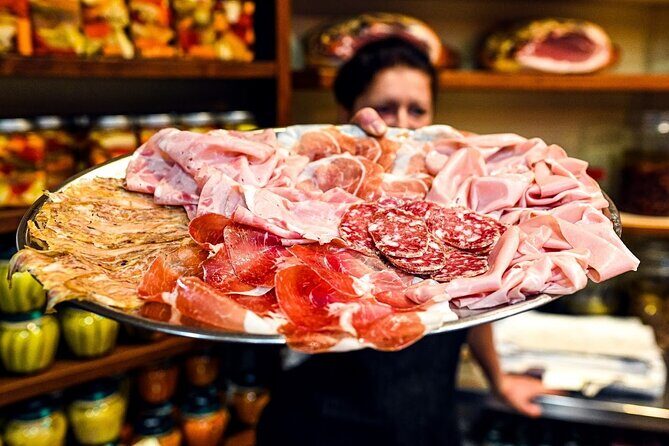
The Secret Food Tours brand runs in 30+ cities; the Bologna chapter has the strongest reputation in the network. Our full review walks through what the six tastings actually are (it’s not just mortadella). Best paired with the city walking tour on a different day, not the same one.
3. Bologna Food Experience: Factory Tours & Family-Style Lunch: $216
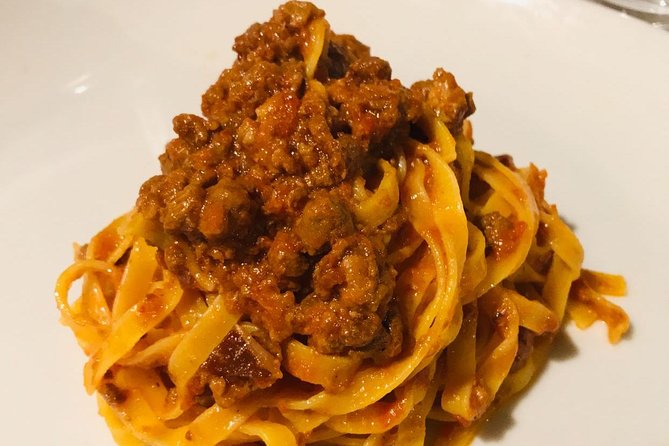
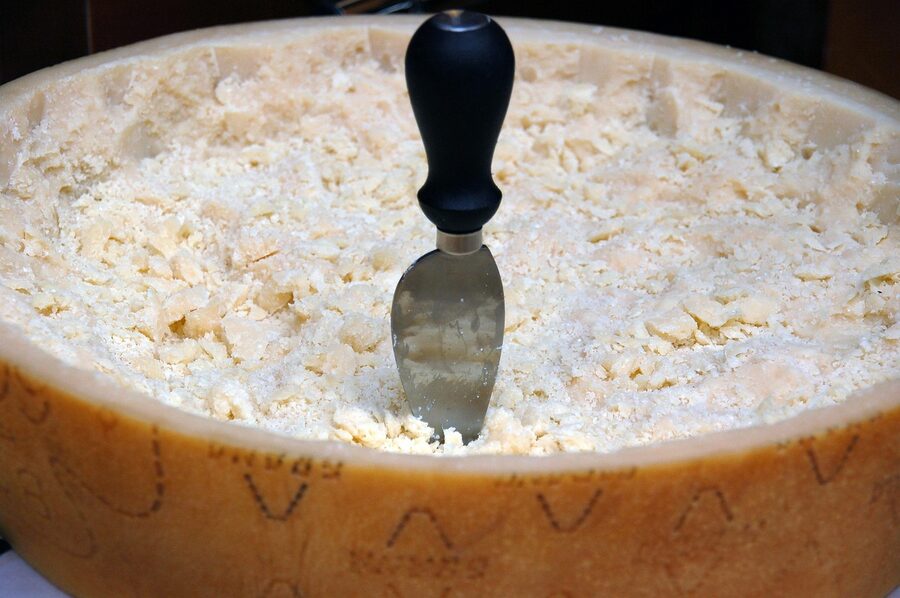
You leave the city by minibus around 8:30am and don’t get back until late afternoon, so don’t book it on the same day you have evening plans. The lunch is the part everyone remembers, and our full review walks through the host-family setup. The price stings, but it’s the only way to see real Parmigiano production without renting a car.
The Portico of San Luca: A Different Walk Entirely
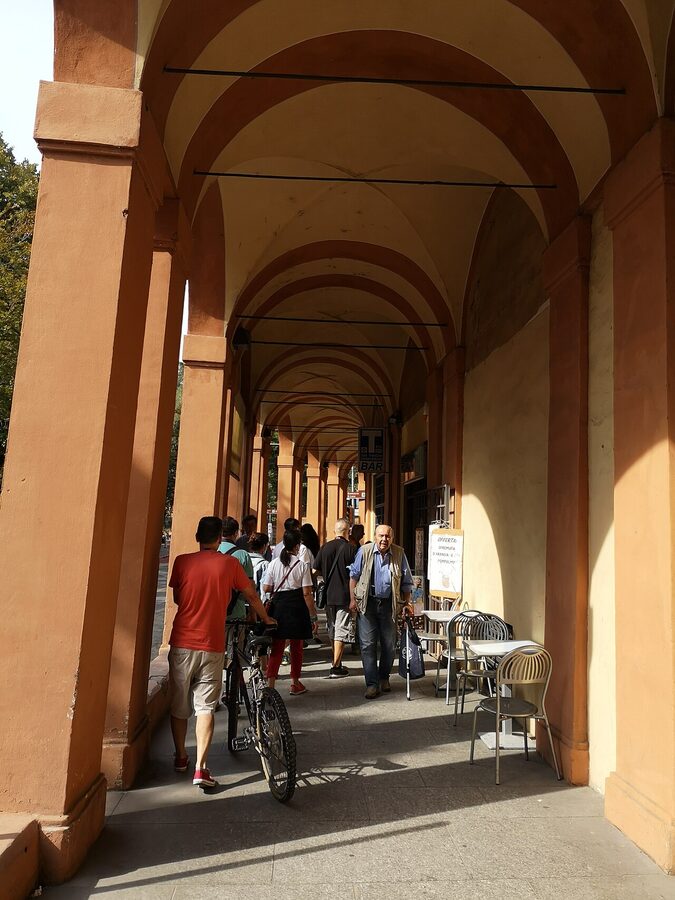
The standard city tours don’t include this. The portico runs from Porta Saragozza, the medieval city gate at the southwestern edge of the centre, all the way up to the Sanctuary of the Madonna di San Luca on top of the hill. It was built between 1674 and 1793 to shelter the annual procession of an icon of the Madonna being carried into the city.
Walking it takes 90 minutes up and 60 down if you don’t stop. The view from the top is the best in Bologna: the city laid out red and tiled below, with the Apennines visible to the south on a clear day. There’s a small bus (the San Luca Express, a tourist trolley from Piazza Maggiore) that takes the road instead of the portico if your knees aren’t up to it.
If you’ve got a half-day spare in Bologna and you’ve already done the centre, this is the second-best walk in the city. Bring water in summer (the portico shades you, but it’s still hot) and proper shoes. The cobbles get uneven near the top. I’d put it ahead of any of the museum visits if you’ve got to choose.
Practical Notes
When to go:
April-May and September-October are the best months for walking tours. July and August are hot and humid in Bologna (it sits in the Po Valley, and the heat pools), but the porticoes give you continuous shade, which is more than most Italian cities can offer in summer. Winter is fine (porticoes are also rain cover, which is the original reason they were built), but expect afternoon dark by 5pm in December.
What to wear:
Comfortable shoes, not new ones. The streets are cobbled and the porticoed sections have small drainage steps you can catch a heel on. In summer, light layers; the porticoes are 5-8 degrees cooler than the open piazzas. In winter, a real coat; the wind funnels under the arcades.
Where it fits in an Italy trip:
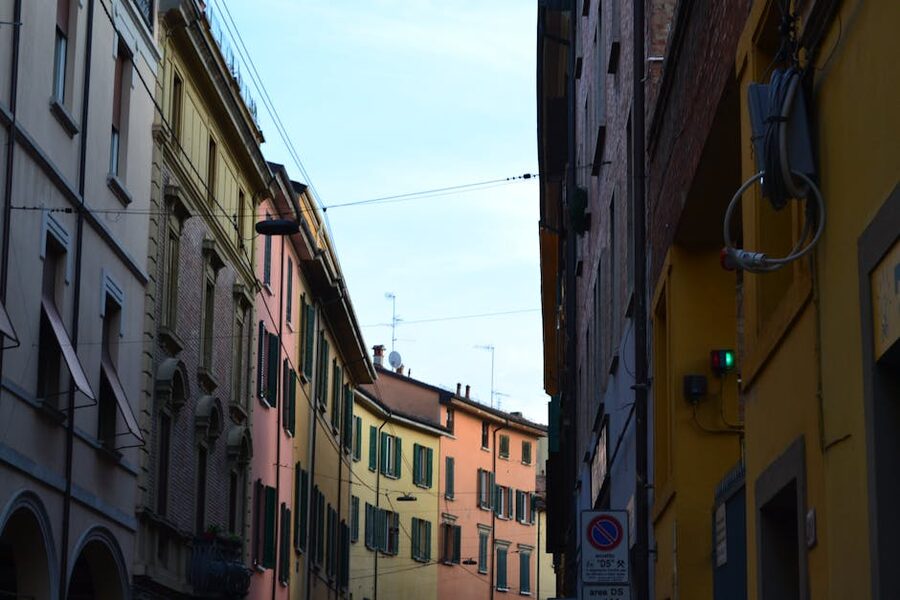
Bologna is two hours by train from Florence, one hour from Venice, and three from Rome. It’s the natural overnight stop between Florence and Venice for travellers doing the classic north-Italy circuit. If you’re already booking Florence food tours or planning to spend time on Chianti wine tasting, Bologna is a natural pairing. Tuscany and Emilia-Romagna are the two food-and-wine power regions of central Italy, and they’re 90 minutes apart by train.
If you’re coming from Milan, the train is just over an hour. If you’re coming up from Naples, it’s longer (around 4 hours), but Bologna pairs naturally with the food-heavy southern Italian itinerary that includes pizza in Naples. Both are cities where the food is the actual point of the visit.
Booking timing:
The €26 city walking tour rarely sells out more than a day or two in advance, except in May and October when conferences fill the city. The €118 food tour fills faster; book a week ahead in summer. The €216 factory day-trip needs more planning; it runs only a few times a week and books out two to three weeks ahead in peak season.
What Bologna Isn’t
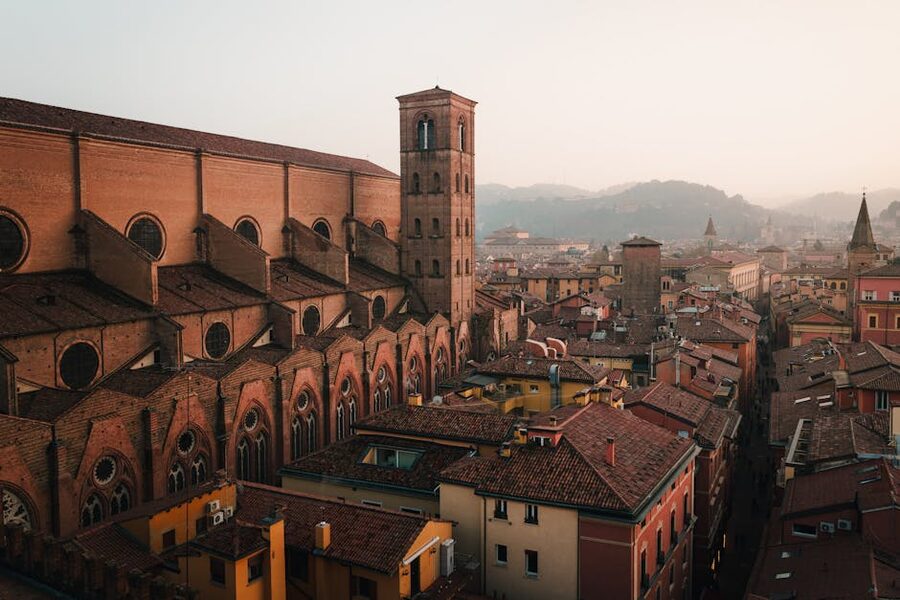
It’s not a bucket-list city in the way Rome or Venice are. There’s no Colosseum, no canal, no single must-see image you take home. The art holdings are good but not on the level of the Uffizi or the Vatican. The walking tours don’t promise revelation. They promise that you’ll understand a working medieval city better than most tourists ever do, and you’ll eat well doing it.
Most travellers I know who’ve spent two days in Bologna come back saying it was their favourite stop. Not the most photogenic. Not the most famous. Just the one where the food was best and the city felt the most alive.
If You’re Building a Wider Italy Itinerary
Bologna pairs unusually well with several other stops in the country. If you’re doing Florence and Venice already, drop a night in Bologna in between. It’s literally on the train line and the food alone justifies the stop. If you’re heading further north afterwards, the Bernina Express into the Alps from Milan or a side trip to Lake Como makes a strong contrast: alpine peaks and lakes after Po Valley red-brick. South, you’ve got the slow descent through Tuscany and into the food-heavy southern half of the peninsula. Bologna sits at the hinge point of the country in more ways than one.