
The first time I went to Verona, my friend Lara texted me the same thing she’d told everyone before her trip the previous spring: meet me at Juliet’s balcony at 11am. I stood in a courtyard at Via Cappello 23 with about 200 other people, watching couples queue to touch a bronze breast for luck and take photos of a stone balcony bolted onto the side of a fourteenth-century house. The balcony is from the 1930s. The Capulet family was real, the lovers were not, and the city’s tourism office added the balcony in 1936 to give the visitors something to point a camera at.
Eight minutes’ walk from that courtyard sits a Roman amphitheatre that has been continuously hosting events since around 30 AD, including a full opera season every summer since 1913. A few minutes further is the medieval fortress the Scaligeri family built when they ran this city. And across the river is Italy’s third-largest preserved Roman theatre, mostly empty even in August. Verona’s actual story is not the balcony. It’s the Verona Card, and what it gets you into.
In a hurry
- Verona Card with Arena priority entry ($35): the right pick if you want one ticket for everything. Book on GetYourGuide.
- Arena skip-the-line guided tour ($41): 45 minutes inside the Arena with a guide who explains the fights, the floods, and the 1844 reconstruction. Book on GetYourGuide.
- Opera night at the Arena ($58): the experience the city is actually known for, June through September. Book on GetYourGuide.
What the Verona Card actually covers
The card comes in two versions. €27 for 24 hours, €32 for 48 hours. Validation starts the moment you scan it at your first attraction, not when you buy it, so you can pick it up the night before and have a full day in front of you.
What it gets you free, in order of how often you’ll use them:
- Arena di Verona: priority entry through Gate 5, normally €12 alone
- Castelvecchio Museum: the Scaliger fortress turned art museum, €9
- Torre dei Lamberti: climb or lift, €6
- Casa di Giulietta (Juliet’s House): €12, including the famous balcony
- Teatro Romano and Archaeological Museum: €5
- Sant’Anastasia, Verona Cathedral, San Fermo, San Zeno: €4 each, the four most beautiful churches in town
- Tomba di Giulietta and Affreschi G.B. Cavalcaselle: small museums most visitors skip
- Unlimited city buses: useful if you’re staying outside the historic centre
The card also gives you discounts (not free entry) at the Giardino Giusti gardens, the Arena Opera Festival in summer, and a few private museums. The Opera discount is small and the festival sells out months ahead anyway. The Giusti discount is worth using if you have time for a slow afternoon in the formal Italian gardens above the river.
When the card pays off, and when to skip it
The maths is simple. Arena (€12) plus Castelvecchio (€9) plus one church (€4) gets you to €25 already, two euros short of the 24-hour card. Add the Lamberti tower or Casa di Giulietta and you’re ahead. Add the Teatro Romano across the river and you’ve saved enough to buy a decent dinner.
The card is right for you if you have a full day or two days, you want to see the Arena, and you’re going to visit at least three other things. The fast-track lane at the Arena alone justifies it in summer, when the queue at the regular gate runs an hour at peak times.
Skip the card if you’re only in town for an evening and you only want to see the outside of things, or if you’re here on a Monday. Most of the public museums in Verona close on Monday. Castelvecchio is closed Monday morning until 1.30pm, the Lamberti tower runs reduced hours, and several of the churches don’t open at all. If your one day in Verona happens to be a Monday, the card stops paying off.
The Arena: still working after two thousand years
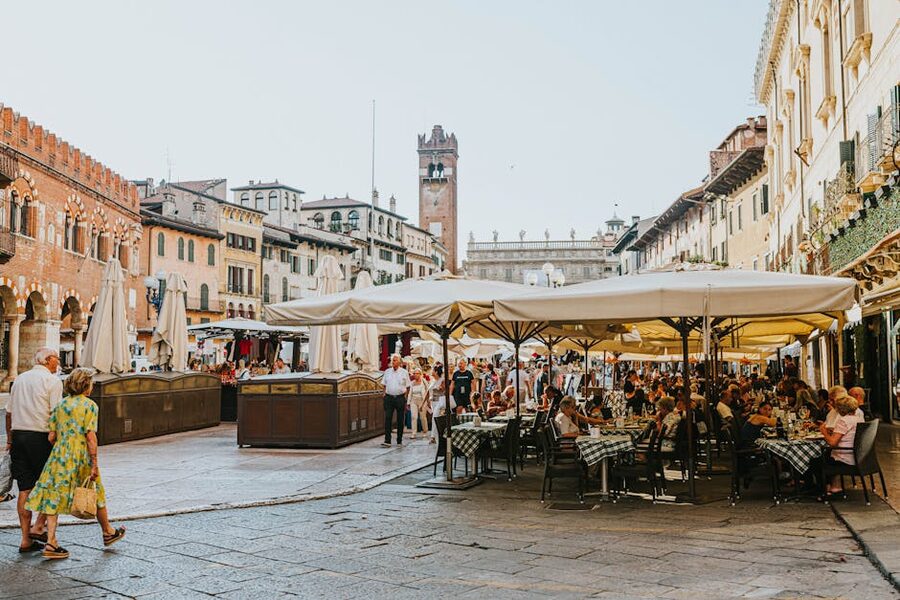
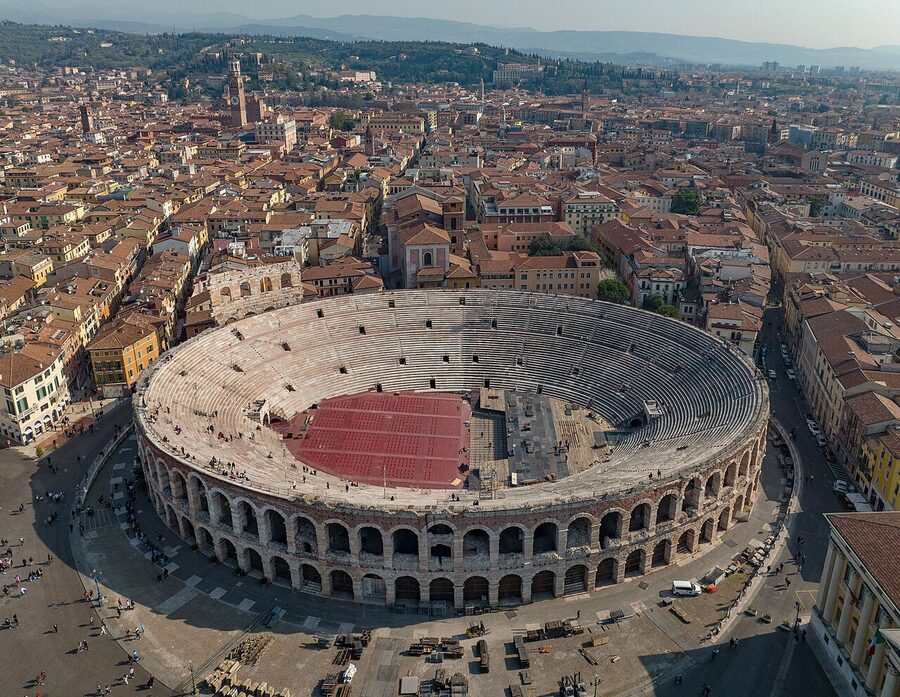
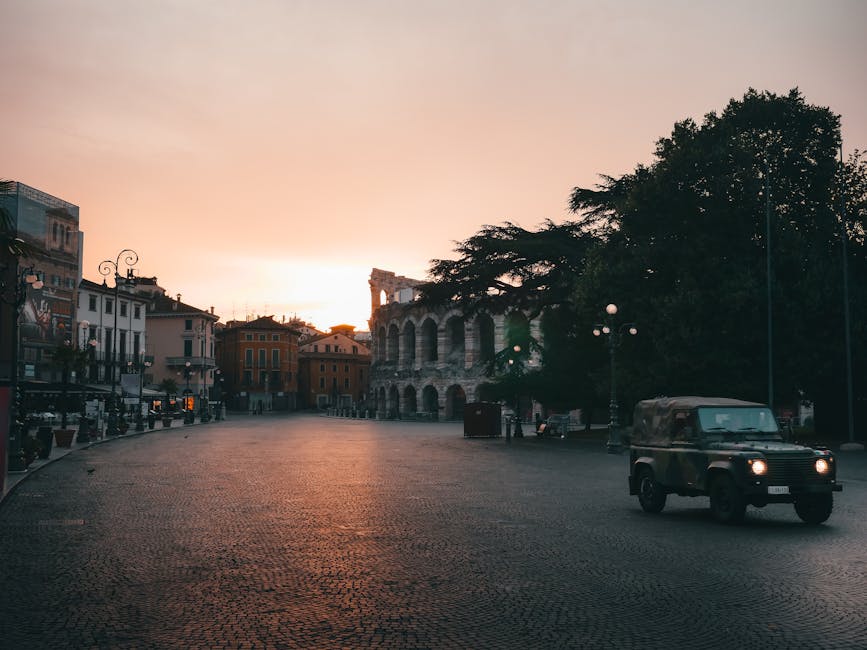
The Arena was built around 30 AD, which makes it about forty years older than Rome’s Colosseum. It’s smaller, it seats about 15,000 people in modern configuration versus the Colosseum’s 50,000, and it sits in the heart of a city rather than as an isolated archaeological park. That last difference is what makes a visit here different. You walk in off a working piazza with cafés and gelato shops, and within a minute you’re on the steps of an amphitheatre that has been hosting events more or less continuously for two thousand years.
The Romans used it for gladiator fights and large public spectacles, the same triumphal-empire civic theatre that the Arc de Triomphe in Paris later borrowed wholesale for nineteenth-century France. In the medieval period it hosted public executions and at one point a flooded naumachia. The first opera was performed inside in 1856. The current opera season has been running every summer since 1913, when a tenor named Giovanni Zenatello organised a hundredth-anniversary Aida in honour of Verdi. The Arena has been used for Pink Floyd shows, Muse, Adele, Eros Ramazzotti, and a fairly memorable 1981 Pavarotti recital, though most travellers come for the summer opera.
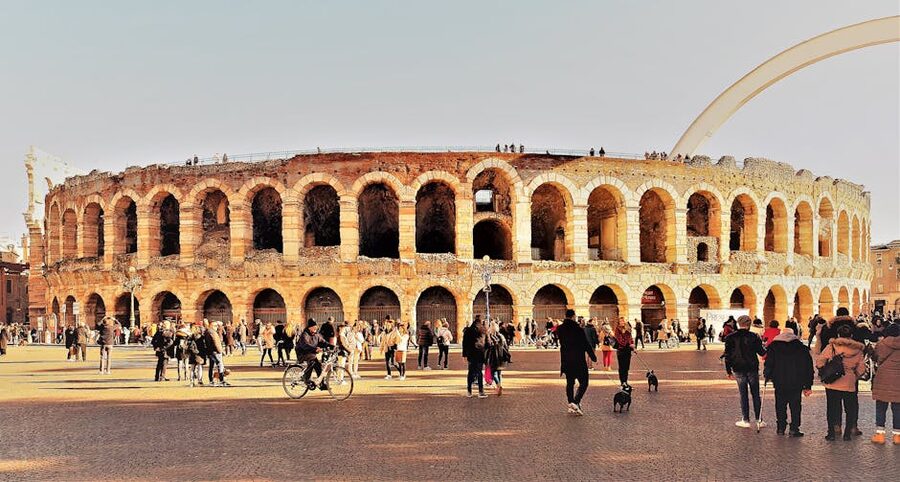
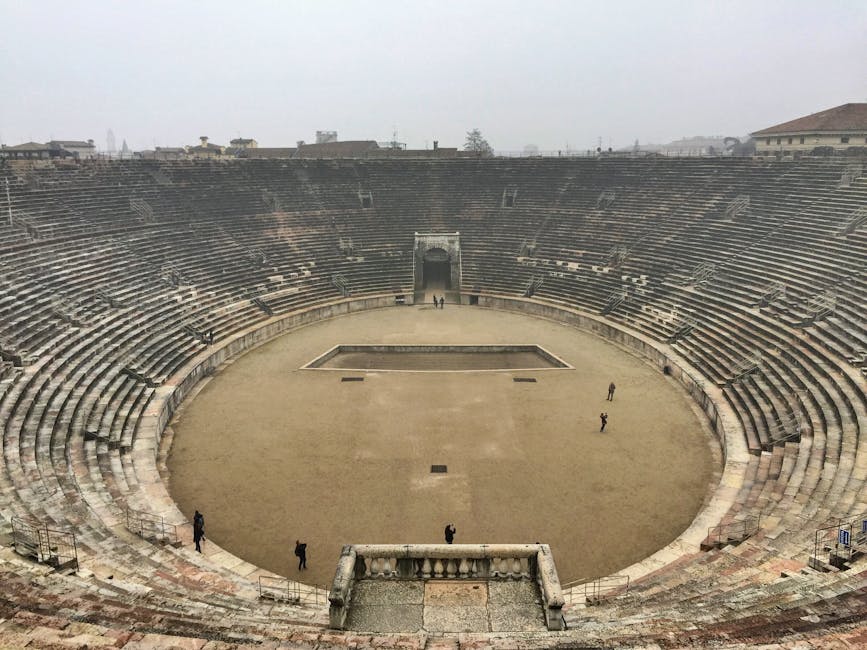
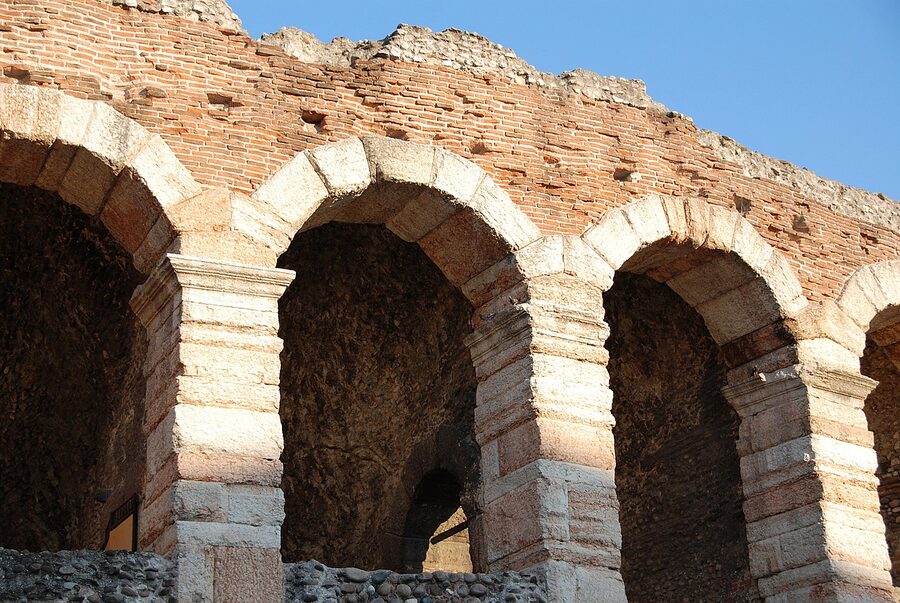
Inside, you can walk the full circuit, climb to the top tier, and stand on the gradinate (the original limestone tiers) where Roman crowds sat. The day visit is a quick one. Forty-five minutes is enough for a self-guided walk-through, an hour and a half if you take a guided tour and listen to the gladiator stories. If you’ve already done the Colosseum in Rome or stood under the dome of the Mezquita-Catedral in Córdoba, you’ll find Verona’s Arena smaller, more intact in places, and easier to actually walk around in. Where the Colosseum has you on raised walkways looking down into a stripped-out skeleton, the Arena lets you sit in the stone seats.
Opera season: why this is the article’s real story
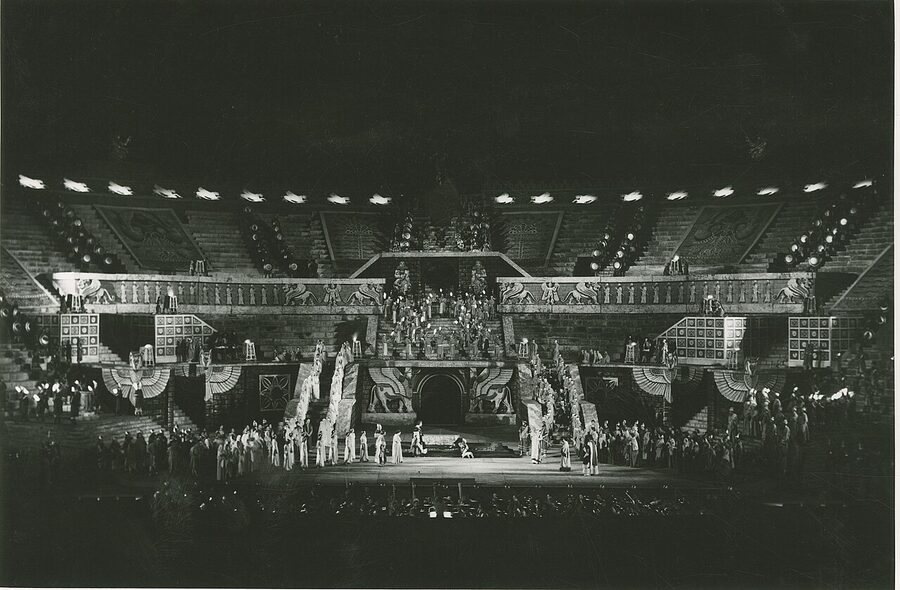
The opera season runs roughly mid-June through early September. Performances start at 9pm so the heat has dropped, the audience filters in for an hour beforehand with picnics on the upper steps, and the production scale is something you can’t really see anywhere else. Aida usually runs every season because it was the first opera staged here in 1913 and the production now uses a stage set that takes a full week to build. Other regular slots include Carmen, La Traviata, Tosca, and Nabucco. The picnic-on-the-stone-steps culture is closer in spirit to a summer-evening crowd at the Giralda in Seville than to a black-tie indoor opera house.
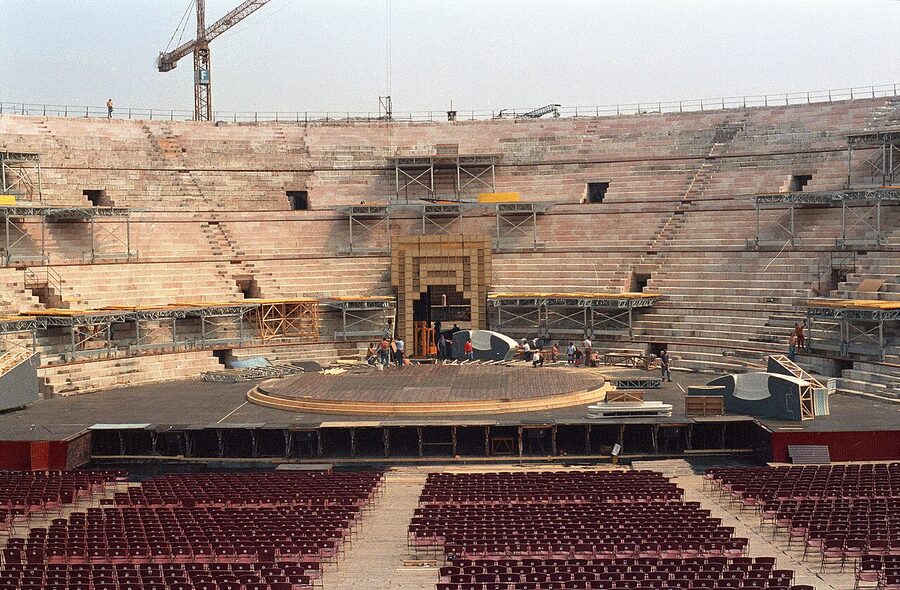
The cheapest unreserved seats on the gradinate (the stone steps at the top, where Romans sat) start around €30. They go up to about €250 for the gold seats in the central platea. The middle pick is unreserved gradinate or numbered poltronissime around €100, with the caveat that the gradinate are stone and you’ll want to rent a cushion. The Verona Card discount on opera tickets exists but is small enough that it’s not the reason to buy the card.
If you want the equivalent indoor opera house experience, La Fenice in Venice is two hours away by train and runs through the winter when the Arena is closed. La Fenice is a velvet-and-gold seventeenth-century theatre that holds about 1,000 people. The Arena holds 15,000 in the open air. They’re different art forms. If you’re choosing between them, La Fenice for the architecture and intimacy in winter, the Arena for the scale and the picnic culture in summer.
Castelvecchio: the Scaliger fortress
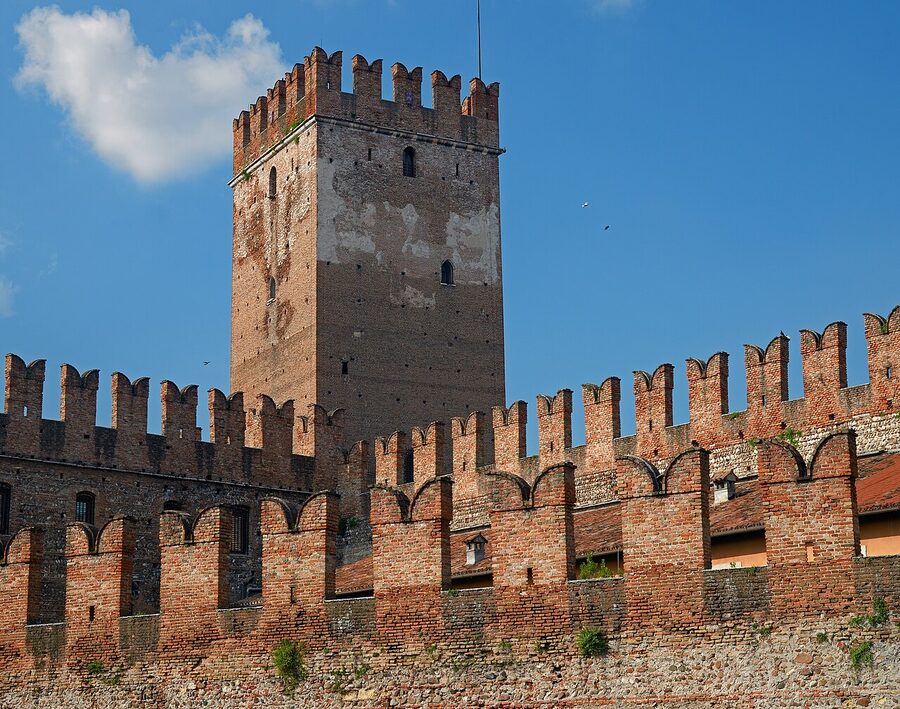
Castelvecchio was built by Cangrande II della Scala in 1354. The Scaligeri (or della Scala) family ran Verona for most of the 1200s and 1300s, and they built it to defend themselves not from outside enemies but from their own subjects. The Scaligeri assumed (correctly, as it turned out) that the people of Verona would eventually want to throw them out, so the fortress walls face inward as well as outward. The bridge over the Adige, Ponte Scaligero, is the family’s escape route.
Inside, the museum holds medieval and Renaissance art including a Pisanello, a Mantegna, several Tiepolos, and Cangrande I’s original equestrian statue (the gold-painted copy is on the family tomb outside). The single thing most visitors remember from a Castelvecchio visit isn’t a painting, though. It’s the Carlo Scarpa renovation. Scarpa stripped the fascist-era museum reorganisation back to bare brick in the 1960s, then built modernist concrete and steel display walks through the Gothic shell. It’s some of the most influential museum architecture of the twentieth century.
Allow ninety minutes if you’re an art person, an hour if you’re really there for the courtyard and the bridge. The bridge is free to walk and runs straight across the Adige to the other side of the city.
Casa di Giulietta: about that balcony
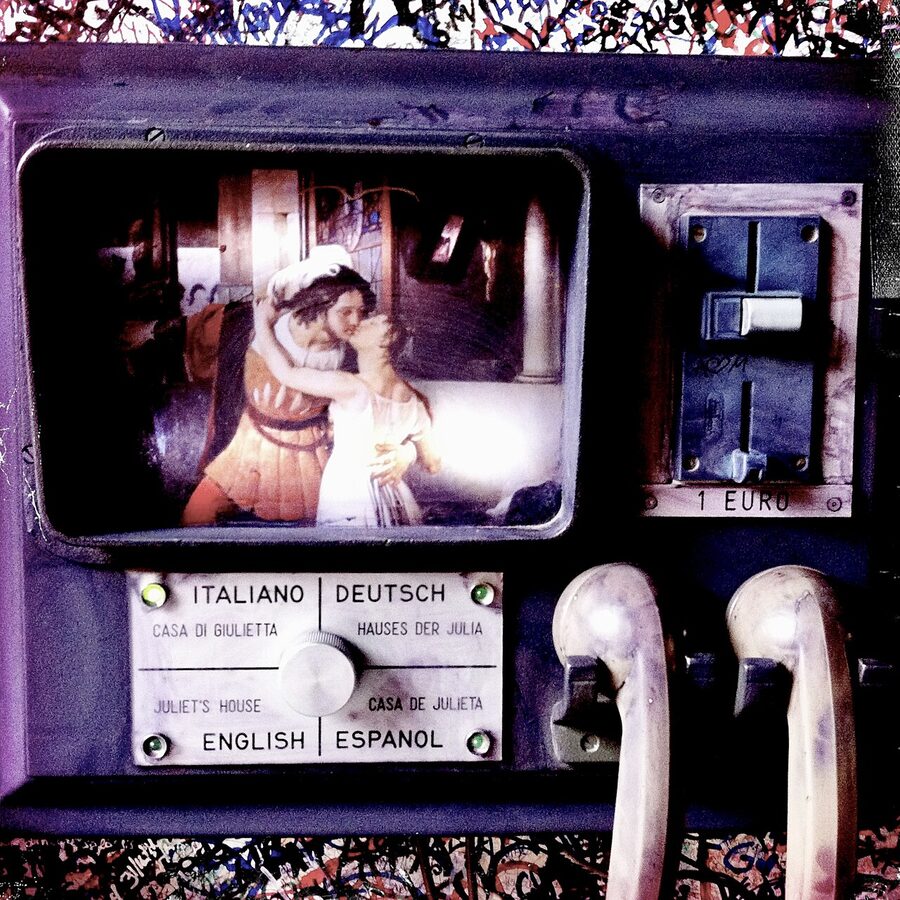
The real version of this story is worth knowing. Shakespeare wrote Romeo and Juliet around 1595, drawing on a 1554 Italian novella by Matteo Bandello, who was himself riffing on a 1530 short story by Luigi da Porto. Both Italian sources placed the lovers in Verona and used the Cappelletti and Montecchi families as the warring backdrop. Both families were real, named in Dante’s Purgatorio, and the Cappelletti house at Via Cappello 23 was actually theirs.
The balcony is from 1936. The story goes that the city’s tourism office bought the house in 1907, found it crumbling, and during the Mussolini-era restoration in the 1930s decided to add a balcony from a salvaged marble sarcophagus to give visitors a focal point. The bronze statue of Juliet in the courtyard is from 1969 and was replaced in 2014 because tourists rubbing the right breast for luck had worn through the original, the same wear-pattern problem the staff at Madame Tussauds in Amsterdam have to manage on their most-touched figures. The wall covered in lovers’ graffiti and chewing gum was cleaned in 2014 with €100,000 of city money and is back to being chewing-gummed.
So is it worth visiting? If you’re a literature fan, the courtyard is a thing to see, and the museum inside has some interesting Romeo-and-Juliet history along with frescoes and period rooms. The Verona Card includes both the courtyard and the museum, so the marginal cost is zero, and going early (the courtyard opens at 8.30am, the museum at 9am) means you might get the balcony to yourself for about ninety seconds before the tour buses arrive. If you’ve ever been disappointed by an over-touristed site, this one is upfront about what it is. Lean into it.
Teatro Romano: the one across the river
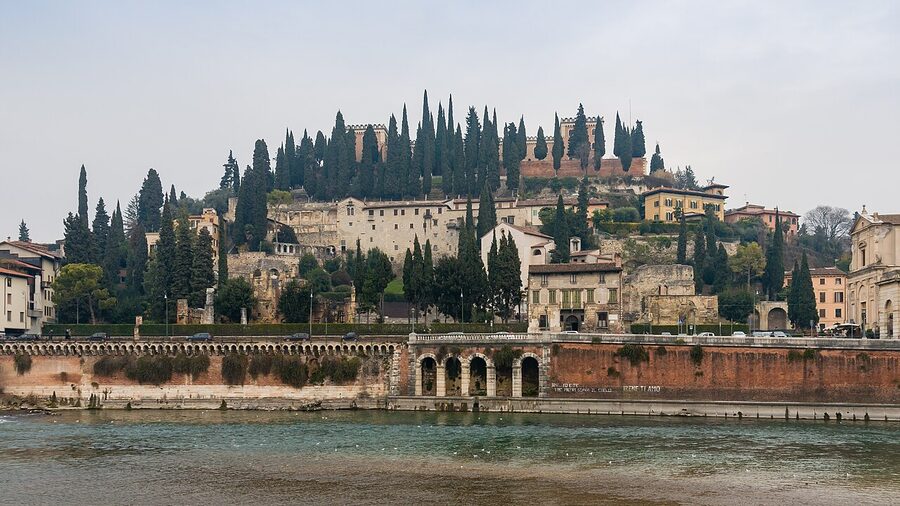
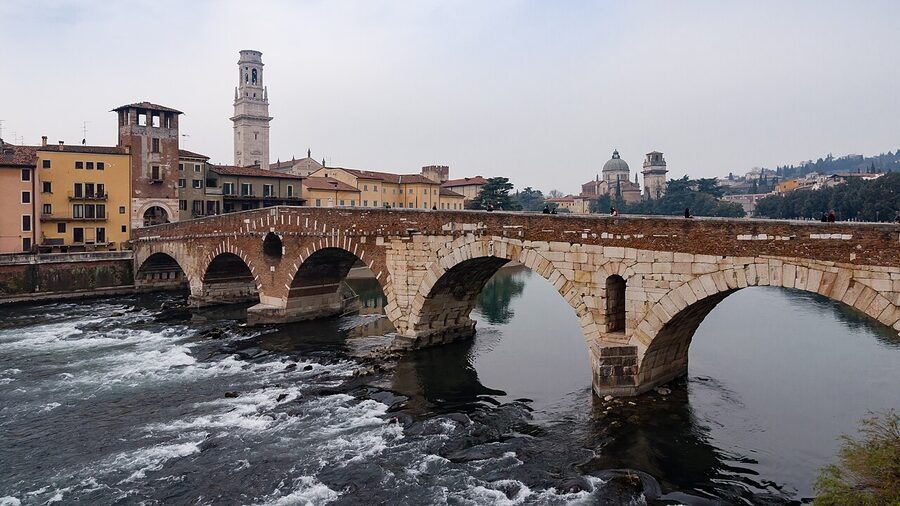
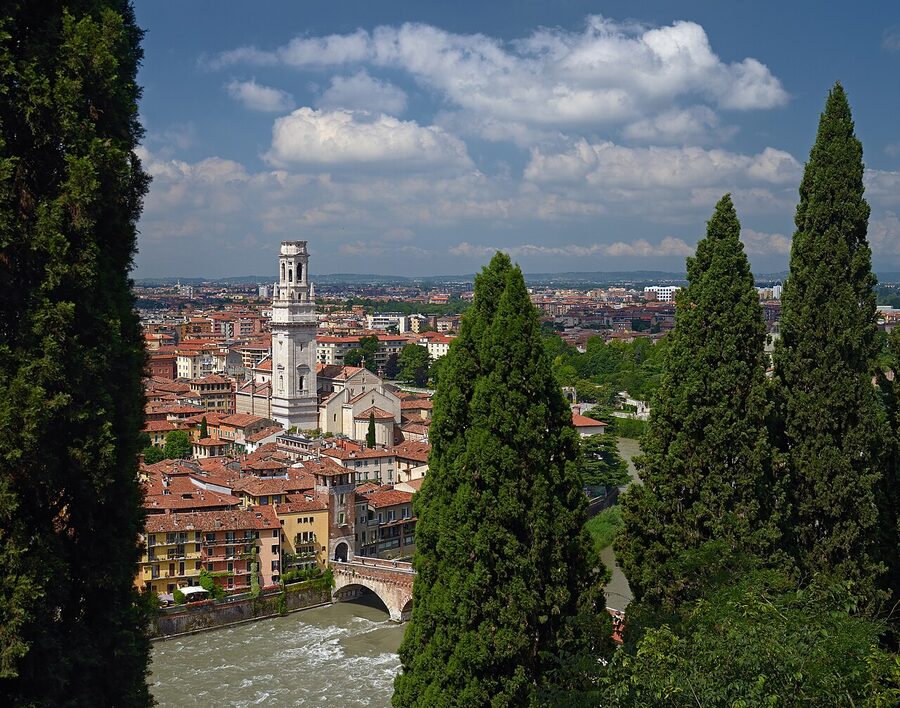
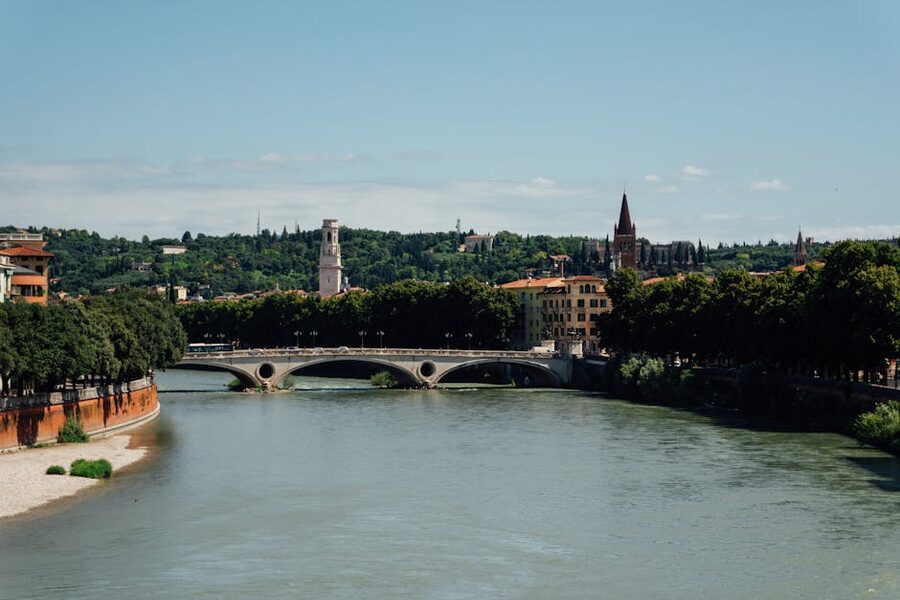
Cross Ponte Pietra (the Roman stone bridge below) and you’re at the Teatro Romano in five minutes. This is Italy’s third-largest preserved Roman theatre, after the ones at Ostia Antica outside Rome and the smaller theatre at Pompeii. The cavea (the curved seating bowl) is built into the hillside above the river and seats about 3,000. It still hosts a summer Shakespeare festival in July and August, mostly Italian-language productions.
What surprises most visitors is how empty it is compared to the Arena. On a busy summer afternoon you might share the Roman theatre with twenty other people, while the Arena is solid bodies. The archaeological museum at the back of the site is built into a former monastery and has the typical Roman small-finds collection. Allow forty minutes for both. If you’ve already walked through Pompeii’s smaller theatre or the Colosseum, the Verona example fits between them in scale and is by far the quietest of the three.
Lamberti Tower: the climb that’s actually short
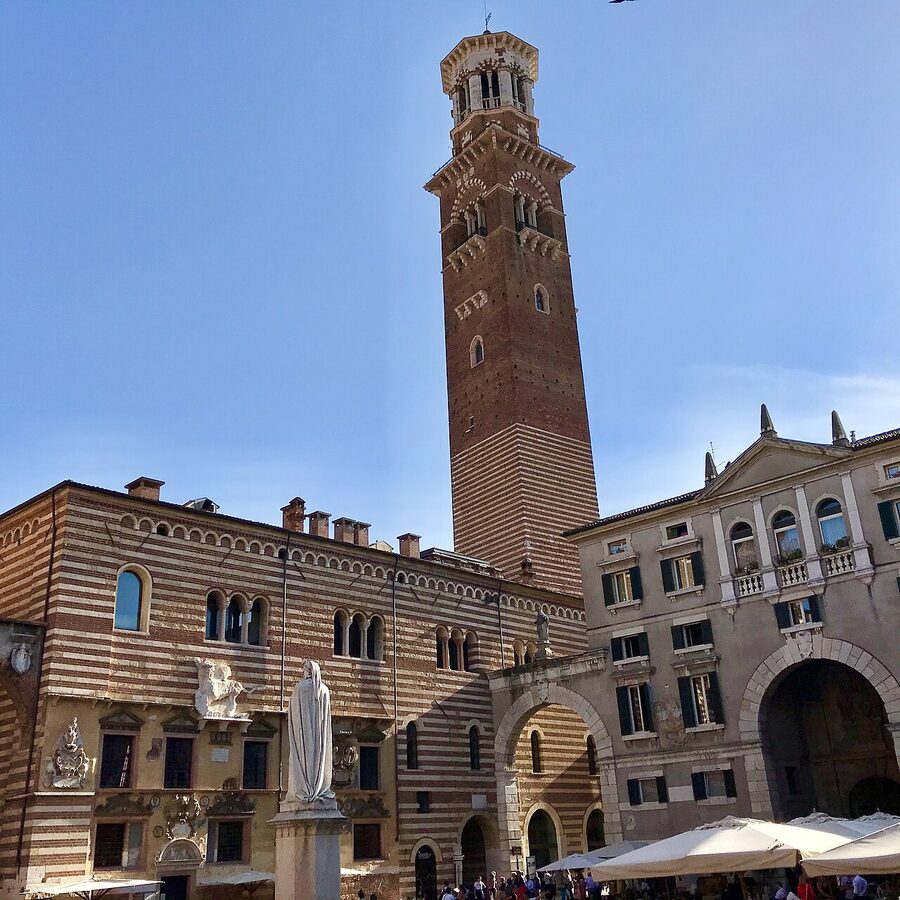
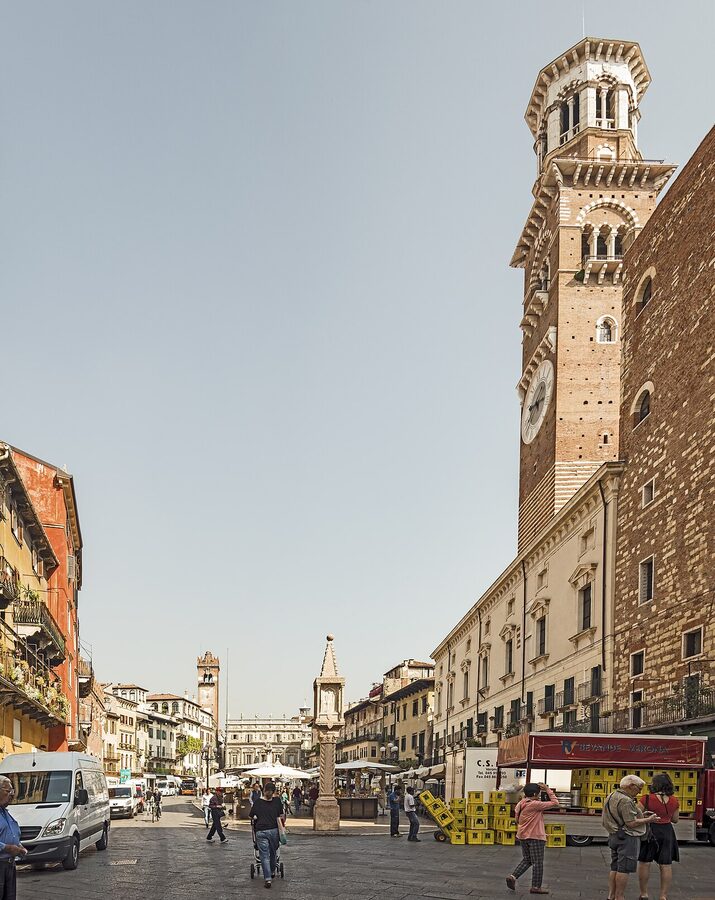
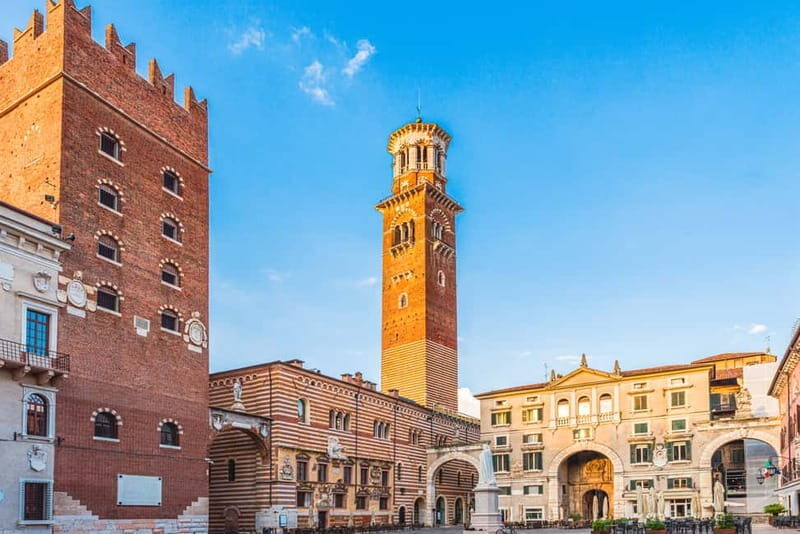
Eighty-four metres tall, included in the card, lift available. The view from the top is the standard old-town panorama with the Adige curving below and the Arena visible on the south side. Worth the climb if you’ve never done a tower view in Italy. Skip it if you’ve already done the Florence Duomo dome climb or the Leaning Tower of Pisa and you’re tower-fatigued.
One small note. The top platform was glassed in for safety in the 2010s, which means the view is good but you can’t lean into the wind the way you can on most Italian church towers. The Italian travel forums grumble about this. It’s still worth doing, in the same way the climb at Les Invalides in Paris is still worth the steps even though the modern museum routing has lost some of the old free-roam feel.
The churches: free with the card, the four worth doing
If you’re churched-out from Florence, Venice, and Rome, you can skip these without guilt. If you’re not, the four covered by the Verona Card are worth at least a quick walk-through each.
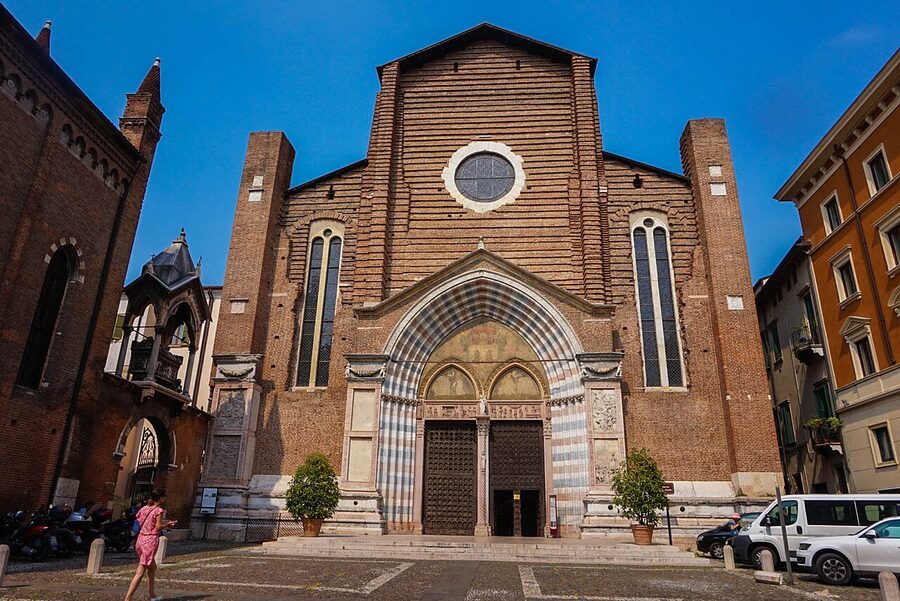
- Sant’Anastasia: the largest in Verona, Gothic, with a Pisanello fresco of Saint George that’s worth tracking down in the Pellegrini Chapel. Two hunchback figures (the gobbi) hold the holy water fonts at the entrance.
- Verona Cathedral (Duomo): Romanesque exterior, includes a Titian Assumption inside and the cloister of Sant’Elena. The smallest of the four but the most architecturally varied.
- San Zeno: the patron saint, Romanesque with a Mantegna triptych. Off the historic centre on the west side, but worth the bus ride (free with the card).
- San Fermo: actually two churches stacked on top of each other, the lower Romanesque and the upper Gothic, with a wooden ship’s-keel ceiling.
None take more than thirty minutes individually. If you’ve got the 48-hour card, doing all four is feasible.
A 24-hour route through Verona with the card
The route below assumes you arrive the night before, pick up the card at the tourist office on Via Leoncino 61 (next to Piazza Bra), and start at 8.30am.
- 8.30am: Casa di Giulietta when it opens. Ten minutes for the courtyard, fifteen for the museum if you go in. You’ll have most of the place to yourself.
- 9.30am: Walk to the Arena via Piazza delle Erbe. Use the Gate 5 priority entrance. Forty-five minutes inside.
- 11am: Walk to Castelvecchio along the river. Ninety minutes for the museum and bridge.
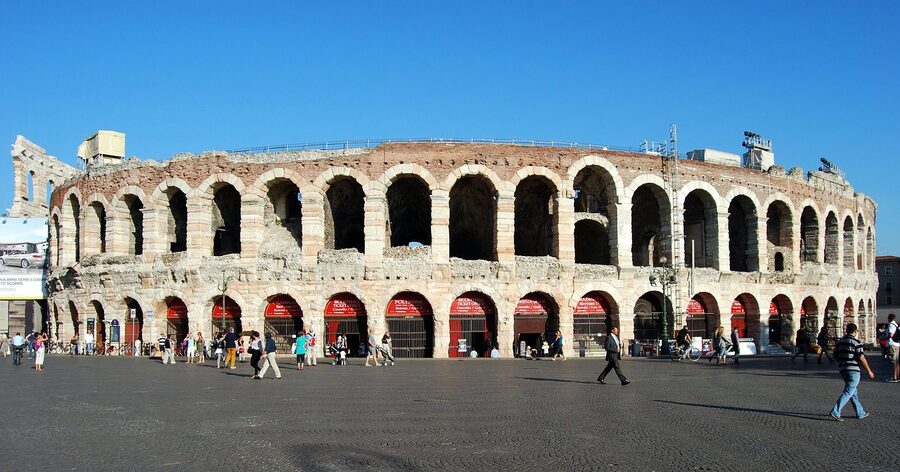
- 1pm: Lunch on Piazza delle Erbe or the streets just off it. Cruncheria for pizza al taglio if you want fast and cheap.
- 2.30pm: Lamberti tower. Thirty minutes including the lift queue.
- 3.30pm: Cross Ponte Pietra to Teatro Romano. Forty minutes including the archaeological museum.
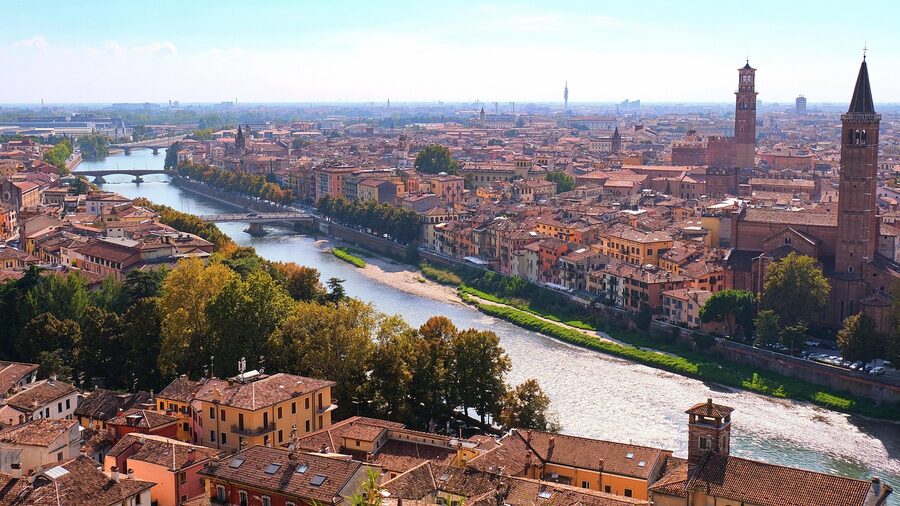
- 4.30pm: Climb up to Castel San Pietro for the panorama. The view down over the curve of the Adige with the rooftops in golden light is the photo most travellers remember from Verona.
- 6pm: Aperitivo on Piazza Bra or Piazza delle Erbe. Negroni or a Soave from the local vineyards north of the city.
- 9pm: Opera at the Arena if it’s summer. Otherwise dinner.
If you have 48 hours, day two: Sant’Anastasia and the Cathedral in the morning, then the bus out to San Zeno (free with the card), then a slow afternoon at the Giardino Giusti gardens or a Valpolicella wine tasting tour from the city centre. The Giusti gardens are five minutes from the Teatro Romano and the formal Italian-garden box hedges and the cypress allée at the top are exactly what you’d expect from a Renaissance garden in northern Italy.
The three tickets worth knowing about
Below are the three options most people end up choosing between. The card is the right pick if you’re staying a day or more and want everything. The skip-the-line guided tour is the right pick if you’re on a tight schedule and only want the Arena. The opera ticket is the right pick if you’re here in summer and want the experience the city is actually known for.
1. Verona Card with Arena Priority Entrance: $35
This is the all-in pick if you want one ticket for the city. Our full review walks through the 24-hour vs 48-hour breakdown and where the card pays off best. The 48-hour version at €32 is the one most travellers should buy if they have any choice in the matter.
2. Verona Arena Skip-the-Line Guided Tour: $41
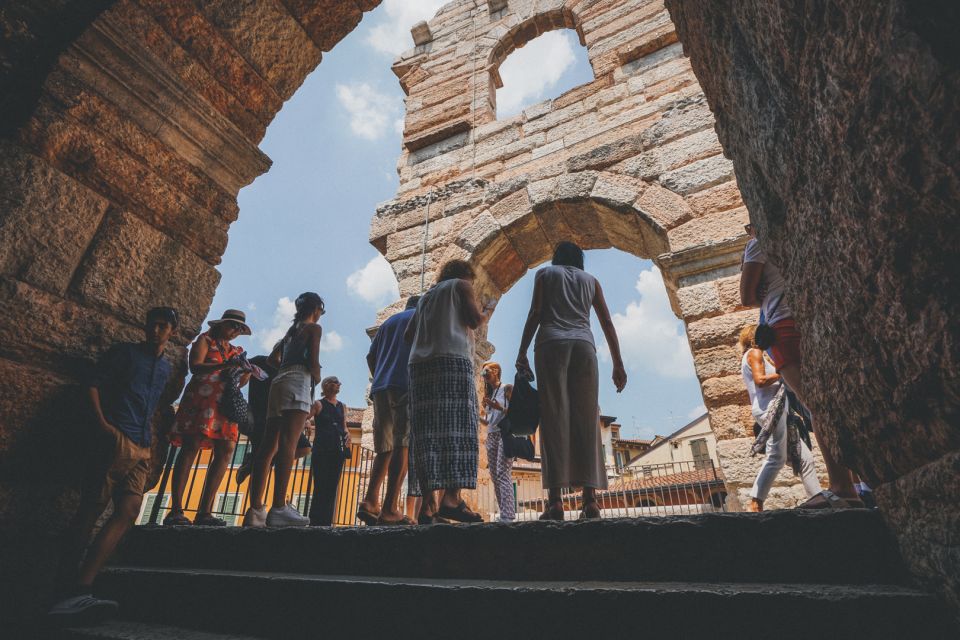
This is the right pick if you’re on a tight schedule, only want the Arena, and want the gladiator-and-flooding history rather than reading a panel. Our full review covers what the guide actually shows you. Forty-five minutes is enough.
3. Arena di Verona Opera Ticket: $58
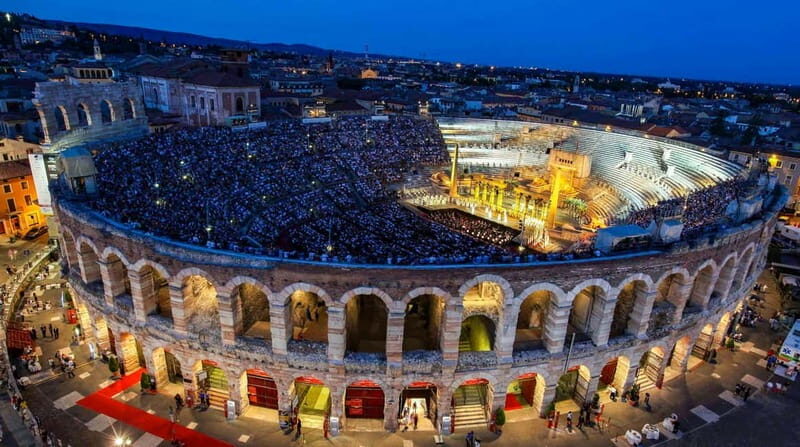
The opera season runs roughly mid-June through early September. Our full review breaks down which productions sell out first and where the cheap-but-good seats sit. Aida is the icon, Carmen and Nabucco are the workhorses.
How long to spend in Verona
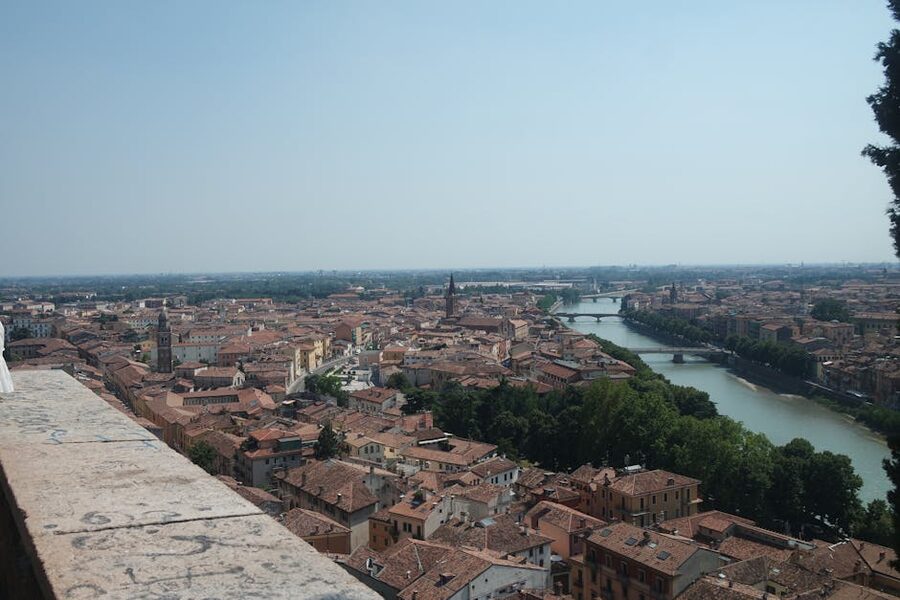
Most travellers I know give Verona half a day on a Venice-Milan transfer and feel like they’ve missed something. They have. A full day with the card covers the four major sites and a couple of churches. Two days adds the Giusti gardens, the Valpolicella wine country, and a slower afternoon along the river.
If you’re routing through northern Italy, the natural placement is between Venice (1.5 hours by train, no need to change) and Lake Como or Milan (1.5 hours the other way). Sirmione on Lake Garda is twenty minutes by bus or thirty by car west of Verona, and a Verona-Sirmione half-day combo is a popular option. If you’re already on a longer Italy itinerary that includes Cinque Terre or Chianti, Verona slots in as the breather between coast or countryside and the urban density of Venice.
Practical things worth knowing before you go
The card is sold at the tourist office on Via Leoncino 61, at the Arena ticket counter, at most major museum gates, and online via GetYourGuide and Tiqets. Online is the same price and you get a fast pickup lane at the tourist office. If you’re flying into Verona Villafranca airport, the bus into town is €8 and runs every twenty minutes; the train station is a fifteen-minute walk from Piazza Bra. If you’re coming from Venice or Milan by train, you arrive at Verona Porta Nuova and it’s a twenty-minute walk or a €10 taxi to the centre. Bus 11, 12, or 13 from outside Porta Nuova drops you at Piazza Bra in eight minutes.
Mondays close most of the public museums (see above). Sundays open everything but the Cathedral has services in the morning and you can’t visit during mass. The Arena closes at 3.30pm on opera-day rehearsals (most days in July and August), which catches some travellers out. The official opening hours change with the season; check before you go.
Cash isn’t necessary anywhere in town. Café tips are not expected and rounding up is the local convention. The summer heat in July and August can hit 35°C, and the Arena gets hot under direct sun even at 5pm. If you’re doing a daytime visit in summer, mornings are kinder. Winter visits are quieter, the Arena is open, and the opera is replaced by an indoor symphonic programme at the Filarmonico theatre nearby. The Christmas market on Piazza dei Signori in December is one of the better ones in northern Italy.
Stop here for a moment
Verona is a city most travellers either skip entirely or rush through on a half-day stop between Venice and Milan. The Verona Card is the simplest way to make the case for staying a full day. The Arena is older than the Colosseum and still in use. Castelvecchio is a fortress turned art museum with one of the best museum renovations in twentieth-century Europe. Casa di Giulietta is a 1930s tourism construction wrapped around a real medieval house, worth visiting precisely because it’s upfront about being that. The Teatro Romano across the river is Italy’s third-largest preserved Roman theatre and you’ll have it half to yourself.
If you’re on a longer Italy run, the natural pairings are La Fenice in Venice for the indoor opera counterpoint to the Arena, the Colosseum in Rome if you want to compare the two amphitheatres, and the Leaning Tower of Pisa as the other Italian landmark with a story that doesn’t quite match the postcard. Verona has more in common with all three than its current tourist reputation suggests.