
You take the elevator to the eighth floor of a 55-metre glass-and-aluminium spiral, push through a door, and you are standing 35 metres above the Garonne with a glass of Argentinian Malbec in your hand. The river bends below you in two directions. The roof is yours. This is the Belvedere at La Cité du Vin, and the wine in the glass is included in your ticket.
That single moment is what makes this place worth the tram ride out to Bassins à Flot. The eight zones of exhibitions you walk through to earn it are good. The view is what people remember.
In a hurry? The 3 tickets I would book
- Cité du Vin Direct Ticket and Wine Tasting ($27): the standard adult ticket, full permanent exhibition plus one Belvedere wine. Check Availability
- Bordeaux Wine and Trade Museum + Tasting ($14.51): the smaller, cheaper alternative if you want one focused hour and a tasting flight. Check Availability
- Bordeaux Guided Walking Tour with Wine Tasting ($17): pair the museum with a 2-hour Old Town walk and one tasting in the city centre. Check Availability
What La Cité du Vin actually is
La Cité du Vin is not a Bordeaux wine museum. It is a wine museum that happens to be in Bordeaux. That distinction matters more than it sounds.
The 13,350 m² building opened on 31 May 2016 after a $135 million construction project funded by the city and the Bordeaux Wine and Tourism Foundation. Its remit, written into the founding charter, is the world history of wine. Not the world history of French wine. Not the history of Bordeaux. The world. Argentinian Malbec, Georgian qvevri, Greek Retsina, Lebanese Bekaa Valley, Chinese Ningxia, Australian Shiraz: all of it. There are sections on Bordeaux specifically, but they sit alongside everything else.
What this means in practice: if you came to Bordeaux expecting a deep dive into Médoc grand crus and the 1855 Classification, you should book a half-day on the Bordeaux wine tour through the Médoc châteaux instead. The Cité du Vin will only spend about a tenth of its content on Bordeaux specifically. If you came to think of wine as a global human story across 8,000 years, this is one of the best museums on earth for it.
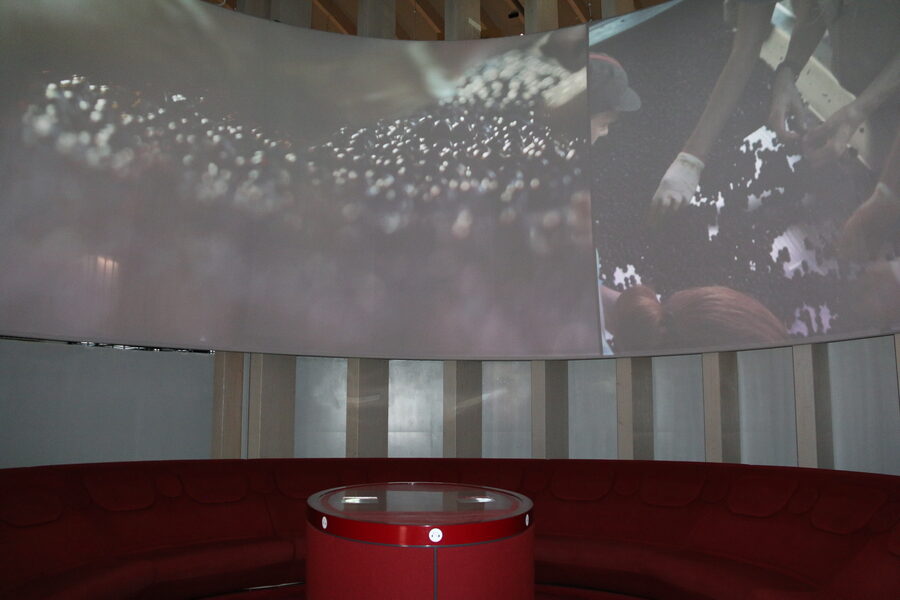
The 8 immersive zones cover everything from how soil and climate produce different grapes, to the role of wine in religion, art, trade, and table culture. Almost none of it is text-on-walls. Almost all of it is video, projection, holograms, scratch-and-sniff aroma stations, and tablet stations where you taste virtual wines through audio cues. The audio guide (free with entry, available in 8 languages) is the spine of the experience. Don’t try to do the Cité du Vin without putting the headphones on. The same projection-and-sound-as-museum-medium playbook runs the Fabrique des Lumières in Amsterdam-Noord, where Klimt and Hundertwasser get the same wraparound treatment that the Cité gives wine.
Reframe the visit before you go
Here is the most useful thing I can tell you. The Cité du Vin will not turn you into a wine expert. The 2-hour permanent exhibition is not deep enough for that. What it does very well is turn you into a wine tourist who knows enough to ask better questions at the next château.
That reframe is the whole game. If you book the Cité du Vin in the morning and then head out to Saint-Émilion in the afternoon, you will be 30% better at the château visit than you would have been without the museum. You will know what malolactic fermentation does. You will know why Saint-Émilion uses more Merlot than Cabernet. You will know what people mean when they say Bordeaux is a “blend region” instead of a “varietal region”. The museum primes you. It does not finish you.
The same thing works for a Champagne day trip from Paris later in the week, or a Chianti Classico tasting on the Tuscan trip you have planned. The wine vocabulary is portable. That is what you are buying.
Getting there: tram B, not on foot
This is the biggest practical mistake I see Bordeaux visitors make. The Cité du Vin is in the Bassins à Flot district, north of the historic centre, in what used to be working dock land. From Place des Quinconces (the central square most hotels use as the reference point) it is about 12 minutes on tram B northbound to the stop literally called “La Cité du Vin”. Two-minute walk from the tram door to the museum entrance.
People look at the map, see “it’s only 2 km north along the river”, and try to walk it. Don’t. The walk is 30 to 35 minutes through industrial waterfront with limited shade. By the time you arrive you have used the energy you needed for the museum. The tram costs €1.80. Take the tram.
If you are coming from the Right Bank (the east side of the Garonne, near Darwin Eco-System), the alternative is the BAT3 river boat, which docks essentially at the museum’s front door. Same TBM ticket as the tram (€1.80), runs roughly every 40 minutes. It is by far the prettier arrival, especially in late afternoon light. I do it that way if my Bordeaux schedule lets me.
Best time to go
Open every day, 10am to 6pm in winter, 10am to 7pm in summer (last entry 1 hour before close). The best slot, by a long way, is weekday 14:00. School groups have left, the lunchtime locals have cleared, and you have about 4 hours of museum time with the Belvedere still open in the natural-light golden hour. Saturday mornings and any time during French school holidays (zones A, B, C dates change yearly, check before you book) are the worst.
Plan on 2 hours of museum time minimum. If you really engage with the audio guide and the interactive stations, 3 hours is a comfortable, unhurried pace. Add 30 minutes for the Belvedere wine. So a 14:00 entry gives you a clean exit by 17:30 with time to walk Bassins à Flot afterwards.
The 8 zones, ranked by what to prioritise
The permanent exhibition lives on the second floor of the building. You loop through 8 themed zones in sequence. Some are unmissable. Some you can move through quickly without losing the thread. If you only have 90 minutes, here is how I would spend them.
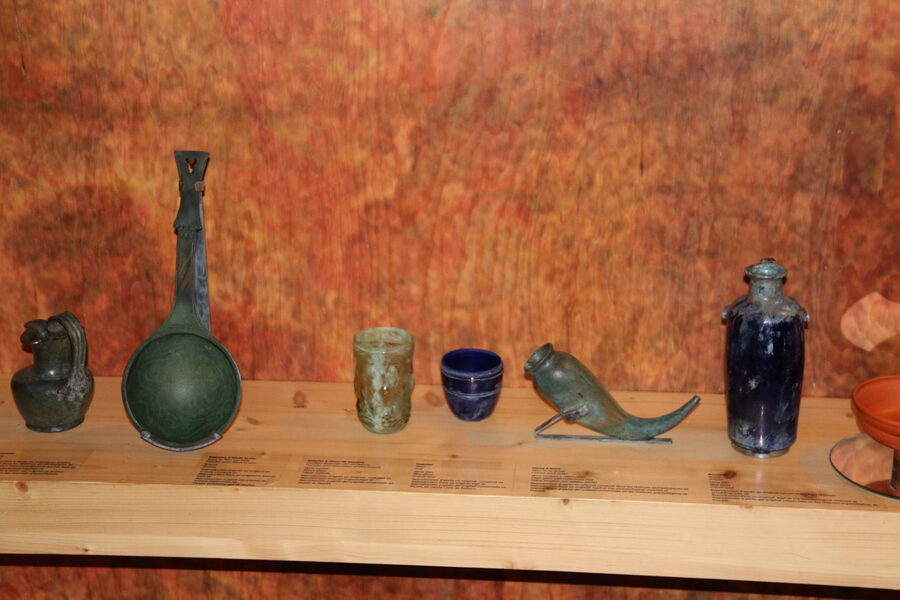
Zone 1: Wine in the World (do this slowly)
This is the first zone you walk into and the one most people rush. Don’t. The wraparound projection sets up the entire museum’s argument: that wine has been made in roughly 80 countries across 8,000 years, with each region’s wine shaped by climate, geology, and migration patterns. There is a giant tilted globe with regional video stations around it. Five minutes per region you actually plan to drink in your life is well spent here.
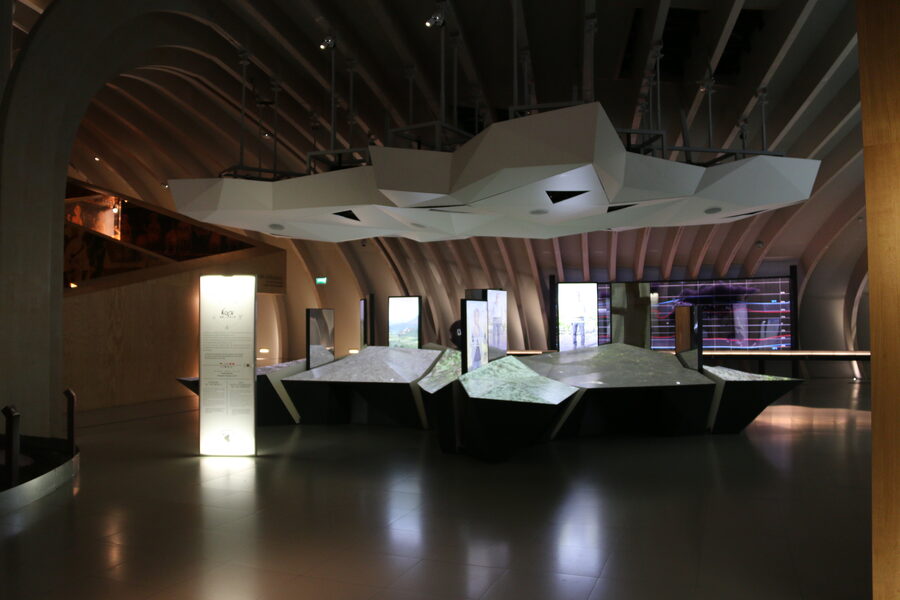
Zone 2: Vineyards of the World (skim)
Aerial drone footage of 20+ wine regions. Beautiful, calming, and you have basically already gotten the message after watching three. Move through.
Zone 3: Know-How (do this slowly)
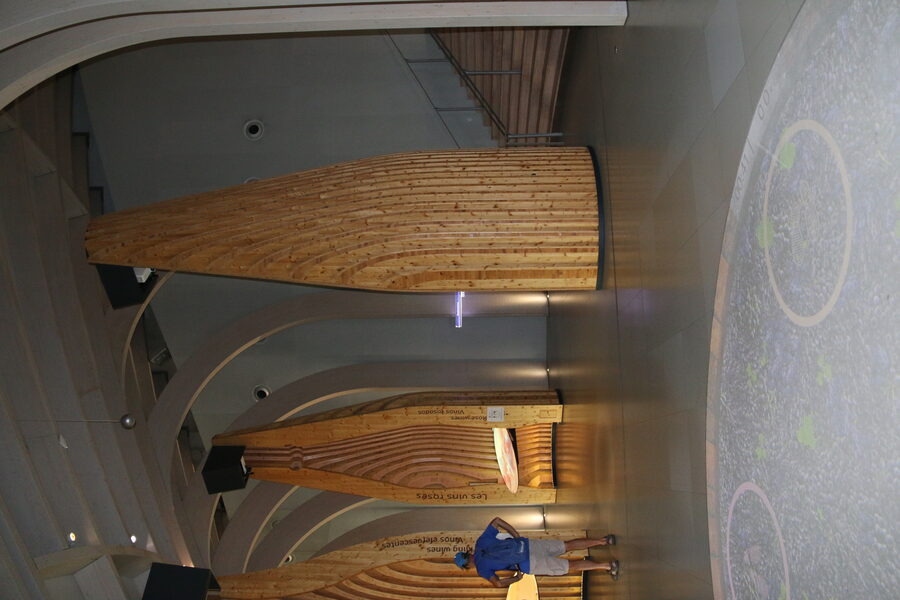
This is the technical one: how grapes become wine. Touch screens around giant carved wooden bottle-shaped pillars walk you through fermentation, malolactic conversion, oak ageing, blending, and bottling. If you are going to tour any château afterwards, this is where you build the vocabulary. The “blending” station in particular is gold for understanding why Bordeaux makes such different wines from the same vintage and grape mix.
Zones 4 and 5: Civilisations and Religion (move briskly)
Wine in ancient Egypt, Greece, and the Roman Empire. Wine and the early Catholic Church. The Trappist monks. Real, important content, but presented in a way that wants more reading than the rest of the museum and less interactivity. If you are short on time, glance at the panels and keep moving.
Zone 6: Wine in the Senses (do this slowly, this is the fun one)
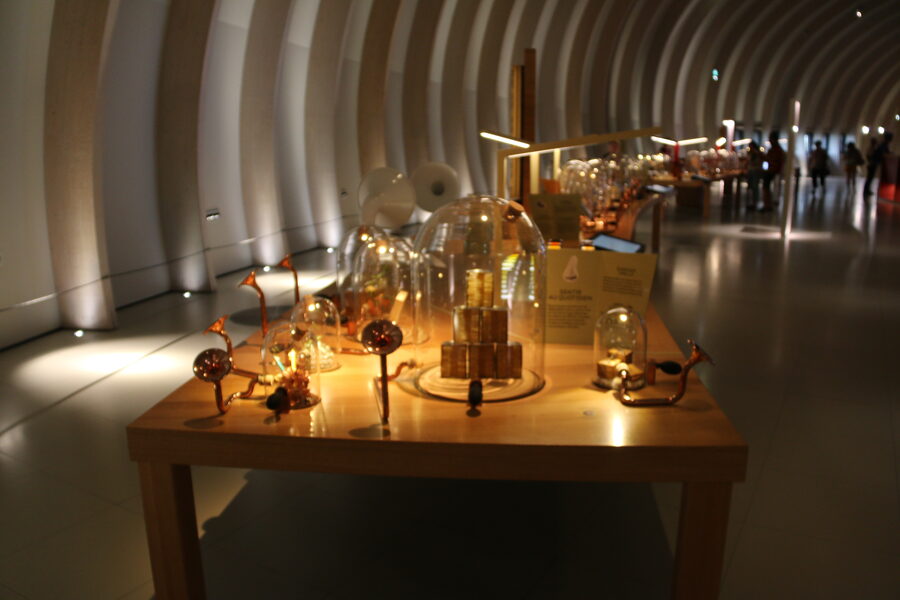
The aroma stations. This is the zone people remember and talk about for the rest of the trip. You stand in front of a station, lift a brass tube to your nose, press a button, and a puff of scent comes out. Black cherry. Tobacco. Wet leather. Vanilla. Cut grass. Around 50 individual aromas, organised by the families used in formal wine tasting (fruit, floral, vegetal, spice, oak, faulty). The point is to teach you that tasting wine is mostly smelling wine, and that the descriptors are not made up; they are real chemistry. Twenty minutes here is well spent. Bring your nose.
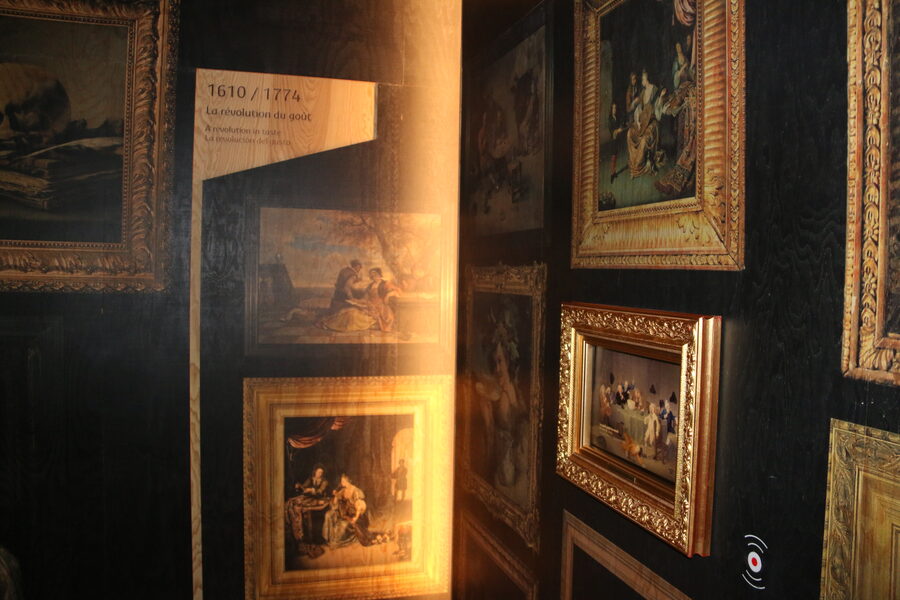
Zone 7: Wine and the Table
Food and wine pairing through projection-mapped dinner tables. A long banquet table covered in projected dishes appears, and you watch suggested wine pairings populate next to each course. Cute, and the immersive table is genuinely impressive technology, but five minutes is enough.
Zone 8: Civilisations of Wine (do this slowly)
The ending. Floor-to-ceiling video portraits of wine professionals from around the world (sommeliers, growers, négociants, importers, sommeliers, monks) talking about what wine means in their life and their region. The portraits cycle in 90-second loops. Sit on the bench, watch four or five all the way through. This is the zone that earns the museum its tagline; that wine is a thing humans have been doing together for as long as we have been writing things down. Don’t rush this one.
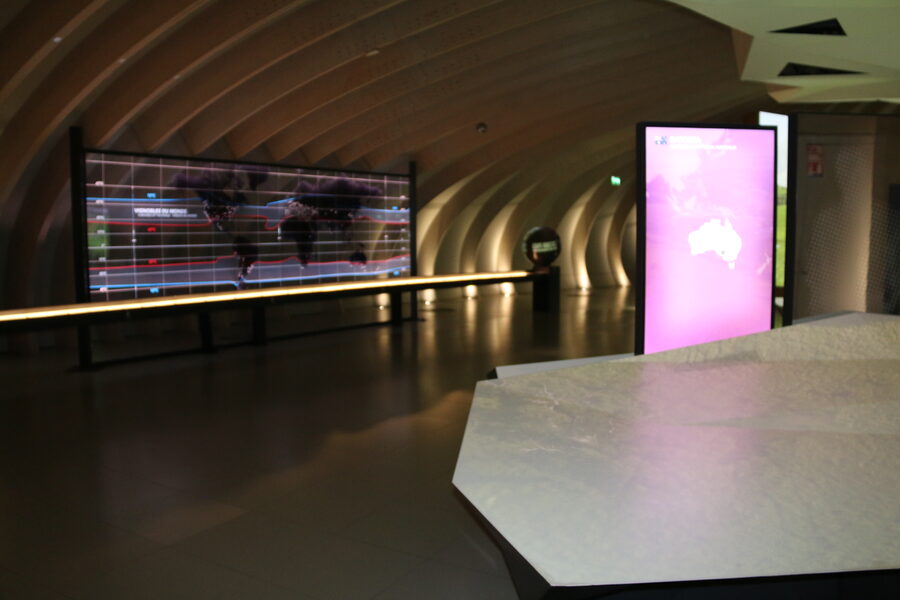
The Belvedere: the wine that comes with your ticket
The Belvedere is the museum’s eighth floor. You exit the permanent exhibition, return to the ground floor, and take a different elevator (the one marked “Belvedere”; staff will direct you) to the rooftop. Your audio-guide ticket is your proof of entry; you hand it to the bar staff and they pour your glass.
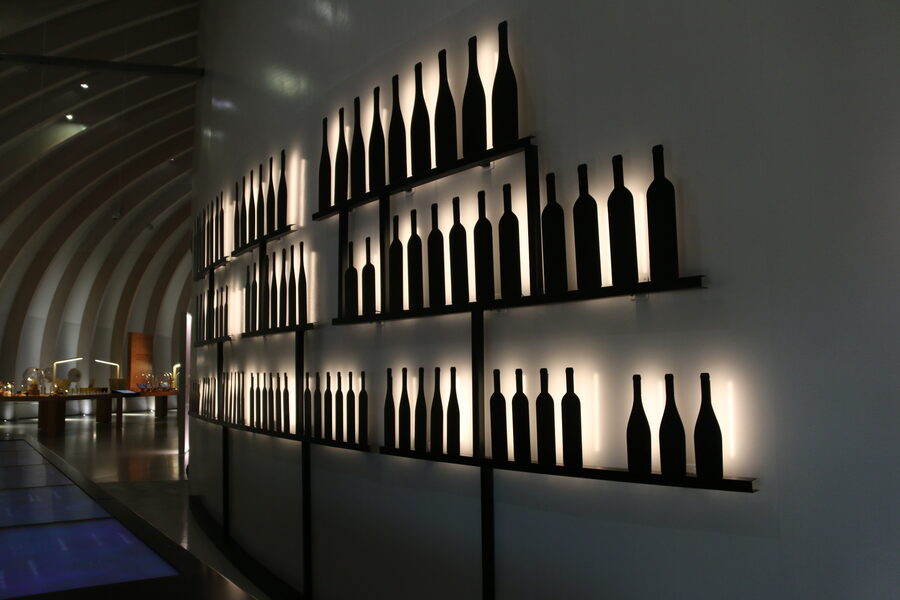
The selection is the part that surprises people. 20-plus wines from around the world, not Bordeaux only. On a typical day you can choose between a French white (Sancerre or a Vouvray most months), an Italian (a Barolo or a Brunello), a Spanish (a Rioja Reserva or a Ribera), an Argentinian Malbec, an Australian Shiraz, a Chilean Carmenère, a German Riesling, a Hungarian Tokaji, a Portuguese Vinho Verde, plus a rotating cast of more unusual entries (a Greek Assyrtiko, a Lebanese red, a Georgian Saperavi). The pour is roughly 90ml. Real wine, real glass, real generous pour.
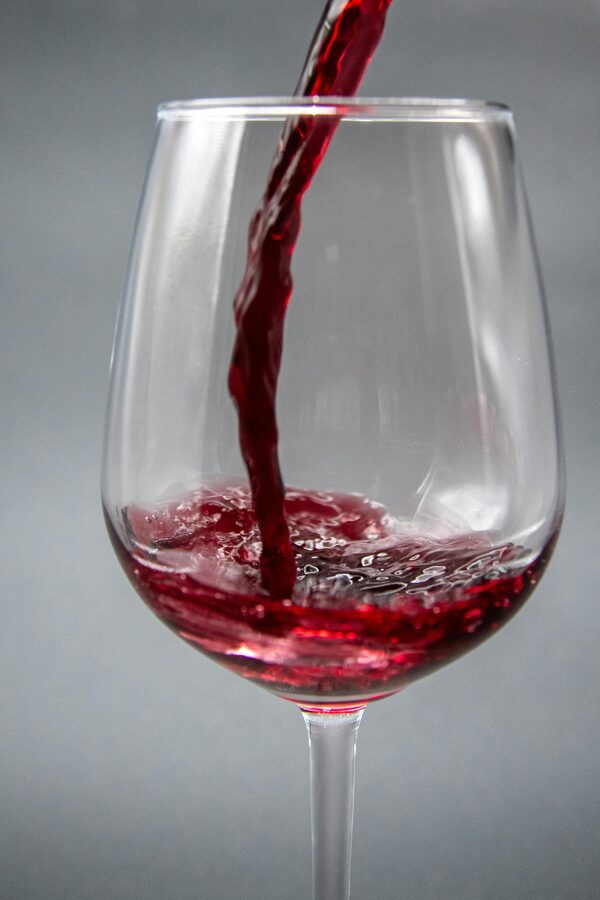
My honest advice on what to pick: ignore the Bordeaux options. You can drink Bordeaux at any restaurant in the city tonight. Pick something you would never order from a wine list at home. The Lebanese reds and Georgian Saperavi have been the most surprising pours I have had up there. The Argentinian Malbec is the safest “wow” if you want a guaranteed enjoyable glass.
Where to actually stand on the Belvedere
Once you have your glass, walk to the west side of the rooftop, the side facing the Garonne. The view sweeps from the Pont de Pierre in the south (the old stone bridge into the historic centre) up to the Pont Jacques Chaban-Delmas in the north (the lift bridge that opens for cruise ships). On a clear evening you can see the spires of Saint-André Cathedral in the distance. The east-side view (over the Bassins à Flot) is interesting once for the urban-renewal story, but the river is the picture.
Tickets: what you actually pay and what’s included
Standard adult entry is $27 at the door (€25). That covers the full permanent exhibition, the audio guide, the temporary exhibition (rotates roughly 3 times a year), and one Belvedere wine. Children 6 and over: about €11. Under 6: free. The family pack (2 adults + 2 children) is €54 if you do that math.
Annual pass-holders (Bordeaux residents mostly) get unlimited entry for €30. Worth noting that students get a discounted entry of €18 with a current student ID; the museum doesn’t advertise this loudly, ask at the desk.
Pre-booking vs walk-up
For most weekday afternoons in shoulder season you can walk up and buy a ticket at the door without queueing. For weekends, July and August, and any French public holiday, pre-book online. The official site sells dated tickets for face value; the GetYourGuide entry I list in the recommendations below is the same price ($27) and gives you cancellation flexibility if your plans shift. Either works. The savings are zero either way; what you are buying with a pre-booked ticket is queue insurance.
What about the Bordeaux Wine and Trade Museum, the cheaper alternative?
About 4 km south of the Cité du Vin, in the historic Chartrons quarter, sits a much smaller museum that gets compared to the Cité du Vin and shouldn’t be. The Bordeaux Wine and Trade Museum (Musée du Vin et du Négoce) is in a converted 18th-century wine merchant’s cellar; it tells the story of Bordeaux specifically, the négociant trade, and how the city built its wine fortune from the 1700s onwards. Entry is around $14.51 with a tasting flight included.
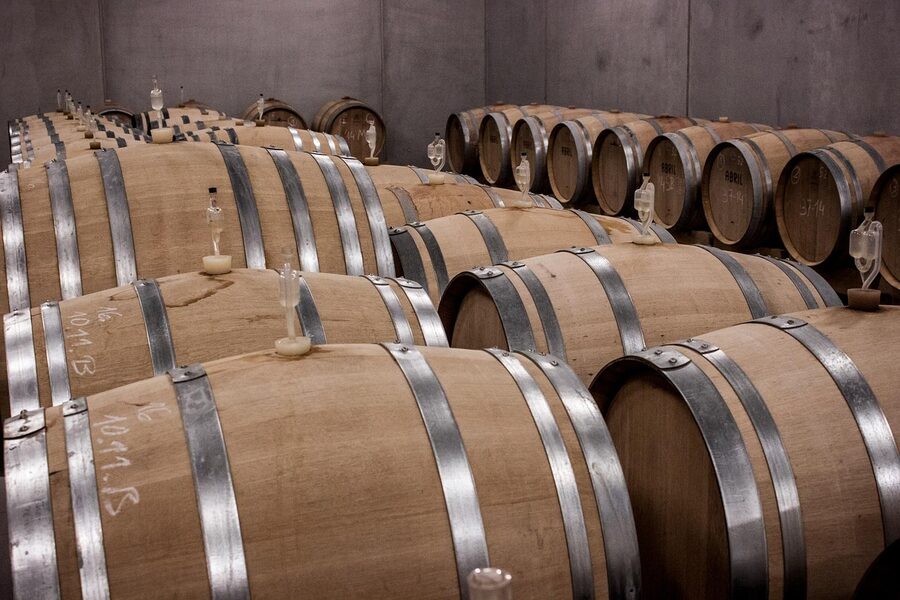
It is a one-hour visit, not a half-day. It is genuinely about Bordeaux, not the world. The tasting flight at the end is 2 to 3 wines from Bordeaux subregions. If you have one museum slot in your schedule and you want to learn specifically about Bordeaux’s négociant history, do this one instead. If you have time for both, do them on different days; the Wine and Trade Museum makes the most sense the morning before a Médoc château tour, while the Cité du Vin makes the most sense as a global-context primer earlier in the trip.
The architecture: the second draw
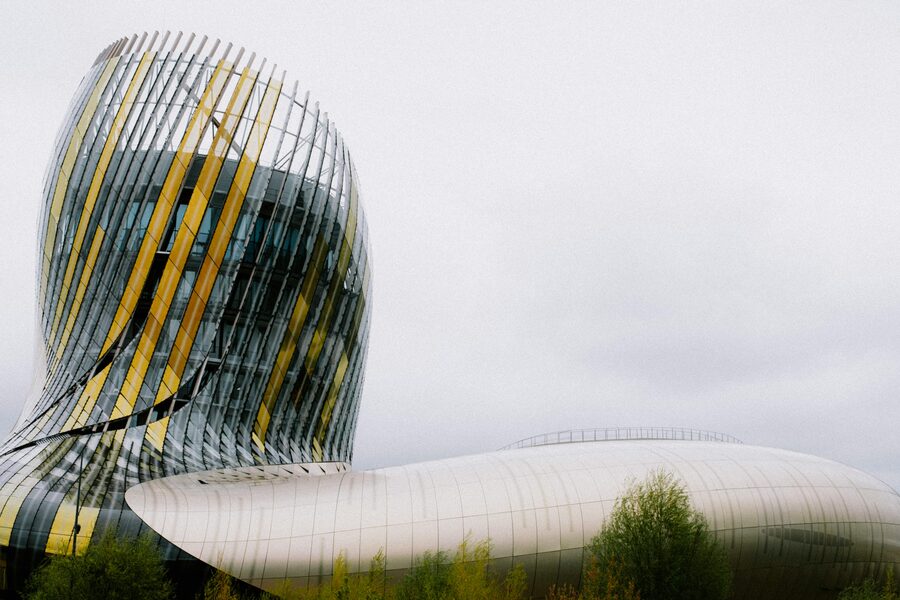
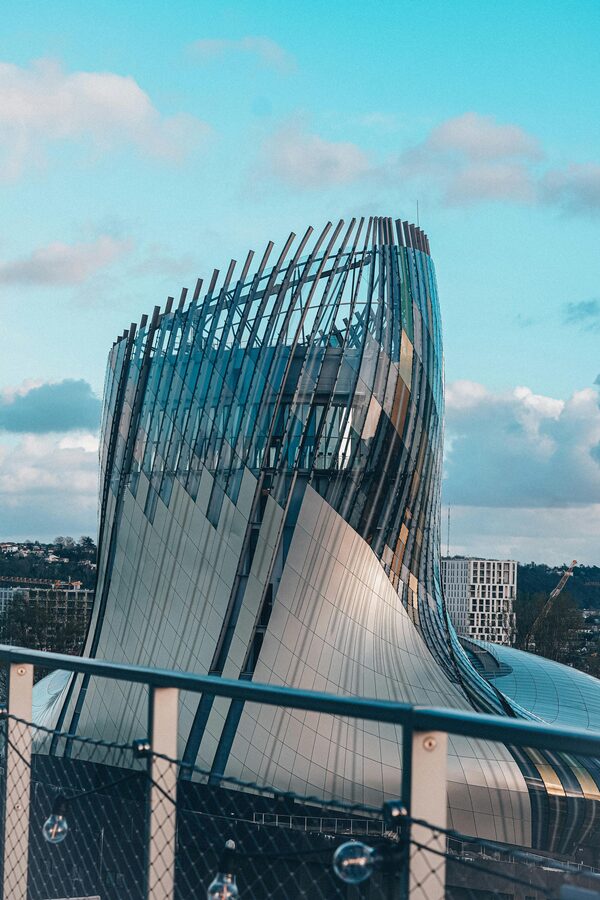
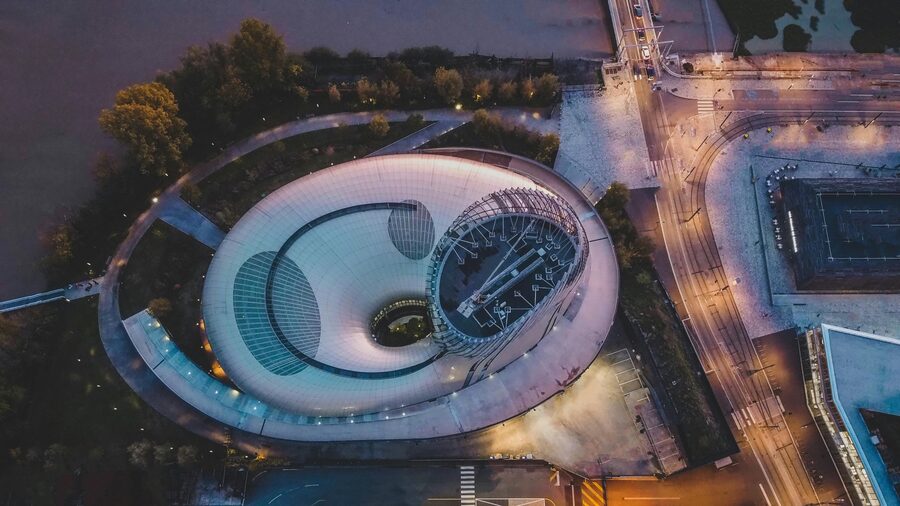
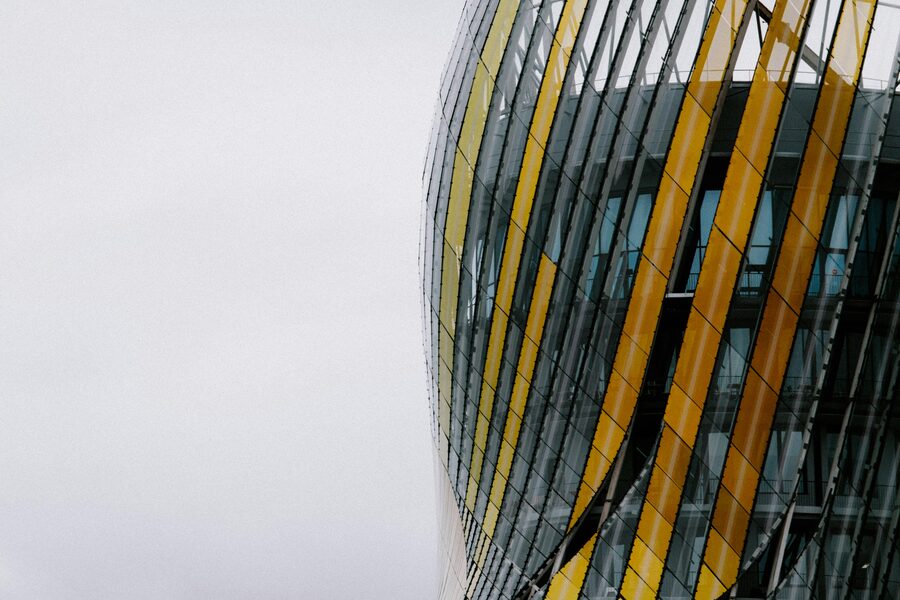
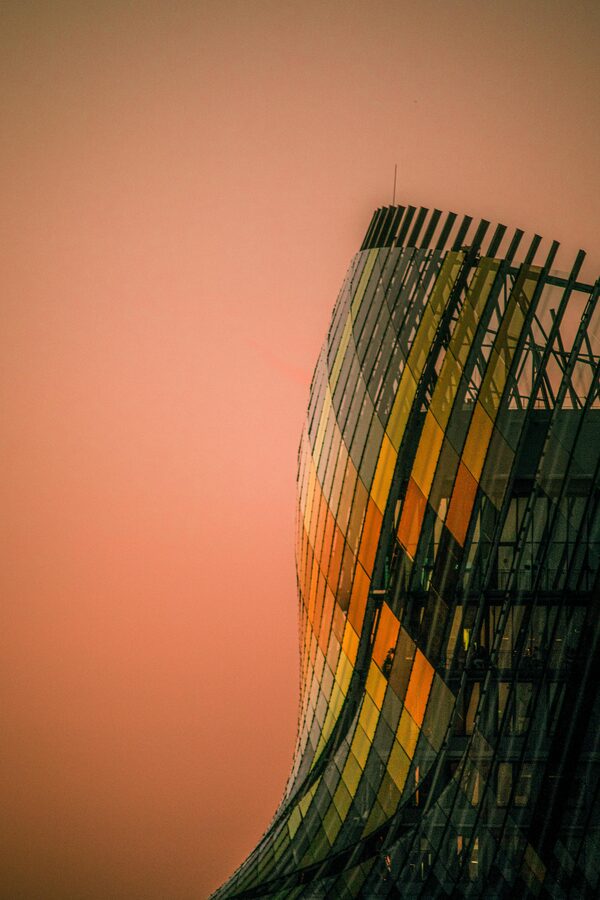
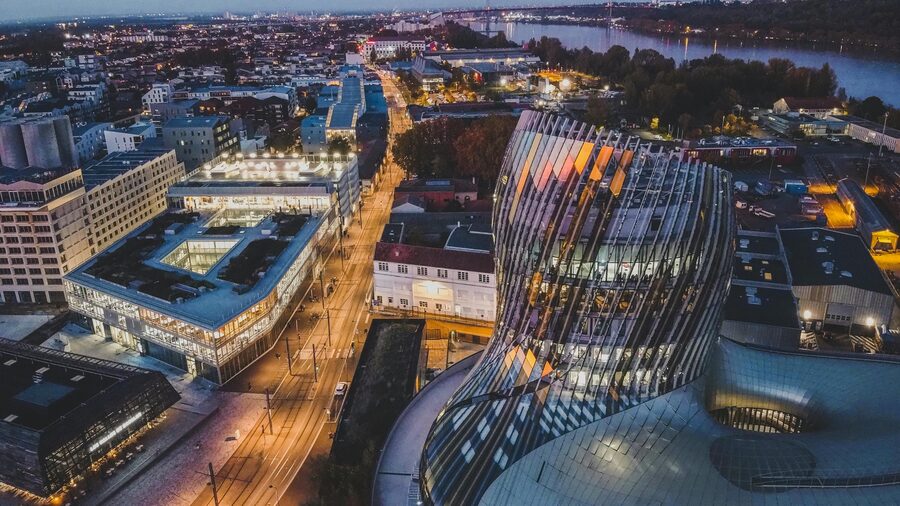
The building itself is the second reason to come, and a fair number of architecture-curious visitors come just for this and skip the museum entirely. The exterior is the work of XTU Architecture, a Paris firm led by Anouk Legendre and Nicolas Desmazières. The construction reference, repeated in every press kit and most reviews, is “wine swirling in a glass”. Walk around it and you can see what they meant; the spiral has no flat surfaces, no orthogonal lines, no obvious front or back. The 919 silkscreened glass panels and 2,500 individually shaped aluminium panels were each laser-cut from a single computational model.
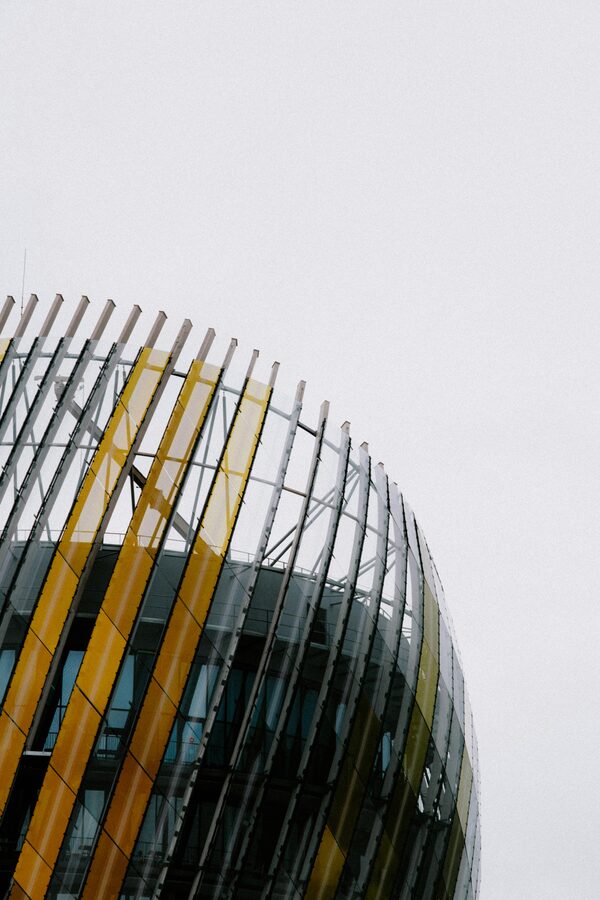
Critical reception was mixed at opening (some reviewers called it the “Guggenheim of wine”, which is a compliment with strings; others called it overwrought) but the public verdict has been clear. The Cité du Vin pulls roughly 600,000 visitors a year, which makes it one of the highest-attended cultural attractions in southwest France. The building has its own Instagram economy; if you search “Cité du Vin” on any photo platform you will see the same six exterior angles a thousand times. The best time of day for the photo, for what it’s worth, is roughly 30 minutes before sunset, from the river side, with the sun low behind you.
Bordeaux is small. What pairs with this morning?
The Cité du Vin is in a part of Bordeaux that doesn’t naturally connect to the main tourist circuit. So unless you specifically built a half-day around it, you’ll want a plan for the rest of your day in the city. Here is what I recommend pairing it with depending on when you visited.
If you did the museum in the morning: ride tram B back to Quinconces, grab lunch around the Marché des Capucins or in the historic centre, then in the afternoon either head out on a half-day Médoc tour with the Bordeaux wine tour (Pauillac and Saint-Estèphe) or take the train 35 minutes east to Saint-Émilion for a 4pm château visit and a wander around the medieval town.
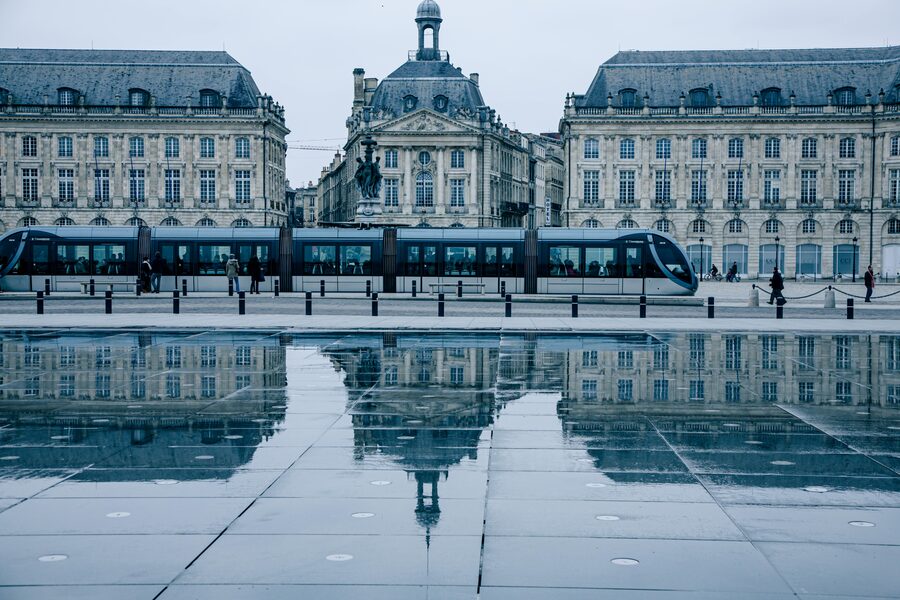
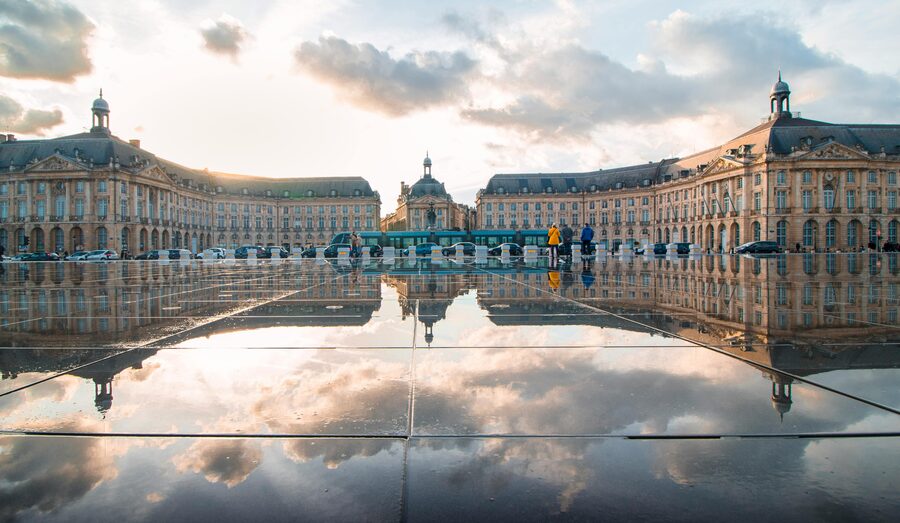
If you did the museum in the afternoon: stay in Bassins à Flot for sunset. Walk 10 minutes along the basins to the Base Sous-Marine (the giant Nazi-era submarine base, now a video-art venue), then back to Bordeaux centre for dinner around Place de la Bourse. The illuminated Miroir d’Eau across from the Place de la Bourse is one of the better night views in any French city; budget 30 minutes there with no plan.
If you have a second day in Bordeaux: consider a half-day in Saint-Émilion, plus the morning at the Bordeaux Wine and Trade Museum (described above) for the local-history complement. Or pivot wine fatigue into general France: take a fast TGV up to Paris and continue with the Orsay Museum, the Eiffel Tower, or a relaxed sunset on the Seine.
The 3 best Cité du Vin tickets to book
Three picks across price tiers and use cases. The first is what most people should book; the other two are for travellers with different priorities.
1. Cité du Vin Direct Ticket and Wine Tasting: $27
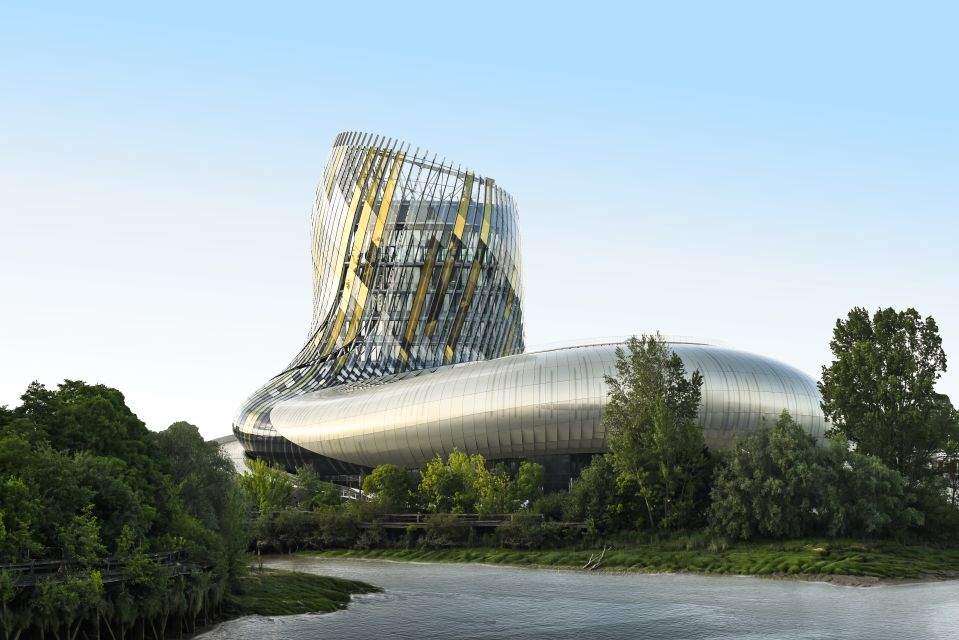
This is the right pick if you want the full Cité du Vin experience exactly as the museum designed it: 2-3 hours through all 8 zones with the audio guide, then your included Belvedere wine of choice from the 20-plus on offer. The price ($27) matches the door price. Our full Bordeaux wine tour guide has the next-step Médoc tasting for after.
2. Bordeaux Wine and Trade Museum + Tasting: $14.51
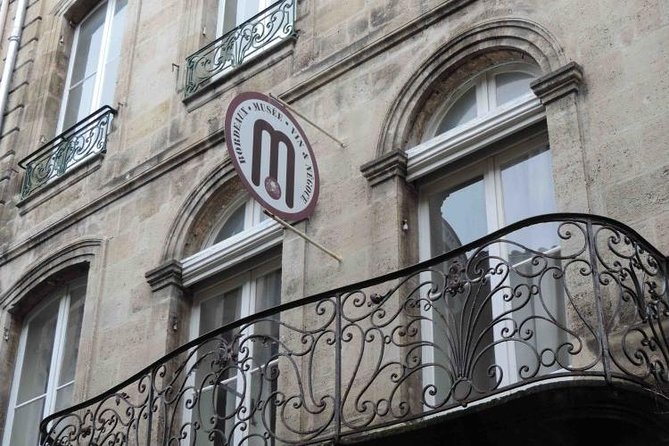
This is the right pick if you have already done one big wine museum on this trip (or you are wine-skeptical) and you want a focused 1-hour Bordeaux history primer plus a tasting flight, all in the historic centre. Confirm carefully you are booking Wine and Trade Museum, not the Cité du Vin; the names are easy to confuse.
3. Bordeaux Guided Walking Tour with Wine Tasting: $17
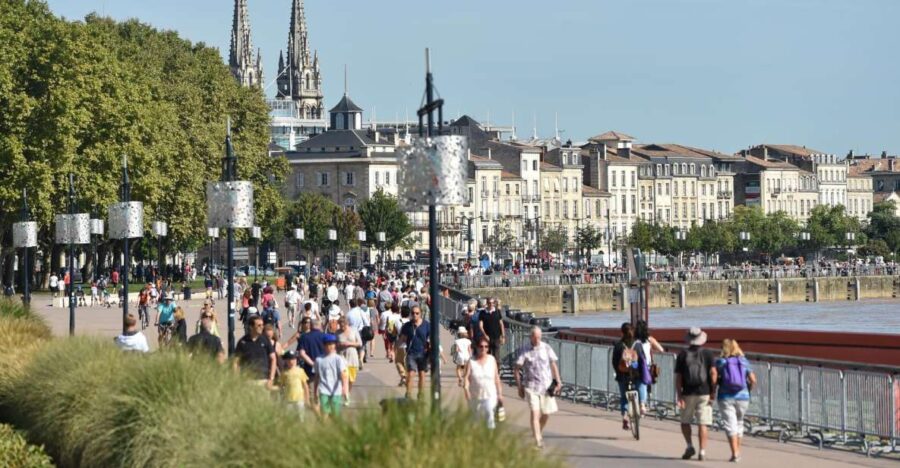
This is the right pick if you want to pair the Cité du Vin morning with a guided introduction to Bordeaux’s UNESCO old town in the afternoon (Place de la Bourse, Quinconces, Saint-Pierre quarter, Cathedral). The tasting at the end is one well-poured Bordeaux glass with brief context, not a full flight; for that depth, see the Médoc-château option.
Practical questions visitors actually ask
How long should I budget?
Two hours is the comfortable minimum: 90 minutes through the 8 zones, 30 minutes for the Belvedere. Three hours is the unhurried pace if you stop at every interactive station and watch full loops in the projection rooms. The audio guide is calibrated for roughly 90 minutes if you listen to every track, but most visitors skip 30-40% of tracks and finish faster. Budget less than 90 minutes and you will be running through Zone 8 to make the elevator.
Is it good with kids?
Better than you would expect for a wine museum. Kids 6 and over are welcomed officially. The aroma stations, the touch-screen mixing tables, and the projection rooms hold kid attention well; the talking-portrait Zone 8 and the religion-and-civilisation zones don’t. The trick is to use the audio guide’s “1-hour kid track” (set it on the device when you collect it) which routes the family through the more interactive sections only. Two hours is the realistic ceiling with under-10s before they melt.
Is the food at the on-site restaurant any good?
The seventh-floor restaurant is called Le 7. The view is outstanding, the food is fine, and you are paying for the view, not the food. Lunch is around €35-€45 per person before drinks. If you need a meal connected to the visit, it works. If you have any other reason to be back in central Bordeaux, eat at the Marché des Capucins or anywhere in the Saint-Pierre quarter; the bistros in the historic centre are about half the price and twice the quality of Le 7. Don’t conflate the museum with a great lunch destination.
Will I learn enough to taste like a sommelier?
No. Two hours in a museum will not do that. What it will do is give you the vocabulary and the sensory framework to follow along in any tasting you do for the rest of your trip. You will know what oak ageing changes about a wine. You will know the difference between Old World and New World labelling. You will understand why a Burgundy bottle looks different from a Bordeaux bottle. That is the floor; the ceiling is what you build over the next 20 years of drinking.
What about a workshop or masterclass on top of the basic ticket?
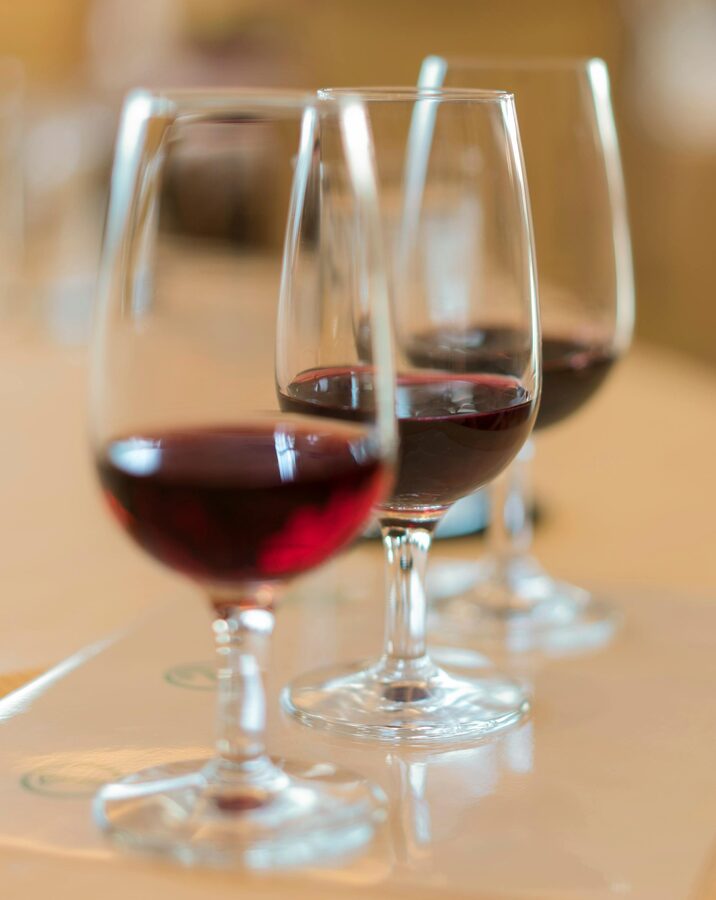
The museum runs paid wine workshops daily in dedicated tasting rooms on the first floor. English-language sessions tend to focus on Bordeaux specifically (which is ironic given the museum’s global remit, but practical given the visitor base); French sessions cover wider regions and themes (wine and chocolate, wine and cheese, Loire valley deep-dives, Mediterranean reds). The masterclasses cost €25 to €50 on top of the entry ticket and run roughly 60 to 90 minutes. Worth it if you have a half-day and you actually want to taste 4 or 5 wines side-by-side with a guide. Skip if you are only there for 2 hours.
The neighbourhood: stay or explore Bassins à Flot
The neighbourhood around the museum is interesting in its own right and most visitors miss it. The Bassins à Flot are former working dock basins converted in the 2010s into one of Bordeaux’s most ambitious urban renewal projects. The hipster-industrial vibe will feel familiar if you have spent time in former-port quarters elsewhere (Hamburg’s HafenCity, London’s King’s Cross, Marseille’s J4). There are micro-breweries, bistros, a few independent galleries, and the Base Sous-Marine submarine bunker.
If you have an hour after the museum, walk west to the Bassin à Flot No. 1, follow the basin around, and emerge at the Base Sous-Marine. It is a 5,000-tonne reinforced-concrete bunker that survived Allied bombing in WW2 and now hosts immersive video installations. Entry is around €14, and the cavernous interior is genuinely something you have not seen anywhere else.
One Bordeaux mistake worth flagging
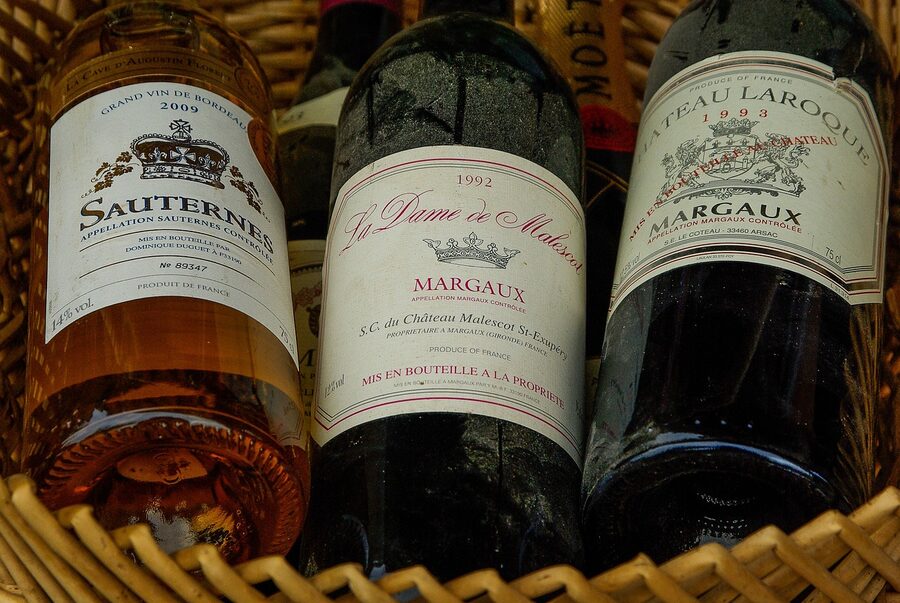
Bordeaux gets compared to Burgundy and Champagne all the time, and visitors who book one wine region thinking the others “must be similar” usually leave disappointed. They are not similar. Bordeaux is a blend region: wines are made from multiple grape varieties (Cabernet Sauvignon plus Merlot plus Cabernet Franc plus the rest) and labelled by château, not by grape. Burgundy is a varietal region: almost all reds are 100% Pinot Noir, almost all whites are 100% Chardonnay, and labelling goes by vineyard plot. Champagne is its own thing, with about a thousand small growers blending three grapes (Pinot Noir, Pinot Meunier, Chardonnay) into sparkling wine via the méthode champenoise.
One of the things the Cité du Vin actually does well is map this for you in Zone 1 and Zone 3. If you have a Champagne day in your trip planned (the Reims and Épernay route from Paris is the standard), do the Cité du Vin first; you will get more out of the Champagne tasting if you understand why méthode champenoise is different from still-wine fermentation. Same logic if you have a Loire Valley day with a tasting bolted on.
Wine museums elsewhere if Cité du Vin doesn’t fit your trip
If your France trip is mostly north and you can’t make Bordeaux work, the closest equivalent immersive experience is at Pressoria in Aÿ-Champagne (50 minutes east of Reims), which opened in 2021 and uses the same museum-of-the-senses formula for Champagne specifically. It’s smaller, more focused, and pairs naturally with a Champagne day trip.
If you are heading south after Bordeaux toward Provence, the Caves Mumm in Reims and the Hôtel-Dieu/Hospices de Beaune in Burgundy are the next natural wine pilgrimages. Italy has nothing quite like the Cité du Vin in scale, but the Chianti winery day trip out of Florence is the experiential complement (you taste real wines all day instead of learning the framework, then taste). Spain’s wine museums in La Rioja are good but conventional; the better Spanish wine pairing is the Jerez horse show route with a sherry bodega tasting attached.
Where I would put this in a Bordeaux itinerary
Here is the honest answer about when in your trip the Cité du Vin should land. Day 1 of Bordeaux: walk the historic centre, see Place de la Bourse, eat. Day 2: half-day Cité du Vin in the morning, then Saint-Émilion in the afternoon (the museum primes the château visit). Day 3: full-day Médoc châteaux with what you have learned at the Cité in your back pocket. That sequence makes everything land harder than it would in any other order.
If you only have 36 hours in Bordeaux total, drop the Médoc day and do the half-day Cité plus afternoon Saint-Émilion. If you only have 24 hours, you have to choose: museum or wine tour. For most travellers, the Cité du Vin is the choice; it is the more memorable indoor activity if Bordeaux throws you bad weather, and Saint-Émilion is more rewarding without the Cité du Vin priming than the other way around. But if the weather is great and you have one day, the Médoc wins.
What to do next in France or beyond
Bordeaux is one of those cities that gets people thinking about the rest of France in wine terms. After your Cité du Vin morning, the Saint-Émilion afternoon is the obvious pairing, and the half-day Médoc château tour is what most travellers stack onto the next morning. If you are continuing north, the TGV gets you to Paris in 2 hours 15, where the Orsay’s Impressionists and the Eiffel Tower are the standard rotation, with a Seine cruise for the evening. Add a day east for Champagne and you have a coherent French wine-and-museum week.
For travellers chaining Bordeaux into a longer European trip, the natural sequel is Lyon for the Rhône valley wines (and the food capital of France) before continuing to Italy. The Chianti tasting out of Florence picks up where the Cité du Vin left off; the Florence food and wine tours are the urban equivalent. South in Italy, eating pizza in Naples and the Rome food tours are about gastronomy more than wine, but they round out the trip. Spain offers the tapas-and-wine route in Barcelona and the unique Jerez horse show with sherry tasting, which is the closest thing to a Cité du Vin equivalent for the Spanish fortified-wine world. The Picasso Museum in Málaga is what to pair with that day if you find yourself wanting an art-and-wine mix down south.
Whatever you do next, the Cité du Vin will have done its job: you walk into the next tasting with vocabulary you didn’t have an hour ago, and you ask the next pourer better questions than you would have. That is what wine tourism is for.